Quick Reference Illustrations
Concept & algorithm diagrams for rapid revision
✅ Comprehensive coverage - 315 high-yield concept diagrams covering all Exam subspecialties. These show principles, algorithms, and concepts for rapid exam revision.
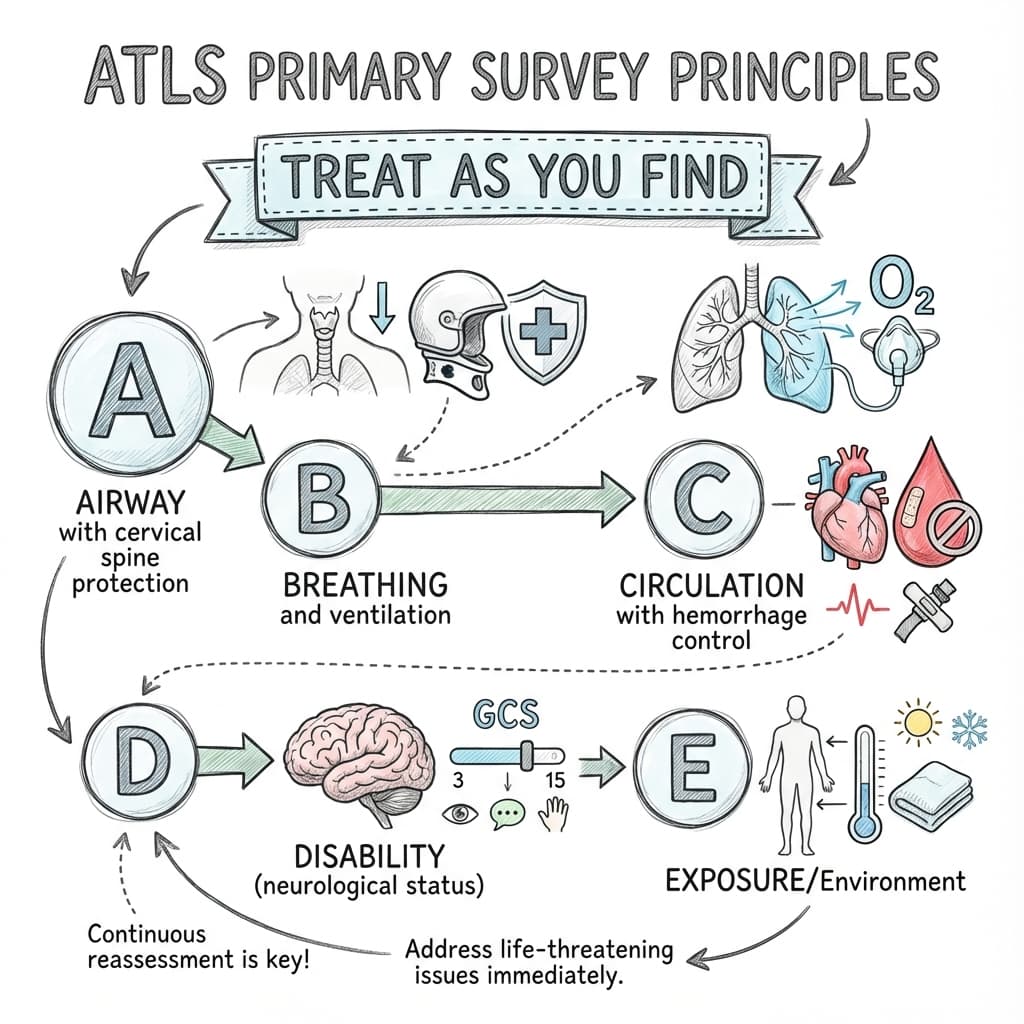
ATLS Primary Survey
ABCDE approach for polytrauma assessment
💡 Treat as you find - don't move to B until A is secured
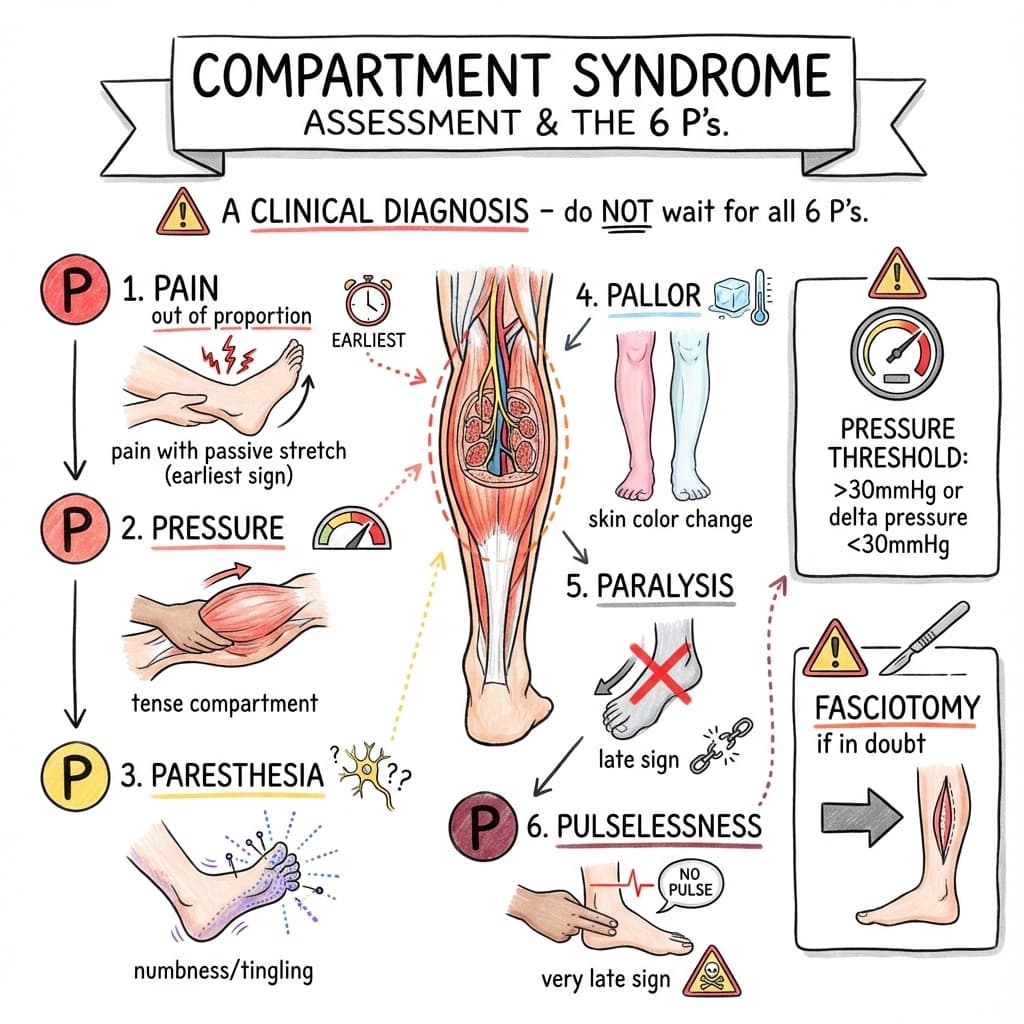
Compartment Syndrome 6 P's
Pain, Pressure, Paresthesia, Pallor, Paralysis, Pulselessness
💡 Clinical diagnosis - do NOT wait for all 6 P's!
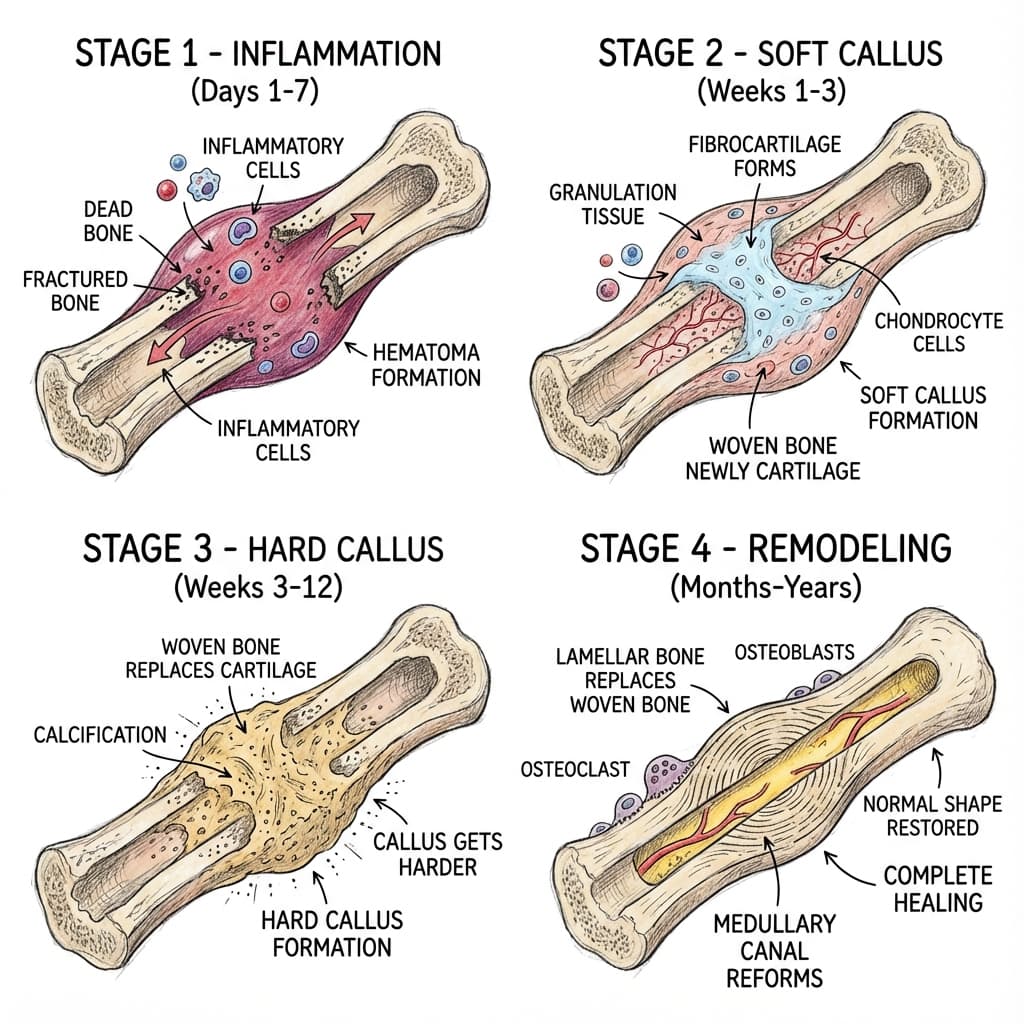
Fracture Healing Stages
Four stages: Inflammation → Soft Callus → Hard Callus → Remodeling
💡 Timeline: Days 1-7, Weeks 1-3, Weeks 3-12, Months-Years
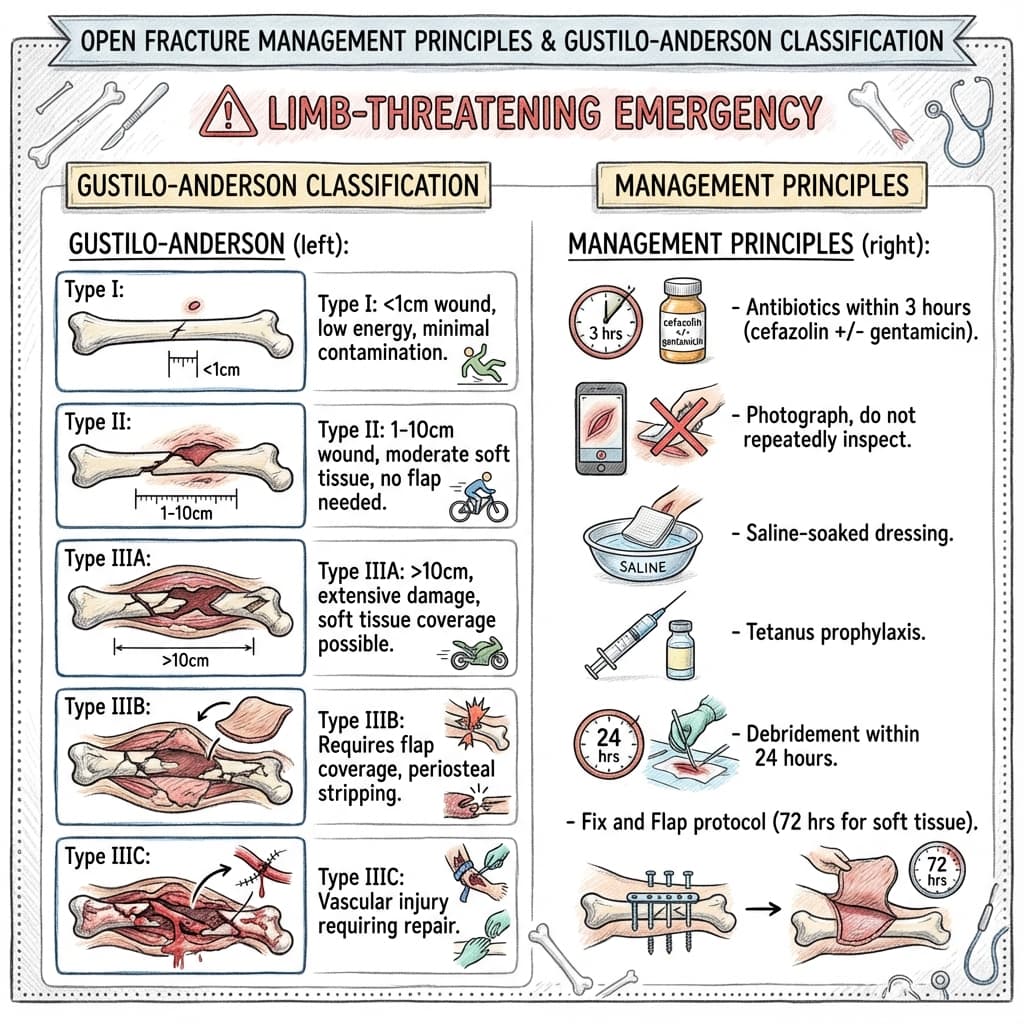
Open Fracture Principles
Open fracture management algorithm and principles
💡 Key timeframes: Antibiotics ASAP, debridement early, flap ideally <72hrs
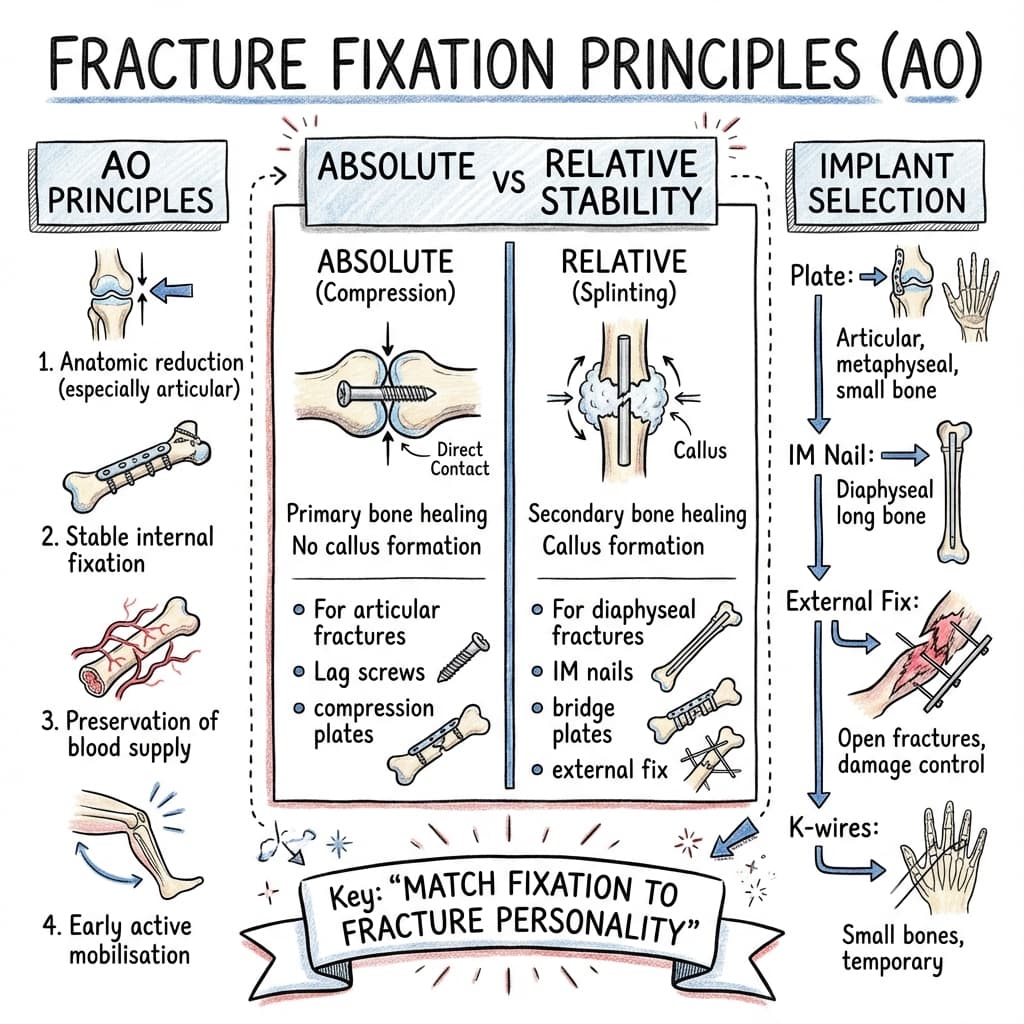
AO Fracture Fixation Principles
Absolute vs relative stability, implant selection
💡 Articular = absolute stability, Diaphyseal = relative stability
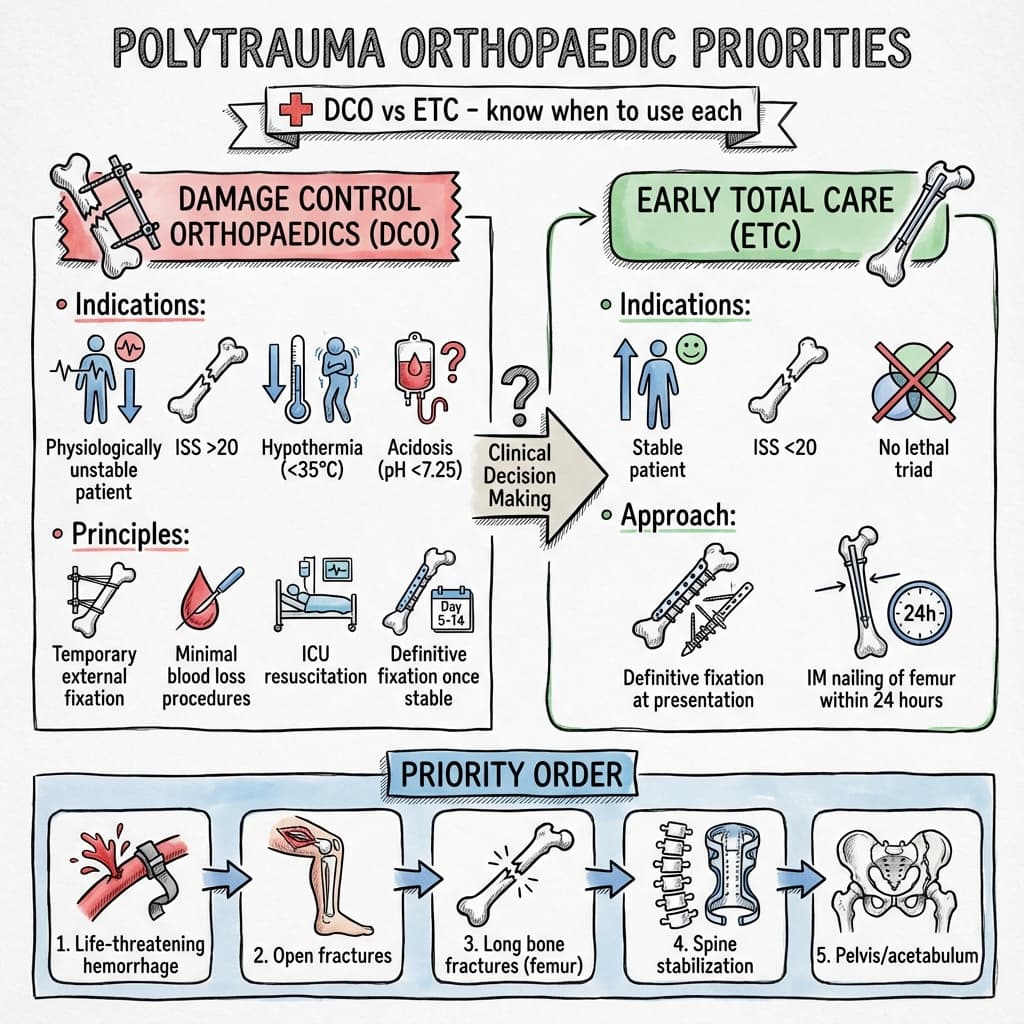
Polytrauma DCO vs ETC
Damage control orthopaedics vs early total care indications
💡 Unstable patient = DCO, Stable = ETC
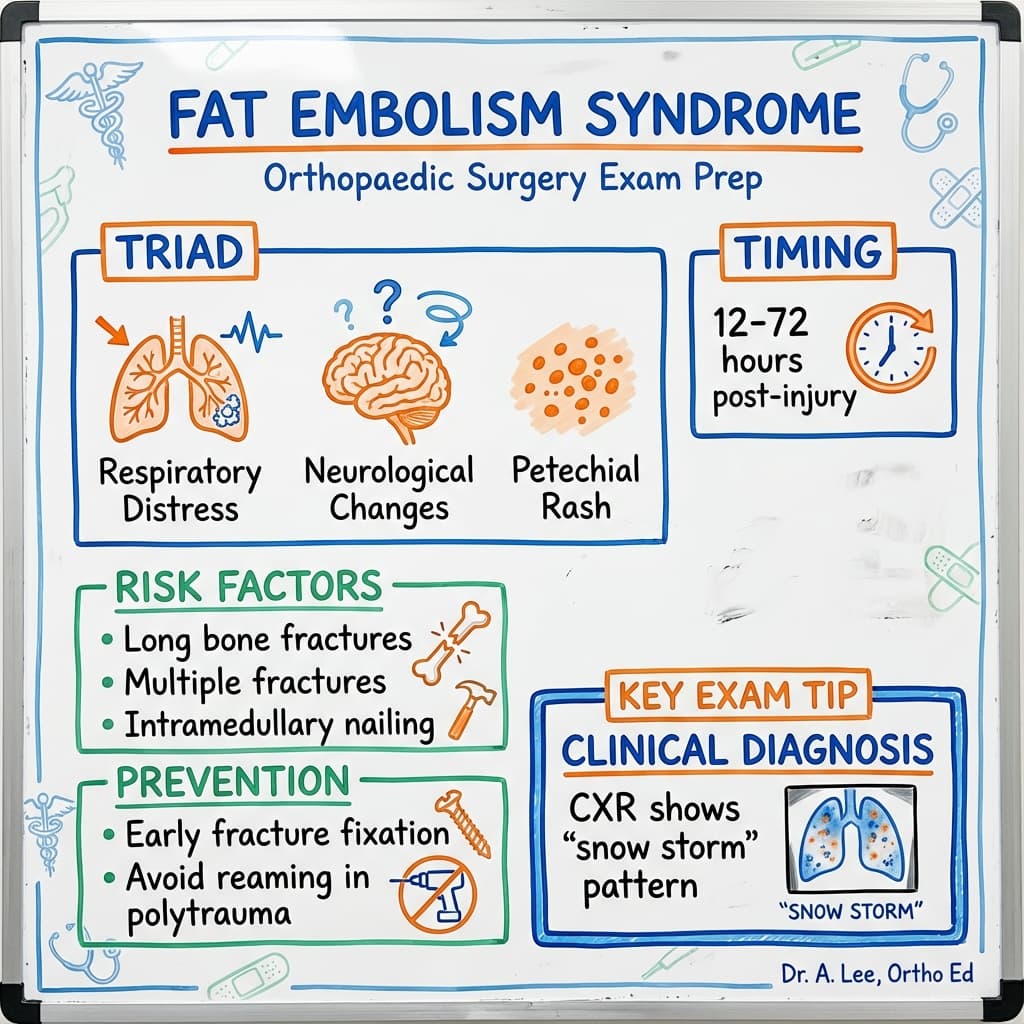
Fat Embolism Syndrome
Triad of respiratory distress, neurological changes, petechial rash
💡 Petechiae in upper body distribution - pathognomonic
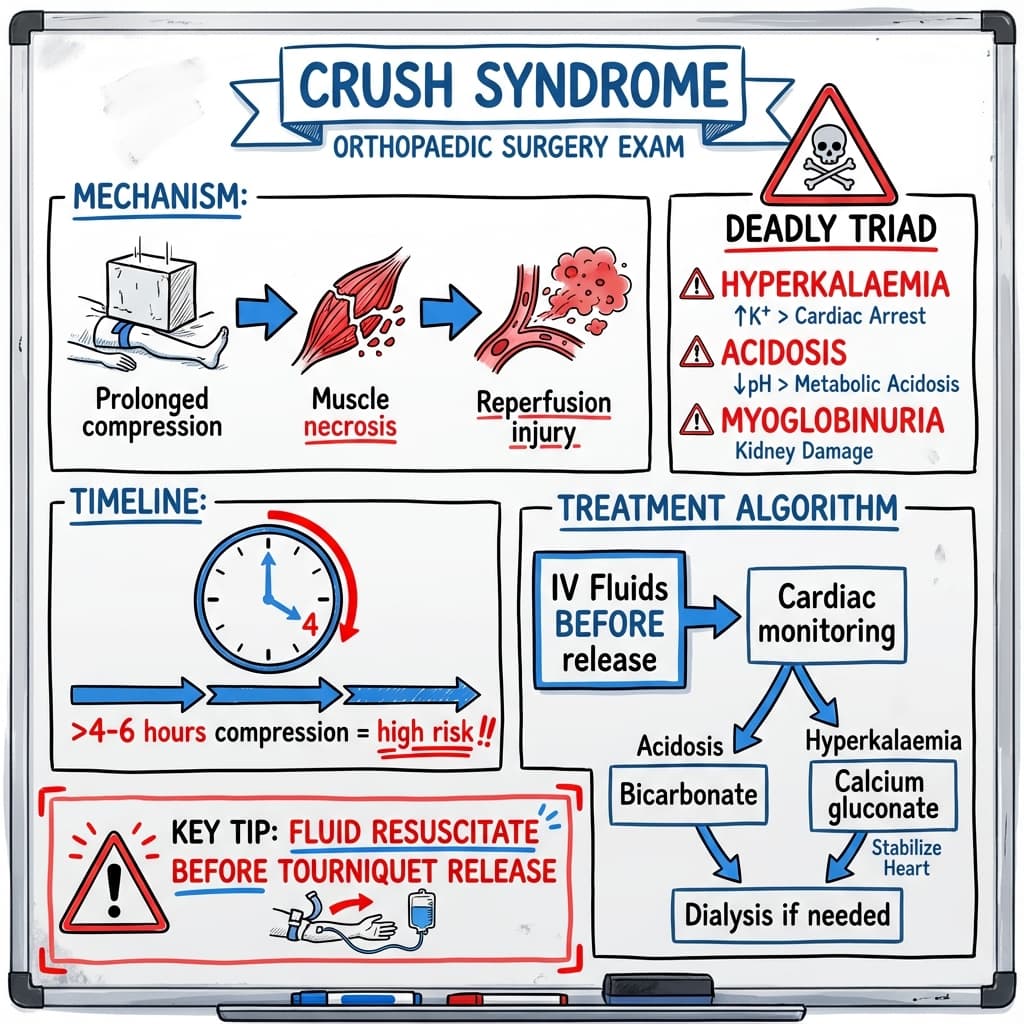
Crush Syndrome Algorithm
Reperfusion injury management - deadly triad of hyperkalaemia, acidosis, myoglobinuria
💡 Resuscitate BEFORE tourniquet release - hyperkalaemia kills
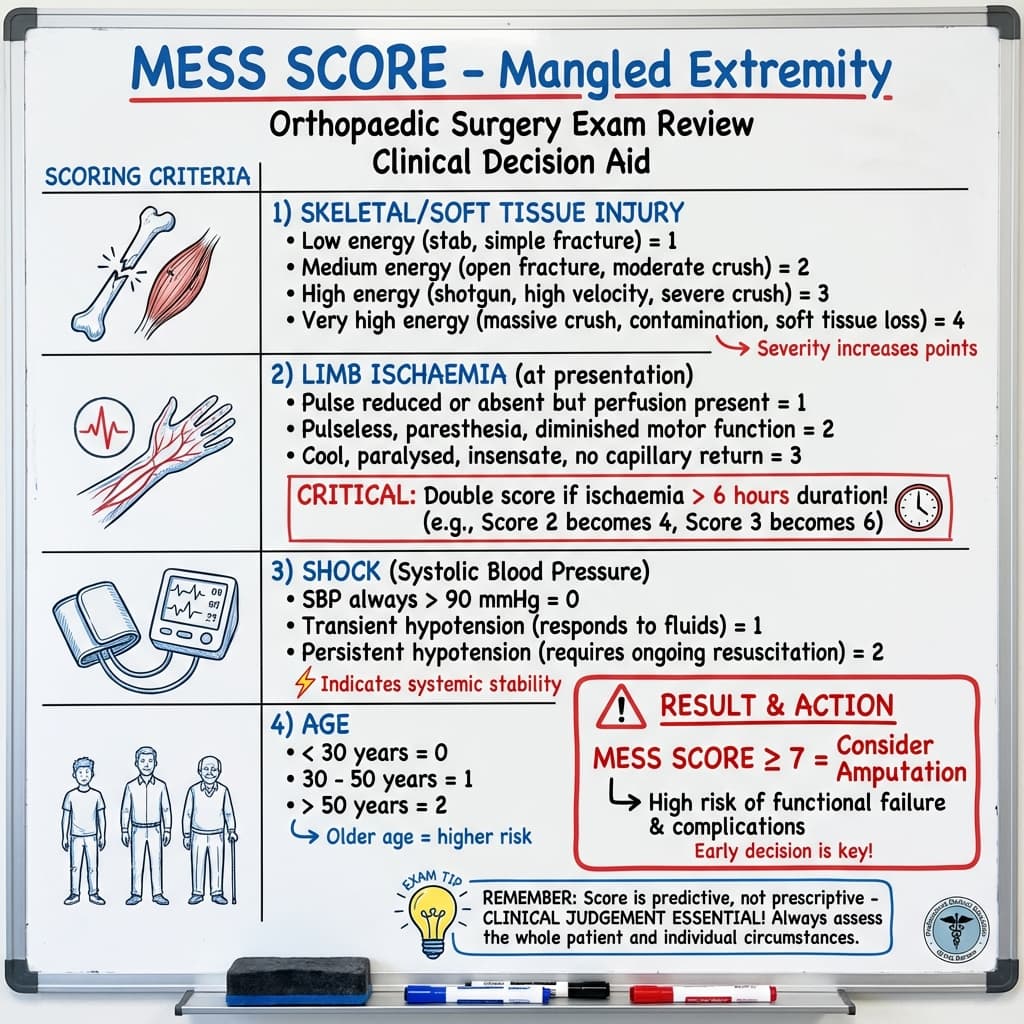
MESS Score - Mangled Extremity
Mangled Extremity Severity Score for amputation decision
💡 Score is predictive not prescriptive - clinical judgement essential
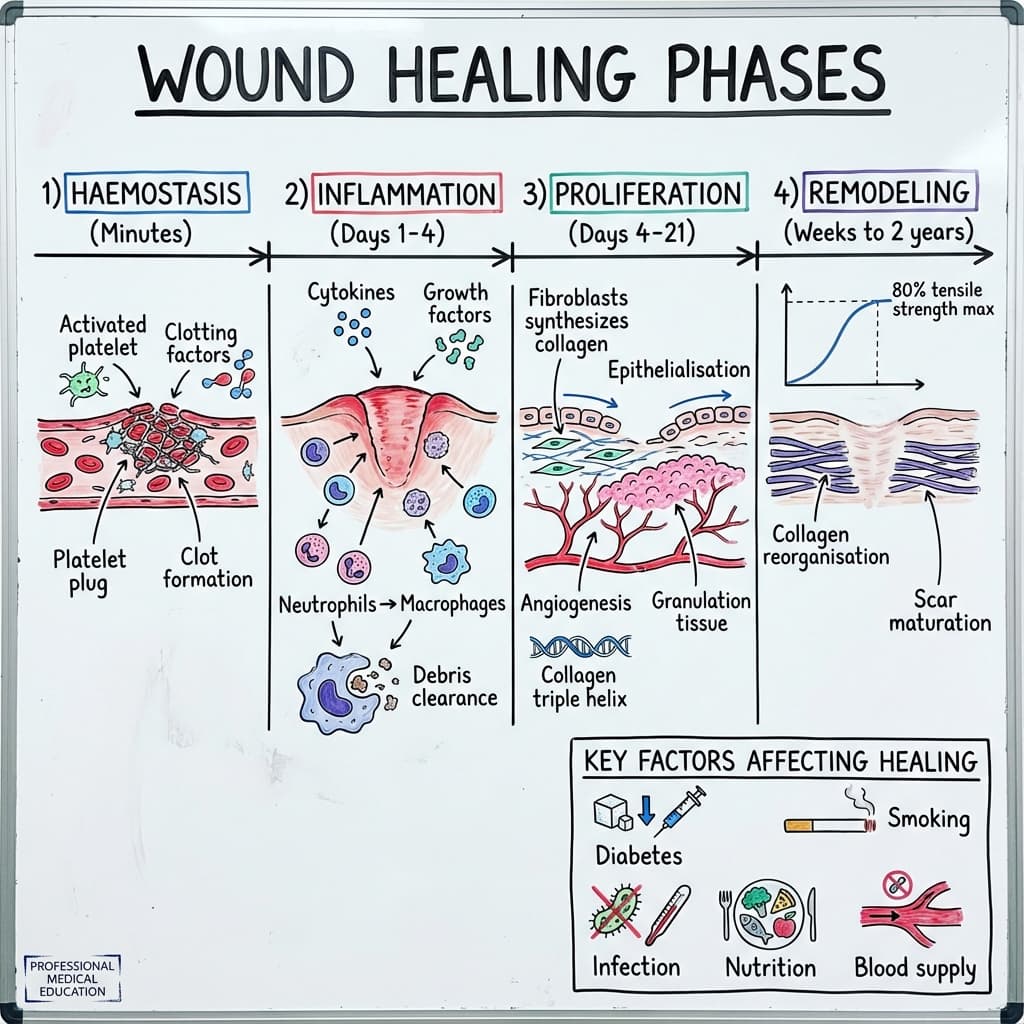
Wound Healing Phases
Haemostasis → Inflammation → Proliferation → Remodeling
💡 Factors affecting: Diabetes, Smoking, Infection, Nutrition
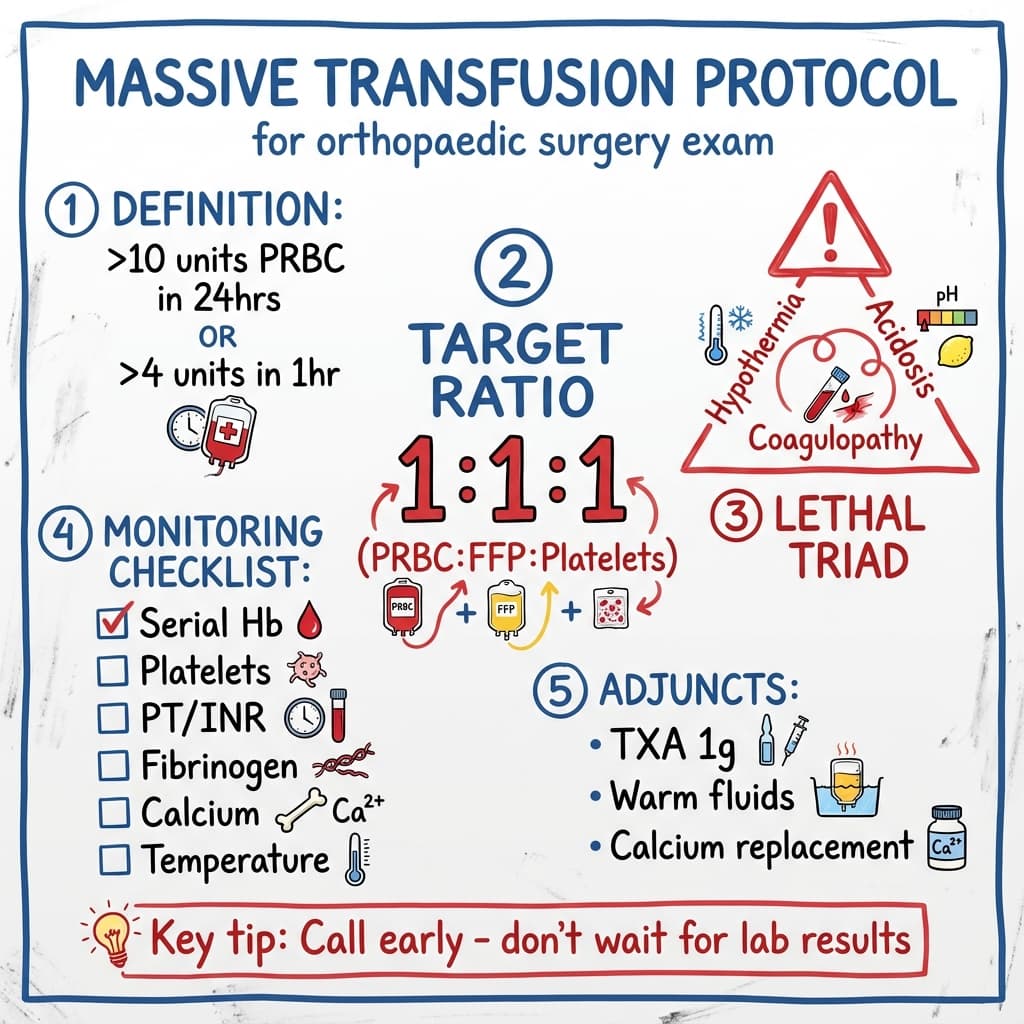
Massive Transfusion Protocol
1:1:1 ratio, lethal triad, monitoring and adjuncts
💡 Call MTP early - don't wait for lab results
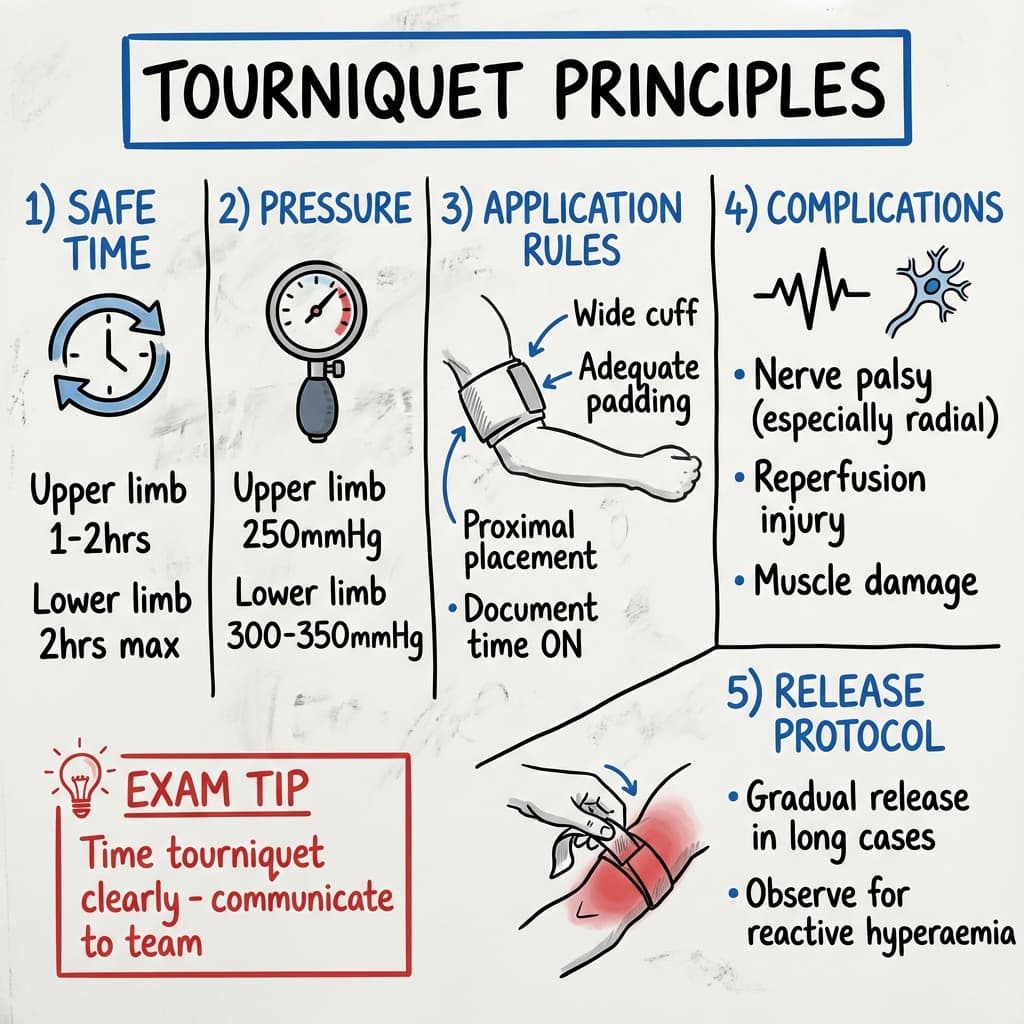
Tourniquet Principles
Safe duration, pressure settings, complications
💡 Communicate time to team - reperfusion injury risk
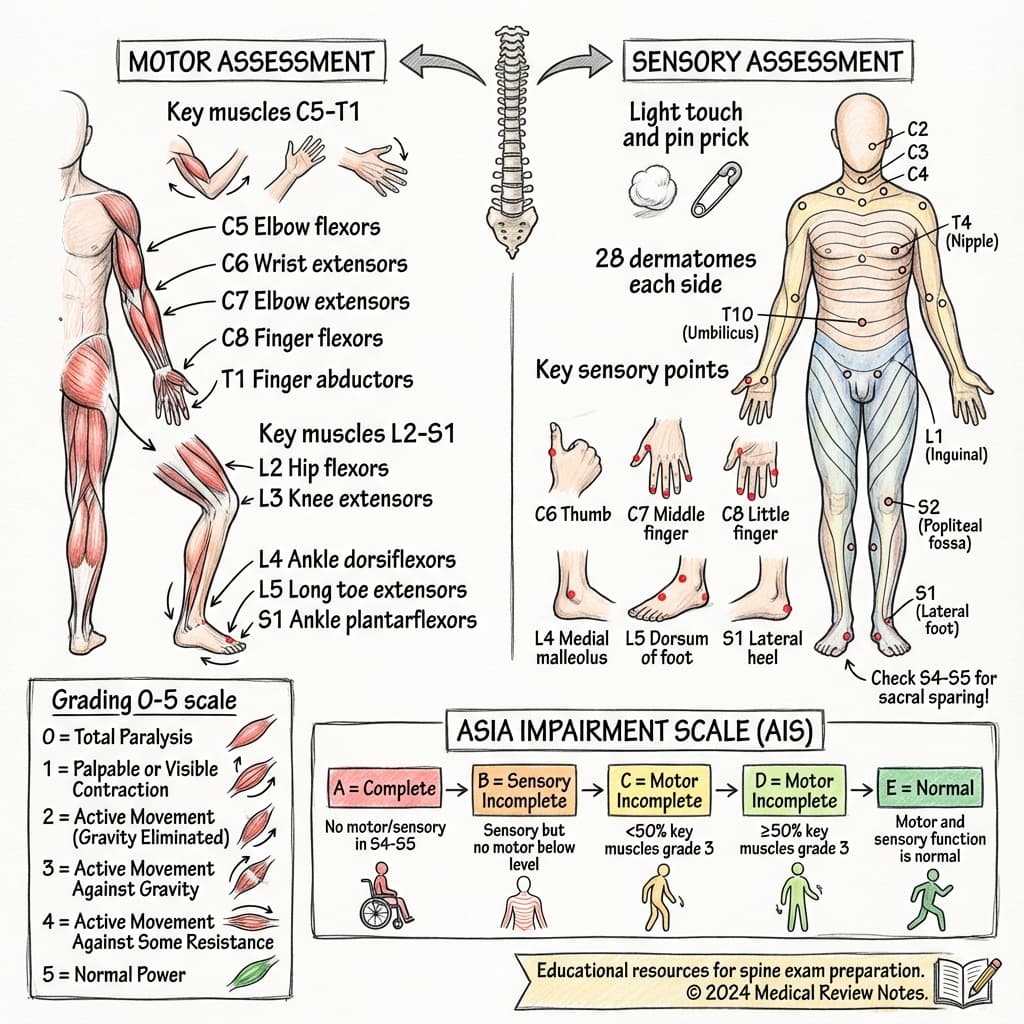
ASIA Spinal Cord Assessment
Motor and sensory assessment, Impairment Scale A-E
💡 A=Complete, B=Sensory incomplete, C/D=Motor incomplete, E=Normal
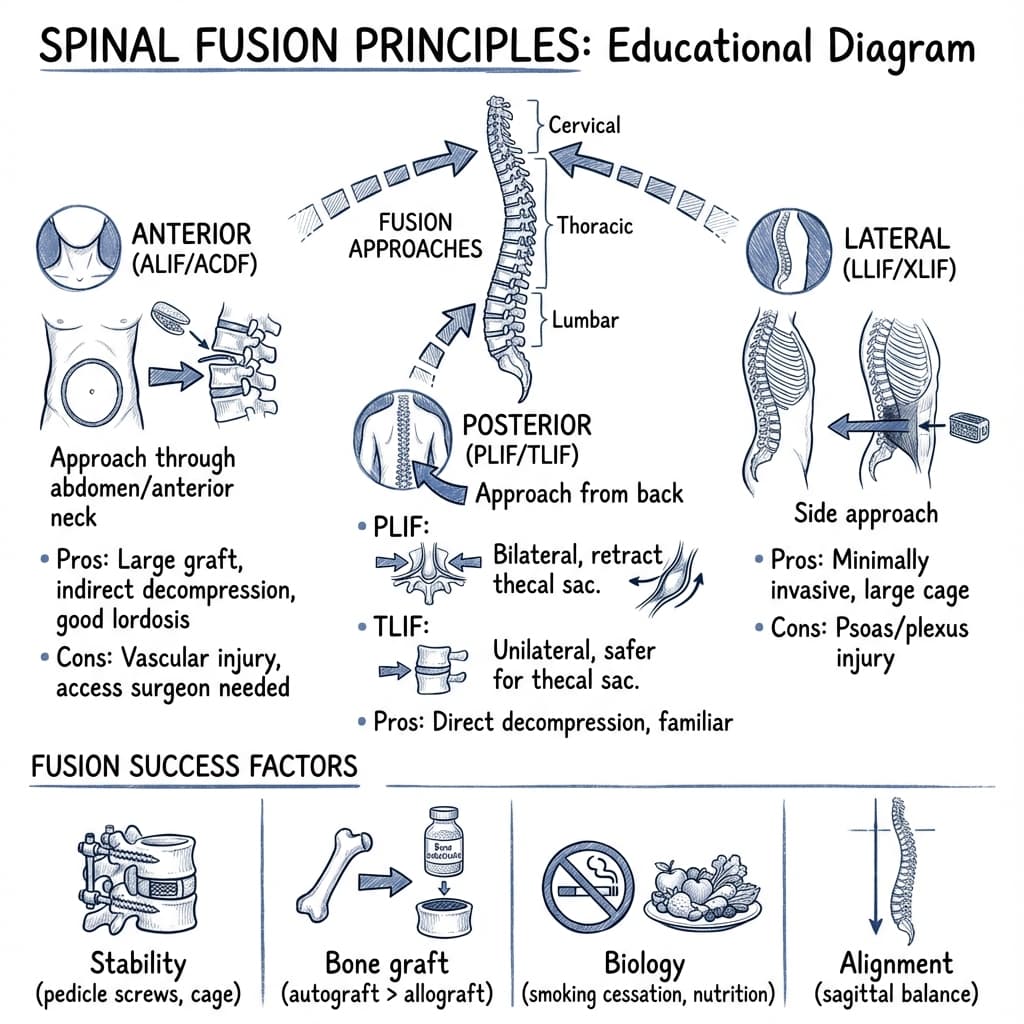
Spinal Fusion Approaches
ALIF, PLIF, TLIF, LLIF approach comparison
💡 Smoking cessation critical for fusion success
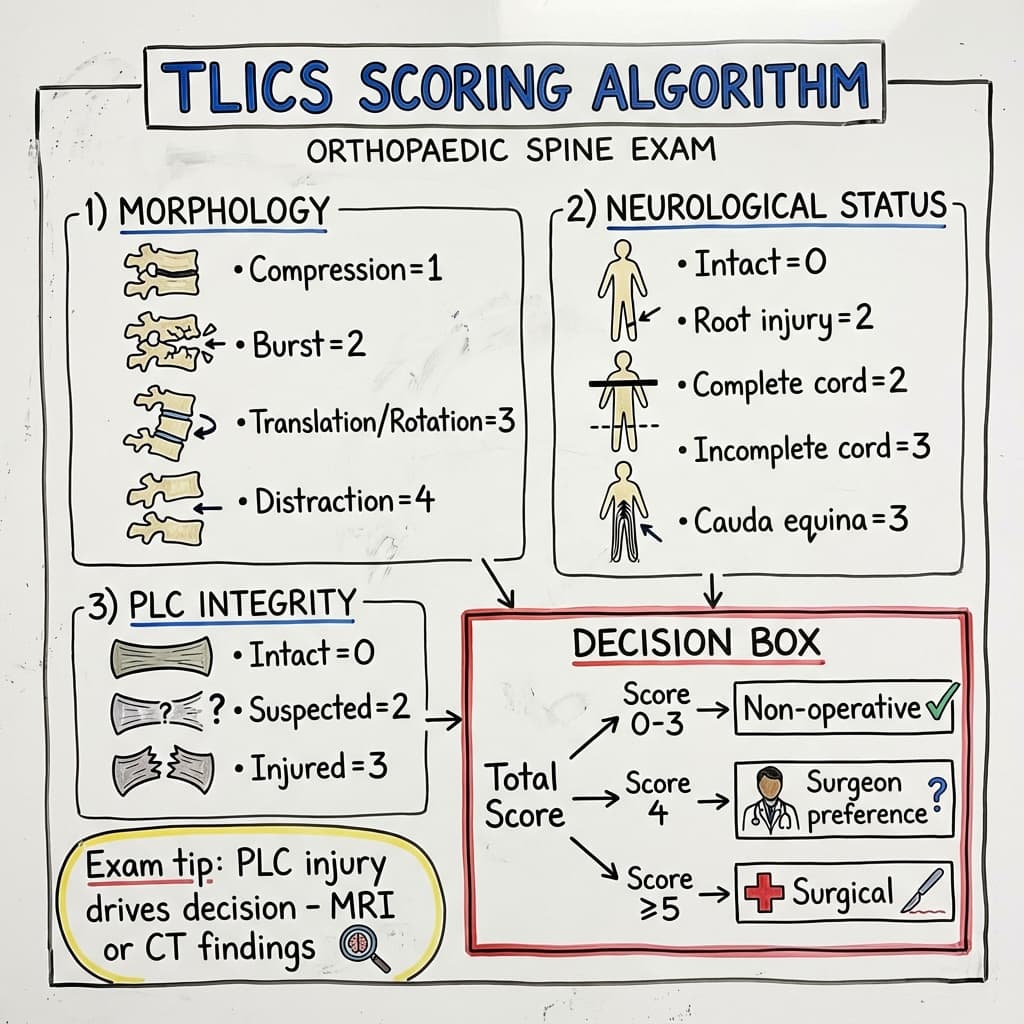
TLICS Scoring Algorithm
Thoracolumbar Injury Classification - morphology, neurology, PLC
💡 PLC injury drives decision - assess on MRI
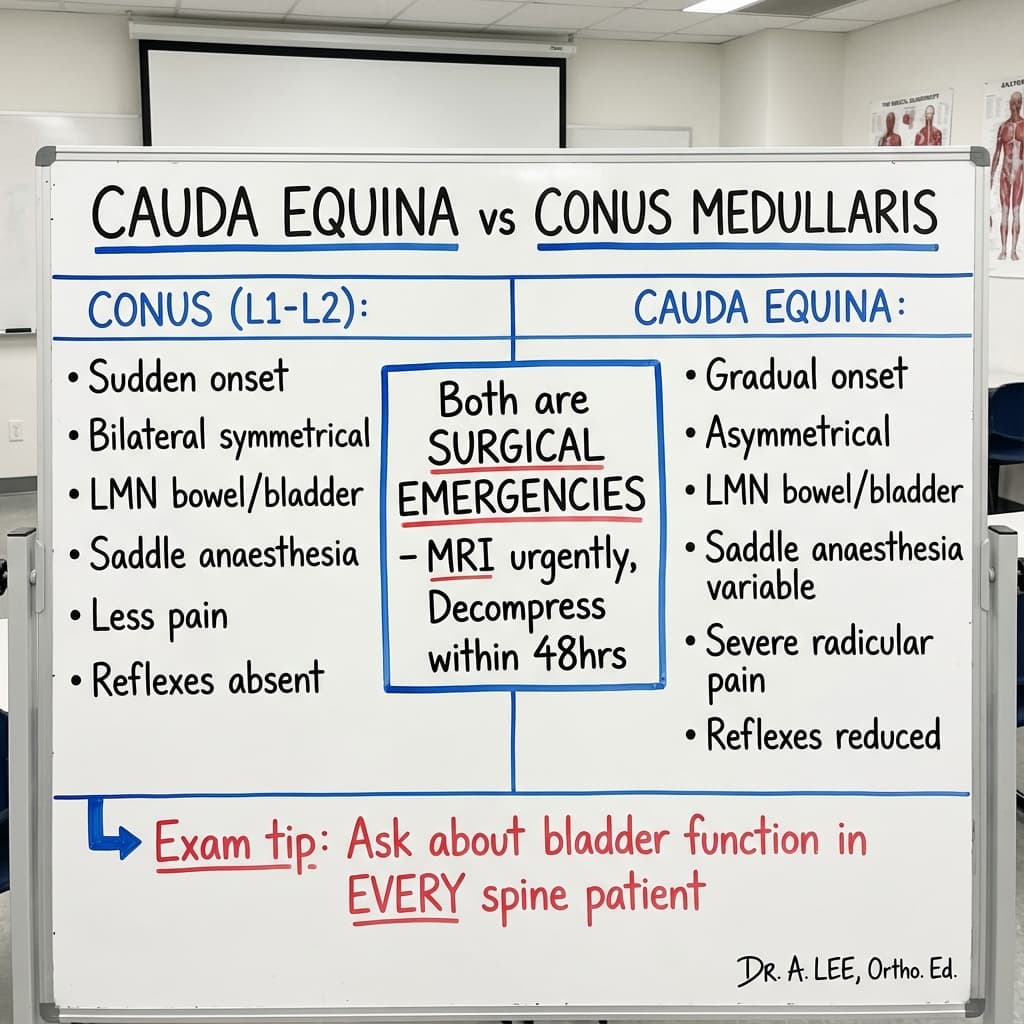
Cauda Equina vs Conus
Differentiating cauda equina from conus medullaris syndrome
💡 Ask about bladder function in EVERY spine patient
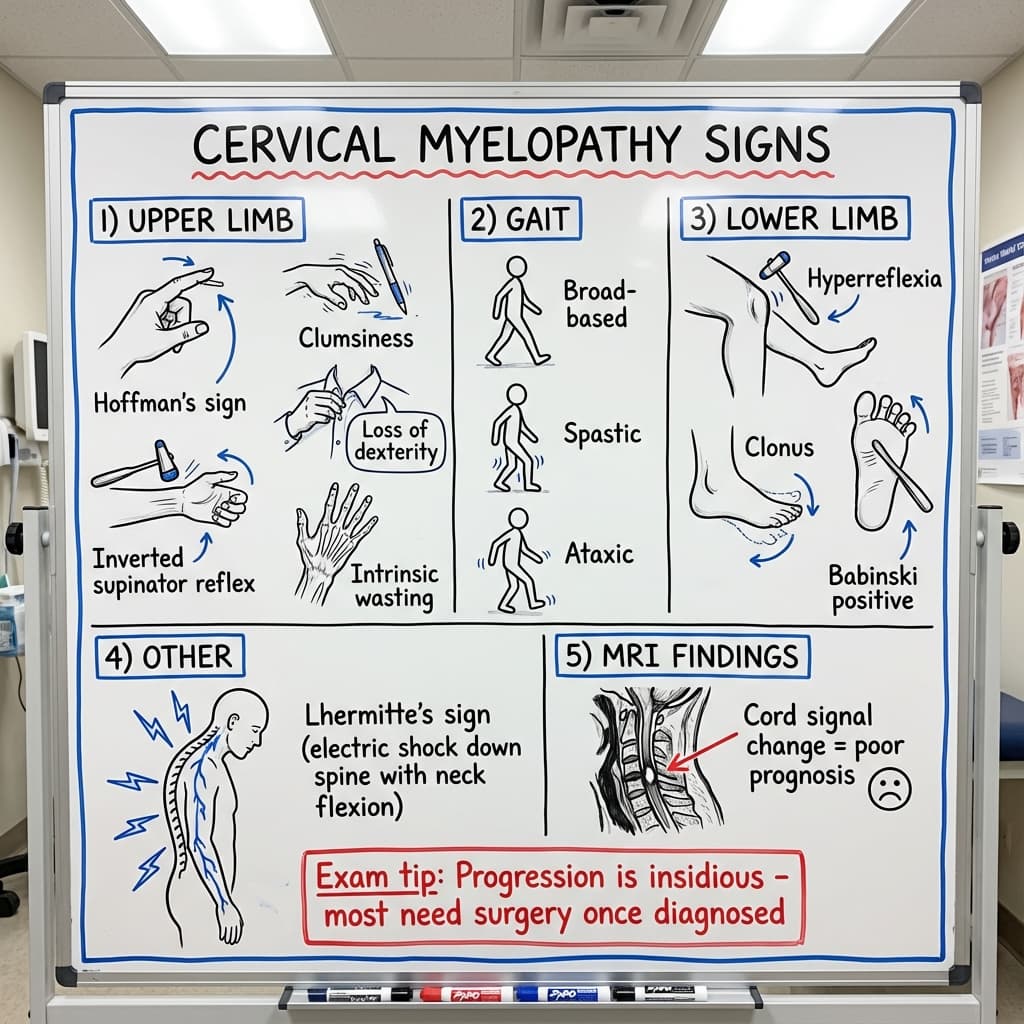
Cervical Myelopathy Signs
Upper motor neuron signs in cervical cord compression
💡 Progression is insidious - most need surgery once diagnosed
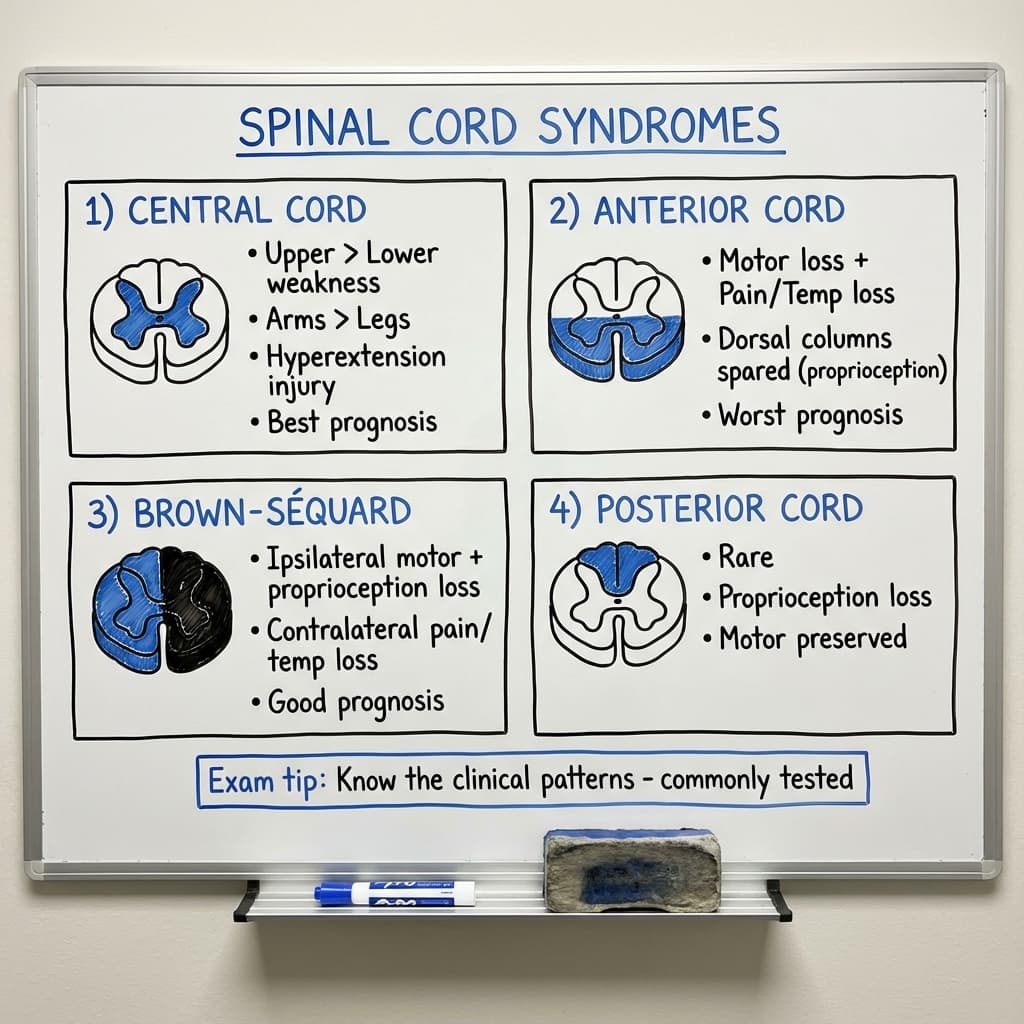
Spinal Cord Syndromes
Central, Anterior, Brown-Séquard, Posterior cord syndromes
💡 Know the clinical patterns - commonly tested
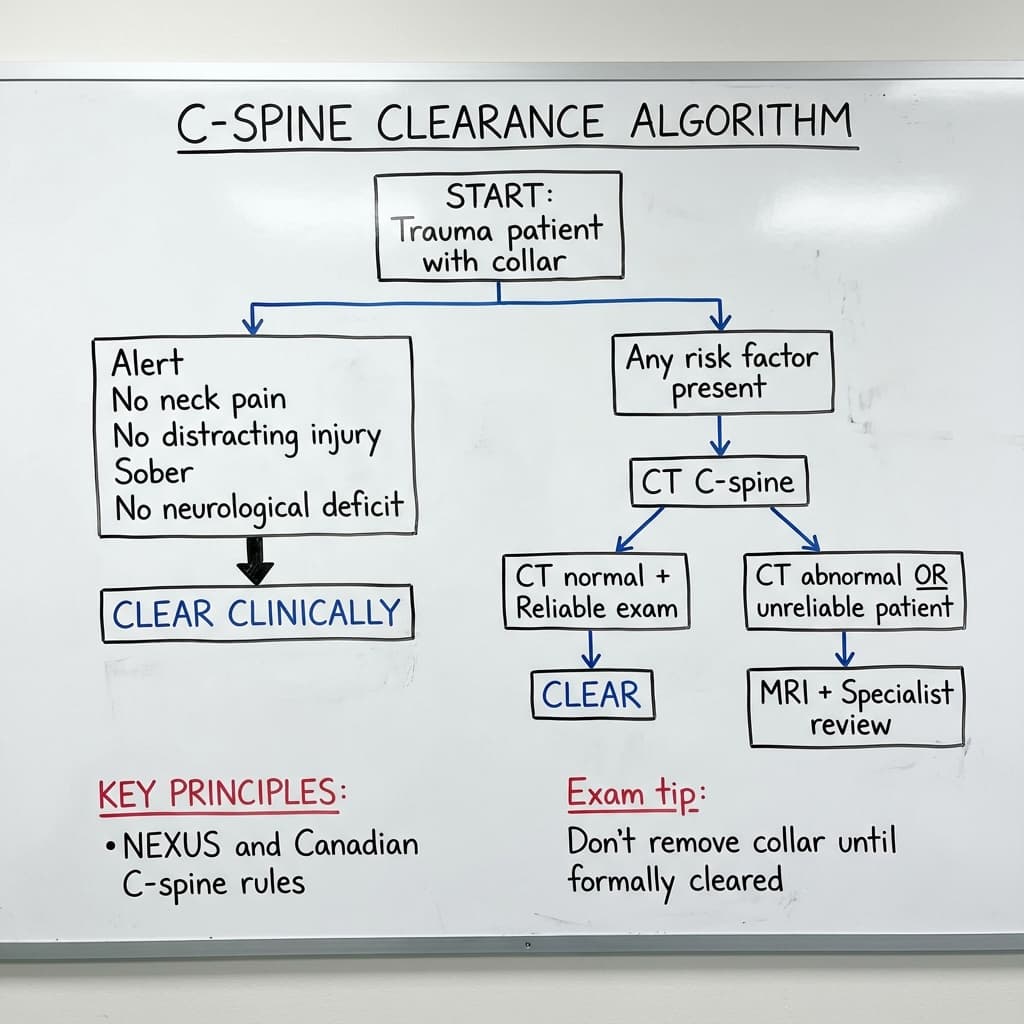
C-Spine Clearance Algorithm
NEXUS and Canadian C-spine rule application
💡 Don't remove collar until formally cleared
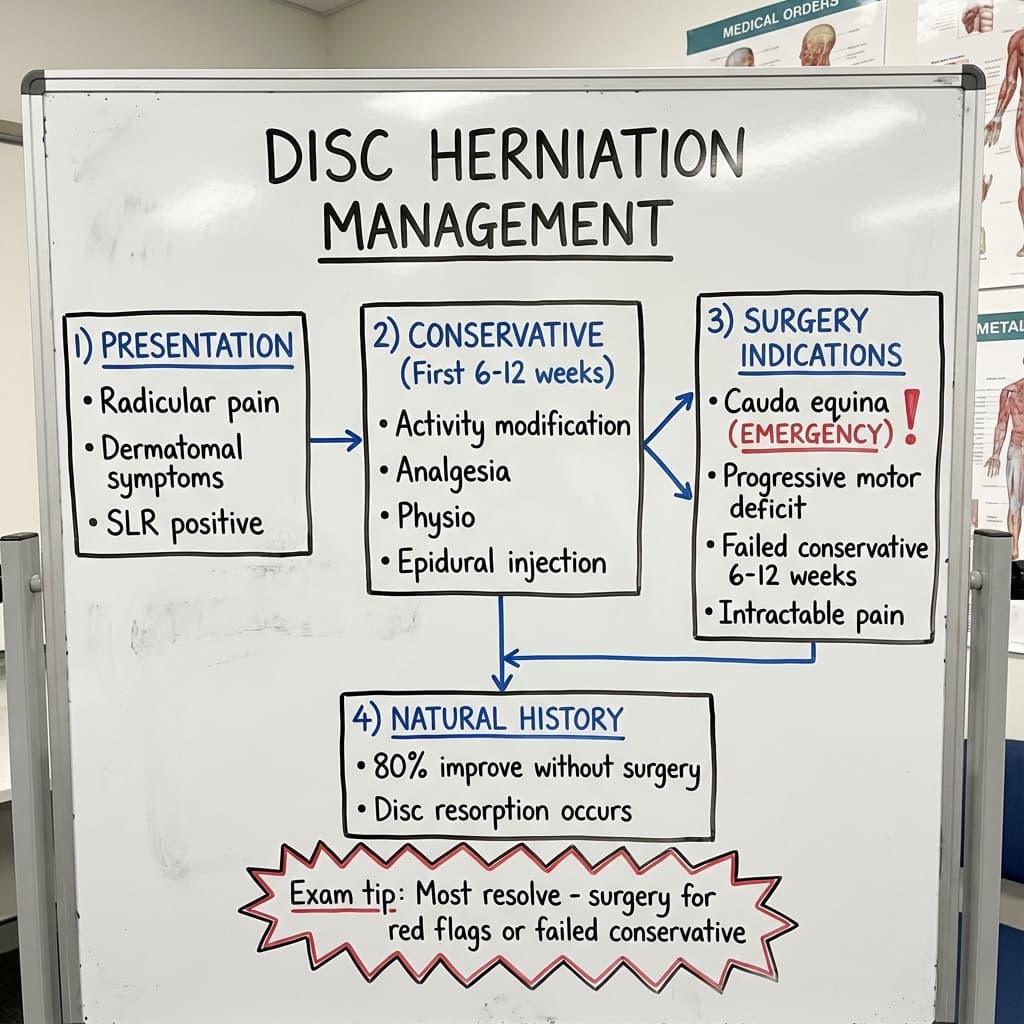
Disc Herniation Management
Conservative first, surgery for red flags or failed conservative
💡 Most resolve - surgery for red flags or failed conservative
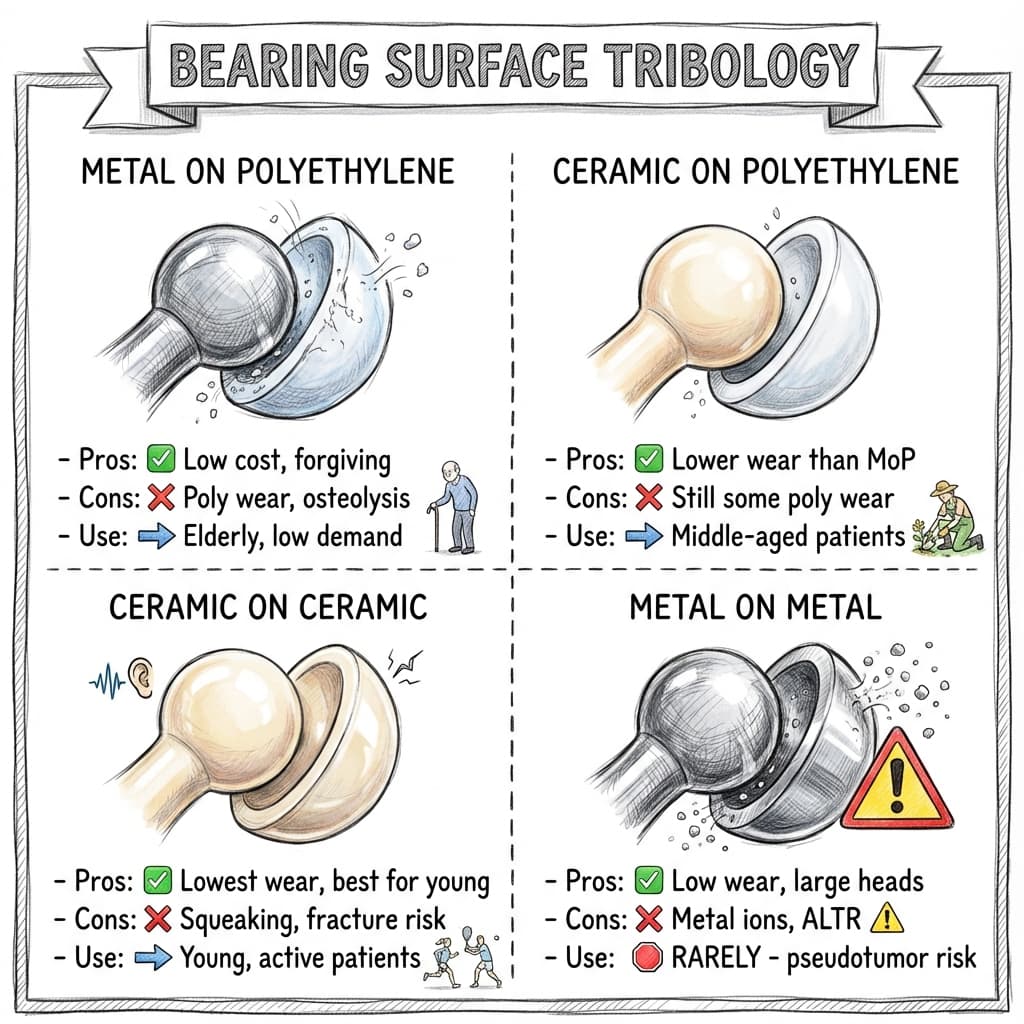
Arthroplasty Bearing Surfaces
MoP, CoP, CoC, MoM - pros, cons, and indications
💡 CoC for young/active, MoP for elderly, avoid MoM
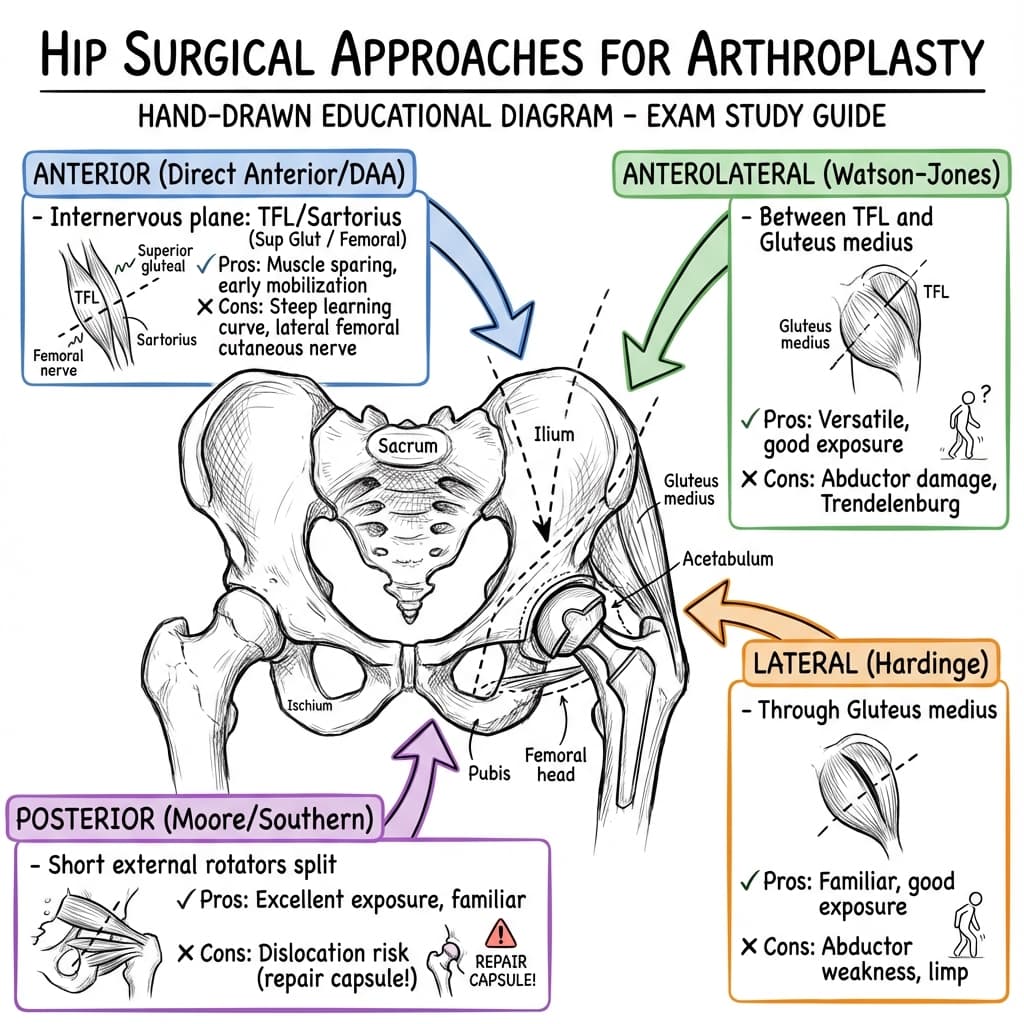
Hip Surgical Approaches
Anterior, Anterolateral, Lateral, Posterior approach comparison
💡 Posterior has highest dislocation risk - repair capsule!
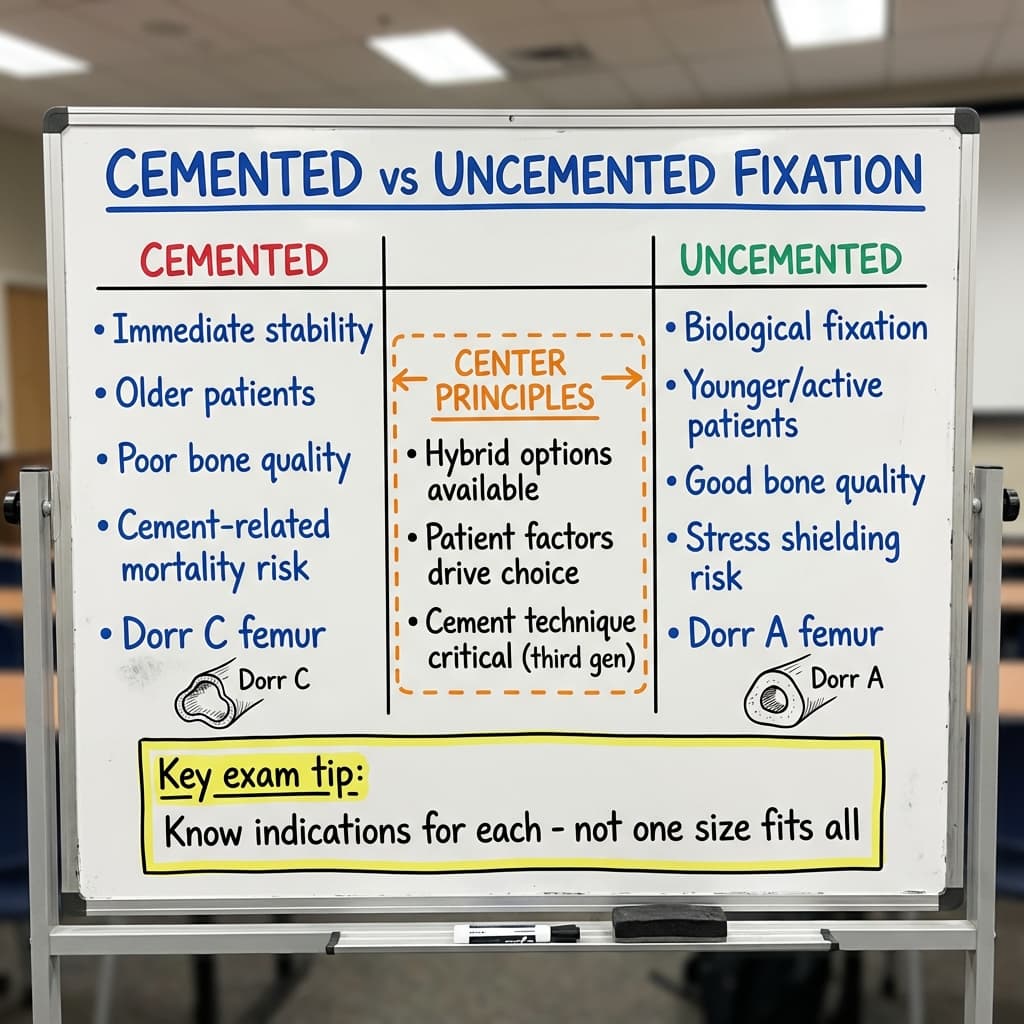
Cemented vs Uncemented Fixation
Indications, patient factors, and outcomes comparison
💡 Know indications for each - not one size fits all
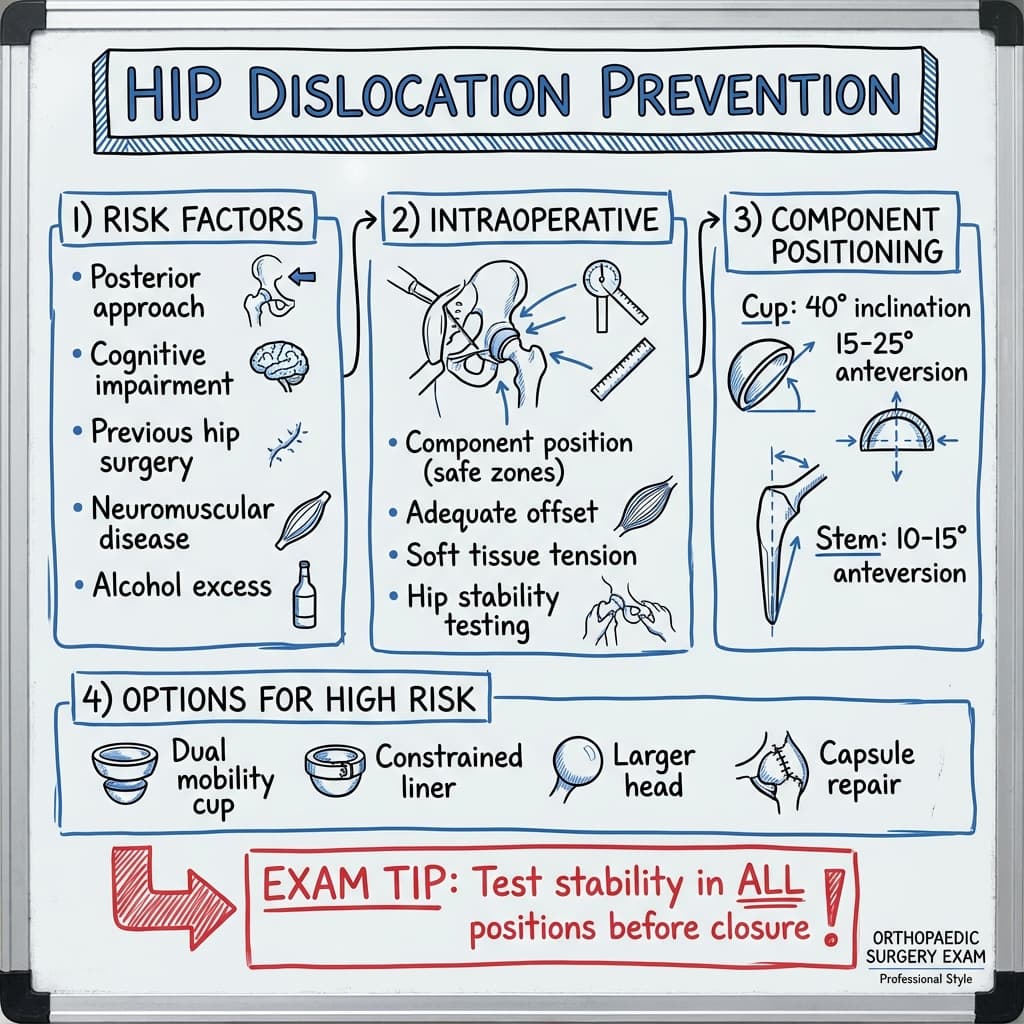
Hip Dislocation Prevention
Risk factors, positioning, and prevention strategies
💡 Test stability in ALL positions before closure
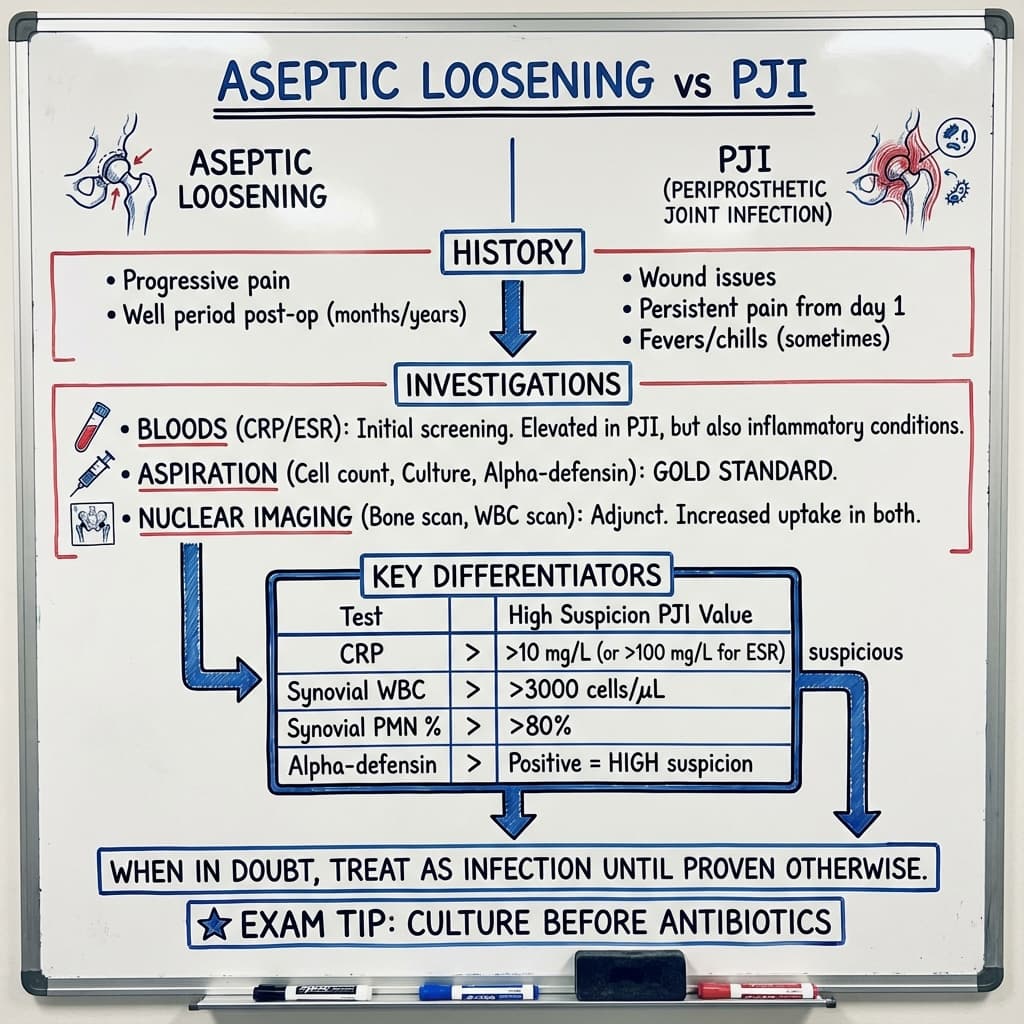
Aseptic Loosening vs PJI
Differentiating aseptic loosening from periprosthetic joint infection
💡 CULTURE BEFORE ANTIBIOTICS
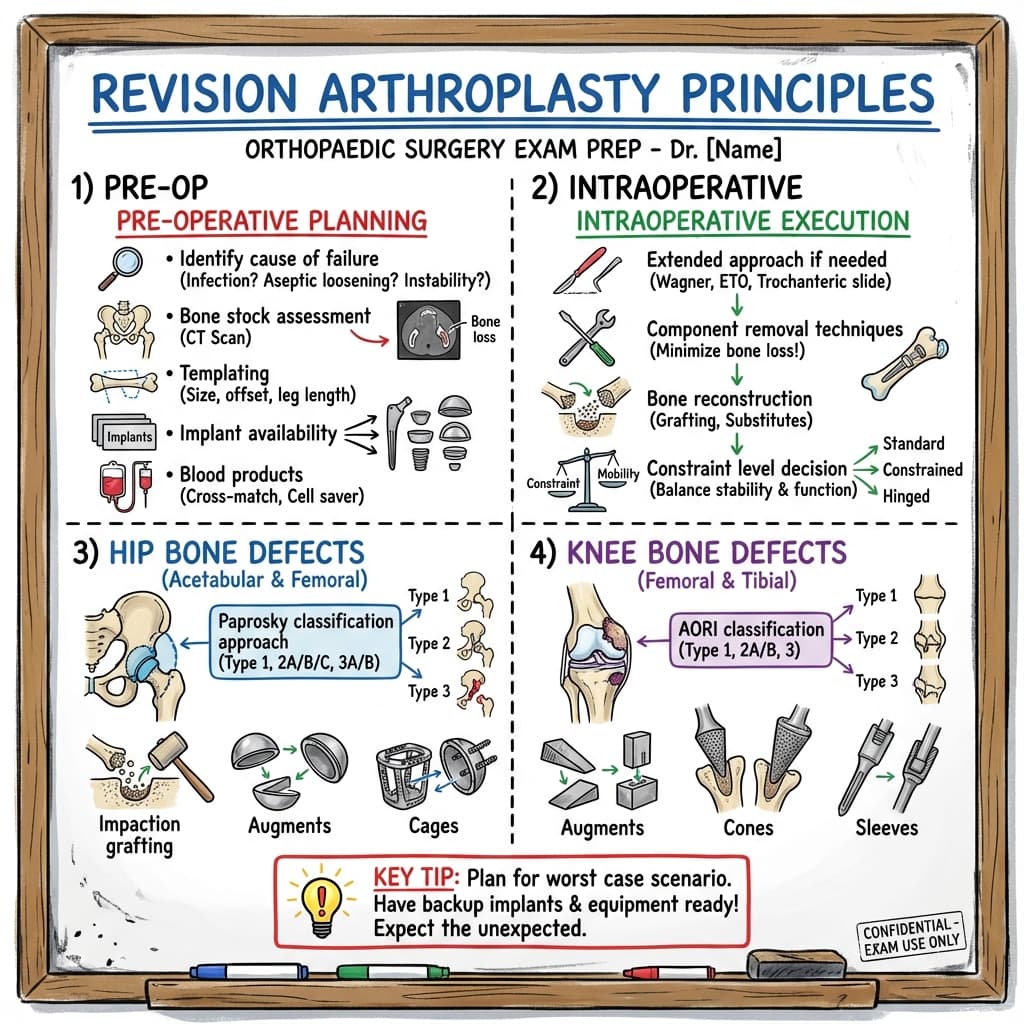
Revision Arthroplasty Principles
Pre-op planning, bone defect management, implant selection
💡 Plan for worst case scenario
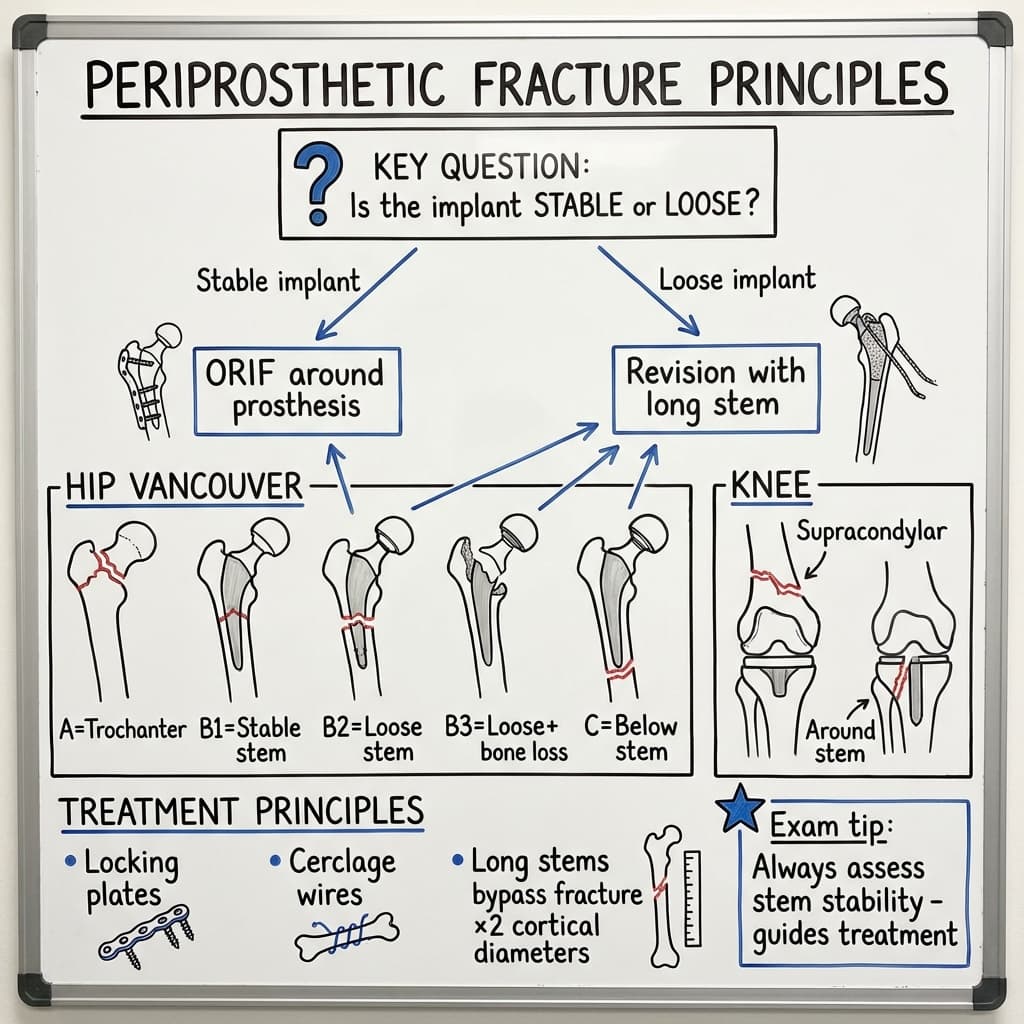
Periprosthetic Fracture Principles
Vancouver classification and treatment algorithm
💡 Always assess stem stability - guides treatment
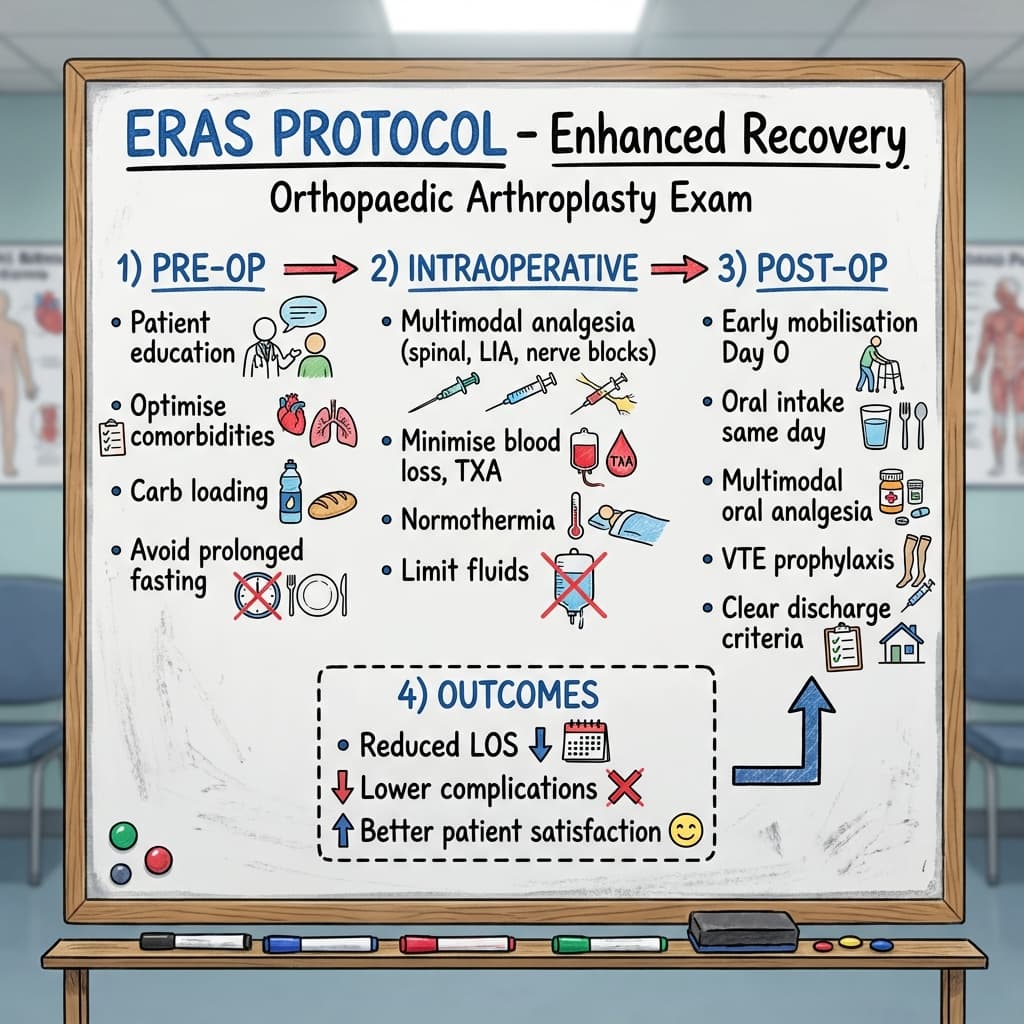
ERAS Protocol - Enhanced Recovery
Pre-op, intraoperative, and post-op optimisation
💡 Reduced LOS, lower complications, better satisfaction
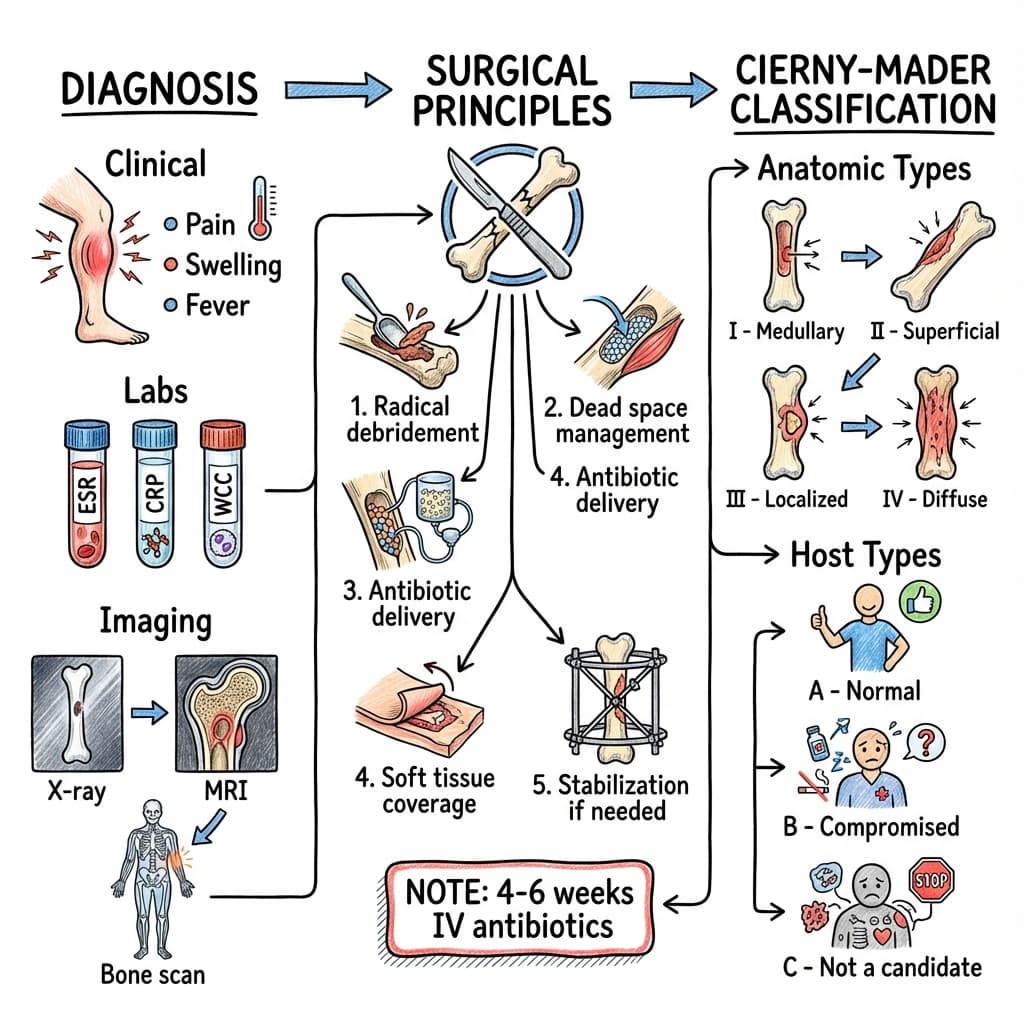
Osteomyelitis Management
Management principles and Cierny-Mader concepts
💡 Anatomic types I-IV, Host types A-C
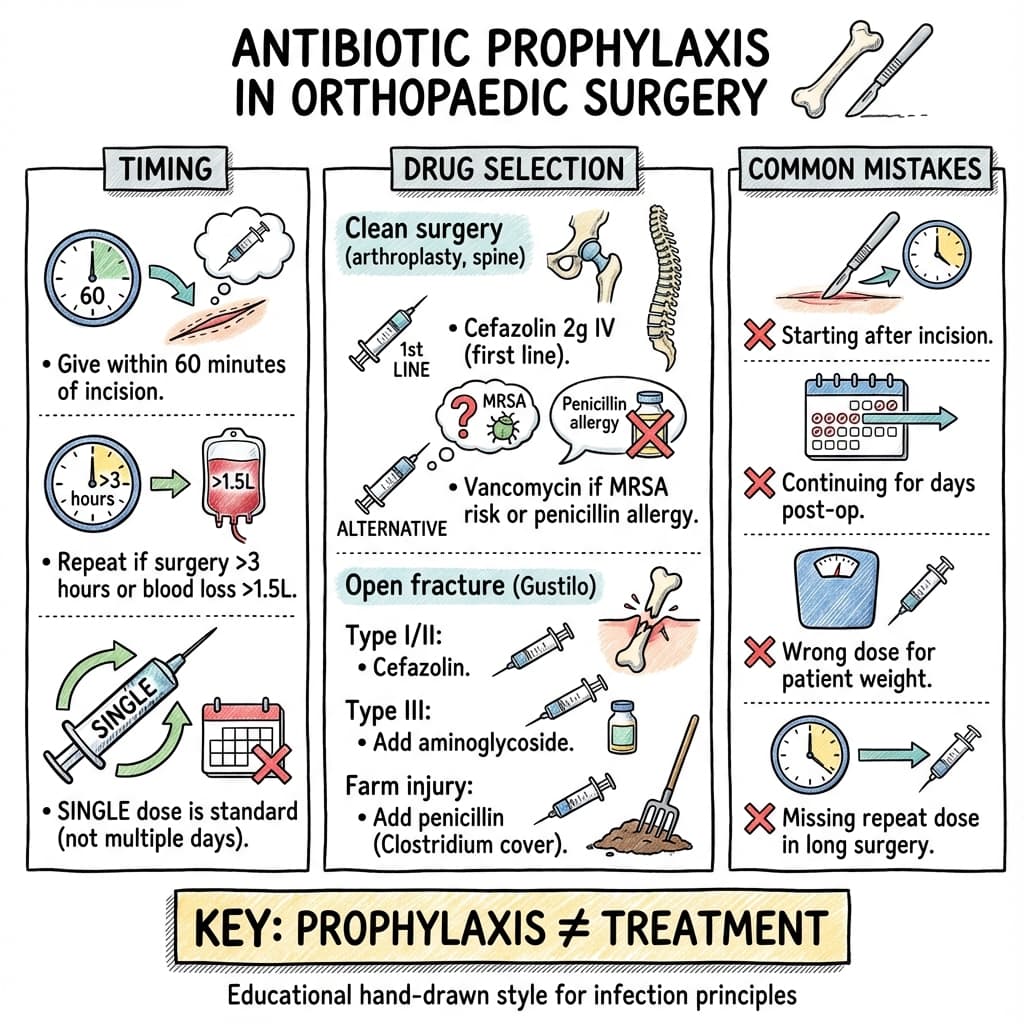
Antibiotic Prophylaxis
Timing, drug selection, open fracture protocols
💡 SINGLE dose, within 60 mins of incision
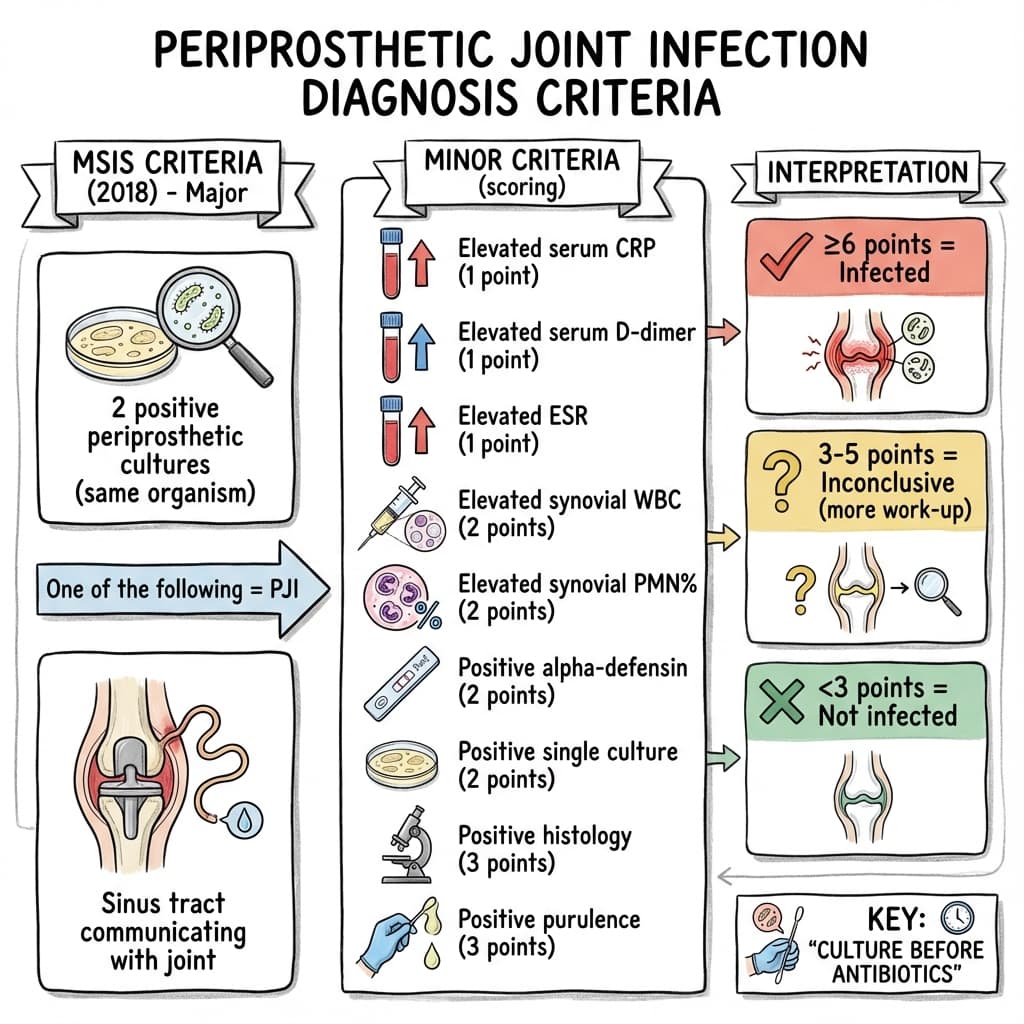
PJI Diagnosis (MSIS Criteria)
Major and minor criteria, scoring system for diagnosis
💡 CULTURE BEFORE ANTIBIOTICS
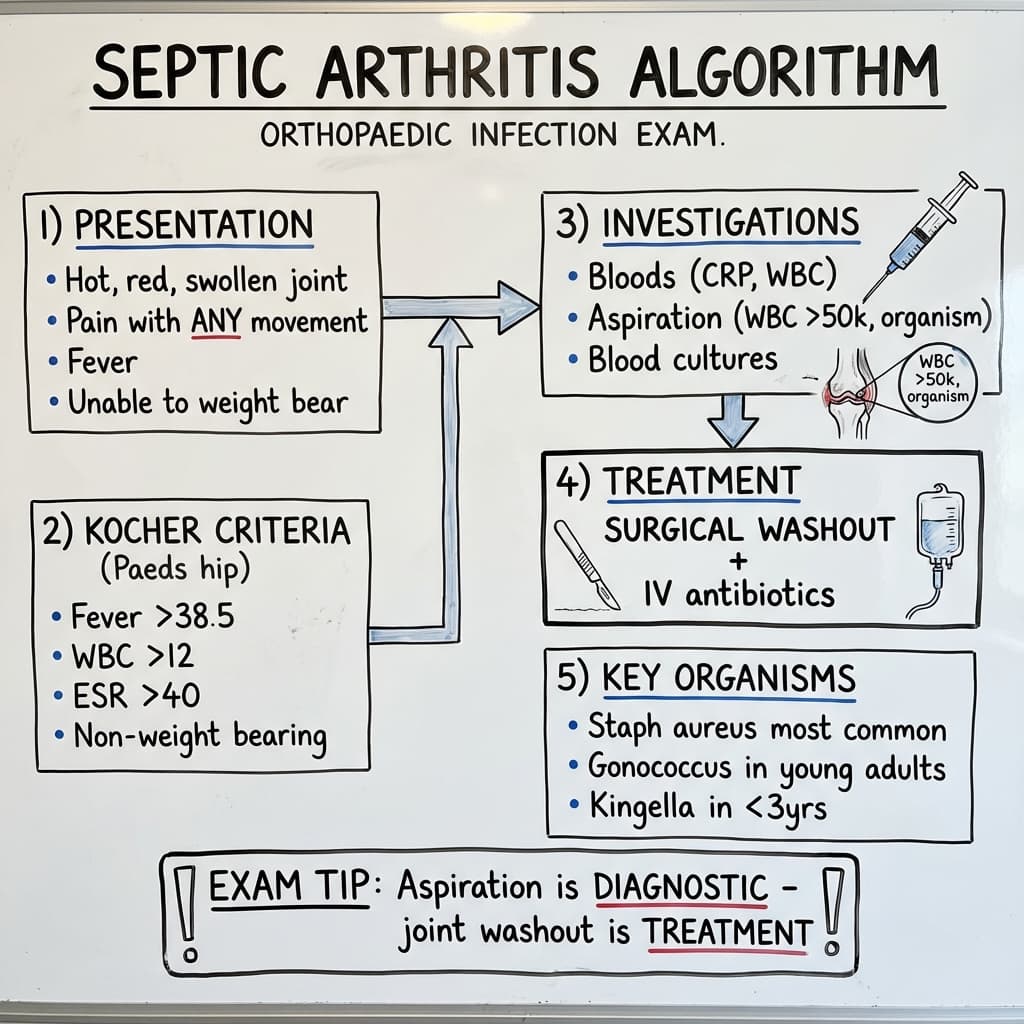
Septic Arthritis Algorithm
Kocher criteria, investigations, and treatment
💡 Aspiration is DIAGNOSTIC - joint washout is TREATMENT
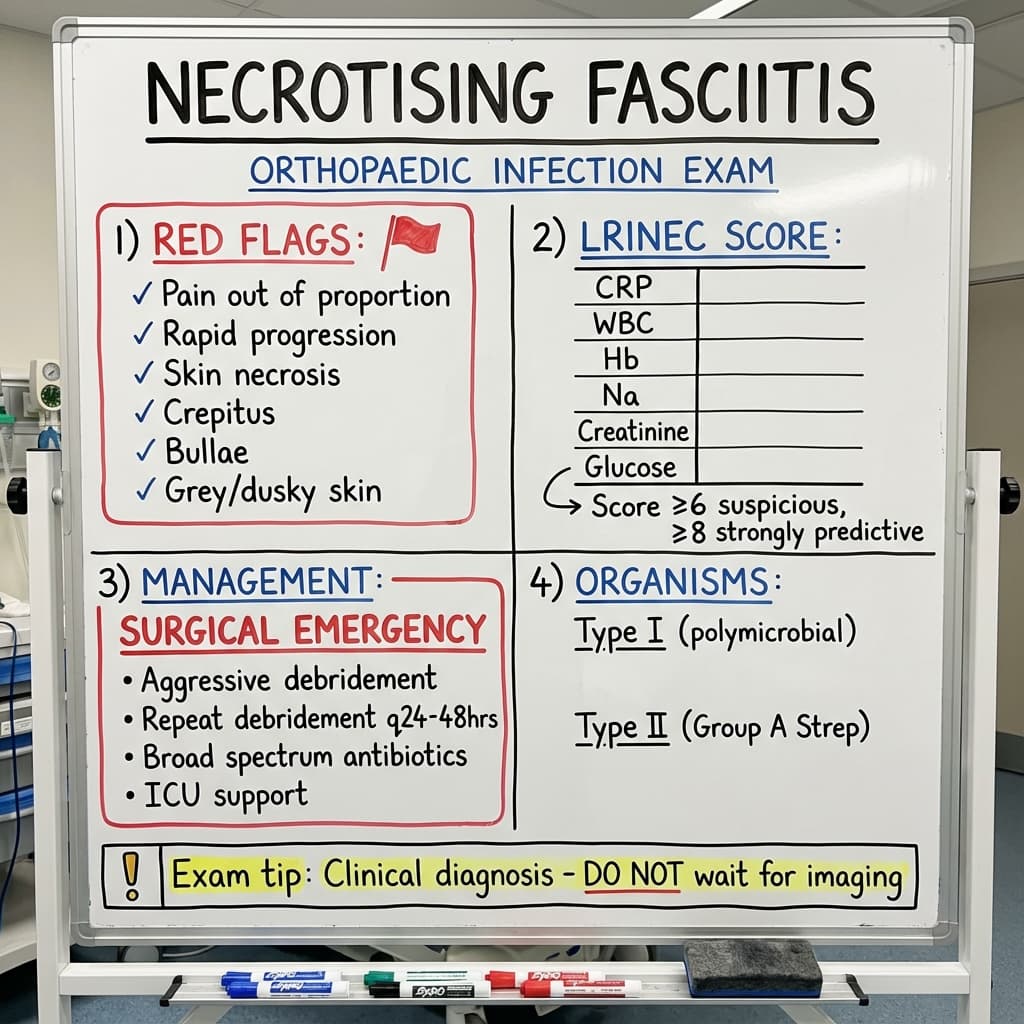
Necrotising Fasciitis
Red flags, LRINEC score, and emergency management
💡 Clinical diagnosis - DO NOT wait for imaging
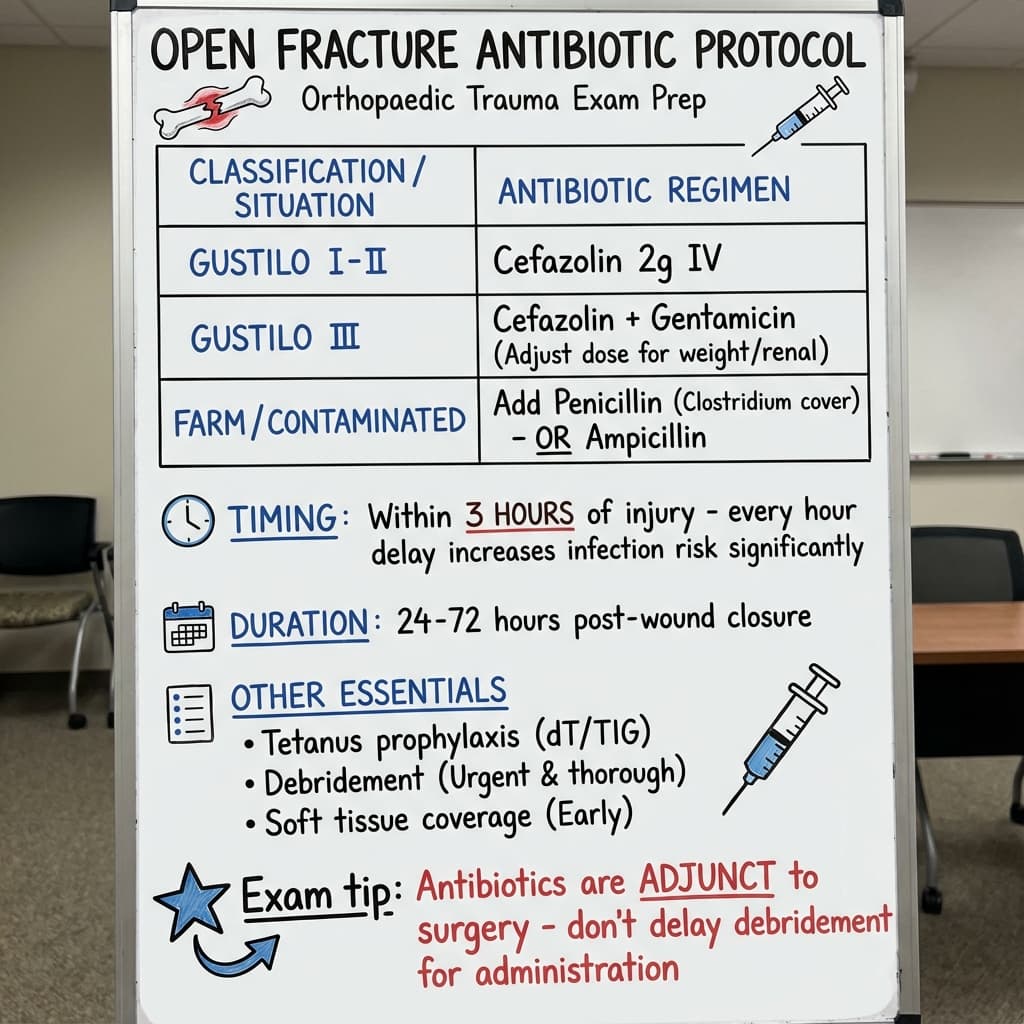
Open Fracture Antibiotics
Gustilo-based antibiotic protocol and timing
💡 Antibiotics are ADJUNCT to surgery - don't delay debridement
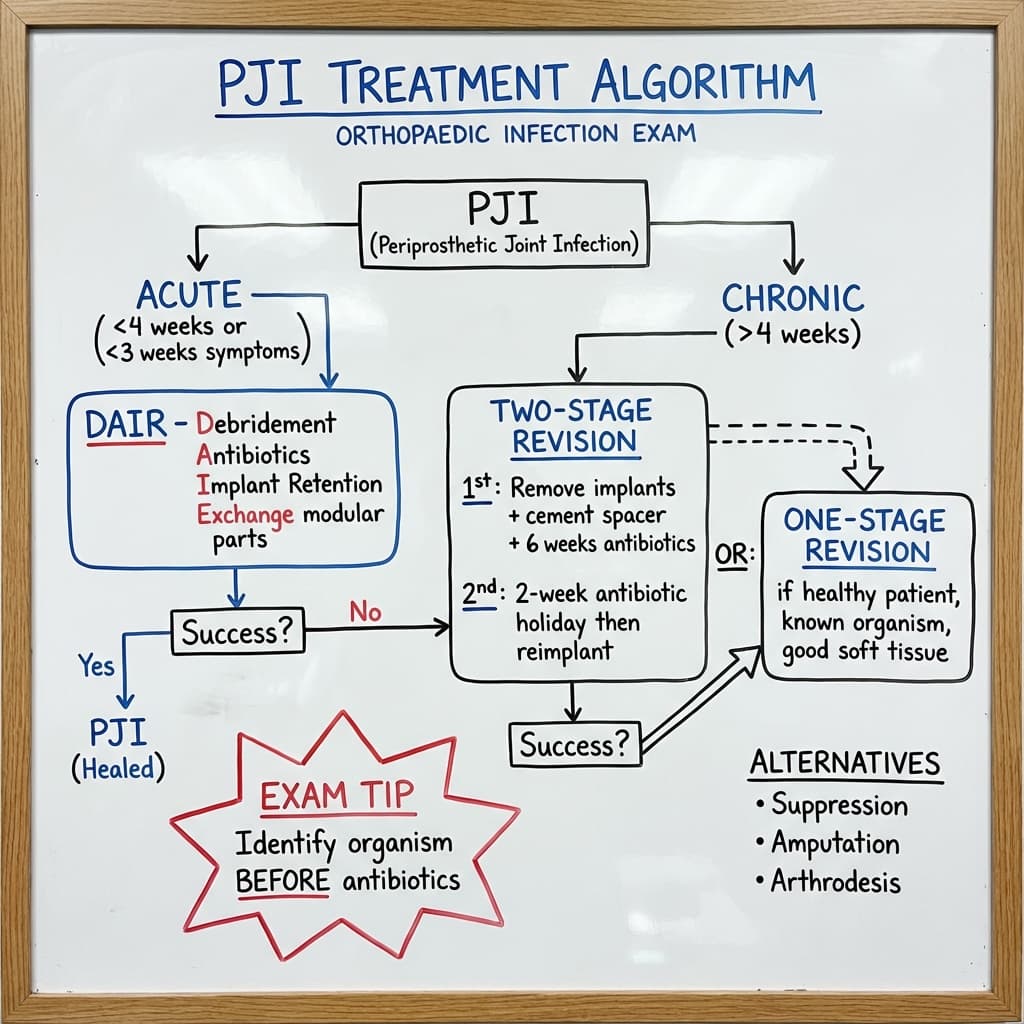
PJI Treatment Algorithm
DAIR vs one-stage vs two-stage revision
💡 Identify organism BEFORE antibiotics
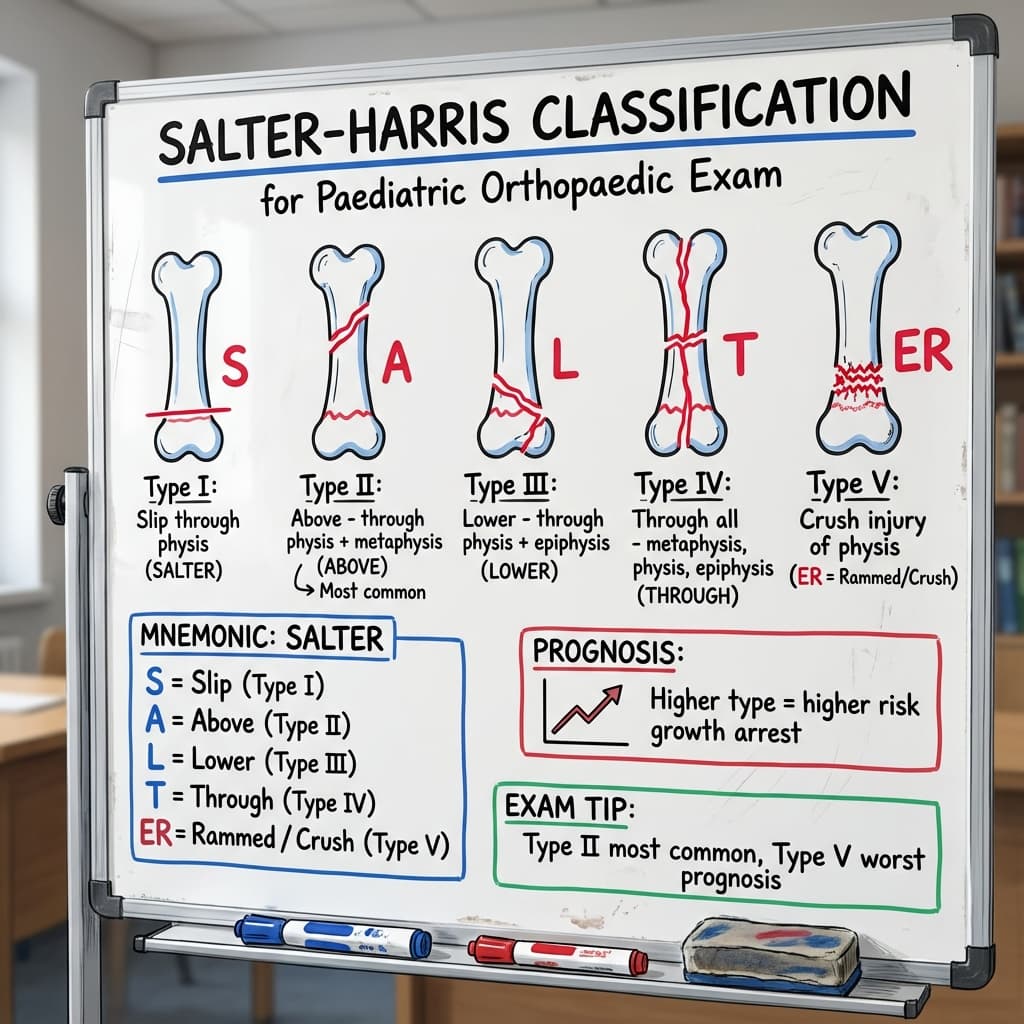
Salter-Harris Classification
Physeal injury classification - SALTER mnemonic
💡 Type II most common, Type V worst prognosis
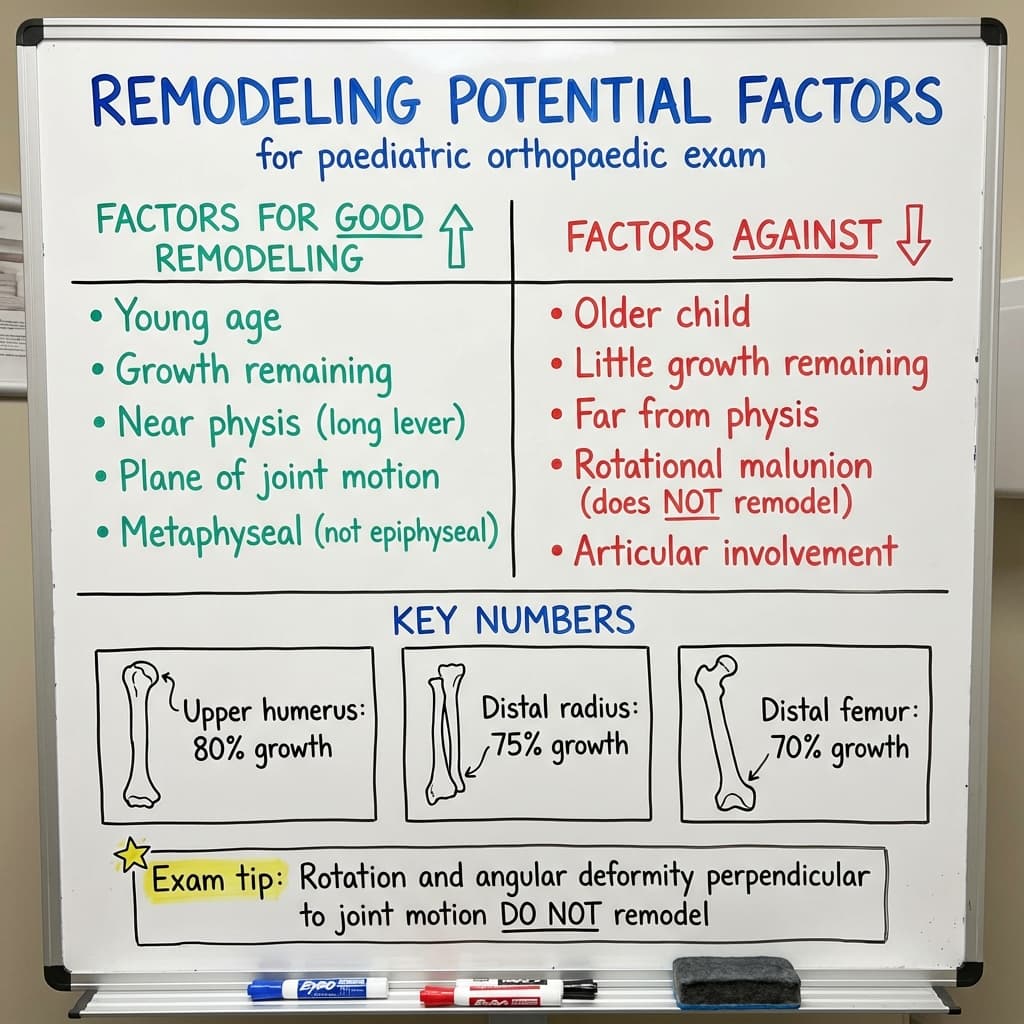
Remodeling Potential Factors
Factors affecting fracture remodeling in children
💡 Rotation and angular deformity ⊥ to joint motion DO NOT remodel
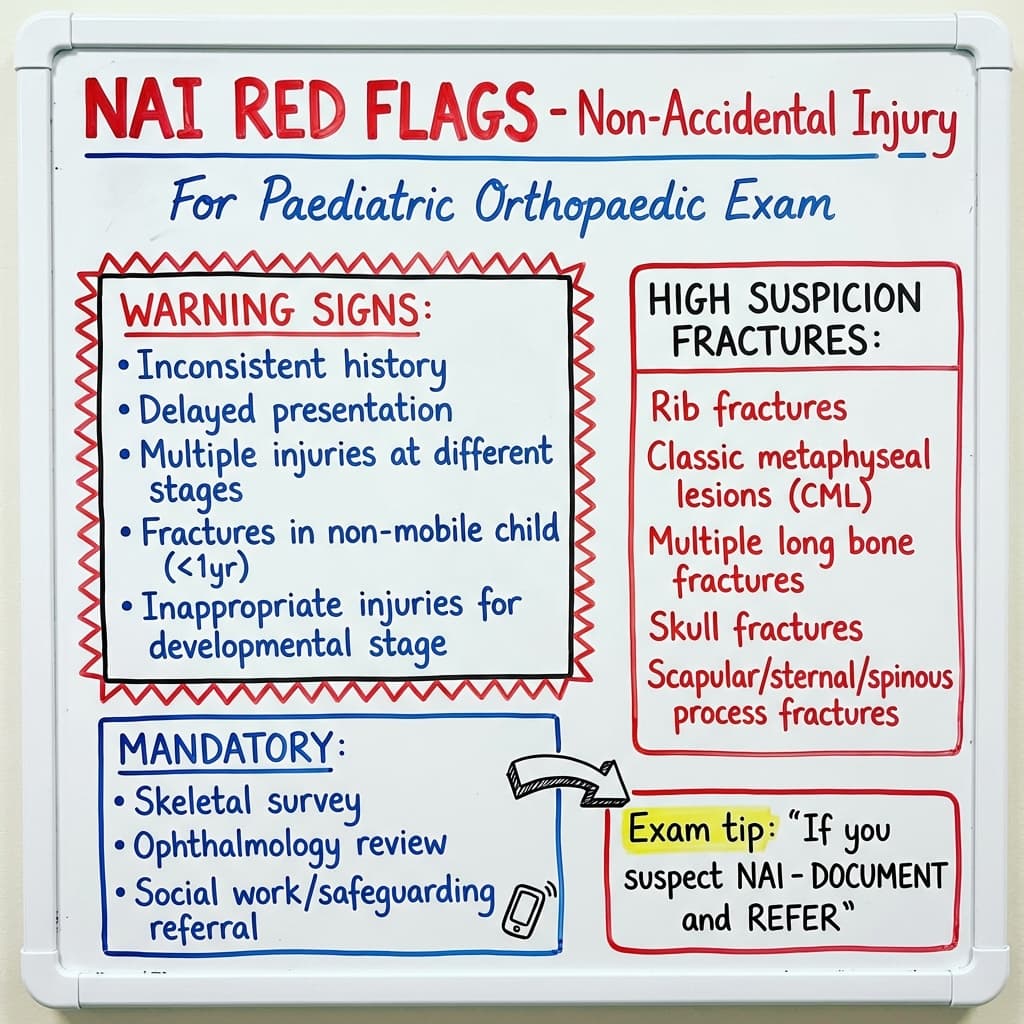
NAI Red Flags
Non-accidental injury warning signs and high-suspicion fractures
💡 If you suspect NAI - DOCUMENT and REFER
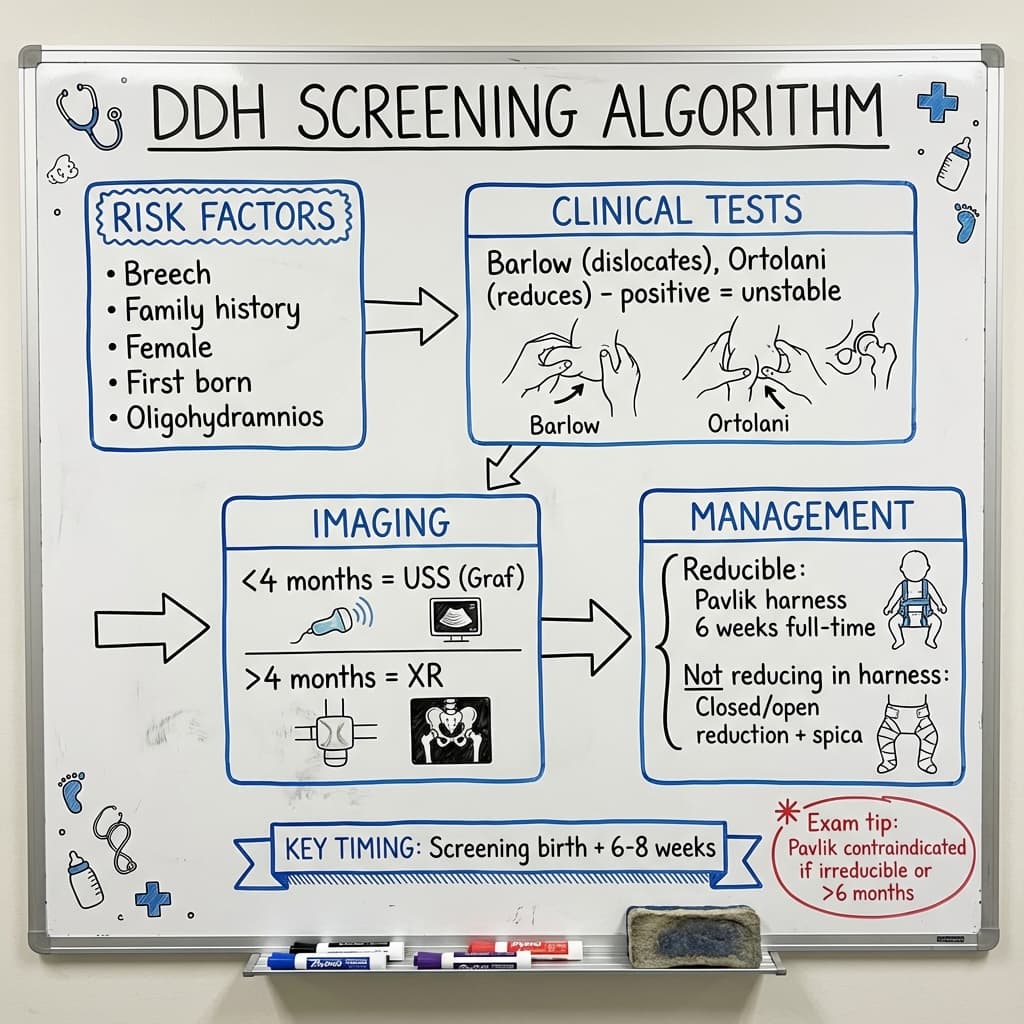
DDH Screening Algorithm
Risk factors, clinical tests, imaging, and Pavlik harness
💡 Pavlik contraindicated if irreducible or >6 months
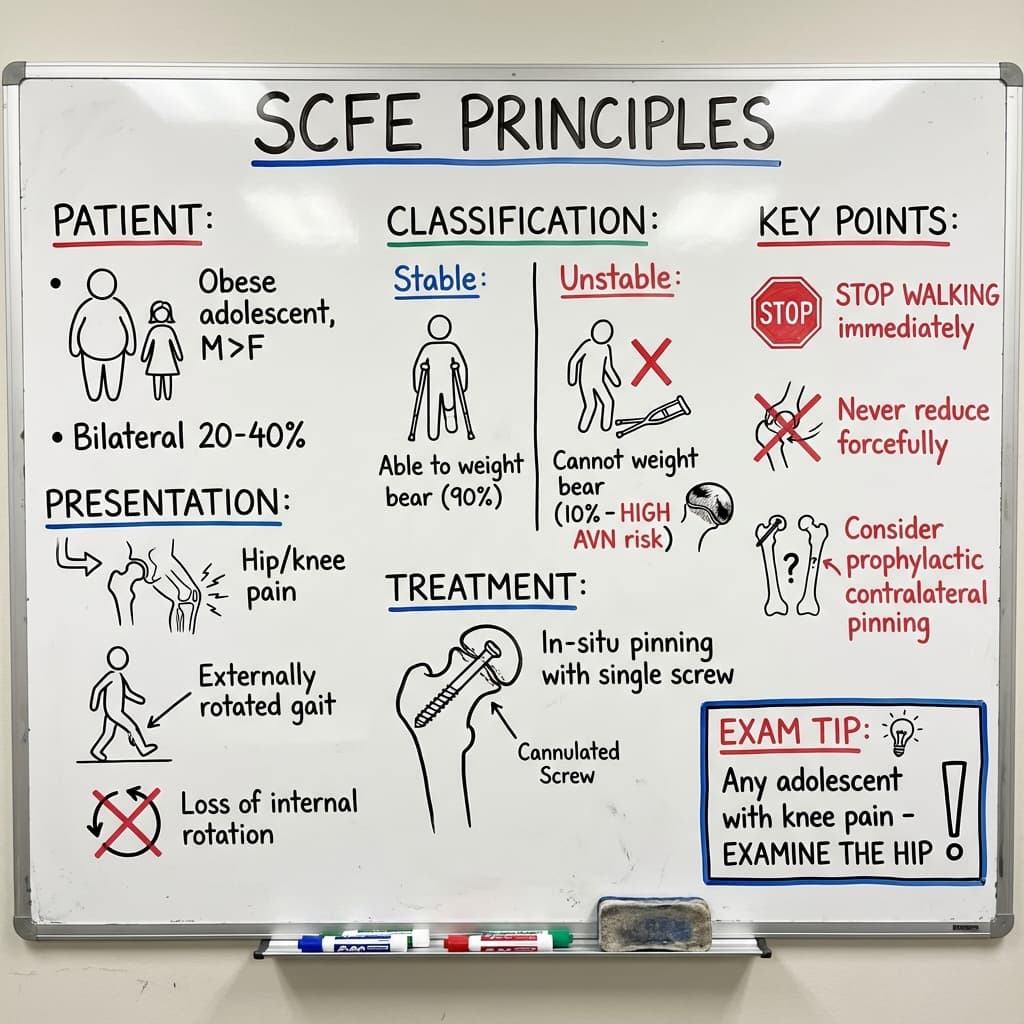
SCFE Principles
Slipped capital femoral epiphysis - diagnosis and management
💡 Any adolescent with knee pain - EXAMINE THE HIP
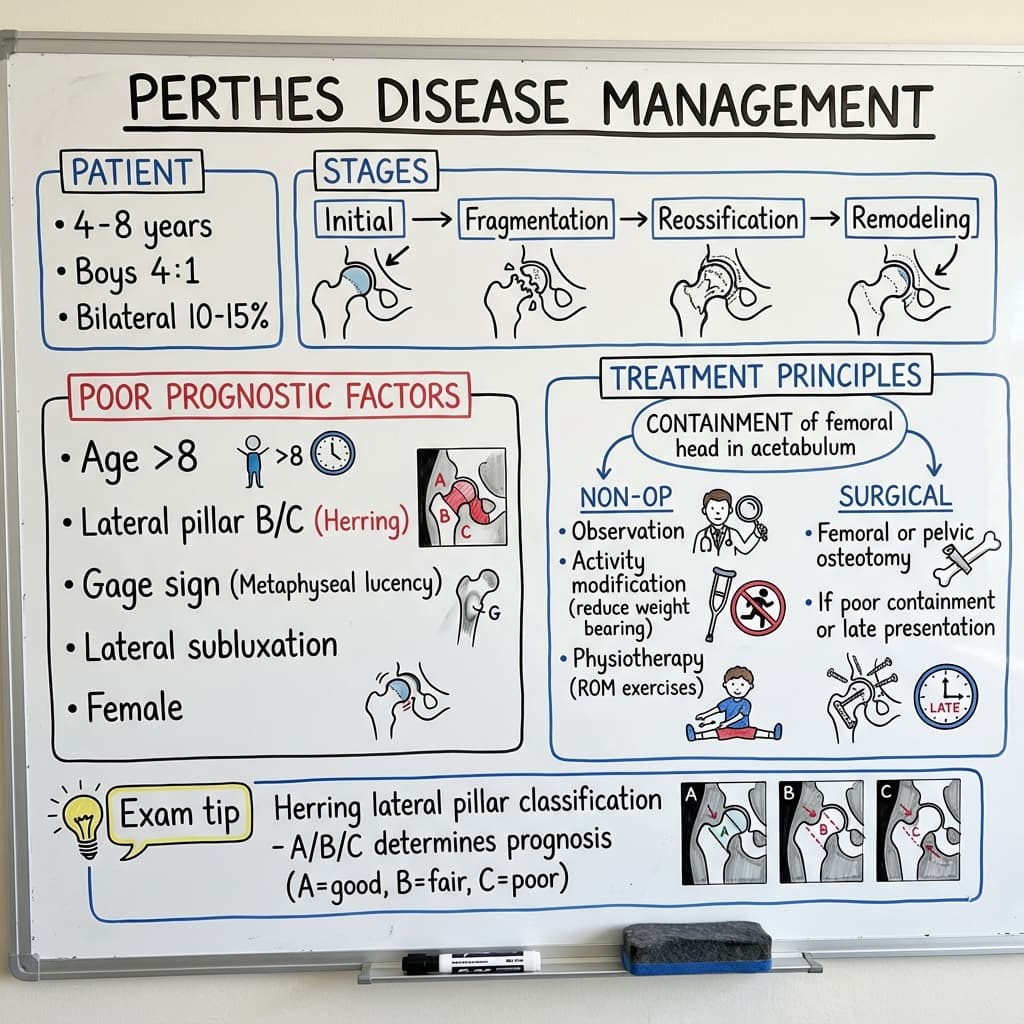
Perthes Disease Management
Stages, prognostic factors, and containment principles
💡 Herring lateral pillar classification determines prognosis
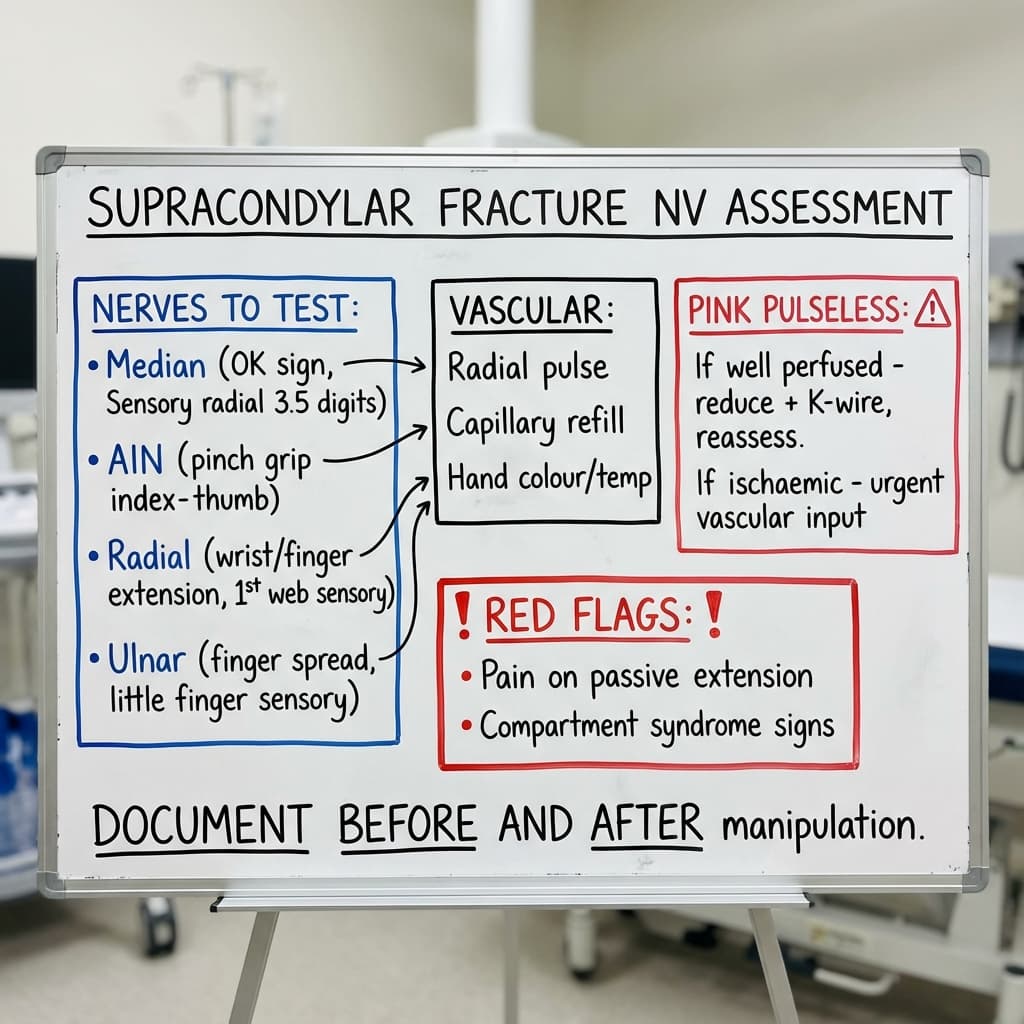
Supracondylar NV Assessment
Neurovascular examination for supracondylar fractures
💡 DOCUMENT before and after manipulation
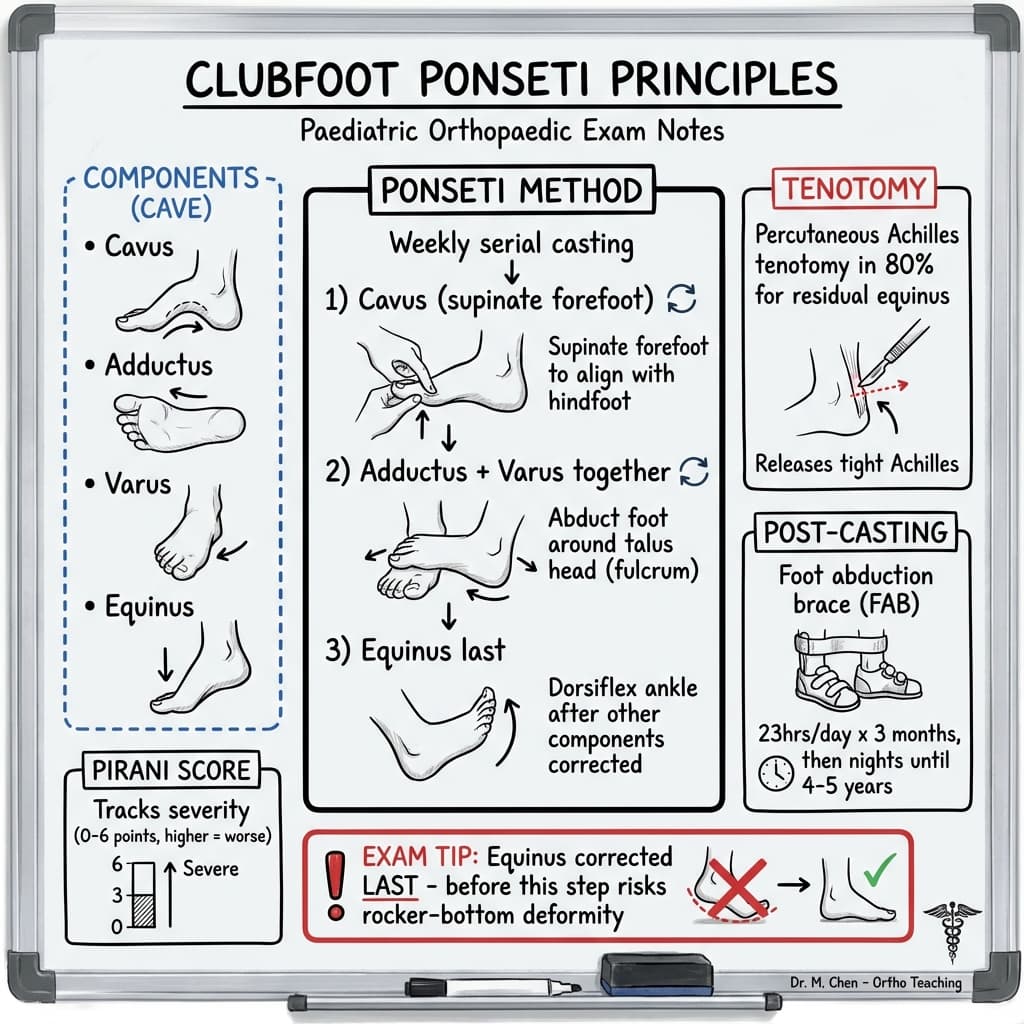
Clubfoot Ponseti Principles
CAVE components and Ponseti method sequence
💡 Equinus corrected LAST - before risks rocker-bottom
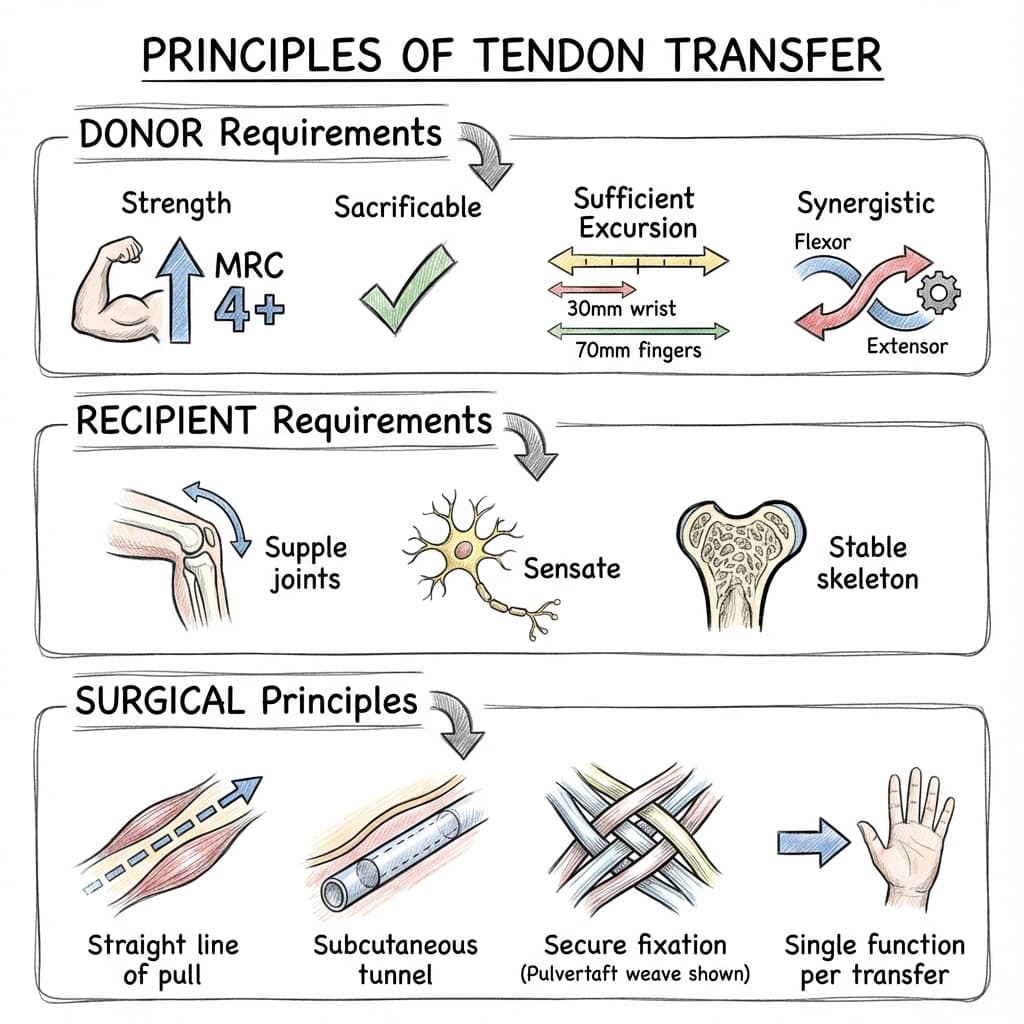
Tendon Transfer Principles
Donor requirements, recipient requirements, and surgical principles
💡 Know the 3 S's: Sacrifice, Synergy, Sufficient excursion
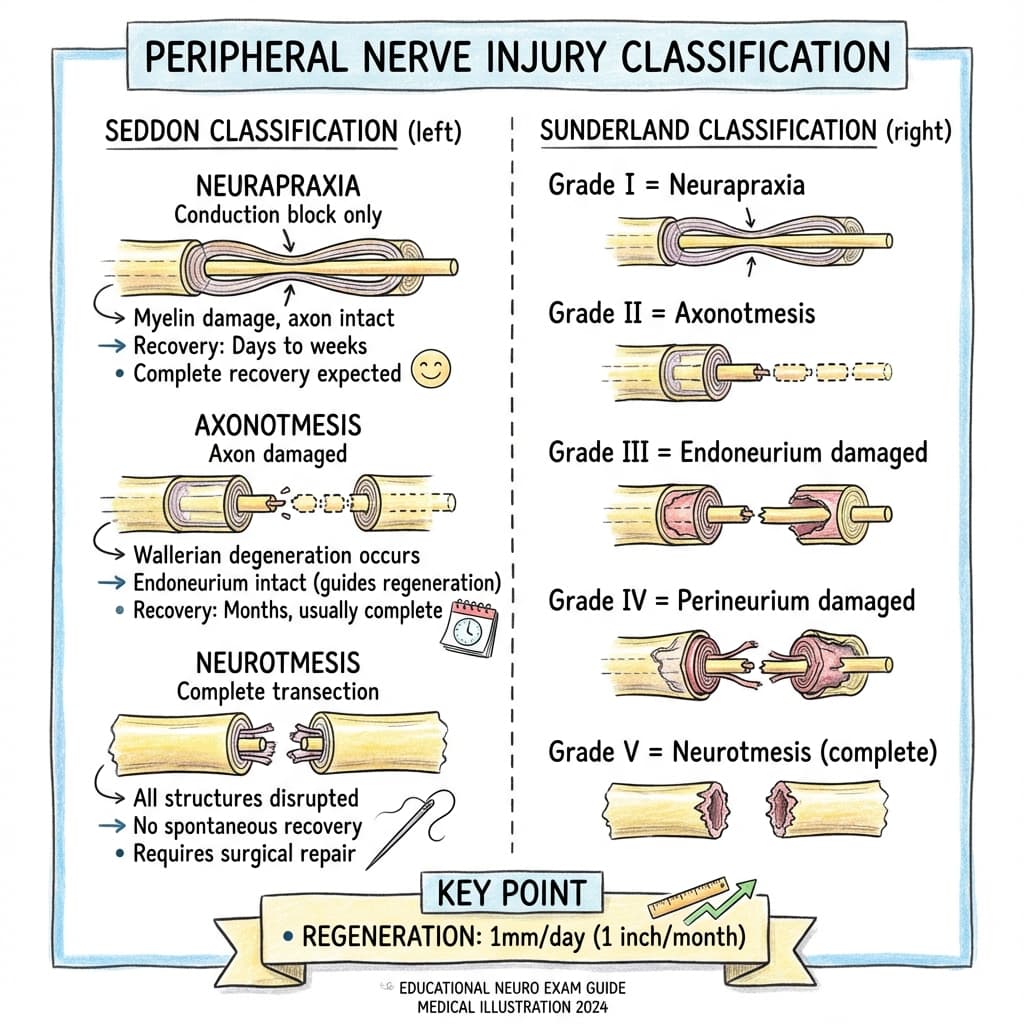
Nerve Injury Classification
Seddon and Sunderland classification concepts
💡 Regeneration: 1mm/day = 1 inch/month
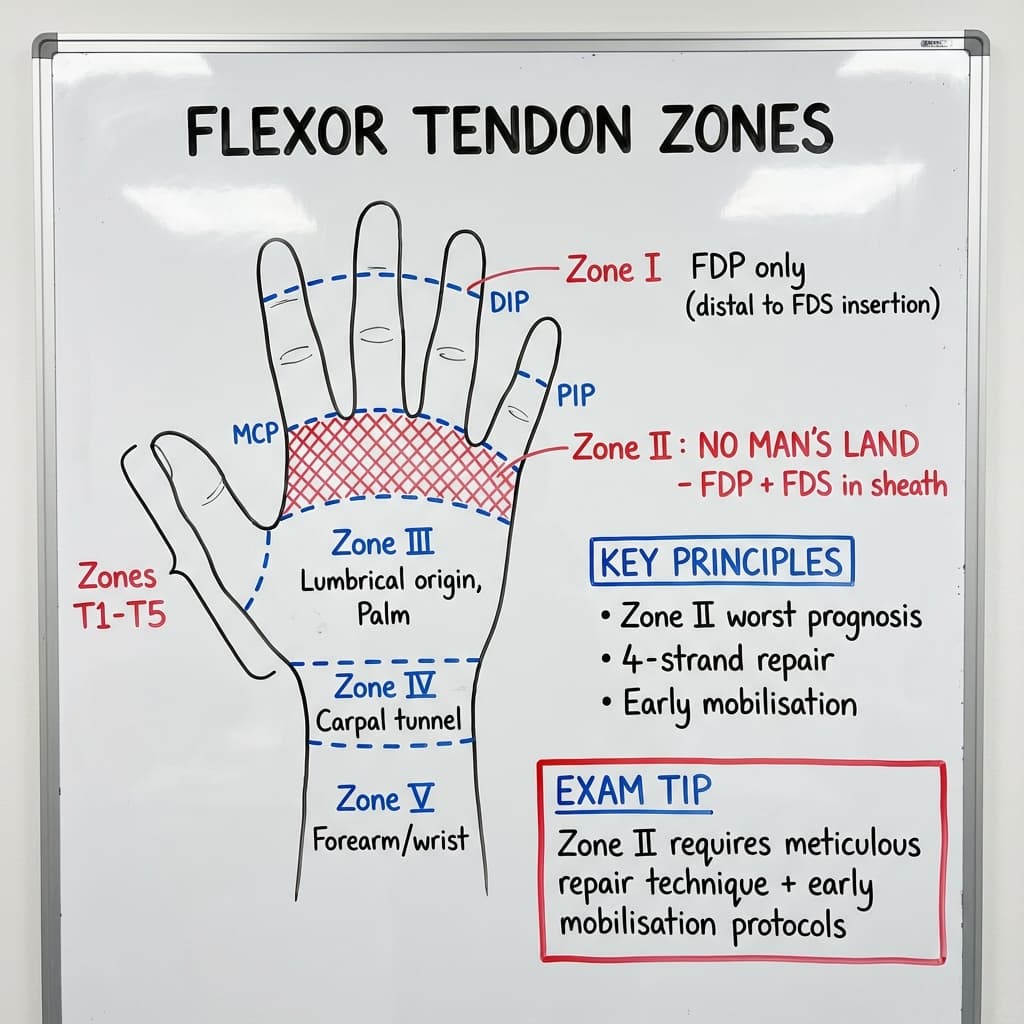
Flexor Tendon Zones
Zone I-V and No Man's Land principles
💡 Zone II requires meticulous repair + early mobilisation
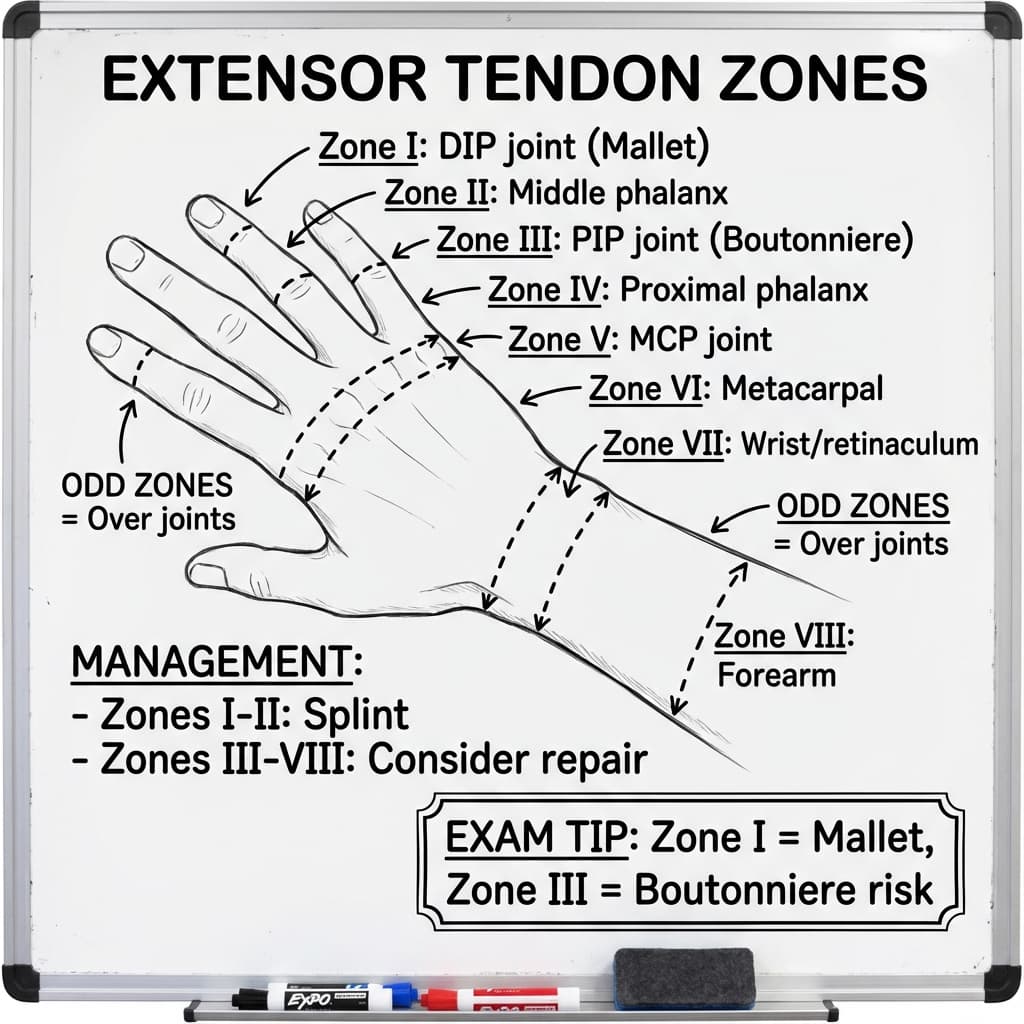
Extensor Tendon Zones
Zone I-VIII - odd zones over joints
💡 Zone I = Mallet, Zone III = Boutonniere risk
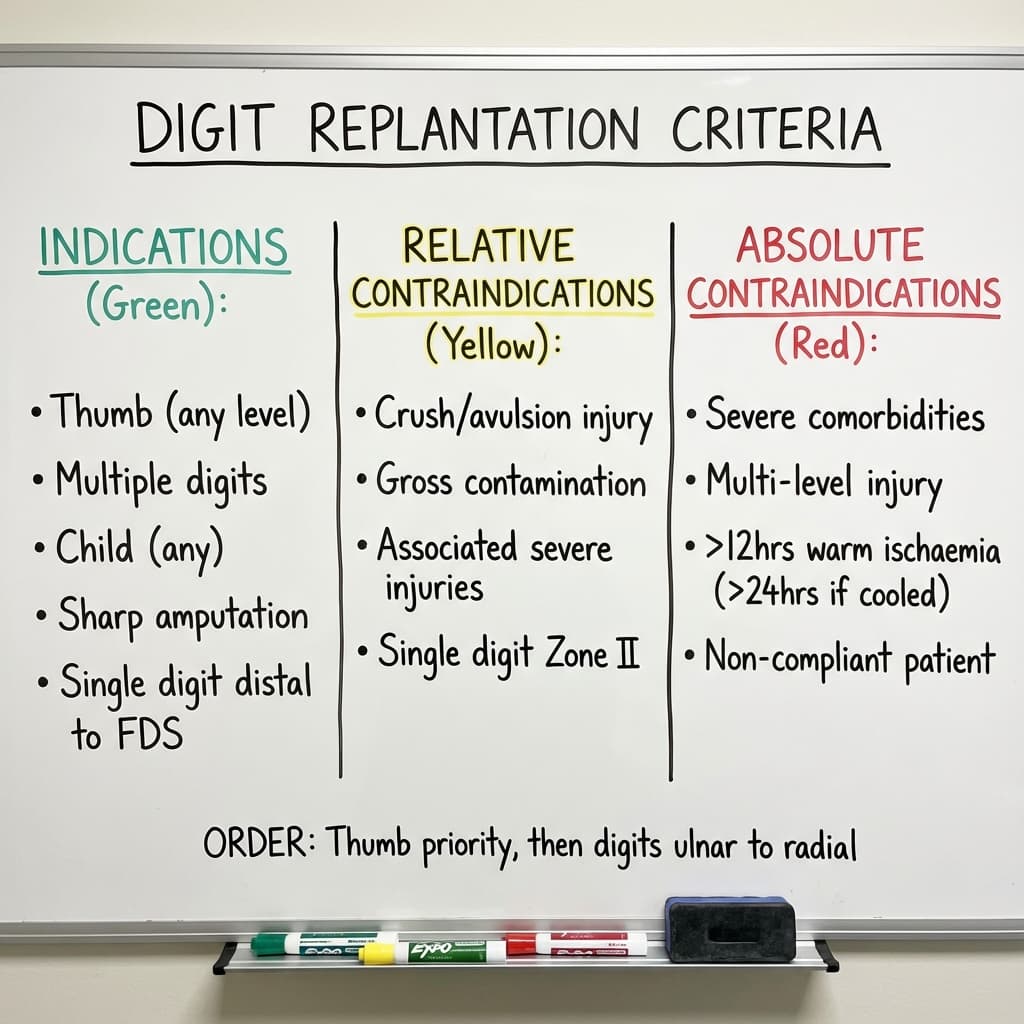
Digit Replantation Criteria
Indications and contraindications for digit replantation
💡 Thumb any level, children any digit, multiple digits always
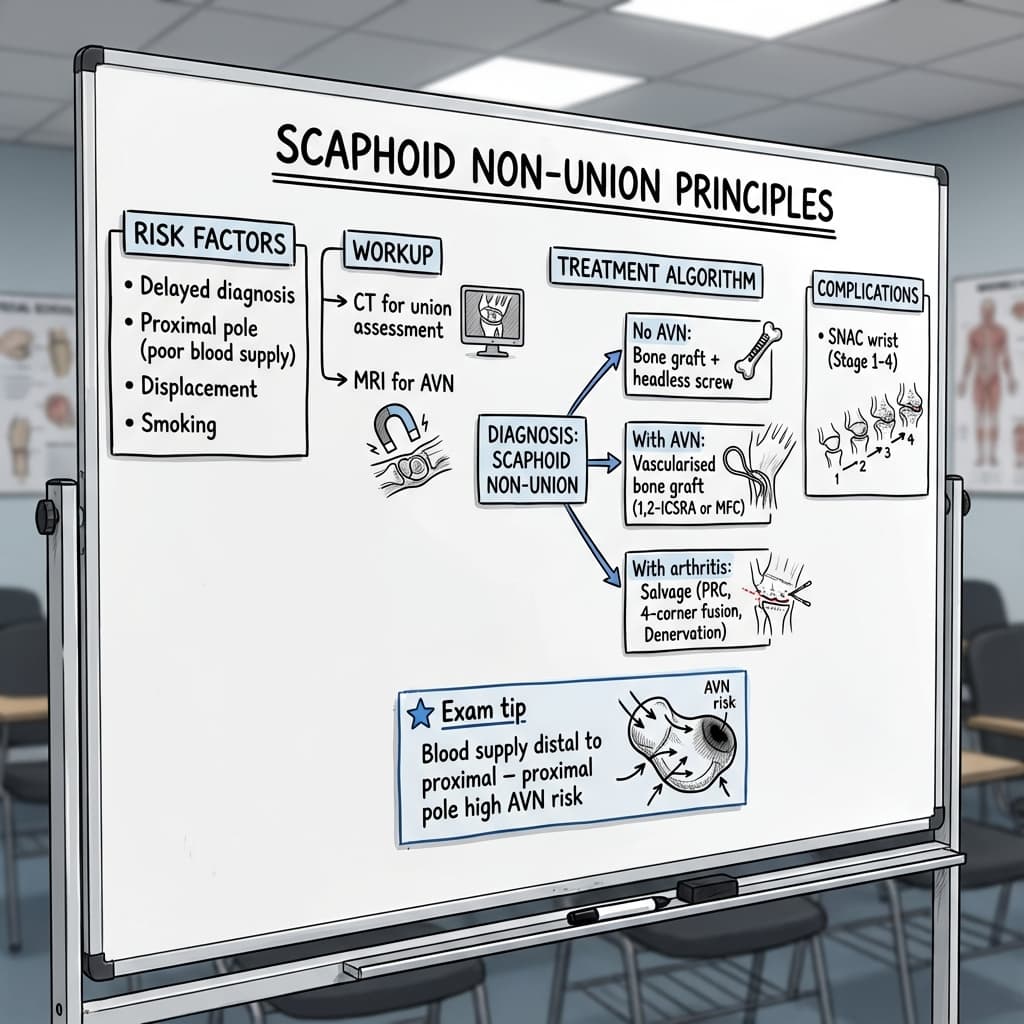
Scaphoid Non-Union Principles
Risk factors, AVN assessment, and treatment algorithm
💡 Blood supply distal to proximal - proximal pole high AVN risk
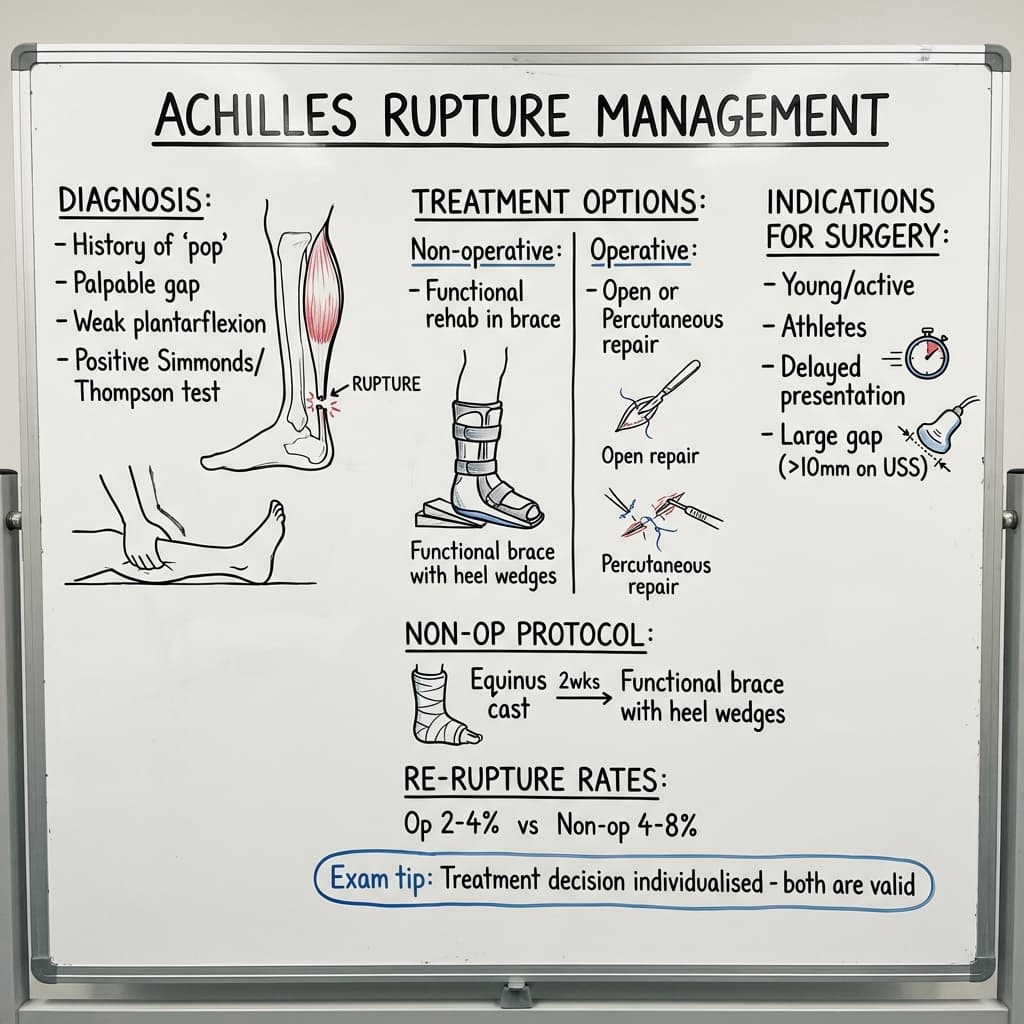
Achilles Rupture Management
Diagnosis, operative vs non-operative, and rehab
💡 Treatment decision individualised - both are valid
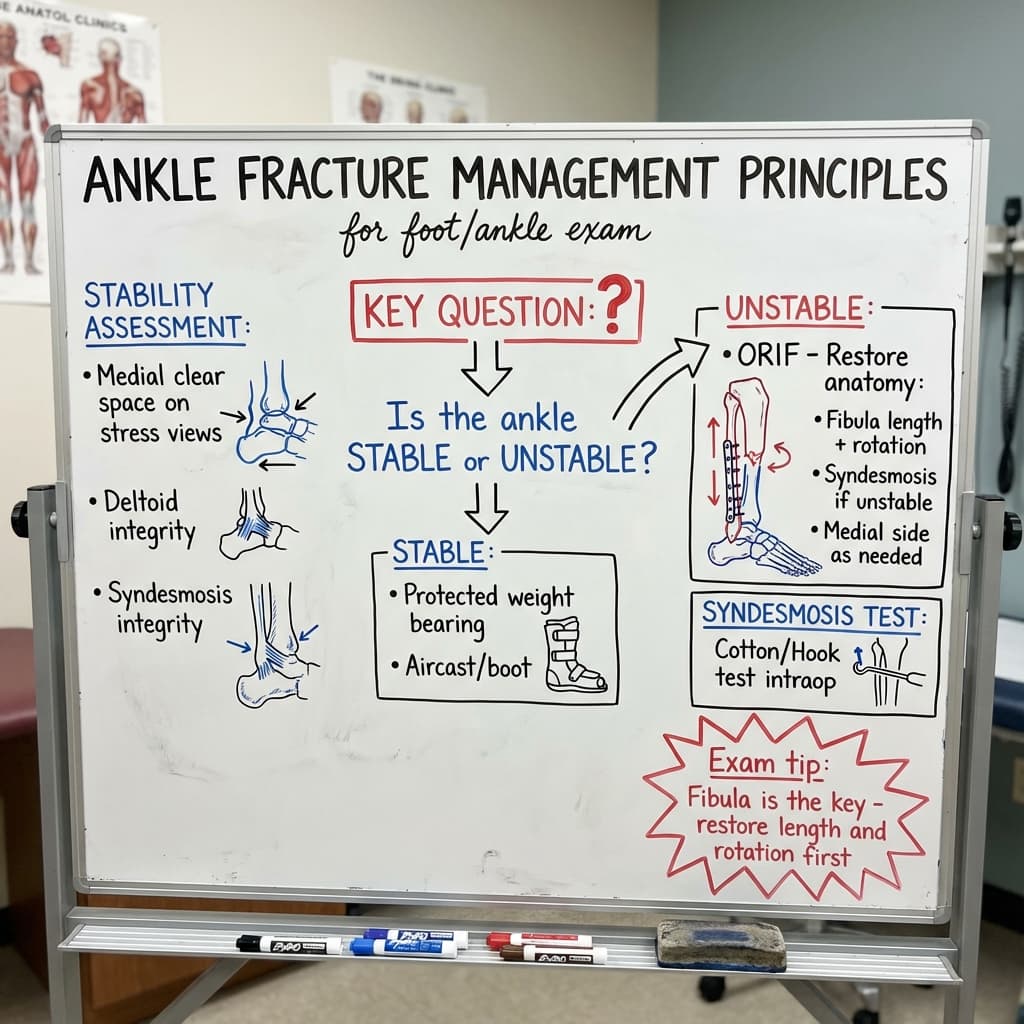
Ankle Fracture Principles
Stability assessment and treatment algorithm
💡 Fibula is the key - restore length and rotation first
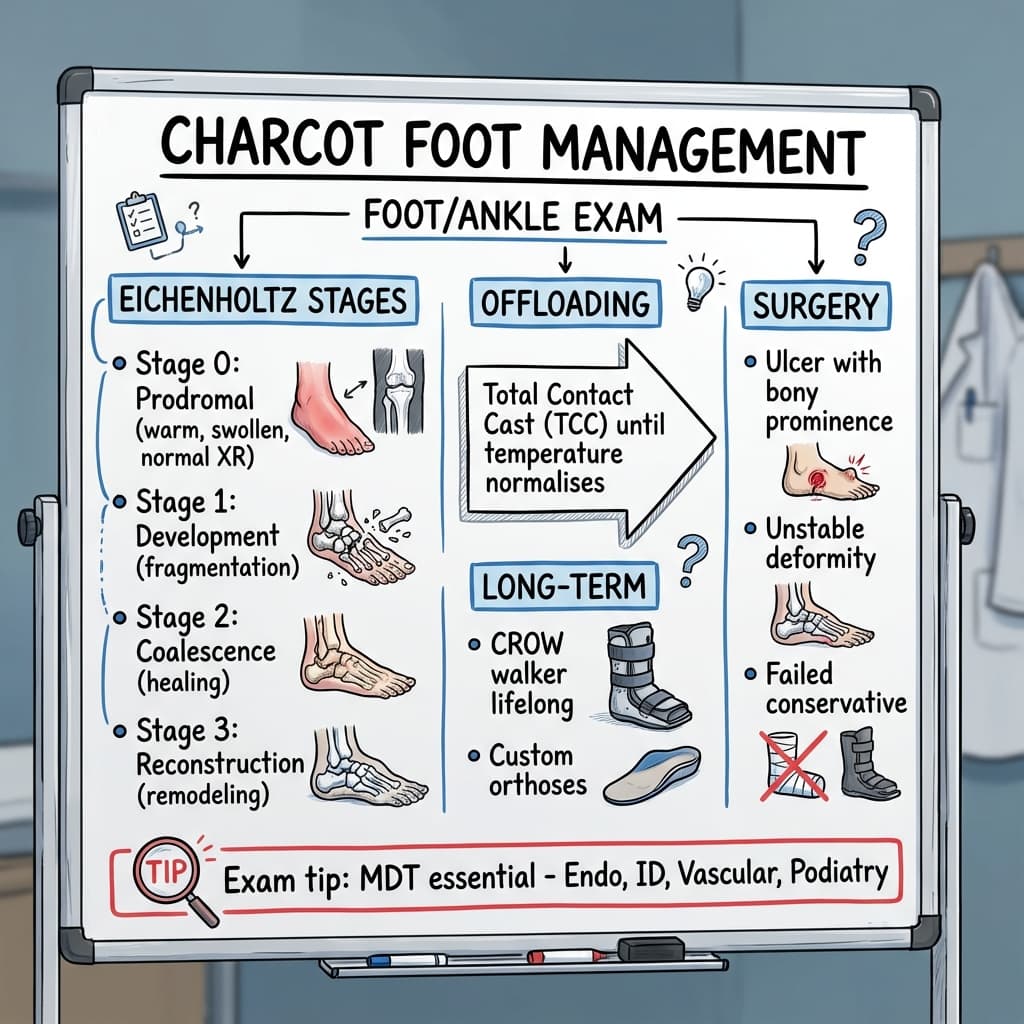
Charcot Foot Management
Eichenholtz stages and offloading principles
💡 MDT essential - Endo, ID, Vascular, Podiatry
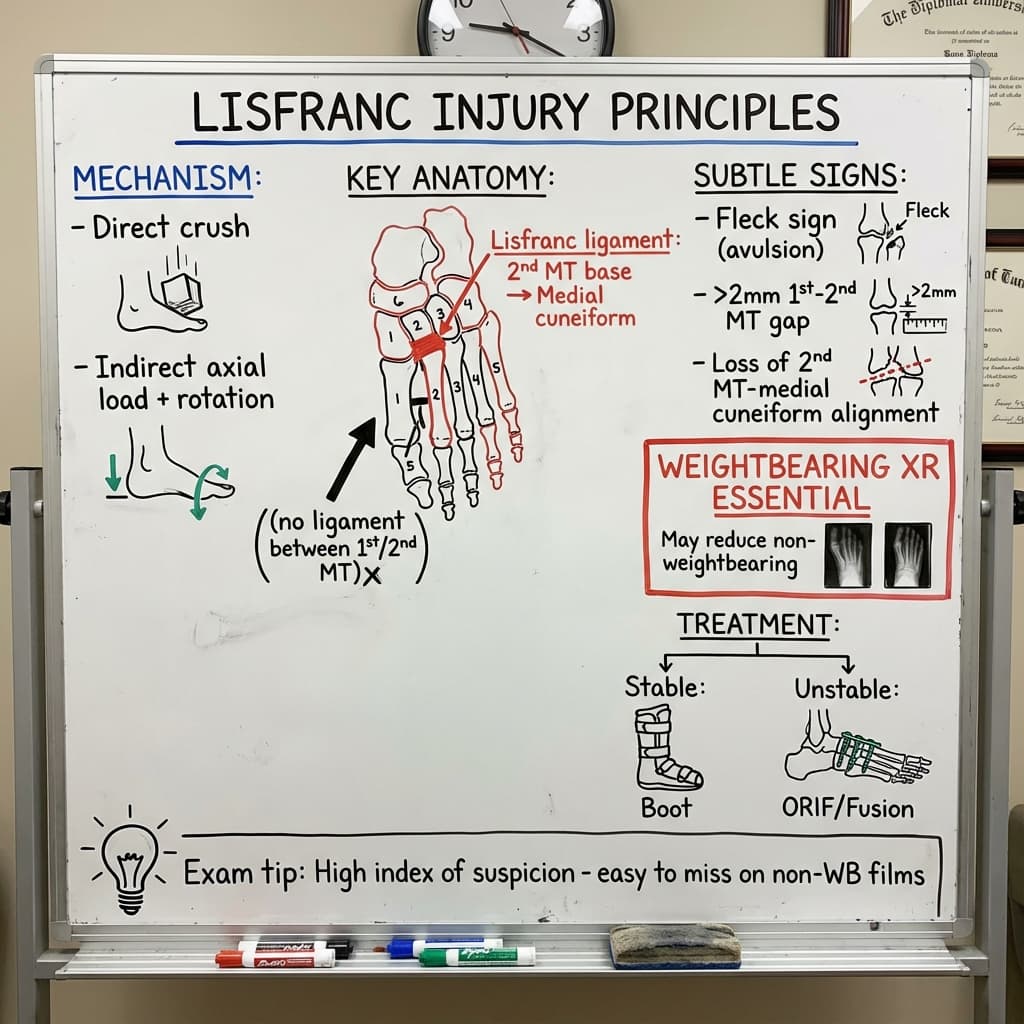
Lisfranc Injury Principles
Subtle signs and importance of weight-bearing X-rays
💡 High index of suspicion - easy to miss on non-WB films
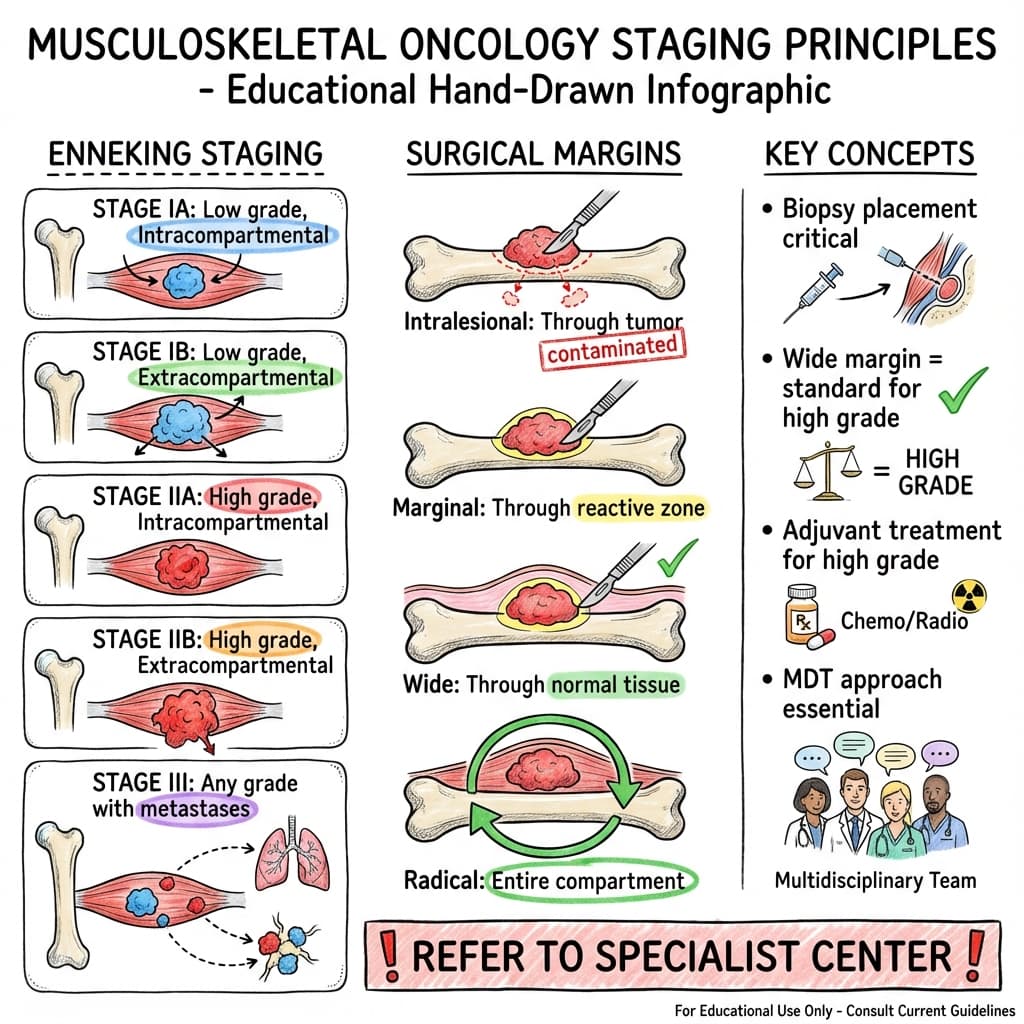
Oncology Staging Principles
Enneking staging and surgical margin principles
💡 REFER TO SPECIALIST CENTER - biopsy by operating surgeon
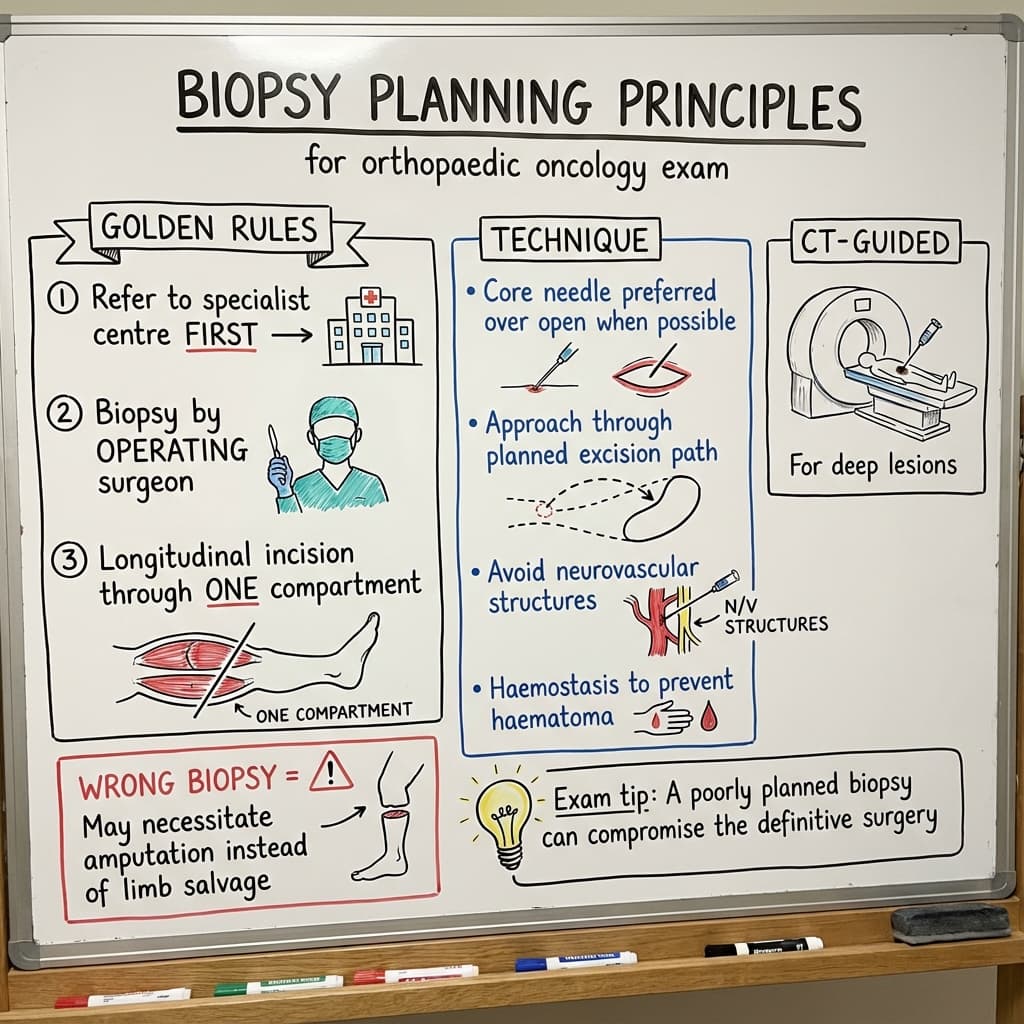
Biopsy Planning Principles
Golden rules for orthopaedic tumour biopsy
💡 A poorly planned biopsy can compromise definitive surgery
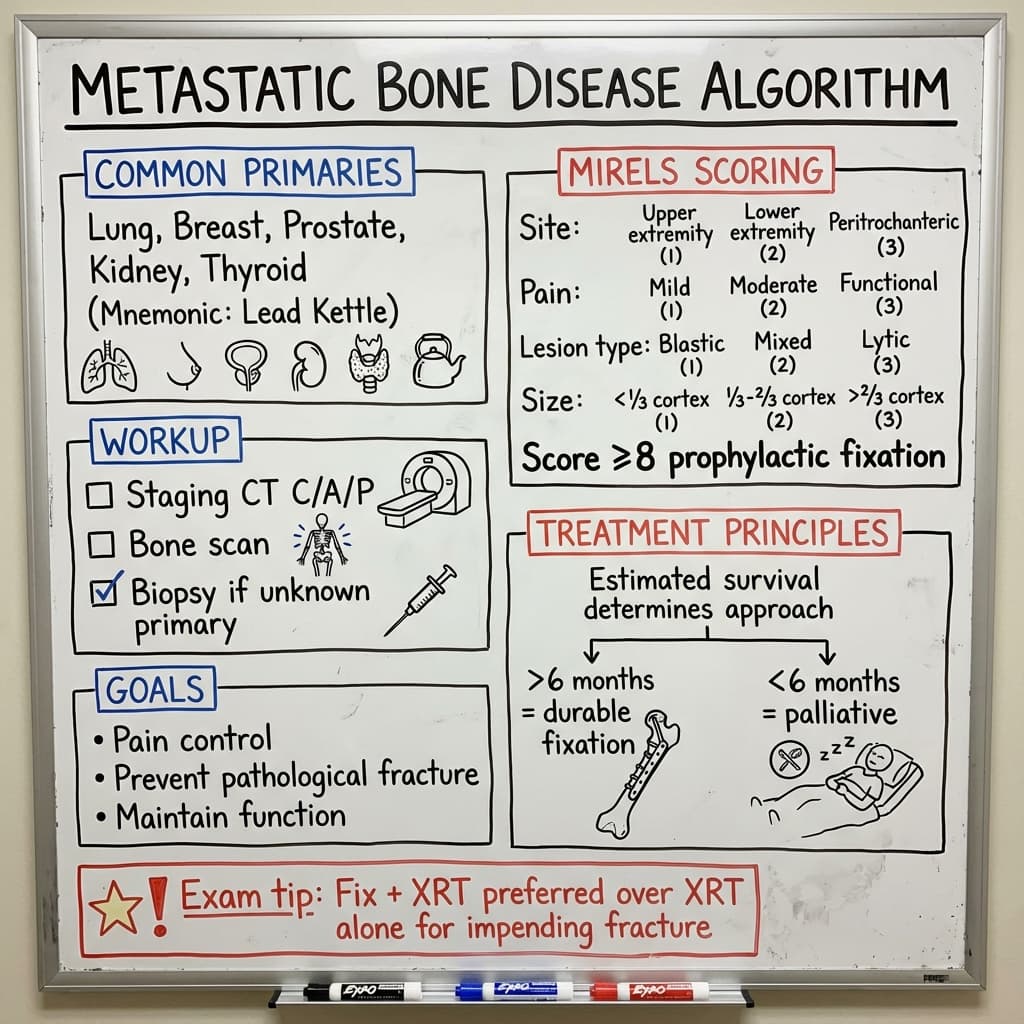
Metastatic Bone Disease Algorithm
Common primaries, Mirels scoring, treatment principles
💡 Fix + XRT preferred over XRT alone for impending fracture
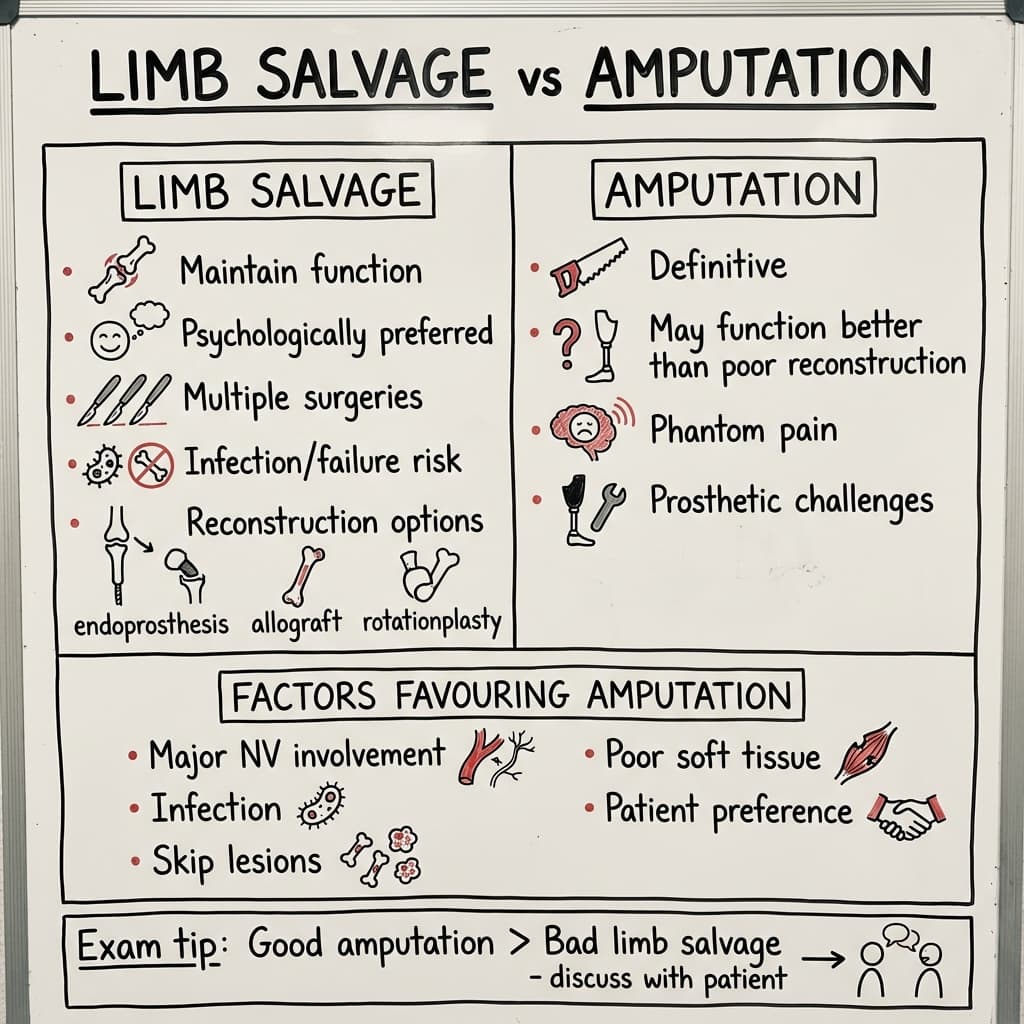
Limb Salvage vs Amputation
Decision factors and reconstruction options
💡 Good amputation > Bad limb salvage - discuss with patient
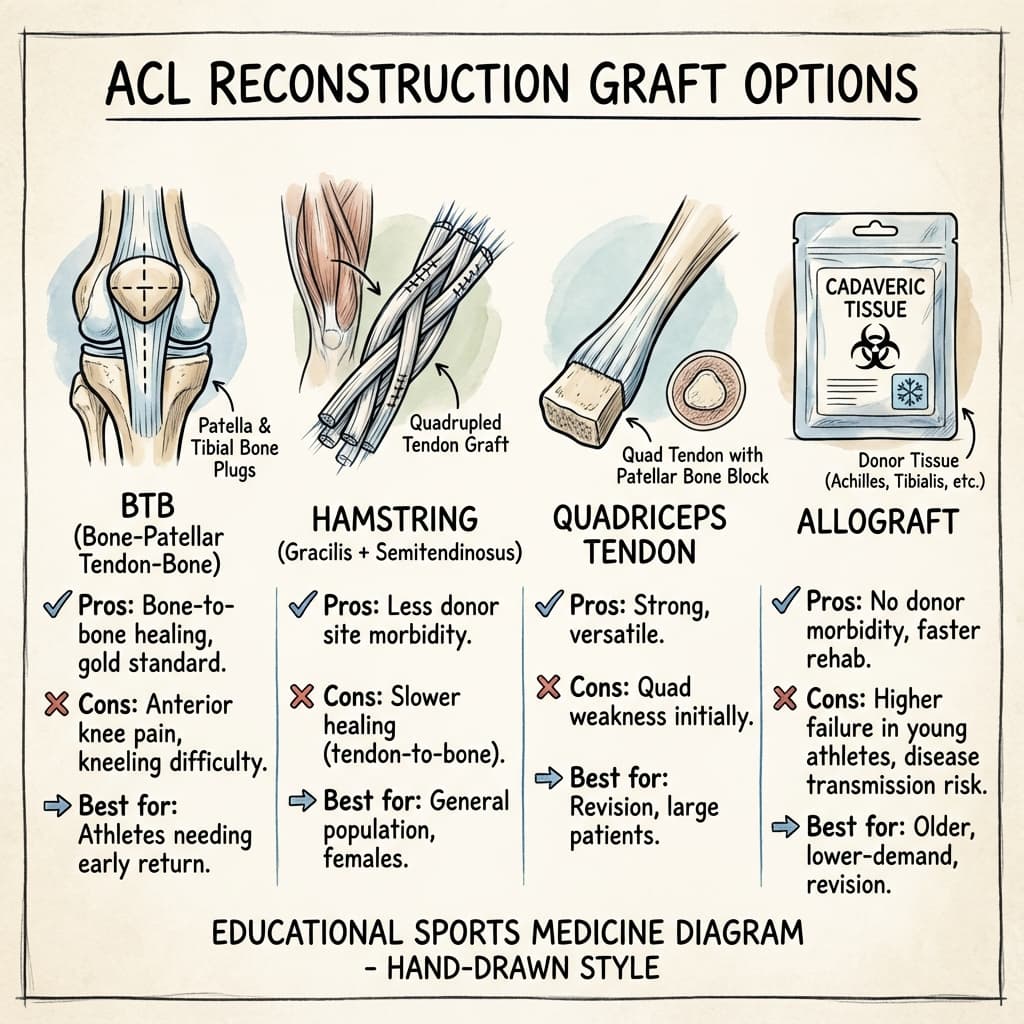
ACL Graft Options
BTB, Hamstring, Quad tendon, and Allograft comparison
💡 Avoid allograft in young athletes - higher failure
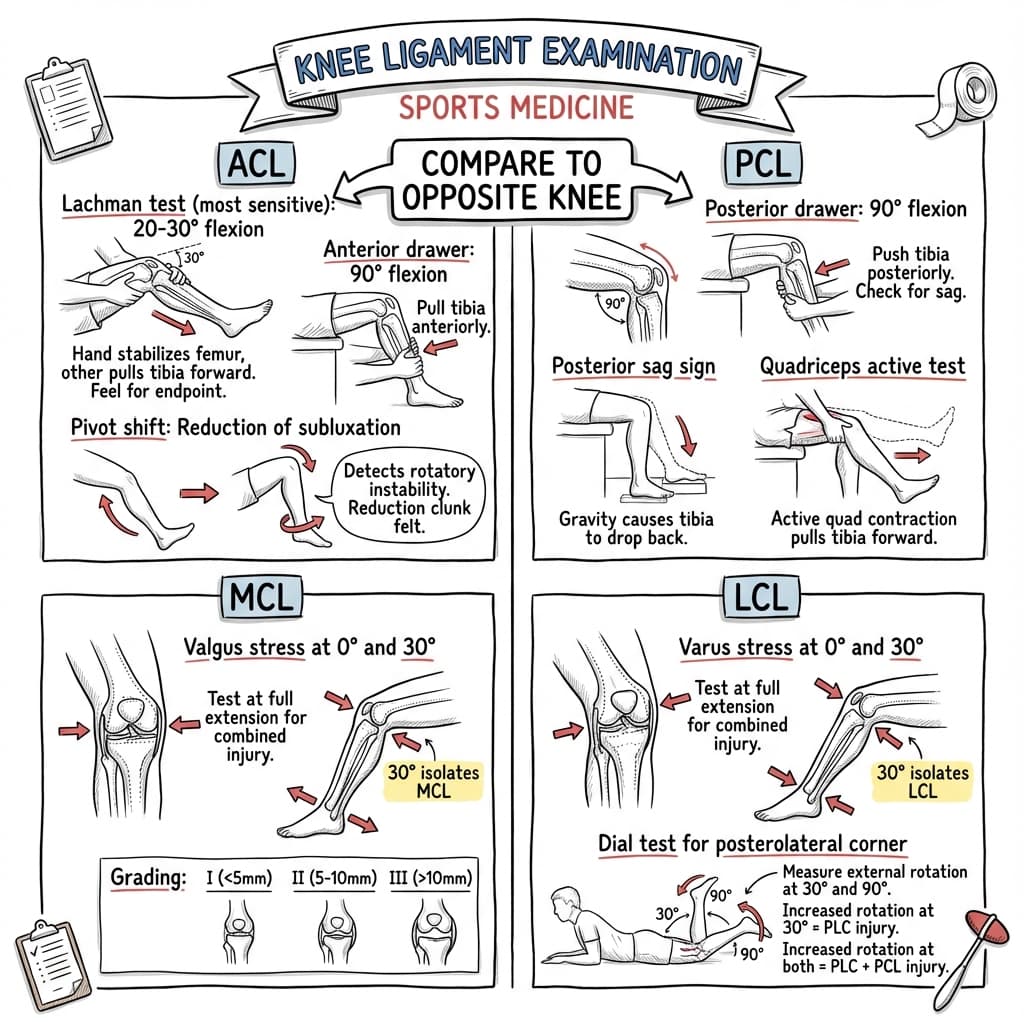
Knee Ligament Examination
ACL, PCL, MCL, LCL examination techniques
💡 Always compare to opposite knee
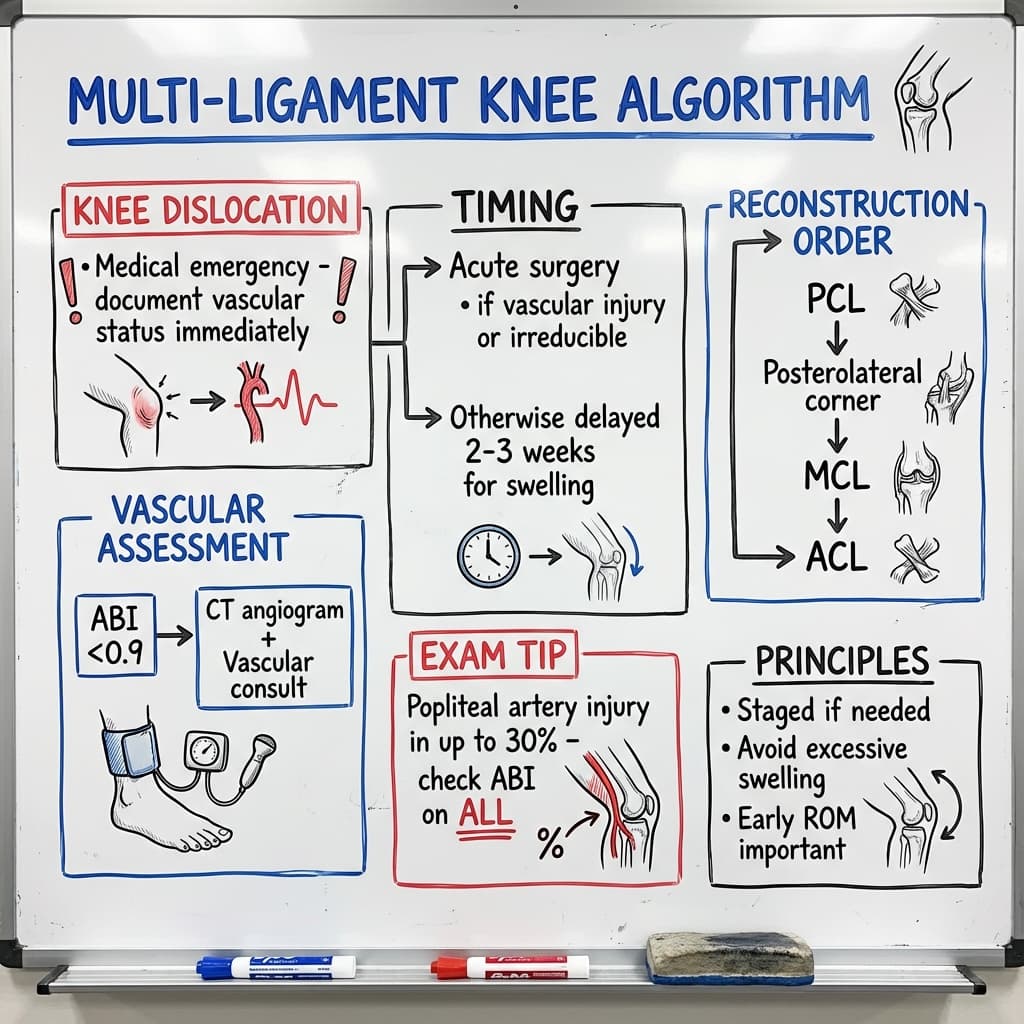
Multi-Ligament Knee Algorithm
Knee dislocation emergency management and reconstruction order
💡 Popliteal artery injury in up to 30% - check ABI on ALL
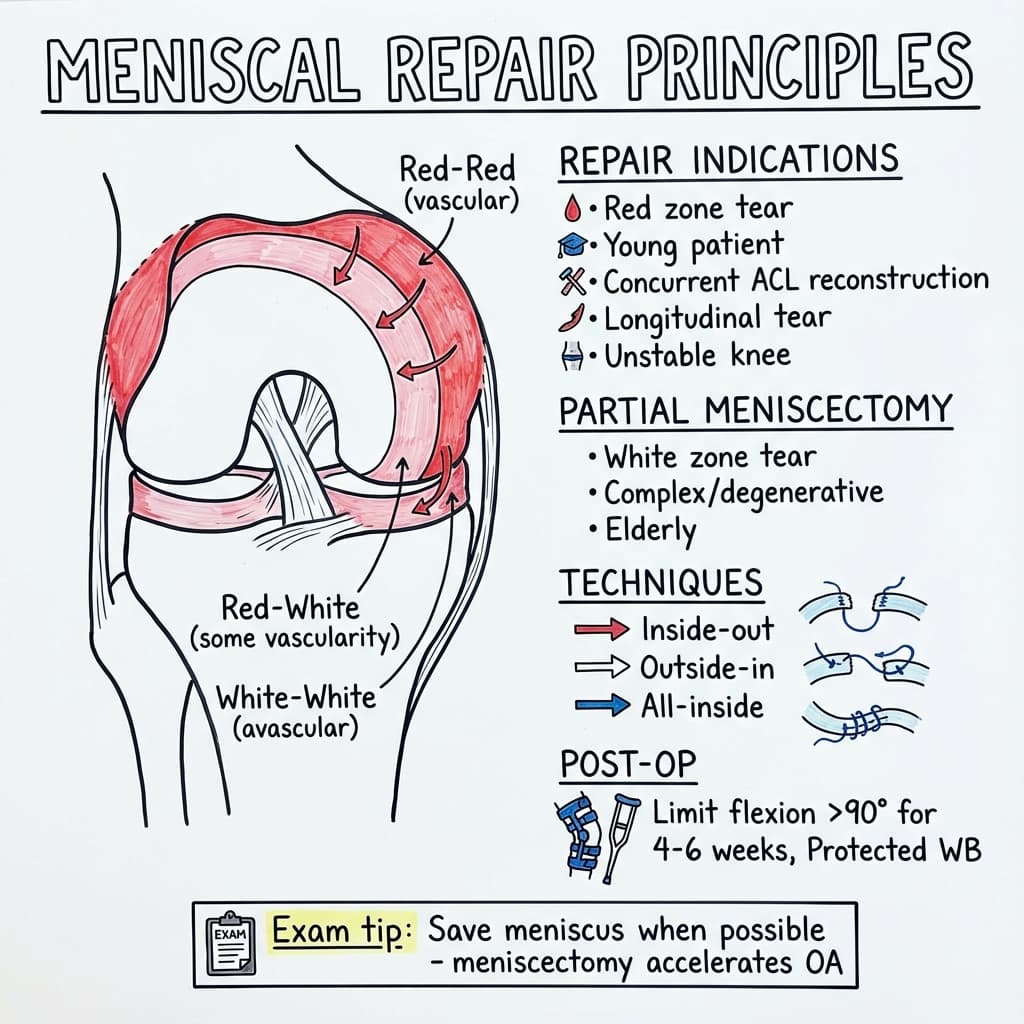
Meniscal Repair Principles
Red-red, red-white, white-white zones and repair indications
💡 Save meniscus when possible - meniscectomy accelerates OA
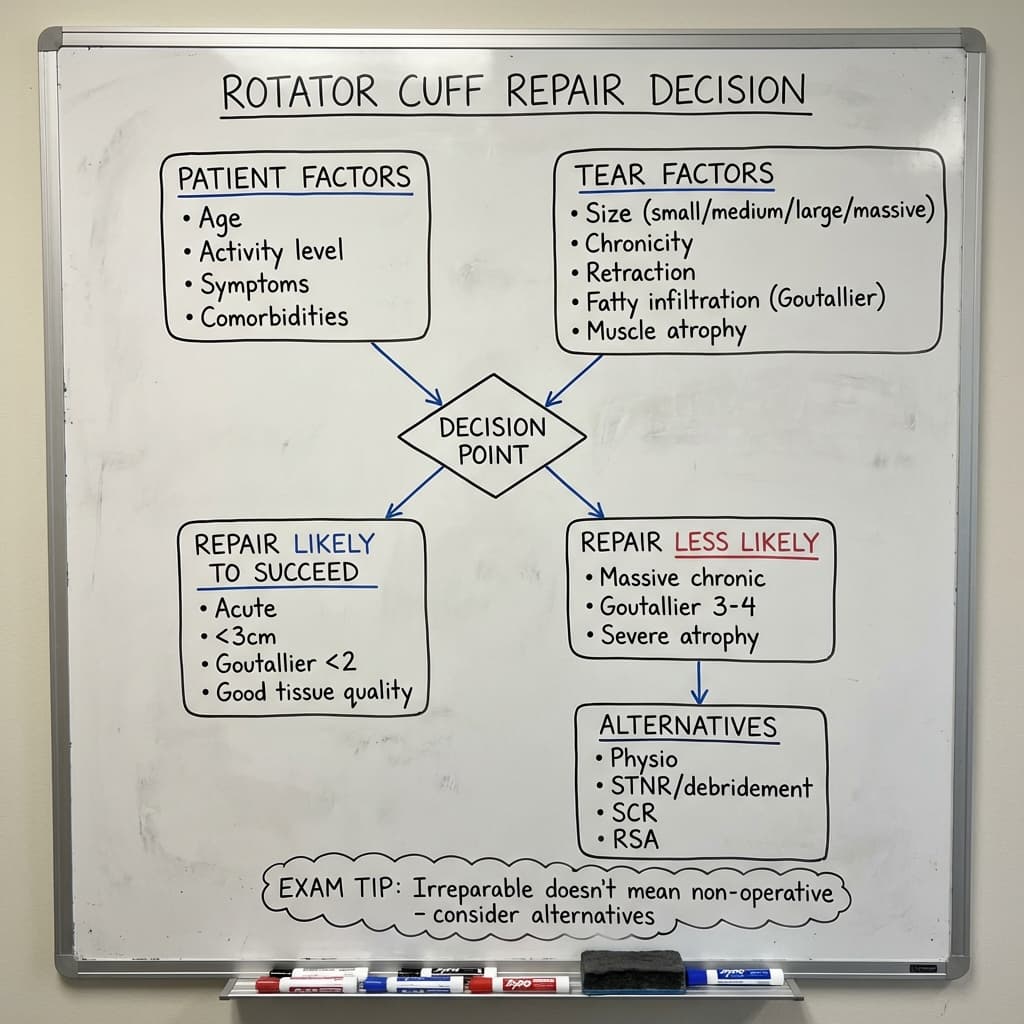
Rotator Cuff Repair Decision
Patient and tear factors determining repairability
💡 Irreparable doesn't mean non-operative - consider alternatives
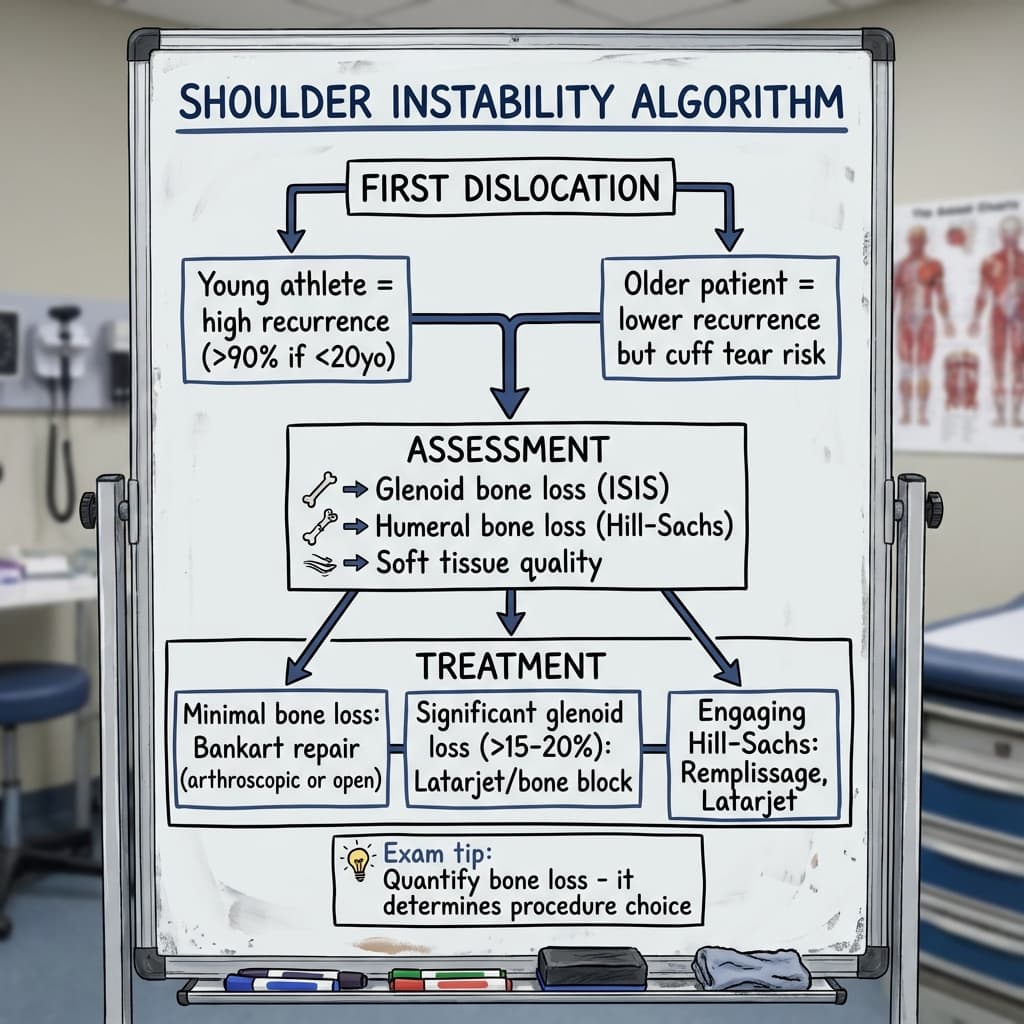
Shoulder Instability Algorithm
Bone loss assessment and procedure selection
💡 Quantify bone loss - it determines procedure choice
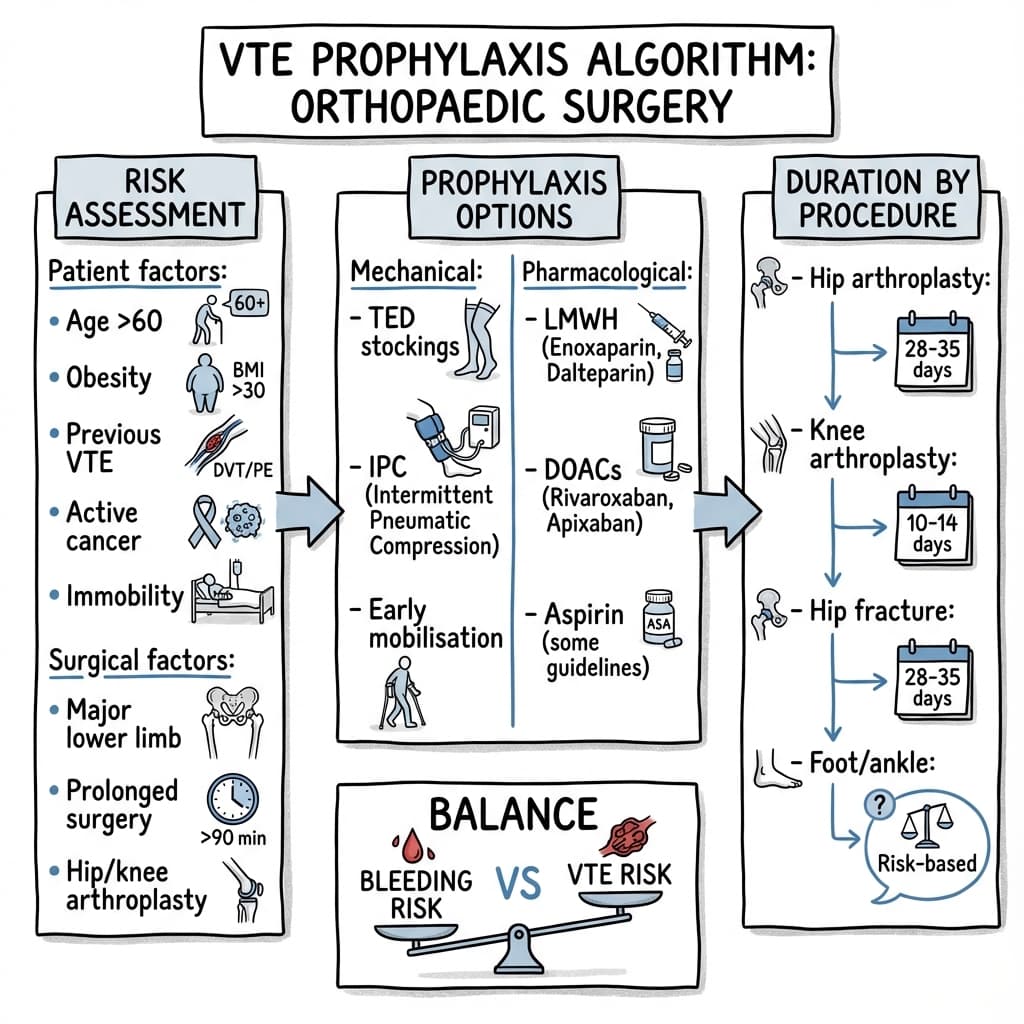
VTE Prophylaxis Algorithm
Risk assessment, mechanical vs pharmacological, duration by procedure
💡 Hip/fracture: 28-35 days, Knee: 10-14 days
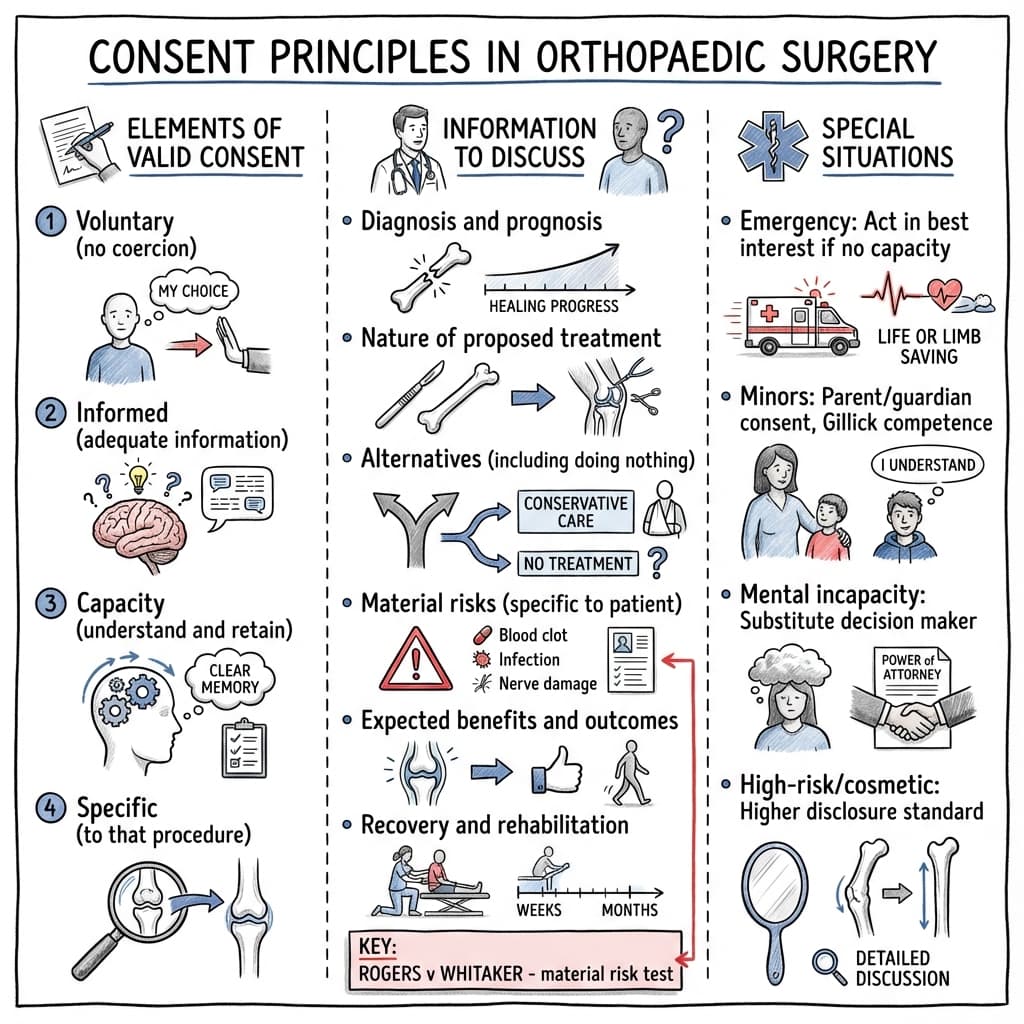
Consent Principles
Elements of valid consent, material risk test
💡 Material risk = what THIS patient would want to know
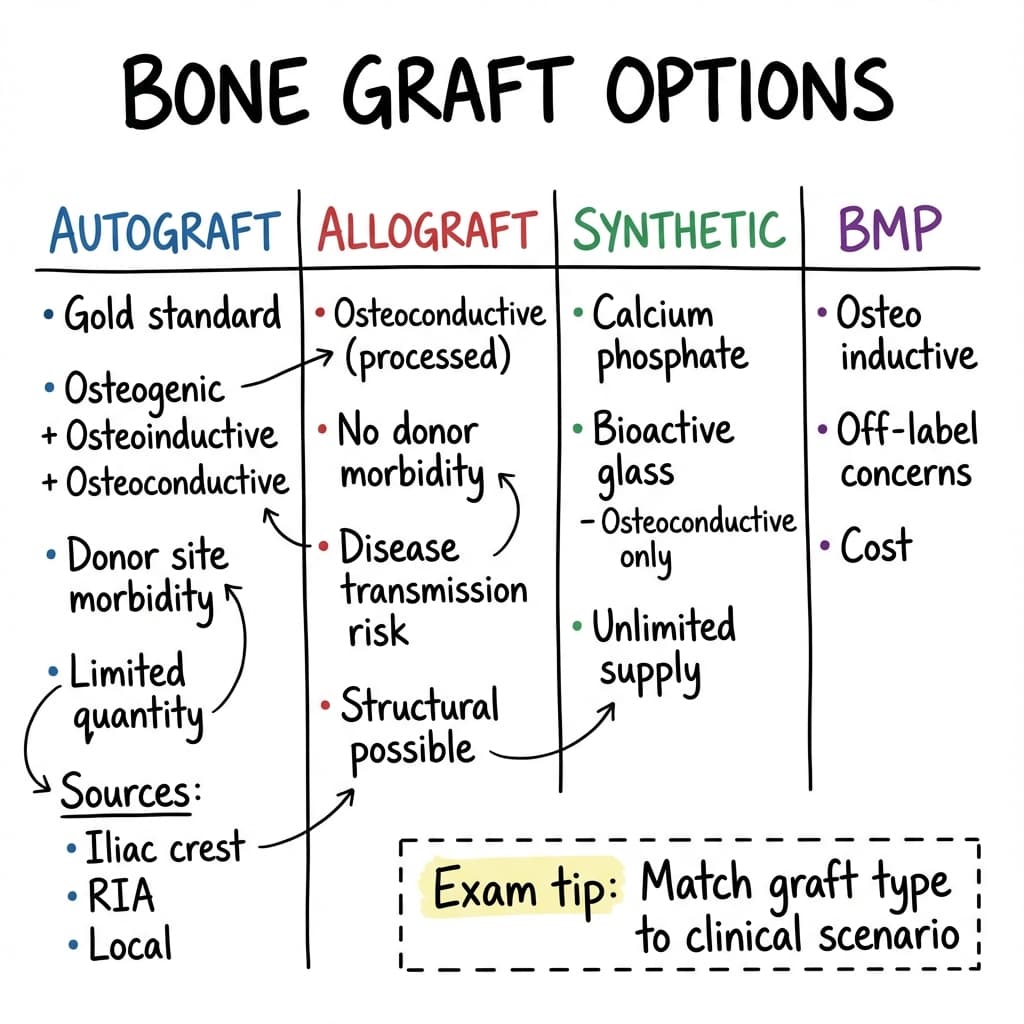
Bone Graft Options
Autograft, allograft, synthetic, and BMP comparison
💡 Match graft type to clinical scenario
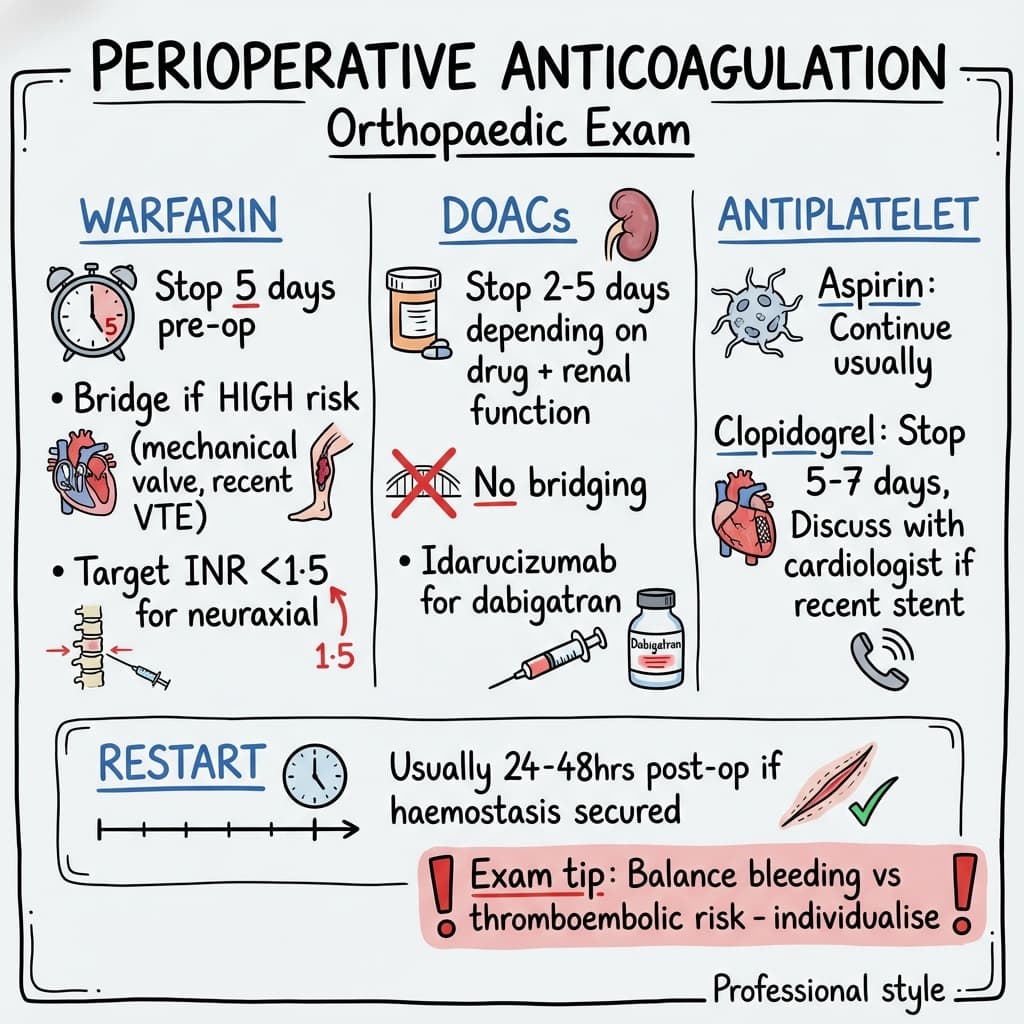
Perioperative Anticoagulation
Warfarin, DOACs, and antiplatelet management
💡 Balance bleeding vs thromboembolic risk - individualise
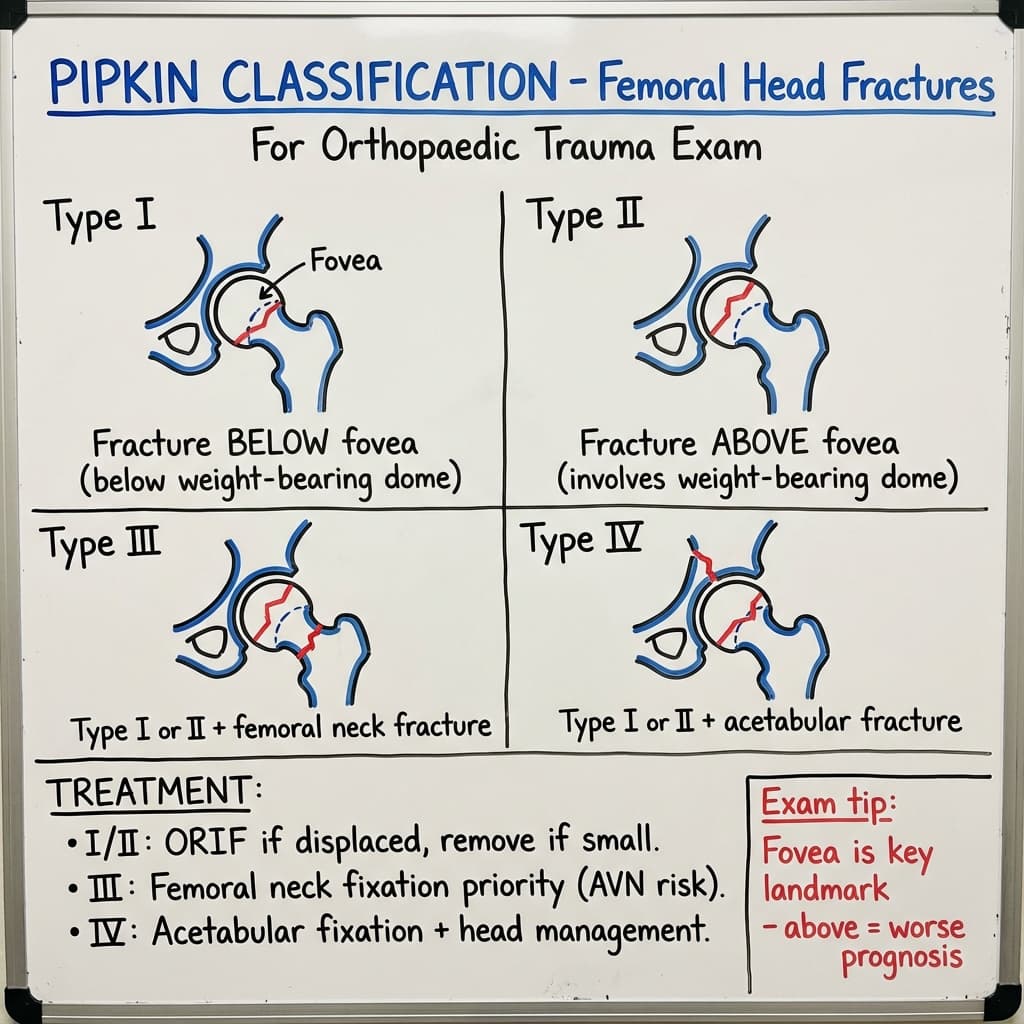
Pipkin Classification - Femoral Head Fractures
Femoral head fracture classification associated with hip dislocations
💡 Type I below fovea (non-WB), Type II above fovea = ORIF if displaced
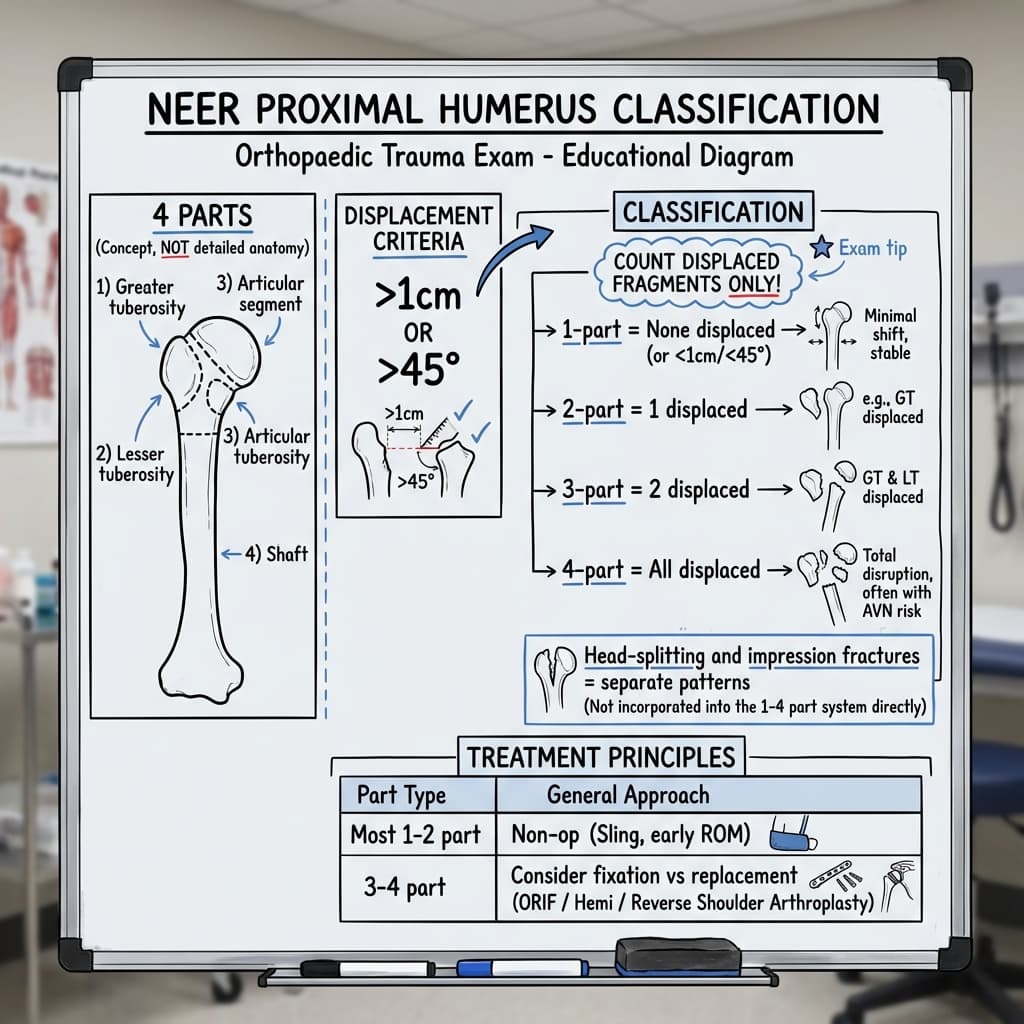
Neer Proximal Humerus Classification
Four-part classification based on displaced segments
💡 COUNT displaced segments (>1cm or 45°) - determines treatment
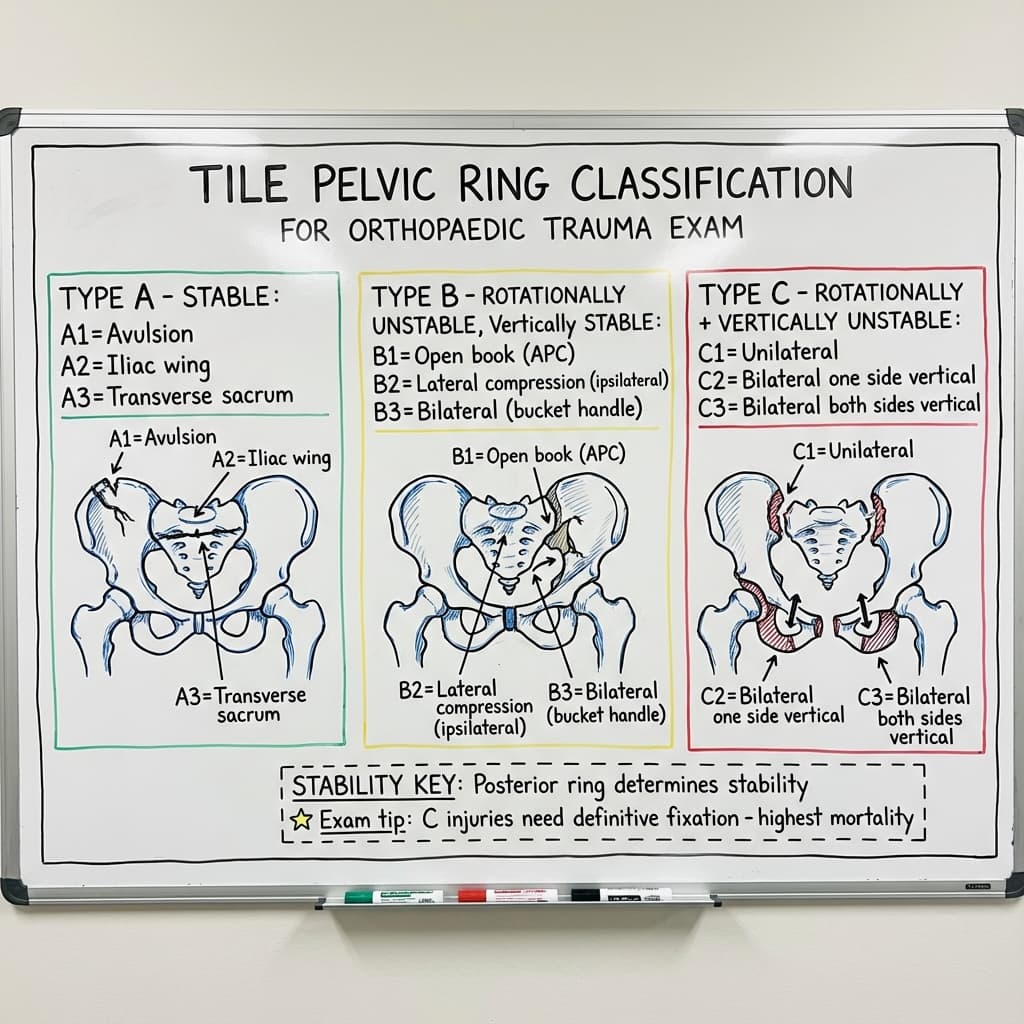
Tile Pelvic Ring Classification
Pelvic stability classification - Type A (stable) to C (unstable)
💡 Key = posterior ring - vertically unstable = C-type
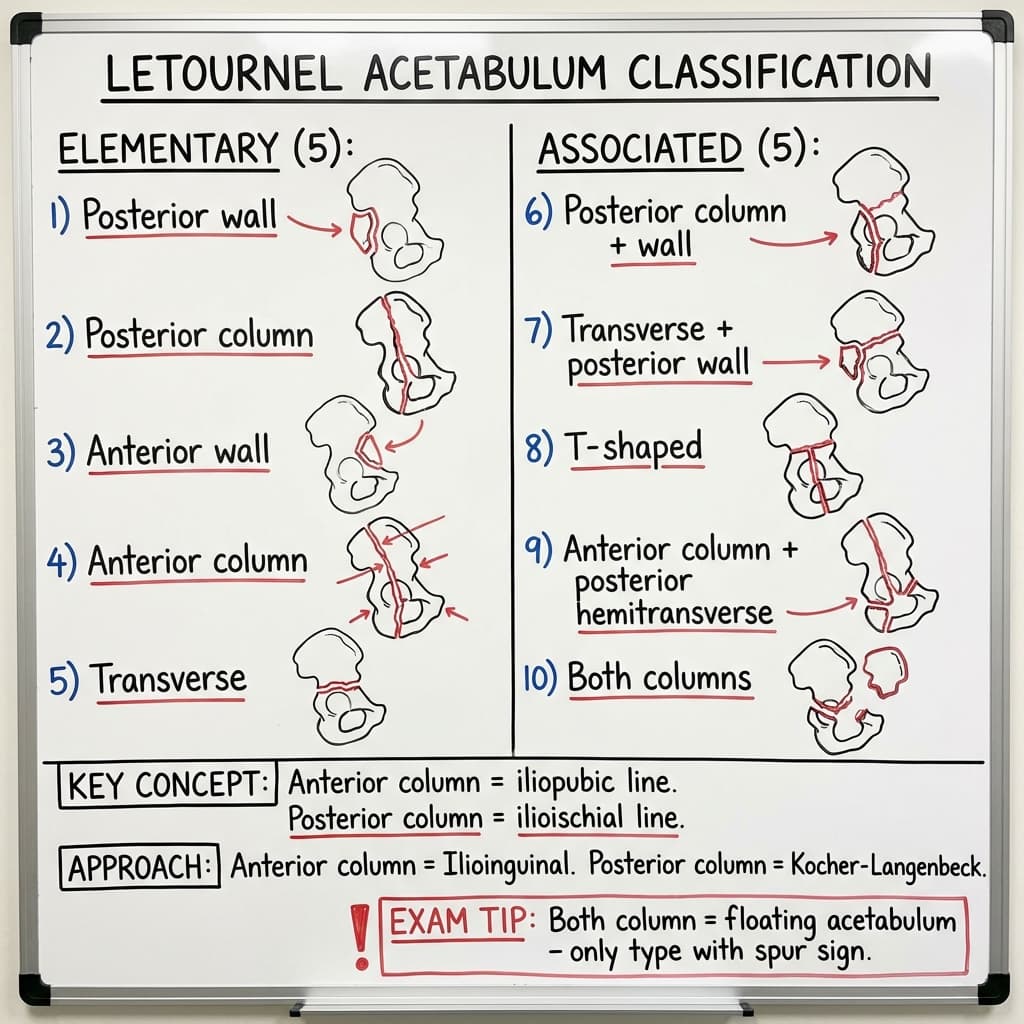
Letournel Acetabular Classification
10 patterns - 5 elementary and 5 associated fractures
💡 Learn the 5 elementary patterns first - associated are combinations
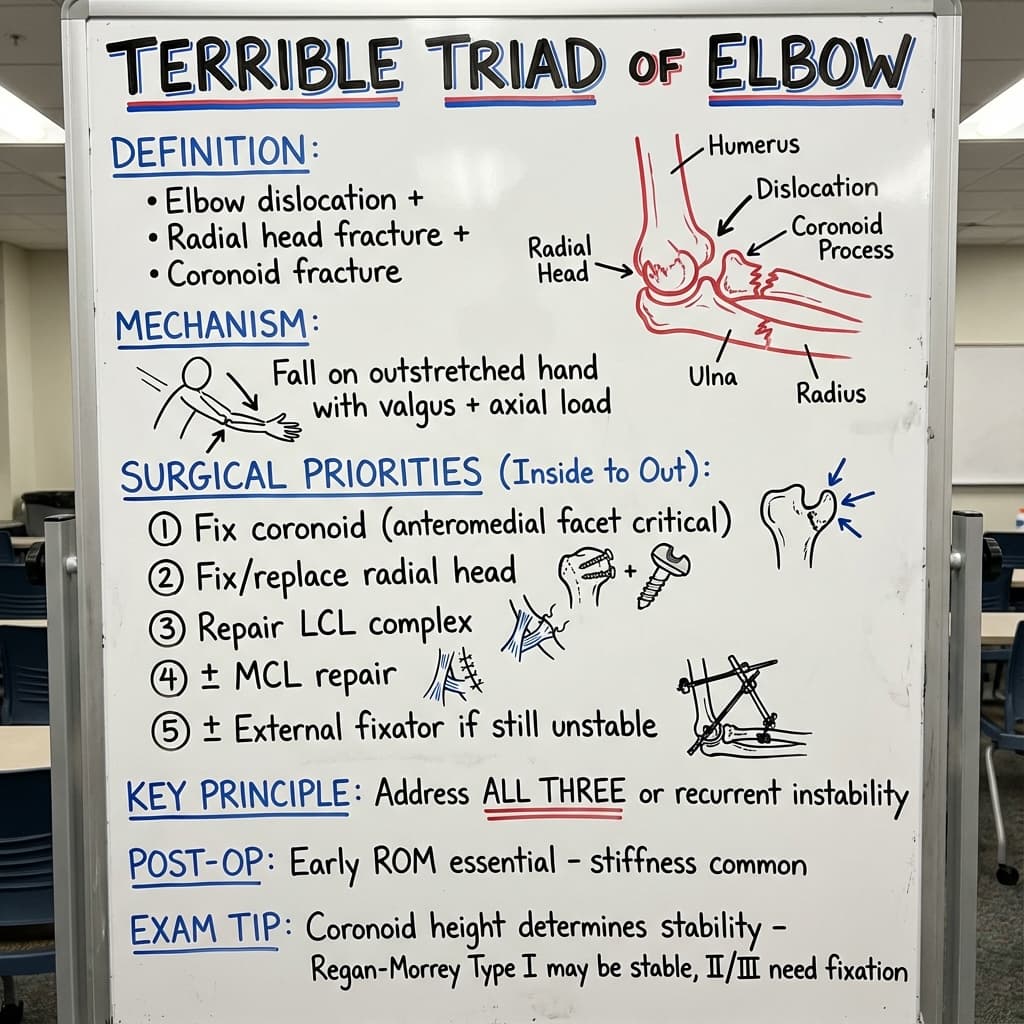
Terrible Triad of Elbow
Elbow dislocation + radial head + coronoid fracture - highly unstable
💡 Fix/replace radial head + fix coronoid + repair LCL = restore stability
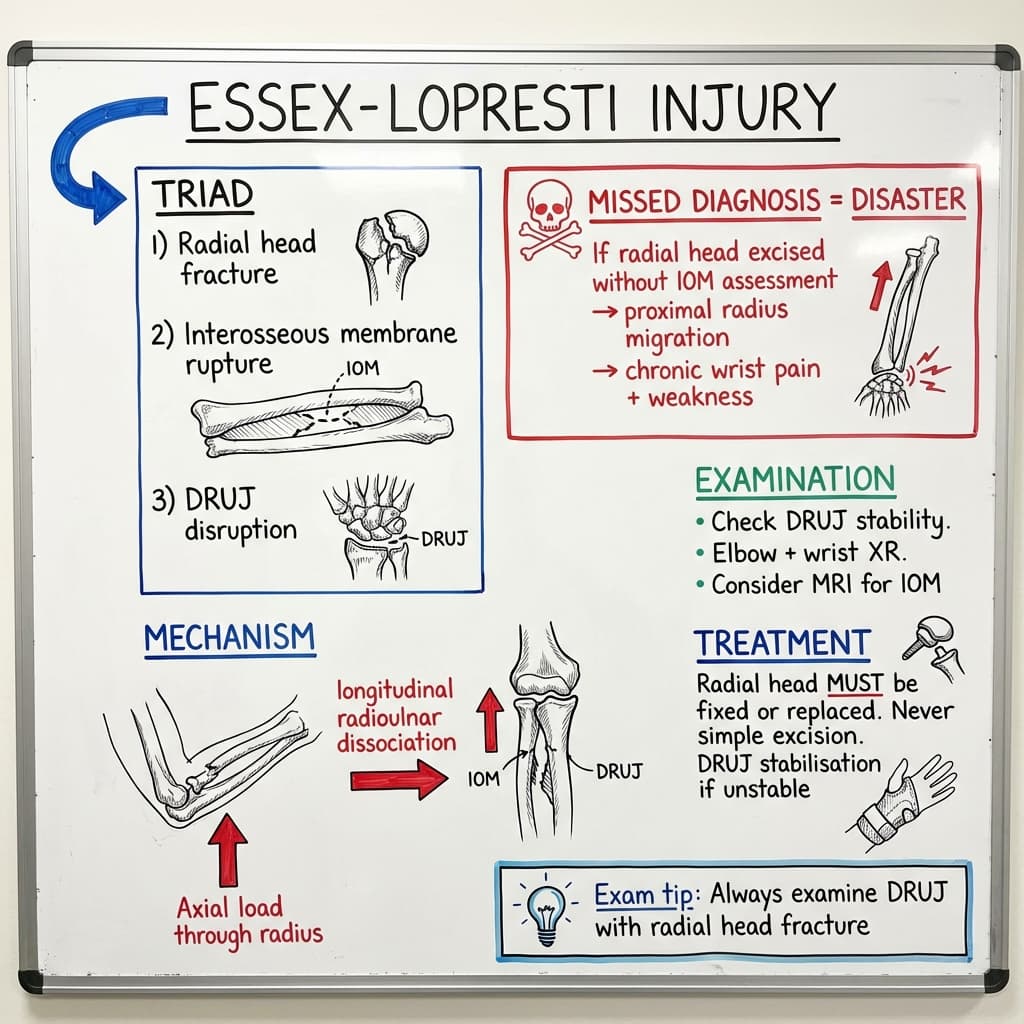
Essex-Lopresti Injury
Radial head fracture + IOM disruption + DRUJ instability
💡 Always check DRUJ with radial head fractures - miss = disaster
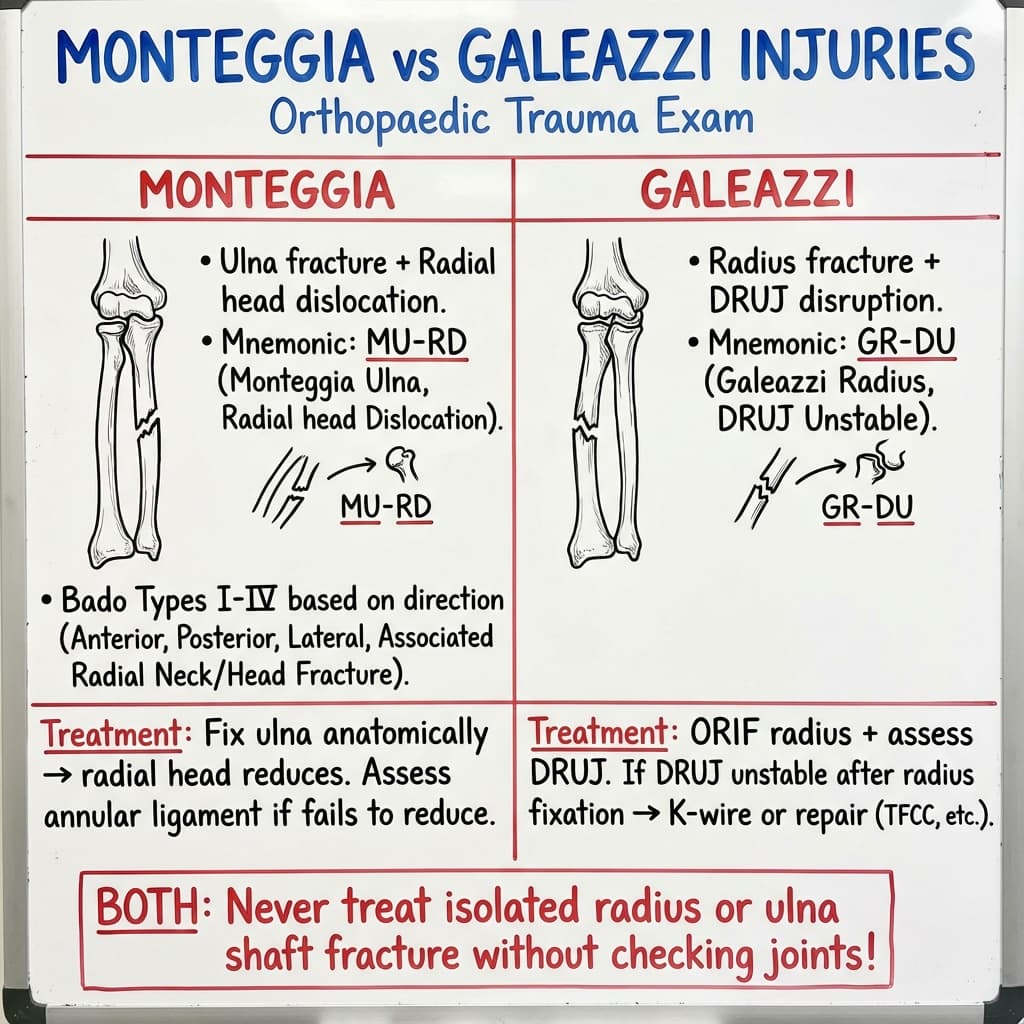
Monteggia vs Galeazzi Injuries
Ulna fracture + radial head vs Radius fracture + DRUJ disruption
💡 Never treat isolated forearm fracture without checking joints!
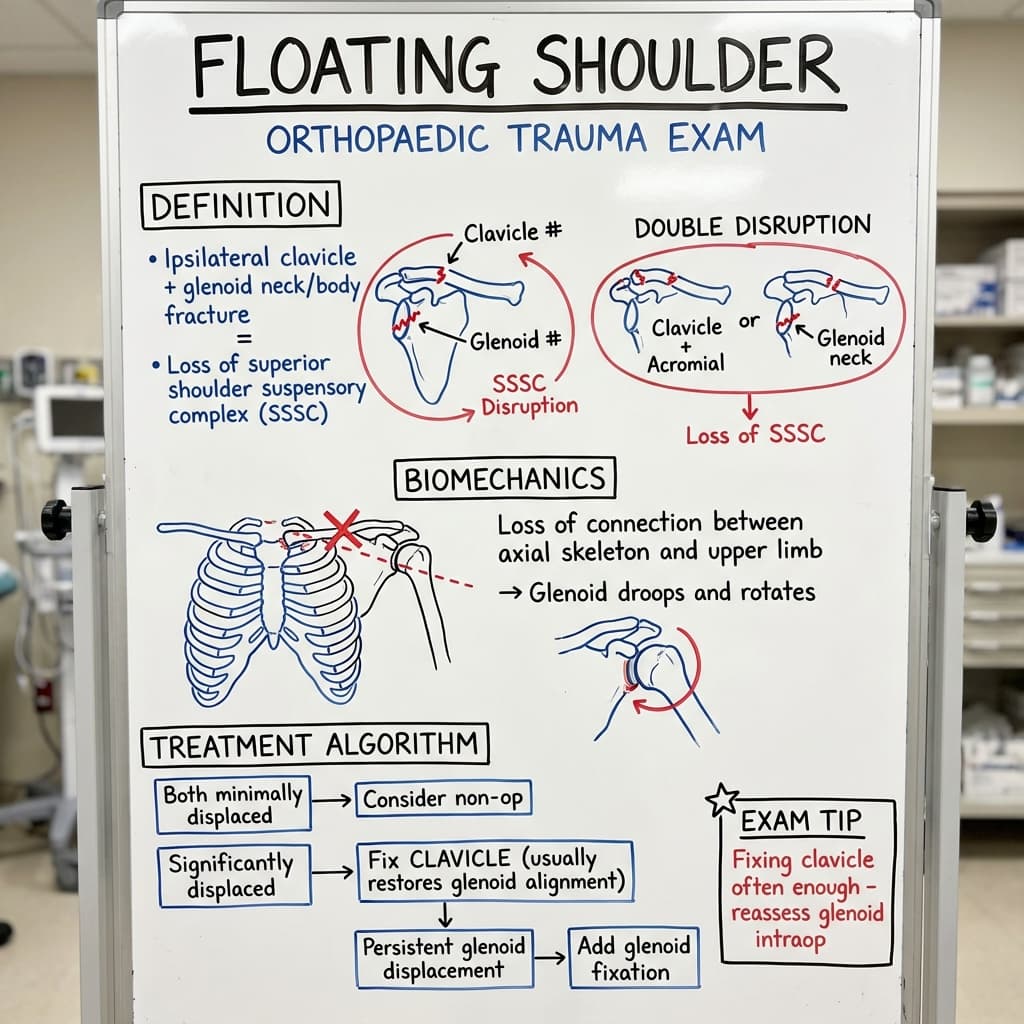
Floating Shoulder
Ipsilateral clavicle + glenoid fracture - loss of SSSC
💡 Fix clavicle first - often restores glenoid alignment
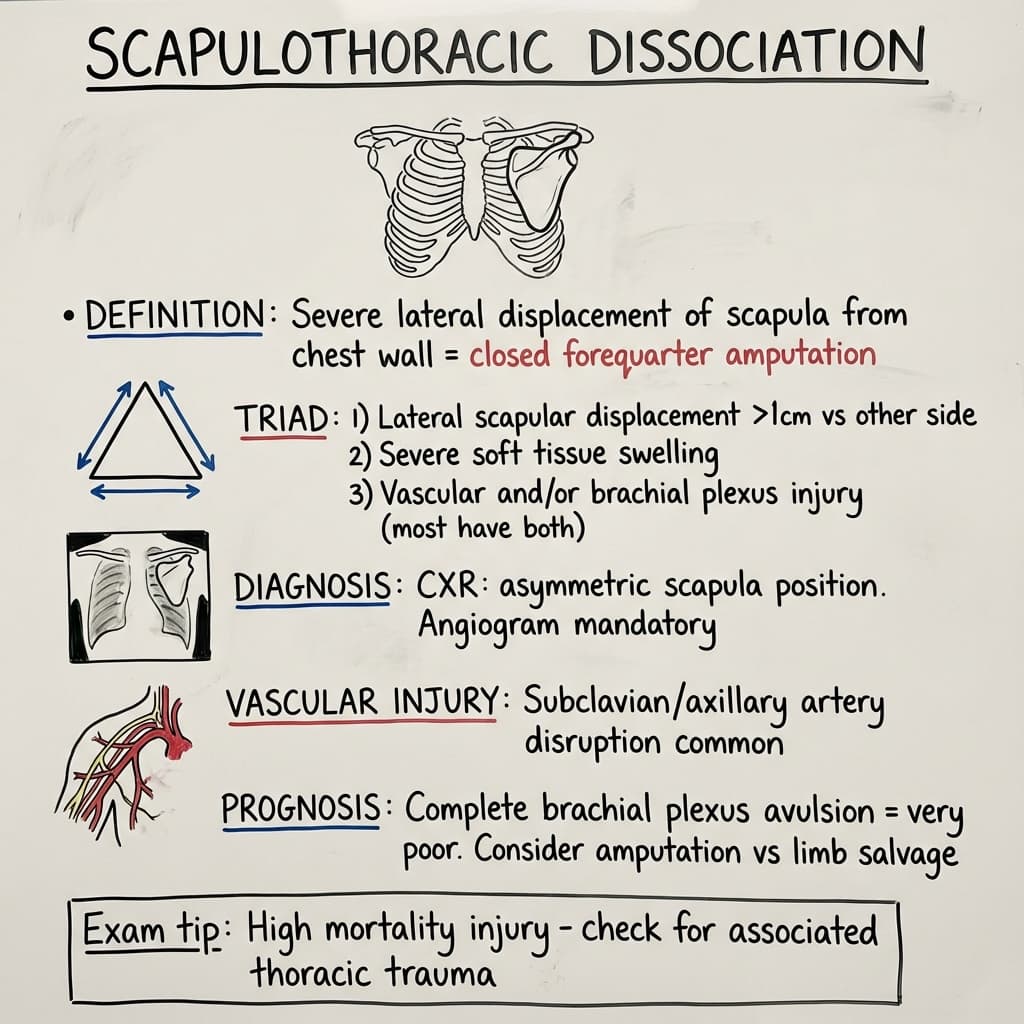
Scapulothoracic Dissociation
Severe injury - closed forequarter amputation with vascular/plexus injury
💡 Angiogram mandatory - vascular injury very common
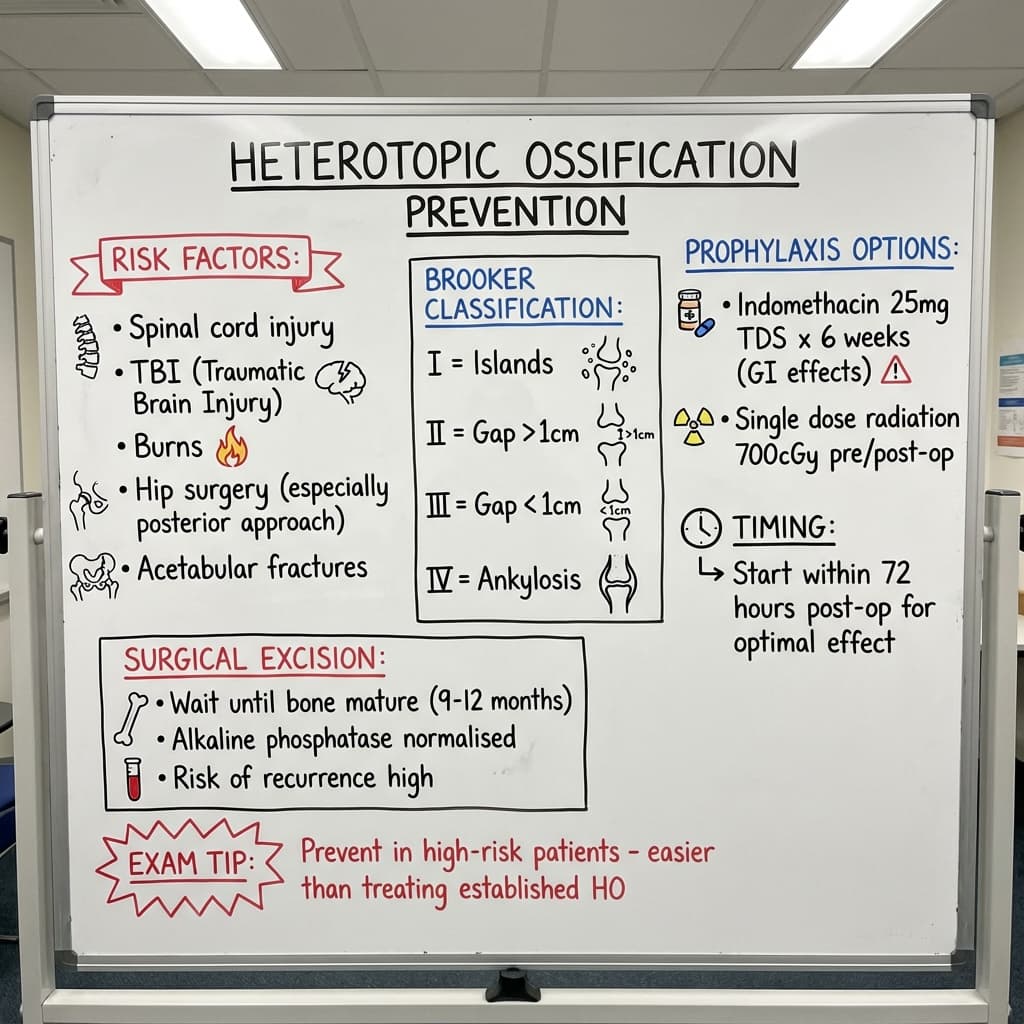
Heterotopic Ossification Prevention
Risk factors, Brooker classification, prophylaxis options
💡 Prevention easier than treatment - start within 72 hours
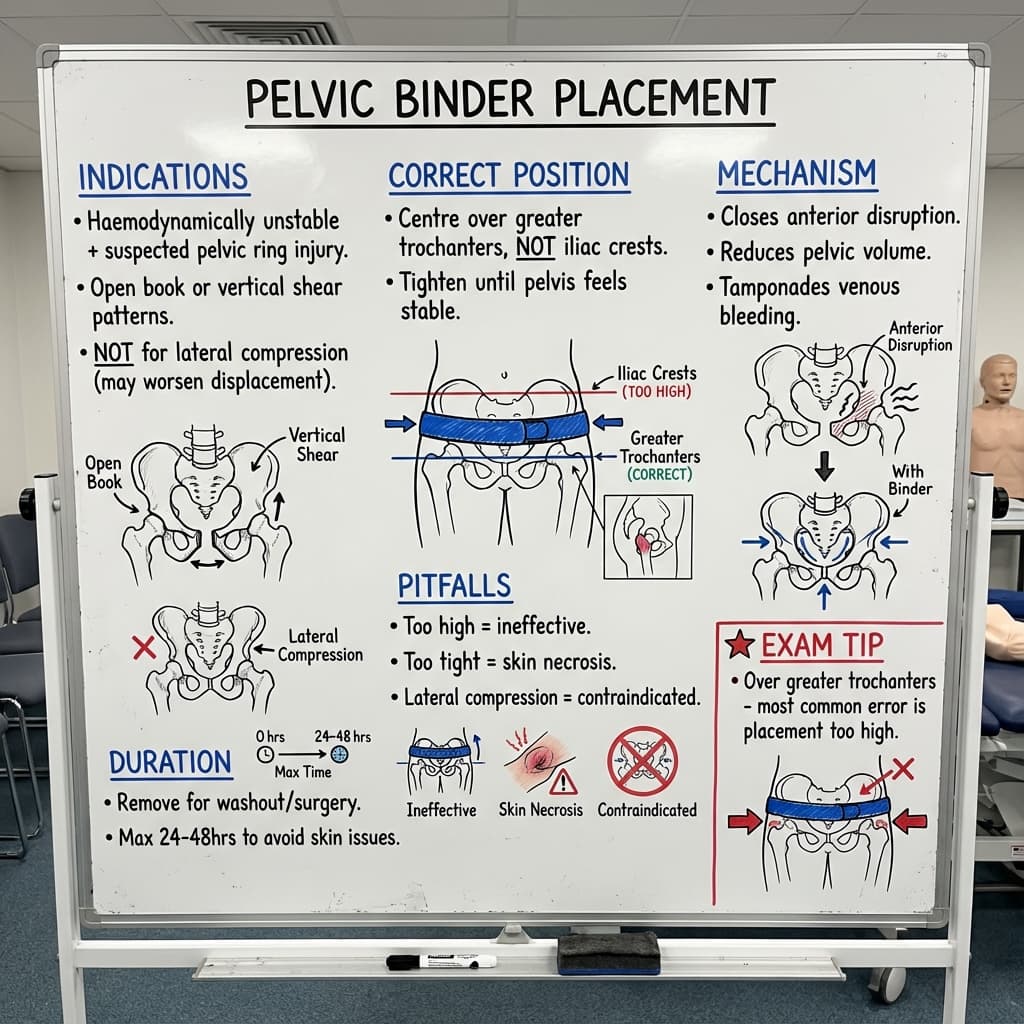
Pelvic Binder Placement
Correct placement, indications, and contraindications
💡 Centre over greater trochanters NOT iliac crests
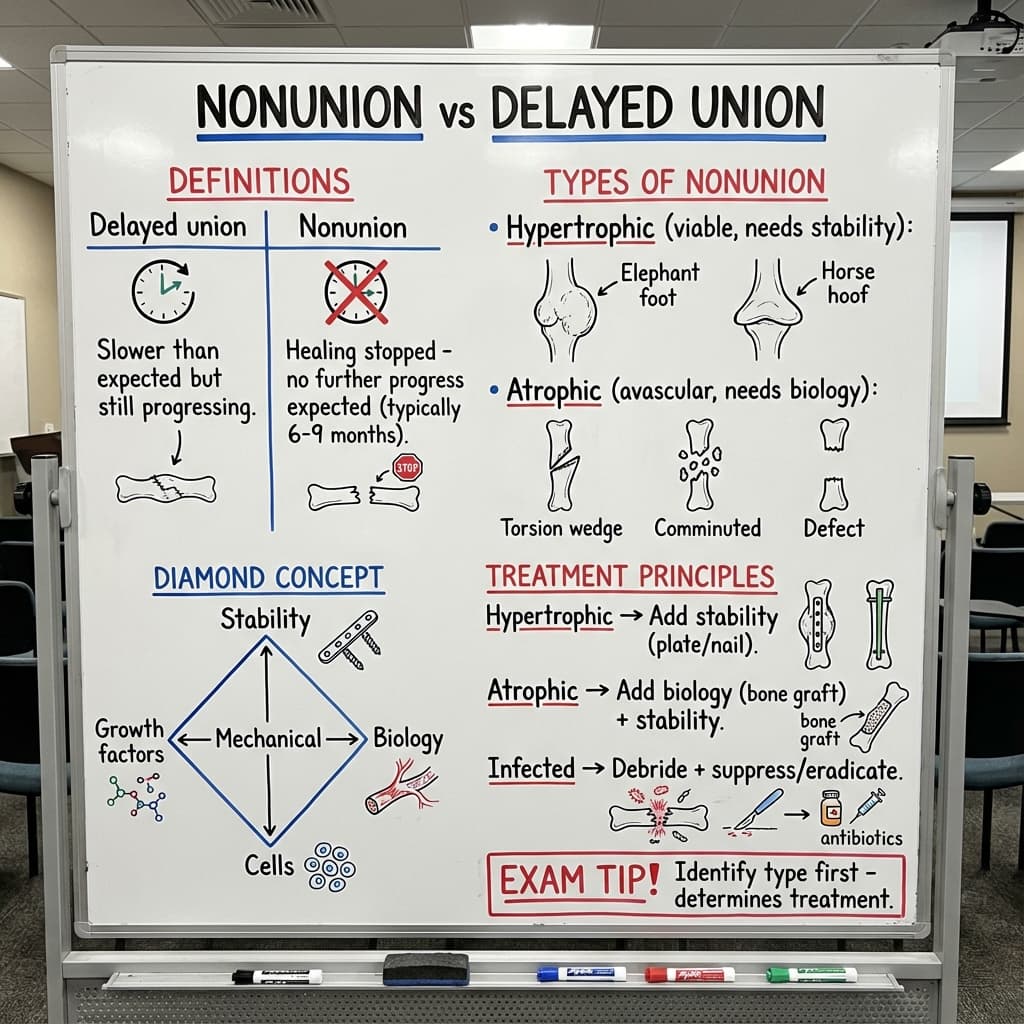
Nonunion vs Delayed Union
Definitions, types (hypertrophic vs atrophic), and treatment principles
💡 Hypertrophic = needs stability, Atrophic = needs biology + stability
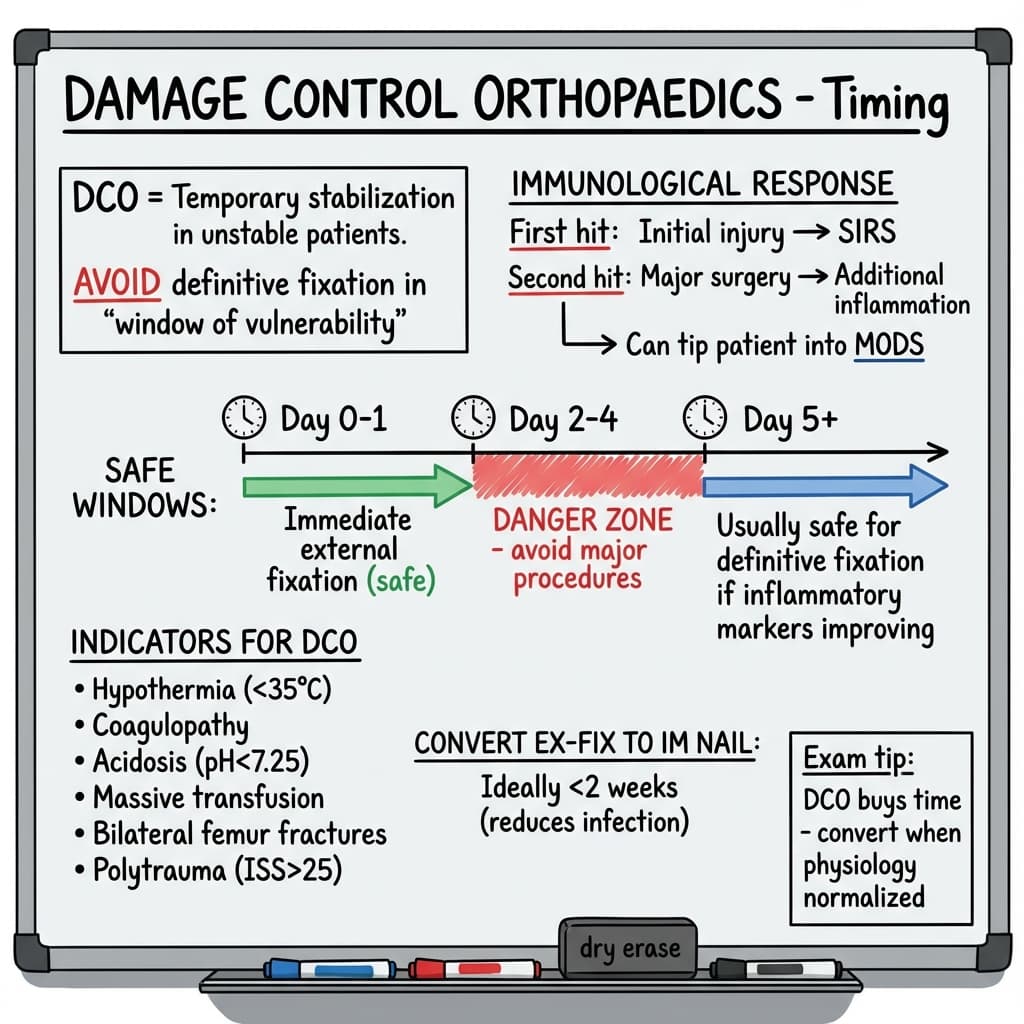
Damage Control Orthopaedics Timing
First/second hit concept and safe windows for definitive fixation
💡 Day 2-4 is danger zone - avoid major procedures
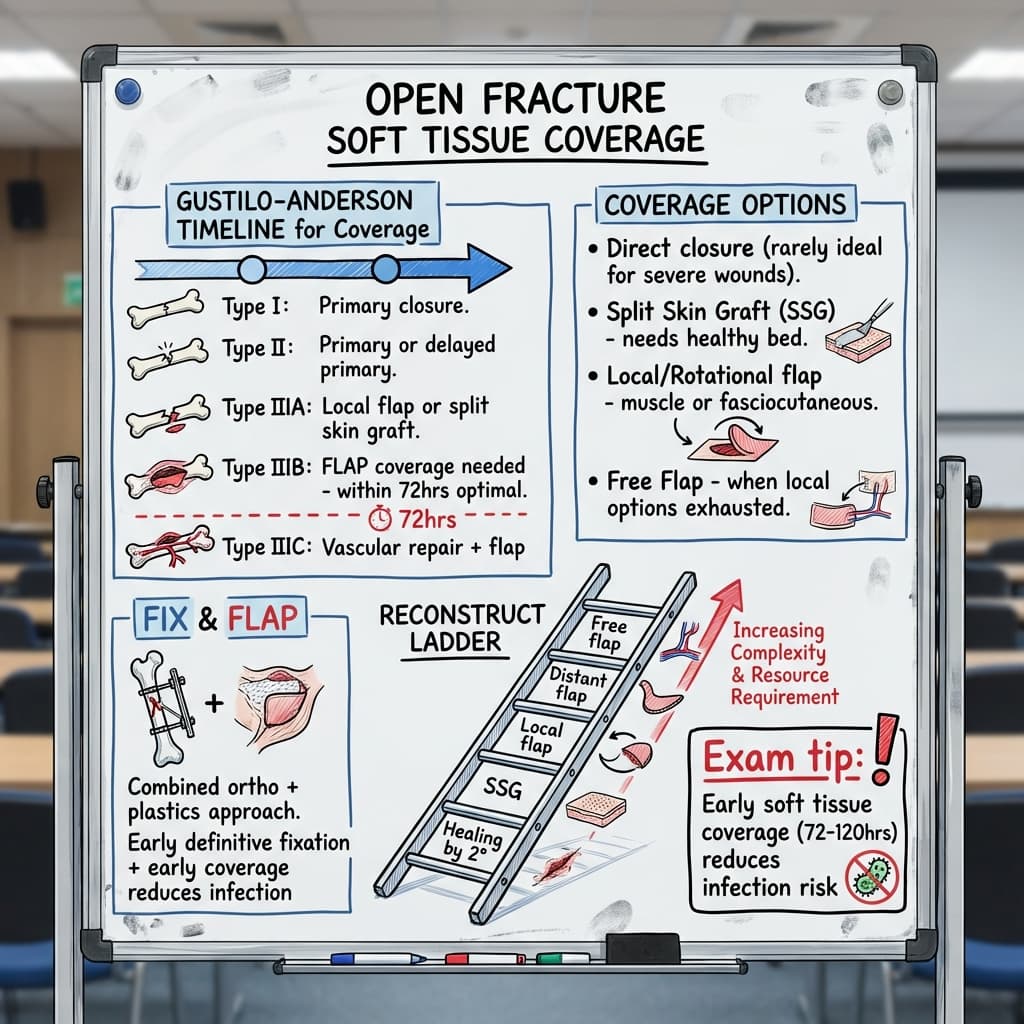
Open Fracture Soft Tissue Coverage
Gustilo-based coverage options and timing
💡 Early soft tissue coverage (72-120hrs) reduces infection
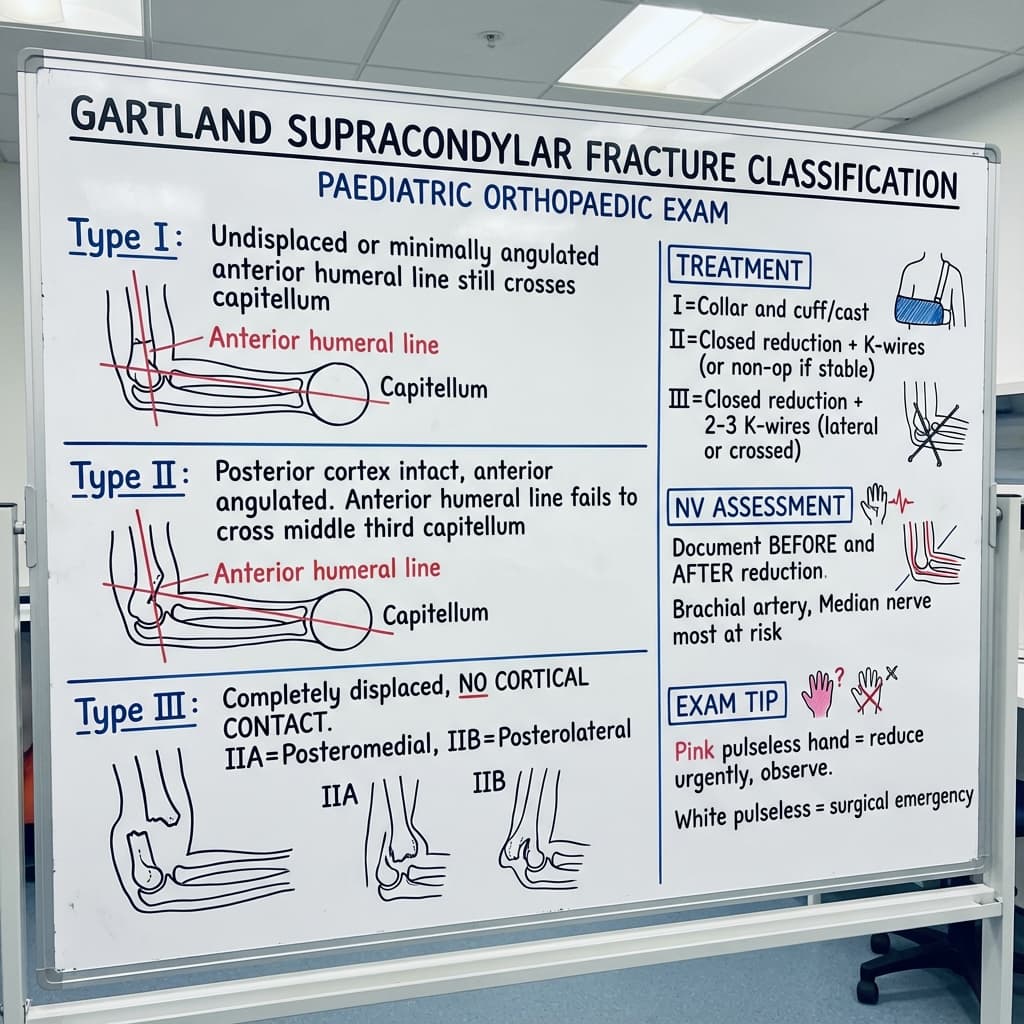
Gartland Supracondylar Classification
Type I-III classification with treatment and NV assessment
💡 Pink pulseless = reduce urgently. White pulseless = surgical emergency
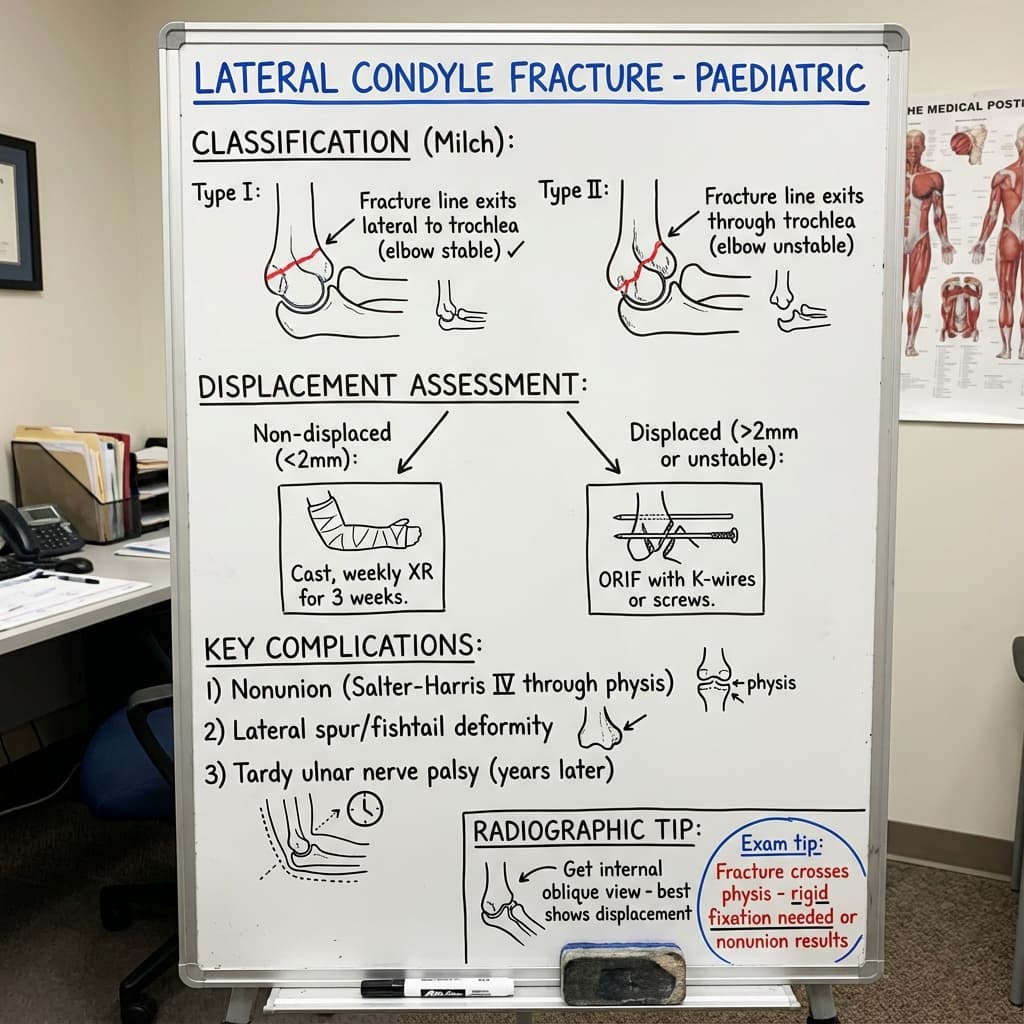
Lateral Condyle Fracture - Paediatric
Milch classification and displacement management
💡 Fracture crosses physis - rigid fixation needed or nonunion
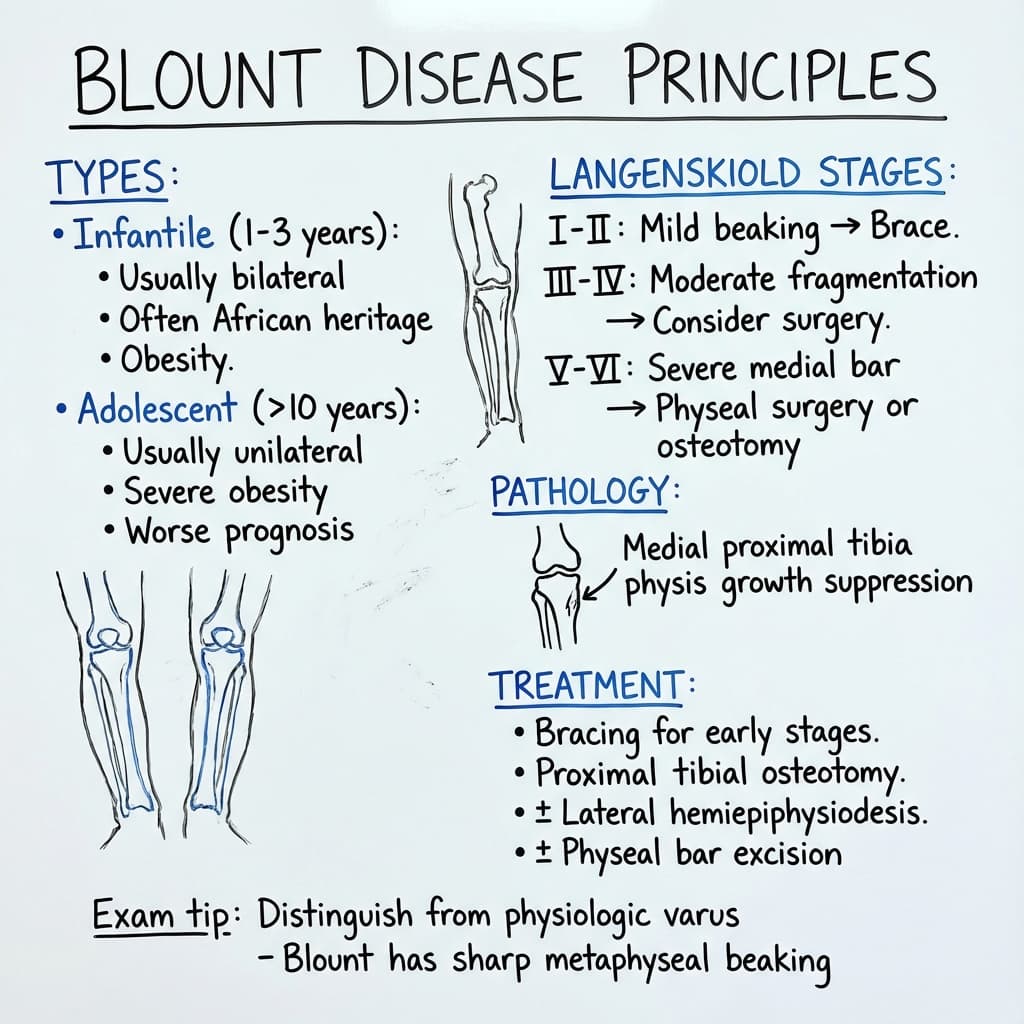
Blount Disease Principles
Infantile vs adolescent types, Langenskiold stages, treatment
💡 Sharp metaphyseal beaking distinguishes from physiologic varus
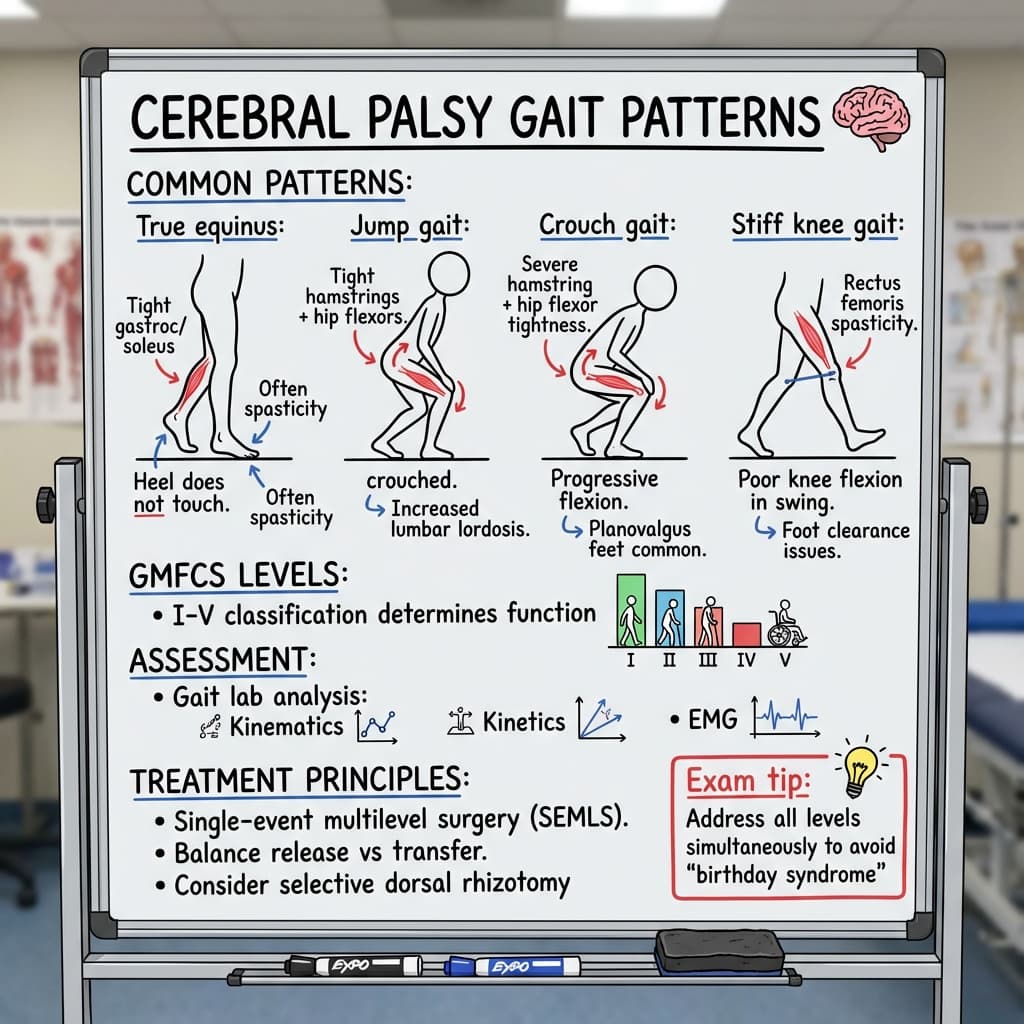
Cerebral Palsy Gait Patterns
Common gait patterns and SEMLS principles
💡 Address all levels simultaneously - avoid birthday syndrome
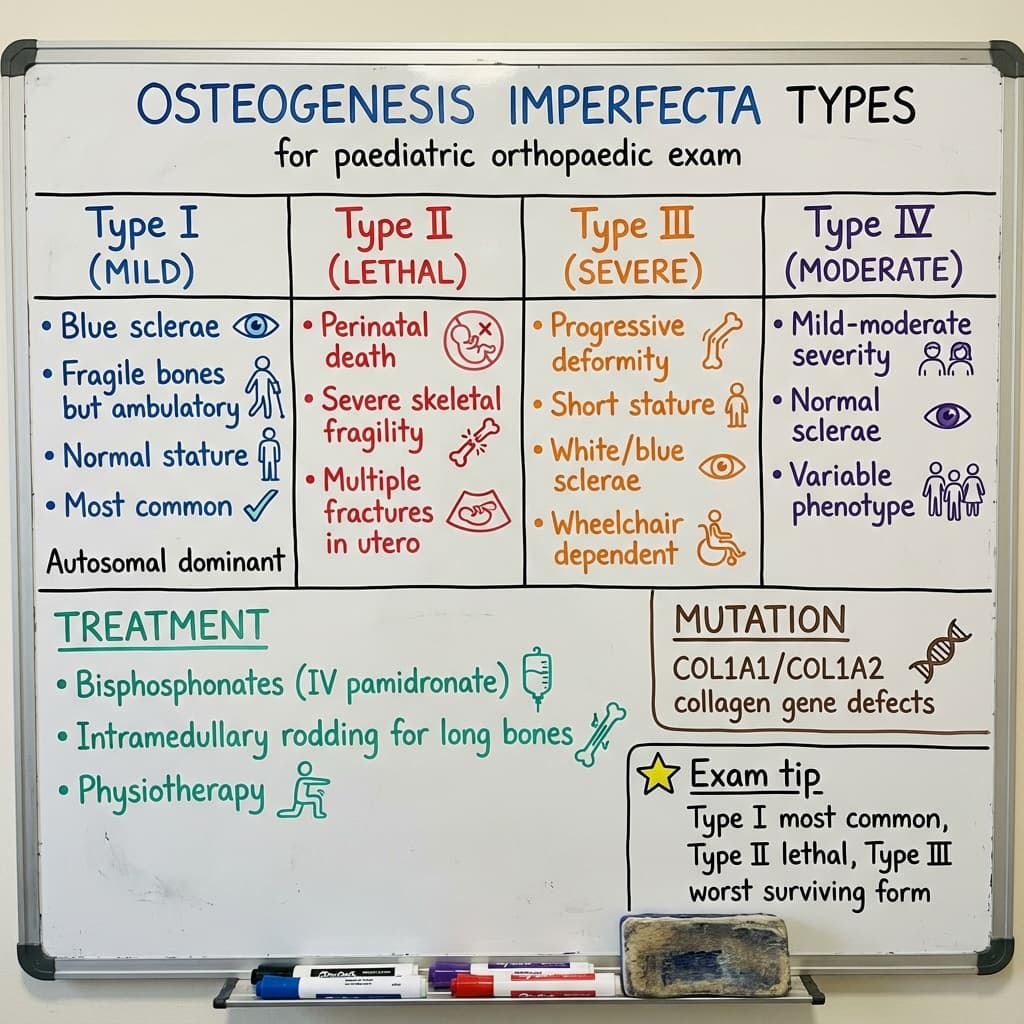
Osteogenesis Imperfecta Types
Type I-IV comparison, collagen defects, treatment
💡 Type I most common, Type II lethal, Type III worst surviving
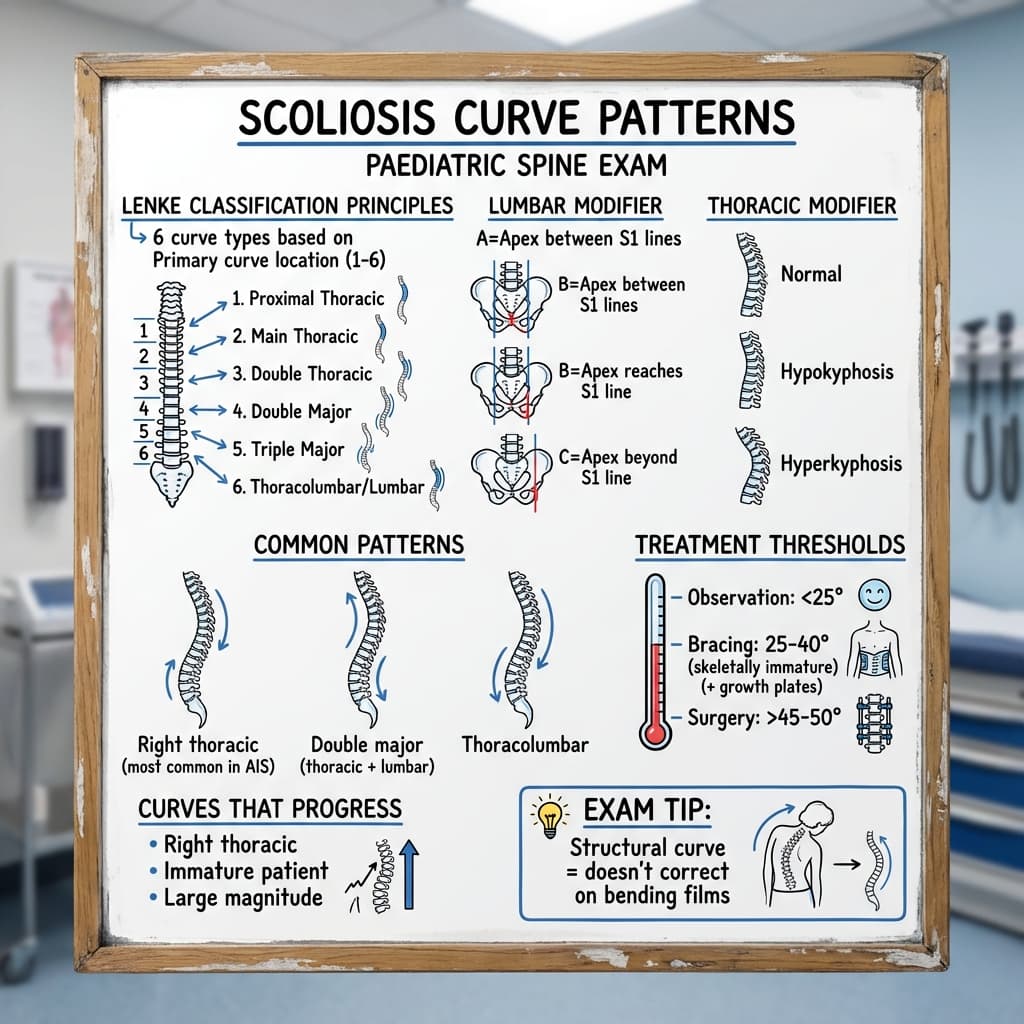
Scoliosis Curve Patterns
Lenke classification principles and treatment thresholds
💡 Structural curve = doesn't correct on bending films
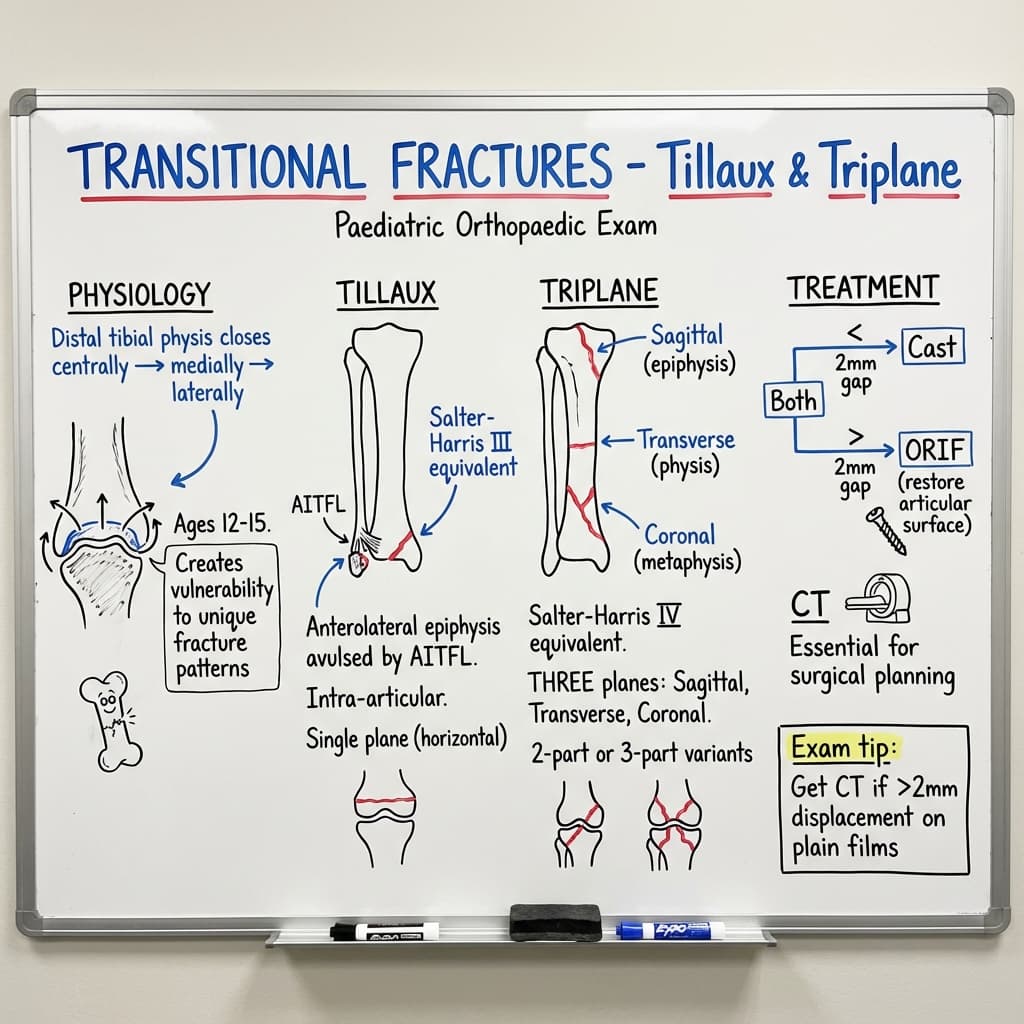
Transitional Fractures - Tillaux & Triplane
Adolescent ankle fractures during physeal closure
💡 Get CT if >2mm displacement - essential for planning
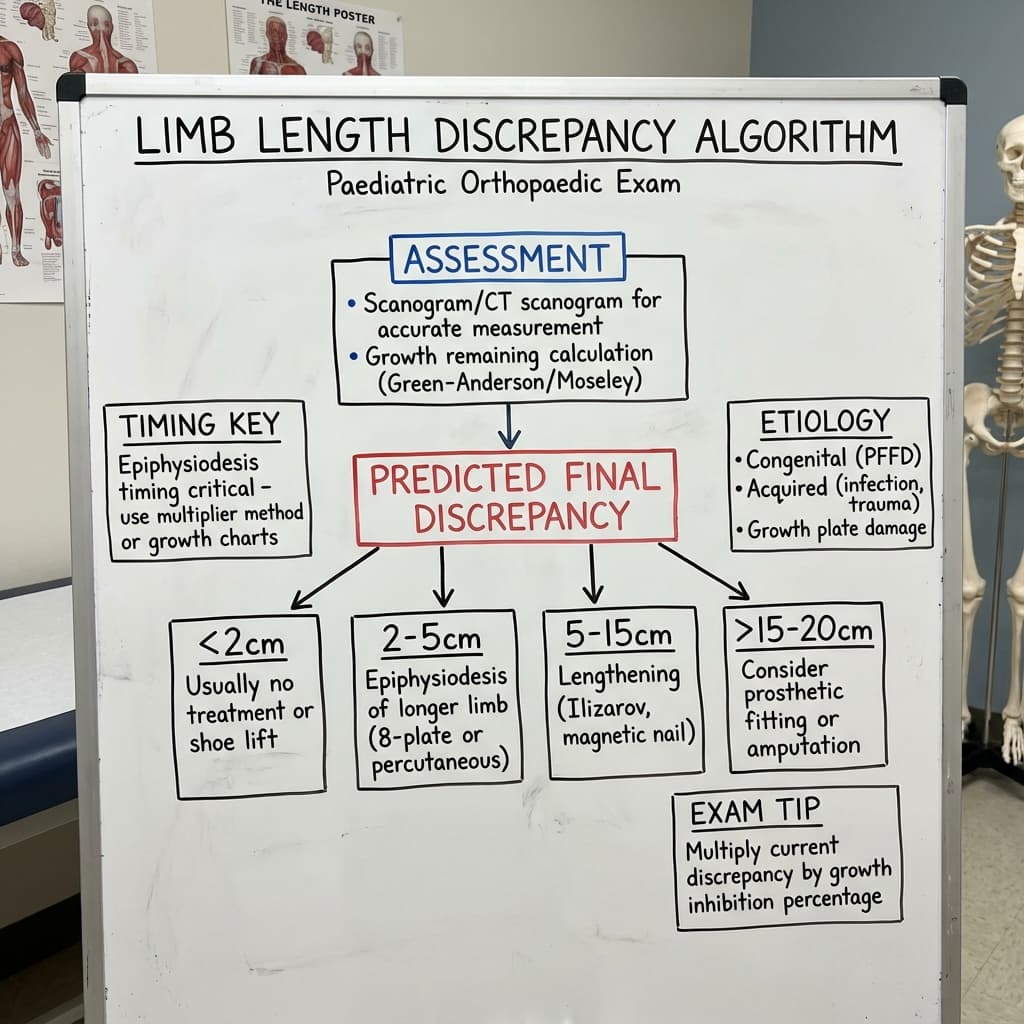
Limb Length Discrepancy Algorithm
Assessment, timing, and treatment options
💡 Epiphysiodesis timing critical - use growth charts
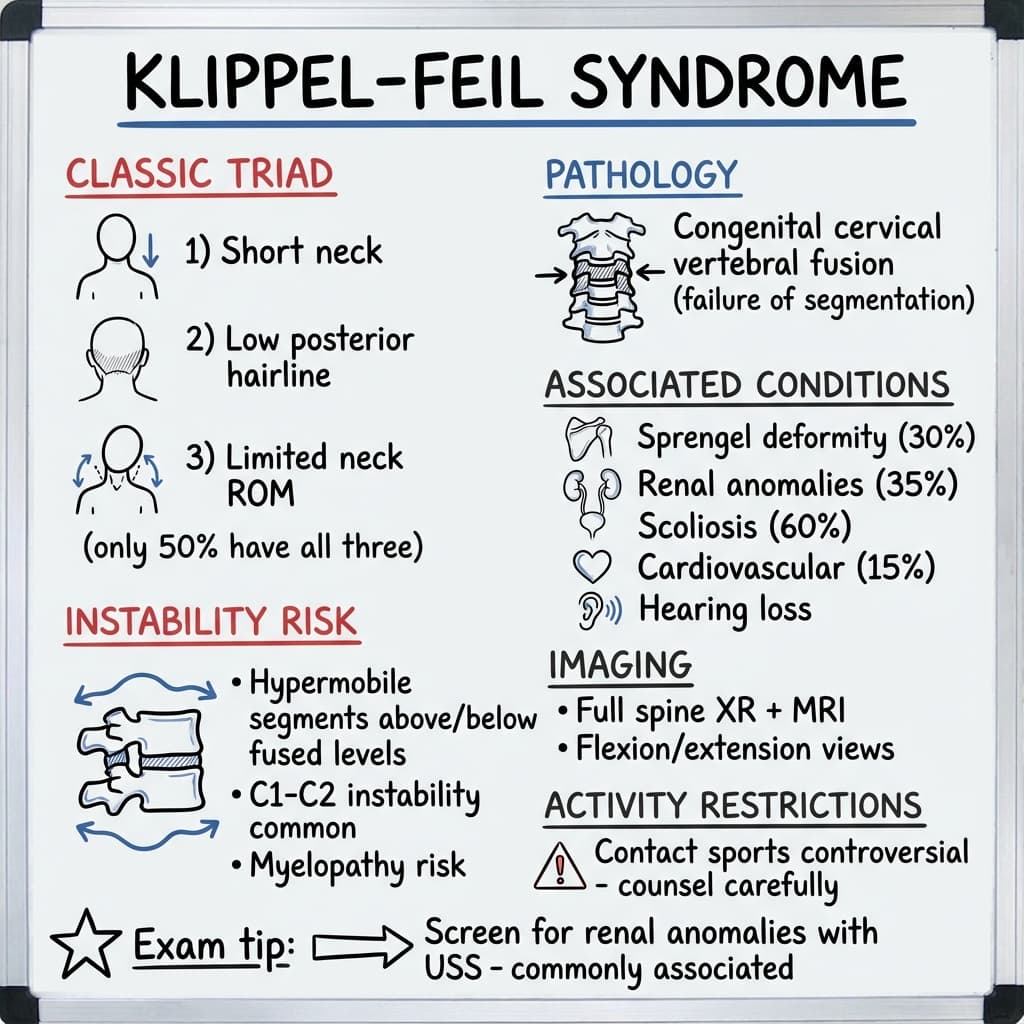
Klippel-Feil Syndrome
Classic triad, associated conditions, instability risk
💡 Screen for renal anomalies with USS - commonly associated
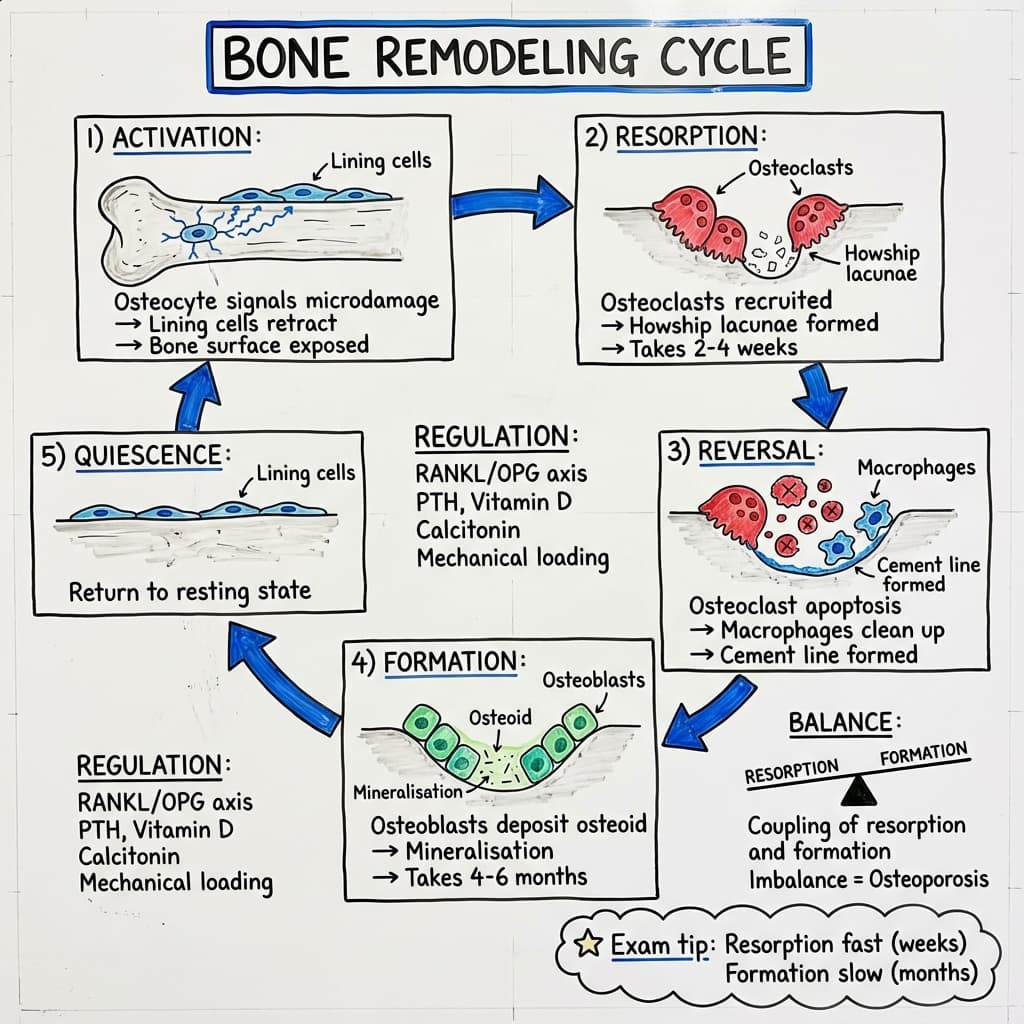
Bone Remodeling Cycle
Activation → Resorption → Reversal → Formation → Quiescence
💡 Resorption fast (weeks), Formation slow (months)
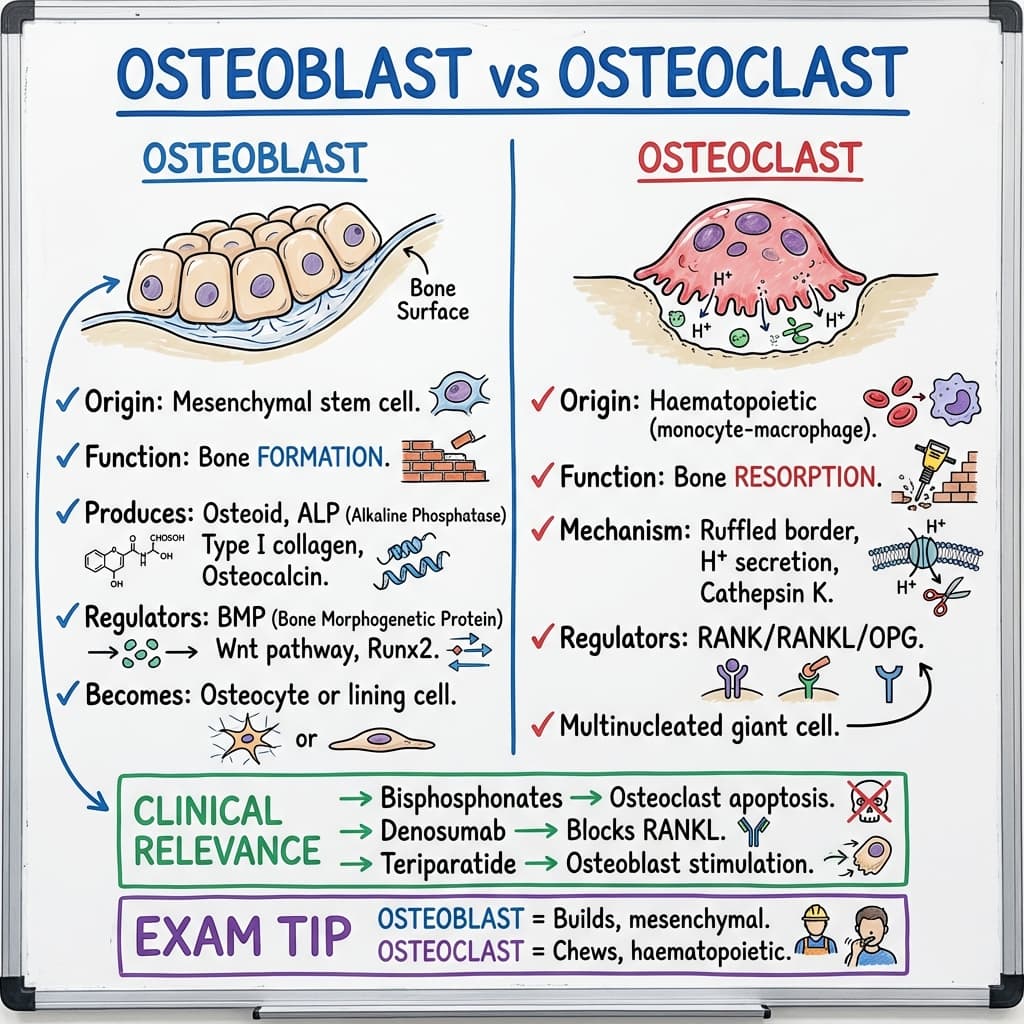
Osteoblast vs Osteoclast
Origin, function, and clinical relevance
💡 Osteoblast = Builds (mesenchymal), Osteoclast = Chews (haematopoietic)
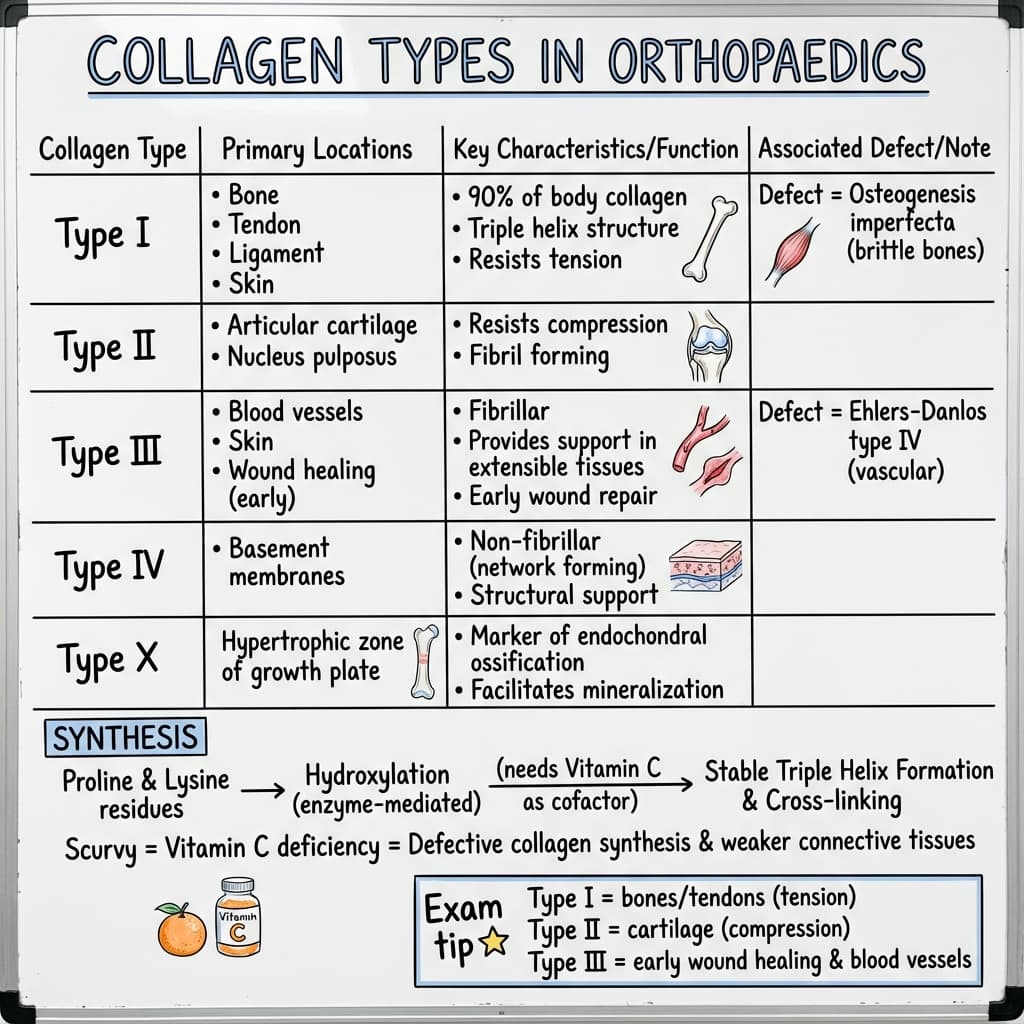
Collagen Types in Orthopaedics
Type I-IV and X with clinical correlates
💡 Type I = bone, Type II = cartilage, Type III = early healing
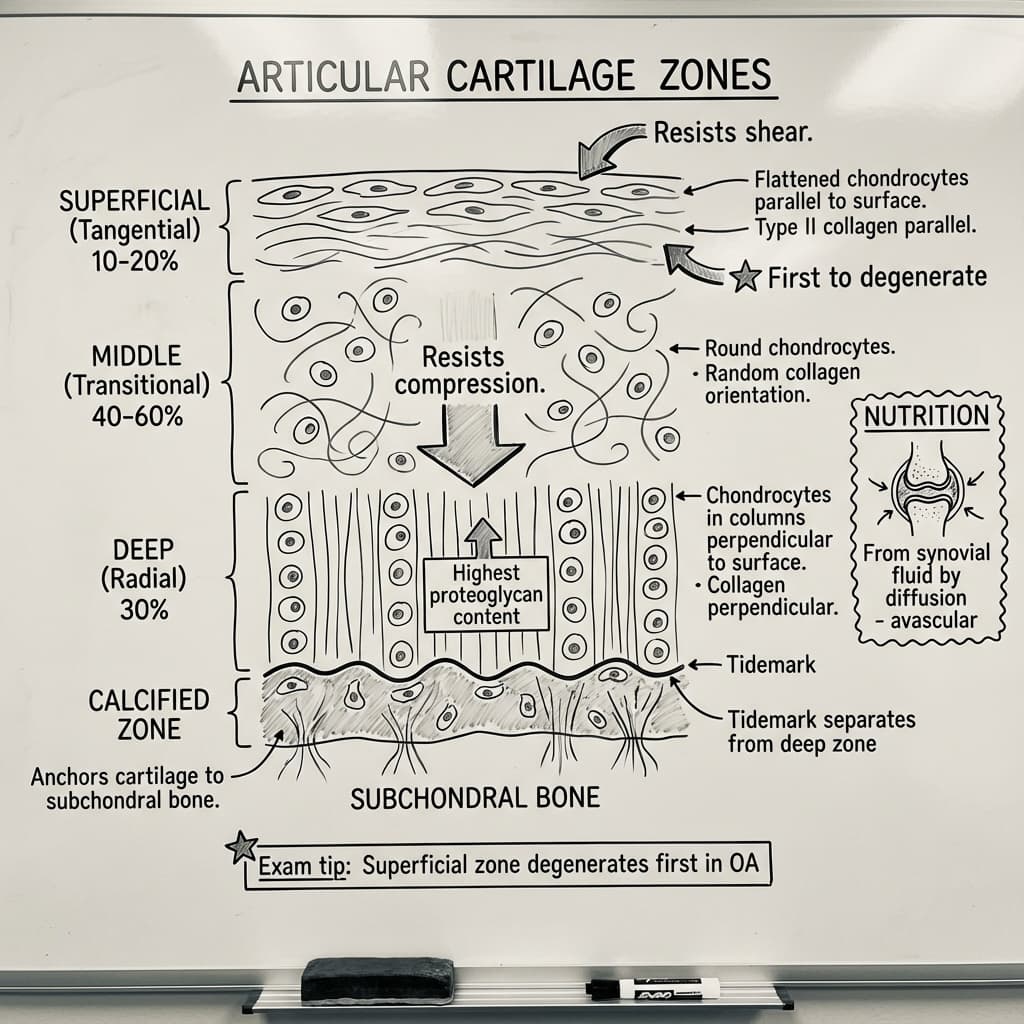
Articular Cartilage Zones
Superficial → Middle → Deep → Calcified zones
💡 Superficial zone degenerates first in OA
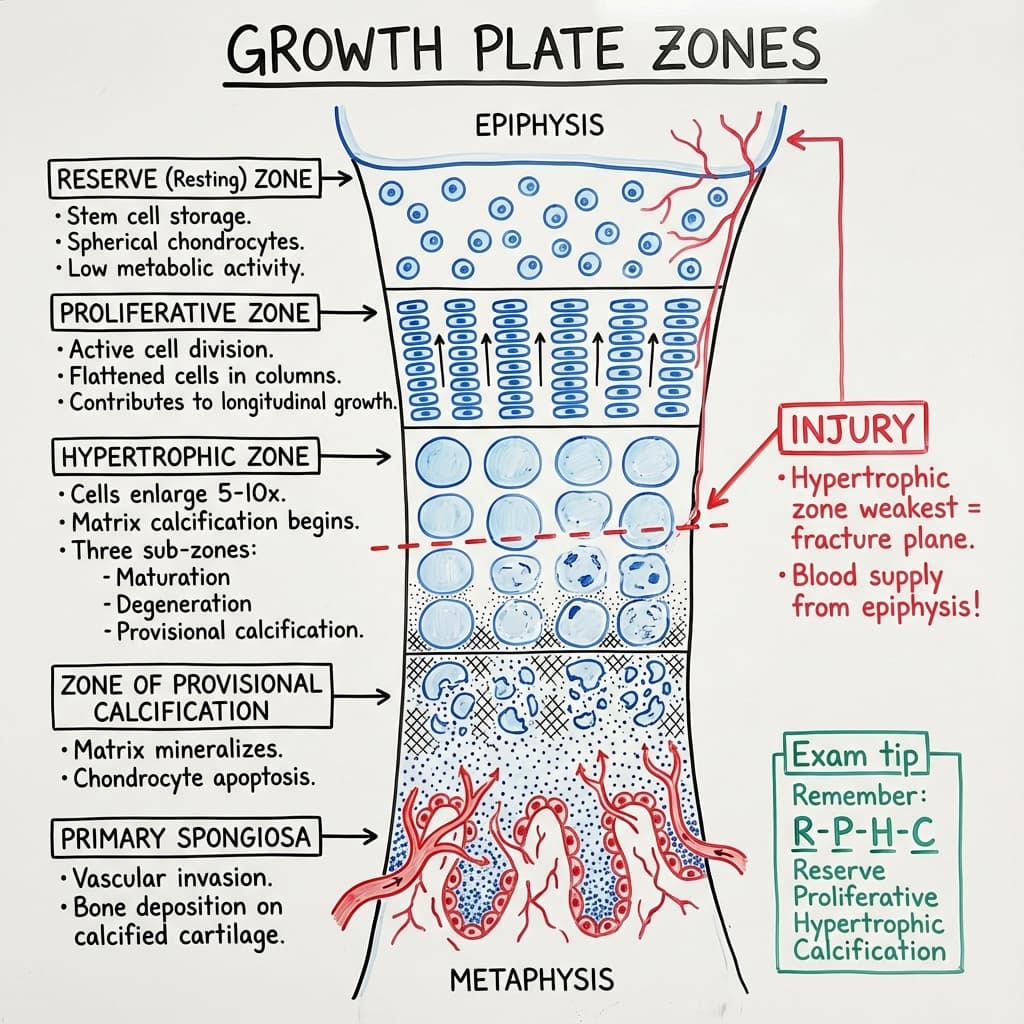
Growth Plate Zones
Reserve → Proliferative → Hypertrophic → Provisional calcification
💡 R-P-H-C mnemonic. Hypertrophic zone weakest = fracture plane
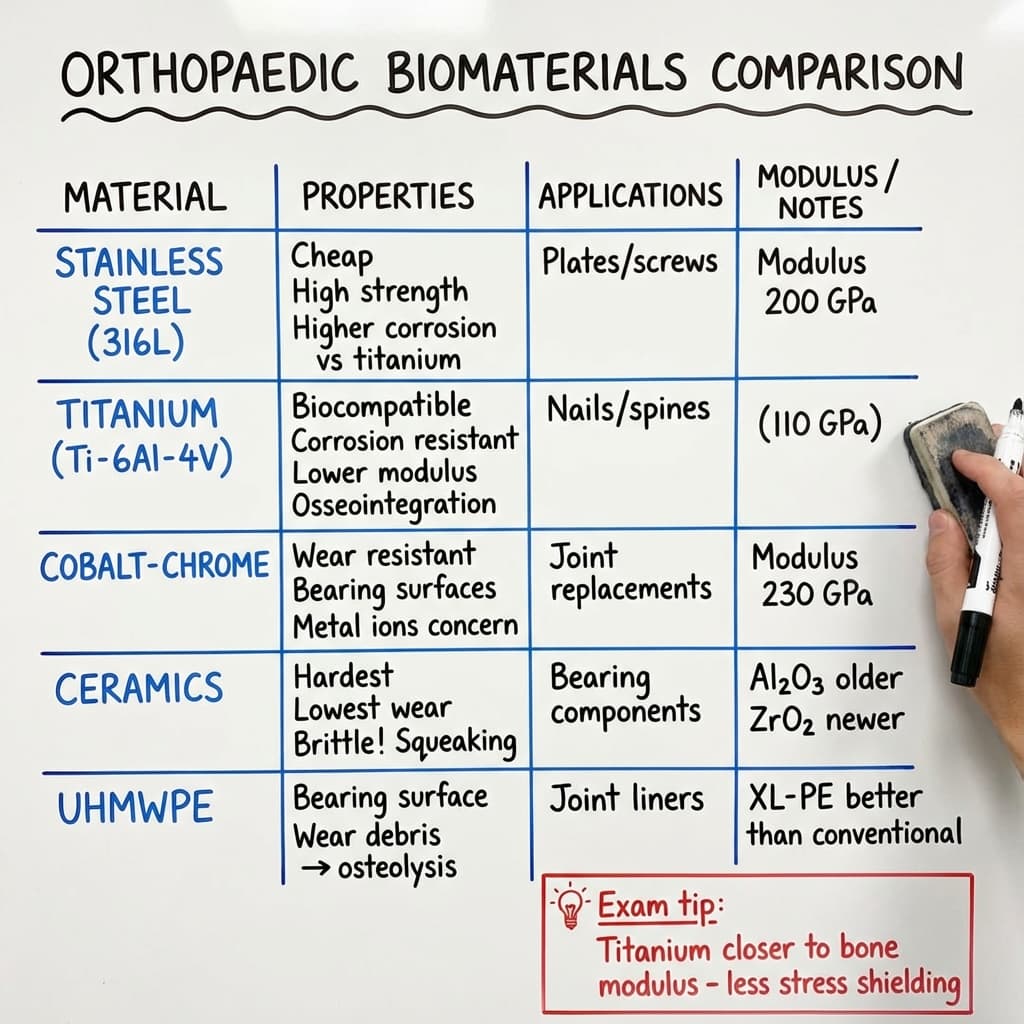
Orthopaedic Biomaterials Comparison
Stainless steel, titanium, CoCr, ceramics, UHMWPE
💡 Titanium closer to bone modulus - less stress shielding
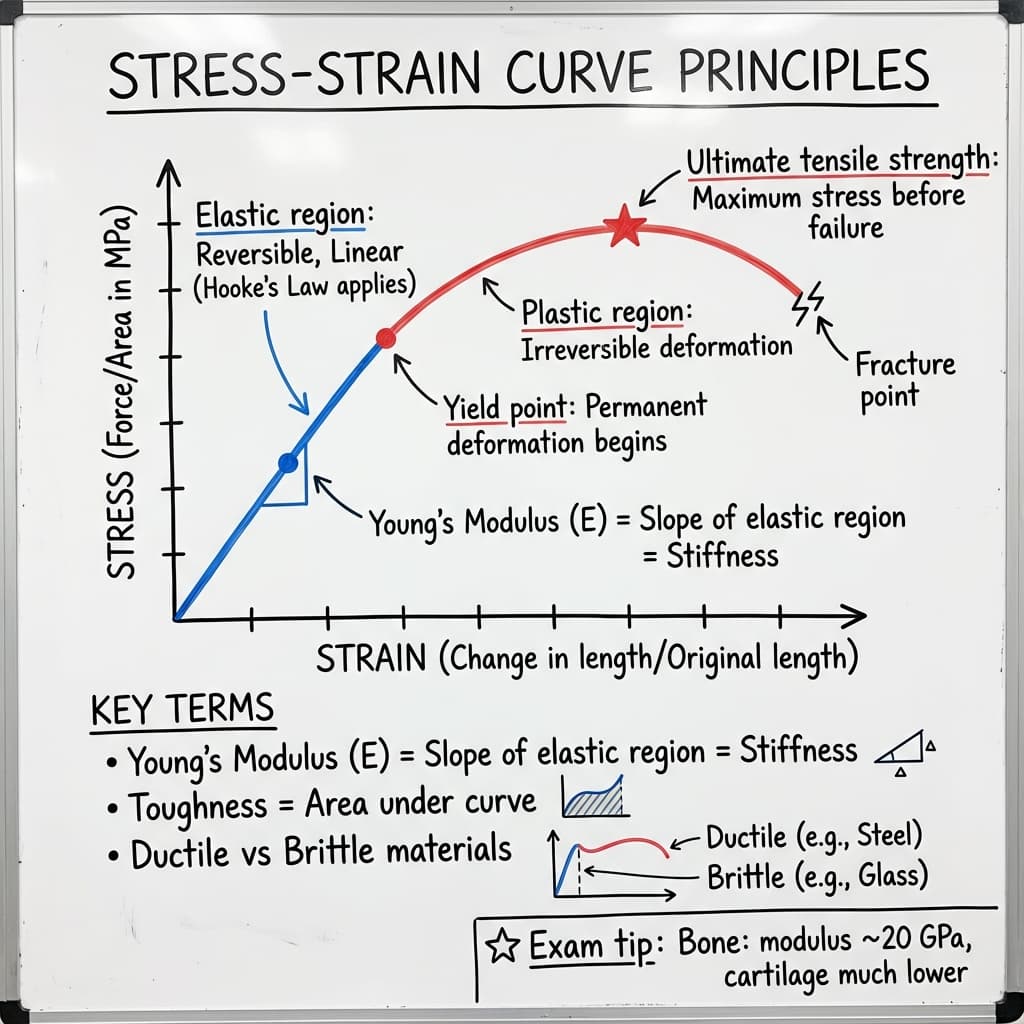
Stress-Strain Curve Principles
Elastic, plastic regions, yield point, and material properties
💡 Area under curve = toughness, Slope = stiffness
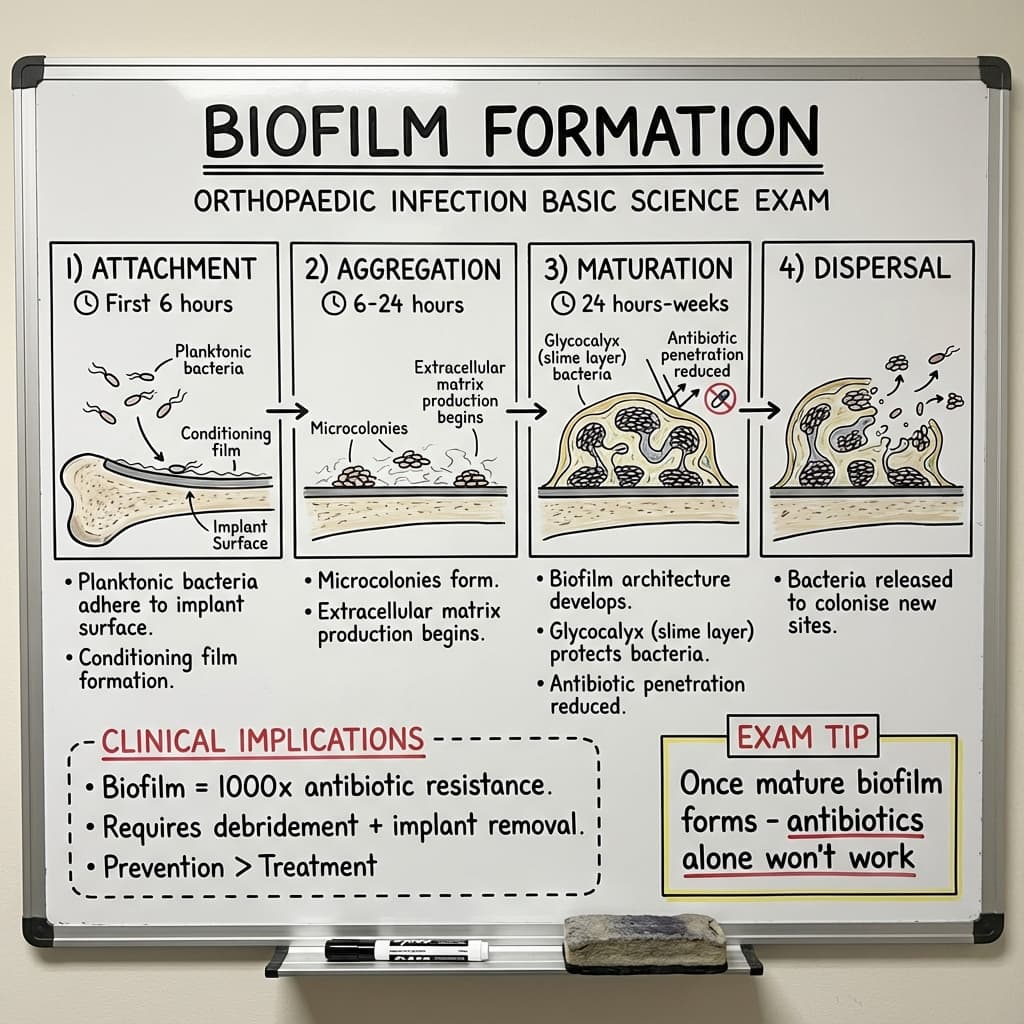
Biofilm Formation
Stages of biofilm development and clinical implications
💡 Once mature biofilm forms - antibiotics alone won't work
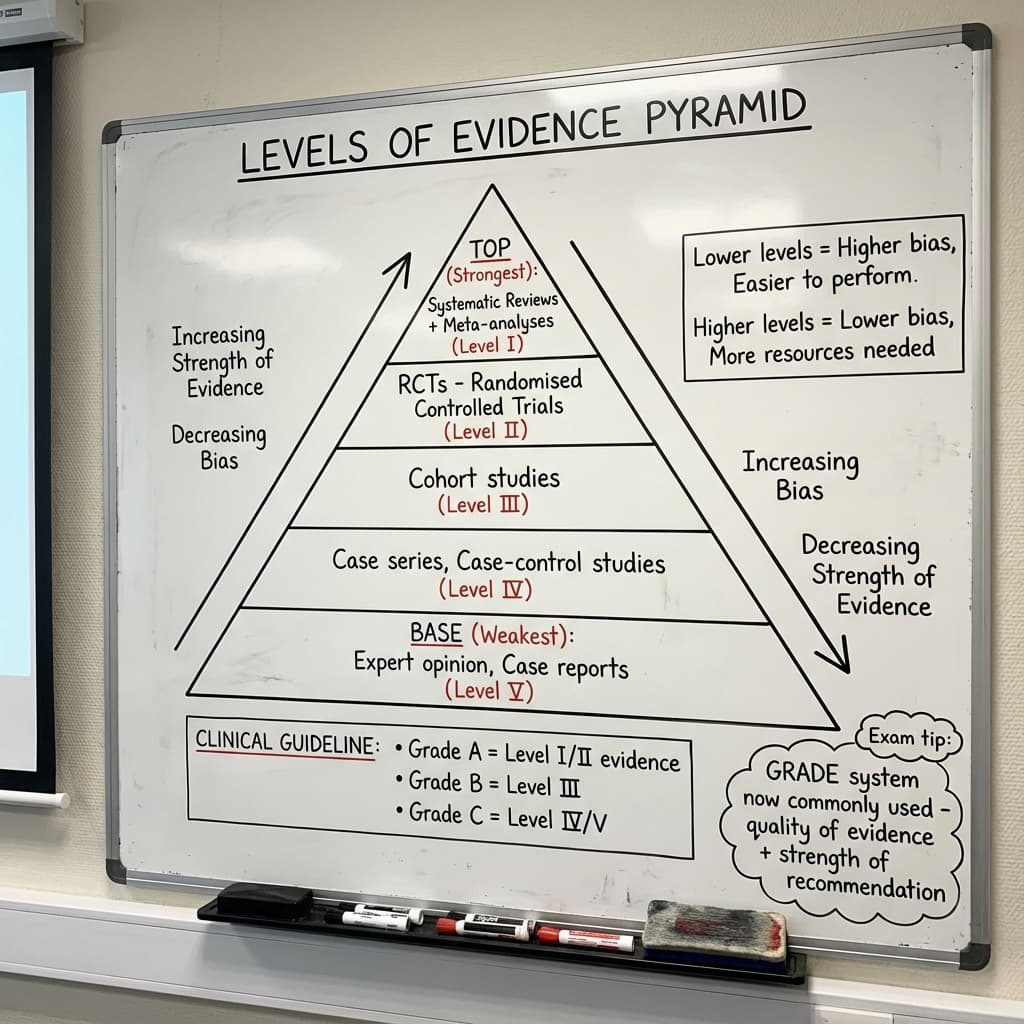
Levels of Evidence Pyramid
Hierarchy from case reports to systematic reviews
💡 GRADE system = quality of evidence + strength of recommendation
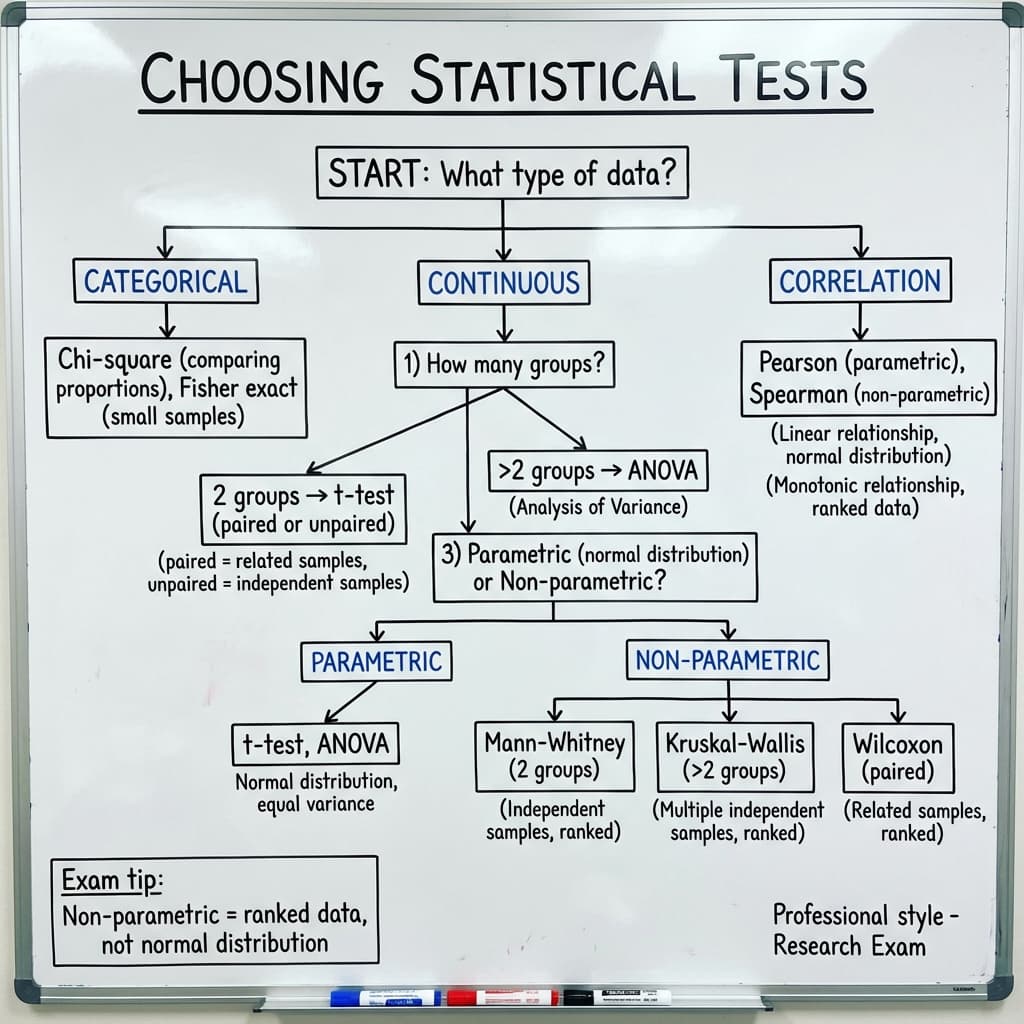
Choosing Statistical Tests
Flowchart for selecting appropriate statistical tests
💡 Non-parametric = ranked data, not normal distribution
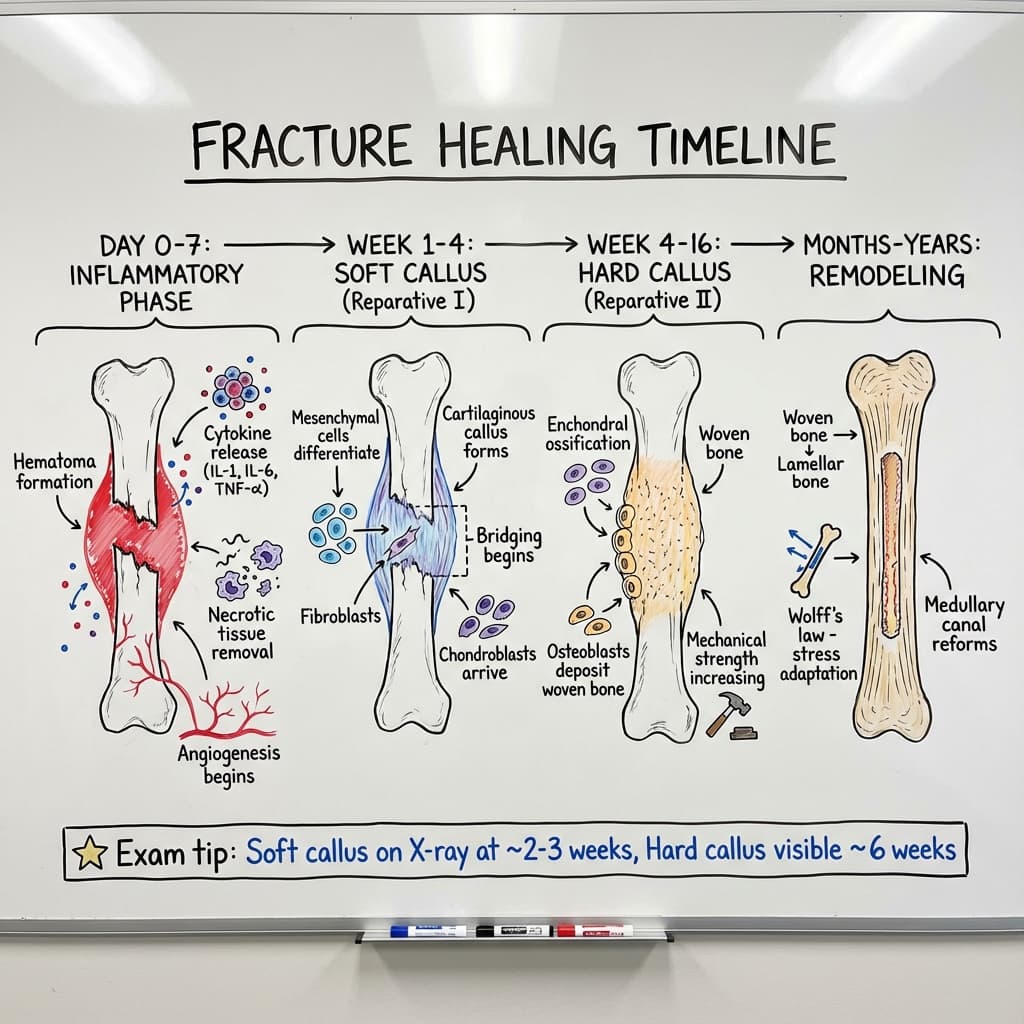
Fracture Healing Timeline
Inflammatory → Soft callus → Hard callus → Remodeling phases
💡 Soft callus visible on XR ~2-3 weeks, Hard callus ~6 weeks
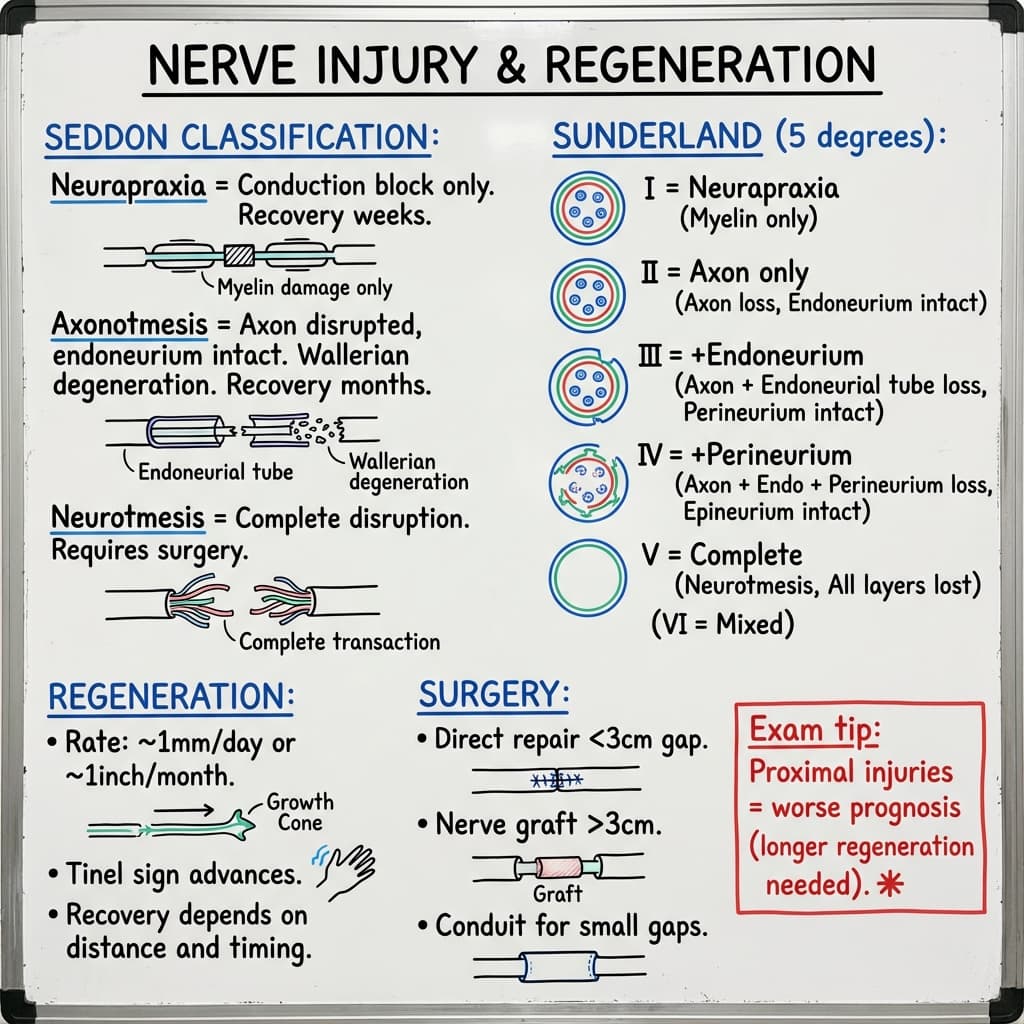
Nerve Injury & Regeneration
Seddon and Sunderland classification with regeneration rates
💡 Proximal injuries = worse prognosis (longer distance)
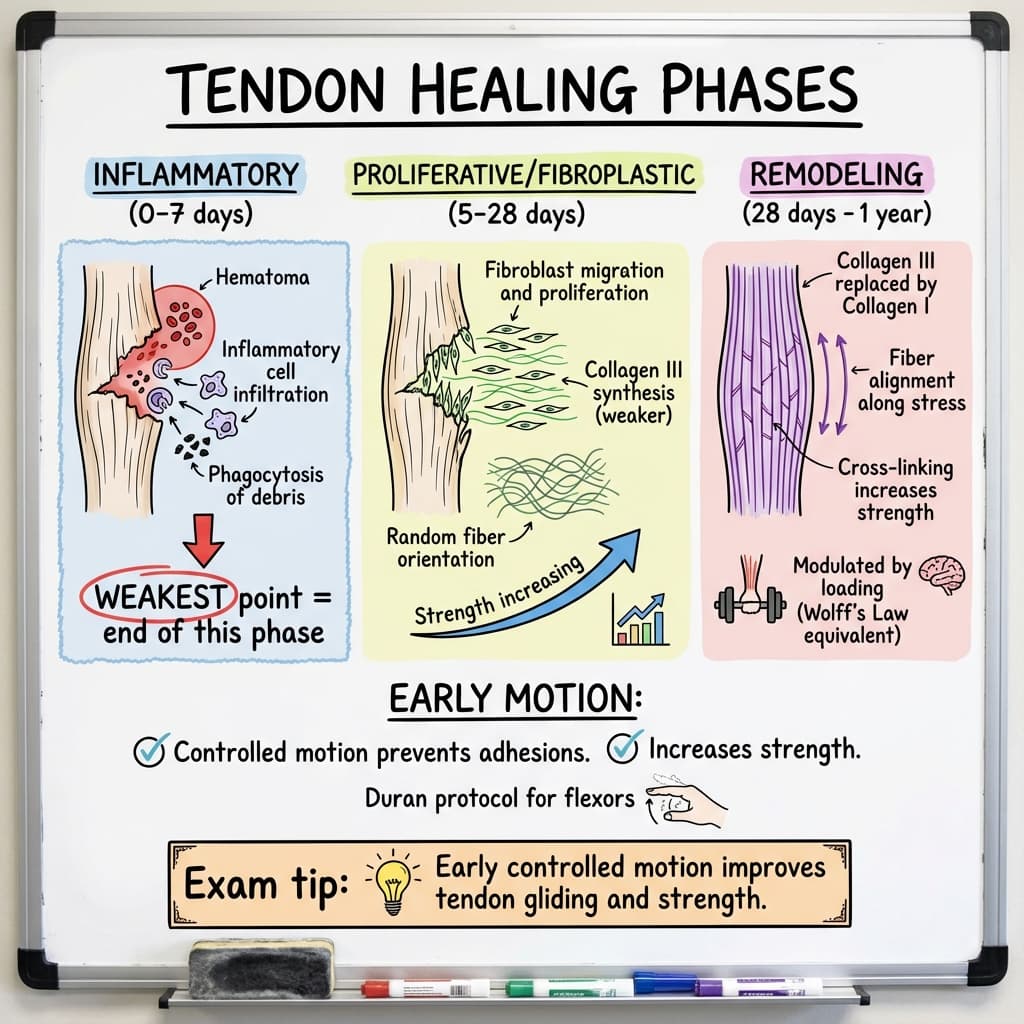
Tendon Healing Phases
Inflammatory → Proliferative → Remodeling phases
💡 Early controlled motion improves tendon gliding and strength
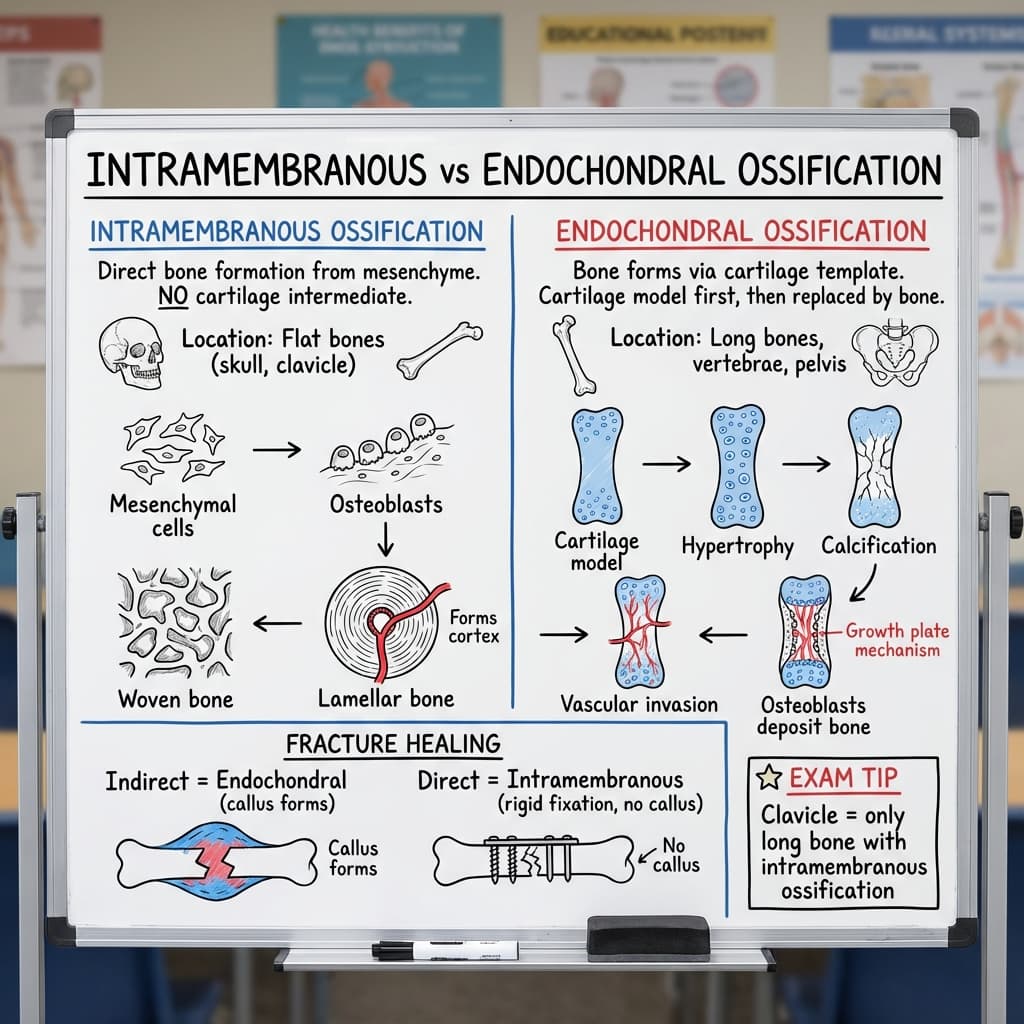
Intramembranous vs Endochondral Ossification
Direct bone formation vs cartilage template
💡 Clavicle = only long bone with intramembranous ossification
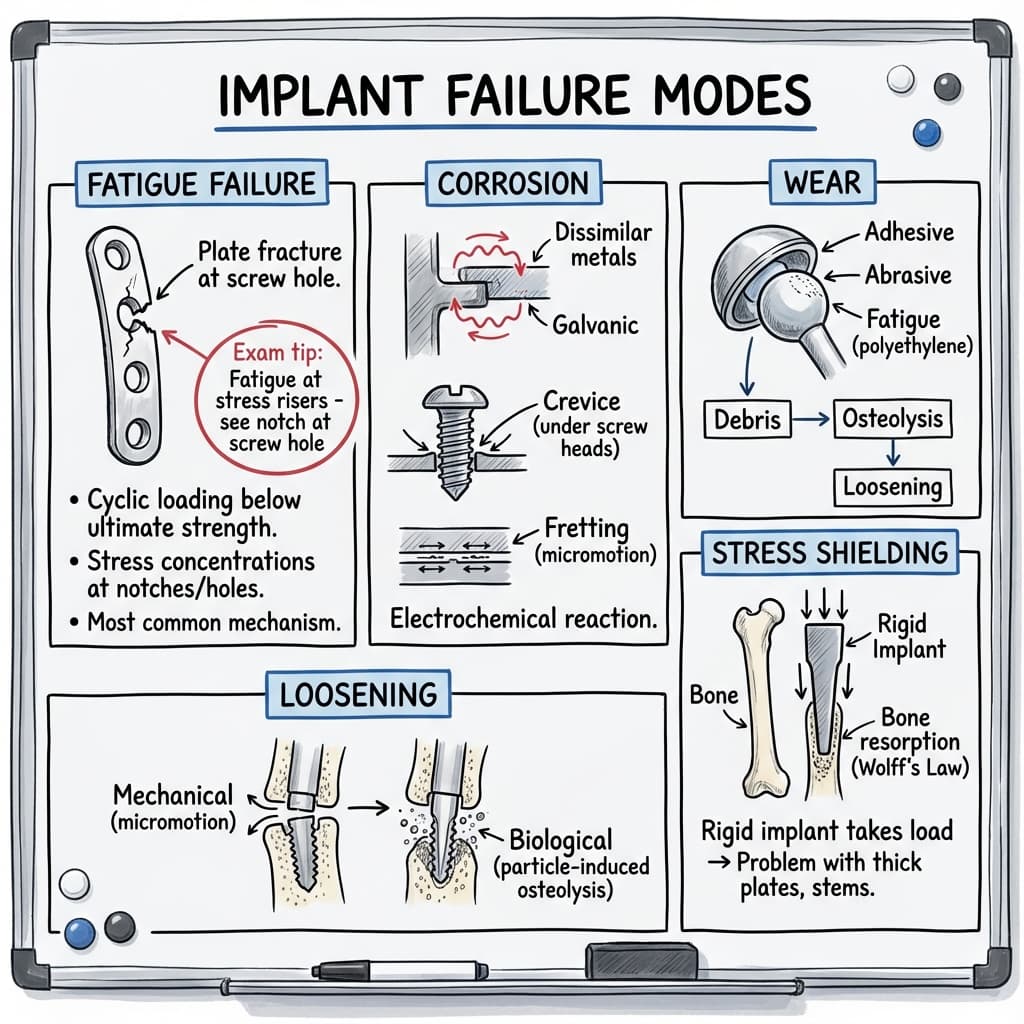
Implant Failure Modes
Fatigue, corrosion, wear, stress shielding, loosening
💡 Fatigue failure at screw holes - most common mechanism
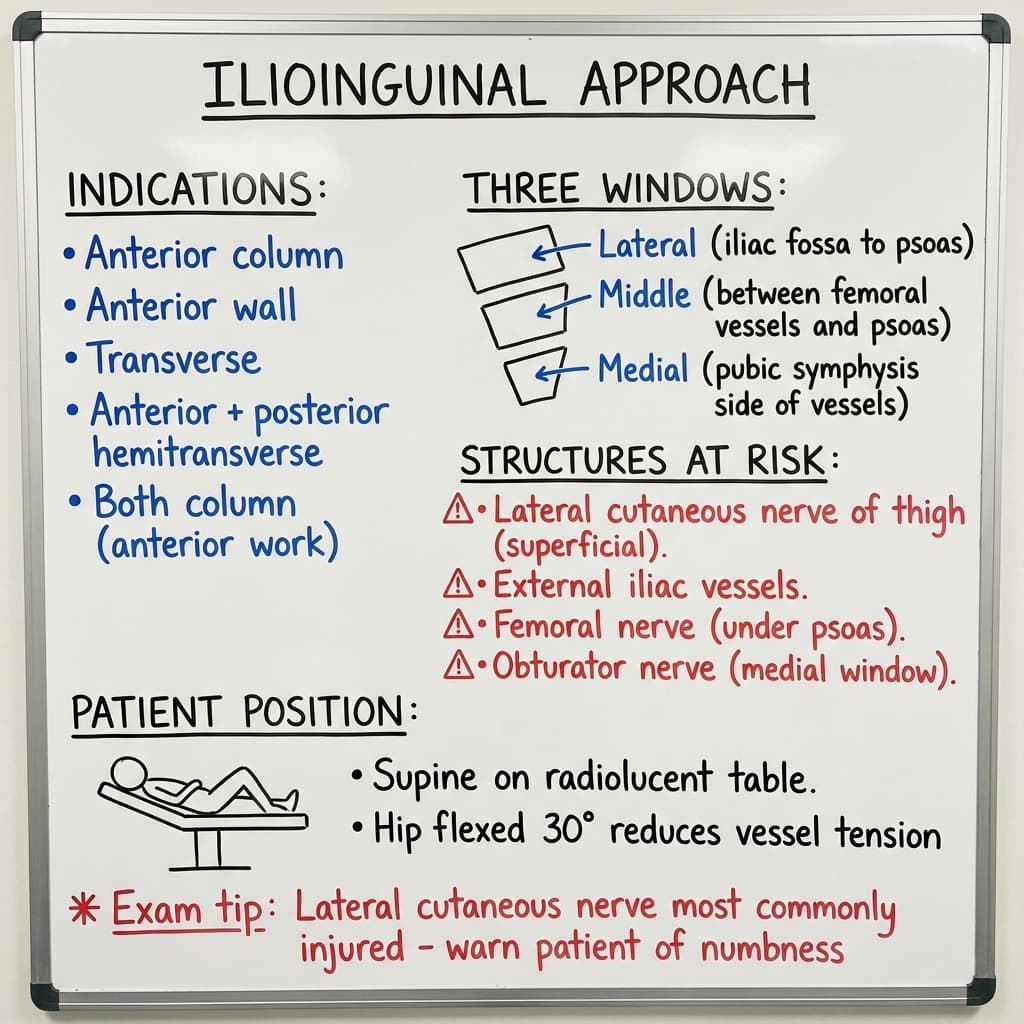
Ilioinguinal Approach
Three windows for anterior acetabular exposure
💡 Lateral cutaneous nerve of thigh most commonly injured
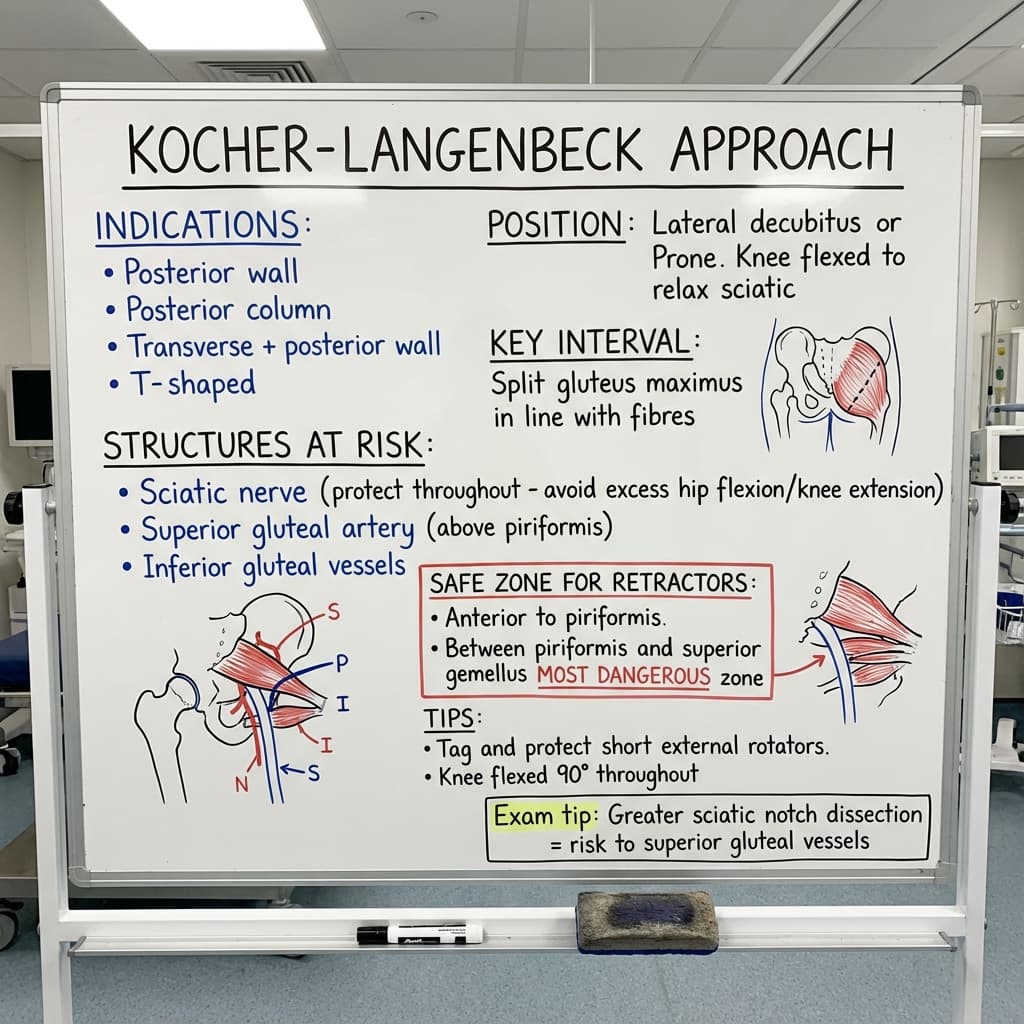
Kocher-Langenbeck Approach
Posterior approach for posterior column/wall acetabular fractures
💡 Greater sciatic notch dissection = risk to superior gluteal vessels
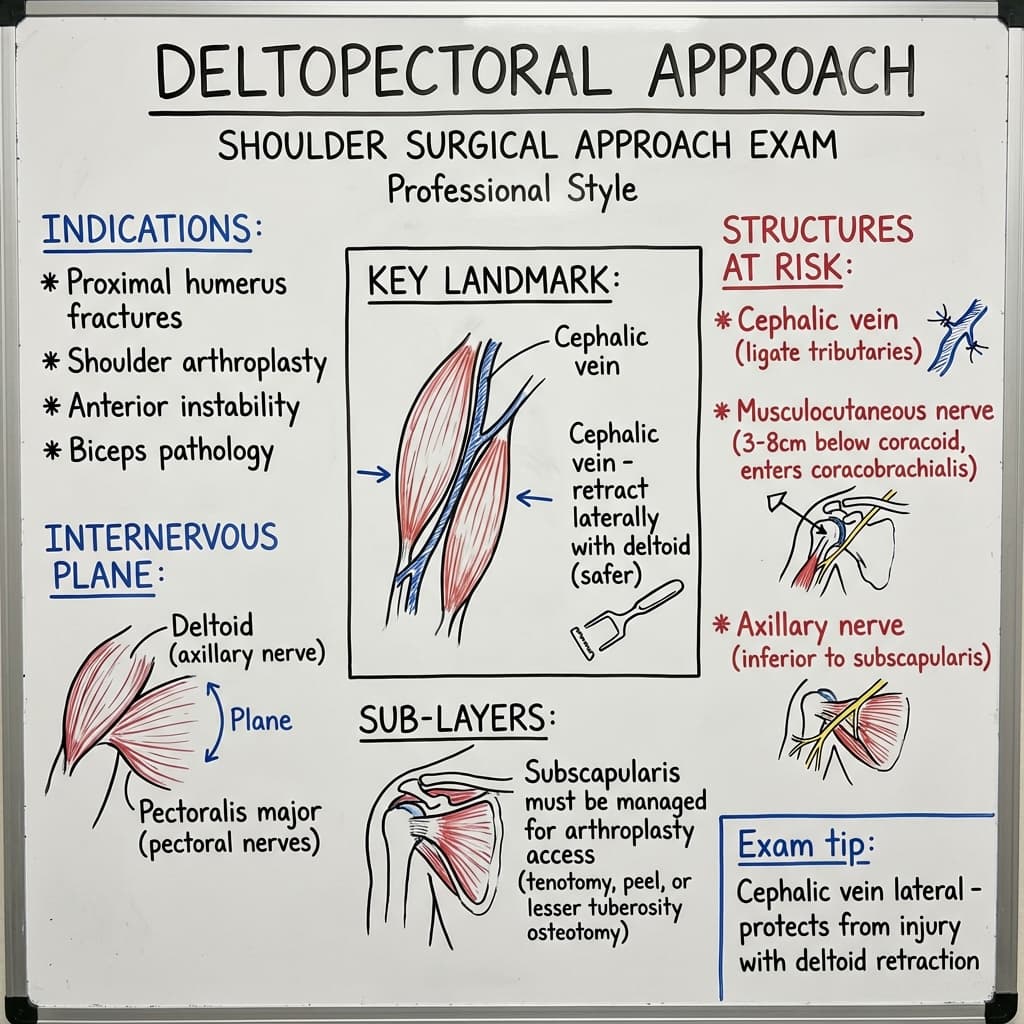
Deltopectoral Approach
Anterior shoulder approach for fractures and arthroplasty
💡 Cephalic vein lateral - protects from injury with deltoid retraction
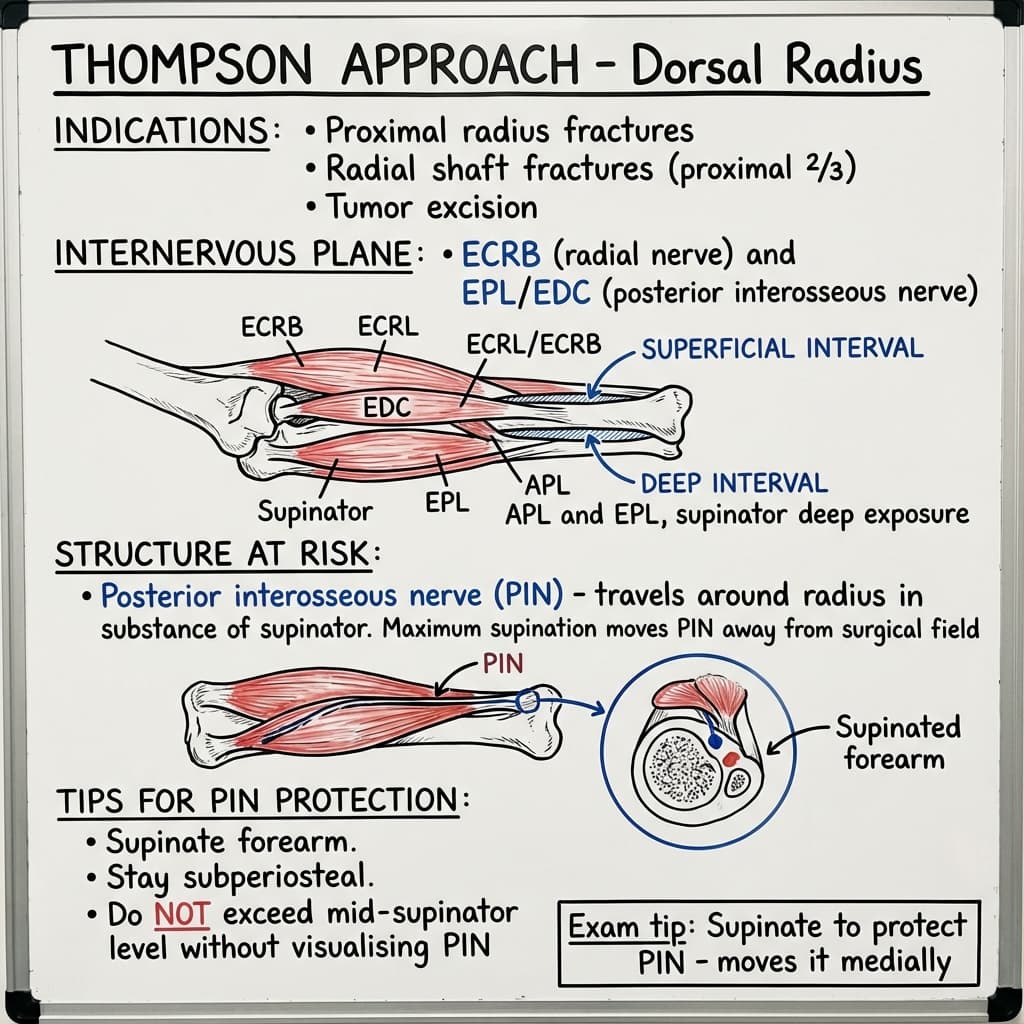
Thompson Approach - Dorsal Radius
Dorsal approach to proximal radius
💡 Supinate to protect PIN - moves it medially
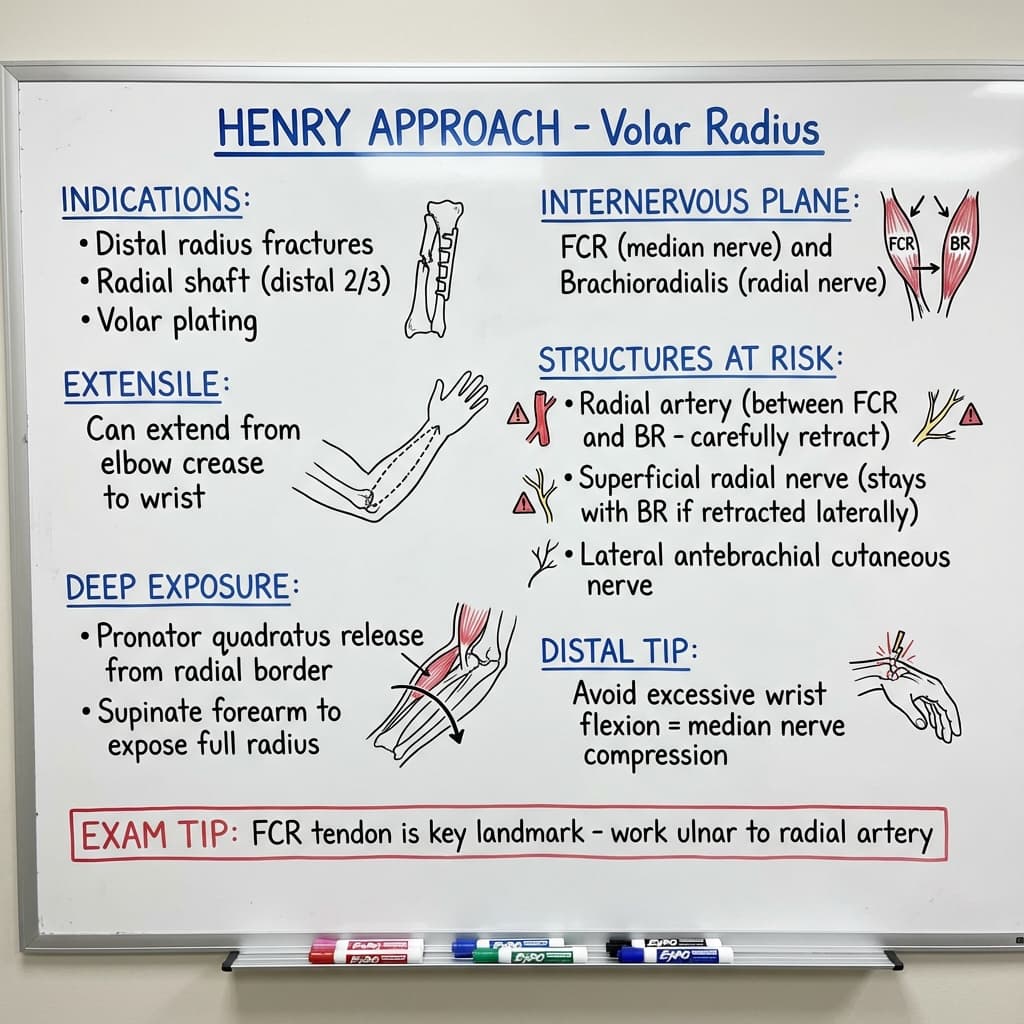
Henry Approach - Volar Radius
Volar approach for distal radius fractures and plating
💡 FCR tendon is key landmark - work ulnar to radial artery
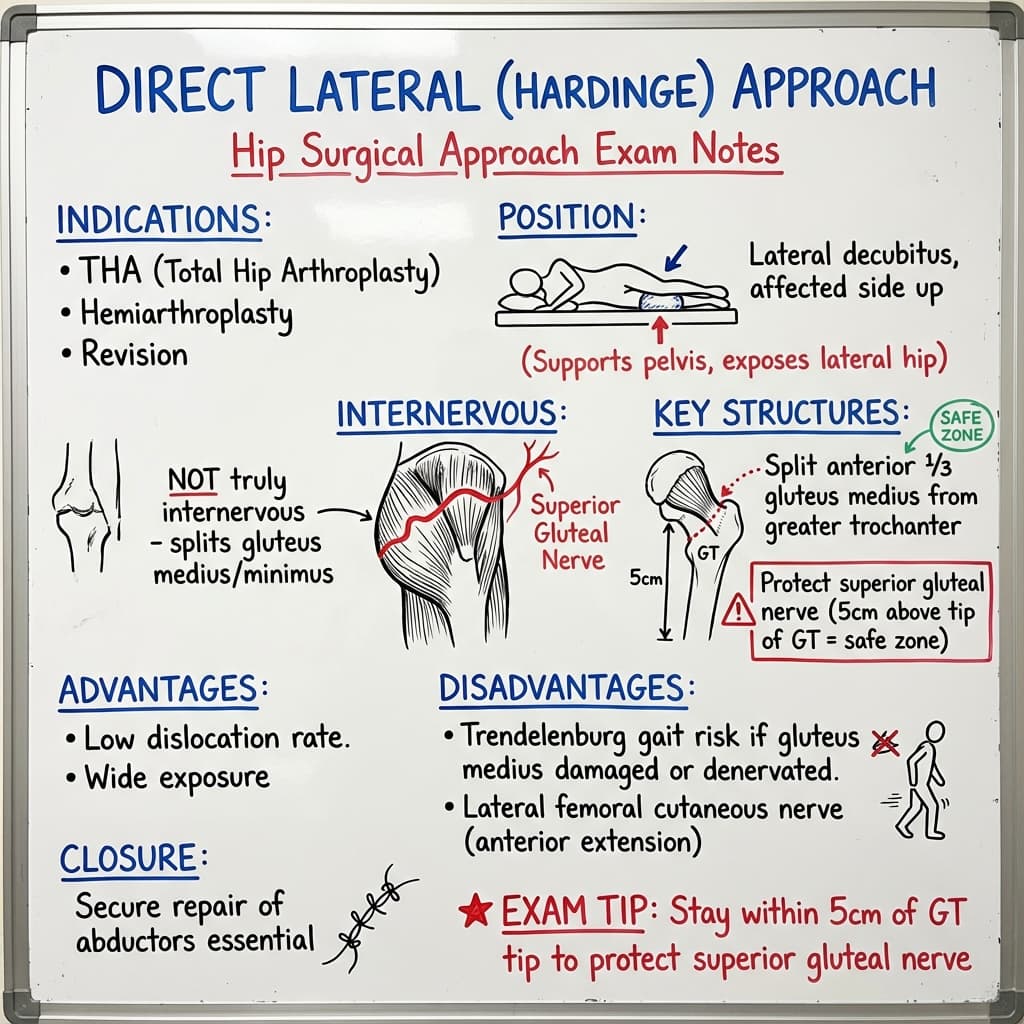
Direct Lateral (Hardinge) Approach
Lateral approach for THA and hemiarthroplasty
💡 Stay within 5cm of GT tip to protect superior gluteal nerve
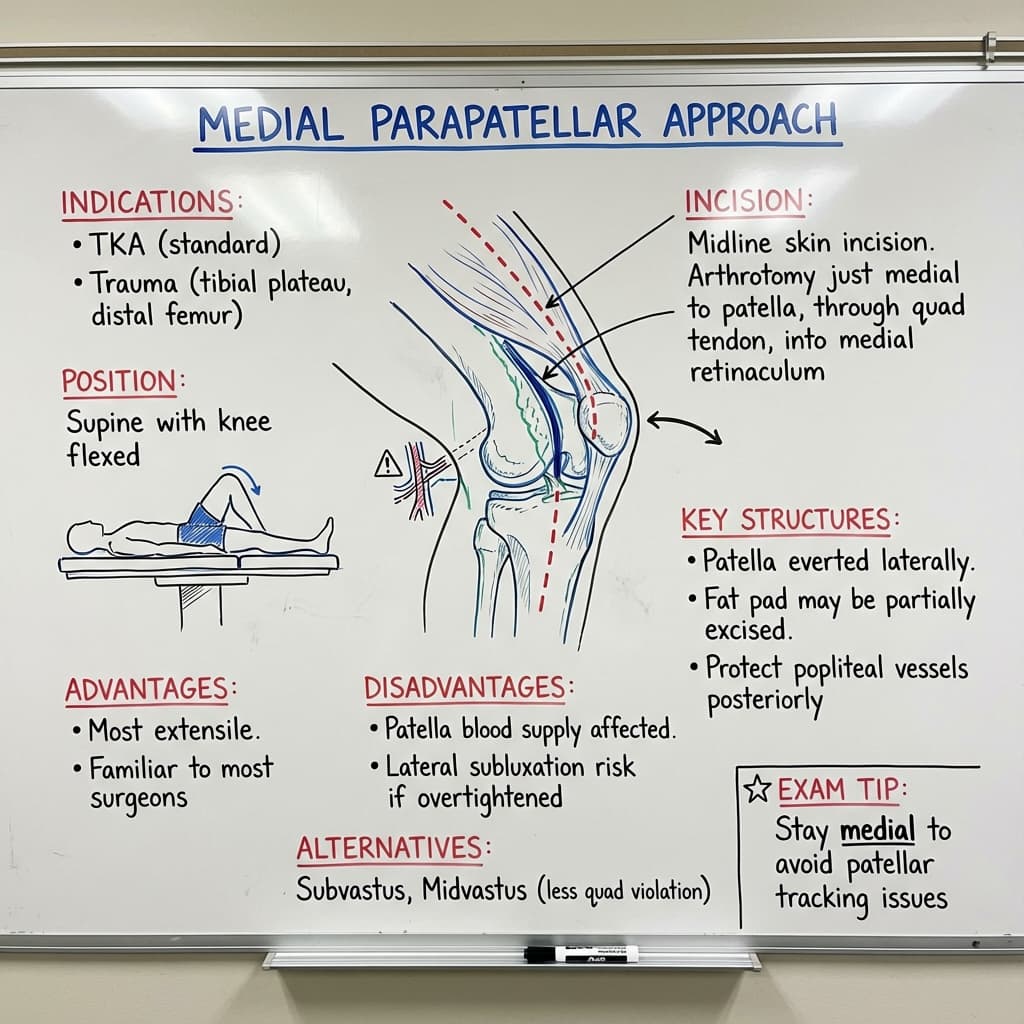
Medial Parapatellar Approach
Standard approach for TKA
💡 Stay medial to avoid patellar tracking issues
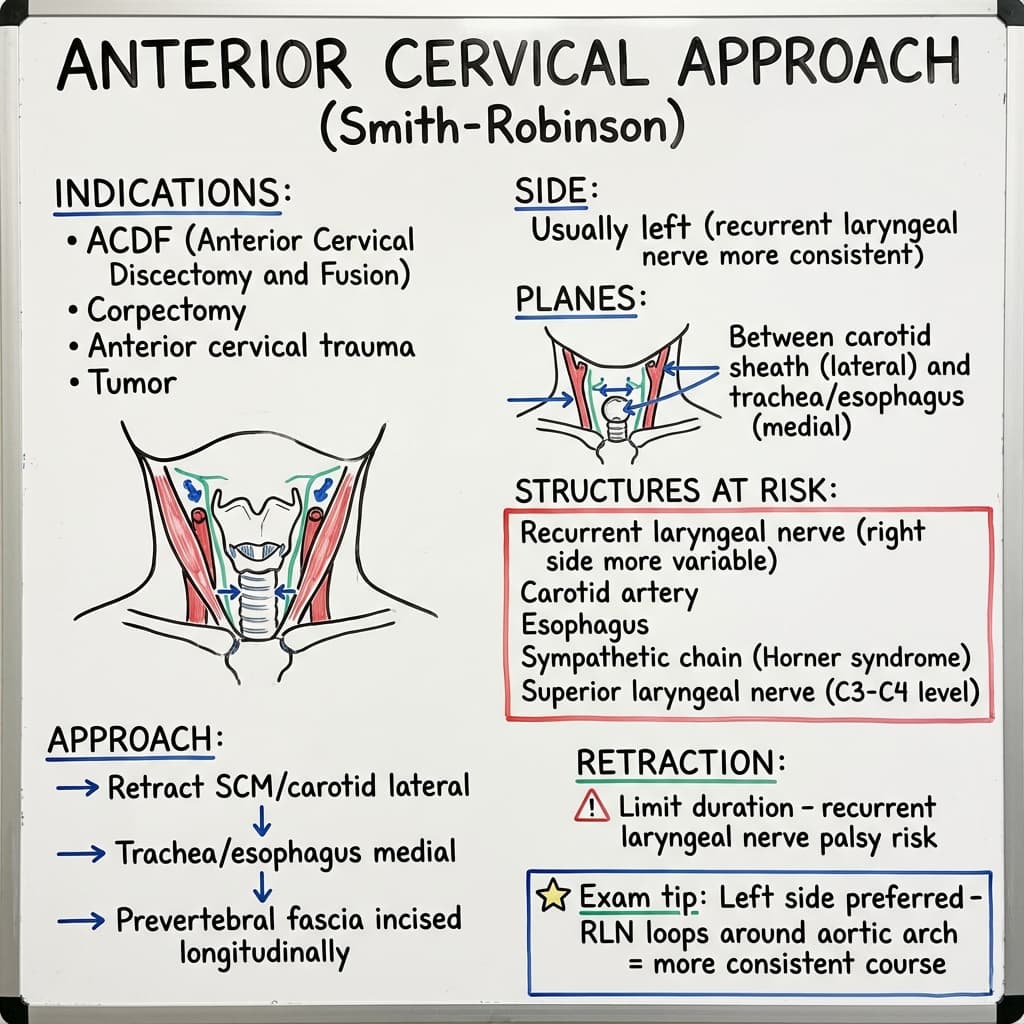
Anterior Cervical Approach (Smith-Robinson)
Approach for ACDF and anterior cervical procedures
💡 Left side preferred - RLN more consistent course
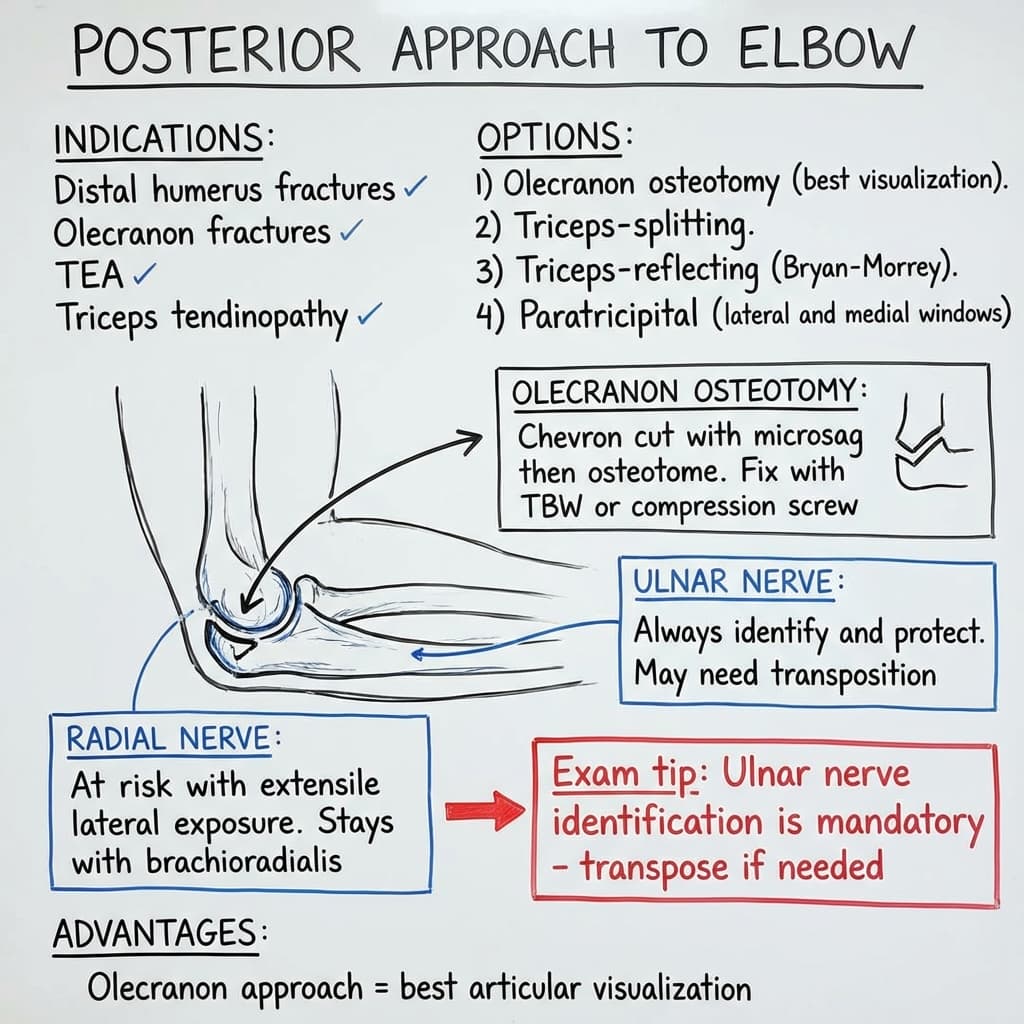
Posterior Approach to Elbow
Options including olecranon osteotomy for distal humerus
💡 Ulnar nerve identification is mandatory - transpose if needed
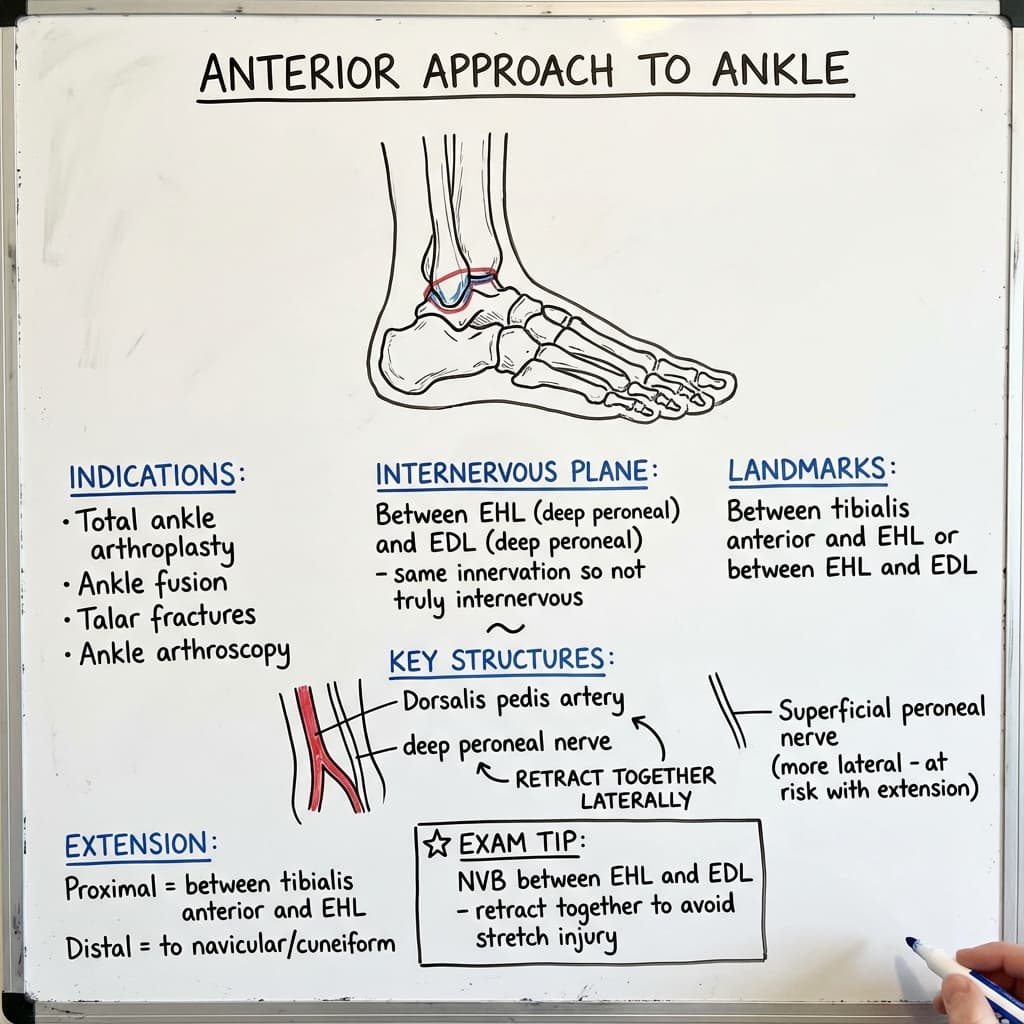
Anterior Approach to Ankle
Approach for ankle arthroplasty and fusion
💡 NVB between EHL and EDL - retract together to avoid stretch

THA Templating Principles
Preoperative planning for total hip arthroplasty - cup inclination, stem sizing, offset
💡 Goal: restore hip center, leg length, offset - template on BOTH hips

THA Bearing Surface Options
Metal-on-poly, ceramic-on-poly, ceramic-on-ceramic comparison with wear rates
💡 MoM largely abandoned - ALVAL concerns. CoC best wear but fracture risk

TKA Alignment Principles
Mechanical axis alignment, femoral rotation, gap balancing
💡 Know all 3 femoral rotation landmarks - TEA most reliable

Reverse Shoulder Arthroplasty
Indications, biomechanics, and complications of reverse shoulder
💡 Reverse requires functional deltoid - recruits deltoid for abduction

ACL Reconstruction Rehabilitation
Phase-based rehabilitation timeline from surgery to return to sport
💡 Return to cutting sports: 9-12 months, LSI >90%, psychological readiness

PCL Injury Assessment
PCL grading, examination tests, and treatment algorithm
💡 Isolated Grade I-II: non-operative with quad strengthening

Cartilage Repair Options
Treatment ladder from microfracture to osteochondral allograft
💡 Match treatment to lesion size: <2cm microfracture, 2-4cm ACI

Hip Arthroscopy Indications
FAI types, indications, contraindications, and complications
💡 Alpha angle >55° = CAM. <2mm joint space = poor outcome

SLAP Lesion Types
Superior labrum classification and treatment options
💡 Type II most common needing repair. Age >40 consider biceps tenotomy

Adult Flatfoot (PTTD)
Johnson and Strom staging with treatment algorithm
💡 Stage I-II flexible = osteotomy/reconstruction. Stage III-IV = fusion

Ankle Arthrodesis Principles
Optimal fusion position and fixation options
💡 Position: neutral DF, 5° valgus, slight ER, posterior translation

Achilles Tendinopathy
Insertional vs non-insertional with treatment algorithm
💡 Eccentric exercises (Alfredson) first-line. AVOID steroid injection

Cauda Equina Syndrome
Emergency recognition and urgent management
💡 RED FLAG - document bladder function. Surgery <48hrs for best outcomes

Cervical Radiculopathy Patterns
C5-C8 nerve root patterns with dermatomes and reflexes
💡 C6 and C7 most common. Know dermatome, myotome, reflex for each

Lumbar Stenosis Algorithm
Neurogenic vs vascular claudication and treatment options
💡 Neurogenic claudication relieved by flexion (shopping cart position)

Cervical Myelopathy
Clinical signs and surgical approach selection
💡 Myelopathy does NOT improve spontaneously - surgery indicated

Odontoid Fractures (C2)
Anderson & D'Alonzo classification and treatment
💡 Type II most common, highest nonunion. Risk factors: age >50, displacement >5mm

Hangman's Fracture
Levine-Edwards classification and treatment algorithm
💡 Type IIA - do NOT apply traction! Use gentle extension

Dupuytren's Disease
Indications for treatment and surgical options
💡 Tabletop test positive = indication for treatment

Trigger Finger
A1 pulley pathology, grading, and treatment ladder
💡 Steroid injection 60-90% success - try before surgery (max 2 injections)

Scapholunate Dissociation
X-ray signs, Watson test, and treatment by chronicity
💡 Acute (<6 weeks) = direct repair. Chronic = reconstruction or salvage

Mallet Finger
DIP extensor mechanism injury and treatment
💡 Splinting works even weeks late - 6-8 weeks continuous extension

Boutonnière Deformity
Central slip injury causing PIP flexion + DIP hyperextension
💡 Elson test: rigid DIP with PIP extension = central slip rupture

Bone Tumor Approach
Systematic approach to investigation and biopsy principles
💡 NEVER biopsy before imaging. Biopsy by OR in consultation with treating surgeon
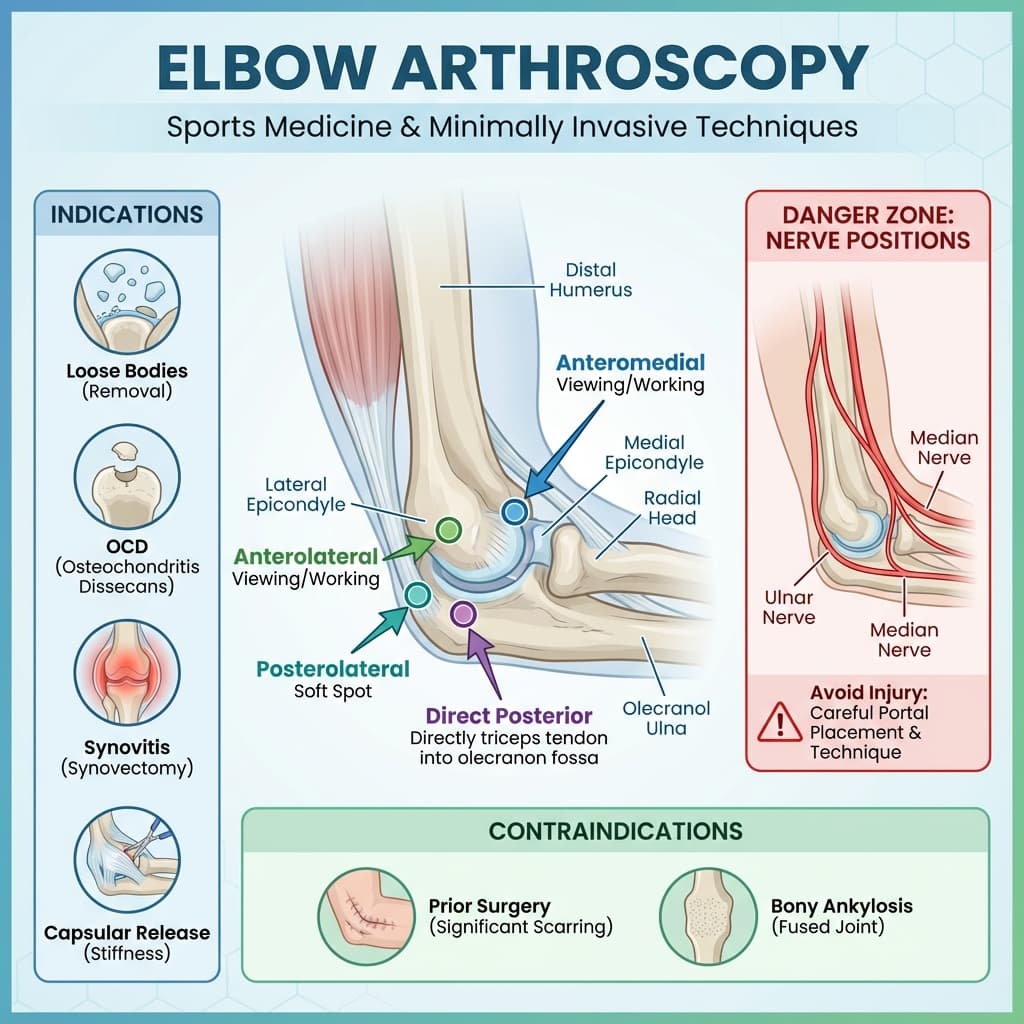
Elbow Arthroscopy
Portal placement, indications, and neurovascular dangers
💡 Know portal placement and nerve at risk for each portal
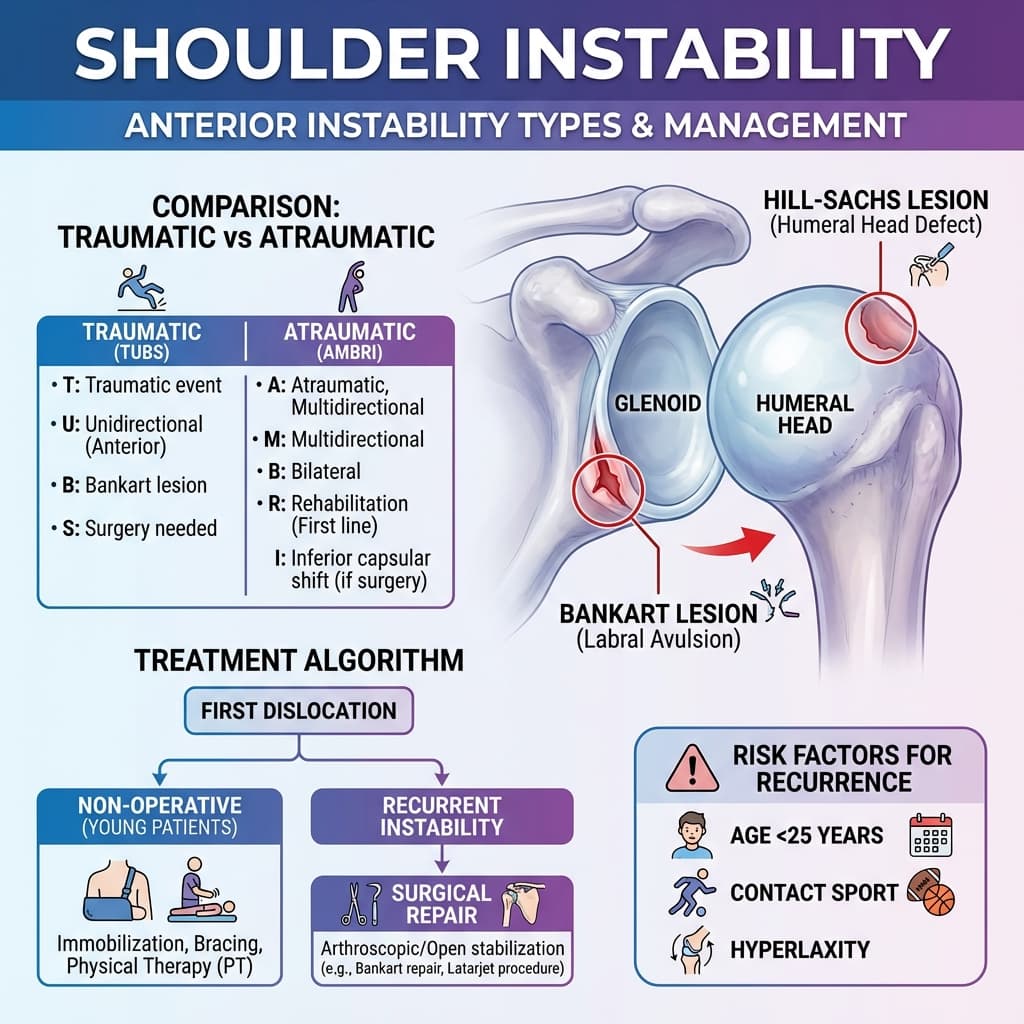
Shoulder Instability
TUBS vs AMBRI, Bankart/Hill-Sachs lesions, treatment algorithm
💡 Age <25 at first dislocation = highest recurrence risk
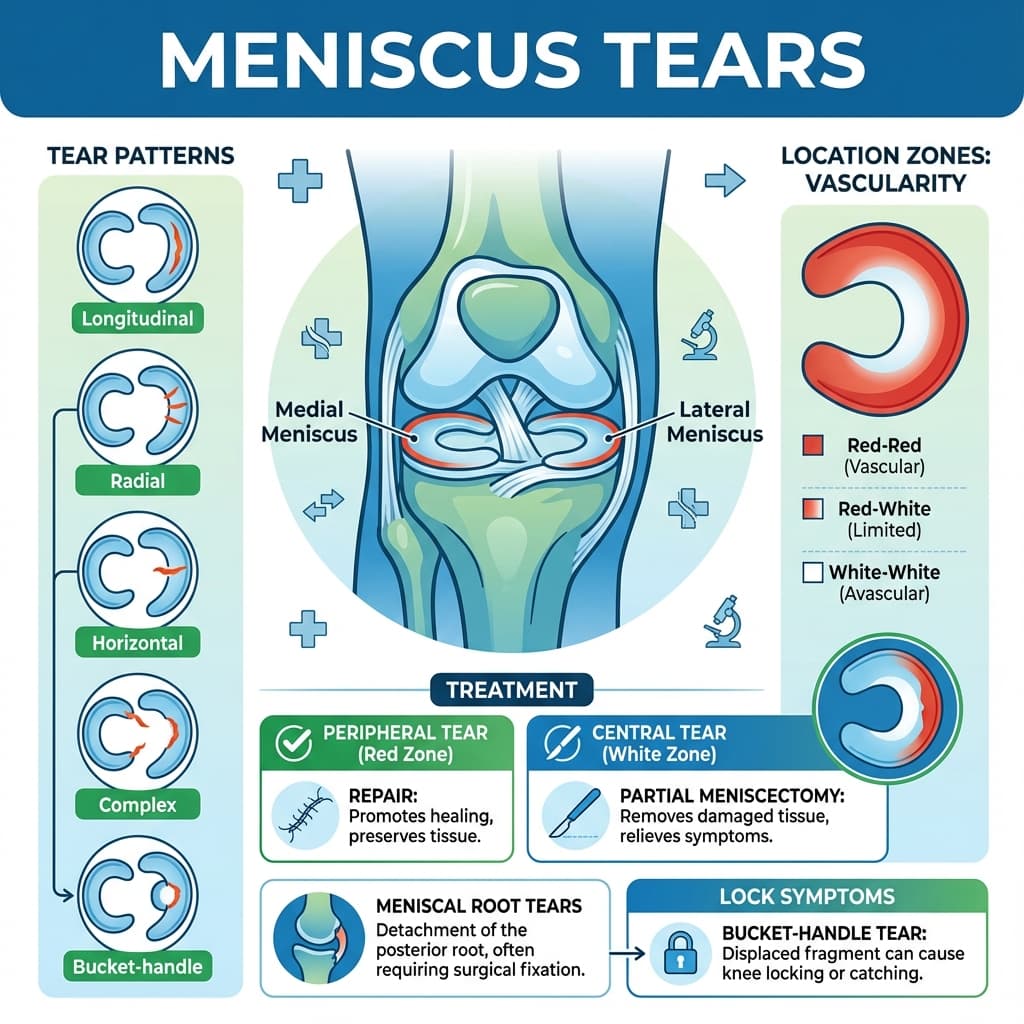
Meniscus Tears
Vascular zones, tear types, repair vs meniscectomy decision
💡 Peripheral = repair. Central = partial meniscectomy. Preserve if possible
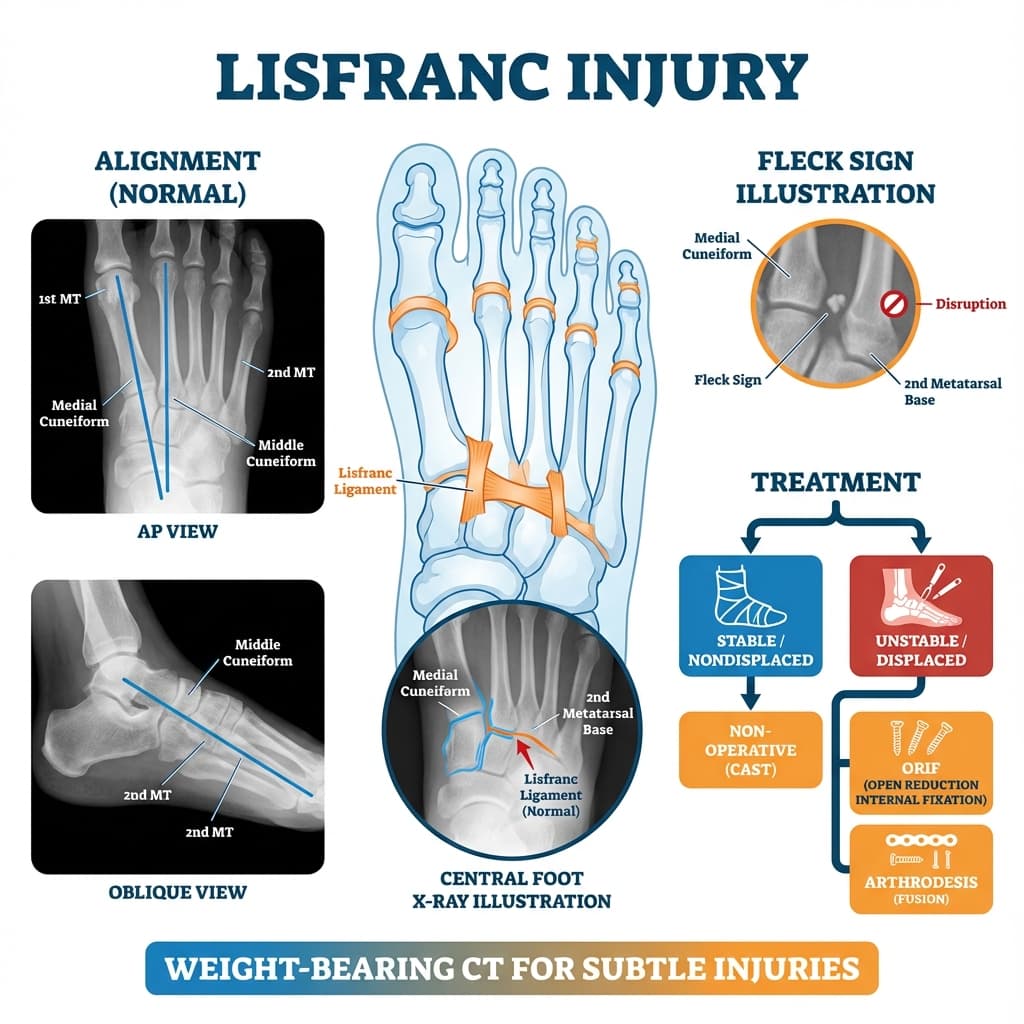
Lisfranc Injury
Ligament anatomy, X-ray signs, treatment algorithm
💡 Weight-bearing CT for subtle injuries. Miss = arthritis
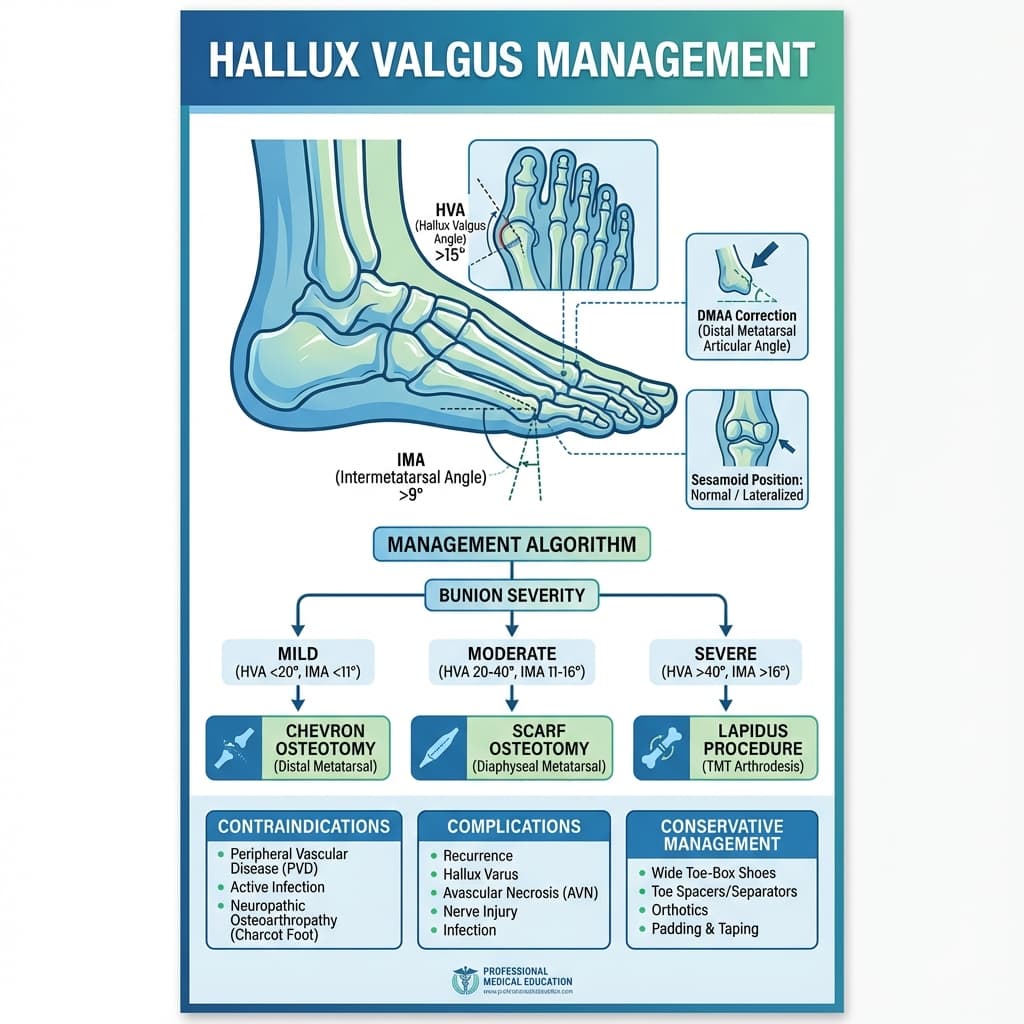
Hallux Valgus Correction
Angle measurement and osteotomy selection
💡 Match osteotomy to IMA: mild = distal, moderate = proximal, severe = basal
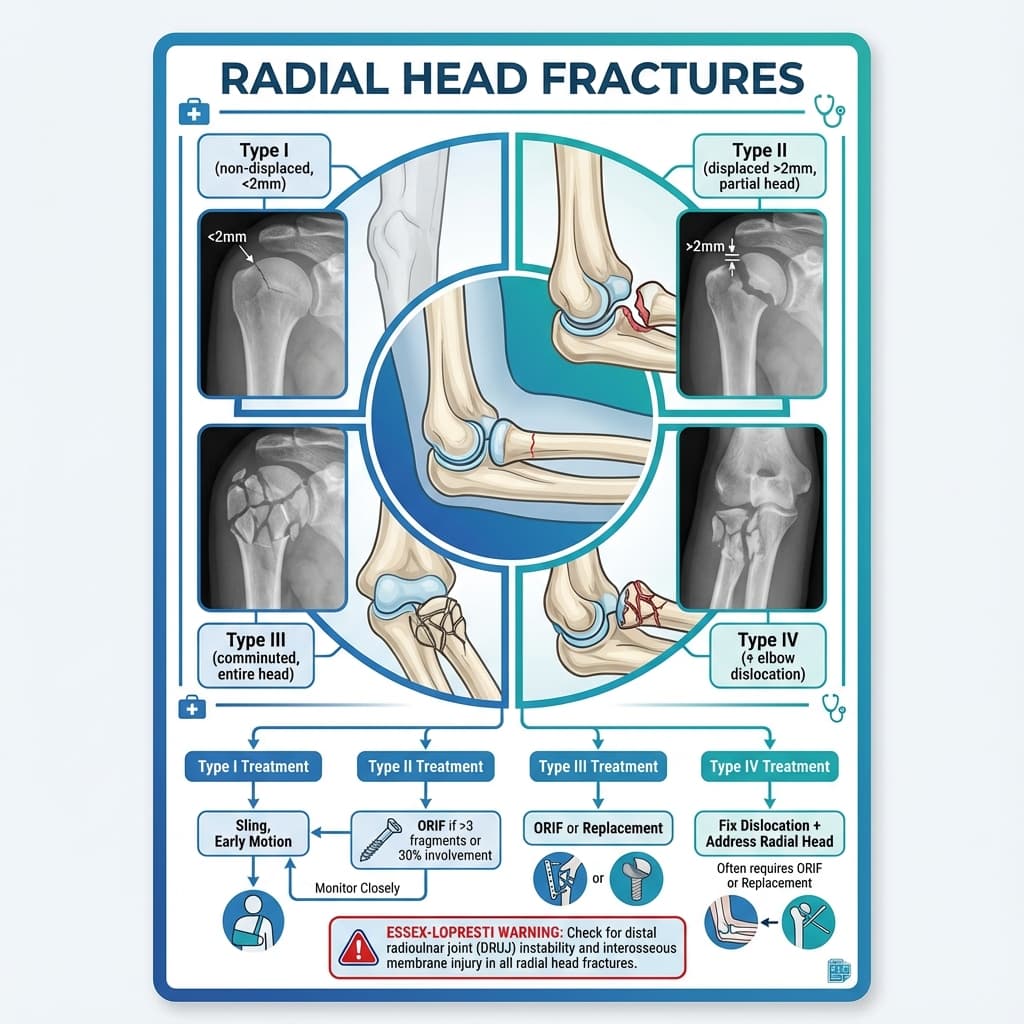
Radial Head Fractures
Mason classification and treatment algorithm
💡 ALWAYS check DRUJ with radial head fracture - rule out Essex-Lopresti
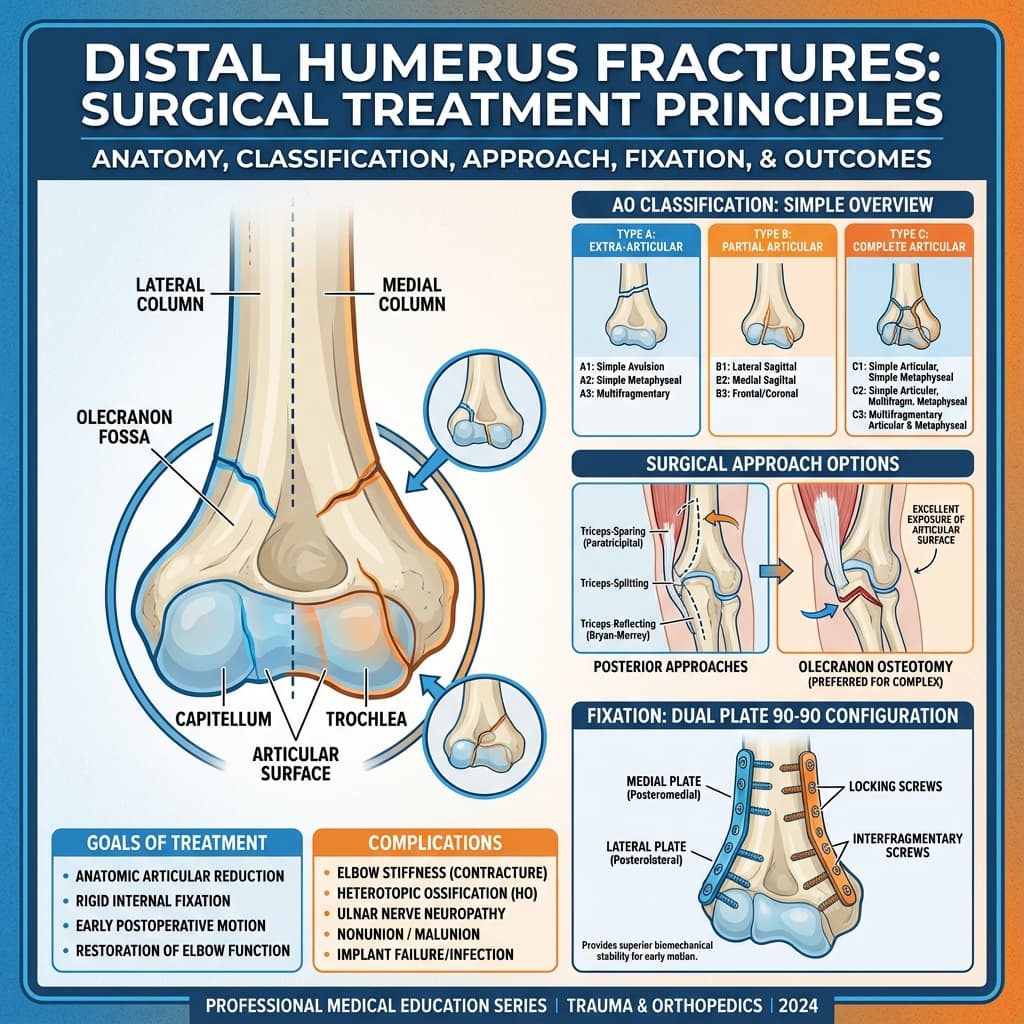
Distal Humerus Fractures
Surgical approach and dual plate fixation principles
💡 Dual plate 90-90 configuration for rigid fixation and early motion
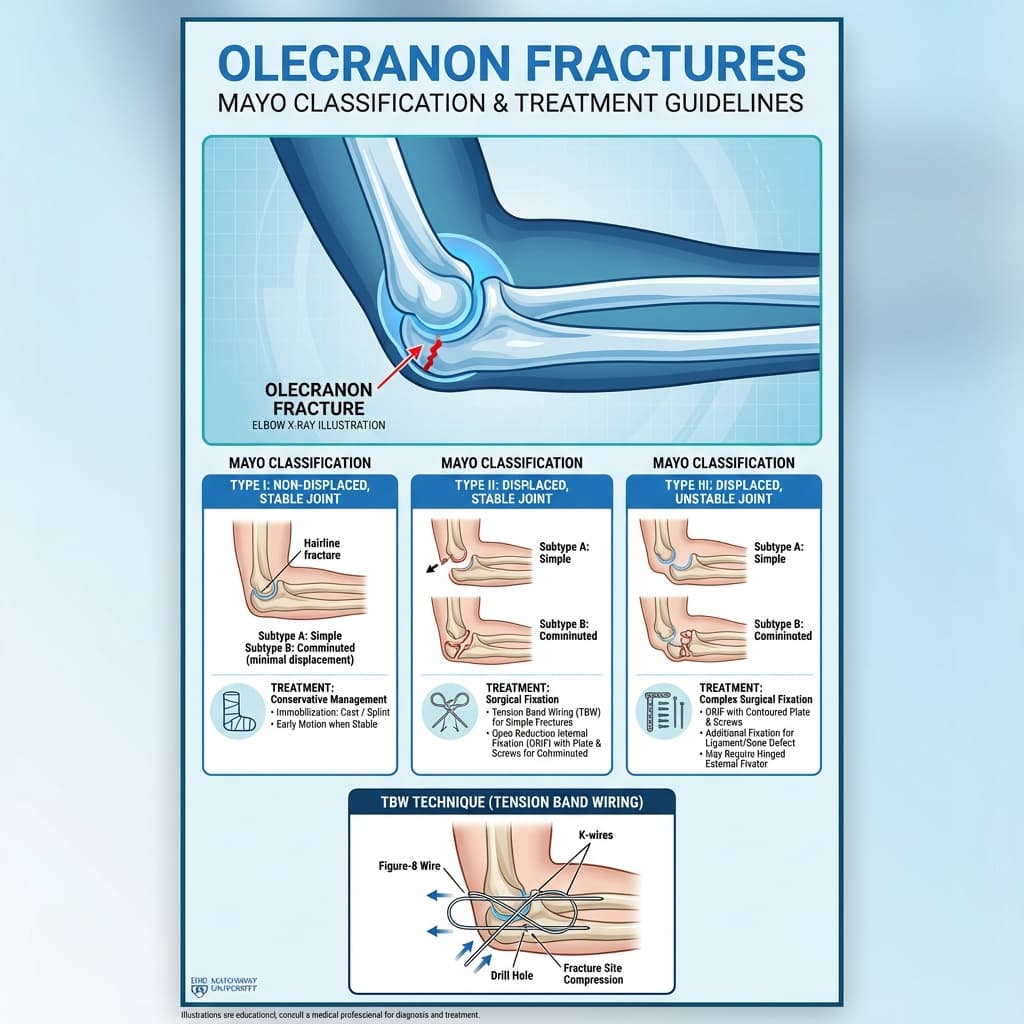
Olecranon Fractures
Mayo classification, TBW vs plate fixation
💡 TBW for simple transverse. Plate for comminuted or Mayo III
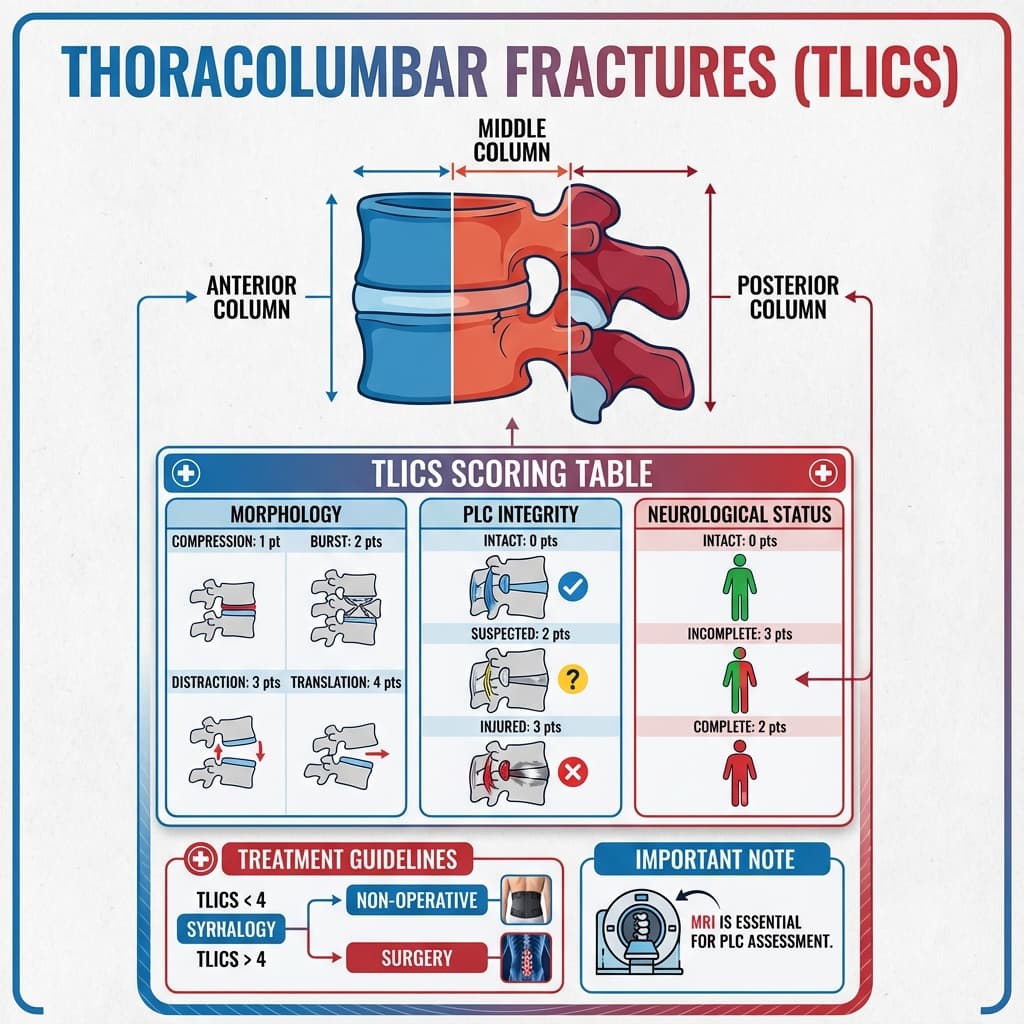
Thoracolumbar Fractures (TLICS)
Denis columns, TLICS scoring, treatment algorithm
💡 TLICS <4 non-op, >4 surgery. MRI for PLC assessment
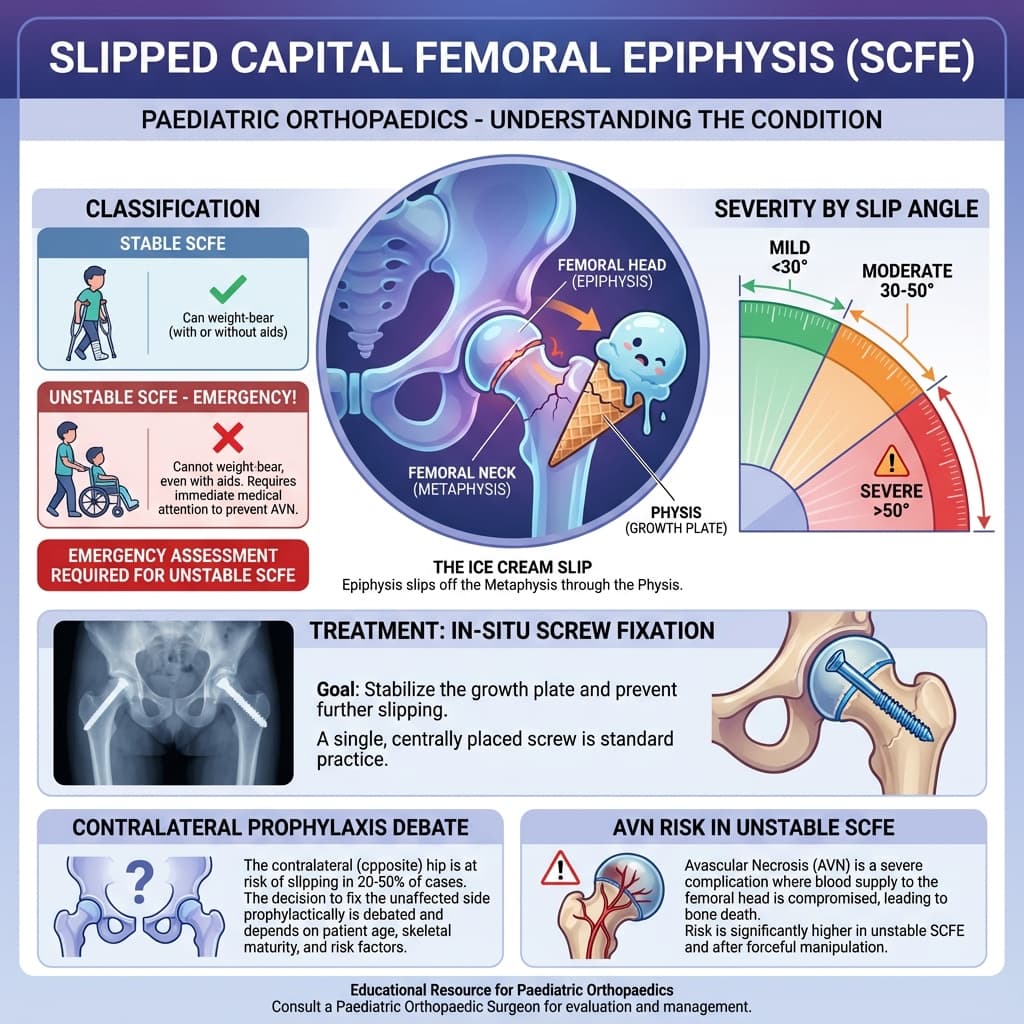
Slipped Capital Femoral Epiphysis
Stable vs unstable classification, in-situ screw fixation
💡 Unstable SCFE = emergency. High AVN risk. Single screw perpendicular to physis
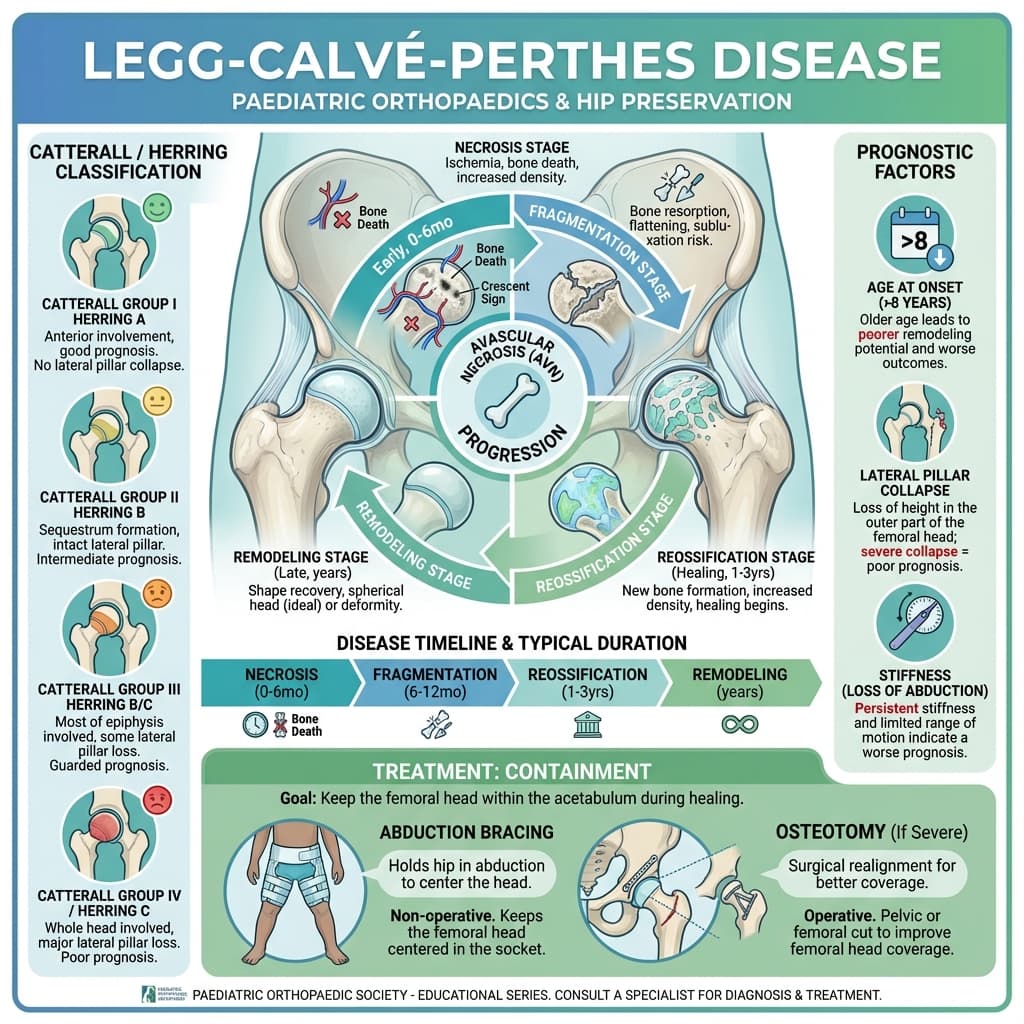
Legg-Calvé-Perthes Disease
Stages, prognosis, and containment treatment
💡 Age >8 at onset = poor prognosis. Lateral pillar classification guides treatment
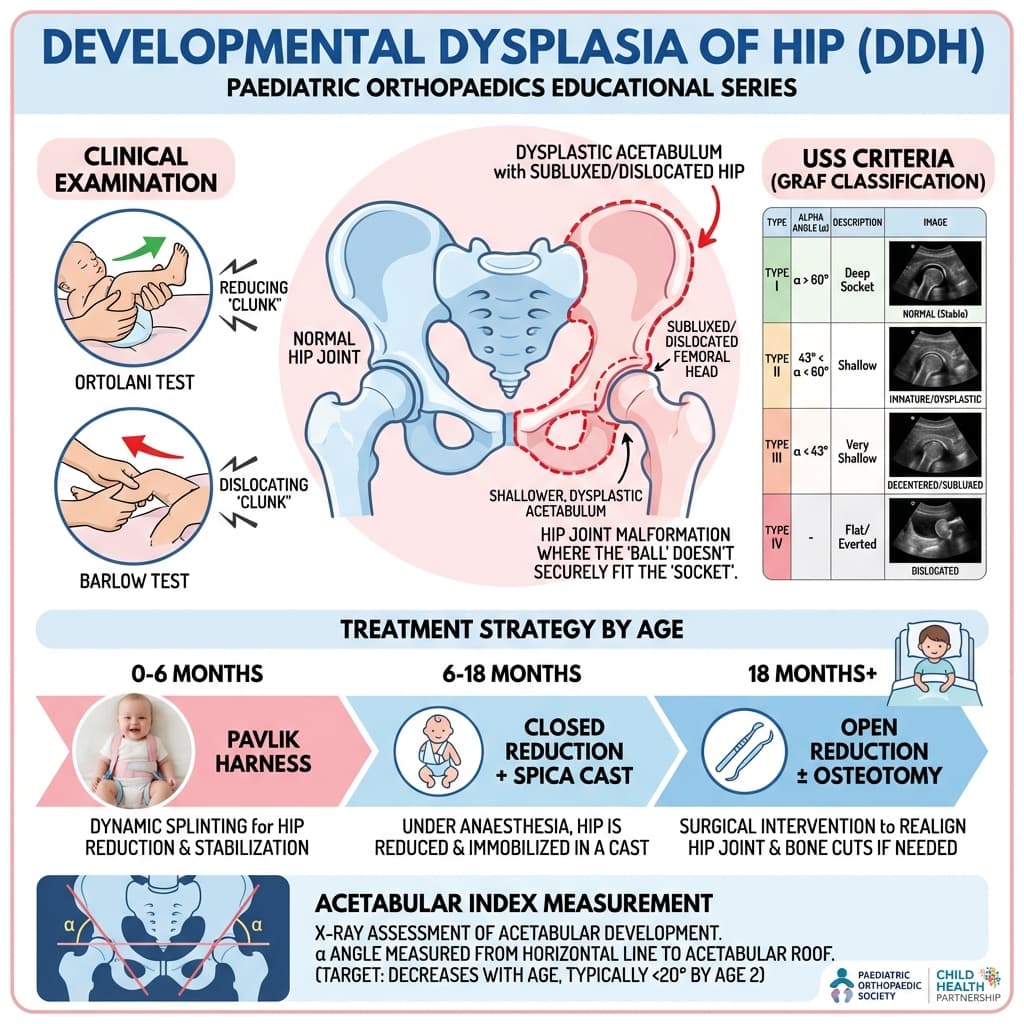
Developmental Dysplasia of Hip
Graf classification, Pavlik harness, treatment by age
💡 Treatment by age: 0-6mo Pavlik, 6-18mo closed reduction, >18mo open reduction
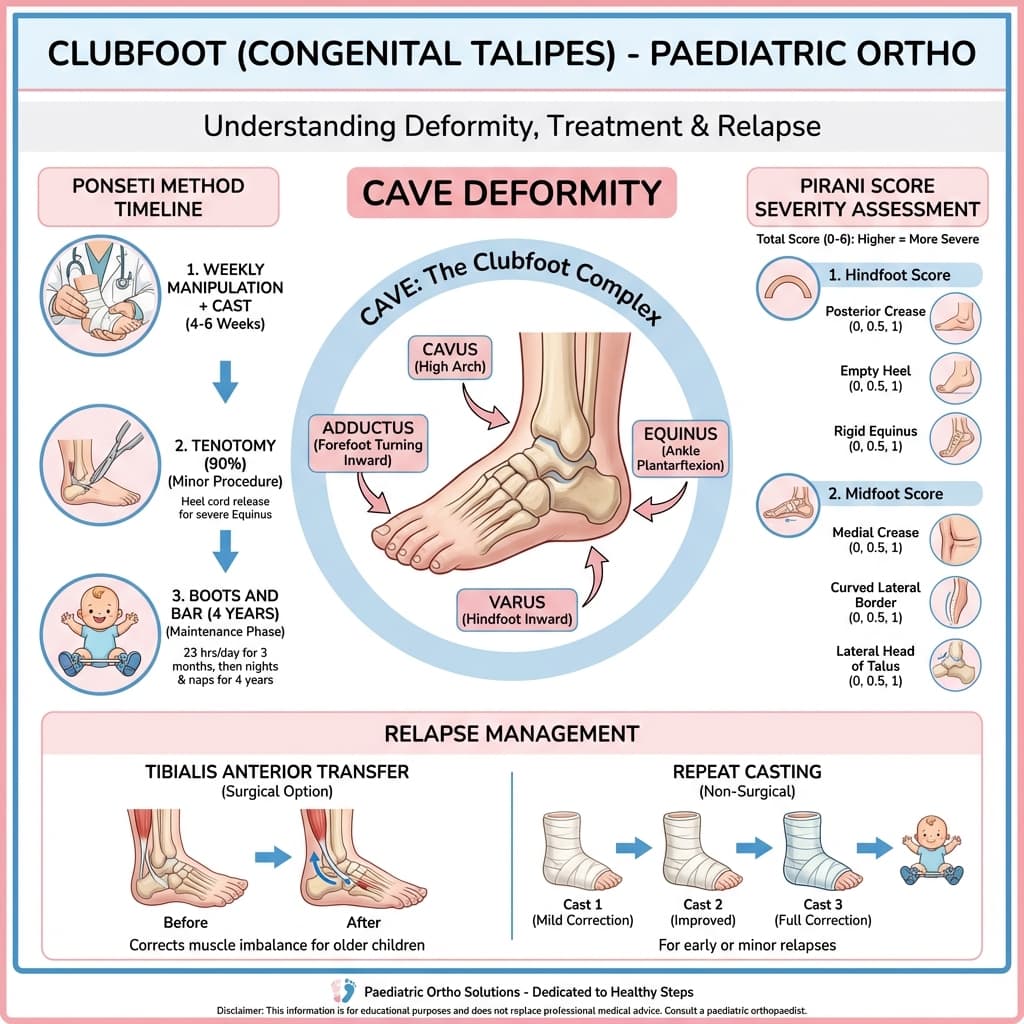
Clubfoot (CTEV)
CAVE deformity and Ponseti method treatment
💡 Ponseti gold standard. Most need tenotomy. Boots/bar for 4 years
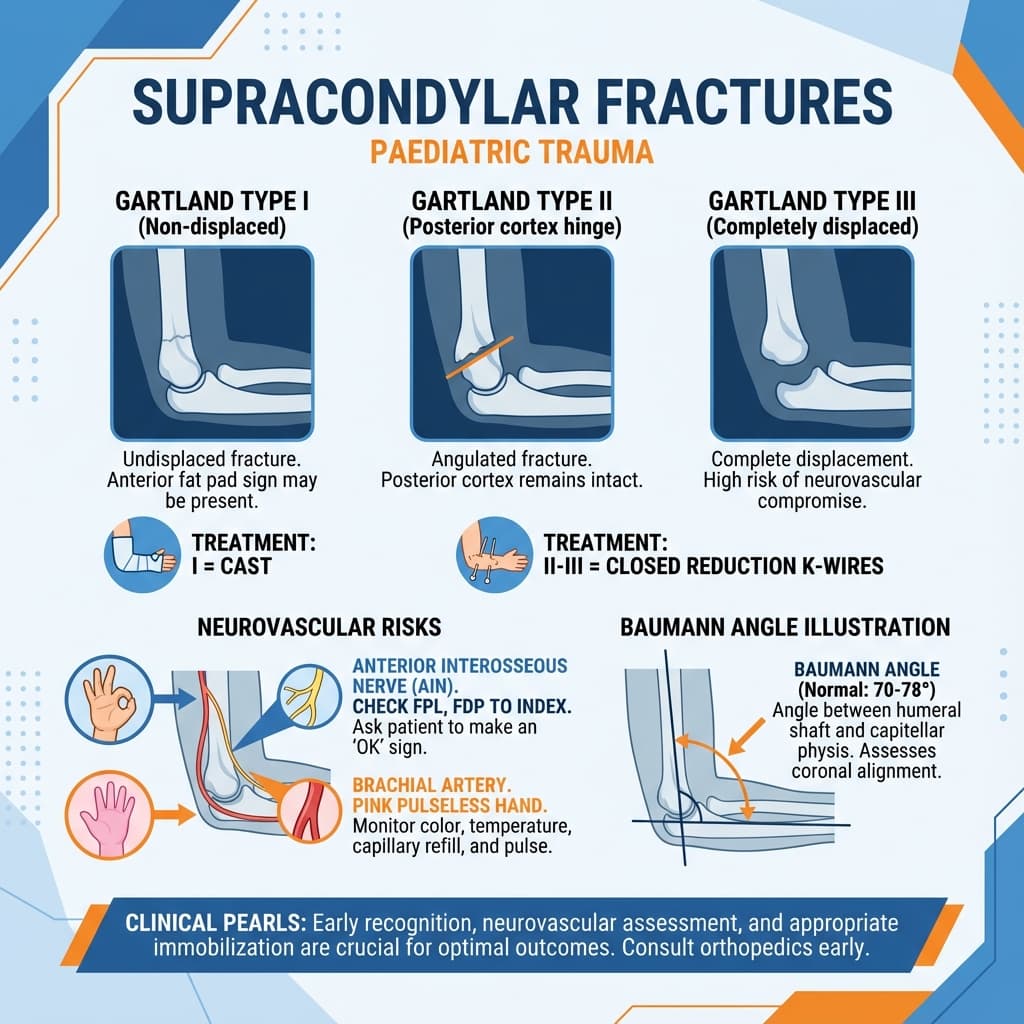
Supracondylar Fractures
Gartland classification and neurovascular assessment
💡 Check AIN (FPL, FDP to index). Pink pulseless hand needs assessment
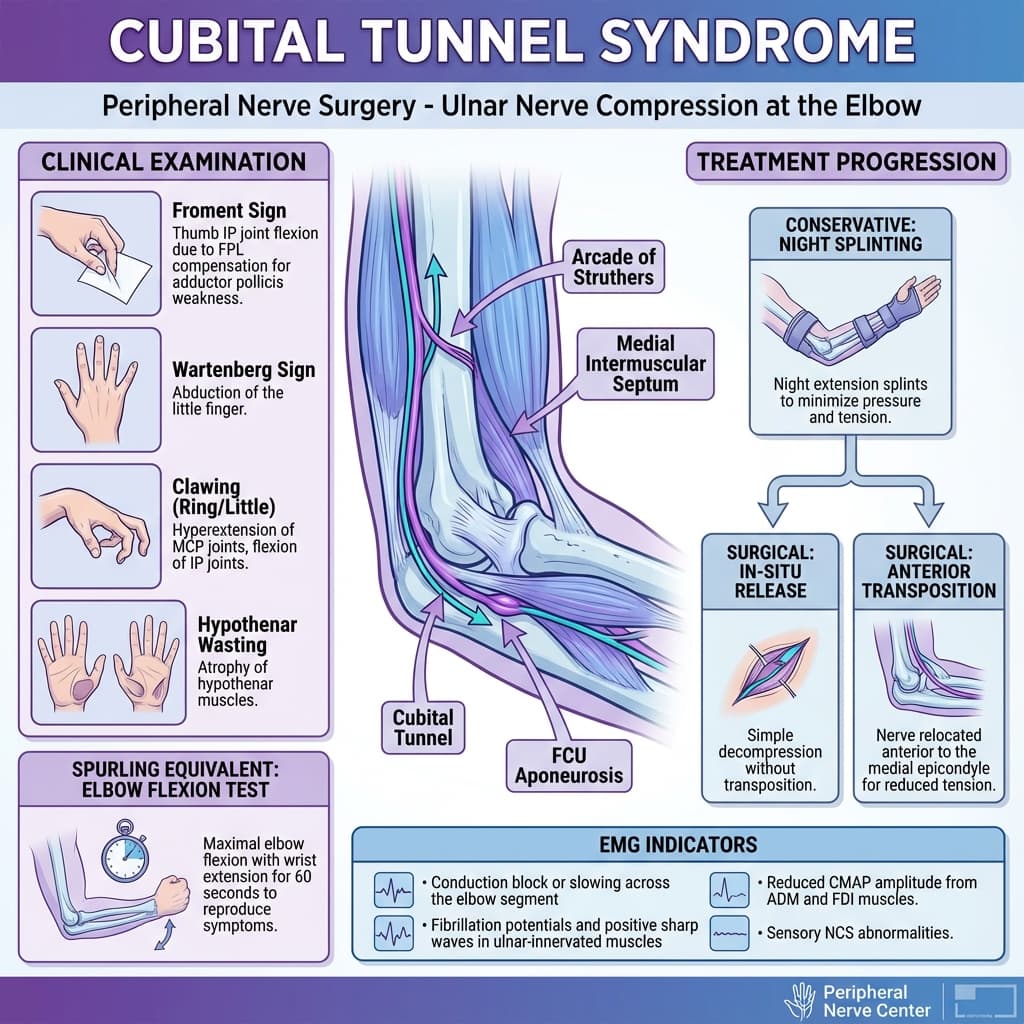
Cubital Tunnel Syndrome
Ulnar nerve compression, examination signs, treatment
💡 Elbow flexion test positive = ulnar nerve compression
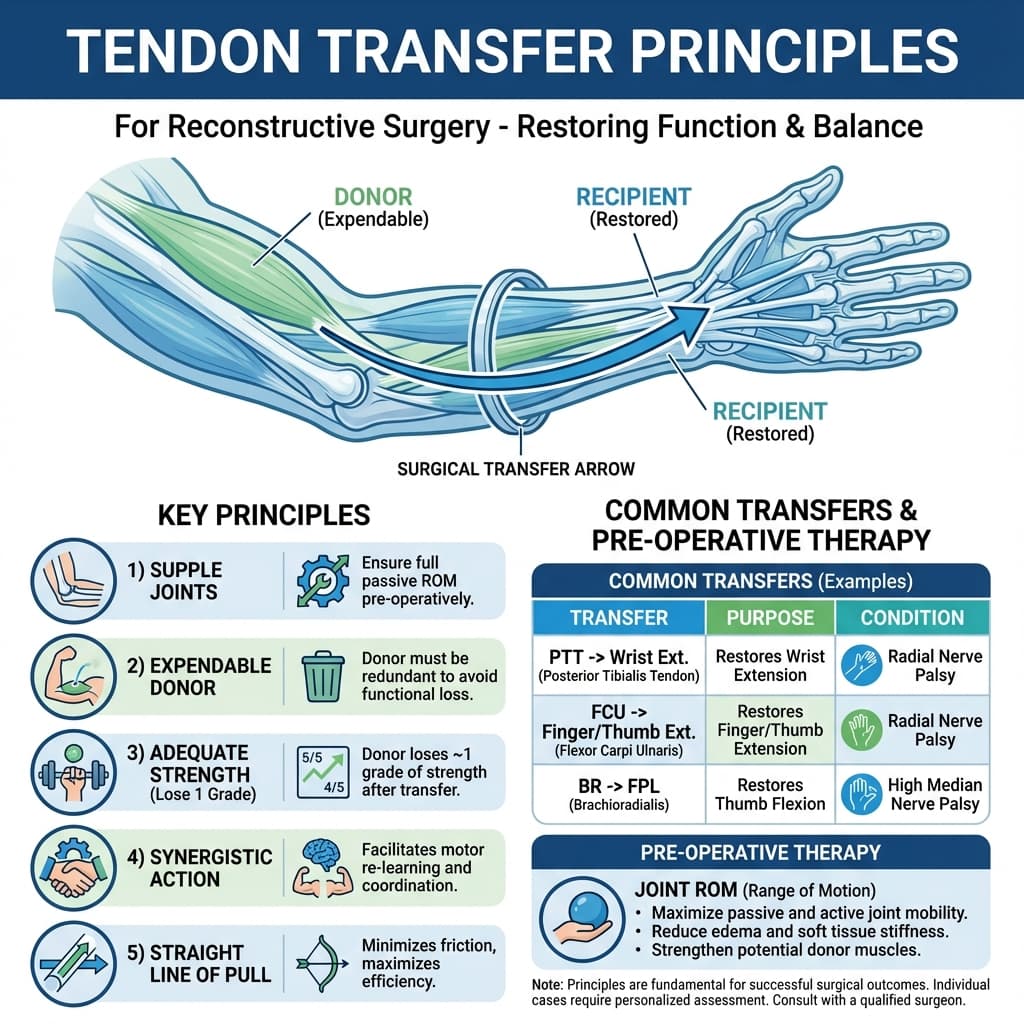
Tendon Transfer Principles
Prerequisites for tendon transfer and common procedures
💡 Transfer loses 1 MRC grade. Joint must be supple. Straight line of pull
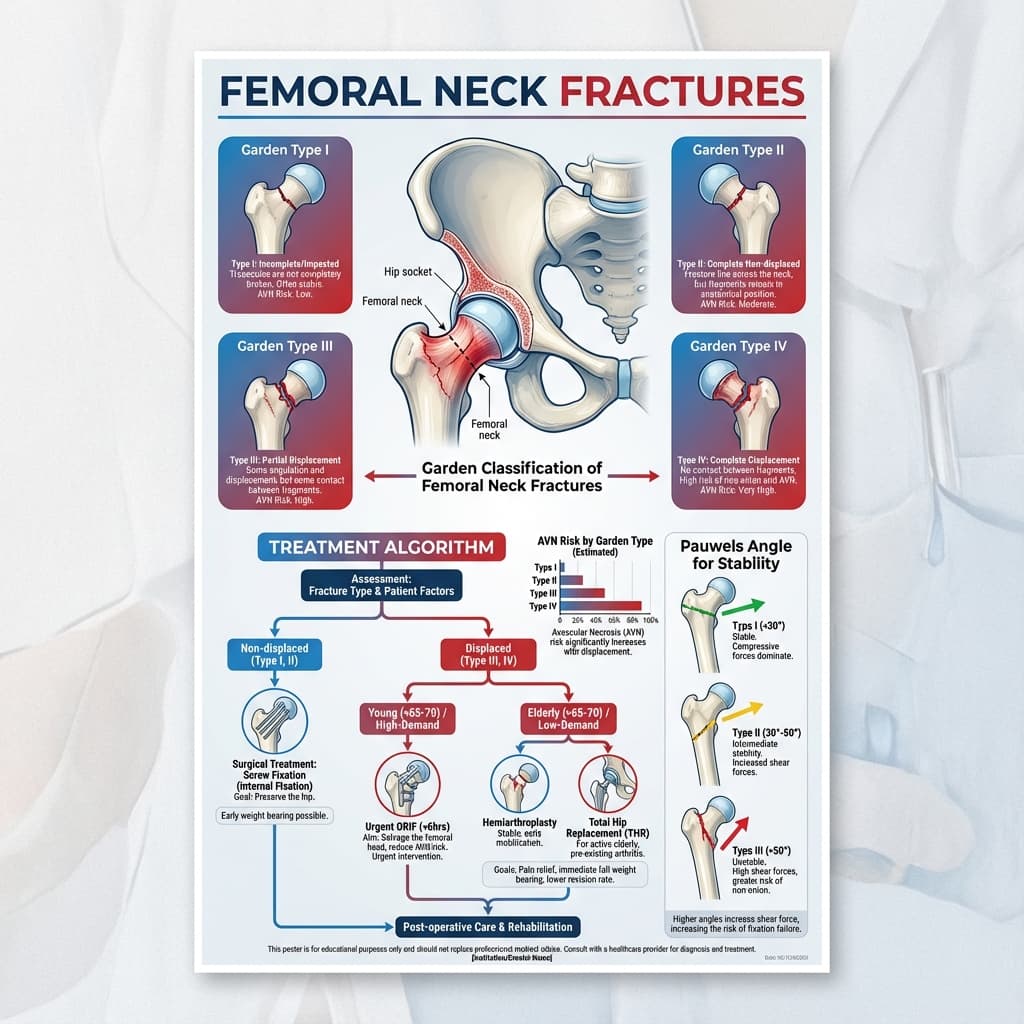
Femoral Neck Fractures
Garden classification, treatment by age and displacement
💡 Displaced in young = urgent ORIF <6hrs. Elderly = consider hemi/THA
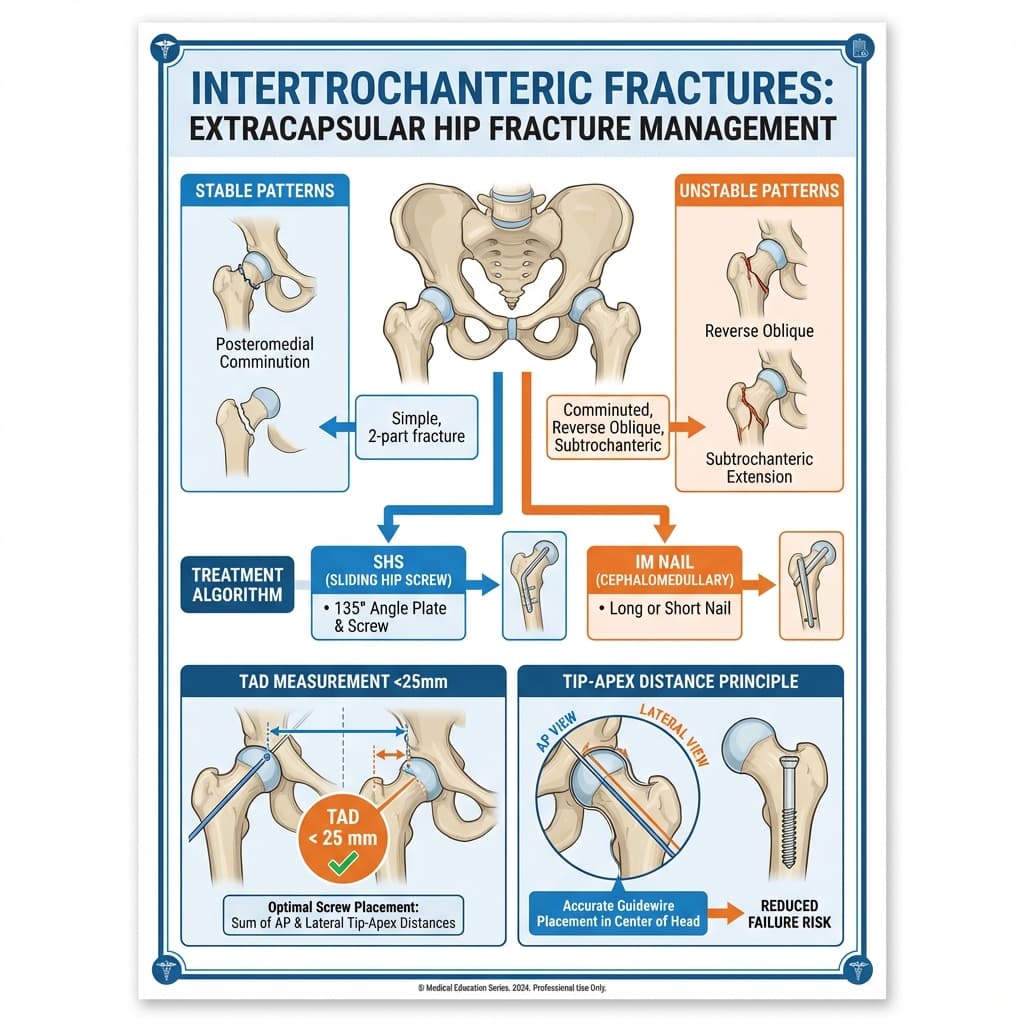
Intertrochanteric Fractures
Stability assessment, SHS vs IM nail selection, TAD principle
💡 Unstable = IM nail. Tip-apex distance <25mm for cut-out prevention
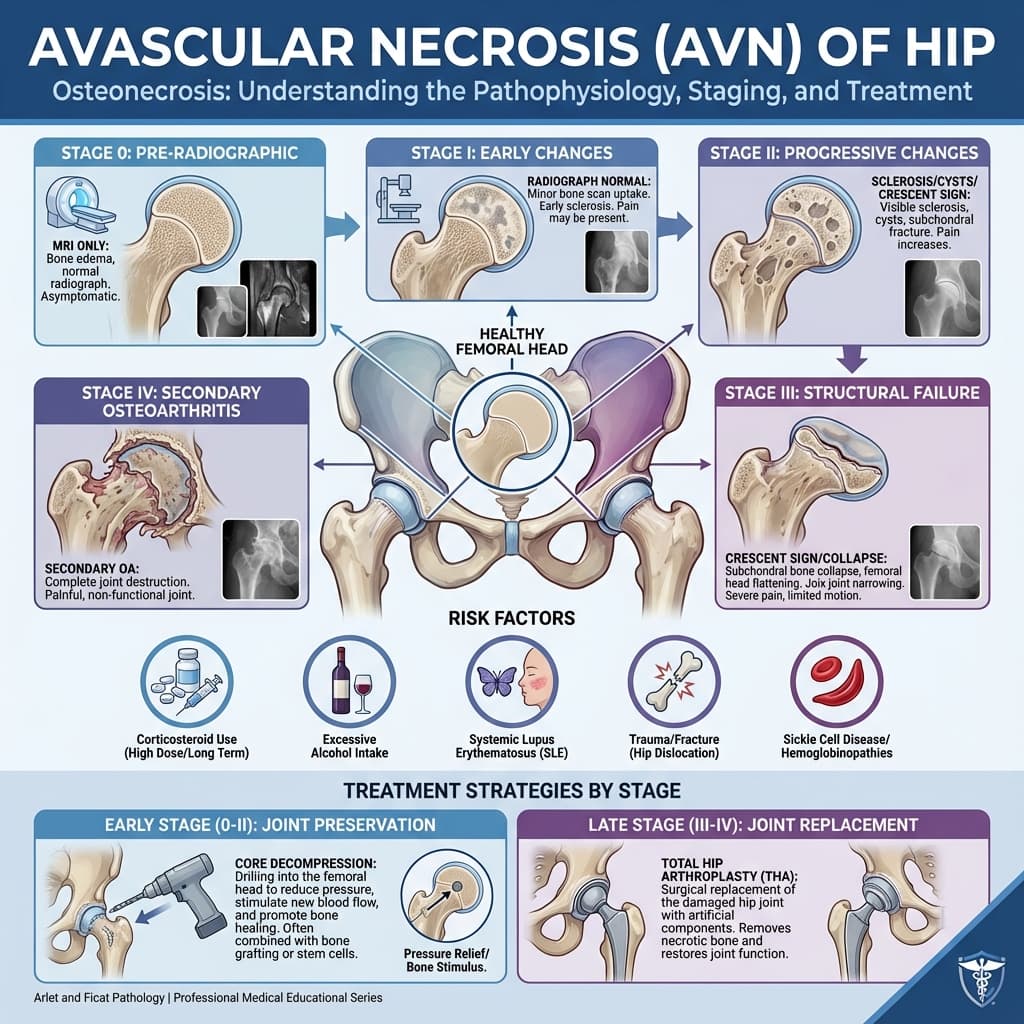
Avascular Necrosis of Hip
Ficat staging, risk factors, treatment by stage
💡 MRI most sensitive. Early (pre-collapse) = core decompression option
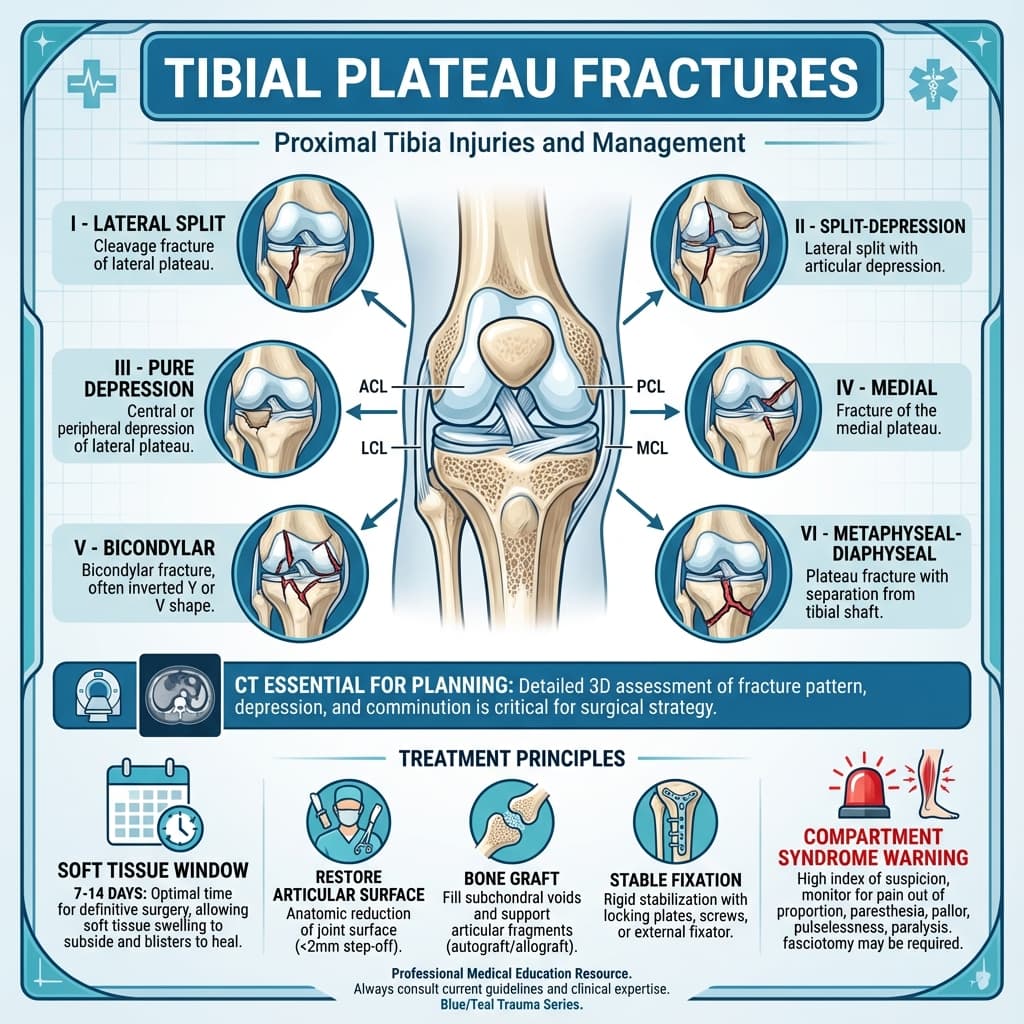
Tibial Plateau Fractures
Schatzker classification I-VI and treatment principles
💡 CT essential for planning. Restore articular surface. Soft tissue window 7-14 days
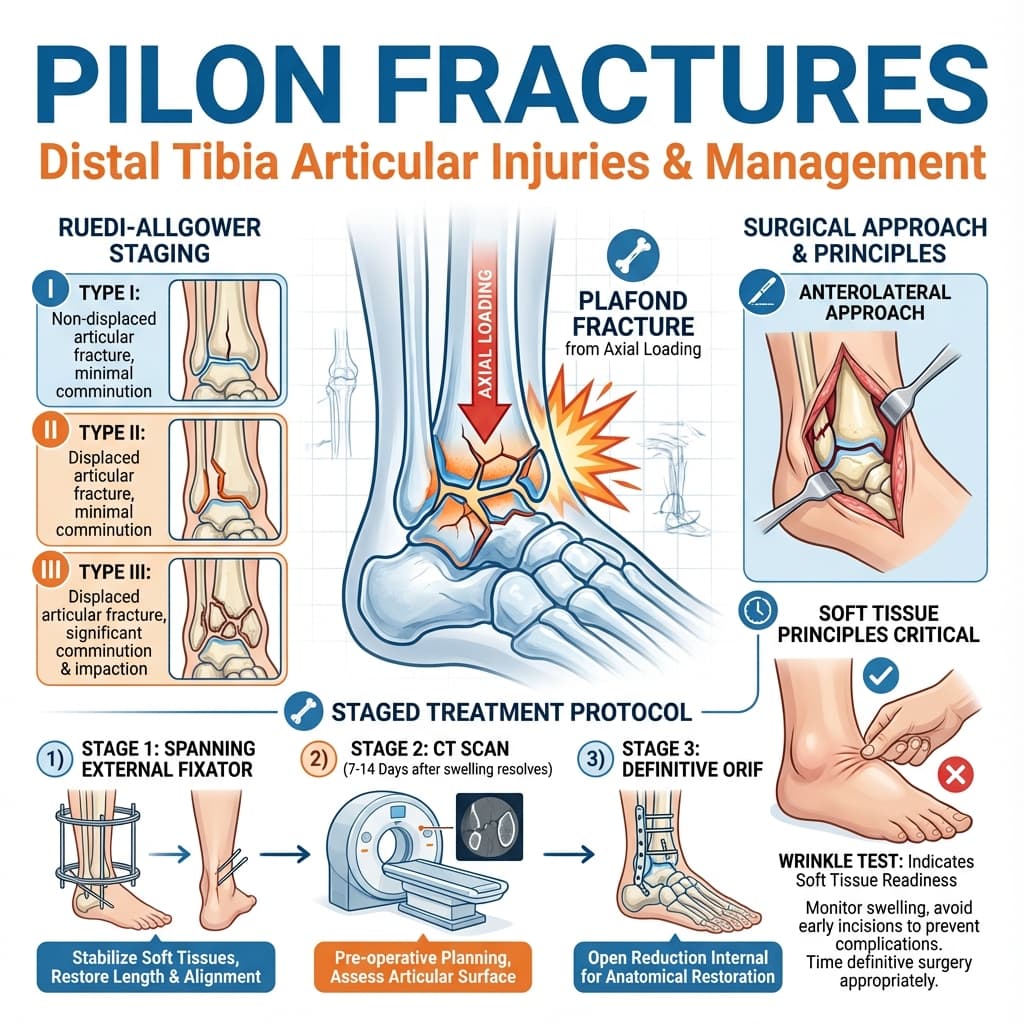
Pilon Fractures
Staged protocol for distal tibia articular fractures
💡 Staged protocol: 1) ExFix, 2) Wait for soft tissues, 3) Definitive ORIF
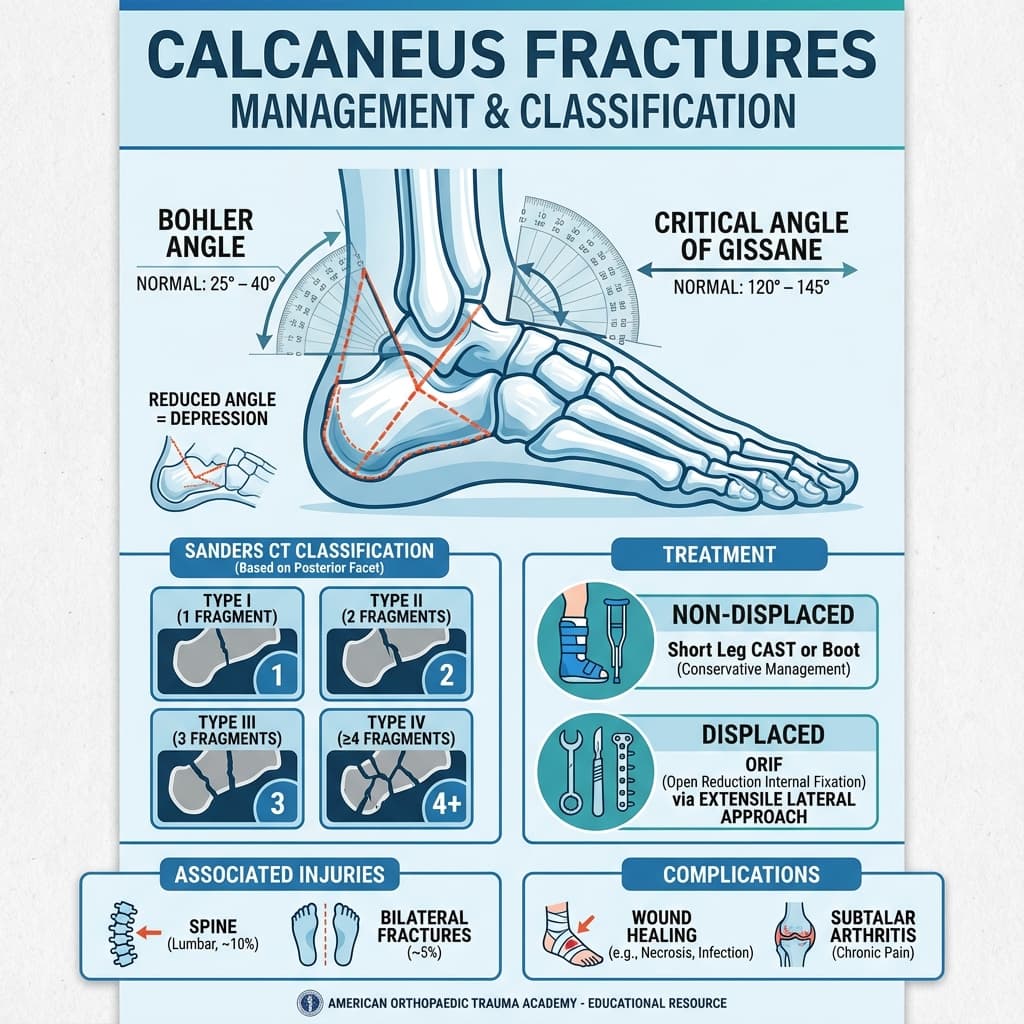
Calcaneus Fractures
Bohler angle, Sanders classification, treatment options
💡 Bohler angle <20° = significant depression. Check spine (10% associated)
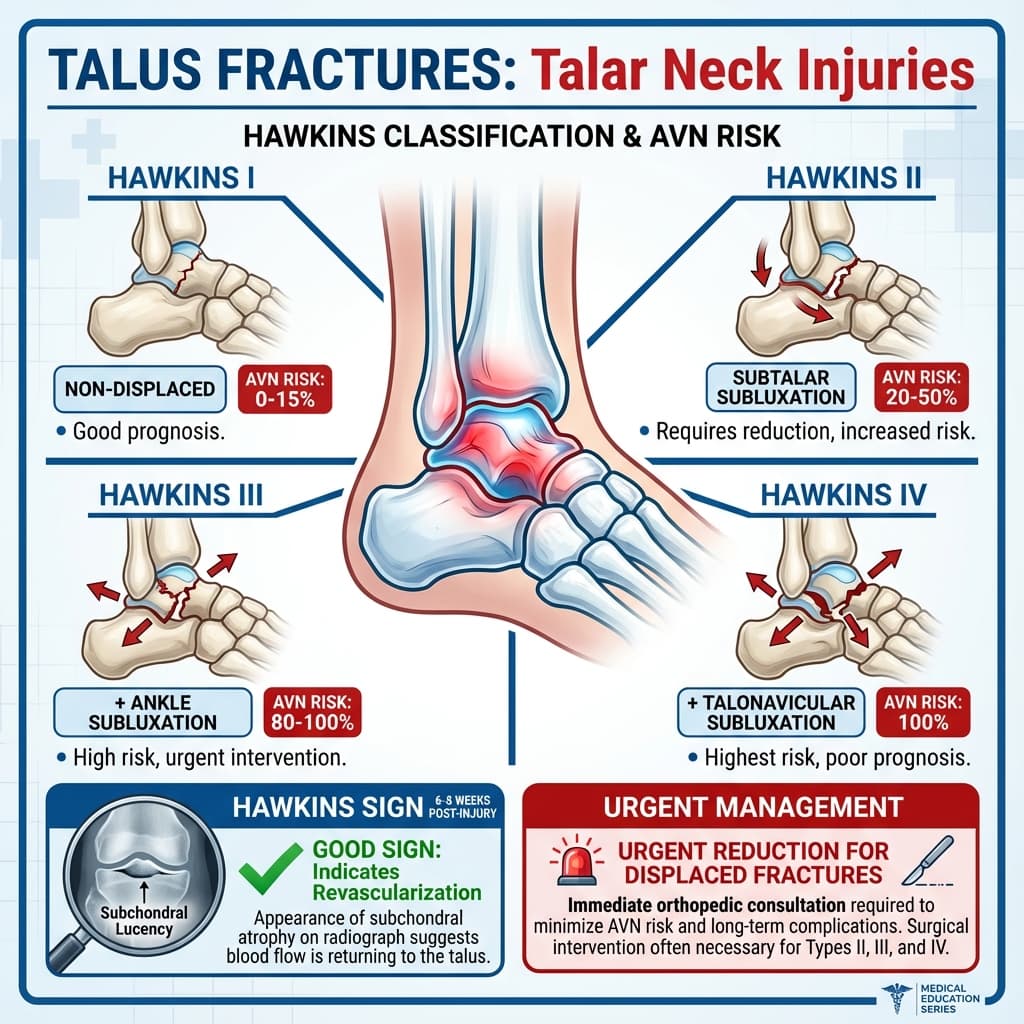
Talus Fractures
Hawkins classification and AVN risk
💡 Hawkins sign at 6-8 weeks = revascularization = good prognosis
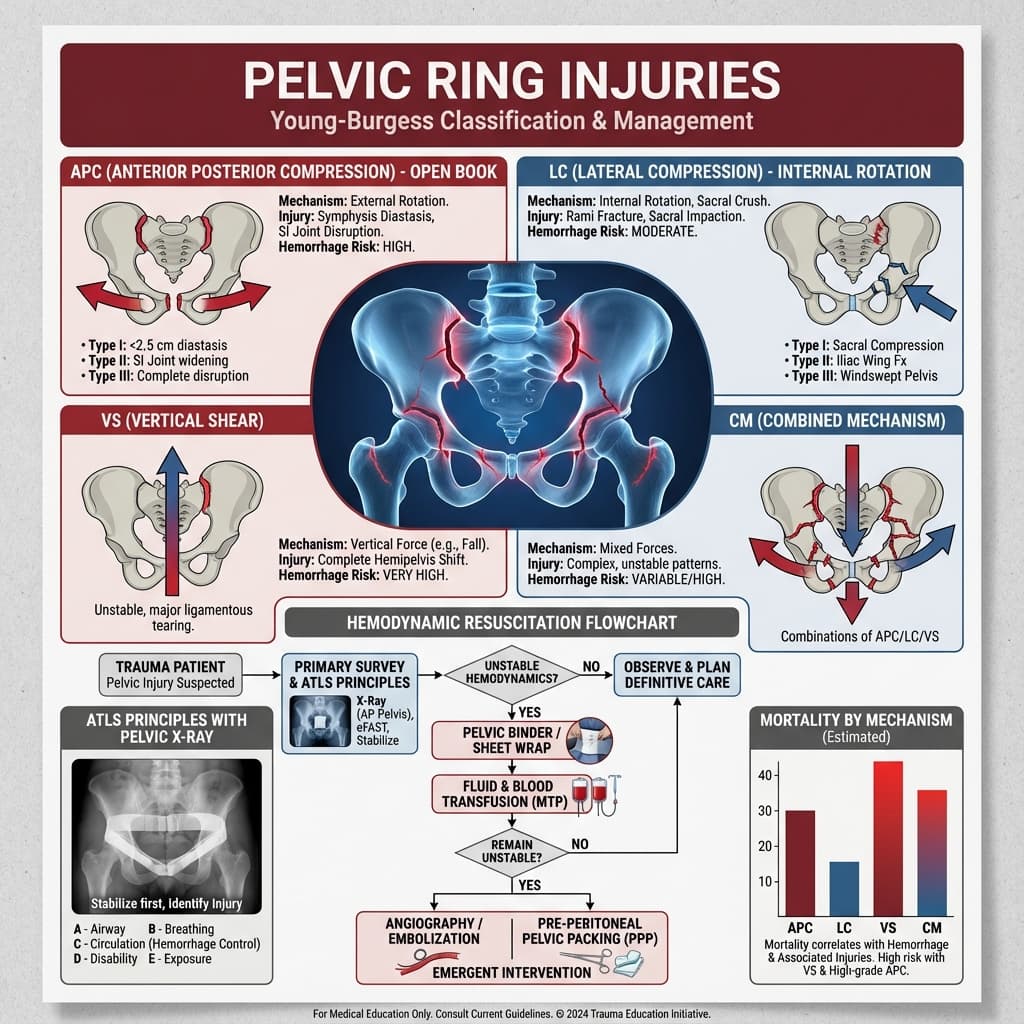
Pelvic Ring Injuries
Young-Burgess classification and resuscitation
💡 Pelvic binder first. Hemodynamic instability = angio or PPP
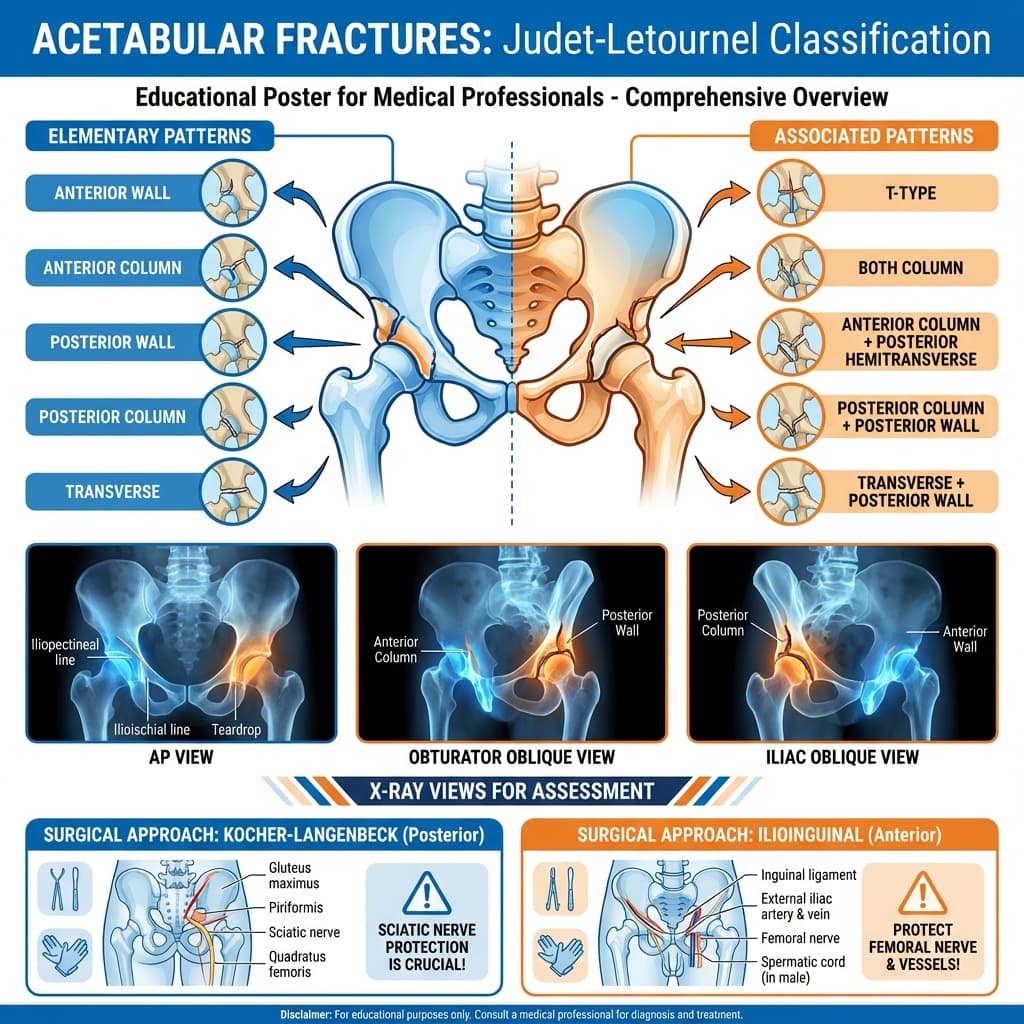
Acetabular Fractures
Judet-Letournel classification and surgical approaches
💡 Know 3 X-ray views: AP, Obturator oblique, Iliac oblique
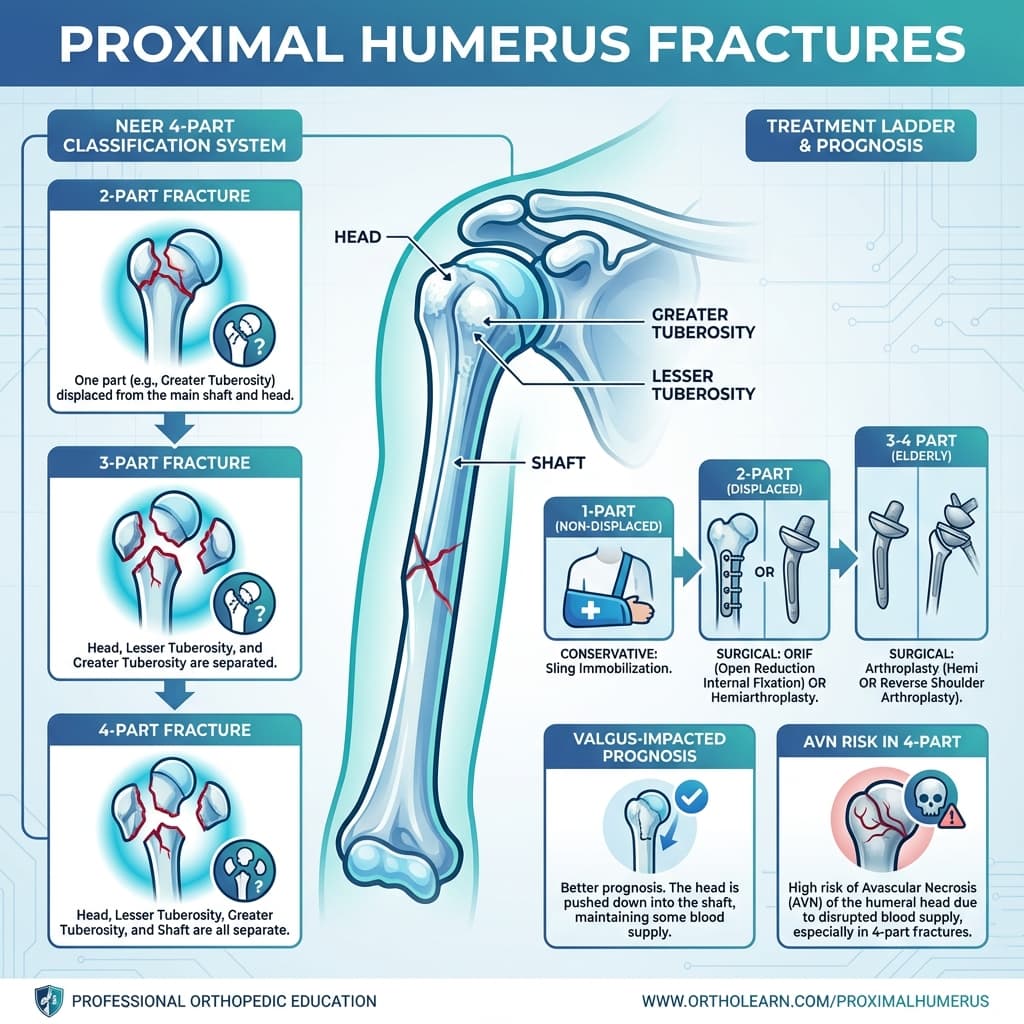
Proximal Humerus Fractures
Neer 4-part classification and treatment algorithm
💡 Elderly 3-4 part = consider reverse shoulder. Valgus-impacted = better prognosis
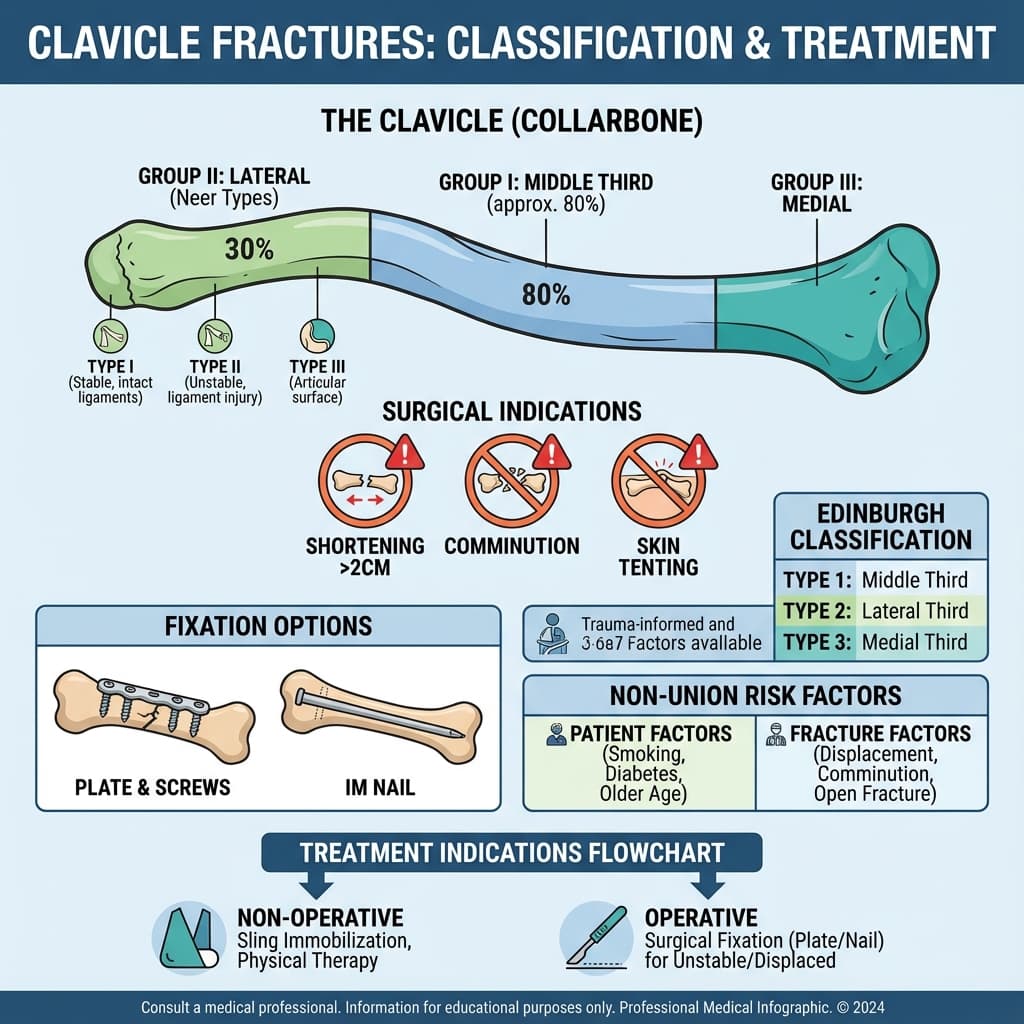
Clavicle Fractures
Classification, surgical indications, fixation options
💡 Surgical indications: shortening >2cm, skin tenting, polytrauma
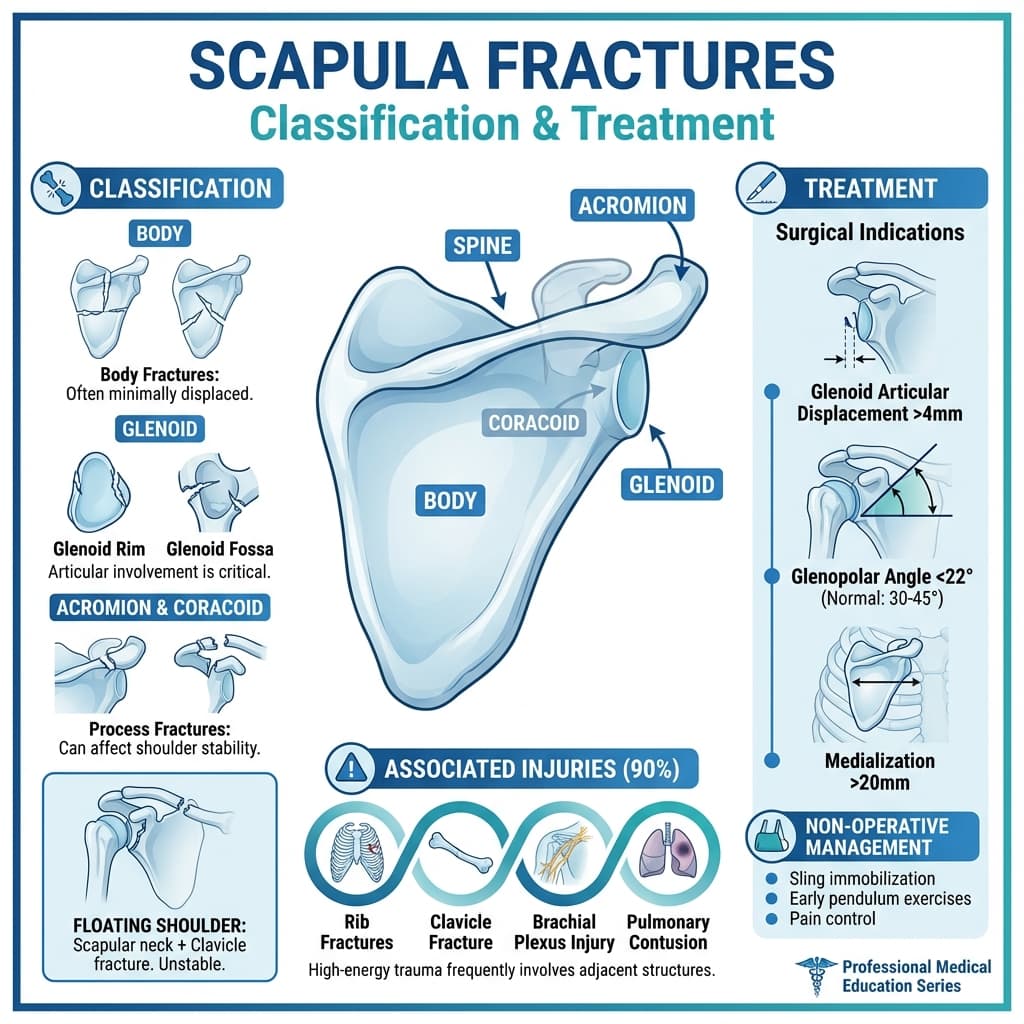
Scapula Fractures
Classification, associated injuries, surgical indications
💡 90% have associated injuries. Think of floating shoulder concept
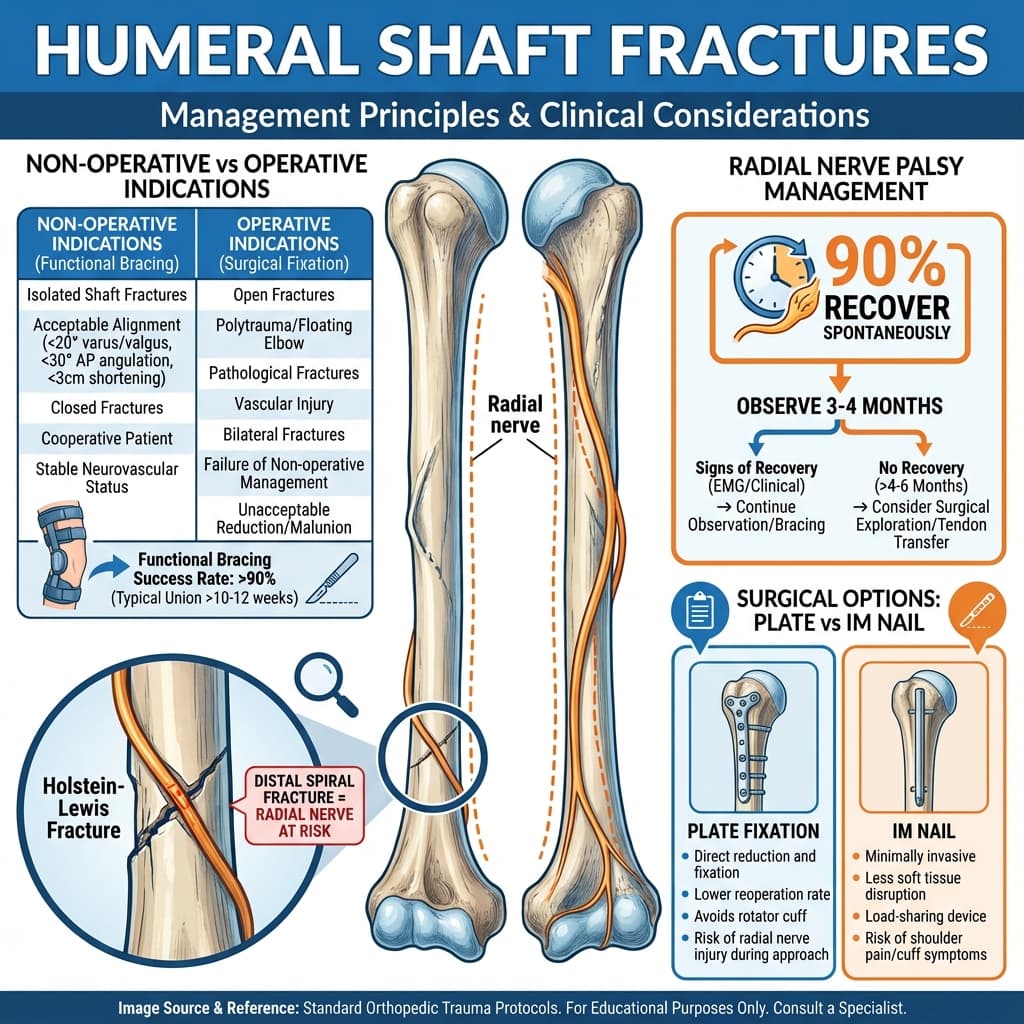
Humeral Shaft Fractures
Radial nerve injury risk and treatment principles
💡 Radial nerve palsy: 90% recover - observe 3-4 months before surgery
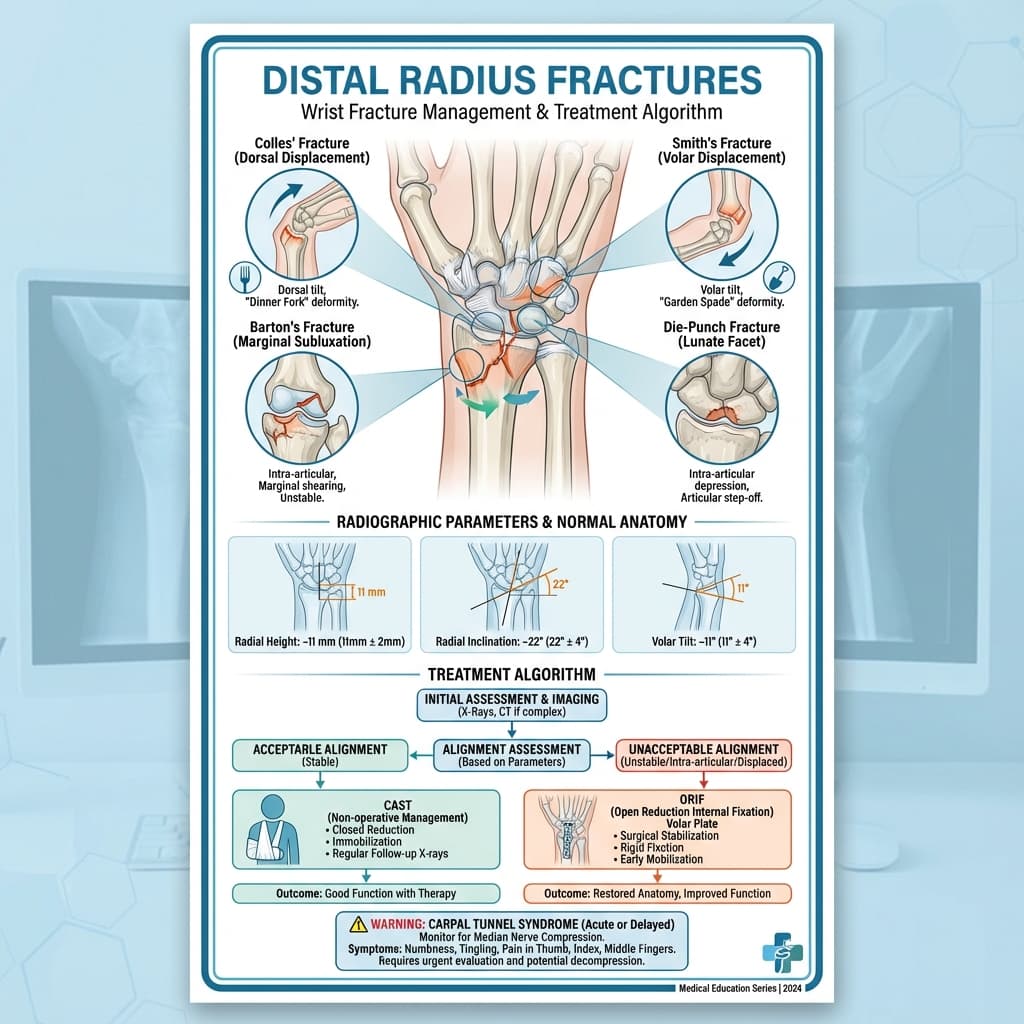
Distal Radius Fractures
Fracture patterns, radiographic parameters, treatment algorithm
💡 Know radial height (11mm), inclination (22°), volar tilt (11°)
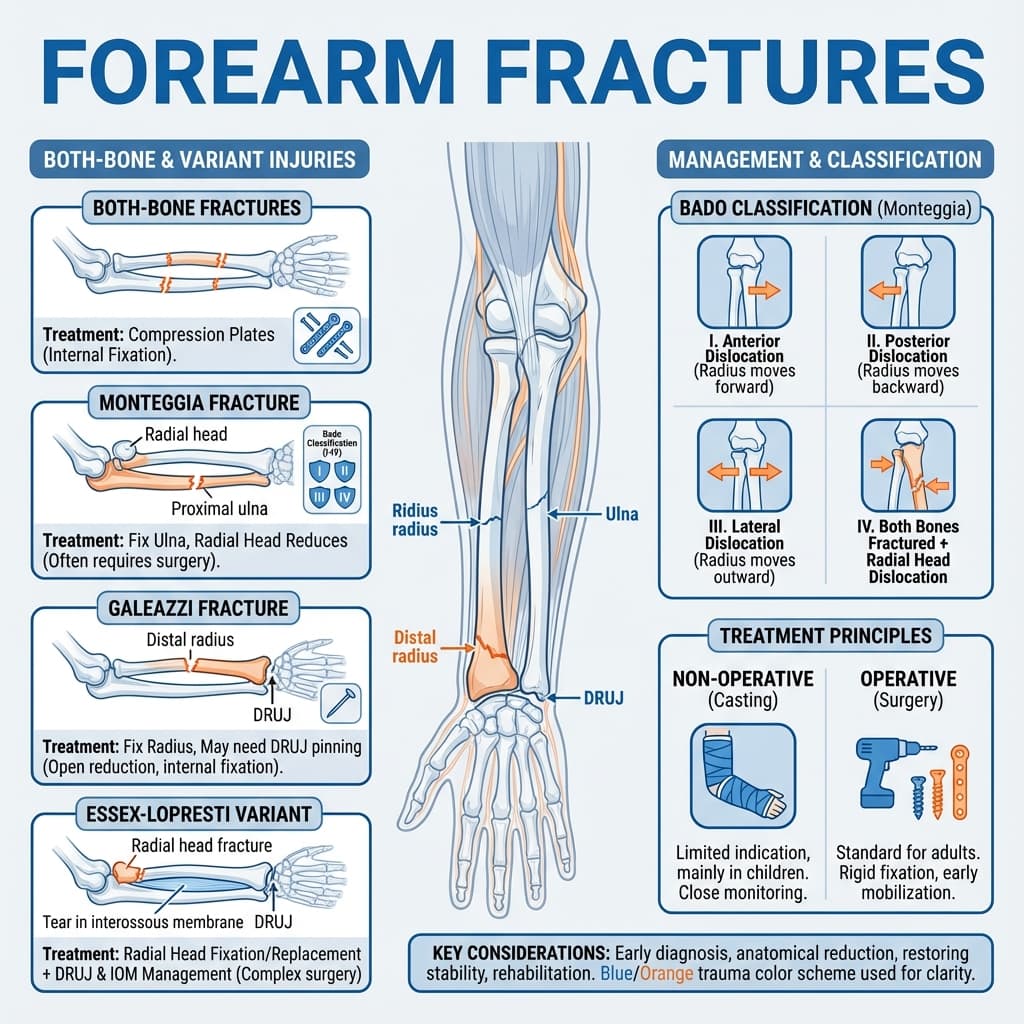
Forearm Fractures
Galeazzi, Monteggia, Essex-Lopresti patterns
💡 Galeazzi = radius fracture + DRUJ. Monteggia = ulna + radial head
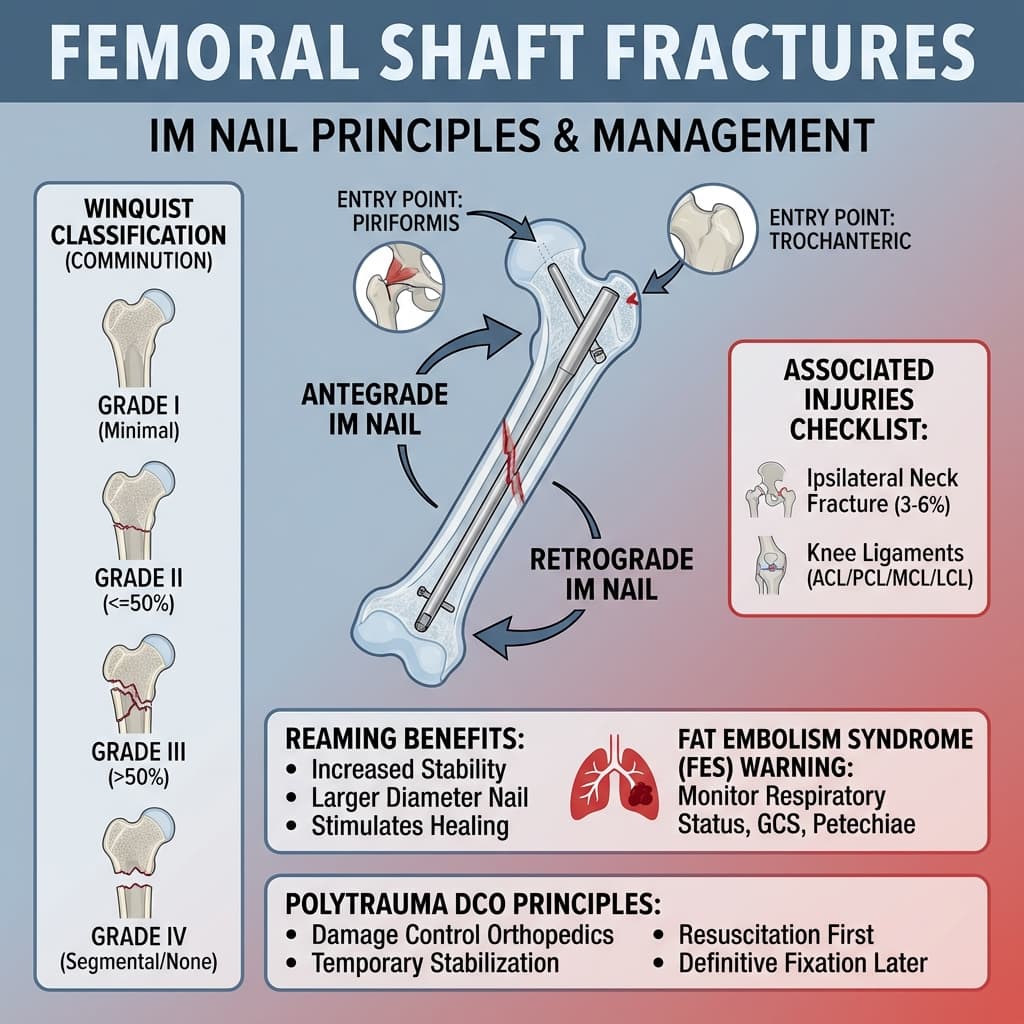
Femoral Shaft Fractures
IM nail principles, associated injuries, entry point
💡 Check for ipsilateral neck fracture (3-6%). Fat embolism risk
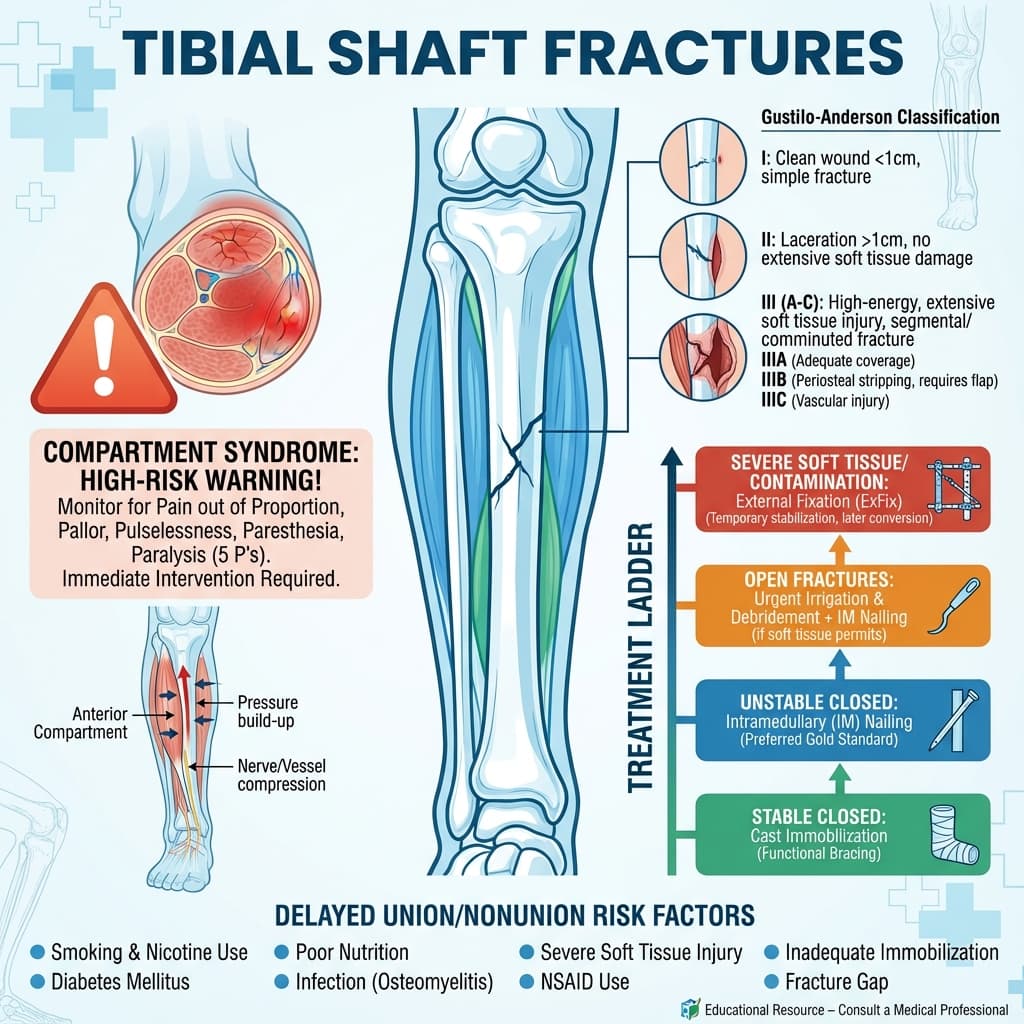
Tibial Shaft Fractures
Treatment algorithm, compartment syndrome, open fracture
💡 High compartment syndrome risk. IM nail preferred for unstable
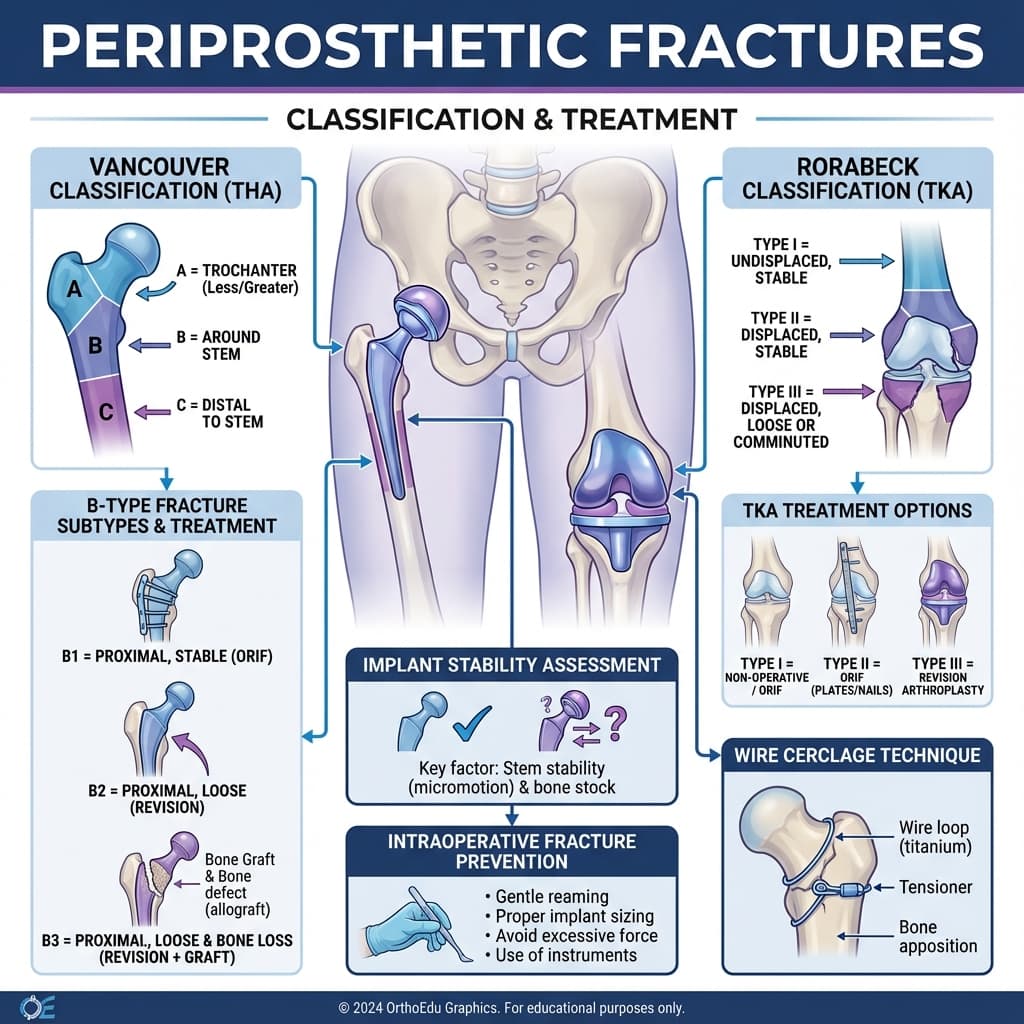
Periprosthetic Fractures
Vancouver and Rorabeck classifications, treatment by type
💡 B1 = stable stem ORIF. B2 = loose stem revision. B3 = revision + graft
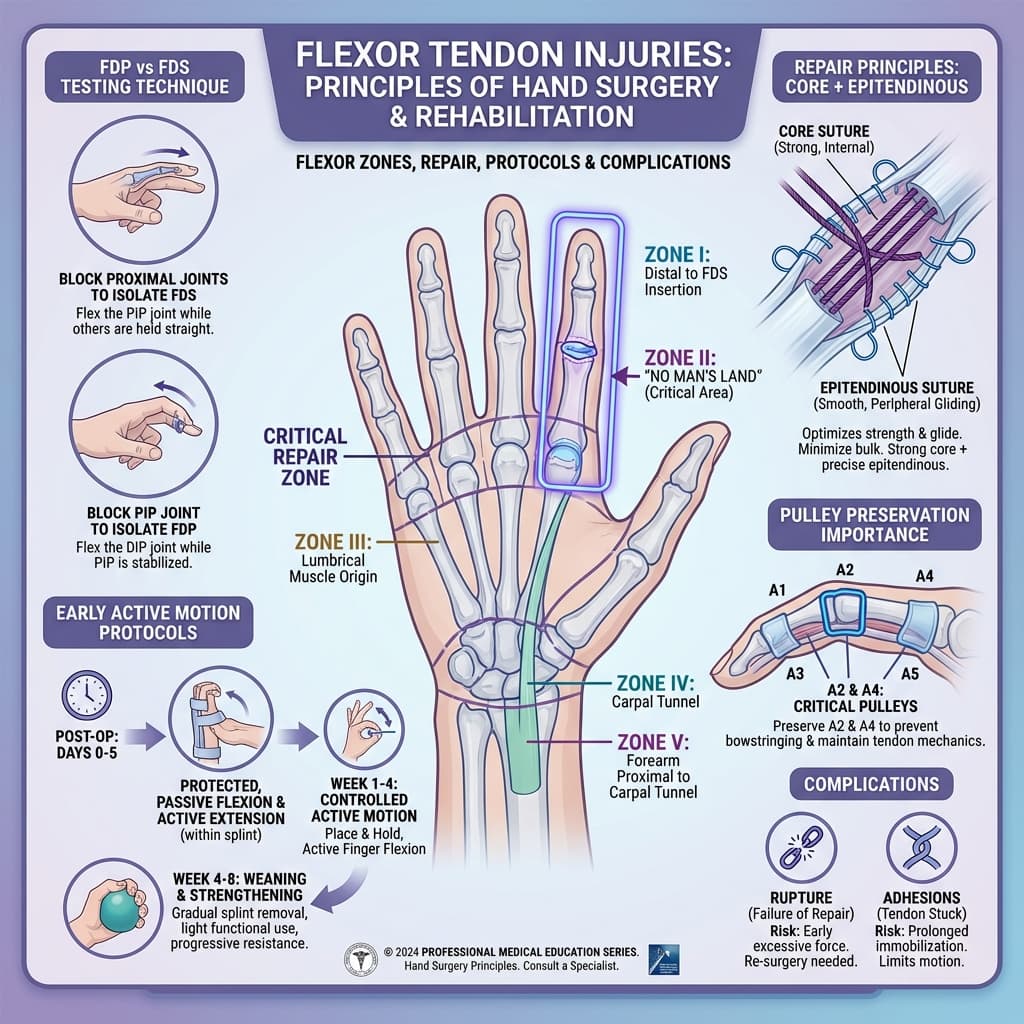
Flexor Tendon Injuries
Flexor zones, repair principles, pulley preservation
💡 Zone II most challenging. Preserve A2 and A4 pulleys. Early active motion
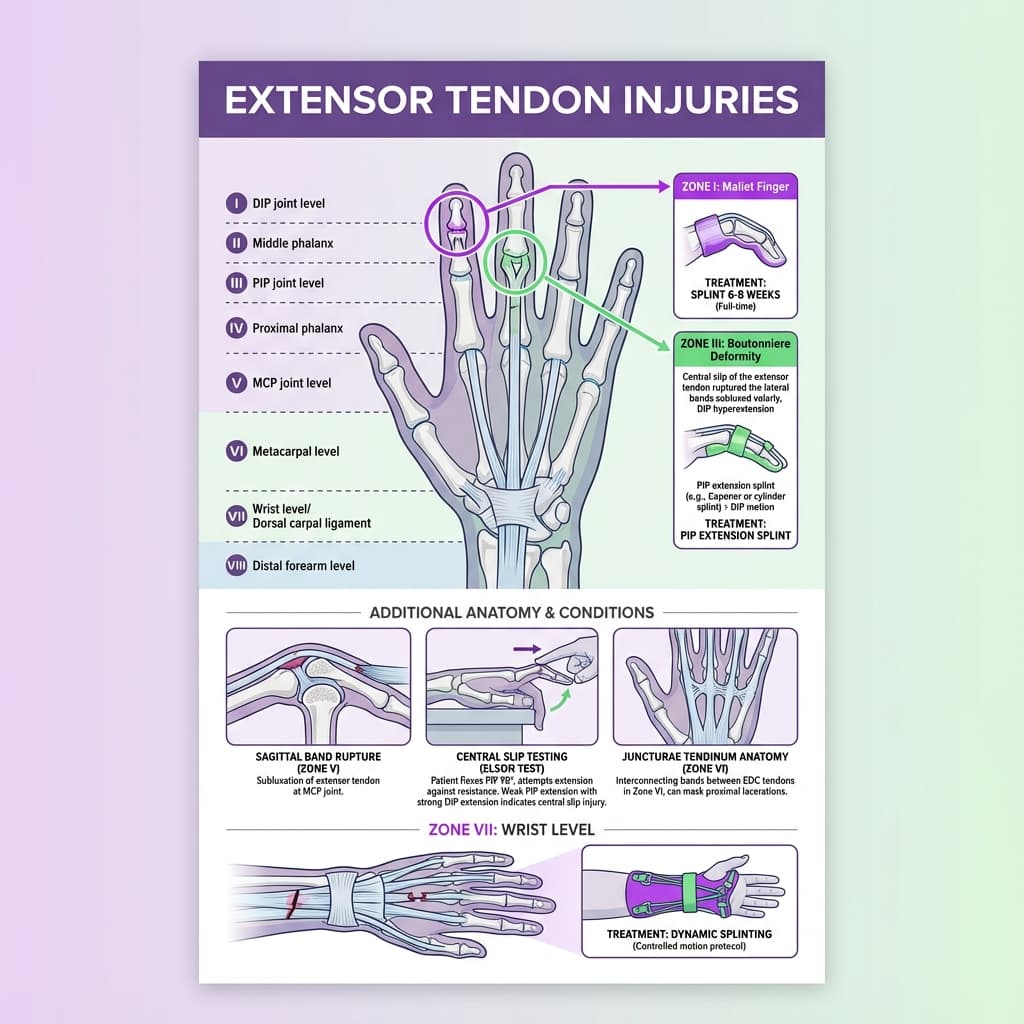
Extensor Tendon Injuries
Extensor zones, mallet, boutonniere, treatment by zone
💡 Zone I = mallet (splint 6-8 weeks). Zone III = boutonniere mechanism
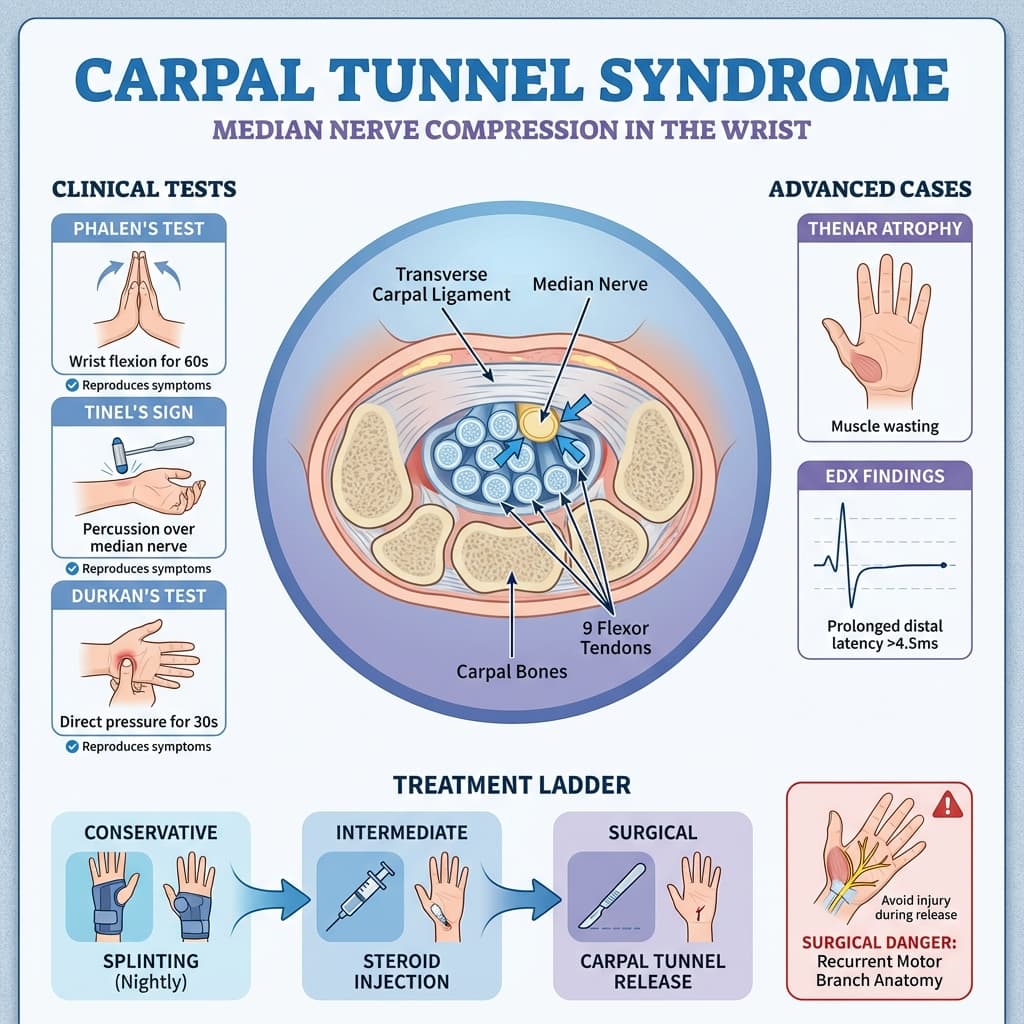
Carpal Tunnel Syndrome
Clinical tests, EDX findings, treatment ladder
💡 EDX: distal motor latency >4.5ms. Recurrent motor branch at risk
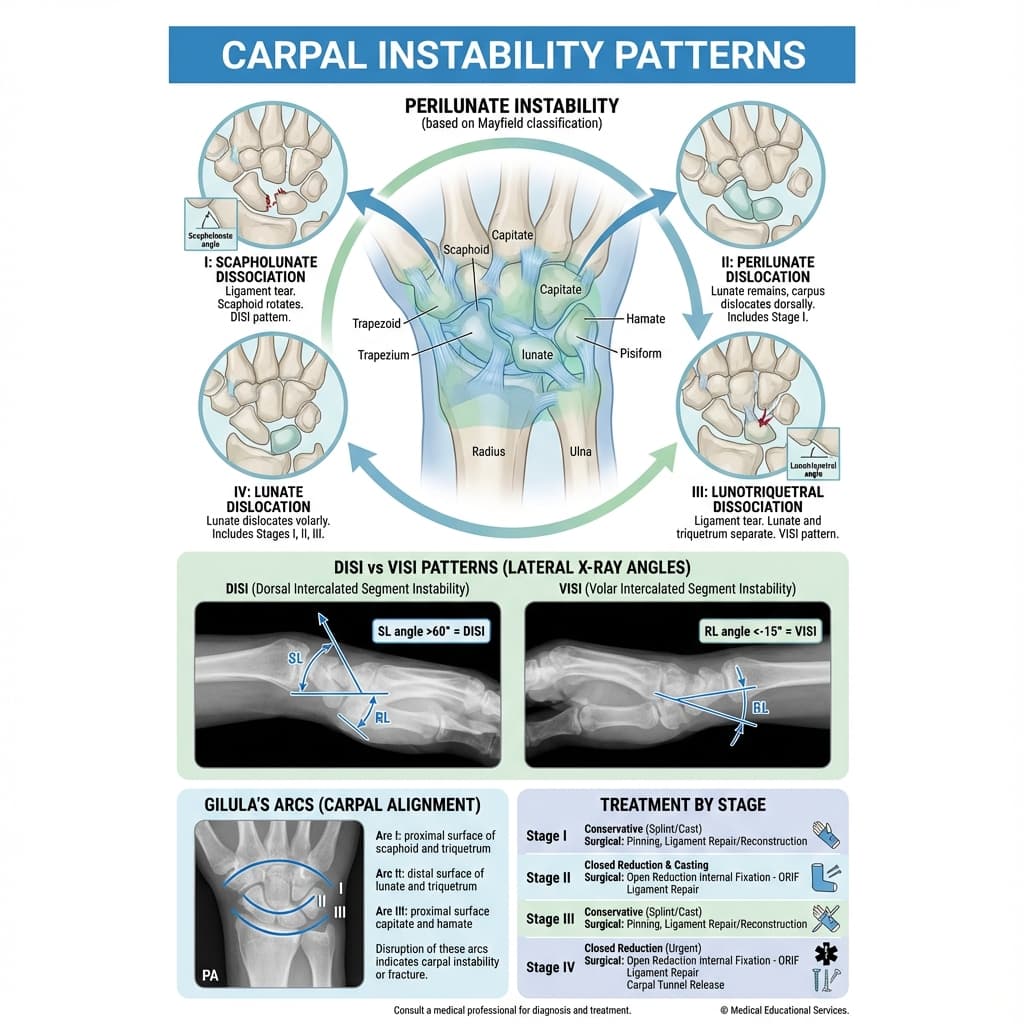
Carpal Instability Patterns
Mayfield stages, DISI, VISI, perilunate injuries
💡 SL angle >60° = DISI. Know Mayfield progression of perilunate injury
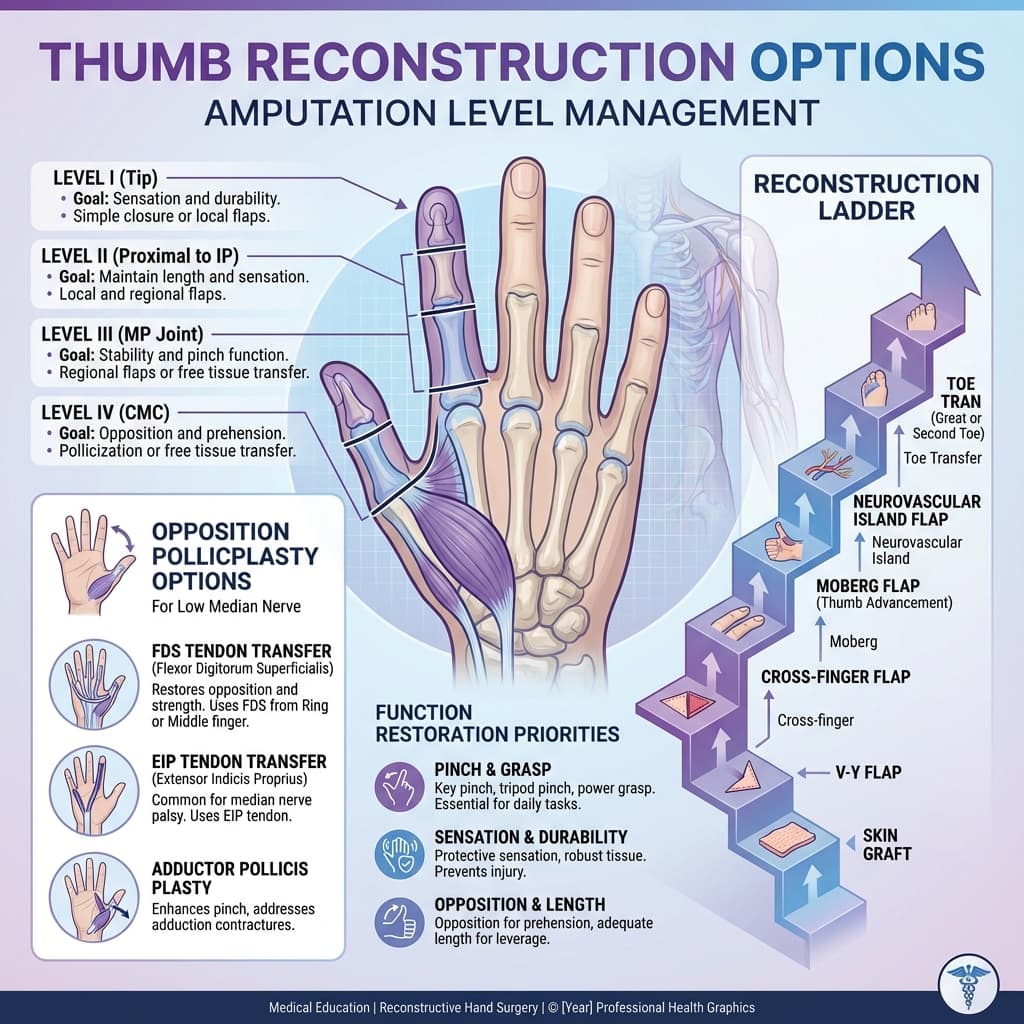
Thumb Reconstruction Options
Amputation levels and reconstruction ladder
💡 Match reconstruction to amputation level. Toe transfer for proximal
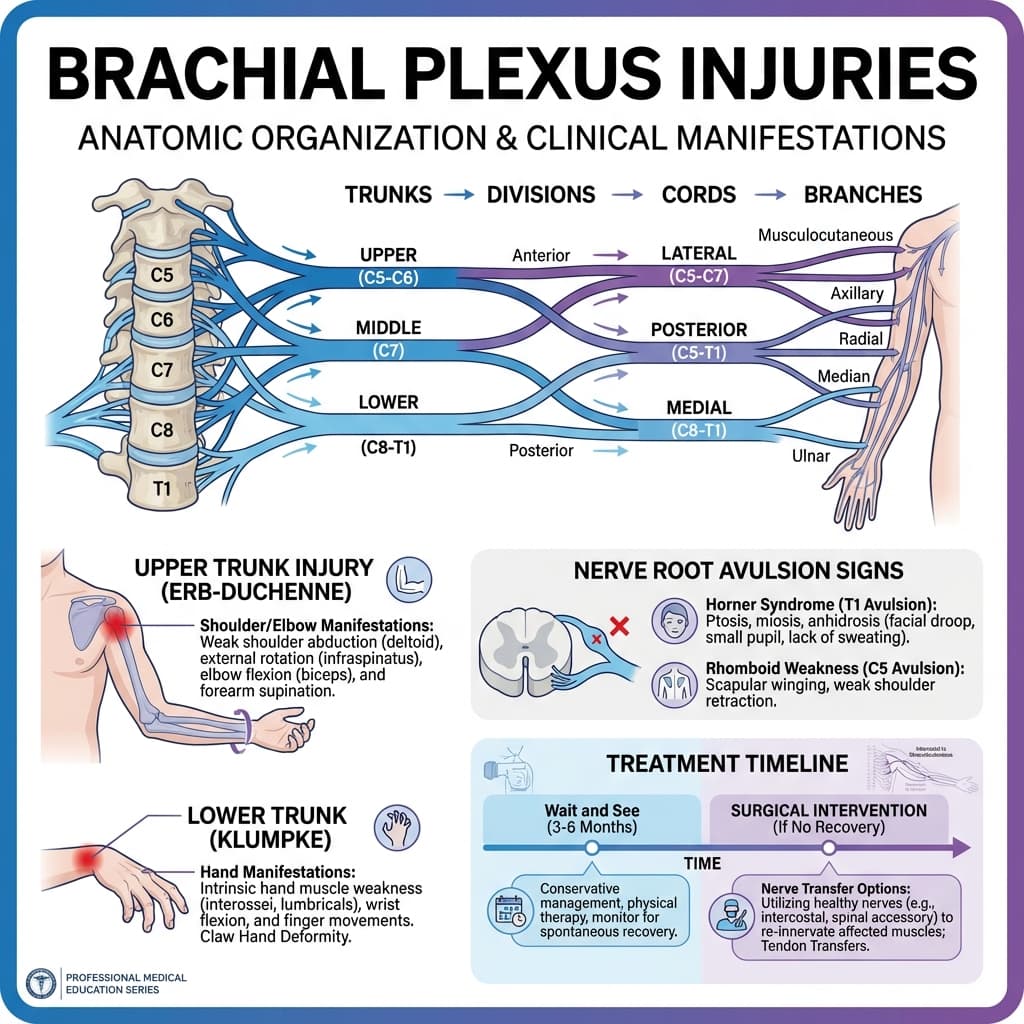
Brachial Plexus Injuries
Anatomic organization, Erb-Duchenne, Klumpke patterns
💡 Upper trunk = waiter's tip. Horner syndrome = T1 avulsion
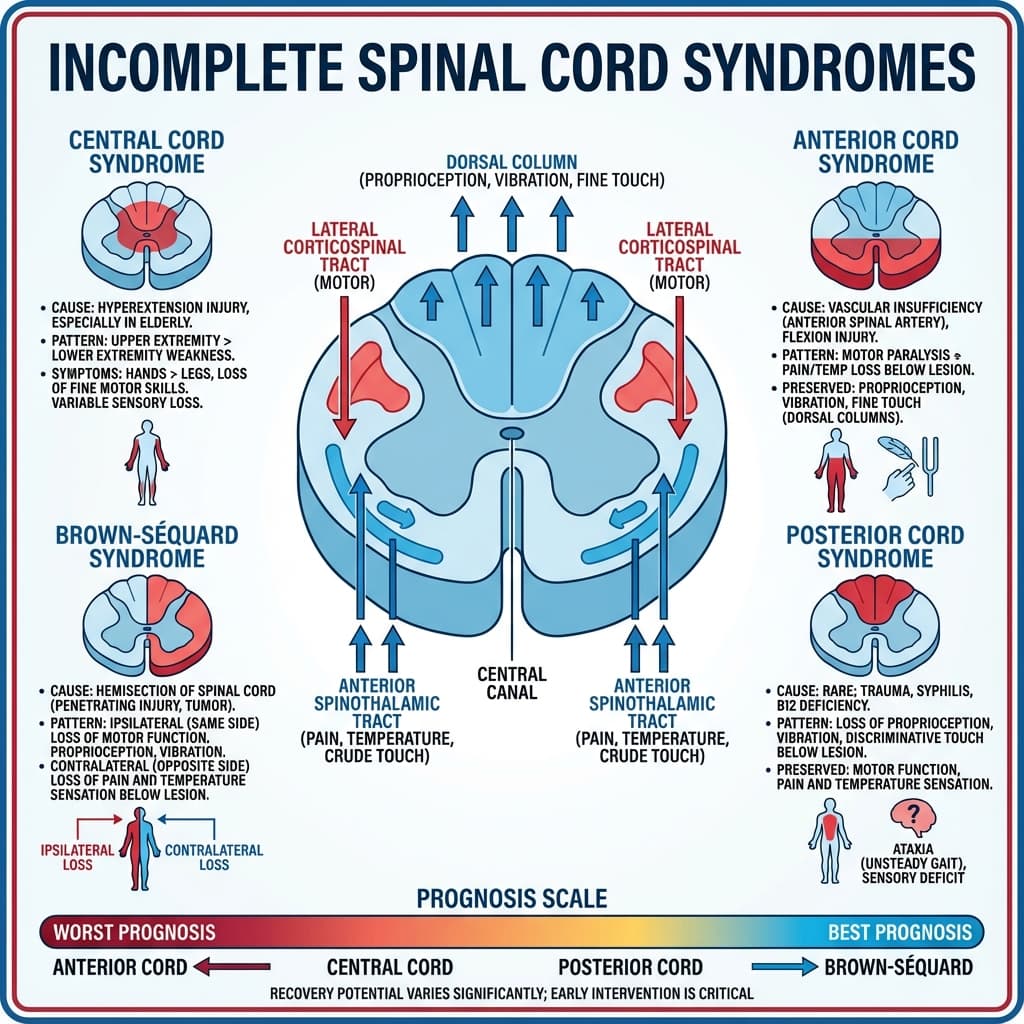
Incomplete Spinal Cord Syndromes
Central, anterior, Brown-Sequard, posterior cord patterns
💡 Central cord = elderly hyperextension. Anterior cord = worst prognosis
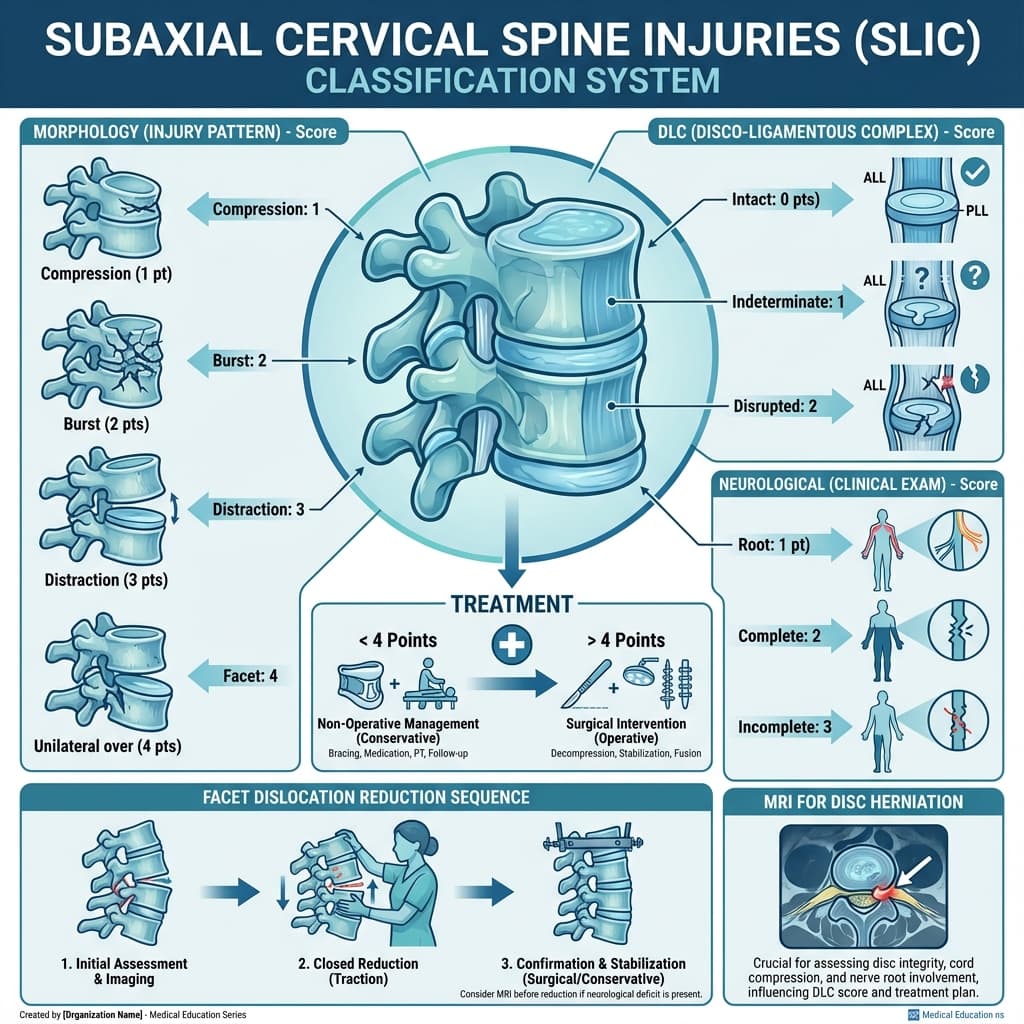
Subaxial Cervical Injuries (SLIC)
SLIC scoring system for treatment decision
💡 SLIC <4 non-op, >4 surgery. MRI for disc herniation before reduction
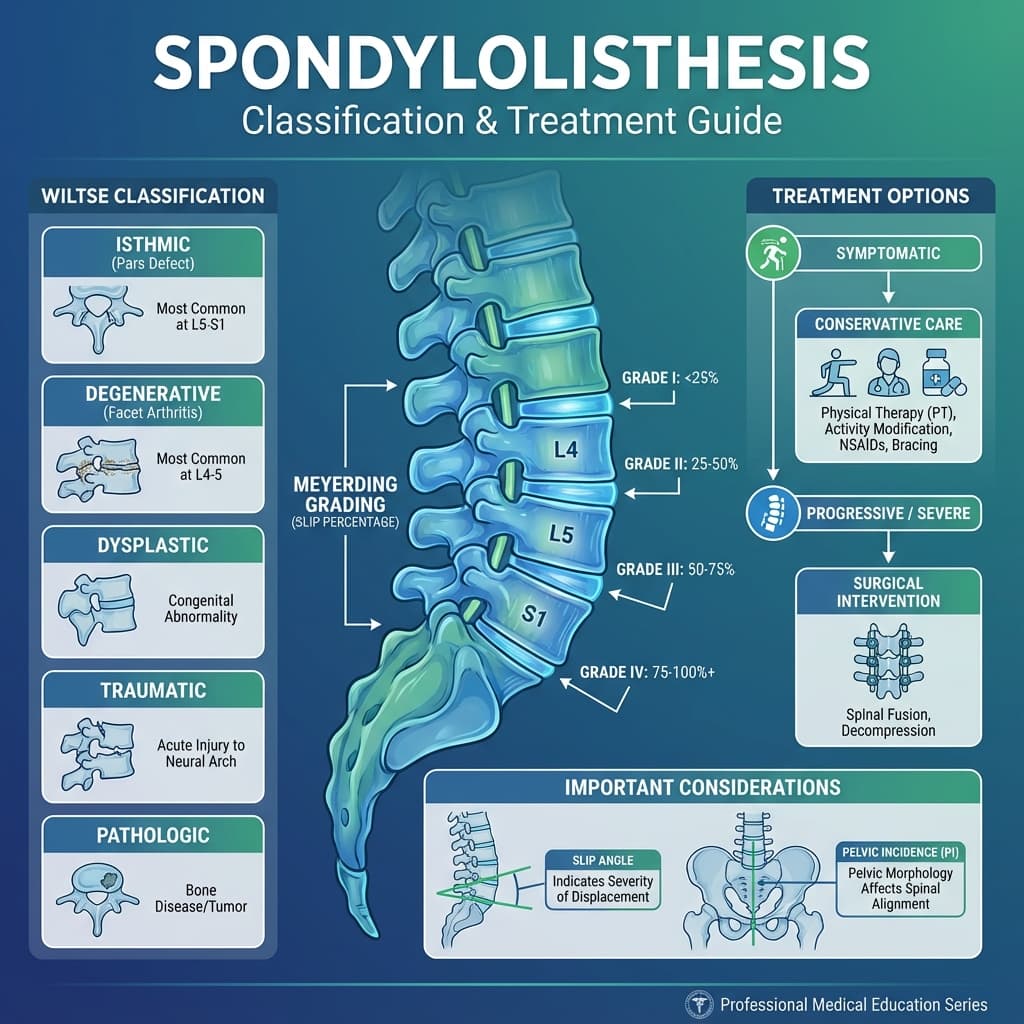
Spondylolisthesis
Meyerding grading, Wiltse classification, treatment
💡 L5-S1 isthmic. L4-5 degenerative. Progressive slip = fusion
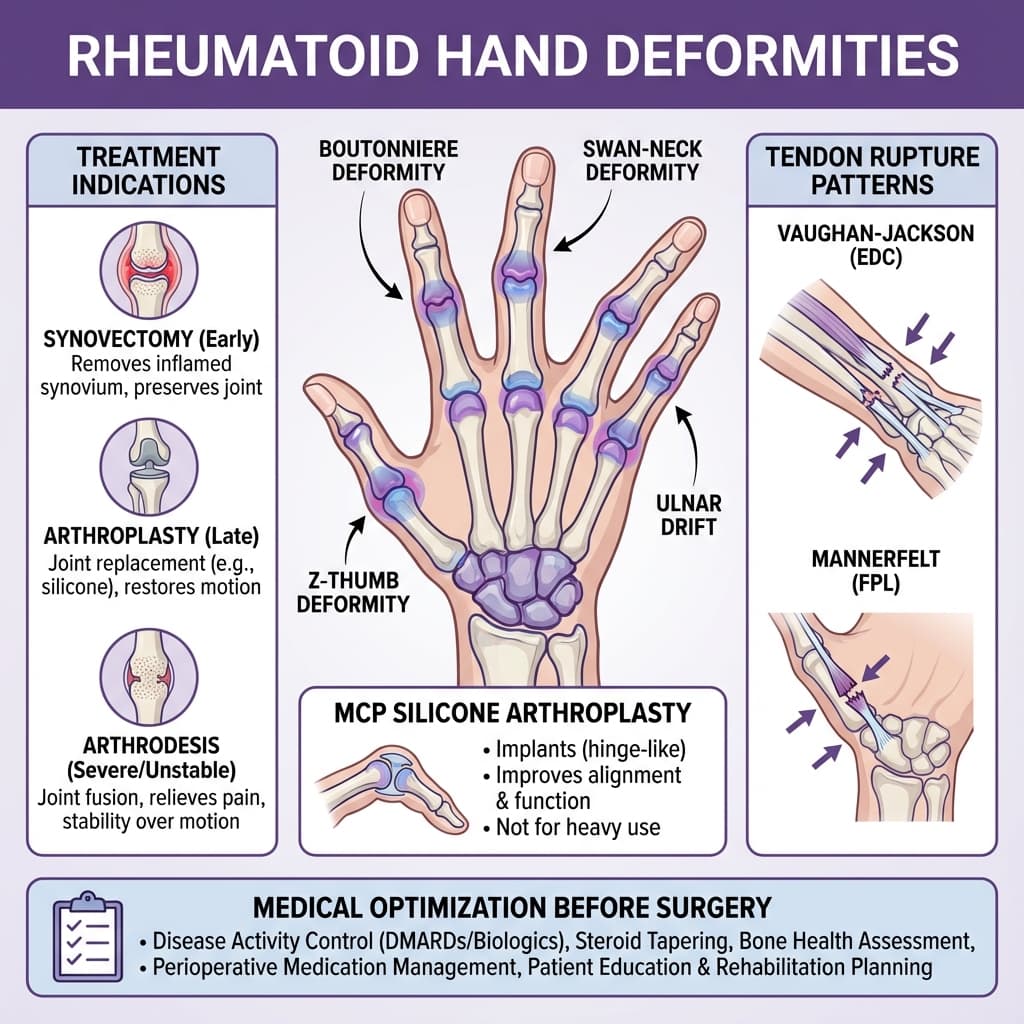
Rheumatoid Hand Deformities
Boutonniere, swan-neck, ulnar drift, tendon rupture
💡 Medical optimization first. Vaughan-Jackson = EDC rupture small finger first
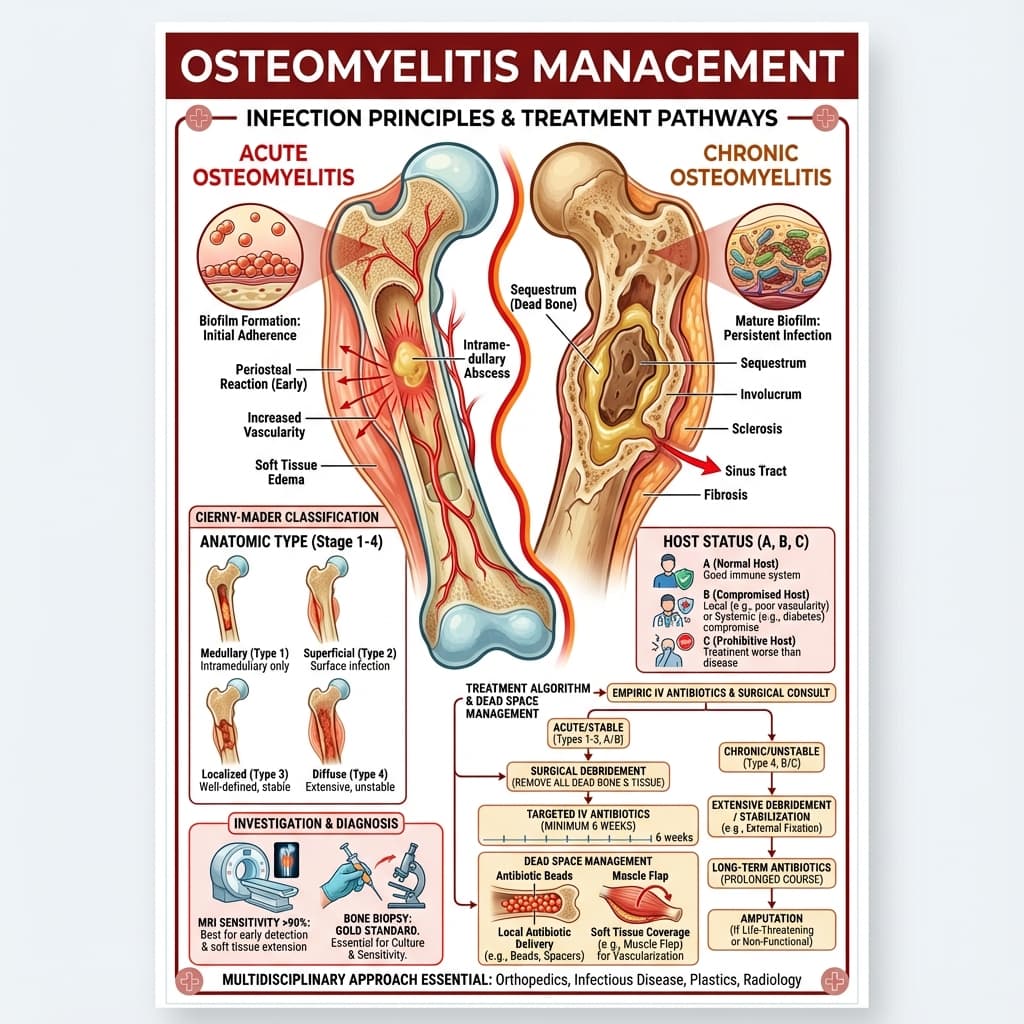
Osteomyelitis Management
Cierny-Mader classification, treatment algorithm
💡 Bone biopsy gold standard. Antibiotics 6 weeks. Dead space management crucial
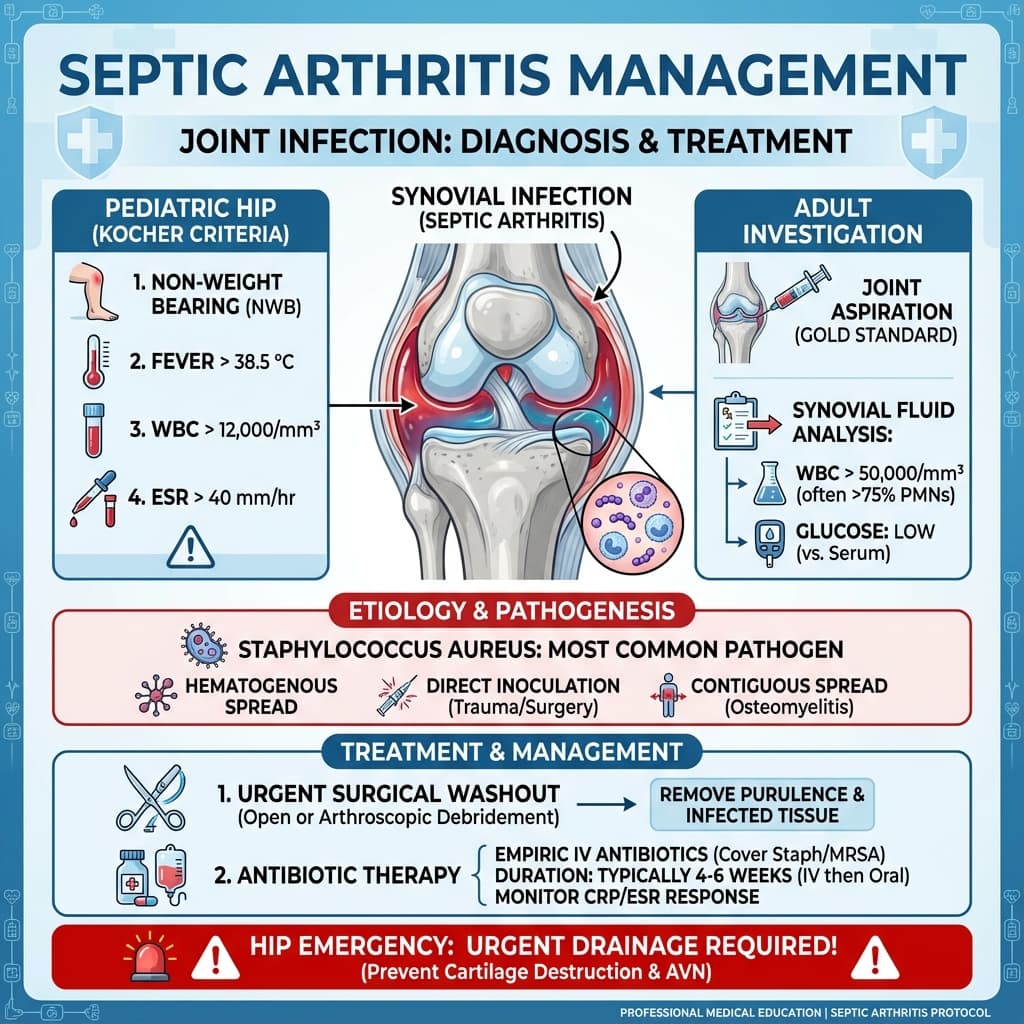
Septic Arthritis Management
Kocher criteria, investigation, treatment
💡 Pediatric hip emergency. WBC >50k suggests infection. Washout + antibiotics
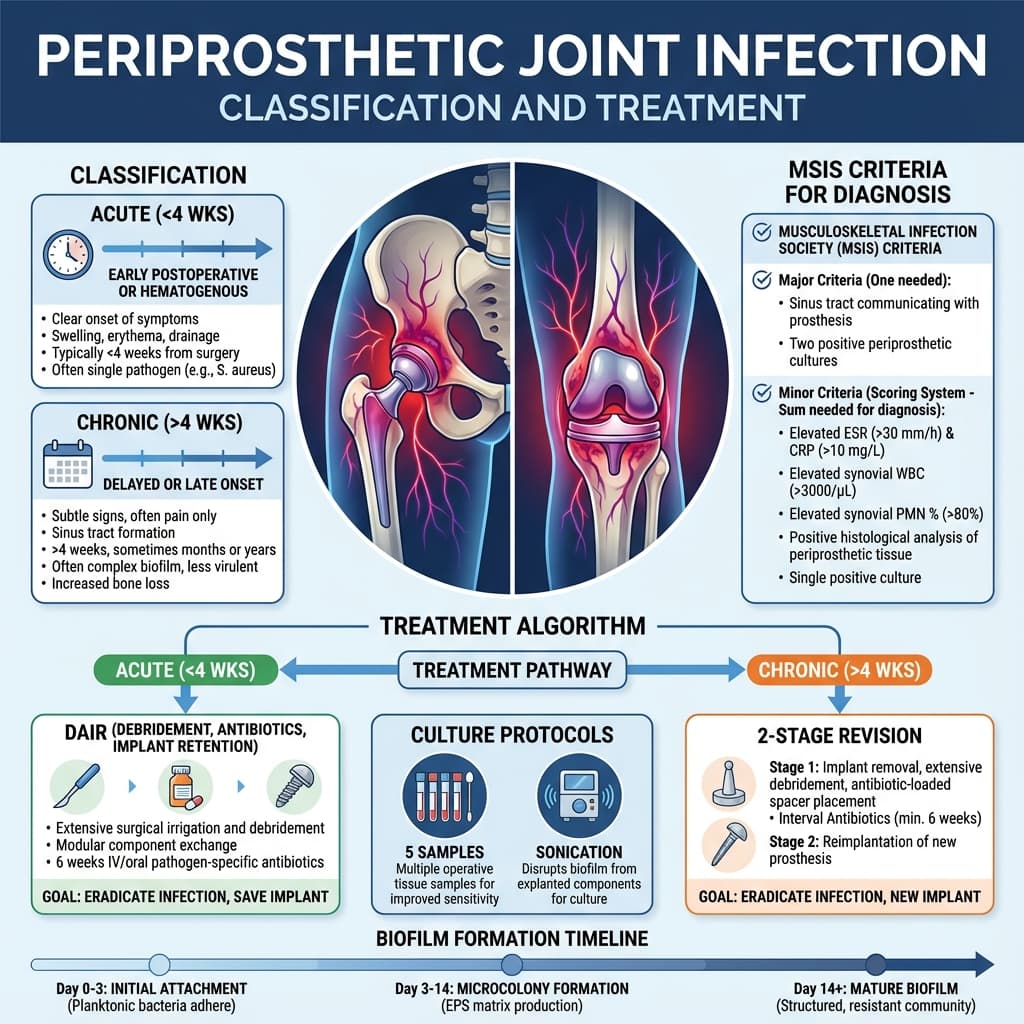
Periprosthetic Joint Infection
MSIS criteria, DAIR vs 2-stage revision
💡 Acute <4 weeks = DAIR. Chronic = 2-stage revision with spacer
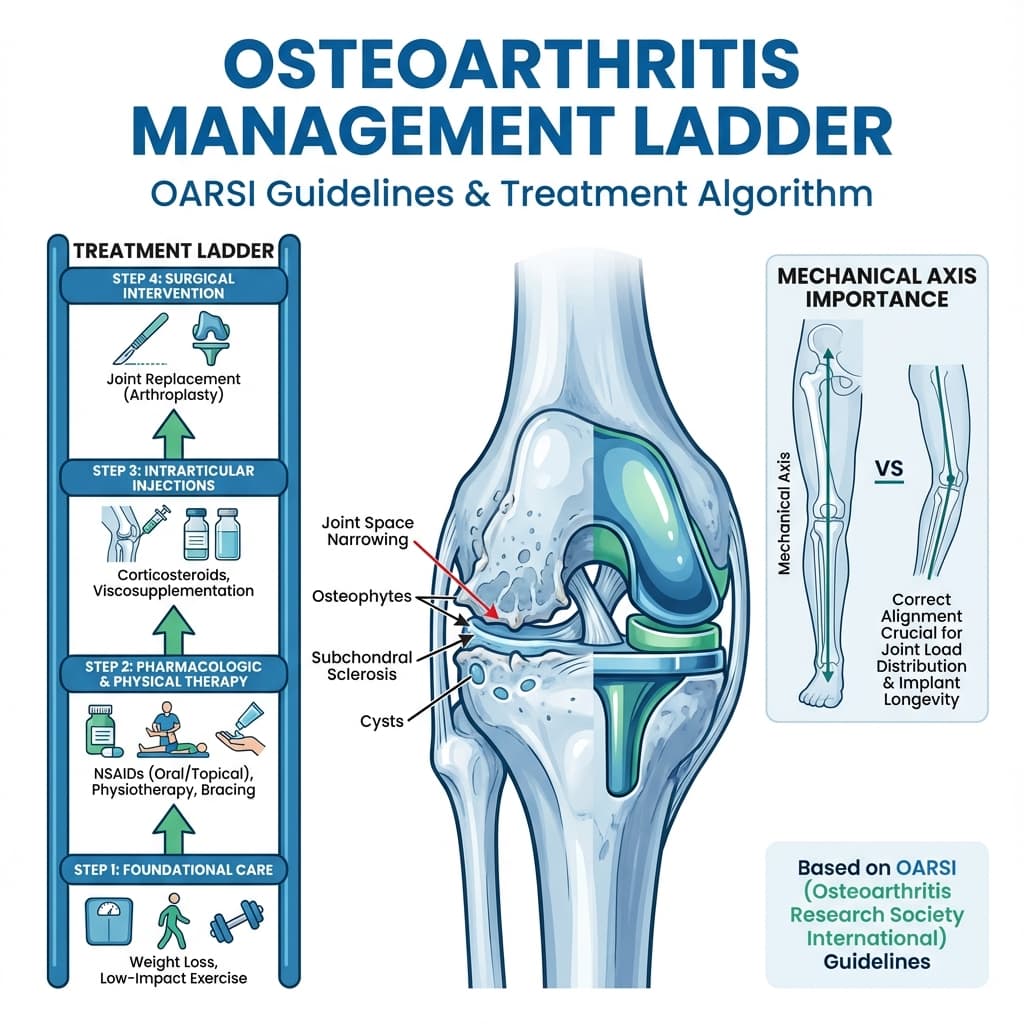
Osteoarthritis Management Ladder
OARSI guidelines, conservative to surgical treatment
💡 Exhaust conservative before surgery. Joint space narrowing, osteophytes, sclerosis, cysts
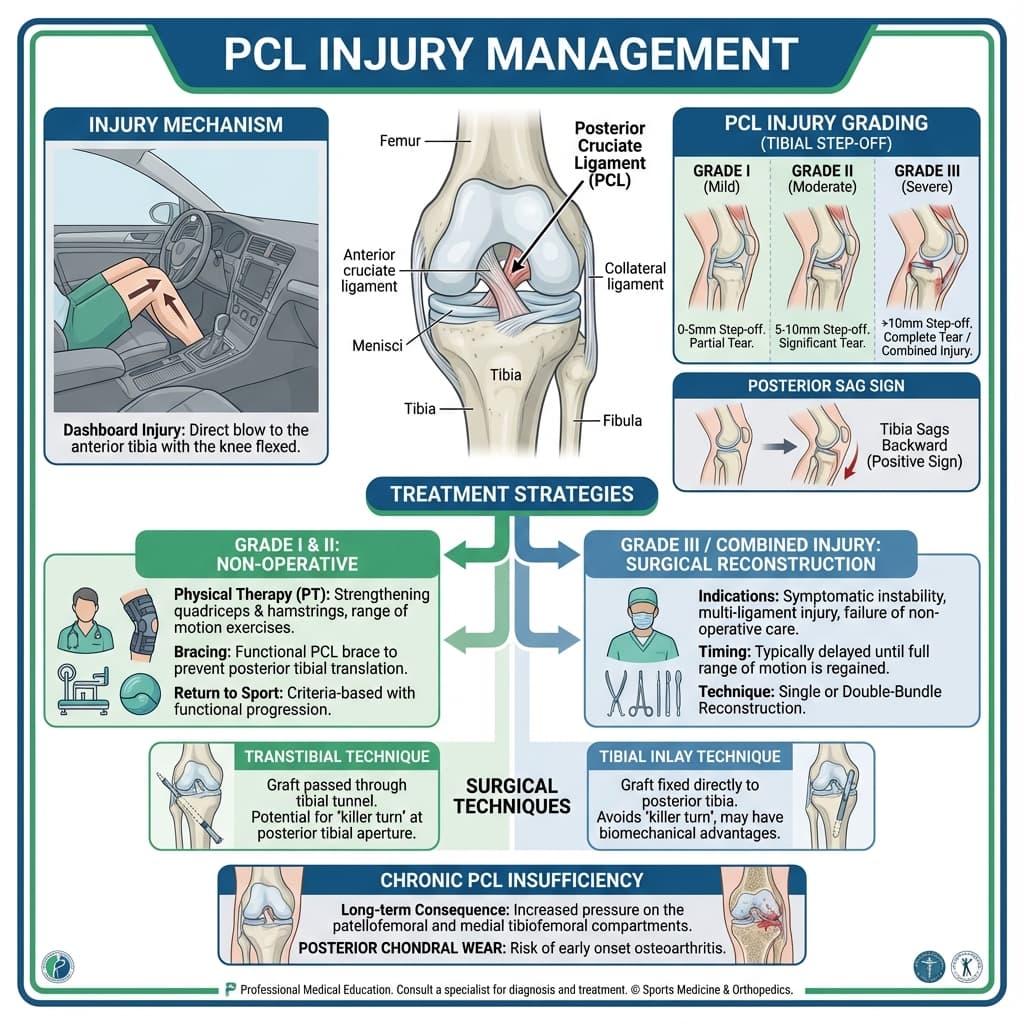
PCL Injury Management
Posterior sag sign, grading, treatment algorithm
💡 Grade I-II = conservative. Grade III/combined = reconstruction
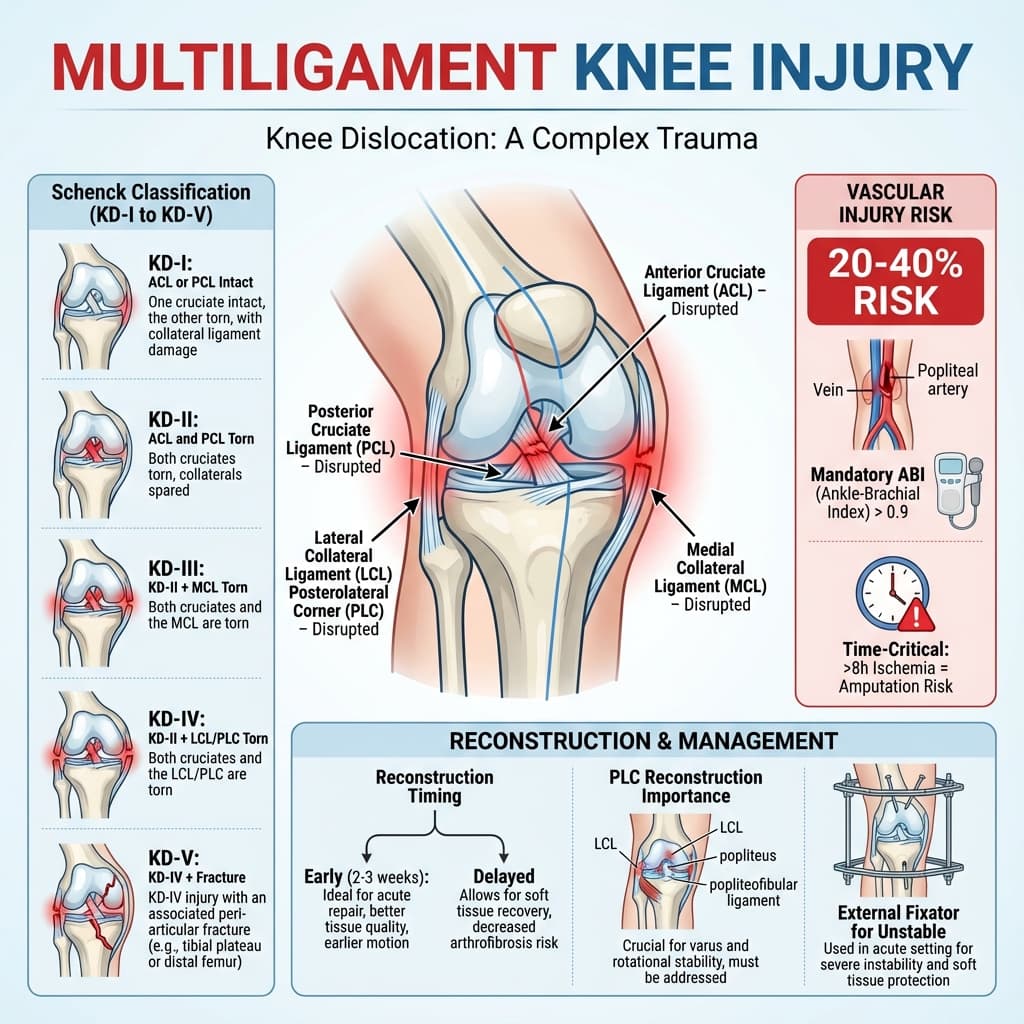
Multiligament Knee Injury
Schenck classification, vascular assessment
💡 Vascular injury 20-40%. ABI mandatory. Early reconstruction 2-3 weeks
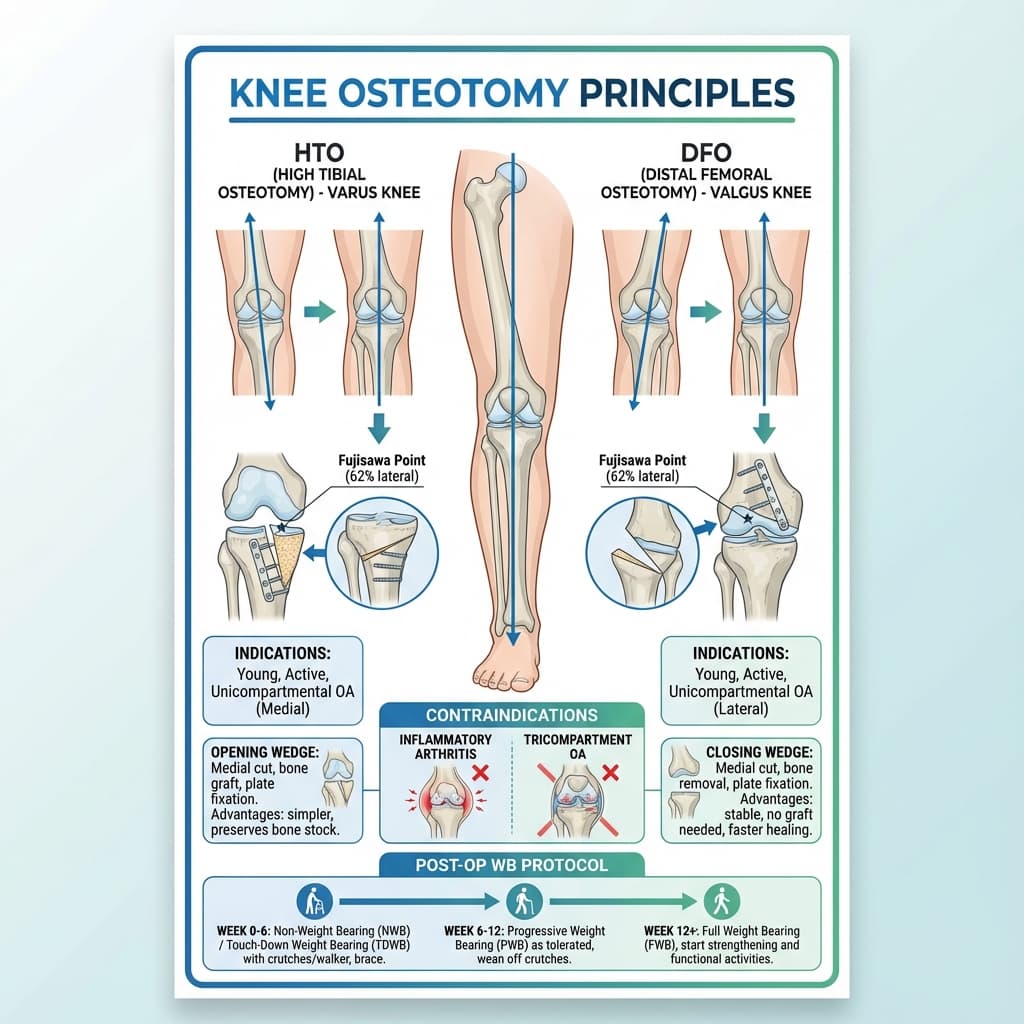
Knee Osteotomy Principles
HTO, DFO, Fujisawa point, indications
💡 HTO for varus, DFO for valgus. Young active patient with unicompartment OA
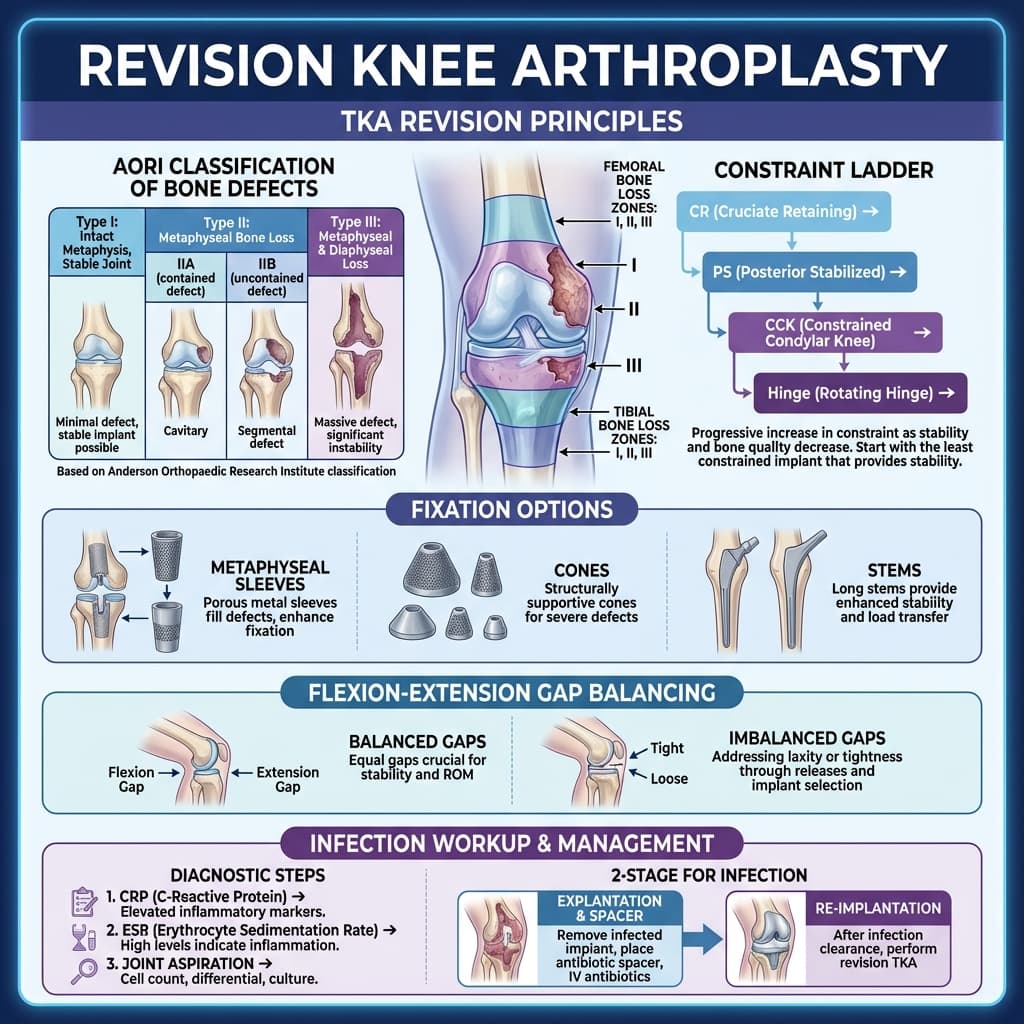
Revision Knee Arthroplasty
AORI classification, constraint ladder, fixation
💡 Constraint ladder: CR → PS → CCK → Hinge. Address bone loss first
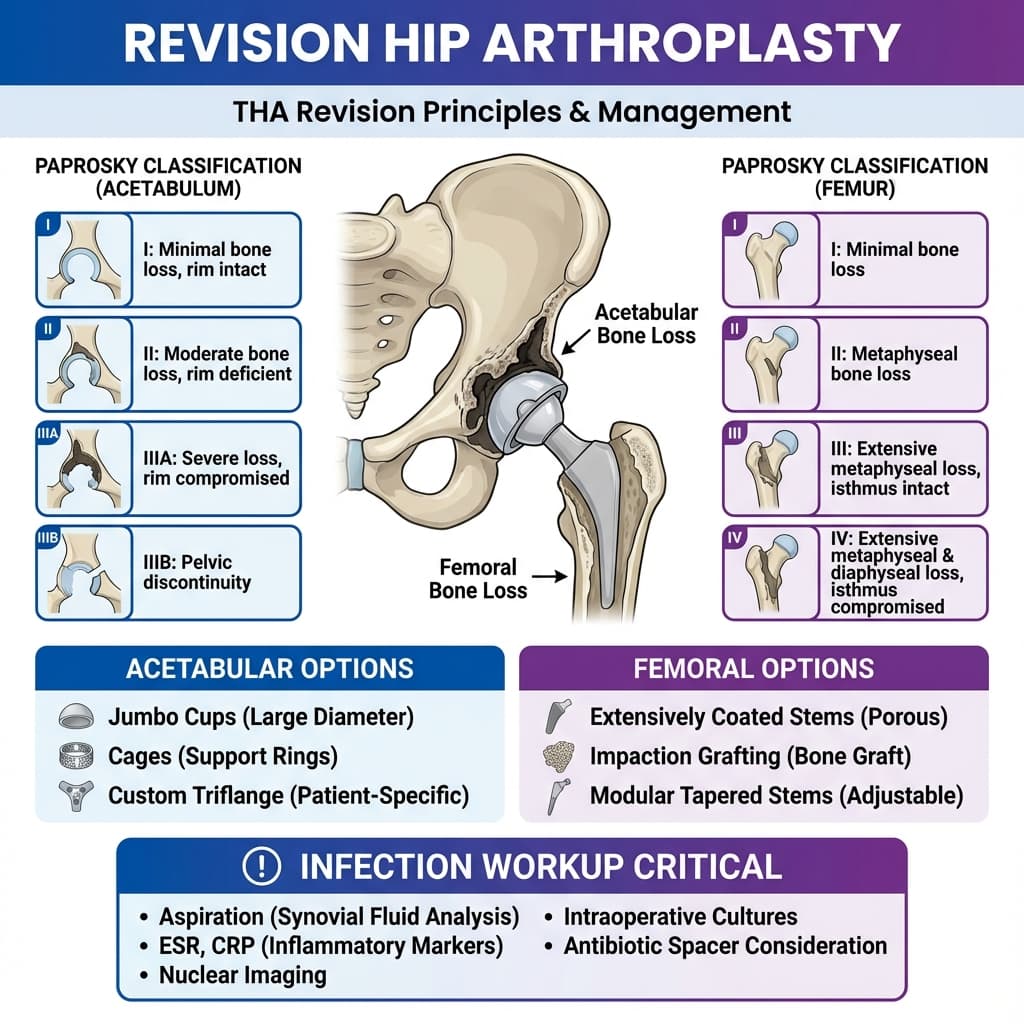
Revision Hip Arthroplasty
Paprosky classification, fixation options
💡 Know Paprosky for acetabulum and femur. Match reconstruction to bone loss
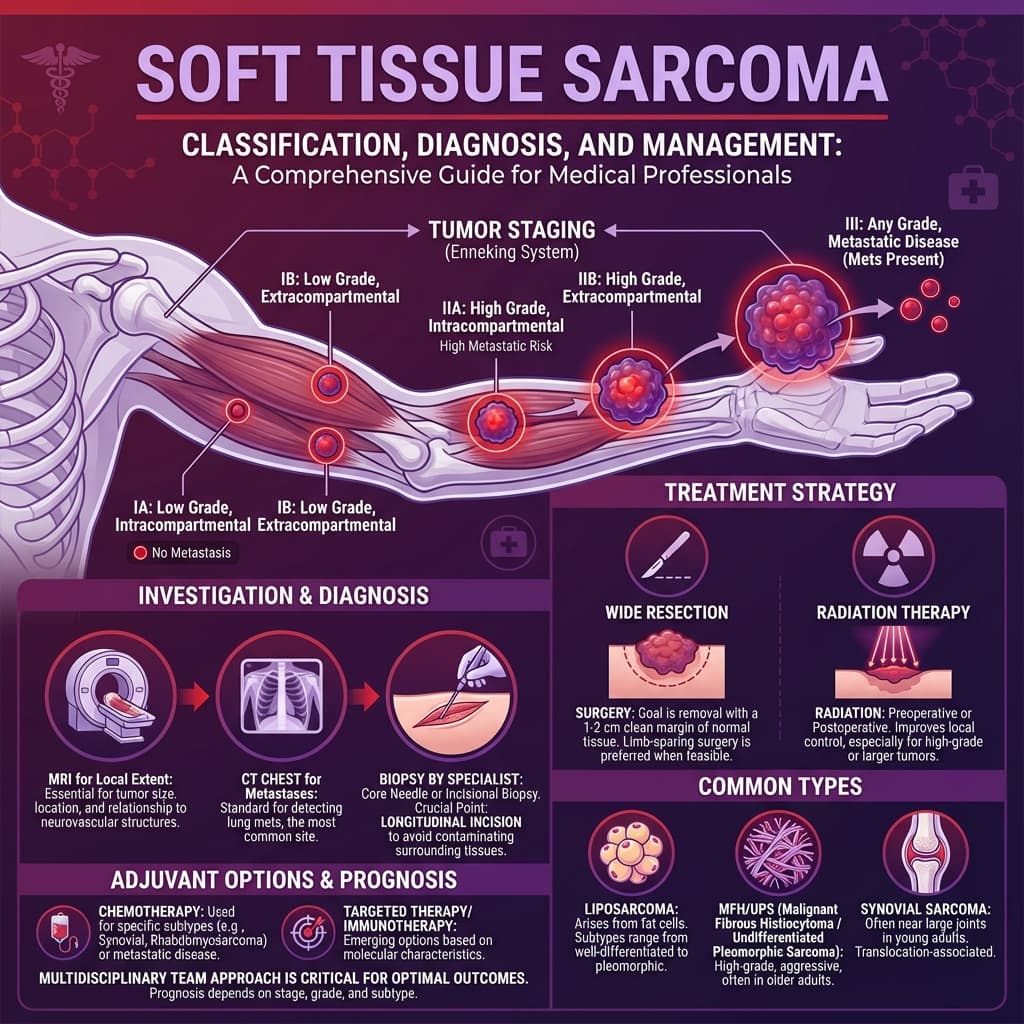
Soft Tissue Sarcoma
Enneking staging, biopsy, treatment principles
💡 Longitudinal biopsy incision. Wide margin 1-2cm. MRI for local staging
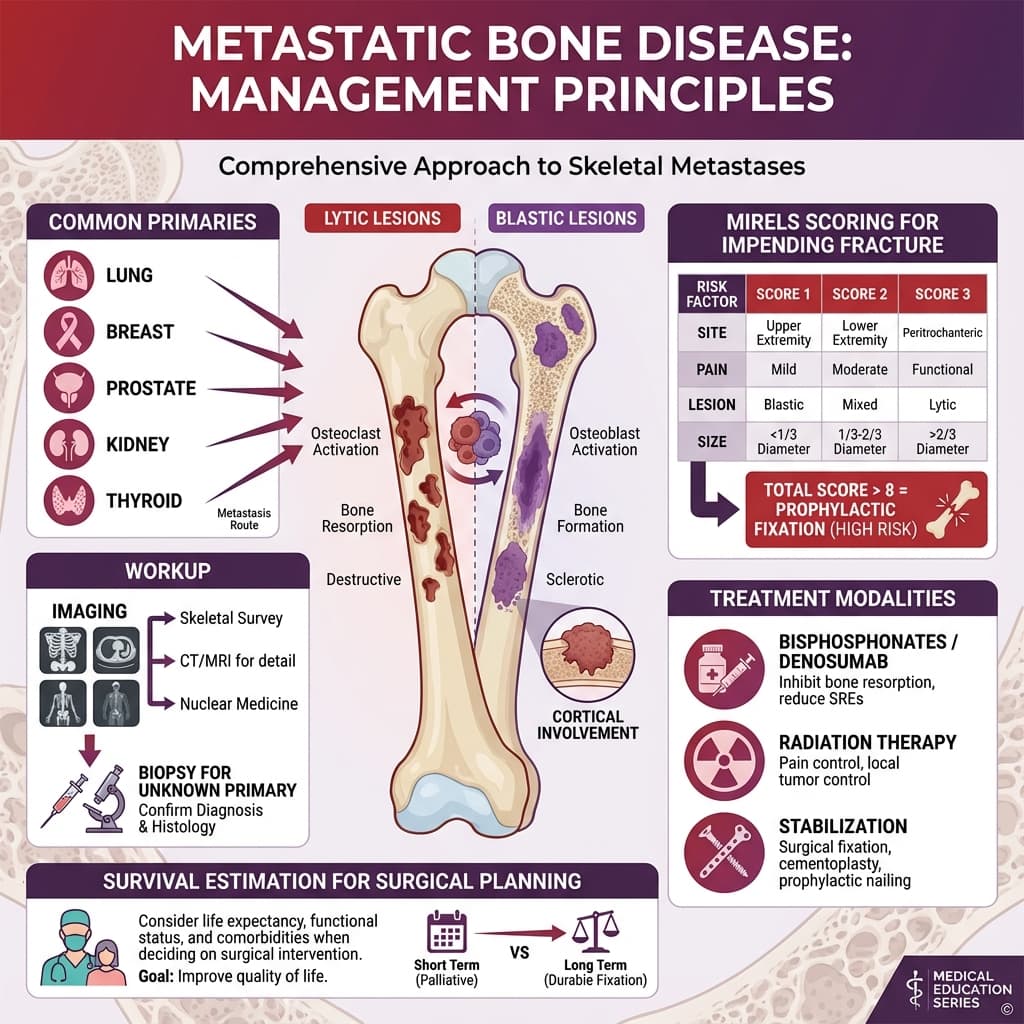
Metastatic Bone Disease
Mirels score, common primaries, treatment
💡 Mirels >8 = prophylactic fixation. Biopsy unknown primary
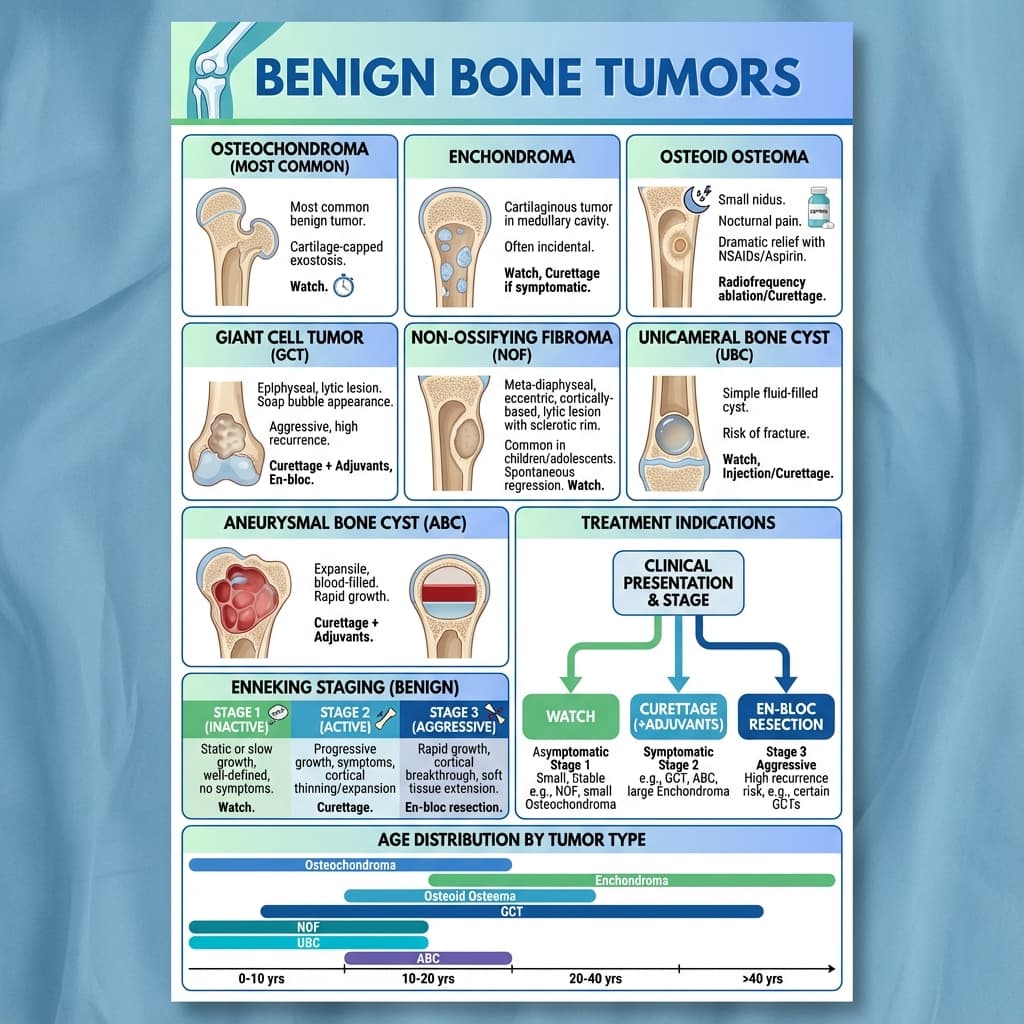
Benign Bone Tumors
Common lesions, Enneking benign staging
💡 Osteoid osteoma: nocturnal pain relieved by aspirin. GCT = soap bubble epiphyseal
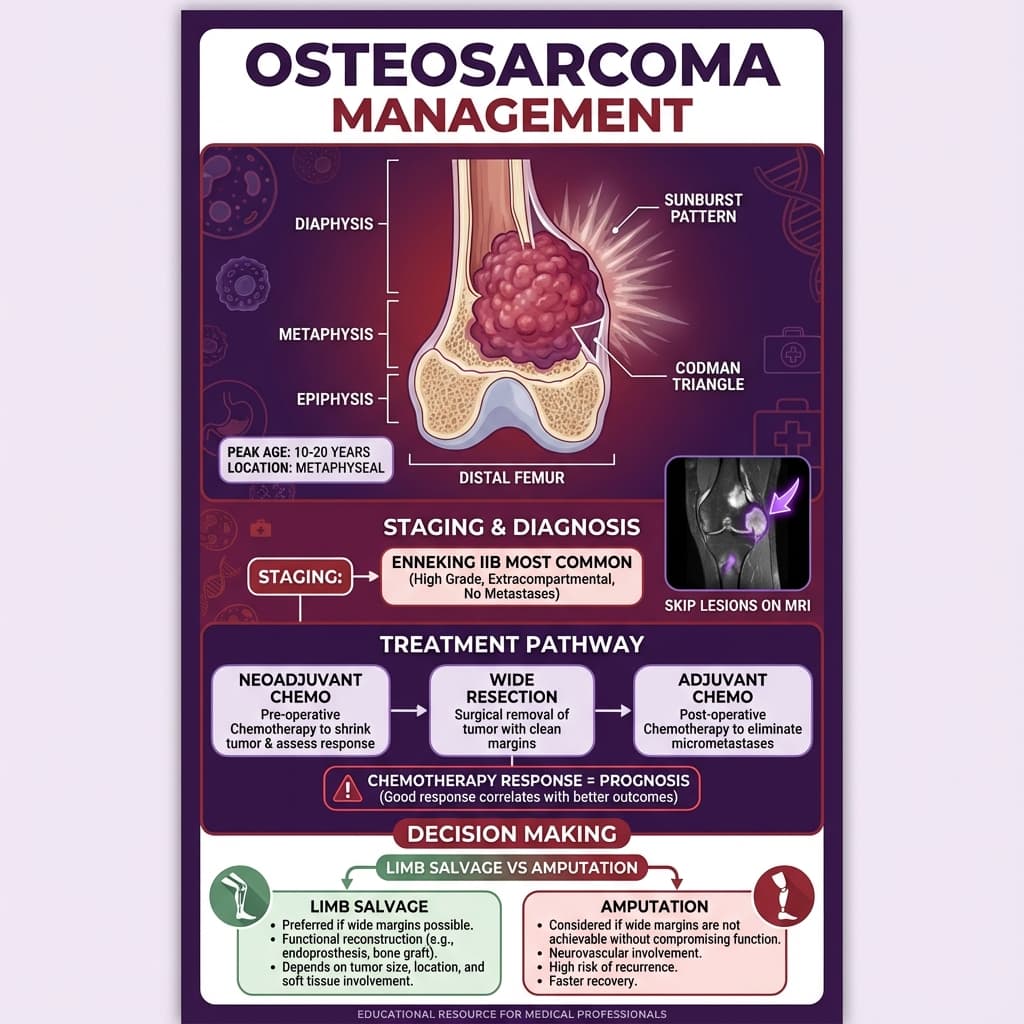
Osteosarcoma Management
Neoadjuvant chemotherapy, limb salvage
💡 Peak 10-20 years. Neoadjuvant chemo → surgery → adjuvant. Response = prognosis
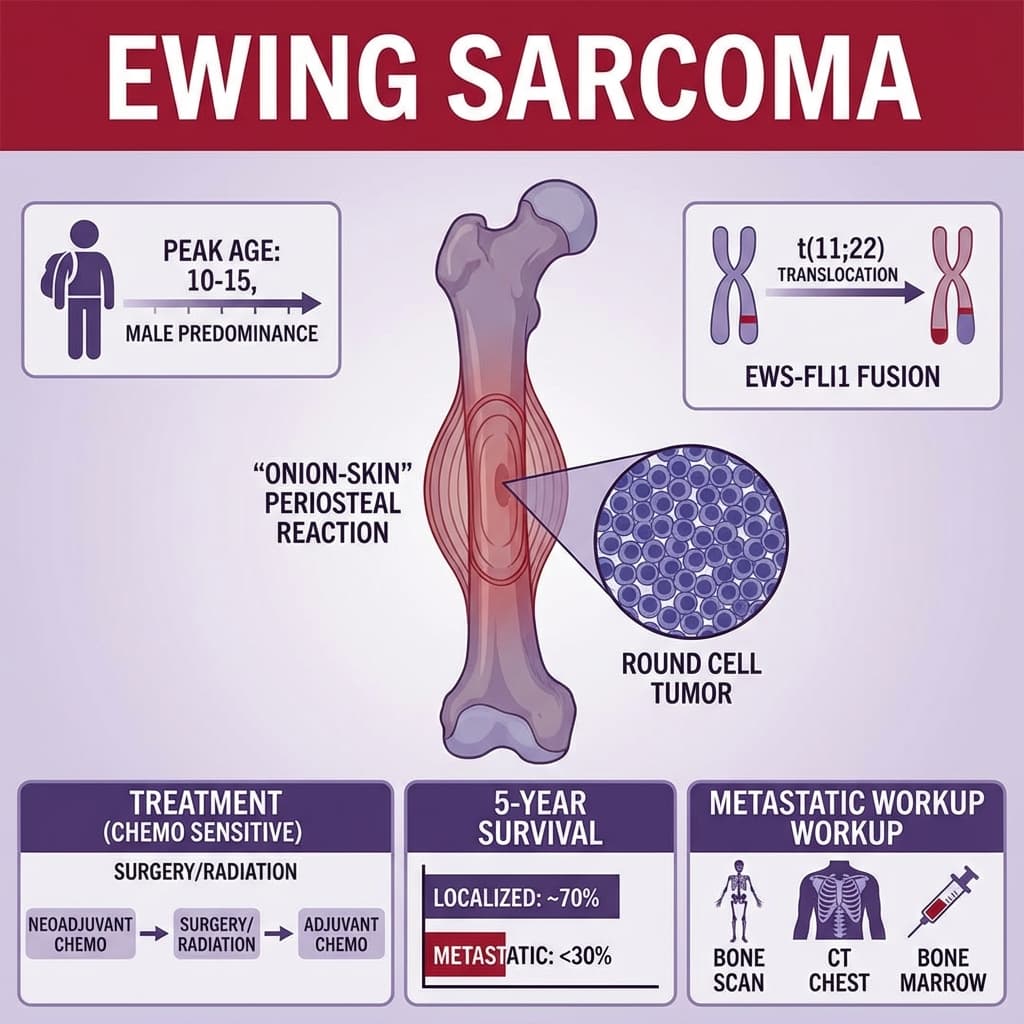
Ewing Sarcoma
Round cell tumor, chemo-sensitive, treatment
💡 Peak 10-15 years. Diaphyseal. Very chemo-sensitive. t(11;22) translocation
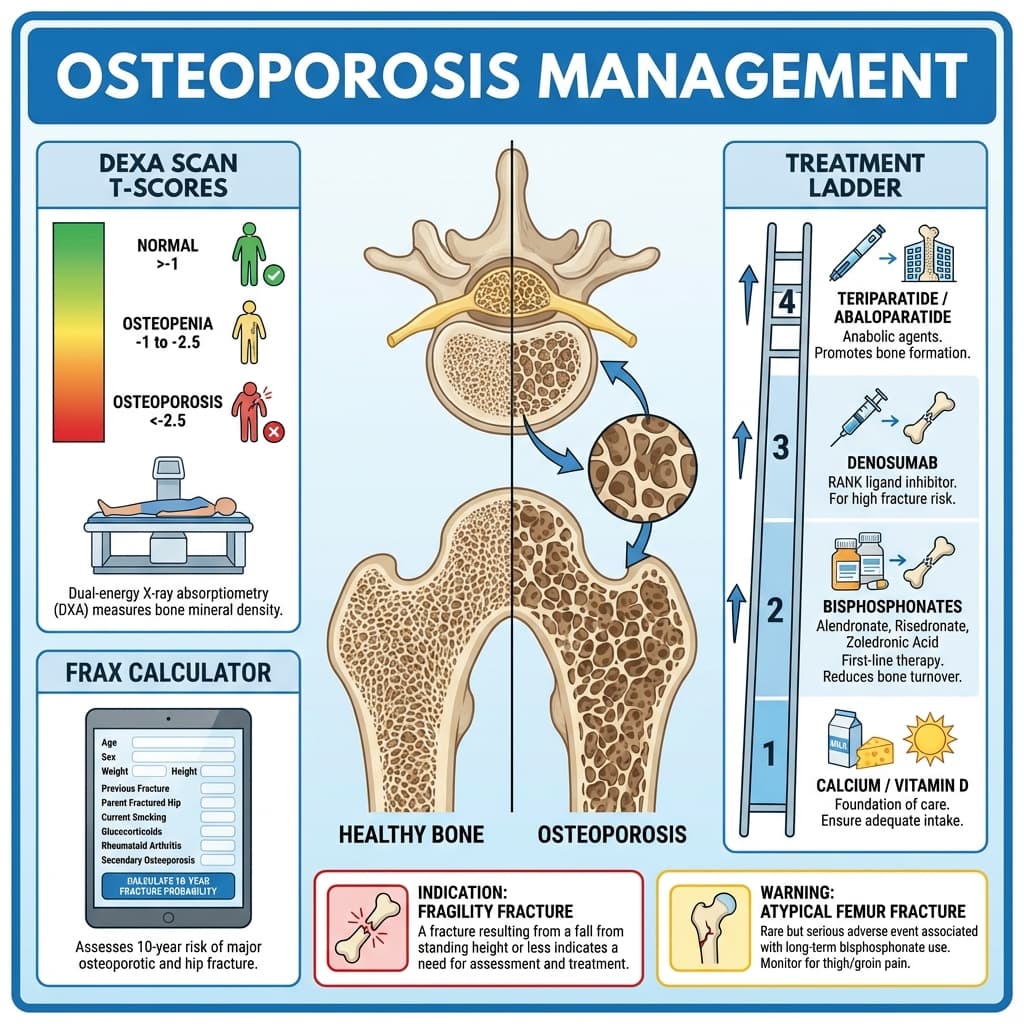
Osteoporosis Management
DEXA T-scores, FRAX, treatment options
💡 T-score <-2.5 = osteoporosis. Atypical femur fracture with long-term bisphosphonates
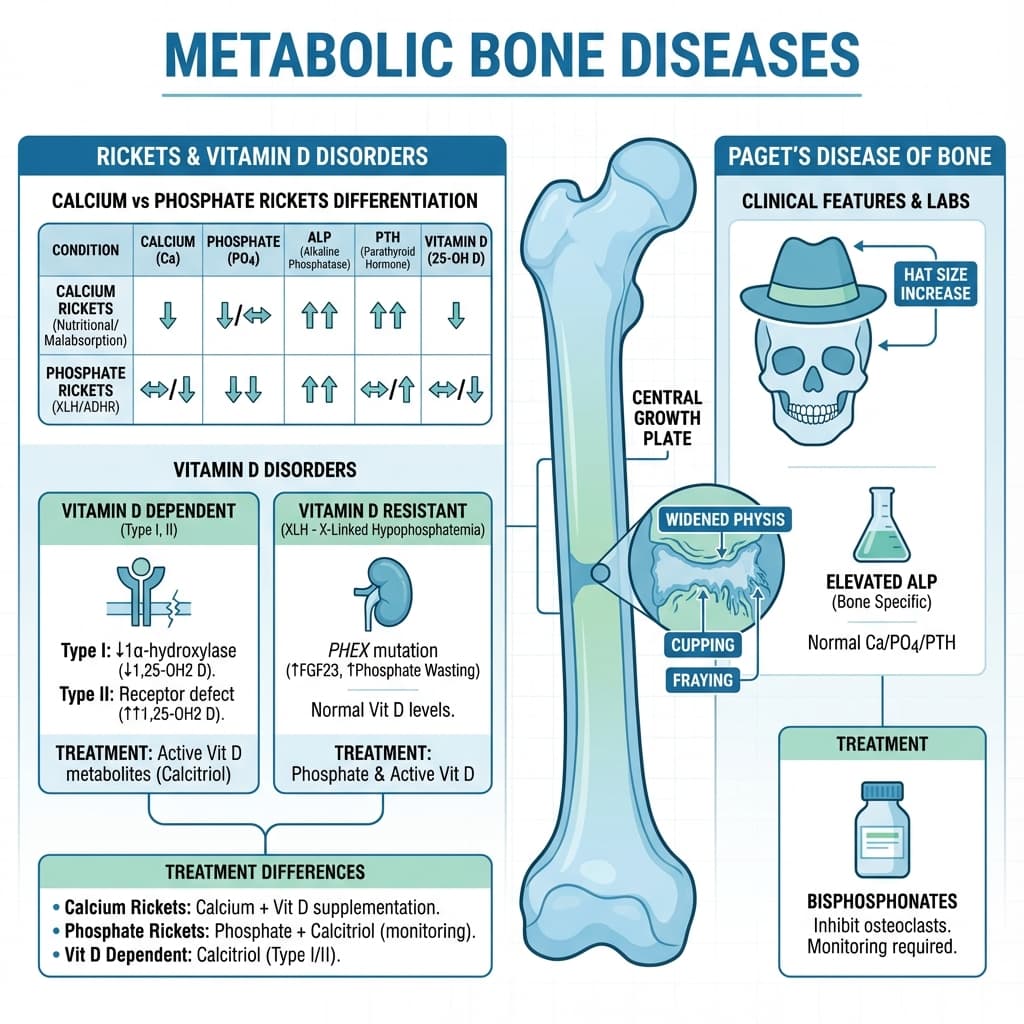
Metabolic Bone Diseases
Rickets types, Paget disease, lab values
💡 Know Ca, PO4, ALP, PTH, Vit D patterns. Paget: isolated elevated ALP
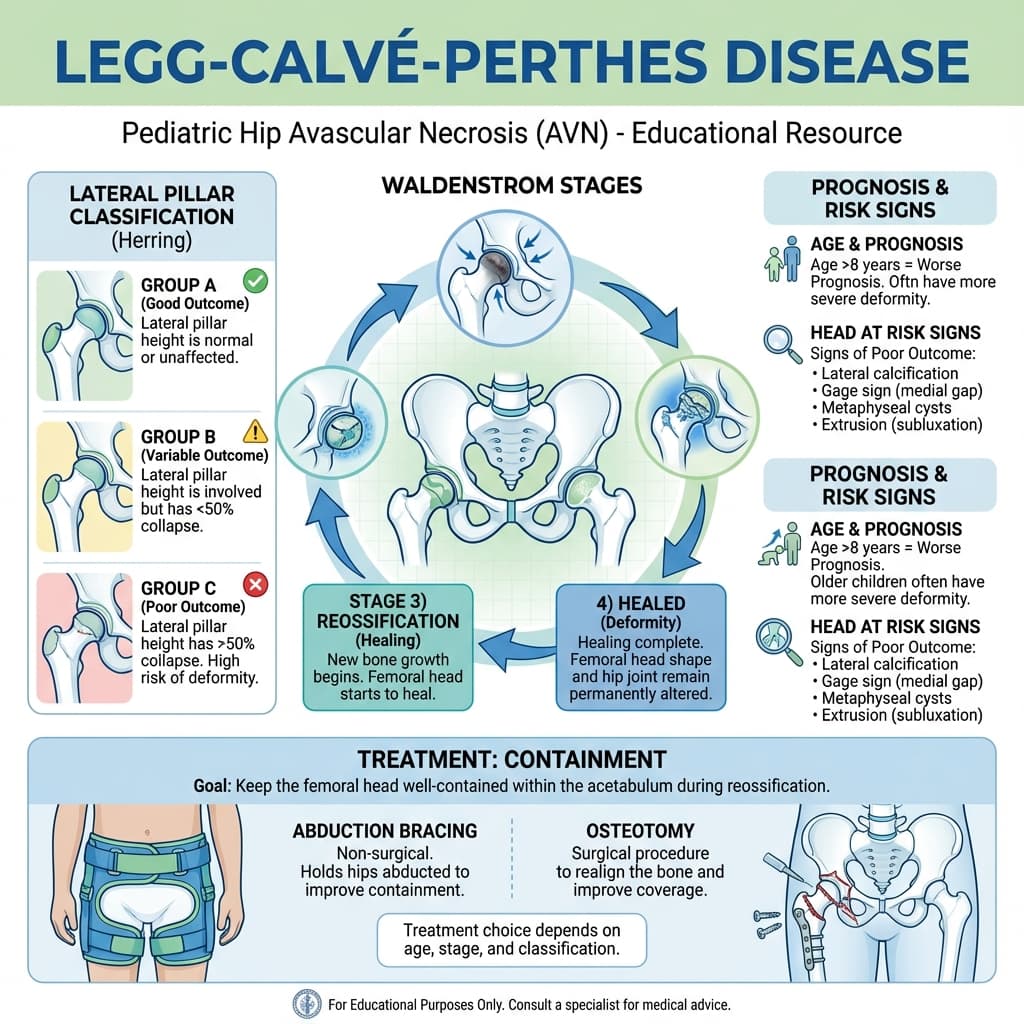
Legg-Calvé-Perthes Disease
Waldenstrom stages, Herring classification, containment
💡 Age >8 = worse prognosis. Herring lateral pillar for prognosis. Containment treatment
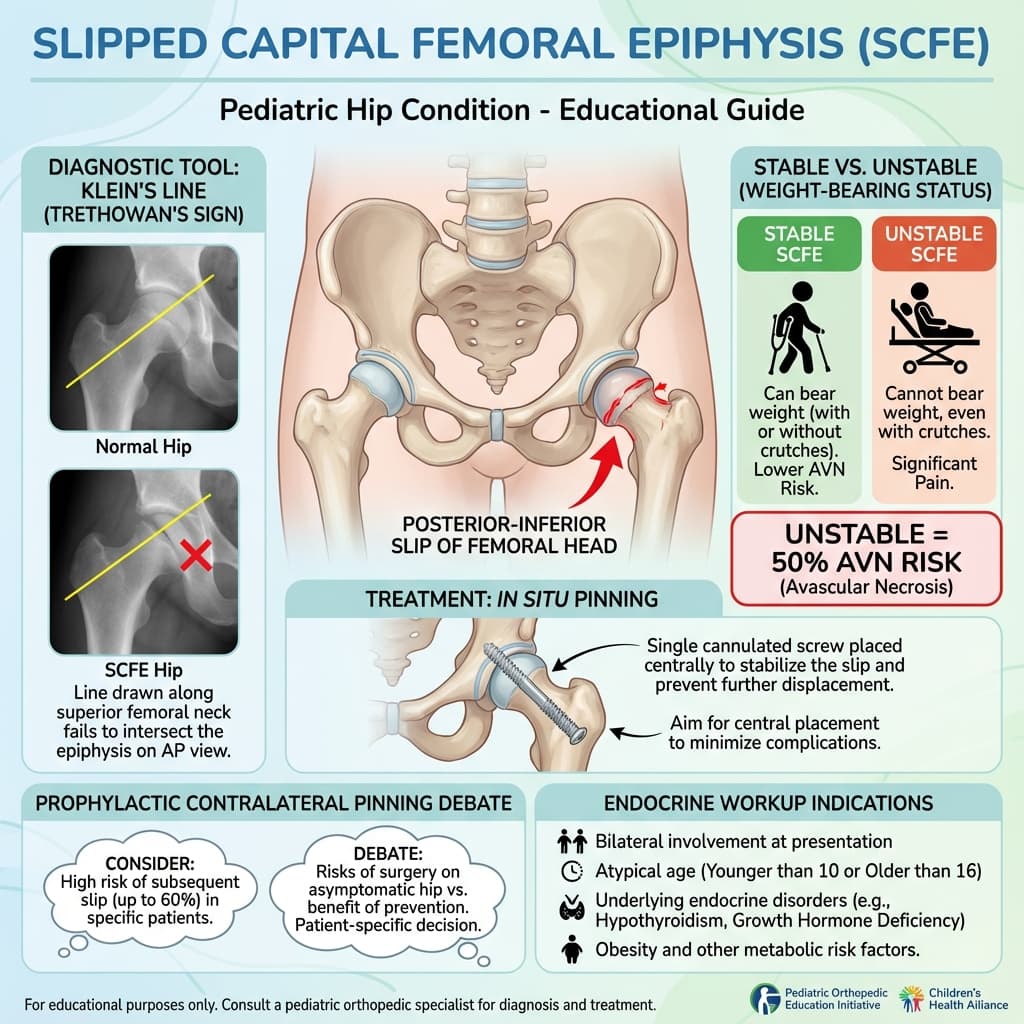
Slipped Capital Femoral Epiphysis
Klein line, stable vs unstable, in situ pinning
💡 Unstable = 50% AVN. Single screw central placement. Endocrine workup if young/bilateral
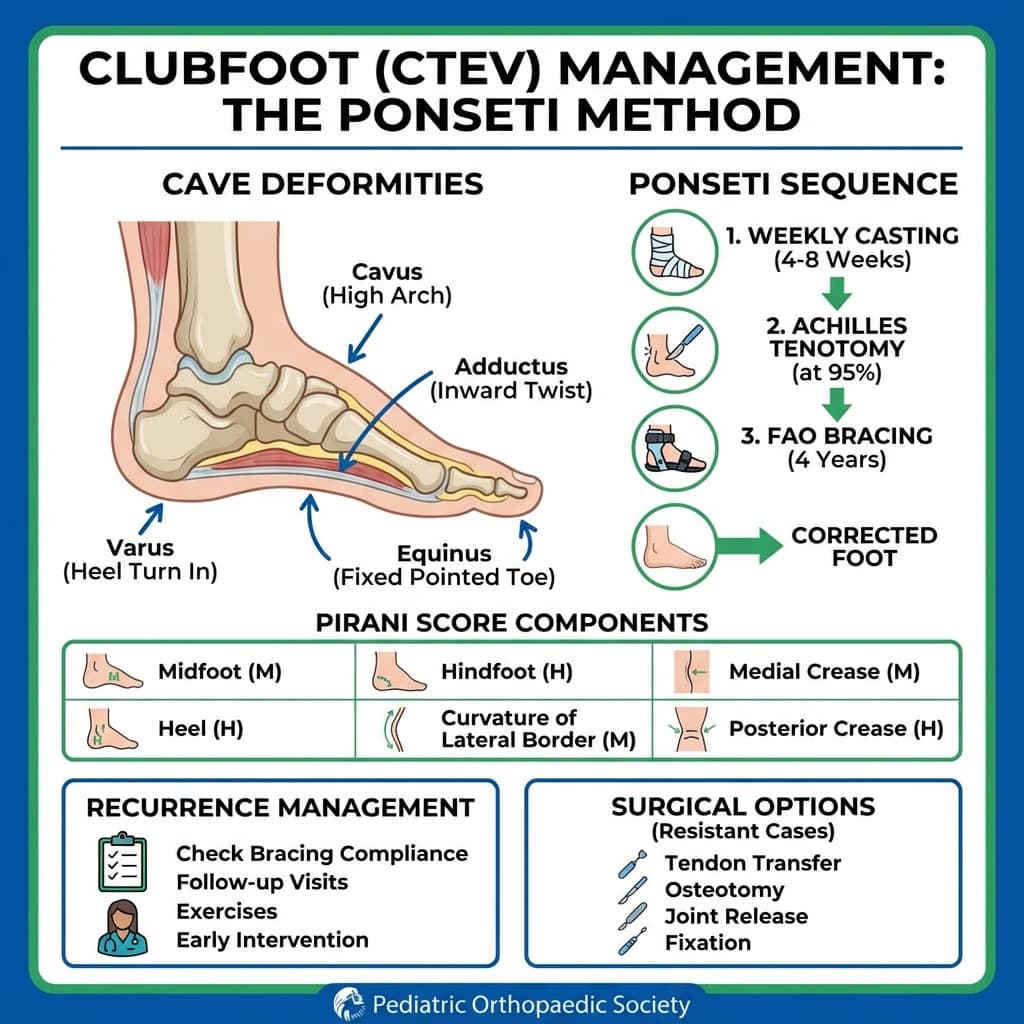
Clubfoot (CTEV) Management
Ponseti method, CAVE correction sequence
💡 Correct CAVE in order: Cavus first, Equinus last. Tenotomy 95%. FAO bracing 4 years
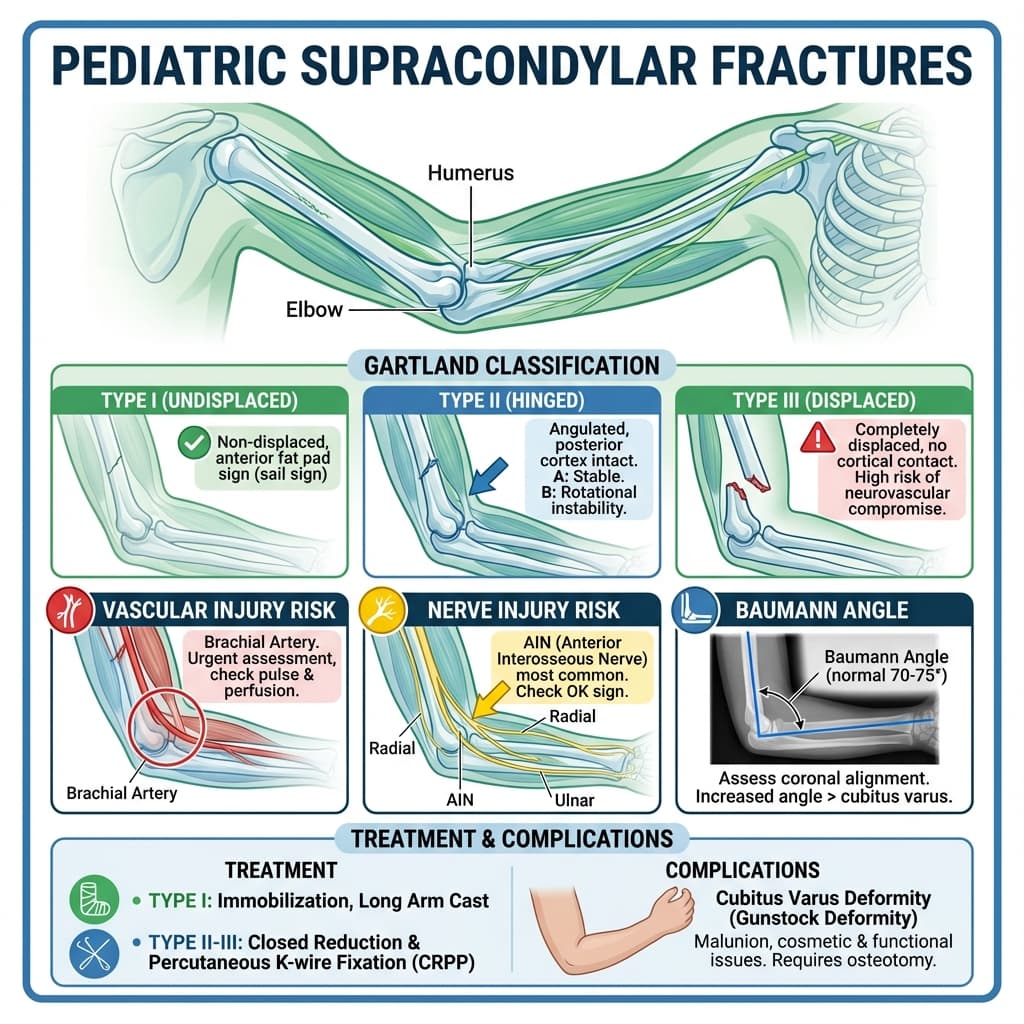
Pediatric Supracondylar Fractures
Gartland classification, neurovascular risk
💡 AIN most common nerve injured. Type II-III = closed reduction and K-wires
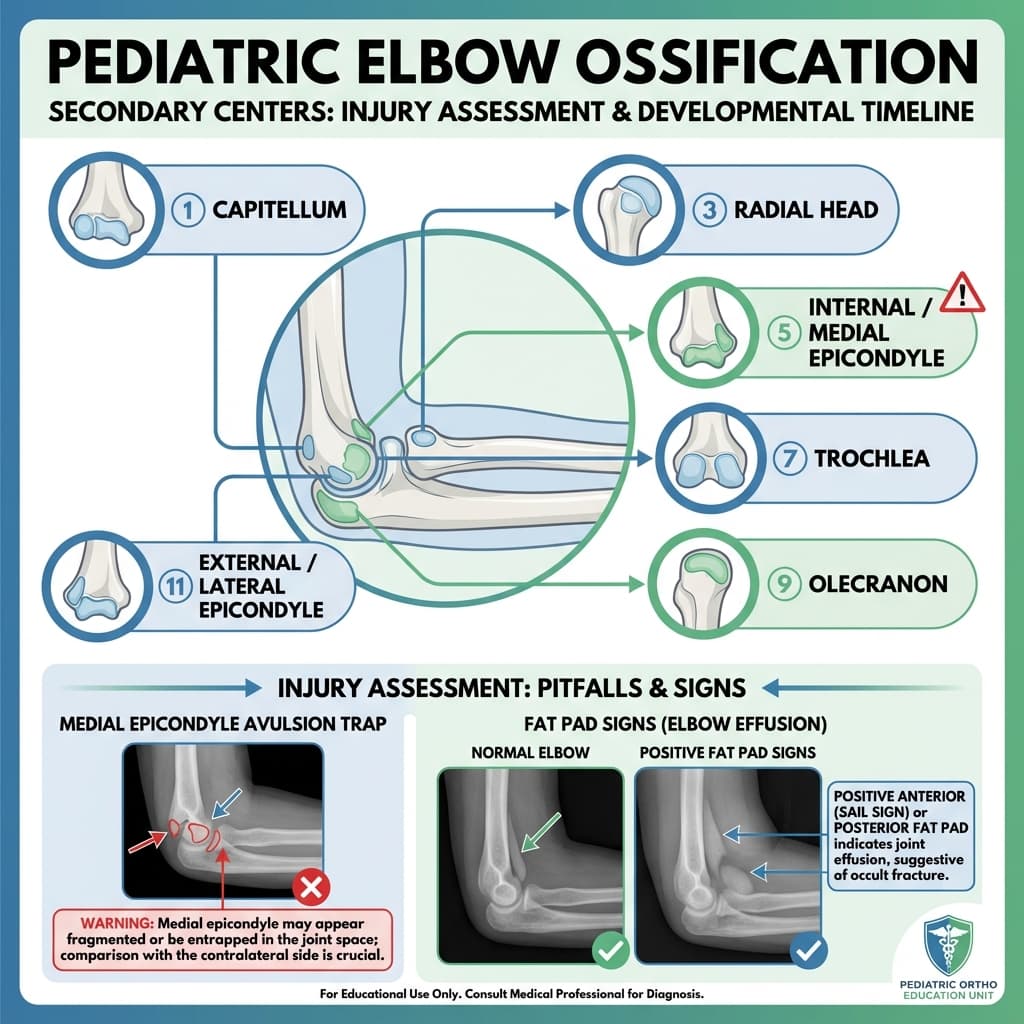
Pediatric Elbow Ossification
CRITOE mnemonic, ossification ages
💡 C-R-I-T-O-E ages 1-3-5-7-9-11. Medial epicondyle avulsion trap
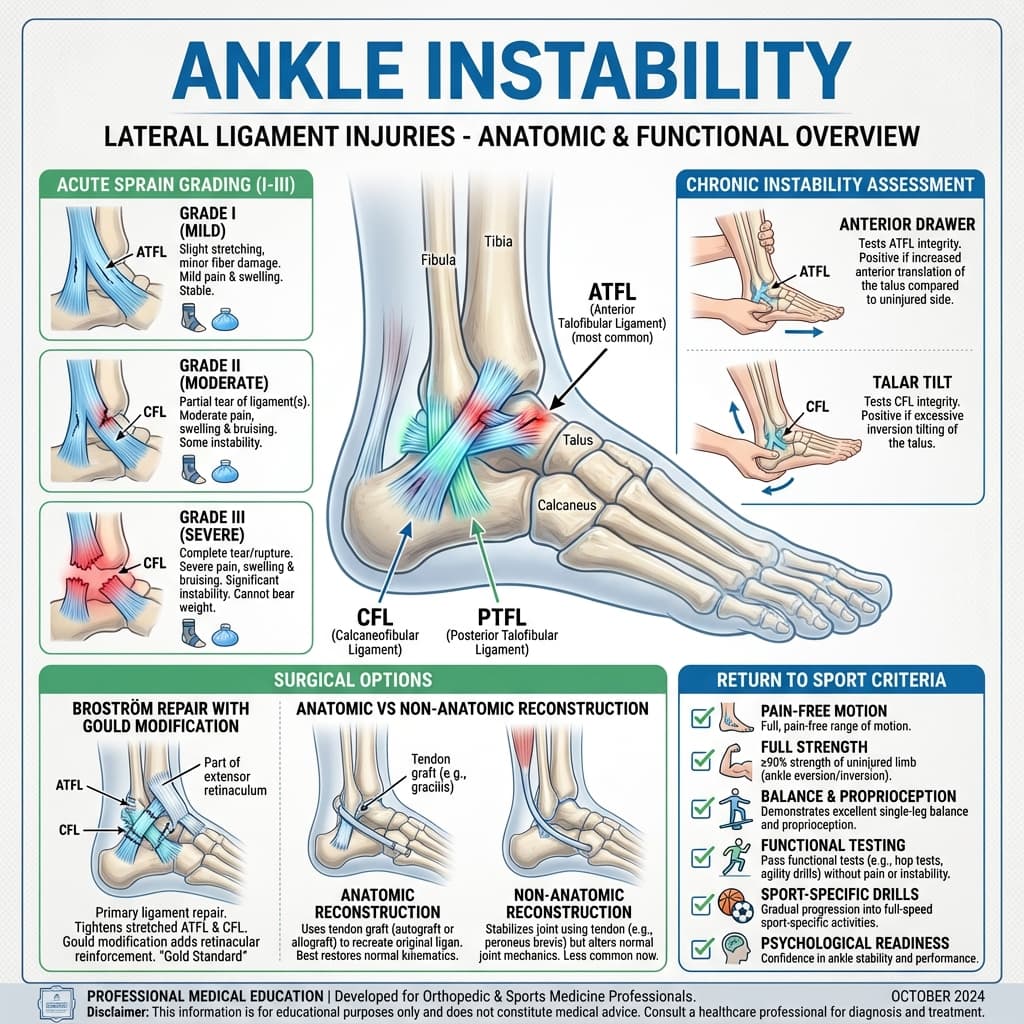
Ankle Instability
ATFL, CFL, Brostrom repair
💡 ATFL most commonly injured. Brostrom-Gould for chronic instability
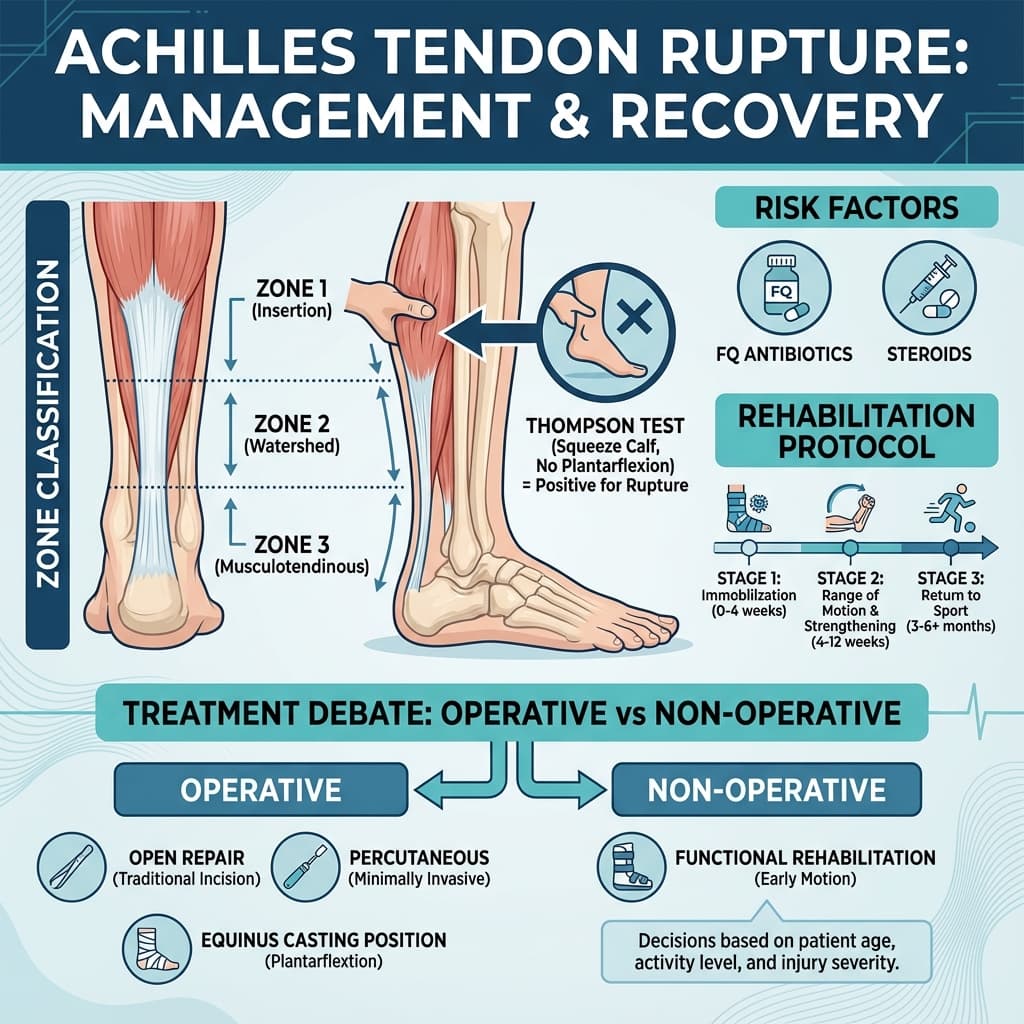
Achilles Tendon Rupture
Thompson test, operative vs non-operative
💡 Thompson test: no plantarflexion = rupture. Risk: FQ antibiotics, steroids
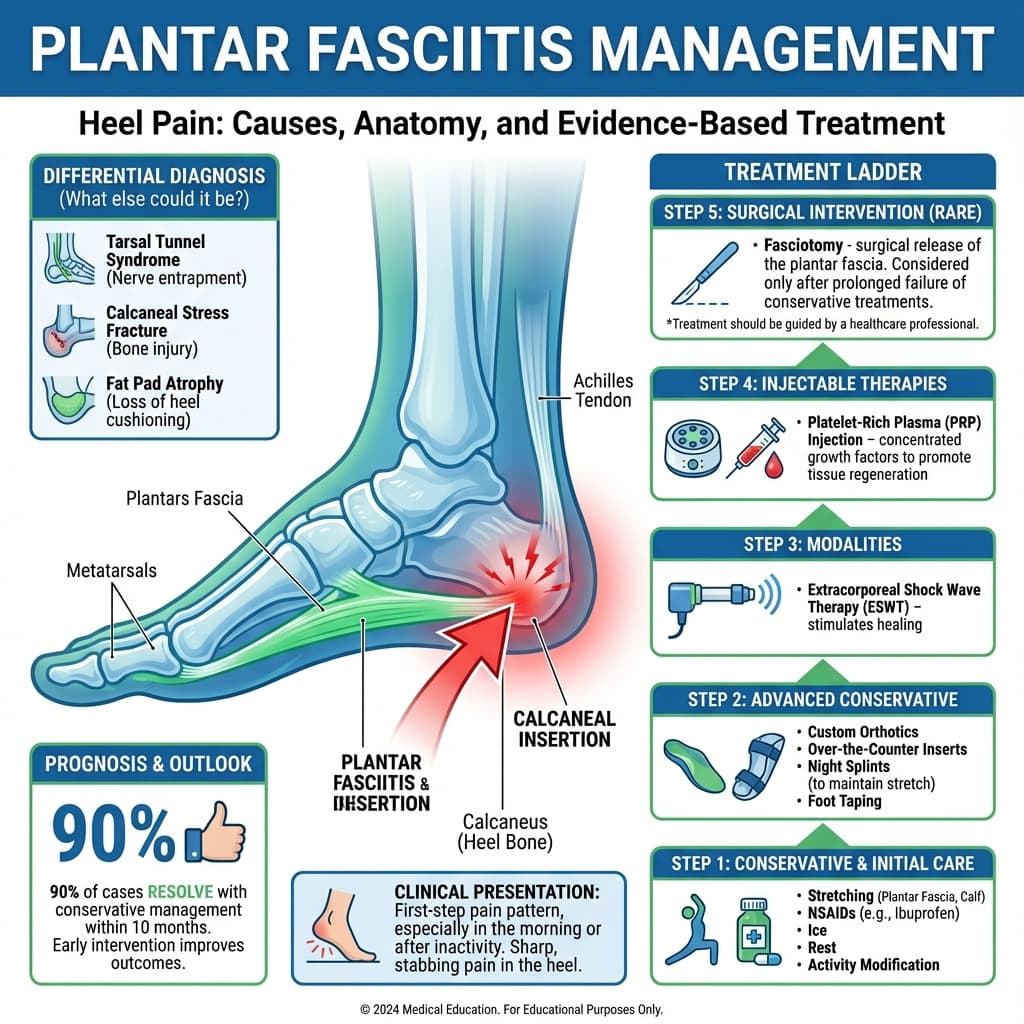
Plantar Fasciitis Management
First-step pain, conservative treatment ladder
💡 90% resolve with conservative. First-step pain classical. Differential: tarsal tunnel
Hallux Valgus Management
HVA, IMA angles, procedure selection
💡 Mild = Chevron. Moderate = Scarf. Severe = Lapidus (1st TMT fusion)
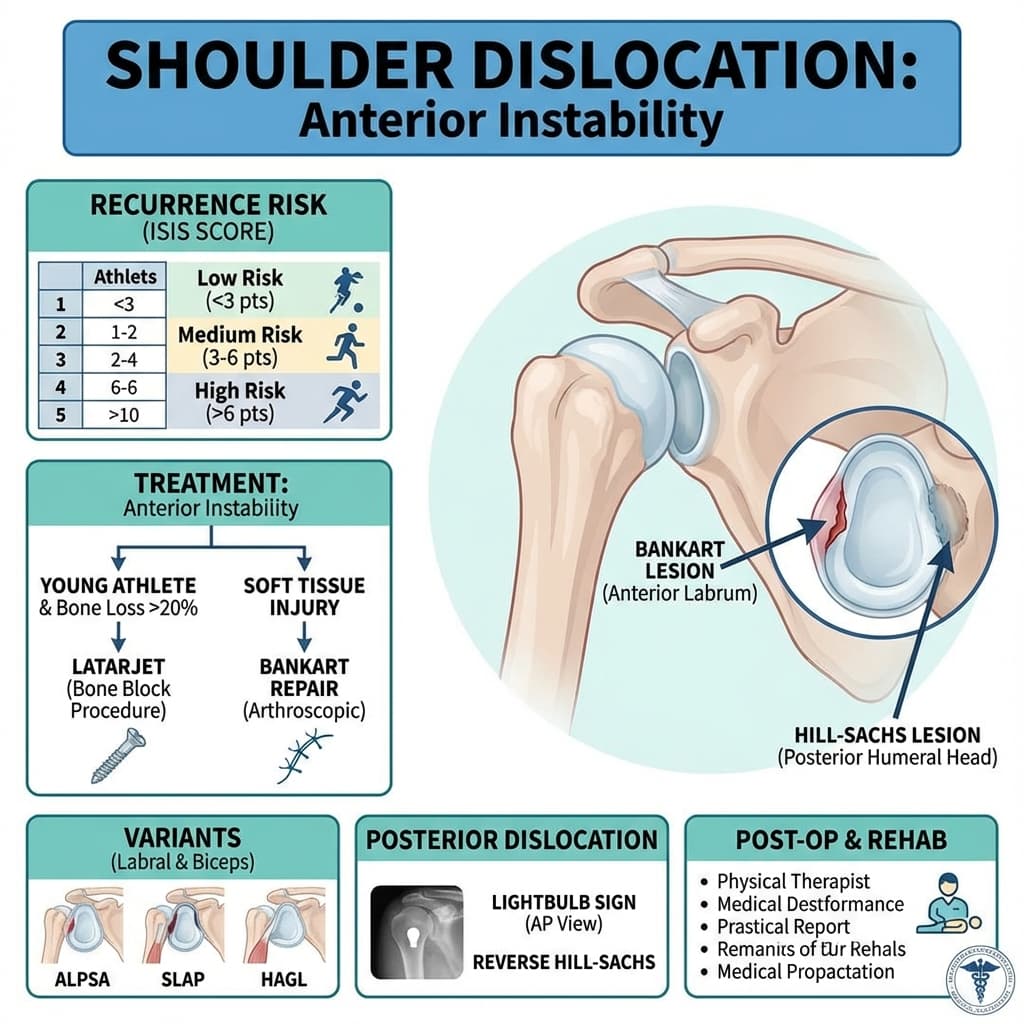
Shoulder Dislocation
Bankart, Hill-Sachs, ISIS score, Latarjet
💡 Bone loss >20% = Latarjet. ISIS score predicts recurrence
Meniscus Tears
Tear patterns, vascularity zones, repair indications
💡 Peripheral = repair, central = partial meniscectomy. Root tears = meniscectomy kinematically
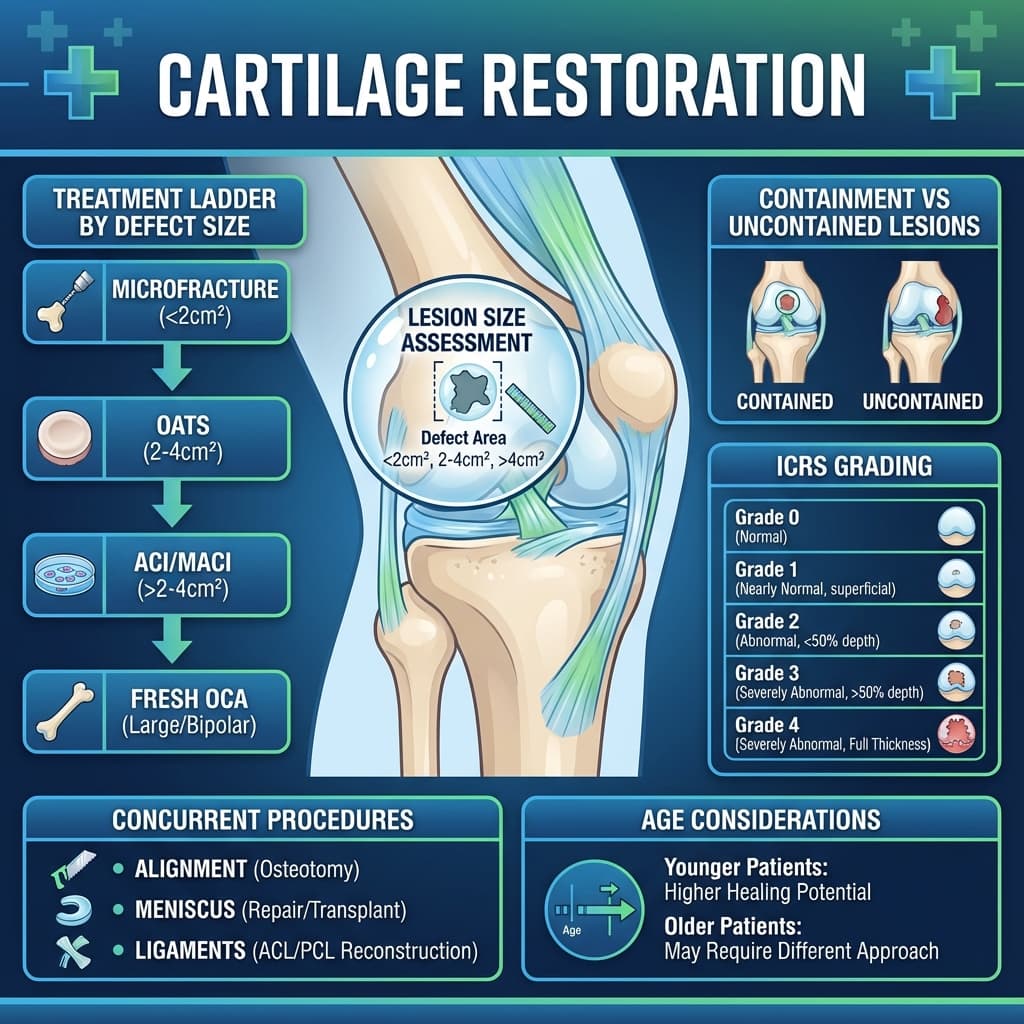
Cartilage Restoration
Microfracture, OATS, ACI/MACI, OCA algorithm
💡 <2cm² = microfracture. 2-4cm² = OATS. >4cm² = MACI/OCA
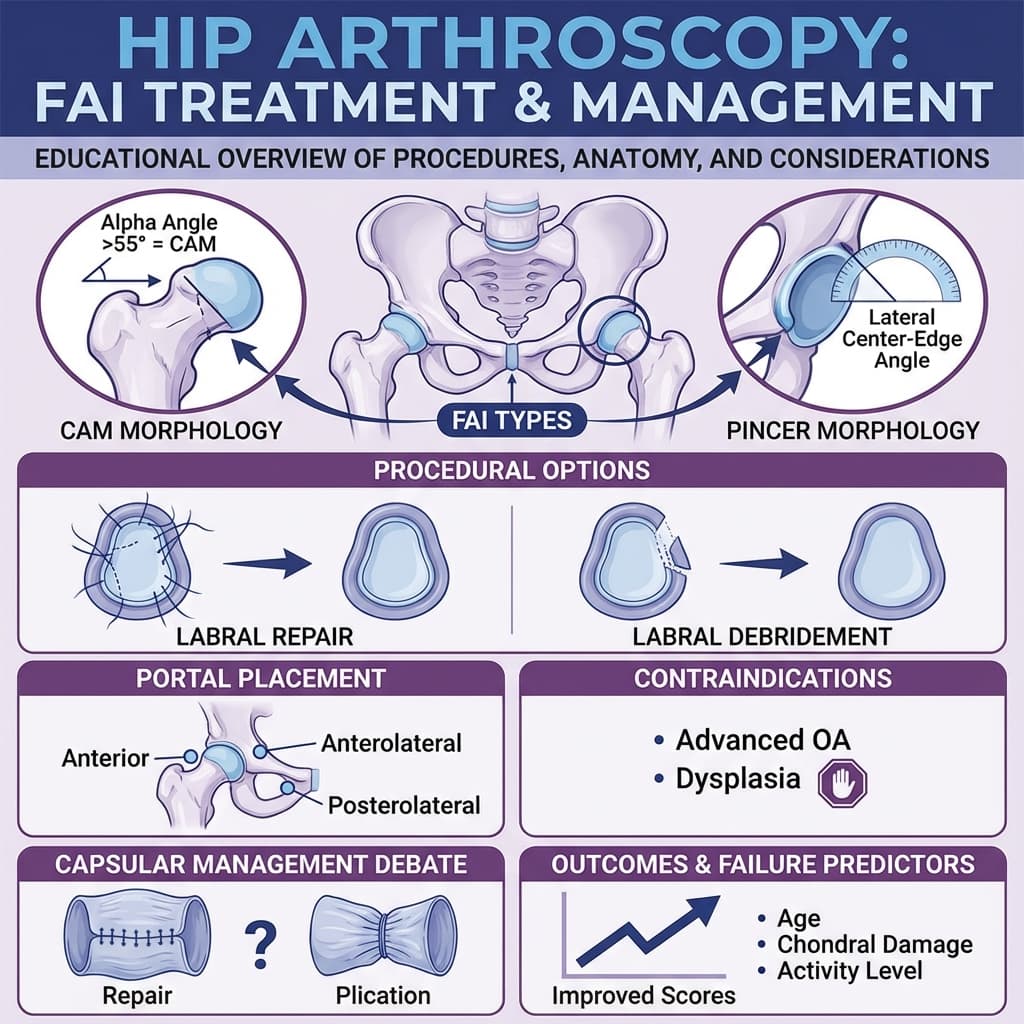
Hip Arthroscopy / FAI
Cam vs pincer, alpha angle, labral treatment
💡 Alpha angle >55° = cam. Contraindicated: advanced OA, dysplasia
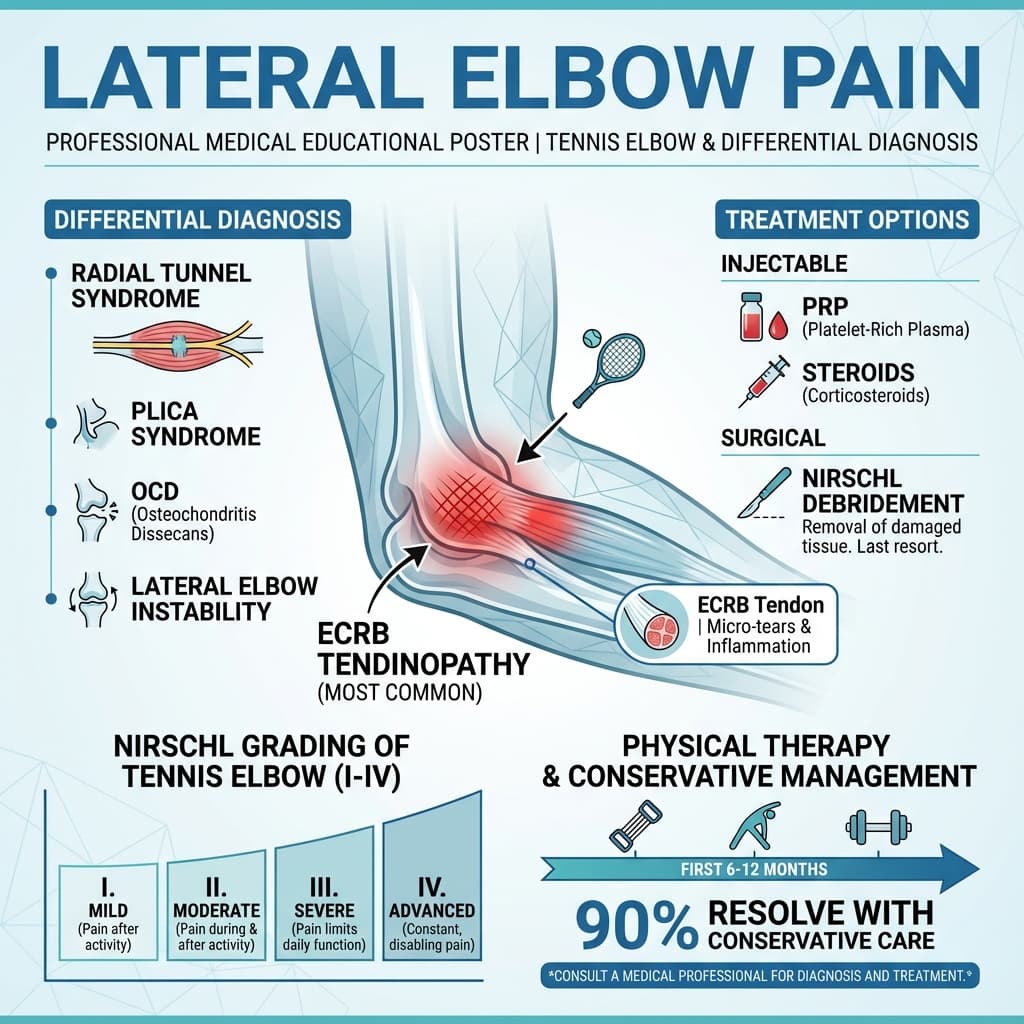
Lateral Elbow Pain
ECRB tendinopathy, differential, treatment
💡 ECRB origin most common. 90% resolve conservative. Nirschl debridement surgical
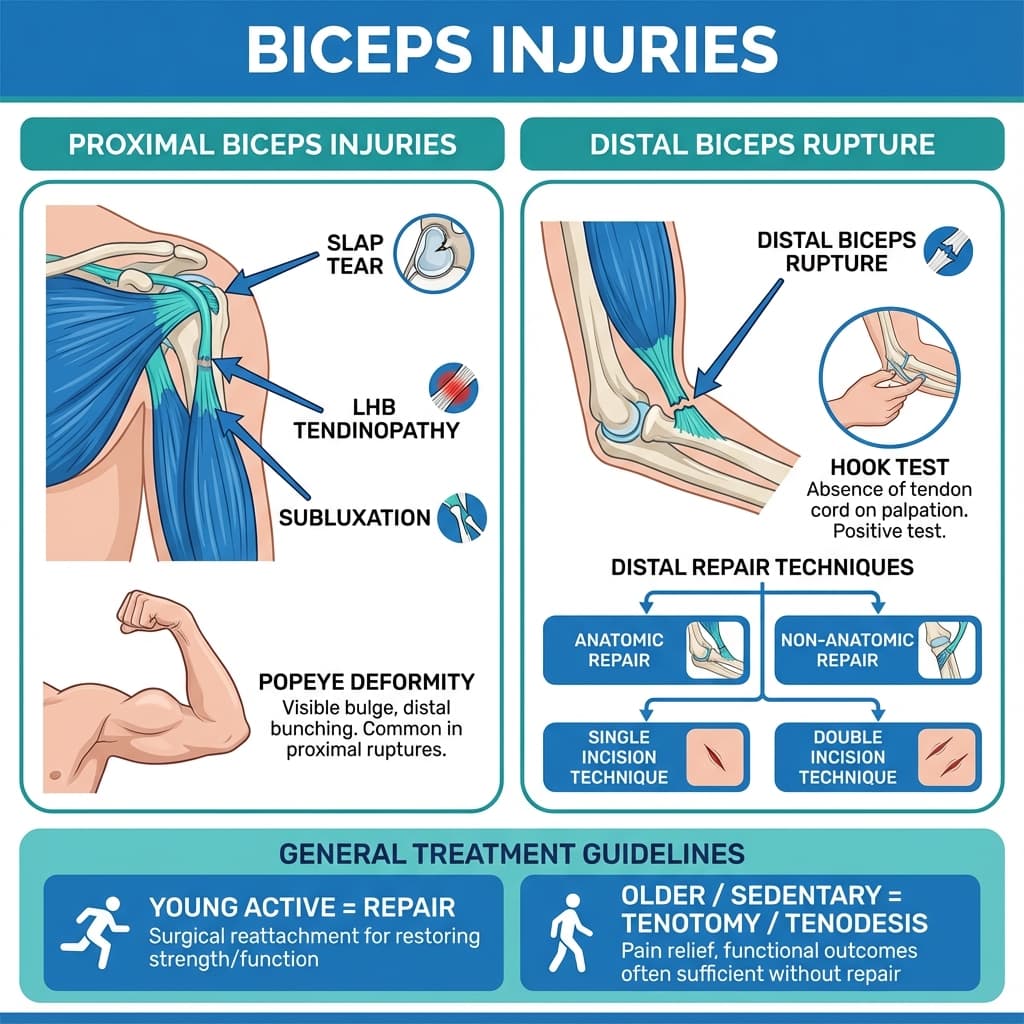
Biceps Injuries
Proximal vs distal, Hook test, treatment options
💡 Hook test for distal rupture. Young = repair, older = tenotomy/tenodesis proximal
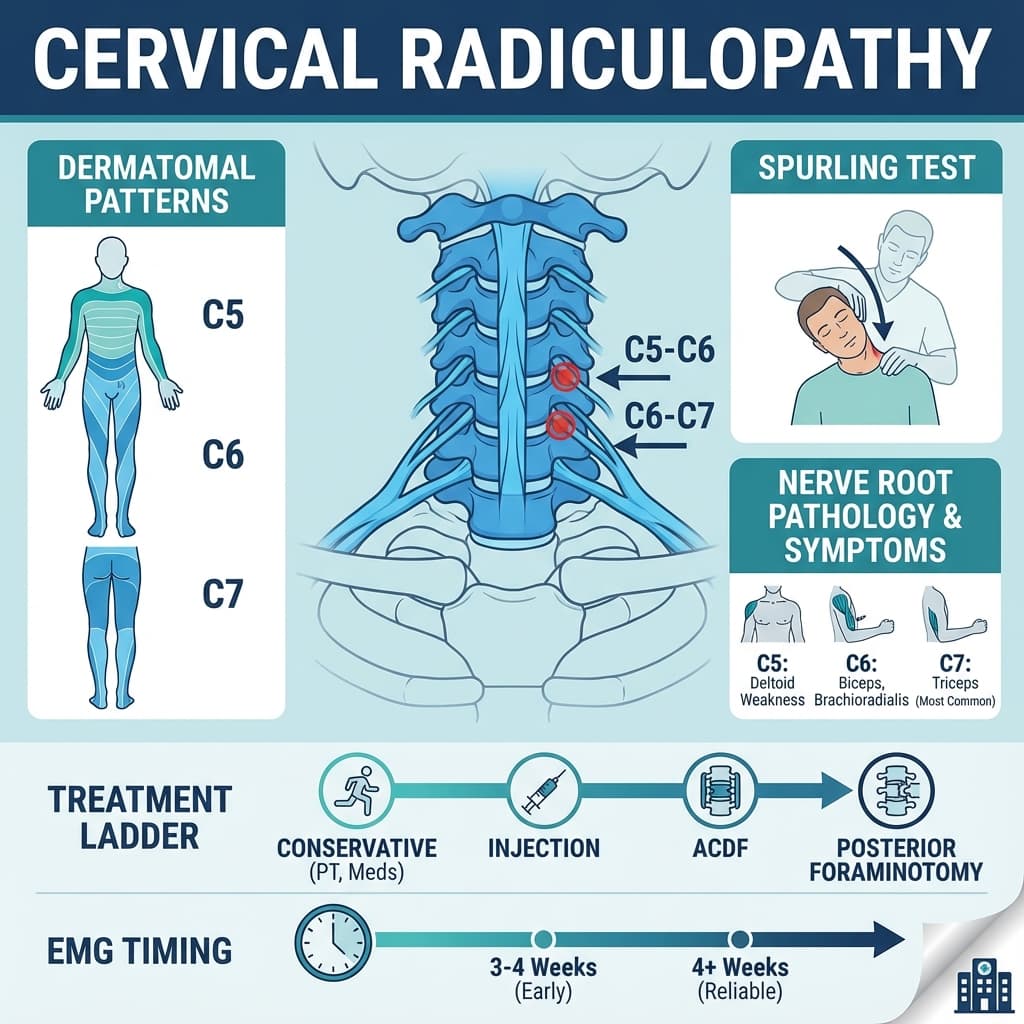
Cervical Radiculopathy
Dermatomal patterns, Spurling test, ACDF
💡 C7 most common. C5 = deltoid. C6 = biceps. C7 = triceps
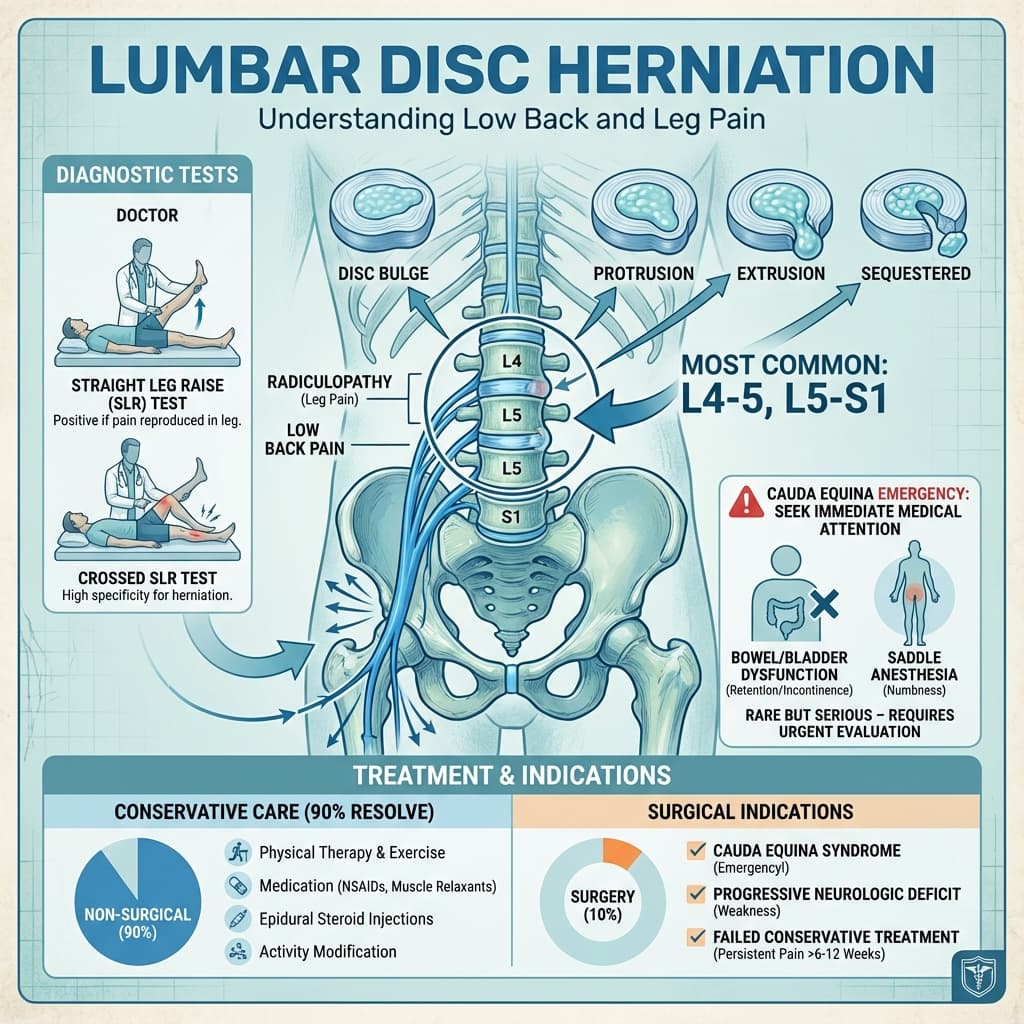
Lumbar Disc Herniation
SLR test, cauda equina, treatment algorithm
💡 Cauda equina = emergency (bowel/bladder, saddle). 90% resolve conservative
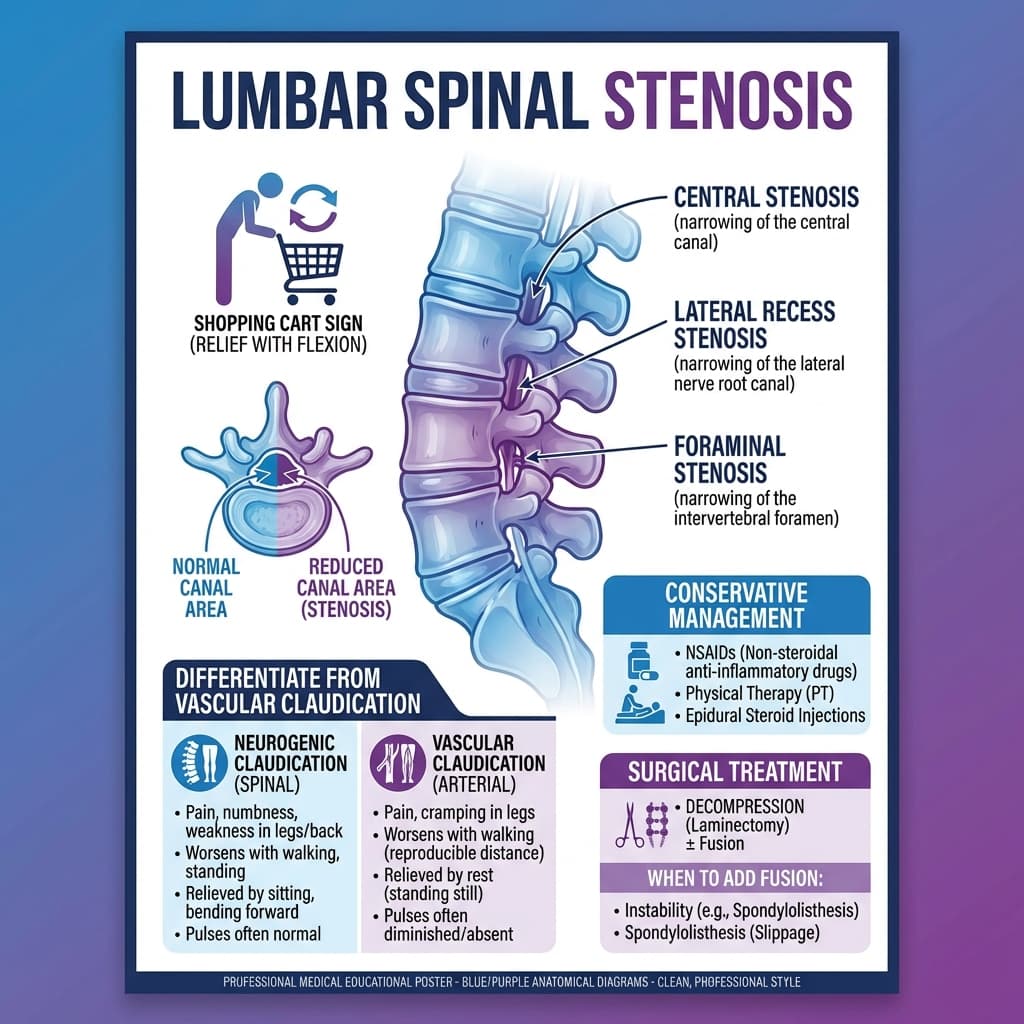
Lumbar Spinal Stenosis
Neurogenic claudication, decompression ± fusion
💡 Shopping cart sign. Distinguish from vascular claudication. When to add fusion
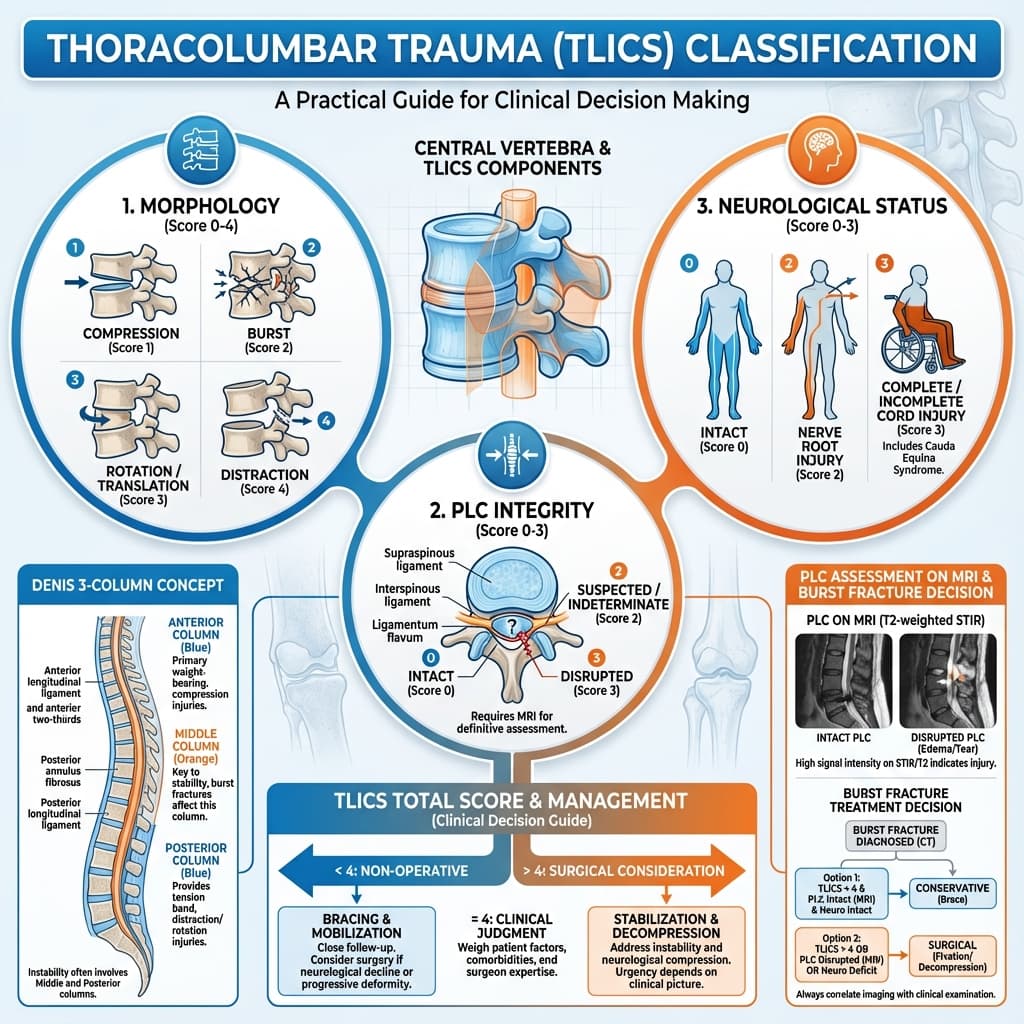
Thoracolumbar Trauma (TLICS)
TLICS scoring, Denis concept, treatment decision
💡 TLICS <4 non-op, >4 surgery. PLC integrity key. MRI for PLC assessment
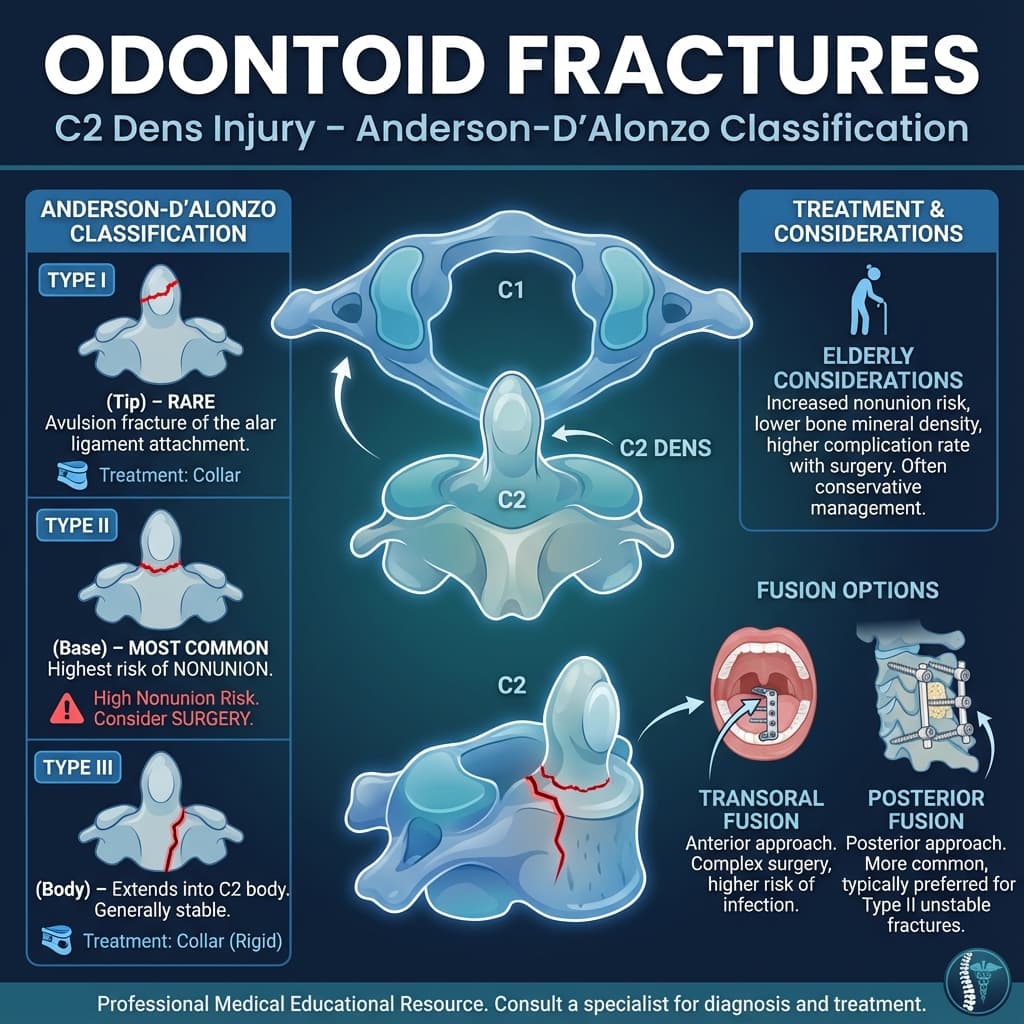
Odontoid Fractures
Anderson-D'Alonzo classification, treatment
💡 Type II = highest nonunion. Elderly considerations. Screw vs fusion
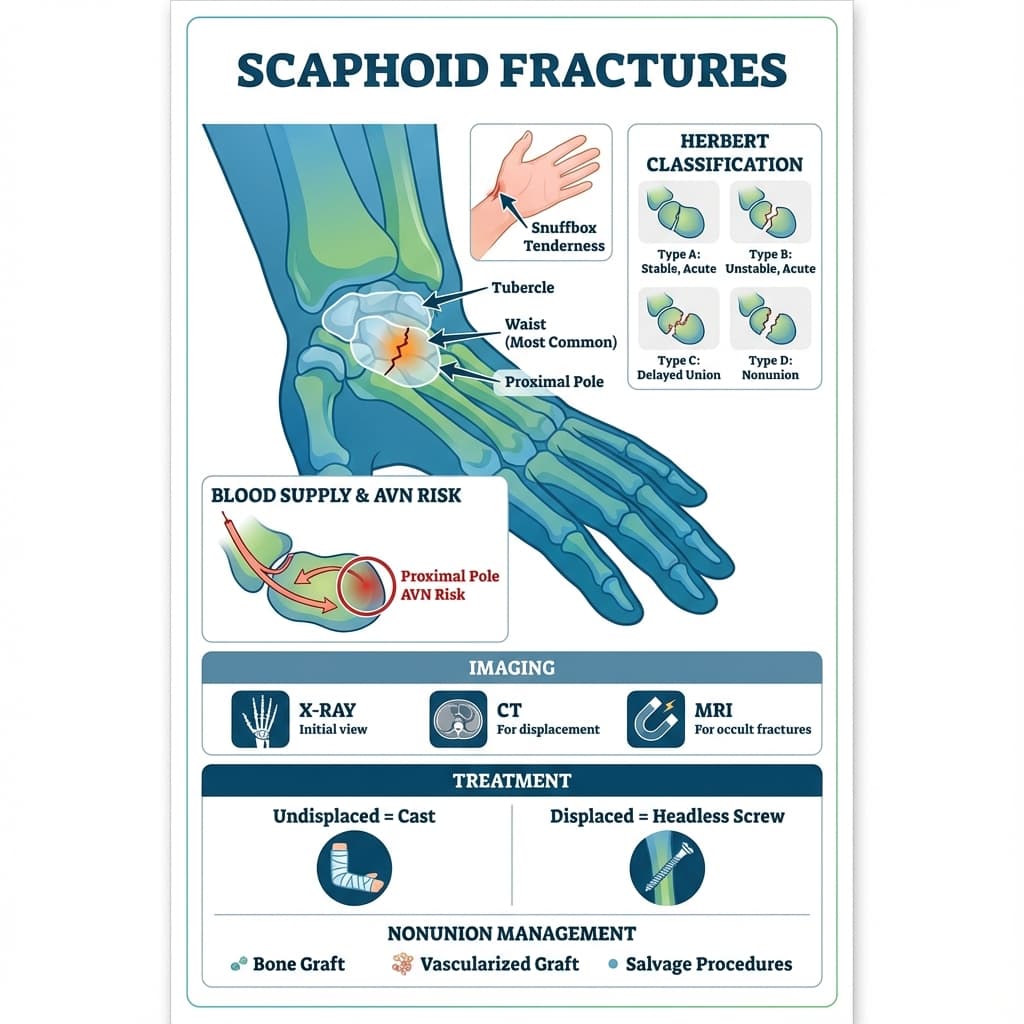
Scaphoid Fractures
Blood supply, Herbert classification, treatment
💡 Retrograde blood supply → proximal pole AVN. Waist most common
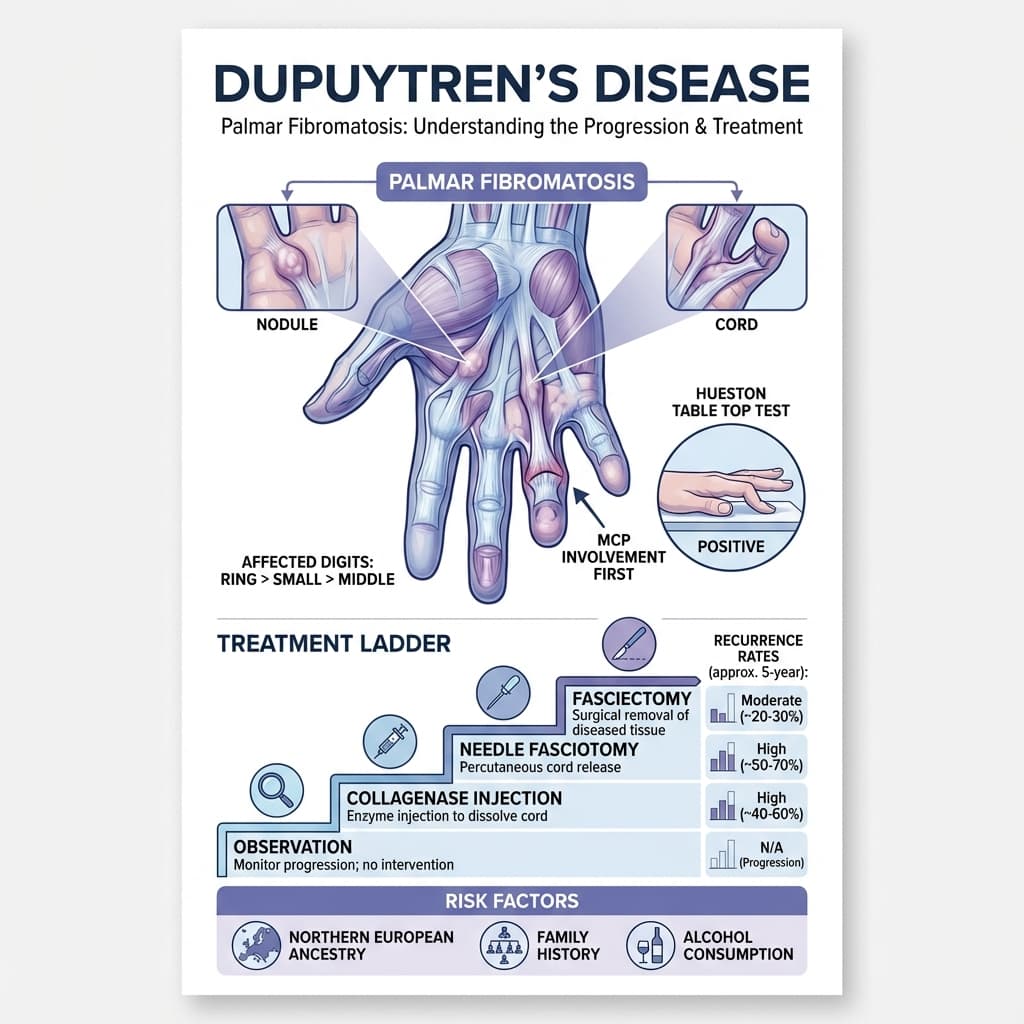
Dupuytren's Disease
Cords and nodules, treatment ladder
💡 Ring > small. Hueston table top test. Northern European, alcohol, family history
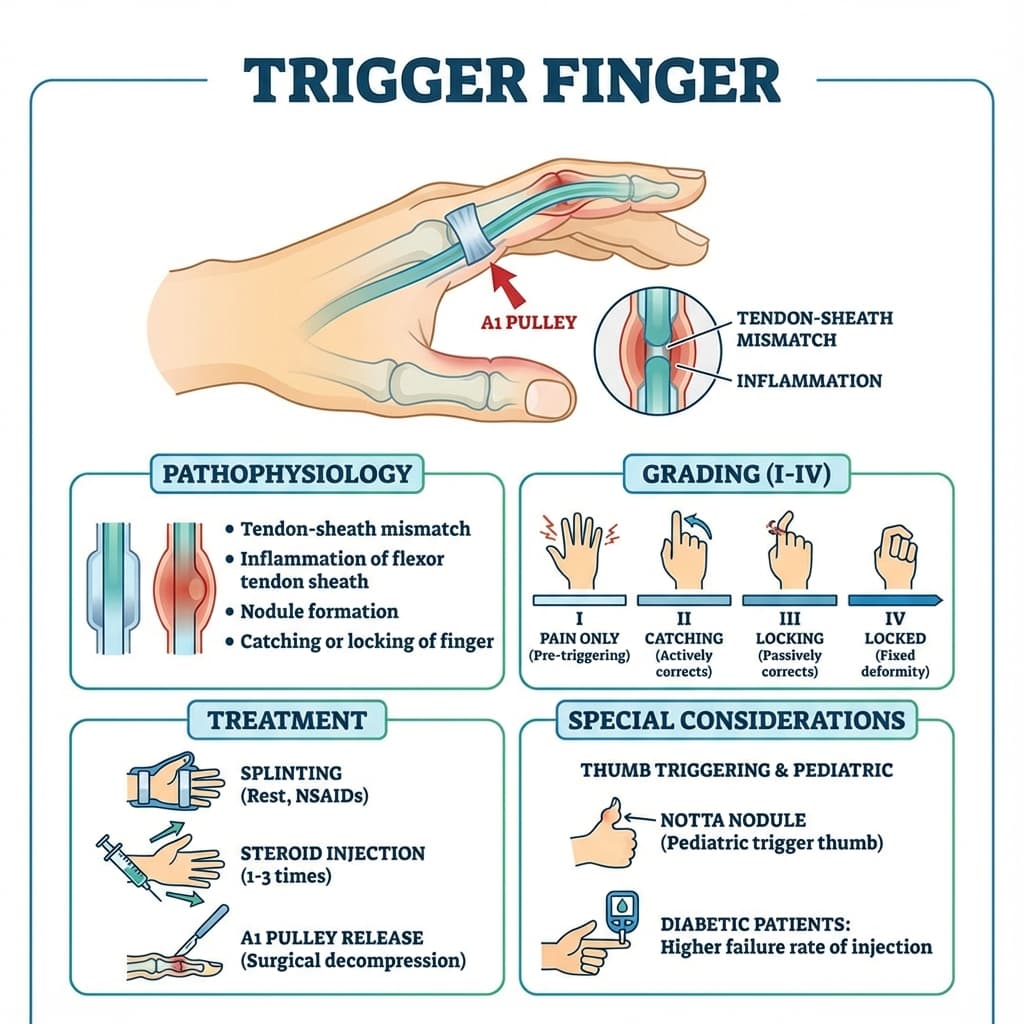
Trigger Finger
A1 pulley, stenosing tenosynovitis, release
💡 A1 pulley at MCP level. Diabetics have higher injection failure
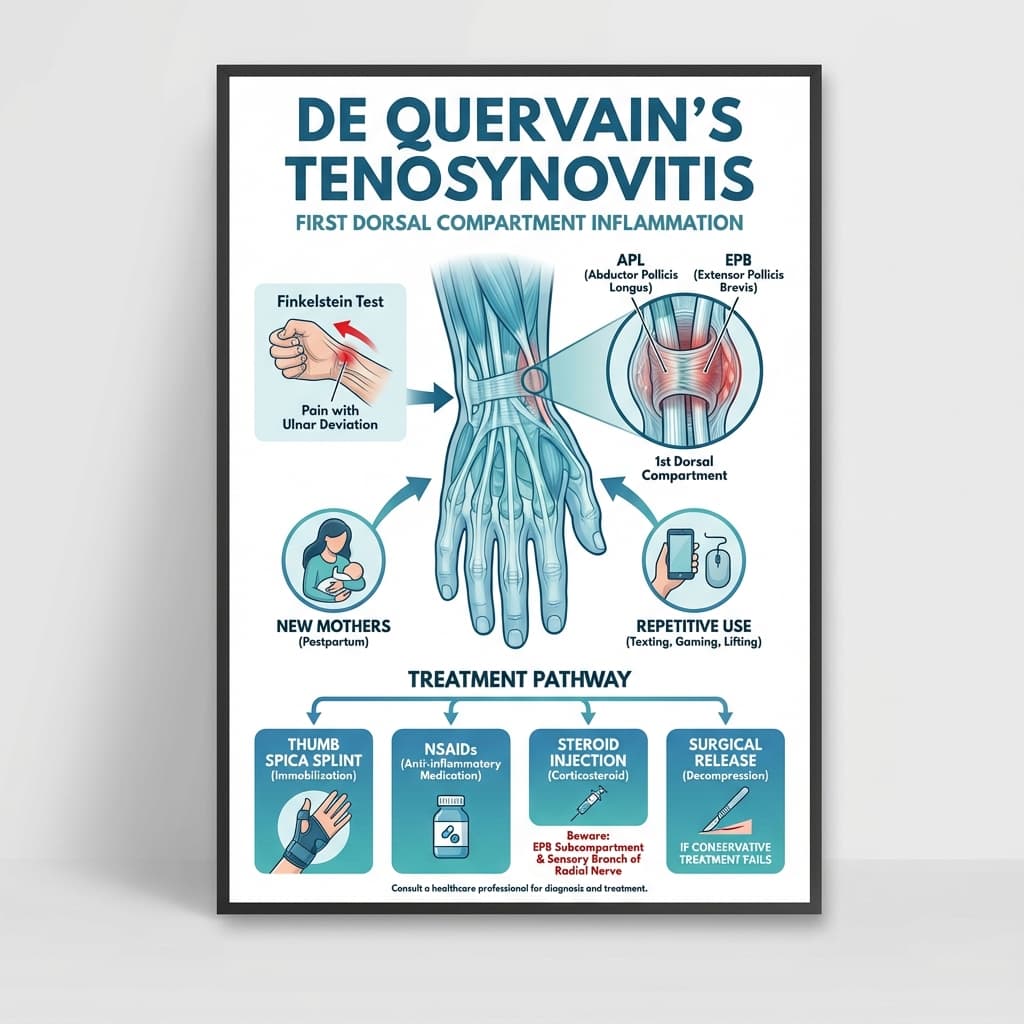
De Quervain's Tenosynovitis
First dorsal compartment, Finkelstein test
💡 EPB subcompartment. Radial sensory nerve at risk in surgery
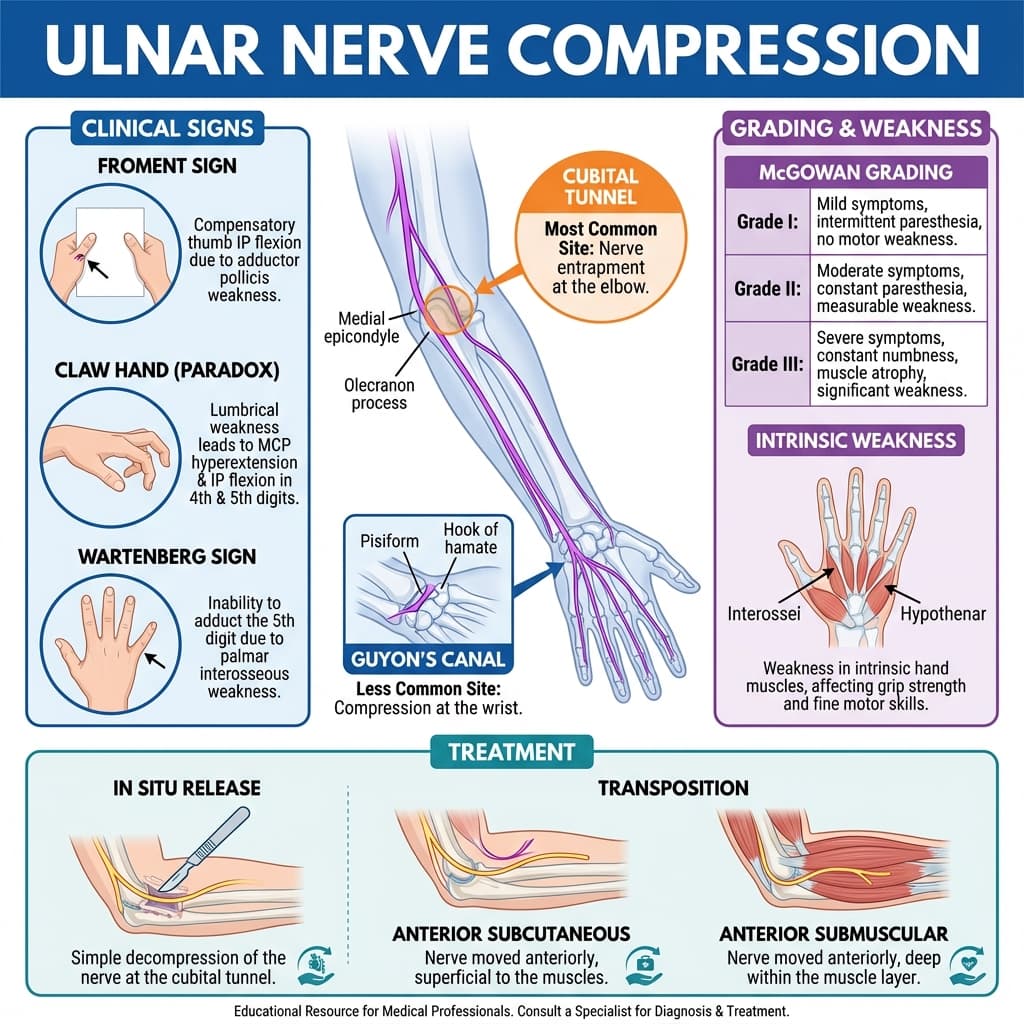
Ulnar Nerve Compression
Cubital tunnel vs Guyon canal, treatment
💡 Cubital most common. Froment sign. Ulnar paradox explained
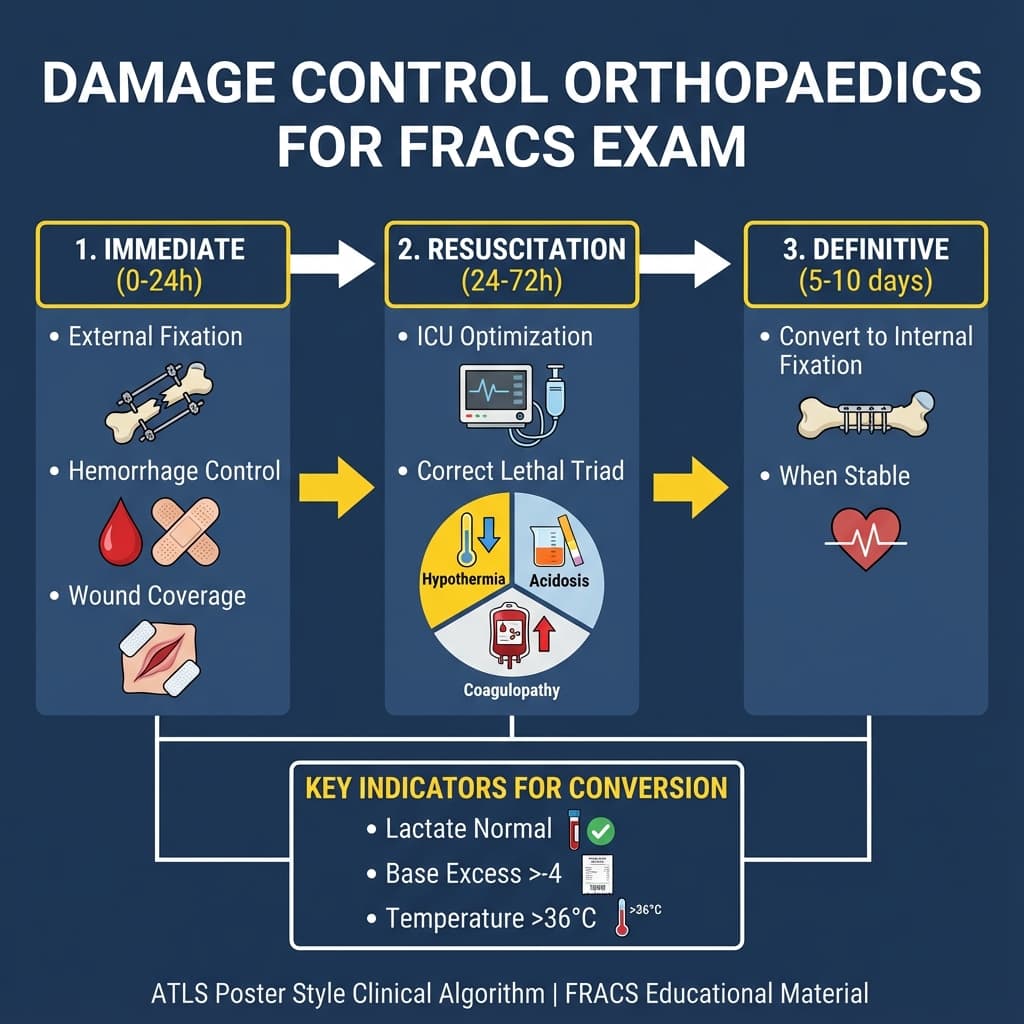
Damage Control Orthopaedics
DCO timeline: immediate, resuscitation, definitive
💡 Lethal triad: hypothermia, acidosis, coagulopathy. Convert when lactate normalizes
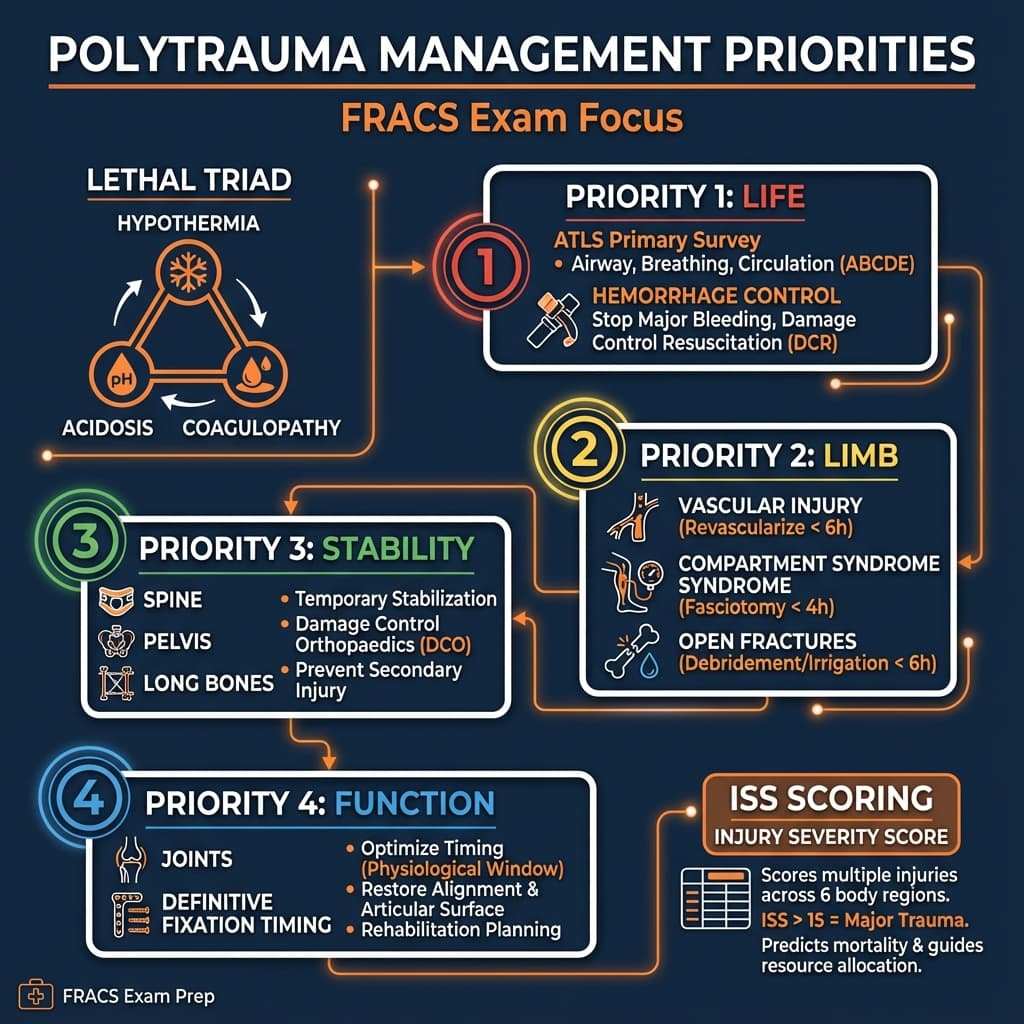
Polytrauma Management Priorities
Life > Limb > Stability > Function
💡 Life first. Vascular injury 6h, compartment 4h, open fracture 6h
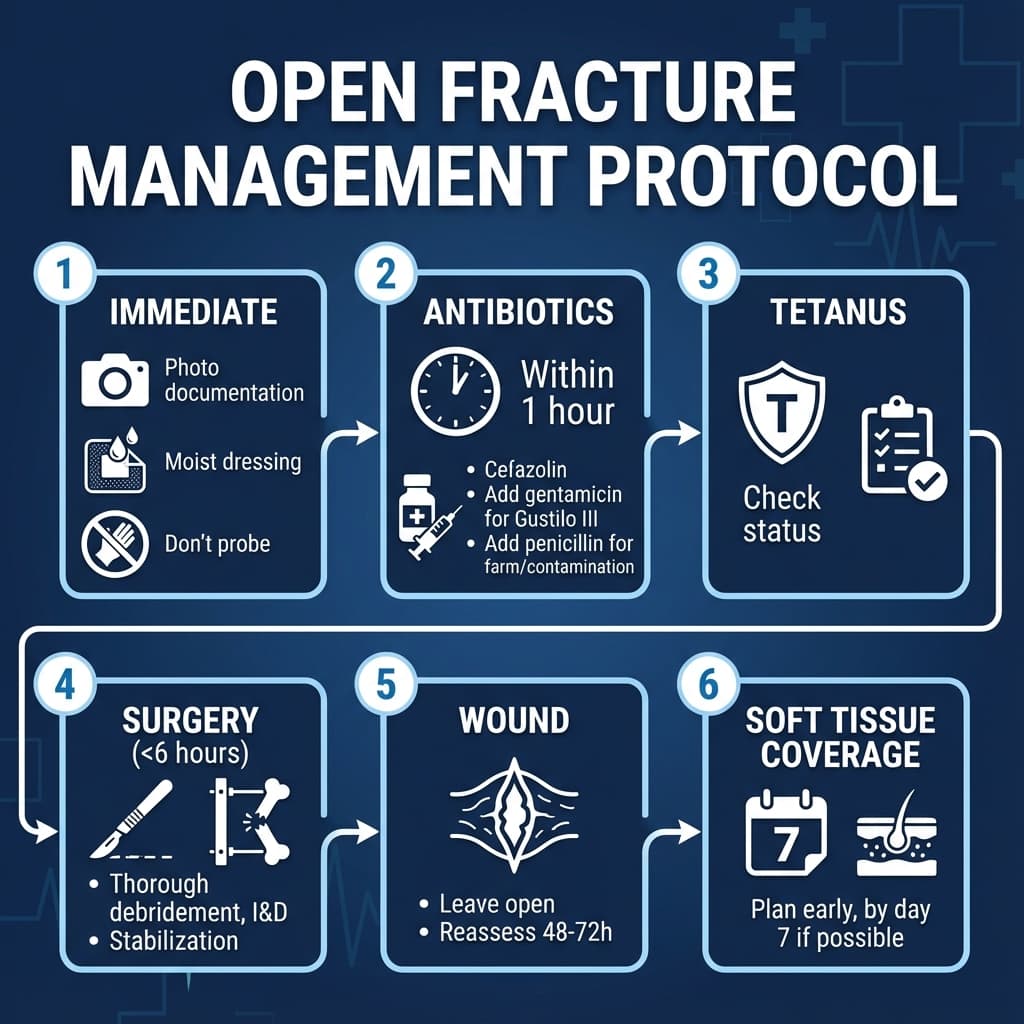
Open Fracture Management Protocol
Antibiotic timing, debridement, coverage
💡 Antibiotics within 1 hour. Soft tissue coverage by day 7
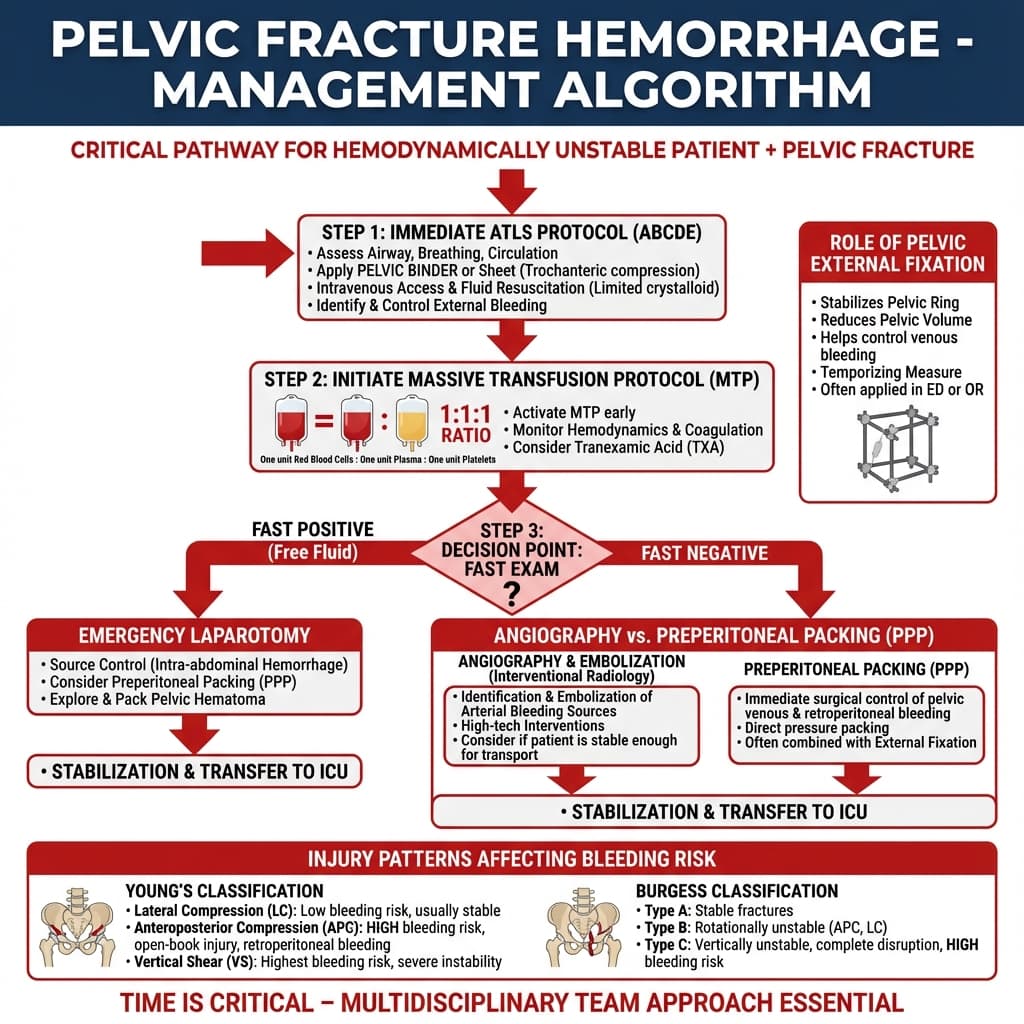
Pelvic Fracture Hemorrhage
Unstable pelvis + hemorrhage algorithm
💡 Binder first. FAST+ → laparotomy. FAST- → angio or packing
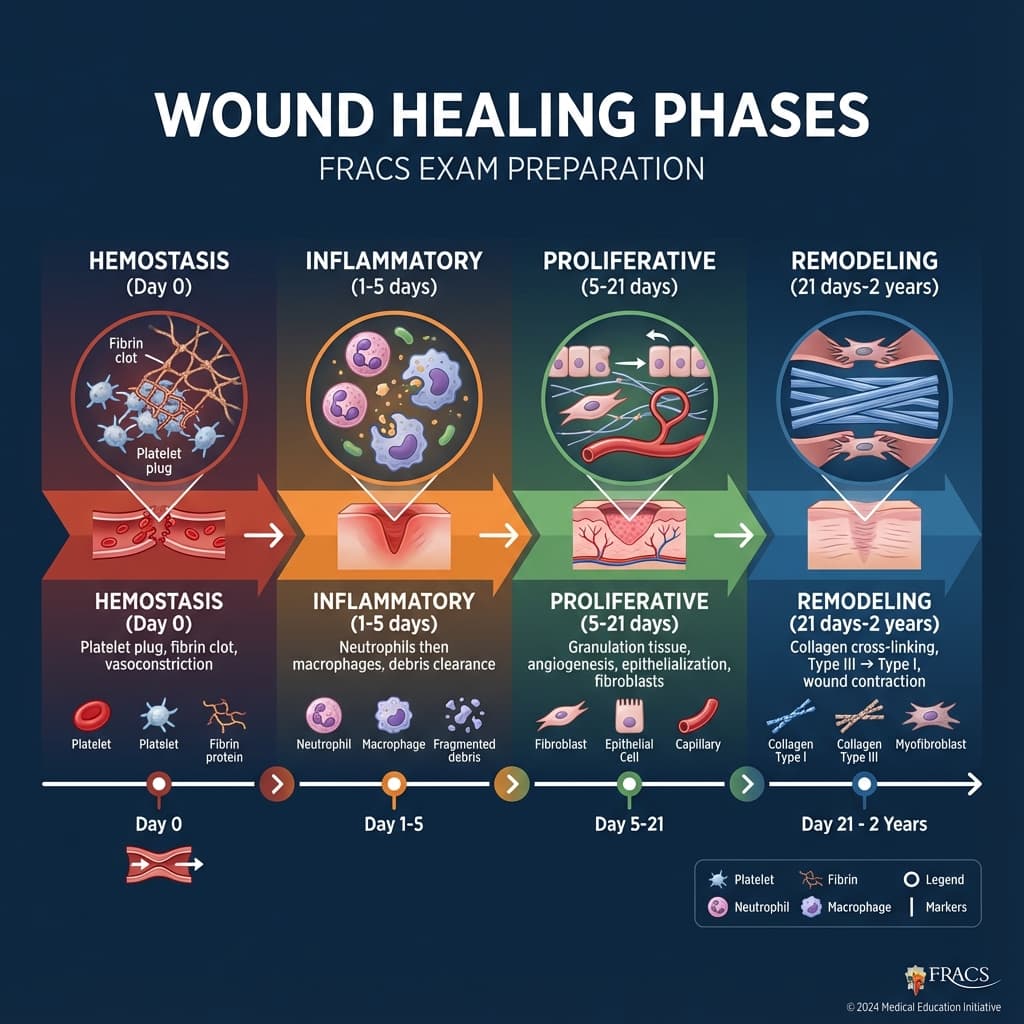
Wound Healing Phases
Hemostasis, inflammatory, proliferative, remodeling timeline
💡 Type III collagen in early healing → Type I in remodeling (2 years)
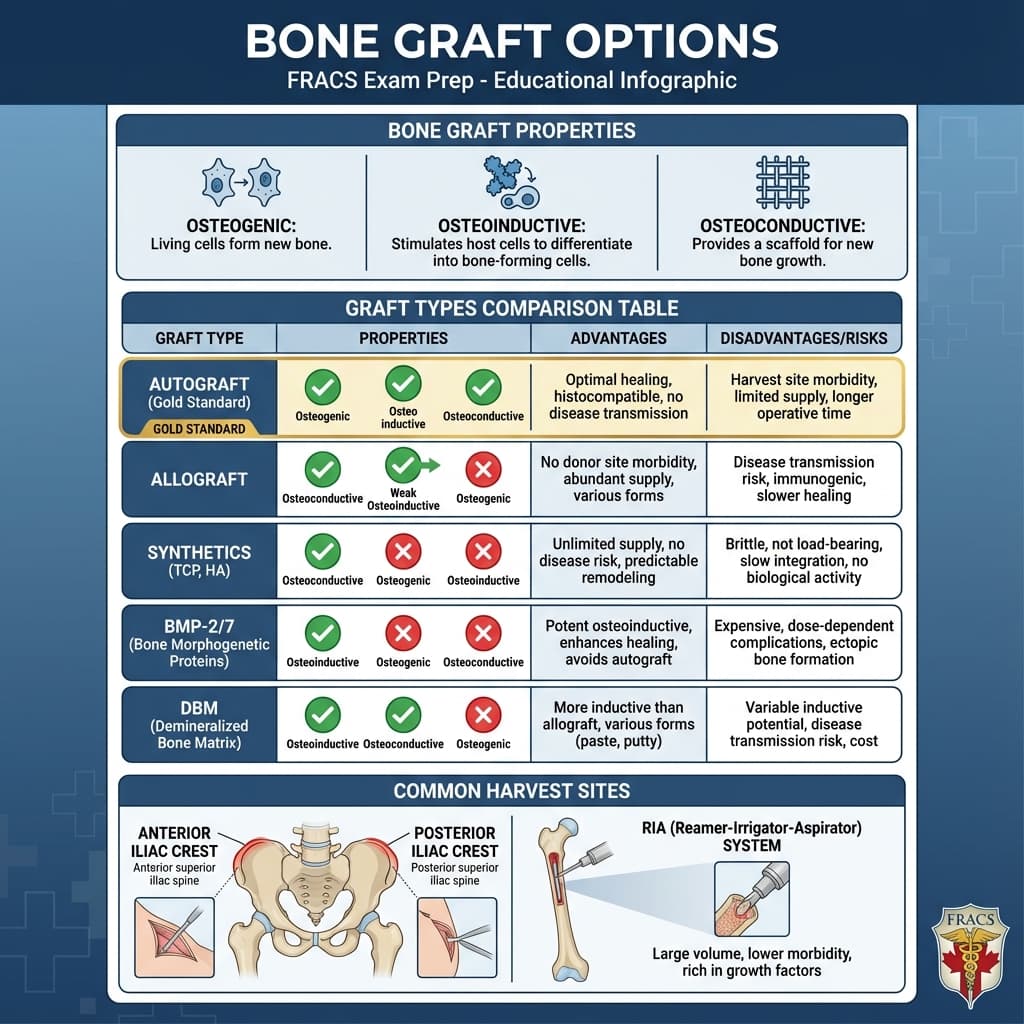
Bone Graft Options
Autograft, allograft, synthetics comparison
💡 Autograft = gold standard (all 3 properties). BMP = osteoinductive only
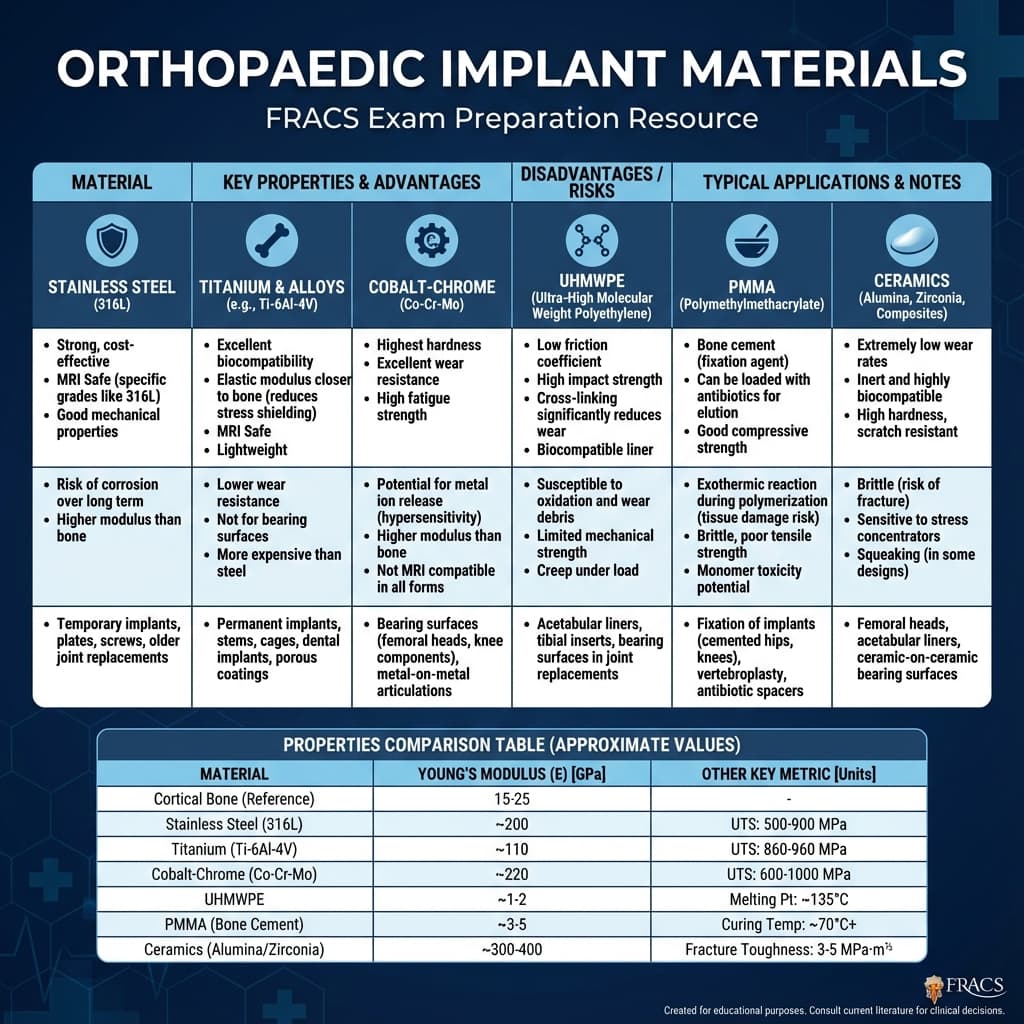
Orthopaedic Implant Materials
Stainless steel, titanium, cobalt-chrome, polyethylene
💡 Titanium = closest elastic modulus to bone. CoCr = hardest for bearings
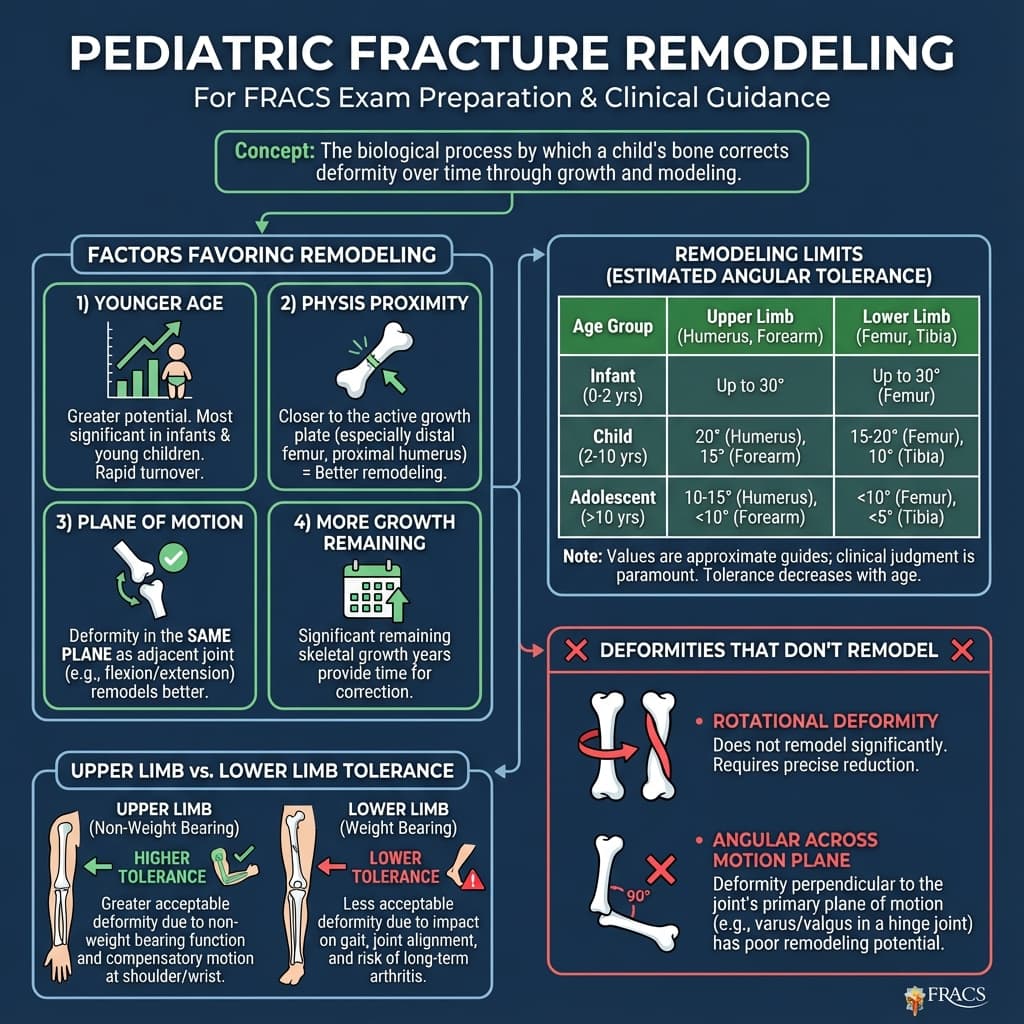
Pediatric Fracture Remodeling
Factors favoring remodeling, limits by age
💡 Younger, closer to physis, in plane of motion = better remodeling. Rotation never remodels
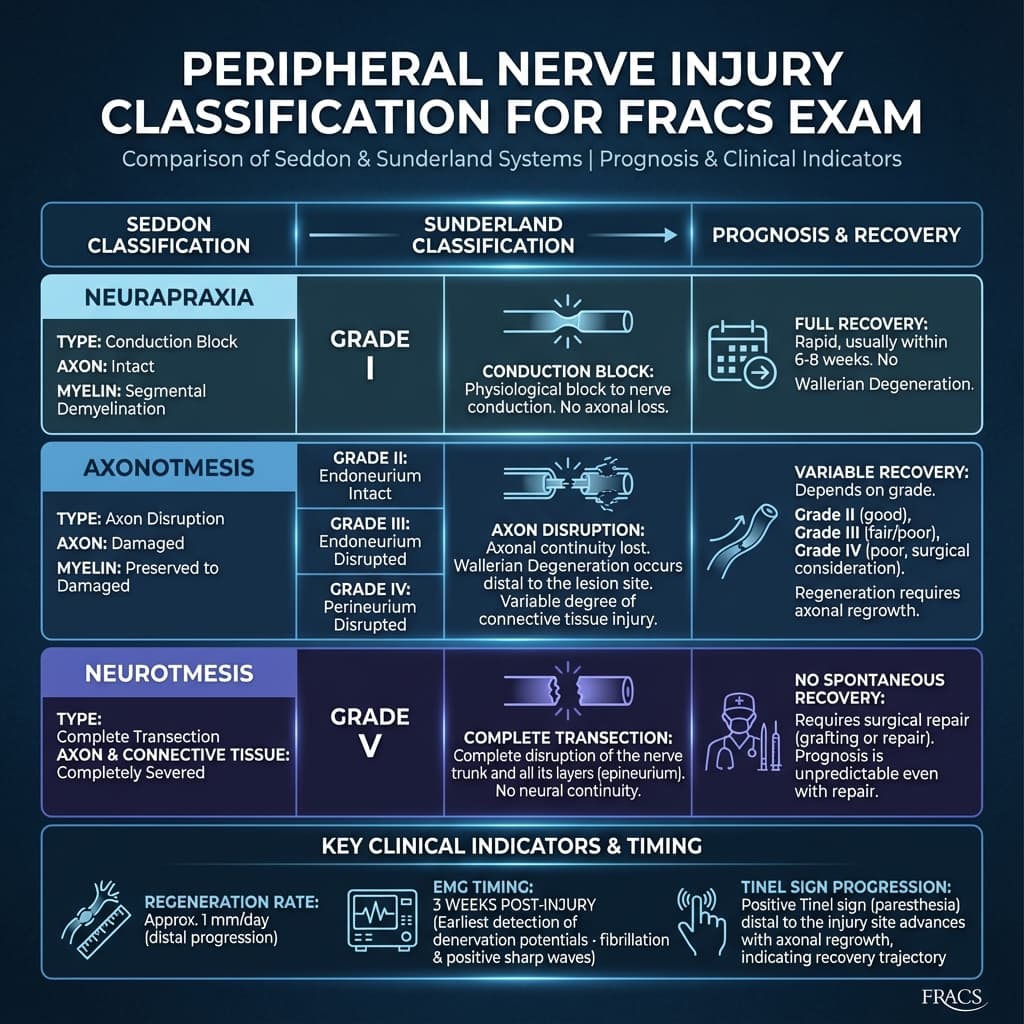
Peripheral Nerve Injury Classification
Seddon and Sunderland, prognosis, regeneration
💡 Neurapraxia = full recovery. Regeneration 1mm/day. EMG at 3 weeks
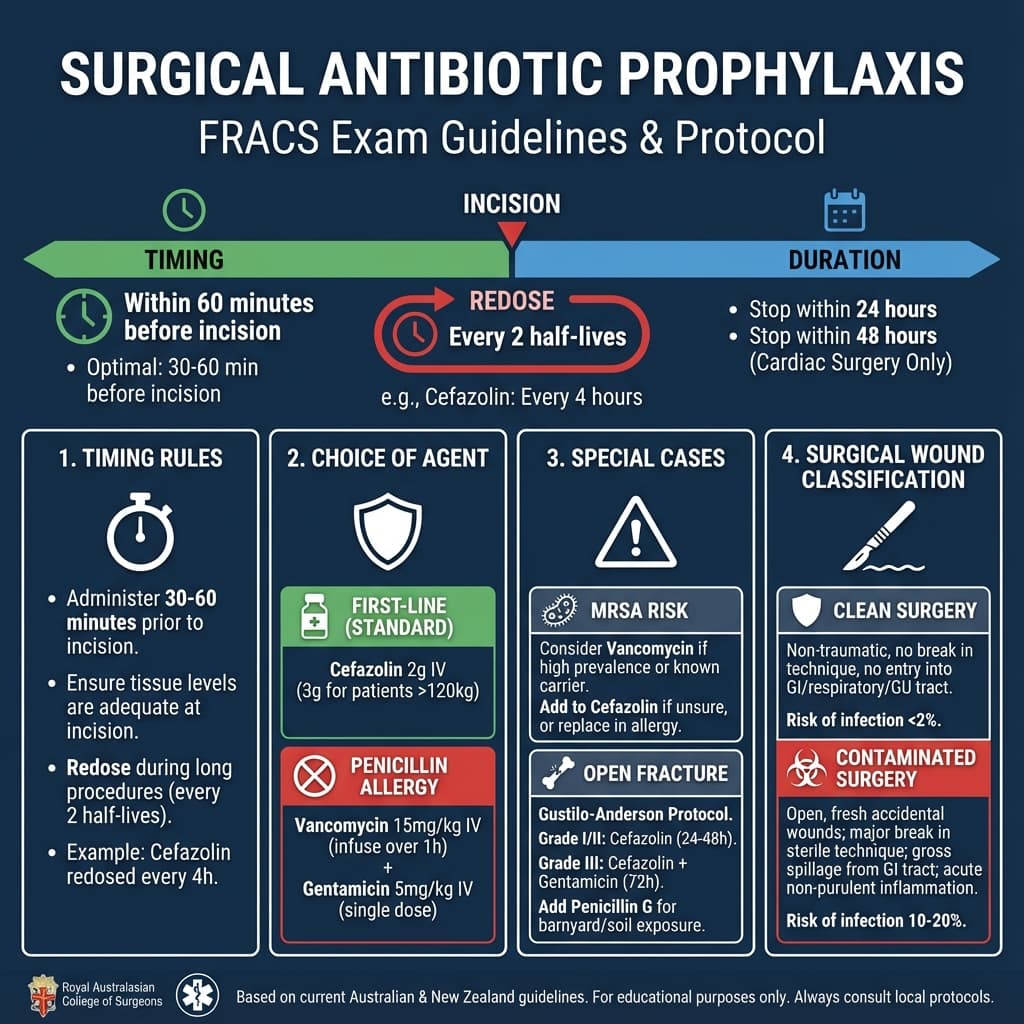
Surgical Antibiotic Prophylaxis
Timing, redosing, duration, allergy alternatives
💡 Within 60 min before incision. Redose every 2 half-lives. Stop at 24h
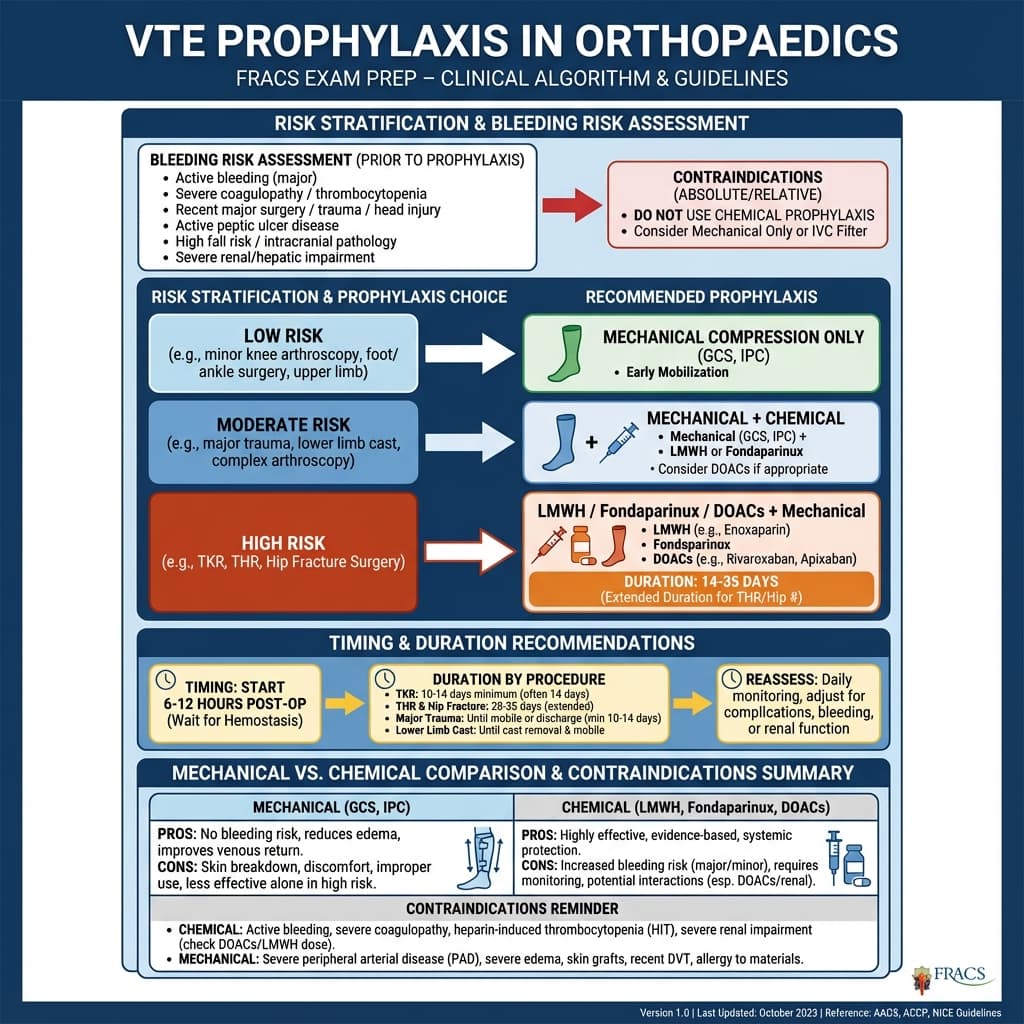
VTE Prophylaxis in Orthopaedics
Risk stratification, mechanical vs chemical, duration
💡 THR/TKR = high risk, 14-35 days prophylaxis. LMWH or DOAC
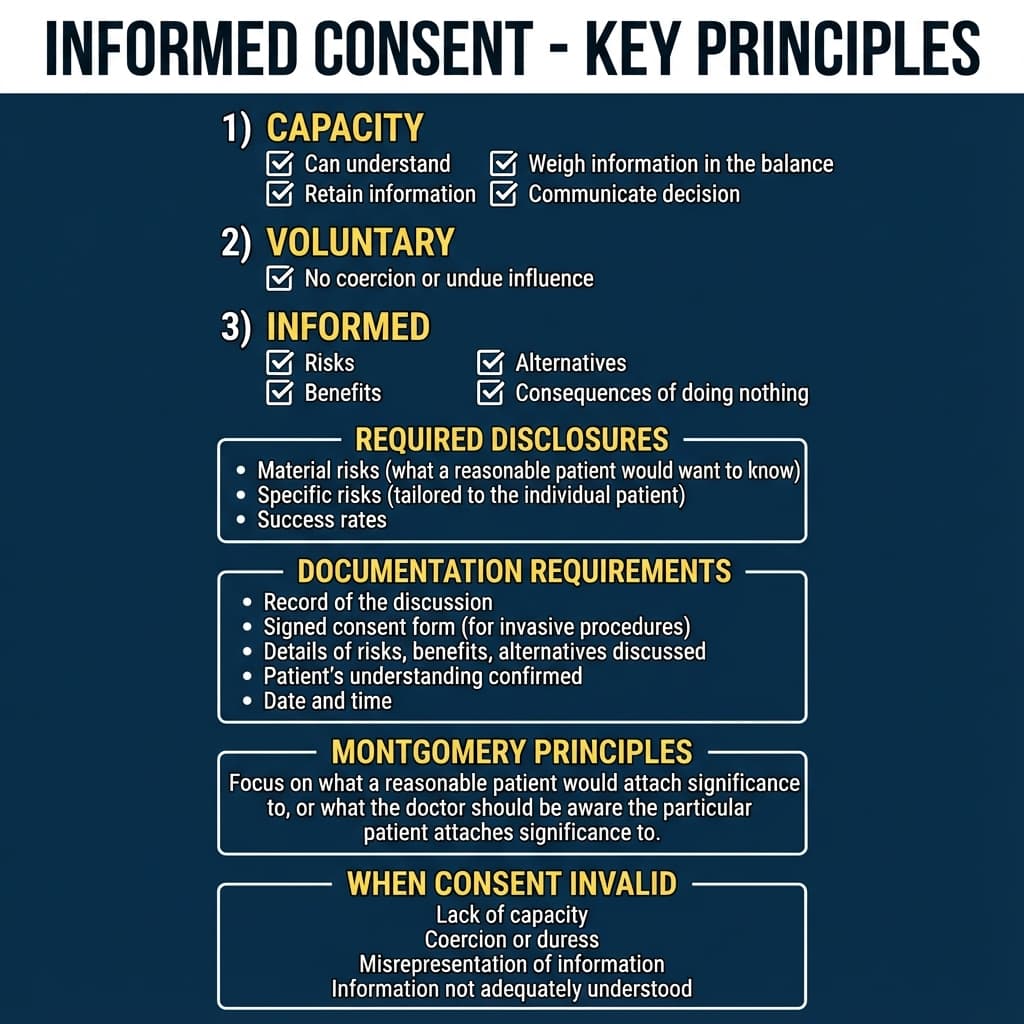
Informed Consent Principles
Capacity, voluntary, informed - Montgomery principles
💡 Capacity: understand, retain, weigh, communicate. Material risks disclosure
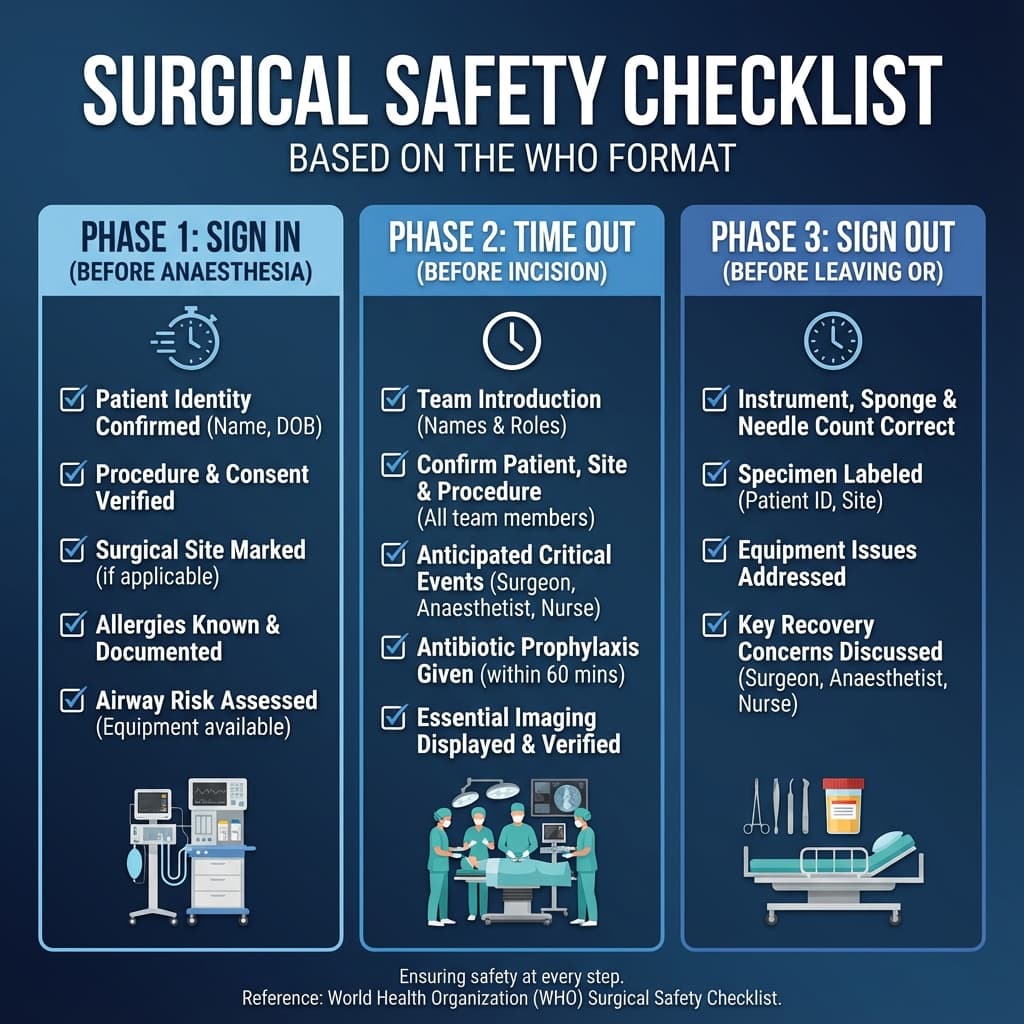
Surgical Safety Checklist
Sign in, time out, sign out - WHO format
💡 Time out before incision: identity, procedure, site, antibiotics, imaging
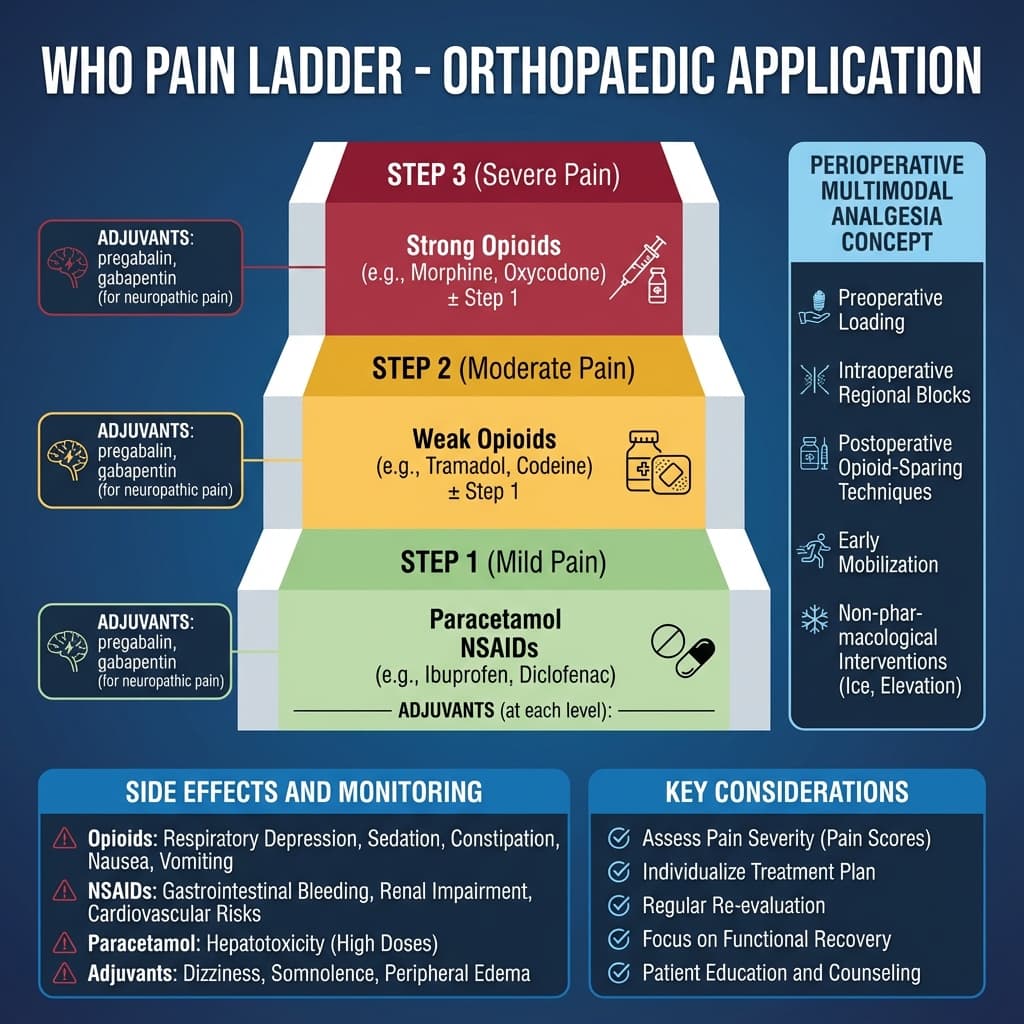
WHO Pain Ladder
Step 1-3 analgesia, adjuvants, multimodal
💡 3-step ladder: non-opioid → weak opioid → strong opioid + adjuvants
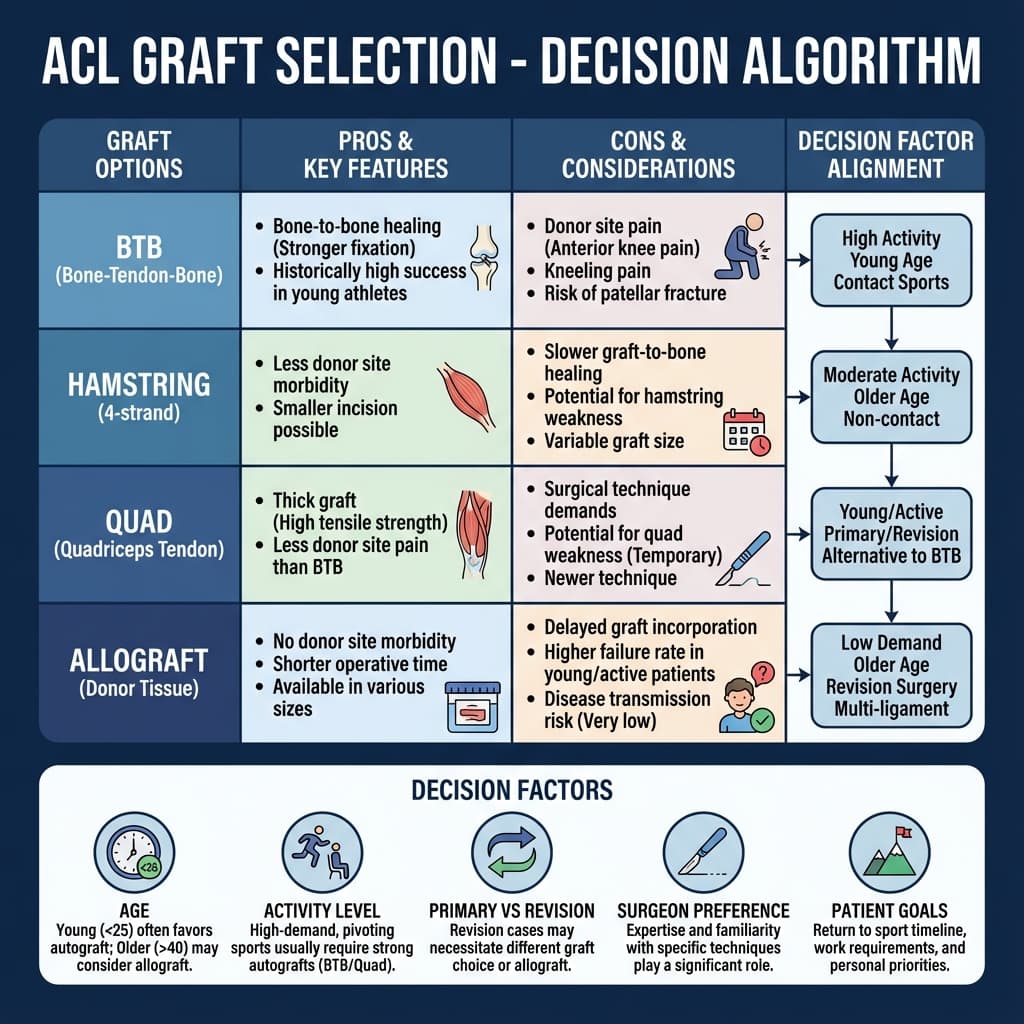
ACL Graft Selection Algorithm
BTB, hamstring, quad, allograft comparison
💡 BTB = bone-to-bone healing. Allograft higher failure in young athletes
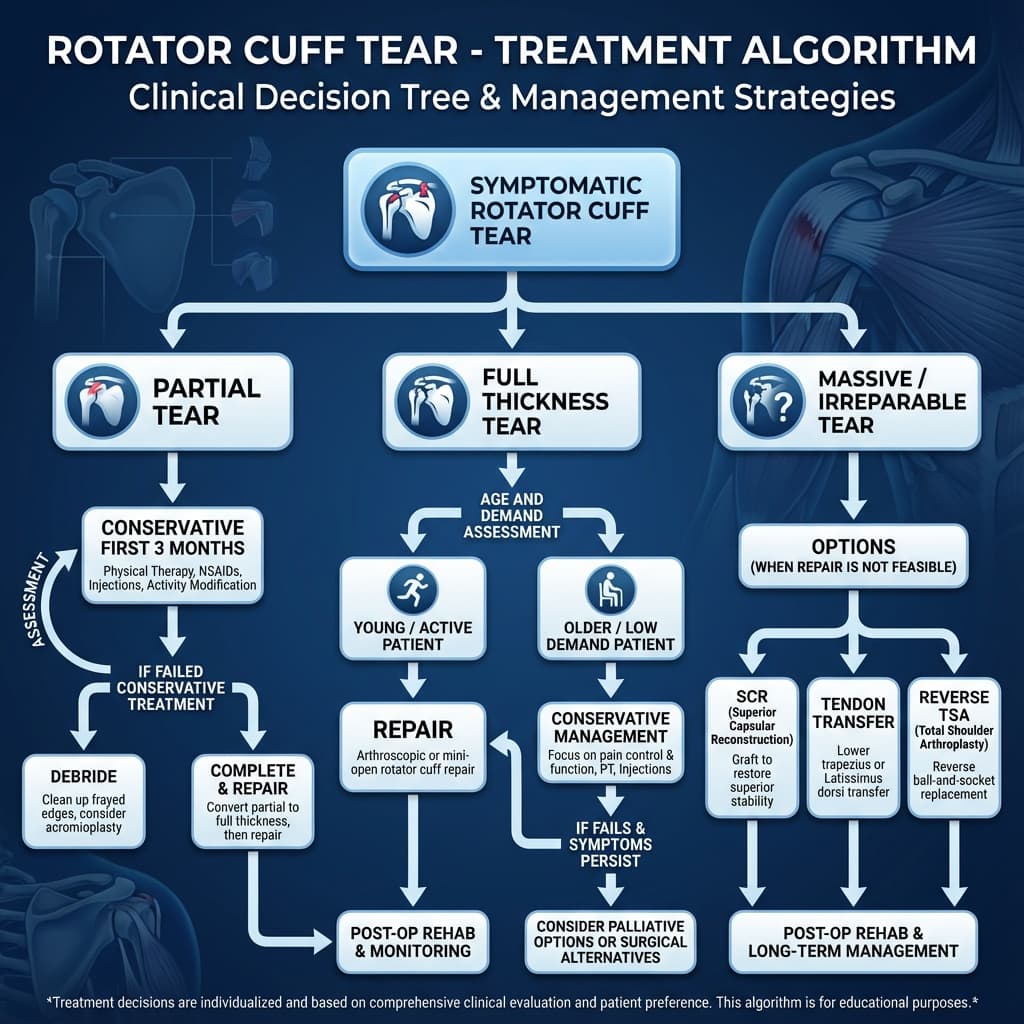
Rotator Cuff Treatment Algorithm
Partial vs full thickness, surgical decision making
💡 Partial → debride vs complete and repair. Massive irreparable → SCR, transfer, reverse
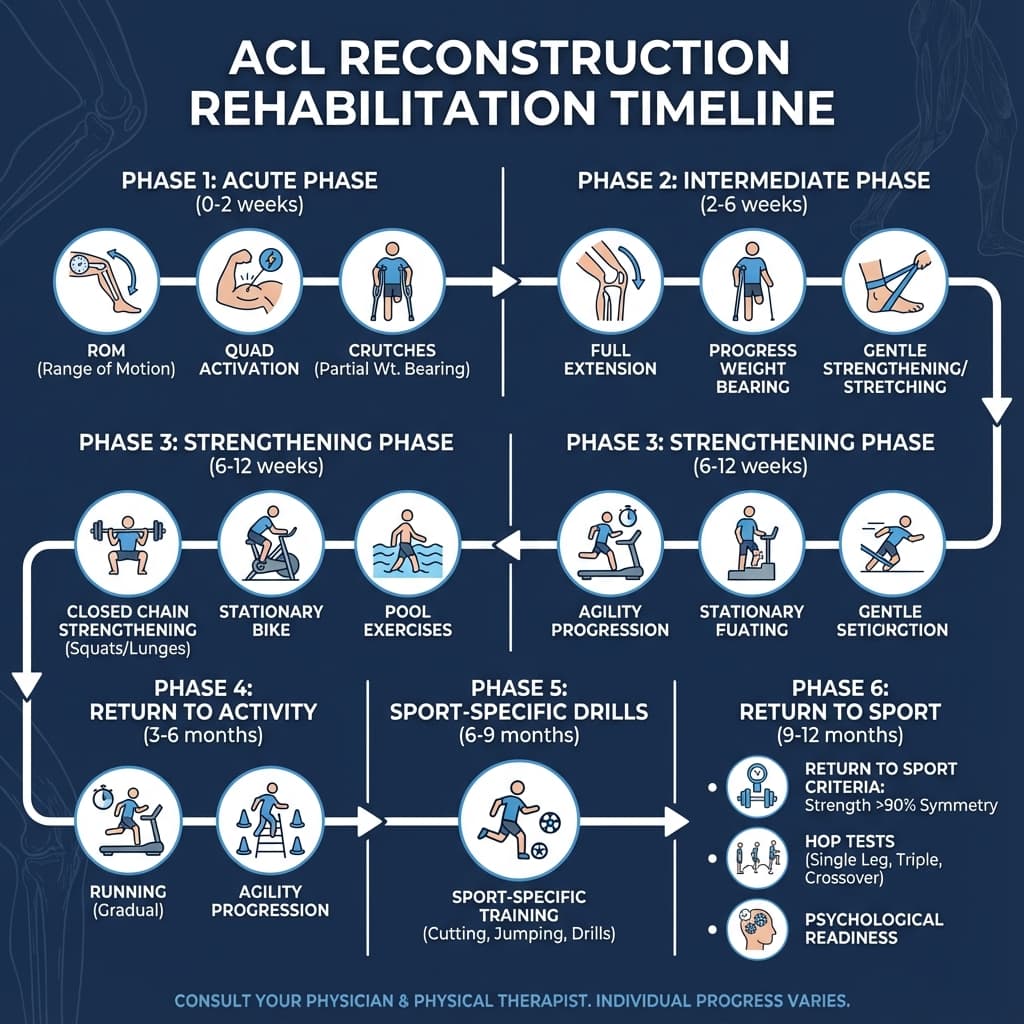
ACL Rehabilitation Timeline
Phase-based rehab milestones to return to sport
💡 RTS criteria: strength >90%, hop tests passed, psychological readiness, 9-12 months
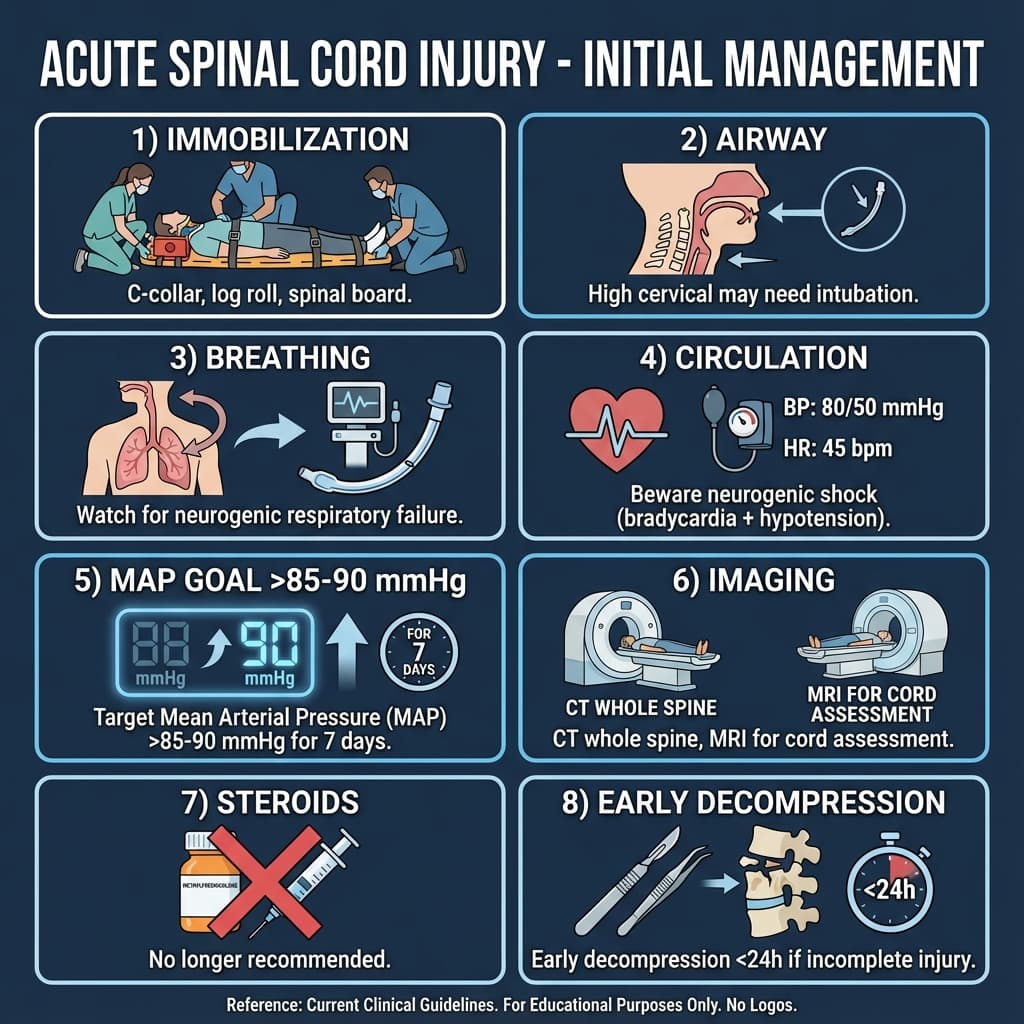
Acute Spinal Cord Injury Protocol
Immobilization, ABC, MAP goals, steroids, timing
💡 MAP >85-90 for 7 days. Steroids no longer recommended. Early decompression <24h
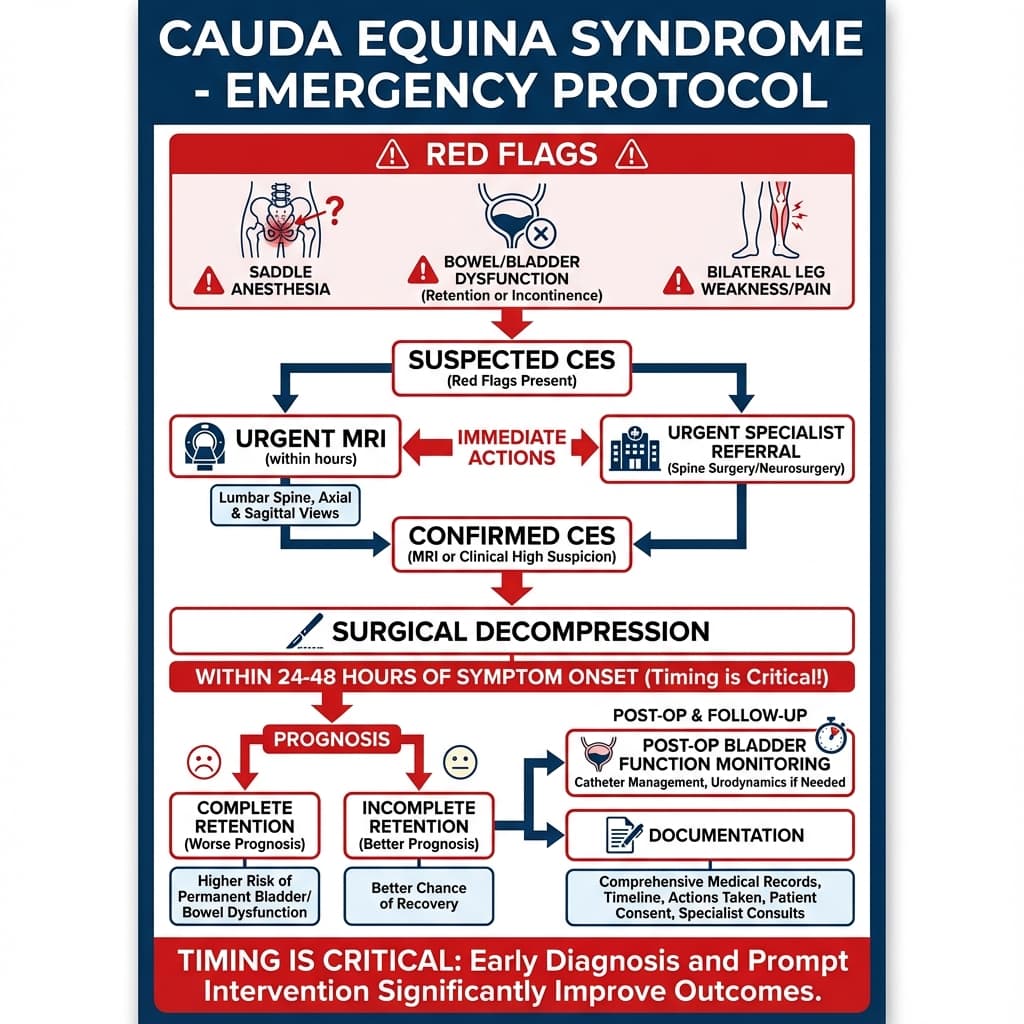
Cauda Equina Emergency Protocol
Red flags, urgent MRI, surgical timing
💡 Red flags: saddle anesthesia, bowel/bladder, bilateral. Decompression <48h
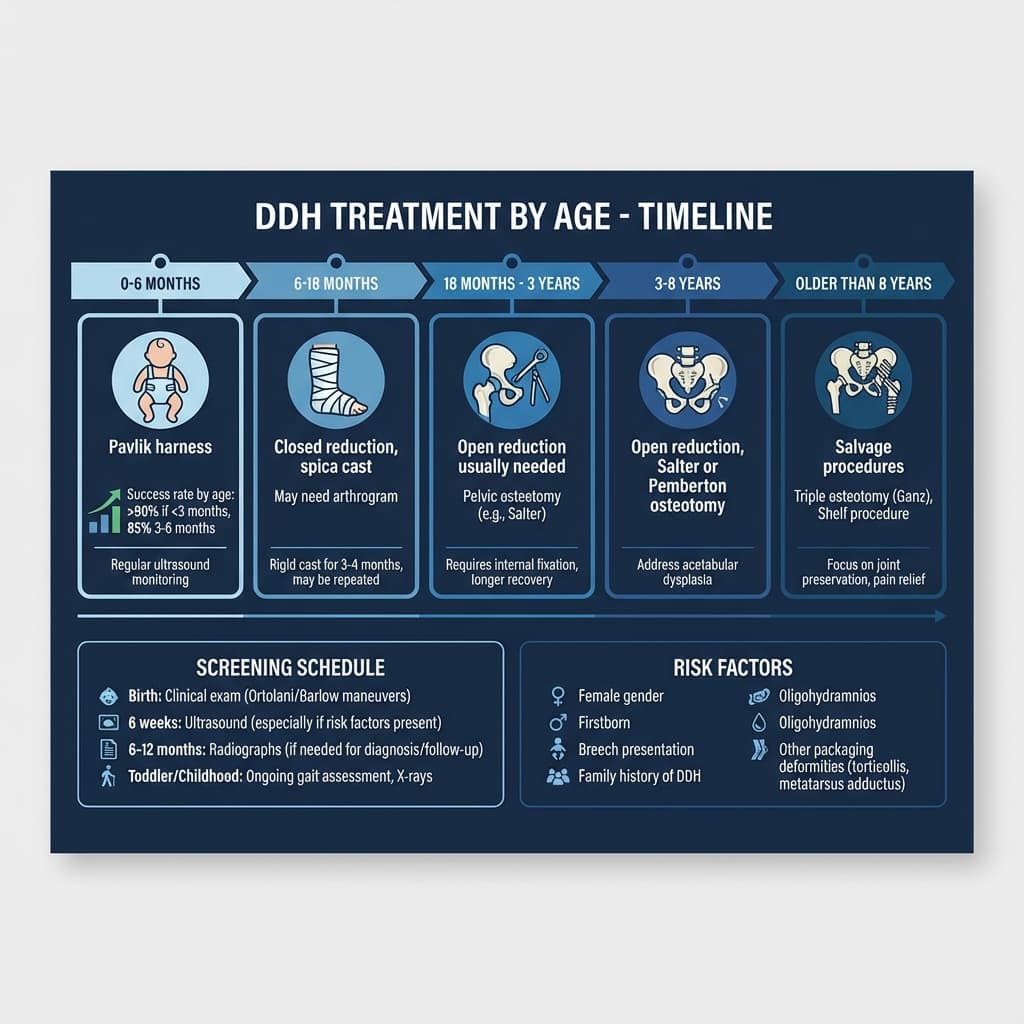
DDH Treatment by Age
Age-based treatment: Pavlik to osteotomy
💡 0-6mo Pavlik. 6-18mo closed reduction. >18mo open reduction + osteotomy
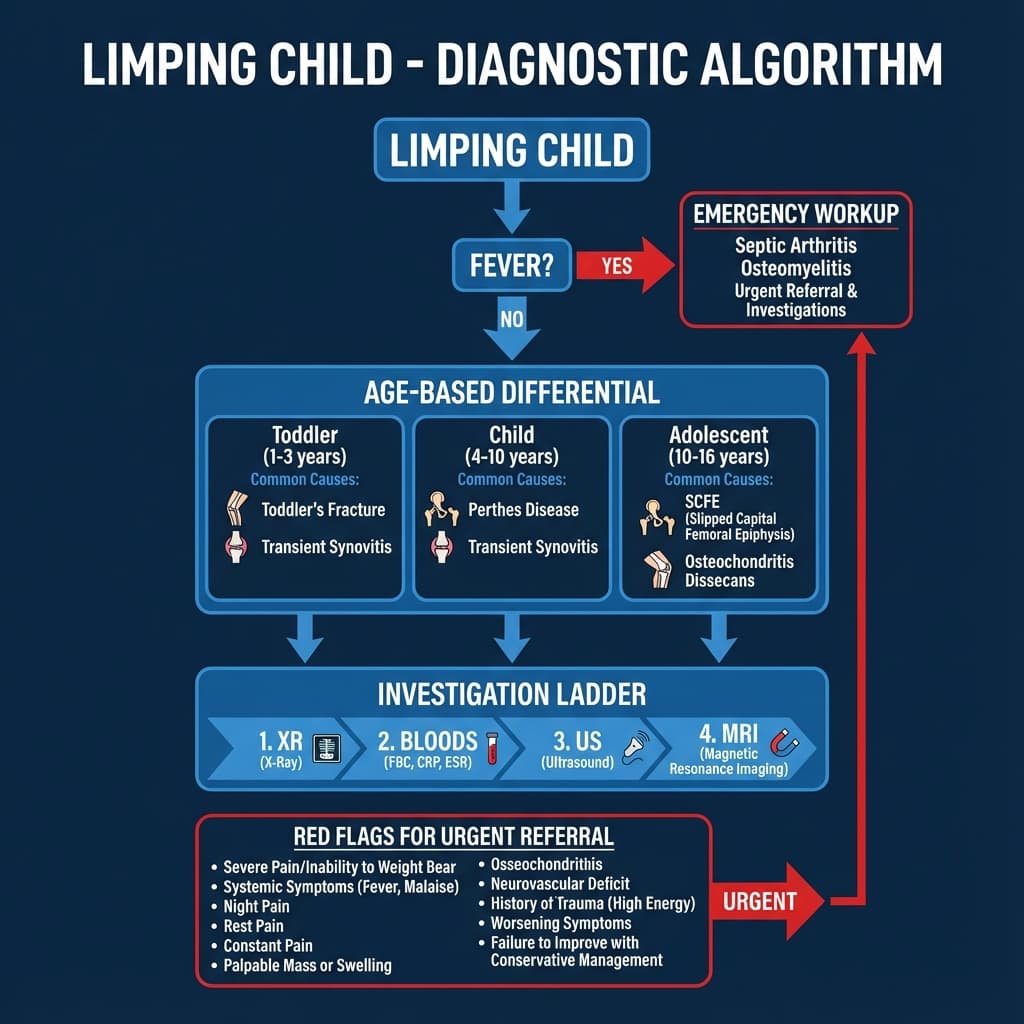
Limping Child Diagnostic Algorithm
Fever first, then age-based differentials
💡 FEVER = urgent workup for septic arthritis. Age-based: toddler, child, adolescent
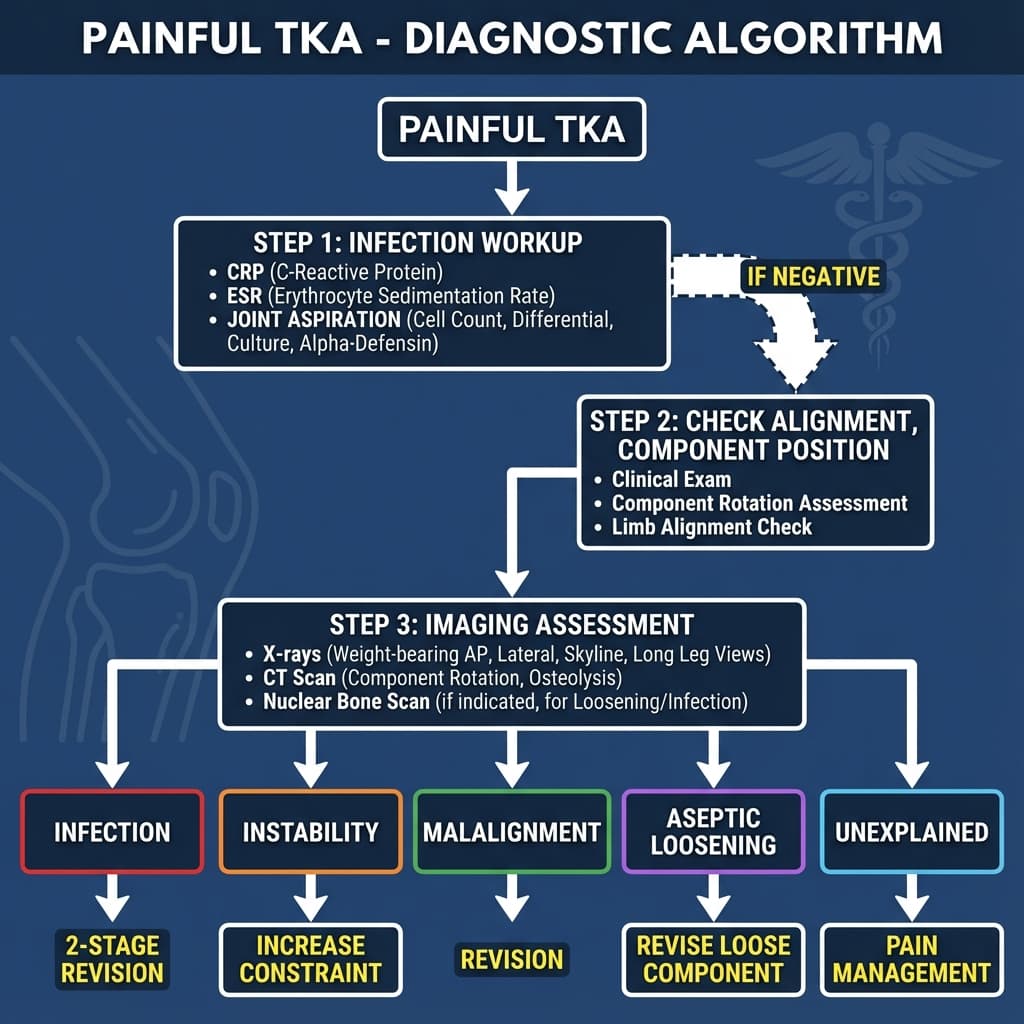
Painful TKA Diagnostic Algorithm
Infection workup, instability, malalignment, loosening
💡 Infection workup first (aspirate, CRP, ESR). Then component position/alignment
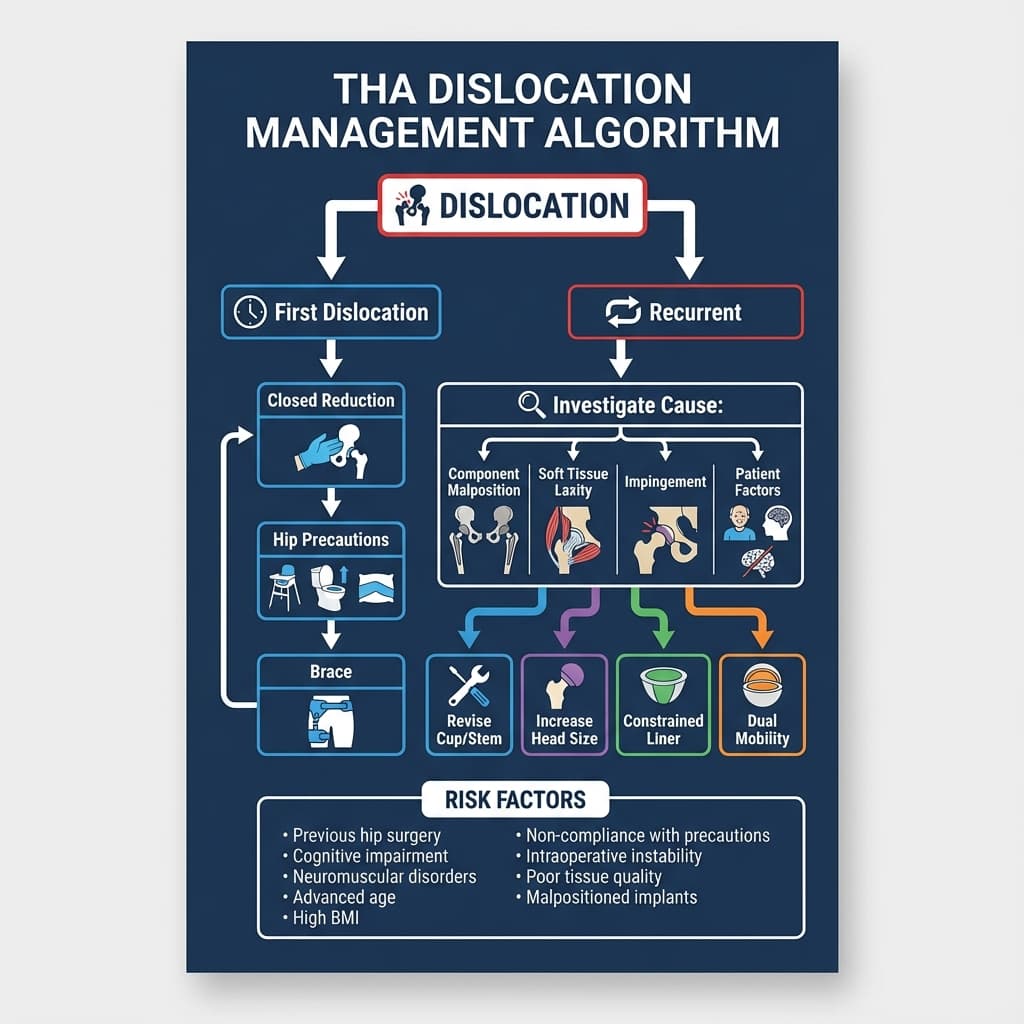
THA Dislocation Management
First vs recurrent, cause investigation, treatment options
💡 First = closed reduction, brace. Recurrent = investigate and revise
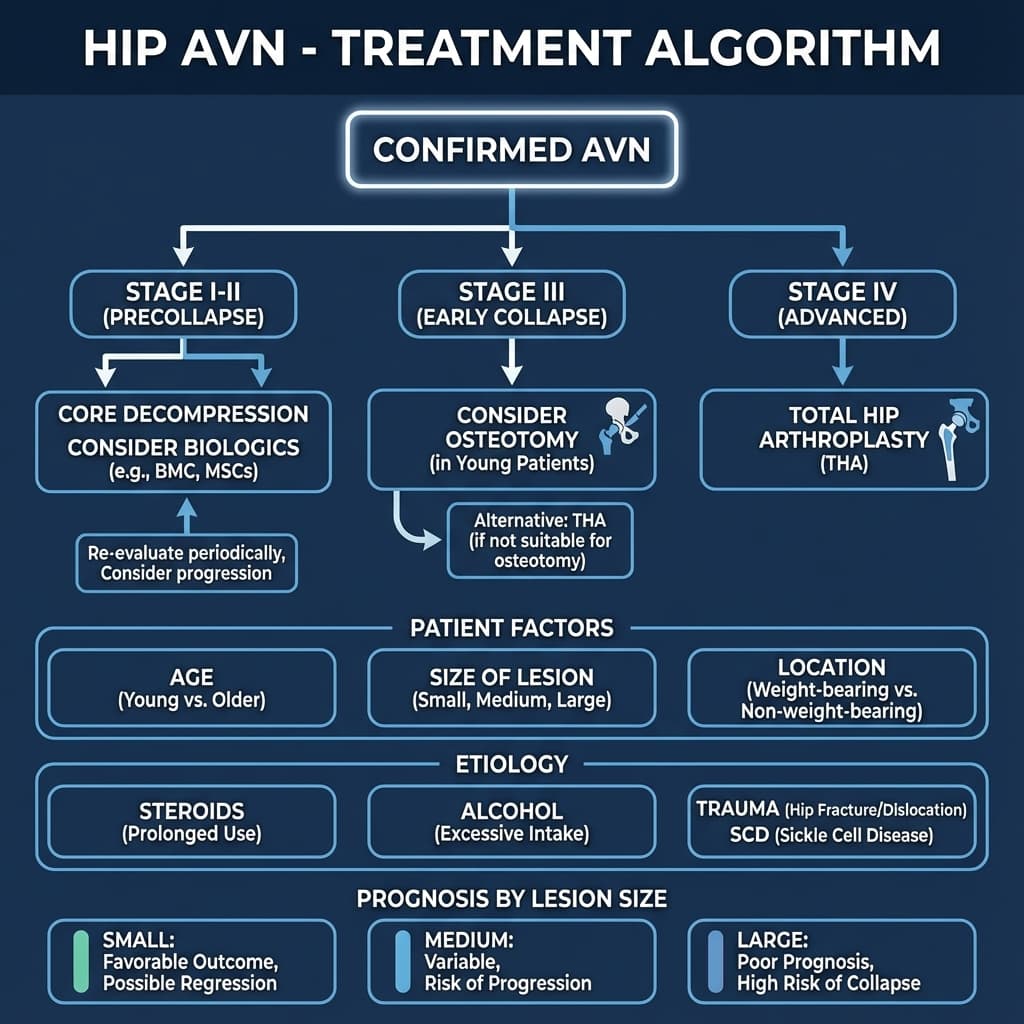
Hip AVN Treatment Algorithm
Stage-based treatment: core decompression to THA
💡 Precollapse (I-II) = core decompression. Collapsed (IV) = THA
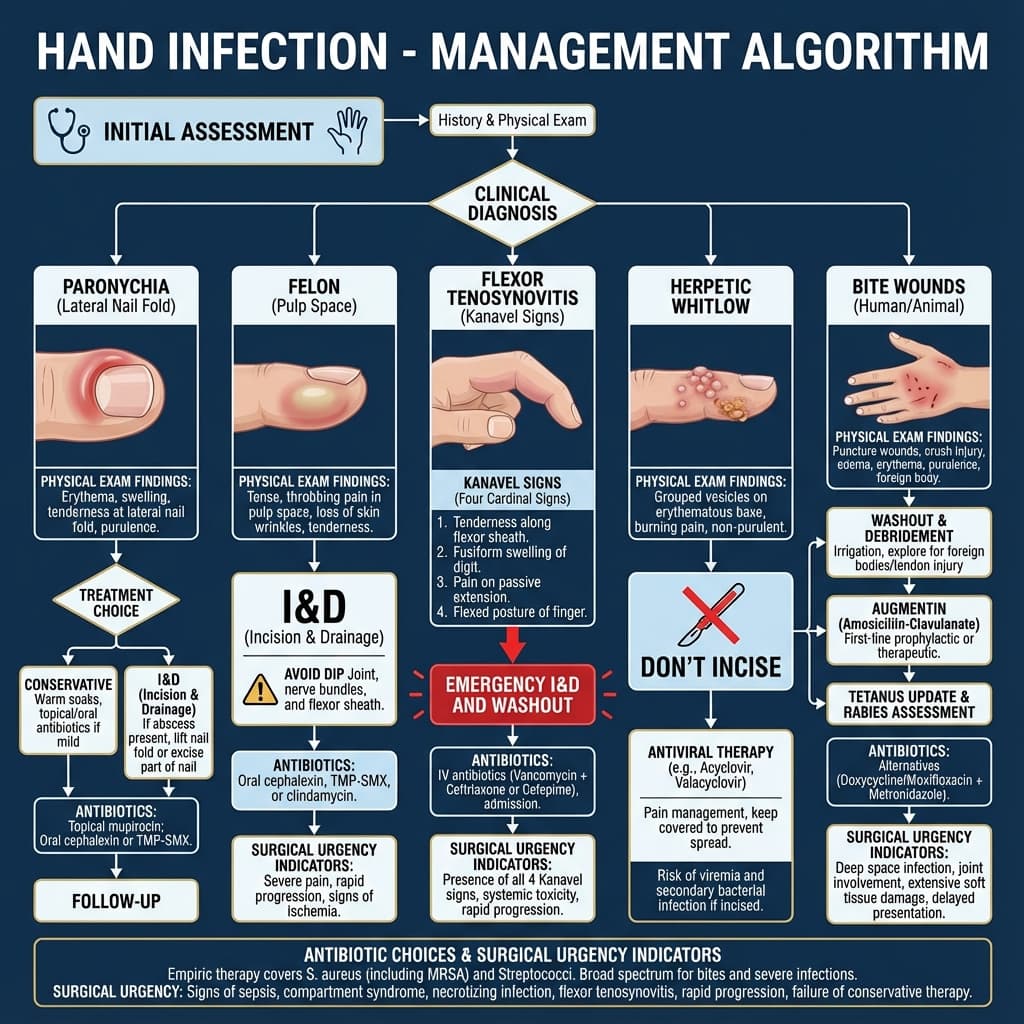
Hand Infection Management
Paronychia, felon, flexor tenosynovitis, herpetic, bites
💡 Flexor tenosynovitis = emergency I&D. Herpetic whitlow = DON'T incise
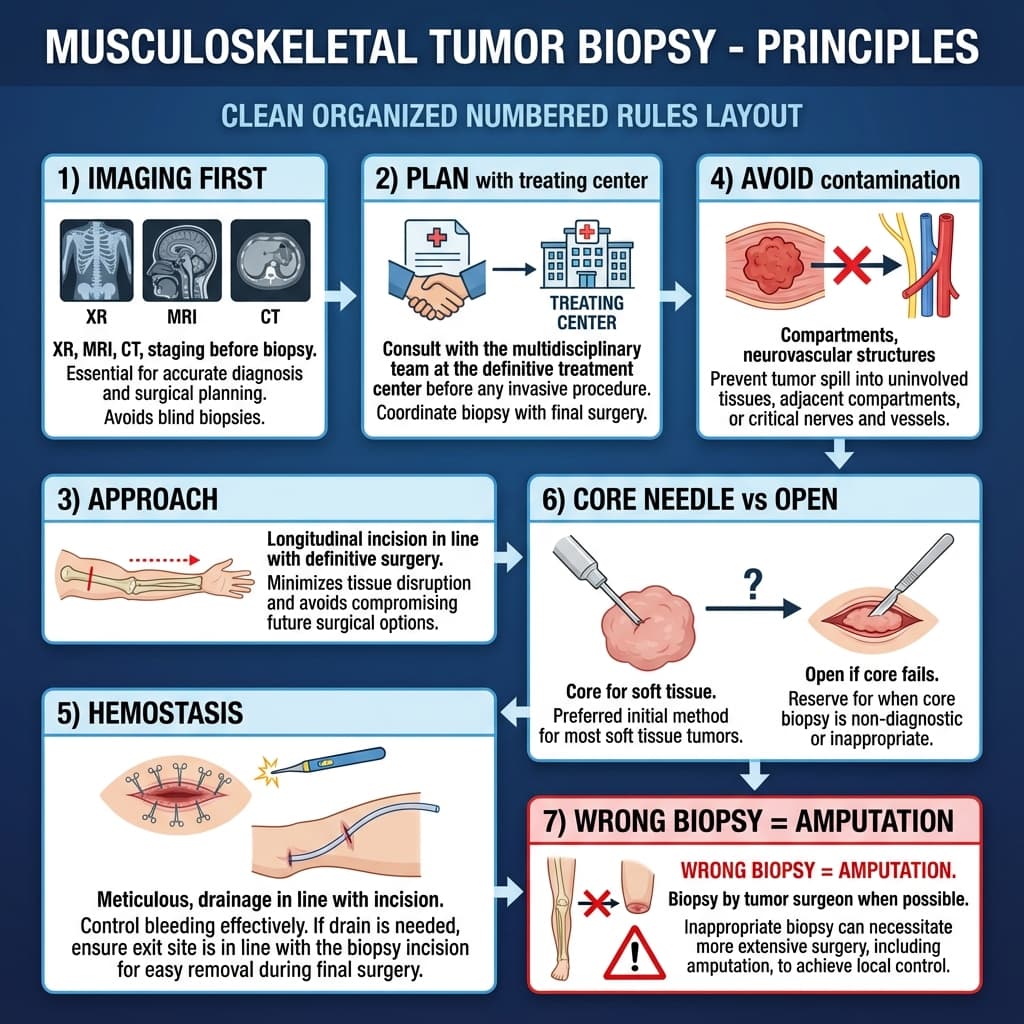
Tumor Biopsy Principles
Imaging first, longitudinal incision, avoid contamination
💡 Wrong biopsy = amputation. Longitudinal incision in line with definitive surgery
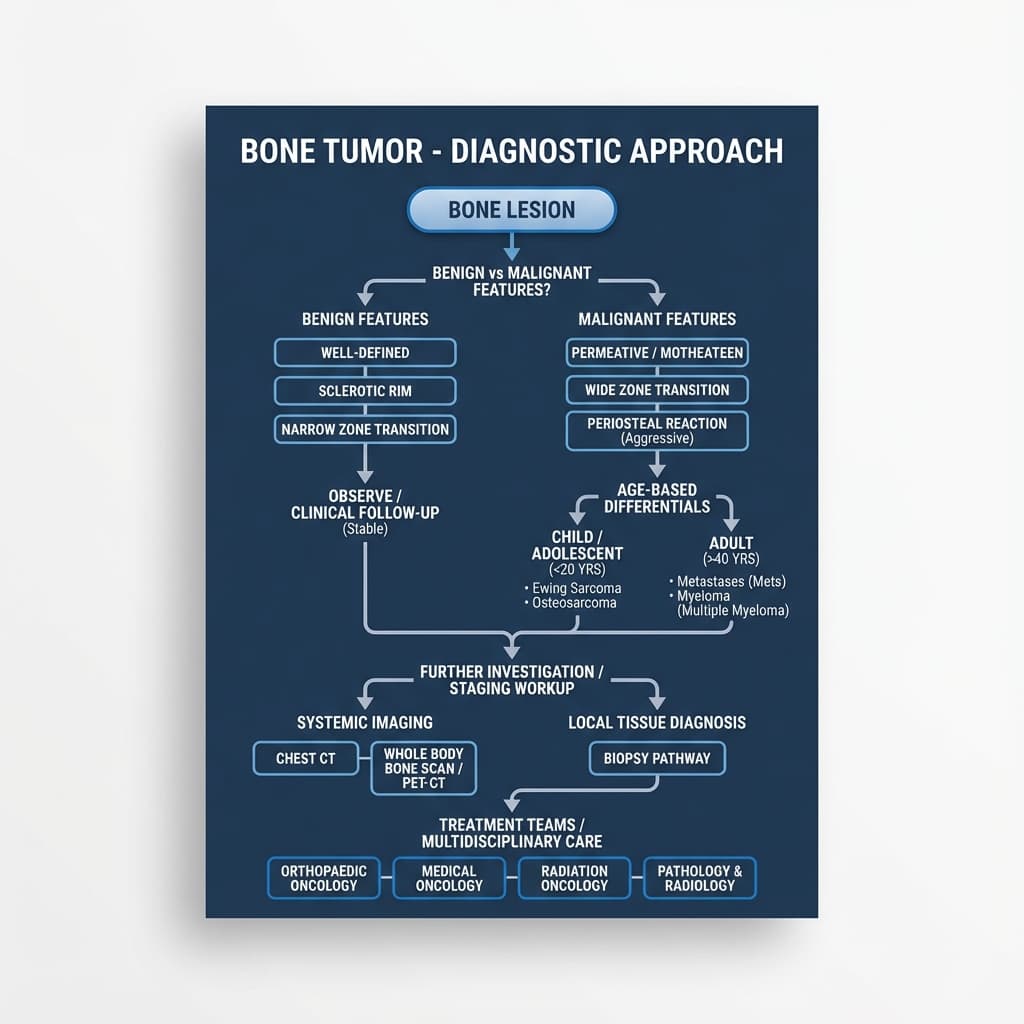
Bone Tumor Diagnostic Approach
Benign vs malignant features, age differentials
💡 Narrow transition = benign. Wide/permeative = malignant. Age matters
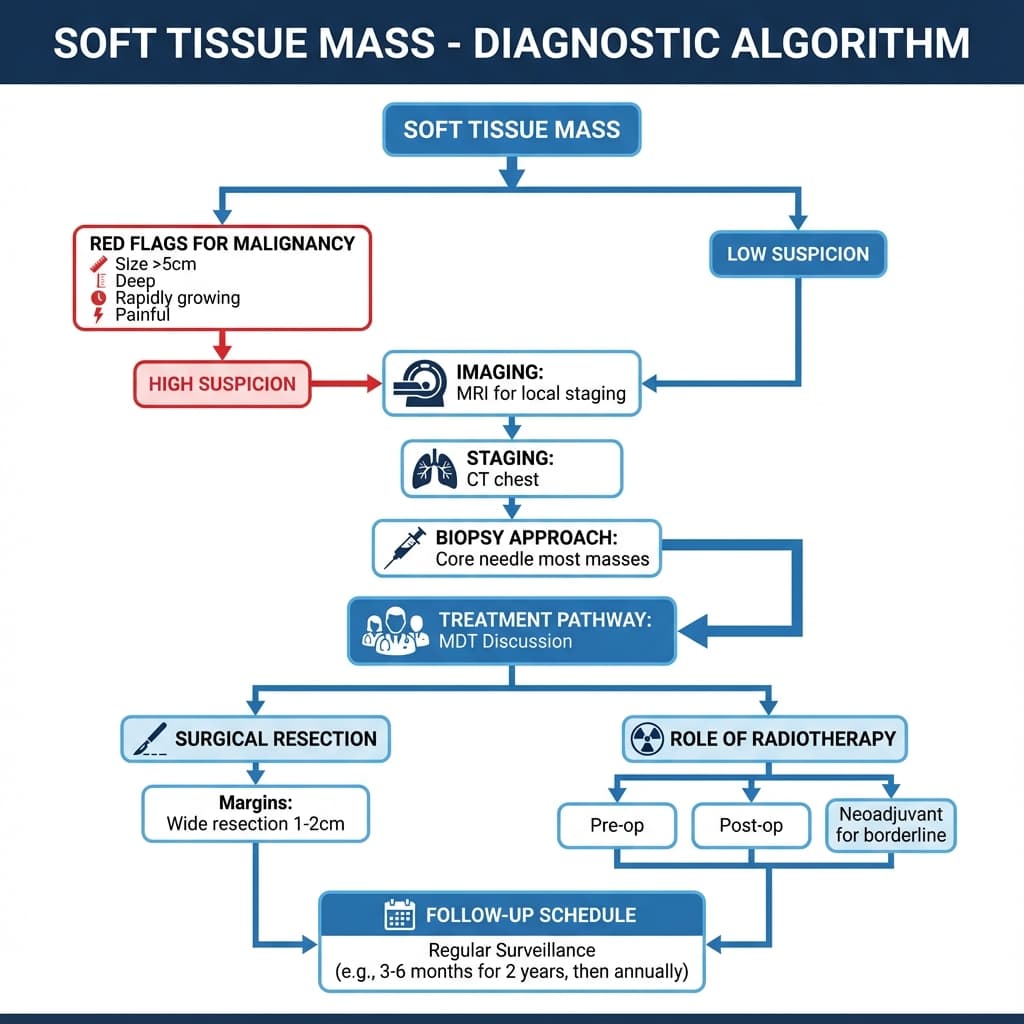
Soft Tissue Mass Algorithm
Red flags, staging, MDT, wide resection
💡 Red flags: >5cm, deep, rapid growth, painful. MDT discussion essential
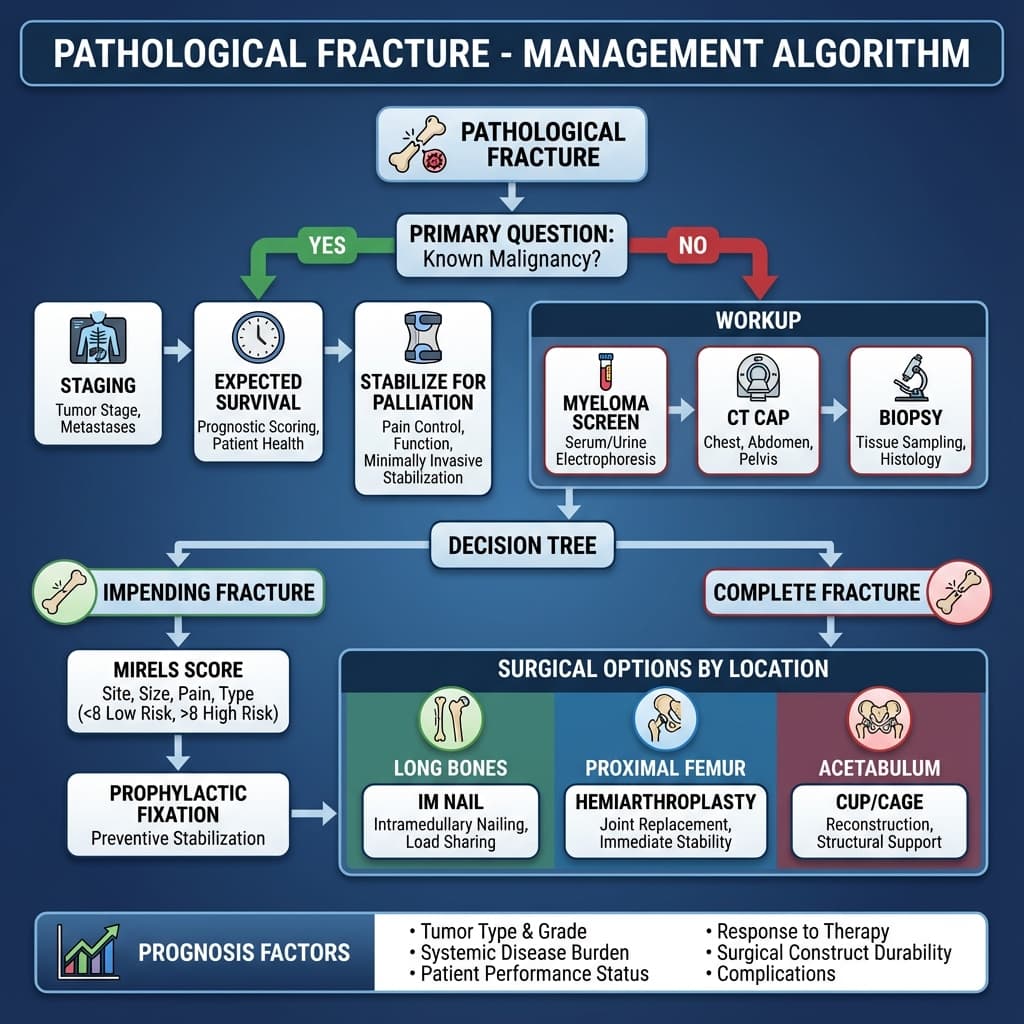
Pathological Fracture Algorithm
Known malignancy workup, Mirels, surgical options
💡 Unknown primary = biopsy. Mirels >8 = prophylactic fixation
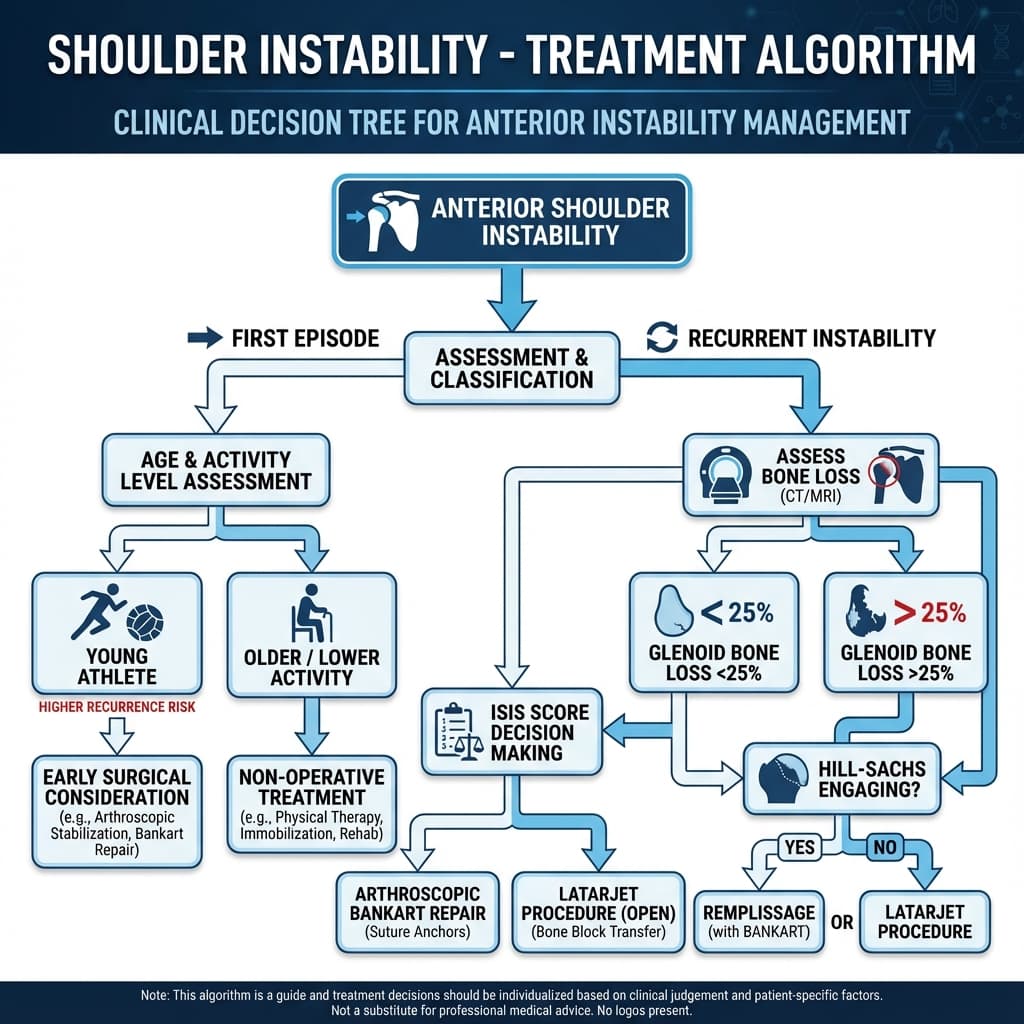
Shoulder Instability Treatment Algorithm
First episode vs recurrent, bone loss assessment, surgical options
💡 Bone loss >25% = Latarjet. ISIS score for decision making
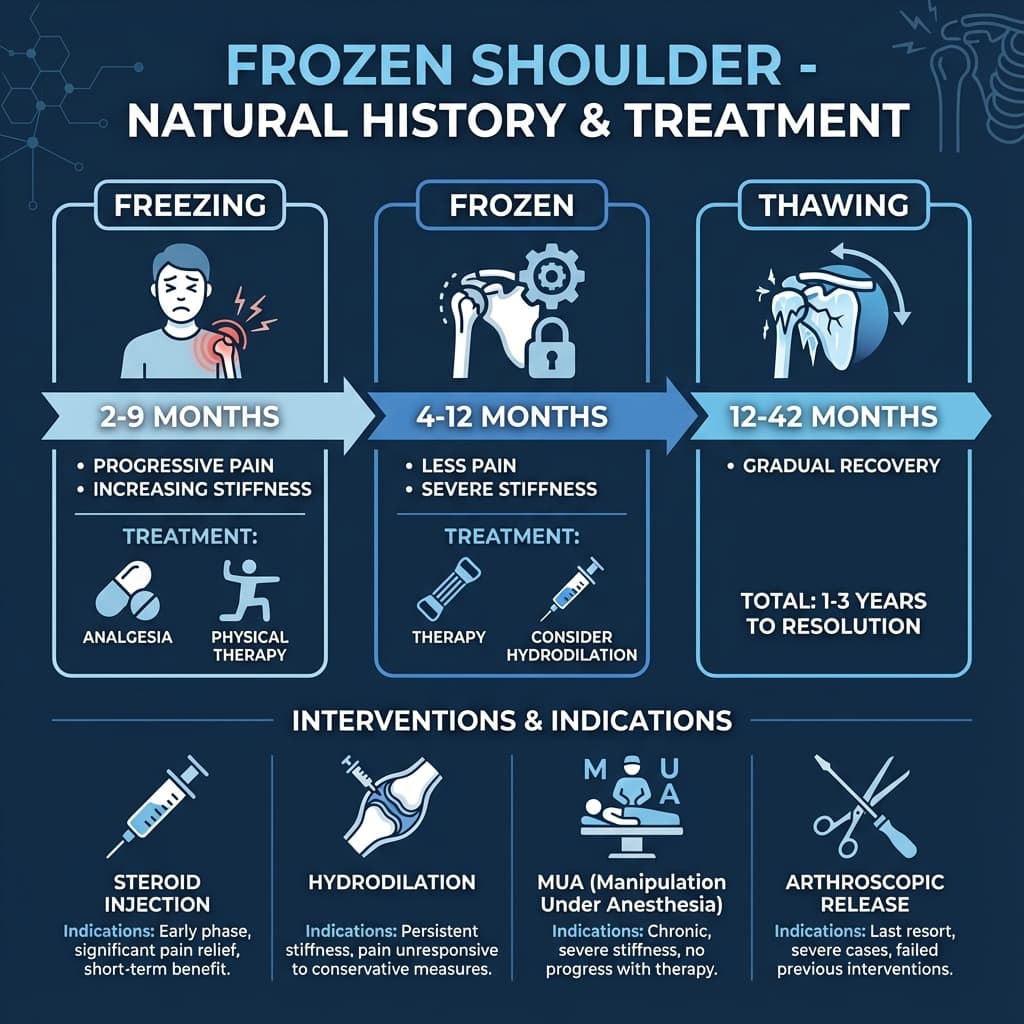
Frozen Shoulder Natural History
Freezing, frozen, thawing phases with treatments
💡 Self-limiting 1-3 years. Freezing = pain, Frozen = stiffness
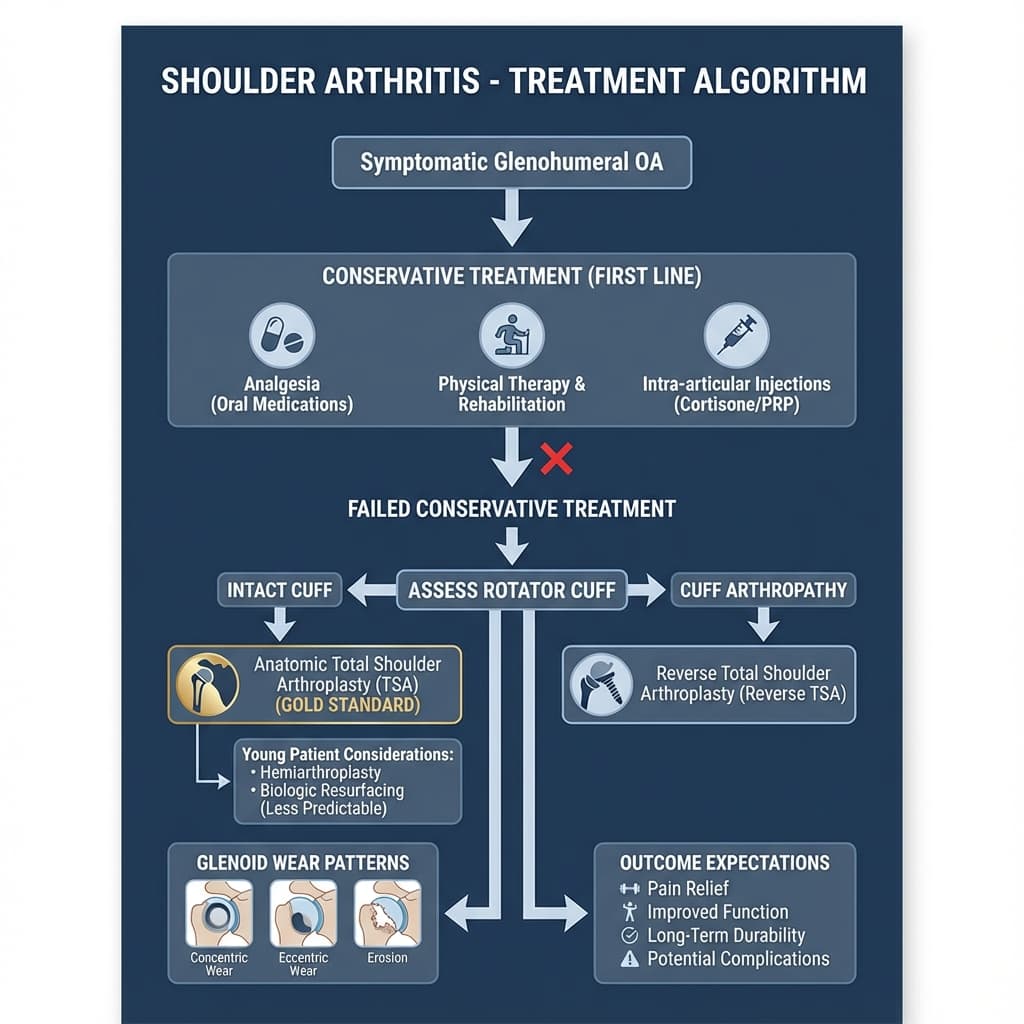
Shoulder Arthritis Treatment Algorithm
Intact cuff vs cuff arthropathy, TSA vs reverse
💡 Intact cuff = anatomic TSA. Cuff deficient = reverse TSA
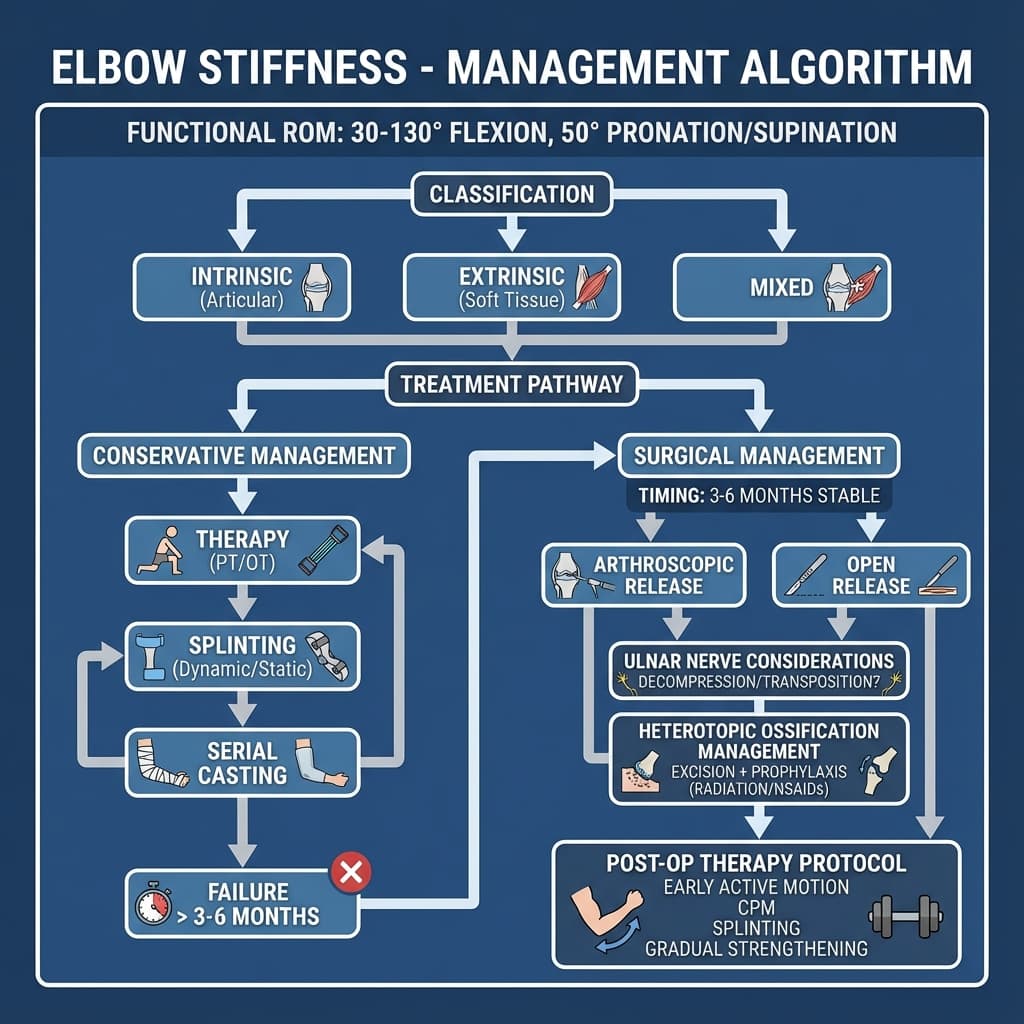
Elbow Stiffness Management
Intrinsic vs extrinsic, surgical timing, HO management
💡 Functional arc 30-130°. Wait 3-6 months stable before surgery
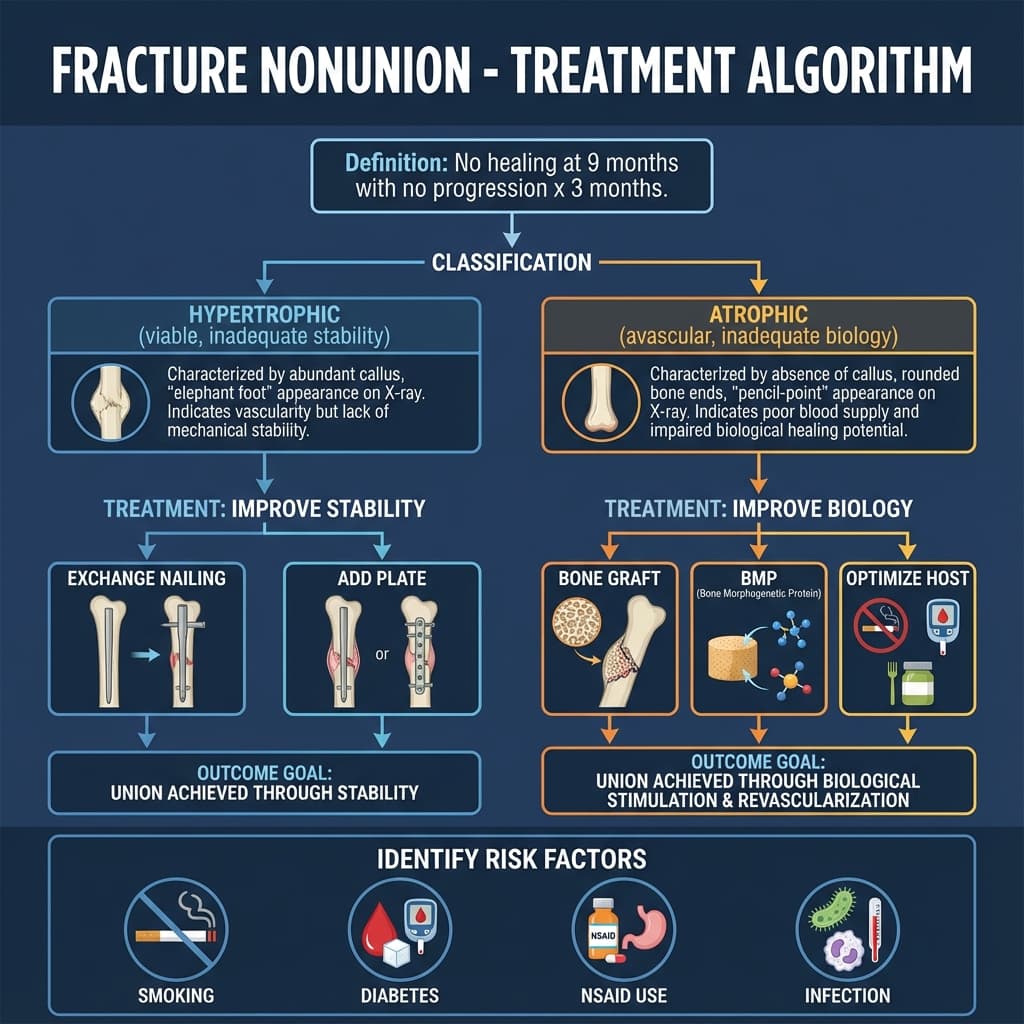
Fracture Nonunion Treatment Algorithm
Hypertrophic vs atrophic, stability vs biology
💡 Hypertrophic = add stability. Atrophic = add biology
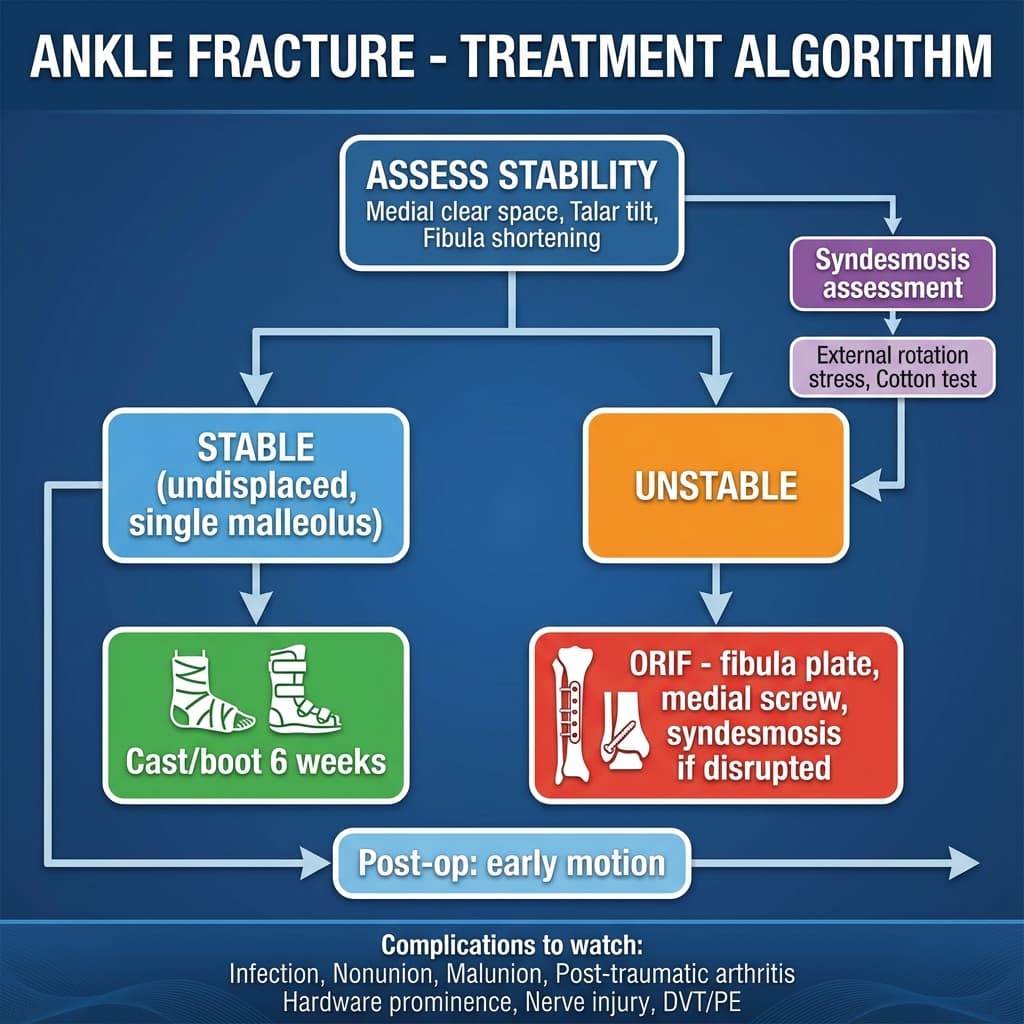
Ankle Fracture Treatment Algorithm
Stability assessment, ORIF indications, syndesmosis
💡 Medial clear space >4mm = unstable. Always assess syndesmosis
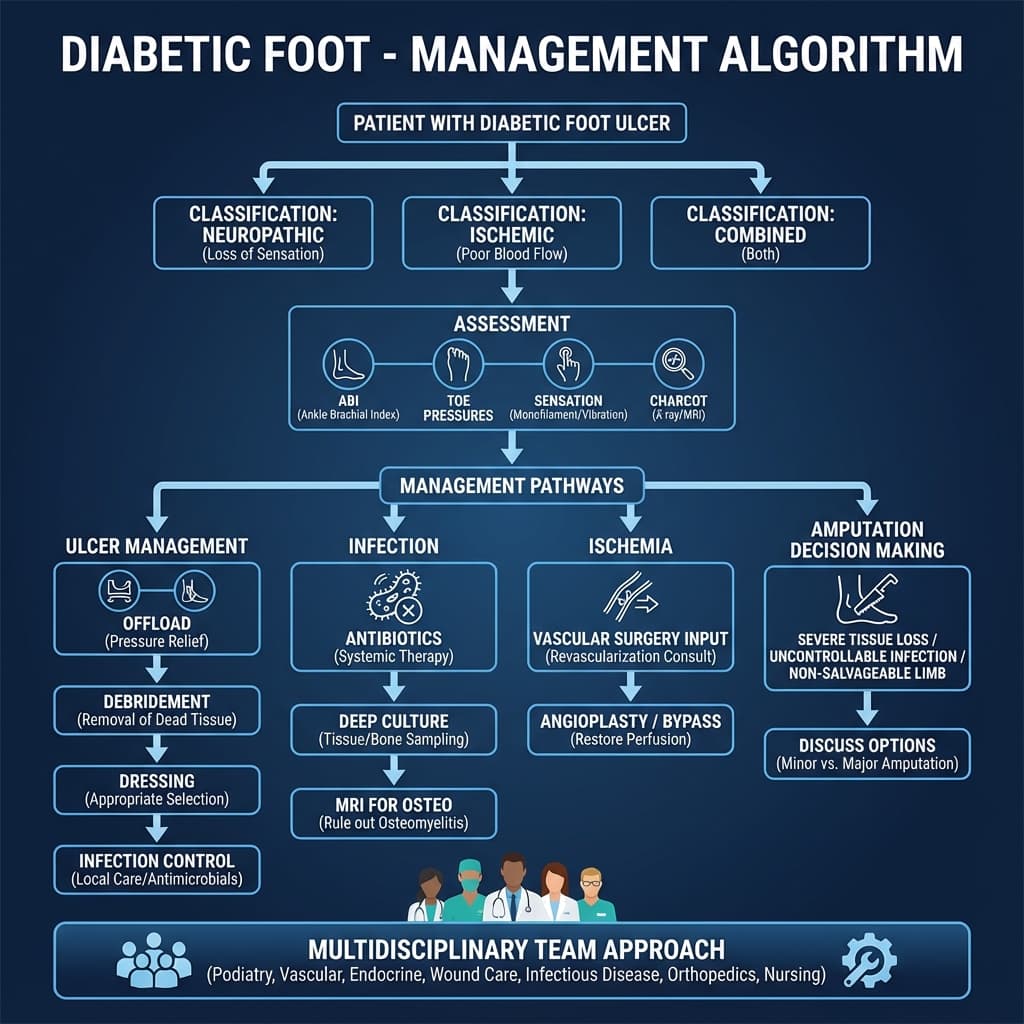
Diabetic Foot Management Algorithm
Neuropathic vs ischemic, ulcer and infection management
💡 MDT essential. Offload is key. ABI may be falsely elevated in diabetics
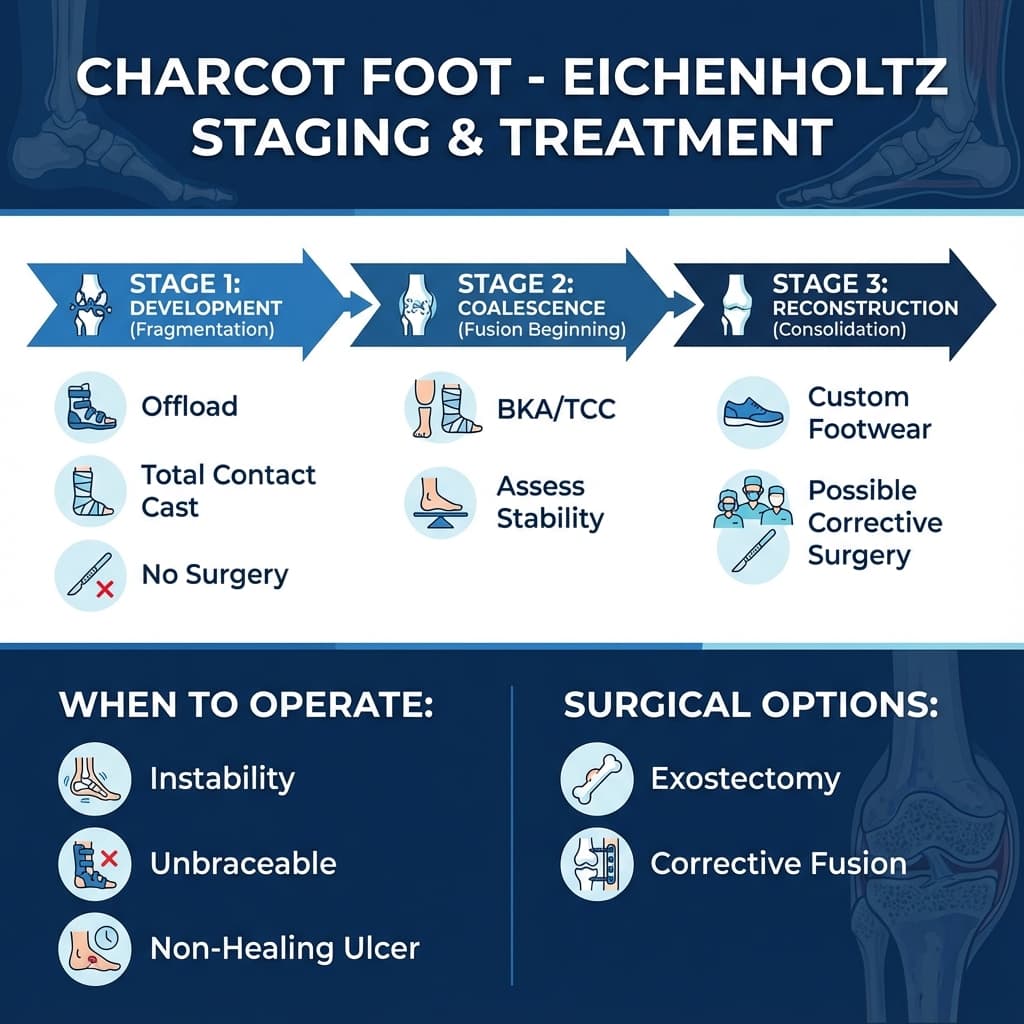
Charcot Foot Staging & Treatment
Eichenholtz staging, offloading, when to operate
💡 No surgery in active phase. TCC for offloading. Surgery for instability only
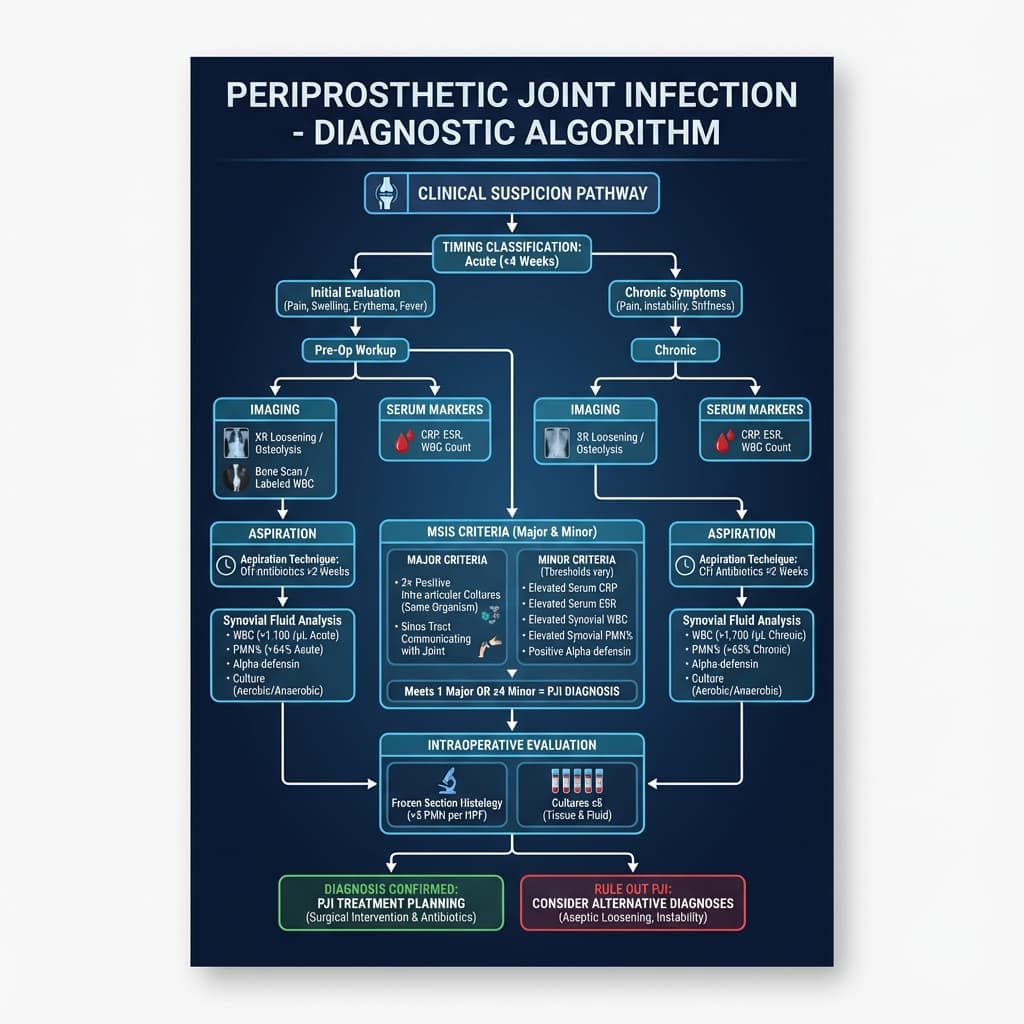
PJI Diagnostic Algorithm
MSIS criteria, aspiration, labs, intraoperative workup
💡 Major criteria: 2 positive cultures or sinus tract. Off antibiotics 2 weeks before aspirate
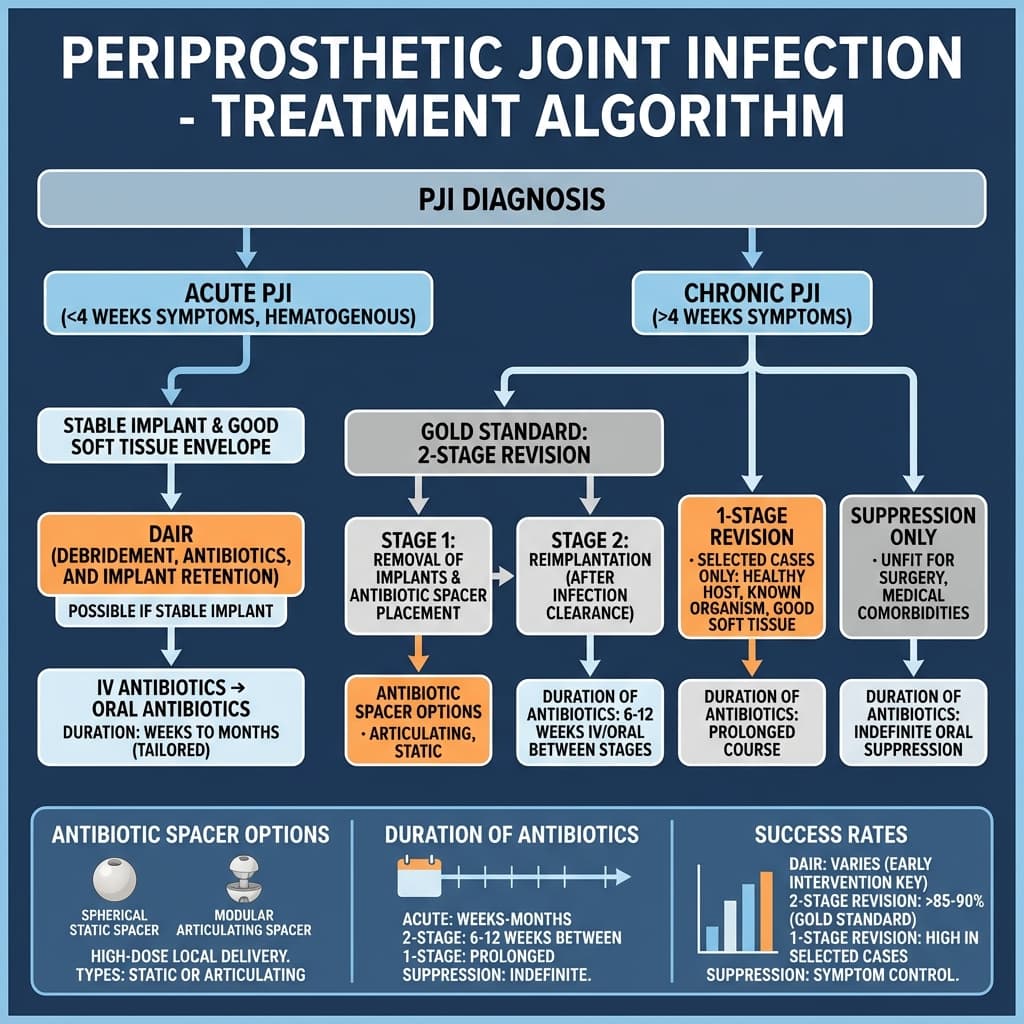
PJI Treatment Algorithm
DAIR vs 1-stage vs 2-stage, suppression
💡 Acute <4 weeks = DAIR possible. Chronic = 2-stage gold standard
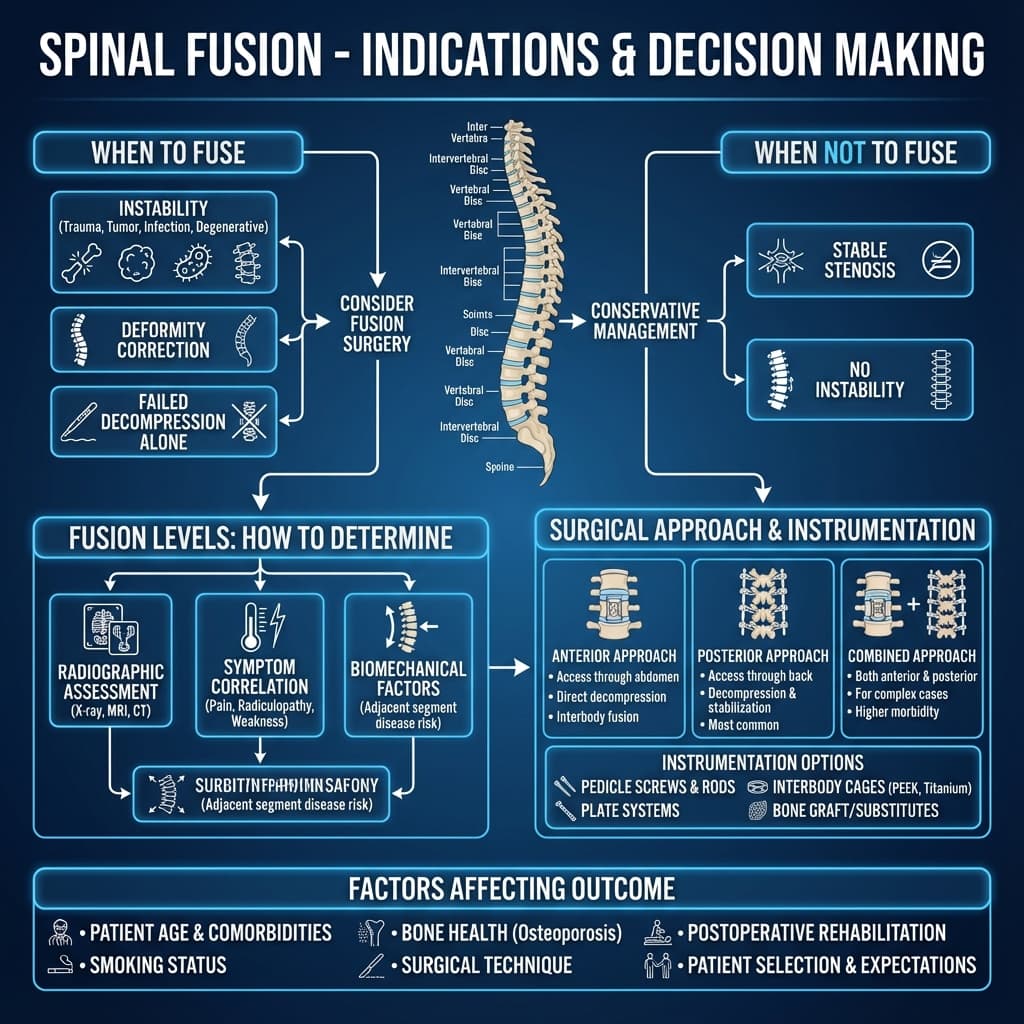
Spinal Fusion Decision Making
When to fuse, level selection, approach options
💡 Fuse for instability, deformity, failed decompression. Anterior vs posterior by pathology
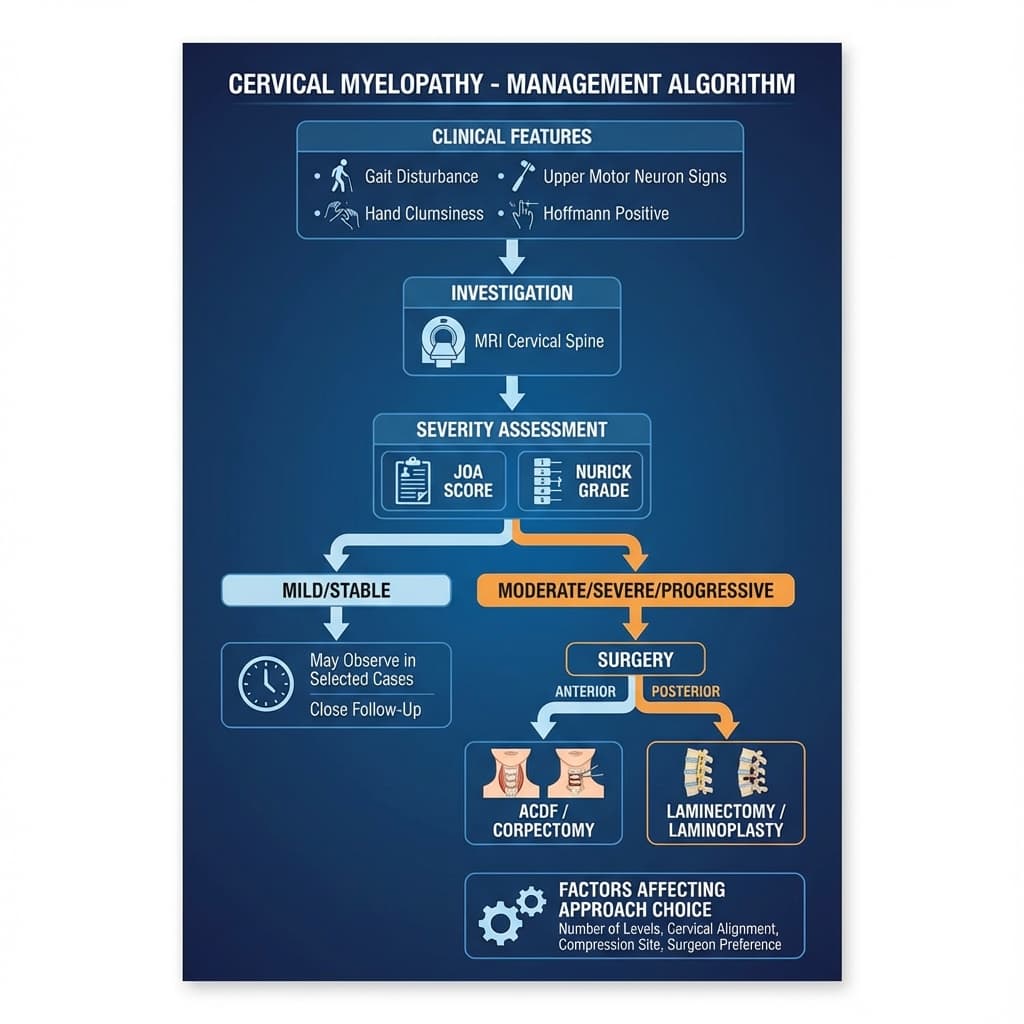
Cervical Myelopathy Management
Clinical features, severity grading, surgical approaches
💡 Progressive = surgery. Anterior vs posterior by number of levels and lordosis
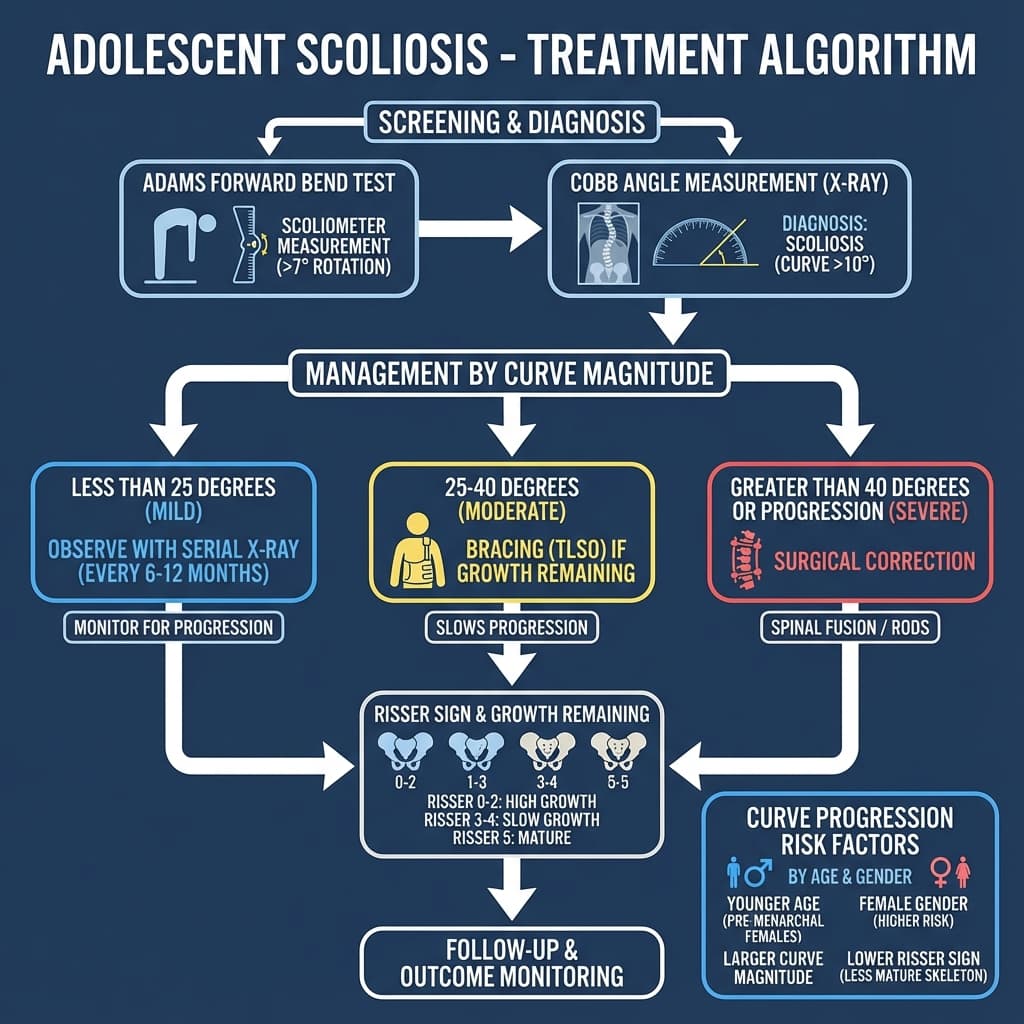
Adolescent Scoliosis Treatment
Cobb angle thresholds, bracing, surgical indications
💡 Less than 25 = observe. 25-40 with growth = brace. Greater than 40 = surgery
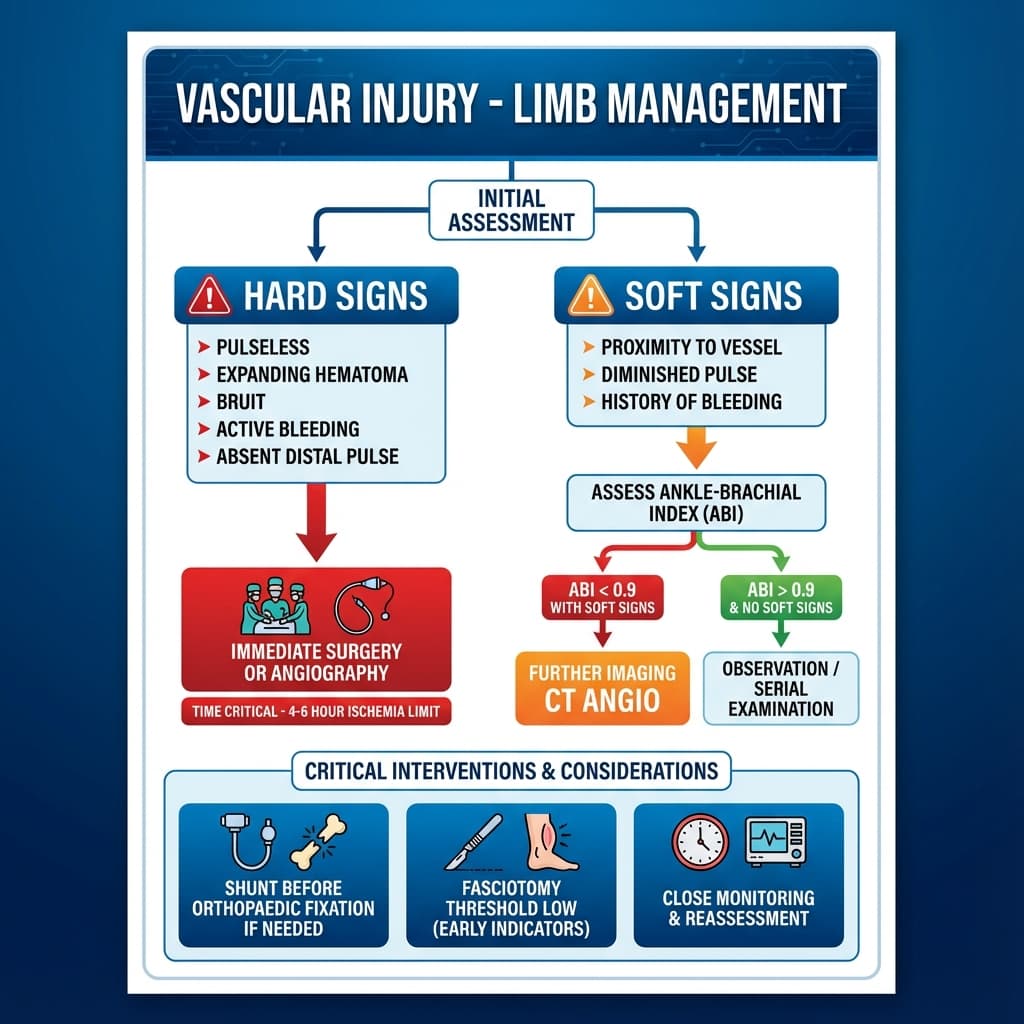
Vascular Injury Limb Management
Hard vs soft signs, imaging, timing, shunting
💡 Hard signs = immediate surgery. 4-6 hour ischemia limit. Shunt before ortho fixation
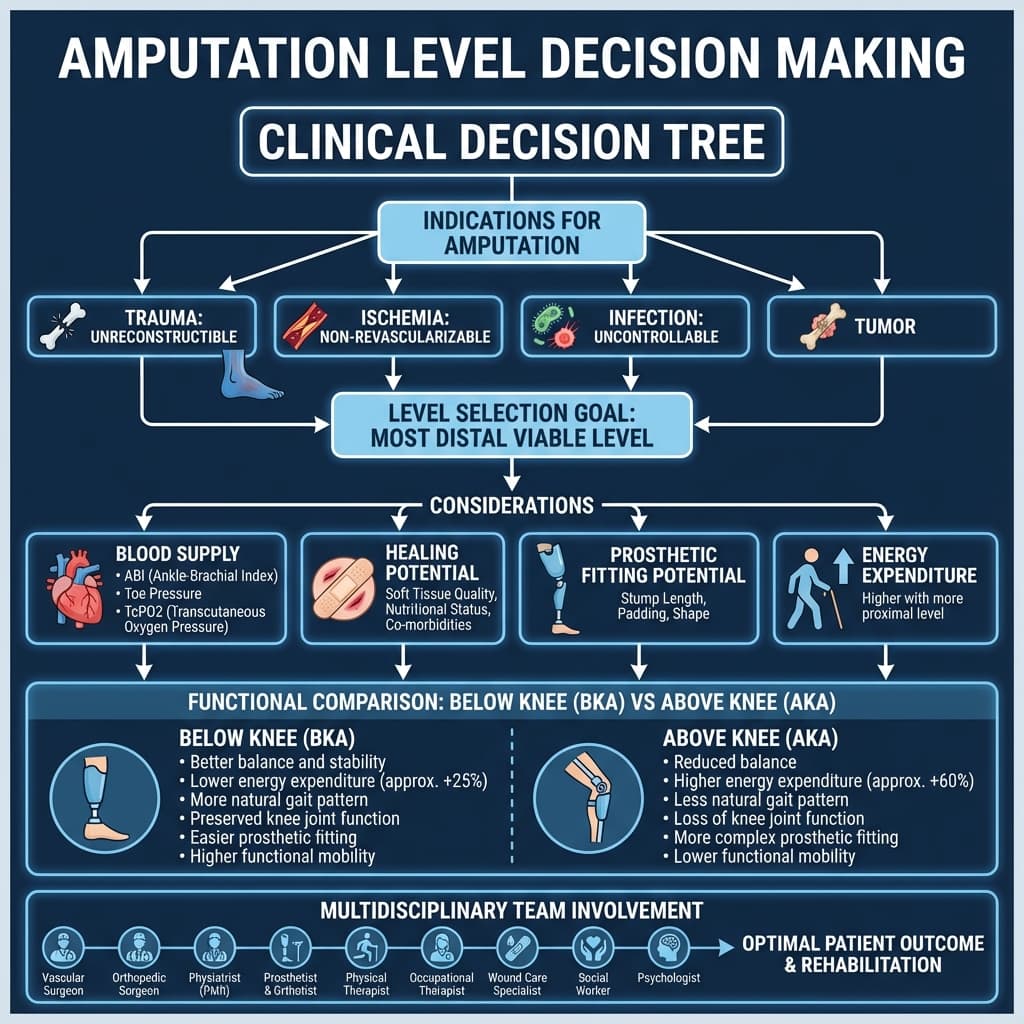
Amputation Level Decision Making
Level selection, healing potential, energy expenditure
💡 Most distal viable. BKA preferred if possible. Energy doubles with each proximal level
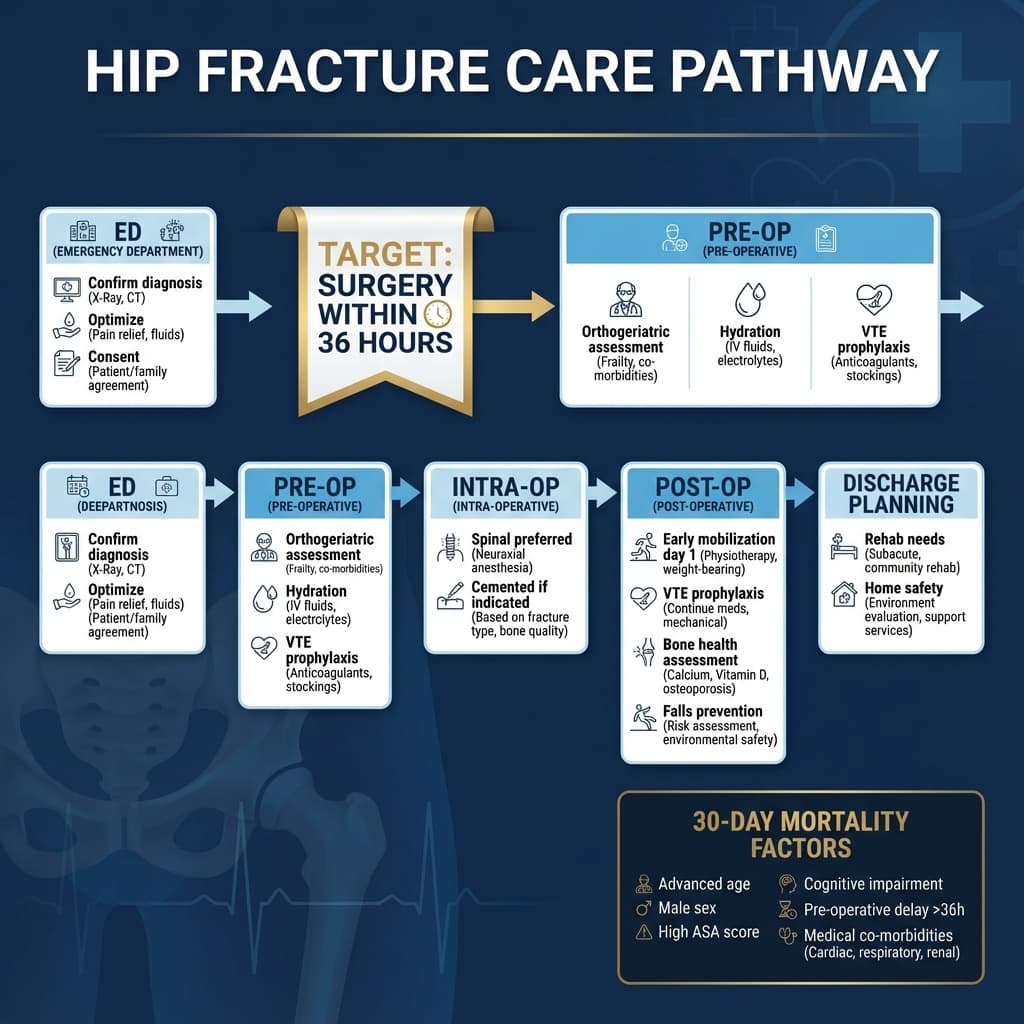
Hip Fracture Care Pathway
ED to discharge timeline, 36-hour surgery target
💡 Surgery within 36 hours. Cemented if needed. Mobilize day 1. Orthogeriatric reduces mortality
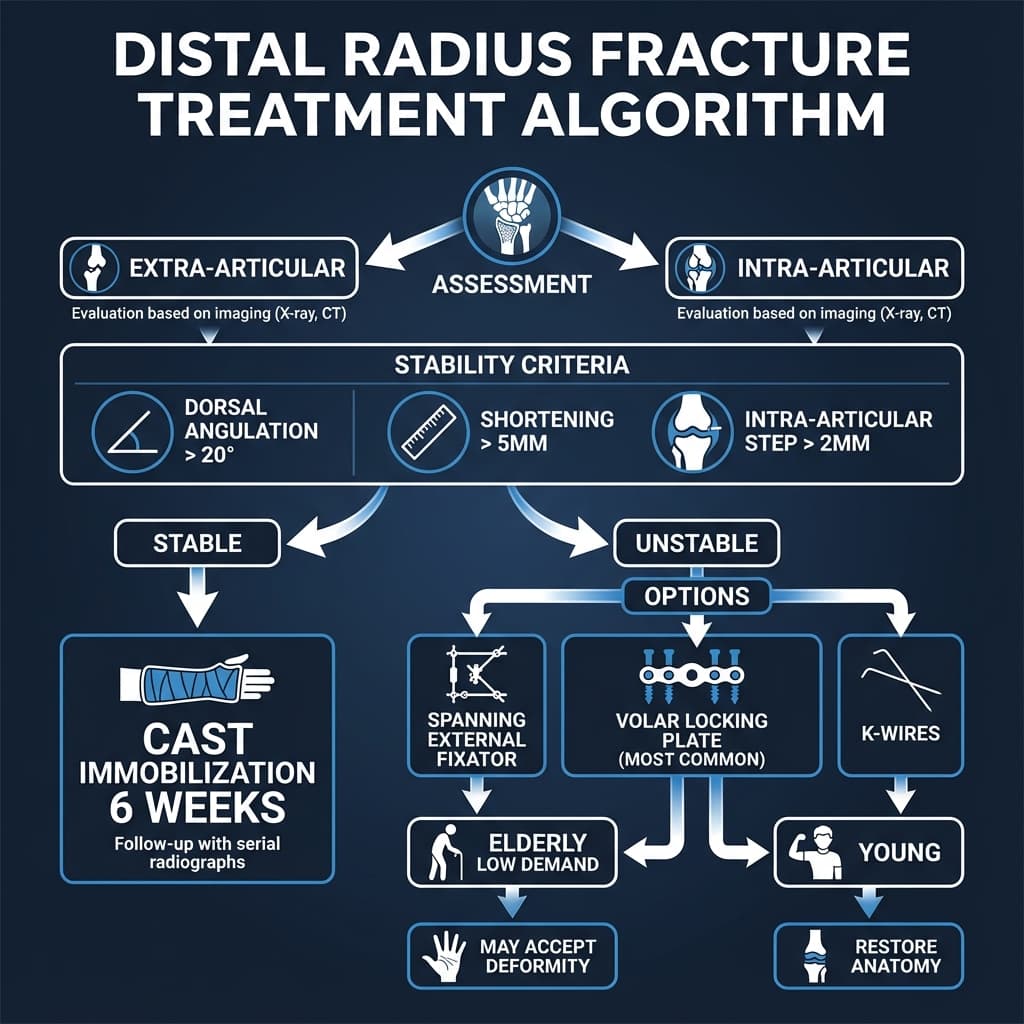
Distal Radius Fracture Algorithm
Stability assessment, cast vs ORIF indications
💡 Unstable: dorsal tilt greater than 20, shortening greater than 5mm, articular step greater than 2mm
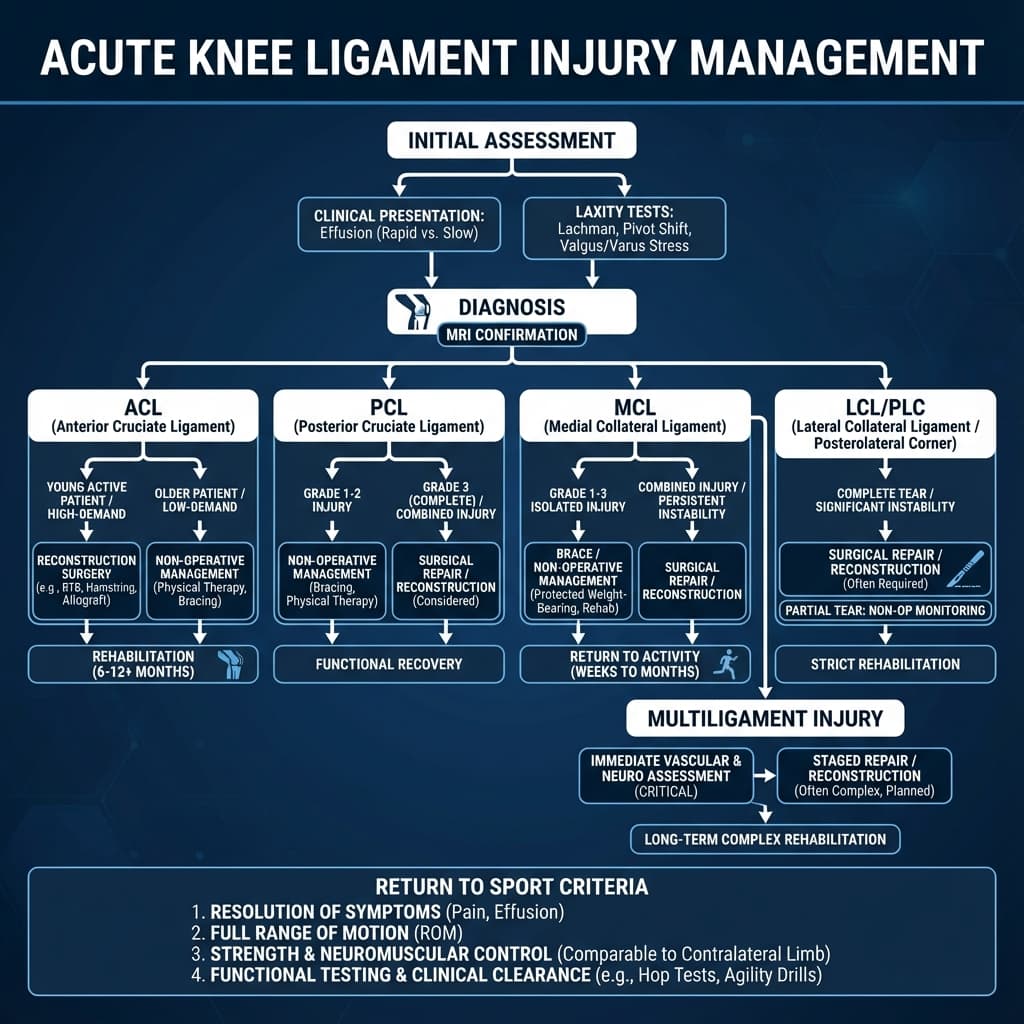
Acute Knee Ligament Injury
ACL, PCL, MCL, LCL management by grade
💡 ACL = recon in young active. MCL = brace. PCL = most non-op. Multiligament = check vascular
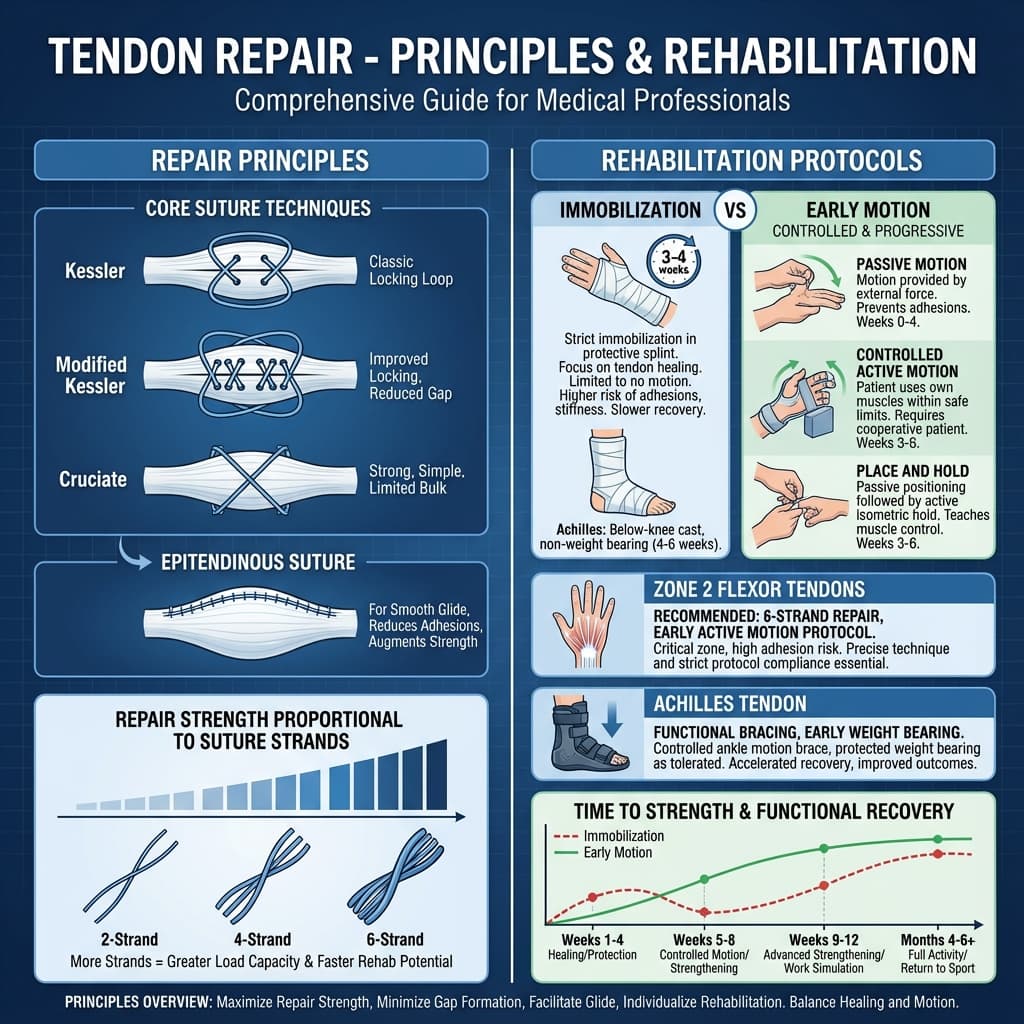
Tendon Repair Principles & Rehab
Core suture techniques, early motion protocols
💡 More core strands = stronger repair. Zone 2 = 6 strands + early active motion
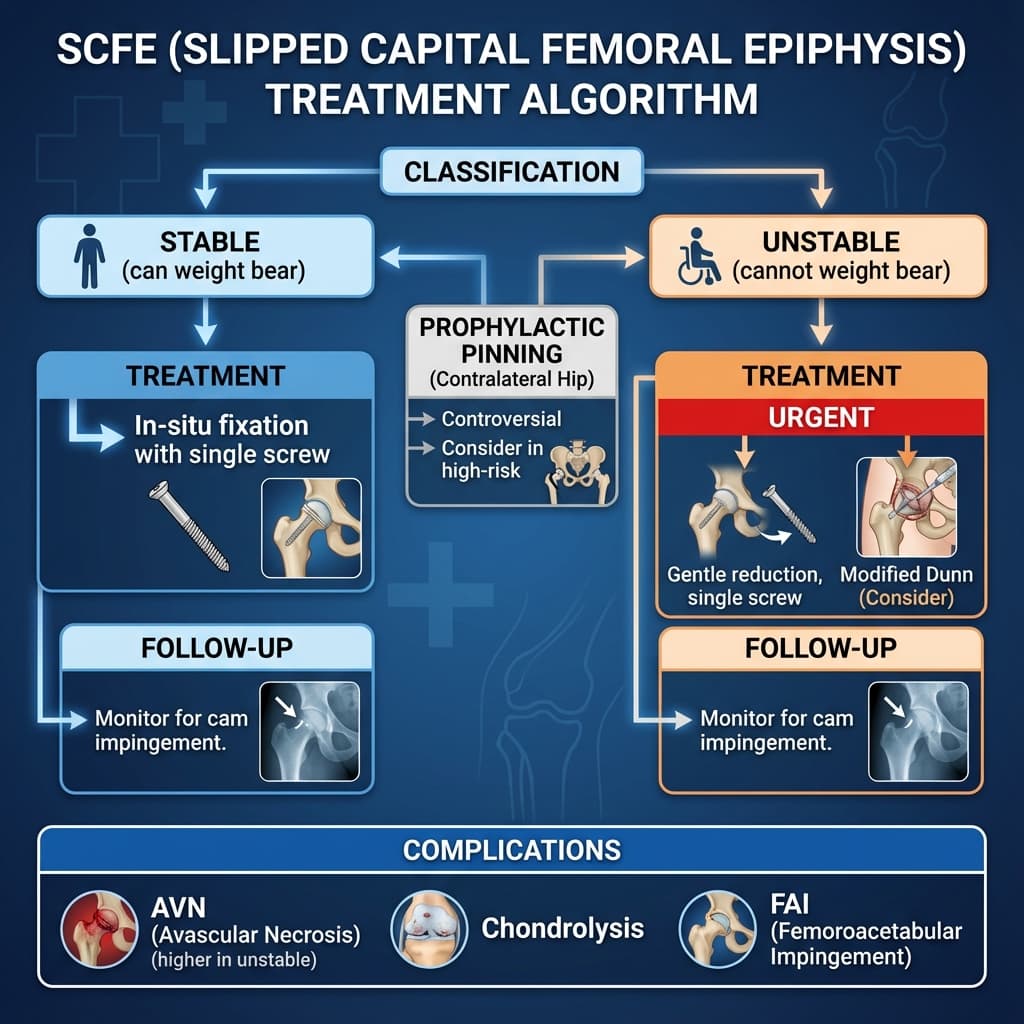
SCFE Treatment Algorithm
Stable vs unstable, in-situ pinning, prophylactic pinning
💡 Stable = single screw in-situ. Unstable = urgent, higher AVN risk
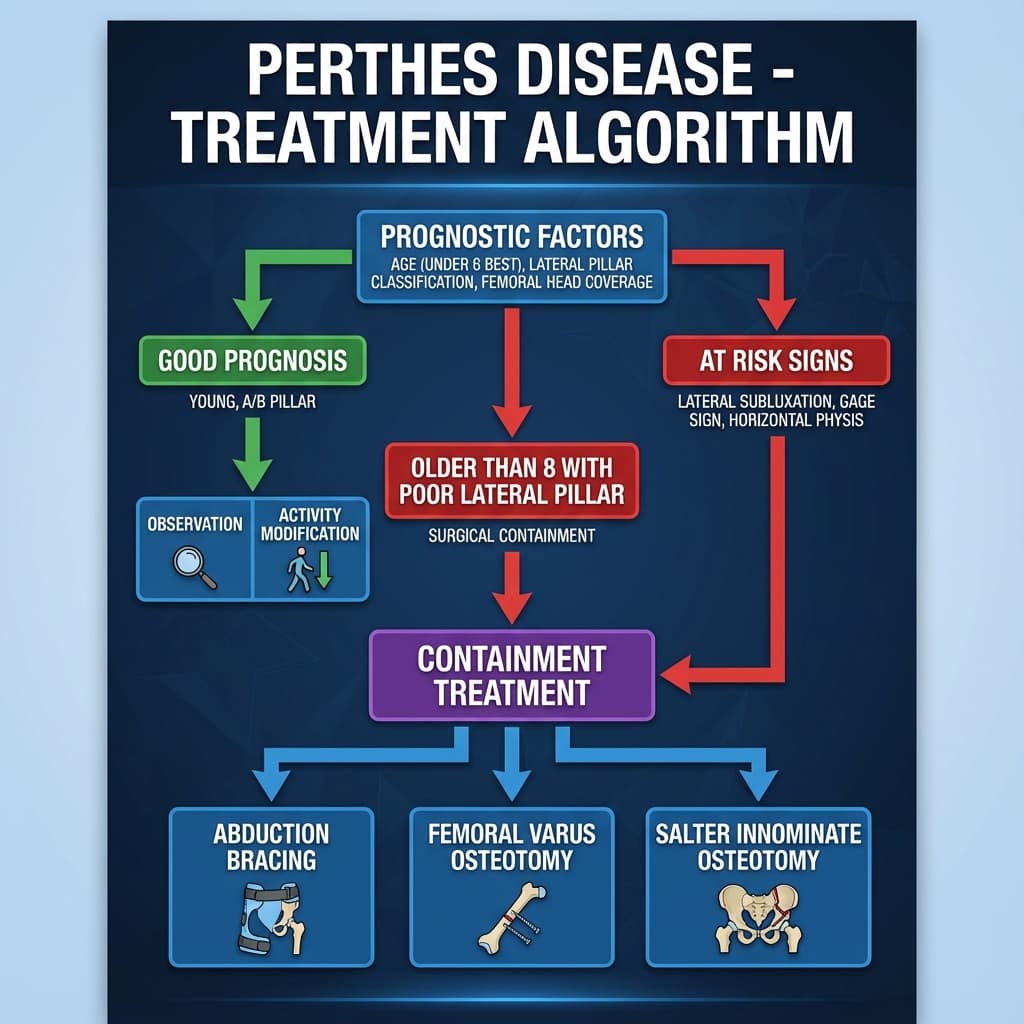
Perthes Disease Treatment
Age-based prognosis, lateral pillar, containment options
💡 Younger than 6 = good prognosis. At-risk signs need containment surgery
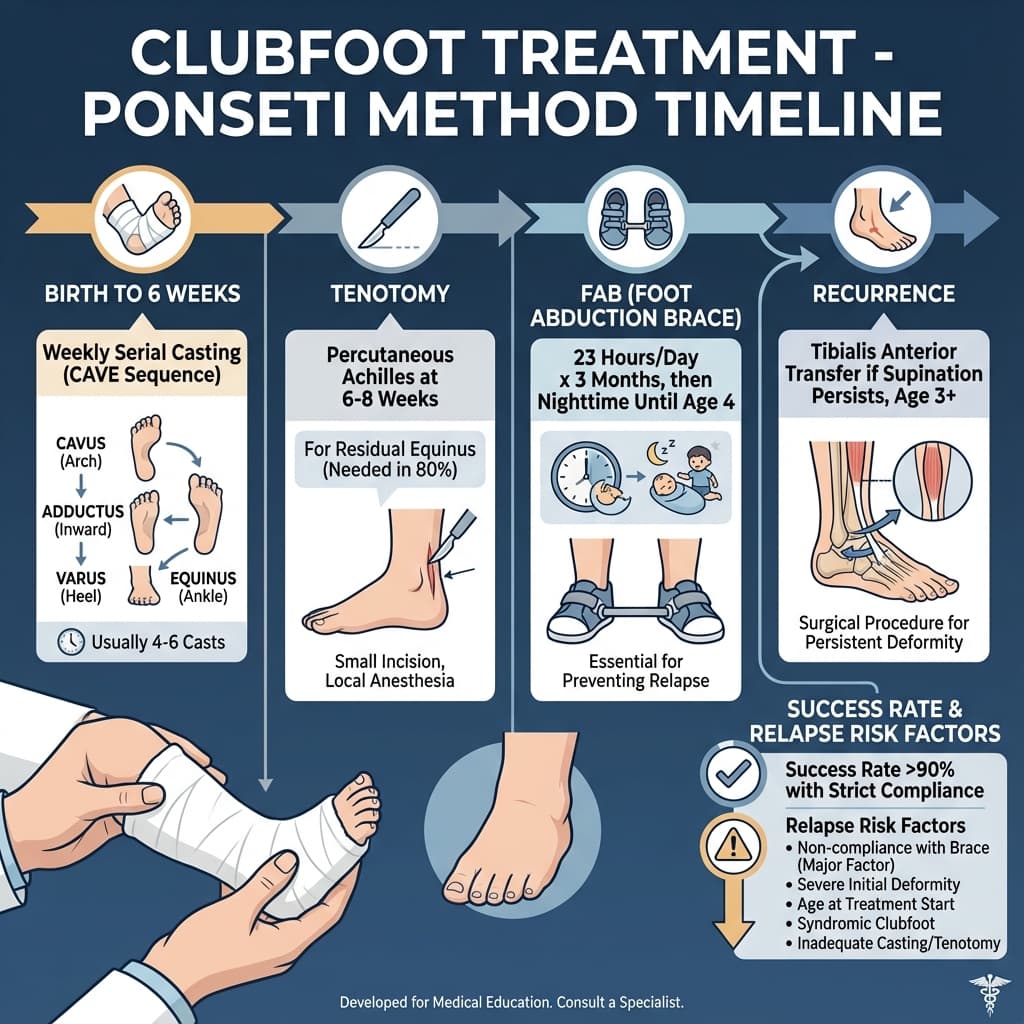
Clubfoot Ponseti Method Timeline
CAVE sequence, casting, tenotomy, bracing protocol
💡 CAVE order: Cavus, Adductus, Varus, Equinus. 80% need tenotomy. FAB until age 4
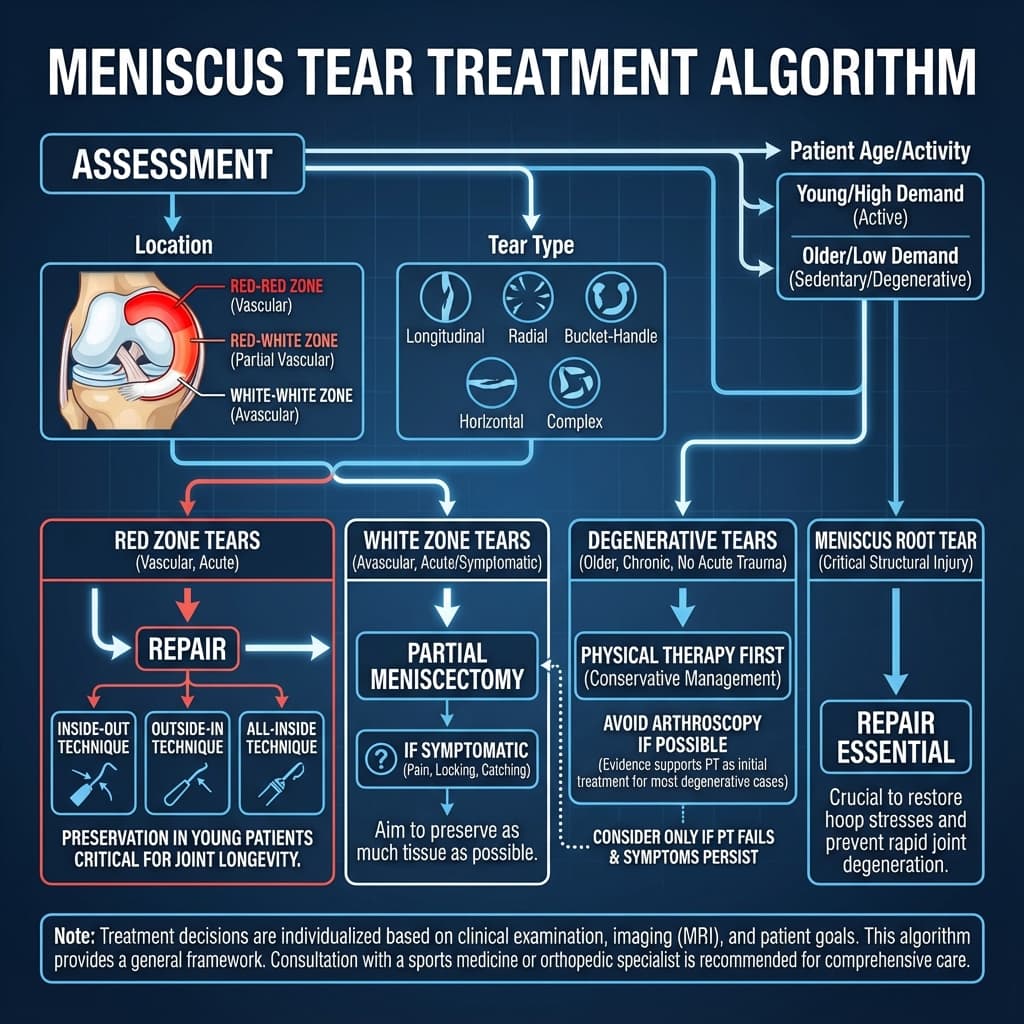
Meniscus Tear Treatment Algorithm
Zone-based repair vs meniscectomy decision
💡 Red zone = repair. White zone = partial meniscectomy. Root tear = must repair
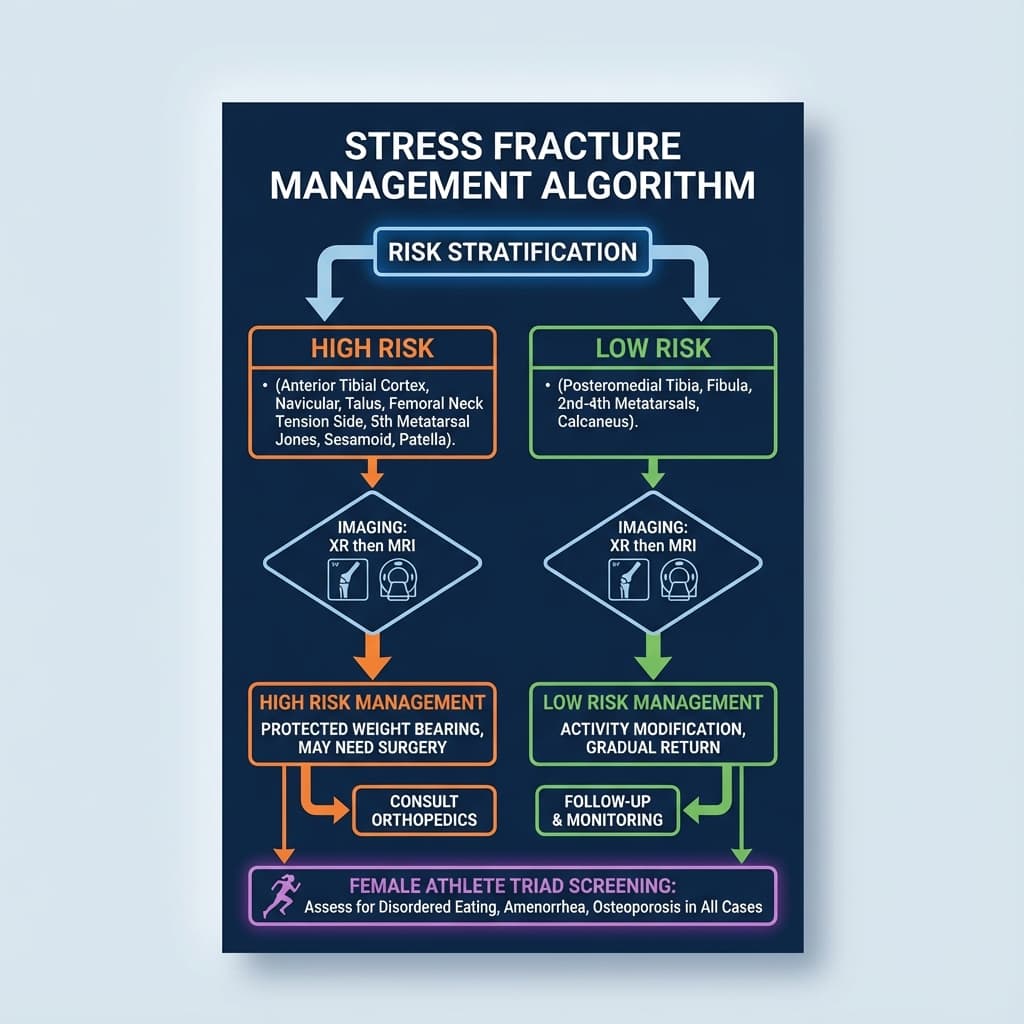
Stress Fracture Management Algorithm
High-risk vs low-risk site management
💡 High-risk sites: anterior tibia, navicular, FN tension side, 5th MT Jones = may need surgery
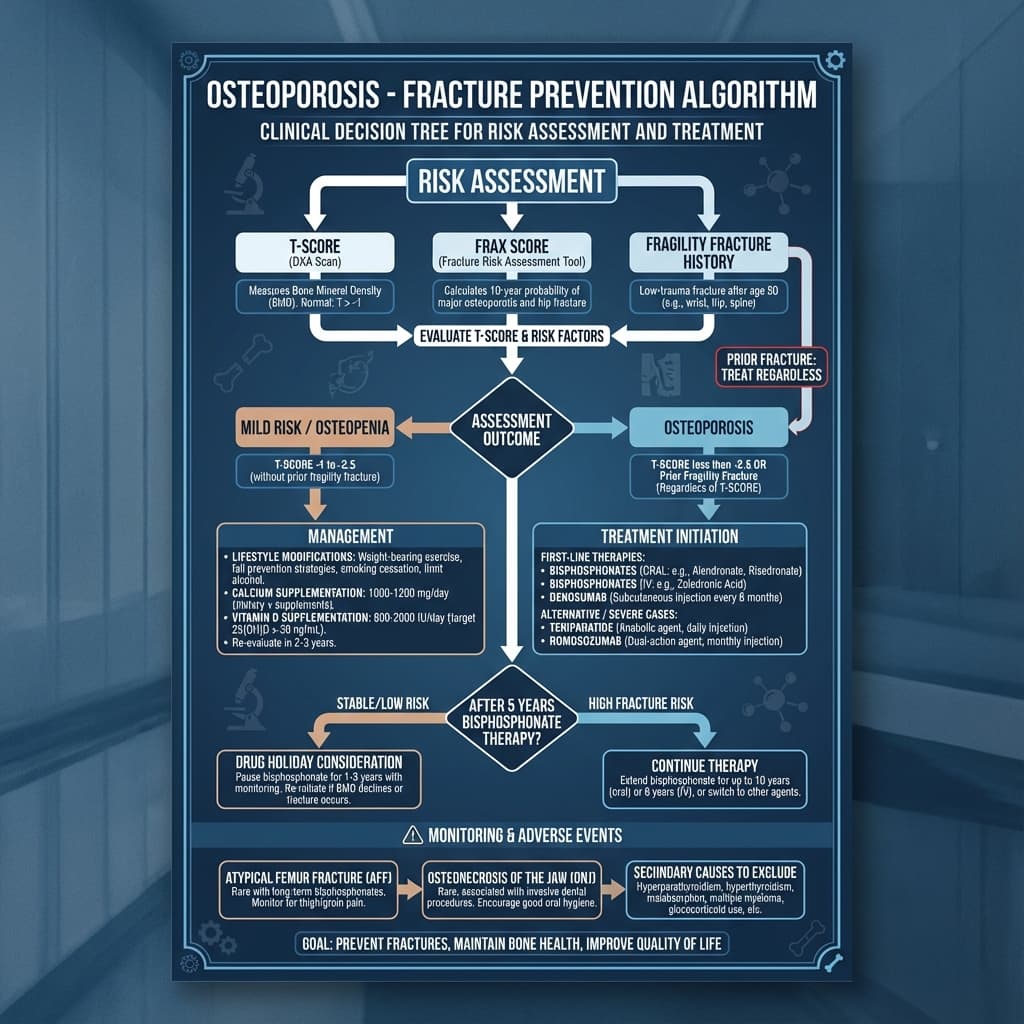
Osteoporosis Fracture Prevention
T-score thresholds, FRAX, treatment options
💡 Prior fragility fracture = treat regardless of T-score. Drug holiday after 5 years
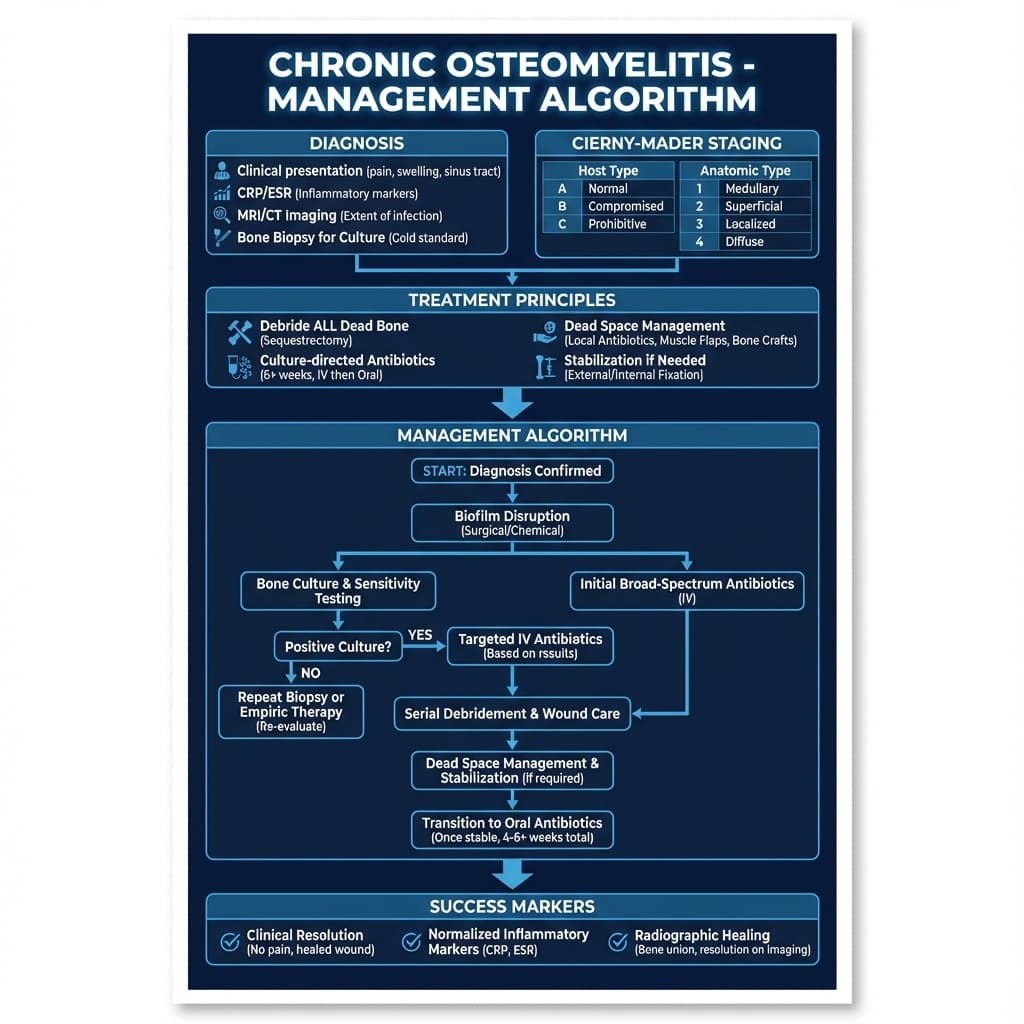
Chronic Osteomyelitis Management
Cierny-Mader staging, debridement principles, dead space management
💡 Debride all dead bone. Culture-directed antibiotics 6+ weeks. Dead space management critical
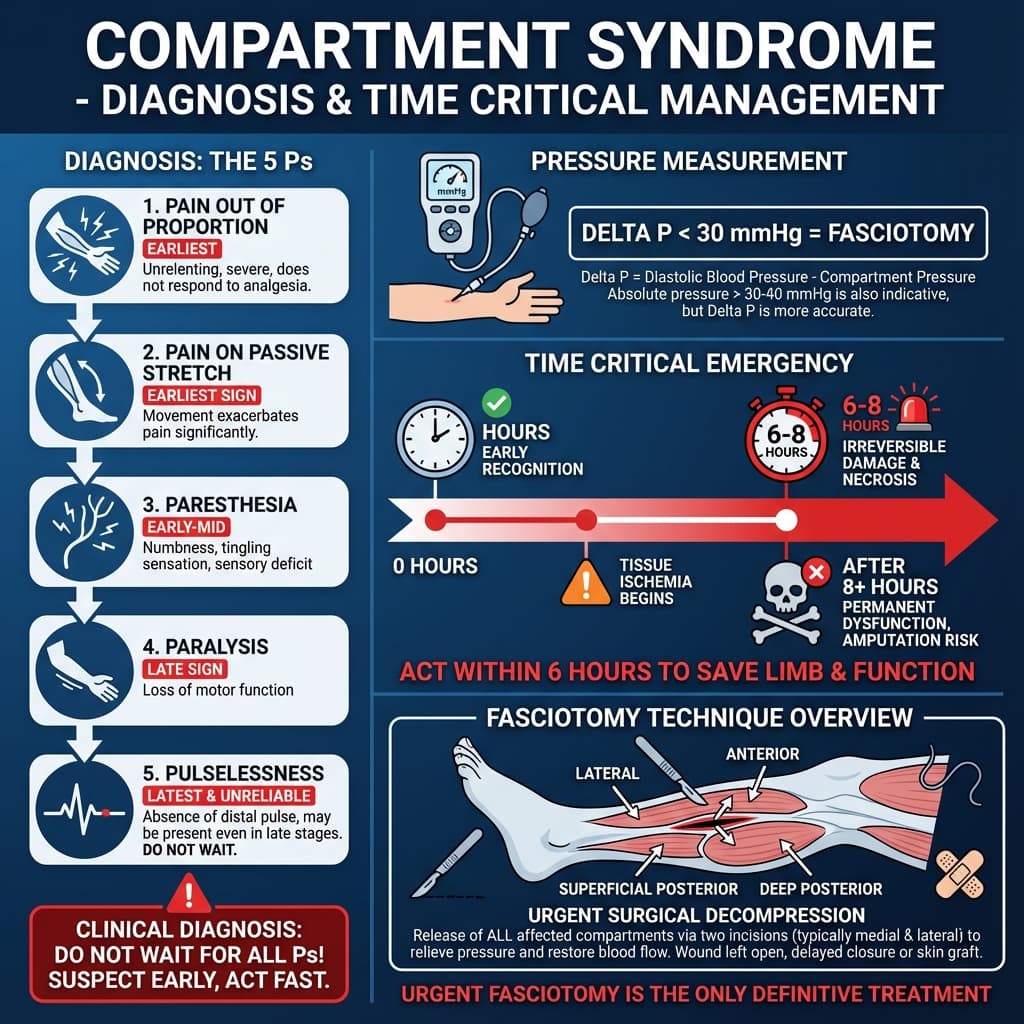
Compartment Syndrome Emergency Management
5 Ps, clinical diagnosis, fasciotomy timing
💡 Pain on passive stretch = earliest sign. Pulselessness = late/unreliable. Delta P <30 = fasciotomy
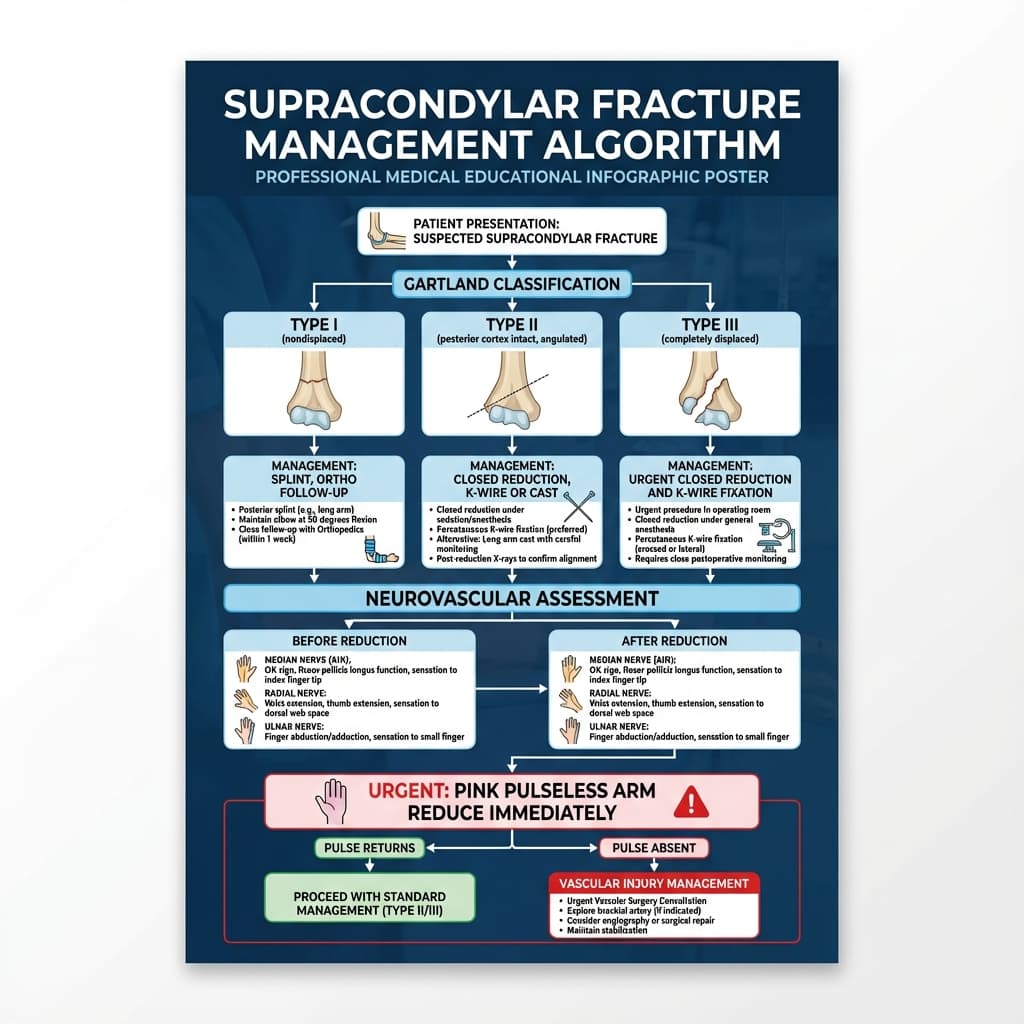
Supracondylar Fracture Management
Gartland types, neurovascular assessment, pink pulseless arm
💡 Type III = urgent reduction. Pink pulseless = reduce immediately. AIN = median nerve
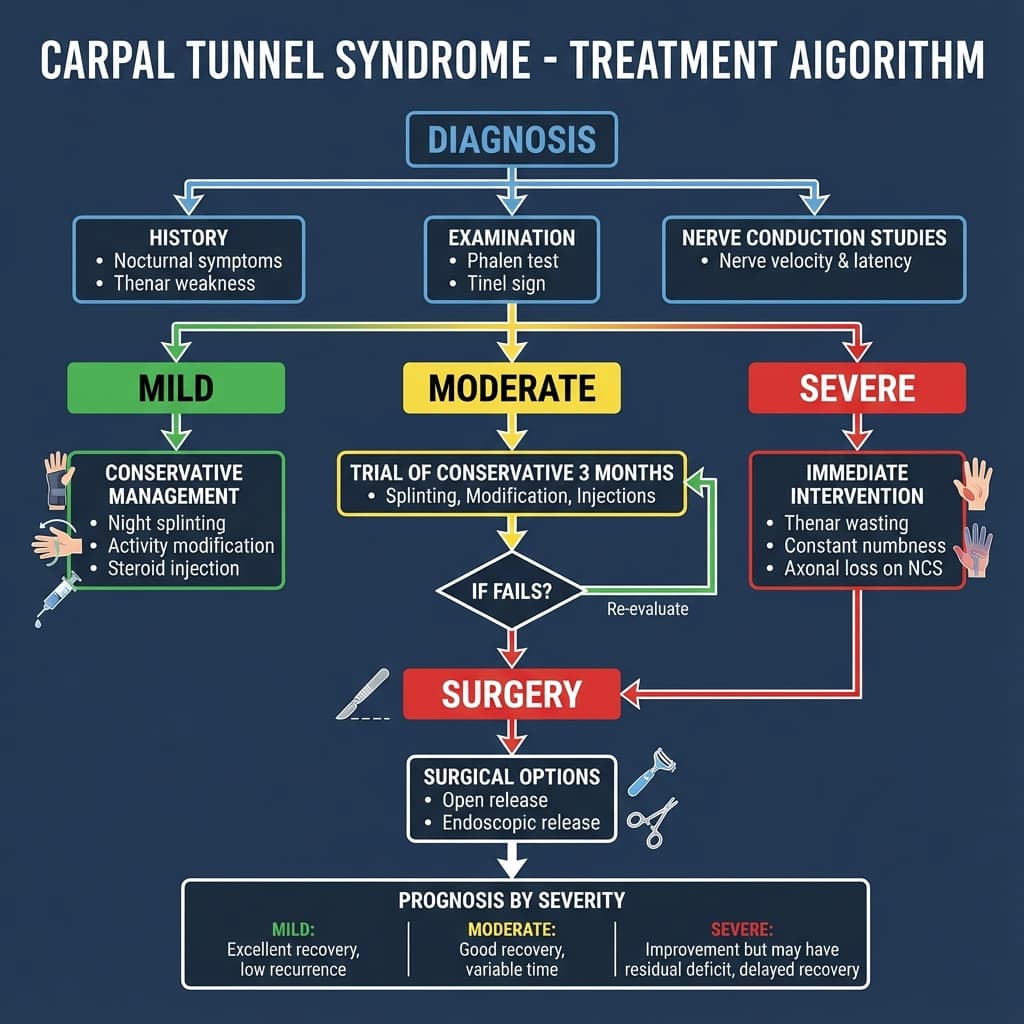
Carpal Tunnel Treatment Algorithm
Severity-based management, splinting vs surgery
💡 Severe (thenar wasting, axonal loss) = direct to surgery. Mild/moderate = trial splinting
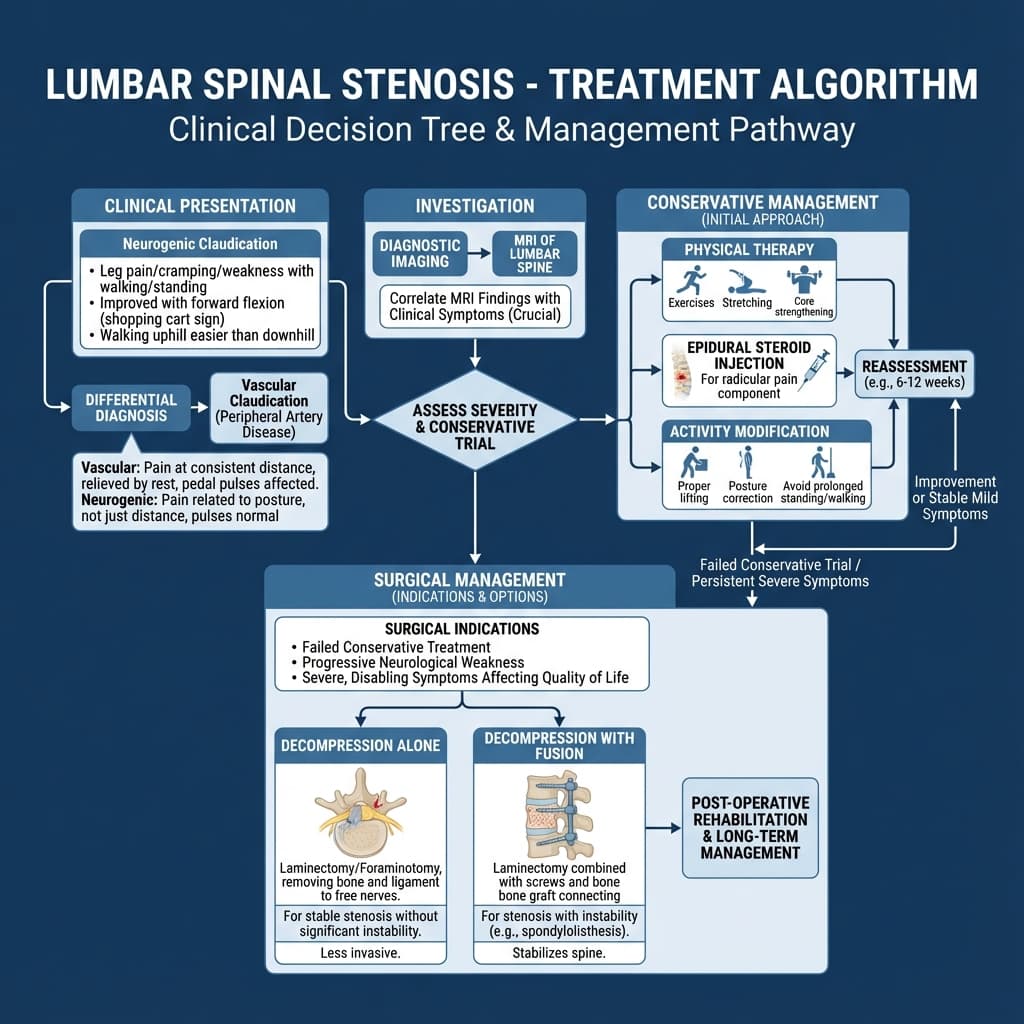
Lumbar Spinal Stenosis Treatment
Neurogenic claudication, conservative vs surgical, when to fuse
💡 Neurogenic improves with flexion. Vascular same in all positions. Decompress +/- fuse for instability
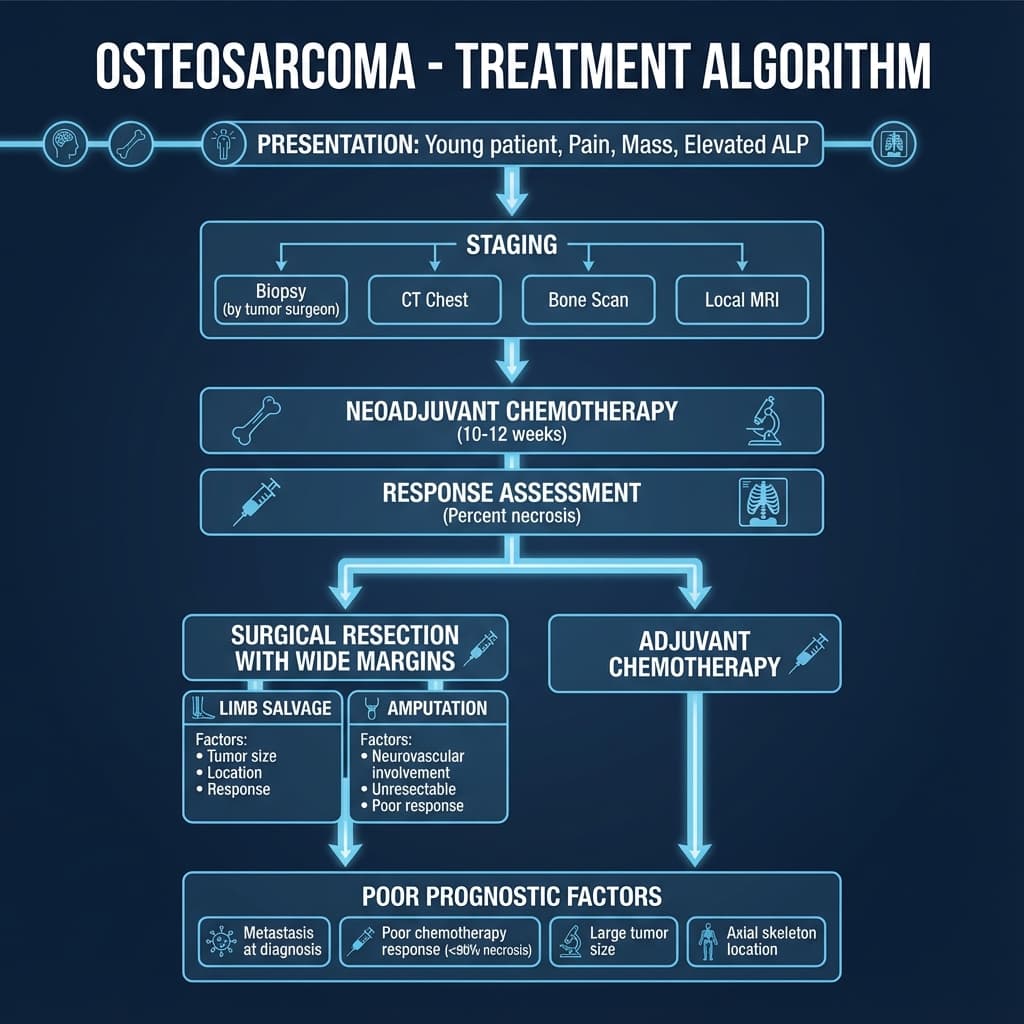
Osteosarcoma Treatment Algorithm
Staging, neoadjuvant chemo, surgical margins, response assessment
💡 Biopsy by tumor surgeon. Neoadjuvant chemo 10-12 weeks. Response = % necrosis
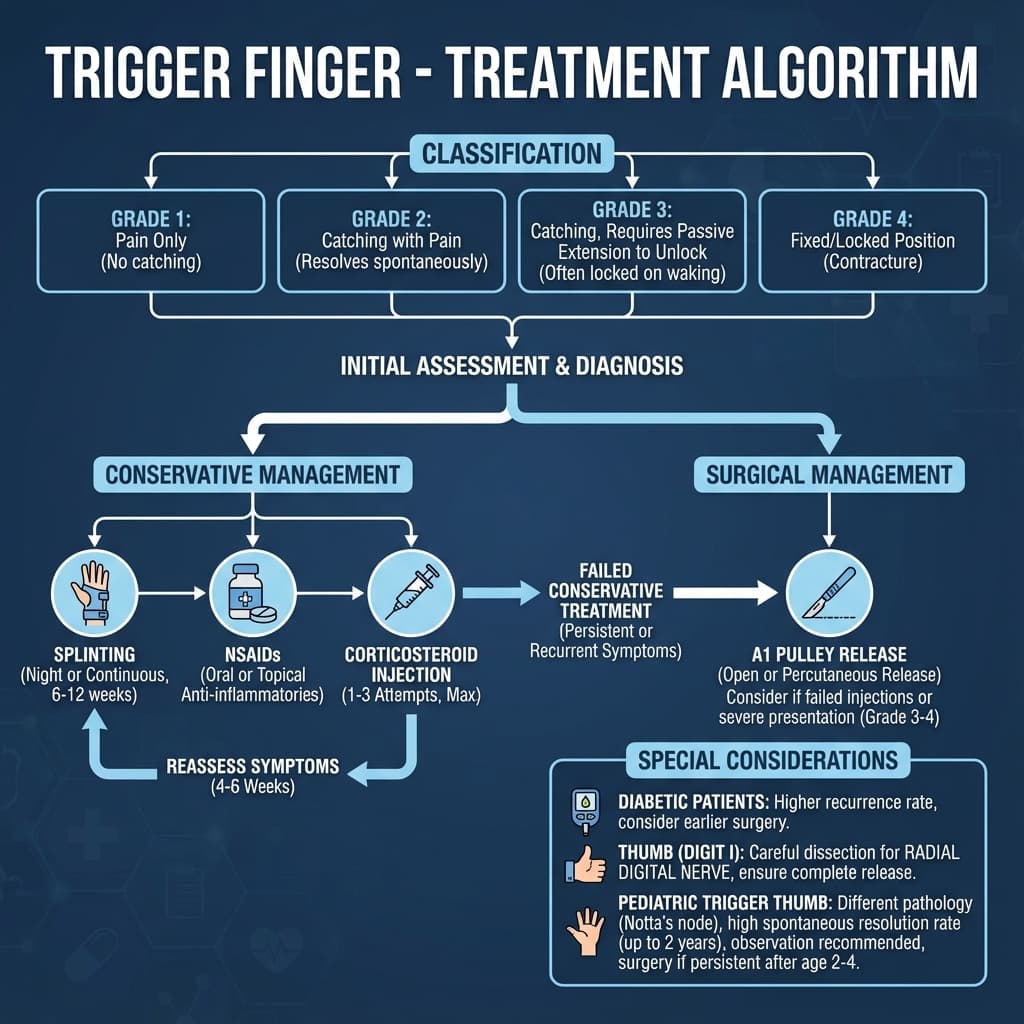
Trigger Finger Treatment Algorithm
Grading, injection vs surgery, special considerations
💡 Trial 1-3 injections. Diabetics higher recurrence. Thumb - protect radial digital nerve
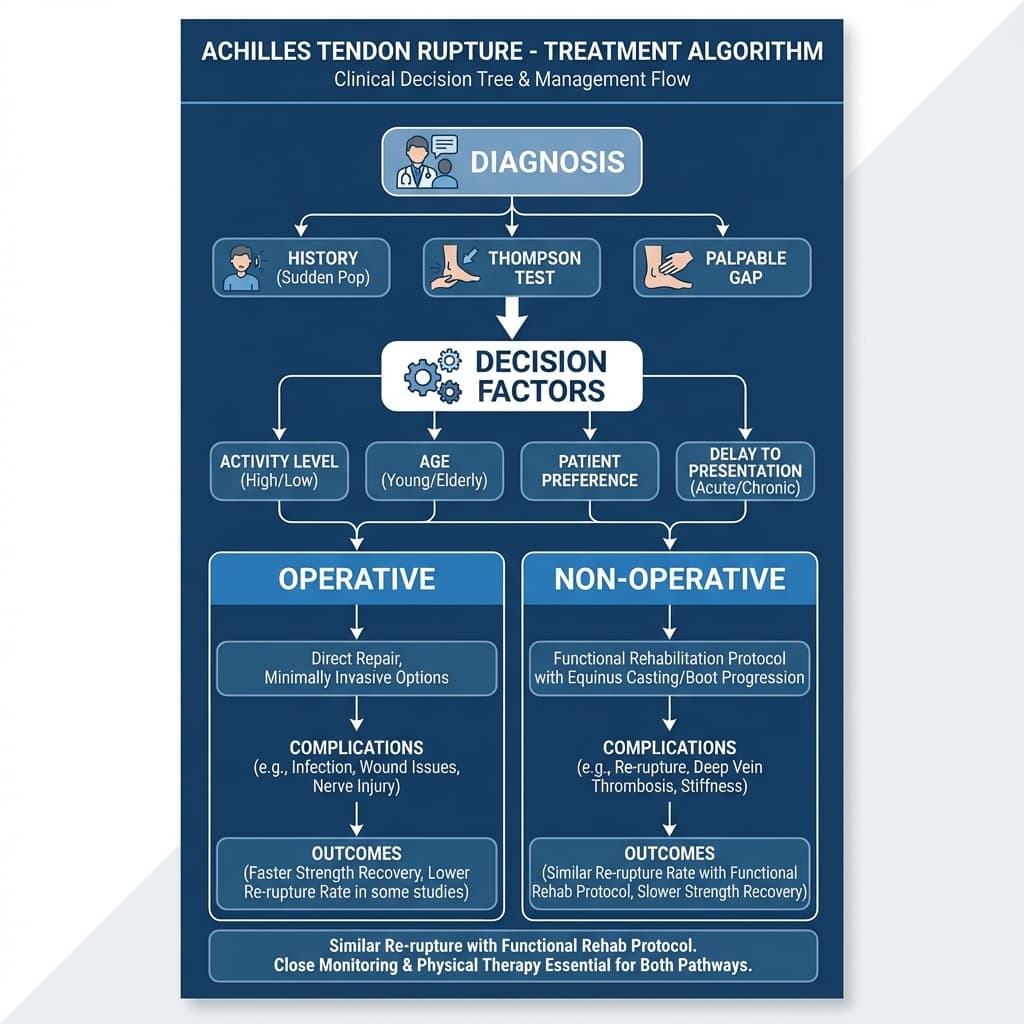
Achilles Rupture Treatment Algorithm
Operative vs non-operative, functional rehab protocol
💡 Similar re-rupture rate with functional rehab protocol. Non-op = quicker recovery, less complications
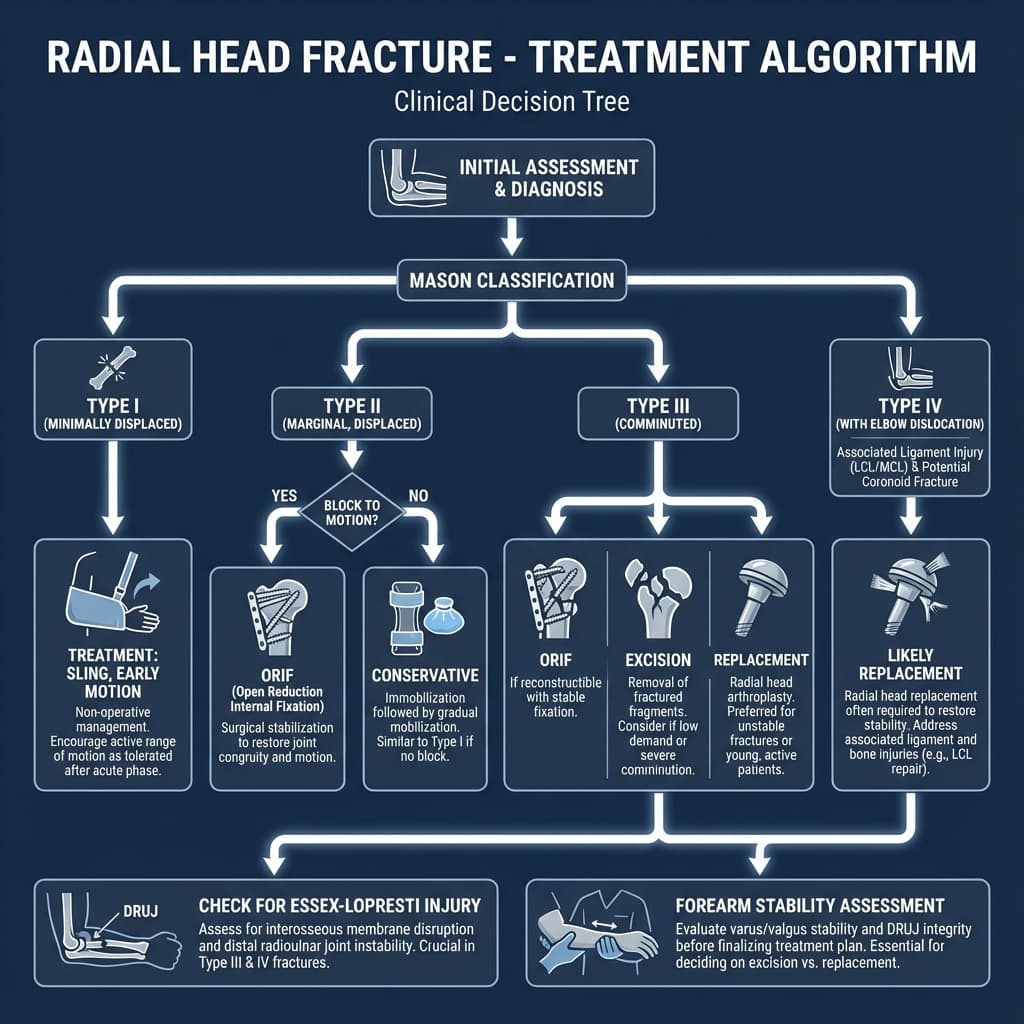
Radial Head Fracture Treatment
Mason classification, ORIF vs replacement, Essex-Lopresti
💡 Type I = early motion. Type III = replace if comminuted. Check for Essex-Lopresti syndrome
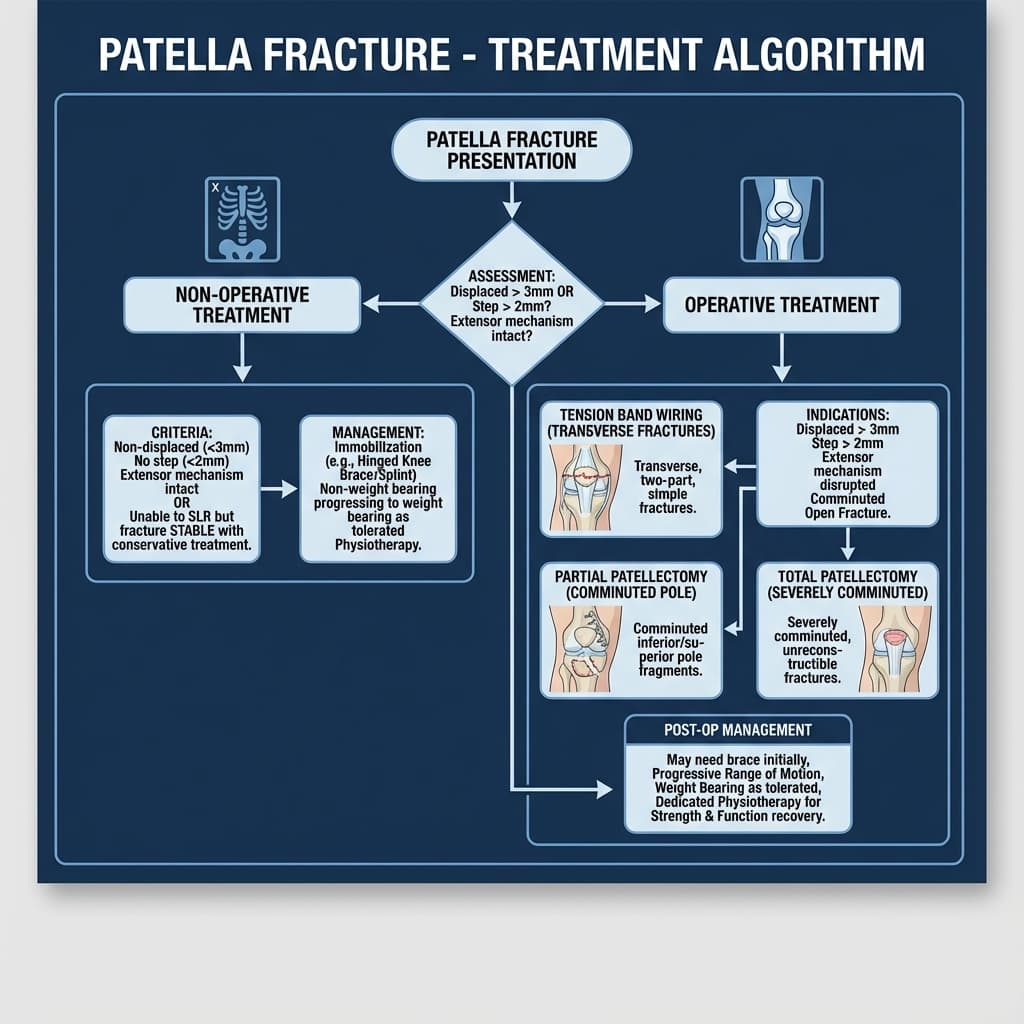
Patella Fracture Treatment Algorithm
Displacement criteria, TBW vs plate, patellectomy indications
💡 Operate if displaced >3mm or step >2mm. Non-op if can SLR. Avoid total patellectomy if possible
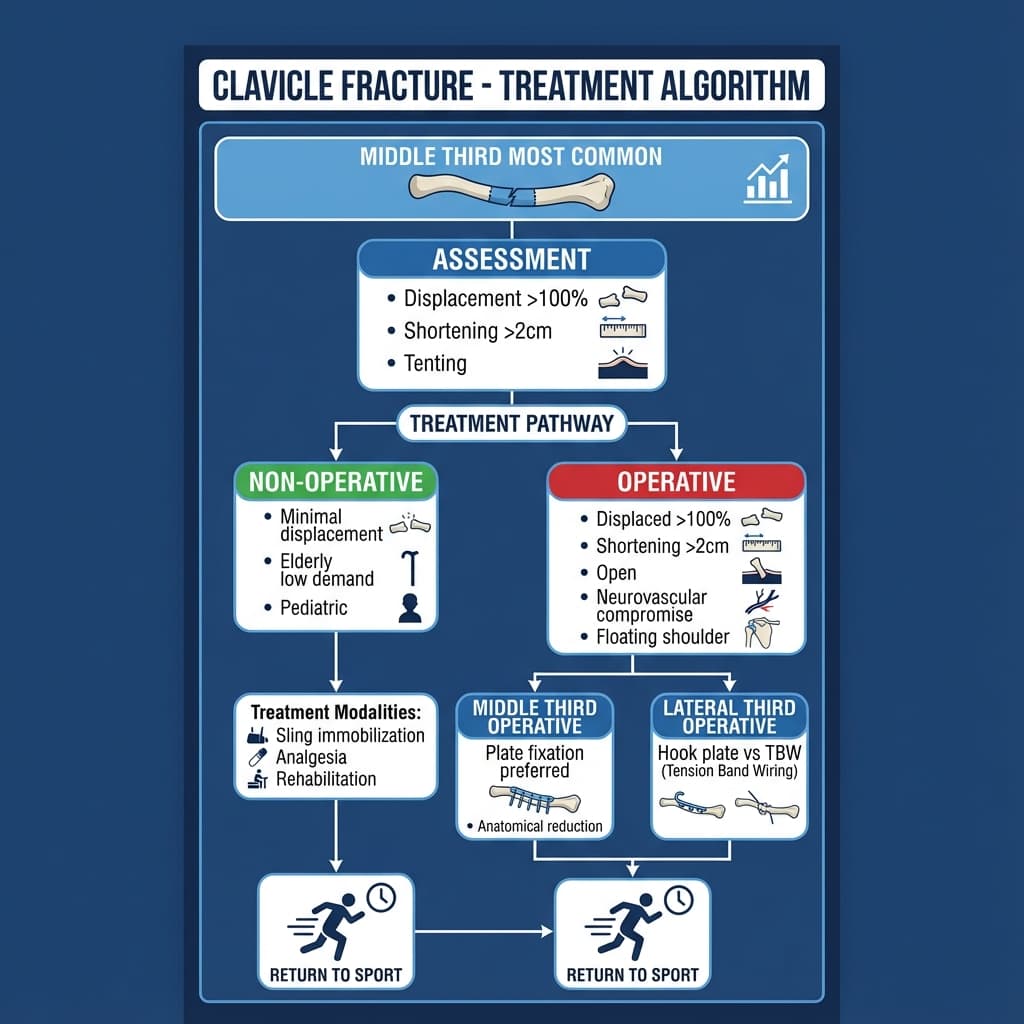
Clavicle Fracture Treatment Algorithm
Middle vs lateral third, operative indications, plating
💡 Operate if >100% displacement or >2cm shortening. Middle third plate preferred
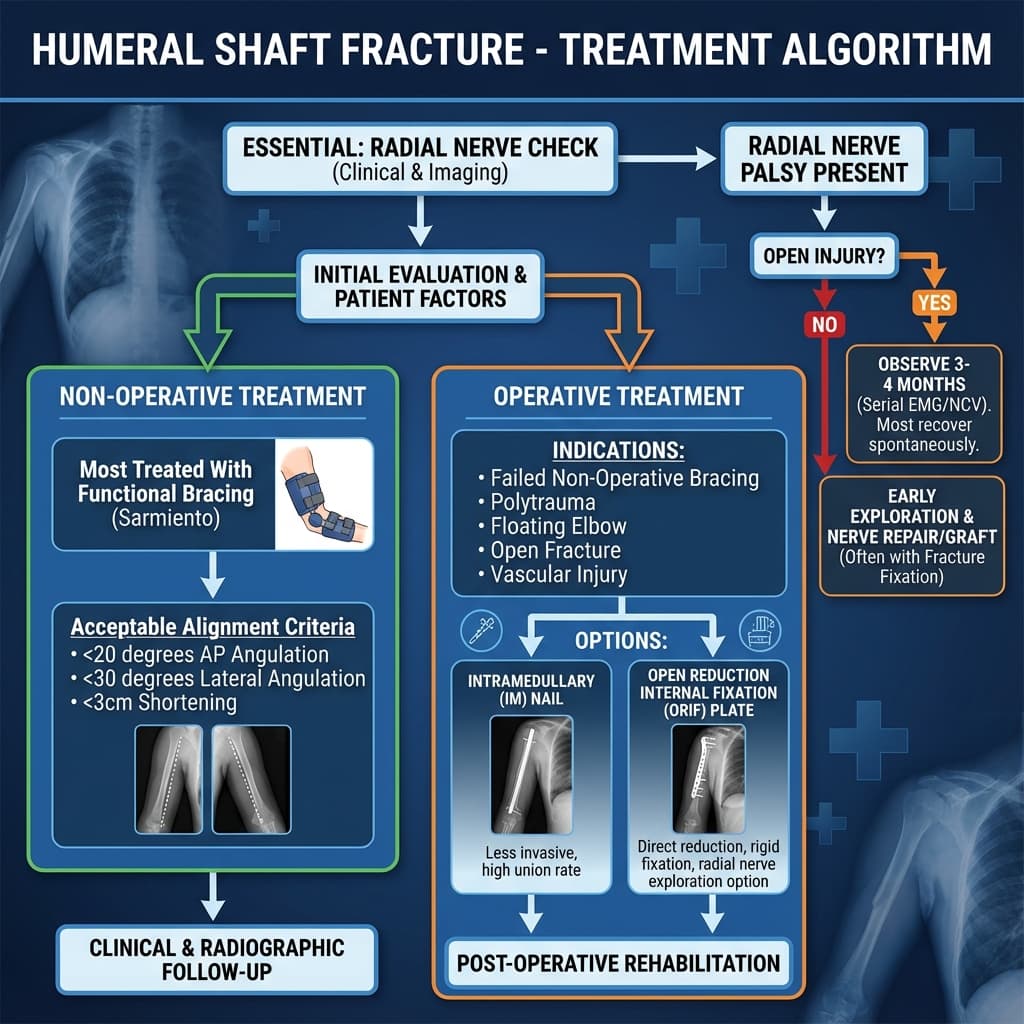
Humeral Shaft Fracture Treatment
Functional bracing vs surgery, radial nerve management
💡 Most treated with brace. Radial nerve palsy - observe 3-4 months unless open
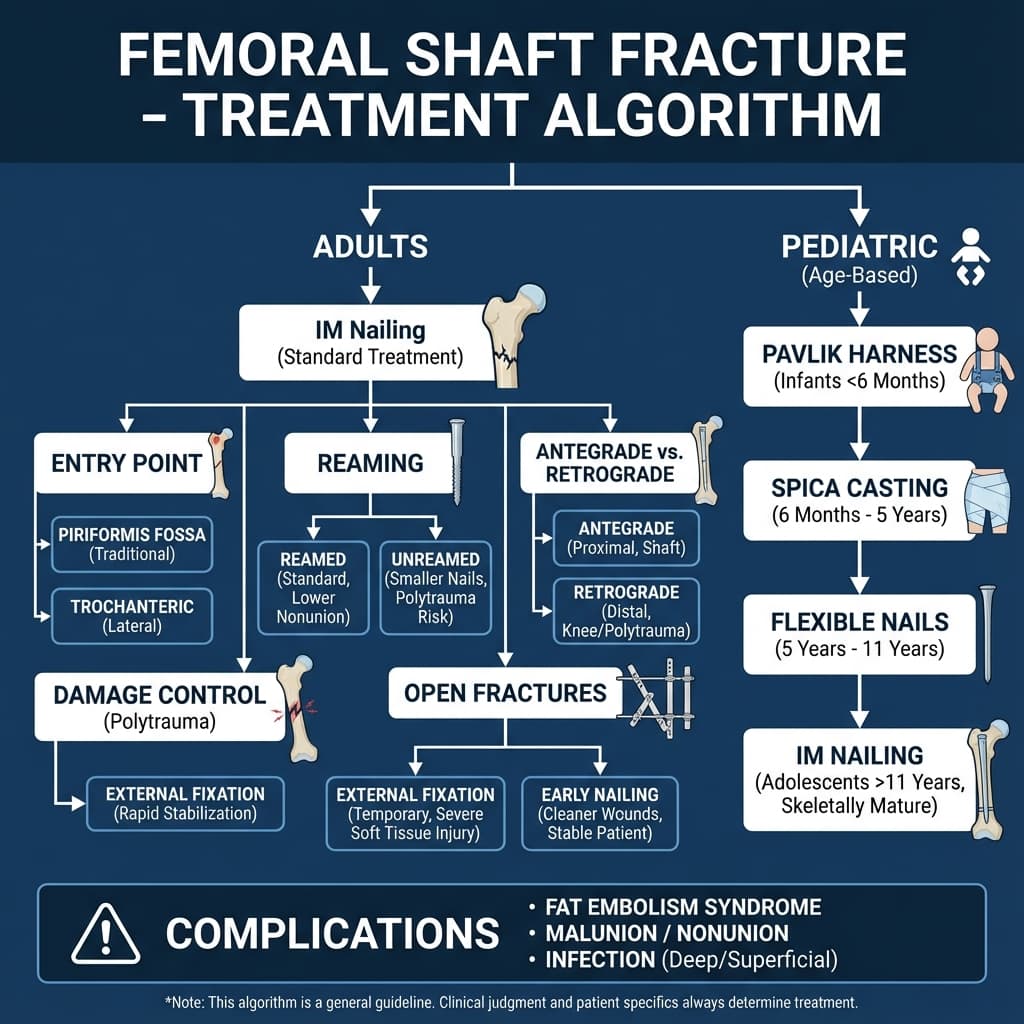
Femoral Shaft Fracture Treatment
IM nailing standard, antegrade vs retrograde, pediatric management
💡 Adults = IM nail standard. Pediatric by age group. Damage control in polytrauma
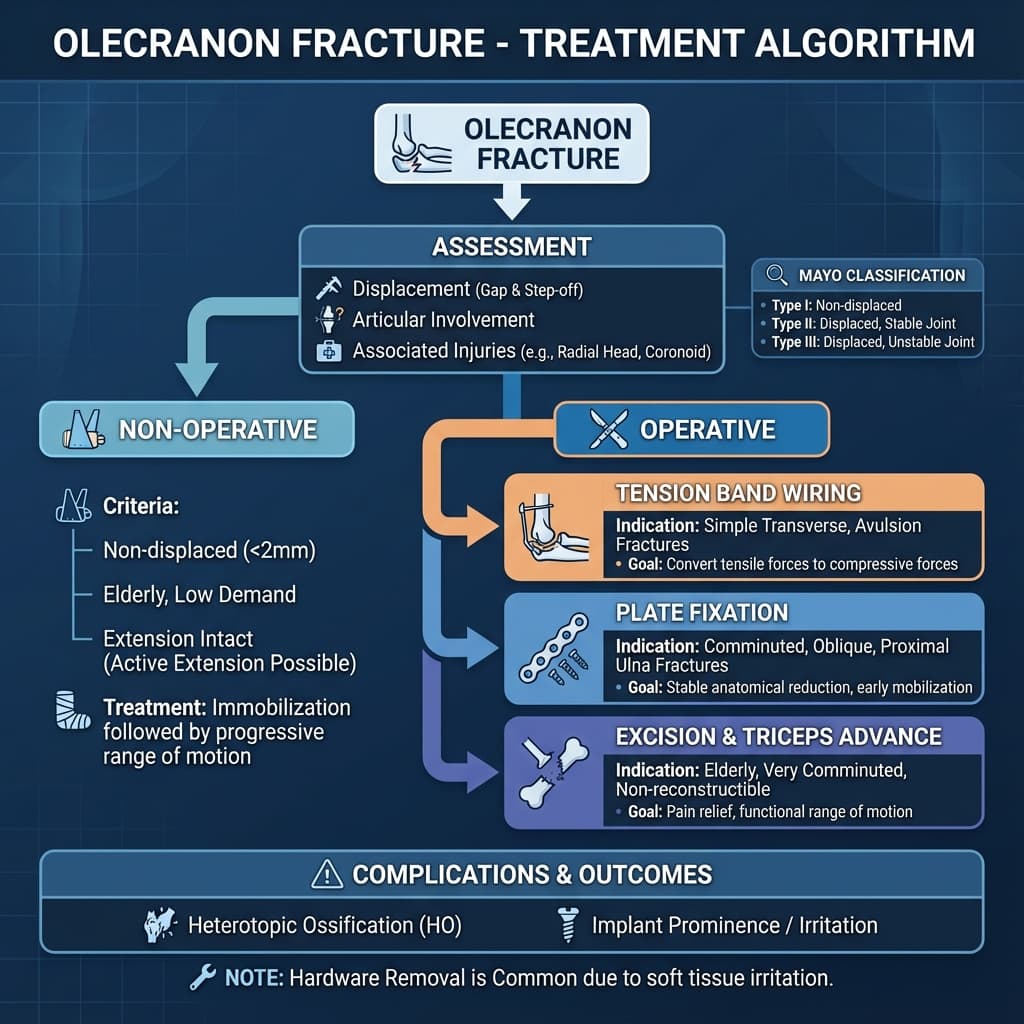
Olecranon Fracture Treatment Algorithm
TBW vs plate vs excision, Mayo classification
💡 Simple transverse = TBW. Comminuted = plate. Elderly comminuted = excision + triceps advance
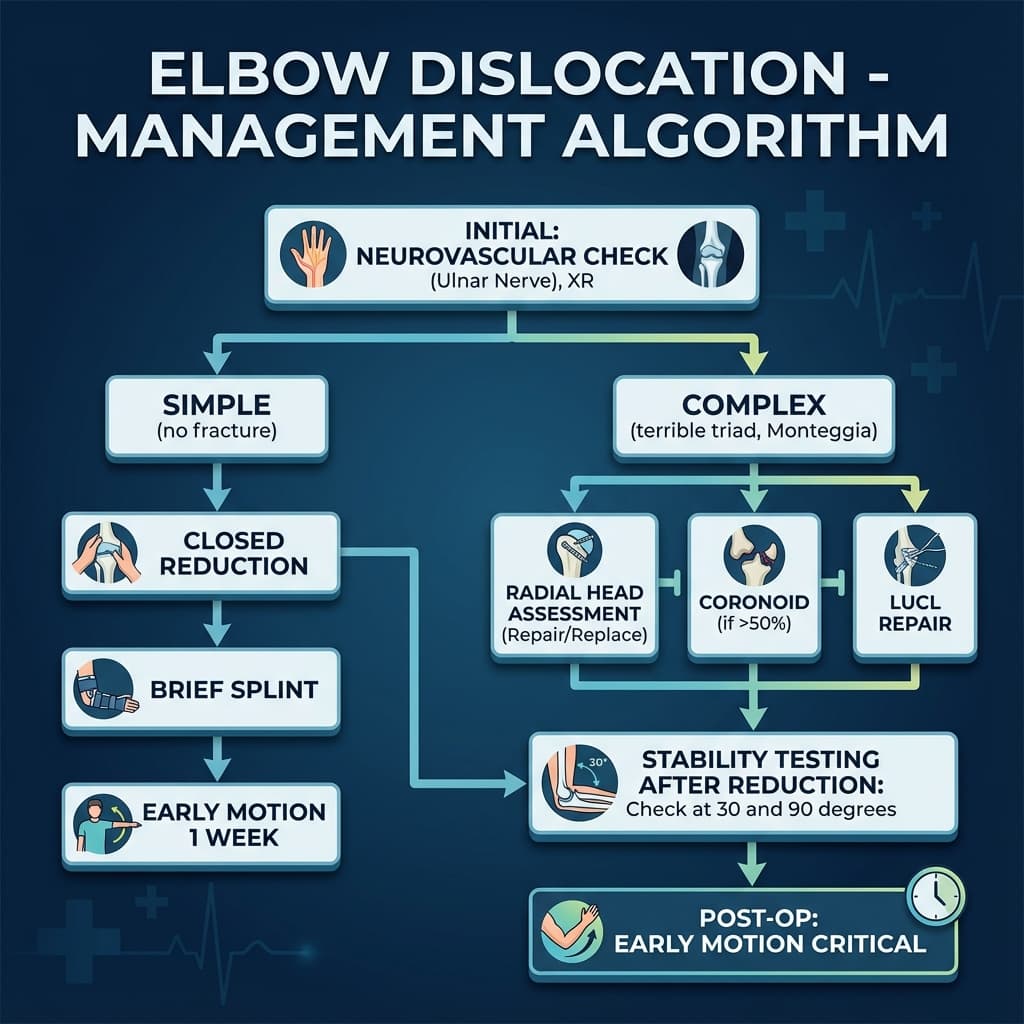
Elbow Dislocation Management Algorithm
Simple vs complex (terrible triad), stability testing
💡 Simple = early motion. Terrible triad = radial head + coronoid + LUCL. Stability test at 30/90°
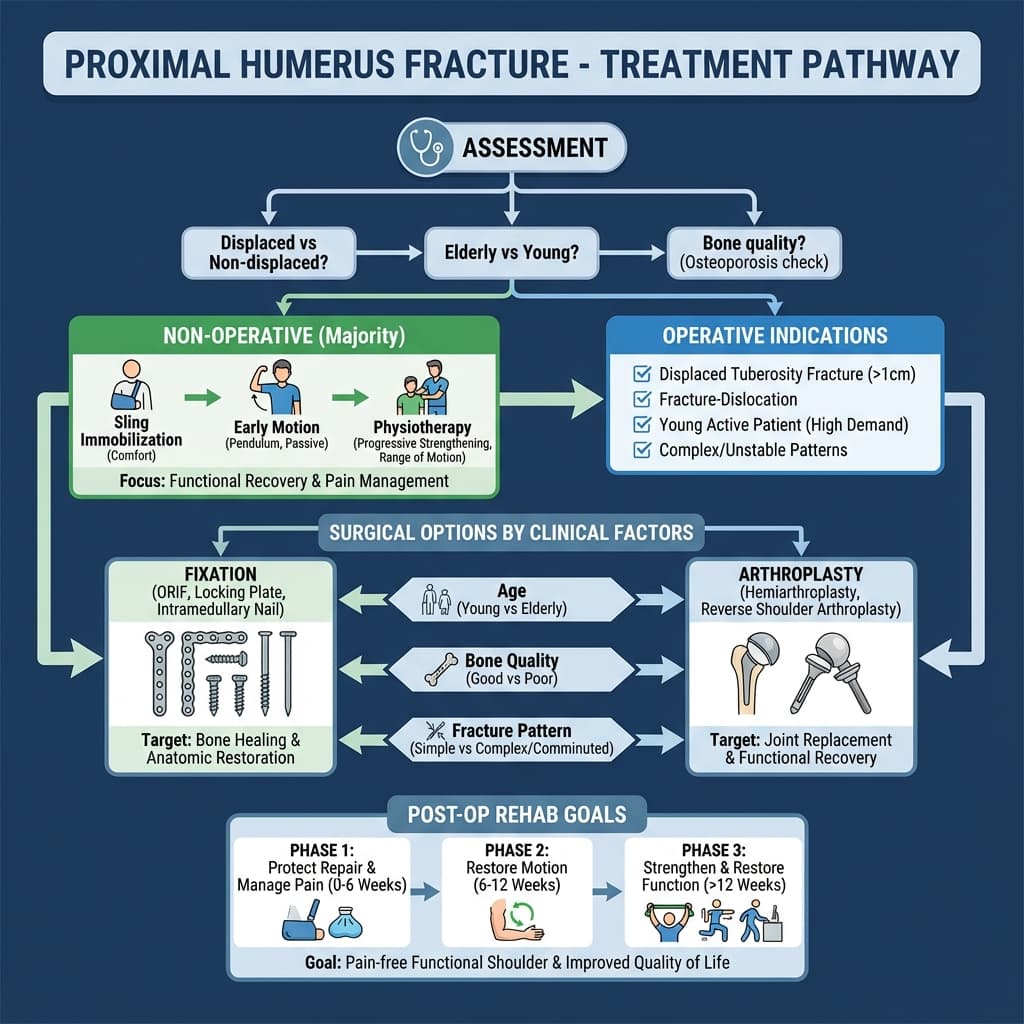
Proximal Humerus Fracture Treatment Pathway
Conservative vs operative by displacement, age, bone quality
💡 Most (80%) non-op. Young + displaced = fix. Elderly + poor bone = consider arthroplasty
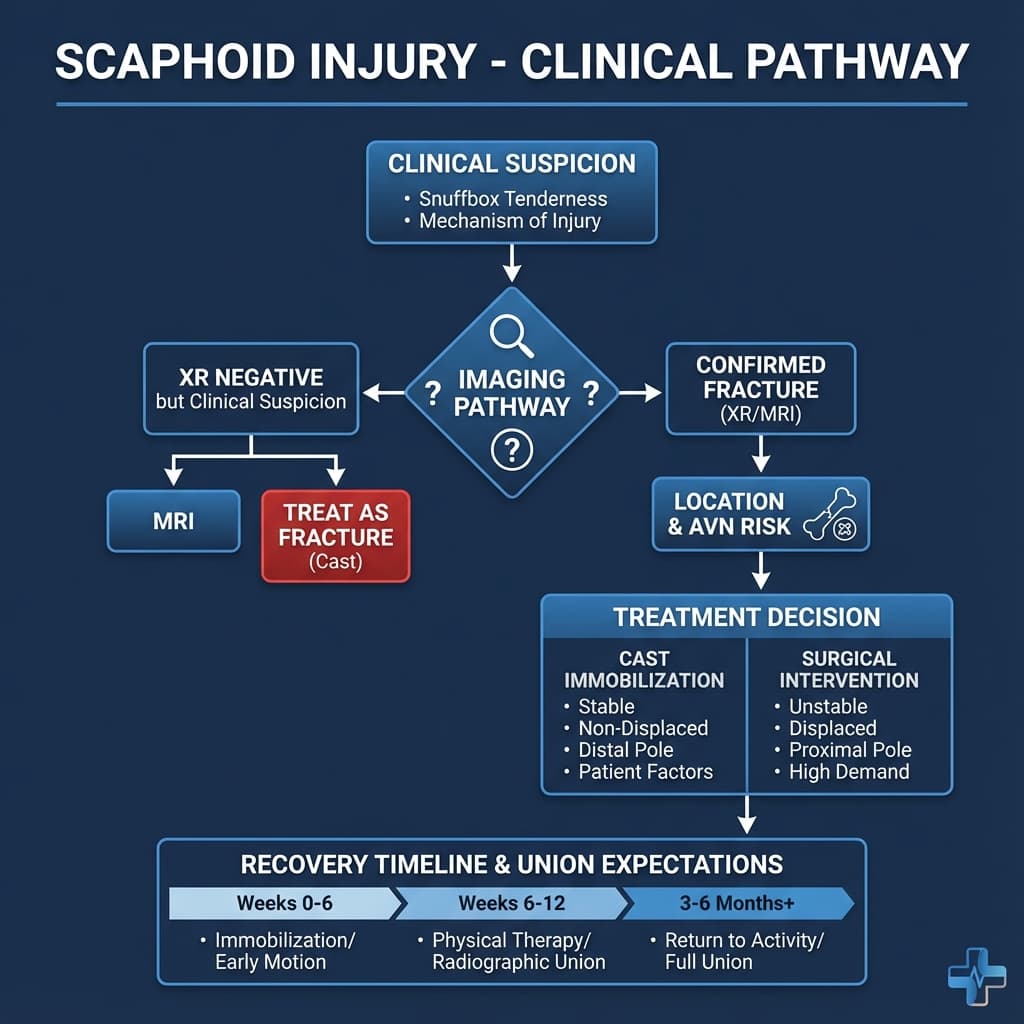
Scaphoid Injury Clinical Pathway
Clinical suspicion workflow, imaging, cast vs surgery decision
💡 Snuffbox tender + XR negative = MRI or treat as fracture. Proximal = higher AVN risk
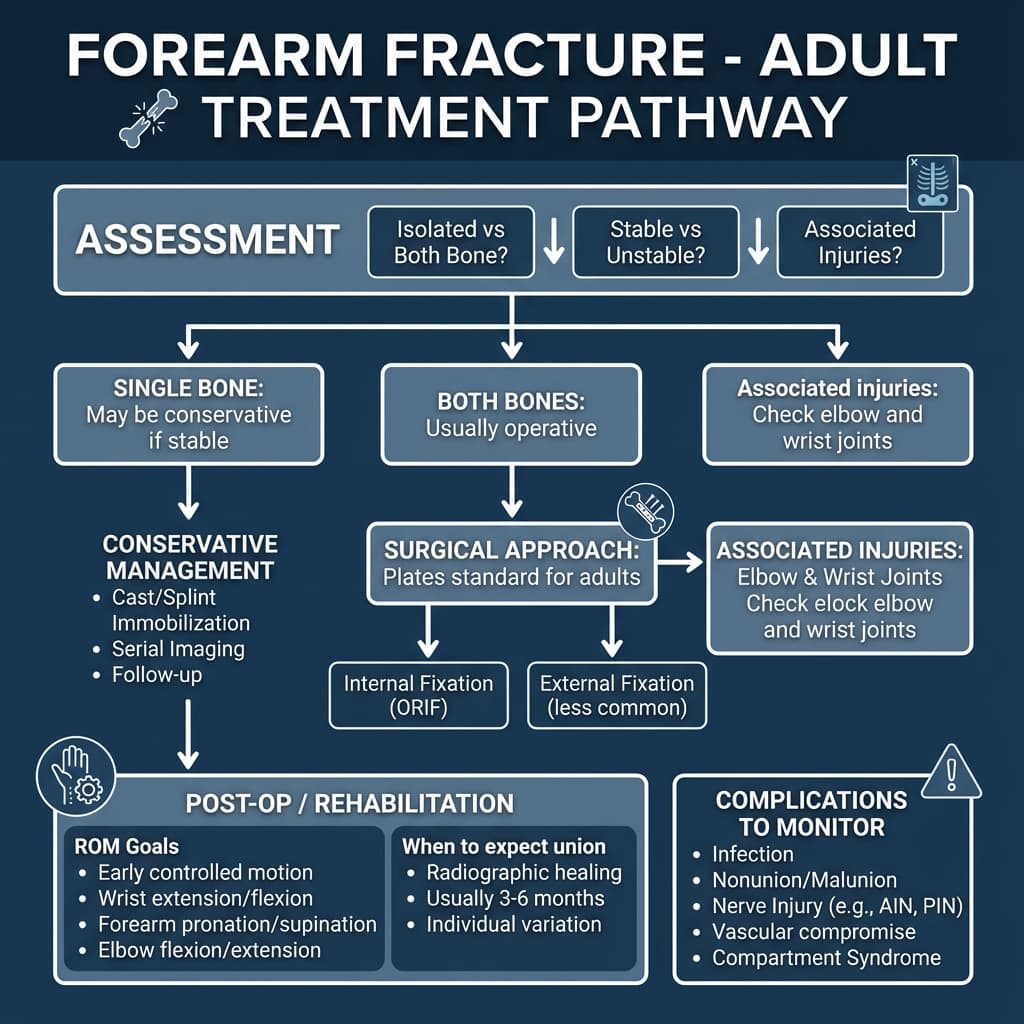
Forearm Fracture Adult Treatment Pathway
Single vs both bone, operative vs conservative, associated injuries
💡 Both bones adult = operative. Check elbow and wrist for associated injuries
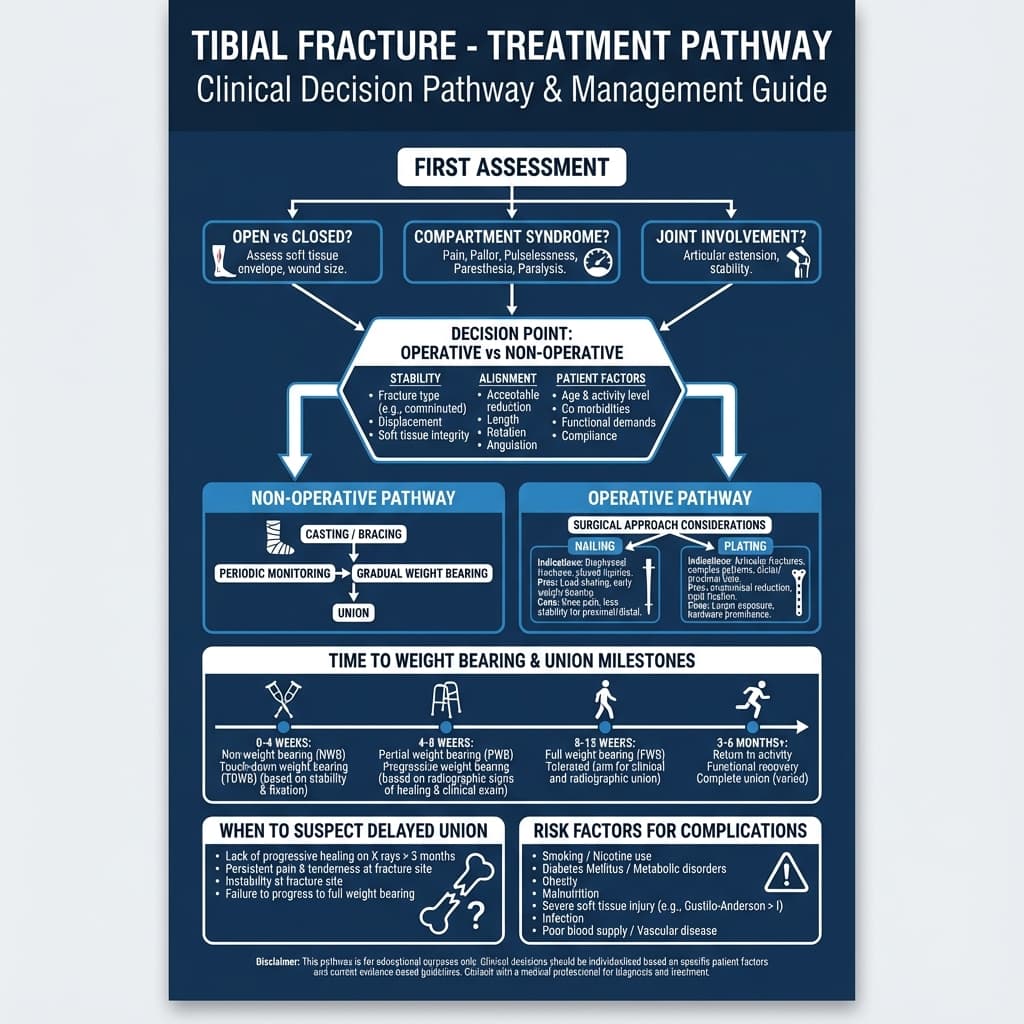
Tibial Fracture Treatment Pathway
Open vs closed, nailing vs plating, complication monitoring
💡 Check for open injury and compartment syndrome. Nail vs plate by location and soft tissue
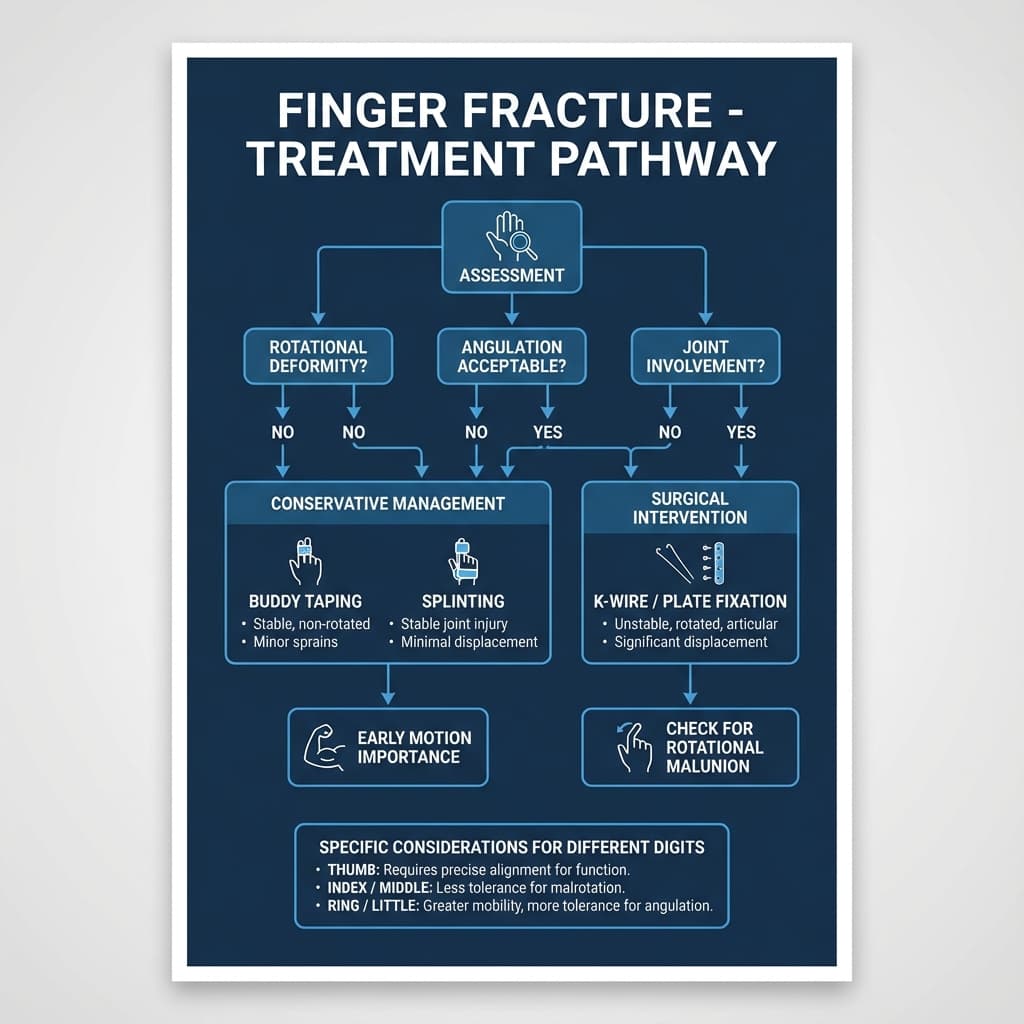
Finger Fracture Treatment Pathway
Rotation check, buddy taping vs splint vs fixation decision
💡 Check for rotational deformity. Rotation = operate. Stable = buddy tape and early motion
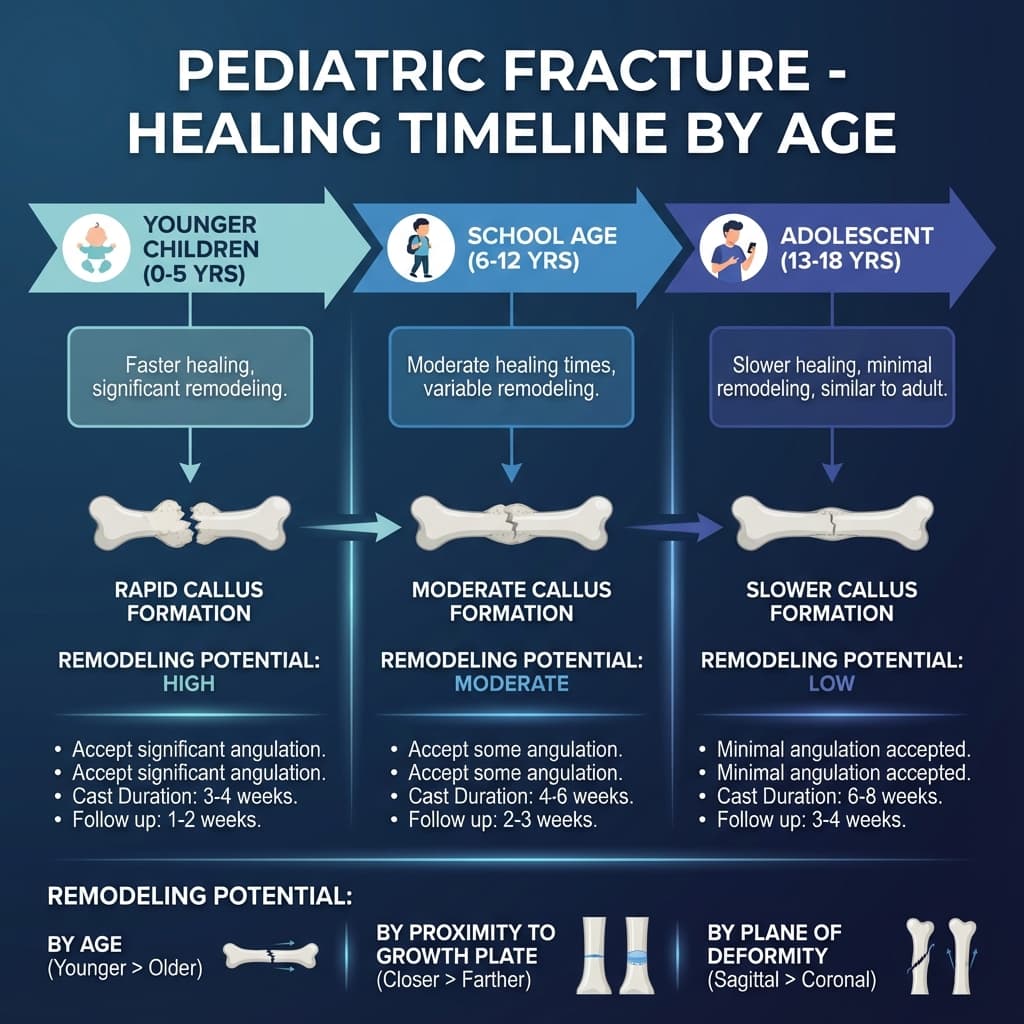
Pediatric Fracture Healing Timeline
Healing times by age, remodeling potential, acceptable angulation
💡 Younger = faster healing + more remodeling. Accept more angulation near growth plate
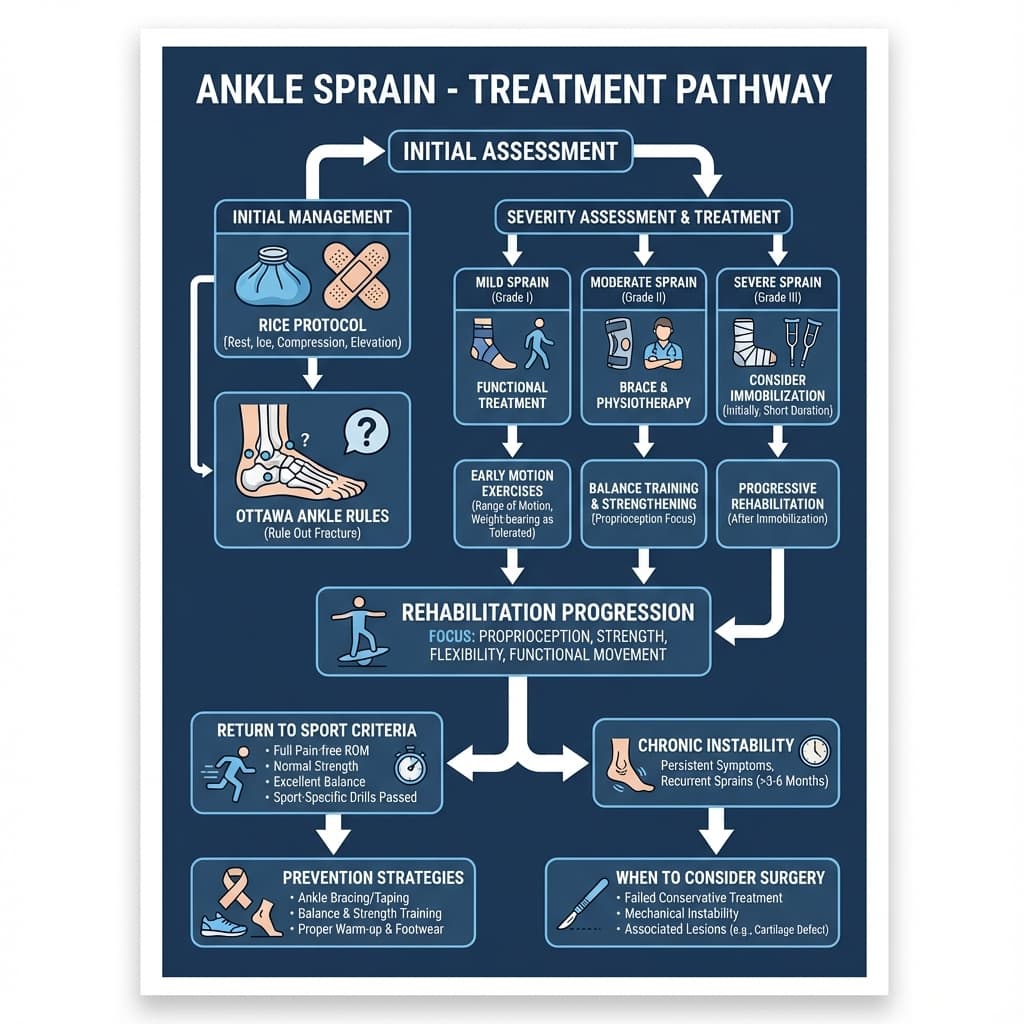
Ankle Sprain Treatment Pathway
Acute to chronic instability, physio progression, surgery indications
💡 Ottawa rules exclude fracture. Functional treatment for most. Surgery if chronic instability
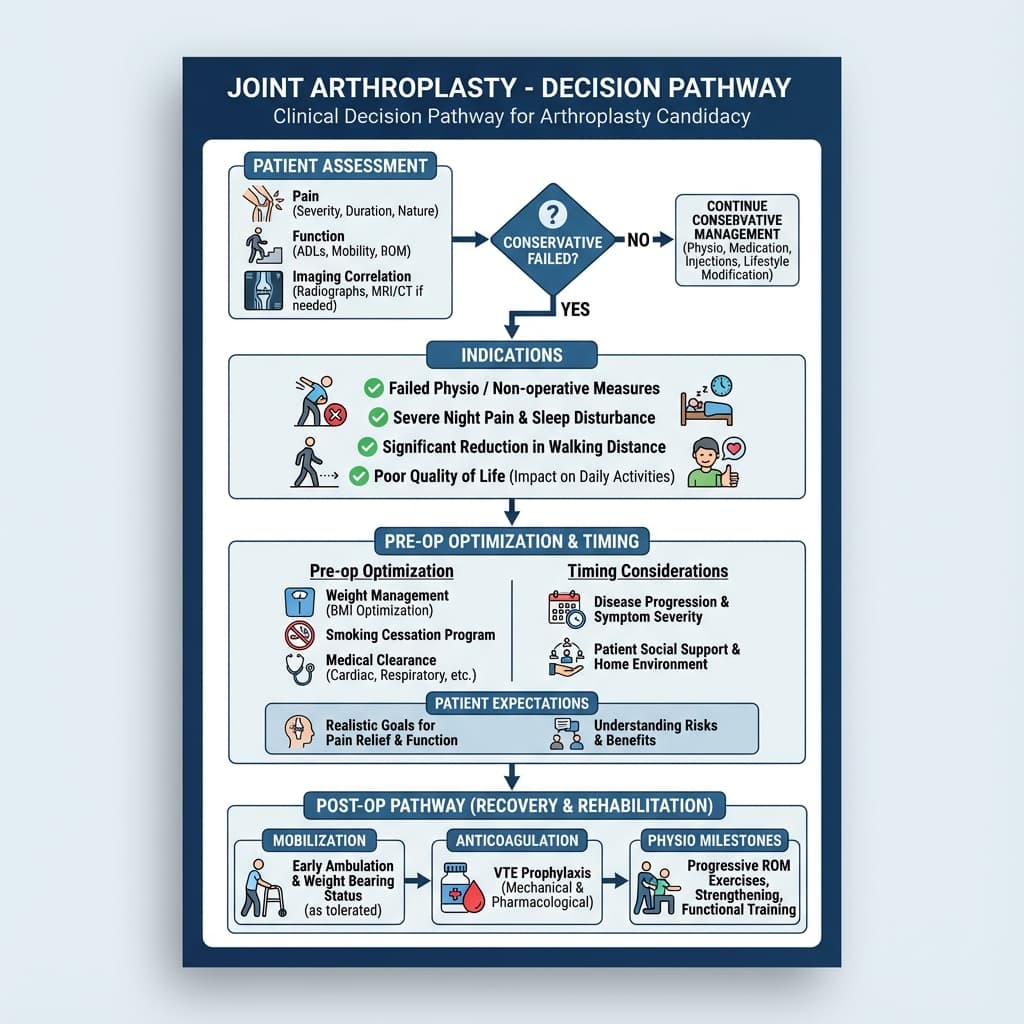
Joint Arthroplasty Decision Pathway
When to operate, pre-op optimization, post-op milestones
💡 Conservative failed first. Optimize weight, smoking, medical. Early mobilization post-op
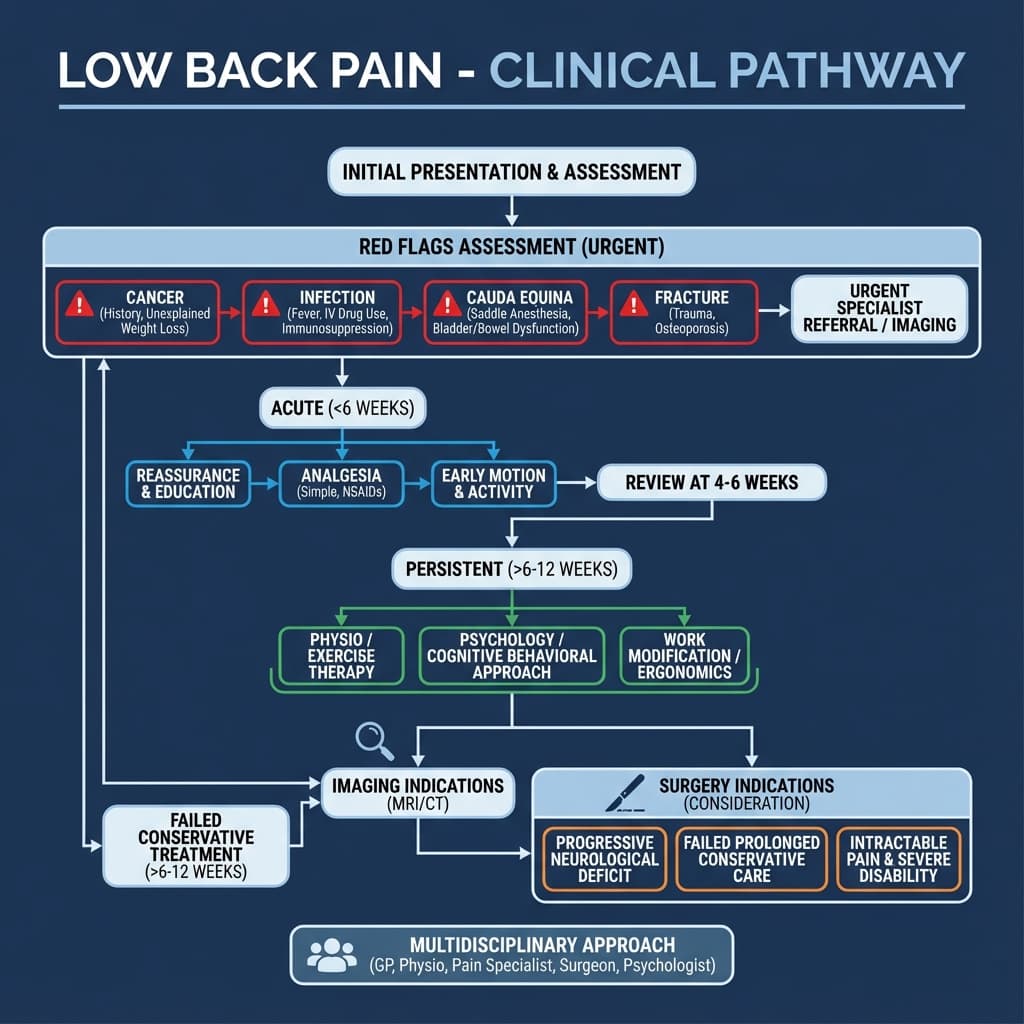
Low Back Pain Clinical Pathway
Red flags, conservative treatment, imaging indications, surgery criteria
💡 Screen red flags first. Most acute = conservative. Image if red flags or failed treatment
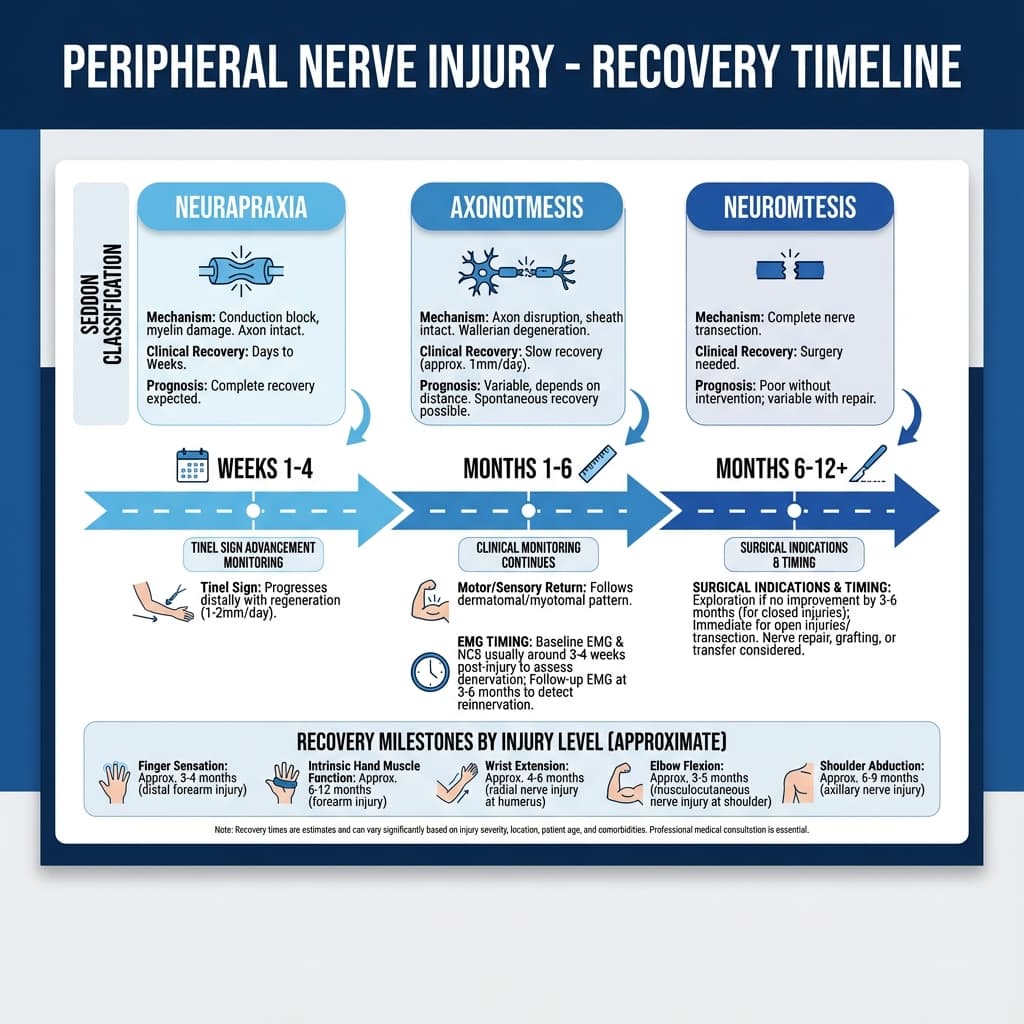
Nerve Injury Recovery Timeline
Recovery by injury type, monitoring, EMG timing, surgery indications
💡 Neuropraxia = quick recovery. Axonotmesis = 1mm/day. No recovery by expected time = investigate
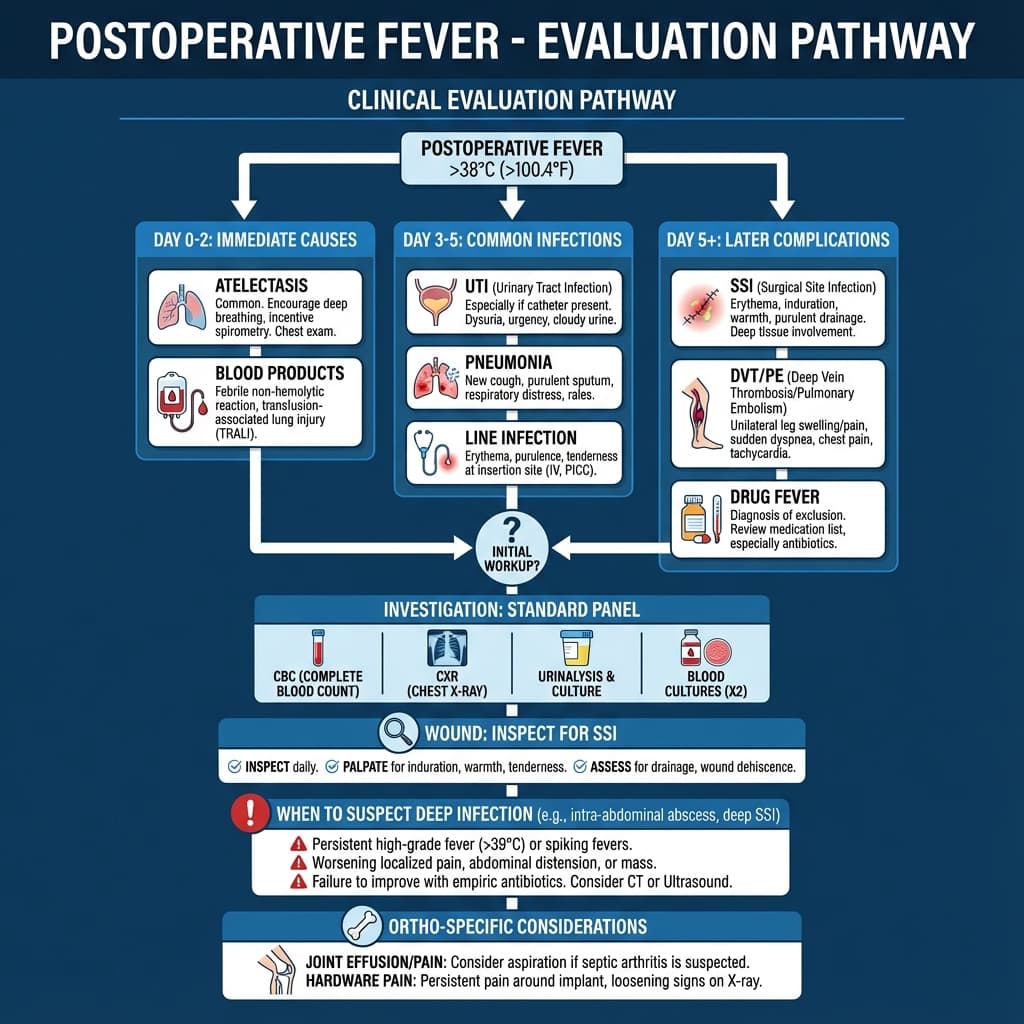
Postoperative Fever Evaluation Pathway
Timing-based differential, investigation approach, ortho-specific
💡 Day 0-2 = atelectasis. Day 3-5 = UTI/pneumonia. Day 5+ = SSI/DVT. Inspect wound!
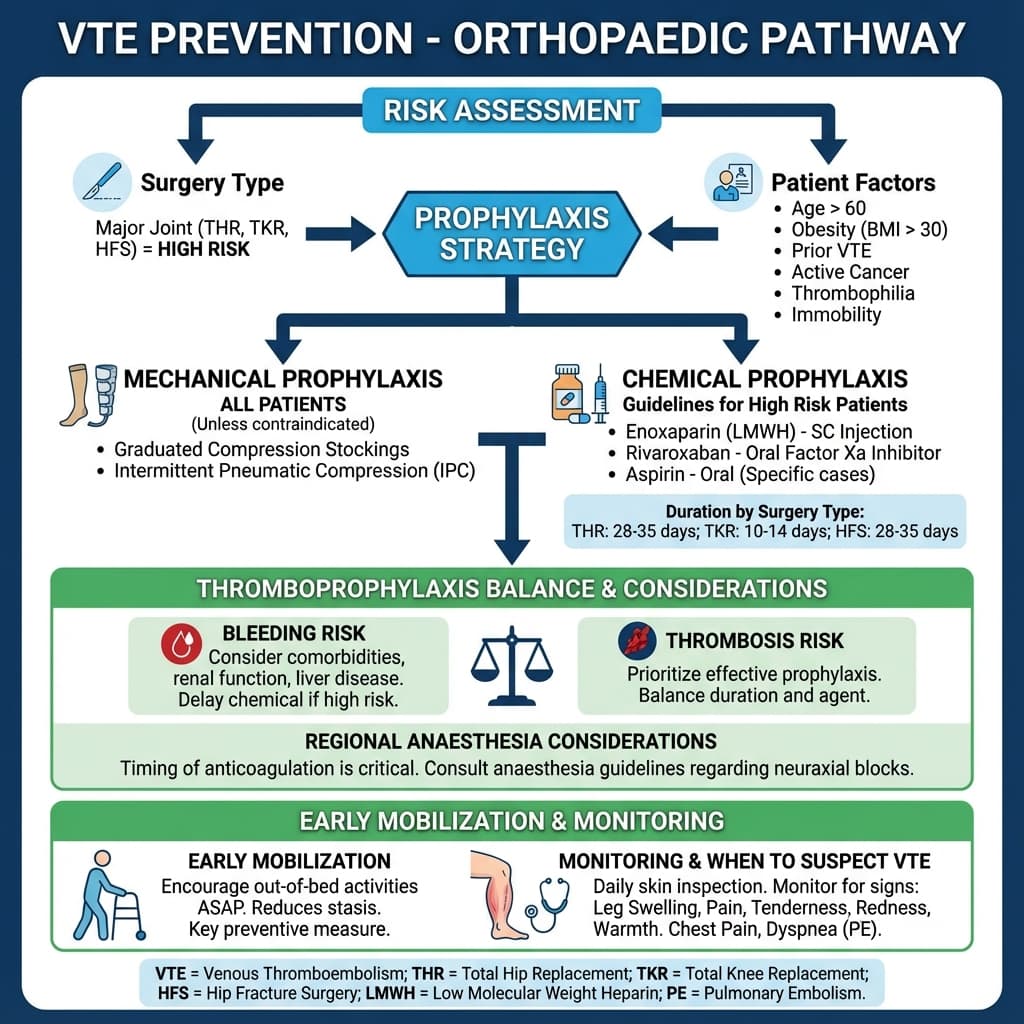
VTE Prevention Orthopaedic Pathway
Risk assessment, mechanical vs chemical, duration by surgery
💡 All patients = mechanical. Chemical by risk. Major joint = high risk. Regional = timing matters
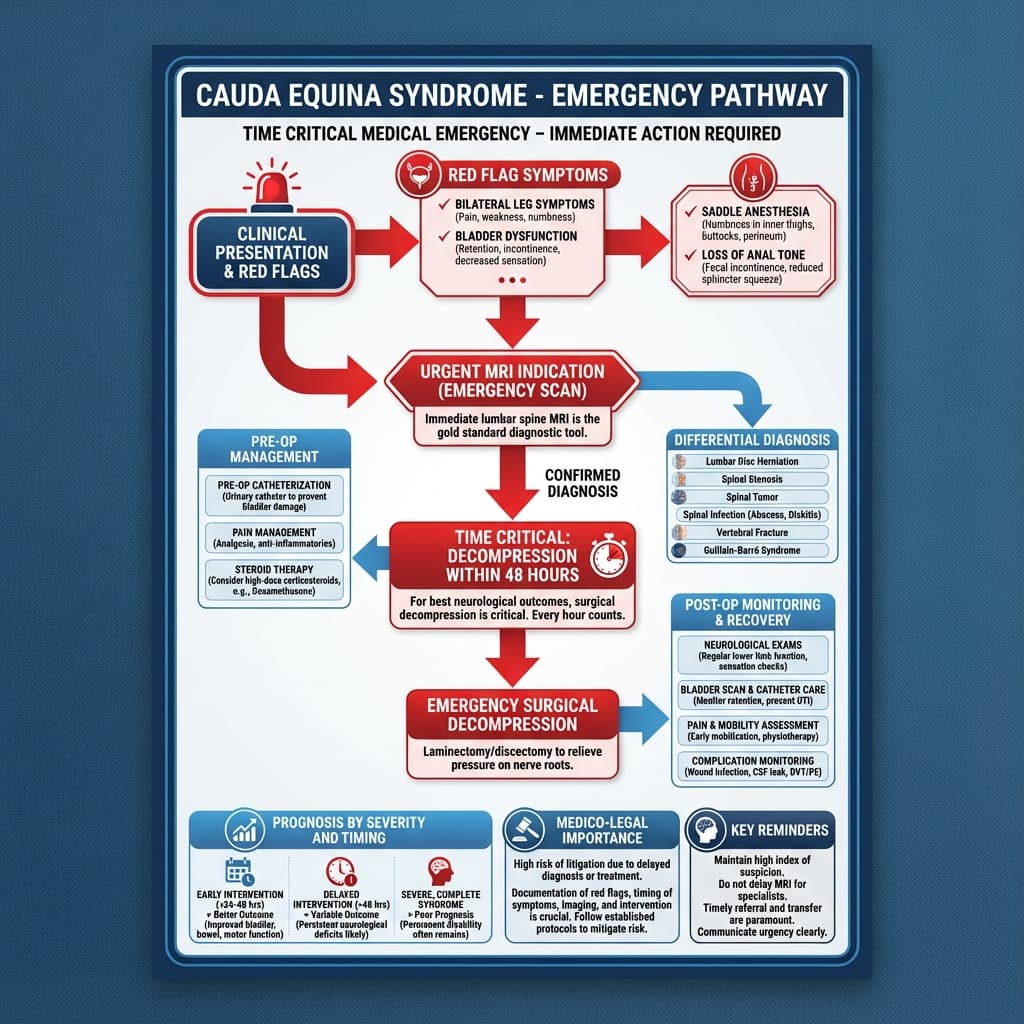
Cauda Equina Syndrome Emergency Pathway
Red flags, urgent MRI, time-critical decompression
💡 Bladder dysfunction + bilateral legs + saddle = emergency MRI. Decompress within 48h
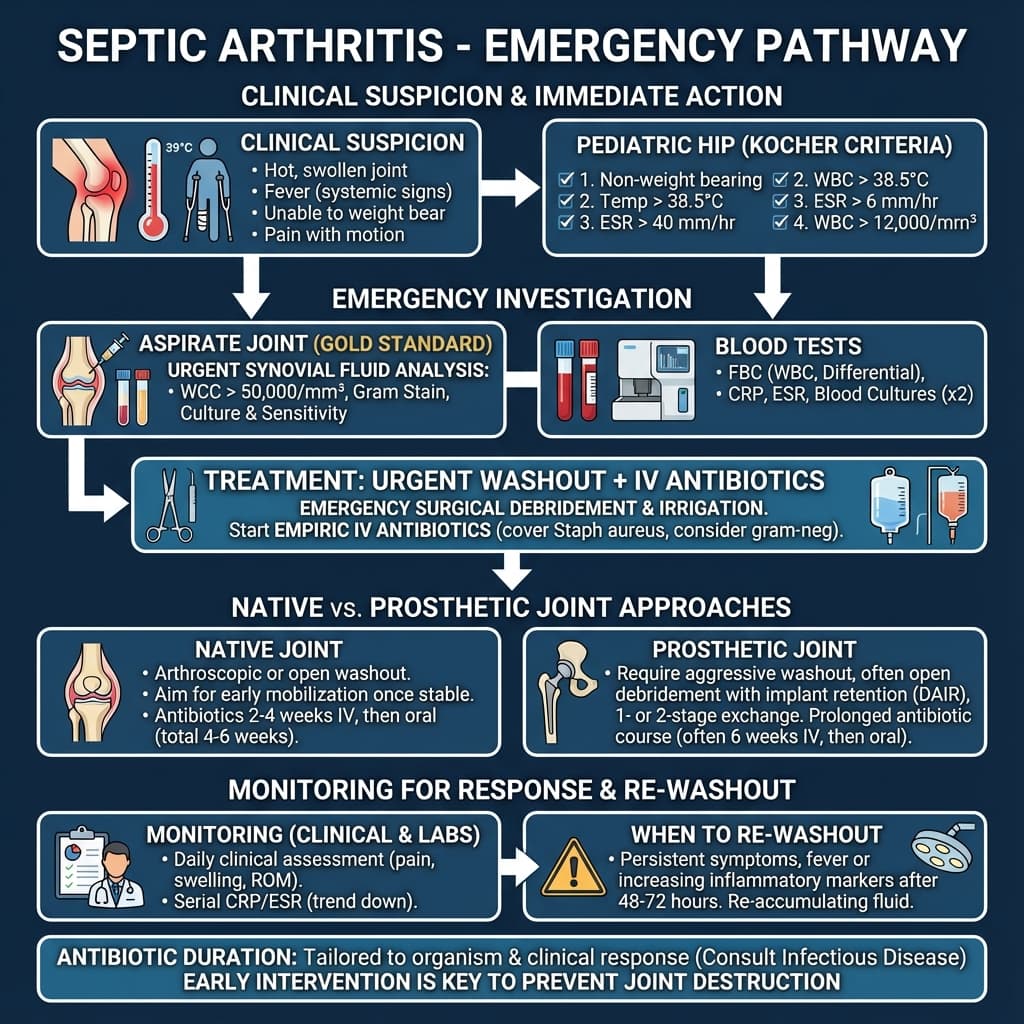
Septic Arthritis Emergency Pathway
Clinical suspicion, joint aspiration, urgent washout
💡 Hot swollen joint = aspirate. Kocher for pediatric hip. Urgent washout + IV antibiotics
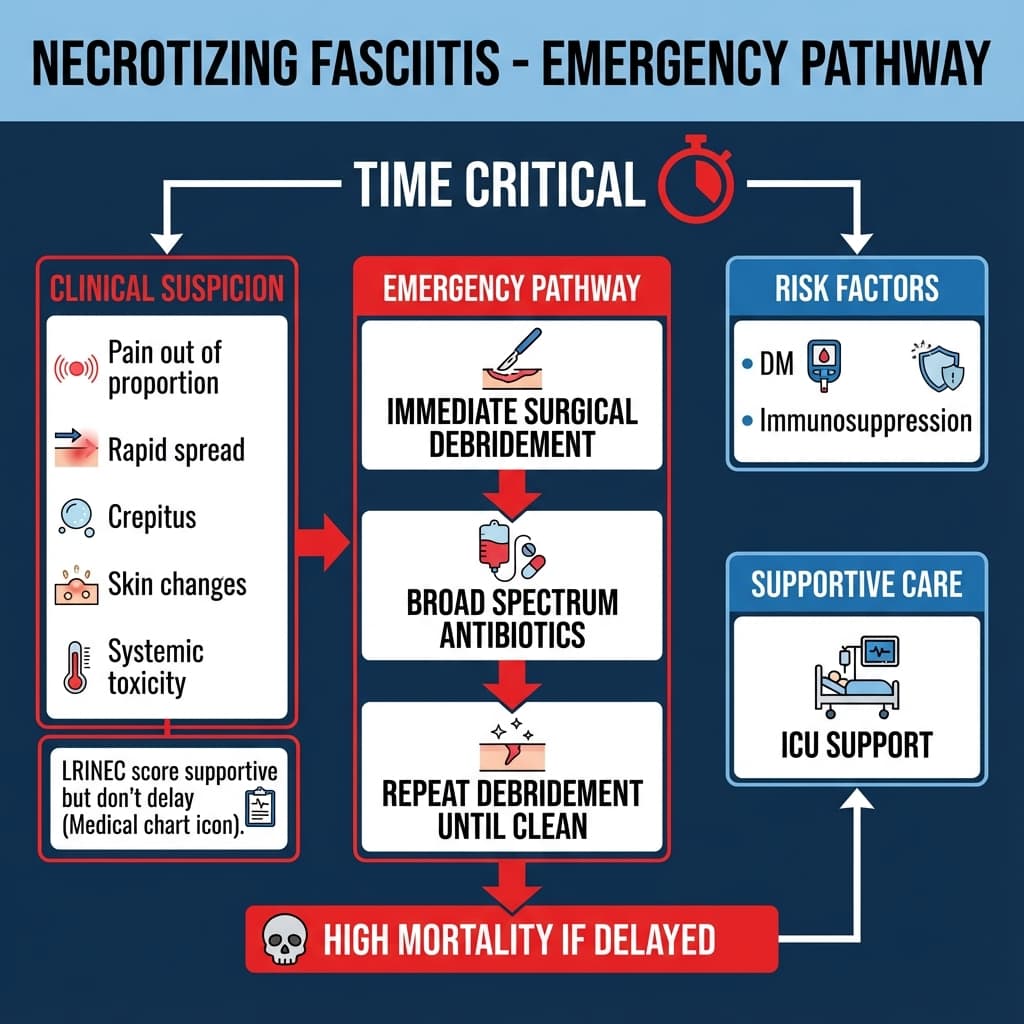
Necrotizing Fasciitis Emergency Pathway
Clinical suspicion, time-critical debridement, ICU support
💡 Pain out of proportion + systemic toxicity. Dont delay for LRINEC. Immediate debridement
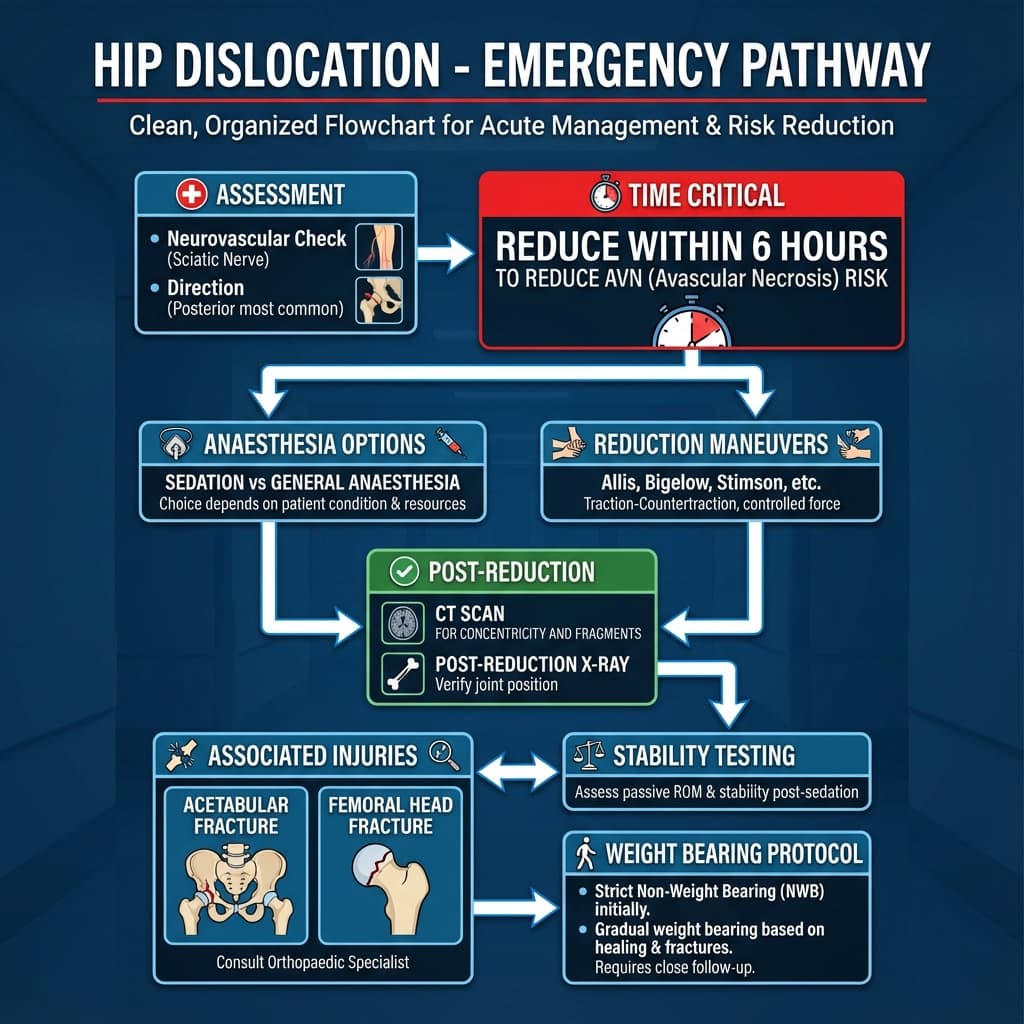
Hip Dislocation Emergency Pathway
Time-critical reduction, sciatic nerve, post-reduction CT
💡 Reduce within 6 hours = reduce AVN. Check sciatic. Post-reduction CT for concentricity
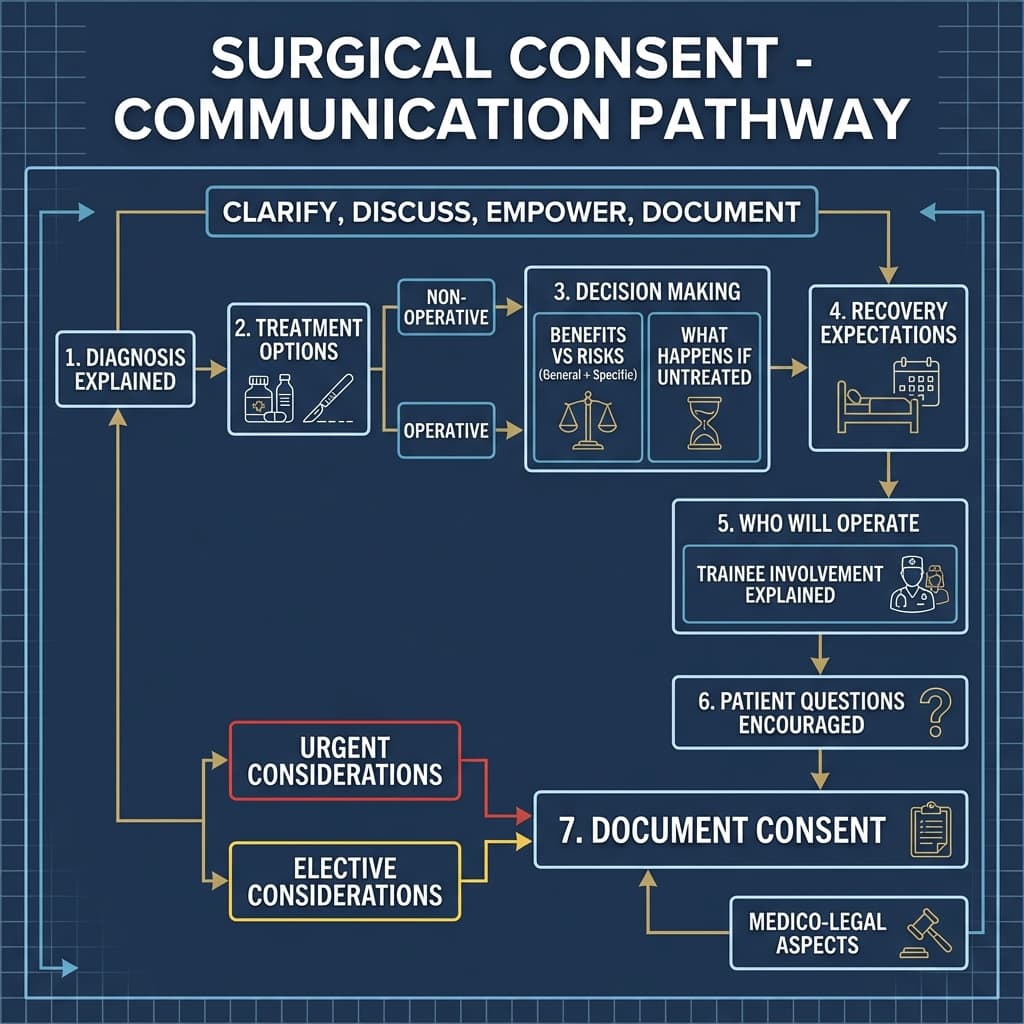
Surgical Consent Communication Pathway
Consent elements, communication framework, medico-legal
💡 Risks (general + specific), non-op option, who operates, questions encouraged
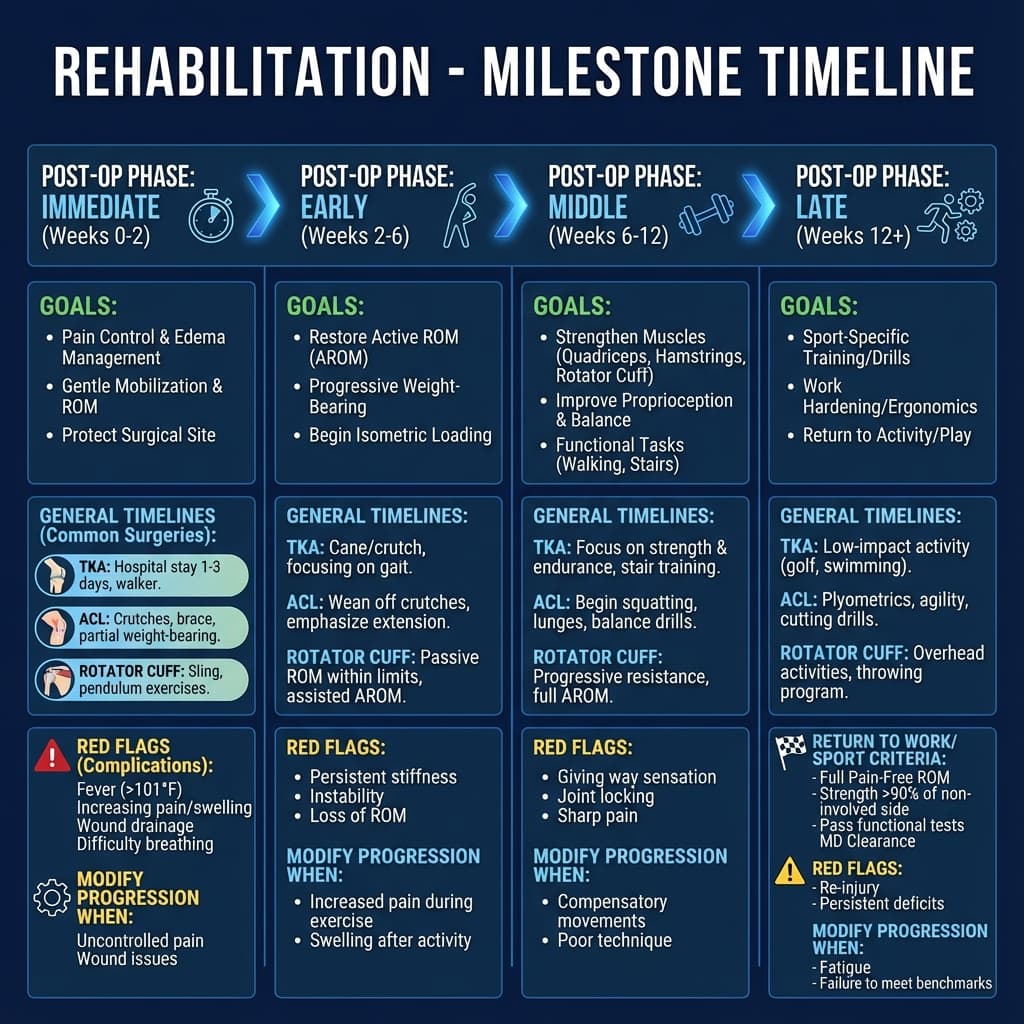
Rehabilitation Milestone Timeline
Post-op phases, surgery-specific timelines, return criteria
💡 Phases: Immediate pain/mob, Early ROM, Middle strength, Late sport-specific
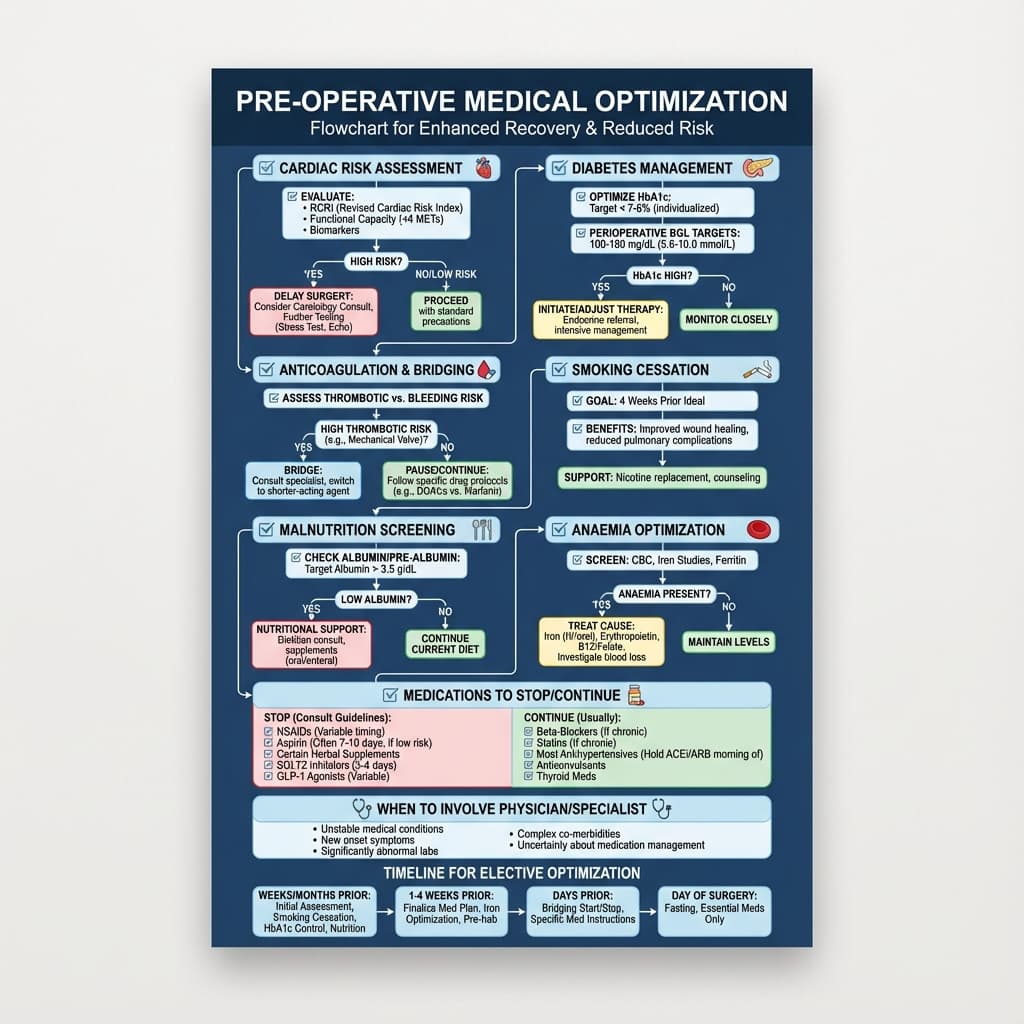
Pre-operative Medical Optimization
Cardiac, diabetes, anticoagulation, smoking, nutrition
💡 Smoking 4 weeks. HbA1c optimization. Bridging anticoag. Iron for anaemia
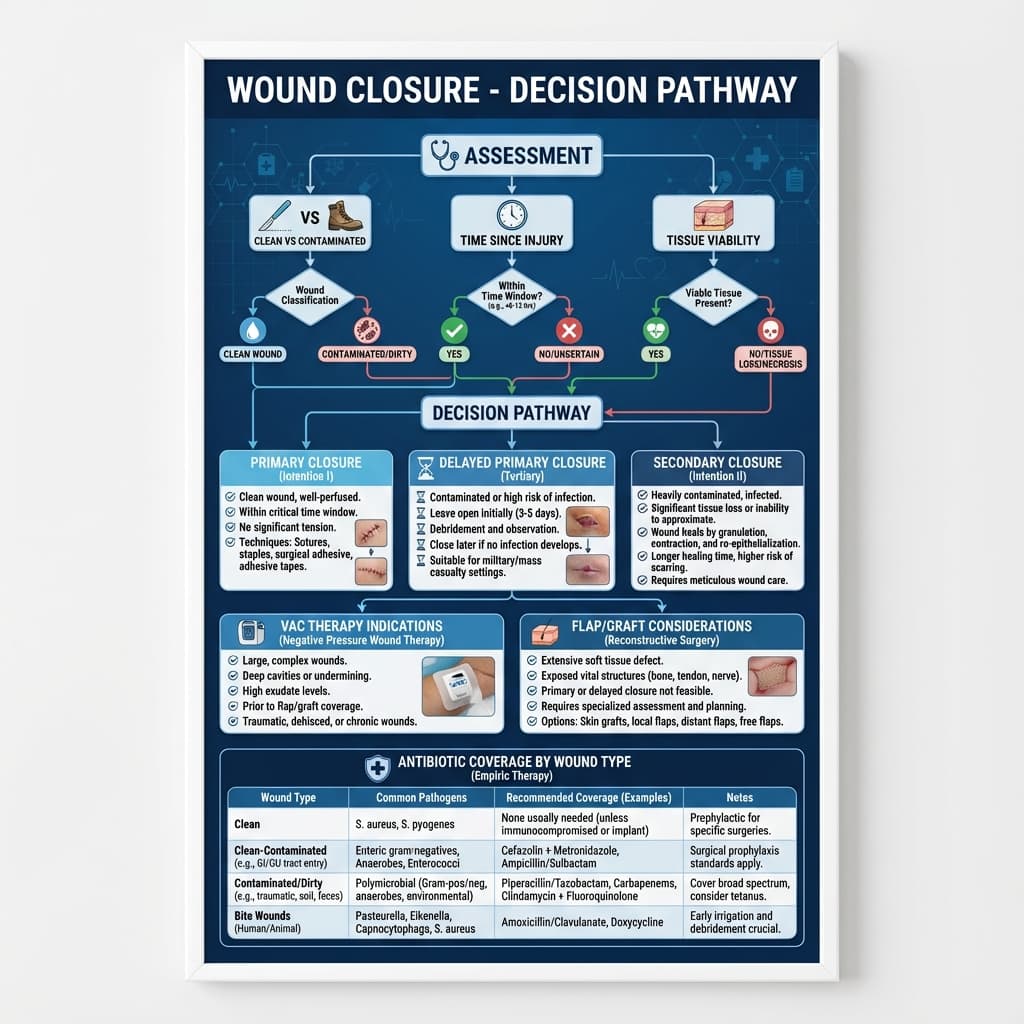
Wound Closure Decision Pathway
Primary vs delayed vs secondary, VAC therapy, graft/flap
💡 Clean + within 6-8h = primary. Contaminated = leave open. VAC for soft tissue loss
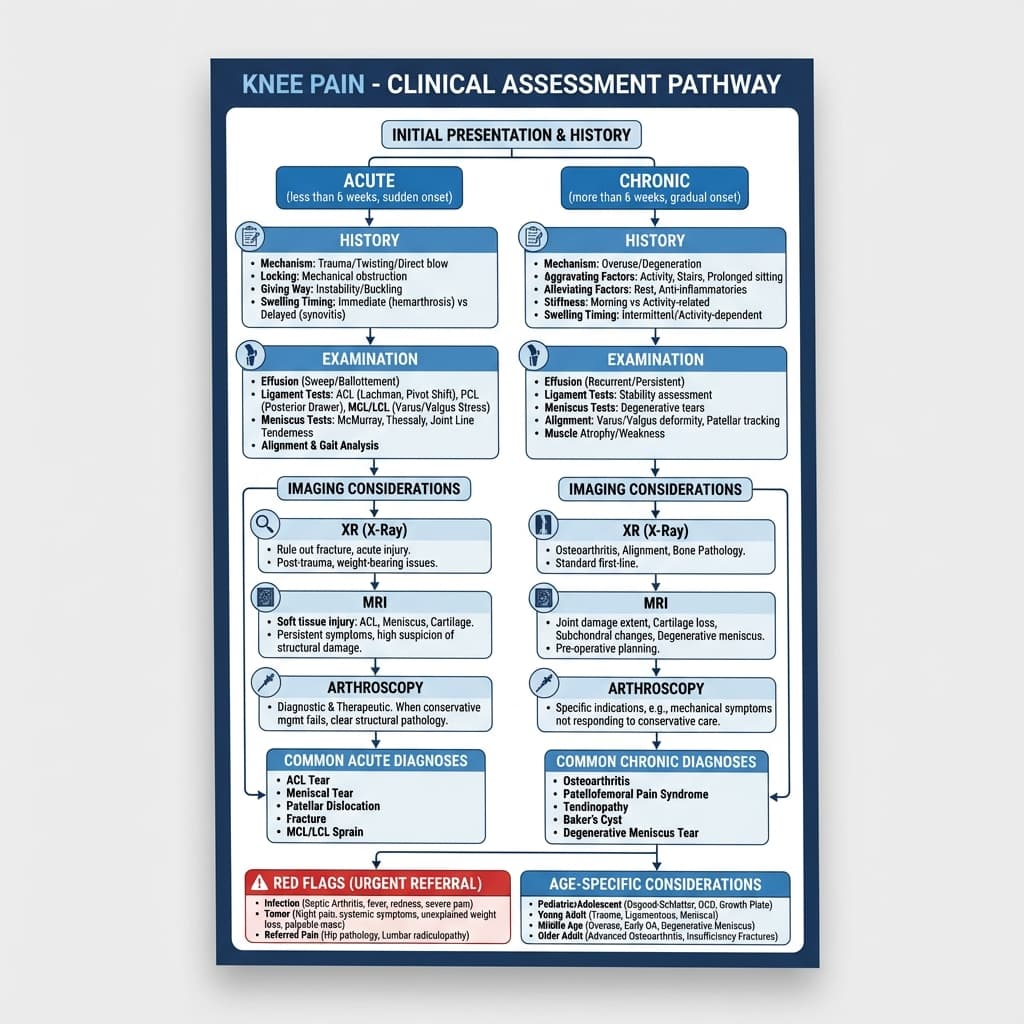
Knee Pain Clinical Assessment Pathway
Acute vs chronic, examination, imaging sequence, red flags
💡 Locking = meniscus or loose body. Giving way = ligament. Large effusion = haemarthrosis
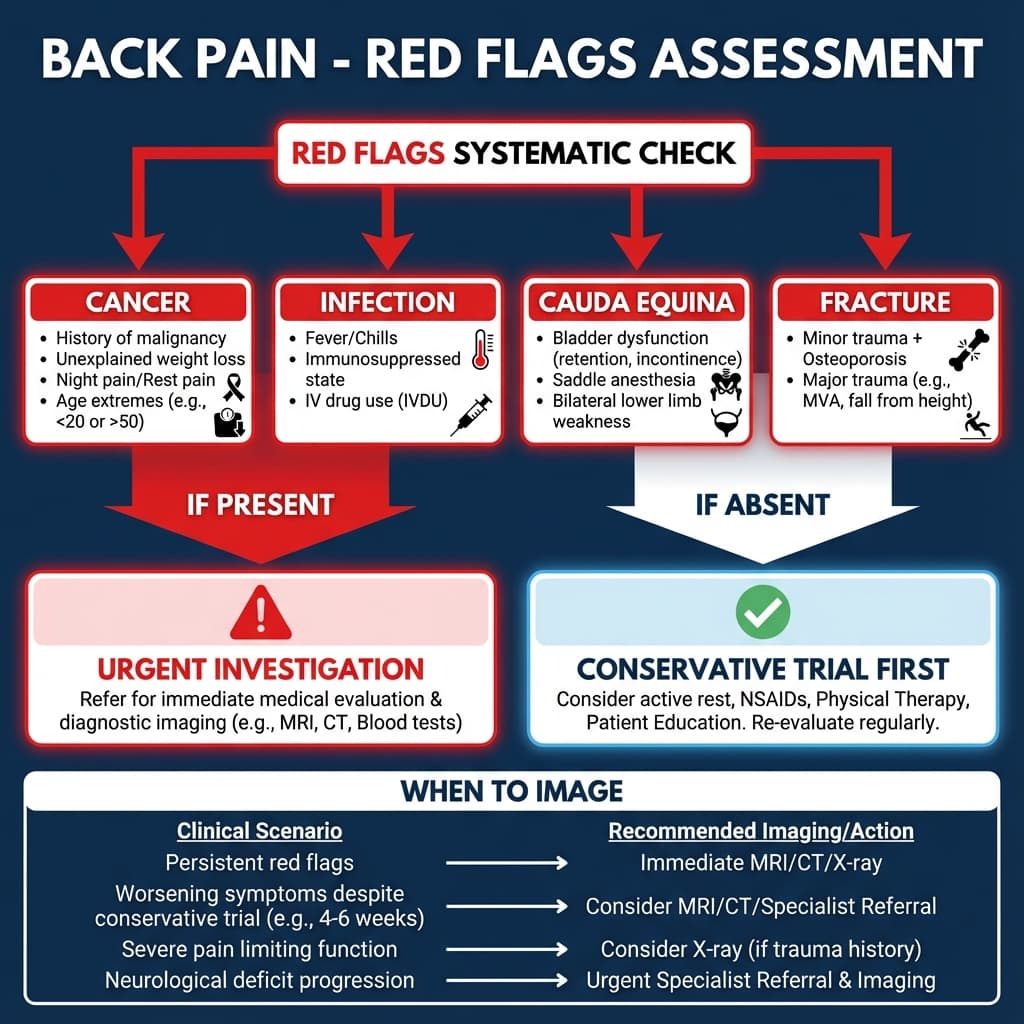
Back Pain Red Flags Assessment
Systematic red flag check - cancer, infection, cauda equina, fracture
💡 Night pain + weight loss = cancer. Bladder + bilateral = cauda equina. ALWAYS check red flags