Surgical Emergency | Four-Compartment Fasciotomy | Time-Critical | Clinical Diagnosis
- Clinical diagnosis - pain out of proportion, pain on passive stretch, tense compartments
- Delta P less than 30mmHg SUSTAINED FOR MORE THAN 2 HOURS = surgical indication (diastolic BP - compartment pressure). Quote the duration with the number - one transient dip is not the threshold
- Two-incision, four-compartment release - lateral and medial approaches
- Do NOT wait for pulselessness - this is a late, irreversible sign
- Remove all circumferential dressings - may reduce pressure by 30-65%
- “The 6 P's are LATE signs - pain and pressure are early
- “Deep peroneal nerve (anterior compartment) - first web space sensation
- “Superficial peroneal nerve (lateral compartment) - dorsum of foot sensation
- “Document pre-op neurovascular status meticulously for medicolegal protection
- “Delayed primary closure at 3-5 days or STSG if unable to close
Overview and Epidemiology
Acute compartment syndrome (ACS) is a surgical emergency: elevated pressure within a closed fascial compartment compromises tissue perfusion. In the leg, untreated ACS leads to irreversible muscle necrosis within 6-8 hours and potential limb loss. The diagnosis is primarily clinical, pressure measurement confirms the equivocal case, and the treatment is an emergent two-incision, four-compartment fasciotomy.
Irreversible muscle necrosis begins at 6-8 hours of ischaemia. If clinical suspicion is high, proceed to fasciotomy; do not wait for pressure confirmation.
Who. Men outnumber women 10:1 and the peak age is 20-35 years; the annual incidence is about 7.3 per 100,000. ACS complicates 2-9% of tibial fractures, and tibial shaft fractures are the most common cause. In polytrauma patients 36% of cases are missed.
The tibial diaphysis is the high-risk subgroup. In a series of 1388 tibial diaphyseal fractures, 160 (11.5%) developed ACS, higher than the general tibial-fracture range because the diaphyseal subgroup is the high-risk one. Age was the strongest predictor, with the highest prevalence in the 12-19 and 20-29 year age groups. Male sex, blue-collar occupation, sporting injury and intramedullary nailing were associated on univariate analysis; age and occupation remained significant after adjustment.
Why youth. The clinical translation is uncomfortable: the young patient with a tibial shaft fracture and good pulses is the highest-risk presentation, not the reassuring one. Youth means more muscle bulk within tighter fascia and better physiological compensation, so vital signs and peripheral perfusion stay normal while compartment pressure climbs. Keep the threshold for monitoring and fasciotomy lowest in exactly the patient who looks best.
Causes. Tibial shaft fractures head the list, and high-energy trauma is a high-risk injury in its own right. Anticoagulation lowers the threshold.
- Examples
- Tibial shaft (most common), forearm, femoral shaft
- Risk Level
- High
- Examples
- Crush injuries, muscle contusions
- Risk Level
- High
- Examples
- Ischaemia-reperfusion after revascularisation
- Risk Level
- High
- Examples
- Tight casts, circumferential dressings, positioning
- Risk Level
- Moderate
- Examples
- Anticoagulation, coagulopathy, vascular injury
- Risk Level
- Moderate
- Examples
- Circumferential burns, escharotomy needed
- Risk Level
- Moderate
- Examples
- Snake bites, injection injuries, nephrotic syndrome
- Risk Level
- Lower
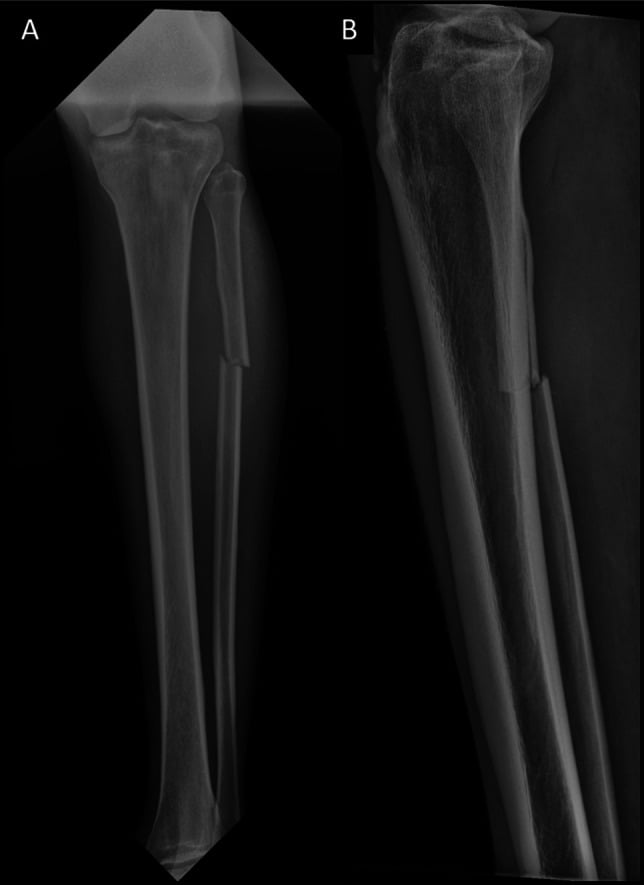
A distinct, frequently-litigated leg-specific entity absent from most candidates' answers: acute compartment syndrome of the well (non-operated, dependent) leg after prolonged surgery in the lithotomy or hemilithotomy position, "well-leg compartment syndrome" (WLCS).
Mechanism. The elevated leg has reduced arterial perfusion pressure (limb elevation lowers local perfusion), compounded by external compression from the leg-holder or calf supports, intra-operative hypotension and long operative duration, producing ischaemia in a leg that was never injured.
At-risk operations. Femoral or tibial nailing on a fracture or traction table (the contralateral "well" leg in hemilithotomy), and prolonged lithotomy for urological, colorectal and gynaecological surgery.
Prevention (the examinable list):
- Keep continuous lithotomy or elevation time short: lower the legs intermittently, roughly every 2 hours for long high-risk cases
- Use well-padded supports avoiding direct calf pressure
- Avoid sustained intra-operative hypotension
- Be cautious with calf compression devices in steep head-down or elevated positions
Recognition. Maintain a high index of suspicion for pain and tense compartments in the dependent leg in recovery after a long positioning case, and manage exactly as any ACS, with urgent fasciotomy.
Anatomy and Pathophysiology
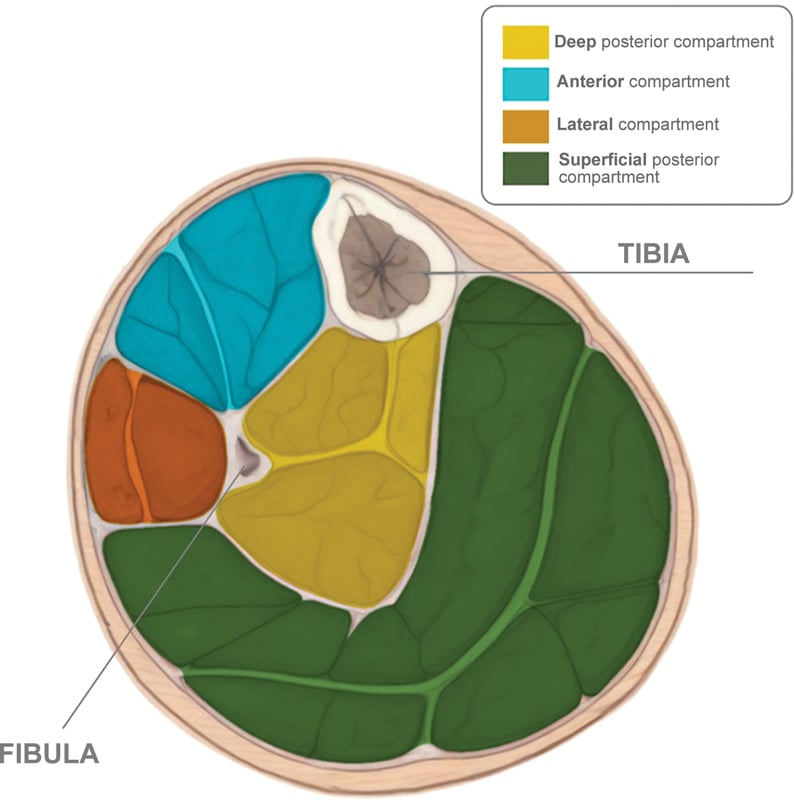
Four compartments. The leg has four fascial compartments, each with its own contents, a nerve with a sensory territory, and a motor function that can be tested at the bedside. The anterior compartment is most commonly affected (75%), but all four must be assessed, and all four released if the syndrome is present.
- Muscles and vessels
- Tibialis anterior (foot dorsiflexion), extensor hallucis longus, extensor digitorum longus, peroneus tertius, anterior tibial artery
- Nerve and sensory territory
- Deep peroneal - first web space
- Motor loss
- Foot dorsiflexion, EHL
- Muscles and vessels
- Peroneus longus, peroneus brevis
- Nerve and sensory territory
- Superficial peroneal - dorsum of foot
- Motor loss
- Foot eversion
- Muscles and vessels
- Gastrocnemius, soleus, plantaris
- Nerve and sensory territory
- Sural - lateral foot
- Motor loss
- Plantarflexion (weak)
- Muscles and vessels
- Tibialis posterior, flexor digitorum longus, flexor hallucis longus, posterior tibial artery
- Nerve and sensory territory
- Tibial - plantar foot
- Motor loss
- Toe flexion, tibialis posterior
The cycle. Pressure rises in a closed fascial space and the arteriovenous gradient falls, so perfusion falls with it. Capillary leak and venous congestion worsen the oedema, the cells are starved of blood, and more oedema means more pressure: the process feeds itself. Necrosis follows at 6-8 hours; rhabdomyolysis and its systemic effects follow, and renal and cardiac failure if untreated.
Tissue tolerance. Nerve suffers first, muscle next, and skin and bone tolerate far longer.
- Ischaemia Tolerance
- 2-4 hours
- Clinical Implication
- Paraesthesia and weakness are early signs
- Ischaemia Tolerance
- 4-6 hours
- Clinical Implication
- Salvageable if released early
- Ischaemia Tolerance
- 6-8 hours
- Clinical Implication
- Irreversible necrosis begins
- Ischaemia Tolerance
- Beyond 8 hours
- Clinical Implication
- Volkmann's contracture inevitable; rhabdomyolysis, limb loss
- Ischaemia Tolerance
- 8-12 hours
- Clinical Implication
- More tolerant than muscle
- Ischaemia Tolerance
- Prolonged
- Clinical Implication
- Most tolerant to ischaemia
The pressure-perfusion relationship. Tissue perfusion depends on the arteriovenous pressure gradient, not on the absolute arterial pressure. That gradient is what Delta P measures: Delta P = diastolic BP minus compartment pressure. A Delta P above 30 mmHg means adequate perfusion; a Delta P under 30 mmHg sustained for more than 2 hours means inadequate perfusion, and fasciotomy is indicated.
Why an absolute number fails. An absolute threshold of 30-45 mmHg is less reliable, especially in hypotensive patients. A hypotensive trauma patient with a diastolic of 50 mmHg and a compartment pressure of only 25 mmHg has a Delta P of 25, which is inadequate despite a seemingly low absolute pressure.
Classification Systems
The grade sets the urgency and frames the prognosis discussion with the patient.
- Clinical Features
- Pain with stretch, borderline Delta P 25-35
- Management
- Close monitoring, serial assessment every 1-2 hours
- Clinical Features
- Pain out of proportion, tense compartments, Delta P less than 30
- Management
- Immediate fasciotomy within 30-60 minutes
- Clinical Features
- Paralysis, paraesthesia, pressure less than 30 Delta P
- Management
- Urgent fasciotomy, consider outcomes discussion
- Clinical Features
- Pulselessness, fixed contracture, sensory loss complete
- Management
- Amputation may be required, fasciotomy contraindicated
Clinical Assessment
History. The mechanism is a tibial fracture, a crush, or prolonged compression of the limb, and the time since injury is critical for prognosis. The pain is constant, severe and not relieved by analgesia; on the ward it announces itself as an escalating opioid requirement after a nailing. Ask about numbness, tingling and weakness, anticoagulation, and whether polytrauma or altered consciousness could be masking the symptoms.
Examination. Pain on passive stretch is the most sensitive early sign, and pain out of proportion to the injury is the cardinal symptom. The compartments are tense and woody on palpation. Test sensation in the first web space (deep peroneal) and motor power in the anterior compartment, where weakness shows as a foot drop. Pulses are typically present: do not be reassured by them.
How unreliable, exactly. The sensitivity of clinical findings is only 13-19% and the positive predictive value 11-15%, so any single sign, taken alone, is close to useless for ruling the diagnosis in or out. Two consequences follow. The probability rises with the number of signs present, so signs are cumulative evidence rather than individual tests: one finding is weak, three together are meaningful. And a negative examination does not exclude ACS, which is precisely why continuous Delta P monitoring exists for the at-risk or unassessable patient. Pain on passive stretch remains the most sensitive of a poor set.
PPPPPP6 P's
Classic Signs (LATE findings)
Hook:Pain and Pressure are early - the other 4 P's mean you're too late!
Passive stretch, compartment by compartment. Each compartment is stretched by moving the foot against its muscles:
- Passive Stretch Test
- Plantarflex the foot and toes (stretches tibialis anterior, EDL, EHL)
- Passive Stretch Test
- Invert the foot (stretches peroneus longus and brevis)
- Passive Stretch Test
- Dorsiflex the foot (stretches the gastrosoleus complex)
- Passive Stretch Test
- Extend the toes and dorsiflex the foot (stretches FDL, FHL, tibialis posterior)
When to measure. Pressure measurement is for the patient the examination cannot answer. The technique is under Investigations. Measure when:
- The clinical findings are equivocal
- The patient is unconscious or sedated
- The patient cannot be assessed clinically (intubated, regional block)
- Symptoms are borderline and documentation is needed
Do not rely on:
- Pulses - present in most cases of compartment syndrome
- Capillary refill - maintained until very late
- A single pressure reading - serial measurements may be needed
- "Soft" compartments - deeper compartments may be tense while the superficial ones feel soft
Patients needing extra vigilance:
- Obtunded or intubated patients
- Regional anaesthesia (masks pain)
- Young males with high pain tolerance
- Those on anticoagulants
- After revascularisation
Differential diagnosis. Two of the mimics share "pain out of proportion" and are the ones not to miss.
- Key Distinguishing Features
- Pain out of proportion, pain on passive stretch, tense compartments, pulses usually present
- Discriminator
- Delta P less than 30mmHg; clinical picture
- Key Distinguishing Features
- Absent pulses early, pallor, poikilothermia, paralysis from outset
- Discriminator
- Absent pulses early (vs present in ACS); CT angiography
- Key Distinguishing Features
- Diffuse calf swelling, tenderness, no passive-stretch pain, gradual onset
- Discriminator
- Doppler ultrasound; absence of woody compartments
- Key Distinguishing Features
- Erythema, warmth, fever, systemic upset, no passive-stretch pain
- Discriminator
- Skin changes; inflammatory markers
- Key Distinguishing Features
- Pain out of proportion PLUS systemic sepsis, crepitus, skin necrosis, bullae
- Discriminator
- Systemic toxicity, LRINEC score, surgical exploration
- Key Distinguishing Features
- Pain localised to fracture, relieved by analgesia, soft compartments
- Discriminator
- Pain controlled by opioids; non-tense compartments
Acute limb ischaemia and necrotising fasciitis both share "pain out of proportion." Early absent pulses point to ischaemia (pulses are typically preserved in ACS until very late), while systemic sepsis, crepitus and skin necrosis point to necrotising fasciitis, which mandates urgent surgical debridement, not just fasciotomy.
Investigations
Bloods. Pre-operatively send FBC, UEC, coagulation, CK, lactate and a group and screen, and obtain an ECG for the hyperkalaemia risk. After fasciotomy, serial CK and urine output (for myoglobinuria) are the markers that matter.
What rhabdomyolysis looks like on paper.
- CK: often greater than 10,000 U/L, and can exceed 100,000
- Myoglobin: myoglobinuria, with cola-coloured urine
- Potassium: hyperkalaemia, with its cardiac risk
- Creatinine: a rise indicates acute kidney injury
- Lactate: elevated with tissue ischaemia
- Phosphate: elevated from muscle breakdown
Its management is under Postoperative Care.
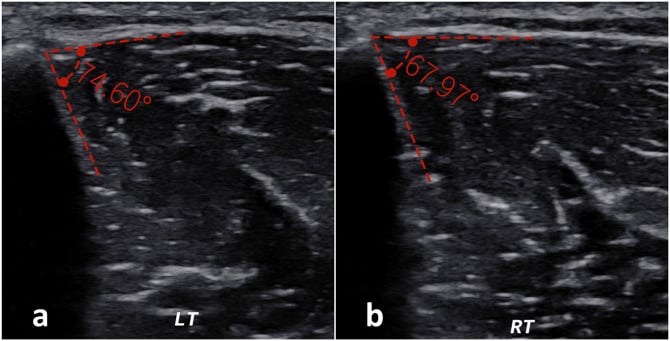
Compartment pressure measurement. Use a Stryker intracompartmental monitor, or an arterial line transducer with a needle. Measure within 5cm of the fracture site, the zone of highest pressure, and measure all four compartments rather than assuming which is affected.
- Insert the needle perpendicular to the compartment
- Zero at the level of the compartment
- Calculate Delta P = diastolic BP minus compartment pressure
Management
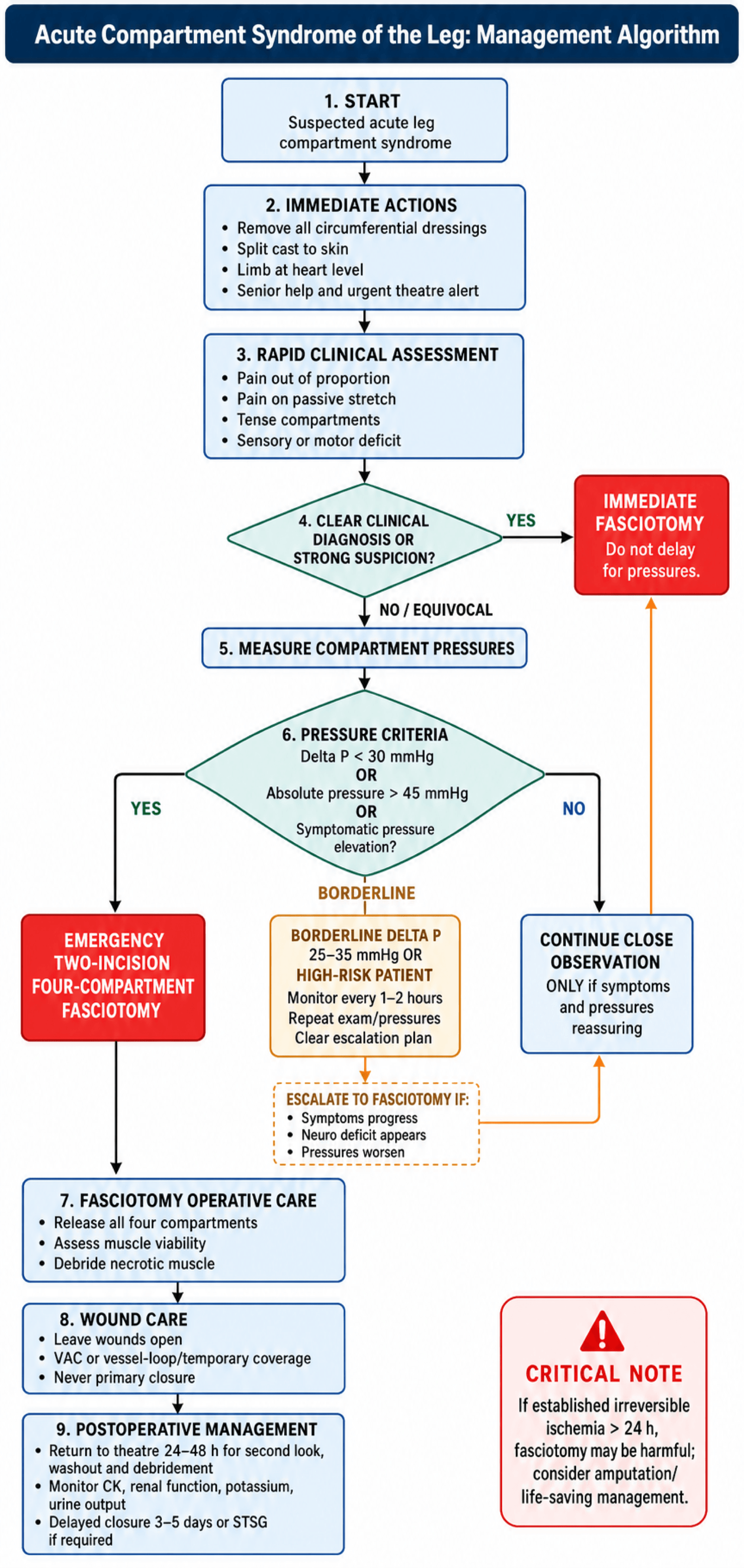
The first minutes. Remove all circumferential dressings and split any cast down to skin; this alone can reduce the pressure by 30-65%. Keep the limb at heart level, since elevation may reduce perfusion, and call for senior help immediately.
The next thirty minutes. Assess rapidly: pain, passive stretch, sensation. If the clinical diagnosis is clear, proceed directly to theatre; if it is equivocal, measure the compartment pressures. Consent for fasciotomy and organise theatre urgently.
Conservative measures (cast splitting, positioning) are only temporising while theatre is organised. If compartment syndrome is diagnosed or strongly suspected, fasciotomy is mandatory. Do not rely on conservative measures alone.
When observation is legitimate. Conservative management truly only applies to impending compartment syndrome with a borderline Delta P (25-35 mmHg). Even then it means close monitoring every 1-2 hours with a clear escalation plan.
Indications for fasciotomy. Any of the clinical or pressure findings is enough:
- Pain out of proportion to the injury
- Pain on passive muscle stretch
- Tense, woody compartments
- Neurological deficit, sensory or motor
- High clinical suspicion in an obtunded patient
- Delta P less than 30 mmHg
- Absolute pressure over 45 mmHg
- Borderline Delta P (25-35) with a concerning clinical picture
- Any pressure elevation in a symptomatic patient
Relative indications.
- Prophylactic fasciotomy after prolonged ischaemia and revascularisation
- High-risk fractures with swelling in the polytrauma patient
- Combined arterial injury with a tibial fracture
When not to operate. Established irreversible ischaemia beyond 24 hours carries the risk of reperfusion syndrome, and here amputation may be life-saving.
If in doubt, operate. The consequences of a missed compartment syndrome (limb loss, contracture, medicolegal) far outweigh the morbidity of an "unnecessary" fasciotomy.
The 8-hour threshold quoted throughout is not only a biological one. In a review of 19 closed malpractice claims over 23 years (16 patients, total liability 3.8 million USD), fasciotomy within 8 hours of the first symptom presentation was UNIFORMLY associated with a successful defence, and increasing time-to-fasciotomy was linearly associated with larger indemnity payments. So the same number that marks irreversible myonecrosis also marks the defensible decision.
The unexpected finding is the one worth carrying: evidence of poor physician-patient communication was present in 6 cases, and every one of those resulted in an indemnity payment. Documentation of serial examinations and pressures protects the patient first and the clinician second, but explaining to the patient and family what is being watched for, and why they must report worsening pain, is doing work that the notes alone do not.
Never say "wait and see", "the pulses are normal so it's fine", or "just release the anterior compartment".
Surgical Technique
The principle. All four compartments are released through two full-length incisions, a lateral one for the anterior and lateral compartments and a medial one for the two posterior compartments. A local or partial release is negligence. The skin must be released as well as the fascia.
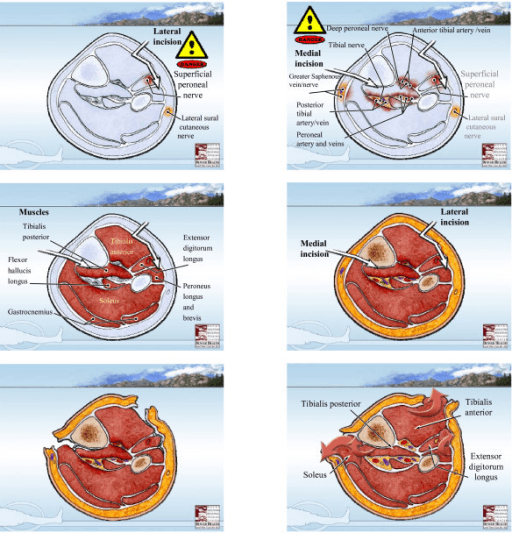
Releases the anterior and lateral compartments. Position the patient supine with a bump under the ipsilateral hip. The incision runs 2cm anterior to the fibula (also described as 2cm lateral to the tibial crest), full length from the fibular head to the lateral malleolus; do not be conservative with it.
Find the septum, then the nerve. Identify the intermuscular septum between the anterior and lateral compartments, and identify and protect the superficial peroneal nerve, which crosses in the distal third.
Release both compartments through the one incision.
- Incise the fascia longitudinally posterior to the septum: the peroneal muscles should bulge
- Pass anterior to the septum and incise the anterior compartment fascia longitudinally: tibialis anterior and EDL should bulge
The muscles should bulge and appear pink.
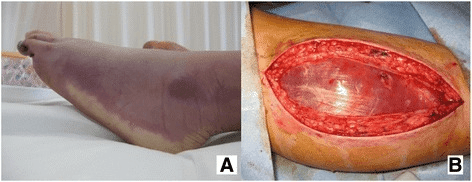
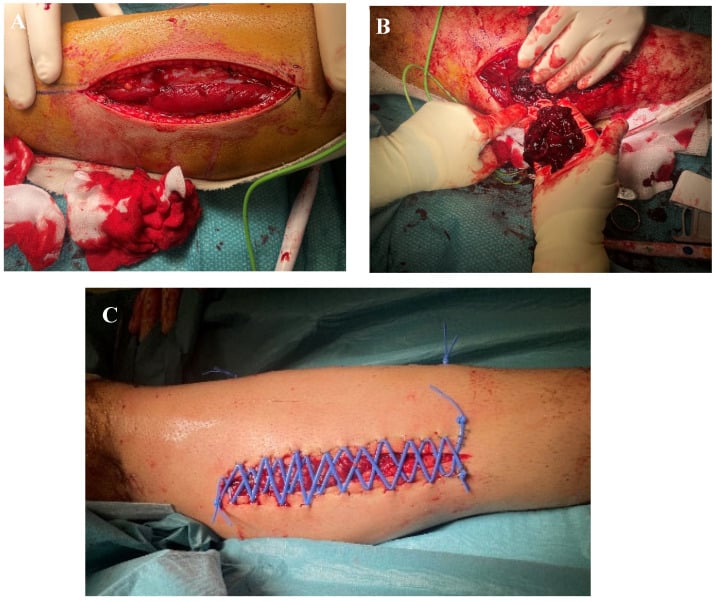
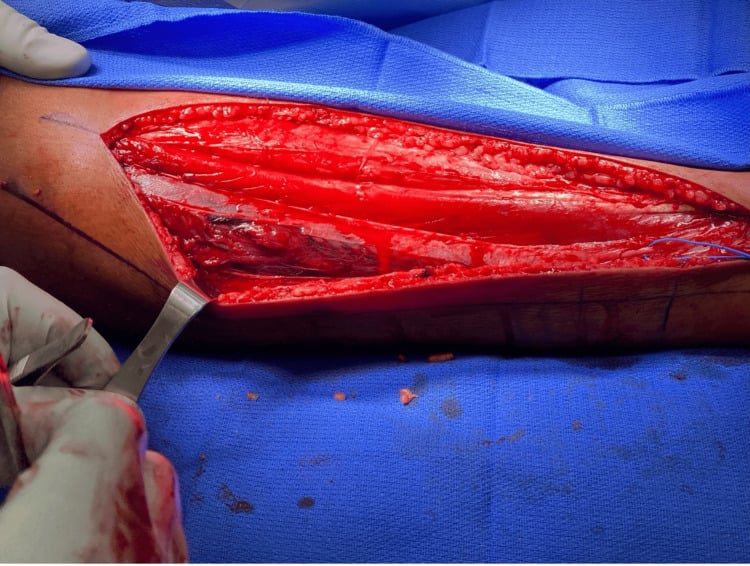
The two-incision technique above is standard, but the single-incision (lateral parafibular) four-compartment fasciotomy is an examinable alternative.
Technique. A single long lateral incision over the fibula gives direct access to the anterior and lateral compartments, as in the two-incision lateral approach; the superficial and deep posterior compartments are then reached by developing the plane posterior to the fibula, along the posterior intermuscular septum, and released from the lateral side. The historical fibulectomy fasciotomy, resecting the fibula to decompress all four, is now rarely used.
Indications. Compromised or unusable medial skin or soft tissue, the need to preserve medial access for vascular reconstruction or a planned free flap, or a single-incision preference to reduce the wound burden.
Caveats. It is technically more demanding and carries a higher risk of incomplete deep posterior release and of injury to the peroneal vessels and the superficial peroneal nerve. The two-incision technique remains the standard because complete deep posterior release is more reliably achieved.
Complications
The shape of the harm. The immediate complications are systemic and come from muscle breakdown; the late ones are what a late or incomplete release leaves behind.
- Complication
- Rhabdomyolysis
- Prevention/Management
- Aggressive fluids, monitor CK, urine output
- Complication
- Hyperkalaemia
- Prevention/Management
- ECG monitoring, calcium gluconate, insulin/dextrose
- Complication
- Acute kidney injury
- Prevention/Management
- IV fluids, avoid nephrotoxins, may need dialysis
- Complication
- Wound infection
- Prevention/Management
- Antibiotics, debridement, VAC therapy
- Complication
- Ongoing muscle necrosis
- Prevention/Management
- Serial debridement until viable tissue
- Complication
- Volkmann's contracture
- Prevention/Management
- Requires tendon lengthening, releases
- Complication
- Permanent nerve damage
- Prevention/Management
- May need tendon transfers
- Complication
- Amputation
- Prevention/Management
- May be required for unsalvageable limb
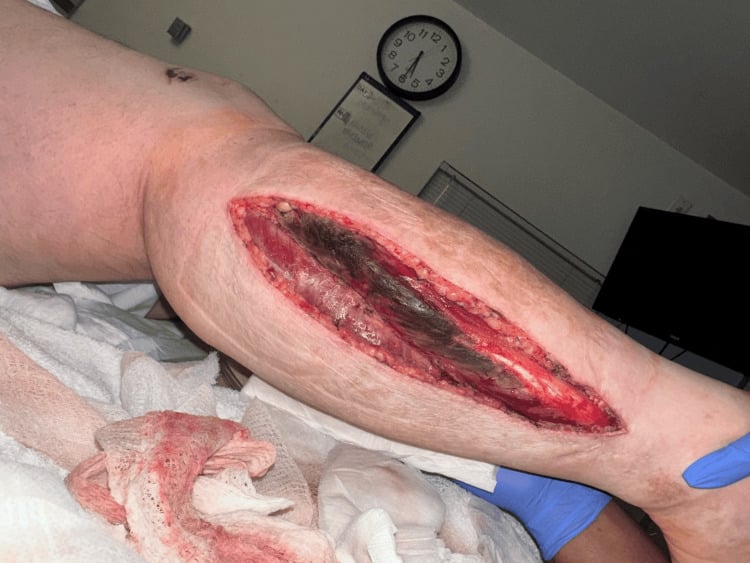
Volkmann's ischaemic contracture. A fixed flexion contracture of the forearm or leg muscles from ischaemic fibrosis: the muscle is replaced by fibrous tissue, shortened and contracted. It is less common in the leg than the forearm. In the leg it affects the deep posterior compartment (FDL, FHL, tibialis posterior) and presents as claw toes and an equinovarus foot. Prevention, by early recognition and fasciotomy, is the key message; once established, treatment is graded by severity:
- Mild: stretching, splinting, physiotherapy
- Moderate: muscle slide procedures
- Severe: tendon lengthening, releases
- Very severe: may require amputation
Compartment syndrome is one of the most litigated conditions in orthopaedics. Protect yourself:
- Document baseline neurovascular status - sensation, motor, pulses
- Time-stamp all assessments - shows vigilant monitoring
- Document clinical findings - "pain with passive stretch," "tense compartments"
- Record all interventions - cast splitting, positioning, pressure measurements
- Document discussions with patient/family about risks
- If pressures measured - record actual values and Delta P calculation
- If proceeding to surgery - document indication clearly
- Consent: Include amputation as a possible outcome if delayed presentation
Postoperative Care
The first 48 hours are about the kidneys. Adequate systemic resuscitation is what prevents acute kidney injury from rhabdomyolysis. Give aggressive IV fluids aiming for a urine output of 200-300 mL/hr, consider urinary alkalinisation (target urine pH above 6.5), and avoid nephrotoxic medications. Add DVT prophylaxis and optimised analgesia, and consider ICU admission if the rhabdomyolysis is significant.
What to watch.
- Serial CK every 6-12 hours
- Urine output (target greater than 1 mL/kg/hr)
- Renal function (creatinine, urea)
- Potassium, with ECG monitoring if there is any hyperkalaemia concern
- Limb neurovascular checks
Return to theatre at 24-48 hours. The second look is mandatory: washout, debride any further necrotic muscle, and assess the wound for readiness to close.
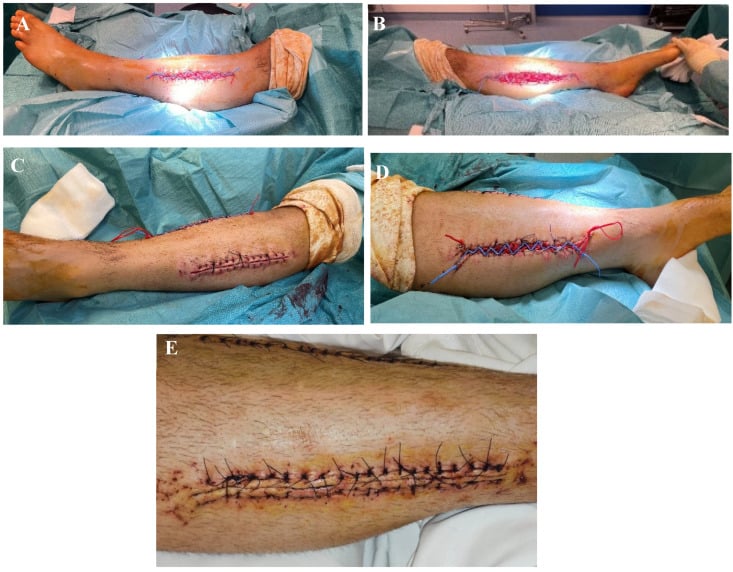
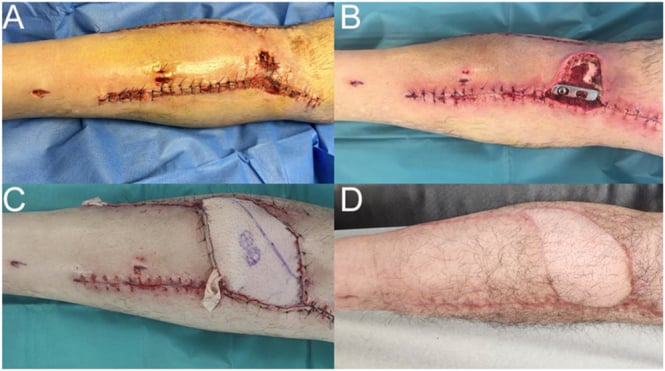
Outcomes and Prognosis
Time decides. Outcome follows the interval from onset to release.
- Expected Outcome
- Full recovery expected
- Prognosis
- Excellent - near-normal function
- Expected Outcome
- Variable - some deficit possible
- Prognosis
- Good - most regain function with some residual
- Expected Outcome
- Significant deficit likely
- Prognosis
- Fair - permanent weakness/sensory loss common
- Expected Outcome
- Poor - Volkmann's/amputation
- Prognosis
- Poor - limb salvage may not be possible
Favourable factors.
- Early diagnosis (less than 6 hours)
- Prompt complete fasciotomy
- Single compartment involvement
- Young, healthy patient
- Isolated injury
- Good systemic perfusion
Poor prognostic factors.
- Delayed diagnosis (greater than 12 hours)
- Incomplete fasciotomy
- Multiple compartment involvement
- Associated vascular injury
- Polytrauma or hypotension
- Significant rhabdomyolysis
- Deep posterior compartment involvement
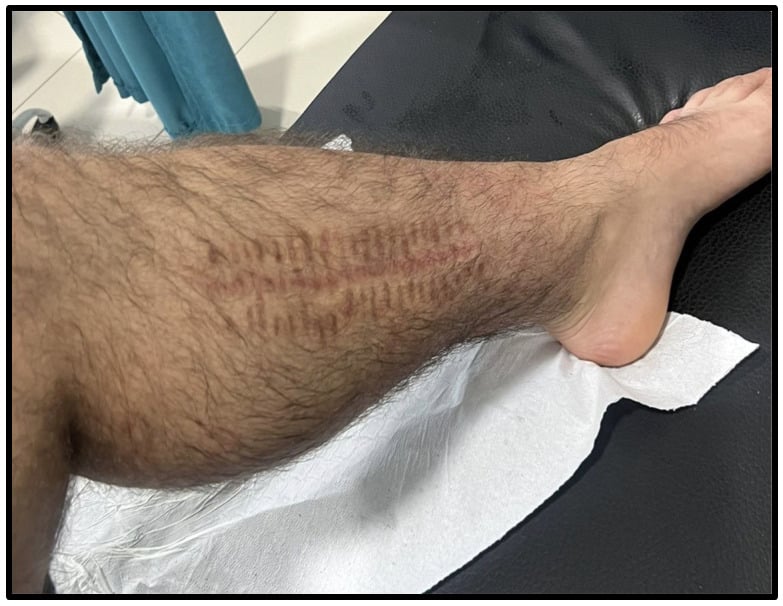
What patients are left with. After a timely fasciotomy most do well; after a delayed one, half or more do not.
After timely fasciotomy:
- 80-90% achieve a satisfactory functional outcome
- Chronic pain in 10-15%
- Sensory disturbance in 15-20%
- Motor weakness in 10-15%
- Cosmetic concerns from scars in 20-30%
After delayed fasciotomy (greater than 12 hours):
- 50% or more have significant functional limitation
- High rate of chronic pain
- Volkmann's contracture in 10-30%
- Amputation rate increases significantly
Guidelines, Registries & Global Practice
Global Epidemiology
- Overall annual incidence approximately 7.3/100,000 (males) and 0.7/100,000 (females)
- 2-11.5% of tibial diaphyseal fractures develop ACS (11.5% in the large Edinburgh cohort)
- Youth is the strongest risk factor - peak in the 12-29 year age range
- Male predominance roughly 10:1
- High-energy mechanisms (road traffic, sport, crush) dominate worldwide
- Rural / remote settings: longer transfer times mean fasciotomy may need to be performed locally before transfer rather than awaiting referral
- Limited-resource settings: pressure-monitoring devices (Stryker) may be unavailable - reliance on serial clinical assessment and arterial-line transduction
- Later presentation in regions with restricted access increases rates of established necrosis and amputation
Guidelines Compared Side by Side
- Diagnosis
- Primarily clinical; document serial neurovascular obs; high index of suspicion
- Threshold / Emphasis
- Delta P less than 30mmHg supports decompression; fasciotomy without delay
- Diagnosis
- Clinical assessment plus Delta P; continuous monitoring in unassessable patients
- Threshold / Emphasis
- Two-incision four-compartment release; wounds left open
- Diagnosis
- Clinical signs unreliable in isolation; consider monitoring in at-risk/obtunded
- Threshold / Emphasis
- Delta P less than 30mmHg; do not delay for confirmatory tests
- Diagnosis
- Clinical diagnosis remains gold standard; pressure adjunctive
- Threshold / Emphasis
- Emphasis on time-to-fasciotomy as the key modifiable outcome driver
There is broad international convergence: diagnosis is clinical, Delta P less than 30mmHg is the favoured objective threshold, and the decisive variable is time to decompression. No major society endorses an absolute-pressure-only rule.
Registry and System-Level Notes
- ACS is a recognised never-event / serious-incident trigger in many national systems; missed or delayed cases are commonly audited.
- Unlike arthroplasty, there is no dedicated international ACS registry; outcome data come from trauma databases (e.g. large single-unit cohorts such as Edinburgh) rather than implant registries.
- Health systems increasingly mandate structured neurovascular observation charts with explicit escalation triggers for at-risk limbs.
Antibiotic and Supportive Care (Principles, not Brands)
- Open fasciotomy / open fracture wounds: first-generation cephalosporin (e.g. cefazolin) as per local antimicrobial guidance; add gram-negative/anaerobic cover for heavily contaminated wounds; clindamycin if penicillin-allergic.
- Rhabdomyolysis: aggressive crystalloid resuscitation, monitor potassium and creatine kinase, treat hyperkalaemia (calcium, insulin-dextrose, salbutamol).
- Always follow local/national antimicrobial stewardship guidelines - agents and durations vary by region and resistance patterns.
Controversies and Areas of Uncertainty
Absolute pressure versus Delta P. Delta P (less than 30 mmHg) is the most widely endorsed threshold, but the supporting evidence (McQueen 1996) is observational with very few true ACS cases. Some still use absolute thresholds (over 30 or over 45 mmHg), and no randomised trial defines the optimal cut-off.
Continuous monitoring: benefit or overtreatment? Continuous Delta P monitoring shortens the delay to fasciotomy but may also drive unnecessary fasciotomies in patients whose pressures would have settled. Whether to monitor all high-risk tibial fractures or only the unassessable is debated.
The single reading. A single pressure measurement can be falsely low or high, through the wrong compartment, distance from the fracture, or technique. Many advocate trend-based or continuous data rather than acting on one number.
Adjuncts. Near-infrared spectroscopy and serum biomarkers (CK trends, for example) are investigational. None has replaced clinical assessment plus Delta P, and they are not standard of care globally.
State the mainstream position first (clinical diagnosis; Delta P less than 30mmHg drives the decision; if in doubt, decompress), then acknowledge the uncertainty (weak evidence base, risk of over-treatment with continuous monitoring). Examiners reward a safe default with awareness of nuance, not dogmatism.
MCQ Practice Points
- 6-8 hours: Window before irreversible necrosis
- Delta P less than 30mmHg: Threshold for fasciotomy
- 45 mmHg absolute: threshold still used by some, but over-sensitive on its own - read it against the diastolic pressure
- 2-9%: Incidence with tibial fractures
- 4: Number of leg compartments
- 2: Number of incisions needed
- 30-65%: Pressure reduction with cast splitting
- 3-5 days: Delayed closure timing
- 10:1: Male:female ratio
- 36%: Missed in polytrauma patients
- Pulses present - doesn't exclude compartment syndrome
- Pain is the earliest sign - not paralysis or pulselessness
- All 4 compartments - must release all, not just anterior
- Delta P not absolute pressure - use perfusion-based threshold
- Don't close wounds - leave open for 3-5 days
- Passive stretch - most sensitive clinical test
- Anterior compartment - most commonly affected
- Deep peroneal nerve - first web space sensation
Q: What is the Delta P threshold for fasciotomy in compartment syndrome?
A: Delta P less than 30mmHg (diastolic BP minus compartment pressure). This is more reliable than absolute thresholds (30-40mmHg) as it accounts for patient's perfusion pressure.
Q: What are the early vs late clinical features of compartment syndrome?
A: Early (6 Ps in order): Pain out of proportion, Pressure (tense compartments), Pain with passive stretch, Paresthesia. Late (irreversible): Paralysis, Pulselessness. The key is that pulses are preserved until very late - don't wait for pulselessness!
Q: How many incisions are required for complete four-compartment fasciotomy of the leg?
A: Two incisions: (1) Lateral incision 2cm anterior to fibula for anterior and lateral compartments; (2) Medial incision 2cm posterior to tibial border for superficial and deep posterior compartments. Wounds are left open with delayed closure at 3-5 days.
Q: How do you access the deep posterior compartment during medial fasciotomy?
A: Detach the soleus muscle origin from the posterior tibial border. This exposes the fascia of the deep posterior compartment, which contains tibialis posterior, FDL, FHL, and the posterior tibial neurovascular bundle.
Q: Which nerve territories should be tested to assess compartment involvement?
A: First web space (deep peroneal nerve - anterior compartment), dorsum of foot (superficial peroneal nerve - lateral compartment), plantar foot (tibial nerve - deep posterior compartment), and lateral foot (sural nerve - superficial posterior).
Clinical Decision Scenarios
Practise clinical reasoning and management decisions out loud
“A 25-year-old male has a tibial shaft fracture from a motorcycle accident. Six hours post-nailing, the nurse calls you because he's requiring increasing morphine and complaining of severe leg pain.”
“You're performing a fasciotomy for compartment syndrome.”
“A patient presents 24 hours after a tibial fracture with an obviously dead limb - no pulses, fixed claw toes, insensate. The registrar asks whether to do a fasciotomy.”
“You're discussing compartment syndrome risk with a junior registrar.”
Numbers that decide the case
- 6-8 hours - time to irreversible muscle necrosis
- Delta P under 30 mmHg (diastolic BP minus compartment pressure), SUSTAINED over 2 h - the threshold for surgery
- 4 compartments to release, through 2 incisions (lateral and medial)
- 30-65% pressure reduction from splitting a cast down to skin
- 3-5 days to delayed wound closure
Examiner favourites
- Describe the two-incision, four-compartment fasciotomy technique
- What is Delta P and why is it more reliable than absolute pressure?
- How do you manage compartment syndrome in an unconscious patient?
- Why are pulses present in most cases of compartment syndrome?
- What are the medicolegal considerations?
Common mistakes
- Waiting for pulselessness before diagnosing (too late)
- Only releasing one or two compartments (incomplete)
- Using absolute pressure greater than 30mmHg in hypotensive patients (misses cases)
- Closing wounds primarily (should leave open)
- Elevating limb excessively (may reduce perfusion pressure)
Mnemonic review
- 6 P's - Pain, Pressure, Paresthesia, Paralysis, Pallor, Pulselessness (pain and pressure are early, the rest are late)
- Delta P = Diastolic BP - Compartment Pressure
Last-minute facts
- Tibial fractures are the most common cause of leg ACS
- Anterior compartment most commonly affected but ALL FOUR must be released
- Deep peroneal nerve: first web space sensation (anterior compartment)
- Superficial peroneal nerve: dorsum of foot sensation (lateral compartment)
- Remove all circumferential dressings FIRST before measuring pressures
- Volkmann's contracture: fixed contracture from ischaemic muscle fibrosis
Evidence Base
McQueen et al. (1996) - Continuous Pressure Monitoring
- Continuous pressure monitoring in 116 tibial fractures.
- Delta P less than 30mmHg was the optimal threshold for fasciotomy indication.
- An absolute threshold of 30 mmHg would have indicated fasciotomy in 50 patients (43%), and at 40 mmHg 27 (23%) would have been considered for an unnecessary fasciotomy; no patient had sequelae of compartment syndrome at six months or later.
Whitesides et al. (1975) - Tissue Perfusion
- Tissue pressure measurements as a determinant for the need of fasciotomy.
- Perfusion pressure = DBP - Intracompartmental Pressure.
- Recommended fasciotomy when tissue pressure rose to within 10-30 mmHg of DBP.
Ulmer (2002) - Clinical Findings Predictive Value
- Sens (13-19%) and PPV (11-15%) of clinical signs are POOR.
- Possibility of ACS increases with number of signs present.
- Pain on passive stretch is the most sensitive clinical finding.
McQueen (1998) - Continuous Monitoring Halves Delay
- Largest causal group is tibial diaphyseal fracture, then soft-tissue injury, crush, distal radius and forearm fractures.
- Clinical signs (pain, stretch pain, neurology) are inconstant; continuous monitoring is recommended in at-risk patients.
- Using a Delta P less than 30mmHg threshold with monitoring halved the delay to fasciotomy and reduced late complications.