95% Anterior | Age Predicts Recurrence | Hill-Sachs and Bankart
- Anterior dislocation: Mechanism = abduction + external rotation (ABER); associated Bankart (anterior labrum) + Hill-Sachs (posterolateral head)
- Posterior dislocation: 50% MISSED on AP X-ray - look for lightbulb sign, get axillary lateral
- Age is the strongest predictor of recurrence: commonly quoted as up to 90% under 20 and around 25% over 40 - but these come from short-term series, and the 25-year prospective data show about half of young dislocators settle
- First-time dislocation management is controversial: immobilisation vs surgical stabilisation in young athletes
- Axillary nerve at risk (around 30%) - test deltoid and regimental badge sensation
- “Posterior dislocation: seizure + arm locked in internal rotation + loss of external rotation = posterior until proven otherwise
- “Engaging Hill-Sachs: lesion engages on Bankart defect during functional ROM - needs surgery
- “First-time dislocators under 25 in contact sports: consider early arthroscopic Bankart repair
- “Bone loss over 25% (glenoid) or over 40% (humeral) - may need Latarjet or bone grafting
Overview and Epidemiology
The shoulder is the most common major joint dislocation, and management has evolved with evidence supporting early surgical stabilisation in young athletes. Recurrence risk, the associated lesions and the surgical indications are what the examination tests.
Who. The distribution is bimodal: young males injured in sport and elderly patients who fall. Men outnumber women 2.5:1, incidence peaks at 20-30 years, and contact sports such as AFL and rugby carry the highest risk.
What it costs. Time off work or sport during recovery, a high recurrence rate in young patients and the risk of progressive bone loss. For an athlete it can be career-ending.
Anatomy and Mechanism
Mobility bought with stability. The glenohumeral joint sacrifices stability for mobility. The glenoid covers only 25-30% of the humeral head, so the joint relies on the labrum, capsule and rotator cuff to stay located. The labrum increases socket depth by 50% and contact area by 75%.
- Function
- Deepens socket, bumper effect
- Injury Pattern
- Bankart lesion (anterior), Kim lesion (posterior)
- Function
- Primary restraint in ABER position
- Injury Pattern
- Torn in anterior dislocation
- Function
- Restraint in 45° abduction
- Injury Pattern
- Variable anatomy (absent in 30%)
- Function
- Resists inferior translation at rest
- Injury Pattern
- Less relevant to dislocation
- Function
- Resists external rotation at rest
- Injury Pattern
- Posterior dislocation injury
The inferior glenohumeral ligament. The IGHL has an anterior band, a posterior band and an axillary pouch. It is the primary restraint to anterior dislocation in abduction and external rotation (ABER), and its anterior band is the part most critical for anterior stability.
Classification Systems
- Frequency
- 95%
- Mechanism
- ABER position - Abduction + External Rotation
- Key Features
- Bankart lesion + Hill-Sachs, axillary nerve at risk
- Frequency
- 3-4%
- Mechanism
- Seizure, electrocution, direct blow
- Key Features
- Lightbulb sign, fixed IR
- Frequency
- Less than 1%
- Mechanism
- Hyperabduction - arm locked overhead
- Key Features
- Highest nerve injury rate, rotator cuff tears
- Frequency
- Variable
- Mechanism
- Atraumatic instability, generalised laxity
- Key Features
- Requires different surgical approach
Anterior subtypes. Anterior dislocations are subclassified by where the head comes to rest: subcoracoid (most common), subglenoid, subclavicular (rare) and intrathoracic (very rare). All are variations of anterior displacement, and the principles of management are similar.
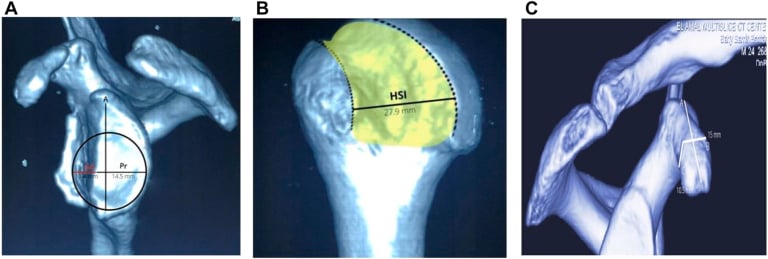
Associated Lesions
- Location
- Anterior labrum avulsion
- Incidence
- 67-97%
- Significance
- Essential lesion - repair for stability
- Location
- Posterolateral humeral head
- Incidence
- 40-90%
- Significance
- Engaging lesion needs addressing
- Location
- Anterior glenoid fracture
- Incidence
- 5-10%
- Significance
- Bone loss over 25% needs Latarjet
- Location
- Humeral avulsion of GHL
- Incidence
- 2-10%
- Significance
- Often missed, repair to humerus
- Location
- Anterior labrum periosteal sleeve avulsion
- Incidence
- Variable
- Significance
- Medially displaced labrum, heals poorly
- Location
- Supraspinatus usually
- Incidence
- Variable by age
- Significance
- Over 40 years: up to 40% incidence
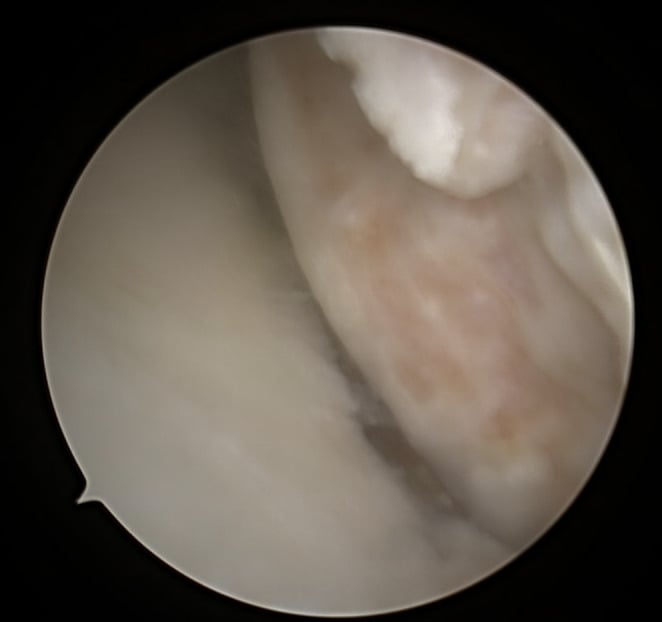
The engaging Hill-Sachs. An engaging lesion catches on the anterior glenoid rim during external rotation. In glenoid-track terms it is off-track (see Bone Loss Classification).
Clinical Assessment
History. The answers that change management:
- Mechanism - ABER for anterior, seizure for posterior
- First or recurrent episode - recurrence is the key question
- How it was reduced - by the patient or in the emergency department
- Sport and occupation - contact sport, overhead work
- Hand dominance, which affects the surgical decision
- Previous treatment - physiotherapy, surgery, bracing
Examination. The two directions look different, and the posterior one is the one that gets missed.
- Anterior
- Slight abduction, external rotation
- Posterior
- Adducted, internally rotated (fixed)
- Anterior
- Palpable anteriorly, glenoid empty posteriorly
- Posterior
- Not palpable anteriorly (empty)
- Anterior
- Squared off, loss of deltoid contour
- Posterior
- Flattened anteriorly, fullness posteriorly
- Anterior
- Unable to internally rotate
- Posterior
- Unable to externally rotate (locked)
50% of posterior dislocations are missed at first presentation. The single most reliable sign is loss of external rotation: the arm is fixed in internal rotation and will not rotate out past neutral. A flattened anterior contour with a prominent coracoid, fullness below the scapular spine and a history of seizure or electrocution complete the picture.
The axillary nerve. It is injured in up to 30% of anterior dislocations, and it runs just below the inferior capsule. Test deltoid power in abduction and sensation over the regimental badge area of the lateral deltoid, before and after any reduction. Document both: it is a medicolegal requirement.
- Distinguishing Features
- Squared-off contour, arm in abduction/ER, head palpable anteriorly
- Key Investigation
- AP plus axillary/Y-view radiograph
- Distinguishing Features
- Arm locked in IR, cannot ER, post-seizure or shock
- Key Investigation
- Axillary lateral - lightbulb/trough sign; CT
- Distinguishing Features
- Bony crepitus, diffuse bruising, often older patient
- Key Investigation
- Trauma series radiograph; CT if comminuted
- Distinguishing Features
- Cannot actively abduct but joint located, passive ROM preserved
- Key Investigation
- Ultrasound or MRI; relevant especially over 40
- Distinguishing Features
- Tenderness/step over ACJ, deformity lateral not glenohumeral
- Key Investigation
- AP and Zanca views
- Distinguishing Features
- Fever, raised inflammatory markers, no clear injury
- Key Investigation
- Joint aspiration, CRP/WCC
The instability examination. Once the shoulder is reduced the apprehension test is positive. For anterior instability the sequence is apprehension, then relocation, then surprise:
- Apprehension test - the arm abducted to 90 degrees and progressively externally rotated (ABER). A positive test is the fear that it will dislocate, not pain, reproducing the unstable position
- Relocation (Jobe) test - from the apprehensive position, a posteriorly directed force on the proximal humerus relieves the apprehension, confirming anterior instability
- Surprise (release) test - suddenly releasing that force brings the apprehension back; the most specific sign of anterior instability
Laxity, its direction and degree.
- Load-and-shift - load the head axially into the glenoid, then translate it anteriorly and posteriorly and grade the translation
- Sulcus sign - downward traction with the arm at the side produces a dimple below the acromion, showing inferior laxity. If it persists in external rotation it suggests a rotator-interval lesion; it is a hallmark of multidirectional instability and generalised laxity
- Gagey hyperabduction test - passive glenohumeral abduction beyond about 105 degrees, compared with the other side, indicates inferior glenohumeral ligament laxity
Posterior instability. In the jerk and Kim tests an axial load on the flexed, adducted, internally rotated arm, moved into abduction for the jerk test, produces a clunk with a posterior labral lesion. Screen too for generalised ligamentous laxity with the Beighton score, which points toward atraumatic or multidirectional instability.
Investigations
Radiographs. A trauma series, before and after reduction. Never rely on the AP alone: the axillary or Y view is what excludes a posterior dislocation.
- True AP in the scapular plane
- Axillary lateral - shows the head's position relative to the glenoid, and is essential when posterior dislocation is suspected. If the patient cannot abduct, the Velpeau view is the alternative: arm across the chest, leaning back
- Scapular Y - in a posterior dislocation the head sits behind the glenoid
After reduction, repeat the trauma series to confirm it, and document any fracture now visible.
Posterior dislocation on the AP. The AP may look normal, so look for:
- Lightbulb sign - the internally rotated head looks round like a lightbulb, its normal contour lost
- Rim sign - the distance between the medial head and the anterior glenoid rim is over 6mm, widening the joint space
- Trough sign - a vertical sclerotic line on the medial head, the reverse Hill-Sachs impaction seen en face
- Lost half-moon - the normal overlap of the head on the glenoid rim disappears as the head displaces posteriorly
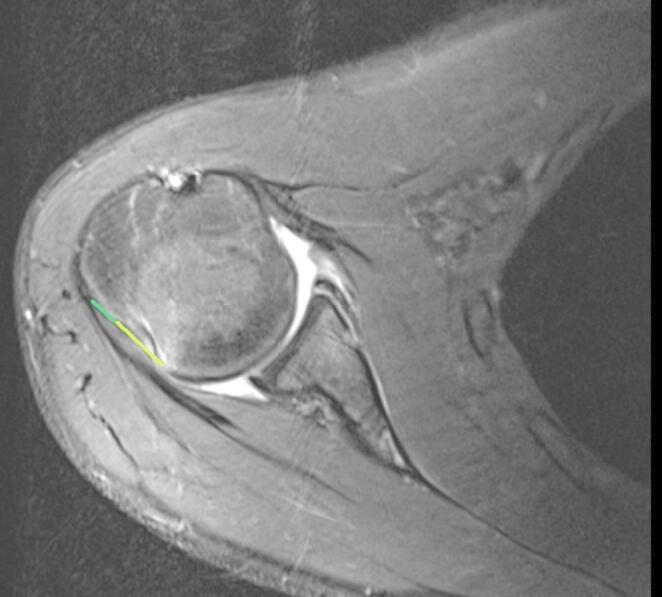
MRI or CT. MRI is best for the labrum (Bankart), capsule and rotator cuff. CT is best for quantifying bone loss, glenoid and humeral.
- Sequence
- Fat-suppressed T2, MR arthrogram
- Finding
- Anterior labrum avulsion with periosteal stripping
- Sequence
- MR arthrogram
- Finding
- Medially displaced labrum adherent to scapular neck
- Sequence
- Coronal T2
- Finding
- Humeral-side avulsion of IGHL - J-sign
- Sequence
- Axial T2
- Finding
- Posterolateral humeral head defect
- Sequence
- T2 coronal and sagittal
- Finding
- Tear assessment especially in over 40s
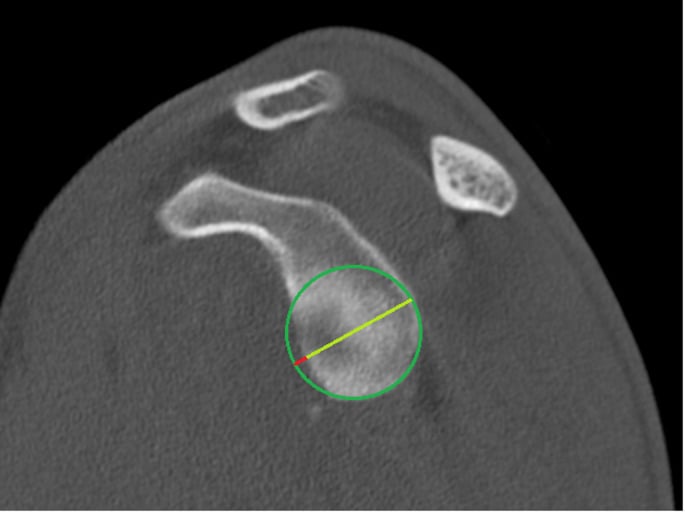
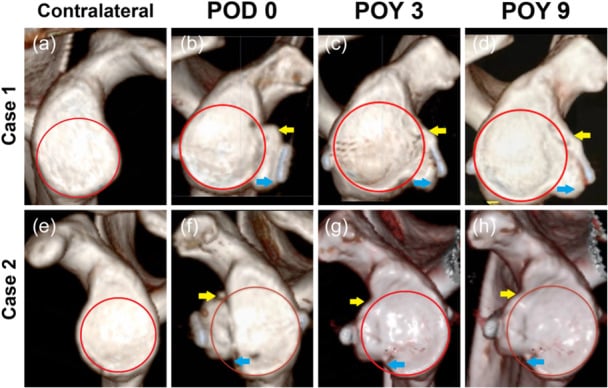
Measuring glenoid bone loss. Use an en-face view of the glenoid on 3D CT. The normal inferior two-thirds of the glenoid is a circle, and bone loss is calculated as the percentage of that intact circle that is missing.
Management Algorithm
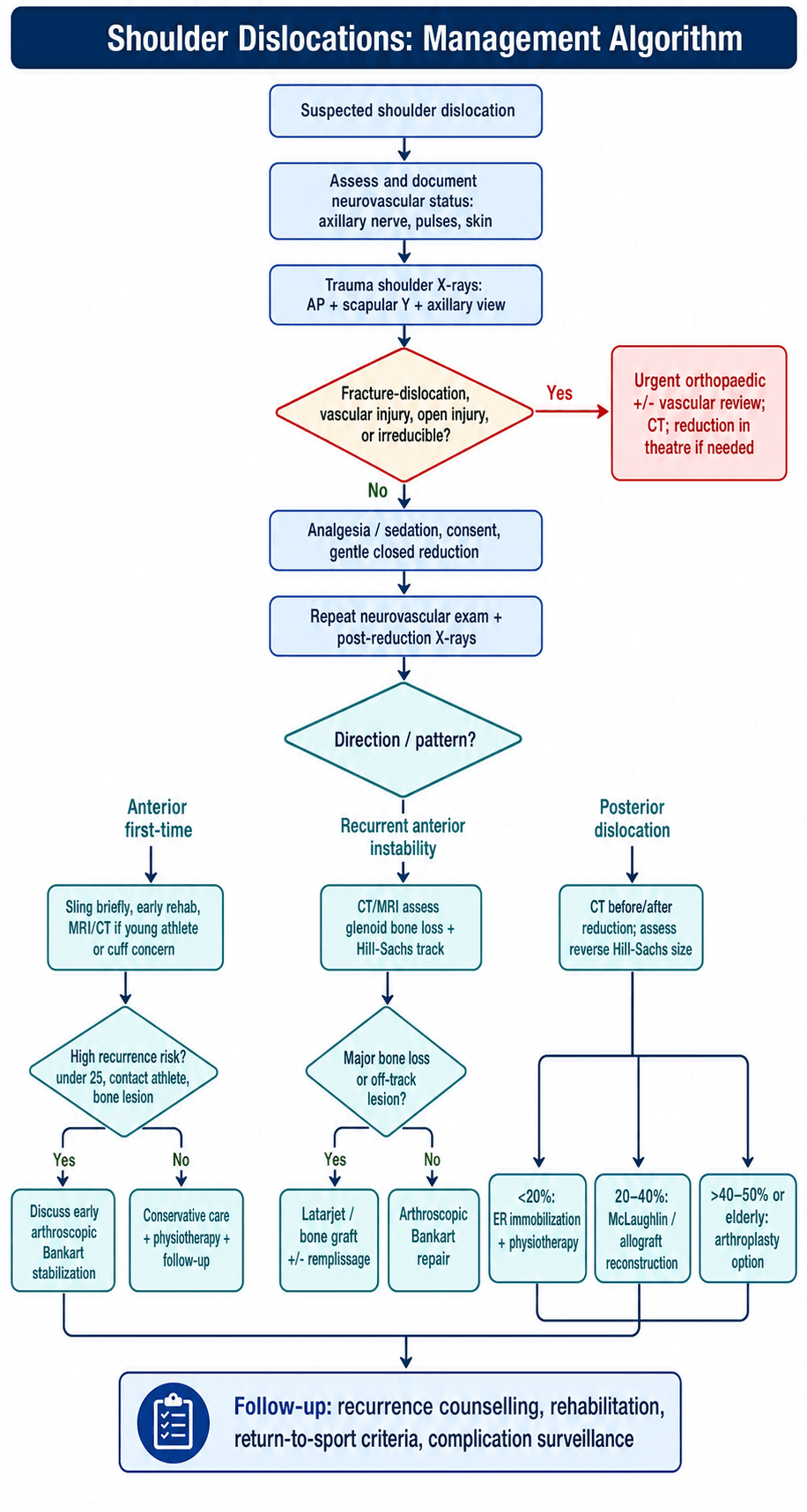
- Document neurovascular status, the axillary nerve above all
- Confirm the diagnosis on X-ray
- Obtain consent
- Ensure adequate analgesia or sedation
- Have a plan for post-reduction X-rays
Reduction Methods
Patient prone, arm hanging off the table with a 2-5kg weight attached, and gentle internal and external rotation. It uses gravity and muscle fatigue, and the least force.
Patient supine, elbow at 90°. Slow external rotation while adducting the arm. Gentle, low force, minimal sedation.
Patient seated and leaning forward while the biceps, deltoid and trapezius are massaged to relax them. No traction - muscle relaxation only.
Traction-countertraction methods, higher force and historical. Kocher has fracture risk - avoid.
After reduction. Repeat and document the neurovascular examination, confirm the reduction on X-ray, immobilise in a sling, give analgesia, and arrange follow-up and an MRI.
When it will not reduce. Tissue may be interposed (rotator cuff, biceps), a fracture may block it, or the anaesthesia may be inadequate. Open reduction may be needed.
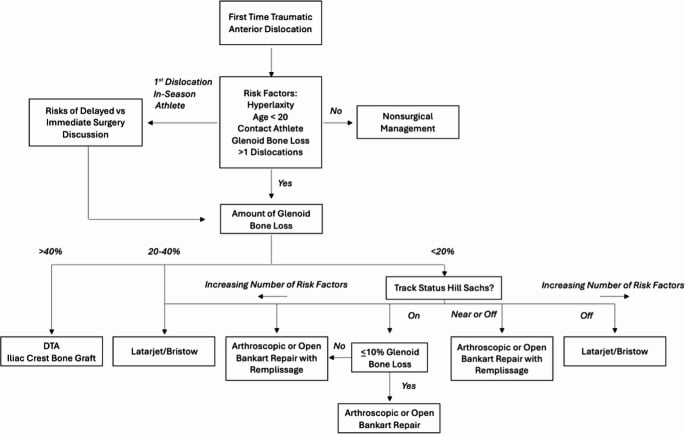
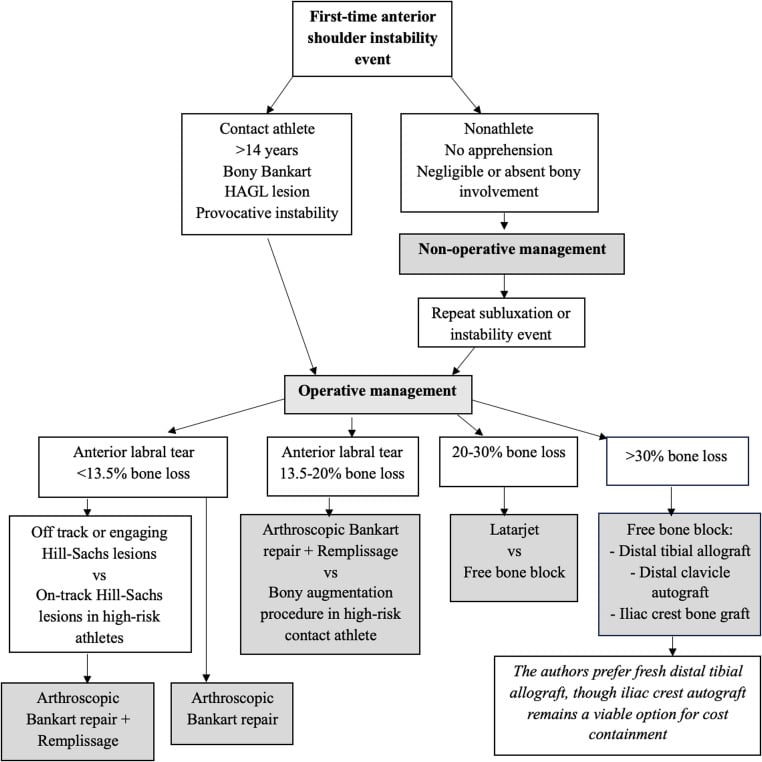
Multidirectional instability. MDI is a distinct entity, managed completely differently from the traumatic Bankart shoulder, and a favourite exam trap. It is symptomatic instability in two or more directions, usually inferior plus anterior or posterior, typically atraumatic or from repetitive microtrauma, in patients with generalised ligamentous laxity and a high Beighton score. Swimmers, throwers and gymnasts are the classic patients.
What to find. The hallmark is a positive sulcus sign, often bilateral, with no discrete Bankart or bony lesion. The problem is a redundant, capacious capsule.
Rehabilitation first. Prolonged, structured rehabilitation (the Rockwood-type programme) strengthens the rotator cuff and scapular stabilisers dynamically and trains proprioception, and the majority improve and avoid surgery. A muscle-patterning or voluntary component (Stanmore Pole III) is treated with biofeedback or psychology rather than an operation.
Surgery after a genuine failed trial of 6 months or more. An inferior capsular shift (Neer) or capsular plication, open or arthroscopic, reduces capsular volume in all directions, often with rotator-interval closure.
Bony procedures (Latarjet, bone block) are wrong for atraumatic MDI: there is no bone loss to replace, and over-constraint risks stiffness and arthropathy. Reserve a bone block for traumatic instability with true bone loss.
Surgical Technique
Operative Steps
Beach chair or lateral decubitus with the arm in traction; preference varies. The beach chair gives easier orientation, the lateral position better inferior access.
Posterior viewing portal (soft spot), anterior working portal (rotator interval), and an anteroinferior accessory portal for anchor placement.
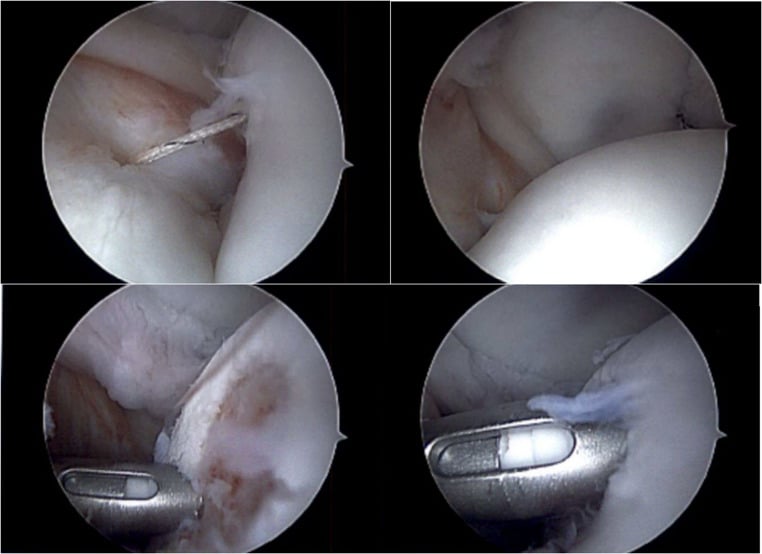
Elevate the labrum off the glenoid neck with an elevator, and mobilise until subscapularis is seen medially. A fresh bleeding edge is essential.
Rasp the glenoid rim to create a bleeding bone bed. Do not over-decorticate (bone loss).
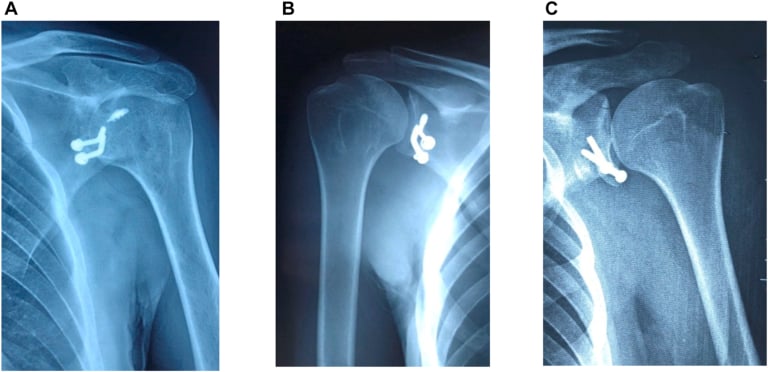
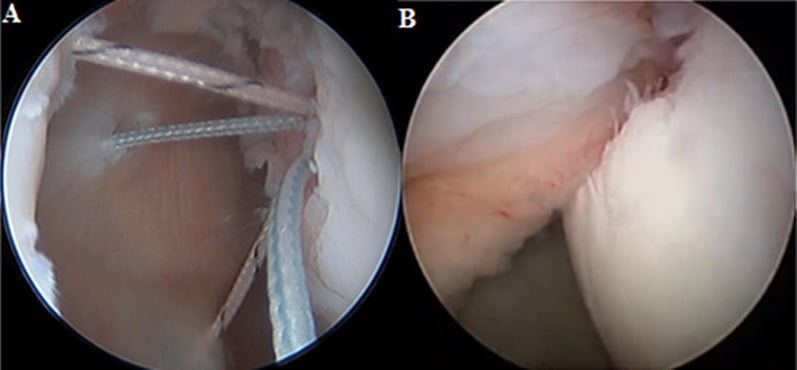
3-4 suture anchors from 5 o'clock to 3 o'clock (right shoulder). The inferior anchors, which capture the IGHL, are the most important.
Pass the sutures through the labrum and tie sequentially. The goal is to restore the bumper effect, recreating labral height on the glenoid rim.
Technical points. Place the inferior anchor first. Shift the labrum superiorly to recreate tension, seat the anchors on the glenoid face and not its edge to prevent erosion, add anchors if there is a SLAP lesion, and check the reduction with a probe.
Pitfalls. The mistakes to avoid:
- Inadequate mobilisation - the labrum stays medial
- Anchors placed too laterally - poor healing
- Missing the inferior extent - recurrence
- Not addressing an engaging Hill-Sachs
- Missing a HAGL lesion on the lateral capsule
Complications
- Incidence
- 10-15% after Bankart
- Risk Factors
- Young age, contact sport, bone loss, poor tissue
- Management
- Revision surgery, consider Latarjet
- Incidence
- Up to 30% initial
- Risk Factors
- Inferior dislocation, elderly, delayed reduction
- Management
- Most recover; EMG at 3 months (below)
- Incidence
- Over 40 years: up to 40%
- Risk Factors
- Age over 40, high-energy, recurrent
- Management
- MRI assessment, repair if symptomatic
- Incidence
- 5-10%
- Risk Factors
- Prolonged immobilisation, elderly
- Management
- Early motion, physiotherapy
- Incidence
- 10-20% long-term
- Risk Factors
- Recurrent dislocations, bone loss
- Management
- Activity modification, arthroplasty if severe
- Incidence
- Rare
- Risk Factors
- High-energy, elderly (axillary artery)
- Management
- Urgent vascular surgery consultation
Axillary nerve recovery. 90% of axillary nerve injuries recover within 3-6 months. If there is no clinical recovery by 3 months, obtain EMG/NCS, and consider exploring the nerve if there is none by 6-9 months.
Postoperative Care and Rehabilitation
Rehabilitation After Bankart Repair
Sling full-time. Pendulum exercises only. Ice and analgesia. No external rotation.
Sling when out. Active elbow and hand. Passive forward flexion, ER to neutral only. No combined ABD+ER.
Wean sling. AROM all directions. Isometric then isotonic strengthening of the rotator cuff and scapular stabilisers.
Full ROM. Progressive resistance. Sport-specific drills. No contact until 6 months.
Full strength and ROM. Functional testing. Return to contact sport 6 months minimum.
Outcomes and Prognosis
- Better Outcome
- Older (over 30)
- Worse Outcome
- Younger (under 20)
- Better Outcome
- Single episode
- Worse Outcome
- Multiple recurrences
- Better Outcome
- Minimal (under 15%)
- Worse Outcome
- Significant (over 25%)
- Better Outcome
- Non-contact
- Worse Outcome
- Contact/collision sports
- Better Outcome
- Good labral tissue
- Worse Outcome
- Attenuated/ALPSA pattern
Guidelines, Registries & Global Practice
- Most common large-joint dislocation worldwide; anterior accounts for around 95%
- Population incidence roughly 15-25 per 100,000 person-years
- Strongly bimodal: young males (contact sport - rugby, American/Australian football, handball) and older patients (low-energy falls)
- Age at first dislocation is the dominant recurrence driver across all populations
- Latarjet and bony procedures captured in shoulder-instability registries (e.g. Nordic and national arthroplasty/instability datasets) show low recurrence but a measurable reoperation/complication burden
- High-resource settings: early MRI/CT bone-loss assessment and arthroscopic stabilization are common
- Limited-resource settings: closed reduction with sling and selective referral predominate; CT/MRI access may be rationed
- Region
- United States
- Emphasis
- Shared decision-making for first-time dislocation; image-guided assessment of bone loss before surgical planning
- Region
- United Kingdom
- Emphasis
- Structured pathway: reduction, axillary nerve documentation, early specialist review for young/recurrent instability
- Region
- Global (trauma)
- Emphasis
- Reduction technique, post-reduction imaging, and recognition of associated fractures (greater tuberosity, glenoid rim)
- Region
- Europe
- Emphasis
- Risk stratification (ISIS, glenoid track) to select Bankart vs bone-block procedures
The largest area of legitimate variation is the threshold for primary stabilization of a first-time dislocation. North American sports-medicine practice leans toward early arthroscopic stabilization for young contact athletes, whereas several European and trauma-oriented pathways favour an initial non-operative trial with stabilization reserved for recurrence or demonstrable bone loss. Both are defensible - the deciding factors are age, sport demand, and quantified bone loss, not geography.
Key documentation: (1) Pre-reduction neurovascular exam (axillary nerve), (2) Consent for reduction including risks, (3) Post-reduction neurovascular exam, (4) Imaging before and after, (5) Counseling about recurrence risk and treatment options. Failure to obtain axillary view leading to missed posterior dislocation is a recognized litigation risk.
Controversies and Areas of Uncertainty
Surgery or not for the first dislocation. RCT evidence (Kirkley, Jakobsen) shows that early stabilisation cuts recurrence, and Hovelius shows that many young dislocators stabilise without surgery; the figures are under First-Time Dislocation above. The genuine debate is patient selection; whether surgery works is not in question.
The Bankart-Latarjet threshold. The classic 25% glenoid bone-loss cut-off is being challenged by data on subcritical bone loss (around 13.5-20%), suggesting that a Bankart alone may underperform earlier than thought, especially in contact athletes.
Remplissage or bony augmentation. For an off-track Hill-Sachs with subcritical glenoid loss, Bankart plus remplissage and Latarjet give comparable recurrence, with fewer complications reported for remplissage. The optimal choice remains unsettled.
Immobilisation position. Some studies (Itoi) suggested that immobilising in external rotation reduces recurrence by approximating the Bankart lesion to the glenoid. Meta-analyses show no significant difference, the pooled data (Paterson) only a non-significant trend, and most units default to a short period in a standard internal-rotation sling, which is easier.
MCQ Practice Points
Q: Which ligament is the primary restraint to anterior dislocation in the ABER position? A: Anterior band of the Inferior Glenohumeral Ligament (IGHL). The IGHL is taut in abduction and external rotation and is torn in anterior dislocation, leading to Bankart lesion.
Q: What percentage of posterior shoulder dislocations are missed on initial presentation? A: Up to 50%. AP X-ray may appear normal. Key is to recognize clinical signs (arm fixed in IR, cannot ER) and obtain axillary lateral view. Lightbulb sign, rim sign, and lost half-moon are X-ray clues.
Q: What is the recurrence rate for first-time anterior dislocation in patients under 20 years treated conservatively? A: Up to 90%. Age is the strongest predictor of recurrence. This high rate supports early surgical stabilization in young athletes.
Q: At what percentage of glenoid bone loss does arthroscopic Bankart repair have unacceptable failure rates? A: Over 25% (some say 20%). At this threshold, isolated Bankart repair fails in 67% of cases. Latarjet procedure is indicated for significant glenoid bone loss.
Q: Which nerve is most commonly injured in anterior shoulder dislocation, and how is it tested? A: Axillary nerve (up to 30%). Test deltoid power (abduction) and sensation over the regimental badge area (lateral deltoid). Document pre and post-reduction.
Q: What is an engaging Hill-Sachs lesion? A: A Hill-Sachs defect that engages on the anterior glenoid rim during functional external rotation - the lesion is 'off-track' based on the glenoid track concept. Requires additional surgery (remplissage or bone grafting) beyond Bankart repair.
Exam Viva Scenarios
Practise clinical reasoning and management decisions out loud
“A 19-year-old AFL footballer presents to ED with left shoulder pain after a tackle. He felt his shoulder 'pop out' and it was reduced on the field by the team physio. X-rays show a reduced glenohumeral joint. He is keen to return to football as soon as possible. How would you manage him?”
“A 45-year-old man presents 3 weeks after a seizure with persistent shoulder pain. He was seen in ED on the day of seizure, had an AP X-ray 'reported as normal' and was discharged. He cannot externally rotate his shoulder. Examination shows the arm fixed in internal rotation. What is your assessment?”
“A 28-year-old rugby player has had 5 anterior shoulder dislocations over 3 years and has apprehension with his arm in throwing position. He had an arthroscopic Bankart repair 2 years ago which 'worked for 6 months' before he started dislocating again. MRI shows attenuated anterior labrum. CT shows 28% glenoid bone loss. What surgical options would you discuss?”
Key Anatomy
- IGHL anterior band = primary restraint in ABER
- Labrum increases socket depth by 50%
- Axillary nerve = most at risk (30%)
- Regimental badge sensation = axillary nerve test
Classification
- Anterior: 95% - ABER mechanism, Bankart + Hill-Sachs
- Posterior: 3-4% - seizure/electrocution, lightbulb sign
- Inferior (luxatio erecta): rare, arm locked overhead
- ALWAYS get axillary view - posterior missed 50%
Associated Lesions
- Bankart: anterior labrum avulsion (67%)
- Hill-Sachs: posterolateral head impaction (40-90%)
- HAGL: humeral avulsion of GHL (missed on scope)
- Bone loss over 25% = cannot do Bankart alone
Recurrence by Age
- Under 20 years: 90% recurrence
- 20-40 years: 40-60% recurrence
- Over 40 years: under 25% (but check cuff!)
- Early stabilization reduces recurrence in young
Surgical Options
- Bankart repair: standard, 10-15% recurrence
- Latarjet: bone loss over 25%, 3-5% recurrence
- Remplissage: engaging Hill-Sachs (off-track)
- Return to contact sport: 6 months minimum
Evidence Base and Key Trials
Surgery vs Conservative for First-Time Dislocation
Kirkley et al. - Immediate Arthroscopic Stabilization RCT (Long-Term)
- RCT of 40 patients under 30 with a first traumatic anterior dislocation
- Immediate arthroscopic stabilization vs immobilization plus rehabilitation
- At mean 75 months, significantly lower redislocation rate with surgery (original 2-year data: 15.9% surgery vs 47% conservative)
- Small but clinically significant WOSI advantage; no ASES/DASH difference
Balg and Boileau - The Instability Severity Index Score (ISIS)
- Prospective case-control study of 131 consecutive patients undergoing arthroscopic Bankart repair with suture anchors; 14.5% had recurrent instability at a mean of 31 months
- Six risk factors identified: age 20 or under at surgery, competitive sport participation, contact or forced-overhead sport, shoulder hyperlaxity, a Hill-Sachs on the AP radiograph in EXTERNAL ROTATION, and loss of the sclerotic inferior glenoid contour
- Integrated into a 10-point pre-operative score
- A score OVER 6 carried an unacceptable recurrence risk of 70% (p less than 0.001), on which basis the authors regard arthroscopic Bankart as contraindicated and suggest Bristow-Latarjet instead
Jakobsen et al. - Primary Repair vs Conservative, 10-Year Follow-Up
- RCT of 76 patients aged 15-39 (37 open repair vs 39 conservative)
- At 2 years recurrence was 3% after open repair vs 56% conservative (p less than 0.005)
- At 10 years (Oxford score) 72% good/excellent after surgery vs 75% unsatisfactory conservative
- More positive apprehension among non-dislocators in the conservative group (39% vs 7%)
Bottoni et al. - Arthroscopic Stabilization vs Nonoperative, Military Athletes
- Prospective randomised trial in young military athletes with acute first-time traumatic dislocation; 21 patients available at a mean of 36 months after 3 were lost
- 9 of 12 nonoperatively treated patients (75%) developed recurrent instability, and 6 of those 9 went on to open Bankart repair
- 1 of 9 arthroscopically stabilised patients (11.1%) recurred
- This 75% figure is the source of the high recurrence rates often quoted for young athletes