
Article summary
What a career in arthroplasty really involves — the work, the lifestyle, the satisfactions and the path into joint-replacement surgery.
Educational content is reviewed for source visibility, editorial coherence, and correction readiness.
No individual clinician credential is claimed unless a named person is shown.
Verify before clinical use; this is not medical advice or a substitute for local guidance.
Few moments in medicine match the profound satisfaction of watching a patient walk out of the hospital, largely pain-free, just days after you have rebuilt their ruined joint. Arthroplasty, or joint replacement surgery, is one of the great triumphs of modern orthopaedics, blending meticulous biomechanical engineering with immediate, life-changing clinical outcomes. Yet, behind the deeply rewarding patient interactions and the gleaming titanium implants lies a physically demanding, highly competitive, and intellectually rigorous surgical career.
The Realities of the Operating Theatre
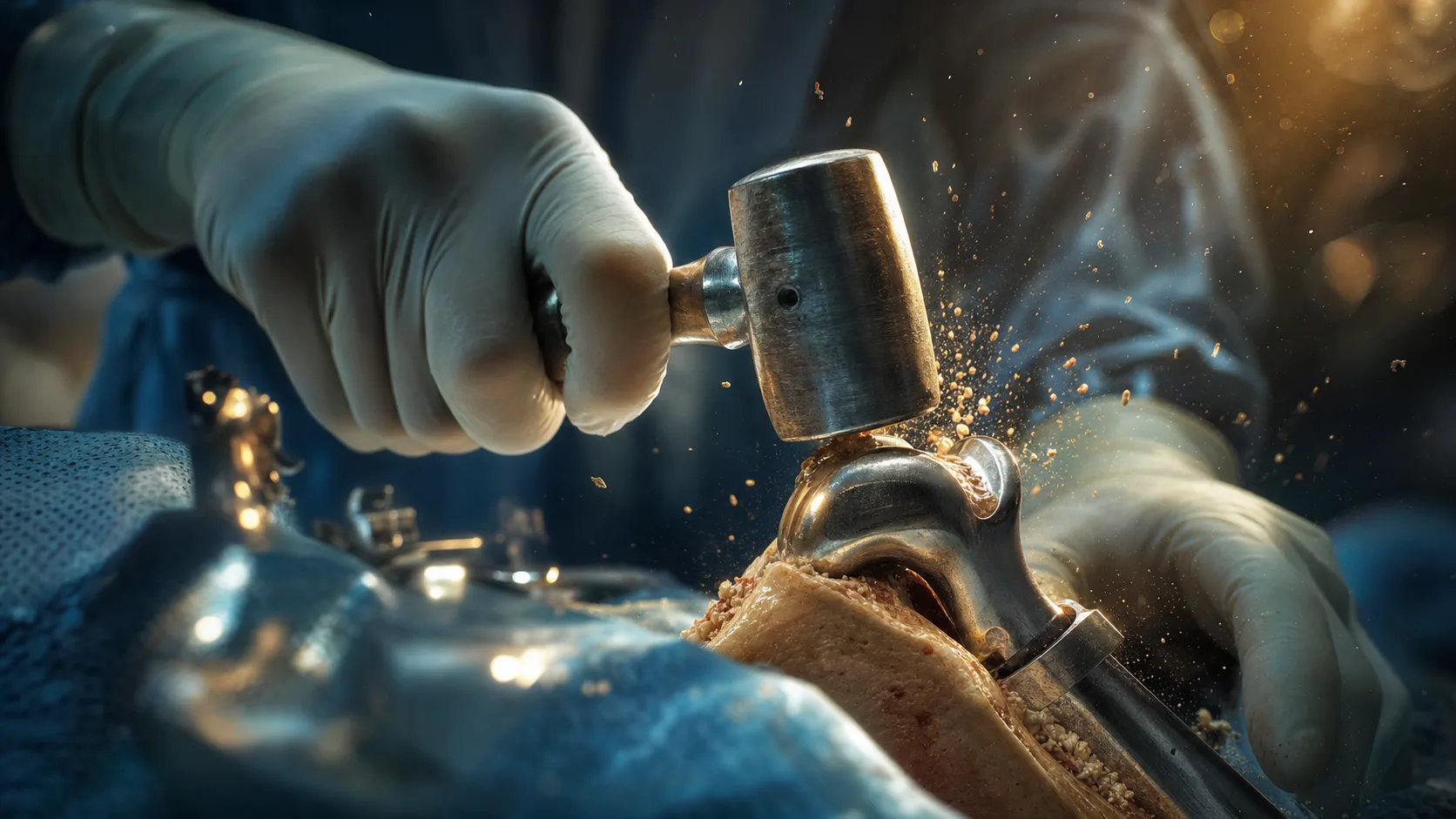
If you are drawn to arthroplasty, you must fall in love with bone. While sports medicine might seem glamorous and fast-paced, and trauma offers the adrenaline rush of saving lives in the emergency theatre, arthroplasty is the ultimate exercise in precision, structural integrity, and spatial awareness. In the operating theatre, you are essentially a highly trained carpenter and engineer combined. The work involves sawing femoral necks, reaming acetabulae, broaching canals, and cementing or press-fitting implants with millimetre-perfect accuracy.
The environment is generally highly controlled. You will typically deal with elective, planned cases rather than midnight emergencies. However, do not mistake "elective" for "low stress". The margin for error in joint replacement is razor-thin. A few degrees of malrotation in a total knee arthroplasty can result in a stiff, painful joint; an inadvertently thin cement mantle can lead to early catastrophic failure. You must possess a calm, methodical temperament. Surgeons who are prone to fluster or who rush their knots and cuts will find arthroplasty unforgiving. The most successful joint replacement surgeons are those who respect the biomechanics of the human body, obsess over their pre-operative templating, and execute their surgical plan with unyielding patience.
The Untold Physical and Lifestyle Realities
Let us dispel a common myth: arthroplasty is not a "light" specialty. The physical toll of a career in joint replacement is substantial. You will spend hours standing in heavy lead aprons beneath intra-operative fluoroscopy. You will wrestle with rigid cement, drive mallets to seat press-fit acetabular components, and manipulate heavy, often obese lower limbs. Over the course of a long career, the repetitive strain on your own back, shoulders, and wrists is a very real occupational hazard.
Lifestyle-wise, because the bulk of the work is elective, your schedule can be remarkably predictable. You will usually know what your week looks like months in advance, allowing for a degree of planning that trauma or general surgery trainees can only dream of. However, you are still a surgeon. Emergency calls will still come, usually in the form of periprosthetic fractures or infected joint replacements. Furthermore, the modern expectation of "rapid recovery" protocols means you are often required to push patients to ambulate on the day of surgery, requiring a highly coordinated, fast-paced ward and therapy team.

Navigating the Pathway into Arthroplasty
The route to becoming an arthroplasty surgeon is long, highly competitive, and requires early, sustained dedication. While specific durations and training structures vary significantly depending on your country, the fundamental milestones remain robustly similar across the globe.
First, you must successfully complete your primary medical qualification and your foundational, general clinical training. This is the time to solidify your basic anatomical knowledge and demonstrate a genuine commitment to the broader field of surgery.
From there, the battle for orthopaedic training begins. Securing a place on a specialist orthopaedic surgery training programme is notoriously challenging everywhere in the world. Selection committees will look for evidence of your commitment to the specialty. This is where many candidates stumble.
Common Mistakes Early Applicants Make
When you are preparing your portfolio for orthopaedic training applications, avoid these frequent pitfalls:
- Ignoring research quality: Publishing a dozen poor-quality, non-peer-reviewed case reports adds little value. Committees are looking for an understanding of the scientific method, critical appraisal, and a genuine contribution to the literature, preferably in orthopaedics.
- Neglecting the breadth of surgery: Trainees who ONLY shadow a single arthroplasty consultant often fail their general surgical interviews. You need to demonstrate a wide appreciation for all types of surgery, including trauma, spine, and paediatrics, to prove you are ready for a comprehensive orthopaedic rotation.
- Underestimating manual dexterity: Examiners will assess your hand-eye coordination and spatial awareness. Ensure you have evidence of fine motor skills outside of medicine—whether through playing a musical instrument, advanced model-making, or targeted surgical simulation courses.
Mastering Exams and Building an Arthroplasty Portfolio
Once you have secured your place on an orthopaedic training programme, the real specialisation begins. During your early years as a registrar or resident, you will rotate through various subspecialties. This is the time to identify mentors in arthroplasty.
When it comes to your board or fellowship examinations—such as the FRCS (Tr & Orth) in the UK and Ireland, the FRACS in Australia and New Zealand, or the American Board of Orthopaedic Surgery (ABOS) examinations in the United States—you must possess an encyclopaedic knowledge of all orthopaedics. However, candidates with an interest in arthroplasty must be prepared for intense, probing questions on biomechanics, implant tribology, bone chemistry, and the management of complex revision scenarios. Examiners will quickly expose a candidate who has memorised the steps of a primary hip replacement but cannot explain the rationale behind using a highly cross-linked polyethylene liner.
As you approach the end of your general training, you must actively build a portfolio tailored specifically to joint replacement. This means presenting your research at major international arthroplasty congresses, completing specialist audits (such as reviewing your unit's infection or dislocation rates), and proving your clinical competence in complex primary replacements. Ultimately, before you can practise as a consultant or attending, you will almost universally need to complete a dedicated, specialist fellowship in arthroplasty. These fellowships are intense, focused periods where you will scrub in on complex revisions, manage periprosthetic infections, and learn the delicate art of bone loss reconstruction.
The Clinic: Where the True Art of Arthroplasty Lives
The operating theatre is only half the job. In fact, the most critical decisions in arthroplasty are made in the outpatient clinic, long before the patient is anaesthetised. The clinic is where you hone the true art of the specialty.
You will see patients whose X-rays look absolutely catastrophic—bones-on-bones, bone spurs, joint space completely vanished. But if that patient is managing their pain and maintaining a reasonable quality of life, a skilled arthroplasty surgeon knows that surgery is not the right answer. Operating on an asymptomatic radiograph is one of the gravest errors you can make. Conversely, you will see patients with relatively mild radiographic arthritis who are in agony and entirely disabled. You must develop the clinical acumen to match the patient's symptoms, expectations, and physical examination findings to the X-rays.
A crucial part of your clinic work involves managing expectations. A total knee or hip replacement is not a magic cure that restores the joint to its eighteen-year-old state. Patients must understand the risks of infection, deep vein thrombosis, leg length discrepancy, and long-term wear. If you cannot communicate these risks effectively and empathetically, your patients will be dissatisfied, regardless of how perfectly you placed the implant. Spend time understanding exactly what the patient wants to achieve—whether it is simply walking to the shops without pain, or returning to marathon running (which you may have to advise against)—and align your surgical plan accordingly.
Mastering the Complexities of Revision Surgery
During your training, you will spend years mastering the primary joint replacement. But as you transition into a senior registrar and eventually a consultant, the true test of your mettle will be revision surgery.
Revision arthroplasty is a completely different beast. You are no longer working with healthy, robust bone and straightforward anatomy. You are operating in a scarred, hostile environment, dealing with osteolysis (bone dissolving around the implant), loose components, and often hidden low-grade infections. In revision surgery, you must become a master of bone loss management. You will need to learn how to use structural allografts, massive endoprostheses, and specialized augments to rebuild a joint socket or femur that has completely collapsed.
Furthermore, you must become an infectious disease expert of sorts. Diagnosing and managing a periprosthetic joint infection (PJI) is one of the most challenging aspects of the job. You will spend hours in multidisciplinary meetings with microbiologists, studying C-reactive protein (CRP) trends, planning two-stage washouts, and counselling devastated patients through multiple surgeries and prolonged courses of intravenous antibiotics. It is emotionally draining, mentally exhausting, and requires the highest level of surgical ingenuity.

Finding Your Niche: Research and Innovation
A career in arthroplasty does not mean getting left behind by medical innovation; in fact, it places you right at the cutting edge of biomedical engineering. Joint replacement is a field driven by continuous technological advancement.
As a trainee or a newly appointed consultant, you have the opportunity to carve out a highly specific niche. Some surgeons dedicate their careers to advancing robotic-assisted surgery, learning how to manipulate robotic arms to achieve sub-millimetre accuracy in bone cuts. Others focus on tribology, researching new materials like ceramic-on-ceramic bearings or advanced highly cross-linked polyethylenes to reduce wear debris. There is also a massive need for surgeons involved in outcomes research, utilising massive national joint replacement registries (such as those in Sweden, Australia, and the UK) to track the long-term survivorship of different implants and surgical techniques.
Getting involved in research early is vital. Not only does it significantly strengthen your application for highly competitive fellowships and consultant positions, but it keeps you intellectually engaged. The best arthroplasty surgeons are those who continually question their own outcomes: "Why did this implant fail?" "Why does this patient have an unexplained effusion?" By translating these clinical questions into structured research, you contribute to the global effort to improve patient mobility and longevity.
Ultimately, a career in arthroplasty is not for the faint-hearted. It demands physical stamina, obsessive attention to detail, and the intellectual resilience to navigate complex revision cases and devastating complications. But the rewards are immense. You offer patients a tangible, mechanical solution to agonising pain, returning them to independent, functional lives. If you possess the patience to engineer a perfect joint, and the empathy to guide a vulnerable patient through one of the most significant interventions of their life, you will find no better specialty in all of medicine.
Related topics
Share this article
Useful for a journal club, study list, or teaching session.