
Article summary
What a career in orthopaedic trauma is like — the urgency, the variety, the lifestyle and how to build a path into trauma surgery.
Educational content is reviewed for source visibility, editorial coherence, and correction readiness.
No individual clinician credential is claimed unless a named person is shown.
Verify before clinical use; this is not medical advice or a substitute for local guidance.
Few specialisms in medicine offer the immediate, visceral satisfaction of orthopaedic trauma. One moment, a patient is facing the profound life-altering impact of a shattered limb; the next, you are orchestrating the mechanical and biological principles needed to piece their skeleton back together. It is a career defined by high stakes, relentless variety, and a unique blend of surgical finesse and heavy-duty carpentry.
The Reality of the Trauma Mindset
To thrive in orthopaedic trauma, you must first understand the psychological landscape of the specialty. Trauma is, by its very nature, unscheduled and unpredictable. You are not dealing with elective, perfectly optimised patients who have fasted since midnight and cleared their social diaries for a planned hip replacement. Instead, you are managing the chaotic aftermath of high-energy transfers—road traffic collisions, falls from height, industrial accidents—and the unpredictable consequences of low-energy fragility fractures in an ageing population.
The mindset required is one of pragmatic urgency. When a polytrauma patient arrives in the resuscitation room, you must rapidly transition from calm clinician to decisive actionhero. You are constantly calculating physiological compromises: balancing the need for immediate skeletal stability against the patient’s ability to withstand the physiological insult of surgery. Developing a 'trauma mindset' means cultivating cognitive flexibility. You must be prepared to abandon your planned operating list entirely because a multi-stranded pelvic fracture requires your immediate attention. It requires a personality comfortable with interrupted meals, delayed commutes, and the reality that your schedule belongs to the emergency department. However, for those wired for this pace, the adrenaline and the profound sense of purpose are deeply intoxicating.
The Breadth of Practice: From Plates to Pelvises
A common misconception among medical students is that trauma surgery is merely fixing broken bones with uncomplicated plaster casts. In reality, the operative variety in trauma is staggering. You could be performing an elegant percutaneous screw fixation for a delicate hip fracture in an octogenarian, before scrubbing into a massive, multi-hour reconstructive case for a young motorcyclist with a severely comminuted distal tibia.
Trauma surgeons are the ultimate problem-solvers of the musculoskeletal system. You will manage everything from open fractures exposing bone to the elements, to complex intra-articular fractures that require perfectly reduced joint surfaces to prevent post-traumatic arthritis. You will deal with the spine, the pelvis, and the acetabulum—some of the most anatomically complex and unforgiving regions in the human body.
Subspecialisation and Limb Reconstruction
As you progress, you will find that trauma naturally branches into highly specialised territories. Major trauma centres demand expertise in pelvic and acetabular surgery, which relies heavily on 3D spatial awareness and deep anatomical knowledge to navigate massive bleeding risks. Furthermore, the field of limb reconstruction deals with the catastrophic consequences of severe bone loss, infection, and deformity. Here, you might utilise circular ring fixators—slowly distracting bone segments over weeks to grow new, living tissue. You are not just a mechanic; you are a biomechanical engineer managing soft tissue envelopes, blood supply, and joint kinematics.

Team Dynamics and the Theatre Ecosystem
Orthopaedic trauma is emphatically not a solo endeavour. The sheer scale of major trauma surgery requires a highly synchronised, multidisciplinary team. In the theatre, you are the conductor of a complex ecosystem. You must learn to communicate effectively with anaesthetists who are working hard to keep a polytrauma patient haemodynamically stable, often negotiating the delicate balance between maintaining blood pressure and the surgeon's need for a certain patient position.
Your immediate team includes trauma theatre nurses, operating department practitioners (ODPs), and radiographers. The latter are your absolute lifeline. Modern trauma surgery relies heavily on intraoperative fluoroscopy—real-time X-ray guidance. A good trauma surgeon develops an unspoken, rhythmic partnership with their radiographer, predicting exactly which C-arm angle is needed to capture the perfect lateral view of a complex femur fracture.
Beyond the operating theatre, you are heavily integrated with the wider hospital infrastructure. You will lead trauma calls in the emergency department, coordinating with general surgeons, neurosurgeons, and intensive care teams to prioritise life-threatening injuries. Furthermore, your work does not end when the final stitch is placed; you must collaborate closely with specialised physiotherapists, occupational therapists, and microbiologists to ensure the patient recovers function and avoids the devastating complication of deep bone infection.
Lifestyle, On-Call Commitments, and Burnout
It would be disingenuous to write about a career in orthopaedic trauma without addressing the lifestyle. The rhythm of a trauma surgeon’s life is dictated by the emergency take. Major trauma centres run on continuous, round-the-clock consultant-led care. This necessitates a robust out-of-hours on-call rota, meaning you will inevitably be working weekends, bank holidays, and unsociable night shifts.
When the trauma pagers go off, the pace is relentless. You might find yourself leaving a warm bed at three o'clock in the morning to drive into the hospital to perform an emergency fasciotomy for a patient at risk of compartment syndrome. The physical toll is also substantial. Donning heavy lead aprons to protect against radiation, combined with the physical exertion required to reduce severely displaced fractures or hammer intramedullary nails down the femoral canal, can take a toll on your own joints and spine. Ergonomics in trauma surgery is a growing concern, and you must actively condition your core and back strength to survive a thirty-year career.

Burnout is a very real risk in this specialty. The combination of sleep deprivation, high-stakes decision-making, and the emotional burden of dealing with sudden, tragic changes to patients' lives can erode even the most resilient surgeon. To survive and thrive, you must develop strict compartmentalisation strategies. Recognising when you are fatigued, protecting your time off with fierce boundaries, and debriefing with colleagues after particularly harrowing cases are essential survival skills, not signs of weakness.
Building Your Foundation: How Medical Students and Junors Can Prepare
If the intensity of trauma appeals to you, the preparation begins long before you apply for higher surgical training. As a medical student or junior doctor, your primary goal should be exposure. Actively seek out rotations in orthopaedics, emergency medicine, and intensive care. Do not wait for teaching to come to you; ask to be formally taught the principles of Advanced Trauma Life Support (ATLS), as understanding the primary and secondary surveys is the bedrock of all trauma management.
You should also attend fracture clinics. This is where you will learn the vital art of interpreting trauma radiographs. Being able to confidently describe a fracture pattern—using the correct descriptive terminology regarding displacement, angulation, and comminution—will set you apart from your peers. Furthermore, fracture clinics teach you the conservative management of injuries, reminding you that not every broken bone requires an operation.
Gaining an Edge in Trauma
Audit and quality improvement projects are highly valued in surgical applications. Look at local trauma pathways: are departmental delays meeting national guidelines for hip fracture surgery? Are antibiotics being administered within the correct golden hour for open fractures? Designing and executing these projects demonstrates your understanding of systems-based trauma care. Additionally, enrol in practical trauma courses. The AO Foundation runs globally recognised courses specifically designed to teach the operative principles of fracture management. Getting involved with local trauma networks, presenting at orthopaedic conferences, and finding a trauma surgeon to mentor you will provide invaluable, realistic careers advice.
Navigating the Training Pathway and Exams
The path to becoming a consultant orthopaedic trauma surgeon is long and highly competitive, requiring unwavering dedication. While training structures vary significantly across the globe, the underlying milestones remain broadly similar. After completing your primary medical qualification and foundational training, you must successfully secure a place on a formal surgical training programme. In many systems, such as the surgical training pathways in the UK, Europe, and Australasia, or the residency programmes of the Americas, this involves passing rigorous primary surgical examinations that test core anatomical, physiological, and pathological knowledge.
Once you secure a higher surgical training post, you will undergo several years of intensive, supervised operating. You will be continually assessed on your clinical acumen, decision-making, and technical skills. Membership examinations, such as those required by the Royal College of Surgeons or equivalent surgical boards worldwide, are formidable hurdles. These exams demand a deep understanding of both elective and emergency orthopaedics. As you reach the latter stages of your training, your focus will naturally shift towards complex trauma. It is at this juncture that many trainees choose to undertake specialist fellowships.
The Fellowship Year
Fellowships are the final stepping stone to becoming a consultant. A trauma fellowship places you in a major trauma centre, where you are exposed to the highest volume and complexity of injuries. You will master advanced techniques such as pelvic ring fixation, complex articular reconstructions, and modern minimally invasive plating methods. It is a period of intense growth, where you transition from a supervised trainee to an independent surgeon capable of leading the trauma team. Choosing the right fellowship—balancing the volume of cases with the mentorship style of the consultants—is one of the most critical career decisions you will make.
The Next Generation: Innovations Shaping Trauma Surgery
Looking forward, a career in trauma surgery is becoming increasingly intertwined with cutting-edge technology. If you enter this field now, you will be operating in a vastly different landscape than your predecessors. One of the most significant shifts is the integration of 3D printing and patient-specific instrumentation. Instead of bending a standard pelvic plate to fit a patient’s unique anatomy during surgery—a time-consuming process under X-ray guidance—surgeons can now use 3D-printed models of the patient's pelvis to pre-contour plates before they even enter the theatre. This reduces surgical time, minimises soft tissue dissection, and improves biomechanical outcomes.
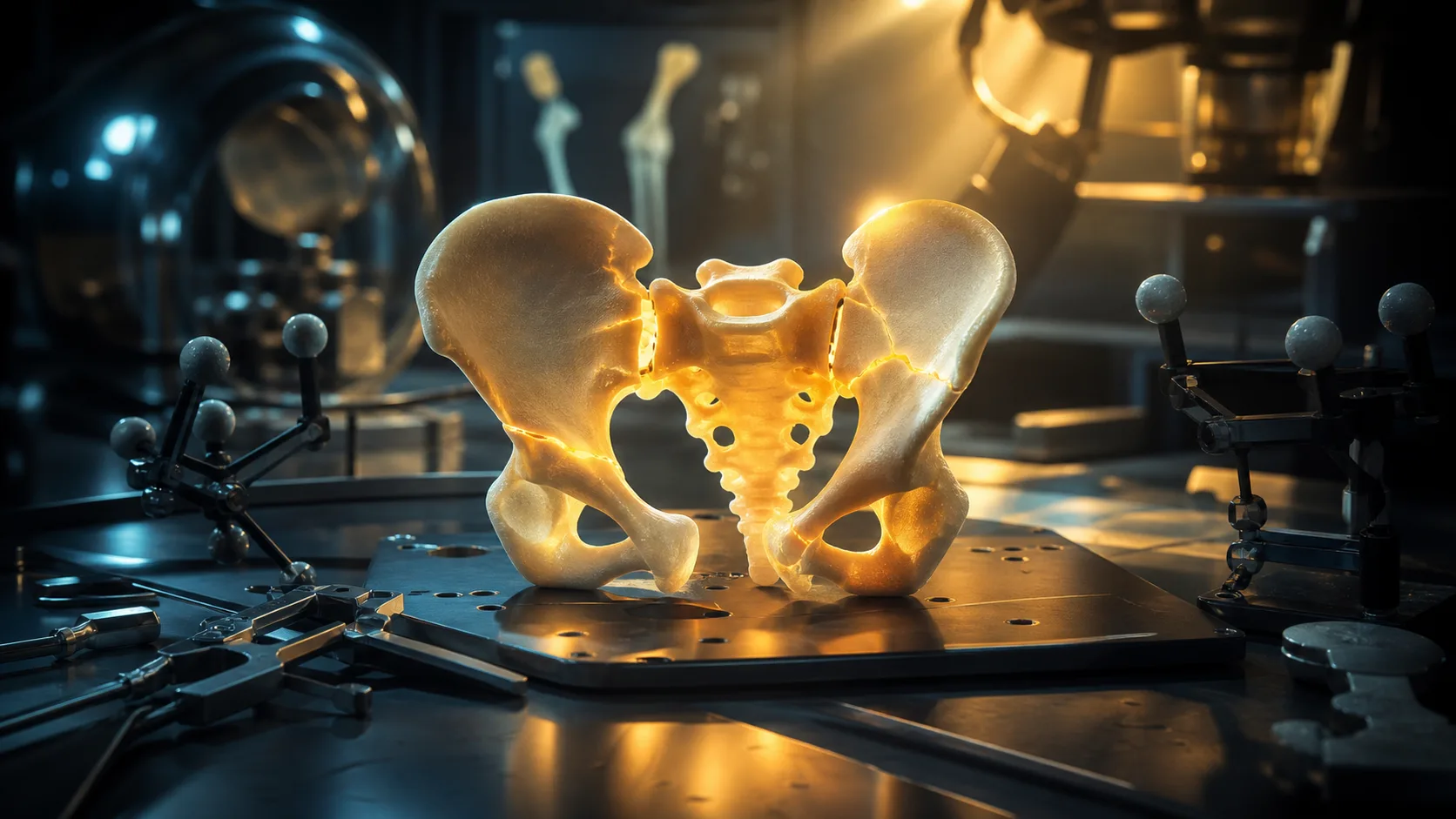
Navigational robotics and augmented reality are also moving from the realms of elective surgery into the trauma theatre. Computer-assisted surgery allows for the precise placement of sacroiliac screws or intramedullary nails, particularly in obese patients where standard fluoroscopy proves difficult. Furthermore, the principles of damage control orthopaedics continue to evolve, with a growing emphasis on biological fixation—respecting the blood supply to fractured bones and utilising biological plating techniques rather than rigid, heavily invasive mechanical fixes. As a future trauma surgeon, you will not just be a technician; you will be at the vanguard of integrating these digital and biological innovations to save both limbs and lives.
A career in orthopaedic trauma is not for the faint of heart. It demands technical precision, physical endurance, and the psychological resilience to navigate the chaotic intersection of life-threatening emergencies and complex biomechanics. But for those who are willing to answer the call, it offers a profoundly rewarding path where your direct, decisive actions can literally put a shattered life back together.
Related topics
Share this article
Useful for a journal club, study list, or teaching session.