
Article summary
A focused strategy for revising the anatomy that orthopaedic exams actually test, without drowning in detail.
Educational content is reviewed for source visibility, editorial coherence, and correction readiness.
No individual clinician credential is claimed unless a named person is shown.
Verify before clinical use; this is not medical advice or a substitute for local guidance.
Mastering anatomy for orthopaedic exams can feel like an impossible task, largely because the human body is infinitely complex and your available study time is strictly finite. The secret to success isn't learning every minute anatomical minutia; it is ruthlessly prioritising the structures, relationships, and biomechanical concepts that examiners actually care about. By shifting your focus from rote memorisation to high-yield, three-dimensional clinical anatomy, you can conquer this section of your surgical exams without drowning in unnecessary detail.
Decoupling Pure Anatomy from Clinical Relevance
The most common trap medical students and junior trainees fall into is treating orthopaedic anatomy like a general medical school anatomy exam. In a foundational medical setting, you might be asked to identify the origin, insertion, and action of a specific muscle. In orthopaedic surgical exams—such as medical school finals, professional surgical memberships like the MRCS, or higher orthopaedic board exams—the questioning is inherently clinical and applied.
Examiners are not testing whether you can simply recite a structure's name; they are testing whether you understand its surgical significance. They want to know if you can navigate around it safely, protect it during an approach, or recognise when it has been injured. You must transition your thinking from standard anatomical tables to functional, topographical anatomy. When you sit down to revise a specific region, constantly ask yourself: "What happens if this structure is cut, stretched, or compressed?"
The Surgical 'Safe Zones'
Instead of trying to learn every fascial layer, focus on the surgical "safe zones" and internervous planes. These are the motorways and slip roads of orthopaedic surgery. An examiner will frequently probe your understanding of these planes because they represent the difference between a clean, bloodless procedure and a devastating iatrogenic nerve injury. When revising a surgical approach, always clearly define the plane being utilised, the nerves supplying the muscles on either side of that plane, and the structures at risk at the proximal and distal extents of the incision.
Mastering the "Holy Trinity" of Regional Orthopaedic Anatomy
When you parse orthopaedic anatomy down to its absolute core, exam questions overwhelmingly target three specific domains: nerves, vessels, and joints. If you are running short on time, concentrating your efforts here yields the highest return on investment.
- Nerves: Examiners are obsessed with the precise course of major peripheral nerves, particularly where they become superficial, where they pass through fibro-osseous tunnels, and their branching patterns. You must know exactly which muscles a nerve innervates before and after a specific landmark. For instance, understanding the clinical difference between a high radial nerve palsy and a posterior interosseous nerve (PIN) lesion is classic, high-yield exam material.
- Vessels: Focus on the major arterial bifurcations, the naming of vessels as they cross specific joints (e.g., the brachial artery becoming the radial and ulnar arteries), and the crucial anastomoses around major joints like the shoulder, hip, and knee. Knowing the vascular supply to the femoral head or the scaphoid is not just anatomical trivia; it is the foundation of understanding avascular necrosis.
- Joints and Ligaments: You must have an intimate, working knowledge of joint capsules, synovial reflections, and the discrete thickenings that form intrinsic ligaments. Examiners love to ask about structures that are intra-articular but extra-synovial, such as the cruciate ligaments of the knee or the long head of the biceps tendon. Understanding the static (ligaments) and dynamic (muscles/tendons) stabilisers of each joint allows you to clinically reason through instability tests, which is heavily featured in Objective Structured Clinical Examinations (OSCEs) and viva voces.

Active Recall and Visualisation Over Passive Reading
Reading an anatomy textbook cover to cover is a notoriously inefficient way to prepare for high-stakes surgical exams. Highlighting text provides an illusion of competence, but it rarely translates into the rapid, confident recall required in a pressured viva scenario. To genuinely learn orthopaedic anatomy, you must actively force your brain to retrieve the information and construct three-dimensional spatial relationships.
The Power of the Blank Canvas
One of the most effective revision techniques is the "blank canvas" or "skeleton in the corner" method. Take a blank piece of paper and a rough sketch of a bone—perhaps the scapula or the proximal tibia. From memory, draw in the muscle attachments, label the facets, mark the course of the relevant nerves, and highlight the vascular supply. When you get stuck, resist the urge to look at the answer immediately. Struggle with the spatial relationship for a few moments, because the act of struggling strengthens the neural pathway. Once you have exhausted your memory, check your textbook, correct your drawing in a different coloured pen, and try again the next day.
Mental Fly-Throughs
Orthopaedic surgery is a deeply three-dimensional discipline, and your revision must reflect that. Use cross-sectional anatomical atlases to practise visualising transverse cuts of the wrist, the shoulder, and the ankle. Examiners frequently present cross-sectional imaging in written exams or OSCE stations, and the ability to quickly orientate yourself on a complex axial slide is a skill that requires deliberate practice.
Building a Deliberate Spaced Repetition System
Because the volume of anatomical knowledge required for orthopaedic exams is vast, you are biologically guaranteed to forget what you learn unless you review it at systematic intervals. Spaced repetition leverages the psychological spacing effect, prompting you to review material just as you are about to forget it.
Many candidates find success using digital flashcard applications that employ built-in spaced repetition algorithms. However, a common mistake is making flashcards that are too dense or overly focused on isolated facts.
Crafting High-Yield Anatomy Cards
When designing your digital or physical flashcards, ensure they are active, visual, and clinical.
- Bad flashcard: "What is the origin of the popliteus muscle?"
- Good flashcard: "Looking at a posterior view of the knee, draw the origin and insertion of the popliteus muscle. Explain its two primary biomechanical functions during the gait cycle."
- Alternative approach: Put an unlabelled cross-section of the carpal tunnel on the front, and test yourself on rapidly naming the structures from lateral to medial, incorporating a clinical scenario of carpal tunnel syndrome on the reverse.
By integrating clinical scenarios and biomechanical function into your flashcards, you seamlessly bridge the gap between pure theoretical anatomy and the applied clinical knowledge examiners are actively hunting for.
Tailoring Your Revision to the Exam in Front of You
Orthopaedic training pathways and their associated exams vary significantly across the globe, but the underlying philosophy of anatomical testing remains surprisingly consistent: the complexity of the anatomical knowledge expected scales directly with your seniority. You must tailor your revision strategy to match the specific beast you are currently fighting.
For medical students or early junior doctors sitting basic surgical science exams, your focus should be broad and robustly structural. You need to know the foundational anatomy: the brachial plexus laid out perfectly, the precise boundaries of the femoral triangle, and the basic compartments of the leg. At this stage, examiners are testing your fundamental safety and baseline competence.
As you progress towards higher orthopaedic board exams or fellowship exit exams, your anatomical revision must become highly surgical and subspecialised. The examiner assumes you know the basic textbook layout; they will now ask you to explain the anatomy of a specific surgical approach, such as the posterior approach to the hip or the Henry anterior approach to the forearm. You need to know the exact interval, the structures at risk, and how to avoid them. Furthermore, higher-level exams frequently test "elegant" anatomy—such as the intricate ligamentous anatomy of the foot arches, the detailed vasculature of the proximal femur, or the biomechanical axes of the lower limb. Always consult the specific syllabus provided by your examining body—whether it be a royal college of surgeons or a national orthopaedic board—and let that document strictly dictate the depth of your revision.
High-Yield Regions to Prioritise
If you are looking to triage your revision strictly by anatomical yield, certain regions are historically and universally problematic for candidates. The upper and lower limbs are naturally the stars of the show, but within them, specific "danger zones" consistently catch candidates out.
The Brachial Plexus and Upper Limb
Do not just memorise the standard "M" shape of the brachial plexus. You need to understand it three-dimensionally. Know exactly where the cords sit relative to the axillary artery (medial, lateral, posterior). Understand the anatomical basis of Erb's palsy and Klumpke's paralysis, and know precisely where the axillary nerve and posterior circumflex humeral artery wrap around the surgical neck of the humerus. The wrist and hand are also notorious; the intricate arrangement of the carpal tunnel, Guyon's canal, and the extensor compartments of the wrist are absolute staple exam fodder.
The Knee and Complex Foot Anatomy
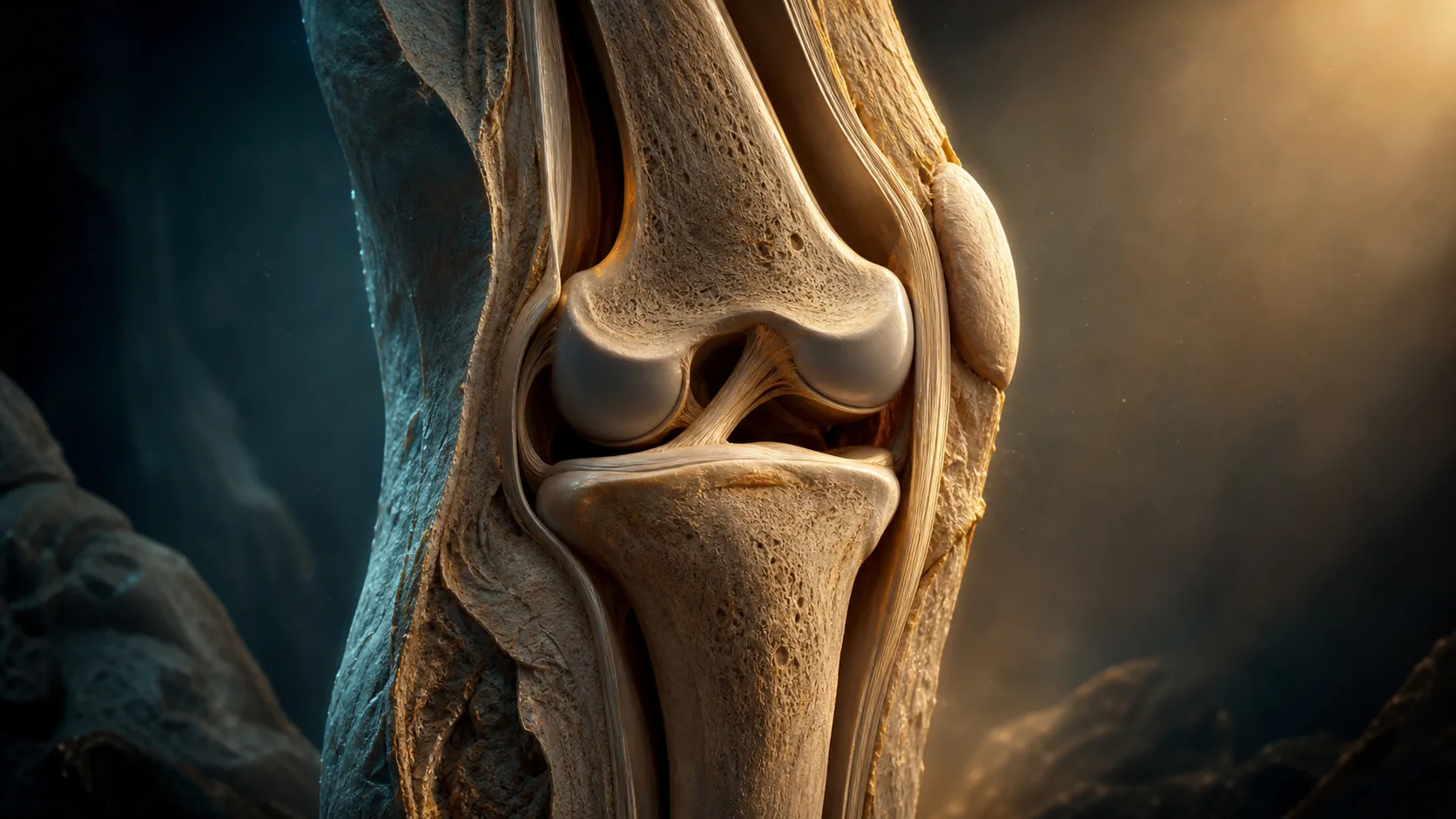
In the lower limb, the knee joint is an anatomical goldmine. You must thoroughly understand the attachment points of the menisci, the cruciate ligaments, and the intricate layering of the medial and lateral supporting structures. Be prepared to explain the "unhappy triad" and the neurovascular structures that traverse the popliteal fossa. Distally, the foot is often neglected in revision due to its complexity, but it is a favourite of examiners. Familiarise yourself with the tarsal tunnel, the layers of the plantar muscles, and the compartmental anatomy of the dorsum of the foot.
Translating Anatomy to the Viva and Clinical Setting
Ultimately, knowing the anatomy in the quiet of your study is only half the battle; you must be able to articulate it confidently and apply it in real-time. In viva or oral examinations, examiners are actively assessing your spatial reasoning and your ability to remain calm when pushed into unfamiliar territory.
If an examiner asks you about a surgical approach and draws a line on a diagram, do not just passively start naming things. Speak in a structured, logical sequence. Begin with the patient positioning and the skin marking, then detail the superficial dissection, the deep interval, and finally, summarise the structures at risk. If you are asked a clinical question about a specific nerve palsy, mentally map the nerve from its origin at the spinal cord to its terminal branches before you open your mouth. This mental rehearsal prevents you from making spatial errors, such as stating a nerve is medial when it is actually lateral.
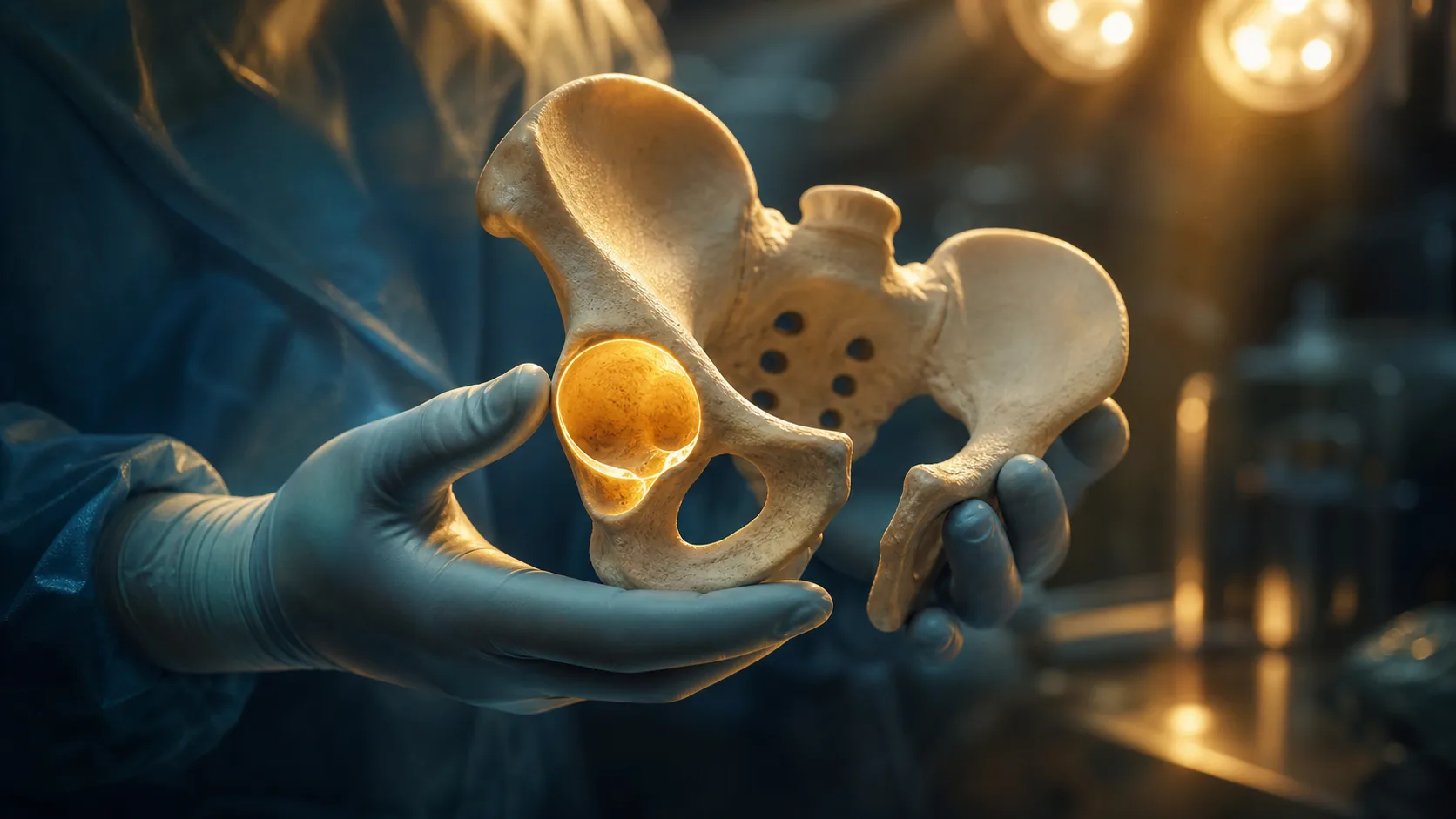
When faced with a bone or dry specimen in an exam, immediately orientate yourself. Hold the bone exactly as it sits in the anatomical position. Do not let an examiner disorientate you by handing you a femur upside down; confidently rotate it into the correct anatomical position. Speak deliberately, use precise anatomical terminology (avoiding vague terms like "this bit" or "that muscle"), and own the spatial relationships you are describing.
Orthopaedic anatomy is vast, but it is ultimately deeply logical. By shifting your focus away from exhaustive memorisation and towards clinical relevance, surgical planes, and active visualisation, you transform a mountain of overwhelming data into a manageable, highly rewarding body of knowledge. Exam revision is a marathon, not a sprint; study smart, rely on spaced repetition, and trust that this rigorous anatomical grounding will serve as the bedrock of your entire surgical career.
Share this article
Useful for a journal club, study list, or teaching session.