
Article summary
The traits that make a good orthopaedic surgeon — technical skill, judgement, resilience, communication and more.
Educational content is reviewed for source visibility, editorial coherence, and correction readiness.
No individual clinician credential is claimed unless a named person is shown.
Verify before clinical use; this is not medical advice or a substitute for local guidance.
What separates a truly exceptional orthopaedic surgeon from a merely competent one? It is rarely just the ability to saw a bone or drive a screw. The reality is that excellence in orthopaedic surgery is a complex alchemy of physical dexterity, cognitive judgement, emotional resilience, and clear communication. As you navigate your medical school journey or progress through your surgical training, cultivating these core attributes is just as critical as memorising anatomy textbooks.
The Cognitive Foundation: Diagnostic Acumen and Judgement
Before you ever pick up an osteotome or power drill, you must possess the cognitive foresight to know exactly when—and when not—to operate. Orthopaedics is a rapidly evolving field, and the current generation of surgeons owes a massive debt of gratitude to pioneers like Sir John Charnley, whose revolutionary work in developing the modern total hip replacement transformed the lives of millions. However, a good surgeon understands that even the most impressive implant is useless without sound, objective judgement.
A great orthopaedic surgeon relies on astute clinical diagnostics. You must synthesise subtle physical examination findings, recognise complex mechanical pathways, and interpret imaging with a critical eye. It requires the wisdom to see the patient as a whole, dynamically weighing the potential benefits of a highly invasive procedure against the risks, while always considering conservative, non-operative management as a valid and often preferable option. Sound surgical judgement is a lifelong pursuit. It is honed over years of experience, learning from both technical triumphs and inevitable, humbling mistakes.
Mechanical Mastery and Technical Precision
Orthopaedics is, by its very nature, a physically demanding and deeply mechanical specialty. It calls for a profound understanding of biomechanics, lever arms, and structural integrity. Whether you are meticulously balancing a complex knee deformity or reconstructing a shattered calcaneus, your hands must translate a theoretical plan into a three-dimensional reality.
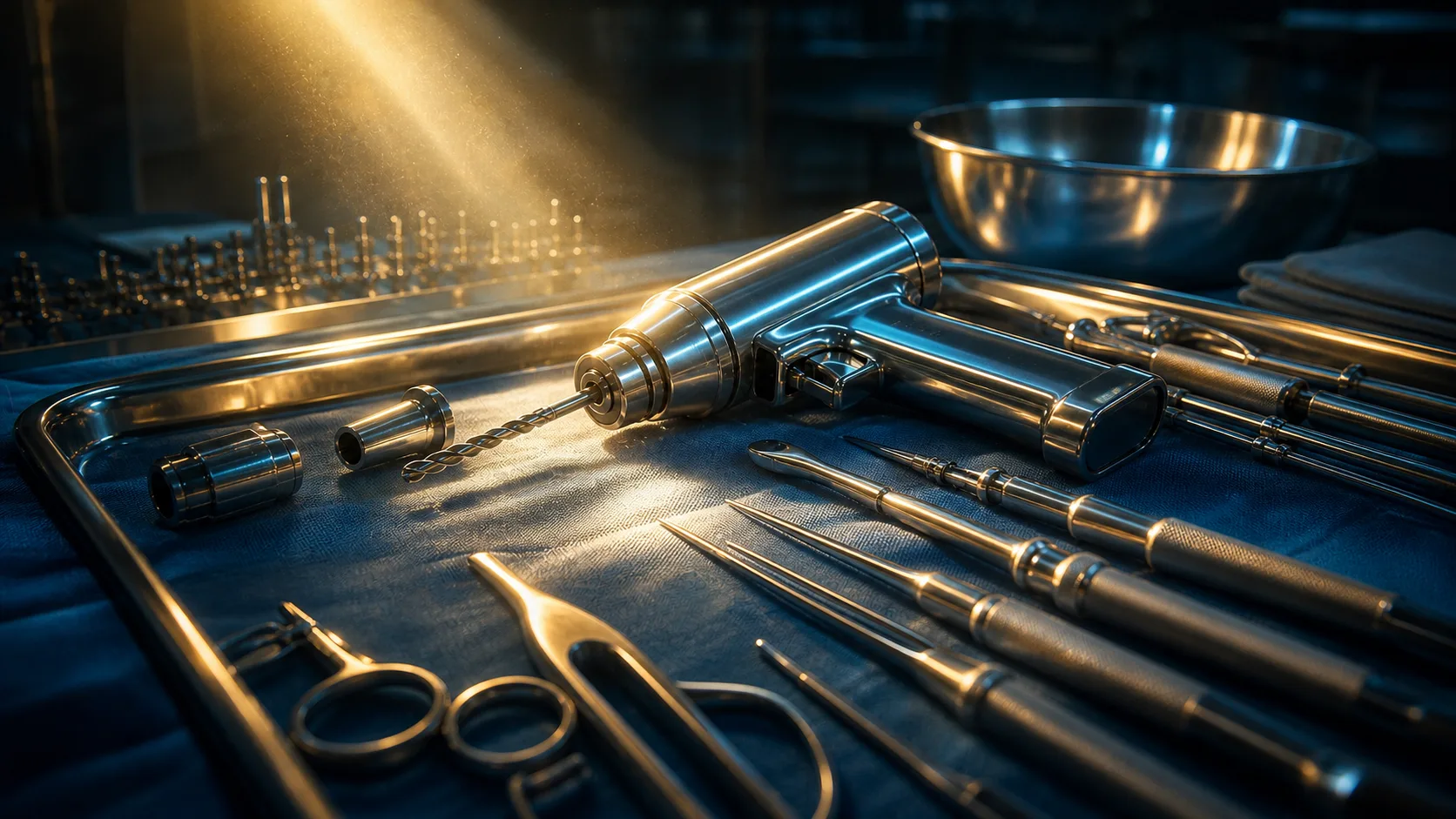
Technical excellence requires deliberate, repetitive practice. For medical students and junior trainees, this means spending countless hours in the simulation lab practising knot-tying, drilling, and plating techniques on synthetic bones before ever stepping foot into a live operating theatre. It is about developing an innate, reliable spatial awareness and a gentle respect for the soft tissues that surround the bone. A good orthopaedic surgeon is, in many ways, a biological engineer. However, your engineering must be executed with careful, measured precision; brute force is rarely the correct answer in modern surgical practice.
Navigating the Long Road of Training
The journey to becoming a consultant or attending orthopaedic surgeon is undoubtedly a marathon. It generally begins with the foundational years of medical school, followed by early postgraduate training where you learn the general principles of acute patient care. From there, you will transition into core surgical training, where you refine your fundamental operating room skills. Only then do you enter higher specialty training—often referred to as registrar training—where your focus narrows heavily to complex musculoskeletal pathology. Throughout this intense pathway, you must pass rigorous professional fellowship exams, such as those set by the Royal College of Surgeons or the American Board of Orthopaedic Surgery.
Many trainees subsequently choose to pursue optional subspecialty fellowships—focusing on fields ranging from hand surgery to sports medicine or spinal reconstruction—before finally stepping into independent practice. Navigating this long, arduous road requires an extraordinary amount of resilience. You will face demanding on-call rotas, highly stressful emergency trauma cases, and the steep learning curve of mastering new, intricate technologies. Developing healthy coping strategies is absolutely essential to surviving this gauntlet without succumbing to burnout.
Communication: The Cornerstone of Patient Trust
There is a long-standing caricature of the orthopaedic surgeon as a physically imposing individual who is far more comfortable with metalwork than with meaningful conversation. In reality, effective communication is one of the most vital tools in your surgical repertoire. You must be able to translate highly complex anatomical jargon into clear, empathetic language that a frightened patient in clinic can readily understand.
A good orthopaedic surgeon actively listens to the patient’s daily functional goals, deeply respects their anxieties, and clearly outlines realistic expectations for their surgical recovery. Furthermore, communication extends to your team. The modern operating theatre is a high-stakes, high-pressure environment. Effectively leading the surgical nursing team, coordinating care with specialist physiotherapists, and respectfully collaborating with anaesthetists are all crucial skills that directly impact patient safety and long-term surgical outcomes.

Adaptability in the Face of the Unexpected
Even the most meticulously planned elective procedure can suddenly unravel. A bone may fragment unpredictably when you apply the reamer, an implant might fail to seat correctly, or a patient's vital signs might rapidly deteriorate under anaesthesia. The mark of a genuinely good orthopaedic surgeon is the ability to remain completely calm and decisively adaptable when the intraoperative landscape changes in an instant. You must pivot your strategy, rely on your deeply ingrained foundational knowledge, and expertly guide your team through the crisis without a hint of panic.
Ultimately, the best orthopaedic surgeons seamlessly blend the steady hands of a master craftsman with the analytical mind of a scientist and the empathetic heart of a dedicated healer. Keep honing these essential traits, trust the rigorous process of your training, and you will not merely fix bones—you will rebuild lives.
Related topics
Share this article
Useful for a journal club, study list, or teaching session.