Robotic Arthroplasty: Hype vs Hard Evidence
Robotic knee and hip replacement on the evidence: how Mako, ROSA, VELYS and CORI differ, what RCTs and the NJR show on outcomes, the learning curve and cost.
By OrthoVellum Editorial TeamPublished Updated 15 min read
Educational content for clinicians, not medical advice. Editorial policy

Key points
- Robotic assistance reliably reduces alignment outliers in knee replacement. At the highest levels of evidence it has not yet improved function, satisfaction or implant survival.
- RACER-Knee (Lancet 2026) randomised 339 patients to Mako or conventional TKR at ten British hospitals: no clinically meaningful difference in the Forgotten Joint Score at 12 months, at higher cost.
- An NJR target trial emulation of 697,145 knee replacements (BMJ 2026) found no difference in early revision risk for robotic total or unicompartmental knee replacement.
- The platforms differ in ways that matter: arm or handheld, direct cutting or a positioned guide, CT-based or imageless, and all six NICE-assessed systems are closed to other companies' implants.
- NICE allows six robotic platforms in the NHS only while evidence is generated, and its early modelling suggested robotic knee replacement may not be cost-effective.
On this page17 sections
Patients now arrive in clinic asking whether their surgeon "uses the robot", often assuming the machine guarantees a better knee or hip. The question for surgeons and trainees is narrower: does robotic arthroplasty improve outcomes enough to justify its capital cost, consumables and theatre time? On current evidence the answer is that robots make component position more precise and remove the worst outliers, but have not yet been shown to make knees feel better or last longer. The full exam-level synthesis sits on the robotic and navigation-assisted arthroplasty topic page; this article sets out the systems, the trials and the costs behind that answer.
What counts as a surgical robot in orthopaedics?
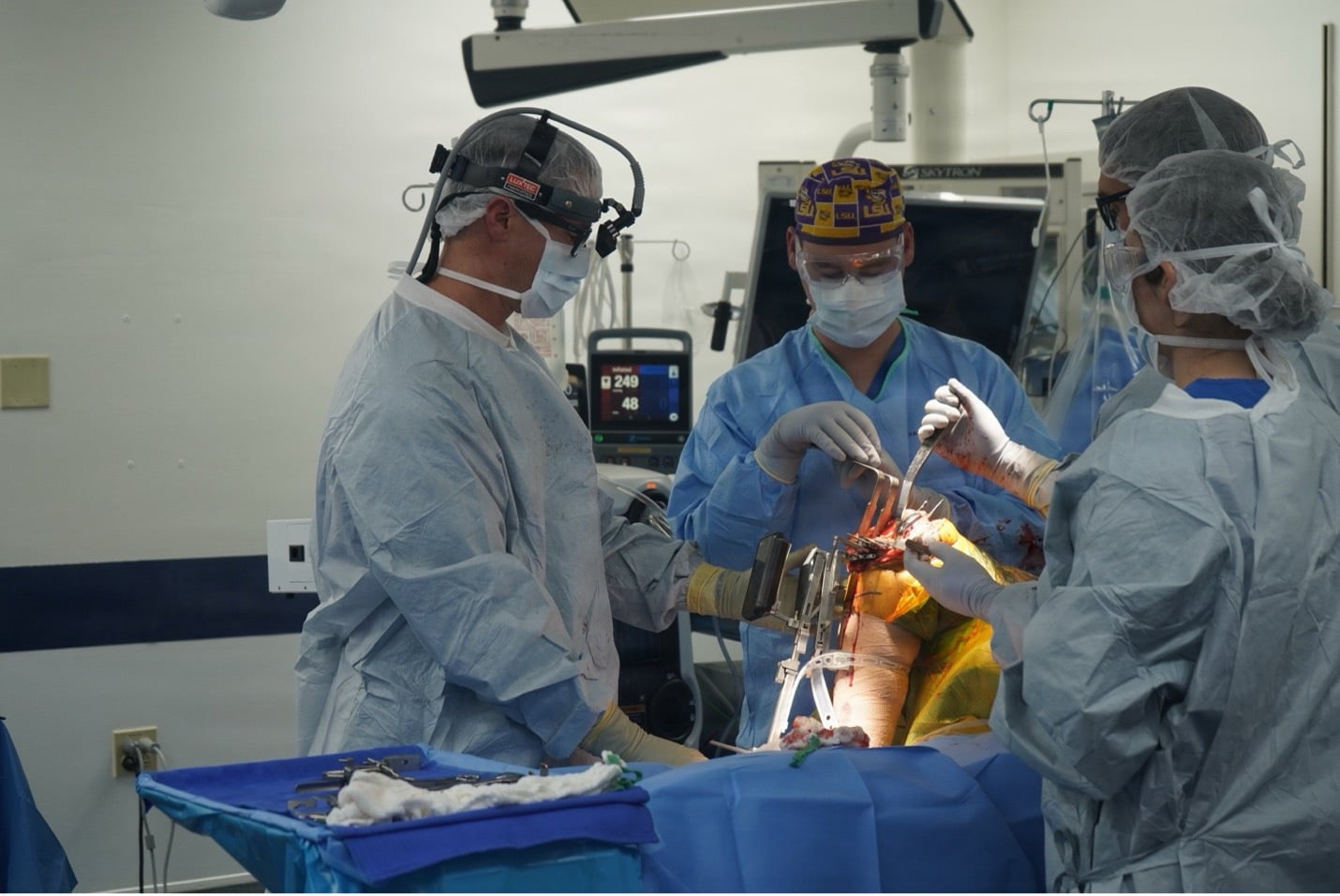
Orthopaedic robots are not the console-driven, multi-arm systems used in urology or general surgery. In joint replacement the surgeon stands at the table, holds the tool or the guide, and the machine controls where bone can be removed. The useful way to classify any system is by how much the machine does.
- Active systems perform the bone resection themselves while the surgeon supervises. The prototype was ROBODOC, which milled the femoral canal in THA. Concerns over soft-tissue injury, cost and inflexibility have made active systems largely historical.
- Semi-active (haptic or boundary-controlled) systems leave the saw or burr in the surgeon's hand but stop it cutting outside a planned three-dimensional volume. Mako is the archetype.
- Passive navigation measures and displays alignment in real time but imposes no physical constraint. The surgeon makes every cut. Our explainer on surgical navigation in orthopaedics covers this end of the spectrum.
Three further distinctions matter in practice. Image-based systems plan on a pre-operative CT, which adds cost, logistics and a radiation dose; imageless systems build their model intra-operatively by registering landmarks and the hip centre. Direct systems constrain the cutting tool itself; indirect systems position a cutting guide and the surgeon saws through it. And every platform NICE assessed is closed: it works only with implants made by the same company.
The six platforms NICE assessed
NICE published its early value assessment of robot-assisted surgery for orthopaedic procedures (HTG743) (opens in a new tab) on 17 April 2025. Its description of each system is the most reliable neutral summary available.
| Platform (company) | Indications | Arm or handheld | Cutting | Imaging |
|---|---|---|---|---|
| Mako SmartRobotics (Stryker) | TKA, PKA, THA | Arm on a mobile base | Direct, haptic boundary | Pre-operative CT |
| CORI (Smith+Nephew) | TKA, PKA, THA, revision TKA | Handheld | Direct, boundary control | Imageless |
| VELYS (Johnson & Johnson) | TKA | Table-mounted arm | Direct, saw held in planned planes | Imageless, infrared camera |
| ROSA Knee (Zimmer Biomet) | TKA | Arm on a mobile base | Indirect, positions a guide | Imageless (optional pre-operative imaging) |
| ApolloKnee (Corin) | TKA | Arm fixed to the patient | Indirect, positions a guide | Imageless |
| SkyWalker (MicroPort MedBot) | TKA | Arm on a mobile base | Indirect | Pre-operative CT |
PKA is partial knee arthroplasty. CORI replaced the NAVIO system and ApolloKnee replaced OMNIBotics, according to NICE. The practical point for a viva is that "robotic TKA" covers machines that behave very differently, so a trial of one platform does not automatically speak for another.
Why the alignment debate drives robotic adoption
The robot is a way of delivering an alignment target, so its value depends on the target chosen. Mechanical alignment cuts the femur and tibia perpendicular to their mechanical axes to give a neutral limb, and often needs soft-tissue releases to balance the gaps in a knee that was never neutral. Kinematic alignment resurfaces the joint to restore the patient's pre-arthritic joint line; restricted kinematic alignment keeps that within safe limits; functional alignment adjusts virtual component position to balance the gaps before any bone is cut. The TKA alignment philosophies topic sets these out in full, and our article on kinematic alignment covers that strategy and its evidence.
A neutral cut is easy with a jig. A tibial cut in a few degrees of varus, matched to a femoral cut and rotation planned for one patient's soft-tissue envelope, is much harder to reproduce by hand. Kinematic alignment can be performed manually with calipered technique, so the robot is not a prerequisite for the philosophy. What it adds is reproducibility, plus quantified gap data on screen before resection.
The best trial of the robotics-era philosophy is the Insall Award RCT by Young and colleagues (opens in a new tab), which randomised 244 robotic TKAs to functional (n=123) or mechanical (n=121) alignment. Functional alignment needed far fewer soft-tissue releases (16% vs 65%). The primary outcome, the Forgotten Joint Score at 2 years, was not significantly different (70.1 vs 64.4, p=0.10), though KOOS Symptoms and Quality of Life favoured functional alignment, and the Forgotten Joint Score benefit was concentrated in CPAK Type I knees (constitutional varus).
Precision versus accuracy
Accuracy is hitting the target on average; precision is hitting the same spot every time. Manual instruments are reasonably accurate across a population but scatter widely: extramedullary tibial jigs are affected by the soft tissues at the ankle, and intramedullary femoral rods by diaphyseal bow. A robot's main contribution is precision, eliminating the case where a jig slips, a saw skives off sclerotic bone or rotation is misjudged.
That distinction explains much of the literature. Reducing the variance of alignment is a claim about the worst knees, not the average knee, so mean patient-reported outcomes can look identical while the technology is still changing something measurable.
What the evidence shows in total knee replacement
Alignment: a consistent advantage
A meta-analysis of seven RCTs (1,942 knees) by Alrajeb and colleagues (opens in a new tab) found significantly better post-operative anatomical and mechanical alignment with robotic-arm TKA than jig-based TKA, with clinical and functional outcomes and complications statistically similar. The effect is largest in deformed knees. In a multicentre RCT of 144 patients by Tian and colleagues (opens in a new tab), mechanical-axis malalignment beyond 3° occurred in 3.2% of robotic cases and 41.0% of conventional cases, with the greatest benefit where pre-operative hip-knee-ankle deviation was 6° or more. That Chinese multicentre trial tested a new robotic system and found longer operative times with the robot and similar clinical outcomes.
Outlier rates vary between studies with the alignment target, the outlier definition and the population, so any single pair of percentages is illustrative. The direction of the effect is not in doubt.
Function and satisfaction: no clinically meaningful gain so far
Three randomised trials frame the outcome question.
- Kim and colleagues, 2020. A single-surgeon Korean RCT of 1,406 patients aged 65 or younger, operated on between 2002 and 2008, with a mean follow-up of 13 years. Knee Society, WOMAC and UCLA activity scores did not differ, Kaplan-Meier survivorship to revision or aseptic loosening was 98% in both groups at 15 years, and complications specific to robotics were monitored and did not differ. The authors could not recommend widespread use given the added time and expense (Clin Orthop Relat Res (opens in a new tab)). Its operations date from 2002 to 2008, with earlier-generation technology than today's platforms, which is the usual counter-argument.
- ROAM, 2023. A UK RCT of 100 patients found no difference in WOMAC function at six months. Robotic patients had better WOMAC pain at two months and were more likely to reach a minimal important change in pain at two and six months, with no difference in satisfaction or quality of life (Bone Joint J (opens in a new tab)).
- RACER-Knee, 2026. The NIHR-funded pragmatic trial randomised 339 patients at ten hospitals in Great Britain, involving 33 surgeons, to Mako or conventional TKR. Participants and assessors were masked with sham incisions, extra draping and masked operation notes. At 12 months the Forgotten Joint Score was 49.2 robotic vs 50.2 conventional, an adjusted difference of −1.5 (95% CI −7.5 to 4.5) against a prespecified target of 12 points. Robotic TKR was more costly and safety was similar (Lancet (opens in a new tab)).
RACER-Knee matters because it tested a current platform, in routine practice, against a patient-centred primary outcome, with masking that most surgical trials do not attempt. Long-term follow-up continues.
Revision: registry data
The BMJ target trial emulation by Mohammad and colleagues (opens in a new tab) used National Joint Registry data on 697,145 knee replacements in England, Wales, Northern Ireland, the Isle of Man, Guernsey and Jersey between 2018 and 2024, of which 22,111 were robotic. After propensity matching, five-year implant survival for TKR was 98.5% conventional vs 98.6% robotic (hazard ratio 1.03, 95% CI 0.86 to 1.26). Cause-specific revision and intraoperative complications did not differ. Mean follow-up was 2.5 years and residual confounding cannot be excluded, but the result agrees with the trials.
Why outcome scores move so little
Conventional TKA already performs well. In Bourne's Ontario cohort of 1,703 primary TKAs (opens in a new tab), about one patient in five (19%) was not satisfied, and the strongest predictor was unmet expectations, not component position. Detecting a small improvement in a successful operation needs large samples and sensitive instruments such as the Forgotten Joint Score, which is why newer trials use it. Our guide to patient-reported outcome measures explains the ceiling effect.
The more plausible route to benefit is soft-tissue balance rather than coronal alignment alone. A meta-analysis by van der List and colleagues (opens in a new tab) found no functional advantage when navigation controlled alignment and component position only (p=0.63), but a significant one when the system also controlled soft-tissue balancing (mean difference 4.84 in Knee Society score, p=0.003). Quantified gap balancing before resection is exactly what robotic workflows add. The robot will still execute a poor plan precisely; the skill shifts from moving the saw to planning the cuts.
Unicompartmental knee replacement: the strongest signal
UKA has a small margin for error. Overstuffing the medial compartment, moving the joint line or malpositioning the tibial component risks lateral progression or early failure, and registries have long recorded higher revision rates for UKA than TKA. This is where the case for robotics is strongest, though still not settled.
- Ten-year RCT. In a randomised trial of 129 patients (Blyth and colleagues (opens in a new tab)), robotic UKA (n=64) had no reinterventions or revisions at ten years, while manual UKA (n=65) had all-cause revision survival of 88.9%. Robotic UKA was cost-saving when all reintervention costs were included and the unit performed more than 100 robotic cases a year.
- Australian registry. AOANJRR data analysed by St Mart and colleagues (opens in a new tab) found Mako-assisted Restoris UKA had a revision rate comparable to a well-performing manual implant (ZUK) and lower than all other manual UKAs at three years, but a significantly higher rate of early revision for infection that the authors said needed investigation.
- UK registry. In the same NJR emulation, five-year UKR survival was 97.8% conventional vs 96.4% robotic, with no difference in revision risk (hazard ratio 1.03, 95% CI 0.75 to 1.42).
A small single-centre RCT, a registry comparison against selected implants and a national emulation with short follow-up do not yet add up to proof. They do explain why some surgeons who had abandoned manual UKA now offer it robotically. The unicompartmental knee arthroplasty topic covers indications and failure modes.
Total hip replacement: cup position, leg length and offset
In THA the robot's job is acetabular cup orientation, leg length and offset. In a prospective series of 224 robotic-arm THAs (opens in a new tab), mean cup inclination was 40° and anteversion 16° against targets of 40° and 15°, and 99% of cups lay within the planned safe zone. The authors noted that clinical outcome and long-term data were still needed.
Whether a "safe zone" is the right target is a separate question. Abdel and colleagues at the Mayo Clinic (opens in a new tab) reviewed 206 dislocations among 9,784 primary THAs and found 58% had a cup inside the Lewinnek zone (inclination 40° ± 10°, anteversion 15° ± 10°). Stability depends on more than cup angles, including spinopelvic mobility. A robot hits whatever target is planned, so the value of robotic THA rests on choosing an individualised target rather than a fixed zone. Our article on the hip-spine relationship and THA instability covers that assessment.
Robotic systems also give intra-operative numbers for leg length and global offset, replacing judgement by the shuck test or palpating the malleoli through drapes. Whether this lowers dislocation or leg-length complaints in randomised comparisons remains to be shown. NICE's early economic modelling suggested the CORI and Mako platforms may be cost-effective for THA, unlike knee replacement.
The learning curve and the theatre team
Kayani and colleagues measured the team learning curve in consecutive single-surgeon robotic-arm series using CUSUM analysis. Operative time and team anxiety settled after seven robotic TKAs (Knee Surg Sports Traumatol Arthrosc (opens in a new tab)), six UKAs (Bone Joint J (opens in a new tab)) and twelve THAs for cup positioning (Hip Int (opens in a new tab)). In all three there was no learning curve for implant accuracy. These are single-surgeon series from one high-volume London unit, and in the TKA study the senior author declared consultancy and royalties from Stryker, so other centres may take longer.
NICE requires every member of the surgical team to be trained on each platform they use and describes both a surgeon and a centre learning curve. The practical failure points are predictable:
- Planning images. For CT-based systems, scan quality and segmentation set the ceiling on accuracy. Skipping or rushing the planning step defeats the purpose.
- Registration. The model is only as good as the landmarks captured. A registration error produces a precisely executed wrong cut.
- Line of sight. Optical systems stop when blood, instruments or a head block the camera's view of the arrays, so theatre layout has to be planned.
- Roles. Brief the team before the list: who manages the arrays and pins, who handles the probe, who watches the screen, and how the arm is draped and calibrated.
Complications specific to the technology
Examiners ask for the complications that belong to the robot rather than to arthroplasty. The Kim RCT monitored exactly these: pin-tract infection, peroneal nerve palsy from tibial pin placement, pin-site fracture and patellar complications. Tracker pins create cortical defects that act as stress risers, and a fracture through a pin hole after a technically accurate operation is the classic viva scenario, covered in the TKA periprosthetic fractures topic. Pin size, position away from the metaphyseal-diaphyseal junction and avoiding repeated passes reduce the risk.
Other technology-specific issues are the radiation dose of a planning CT, array movement during the case, software failure, and longer operative time early in adoption. In the Australian UKA data, early revision for infection was higher with the robotic implant, which has not been explained. Any surgeon using a robot must be able to finish the operation conventionally if the system fails.
Cost and value
The capital purchase, service contract, per-case disposables (drapes, arrays, pins, blades or burrs) and extra theatre time all fall on the provider, and closed platforms tie a hospital to one company's implants. Published UK figures show the scale of the problem. Alongside a 100-patient UK randomised trial, Sagoo and colleagues (opens in a new tab) estimated an incremental cost of £1,829 per patient for robotic TKA at one year and an incremental cost-effectiveness ratio of £123,770 per QALY, well above NICE's threshold. Extrapolated over ten years, the modelled ratio fell to £11,109, an assumption the authors said future research must confirm.
NICE's recommendations (opens in a new tab) reflect that uncertainty. Six platforms (ApolloKnee, CORI, Mako, ROSA, SkyWalker and VELYS) can be used in the NHS only while evidence is generated over three years. NICE found implant alignment consistently more precise but patient-reported outcomes and complications similar, judged that robotic total or partial knee replacement may not be cost-effective on early modelling, and advised centres to consider this when negotiating contract length and licence costs. Robot-assisted orthopaedic surgery was then available in only a small number of UK hospitals. A Bone & Joint Journal summary of the assessment (opens in a new tab) by Clement and Haddad identified long-term revision, quality of life, subgroup effects and learning curves as the main evidence gaps.
The value argument for a hospital therefore rests less on proven outcome gains and more on reproducibility, case mix (UKA, deformity), training, and the volume needed to spread fixed costs.
Robotics in spine surgery
In spine the robot positions a rigid guide along a planned pedicle-screw trajectory, and the surgeon drills, taps and inserts through it. A meta-analysis of 46 studies (4,670 patients, 25,054 screws) by MacLean and colleagues (opens in a new tab) found Gertzbein-Robbins grade A or B accuracy of 98.0% for ExcelsiusGPS, 98.0% for ROSA, 98.2% for Mazor and 94.2% for Cirq, with no robot significantly more accurate than another. An umbrella review of 22 meta-analyses (opens in a new tab) found robot assistance favourable but rated the certainty of most associations low to very low.
The pattern mirrors arthroplasty: accuracy is established, while benefit to pain, function and neurological safety is not, partly because symptomatic screw malposition is rare. Registration error from inter-segmental motion, tool skive on sloped bone and the patient's intra-operative CT dose are the spine-specific trade-offs, set out in the navigation and robotics in spine surgery topic.
What to tell patients
Much robotic marketing is aimed at patients, and some arrive believing the machine operates on its own. Correct this before consent. The robot is a tool under the surgeon's control that improves the precision of bone cuts and component position; the result still depends on surgical judgement, the soft tissues, biology and rehabilitation. On present evidence, patients can be told that robotic and conventional knee replacement give similar function at one year and similar early revision rates. Overselling the technology risks dissatisfaction if recovery does not match the brochure.
How to answer the viva question
| Question | What the evidence shows | Key source |
|---|---|---|
| Alignment accuracy (knee) | Better, fewer outliers, largest effect in deformity | Alrajeb 2024 meta-analysis; Tian 2023 RCT |
| Function at 12 months (knee) | No clinically meaningful difference | RACER-Knee 2026 |
| Long-term function and survival (knee) | No difference at mean 13 years | Kim 2020 RCT |
| Early revision (knee, UK) | No difference for TKR or UKR | NJR target trial emulation 2026 |
| UKA survival | Promising in one small RCT and Australian registry; no difference in NJR | Blyth 2025; St Mart 2020 |
| Cup position (hip) | 99% within planned zone in one series; zone itself questioned | Elmallah 2015; Abdel 2016 |
| Cost-effectiveness | Unproven for knees; possible for THA | NICE HTG743; Sagoo 2025 |
Structure the answer in this order: classify the system by control, imaging and cutting; separate accuracy from outcome; cite one randomised trial and one registry; name the technology-specific complications; finish on cost and NICE's conditional position. Robotic arthroplasty is an accurate, safe enabling technology whose clinical superiority has not been proven, which is a defensible answer whichever side the examiner takes. For how AI planning and robotics may interact in future, see our article on artificial intelligence in orthopaedic surgery.
Frequently asked questions
Is robotic knee replacement better than conventional knee replacement?
It is more precise, not yet proven better for patients. Meta-analysis of randomised trials shows fewer alignment outliers, but RACER-Knee found no clinically meaningful difference in the Forgotten Joint Score at 12 months, a Korean trial found the same function and 98% survivorship in both groups at 15 years, and UK registry data show no difference in early revision.
Does the robot do the operation?
No. The orthopaedic systems in NHS use are surgeon-controlled. Mako and CORI constrain a saw or burr held by the surgeon to a planned boundary; ROSA, ApolloKnee and SkyWalker position a cutting guide that the surgeon cuts through. Fully active robots that milled bone themselves, such as ROBODOC, are largely historical. The surgeon still exposes the joint, plans, balances and implants.
How long is the learning curve for robotic knee replacement?
Shorter than many surgeons expect for accuracy, longer for theatre time. In single-surgeon robotic-arm series from one London unit, operative time and team anxiety settled after seven robotic TKAs, six for UKA and twelve for THA cup placement, with no learning curve for implant accuracy. NICE notes both a surgeon and a centre learning curve and requires the whole theatre team to be trained.
References
- Parsons H, Metcalfe A, Griffin J, et al. Robotic-arm-assisted versus conventional total knee replacement (RACER-Knee): a pragmatic, multicentre, participant-masked and assessor-masked, superiority, randomised controlled trial. Lancet 2026;408(10558):924-934. DOI (opens in a new tab)
- Mohammad HR, Judge A, Griffin XL, Murray DW. Early national comparison of robotic versus conventional knee replacements for arthritis using National Joint Registry data: target trial emulation study. BMJ 2026;394:e100691. DOI (opens in a new tab)
- Kim YH, Yoon SH, Park JW. Does robotic-assisted TKA result in better outcome scores or long-term survivorship than conventional TKA? A randomized, controlled trial. Clin Orthop Relat Res 2020;478(2):266-275. DOI (opens in a new tab)
- Alrajeb R, Zarti M, Shuia Z, et al. Robotic-assisted versus conventional total knee arthroplasty: a systematic review and meta-analysis of randomized controlled trials. Eur J Orthop Surg Traumatol 2024;34(3):1333-1343. DOI (opens in a new tab)
- Clement ND, Galloway S, Baron YJ, et al. Robotic Arm-assisted versus Manual (ROAM) total knee arthroplasty: a randomized controlled trial. Bone Joint J 2023;105-B(9):961-970. DOI (opens in a new tab)
- Young SW, Tay ML, Kawaguchi K, et al. The John N. Insall Award: functional versus mechanical alignment in total knee arthroplasty: a randomized controlled trial. J Arthroplasty 2025;40:S20-S30. DOI (opens in a new tab)
- Blyth MJG, Clement ND, Choo XY, et al. Robotic arm-assisted medial compartment knee arthroplasty is a cost-effective intervention at ten-year follow-up. Bone Joint J 2025;107-B(1):72-80. DOI (opens in a new tab)
- St Mart JP, de Steiger RN, Cuthbert A, Donnelly W. The three-year survivorship of robotically assisted versus non-robotically assisted unicompartmental knee arthroplasty. Bone Joint J 2020;102-B(3):319-328. DOI (opens in a new tab)
- Kayani B, Konan S, Huq SS, Tahmassebi J, Haddad FS. Robotic-arm assisted total knee arthroplasty has a learning curve of seven cases for integration into the surgical workflow but no learning curve effect for accuracy of implant positioning. Knee Surg Sports Traumatol Arthrosc 2019;27(4):1132-1141. DOI (opens in a new tab)
- Abdel MP, von Roth P, Jennings MT, Hanssen AD, Pagnano MW. What safe zone? The vast majority of dislocated THAs are within the Lewinnek safe zone for acetabular component position. Clin Orthop Relat Res 2016;474(2):386-391. DOI (opens in a new tab)
- Sagoo GS, Clement ND, Gil-Rojas Y, et al. Cost-effectiveness analysis of robotic-arm assisted versus manual total knee arthroplasty in the UK. Bone Jt Open 2025;6(6):658-666. DOI (opens in a new tab)
- MacLean L, Hersh AM, Bhimreddy M, et al. Comparison of accuracy, revision, and perioperative outcomes in robot-assisted spine surgeries: systematic review and meta-analysis. J Neurosurg Spine 2024;41(4):519-531. DOI (opens in a new tab)
Study the full topic
- Adult ReconstructionRobotic-Assisted and Computer-Navigated Arthroplasty
- Adult ReconstructionAlignment Philosophies in TKA: Mechanical, Kinematic and Functional
- Adult ReconstructionUnicompartmental Knee Arthroplasty (UKA)
- Adult ReconstructionTotal Hip Arthroplasty Indications
- Adult ReconstructionTKA Periprosthetic Fractures
- SpineNavigation & Robotics in Spine Surgery
Included in Pro
Go deeper with Pro
See what Pro includesShare this article
Cite this article
OrthoVellum Editorial Team. Robotic Arthroplasty: Hype vs Hard Evidence [Internet]. OrthoVellum; 2025 Dec 31 [updated 2026 Oct 2; cited 2026 Oct 5]. Available from: https://www.orthovellum.com/blog/robotic-arthroplasty
About this content
Prepared by the OrthoVellum Editorial Team from cited sources, under our editorial policy.
For education and exam preparation; not medical advice or a substitute for clinical judgement and local guidance.
Spotted an error? Tell us; every report is read.
Get new articles by email
New clinical explainers, landmark-trial summaries and exam guidance from the OrthoVellum blog. No account needed; unsubscribe from any email.