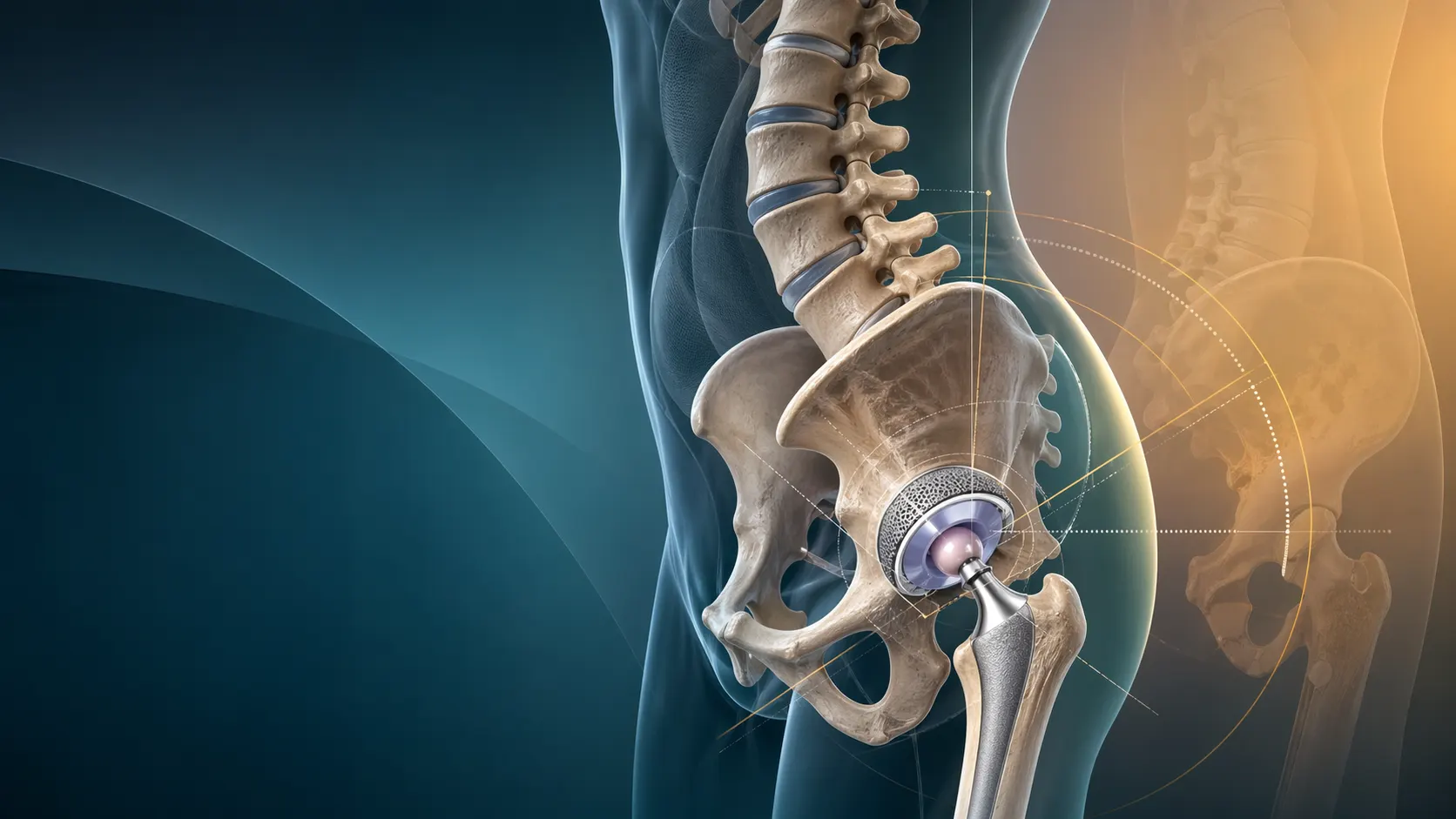
UKA vs TKA: Indications, Outcomes, and The Debate
Unicompartmental (Partial) vs Total Knee Arthroplasty. A detailed analysis of survivorship, functional benefits, and the critical importance of not overcorrecting.
By OrthoVellum Editorial TeamPublished 10 min read
Educational content for clinicians, not medical advice. Editorial policy
On this page12 sections
In the fast-evolving world of knee arthroplasty, few topics elicit as much passionate debate as the Unicompartmental Knee Arthroplasty (UKA). For some surgeons, it is the perfect, elegant operation—a minimally invasive procedure restoring native kinematics and offering a "forgotten knee." For others, it is viewed as a "temporary" operation with an unacceptably high revision rate compared to the reliable, workhorse Total Knee Arthroplasty (TKA).
As you navigate your orthopaedic surgery training and prepare for your fellowship exam preparation (whether FRACS, FRCS, ABOS, or equivalent), mastering the nuances of the UKA versus TKA debate is non-negotiable. Examiners love this topic because it tests your grasp of biomechanics, critical appraisal of registry data, and your clinical judgment in patient selection.
This article cuts through the historical dogma to present the current evidence, modern indications, and surgical philosophies defining this choice in 2025, providing you with actionable insights for both your exams and your clinical practice.
The Philosophy of Conservation vs. Reconstruction
To understand the debate, we must first understand the fundamentally different biomechanical goals of the two procedures.
The TKA Philosophy: Reconstruct and Substitute The traditional approach to TKA is essentially a joint excision and substitution. The mantra is: "The knee is worn out. Resurface everything. Realign the limb to mechanical neutral. Substitute the ligaments." It is a major reconstructive procedure that fundamentally alters the knee's native kinematics, particularly if the posterior cruciate ligament (PCL) is sacrificed. The classic paradoxical anterior femoral roll-forward seen in many TKA designs is a direct result of this substitution.
The UKA Philosophy: Resurface and Preserve The UKA approach is highly targeted: "Only the medial tire is bald. Replace the tire, keep the car." It is a strict resurfacing operation that relies on the integrity of the surrounding soft tissue envelope.
- Ligamentous Preservation: The Anterior Cruciate Ligament (ACL) and PCL are strictly preserved.
- Kinematic Superiority: Because the cruciates dictate femoral rollback, the knee moves like a normal knee. The screw-home mechanism remains largely intact.
- Proprioception: Native mechanoreceptors residing in the cruciate ligaments and unoperated compartments remain, contributing to a more "natural" feeling knee.
- Bone Stock Conservation: Minimal bone is resected (typically just 2-3mm from the tibia and a few millimeters from the distal femur), which theoretically makes future revision easier.
In an exam viva, if asked why a UKA feels more "normal" to a patient than a TKA, focus on kinematics. A functionally intact ACL is the primary driver of posterior femoral rollback during flexion. By preserving the ACL, a UKA allows normal posterior translation of the contact point, enabling deep flexion without posterior impingement. A standard cruciate-retaining (CR) or posterior-stabilized (PS) TKA only approximates this complex multi-radial motion.
The Evidence: The Paradox of Outcomes vs. Survivorship
Here lies the central paradox of UKA that you must articulate clearly in your surgical education and exams: UKA offers superior early functional outcomes and lower mortality, but it comes at the cost of a higher long-term revision rate.
1. Functional Outcomes and Morbidity (UKA Wins)
Multiple landmark studies, most notably the TOPKAT trial (Beard et al.) and large registry analyses, demonstrate that UKA patients experience:
- Superior Range of Motion (ROM): Patients routinely achieve deeper, more physiological flexion.
- Higher PROMs: Patient Reported Outcome Measures (like the Oxford Knee Score) frequently show a ceiling effect faster in UKA than TKA.
- The "Forgotten Knee": A significantly higher percentage of UKA patients report feeling their joint is completely normal compared to TKA patients.
- Dramatically Lower Peri-operative Morbidity: This is arguably the most critical data point for informed consent. The risk of myocardial infarction, stroke, VTE, and deep infection is substantially lower in UKA. According to Liddle et al. (Lancet 2014), the 30-day mortality rate after TKA is roughly 3 to 4 times higher than after a UKA.
2. Survivorship (TKA Wins)
Despite the clinical brilliance of a well-functioning UKA, registry data globally (such as the AOANJRR, UK NJR, and Swedish Knee Arthroplasty Register) consistently shows UKA has a higher revision rate.
- TKA: Approximately 4-5% revision rate at 10 years.
- UKA: Approximately 10-12% revision rate at 10 years.
Why does UKA fail more frequently?
- Lower Threshold for Revision: It is technically easier to revise a painful UKA to a TKA than a painful TKA to a Revision TKA. Surgeons (and patients) pull the trigger earlier when a UKA remains symptomatic.
- Progression of Disease: Arthritis can develop in the unresurfaced lateral or patellofemoral compartments. (Note: Lateral progression is often iatrogenic—see "Overcorrection" below).
- Aseptic Loosening: Often due to technical errors in implant sizing or cementing technique.
- Technical Intolerance: UKA is a demanding, unforgiving operation. Malalignment by just a few degrees, or over-resection of the tibia, leads directly to early failure.
Patient Selection: The Pendulum Swings
Understanding patient selection is the key to minimizing the revision gap between UKA and TKA. Historically, patient selection was rigidly restricted; today, the indications have evolved significantly based on improved implant designs (like mobile-bearing UKA) and better kinematic understanding.
The Classic Kozinn & Scott Criteria (1989)
In 1989, Kozinn and Scott published strict criteria that limited UKA to the "perfect" patient. These historical criteria often appear in multiple-choice questions:
- Older age (>60 years)
- Low demand / sedentary lifestyle
- Thin (weight < 90 kg)
- Minimal pain at rest
- Pre-operative ROM > 90 degrees
- Flexion contracture < 5 degrees
- Angular deformity < 15 degrees correctable to neutral
Modern Indications (The "Oxford" Philosophy)
Today, we know the Kozinn and Scott criteria were unnecessarily restrictive. The modern approach (championed by the Oxford group) relies on pathological anatomy rather than demographic numbers. The ideal candidate today must have:
- Anteromedial Osteoarthritis (AMOA): There must be bone-on-bone medial disease anteriorly and centrally, with structurally preserved cartilage in the posterior medial compartment.
- Functionally Intact ACL: This is absolute. Without an ACL, the femur subluxes posteriorly on the tibia during flexion, leading to point loading and rapid wear of the posterior aspect of the polyethylene bearing.
- Correctable Deformity: The varus deformity must be passively correctable (intra-articular deformity). If there is a fixed, extra-articular bony deformity, a UKA will fail.
- Full Thickness Lateral Cartilage: The lateral compartment must be completely preserved.
- Intact MCL: The medial collateral ligament must be functionally normal.
What is NO LONGER a contraindication?
- Age: There is no upper or lower age limit. A 50-year-old active laborer may actually benefit more from a UKA (bone conservation, rapid return to work, high function) than a TKA, even anticipating a future revision.
- Weight: Obesity is no longer an absolute contraindication, though morbid obesity (BMI > 40) still warrants careful discussion regarding implant survivorship.
- Patellofemoral (PFJ) Arthritis: Asymptomatic or mildly symptomatic PFJ arthritis, particularly on the medial facet, is not a contraindication. A UKA will often decompress the medial facet. Only severe, bone-on-bone lateral facet PFJ disease with anterior knee pain at rest remains a strong contraindication.
The "Surgical Sin": Overcorrection and Soft Tissue Mismanagement
The most common cause of mid-term failure in UKA is surgeon error, specifically Overcorrection. Understanding this mechanism is vital for your surgical education.
- Native Anatomy: Most patients presenting with medial knee OA were always in varus, even before the onset of arthritis (constitutional varus).
- The TKA Habit (The Mistake): In a TKA, surgeons are taught to release the MCL and resect bone to achieve a perfectly straight, neutral mechanical axis (0 degrees). If a surgeon applies this logic to a UKA, they will insert a thick polyethylene bearing to "jack open" the medial side and force the leg straight.
- The Pathological Consequence: This "stuffs" or over-tensions the medial compartment. Biomechanically, this lifts the lateral femoral condyle completely off the lateral tibial plateau. When the patient bears weight, the lateral side slams down dynamically. This dramatically alters load distribution, leading to rapid lateral disease progression and unexplained postoperative pain.
- The Golden Rule: Leave them in Varus. The goal of a UKA is to restore the knee to its pre-disease alignment, which is usually 2-4 degrees of varus. You are simply filling the space left by the absent cartilage. Under-correction is readily forgiven by the knee; over-correction is almost always fatal to the implant.
Avoiding the Tibial Plateau Fracture
Another classic early complication of UKA is the medial tibial plateau fracture. This is almost exclusively iatrogenic. It occurs when the surgeon undercuts the tibial eminence with the sagittal saw, creating a stress riser, or when multiple pin holes from the cutting block act as a perforation line. Always ensure your sagittal saw cut stops precisely at the cortex and avoid overlapping horizontal and vertical cuts.
The Revision Myth: "It's Just a Primary"
For decades, surgeons justified the higher revision rate of UKA by telling patients: "Don't worry, if it fails, revising it is just like doing a primary TKA."
This is definitively false.
Revising a UKA to a TKA is not a simple primary operation, and treating it as such will lead to compromised outcomes.
- Bone Loss: Removing the UKA components, particularly the tibial tray, often leaves massive uncontained bone defects (AORI Type 2a). Primary TKA implants often cannot bridge these gaps without the use of metal augments, highly cross-linked cement mantles, or diaphyseal stems.
- Stiffness and Kinematics: The soft tissue envelope in a revised UKA has been altered twice. The revision knee is frequently stiffer than a standard primary TKA.
- Functional Outcomes: High-quality registry data shows that the clinical outcomes (PROMs) of a UKA revised to a TKA are generally worse than those of a primary TKA performed for osteoarthritis, though they are certainly better than the outcomes of a TKA revised to a complex Revision TKA.
Conclusion: The Right Tool for the Right Job
The Unicompartmental Knee Arthroplasty is a scalpel; the Total Knee Arthroplasty is a hammer. Both are essential tools in orthopaedic surgery, but they cannot be used interchangeably.
In the right hands, applied to the correctly selected patient, the UKA offers a kinematically superior, safer, and more functionally rewarding knee than a TKA. However, it is an unforgiving procedure that demands absolute respect for soft tissue balancing, a deep understanding of native kinematics, and strict adherence to specific indications.
The Verdict for Clinical Practice:
- For the Surgeon: Do enough of them to be competent. Respect the volume-outcome curve. Do not overstuff the medial compartment, and never release the MCL.
- For the Patient: Shared decision-making is paramount. Patients must understand the trade-off clearly: "I can give you a better feeling, more natural knee with a lower risk of dying or getting an infection today, but you have a higher risk of needing a second surgery in the next ten years."
References
- Beard DJ, et al. "The clinical and cost-effectiveness of total versus partial knee replacement in patients with medial compartment osteoarthritis (TOPKAT): 5-year outcomes of a randomised controlled trial." The Lancet. 2019;394(10200):746-756.
- Liddle AD, et al. "Adverse outcomes after total and unicompartmental knee replacement in 101,330 matched patients: a study of data from the National Joint Registry for England and Wales." The Lancet. 2014;384(9952):1437-1445.
- Liddle AD, et al. "Optimal usage of unicompartmental knee arthroplasty: a study of 41,986 cases from the National Joint Registry for England and Wales." Bone & Joint Journal. 2015;97-B(11):1506-1511.
- Kozinn SC, Scott R. "Unicondylar knee arthroplasty." J Bone Joint Surg Am. 1989;71(1):145-150.
- Kennedy JA, et al. "The effect of age and gender on the revision rate of unicompartmental knee arthroplasty." J Arthroplasty. 2020;35(8):2054-2059.
Share this article
Cite this article
OrthoVellum Editorial Team. UKA vs TKA: Indications, Outcomes, and The Debate [Internet]. OrthoVellum; 2025 Jan 6 [cited 2026 Oct 4]. Available from: https://www.orthovellum.com/blog/uka-vs-tka-indications-outcomes
About this content
Prepared by the OrthoVellum Editorial Team from cited sources, under our editorial policy.
For education and exam preparation; not medical advice or a substitute for clinical judgement and local guidance.
Spotted an error? Tell us; every report is read.
Get new articles by email
New clinical explainers, landmark-trial summaries and exam guidance from the OrthoVellum blog. No account needed; unsubscribe from any email.