infection
Periprosthetic Joint Infection
advanced
6 min
28 marks
6 questions
Clinical Scenario
A 72-year-old male presents 8 months after primary right total knee arthroplasty with persistent wound drainage for 3 weeks and increasing knee pain. He had an uneventful initial recovery but developed a superficial wound infection at 3 weeks post-op treated with oral antibiotics. He is febrile (38.2°C) with a swollen, warm, and erythematous knee. The wound has purulent discharge. Inflammatory markers show CRP 156mg/L and ESR 78mm/hr.
Radiographs and aspiration results are provided.
Radiographs and aspiration results are provided.
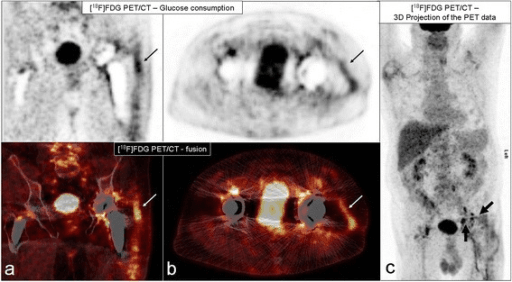
Clinical image for Periprosthetic Joint Infection
Source: Diagnostic Workup for Periprosthetic Joint Infections • PMC4435661 • CC-BY
Questions
Question 1 (4 marks)
Define periprosthetic joint infection (PJI). What criteria are used for diagnosis?
Question 2 (5 marks)
Classify PJI based on timing and describe the pathophysiology and common organisms for each type.
Question 3 (6 marks)
Describe your diagnostic workup for suspected PJI. What are the sensitivity and specificity of different tests?
Question 4 (5 marks)
What treatment options are available for PJI? Discuss DAIR versus two-stage exchange.
Question 5 (4 marks)
Describe your technique for two-stage exchange arthroplasty. What are the key principles?
Question 6 (4 marks)
What factors affect outcome in PJI treatment? What are the criteria for reimplantation?