Recurrent Dislocation of the Patellofemoral Joint | MPFL and Bony Anatomy
- MPFL anatomy is close to the distal femoral physis and paediatric fixation requires image-guided physeal-respecting planning
- MRI after acute dislocation assesses osteochondral fracture/loose body, MPFL injury and anatomic risk factors
- J-sign and apprehension are clinical clues, not stand-alone indications for surgery
- First-time versus recurrent is not a complete algorithm: osteochondral injury, dysplasia, age, laxity, symptoms and family goals modify treatment
- “Use true lateral imaging and patient-specific anatomy rather than memorising one Schöttle-point sentence
- “Assess generalised laxity, coronal alignment, femoral/tibial torsion and foot progression
- “Interpret TT-TG, CDI and trochlear measures with age, knee size, flexion and imaging modality
Overview and Epidemiology
The problem. Most traumatic patellar dislocations are lateral. In a child both the recurrence risk and the treatment are multifactorial, and the open physis changes which fixation and realignment options are available.
Natural history. Incidence and recurrence estimates vary by age, cohort and definition. Skeletal immaturity, trochlear dysplasia, patella alta, a contralateral event and osteochondral injury may each increase recurrence. Risk models are not perfectly validated, and should support, not replace, a shared decision.
The acute injury. The medial restraints are injured variably. The typical bone bruise, the kissing contusion, involves the medial patella and the lateral femoral condyle.
Anatomy and Pathomechanics
Stability is biphasic. From 0 to 30 degrees of flexion the patella depends on soft tissue, and the MPFL is the primary restraint to lateral translation. Beyond 30 degrees stability depends on bone, as the patella engages the trochlea.
The MPFL. It runs from near the medial epicondyle and adductor tubercle region to a broad attachment on the upper medial patella and the quadriceps tendon. The femoral attachment lies close to the distal femoral physis, and the exact relationship varies with age and imaging plane. Reconstruction therefore depends on the correct length change and physeal-safe fixation, not on one memorised point.
MPFL injury patterns. On MRI after an acute dislocation, femoral-sided, patellar-sided and midsubstance injuries all occur, and localising the injury and any associated osteochondral damage is more useful than a fixed percentage distribution. In recurrent cases the ligament is often attenuated or absent rather than discretely torn.
The lateral vector. Tubercle position (TT-TG), valgus and torsion interact, and rotational or coronal deformity may dominate the lateral vector.
Classification Systems
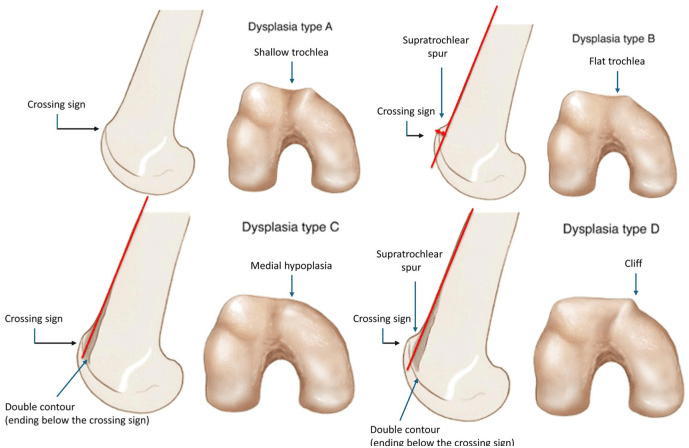
Trochlear dysplasia. Trochlear depth, inclination and shape vary with growth. Dejour's A-D grading is descriptive and has observer and modality limitations, and its signs do not mandate one procedure in a growing knee. The signs themselves are described under Investigations.
| Type | Description |
|---|---|
| Type A | Shallow trochlea |
| Type B | Flat/convex trochlea |
| Type C | Facet asymmetry |
| Type D | Cliff pattern |
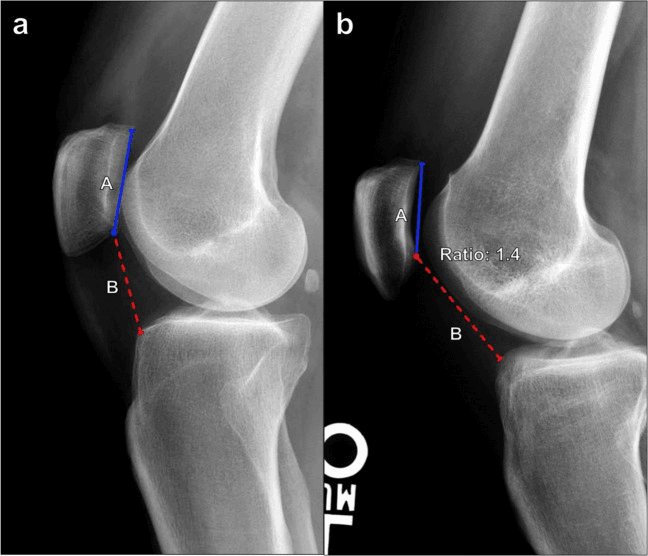
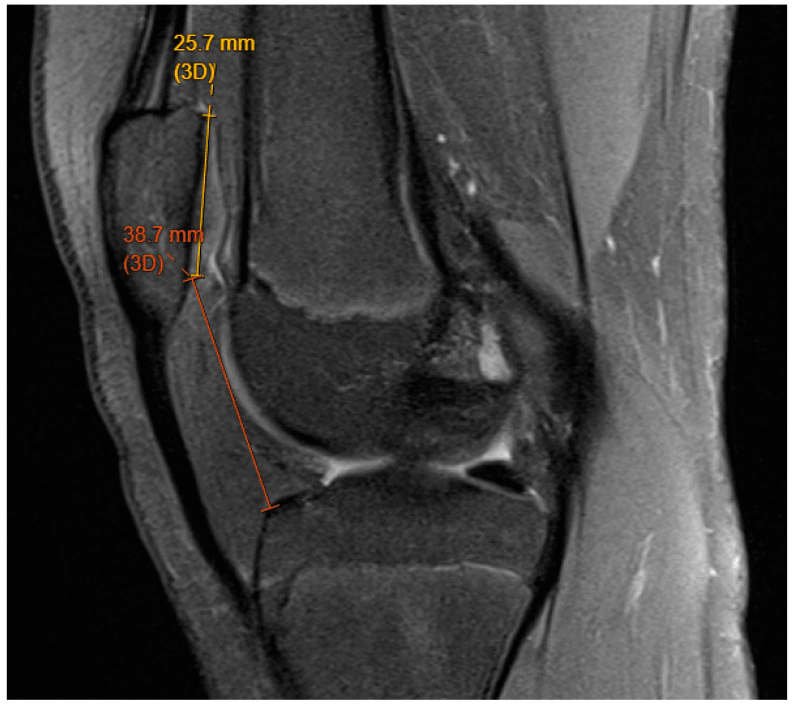
Patellar height. Height ratios depend on technique, flexion and skeletal age, so low, reference and high are defined against an age- and method-specific reference, and engagement is assessed separately. A low patella may limit flexion or alter contact. A high patella may delay engagement, but is not an isolated operation trigger: height is read together with the trochlea, the J-sign, symptoms and recurrence, and a single CDI value should not automatically trigger distalisation.
Clinical Assessment
The acute history. The mechanism is a non-contact twisting injury with the knee flexed and in valgus, and a "pop" or "crack" is often heard. The patella dislocates laterally and often reduces spontaneously as the knee is extended. A rapid haemarthrosis, within 1-2 hours, indicates a ligamentous tear or an osteochondral fracture.
The recurrent history. The mechanism is minimal trauma, such as turning in bed or dancing. The patient describes giving way rather than frank dislocation, anterior knee pain especially on stairs or with prolonged sitting (the movie sign), and fear of sport and activity (kinesiophobia).
Standing. Valgus knees increase the Q-angle and the lateral vector. Pes planus leads to internal tibial rotation, which also increases the Q-angle. High, laterally placed patellae give the "grasshopper eyes" appearance.
Seated: the J-sign. Watch the patella track from 90 degrees of flexion to full extension. The sign is positive when the patella deviates laterally in terminal extension as it exits the trochlea, and is a strong indicator of patella alta and trochlear dysplasia.
Palpation. Where it is tender localises the injury:
- Medial epicondyle and adductor tubercle, the MPFL femoral origin - an acute tear
- Medial patellar facet - an MPFL avulsion or chondral injury
- Lateral femoral condyle - the kissing-contusion bone bruise
- Medial retinaculum - a palpable defect
Apprehension test. With the knee flexed to 20-30 degrees to relax the hamstrings, push the patella laterally. It is positive when the patient contracts the quadriceps, grabs the examiner's hand or expresses fear. Pain alone is not a positive test, and could be patellofemoral osteoarthritis.
Patellar glide. Medial and lateral translation is graded in quadrants, one quadrant being 25% of patellar width. 1-2 quadrants is normal; more than 3 is hyperlax and suggests the restraints are incompetent.
Beighton score. Generalised ligamentous laxity is a score greater than 4/9, from thumb to wrist, fifth-finger extension beyond 90 degrees, elbow hyperextension, knee hyperextension and palms to floor. Hyperlaxity is a modifier rather than an operation trigger.
Rotational profile (prone). Femoral anteversion shows as internal rotation greater than 70 degrees, increased compared with external rotation. Tibial torsion shows as a thigh-foot axis more than 20 degrees external.
Miserable malalignment is the triad of femoral anteversion (inward twisting of the femur), external tibial torsion (outward twisting of the tibia) and genu valgum. The result is an extreme lateral Q-angle: MPFL reconstruction alone will fail, and derotational femoral or tibial osteotomy is required.
More generally, rotational and coronal deformity may dominate the lateral vector. MPFL reconstruction cannot compensate for every severe femoral, tibial or valgus abnormality, but no single rotation or valgus cut-off mandates osteotomy.
Investigations
Radiographs. Three views, each with its own job:
- AP - generally normal, but may show an osteochondral fracture or loose body
- Lateral - the most useful screening view, for patellar height and trochlear dysplasia
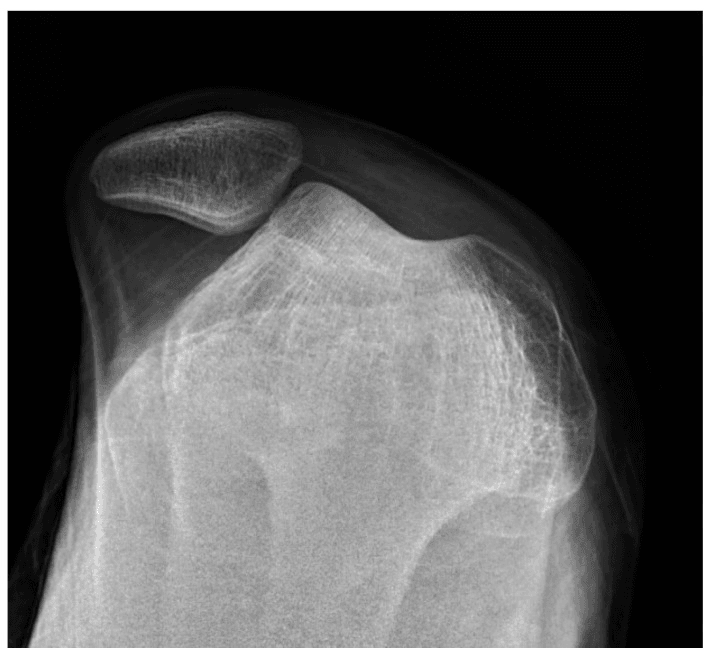
- Skyline (Merchant), taken at 30 degrees of flexion - patellar tilt (the angle between the posterior condylar line and the patellar axis), subluxation (the congruence angle), and avulsion fractures: look closely at the medial patellar margin for an MPFL avulsion fleck
Patellar height on the lateral. The Caton-Deschamps index is the distance from the patellar articular surface to the tibia divided by the length of the articular surface. Normal is 0.8-1.2, and greater than 1.2 is alta.
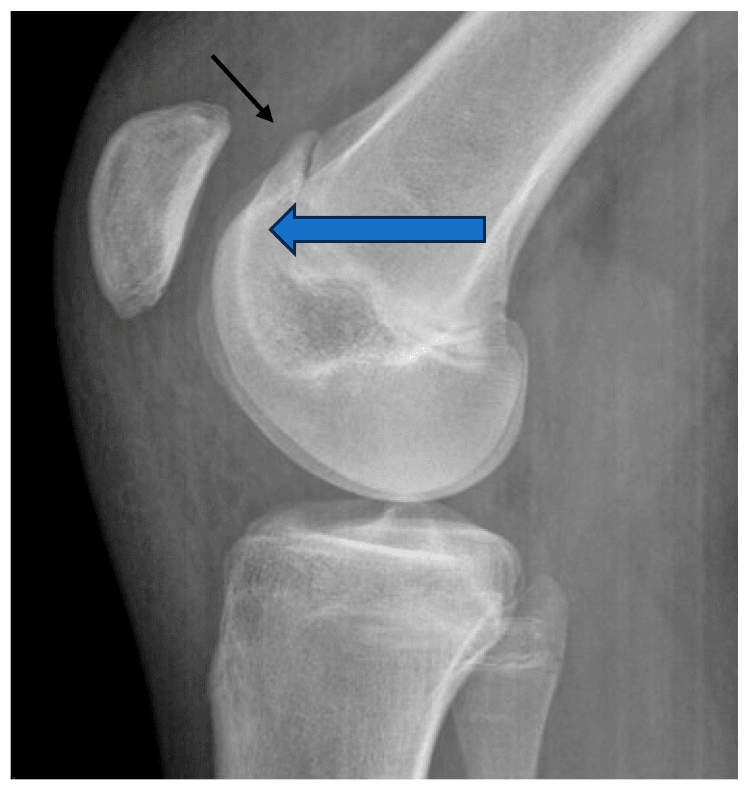
Trochlear dysplasia on the lateral. The signs need a true lateral radiograph:
- Crossing sign - the trochlear floor crosses the anterior outline of the femoral condyles, representing a flat groove
- Supratrochlear spur - a prominence of the proximal trochlea
- Double contour - medial condylar hypoplasia, seen as a double line on the anterior outline of the condyles that ends below the crossing sign
MRI is the gold standard for assessing the acute injury. It shows:
- The soft tissues - the MPFL tear, located as femoral, patellar or midsubstance, and the VMO, for elevation or atrophy
- Osteochondral lesions - critical to diagnose, and usually on the lateral femoral condyle or the medial patellar facet. Look for loose bodies in the lateral gutter or the popliteal hiatus
- The kissing contusion - confirms a recent dislocation mechanism
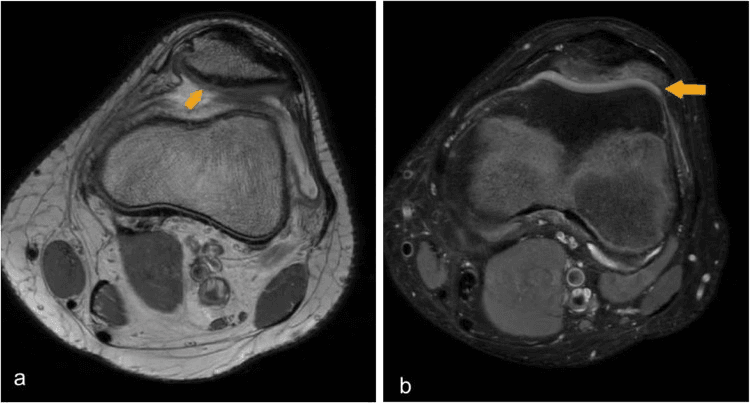
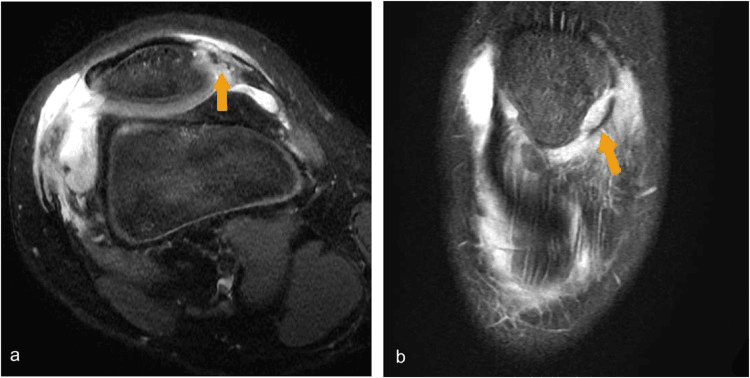
An osteochondral fracture (loose body) occurs in a substantial minority of acute dislocations. Always scrutinise the radiograph and obtain MRI if effusion persists or mechanical symptoms (locking, catching) are present. A displaced, fixable osteochondral fragment converts a "non-operative" first dislocation into a surgical one.
Measuring the trochlea. Axial MRI measures depth, inclination and facet asymmetry. A trochlear sulcus angle greater than 145 degrees indicates dysplasia (normal is less than 145), as does a lateral trochlear inclination less than 11 degrees (normal is greater than 11). On sagittal MRI the patellotrochlear index assesses cartilage engagement directly.
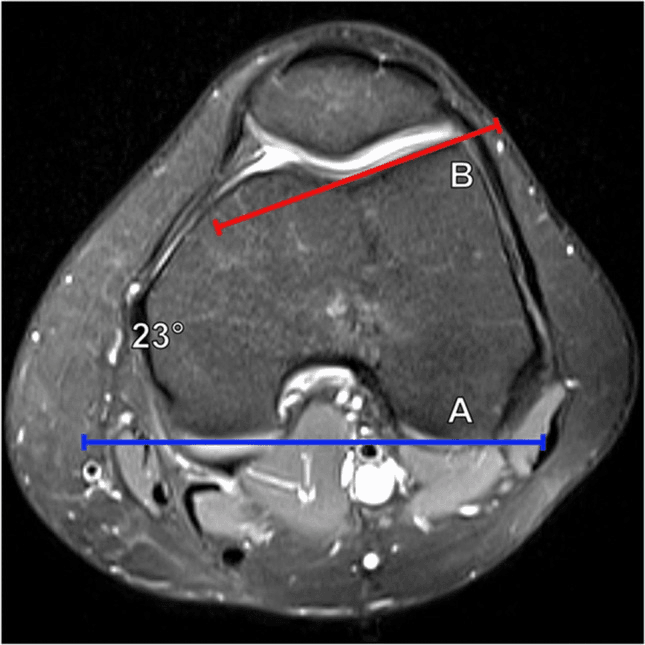
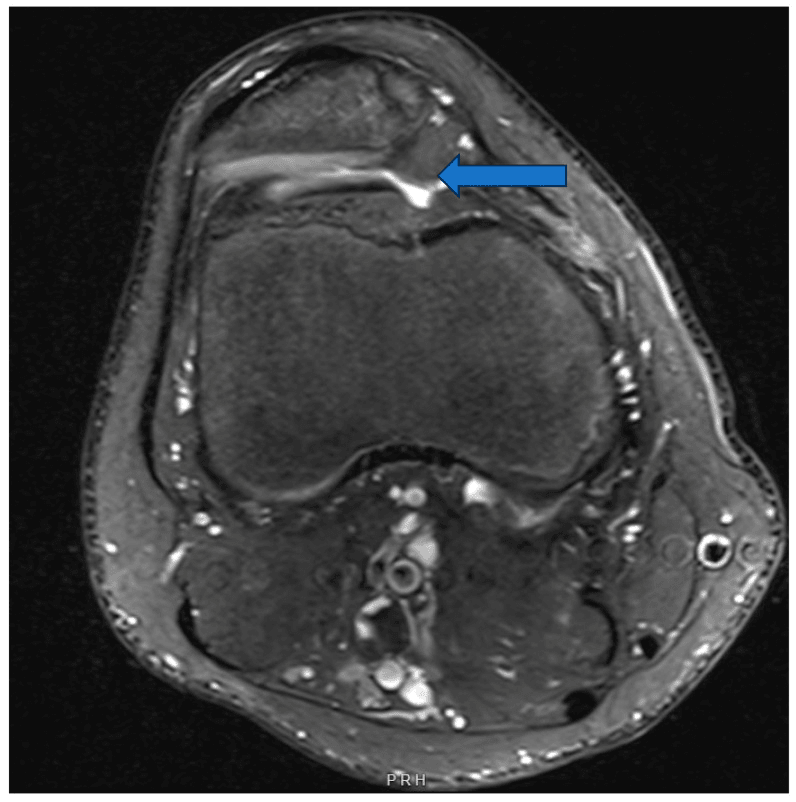
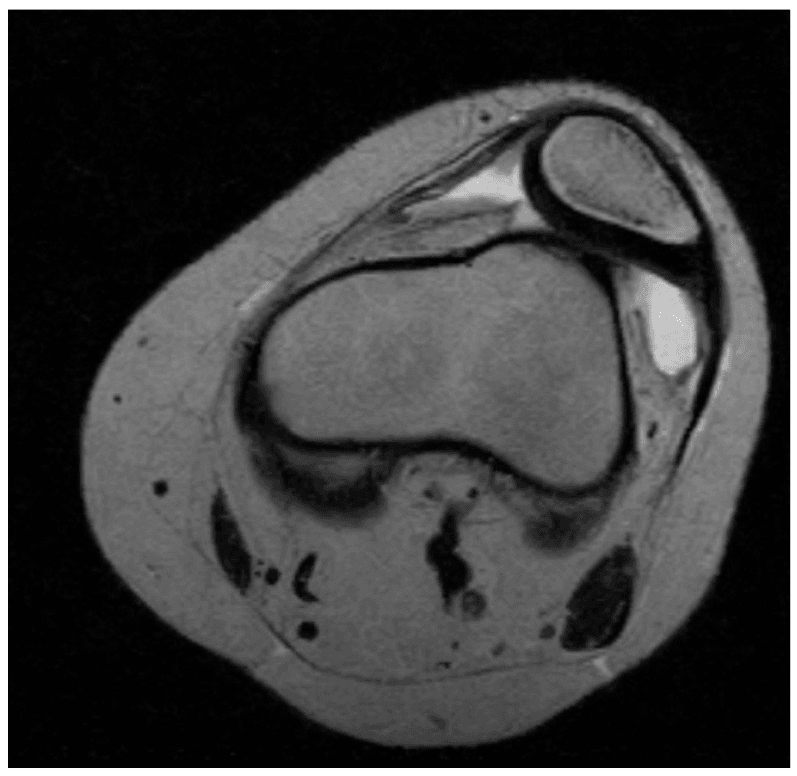
CT is the gold standard for alignment and bony measurement.
TT-TG distance. Superimpose the axial cut through the femoral trochlea on the axial cut through the tibial tubercle, and measure the mediolateral distance between them. The familiar thresholds are adult: normal less than 15mm, borderline 15-20mm, and pathological greater than 20mm, which in the mature knee indicates tibial tubercle osteotomy.
Why the adult numbers fail in children. TT-TG scales with the size of the knee and rises with age. In 618 paediatric MRIs the median normal TT-TG was 8.5mm, and children with instability had a median of only 12.1mm (Dickens, JBJS Am 2014), so a child with genuine instability will usually be called normal by the adult 20mm rule. A second series of 869 children found a mean of 17.2mm in the instability group against 10.4mm in controls (Bayhan, KSSTA 2018).
Reading TT-TG in the immature knee. Interpret it against age-based percentiles rather than a fixed cut-off, or use a size-independent measure such as the TT-TG angle or the TT-TG to trochlear-width ratio. TT-TG also measures about 2mm less on a 3-T than on a 1.5-T magnet. And the 20mm figure points to an operation that cannot be done here: tibial tubercle osteotomy is contraindicated across an open apophysis, and the physeal-sparing alternatives are in the Roux-Goldthwait and Galeazzi section.
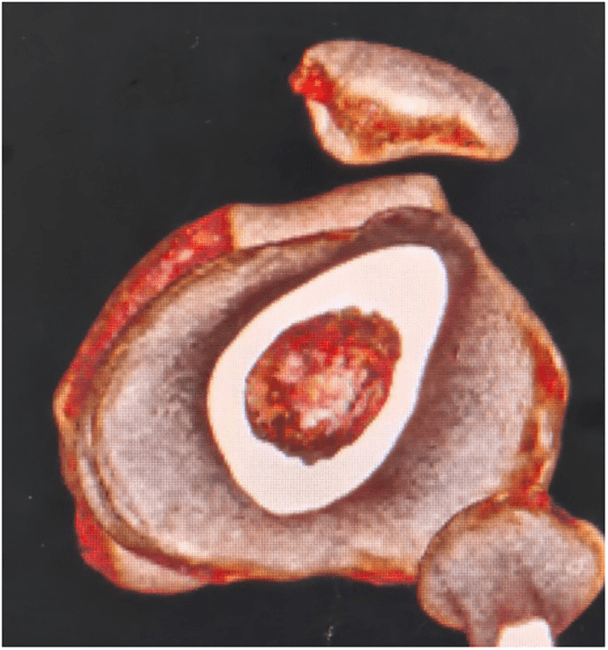
Torsion. CT measures femoral anteversion as the relationship of the femoral neck to the posterior condyles, and tibial torsion as the relationship of the posterior condyles to the ankle mortise.
Differential Diagnosis
The acutely swollen adolescent knee after a twisting injury has several mimics. The key discriminators are the mechanism, the location of tenderness, and the imaging pattern.
- Distinguishing Feature
- Lateral giving way, medial tenderness, positive apprehension
- Confirmatory Finding
- MPFL tear plus kissing contusion (LFC and medial patella) on MRI
- Distinguishing Feature
- Pivot injury with effusion but central/rotational instability
- Confirmatory Finding
- Lange/pivot-shift positive; MRI ACL discontinuity, bone bruise on LFC and posterolateral tibia
- Distinguishing Feature
- Insidious activity-related pain, may catch/lock
- Confirmatory Finding
- Lateral notch (tunnel) view and MRI subchondral lesion of medial femoral condyle
- Distinguishing Feature
- Joint-line tenderness, locking, McMurray positive
- Confirmatory Finding
- MRI meniscal signal reaching articular surface
- Distinguishing Feature
- Anterior pain with stairs/sitting, NO true instability
- Confirmatory Finding
- Normal alignment imaging; no apprehension, no dislocation history
- Distinguishing Feature
- Acute inability to extend, focal bony tenderness
- Confirmatory Finding
- Lateral radiograph showing apophyseal/sleeve fragment
Management Algorithm
The decision. A first acute episode is an MPFL injury with possible osteochondral damage, presenting with an effusion, medial tenderness and apprehension. Imaging looks for osteochondral injury (cartilage injury and a loose body) and the growth plate, and without a surgical lesion the usual treatment is rehabilitation. Recurrent instability is accumulated soft-tissue insufficiency on top of variable anatomy, presenting with a J-sign, apprehension and recurrent events, and is stabilised individually after a full risk-factor assessment.
The principle. In either case, treat the dominant pathology, non-operatively or surgically. Imaging is MRI plus selected radiographs or CT, and every measurement needs age- and modality-aware interpretation. There is no automatic MPFL-plus-TTO bundle.
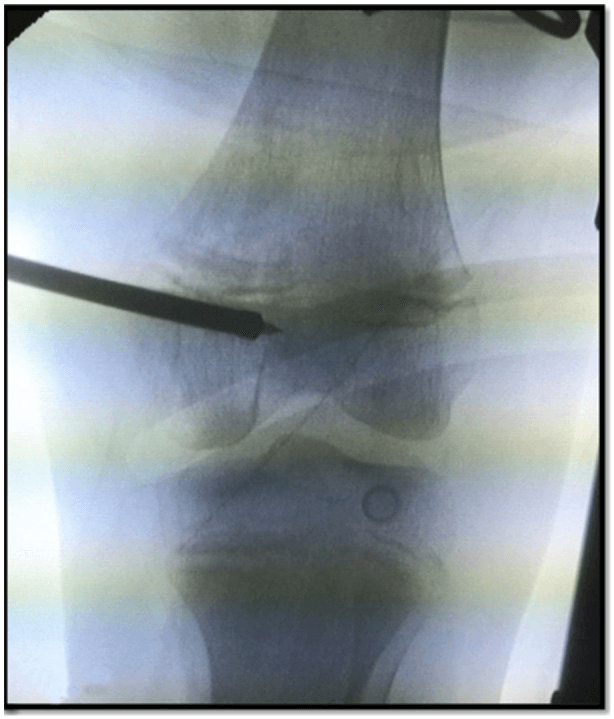
The physis. Respecting the growth plate is the primary surgical principle in the paediatric population. With an open physis, large tunnels cannot be drilled across the distal femoral physis, so the technique is soft-tissue fixation or epiphysiolysis-sparing drilling; with a closed physis there is no such constraint, and a standard anatomic reconstruction with tunnels is allowed. Distal-femoral fixation and tibial-tubercle procedures risk growth disturbance, so confirm skeletal maturity and plan a physeal-respecting trajectory or a soft-tissue alternative rather than assuming a "closing" physis is safe.
Who. A first-time acute dislocation without a large loose body, and patients with low demands or minimal risk factors.
Phase 1, 0-2 weeks. Reduce by extending the knee with gentle medial pressure. Immobilise in an extension splint or a hinged brace locked in extension, weight bearing as tolerated, so that the MPFL heals in the reduced position rather than stretched.
Phase 2, 2-6 weeks. Unlock the brace to 0-90 degrees and start strengthening:
- VMO activation - straight leg raises with external rotation
- Gluteal control - clamshells and bridging, to correct dynamic valgus
- Core stability - plank progressions
- McConnell taping to unload the tissues
Phase 3, from 6 weeks. Return to sport once strength is greater than 90% of the contralateral side and a functional hopping test is passed, with a "J"-buttress brace (for example Tru-Pull) for sport.
Distal Realignment in the Open-Physis Knee: Roux-Goldthwait and Galeazzi
Why not a TTO. Moving the tubercle requires bone work across the proximal tibial apophysis. In a growing child this risks premature anterior physeal arrest and a genu recurvatum deformity, so a lateralised tubercle cannot simply be transferred.
Roux-Goldthwait. The patellar tendon is split longitudinally, and the lateral half is detached distally, passed beneath the medial half and sutured to the medial periosteum or pes. This shifts the line of pull medially without touching the apophysis, and is usually combined with a lateral release and medial reefing.
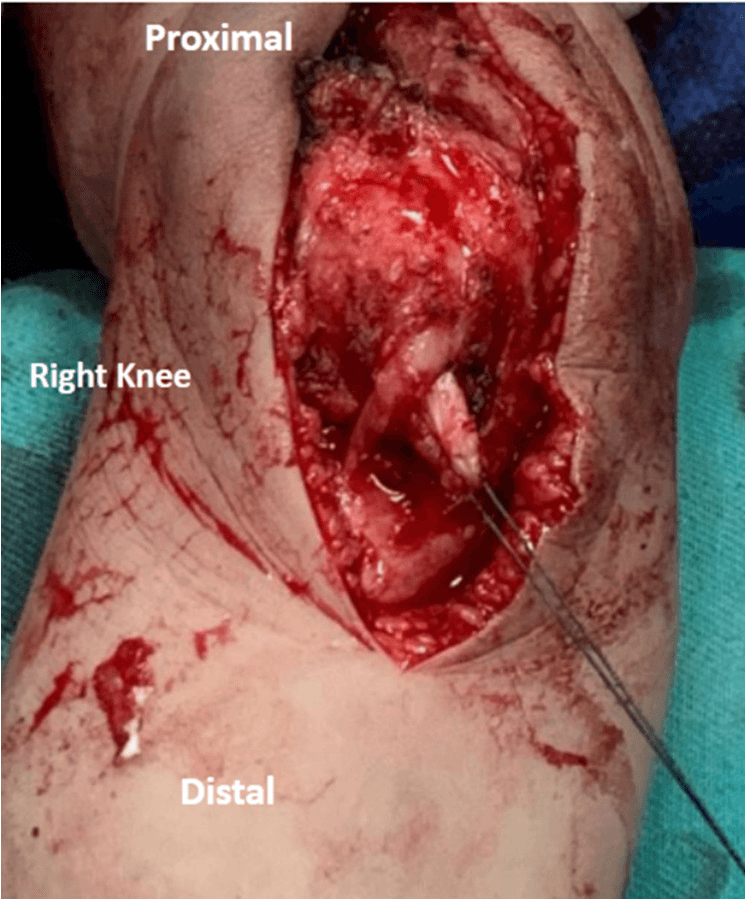
Galeazzi (semitendinosus tenodesis). The semitendinosus is left attached distally and routed through a patellar tunnel, or fixed to the patella, to act as a medial check-rein: a physeal-sparing distal stabiliser.
Where they sit now. Both are largely superseded by physeal-respecting anatomic MPFL reconstruction: the native MPFL femoral insertion lies distal to the physis, so femoral fixation kept distal to it is safe. They remain the classic answer for the open-apophysis knee that needs distal realignment, and their principles underpin combined soft-tissue procedures. Definitive bony realignment (TTO) is deferred until skeletal maturity.
Surgical Technique
Anatomic MPFL reconstruction in five steps:
- Graft. Gracilis, single or double strand, with whip-stitched ends.
- Patellar attachment. Through a small incision at the medial patellar border, fix the graft at the upper third of the medial border (the junction of the proximal and middle thirds) with two suture anchors or a parallel-tunnel technique, keeping the fixation out of the joint.
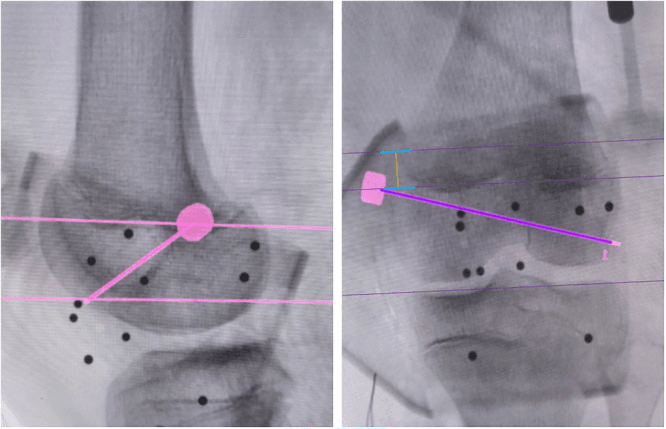
- Femoral attachment, the critical step. Through an incision over the medial epicondyle, identify Schöttle's point on lateral fluoroscopy and drill a guidewire there.
- Isometry check. Loop the graft around the pin and range the knee from 0 to 90 degrees.
- Tunnel and fixation. Drill a 6-7mm tunnel, careful of the notch and ACL, and fix with an interference screw at 30 degrees of flexion.
Schöttle's point. On the lateral fluoroscopic view it is referenced to three landmarks:
- The extension of the posterior femoral cortical line
- 2.5mm distal to the posterior origin of the medial femoral condyle
- Proximal to the level of the posterior point of Blumensaat's line
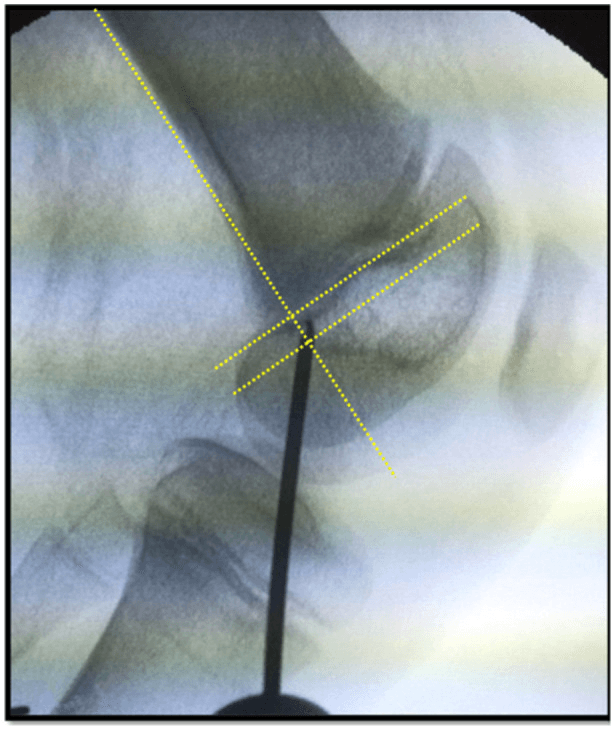
Reading the isometry check. The graft should be tightest at 0-30 degrees and relax slightly in deeper flexion. If it tightens in flexion the pin is too proximal; if it tightens in extension the pin is too distal or anterior.
Tension. Zero tension: just remove the slack, then check lateral glide (10mm).
Derotational Osteotomy: When Torsion, not the MPFL, is the Problem
Recognise the driver. Excessive femoral anteversion (internal rotation of the distal femur) and/or external tibial torsion swing the extensor mechanism and the tibial tubercle laterally, raising the dynamic Q-angle and the lateral vector. This is a purely rotational cause of instability that a soft-tissue check-rein cannot neutralise: the ligament is overloaded and stretches out. Quantify it with the rotational profile and confirm with CT or MRI torsional measurement; the rotational profile itself is covered in Paediatric Rotational Profile and In-toeing/Out-toeing.
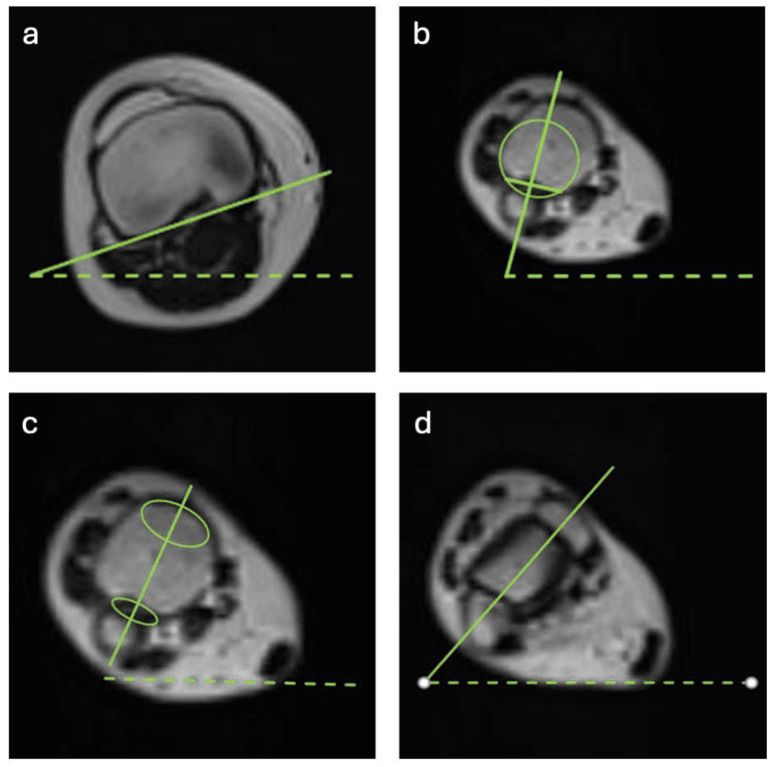
Femoral derotational osteotomy. For pathological femoral anteversion, commonly quoted around the high twenties of degrees or more when it drives instability, a supracondylar (distal femoral) external-rotation osteotomy de-rotates the trochlea back under the patella and is held with a plate.
Tibial derotational osteotomy. For marked external tibial torsion, a proximal (supra-tubercle) or supramalleolar internal-rotation osteotomy realigns the tubercle medially.
Sequence. Derotation is usually combined with MPFL reconstruction and any needed distal realignment, correcting the bony vector first so that the reconstructed ligament is not overloaded. Address the abnormal factor or factors present rather than reflexively reconstructing the MPFL.
Complications
- Risk Factor
- Missed bony pathology (Alta/TT-TG), Tunnel Malposition
- Prevention
- Address bony factors, Isometry check
- Management
- Revision with TTO / Revision MPFL
- Risk Factor
- Over-tensioned MPFL (High/Proximal placement)
- Prevention
- Proper femoral point check
- Management
- MUA or Revision (Release)
- Risk Factor
- Drill holes / Anchors in patella (stress risers)
- Prevention
- Careful drilling spacing (greater than 10mm apart)
- Management
- ORIF or Suture repair
- Risk Factor
- Drilling across physis in immature patient
- Prevention
- Fluoro guidance / Epiphyseal sparing technique
- Management
- Bar resection / Growth correction
- Risk Factor
- Over-medialization / Over-tension / Cartilage overload
- Prevention
- Check tracking intra-op, Don't over-constrain
- Management
- Physio / Revision
Postoperative Care
The protocol after an isolated MPFL reconstruction:
- Hinged knee brace locked in extension for walking, and worn to sleep
- Weight bearing as tolerated, with crutches
- Passive flexion 0-90 degrees, limiting active extension to protect the graft
- Quadriceps sets, ankle pumps, straight leg raises in the brace
- Goals: wound healing, effusion control, quadriceps re-activation
- Brace unlocked 0-90 degrees for walking; wean crutches once gait is normal
- Progress to full range of motion
- Stationary cycling at low resistance, closed-chain quadriceps work (mini-squats 0-45 degrees), heel raises, proprioception drills
- Avoid open-chain knee extension, such as the knee extension machine
- Brace discontinued; range should be full
- Leg press, lunges, elliptical trainer, hamstring strengthening, core and gluteal stability
- Testing: isokinetic limb symmetry greater than 90%, hop tests (single, triple, crossover), no apprehension on examination
- Progression from running to agility and cutting, then contact
- Usually 5-6 months for contact sports
Outcomes
Natural history without surgery. Recurrence after a primary dislocation is 30-50% overall. A history of contralateral dislocation increases the risk significantly, and dysplasia with an open physis carries a risk of up to 70%.
Arthritis. Chronic pain and patellofemoral osteoarthritis are long-term sequelae of recurrent instability. The Sanders cohort in the evidence below qualifies the link: there, arthritis tracked the osteochondral injury sustained at dislocation rather than recurrence, and stabilising surgery was not associated with less arthritis.
After MPFL reconstruction. Further dislocation is prevented in 90-95%. Return to sport is high, about 85%, but often at a slightly lower level because of fear and guarding. The complication rate is about 15-20%, stiffness being the most common.
After TTO with MPFL reconstruction. Stability rates are similar, at the cost of higher procedural morbidity from delayed union and screw prominence. The combination is essential for correcting high-grade bony deformity.
Guidelines, Registries & Global Practice
Global Epidemiology:
- First-time lateral patellar dislocation incidence is approximately 23 per 100,000 person-years overall, peaking at roughly 108-148 per 100,000 in adolescents aged 14-18 years.
- Sex distribution is broadly even, with a relative female preponderance in many adolescent cohorts.
- Recurrence after a first dislocation is approximately 30-40% overall but rises to over 50% in skeletally immature patients with trochlear dysplasia or patella alta.
- First Dislocation
- Non-operative first line; image to exclude osteochondral fragment
- Recurrent / Surgical Stance
- MPFL reconstruction favoured over repair; correct bony factors a la carte
- First Dislocation
- Reduction, short immobilization, structured physiotherapy
- Recurrent / Surgical Stance
- Reconstruction for recurrent instability; trochleoplasty in specialist centres for high-grade dysplasia
- First Dislocation
- Risk-stratify using dysplasia, alta, TT-TG, immaturity
- Recurrent / Surgical Stance
- Consensus supports anatomic MPFL reconstruction; reserves trochleoplasty for Dejour B/D
- First Dislocation
- Physeal-respecting planning mandatory
- Recurrent / Surgical Stance
- Avoid tibial tubercle osteotomy with open apophysis (recurvatum risk); soft-tissue or physeal-sparing techniques
- There is no large dedicated patellofemoral instability registry equivalent to arthroplasty registries; evidence rests on population cohorts (e.g. the Mayo/Olmsted County series) and institutional series.
- Reported redislocation rates after anatomic MPFL reconstruction are low (commonly under 5-10%), with stiffness and anterior knee pain the most frequent complications.
- Well-resourced settings: MRI and CT (or low-dose CT/EOS) for TT-TG and rotational profile, image-guided anatomic reconstruction, and access to trochleoplasty.
- Limited-resource settings: Diagnosis and planning rely more on plain radiographs and clinical assessment; hamstring autograft is strongly preferred over allograft on cost and availability grounds, and complex bony realignment may be referred to tertiary centres.
Related pages: Patellofemoral Instability for the adult disease, from which most of the thresholds on this page were borrowed - and where they actually apply; MPFL Injury for the ligament itself; Patellar Height Abnormalities for how Caton-Deschamps, Insall-Salvati and the patellotrochlear index differ and which survives skeletal immaturity; Congenital Patellar Dislocation for the fixed, obligate dislocation that is a different disease and must not be treated with an MPFL reconstruction; Physeal Injuries and the Salter-Harris Classification for the growth plate that constrains every tunnel and osteotomy here; Genu Valgum and Varum and Osteochondral Defects of the Knee for the coronal malalignment that loads the patella laterally and for the chondral injury that, on this page's own cohort evidence, is what actually drives later arthritis; Ehlers-Danlos Syndrome for the hyperlaxity that changes both the diagnosis and the durability of any soft-tissue reconstruction; and Discoid Meniscus for the other cause of a child's knee giving way.
CROSSFeatures of Trochlear Dysplasia
Hook:Anatomy of a bad groove.
LOCKEDIndications for Surgery
Hook:When to intervene surgically.
Controversies and Areas of Uncertainty
Surgery after a first dislocation? Most guidance still favours non-operative care for an isolated first dislocation. The debate is whether high-risk children, with trochlear dysplasia plus skeletal immaturity plus alta, should be offered early stabilisation, since their recurrence risk exceeds 50-88%. Trials are small, and selection by risk model rather than blanket policy is the pragmatic position.
Repair or reconstruct? Acute repair of a femoral or patellar avulsion is intuitively attractive, but reported redislocation rates are higher than after anatomic reconstruction, especially when bony risk factors are present. Reconstruction is the default for recurrent instability.
Trochleoplasty at the index operation? Trochleoplasty addresses the dysplastic groove directly. Whether it should be added at the index operation or staged remains debated.
How reliable is TT-TG? The 20mm threshold is widely quoted, but TT-TG varies with measurement modality (CT vs MRI), knee flexion and rotation, and has imperfect reproducibility. Some advocate the TT-TG to posterior cruciate ligament ratio, or the sagittal patellotrochlear index, to reduce these errors. Treat 20mm as a guide, not an absolute trigger.
MCQ Practice Points
Q: The primary restraint to lateral patellar translation at 20 degrees of flexion is: A. Medial Patellomeniscal Ligament B. Medial Patellofemoral Ligament (MPFL) C. Trochlear Geometry D. VMO Muscle Answer: B. The MPFL contributes 60% of restraint in early flexion (0-30). Beyond 30, the trochlea takes over.
Q: Which radiographic sign on lateral knee X-ray indicates Trochlear Dysplasia? A. Double PCL sign B. Crossing Sign C. Segond Sign D. Deep Sulcus Sign Answer: B. The Crossing Sign occurs when the curve of the trochlear floor crosses the anterior contour of the femoral condyles, indicating a flat/shallow groove.
Q: Why is Tibial Tubercle Osteotomy (TTO) contraindicated in a 10-year-old? A. Poor bone stock B. Risk of Genu Recurvatum (growth arrest) C. High infection rate D. It is ineffective Answer: B. Performing an osteotomy on the tibial tubercle apophysis can cause premature closure of the anterior physis, leading to a recurvatum (hyperextension) deformity.
Q: Is 20 mm the paediatric TT-TG operation threshold?
Answer: No. TT-TG changes with age, knee size, flexion, rotation and imaging modality. Interpret against paediatric reference data and the whole instability phenotype; confirm skeletal maturity before considering a tubercle osteotomy.
Q: A 'J-Sign' on clinical examination indicates: A. ACL deficiency B. Meniscal tear C. Patella Alta and Dysplasia D. Patella Baja Answer: C. The J-Sign is the lateral deviation of the patella as it exits the trochlea in extension. It suggests the patella is engaging late (Alta) or the bony constraint is poor (Dysplasia).
Exam Viva Scenarios
Practise clinical reasoning and management decisions out loud
“A 14-year-old girl presents with a first-time lateral patellar dislocation. Reduced in ED. MRI shows a bone bruise and MPFL tear. Dysplasia is mild. Plan?”
“15-year-old boy, 3 prior dislocations. Now 'gives way' easily. X-ray: Caton-Deschamps 1.3. CT: TT-TG 24mm. Physis is closing.”
“During MPFL reconstruction, you tension the graft at 90 degrees flexion. Post-operatively the patient has full flexion but lacks extension past 30 degrees. Why?”
Key Numbers
- TT-TG is age-, size-, flexion- and modality-dependent
- Patellar height requires age/method and engagement context
- Trochlear depth, inclination and morphology are complementary
- Recurrence risk is multifactorial and model-dependent
Imaging Signs
- Crossing Sign (Trochlear Dysplasia)
- Double Contour Sign (hypoplastic medial condyle)
- J-Sign (Clinical sign of maltracking)
- MPFL Avulsion (Medial patella margin)
Surgery Rules
- First episode without surgical lesion: usually rehabilitation
- Recurrent symptomatic instability: individualised stabilisation
- Bony or rotational procedure only for a dominant measured deformity
- Open physis: use a genuinely physeal-respecting strategy
Schottle Point
- Distal to Post Origin of Medial Condyle
- Distal to Physis
- Between Post Cortex & Post Condyle
- Center of MPFL femoral origin
Evidence Base
Recurrence in Skeletally Immature Patients (Landmark Cohort)
- Population-based cohort of 232 skeletally immature patients with first-time lateral dislocation (mean follow-up 12.1 years).
- Cumulative ipsilateral recurrence: 37% at 5 years rising to 54% at 20 years.
- Patellofemoral arthritis reached 17% at 20 years and 39% at 25 years; osteochondral injury was the driver (HR 25.7).
- CRITICAL NEGATIVES: arthritis was NOT associated with recurrent instability (HR 1.2, 95% CI 0.2-7.2), with trochlear dysplasia (HR 1.2), or with patellar-stabilizing SURGERY (HR 0.7, 95% CI 0.2-3.5).
Radiographic Landmark for Femoral Tunnel (Schottle Point)
- Six of the eight insertion points lay anterior to the posterior cortex extension line; ONE touched it and ONE lay posterior to it - the '1mm anterior' figure is the MEAN of eight, not a constant.
- Mean position 2.5mm distal to the posterior origin of the medial femoral condyle.
- Proximal to the level of the posterior point of Blumensaat's line.
Factors of Patellar Instability (Landmark Classification)
- Trochlear dysplasia present in 85% of unstable knees (crossing sign in 96% of those), quantified by a trochlear bump over 3mm and trochlear depth of 4mm or less.
- The FOURTH factor is the one most often forgotten: QUADRICEPS DYSPLASIA, present in 83%, defined as patellar tilt greater than 20 degrees in extension on CT.
- TT-TG distance defined as pathological at 20mm or more (present in 56%); patella alta as Caton-Deschamps 1.2 or more (present in 24%).
- All four factors combined appeared in only 3-6.5% of control knees - the 3-6.5% figure applies to the factors collectively, not to trochlear dysplasia alone.
Defining Normal TT-TG in Children - Why the Adult 20mm Does Not Transfer
- 618 paediatric knee MRIs, 9 months to 16 years, measured twice by each of two blinded reviewers with excellent intra- and inter-observer reliability.
- TT-TG rises with age (associated with the natural logarithm of age, p less than 0.001); the authors built a percentile-based growth chart.
- Median normal paediatric TT-TG was 8.5mm. Children WITH patellar instability had a median of 12.1mm - still well below the adult 20mm threshold.
- TT-TG measured about 2mm LESS on a 3-T magnet than on a 1.5-T magnet (p less than 0.001), so the scanner changes the number.
Femoral Tunnel Position Determines Graft Length Change
- Intraoperative graft length change measured during passive motion in 27 MPFL reconstructions.
- Femoral tunnel position was the essential determinant of graft length change behaviour.
- Non-isometric (more proximal) tunnels produced grafts that lengthened in flexion; this impaired early recovery of range of motion.
- Patella height also influenced the length-change pattern.
Physeal-Sparing MPFL Reconstruction in Children
- Prospective case series of 21 children with open growth plates (mean age 12.2 years).
- Femoral fixation kept distal to the physis; no recurrent dislocations at mean 2.8-year follow-up.
- Kujala score improved significantly from 72.9 to 92.8.
- Two patients with high-grade trochlear dysplasia retained a positive apprehension sign.
Predicting Recurrence After First Dislocation (Risk Model)
- Retrospective review of 266 knees with first-time dislocation; overall non-operative recurrence 34.7%.
- On multivariate analysis trochlear dysplasia (OR 3.56) and skeletal immaturity (OR 2.23) were the strongest predictors.
- Four factors (trochlear dysplasia, skeletal immaturity, CDI greater than 1.45, contralateral dislocation history) drive the model.
- All four factors present predicts an 88% recurrence risk; any three about 75%; any two about 55%.