Metaphyseal Infection | Haematogenous Spread
- Pathophysiology: Haematogenous seeding of the metaphysis (slow flow in venous sinusoids).
- Pathogen: S. aureus is #1. Kingella kingae in under 4yo. Salmonella in Sickle Cell.
- Diagnosis: MRI is most sensitive/specific early. X-rays normal for 10-14 days.
- Treatment: Antibiotics are mainstay. Surgery (Drilling/Decompression) if abscess or no response.
- Complications: Chronic OM, Growth arrest, Septic arthritis (transphyseal spread in neonates).
- “Infection starts in the METAPHYSIS (vascular loop slowing).
- “X-rays are negative early (need 30-50% bone loss to see lysis).
- “CRP is the best marker for monitoring response.
- “Treatment is 90% Medical (Antibiotics), 10% Surgical (Abscess).
Overview and Epidemiology
Acute osteomyelitis in a child is an acute infection of bone, typically the metaphysis of a long bone, and it usually arises by haematogenous spread. It is more common than septic arthritis.
Who and where. The incidence is roughly 1 in 5,000 to 1 in 10,000 children per year in high-income settings, and higher in some low-resource regions. Roughly half of cases occur under 5 years, and boys are affected more than girls, about 2:1. The lower limb predominates, at the distal femur and the proximal and distal tibia: fast-growing, well-vascularised metaphyses.
Organisms. The likely organism follows the child's age and background:
- Neonates: Group B Streptococcus and E. coli
- Aged 6 to 48 months: Kingella kingae is the leading organism when PCR is used
- Older children: S. aureus predominates, and it is the most common organism overall
- Adolescents: gonorrhoea
- Sickle cell disease: Salmonella
Pathophysiology and Mechanisms
Why the metaphysis. Nutrient arteries terminate in hairpin capillary loops near the physis. Blood flow slows significantly in these loops, allowing bacteria to settle, and the reticuloendothelial system is deficient here.
From bacteraemia to pus. The sequence runs:
- Bacteraemia: transient, for example from teeth, skin or gut
- Seeding: bacteria lodge in the metaphyseal vascular loops, and micro-thrombi form
- Proliferation: the bacteria proliferate, with inflammation and then pus
- Pressure: intraosseous pressure rises and the bone becomes ischaemic
- Spread: the pus escapes, or is walled off as an abscess
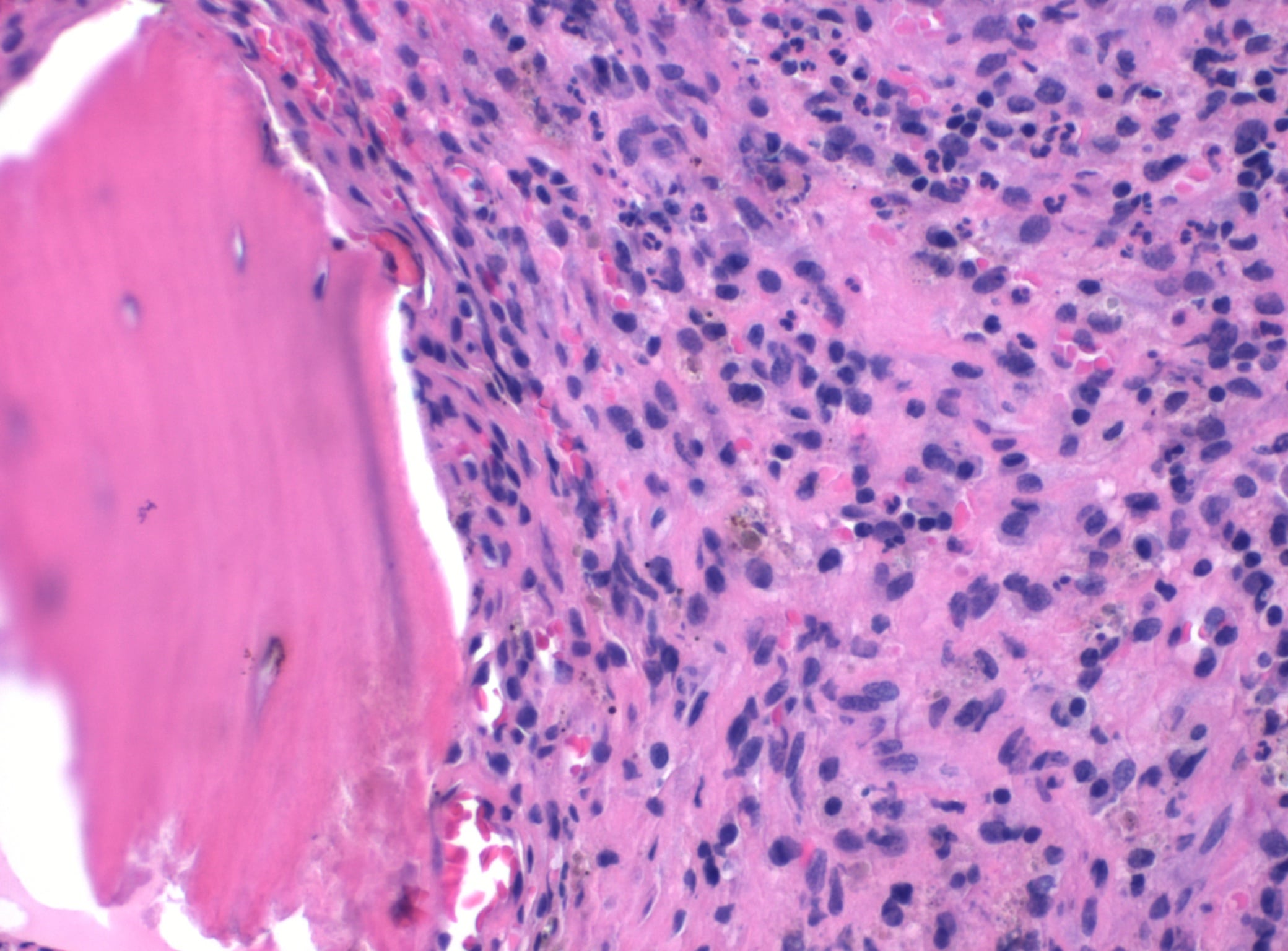
Where the pus goes. The physis usually acts as a barrier to spread into the epiphysis (the neonatal section below covers the exception). The pus has three routes:
- Subperiosteal abscess: pus breaks through the cortex. The child's periosteum is thick but loosely attached, and pus lifts it easily.
- Joint: where the metaphysis is intra-articular (hip, shoulder, elbow, ankle)
- Medullary canal
Intra-articular metaphyses. At four sites the joint capsule inserts beyond the metaphysis, so the metaphysis lies inside the joint and infection can rupture directly into it, causing septic arthritis:
- Proximal femur (hip)
- Proximal radius (elbow)
- Distal humerus (elbow)
- Distal fibula (ankle)
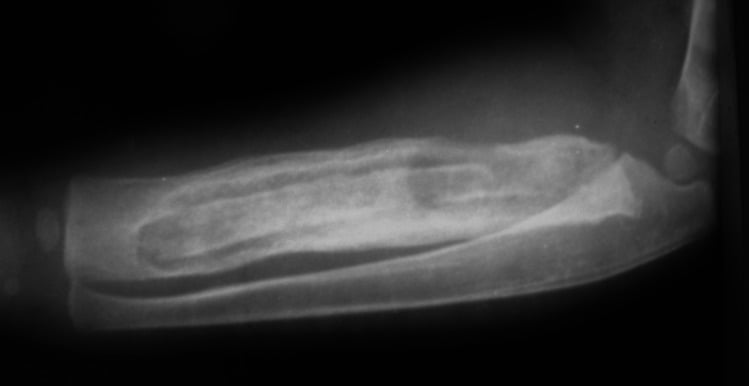
Bone destruction and new bone. Rising intraosseous pressure compresses the blood vessels and the bone dies, forming a sequestrum, the dead-bone nidus. Bacterial and leukocyte enzymes destroy the bone matrix. The elevated periosteum lays down a sheath of new bone, the involucrum, in an attempt to wall off the infection, and the combination of destruction and new bone formation is characteristic.
Classification Systems
Osteomyelitis is classified by duration, and the classification guides the duration of antibiotic therapy:
- Acute (less than 2 weeks): inflammation, with no sequestrum yet
- Subacute (2-6 weeks): Brodie's abscess, indolent
- Chronic (greater than 6 weeks): sequestrum and involucrum; a cloaca is the draining sinus tract
- Acute OM
- Ischaemia reversible
- Chronic OM
- Sequestrum (Dead bone)
- Acute OM
- Antibiotics (+/- washout or decompression)
- Chronic OM
- Surgical Debridement essential
- Acute OM
- Immature
- Chronic OM
- Mature / Established
Clinical Assessment
History. The child has focal limb pain and a limp, or refuses to use the limb (pseudoparalysis). They are often febrile, but not always. A recent minor injury is often reported; it is either a red herring or what localised the bacteria.
Examination. Look for focal bony tenderness over the metaphysis. Soft-tissue swelling and erythema are late signs. Joint range is often preserved, unlike septic arthritis, unless the focus is periarticular or there is a sympathetic effusion. Check for signs of sepsis.
Neonatal Osteomyelitis: A Distinct Entity
Neonatal osteomyelitis behaves so differently from disease in the older child that it deserves separate treatment.
The physis is no barrier. In infants up to roughly 12 to 18 months, transphyseal vessels still cross the open physis, so infection readily spreads from metaphysis to epiphysis to joint. The result is a high rate of concomitant septic arthritis and a real risk of growth-plate (chondro-epiphyseal) damage and later deformity.
Multifocal disease. Neonatal disease is frequently multifocal, so finding one site does not exclude others. Keep a low threshold for whole-body or multi-site imaging.
Easily missed. The classic localising signs are blunted. The baby may simply be irritable, feeding poorly or septic, with pseudoparalysis and pain on handling or nappy changes as the only musculoskeletal clue. Fever and inflammatory markers can be normal or only mildly raised, so a high index of suspicion is essential.
What changes in management.
- Cover the neonatal organisms, Group B Streptococcus, S. aureus and Gram-negatives such as E. coli, rather than the older-child spectrum, and involve neonatology
- Examine and image the adjacent joint, with a lower threshold for joint aspiration or washout, because joint involvement and physeal damage are common
- Long-term follow-up for growth disturbance is mandatory
Investigations
Blood tests. The white cell count is raised, with a neutrophilia. CRP and ESR are both raised; CRP rises first and is the best marker for monitoring. Blood cultures are positive in 40-50%, and taking them is a critical step.
Radiographs. For the first two weeks the film is normal or shows only soft-tissue swelling. Periosteal reaction and lytic lesions come later, and lysis needs 30-50% bone loss before it shows. A normal radiograph therefore does not rule out osteomyelitis.
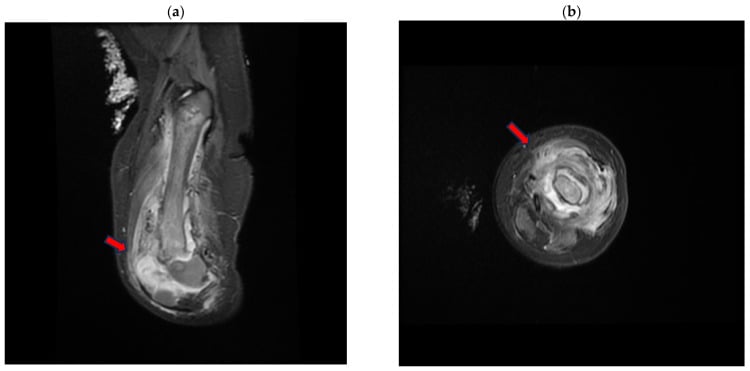
MRI. The test of choice, with high sensitivity (greater than 90%) and specificity. It shows the marrow oedema (bright on T2, dark on T1), a subperiosteal abscess and any associated septic arthritis.
Ultrasound and bone scan. Ultrasound can show a subperiosteal abscess as fluid under the periosteum. A bone scan is for when MRI is unavailable or multifocal disease is suspected.
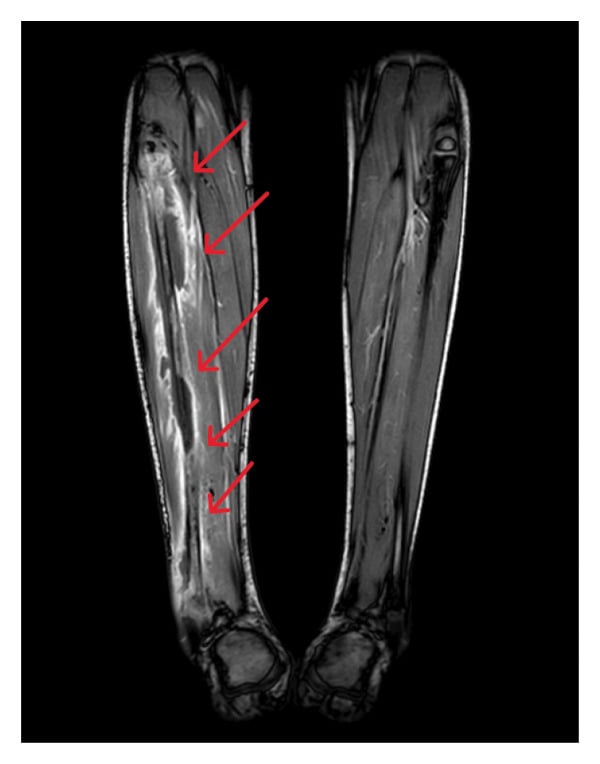
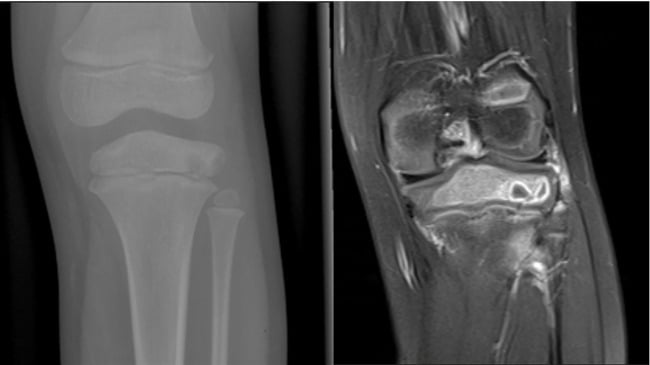
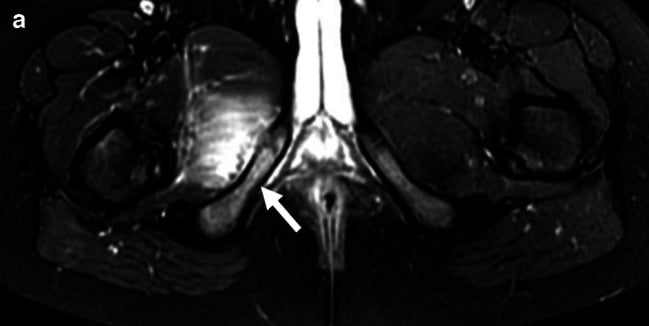
The pelvis. Pelvic osteomyelitis is specifically tricky. It often presents as deep hip or abdominal pain, MRI is essential, and it may need prolonged antibiotics. The detailed work-up is covered in the dedicated paediatric pelvic osteomyelitis topic.
Differential Diagnosis
- Distinguishing Features
- Joint held flexed, marked pain on ANY passive movement, effusion
- Key Investigation
- Joint aspiration (WCC over 50,000), MRI
- Distinguishing Features
- Afebrile/low fever, normal-near-normal CRP, recent viral URTI, settles in days
- Key Investigation
- Kocher criteria, normal inflammatory markers
- Distinguishing Features
- Diaphyseal, lamellated periosteal reaction, night pain, cytopenias, weight loss
- Key Investigation
- MRI, biopsy, blood film, LDH
- Distinguishing Features
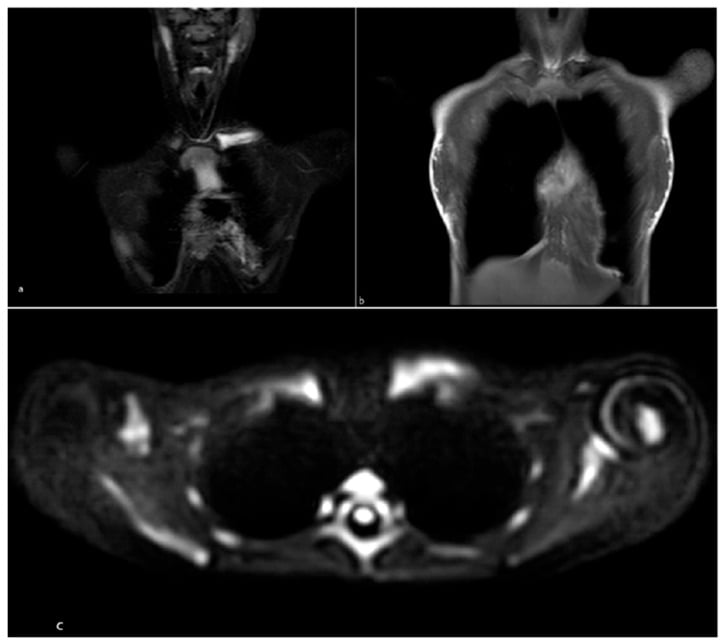
- Multifocal, recurrent, sterile cultures, clavicle/metaphyses, no true sepsis
- Key Investigation
- Whole-body MRI, biopsy excluding infection
- Distinguishing Features
- Soft-tissue focus, normal underlying bone marrow on MRI
- Key Investigation
- MRI (soft-tissue vs marrow signal)
- Distinguishing Features
- Clear mechanism, normal inflammatory markers
- Key Investigation
- Radiograph; MRI if uncertain
Management Algorithm
Antibiotics alone. Most acute osteomyelitis responds to antibiotics alone. This is the treatment for uncomplicated acute osteomyelitis in a clinically stable child without septic arthritis or a substantial drainable abscess. Take blood cultures before antibiotics if possible.
Empirical cover.
- S. aureus: flucloxacillin or cefazolin, or vancomycin or clindamycin if the MRSA risk is high
- Kingella: cefazolin usually covers (or another cephalosporin)
A short intravenous phase. Peltola's trials gave IV antibiotics for the first 2-4 days and switched once the child was afebrile and improving, and PIDS/IDSA endorses early transition. Waiting for a normal CRP before switching is not supported. Narrow to the culture sensitivities as soon as they are available.
CAFEIV to Oral Switch Criteria
Hook:Ready for oral when you can go to the CAFE!
Total duration. About 3 weeks for uncomplicated, responding disease: the 131-child Peltola RCT in the evidence below treated for 20 days with no difference against 30, and PIDS/IDSA gives 3-4 weeks. Longer courses of 4-6 weeks are for MRSA, neonates, pelvic or spinal sites, and any child whose CRP is not settling.
What makes a short course safe. The trial stopped antibiotics once most signs had subsided and CRP had fallen to 20 mg/L or below, with CRP normalising within 7-10 days. A short course is earned by a falling CRP, not assumed.
Watching the CRP. Check it every 24-48 hours in the first few days, not weekly, because it is the measurement that times the switch to oral therapy. Weekly sampling is only reasonable once the child is clearly improving on oral therapy; sampling weekly from the outset misses the decision it exists to inform.
A CRP that will not settle. A CRP that plateaus or climbs is a surgical question, not an antibiotic question. Re-image before extending the course: the usual cause is undrained pus, a second focus, or an organism the empirical cover misses (MRSA, Kingella, Salmonella in sickle-cell disease).
Surgery. Source control is essential if pus is present. The procedure is debridement, decompression or drilling, and the indications are:
- A substantial abscess (often greater than 2 cm), a collection whose site makes drainage necessary, or progressive bone or soft-tissue compromise
- Persistent sepsis, fever, pain or CRP elevation after 48-72 hours of appropriate antibiotics: re-image and drain any occult collection rather than extending antibiotics blindly
- Associated septic arthritis
- Sequestrum or established chronic infection
Surgical Technique
Cortical window and drilling. The aim is to decompress the "boil inside the bone".
- Locate the metaphyseal focus with fluoroscopy
- Incise directly over the point of maximal tenderness or the abscess
- Incise the periosteum, which often releases pus from a subperiosteal abscess
- Drill 2.0mm or 3.2mm holes into the metaphysis
- Create a small cortical window if needed to evacuate intramedullary pus
- Wash out copiously
- Send a swab of the pus and a bone biopsy for culture
- Close loosely over a drain
Complications
- Mechanism
- Inadequate Rx, Sequestrum
- Management
- Debridement + Long Abx
- Mechanism
- Physis damage
- Management
- Epiphysiodesis / Reconstruction
- Mechanism
- Proximity / Transphyseal
- Management
- Joint Washout
- Mechanism
- Bone cleaning/weakening
- Management
- Cast / Fixation
- Mechanism
- Inflammation + Immobility
- Management
- Anticoagulation
Severe S. aureus Osteomyelitis: DVT and Septic Emboli
The severe phenotype. A subset of acute haematogenous osteomyelitis, typically virulent S. aureus and especially community-acquired MRSA carrying the Panton-Valentine leukocidin (PVL) toxin, produces a far more aggressive illness. These children have higher fever and CRP, larger and multifocal abscesses and myositis, with a markedly higher rate of complications and surgery. MRSA disease is more aggressive, carries a higher DVT risk and often needs surgery.
Thrombosis and emboli. A hallmark is deep vein thrombosis in the limb segment next to the infected bone, and from there septic pulmonary emboli. These seed the lungs with multiple nodular or cavitating lesions and cause a respiratory deterioration that can mimic pneumonia.
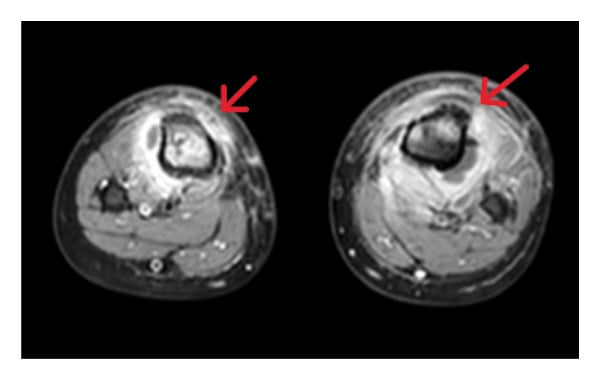
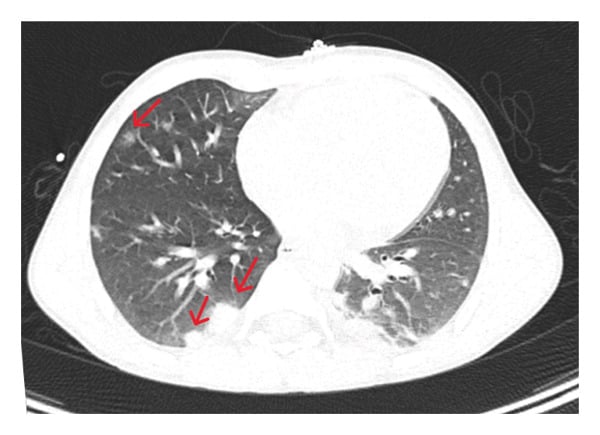
The sick child. When a child with osteomyelitis is unusually toxic, has a swollen limb, or deteriorates with chest signs, actively look for a DVT with Doppler ultrasound and for septic emboli with chest imaging. Do not attribute the breathlessness to "just the sepsis". Management escalates accordingly:
- MRSA-active antibiotics
- Aggressive source control of the larger collections these children develop
- Multidisciplinary input
- Consideration of anticoagulation for an established DVT
Aftercare and Follow-up
Immobilisation. A splint or cast for comfort and to protect against pathological fracture through the weakened metaphysis. Protect weight-bearing during treatment.
Avoid a line if you can. A PICC line is only for when oral therapy is not feasible: poor absorption, non-adherence, or no suitable oral agent. A PICC placed by default reintroduces the line sepsis and thrombosis risk that the oral switch exists to avoid.
Follow-up. Radiographs confirm healing, and follow-up includes growth surveillance because the physis sits immediately adjacent to the infected metaphysis: limb-length discrepancy and angular deformity can appear months to years later, long after the infection is cured.
Outcomes
Uncomplicated disease has an excellent prognosis with antibiotics. Chronic osteomyelitis is difficult to eradicate, and recurrence is common.
Guidelines, Registries & Global Practice
Global epidemiology
- Incidence roughly 1 in 5,000 to 1 in 10,000 children/year in high-income settings; higher burden and later presentation (more chronic OM) in low-resource regions.
- Kingella kingae predominates in children 6-48 months in PCR-equipped centres; S. aureus predominates in older children worldwide. CA-MRSA proportion varies sharply by region and drives empirical choices.
- Imaging
- MRI preferred; culture/PCR sampling stressed
- Antibiotic Approach
- Empirical cover by local resistance; early IV-to-oral; ~3-4 weeks total if responding
- Imaging
- MRI gold standard; ultrasound for subperiosteal collections
- Antibiotic Approach
- Short IV then oral; flucloxacillin first-line where MSSA dominant
- Imaging
- MRI; supports short-course strategy (Peltola data)
- Antibiotic Approach
- Total course as short as ~20 days in uncomplicated MSSA disease
- Imaging
- Radiograph +/- ultrasound; MRI often unavailable
- Antibiotic Approach
- Longer empirical IV courses; higher surgical/source-control role due to late presentation
Practice variation (high- vs limited-resource)
- High-resource: MRI-led diagnosis, PCR microbiology, early IV-to-oral switch, outpatient/ambulatory IV (e.g. PICC) where oral not feasible, short total courses.
- Limited-resource: later presentation, more chronic OM and sequestra, greater reliance on radiographs/ultrasound and surgical debridement, longer parenteral therapy.
- Registries: no dedicated paediatric OM implant registry; surveillance comes from national paediatric infection networks and antimicrobial-resistance programmes that track local S. aureus/MRSA rates guiding empirical therapy.
Related pages: Septic Arthritis of the Paediatric Hip for the diagnosis that must be separated from this one and can coexist with it - adjacent joint involvement occurred in 18% of the Peltola cohort; Osteomyelitis Pathophysiology for the metaphyseal vascular anatomy and biofilm biology underlying everything on this page; Septic Arthritis Pathophysiology for why cartilage is destroyed in days while bone tolerates infection for weeks; Transient Synovitis and The Limping Child for the benign mimics that make up most of the differential and the criteria that separate them; Chronic Recurrent Multifocal Osteomyelitis for the sterile autoinflammatory mimic carded here, which is diagnosed by not being this; Paediatric Pelvic Osteomyelitis for the site where diagnosis is most often delayed and MRI most necessary; Pyogenic Discitis and Vertebral Osteomyelitis for the spinal equivalent, which behaves differently in children than adults; Ewing Sarcoma for the malignancy that presents with fever, pain, raised inflammatory markers and periosteal reaction, and is the reason a biopsy is taken when the picture does not fit; and Physeal Injuries and the Salter-Harris Classification for the growth plate that lies immediately adjacent to the infected metaphysis and is what a growth arrest complication destroys.
Controversies and Areas of Uncertainty
Landmark RCTs support total courses near 3 weeks for uncomplicated, responding disease, yet many units still treat for 4-6 weeks. Optimal duration in MRSA, neonates and complicated cases is unresolved.
Early switch (within days) is safe with high-bioavailability oral agents and a falling CRP, but exact thresholds differ between guidelines and there is no universal CRP cut-off.
MRI is the most sensitive test but access, cost and the frequent need for sedation/anaesthesia in young children limit universal early use; some centres treat clinically with ultrasound and markers.
Most acute OM resolves on antibiotics alone. The threshold for drilling/decompression (especially for small intraosseous collections) and the value of "source control" without a drainable abscess remain debated.
Viva Scenarios
Clinical Decision Scenarios
Practise clinical reasoning and management decisions out loud
“How do you manage?”
MCQ Practice Points
Q: Where does hematogenous osteomyelitis start? A: In the Metaphysis. Specifically in the slow-flowing venous sinusoidal loops.
Q: How long before X-ray changes are visible in acute OM? A: 10-14 days. Need 30-50% bone mineral loss to see changes.
Q: What is an Involucrum? A: New bone formation (sheath) surrounding the dead bone (sequestrum) in chronic osteomyelitis.
Q: What unique pathogen causes OM in Sickle Cell patients? A: Salmonella (though S. aureus is still common/more common, Salmonella is the unique association).
Q: When is surgery indicated in acute OM? A: 1) Abscess formation (subperiosteal/intra-osseous), 2) Failure to respond to antibiotics (48-72h), 3) Sequestrum, 4) Associated septic arthritis.
Key Features
- Metaphyseal start
- Slow flow loops
- S. aureus #1
- Start Abx after CX
Imaging
- X-ray normal early (10-14 days for changes)
- MRI Gold Standard (95% sensitivity)
- Marrow edema = Early sign
- Subperiosteal abscess = Surgical drainage
- US useful for soft tissue/abscess
Chronic Terms
- Sequestrum (Dead)
- Involucrum (New)
- Cloaca (Drain)
- Brodie's (Abscess)
Intra-articular
- Prox Femur
- Dist Humerus
- Prox Radius
- Dist Fibula
Evidence Base
Short-Course Antibiotics (Landmark RCT)
- 131 culture-positive children randomised to 20 vs 30 days of clindamycin or first-generation cephalosporin (first 2-4 days IV).
- S. aureus caused 89% of cases, all methicillin-susceptible; 24% had no surgery.
- Both groups recovered fully (only 1 mild sequela per arm) when CRP normalised within 7-10 days.
Simplified Treatment & CRP Monitoring
- Prospective RCT of 50 children with acute S. aureus osteomyelitis, early IV-to-oral switch (mostly within 4 days).
- CRP normalised within a median of 9 days; ESR took a median of 29 days.
- No failures or long-term sequelae; serum bactericidal titres added nothing.
Kingella kingae Epidemiology (PCR Era)
- 217 children with suspected osteoarticular infection; organism identified in 63.6% using culture plus PCR.
- K. kingae caused 87.7% of confirmed infections in children aged 6-48 months, exceeding S. aureus.
- S. aureus remained dominant (78.2%) in children over 4 years.
Oropharyngeal PCR for Kingella
- Prospective study of 123 children aged 6-48 months with atraumatic osteoarticular complaints.
- Oropharyngeal swab PCR for K. kingae had sensitivity 100% and specificity 90.5% for K. kingae osteoarticular infection.
- A non-invasive swab can predict K. kingae as the cause.
Mimic: Chronic Non-Bacterial Osteomyelitis (CRMO)
- CRMO (chronic recurrent multifocal osteomyelitis) is a sterile autoinflammatory mimic of bacterial OM in children.
- Whole-body MRI detects multifocal lesions at typical sites and clinically silent lesions.
- Imaging plus clinical features can avoid biopsy when infection and malignancy are excluded.
PIDS/IDSA Guideline (Diagnosis & Management)
- First multidisciplinary PIDS/IDSA GRADE-based guideline on acute haematogenous osteomyelitis in children (2021).
- Recommends MRI as the preferred imaging, blood cultures and image-guided/operative sampling, and prompt empirical antibiotics covering local S. aureus resistance.
- Supports early IV-to-oral transition and total courses of about 3-4 weeks in uncomplicated, responding cases.