More Than Just an Extra Toe
- Post-axial (Lateral) is common and often isolated.
- Pre-axial (Medial) is rare and associated with Hallux Varus recurrence.
- Central is rare and often syndromic.
- Syndromes: Ellis-van Creveld (Post-axial), Polydactyly-Syndactyly syndromes.
- Surgery: Conventionally before walking age (9-12 months) - a convention balancing shoe fit and anaesthetic safety, not an evidence-based deadline.
- “Look for hands (often present in hands too)
- “Check for syndactyly (webbing)
- “Assess function (does the extra toe move?)
- “Palpate the metatarsal head (is it wide or duplicated?)
Overview and Epidemiology
Polydactyly is the presence of supernumerary digits. In the foot it is the most common congenital deformity, occurring in about 1.7 per 1000 live births. Males are affected more often than females, and half of cases are bilateral.
Ancestry. Polydactyly is significantly more common in African American populations, where it is often purely autosomal dominant and post-axial. The size of that difference depends on the population and the registry studied; the surveillance figures are set out under Global epidemiology below.
Hands and syndromes. Foot polydactyly can be isolated, but hand polydactyly is more often syndromic, so always examine the hands. The associations to know:
- Post-axial - trisomy 13 (Patau syndrome), Ellis-van Creveld syndrome (chondroectodermal dysplasia), and McKusick-Kaufman syndrome, where the polydactyly comes with hydrometrocolpos
- Pre-axial - tibial hemimelia and Carpenter syndrome
Pathophysiology and Mechanisms
The duplication pattern. The extra digit ranges from a tag of skin to a whole ray:
- Skin tag - soft-tissue attachment only (post-axial type B)
- Partial - duplication of the phalanx only, sharing a metatarsal head
- Complete - duplication of the entire ray, phalanx and metatarsal. This essentially creates a "sixth ray" and widens the foot significantly
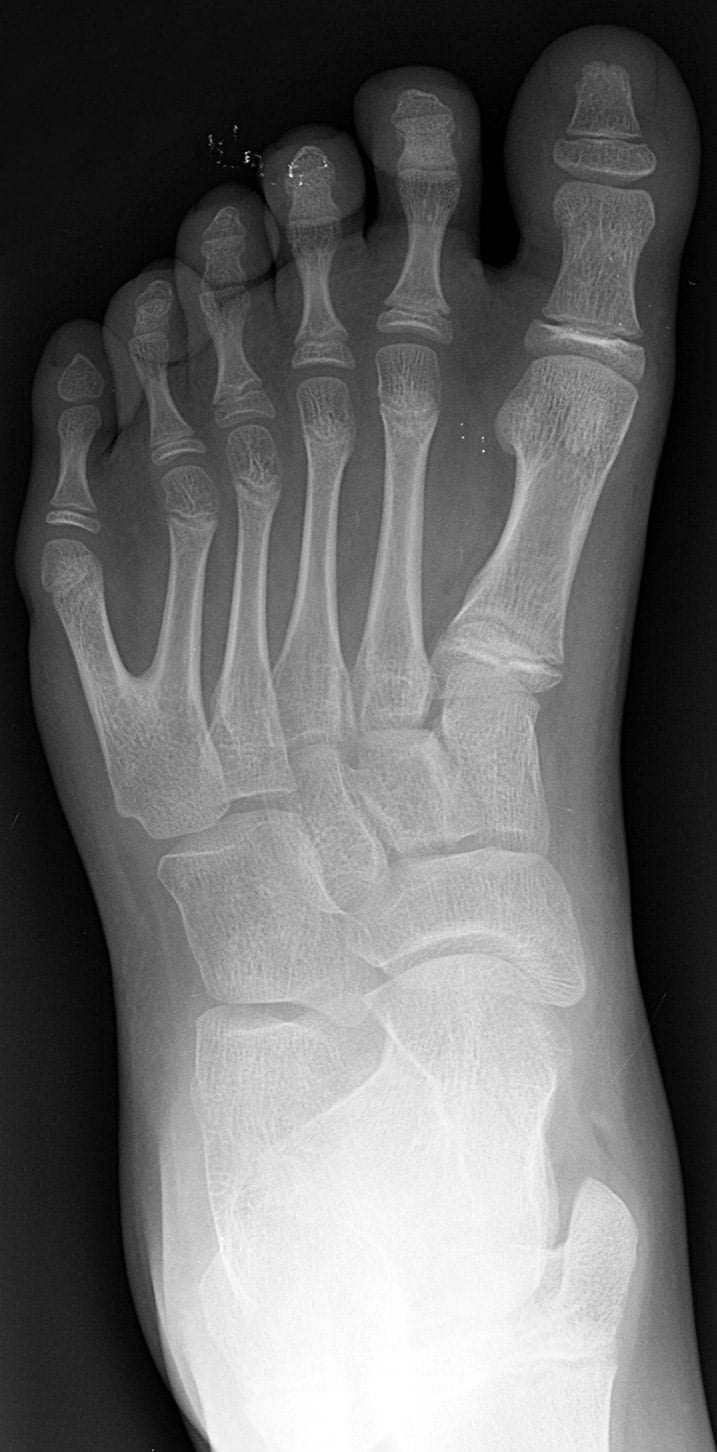
Associated anomalies. The extra digit is often webbed to the adjacent digit, which is polysyndactyly. A bracket epiphysis can be present in the duplicated parts and causes curvature; it has its own section below. Tarsal coalition is rare but can occur in complex pre-axial cases.
Classification Systems
Anatomical classification. Following Temtamy and McKusick, the extra digit is described by the side of the foot it arises from:
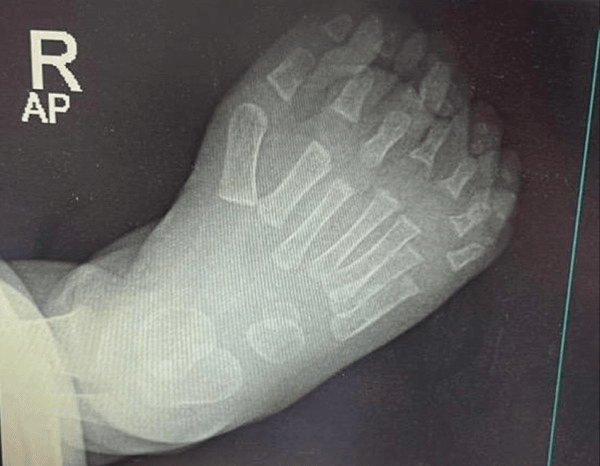
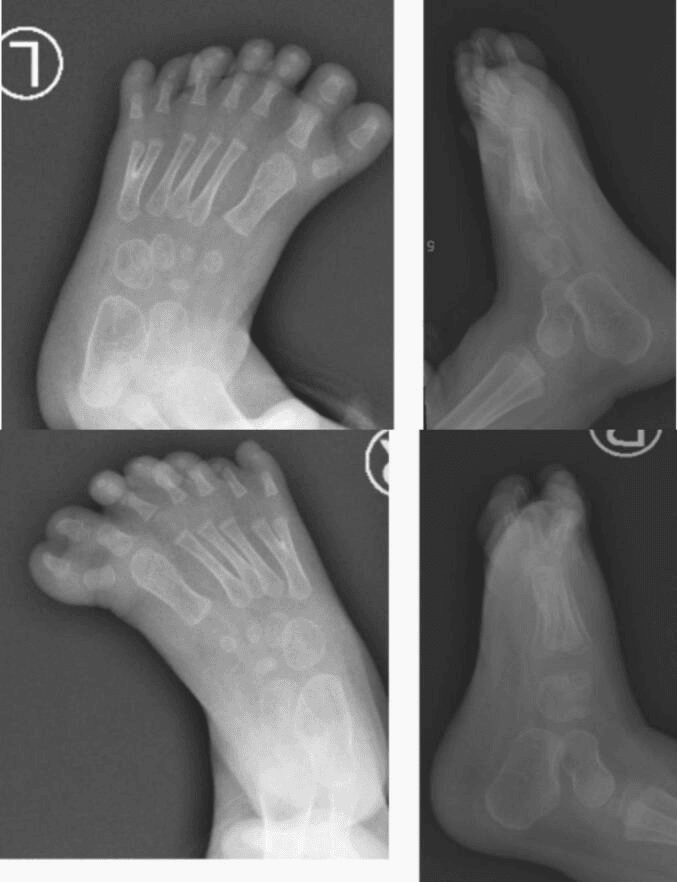
- Pre-axial - the medial (tibial) side, involving the hallux
- Central - the second, third or fourth ray. Rare. Usually, syndactyly prevents separation, and a "T-shaped" metatarsal is often involved. Central polysyndactyly combines ray duplication with webbing and angular malalignment
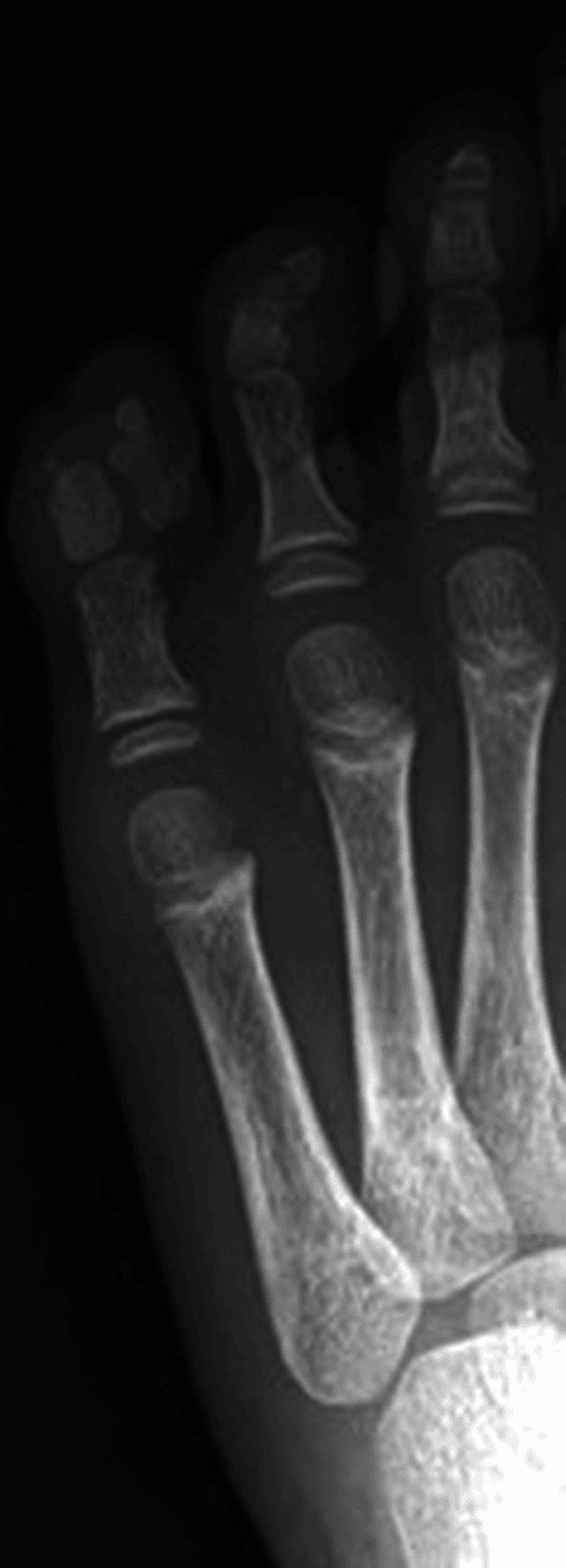
- Post-axial - the lateral (fibular) side, involving the fifth toe. Type A is a well-formed digit articulating with the metatarsal or a phalanx; type B is a rudimentary, pedunculated skin tag
Combined patterns. Combined preaxial and postaxial heptadactyly produces seven toes with independent medial and lateral metatarsal-phalangeal rays.
The two marginal patterns compared:
- Post-axial (Lateral)
- Common (80%)
- Pre-axial (Medial)
- Rare (15%)
- Post-axial (Lateral)
- Autosomal Dominant (African)
- Pre-axial (Medial)
- Sporadic / Syndromic
- Post-axial (Lateral)
- Simple (often skin tag)
- Pre-axial (Medial)
- Complex (Shared joints)
- Post-axial (Lateral)
- Residual bump
- Pre-axial (Medial)
- Hallux Varus
Blauth & Olason Classification (Pre-axial)
The types run from distal to proximal, and the more proximal the duplication, the more complex the surgery.
- Type 1 - distal phalanx duplication
- Type 2 - proximal phalanx duplication
- Type 3 - metatarsal duplication
- Type 4 - tarsal duplication
Clinical Assessment
History. Ask whether anyone else in the family is affected, which suggests autosomal dominant inheritance, and whether the pregnancy had complications. Then review for a syndrome: heart defects or kidney problems raise Ellis-van Creveld or Patau syndrome.
Examination. Deciding which toe is the extra one is the point of the examination:
- Count the toes. Identifying the extra one can be hard; usually it is the outer, marginal digit, but sometimes the inner one functions better.
- Function. Tickle the foot and watch which toe flexes and extends better. Keep the functional one.
- Palpate the metatarsal head. Is it wide?
- Neurovascular. Ensure the digit to be kept has good perfusion.
Investigations
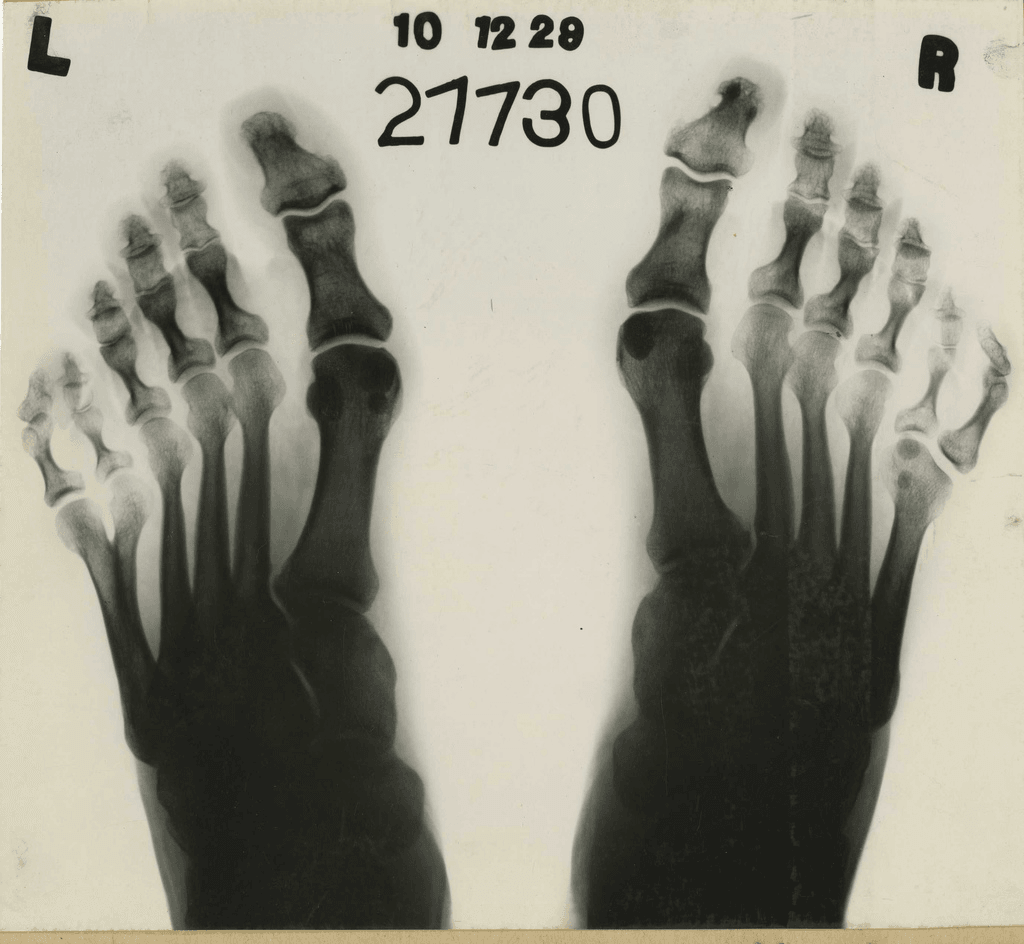
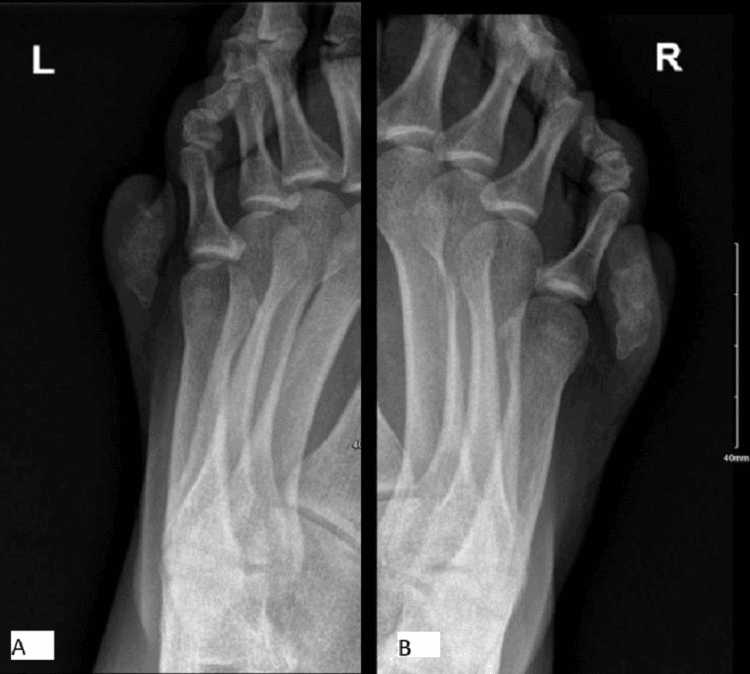
Plain radiographs. Obtain weight-bearing AP and oblique views when age and function permit; in infants, non-weight-bearing AP and oblique views still define the ossified pattern. Record:
- The duplicated ray
- The level: phalangeal or metatarsal
- A shared epiphysis
- A bifid or separate metatarsal
- Angular deformity
- Syndactyly
Beyond plain films. Infant cartilage is not fully visible on radiographs. Ultrasound or MRI is reserved for clinically important cartilaginous anatomy that will change the reconstruction.
Genetic assessment. Base referral and testing on the complete phenotype: family history, bilateral or multiple-limb involvement, dysmorphism, and associated cardiac, renal, skeletal or developmental findings. Central or bilateral duplication alone is not a universal indication for testing.
The Longitudinal Epiphyseal Bracket
What it is. A longitudinal epiphyseal bracket (LEB) is an abnormal C-shaped epiphysis that wraps around one side of a short tubular bone and tethers its whole length, most often the proximal phalanx of the hallux or a metatarsal. When it deforms a phalanx into a trapezoidal shape, the result is the delta phalanx.
How it deforms the toe. Instead of growing only from its two ends, the bracketed bone grows along a longitudinally oriented physis down one side. It elongates asymmetrically and becomes progressively wedge-shaped, driving an angular deformity: classically the medial deviation that produces or worsens hallux varus in pre-axial duplication.
Why it matters in polydactyly. It is a frequent companion of pre-axial, great-toe duplication, and the Belthur pre-axial series found one in 4 of 28 feet. It is easy to miss, because the infant bracket is largely cartilaginous and underestimated on plain films.
Management. Belthur and colleagues concluded that early detection and adequate excision of the bracket affecting the phalanx or metatarsal reduces residual deformity and the need for revision surgery. The options:
- Central physiolysis (bracket resection) - excise the abnormal longitudinal portion of the physis and interpose fat so it cannot re-tether, restoring more normal end-growth
- Corrective opening- or closing-wedge osteotomy of the bracketed bone, for an established wedge
The bony correction is combined with collateral-ligament repair and abductor hallucis transfer. The bracket and the soft-tissue imbalance usually coexist, and correcting only one of them lets the deformity return.
Q: A toe drifts back into varus after a technically sound hallux-duplication ablation. What underlying bony anomaly should you suspect? A: A longitudinal epiphyseal bracket (delta phalanx), a recognised cause of recurrent or residual angulation after an otherwise correct ablation. Recognise it on imaging and address it, because soft-tissue reconstruction alone will not hold against an unresected bracket.
Management Algorithm
Observation. Observation is reasonable when the extra digit is painless, fits footwear and causes no progressive alignment or skin problem.
The type B digit. A pedunculated post-axial type B digit may be excised formally when symptomatic or requested. Nursery ligation can leave a residual nubbin or neuroma and should not be presented as equivalent to planned excision. When a type B skin tag is tied off in the nursery, a small nubbin of cartilage or nerve often remains, and it becomes painful in shoes later.
Formal excision. Excision under local anaesthetic in an older child, or under general anaesthetic at around 6-12 months, is superior. It lets you dissect out the nerve and ensure the bone is flush.
Indications for reconstruction. Surgery is considered for:
- Shoe conflict
- Excessive width
- Recurrent skin injury
- Malalignment
- Instability
- A well-informed cosmetic goal
Timing. Surgery is conventionally performed before walking age, at 9-12 months. That is a convention balancing shoe fit and anaesthetic safety, not an evidence-based deadline.
Choosing the ray. The aim is to preserve a functional ray. Choose it from function, alignment, nail and joint anatomy; a fixed medial-versus-lateral rule does not decide it.
The reconstruction. The retained toe should be straight, with no varus or valgus, and stable. Reconstruct the collateral ligaments and tendon insertions, contour a shared metatarsal head judiciously, and address a longitudinal epiphyseal bracket or syndactyly when it changes the final alignment.
Surgical Techniques
Post-Axial Ablation (Type A)
- Incision - racket-shaped or elliptical, around the base of the extra digit.
- Dissection - trace the tendons. The abductor digiti minimi often inserts on the extra toe and must be transferred to the remaining fifth toe.
- Capsulotomy - open the joint.
- Resection - remove the extra phalanx. If the metatarsal head is bifid, shave down the prominent condyle and apply the "Block Test": make sure the head is not too wide for shoes.
- Reconstruction - repair the lateral collateral ligament using the periosteal sleeve from the amputated toe.
- Closure - Z-plasty if needed to prevent scar contracture.
Done this way, the foot is narrowed to a cosmetically acceptable width.
The shared epiphysis. In type A post-axial digits, the extra toe's joint may share a common epiphysis with the normal toe. Simple disarticulation then leaves an exposed, wide joint surface, and an intra-articular osteotomy may be needed to narrow the metatarsal head while preserving the collateral ligament origin.
Complications
- Rate
- Common
- Prevention/Management
- Angulation of remaining toe. Osteotomy correction.
- Rate
- High (Pre-axial)
- Prevention/Management
- Proper tendon transfer/capsule repair.
- Rate
- Common
- Prevention/Management
- Especially with Bilhaut-Cloquet procedure, where nail appearance is the most common complaint.
- Rate
- Common
- Prevention/Management
- Failure to narrow the metatarsal head; parents may notice "the foot is still wide".
- Rate
- Rare
- Prevention/Management
- Bury the nerve endings deep.
Postoperative Care
Immobilisation. A below-knee cast or a soft bandage, depending on stability. K-wires are protected for 4-6 weeks, and if the child is of walking age a cast is essential to protect the reconstruction and the wire.
Return to shoes and follow-up. Normal shoes resume once swelling subsides, at 6-8 weeks. Follow-up is essential to watch for growth deviation from physeal arrest or tether.
Outcomes and Prognosis
Cosmesis after post-axial ablation is generally excellent, and a normal gait is expected.
Guidelines, Registries & Global Practice
Global epidemiology
- Polydactyly is one of the most common congenital limb anomalies worldwide. Type B postaxial polydactyly is the single commonest form.
- Birth prevalence varies strikingly by ancestry. In US surveillance, postaxial polydactyly was roughly 26 times more frequent in infants of African ancestry than White infants (0.91 vs 0.035 per 100); Texas registry data show a prevalence ratio of about 4.4 for non-Hispanic Black versus non-Hispanic White births. Hand involvement is more common than foot involvement.
- Around 95 percent of postaxial type B cases are isolated and autosomal dominant; foot polydactyly is bilateral in about half of cases.
Guidance across societies (no formal single guideline exists) There is no dedicated international guideline for foot polydactyly; practice is governed by classification-led principles and society/textbook consensus rather than randomised evidence.
- Practical stance
- Individualise by classification; ablate the less functional/marginal ray; reconstruct collateral ligaments; operate near walking age
- Practical stance
- Discourage routine bedside ligation of type B digits in favour of formal excision; refer complex/pre-axial and syndromic cases
- Practical stance
- Surgeon-led individualised reconstruction; multidisciplinary input for syndromic disease
- Practical stance
- Watanabe / Venn-Watson / Blauth-Olason for pre-axial; Rotterdam foot classification for medial duplication; morphologic systems for central
Registry note: unlike arthroplasty, congenital toe deformities are not captured in implant registries (NJR/AJRR/AOANJRR). Population-level data come from birth-defect surveillance programmes (e.g. EUROCAT in Europe, US National Birth Defects Prevention Network, Texas Birth Defects Registry).
High- vs limited-resource practice variation
- Well-resourced settings: elective day-case surgery near walking age, formal excision over ligation, microsurgical/reconstructive options (on-top plasty, lengthening) for hypoplastic rays, and genetics input for syndromic disease.
- Limited-resource settings: later presentation is common; bedside suture ligation of type B digits in the newborn period persists for access/cost reasons despite the higher nubbin/neuroma rate; complex pre-axial and central reconstruction may be referred to tertiary centres.
Cultural sensitivity: in some communities an extra digit is regarded as auspicious; families may decline or delay surgery. Counsel on function, shoe-wear, and cosmesis without coercion.
Controversies & Areas of Uncertainty
- Ligation vs formal excision for type B digits. The dominant evidence (Chopan systematic review: 23.5 vs 3 percent complications) favours excision, yet Ganju's patient-reported data suggest ligation is acceptable in selected cases with similar long-term pain — the trade-off is a higher rate of residual bumps and raised scars. There is no randomised trial.
- Optimal timing. "Before walking age (9-12 months)" is convention, not evidence-based dogma; some advocate early newborn excision of simple type B digits, others delay complex reconstructions until structures are larger. Anaesthetic safety, surgeon preference and complexity all weigh in.
- Which classification to use. Pre-axial duplication is variably described by Venn-Watson, Blauth-Olason and Watanabe; medial duplication now has the Rotterdam system. None is universal, and inter-observer reliability is only moderate, complicating cross-study comparison.
- Bilhaut-Cloquet's place. Effective for two equal hypoplastic digits but near-universally produces a nail ridge and stiffness; many surgeons now prefer ablation-plus-reconstruction or on-top plasty, reserving Bilhaut-Cloquet for narrow indications.
- Role of advanced imaging. Plain films underestimate the cartilaginous infant skeleton; the added value of routine ultrasound/MRI versus operative assessment is unsettled.
Deep Dive: The Genetics of Polydactyly
SHH Pathway The Sonic Hedgehog (SHH) gene is the master regulator of limb anterior-posterior patterning.
- Zone of Polarizing Activity (ZPA): Located on the posterior margin of the limb bud. It secretes SHH.
- Gradient: High concentrations of SHH on the posterior side specify "Little Finger/Toe". Low concentrations on the anterior side specify "Thumb/Hallux".
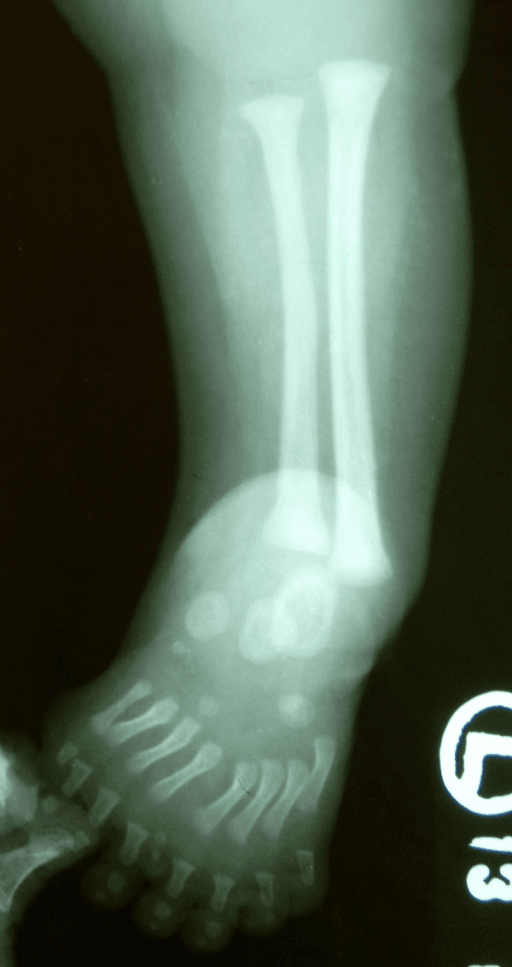
- Mutation: Ectopic anterior expression of SHH (often via ZRS regulatory mutations) causes Pre-axial Polydactyly and, in the extreme, mirror foot.
- GLI3: A key downstream effector, normally processed into a repressor anteriorly to oppose SHH. GLI3 haploinsufficiency causes both pre- and post-axial polydactyly and underlies Greig cephalopolysyndactyly and Pallister-Hall syndrome — i.e. GLI3 is not exclusively a "post-axial" gene.
Quinn et al (Hum Mol Genet 2012) showed that loss of Zic3 rescues the polydactylous phenotype of Gli3-haploinsufficient mice by normalising the Gli3-repressor/activator ratio and abolishing ectopic anterior Shh — confirming GLI3 dosage as the pivotal regulator of digit number (DOI).
MCQ Practice Points
Q: Which population has the highest incidence of Polydactyly? A: African Ancestry (Post-axial, Autosomal Dominant).
Q: What is the most common complication of simple ablation of a medial (pre-axial) supernumerary digit? A: Hallux Varus (due to loss of medial stabilizers).
Q: Ellis-van Creveld syndrome is associated with which type of polydactyly? A: Post-axial (Lateral).
Q: In central polydactyly, what is the most appropriate surgical management? A: Ray Resection (Filleting) helps narrow the foot and remove the duplicated ray.
Q: What is the Bilhaut-Cloquet procedure? A: Sharing procedure combining halves of two hypoplastic digits to form one normal digit.
Self-Assessment Quiz
Viva Scenarios
Practise clinical reasoning and management decisions out loud
“Neonate with Type B post-axial polydactyly (skin tag). Paediatrician asks if they can just tie it off with a suture.”
“1-year-old with duplicated Hallux. Medial toe is smaller. Lateral toe is normal. Plan?”
“Child with bilateral post-axial polydactyly, short stature, and a heart murmur. Diagnosis?”
CLASSIFICATION
- Pre-axial (Medial)
- Post-axial (Lateral - Common)
- Central (Rare)
- Type A / Type B
SYNDROMES
- Ellis-van Creveld
- Trisomy 13 (Patau)
- Carpenter Syndrome
- Greig Cephalopolysyndactyly
KEY RISKS
- Nubbin formation (Ligation)
- Hallux Varus (Pre-axial)
- Nail Dystrophy (Bilhaut-Cloquet)
- Dehiscence
MANAGEMENT
- Observation
- Suture Ligation (Avoid)
- Formal Ablation
- Ray Resection
Evidence Base
Phelps & Grogan — Polydactyly of the Foot
- 125 patients, 194 supernumerary toes; post-axial accounted for 79 percent
- Most common pattern: proximal phalangeal duplication on a block or wide metatarsal head
- At mean 15.1-year follow-up, 94 percent excellent or good results; poor results clustered around pre-axial duplications and persistent hallux varus
Belthur et al — Spectrum of Pre-axial Polydactyly of the Foot
- 21 children (28 feet) over 30 years; all had associated anomalies of the affected foot
- Congenital hallux varus was the most common association (20 of 28 feet); a longitudinal epiphyseal bracket was present in 4 feet
- Watanabe classification judged more useful than Venn-Watson for surgical planning; good-or-better results in all feet at final follow-up
Chopan et al — To Tie or Not to Tie (systematic review)
- PRISMA systematic review (1950–2017), 10 studies on type B postaxial digits
- In the largest cohort analysis, complication rate was 23.5 percent for suture ligation versus 3 percent for surgical excision
- Ligation complications were residual remnants ('nubbins') and neuromas
Ganju et al — Patient-reported Outcomes after Ligation vs Excision
- 258 type B postaxial digits; raised/sensitive scar in 51.5 percent after ligation vs 35.4 percent after excision
- Odds of a residual bump or raised scar were significantly higher after ligation (p = 0.001)
- Long-term pain/sensitivity was similar between groups
Burger et al — The Rotterdam Foot Classification (medial polydactyly)
- 73 feet classified by duplication type, syndactyly, hypoplastic ray, and hallux deviation
- A hypoplastic ray was present in 75 percent and complete metatarsal duplication in 29 percent
- Moderate-to-good intrarater and interrater reliability (kappa up to 0.79)
Oshima et al — Surgical Management of Central Polydactyly by Morphology
- 11 central duplications among 136 feet with polydactyly (central is rare)
- Stratified into type I (independent digits), II (equal-size duplicates), III (unequal duplicates)
- Tailored Bilhaut-Cloquet, bone-removing flap, or simple ablation by morphologic type for best cosmesis
Holmes et al — Postaxial Polydactyly Type B (surveillance)
- 545 affected infants in surveillance of 289,365 births
- Isolated in 95 percent; Black infants affected far more often than White (0.91 vs 0.035 per 100)
- Hand involvement much more common than foot; autosomal dominant with variable expressivity postulated