Orthopaedic Emergency | Staphylococcus aureus | Urgent Washout | Prevent AVN
- True Orthopaedic Emergency: Pus under pressure tamponades the blood supply (AVN) and enzymes destroy cartilage (Chondrolysis).
- Kocher Criteria: HISTORY of fever (not a measured temperature), NWB, ESR of AT LEAST 40, WCC over 12,000. (Caird added CRP over 20).
- Investigation: Ultrasound confirms effusion but not infection. Aspiration is Gold Standard.
- Management: Urgent surgical drainage (Arthrotomy or Arthroscopy) and IV antibiotics.
- Kingella kingae: Increasing prevalence in younger children (under 4y), often culture negative (requires PCR).
- “Never let MRI delay aspiration or source control when clinical suspicion is high.
- “Obtain blood and joint samples before antibiotics when this can be done promptly; do not delay antibiotics in sepsis.
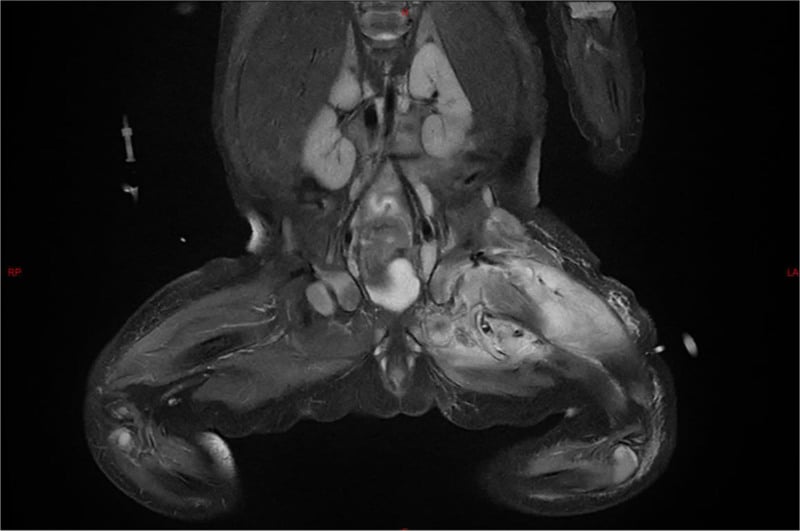
- “In neonates, septic hip can coexist with proximal-femoral osteomyelitis and physeal injury.
- “Kocher and Caird predictors support risk assessment; they are not universal probability calculators or automatic washout rules.
Overview and Epidemiology
Septic arthritis is a bacterial infection of the joint space. A missed septic hip causes permanent joint and growth-plate damage, so it is treated as an orthopaedic emergency. The hip is unique because the femoral metaphysis is intracapsular, which allows osteomyelitis to break directly into the joint.
How bacteria reach the joint. There are three routes:
- Haematogenous spread - bacteraemia seeds the synovium; the most common route
- Direct extension from osteomyelitis of the proximal femur - common in neonates
- Direct inoculation - traumatic or iatrogenic, and rare
Organisms. The likely organism depends on the age of the child:
- Staphylococcus aureus - the most common overall, over 2 years
- Kingella kingae - under 4 years, and needs PCR to find
- Group B streptococcus - neonates
- Gram-negative organisms - neonates and immunocompromised children
- Neisseria gonorrhoeae - adolescents (see the adolescent hip, below)
Pathophysiology and Mechanisms
How the joint is destroyed. Proteolytic enzymes from white cells and bacteria digest the articular cartilage (chondrolysis), while increased intracapsular pressure tamponades the retinacular vessels that supply the femoral head (avascular necrosis).
The blood supply at risk. The femoral head's blood supply is unique and precarious. The medial circumflex femoral artery gives off the retinacular vessels, which travel along the femoral neck inside the capsule to supply the head. Normal hip pressure is low, but in septic arthritis the effusion pressure can exceed arterial perfusion pressure, leading to tamponade and AVN. Urgent decompression by aspiration or arthrotomy is therefore essentially a "fasciotomy of the hip".
The neonatal hip (Tom Smith arthritis). Under 18 months of age, transphyseal vessels connect the metaphysis to the epiphysis. Osteomyelitis of the metaphysis can then spread directly to the epiphysis and destroy the physis. The result is complete destruction of the femoral head and neck, Tom Smith arthritis, leaving an unstable, flail hip: a distinct pathological entity from adult septic arthritis.
Clinical Assessment
History. The pain is of acute onset and severe, felt in the groin, thigh or knee, and there is no history of trauma. The child refuses to walk or to move the leg (pseudoparalysis). Systemic features are fever, malaise and irritability, with poor feeding in neonates.
Examination. The hip is held in flexion, abduction and external rotation (FABER), the position of maximum joint volume. A log roll is extremely painful, any movement causes distress, and the anterior joint line is tender. In neonates, pain on nappy change is a key sign.
Neonates and immunocompromised children may not mount a fever or a raised WCC. In a neonate the only signs may be irritability, poor feeding and pseudoparalysis (holding one leg still), so a high index of suspicion is required.
Weight-bearing does not exclude it. The ability to bear weight lowers suspicion but does not exclude septic arthritis, especially in early disease, Kingella infection, neonates or immunocompromised children. Keep a low threshold for urgent reassessment, ultrasound and aspiration when the clinical course is concerning, and reassess the trajectory and inflammatory markers when symptoms persist.
Clinical Prediction Rules: Kocher and Caird
Kocher's predictors (1999). Kocher identified four predictors in a selected cohort of children evaluated for an irritable hip:
- History of fever, conventionally taken as over 38.5°C
- Non-weight-bearing
- ESR of at least 40 mm/hr
- WCC over 12,000 cells/mm³
They estimate risk in context. They do not diagnose infection, exclude it at a low count or mandate an operation at a high count.
- Interpretation
- Lower probability in the derivation cohort; external cohorts vary
- Action
- Reconsider differentials and reassess if symptoms persist
- Interpretation
- Intermediate concern
- Action
- Use ultrasound and aspiration according to the whole clinical picture
- Interpretation
- Substantially increased concern
- Action
- Urgent orthopaedic review and joint sampling/source control
Two definitions are routinely confused. The original multivariable predictor was a history of fever, not simply the temperature measured after arrival, and the ESR threshold was at least 40 mm/hr. More importantly, the published derivation probabilities are not transportable constants: prevalence, referral threshold, organism distribution and age alter calibration. Use the predictors to structure suspicion, never as a substitute for aspiration, microbiology and clinical judgement.
FENWKocher Criteria
Hook:FENW - Four criteria predicting septic arthritis.
Caird's modification (2006). Caird added CRP over 20 mg/L (2.0 mg/dL) as a fifth predictor and reported increasing risk with additional predictors. Know the cohort before you quote those numbers. Caird and colleagues collected data prospectively over four years on every child undergoing hip aspiration for suspected septic arthritis, analysing 48 patients (PMID 16757758). That is a small and deliberately selected group, every child already suspicious enough to be aspirated, so the percentages apply to that high-pre-test-probability population and should not be applied as universal probabilities to every limping child.
What Caird found. Fever was the single best predictor on their analysis, followed by CRP, ESR, refusal to bear weight and WCC. On multivariate analysis, however, CRP was the only factor strongly associated with the outcome at the 5% level, and the ESR was not independent of CRP on backward elimination. Caird defined fever as a measured oral temperature over 38.5°C, which is not how Kocher defined it; quote whichever study you are citing and do not blend the two definitions.
CRP for monitoring. CRP is generally more useful than ESR for monitoring, as it rises and falls faster.
Investigations
Radiographs. An AP pelvis plus an age-appropriate lateral view. They are often normal early; look for asymmetry, joint-space widening, subluxation, fracture or established osteomyelitis. Do not force a frog-leg position if pain is severe or unstable pathology is possible.
Ultrasound. Ultrasound detects and measures an effusion and guides aspiration. It cannot reliably distinguish sterile from infected fluid.
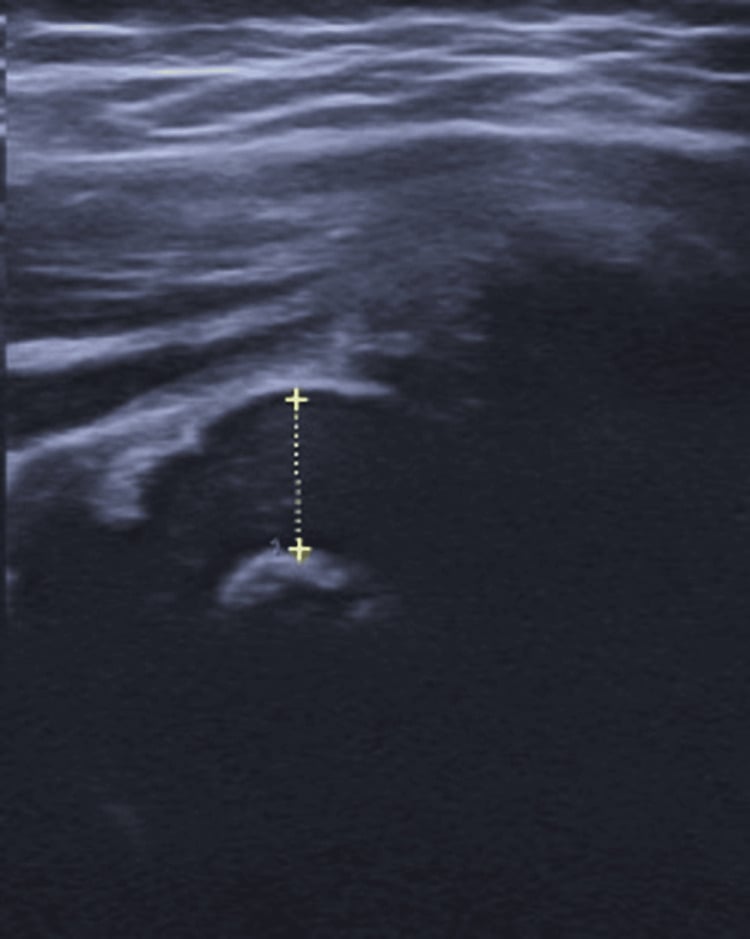
Aspiration. Hip aspiration (arthrocentesis) is the definitive sampling test and the gold standard for diagnosis. It is indicated by a hip effusion with persistent clinical concern, an equivocal diagnosis that will change management, or a need for microbiological confirmation; do not use a Kocher count as the sole trigger. Aspirate percutaneously under ultrasound guidance, or with image or theatre guidance, according to expertise and urgency. Send the fluid for:
- Cell count and differential
- Gram stain
- Aerobic and anaerobic culture
- Any locally indicated molecular testing, including Kingella kingae PCR/NAAT in the appropriate young-child age group when available
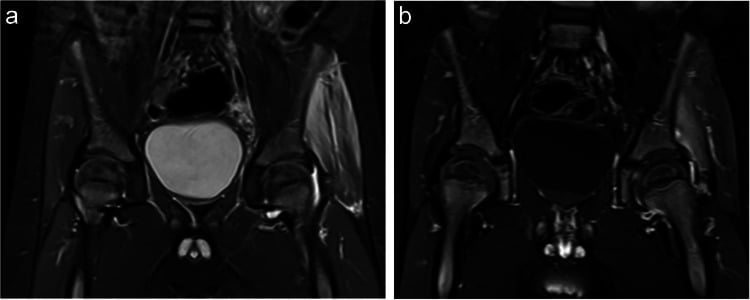
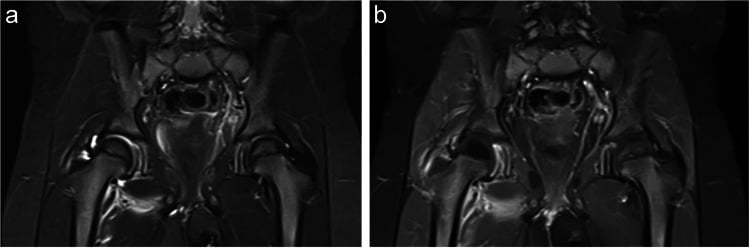
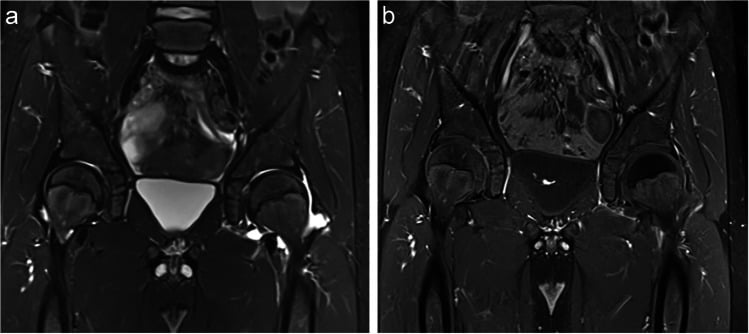
MRI. MRI is excellent for defining concomitant osteomyelitis, pyomyositis and abscess, including psoas abscess, and shows reduced femoral-head enhancement, when the diagnosis or extent remains unclear. Some centres use it to distinguish septic arthritis, and Choi et al showed MRI features predictive of septic arthritis:
- Signal intensity alteration in the bone marrow
- Decreased perfusion of the femoral epiphysis
- Thickening of the synovium
Even so, MRI adds no reliable infection-specific sign, and recent data show that MRI enhancement cannot replace clinical scores. MRI may require sedation, and sedation requirements in children can delay treatment. Ultrasound plus aspiration remains the pragmatic gold standard, and clinical judgement takes priority over imaging. Do not let MRI or sedation delay aspiration, antibiotics in sepsis, or source control in a clinically deteriorating child.
Differential Diagnosis
Transient synovitis. The most common cause of hip pain in this age group, but a diagnosis of exclusion.
- Septic Arthritis
- Bacterial infection (emergency)
- Transient Synovitis
- Inflammatory / post-viral (benign)
- Septic Arthritis
- Toxic child, high fever (usually over 38.5)
- Transient Synovitis
- Well child; fever low grade or absent
- Septic Arthritis
- Refusal (NWB)
- Transient Synovitis
- Limping but may weight bear
- Septic Arthritis
- Elevated, usually over 12,000
- Transient Synovitis
- Usually normal, or mild elevation
- Septic Arthritis
- Significantly elevated; ESR at least 40 mm/hr
- Transient Synovitis
- Normal or mild; ESR under 20 mm/hr
- Septic Arthritis
- Progressive worsening
- Transient Synovitis
- Improves with NSAIDs
- Septic Arthritis
- Purulent fluid or positive microbiology supports infection; cell count overlaps
- Transient Synovitis
- Sterile-appearing fluid may still require culture/PCR and follow-up
- Septic Arthritis
- Surgical drainage plus antibiotics
- Transient Synovitis
- Rest plus NSAIDs
Proximal femoral osteomyelitis. Infection of the metaphysis (the femoral neck), which can coexist with septic arthritis or mimic it. Inflammatory markers are high, but the joint is less restricted than in septic arthritis unless it has been invaded. Radiographs are often normal early, while MRI shows marrow oedema. It requires more prolonged antibiotics, and potentially drilling of the metaphysis if there is no abscess in the joint.
Perthes disease. Avascular necrosis of the femoral head, with an insidious onset over weeks, typically at 4-8 years. Radiographs show sclerosis, flattening and fragmentation, and the WCC and ESR are normal. Abduction and internal rotation are reduced, but the hip is usually not "irritable" in the acute septic sense.
Psoas abscess. A collection in the iliopsoas muscle. The hip is held in flexion with a positive psoas sign (pain on extension), but hip rotation is often pain-free if the hip is kept flexed, unlike a septic hip, where rotation is painful. Ultrasound or MRI confirms it, and treatment is usually percutaneous drainage and antibiotics.
The Adolescent Hip: Disseminated Gonococcal Arthritis
Neisseria gonorrhoeae behaves so differently from a Staphylococcus or Kingella hip that it deserves separate treatment. It is the commonest cause of infectious arthritis in a sexually active adolescent or young adult, and getting it wrong means missing both a sexually transmitted infection and, in a child, possible sexual abuse.
Arthritis-dermatitis syndrome. The bacteraemic phase of disseminated gonococcal infection (DGI): migratory polyarthralgia, tenosynovitis (classically of the wrist, hand and ankle) and scattered painless pustular or vesiculopustular skin lesions, usually without a frankly purulent joint. Blood cultures may be positive while the joint fluid is sterile.
Purulent (septic) arthritis. The second face of DGI is a true pus-filled mono- or oligoarthritis. The knee is most common, but it can localise to the hip, and this is the form that overlaps with a typical septic hip.
Why it is missed. N. gonorrhoeae is fastidious, so Gram stain and routine culture of blood and joint fluid are frequently negative. Yield improves with chocolate or Thayer-Martin medium and, decisively, nucleic-acid amplification (PCR / NAAT) of genital, pharyngeal, rectal and joint specimens. Always screen for co-infection with chlamydia, syphilis and HIV.
- Disseminated gonococcal
- Sexually active adolescent / young adult
- Staph / Kingella pyogenic
- Infant or young child
- Disseminated gonococcal
- Migratory polyarthralgia, tenosynovitis, dermatitis
- Staph / Kingella pyogenic
- Acute monoarticular, toxic child
- Disseminated gonococcal
- Often sterile; NAAT/PCR positive
- Staph / Kingella pyogenic
- Pus; organism usually grows (except Kingella)
- Disseminated gonococcal
- Ceftriaxone (plus STI co-treatment)
- Staph / Kingella pyogenic
- Anti-staphylococcal agent
- Disseminated gonococcal
- Often resolves on antibiotics alone; drain only if frank pus
- Staph / Kingella pyogenic
- Urgent surgical decompression of the hip
Where management diverges. A frankly purulent gonococcal hip still needs drainage on the same emergency principle as any pus-under-pressure hip. The bacteraemic arthritis-dermatitis syndrome, by contrast, typically settles with ceftriaxone and does not mandate washout, a key contrast with the Staphylococcus hip.
Gonococcal infection in a prepubertal child is a sentinel sign of sexual abuse and mandates child-protection evaluation. In a neonate, consider peripartum transmission (ophthalmia neonatorum, and rarely gonococcal arthritis).
Management
Resuscitate and sample. Treat sepsis first. Obtain blood and joint samples before antibiotics when this can be achieved promptly. If the child is septic or sampling will be materially delayed, start appropriate antibiotics after blood cultures rather than withholding treatment; never withhold them from a septic child while awaiting theatre or aspiration.
Urgency. Treat a suspected septic hip as urgent: resuscitation, cultures, aspiration and source control proceed without avoidable delay. Exact theatre timing depends on physiological stability and access, not a Kocher score alone.
Source control. A purulent or strongly suspected infected hip requires urgent decompression by aspiration plus a definitive drainage strategy, arthrotomy or arthroscopy, according to age, expertise and response.
Aspirate first, or straight to theatre? With a high Kocher or Caird probability some advocate proceeding directly to arthrotomy, while others aspirate first to confirm pus and obtain culture. Both are defensible; the key is not to delay decompression in a clear-cut case.
Empirical antibiotics. The choice is directed by age, organism and resistance:
- Cover S. aureus in every age group, with MRSA-active therapy when local epidemiology or severity warrants
- Neonates require additional Group B streptococcal and Gram-negative coverage
- Ensure Kingella coverage in young children and request molecular testing, because cultures may be negative
- Narrow promptly when cultures or PCR identify the organism; choose the IV-to-oral transition and total duration by clinical response, CRP trend, organism and concomitant osteomyelitis
Duration and the early oral switch. Traditional 4-6 week IV courses have been challenged by trials supporting a short IV phase then an early oral switch, guided by clinical response and a falling CRP, in uncomplicated cases. The optimal total duration, especially with concomitant osteomyelitis, is still debated.
Surgical Technique
The preferred approach for a septic hip. The anterior (Smith-Petersen) approach allows direct access to the joint and easy drainage, with excellent exposure through a classic approach. Its cost is risk to the lateral cutaneous nerve of the thigh.
- Incision - bikini line, or longitudinal from the ASIS
- Interval - sartorius and tensor fasciae latae superficially; rectus femoris and gluteus medius deep
- Capsulotomy - a longitudinal or T-shaped incision in the capsule
- Washout - copious saline irrigation; inspect the head
- Closure - loosely close the capsule. Leaving a drain is controversial, though many close over a drain
Open or arthroscopic? Arthroscopic washout offers a smaller incision and faster recovery but lacks comparative trial data. Open anterior arthrotomy remains the default in the very young, and the choice is currently surgeon- and centre-dependent.
Complications and Prognosis
Time to treatment. Prognosis correlates directly with delay in drainage. A hip treated in under 4 days carries a low risk of sequelae; one treated after more than 4 days carries a high risk of cartilage damage and AVN.
The complications. Alongside those in the table, the hip may suffer a pathological fracture, and septic emboli (thrombosis) are a rare complication.
- Mechanism
- Vessel Tamponade
- Outcome
- Collapse, Deformity
- Mechanism
- Enzymatic Destruction
- Outcome
- Pain, stiffness (fibrous ankylosis), epiphyseal destruction
- Mechanism
- Physeal Damage
- Outcome
- Leg Length Discrepancy; coxa vara or magna
- Mechanism
- Osteomyelitis Sequestrum
- Outcome
- Recurrent Sepsis
- Mechanism
- Capsular damage
- Outcome
- Dislocation/Subluxation
Residual Deformity and Late Reconstruction
Grading the damage. When septic arthritis damages the immature hip, the residual deformity is graded radiographically, and that grade drives the reconstructive decisions. Two systems are recognised, Choi and Hunka; there is no validated "Suk" classification for post-septic hip sequelae. The worst grades range up to complete head-and-neck destruction with hip dislocation.
Choi (1990): by radiographic damage. Choi et al. (Evidence Base) sorted 34 infantile septic hips into four types, with the satisfactory-result rate falling steadily from Type I to Type IV. The type directs treatment, which must still be individualised for age and deformity severity.
- Radiographic deformity
- Transient epiphyseal ischaemia, with or without mild coxa magna
- Prognosis and treatment
- Best prognosis (5 of 5 satisfactory); no reconstruction - observe and allow remodelling
- Radiographic deformity
- Deformity of the epiphysis, physis and metaphysis
- Prognosis and treatment
- Operate to prevent subluxation: improve acetabular coverage and abductor efficiency (greater-trochanter transfer or epiphysiodesis) and equalise leg length
- Radiographic deformity
- Femoral neck malalignment (extreme ante/retroversion) or neck pseudarthrosis
- Prognosis and treatment
- Realignment proximal femoral osteotomy or bone-grafting of the neck pseudarthrosis; valgus osteotomy for coxa vara with a neck-shaft angle less than 110 degrees
- Radiographic deformity
- Destruction of head and neck (only a medial neck remnant)
- Prognosis and treatment
- Worst prognosis (only 4 of 13 satisfactory); salvage - pelvic support osteotomy or arthrodesis, with total hip arthroplasty in adulthood
Hunka (1982): by the epiphysis and stability. The complementary Hunka system grades the severe sequelae by the presence or absence of the capital femoral epiphysis and by hip stability, and is the genuine source of the "Type I to Type V" range sometimes seen quoted. In Hunka's own series of severely destroyed heads, the worst results were the Type III hips with a femoral-neck pseudarthrosis, which needed the most operations to salvage.
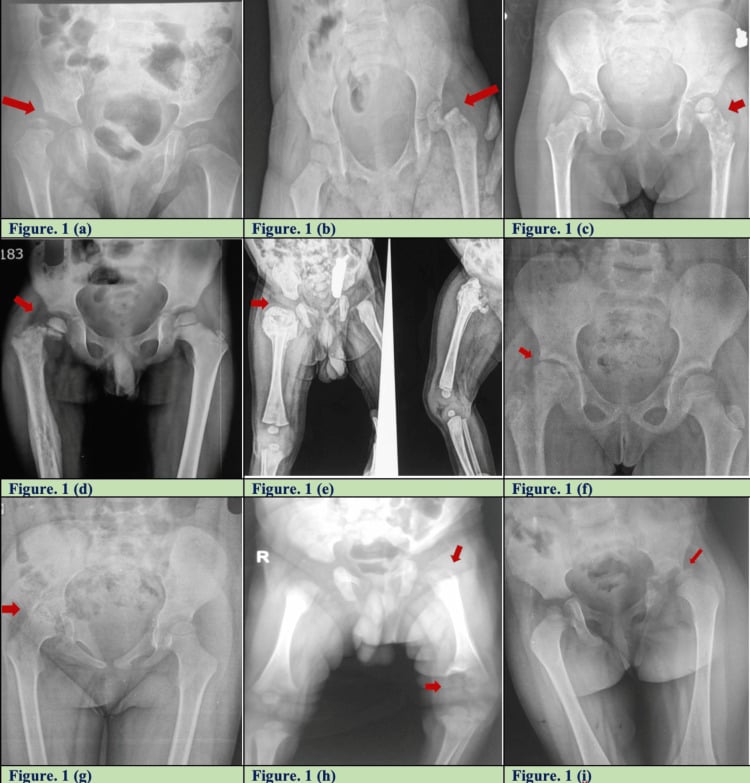
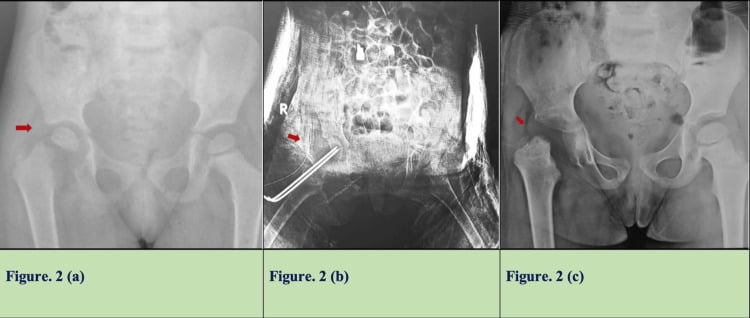
Salvage of the destroyed hip. For the destroyed hip of Tom Smith arthritis the options are below, and arthroplasty is the last resort:
- Trochanteric arthroplasty (Colonna) - placing the trochanter into the acetabulum; historical
- Pelvic support osteotomy - stabilises the hip without a joint
- Arthrodesis - reliable pain relief but functional limitation (back pain)
- Total hip arthroplasty - excellent function but limited lifespan in young patients; custom implants are often required for small canals
Follow-Up Protocol
Post-Op Recovery
Keep NBM until repeated washouts are unlikely. Continue IV antibiotics until the CRP normalises or improves significantly (usually 3-5 days).
Switch to oral when afebrile for 24-48h, the CRP is decreasing and oral intake is tolerated. Total duration 3-4 weeks (6 weeks if osteomyelitis).
Touch weight bearing initially. Full weight bearing as tolerated once pain free and inflammatory markers are normal.
X-rays at 3, 6 and 12 months to monitor for AVN or growth disturbance.
Guidelines, Registries & Global Practice
Global Epidemiology
- Annual incidence of paediatric septic arthritis is roughly 4-10 per 100,000 children in high-income settings, with the hip and knee the most commonly affected joints.
- Roughly half of cases occur in children under 3 years; Staphylococcus aureus dominates overall, while Kingella kingae is the leading cause between 6 and 48 months in regions that use PCR.
- Incidence and severity are higher in limited-resource settings, where late presentation and untreated osteomyelitis drive a greater burden of destructive sequelae (Tom Smith hip).
- Common high-income recommendation
- Aspirate/culture before antibiotics (AAOS, BOA-BOAST, ESPID consensus)
- Practical note
- Universal; only delayed if child is septic/unstable
- Common high-income recommendation
- PCR or blood-culture-bottle inoculation of joint fluid in under-4s
- Practical note
- Markedly raises yield where available
- Common high-income recommendation
- Short IV then early oral switch once afebrile and CRP falling; ~2-4 weeks total
- Practical note
- ESPID/UK trials support early oral switch in uncomplicated cases
- Common high-income recommendation
- Urgent decompression (arthrotomy or arthroscopy)
- Practical note
- Hip effusion under pressure is treated as an emergency worldwide
High-resource: Routine ultrasound, joint-fluid PCR, MRI for diagnostic dilemmas, early IV-to-oral switch. Limited-resource: Reliance on clinical findings, aspiration and plain radiographs; later presentation means a higher rate of AVN, growth arrest and salvage surgery.
There is no dedicated implant registry for paediatric septic arthritis. National arthroplasty registries (NJR, AJRR, AOANJRR, SHAR, NZJR) become relevant only decades later, capturing the small cohort needing total hip arthroplasty for a destroyed hip in adulthood.
CA-MRSA is an increasingly important pathogen in many regions (parts of North America, Oceania, and high-prevalence Indigenous and remote communities worldwide). Where local MRSA prevalence is high or sepsis is severe, empirical cover with clindamycin or vancomycin should be guided by the local antibiogram rather than a single national protocol.
MCQ Practice Points
Q: How should three Kocher predictors be interpreted? A: They substantially raise concern in the original derivation cohort, but the often-quoted 93% is not a universal probability. Use age, clinical trajectory, CRP, ultrasound and aspiration/microbiology to make the decision.
Q: What is the overall most common organism in pediatric septic arthritis? A: Staphylococcus aureus. However, in the 6 months to 4 years age group, Kingella kingae is increasingly identified as a major pathogen.
Q: What should empirical therapy cover in a neonate? A: Cover S. aureus, Group B streptococcus and Gram-negative organisms with a locally approved neonatal regimen, commonly an anti-staphylococcal agent plus cefotaxime or another neonatal-safe Gram-negative agent. Avoid presenting ceftriaxone as interchangeable in neonates.
Q: Why is the hip joint uniquely susceptible to osteomyelitis spreading into the joint? A: The proximal femoral metaphysis is intracapsular. In other joints (knee), the metaphysis is extracapsular, so osteomyelitis tracks outwards, not into the joint.
Exam Cheat Sheet
Diagnosis
- Kocher predictors: history of fever, non-weight-bearing, ESR at least 40, WCC over 12,000
- Scores support suspicion but do not supply universal probabilities or automatic washout thresholds
- Ultrasound detects effusion; aspiration supplies cell count, culture and molecular testing
- Synovial WCC overlaps - pus, microbiology and the whole clinical picture determine management
Organisms
- Overall: Staph aureus
- Under 4y: Kingella kingae (PCR)
- Neonate: GBS, Gram negatives
- Adolescent: N. gonorrhoeae
Management
- EMERGENCY Washout
- Anterior Arthrotomy
- IV Abs (Fluclox) AFTER culture
- Monitor CRP
Complications
- AVN (Tamponade)
- Chondrolysis
- Growth Arrest
- Dislocation
Viva Scenarios
Practise clinical reasoning and management decisions out loud
“A 4-year-old child presents with fever, refusal to walk, ESR 60 mm/hr and WCC 18,000 cells/mm³; the radiograph is normal. What is your management?”
“A 3-week-old neonate is irritable and not moving the right leg. There is no fever. WCC is normal. Examination is difficult. How do you investigate?”
“You drain a purulent hip in a 2-year-old. At 48 hours the Gram stain and routine culture remain negative, but the child is improving. Why?”
Evidence Base
Kocher Clinical Prediction Algorithm
- Four independent predictors: fever, non-weight-bearing, ESR at least 40 mm/hr, WCC over 12,000
- Predicted probability of septic arthritis: 0.2% (0), 3% (1), 40% (2), 93.1% (3), 99.6% (4 predictors)
- Retrospective cohort of children with an acutely irritable hip at one tertiary centre
Caird Prospective Modification (adds CRP)
- Prospective study of 53 children undergoing hip aspiration (48 analysed)
- CRP over 20 mg/L was the strongest independent predictor on multivariate analysis
- Probability with 3, 4 and 5 predictive factors was 83%, 93% and 98% respectively
Kingella kingae: an Emerging Pathogen
- Over 95% of K. kingae infections occur between 6 and 48 months of age
- Presentation is often subtle with normal acute-phase reactants
- Recovery requires inoculation into blood-culture bottles or nucleic-acid amplification (PCR)
Choi Sequelae Classification (Infantile Septic Hip)
- 34 hips classified into four deformity types based on radiographic damage
- Satisfactory functional result fell from 5/5 (Type I) to only 4/13 (Type IV head/neck destruction)
- Provides the framework for reconstructive decision-making in late sequelae
MRI Femoral Head Enhancement Cannot Replace Clinical Judgement
- 34 children (14 septic arthritis, 20 transient synovitis) with hip effusion on contrast MRI
- Decreased femoral head enhancement did not reliably distinguish the two (71% vs 50%, p=0.296)
- Higher Kocher and modified Kocher scores remained significantly associated with septic arthritis
Tractionless Arthroscopic Washout
- Describes a tractionless 1-2 portal hip arthroscopy technique for the small child
- Allows joint irrigation, debridement and drain placement without a distraction set
- Presented as a safe, minimally invasive alternative to open arthrotomy