Defective Globin Chain Synthesis with Skeletal Manifestations
- Beta Thalassaemia Major: Most severe form, transfusion-dependent from early childhood.
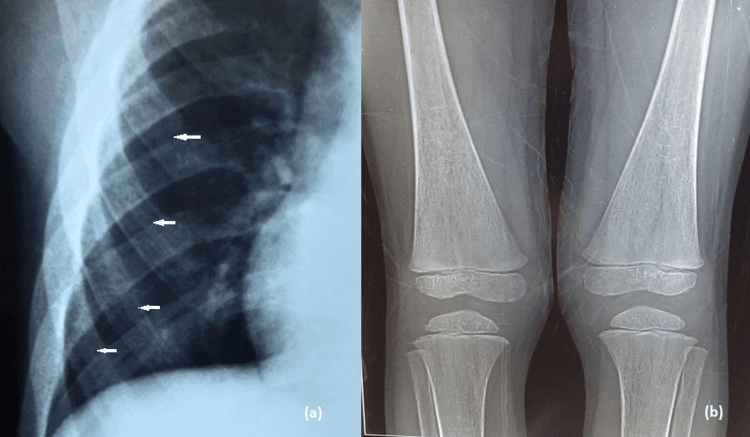
- Marrow Expansion: Causes widened medullary cavities, cortical thinning, pathological fractures.
- Osteoporosis: Multifactorial - marrow expansion, iron toxicity, hypogonadism, deferoxamine.
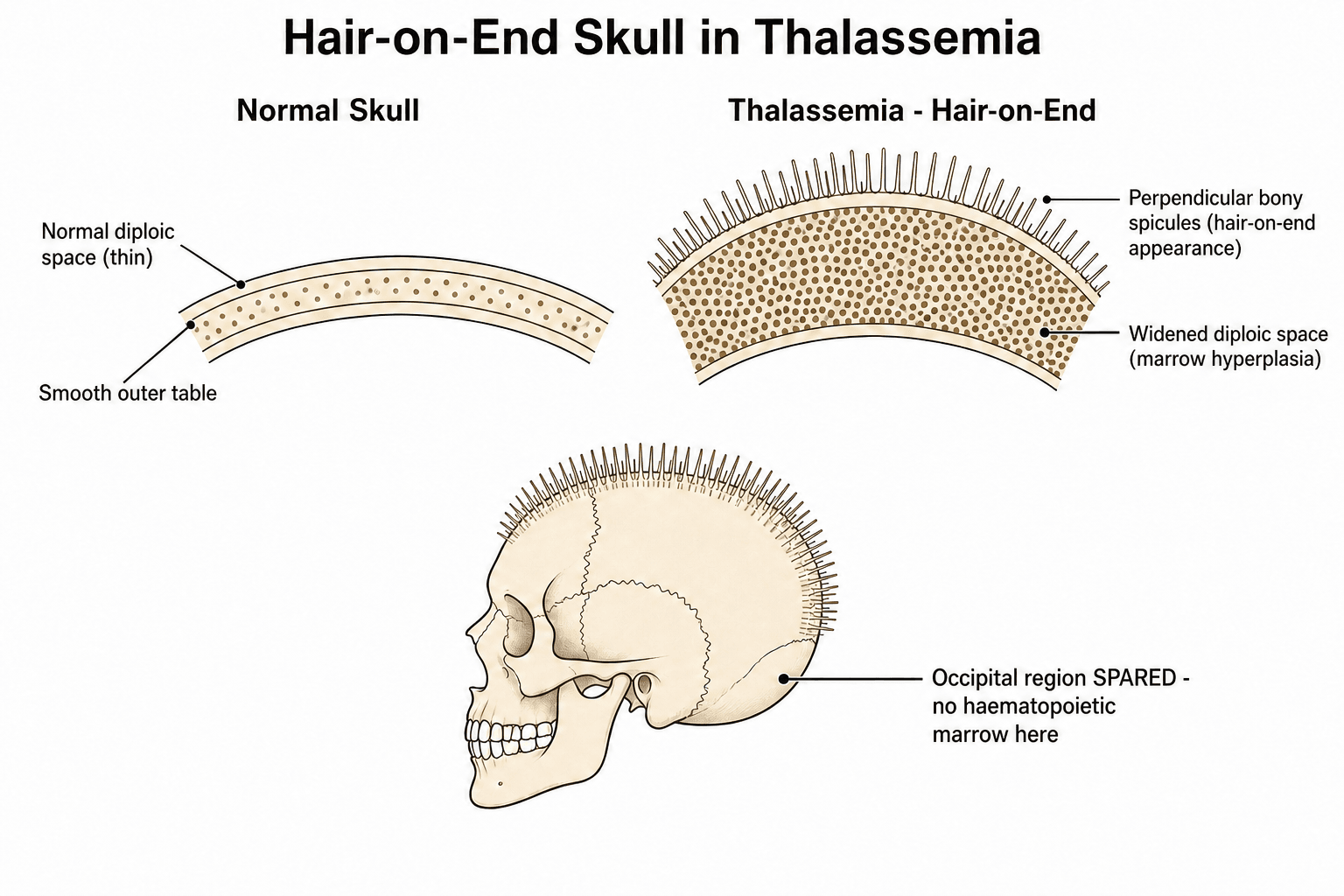
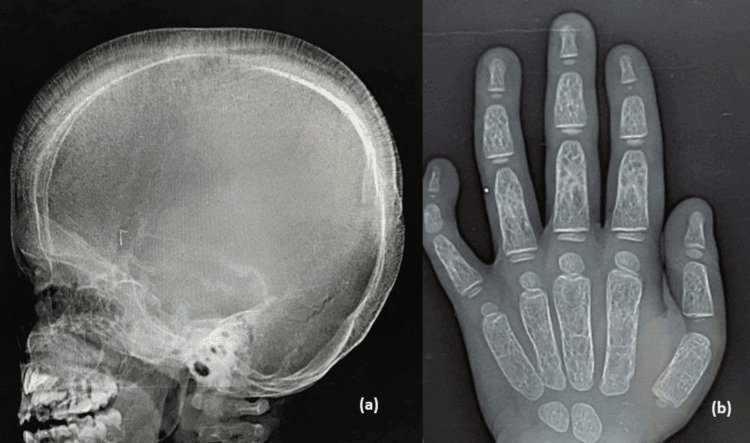
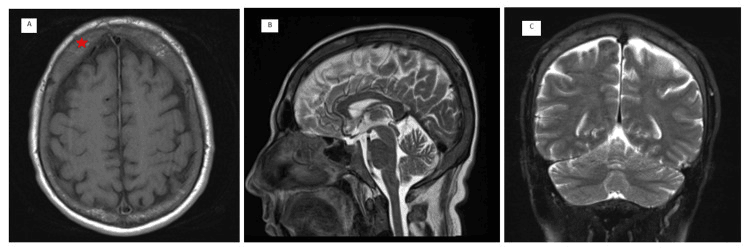
- Hair-on-end Skull: Classic radiographic finding from diploic expansion.
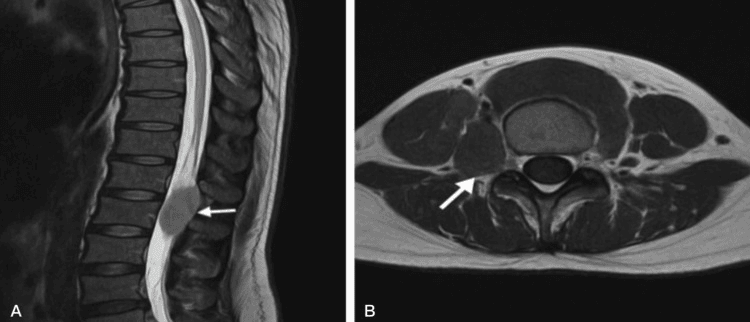
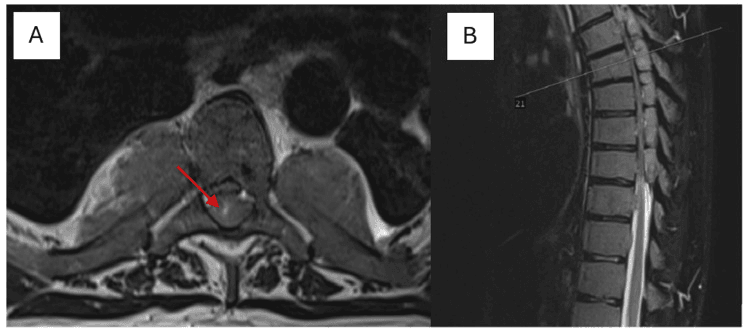
- Extramedullary Haematopoiesis: Can cause spinal cord compression.
- “Hair-on-end skull - occipital spared (no marrow)
- “Chipmunk facies from maxillary expansion
- “Osteoporosis common even in young patients
- “DEXA screening and bisphosphonates for bone health
- “EMH can compress spinal cord - surgical emergency
Overview and Epidemiology
Thalassaemia is a group of inherited haemoglobin disorders characterised by reduced or absent synthesis of one or more globin chains, and it is the most common inherited haemoglobin disorder worldwide. Its orthopaedic manifestations result from marrow expansion (bone deformities, pathological fractures) and from the effects of iron overload and chelation (osteoporosis).
Genetics. Inheritance is autosomal recessive, so both parents of an affected child must be carriers. The two forms arise on different chromosomes:
- Alpha thalassaemia - deletion of 1-4 alpha globin genes on chromosome 16
- Beta thalassaemia - point mutations in the beta globin gene on chromosome 11
Epidemiology. Prevalence is highest across the Mediterranean belt, the Middle East, Southeast Asia, the Indian subcontinent and Africa. Carrier frequency reaches up to 30% in endemic areas, and there are 60,000-70,000 affected births globally each year.
Pathophysiology
Ineffective erythropoiesis. The fundamental defect is imbalanced globin chain production. In beta thalassaemia, reduced or absent beta chains leave an excess of alpha chains; the unpaired alpha chains precipitate, damage the red cell membrane and cause premature destruction of red cell precursors in the bone marrow.
Marrow expansion. The chronic haemolytic anaemia triggers compensatory marrow expansion, with erythroid precursors increasing up to 6-fold. The medullary cavity expands and the cortex thins, and this process drives the skeletal manifestations unique to thalassaemia.
Iron overload (haemosiderosis). Iron accumulates by two routes. Each unit of blood contains approximately 200mg of iron, and with no physiological mechanism for iron excretion it accumulates progressively in the organs. Ineffective erythropoiesis also suppresses hepcidin, which increases intestinal iron absorption.
Where the iron goes. It is deposited in the liver, heart, pancreas, pituitary, gonads and bone. In bone it is toxic to osteoblasts and contributes to osteoporosis; in the pituitary it causes hypogonadism and further bone loss. Chelation therapy is essential but has its own skeletal effects.
How the skeleton suffers. Five processes act on bone:
- Marrow expansion - widened medullary cavities, thin cortices, increased fragility
- Bone resorption - cancellous bone loss from osteoclast activity
- Iron toxicity - direct damage to osteoblasts and osteocytes
- Chelation effects - deferoxamine may impair bone metabolism
- Endocrine dysfunction - hypogonadism, hypothyroidism and diabetes from iron deposition
Osteoporosis. The causes of thalassaemic osteoporosis are marrow expansion, iron toxicity, deferoxamine, hypogonadism and vitamin D deficiency, and it is a major cause of morbidity even in young patients. The mnemonic groups them for recall.
MIDHECauses of Osteoporosis in Thalassaemia - MIDHE
Hook:MIDHE causes weak bones in thalassaemia
Classification
Beta thalassaemia is graded by genotype and clinical severity.
- Genotype
- β0/β0, β0/β+, β+/β+ (severe)
- Clinical Phenotype
- Severe anaemia, transfusion-dependent from infancy
- Genotype
- Variable combinations
- Clinical Phenotype
- Moderate anaemia, variable transfusion needs
- Genotype
- β/β0 or β/β+
- Clinical Phenotype
- Mild microcytic anaemia, carrier state, asymptomatic
Beta major. The most severe form, requiring lifelong transfusions from early childhood. It presents at 6-12 months of age, after HbF declines, with severe anaemia (Hb 3-6 g/dL untreated), hepatosplenomegaly, growth retardation and skeletal changes from marrow expansion.
Beta intermedia. Severity varies, and these patients may not require regular transfusions. They still develop skeletal changes, and their iron overload comes from GI absorption, not transfusion.
Clinical Presentation
Modern transfusion programmes suppress marrow expansion and have reduced skeletal deformity; the craniofacial changes below are now largely a feature of undertreated patients. Osteoporosis persists despite optimal transfusion and chelation (see Genetic Determinants of Low Bone Mass).
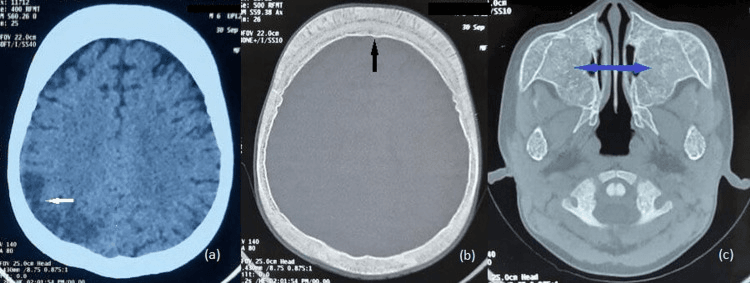
The skull. The diploic space widens and the outer table thins, and perpendicular spicules from diploic expansion produce the hair-on-end appearance. The occipital bone is spared because it contains no haematopoietic marrow.
The face. Maxillary hypertrophy gives the chipmunk facies, with frontal bossing, prominent malar eminences, lateral orbital displacement and dental malocclusion. The paranasal sinuses are obliterated, the ethmoid excepted.
Investigations
Laboratory studies. The blood tests confirm the type and track its complications.
- Expected Finding
- Microcytic anaemia (MCV low)
- Clinical Significance
- Severity indicates type
- Expected Finding
- Increased HbA2, HbF
- Clinical Significance
- Diagnostic for beta thalassaemia
- Expected Finding
- High ferritin, high iron
- Clinical Significance
- Iron overload monitoring
- Expected Finding
- May be elevated
- Clinical Significance
- Hepatic iron deposition
- Expected Finding
- Hypogonadism, hypothyroidism
- Clinical Significance
- Secondary complications
- Expected Finding
- Often deficient
- Clinical Significance
- Contributes to osteoporosis
Plain radiographs. Films show the skull, spinal and long bone changes described above, and remain useful for initial assessment and fracture detection.
Management
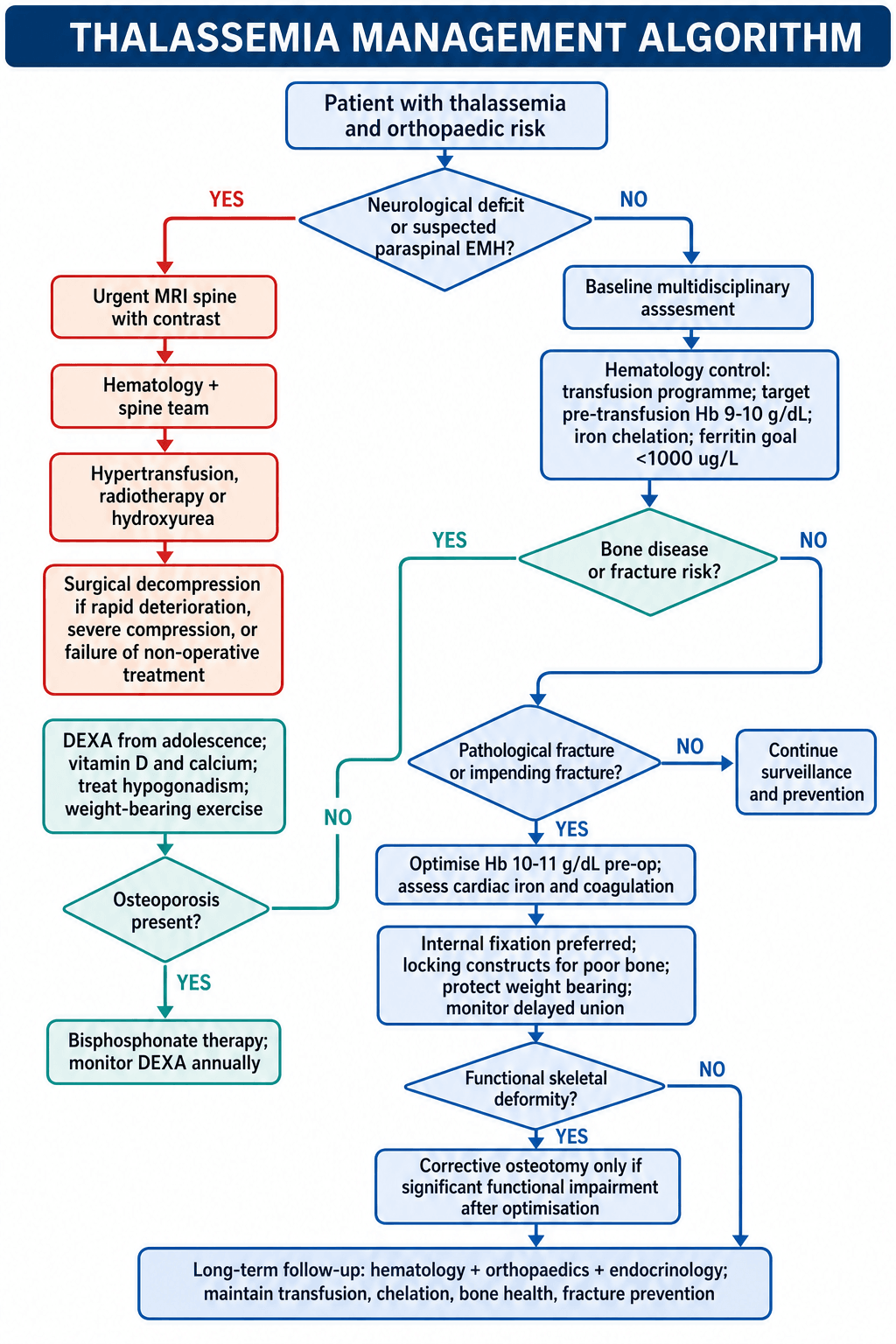
A multidisciplinary approach with haematology is essential. The orthopaedic decisions concern the bone disease, the fractures and the spinal cord.
Transfusion. In beta major, regular transfusions every 2-4 weeks to a pre-transfusion Hb of 9-10 g/dL suppress endogenous erythropoiesis and so reduce marrow expansion and skeletal deformity. The TIF 2021 guideline sets the pre-transfusion target at 9-10.5 g/dL.
Iron chelation. The target is a ferritin below 1000 μg/L.
- Deferoxamine (Desferal) - SC or IV infusion, the traditional agent
- Deferasirox (Exjade) - oral, once daily
- Deferiprone (Ferriprox) - oral, for cardiac iron
Bone health. Calcium and vitamin D supplementation and hormone replacement for hypogonadism sit alongside the osteoporosis treatment in the Orthopaedic tab.
Curative treatment. Bone marrow transplant from an HLA-matched sibling donor; gene therapy is emerging.
Surgical Considerations in Thalassaemia
Coordinate with haematology. Agree transfusion timing with haematology: transfuse preoperatively to Hb 10-11 g/dL, check ferritin and chelation status, and optimise coagulation (platelets, liver function).
Know the risks the patient brings. Check cardiac function for iron cardiomyopathy. Venous thromboembolism is a risk, especially after splenectomy, which also leaves the patient immunocompromised, and wound and fracture healing may be delayed.
Assess the bone. Obtain a DEXA scan for bone density, and CT or MRI of bone architecture if significant surgery is planned. Anticipate poor bone quality for fixation.
- Target
- 10-11 g/dL
- Concern
- Transfuse if low
- Target
- EF greater than 50%
- Concern
- Iron cardiomyopathy risk
- Target
- Optimised chelation
- Concern
- Bleeding risk if high
- Target
- DEXA T-score
- Concern
- Implant choice affected
Complications
Osteoporosis. The most common orthopaedic complication, affecting 40-80% of adults.
Fractures. Vertebral compression fractures occur in 10-20%. Long bone fracture risk is increased, hip fractures are a major concern, and delayed healing is common.
Deformity. Craniofacial change in undertreated patients, spinal deformity and short stature.
Growth disturbance. Height below the 3rd percentile is common, with delayed bone age and delayed puberty. It reflects both marrow expansion diverting metabolic resources and endocrine dysfunction from iron overload.
- Thalassaemia
- Globin chain quantity (reduced)
- Sickle Cell Disease
- Globin chain quality (HbS)
- Thalassaemia
- Marrow expansion, osteoporosis
- Sickle Cell Disease
- Vaso-occlusion, infarction
- Thalassaemia
- Uncommon
- Sickle Cell Disease
- Very common (hip, shoulder)
- Thalassaemia
- No
- Sickle Cell Disease
- Yes (vaso-occlusive)
- Thalassaemia
- Not increased
- Sickle Cell Disease
- Increased (Salmonella)
- Thalassaemia
- Classic finding
- Sickle Cell Disease
- Can occur but less common
Desferrioxamine (Deferoxamine) Bone Toxicity
Chelator-related skeletal injury is a distinct and potentially reversible entity, separate from the bone disease of transfusional iron overload itself. It matters because it is the one cause of skeletal disease in thalassaemia that you can switch off by adjusting a drug rather than treating a bone.
Why it happens. The injury comes from over-chelation. Deferoxamine (DFO) chelates iron, but at high doses relative to the body iron burden it also depletes zinc and copper and directly inhibits DNA synthesis, fibroblast and osteoblast proliferation and collagen formation, injuring the growth-plate cartilage and metaphyseal bone.
The toxicity index. Toxicity is dose-dependent and greatest when the chelator dose is high relative to iron stores. Porter's therapeutic (toxicity) index, the mean daily DFO dose in mg/kg divided by the serum ferritin in µg/L, should be kept below 0.025; a persistent index above 0.025 is associated with skeletal and other toxicity.
Who is at risk. Young children are most susceptible, and the risk rises paradoxically as iron control improves and ferritin falls (relative over-chelation).
What it looks like. A dysplastic, rickets-like lesion:
- Metaphyseal changes - widening, cupping, irregularity, sclerosis and demineralisation, most obvious around the knees and wrists
- Platyspondyly - vertebral body flattening producing disproportionate short stature with a shortened trunk (reduced sitting height), a characteristic clue that short stature is chelation-related rather than purely marrow-driven or endocrine
- Genu valgum, pseudo-rickets and growth-plate cartilage dysplasia; growth velocity may fall
Management. Recognise DFO dysplasia clinically and radiographically, and reduce the DFO dose to hold the toxicity index below 0.025, especially when ferritin falls, rather than escalating chelation. Monitor growth and spine radiographs, and consider switching to or rotating oral chelators (deferasirox, deferiprone). Because the lesion is at least partly reversible, early recognition protects final height and spinal shape.
Genetic Determinants of Low Bone Mass
Demineralisation occurred in 92.7 percent of the Baldini cohort despite optimal transfusion and chelation, which raises the obvious question of why bone mass varies so widely between similarly treated patients. Genetic susceptibility is the missing piece: the COL1A1 (COLIA1) gene polymorphism plays an important role, and thalassaemic osteoporosis is a gene-environment interaction, not simply the sum of acquired insults.
Collagen genes. COL1A1 encodes the alpha-1 chain of type I collagen, the main organic matrix protein of bone. A polymorphism at the Sp1 transcription-factor binding site (the "s"/T allele) alters the collagen alpha-1 to alpha-2 ratio and is associated with lower bone mineral density and higher osteoporosis and fracture risk, both in the general population and in thalassaemia cohorts, where heterozygous and homozygous "s" carriers fare worst.
Vitamin D and signalling genes. Vitamin D receptor (VDR) polymorphisms (e.g. FokI, BsmI) and variants in TGF-beta1 have also been linked to bone mass in thalassaemic series, reinforcing that inherited matrix and endocrine-signalling variation modulate the phenotype. Together these variants lower peak bone mass independently of iron.
Why it matters clinically. It explains the residual, sometimes severe, osteoporosis in patients whose transfusion, chelation and endocrine care are otherwise excellent. The disease is inherited susceptibility layered on top of acquired drivers (marrow expansion, hypogonadism, iron and chelation toxicity), so bone protection cannot be assumed adequate just because iron and hormones are controlled. Genotyping is not yet routine for guiding therapy, but the concept justifies lifelong DEXA surveillance and a low threshold for anti-resorptive treatment in every patient.
Postoperative Care
Haematology. Continue the transfusion protocol with haematology, monitor haemoglobin and transfuse as needed. Resume chelation when safe, typically 24-48 hours after surgery, and give DVT prophylaxis.
Wound and fracture. Expect delayed wound healing from poor vascularity and watch for infection. Fractures need extended weight-bearing restrictions, and a bone stimulator may be considered for delayed union.
- Target
- 9-10 g/dL
- Frequency
- Daily initially
- Target
- Monitor for infection
- Frequency
- Regular inspection
- Target
- Serial X-rays
- Frequency
- 6-8 weekly
- Target
- Per protocol
- Frequency
- Extended duration
Outcomes
Fracture healing. Delayed union is common and the nonunion rate is higher than in the general population, but outcomes are good with appropriate fixation and protection.
What anti-resorptives are proven to do. They raise lumbar spine BMD in randomised trials, but the gains are of the order of a few percent, not dramatic: denosumab raised lumbar BMD 5.92% versus 2.92% for placebo at 12 months, and alendronate and zoledronic acid likewise increased BMD against a placebo group whose BMD actively fell. Bone pain and resorption markers also improve measurably, a real, patient-relevant benefit worth quoting alongside the BMD data.
What they are not proven to do. BMD is a surrogate, not the outcome the patient cares about. No trial in thalassaemia has used fracture as an endpoint, so "bisphosphonates reduce fractures in thalassaemia" is an extrapolation from the general osteoporosis literature, not a demonstrated finding in this population. Say so if asked. Vertebral fractures are usually managed conservatively, and the drug is aimed at the underlying bone disease rather than at healing that fracture.
- Outcome
- Pain usually settles; anti-resorptives raise BMD (fracture reduction not proven in thalassaemia)
- Key Factor
- Analgesia, bracing, treat the underlying bone disease
- Outcome
- Delayed healing common
- Key Factor
- Protected weight-bearing
- Outcome
- Good with early treatment
- Key Factor
- Transfusion + radiation
- Outcome
- Improved with treatment
- Key Factor
- Multifactorial management
Guidelines, Registries & Global Practice
Global Epidemiology
- Thalassaemia is the most common monogenic disorder worldwide; roughly 5-7% of the global population carry a haemoglobinopathy gene
- Approximately 60,000-70,000 children are born with a severe thalassaemia each year, concentrated in the Mediterranean, Middle East, South Asia and Southeast Asia ("thalassaemia belt")
- Carrier frequency reaches 10-30% in highly endemic regions
- High carrier rates reflect the heterozygote survival advantage against falciparum malaria
- Migration has made thalassaemia a clinically relevant diagnosis in Northern Europe, North America and Australasia
- Comprehensive thalassaemia centres delivering multidisciplinary care (haematology, endocrinology, cardiology, orthopaedics)
- National blood services for safe, leucodepleted transfusion supply
- Genetic counselling and antenatal/carrier screening programmes
Controversies & Areas of Uncertainty
Pharmacological choice for osteoporosis. Bisphosphonates (alendronate, zoledronic acid) and denosumab all increase BMD in randomised trials, but no head-to-head fracture-endpoint trial exists in thalassaemia. Concerns over bisphosphonate retention and rebound bone loss after denosumab withdrawal are extrapolated from the general population and remain unresolved in this young, lifelong-treatment cohort.
Duration and safety of long-term therapy. Patients often need decades of anti-resorptive therapy starting in adolescence. The risks of atypical femoral fracture and osteonecrosis of the jaw with prolonged exposure, and the role of drug holidays, are not defined for thalassaemia.
Role of bone-forming agents. Teriparatide and sclerostin antibodies (romosozumab) are theoretically attractive given low bone formation, but evidence in thalassaemia is minimal and they are not yet recommended.
First-line treatment for EMH cord compression. Transfusion, radiotherapy, hydroxyurea and surgical decompression are all used, but the optimal sequence is debated. Many advocate transfusion plus radiotherapy first, reserving surgery for rapidly progressive deficit; high-quality comparative data are lacking because the condition is rare.
Curative therapy and bone outcomes. Allogeneic transplant and gene therapy (e.g. beta-globin lentiviral and gene-editing approaches) can render patients transfusion-independent, but whether established skeletal disease and osteoporosis fully reverse, and long-term bone outcomes, remain uncertain.
If asked "which drug?", state that bisphosphonates and denosumab both have RCT-level BMD evidence in thalassaemia, then acknowledge the absence of fracture-endpoint and head-to-head data and the open question of treatment duration in young patients. Demonstrating awareness of the uncertainty scores higher than naming a single agent.
MCQ Practice Points
Q: What is the pathognomonic skull radiograph finding in thalassemia major, and why is the occipital region spared?
A: Hair-on-end (crew-cut) appearance from diploic expansion due to marrow hyperplasia. The occipital region is spared because it contains minimal marrow (predominantly diploe only). This finding occurs due to chronic erythroid hyperplasia compensating for hemolytic anemia.
Q: What are the four main mechanisms of osteoporosis in thalassemia patients?
A: Marrow expansion (cortical thinning from erythroid hyperplasia), iron toxicity (direct osteoblast inhibition from transfusion overload), deferoxamine toxicity (chelation therapy inhibits osteoblast function), and hypogonadism (iron deposition in pituitary causes hormonal deficiency). This is why 40-80% of adults have osteoporosis.
Q: What is the orthopaedic emergency associated with extramedullary hematopoiesis in thalassemia?
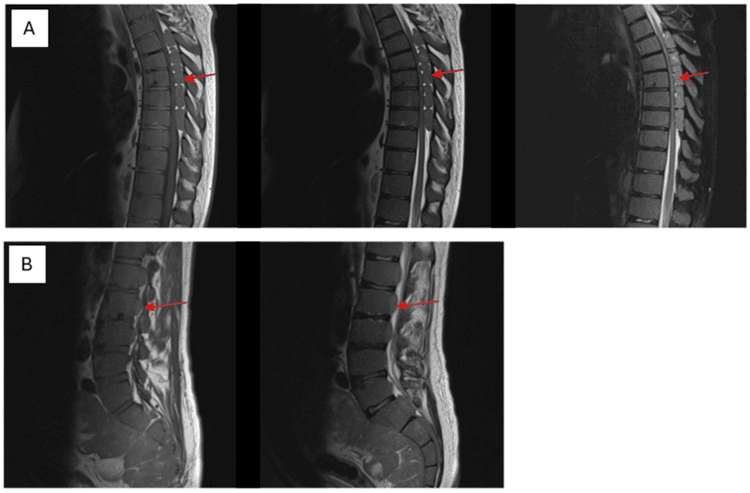
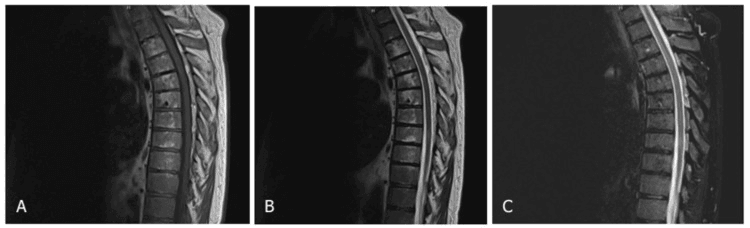
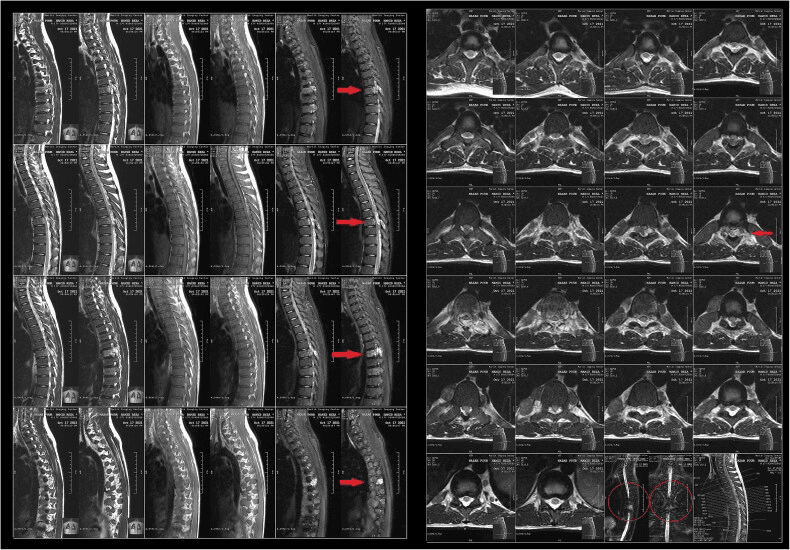
A: Spinal cord compression. Paraspinal extramedullary hematopoietic tissue can expand and compress the cord, typically in the thoracic region. Treatment includes urgent hypertransfusion (suppresses marrow), radiation therapy, and surgical decompression if severe. MRI shows characteristic paraspinal masses with T1/T2 intermediate signal.
Q: A 3-year-old from the Mediterranean region presents with severe anemia, hepatosplenomegaly, and frontal bossing. Parents are asymptomatic. What is the inheritance pattern?
A: Autosomal recessive. Beta thalassemia major requires inheritance of two defective beta-globin alleles. Parents are carriers (thalassemia minor) and typically asymptomatic with mild microcytic anemia. Mediterranean, Middle Eastern, and Southeast Asian populations have high carrier frequencies due to malaria protection.
Viva Scenarios
Practise clinical reasoning and management decisions out loud
“18-year-old male with beta thalassemia major on regular transfusions presents with 3 weeks of progressively worsening mid-back pain. X-ray shows T12 compression fracture with 40% height loss. How do you assess and manage this patient?”
“32-year-old female with beta thalassemia intermedia presents with progressive bilateral lower limb weakness and urinary retention over 2 weeks. She is not on regular transfusions. MRI shows a paraspinal mass at T6-T8 causing cord compression. What is your diagnosis and management?”
“You are shown a skull X-ray of a 7-year-old with a classic 'hair-on-end' appearance. The child is from Southeast Asia and has pallor and splenomegaly. What is your differential diagnosis and approach?”
PATHOLOGY
- Globin chain synthesis defect (quantity)
- Beta major: Transfusion-dependent from infancy
- Autosomal recessive inheritance
- Mediterranean, Middle East, SE Asia
SKELETAL CHANGES
- Hair-on-end skull (occipital spared)
- Chipmunk facies (maxillary expansion)
- Widened medullary cavities
- Cortical thinning
- Osteoporosis (40-80%)
OSTEOPOROSIS CAUSES - MIDHE
- Marrow expansion
- Iron overload (toxic to osteoblasts)
- Deferoxamine (chelation effect)
- Hypogonadism
- Endocrine (vitamin D, thyroid)
MANAGEMENT
- Transfusions + chelation (hematology)
- DEXA screening for osteoporosis
- Bisphosphonates (zoledronic acid)
- Vitamin D and calcium
- Vertebroplasty for refractory pain
EMH CORD COMPRESSION
- Transfusion first (reduces EMH)
- Radiation (EMH is radiosensitive)
- Surgery if rapidly progressive
- Multidisciplinary management
Evidence Base
Voskaridou & Terpos - Pathophysiology and Management of Osteoporosis in beta-Thalassaemia
- Osteoporosis is a major cause of morbidity in adult thalassaemia major
- Pathogenesis is multifactorial: marrow expansion, endocrine dysfunction, iron overload, COLIA1 polymorphism
- RANK/RANKL/OPG pathway is the dominant final mediator of increased osteoclast activity
- Bisphosphonates (potent osteoclast inhibitors) give encouraging results
Voskaridou et al - Zoledronic Acid for Thalassaemia-Induced Osteoporosis (RCT)
- Single-centre randomized placebo-controlled trial, 66 thalassaemia patients with osteoporosis
- Zoledronic acid 4 mg IV every 3 months significantly increased lumbar spine BMD at 12 months
- Marked reduction in bone pain and resorption markers (CTX); placebo group worsened
- No BMD gain with the every-6-month schedule
Voskaridou et al - Denosumab in Transfusion-Dependent Thalassaemia Osteoporosis (Phase 2b RCT)
- Randomized, double-blind, placebo-controlled phase 2b trial (n=63; NCT02559648)
- Denosumab 60 mg SC at day 0 and 180 raised lumbar spine BMD 5.92% vs 2.92% placebo (p=0.043)
- Wrist BMD and pain scores improved; sRANKL and resorption markers fell significantly
- No grade 3-4 toxicity
Morabito et al - Alendronate vs Clodronate vs Placebo in Thalassaemia Osteoporosis (RCT)
- 2-year randomized placebo-controlled trial in 25 young beta-thalassaemia major patients (mean age 26.6 years)
- Daily oral alendronate significantly increased lumbar and femoral neck BMD vs placebo
- Intramuscular clodronate was ineffective at the dose used
- Lumbar BMD fell significantly in the placebo group
Baldini et al - Endocrine and Bone Disease in Well-Treated Adult Thalassaemia Major
- Cross-sectional study of 111 optimally transfused and chelated adults (mean age 32.6 years)
- Bone demineralisation in 92.7% despite best care; osteopenia at femur, osteoporosis at lumbar spine
- Hypogonadism lowered femoral T-score even when hormonally replaced
- Low BMI, low alkaline phosphatase and hypoparathyroidism predicted worse bone mass
Chen et al - Fracture Risk in Transfusion-Naive Thalassaemia (Nationwide Cohort)
- Taiwanese nationwide cohort: 1369 transfusion-naive thalassaemia subjects vs 5416 matched controls
- 1.35-fold higher overall fracture risk after adjustment for age, sex and comorbidities
- 1.46-fold higher risk of upper-limb fracture; risk most evident in males
Bukhari et al - EMH Spinal Cord Compression in Thalassaemia (Case + Literature Review)
- Recurrent spinal epidural extramedullary haematopoiesis causing cord compression in beta-thalassaemia major
- Transfusion reduces the erythropoietic drive sustaining EMH
- Combination of surgery and radiotherapy gave complete resolution at 2-year follow-up
Thalassaemia International Federation (TIF) - Guidelines for the Management of Transfusion-Dependent Thalassaemia (4th ed)
- Pre-transfusion haemoglobin target 9-10.5 g/dL to suppress ineffective erythropoiesis and marrow expansion
- Annual DEXA from adolescence; correct vitamin D, calcium and hypogonadism
- Bisphosphonates are the recommended pharmacotherapy for established osteoporosis