
Article summary
How artificial intelligence is starting to shape orthopaedic surgery — from imaging to planning — and what it means for surgeons.
Educational content is reviewed for source visibility, editorial coherence, and correction readiness.
No individual clinician credential is claimed unless a named person is shown.
Verify before clinical use; this is not medical advice or a substitute for local guidance.
AI in Clinical Orthopaedics: Practical Applications in 2025
For years, Artificial Intelligence (AI) was a buzzword discussed at conferences in the context of "future potential," often accompanied by a mix of skepticism and fear of redundancy among clinicians. In 2025, that potential has definitively been realized. AI is no longer just an academic research tool confined to the realms of computer science; it has matured into a robust, clinical instrument as vital to modern practice as the stethoscope, the fluoroscope, or the scalpel.
Rather than replacing the surgeon, the current paradigm in orthopaedic surgery training and practice is strictly one of Augmented Intelligence. The goal is to enhance human decision-making, automate mundane and repetitive tasks, and synthesize vast amounts of patient data into actionable insights. For orthopaedic surgery trainees preparing for fellowship exams (FRACS, FRCS, ABOS) and consultant life, understanding these technologies is no longer optional—it is a core competency. Exam stations are increasingly testing the principles behind robotics, navigation, and algorithmic decision-making.
This article focuses on the tangible, clinical applications of AI that orthopaedic surgeons are utilizing today to improve diagnostic accuracy, refine surgical precision, optimize workflow, and ultimately deliver superior patient outcomes.
While you won't be expected to code a neural network in your fellowship exam, you will be expected to understand the clinical applications, limitations, and basic principles of these technologies. Be prepared to discuss the indications for robotic-assisted arthroplasty versus conventional methods, or how you might utilize predictive analytics to optimize a high-risk patient pre-operatively.
1. Computer Vision: The Automated Eye
Computer Vision (CV) is the subfield of AI that trains computers to "see," interpret, and extract meaningful information from digital images. In the context of orthopaedics, this translates to the automated analysis of plain radiographs, CT scans, and MRIs. The underlying architecture for most of these systems is the Convolutional Neural Network (CNN), a deep learning model inspired by the human visual cortex.
Automated Fracture Detection
Emergency Departments (EDs) and urgent care centers are high-pressure, fast-paced environments where cognitive fatigue is common. Missed fractures represent a leading cause of diagnostic error and subsequent medical litigation in these settings.
- The Technology: CNNs are trained on massive datasets containing millions of labeled and annotated radiographs. These models learn to identify the subtle disruption of trabecular patterns or cortical steps that characterize a fracture.
- Clinical Application: Commercial software platforms (such as Rayvolve, Gleamer's BoneView, or Aidoc) now integrate seamlessly as a layer on top of the hospital's Picture Archiving and Communication System (PACS). When an X-ray is acquired, the AI analyzes it in the background within seconds. If a fracture, dislocation, or joint effusion is detected, the software places a bounding box or a color-coded "heat map" directly over the region of interest to alert the reviewing clinician.
- Performance and Efficacy: Recent multi-center validation studies demonstrate that these algorithms consistently match, and occasionally exceed, the sensitivity of senior musculoskeletal radiologists for detecting subtle fractures—particularly in notoriously difficult areas like the scaphoid waist, the non-displaced femoral neck, and the radial head.
- The Clinical Benefit: The AI serves as an indispensable safety net. It mitigates the risk of the "missed hip fracture" in an elderly patient who might otherwise be sent home with a working diagnosis of a groin strain or sciatica, preventing catastrophic displacement and the need for more complex salvage arthroplasty.
Opportunistic Screening: Maximizing Data Utility
Orthopaedic surgeons routinely order thousands of CT scans for trauma assessment, pre-operative templating, or spine pathology evaluation. Historically, we only looked at the specific anatomy in question. AI allows us to extract hidden value from these existing scans without exposing the patient to additional radiation or incurring extra costs.
- Bone Mineral Density (BMD) Assessment: AI algorithms can automatically analyze the Hounsfield Units (HU) of vertebral bodies (typically L1) or the proximal femur on routine chest, abdomen, or pelvic CT scans. These HU measurements strongly correlate with DEXA scan T-scores. This is a game-changer for pre-operative planning in arthroplasty and spine surgery. Identifying opportunistic osteoporosis allows the surgeon to pivot to cemented fixation in arthroplasty or consider cement augmentation for pedicle screws in spine fusions.
- Sarcopenia and Frailty: Similarly, automated algorithms can measure the cross-sectional area and fatty infiltration of the psoas and paraspinal muscles on a CT scan. This provides an objective, quantitative measure of sarcopenia, which is a powerful, independent predictor of surgical morbidity, mortality, and prolonged length of stay.
Advanced MRI Interpretation
Beyond plain films, AI is making significant inroads into MRI analysis, particularly in sports medicine. Algorithms can now automatically grade chondral wear, identify meniscal tears, and quantify ACL bundle integrity. While not replacing the radiologist, these tools provide quantitative metrics (e.g., exact volume of cartilage loss in cubic millimeters) that are far more reproducible than subjective human grading systems, aiding in longitudinal tracking of osteoarthritis progression and surgical decision making.
2. Pre-operative Planning and Intelligent Templating
The days of holding acetate templates over printed X-rays against a light box are well and truly behind us. Digital templating has been the standard for a decade, but AI has transformed it from a manual, click-heavy process into an automated, predictive science.
Automated 3D Segmentation
Creating a true 3D model of a bone from a standard 2D CT scan previously required a biomedical engineer to spend hours performing manual "thresholding"—painstakingly outlining the cortical borders slice by slice.
- The AI Shift: Deep learning models, particularly U-Net architectures, can now auto-segment complex bony anatomy in a matter of seconds. The AI seamlessly separates the femur from the acetabulum in a dysplastic hip, or isolates the tibia from the talus in a post-traumatic ankle.
- Clinical Application: This rapid segmentation is the fundamental bottleneck that AI has solved for the mass adoption of 3D printing in orthopaedics. It enables the rapid, cost-effective production of Patient Specific Instrumentation (PSI) for complex deformity correction (e.g., corrective osteotomies of the distal radius or complex multi-planar tibial deformities) and custom triflange acetabular components for massive pelvic bone loss in revision THA.
Intelligent 2D and 3D Templating
Modern AI-driven software acts as a virtual pre-operative assistant, utilizing computer vision to recognize critical anatomical landmarks on a calibrated X-ray or 3D model.
- The Workflow: Once the AI identifies landmarks like the teardrop, the center of rotation, the greater trochanter, and the anatomical axis of the femur, it automatically suggests the optimal implant size, offset option, and exact neck cut level. In spine surgery, it can auto-measure pelvic incidence, lumbar lordosis, and sagittal vertical axis (SVA), calculating the exact degree of correction required to achieve spinopelvic harmony.
- Accuracy and Inventory Management: Current advanced systems predict the correct implant size within +/- 1 size in over 95% of primary arthroplasty cases. This high degree of accuracy is revolutionizing hospital logistics. Instead of opening and sterilizing 8 different trays of instruments and trial components, hospitals can transition to "lean trays," sterilizing only the predicted size and one size up/down, massively reducing sterilization costs and turnover time.
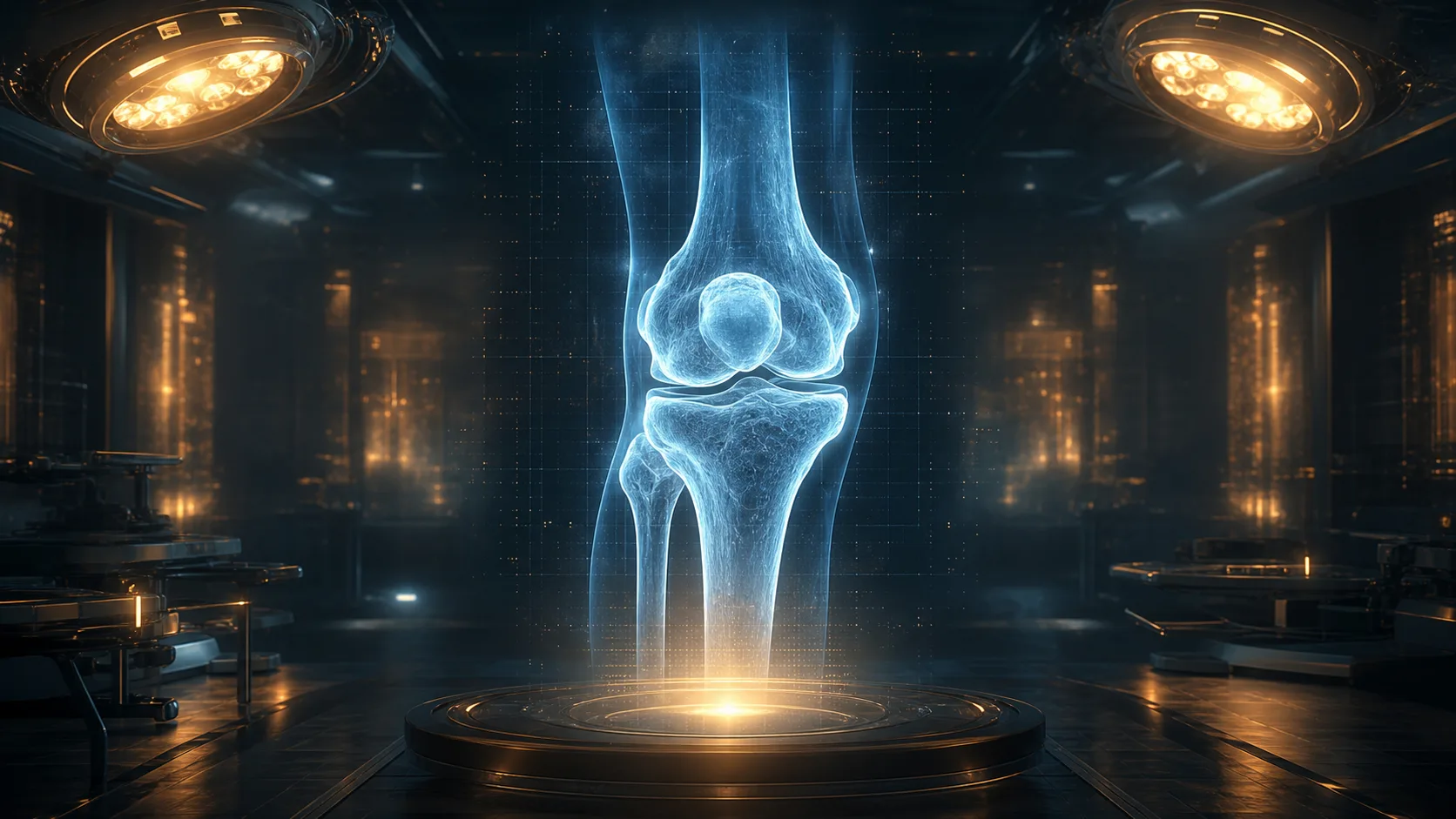
3. Robotics and Intra-operative AI Assistance
Robotic systems in orthopaedics—such as the Mako SmartRobotics (Stryker), ROSA (Zimmer Biomet), VELYS (DePuy Synthes), or CORI (Smith+Nephew)—are essentially the physical, intra-operative execution arms of AI-driven pre-operative planning.
Augmented Reality (AR) and Mixed Reality (MR) Navigation
While traditional optical navigation requires the surgeon to constantly look away from the patient and up at a monitor, Augmented Reality (AR) headsets (like Microsoft HoloLens) bring the data directly into the surgical field. AR uses computer vision to register the patient's physical anatomy with the pre-operative 3D plan in real-time.
- Spine Surgery Application: The surgeon wearing an AR headset sees the planned trajectory for a pedicle screw overlaid as a hologram directly on the patient's skin and exposed anatomy. Advanced AI algorithms track the patient's breathing and micro-movements, dynamically adjusting the hologram instantly to maintain sub-millimeter accuracy without relying solely on rigid pins.
- Oncology and Trauma: "See-through" vision allows an orthopaedic oncologist to visualize the hidden margins of a sarcoma deep within the soft tissue envelope before making the incision. In trauma, AR can assist in visualizing the reduction of a complex pelvic ring injury or the exact trajectory for a percutaneous sacroiliac screw.
Predictive Balancing and Kinematic Alignment
In Total Knee Arthroplasty (TKA), the philosophy has shifted significantly over the last decade. AI and robotics are facilitating the move away from the dogmatic "mechanical alignment" (making every knee straight, regardless of native anatomy) toward individualized "kinematic alignment" or "functional alignment."
- The AI Insight: AI algorithms integrated into robotic platforms analyze the tension in the medial and lateral collateral ligaments throughout the entire range of motion (from deep flexion to full extension) prior to making any bone cuts.
- The Execution: Instead of the surgeon guessing the required releases based on feel, the robot's AI suggests a specific combination of multi-planar bone cuts (adjusting varus/valgus, slope, and rotation) that will achieve "balanced gaps" perfectly tailored to that specific patient's soft tissue envelope. It utilizes data from thousands of prior successful cases to predict the soft tissue response to specific bony resections. This shift from "measured resection" to "predictive balancing" is associated with improved patient-reported outcome measures (PROMs) and a more "natural-feeling" knee.
4. Predictive Analytics and Risk Stratification
This is the application of "Moneyball" principles to surgical medicine. By analyzing massive datasets, AI can identify patterns and risk factors that are invisible to the human clinician.
The "Crystal Ball" of Complications
Traditional risk calculators (like the modified Frailty Index or standard ASA grades) are blunt instruments. Machine Learning (ML) models, however, can ingest and analyze a patient's entire, complex Electronic Health Record (EHR)—including decades of laboratory results, nuanced comorbidities, polypharmacy interactions, and historical vital signs.
- Personalized Prediction: These ML models calculate a highly granular, personalized risk score for specific adverse events. For example, instead of a generic "high risk," the system outputs: "This patient has a 14.5% risk of Periprosthetic Joint Infection (PJI), a 42% risk of requiring a post-operative blood transfusion, and a 20% risk of acute kidney injury."
- Targeted Intervention: This predictive power triggers highly specific, automated optimization protocols. If the AI flags a high transfusion risk, it automatically generates orders for pre-operative iron infusions and erythropoietin. If the PJI risk is flagged due to subtle trends in HbA1c and BMI, it mandates a strict glycemic control pathway and enhanced skin decolonization protocols that might be missed by a generic pre-op checklist.
Predicting Length of Stay (LOS) and Discharge Disposition
In the era of value-based healthcare and bundled payment models, predicting and minimizing hospital length of stay is critical for financial viability and resource allocation.
- Hospitals employ ML algorithms that predict a patient's exact discharge date and required disposition (home vs. inpatient rehab) on the day of admission, or even in the pre-op clinic. This predictive modeling allows social workers, occupational therapists, and physiotherapists to begin organizing home modifications, equipment delivery, and step-down care on Day 0, drastically reducing "bed block" and optimizing hospital throughput.
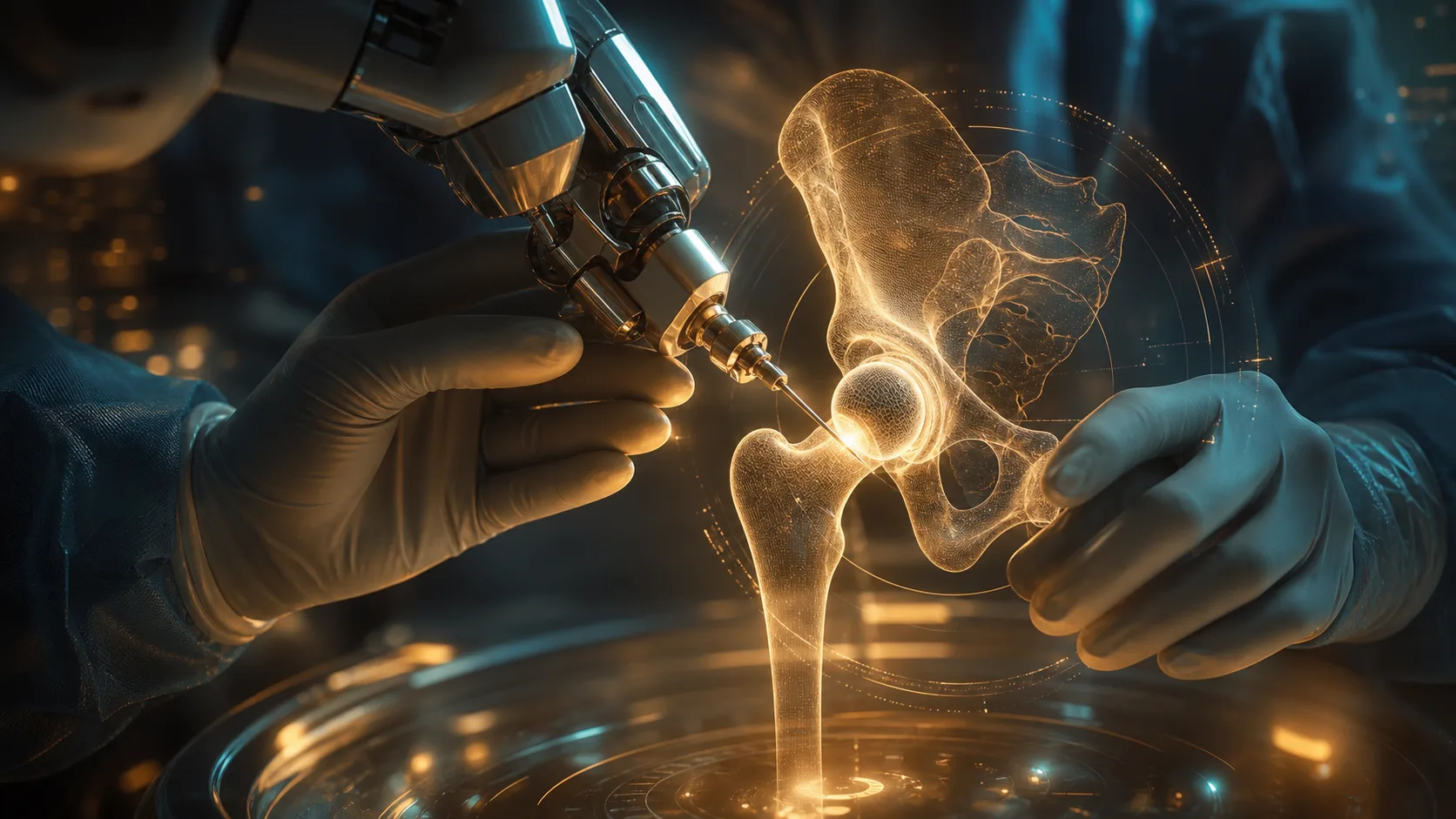
5. Wearables, Gait Analysis, and Remote Monitoring
The integration of AI has moved the locus of care out of the hospital and directly onto the patient's wrist or smartphone, facilitating the rise of the "virtual ward."
Continuous Remote Monitoring
Consumer-grade smartwatches (Apple Watch, Garmin, Fitbit) and specialized medical wearables now collect high-fidelity, continuous data on daily step counts, gait symmetry, stride length, stair-climbing speed, and sleep architecture.
- Actionable Data: Instead of relying on a patient's subjective recall ("I think I'm walking a bit better this week, doctor"), the surgeon has access to objective, granular kinematic data.
- Post-operative Recovery Trajectories: AI algorithms process this continuous stream of telemetry and compare the individual patient's progress against the expected recovery curve derived from thousands of similar patients.
Early Warning Systems for Complications
The true power of wearables lies in anomaly detection.
- If a patient recovering from a TKA shows a steady increase in step count and gait symmetry for two weeks, but then the AI detects a sudden, sustained plateau or decline at week 3, accompanied by an increase in resting heart rate, it acts as an early warning system.
- The surgeon's dashboard flags the patient: "Alert: Deviation from recovery curve. Possible evolving stiffness, arthrofibrosis, or acute superficial infection."
- This allows the clinical team to intervene proactively—calling the patient to adjust pain medication, scheduling an urgent physiotherapy session, or bringing them into the clinic early—rather than waiting for the standard 6-week follow-up appointment when the stiffness has already set in.
Patient-Reported Outcome Measures (PROMs) like the Oxford Knee Score or HOOS/KOOS are notoriously subject to recall bias and survey fatigue. The future of orthopaedic surgical education and outcome tracking is shifting toward AI-analyzed continuous passive data collection via wearables, providing a true reflection of functional recovery without patient burden.
6. Natural Language Processing (NLP) in the Clinic
While computer vision handles the images, Natural Language Processing (NLP) is revolutionizing the outpatient clinic workflow, addressing the massive burden of clinical documentation that leads to physician burnout.
- Ambient Clinical Intelligence: AI-powered "ambient scribes" listen securely to the natural conversation between the surgeon and the patient.
- Automated Documentation: Using advanced NLP, the AI distinguishes between clinically relevant information and casual chatter. It automatically structures the encounter into a comprehensive, perfectly formatted SOAP note—extracting the mechanism of injury, pulling physical exam findings (like "Lachman positive, pivot shift trace"), and detailing the agreed-upon management plan.
- The ROI: Surgeons using these tools report saving up to 2-3 hours of documentation time per clinic day, allowing them to maintain eye contact with the patient rather than staring at a screen, significantly improving both the patient experience and surgeon well-being.

Conclusion
The concept of the "AI-Augmented Surgeon" is not a speculative vision for the next generation; it is the absolute standard for the current one. From the emergency department to the operating theater and into the patient's home, AI tools are fundamentally reshaping the delivery of musculoskeletal care.
Crucially, these technologies do not—and will not—remove the need for rigorous surgical skill, profound anatomical knowledge, or nuanced clinical judgment. Empathy, the physical examination, and the doctor-patient relationship remain the irreplaceable core of orthopaedic practice. Instead, AI removes the heavy cognitive load of mundane, routine tasks (finding the subtle fracture, manually sizing the femoral stem, dictating the standard note) and provides powerful, data-driven insights to inform complex clinical decisions.
Clinical Pearl: When utilizing AI templating, fracture detection, or predictive analytics, always treat the AI's output as an exceptionally capable, but not infallible, "second opinion." Never let the algorithm override a meticulous clinical exam. If the AI reads "No Fracture" but your patient exhibits exquisite, localized point tenderness in the anatomical snuffbox, your clinical acumen dictates that you treat it as an occult scaphoid fracture until proven otherwise.
References
- Adams, S. J., et al. (2019). "Computer vs Human: Deep Learning versus Perceptual Training for the Detection of Neck of Femur Fractures." Journal of Medical Imaging.
- Goksel, F., et al. (2022). "Artificial Intelligence in Orthopaedic Surgery: Current State and Future Directions." Arthroscopy.
- Ramkumar, P. N., et al. (2019). "Remote Patient Monitoring Using Mobile Health for Total Knee Arthroplasty: Validation of a Wearable and Machine Learning-Based Surveillance Platform." Journal of Arthroplasty.
- Mascitti, T., et al. (2023). "Accuracy of Artificial Intelligence for Detecting Fractures on Plain Radiographs: A Systematic Review and Meta-analysis." Journal of Bone and Joint Surgery (JBJS).
- Huo, T., et al. (2021). "The application of artificial intelligence in orthopaedics: A review." Bone & Joint Research.
Share this article
Useful for a journal club, study list, or teaching session.