
Article summary
How to choose and use the digital tools that genuinely help orthopaedic exam revision, and avoid the distractions.
Educational content is reviewed for source visibility, editorial coherence, and correction readiness.
No individual clinician credential is claimed unless a named person is shown.
Verify before clinical use; this is not medical advice or a substitute for local guidance.
Preparing for orthopaedic examinations can feel like an insurmountable challenge, whether you are sitting your first medical school finals, tackling rigorous surgical board assessments, or preparing for fellowship exit exams. The sheer volume of anatomical knowledge, biomechanical principles, and clinical guidelines you must recall is vast. But rather than just passively highlighting textbooks, you can leverage technology to actively test your knowledge, identify your weak spots, and build genuine clinical reasoning skills.
Building Your Core Knowledge Base with Digital Question Banks
When transitioning from passive reading to active recall, digital question banks are arguably the most powerful tool at your disposal. They allow you to simulate the high-stakes environment of your upcoming examination while providing immediate feedback on your clinical reasoning. The key is to choose platforms that offer detailed, evidence-based explanations for both the correct and incorrect options. When a question explains why a distractor is wrong, it solidifies your understanding of the underlying orthopaedic principle.
As you work through these banks, it is vital to track your performance across different subspecialties. Look for platforms that provide sophisticated analytics, allowing you to see exactly where you are falling short. A common mistake trainees make is endlessly answering questions on topics they already enjoy, such as sports medicine or hip pathology, while neglecting areas like hand surgery or paediatric orthopaedics. Use the data to force yourself into your weakest subjects, allocating dedicated time each week to tackle the areas where your scores are lowest.
The Power of Annotated 3D Anatomy and Digital Atlases
Orthopaedic surgery is a fundamentally three-dimensional specialty. Understanding the intricate spatial relationships of the carpal bones, the dorsal extensor compartments of the wrist, or the complex neurovascular anatomy of the popliteal fossa is essential for both passing exams and operating safely. Traditional textbook illustrations are helpful, but they often struggle to convey these spatial relationships effectively.
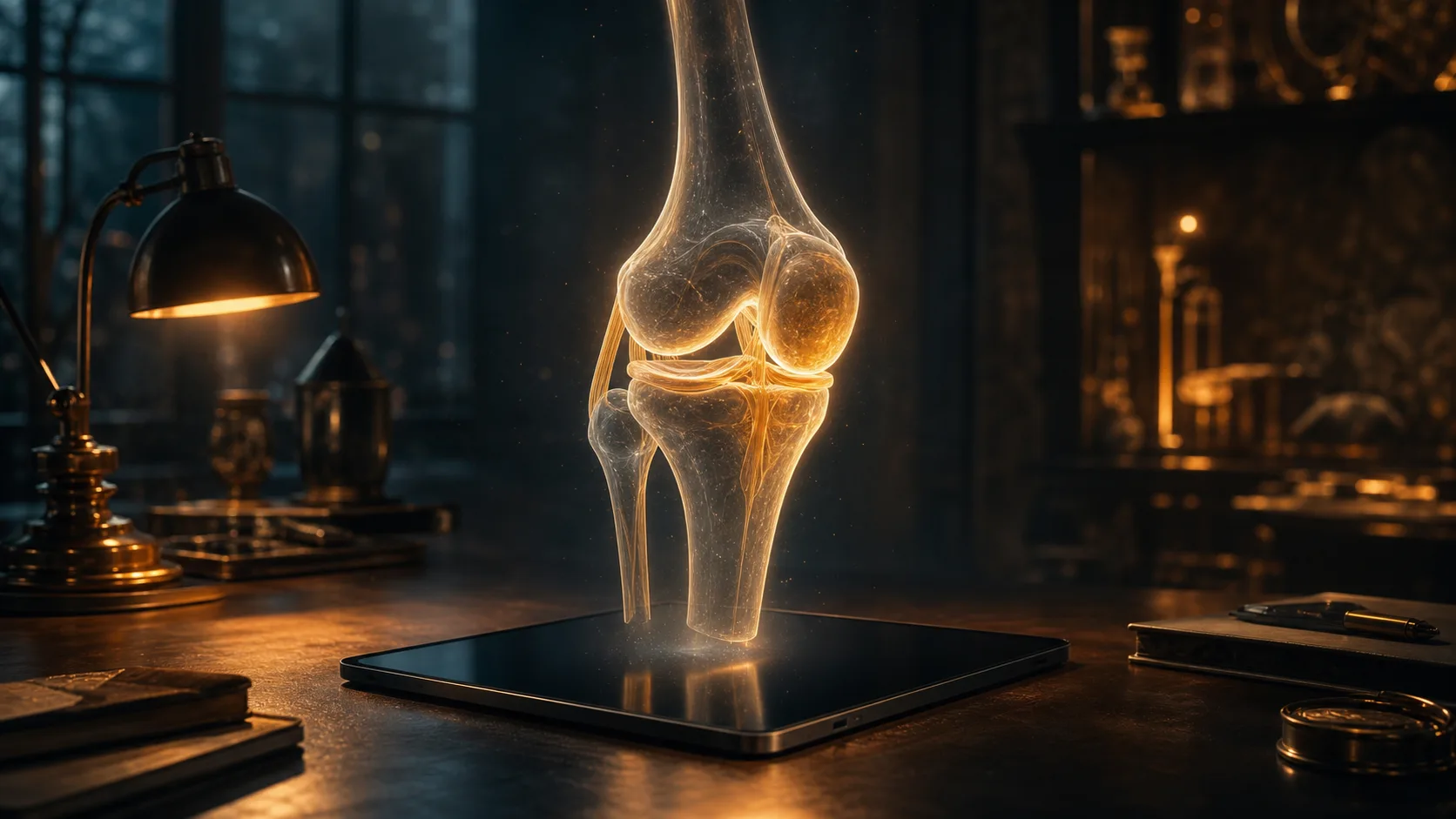
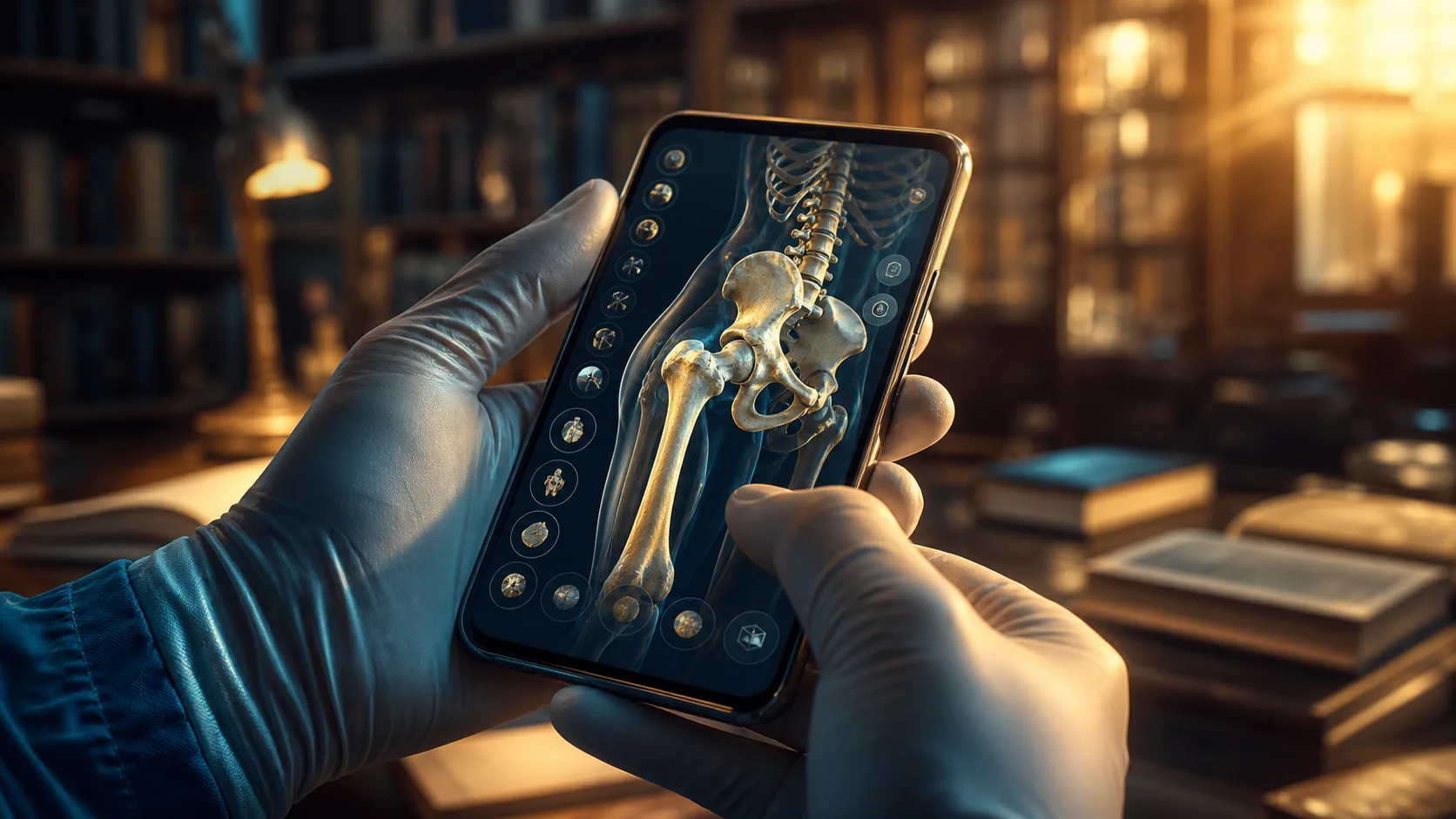
High-quality digital atlases and 3D anatomy applications solve this problem by allowing you to isolate specific structures, strip away overlapping tissues, and view complex joints from any angle. To get the most out of these tools, use them as an active learning companion rather than a passive reference. When studying a specific surgical approach, such as the Henry approach to the anterior forearm or the posterolateral approach to the elbow, manipulate the digital model to trace the internervous planes yourself. Identify the safe zones, the structures at risk, and how the superficial anatomy relates to the deep surgical targets.
Harnessing Spaced Repetition Software for Robust Memorisation
Spaced repetition software (SRS) relies on a highly robust cognitive science principle: reviewing information at systematically increasing intervals dramatically improves long-term memory retention. For the orthopaedic trainee, SRS is the most effective way to memorise exhaustive lists of classification systems, neurological root values, and congenital milestone timelines.
While there are many pre-made decks available covering orthopaedic curricula, the highest yield comes from creating your own flashcards. The act of distilling a complex topic—such as the Schatzker classification for tibial plateau fractures—into a concise, bite-size question forces you to extract the core visual and clinical features.
However, you must avoid the common trap of "recognition over recall." If you are using image-based cards for radiographic classifications, do not write the name of the condition on the front of the card. Use only the radiograph or clinical photo as the prompt, ensuring you are genuinely recalling the information from memory rather than simply reading a contextual clue.
Curating Video and Podcast Content for Commutes and Downtime
Screen fatigue is a genuine occupational hazard when preparing for surgical exams. Audio-visual resources, such as specialist orthopaedic revision podcasts and surgical technique video libraries, are excellent for giving your eyes a break while keeping your brain engaged. They are particularly useful for understanding complex biomechanical concepts, such as the force couples of the rotator cuff or the kinematics of the wrist, which are often easier to grasp when explained visually.
The crucial step here is ruthless curation. The internet is flooded with content, and it is easy to fall down a rabbit hole of watching fascinating but irrelevant surgical procedures. Map the content you consume directly to your syllabus or exam blueprint. If your exam heavily features trauma mechanics and adult joint reconstruction, prioritise series that focus on these areas.
A practical tip is to use a note-taking app while listening to podcasts or watching surgical videos. Keep your digital notebook open and jot down the specific examination buzzwords, classic clinical presentations, or specific biomechanical ratios mentioned by the experts.
Navigating Guidelines and Literature Without the Overwhelm
Orthopaedics relies heavily on consensus statements, scoring systems, and evolving clinical guidelines. Whether you are looking up the modified Frykman classification, the Majeed pelvic score, or contemporary post-operative rehabilitation protocols, having quick access to digital reference texts is essential.
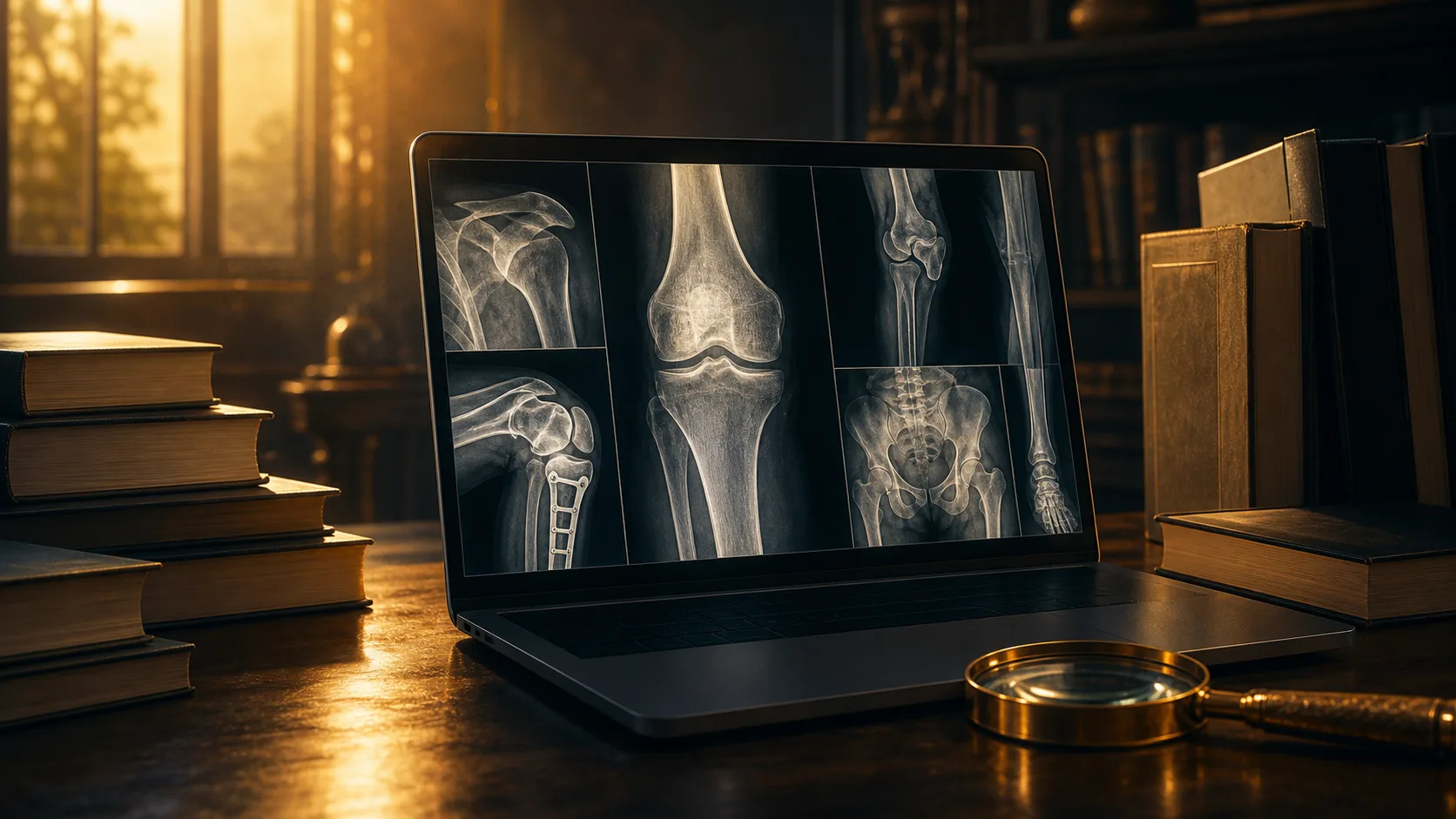
The temptation with digital libraries is to try and read everything. When you see the sheer volume of literature available on a topic like femoroacetabular impingement or carpal instability, it is easy to become overwhelmed. Avoid trying to memorise the primary literature verbatim. Instead, focus your digital reading on consensus review articles, official surgical society guidelines, and the standard reference texts recommended by your specific examination board.
Keep a centralised, digital folder of your most frequently referenced PDFs. When you encounter a difficult scenario, such as a complex regional pain syndrome guideline, you want to be able to access it in seconds during a study session, rather than spending twenty minutes navigating paywalls.
Protecting Your Focus: The Anti-Distraction Toolkit
The greatest irony of digital revision tools is that the very devices hosting your life-saving question banks and 3D anatomy apps are also portals to infinite distraction. A single notification during a deep study session can derail your concentration, pulling you out of a complex biomechanics problem and into a meaningless scroll through social media.
To genuinely benefit from digital orthopaedic tools, you must engineer your digital environment for deep work. Utilise built-in focus modes on your smartphone or tablet to silence all non-essential notifications during revision blocks. There are also robust applications designed to lock you out of distracting sites entirely for predetermined periods.
It is vital to separate your "work" device from your "leisure" device if possible, or at the very least, use different user profiles. When you open your anatomy app, you do not want to see a notification for a non-urgent message. Treat your exam revision with the same sterile discipline you apply in the operating theatre: no interruptions, total focus, and clear boundaries.
Using Simulation Apps for Viva and Clinical Reasoning Practice
Passing multiple-choice questions is only half the battle; most orthopaedic exams feature a robust clinical or viva component. This requires you to think aloud, justify your management plans, and demonstrate safe surgical reasoning in real-time. There are digital communication and clinical reasoning platforms that can help bridge the gap between solitary study and facing the examiners.
While fully immersive virtual reality surgical simulators are becoming more prevalent in training centres, you do not need expensive hardware to practise your reasoning. Use simple voice-recording applications on your phone. Present yourself with a clinical vignette or a radiograph, hit record, and verbalise your exact thought process as if you were standing in front of the examination board.
When you play it back, you will immediately hear where your reasoning falters. Do you use filler words? Do you jump to surgical interventions without first establishing the patient's baseline function and comorbidities? Do you fail to state the obvious radiographic findings out loud? This digital self-audit is brutal but highly effective for honing the polished, structured communication required to pass high-stakes oral exams.
Digital tools will never replace the fundamental hard work of orthopaedic revision, but they will absolutely give you a sharper edge if you wield them with intention. By curating high-yield resources, committing to active recall, and ruthlessly eliminating digital distractions, you can transform your smart devices into the ultimate surgical revision theatre. Take control of your screen time, trust your active revision process, and step into your exam with the confidence of a surgeon who has truly mastered their craft.
Share this article
Useful for a journal club, study list, or teaching session.