Three ankle films, three fibula fractures — the classification?
OrthoVellum Editorial · 1mo ago
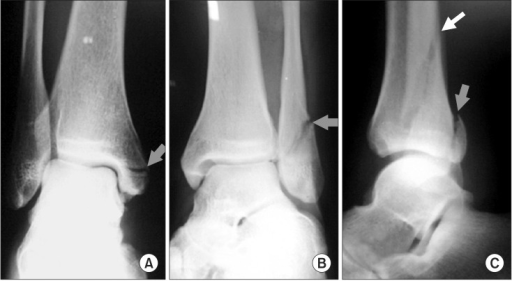
The case
These three ankle radiographs (A, B, C) each show a fibular fracture at a different level. What classification system does this illustrate, and why does the level of the fibular fracture matter for ankle stability?
Reveal the model answertap to expand
This is the Weber (Danis–Weber) classification, based on the level of the fibular fracture relative to the syndesmosis: Weber A is below the syndesmosis (usually stable), Weber B is at the level of the syndesmosis (variable — depends on the medial side), and Weber C is above the syndesmosis (syndesmosis disrupted, unstable). The higher the fibular fracture, the more likely the syndesmosis is injured and the mortise unstable — so the level guides whether the injury needs fixation and syndesmotic stabilisation.
- Weber A below / B at / C above the syndesmosis
- Higher fibular fracture means greater syndesmotic disruption and less stability
- Assess the medial clear space and talar shift to judge stability
- Weber level guides operative decisions and the need for syndesmotic fixation
Discussion (0)
No comments yet — be the first to weigh in.