Benign Vascular Tumour | Vertebrae & Skull | Corduroy Sign
- Most common benign vascular tumour of bone - vertebral bodies (28%) and skull (20%)
- Typical lesion: bright T1 AND bright T2 (fat content) - but the AGGRESSIVE lesion is fat-poor and T1 DARK
- Radiographs: Corduroy pattern (spine), sunburst (skull); polka-dot on axial CT
- 95%+ asymptomatic - observation only, no malignant transformation
- “Bright T1 AND T2 rules a lesion IN, but a dark T1 does not rule hemangioma out - it suggests the fat-poor aggressive type
- “Only symptomatic hemangiomas require treatment
- “Preoperative embolization reduces surgical bleeding
- “Malignant transformation does NOT occur
Hemangioma of Bone
Overview and Epidemiology
Haemangioma is the most common benign vascular tumour of bone. It is usually an incidental finding in an adult, and it does not undergo malignant transformation.
How common. Autopsy studies find haemangiomas in 10-12% of all spines. The true prevalence is unknown, because many are never detected, and fewer than 1% become symptomatic over a lifetime.
Who. Detection peaks at 40-60 years (mean 50). The lesion can occur at any age after skeletal maturity but is rare in children, under 5% of cases; it is likely congenital and only becomes clinically apparent in adulthood. Women are affected twice as often as men overall and three times as often in the spine, whereas skull haemangiomas show no significant gender predilection.
Where. By site:
- Vertebral bodies - 28-30%, thoracic more than lumbar more than cervical
- Skull and calvarium - 20%, mainly the frontal and parietal bones
- Facial bones - 10%: maxilla, mandible, zygoma
- Long bones - 5%: femur, humerus, tibia
- Other - ribs, pelvis and scapula, rarely
Within the spine. The thoracic spine carries 55-60% of vertebral lesions, most often T4-T9. The lumbar spine carries 30-35% (L1-L3), the cervical spine 5-10% and the sacrum less than 5%. Multiple levels are involved in 30-40% of vertebral cases.
Pathophysiology
What it is. Likely a hamartoma: a developmental malformation, present from birth and growing slowly over decades, rather than a true neoplasm. The WHO classification nonetheless lists it as a benign vascular neoplasm (see the Evidence Base). The female predominance suggests a hormonal role (see pregnancy, under Clinical Presentation).
Histological types. Three are described:
- Cavernous - large, thin-walled, blood-filled channels lined by endothelium, separated by fibrous stroma with fatty marrow between the vessels. The more common type, and the more symptomatic
- Capillary - small, thin-walled, densely packed capillary-sized vessels with less fatty stroma. Less aggressive
- Mixed - capillary and cavernous elements together
How symptoms arise. Four mechanisms, plus pregnancy (see Clinical Presentation):
- Expansion - slow growth expands the vertebral body and causes pain
- Fracture - pathological fracture of the weakened vertebral body
- Compression - epidural extension compresses the spinal cord or nerve roots
- Haemorrhage - acute bleeding into the lesion, very rare
Typical and aggressive lesions. A typical lesion is quiescent and found by chance; a lesion becomes symptomatic when it behaves aggressively, with rapid growth or cortical destruction, and symptomatic haemangiomas usually have posterior-element involvement or epidural extension.
- typical
- Asymptomatic (95%)
- aggressive
- Pain, neurological deficit (5%)
- typical
- Corduroy, well-defined
- aggressive
- Cortical destruction, soft tissue
- typical
- Bright T1 and T2
- aggressive
- Variable signal, soft tissue mass
- typical
- Body only, no posterior elements
- aggressive
- Body + pedicles/posterior elements
- typical
- Minimal, contained
- aggressive
- Marked expansion, epidural extension
- typical
- Observation
- aggressive
- Surgery, radiation, embolization
Clinical Presentation
The typical case. A 50-year-old woman has a lumbar spine MRI while being evaluated for mechanical back pain. The L3 vertebral body shows bright T1 and T2 signal, a lateral radiograph shows the corduroy appearance, and the lesion itself is asymptomatic.
The incidental lesion. At least 95% of haemangiomas are asymptomatic, found on spine MRI or CT done for an unrelated complaint. There are no local symptoms or neurological findings, the lesion is confined to the vertebral body with no posterior-element involvement or soft-tissue component, and it needs no intervention.
Pain. The symptomatic minority present with pain of one of four kinds:
- Localised back pain - mechanical, worse with activity
- Night pain - may be present with active expansion
- Radicular pain - nerve-root compression from epidural extension
- Acute pain of sudden onset - pathological fracture
Neurological presentations. These are rare:
- Radiculopathy - dermatomal pain, sensory change, weakness
- Myelopathy - spastic gait, hyperreflexia, bowel and bladder dysfunction
- Cauda equina syndrome - rare, from lumbar lesions with massive epidural extension
- Acute paraplegia - extremely rare, from acute haemorrhage or fracture
Pregnancy. A lesion may enlarge rapidly during pregnancy, an oestrogen effect; this is rare, and it can bring new back pain or neurological symptoms; the lesion usually regresses postpartum, but cord compression may require urgent intervention. Counsel women of childbearing age accordingly.
Skull lesions. A skull haemangioma without symptoms presents as a palpable mass and a cosmetic concern. It can erode through the inner or outer table, dural involvement can bring headache or seizures (rare), and it bleeds profusely if traumatised or at surgery.
Long-bone lesions. Localised pain and swelling, a palpable mass where the bone is superficial, and, rarely, a pathological fracture.
Examination. Inspection may show a visible deformity over a skull lesion or a kyphotic deformity after a vertebral fracture; the overlying skin is normal. Palpation may find tenderness to percussion over a vertebral lesion, a bony prominence over a skull lesion, and a soft-tissue mass with an aggressive lesion.
The neurological examination is usually normal in asymptomatic cases. When it is not, look for radicular findings (dermatomal sensory loss, weakness), upper motor neuron signs of myelopathy, and bowel or bladder dysfunction from cauda equina compression.
Investigations
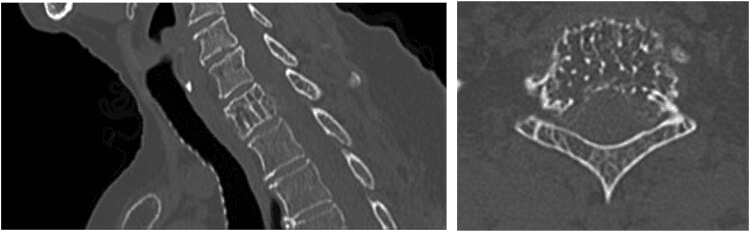
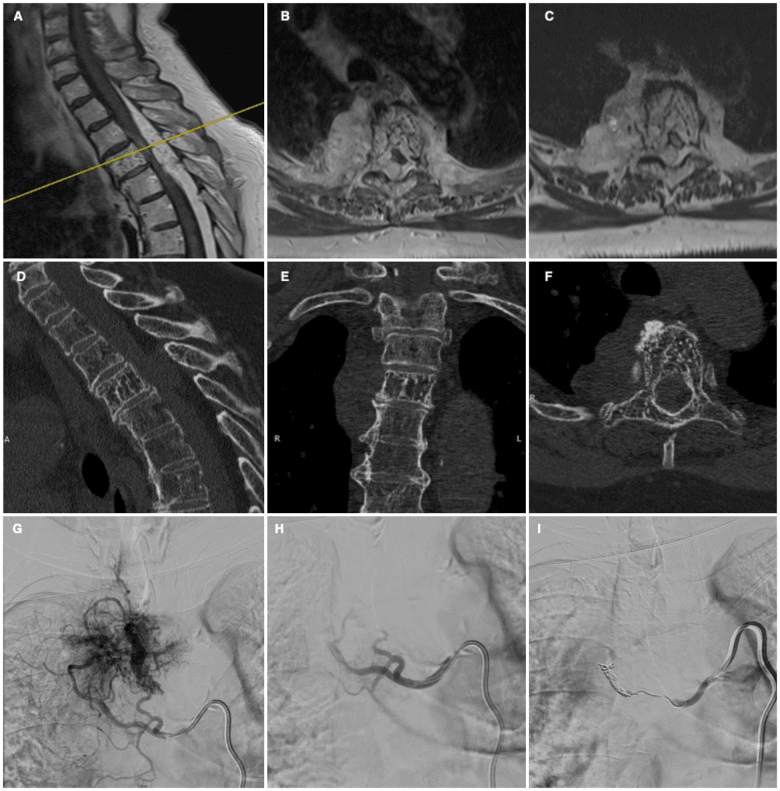
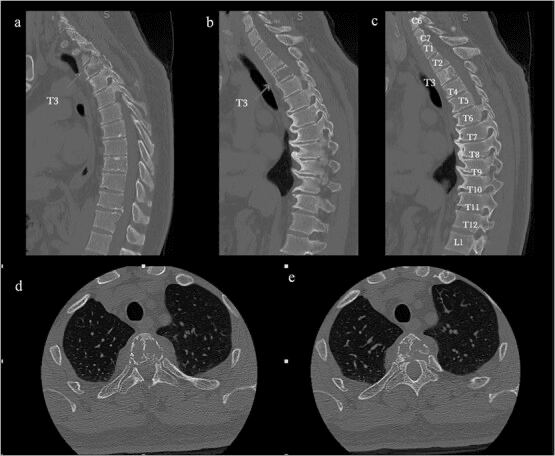
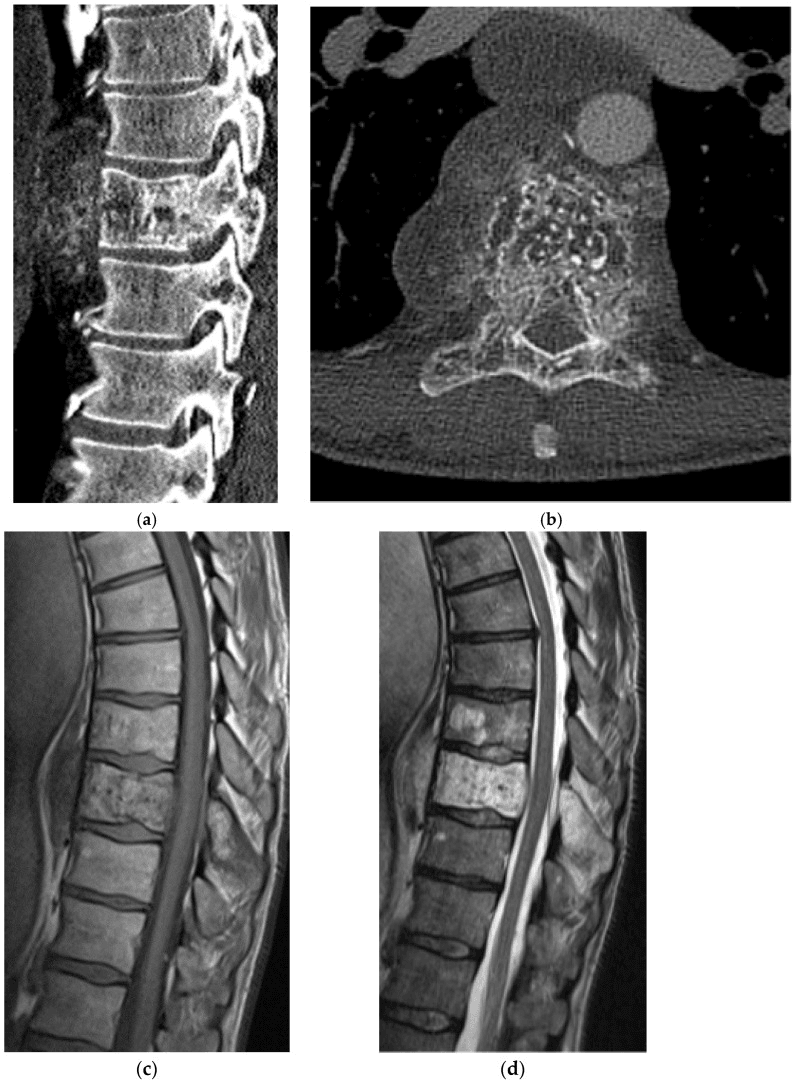
Radiographs of the spine. The lateral view shows the corduroy or jail-bar appearance: vertical striations made by thickened vertical trabeculae, with loss of the horizontal trabeculae and a coarse trabecular pattern. The striations are less apparent on the AP view. The cortex is usually intact, although aggressive lesions may destroy it, and the vertebral body rarely expands with increased height.
Radiographs of the skull. Skull lesions are typically well defined, with sclerotic margins, in one of three patterns:
- Sunburst - trabeculae radiating from the centre, the classic appearance
- Honeycomb - multiple small lucencies
- Soap-bubble - an expansile lytic lesion with septa
Radiographs of long bones. A lytic lesion with a trabeculated, soap-bubble or honeycomb pattern, and cortical thinning or expansion.
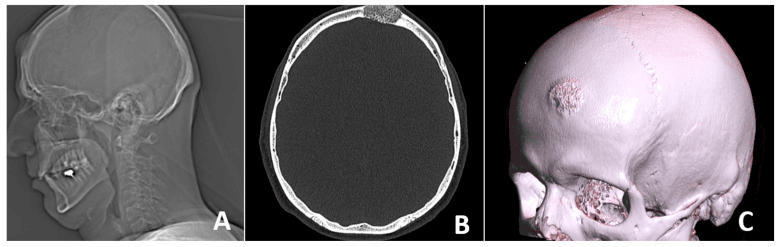
CT. On axial slices the thickened vertical trabeculae are cut in cross-section and appear as dots in low-attenuation marrow, the polka-dot (or corduroy) sign; sagittal and coronal reconstructions show the vertical striations. CT also assesses cortical integrity and any epidural soft tissue extending into the spinal canal. In the skull it shows radiating trabeculations and expansion of the diploe between the inner and outer tables, with a soft-tissue mass if the dura is involved.
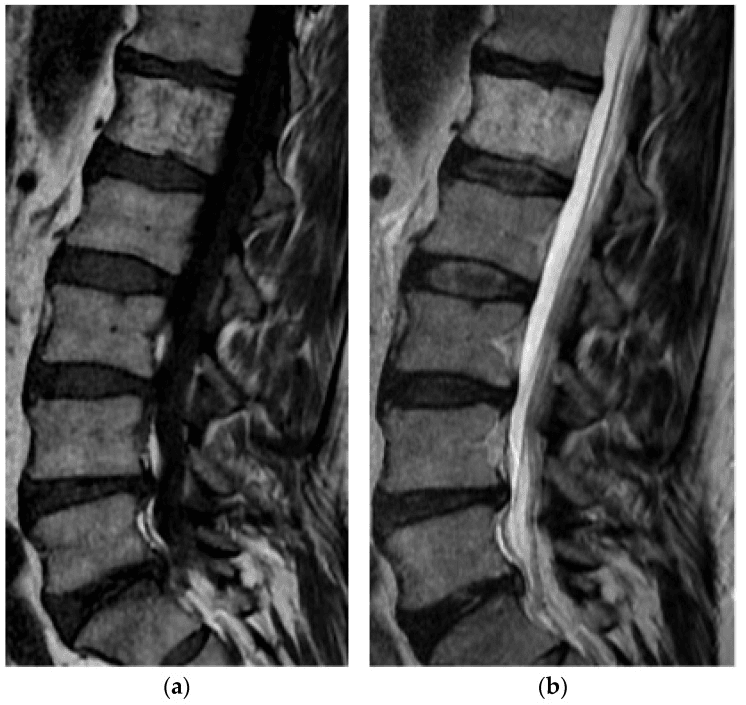
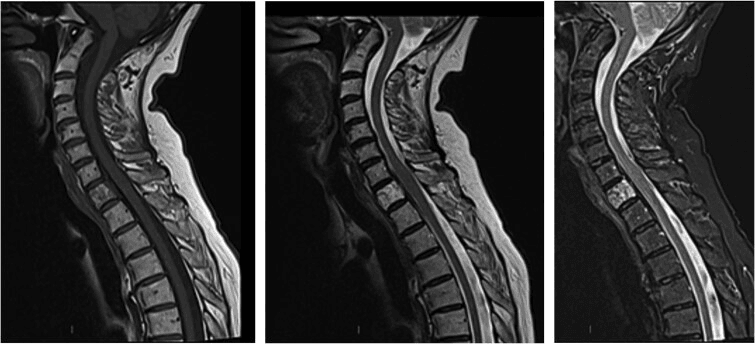
MRI of the typical lesion. The typical haemangioma is bright on T1 and bright on T2. The T1 signal comes from fat between the vascular spaces and matches subcutaneous fat; the T2 signal is a heterogeneous hyperintensity from slow-flowing blood and oedema. On STIR or fat-suppressed images the signal drops out, which confirms the fat.
Why the T1 signal matters. Most other vertebral lesions contain no fat. Metastases and myeloma are both dark on T1 and bright on T2, so bright T1 with bright T2 is virtually diagnostic of a typical haemangioma. Such a lesion is a haemangioma until proven otherwise, and biopsy is usually not needed.
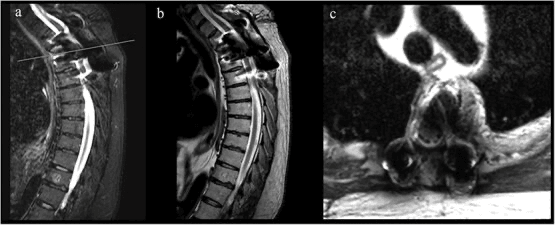
The test works in one direction only. The aggressive, cord-compressing haemangioma is fat-poor and vascular-rich, so it is characteristically dark or intermediate on T1 and sits in the same signal bracket as metastasis and myeloma. A dark T1 therefore does not exclude haemangioma; it makes the dangerous variant more likely, not less. Grade any such lesion against the Laredo criteria rather than dismissing haemangioma from the differential, and remember that percutaneous biopsy of a vascular lesion carries a real bleeding risk.
MRI of the aggressive lesion. These are the features that mark it:
- Extension into the posterior elements (pedicles, lamina)
- An epidural soft-tissue mass
- Spinal cord compression or displacement
- Vertebral body expansion (greater than 50% canal compromise)
- Heterogeneous signal, with less fat and more vascular tissue
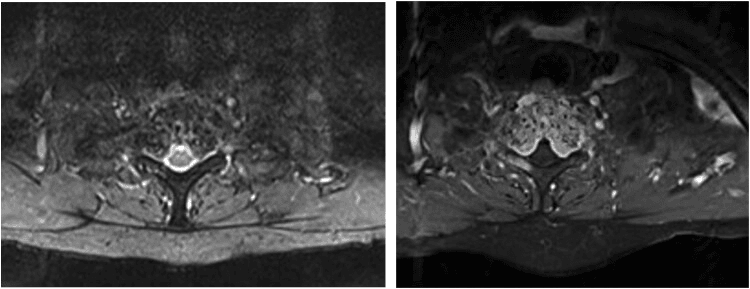
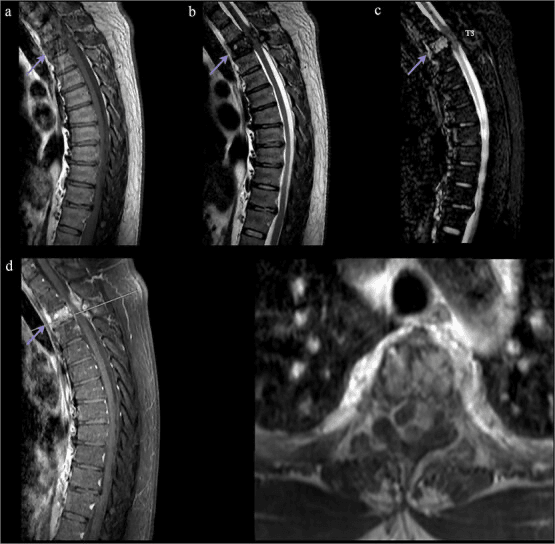
Contrast. Usually not needed for the diagnosis. The lesion enhances if contrast is given, because it is vascular, and contrast helps delineate the epidural extent for surgical planning.
Angiography. Used for preoperative planning, for embolisation of a symptomatic lesion, and to confirm the vascular nature of a lesion when imaging is ambiguous. It shows a hypervascular lesion with an intense blush, arterial feeders from the vertebral, intercostal or lumbar arteries, and arteriovenous shunting in some cases.
When to biopsy. A classic lesion is diagnosed on imaging. Biopsy is for:
- Atypical radiographic features - cortical destruction, a soft-tissue mass
- Concern for malignancy (angiosarcoma)
- A neurological deficit without a clear diagnosis
- A young patient, since haemangiomas are rare in children
Pathology. The specimen is soft, red-purple, spongy tissue with blood-filled spaces. The endothelial cells are bland, with no atypia and no mitoses: a benign proliferation.
Immunohistochemistry. The expected panel:
- CD31 positive (endothelial marker)
- CD34 positive (vascular marker)
- ERG positive (endothelial transcription factor)
- Ki-67 proliferation index low, less than 2%
- Cytokeratin negative, excluding carcinoma
Histological differential. Angiosarcoma shows cellular atypia, mitoses and infiltrative growth. Haemangioblastoma is a CNS lesion, not a bone primary. A vascular malformation looks similar but is a developmental anomaly, not a tumour.
Differential Diagnosis
In the vertebral body. The table sets the haemangioma against metastasis, myeloma and Paget disease.
- hemangioma
- BRIGHT (pathognomonic)
- metastasis
- DARK
- myeloma
- DARK
- paget
- Variable (mixed)
- hemangioma
- BRIGHT
- metastasis
- BRIGHT
- myeloma
- BRIGHT
- paget
- Variable
- hemangioma
- Corduroy (vertical striations)
- metastasis
- Lytic destruction
- myeloma
- Punched-out, osteopenia
- paget
- Picture frame, sclerotic
- hemangioma
- Rare (aggressive types only)
- metastasis
- Common (destroyed)
- myeloma
- Occasional
- paget
- Yes (sclerotic)
- hemangioma
- Usually solitary (70%)
- metastasis
- Multiple
- myeloma
- Diffuse
- paget
- Polyostotic
- hemangioma
- 40-60 years
- metastasis
- 50-70 years
- myeloma
- Greater than 60 years
- paget
- Greater than 60 years
Beyond the table. A metastasis usually occurs in a patient older than 50, comes with a known primary malignancy and often destroys the pedicle, which a haemangioma usually spares. Myeloma shows diffuse marrow infiltration on MRI and a monoclonal protein, hypercalcaemia and anaemia on blood tests. Paget disease is mixed lytic and sclerotic on radiographs, raises the alkaline phosphatase and is common in the pelvis.
Other spinal and skull lesions. The remaining differentials, grouped by the site where they mimic a haemangioma:
- Mimics in
- Spine
- Age
- Adults 40-60 years
- Features
- Sacrum most common, can be mobile spine; destructive, soft-tissue mass, bright T2 on MRI; physaliferous cells, brachyury positive
- Mimics in
- Spine
- Age
- 20-40 years
- Features
- Sacrum more than mobile spine; dark T1, heterogeneous T2; lytic, destructive, extends into soft tissue
- Mimics in
- Skull
- Age
- Children under 10 years
- Features
- Punched-out lytic lesion with bevelled edges; CD1a-positive Langerhans cells; may resolve spontaneously
- Mimics in
- Skull
- Age
- Adolescents and young adults
- Features
- Destructive, soft-tissue mass, periosteal reaction; malignant osteoid production, cellular atypia; poor prognosis
- Mimics in
- Skull
- Age
- Adults 40-60 years
- Features
- Skull vault, hyperostotic; sclerotic, with a sunburst that can mimic haemangioma; homogeneous enhancement on MRI
Surgical Management of Cord-Compressing Vertebral Hemangiomas (Mayo Clinic)
- Of 59 vertebral hemangiomas, 11 presented with or developed spinal cord compression
- All 11 cord-compression patients recovered fully after decompressive surgery
- Subtotal resection followed by low-dose radiotherapy (1000 cGy or less) led to recurrence in 3 of 6; no recurrence with 2600-4500 cGy or gross total removal
- Authors recommend preoperative angiography and embolization for progressive deficit, then decompression with the approach dictated by extent, and postoperative radiotherapy after subtotal removal
Embolization Safety: Protecting the Spinal Cord Blood Supply
- The danger is a shared radiculomedullary feeder. The segmental (intercostal/lumbar) arteries that supply a vertebral hemangioma can also give off a radiculomedullary branch to the anterior spinal artery - in the lower thoracic/upper lumbar spine this is the artery of Adamkiewicz (arteria radicularis magna, usually left, T9-L2). Embolic material that passes into that branch causes anterior spinal artery infarction and paraplegia - the catastrophic complication of spinal tumour embolization.
- How the risk is minimised. Embolization is done by superselective microcatheterisation of the tumour's feeding pedicles, with careful pre-embolization angiography (and provocative testing where indicated) to confirm that the vessel about to be embolized does not supply the cord; the particle size is chosen large enough not to pass through arteriovenous shunts into the cord or lungs; and the operator stops if a radiculomedullary/cord feeder is identified. Liquid agents and ethanol (alcohol) are powerful but higher-risk (reflux, cord infarction, skin necrosis, cardiovascular effects), so they are used cautiously.
- Timing and purpose. Particulate transarterial embolization is performed 24-48 hours before surgery (not the same day) so the tumour bed thromboses and intraoperative blood loss falls; it is also used as a stand-alone or vertebroplasty-adjunct treatment for painful non-compressive lesions.
Q: What is the key safety concern when embolizing a vertebral hemangioma? A: The segmental feeders can share a radiculomedullary branch to the anterior spinal artery (the artery of Adamkiewicz, typically left T9-L2) - embolizing it causes anterior spinal artery infarction and paraplegia. Mitigate by superselective catheterisation, pre-embolization angiography ± provocative testing to exclude a cord feeder, appropriate particle size, and abandoning embolization of any vessel supplying the cord. Embolize 24-48 hours pre-op so the tumour thromboses.
Vertebroplasty in a Hypervascular Lesion: the Cement-Leak Hazard
- The lesion is plumbed into the epidural veins. A hemangioma's dilated intraosseous vascular channels communicate directly with the basivertebral vein and the valveless epidural and paravertebral venous plexus (Batson's plexus). Injecting PMMA cement into this high-flow vascular space therefore risks the cement tracking into the epidural space (cord/root compression) or embolizing through the veins to the lungs (pulmonary cement embolism) - a greater risk than in an ordinary osteoporotic fracture.
- Reduce the flow before you inject. This is the rationale for pre-procedural sclerosis/embolization (transarterial particles or intralesional alcohol) before cement in an aggressive or epidural-extending hemangioma - occluding the vascular channels first lowers the leak risk and improves the durability shown in the alcohol-embolization-plus-vertebroplasty series.
- Inject safely. Use higher-viscosity cement injected slowly under continuous ("live") biplane/lateral fluoroscopy, and stop at the first sign of posterior or venous filling; a kyphoplasty balloon cavity can allow a more controlled, lower-pressure fill. The goal is pain relief and stabilisation, not complete filling.
Q: Why is cement extravasation especially dangerous in a vertebral hemangioma, and how do you mitigate it? A: The hemangioma's dilated channels connect to the basivertebral and valveless epidural/paravertebral (Batson) venous plexus, so injected PMMA can track into the epidural space (cord compression) or embolize to the lungs. Mitigate by sclerosing/embolizing the lesion first (alcohol or particles), then injecting high-viscosity cement slowly under continuous live fluoroscopy, stopping at the first hint of venous/posterior filling.
Management
The principle. Only symptomatic haemangiomas need treatment, and the invasiveness of the treatment is matched to the disease, from observation for the incidental lesion to embolisation, decompression and stabilisation for cord compression.
The asymptomatic lesion. An incidental lesion without symptoms or aggressive features is observed. No follow-up imaging is required and there are no activity restrictions; the lesion stays stable for life and intervention is rarely needed. Explain that it is a benign vascular tumour, not cancer, with no risk of malignant transformation, that it will not cause symptoms in the vast majority, and that new back pain or neurological symptoms are a reason to return. For the asymptomatic patient it is safe to ignore, and the patient can be discharged.
Pain without a neurological deficit. Radiotherapy is first-line, vertebroplasty or kyphoplasty the alternative, and embolisation is used if both are contraindicated.
Radiotherapy. The conventional dose is 20-40 Gy fractionated over 10-20 fractions; within that range, the largest multicentre series found that a total of 34 Gy or more gave significantly better symptom relief than a lower dose (Heyd, in the Evidence Base). Radiotherapy scleroses the vascular channels and reduces tumour volume, and gives pain relief in 80-90%, gradually over weeks to months. The contraindications are a neurological deficit, where surgery is preferred, and young age.
Vertebroplasty and kyphoplasty. For a painful vertebral haemangioma with partial collapse, cement is injected percutaneously into the vertebral body. It gives immediate pain relief in 80-90%, is minimally invasive, and recovery is quick; its complications are set out below.
Embolisation alone. Transarterial embolisation of the feeding vessels, with PVA particles, coils or Onyx liquid embolic, reduces tumour vascularity and palliates pain. Pain relief is variable (50-70%) and recurrence is common as the blood supply reconstitutes. Its best use is as a preoperative adjunct to surgery.
Pathological fracture. Kyphoplasty if the fracture is stable and there is no neurology; surgical stabilisation if it is unstable or there is a neurological deficit. Operative treatment of the fracture is surgical fixation with curettage and bone grafting.
Neurological deficit or cord compression. Obtain an urgent MRI to confirm the compression, embolise preoperatively (see Surgical Technique), then decompress and fuse, and consider adjuvant radiotherapy postoperatively. The indications for decompression and stabilisation are:
- Neurological deficit (myelopathy, radiculopathy)
- Spinal instability or pathological fracture
- Epidural extension with cord compression
- Failed radiation or vertebroplasty
- Rapidly progressive symptoms
Aggressive features (cortical destruction, a soft-tissue component). Biopsy to exclude angiosarcoma, then en bloc resection if feasible; radiotherapy with embolisation if the lesion is unresectable.
Surgical Technique
Preparing for the bleeding. Surgery on a haemangioma carries a risk of profuse bleeding. Preoperative embolisation, performed 24-48 hours before the operation, is essential for these vascular lesions and decreases intraoperative blood loss by 40-60%. Type and cross-match 4-6 units of packed red cells for potentially massive bleeding, have a cell saver available for autotransfusion, and plan the approach on an updated MRI.
Posterior decompression. A laminectomy decompresses the spinal cord and removes the epidural component of the haemangioma. Instrumented fusion is added for instability and is usually required. Avoid aggressive curettage of the vertebral body, because of the bleeding risk.
Vertebrectomy and reconstruction. Indicated for extensive vertebral body involvement, instability or failed decompression. The vertebrectomy is en bloc or piecemeal, through an anterior or posterior approach or both, with cage reconstruction (titanium mesh, PEEK or allograft strut) and posterior instrumented fusion. It is definitive treatment with low recurrence, but the morbidity is significant and it often requires an anterior approach.
Long-bone lesions. Thorough intralesional curettage with local adjuvants (phenol, cryotherapy), bone grafting with autograft or allograft, and prophylactic fixation if a structural defect remains.
Comprehensive Management of Symptomatic and Aggressive Vertebral Hemangiomas
- Conservative surgical strategies (decompression without aggressive resection) suit most symptomatic hemangiomas causing cord compression without instability or deformity
- Complete intralesional spondylectomy after embolization can be performed safely for aggressive lesions with circumferential vertebral involvement and prevents recurrence
- Transarterial embolization without decompression is effective for painful intraosseous (non-compressive) hemangiomas
- Vertebroplasty improves pain, especially with vertebral body compression fracture and no deficit, but is less durable for long-term pain control
Management Algorithm
Complications & Prognosis
The percentage ranges in this section are conventional teaching estimates, not single-study measurements. The measured figures are in the Evidence Base cards: Fox (11 of 11 with full neurological recovery, and recurrence split by radiotherapy dose), Heyd (90.5% response at 34 Gy or more) and Premat (VAS 7.2 to 3.1, with 88% sensory regression).
Spontaneous complications. All are rare. Pathological fracture, a vertebral compression fracture, occurs in less than 5%; spinal cord compression from epidural extension in less than 1%; and acute haemorrhage, presenting with an acute neurological deficit, is extremely rare.
Treatment complications. Each treatment has its own profile:
- Complications
- Radiation myelopathy (rare: less than 1% with modern techniques); vertebral compression fracture (5-10%); skin changes (erythema, pigmentation); transient Lhermitte sign
- Complications
- Cement extravasation, epidural (2-5%) or vascular (1-2%); neurological injury (less than 1%); infection (less than 1%); adjacent-level fracture (5-10%)
- Complications
- Massive intraoperative haemorrhage, the most significant risk (10-20% even with embolisation; up to 2-3 litres of blood loss); neurological worsening, cord or nerve root (2-5%); CSF leak (3-5%); infection (2-5%, the standard surgical-site risk); incomplete resection with residual tumour if bleeding prevents visualisation; recurrence (5% if resection is incomplete); instability, which may require fusion after a destabilising procedure
Prognosis. Excellent: most patients remain asymptomatic for life. Symptomatic lesions respond well to treatment: 85-95% of patients with a preoperative deficit improve neurologically after surgery, quality of life is excellent after successful treatment, and the majority return fully to their activities.
Guidelines, Registries & Global Practice
Global Epidemiology
- Most common benign vascular tumour of bone; found in 10-12% of spines at autopsy worldwide
- Vertebral body (28-30%) and calvarium (about 20%) are the dominant sites; thoracic spine predominates
- Peak detection 4th-5th decades, female-to-male ratio about 2:1 (up to 3:1 for vertebral lesions)
- Under 1% of all hemangiomas ever become symptomatic, and progression of an incidental lesion is rare (2 of 59 over a mean 7.4 years in the Mayo series)
Side-by-Side Guidance
Bone hemangioma has no single dedicated society guideline; recommendations are derived from tumour-classification bodies and spine-oncology consensus. Where they converge and where emphasis differs:
- who
- Benign vascular neoplasm; imaging usually diagnostic
- acr_esr
- Bright T1 and T2 with fat = no biopsy; MRI/CT problem-solving
- spine_onc
- Reserve biopsy for atypical/aggressive features
- who
- No malignant potential
- acr_esr
- No routine surveillance imaging
- spine_onc
- Observation; reassure
- who
- n/a (classification body)
- acr_esr
- Vertebroplasty or radiotherapy (at least 34 Gy)
- spine_onc
- Radiotherapy or vertebroplasty; embolization adjunct
- who
- n/a
- acr_esr
- Angiography/embolization then intervention
- spine_onc
- Preoperative embolization + decompression +/- spondylectomy
WHO Classification of Tumours (5th ed, 2020) anchors the benign biology. Imaging-society guidance (ACR Appropriateness Criteria, ESR/European radiology consensus) drives the no-biopsy, no-surveillance approach for classic lesions. Spine-oncology consensus (e.g. AO Spine, Acosta/UCSF framework) governs the graded intervention ladder.
Registry and Resource Considerations
- No arthroplasty-style registry tracks hemangioma; evidence rests on institutional series (Mayo, UCSF, Pitie-Salpetriere) and the German multicenter radiotherapy cohort
- High-resource settings: Interventional radiology enables preoperative or stand-alone transarterial/alcohol embolization and vertebroplasty, shifting many aggressive epidural cases away from open surgery
- Limited-resource settings: Where embolization and cell-salvage are unavailable, open surgery for vascular lesions carries higher haemorrhage risk; radiotherapy (widely available, dose at least 34 Gy) becomes a key first-line option for painful lesions, and conservative observation is emphasised for incidental findings
- MDT coordination between spine surgeon and interventional radiologist is the practice standard wherever embolization is offered
Controversies & Areas of Uncertainty
- Surveillance of "atypical" but asymptomatic lesions: Low-T1 (fat-poor) lesions can look worrying yet behave indolently. There is no consensus on whether to image-monitor a fat-poor lesion without Laredo aggressive features; most authors observe, but interval MRI is sometimes used.
- Vertebroplasty alone for aggressive epidural lesions: Cementoplasty (with or without alcohol embolization) controls pain and sensory symptoms durably, but is unreliable for motor deficit. The threshold for choosing percutaneous treatment over open decompression in patients with mild myelopathy is debated.
- Embolization technique and timing: Particulate transarterial embolization 24-48 hours preoperatively is standard, but direct intralesional alcohol/Onyx and the optimal interval are not standardised, and radicular feeders raise spinal-cord-infarction concerns.
- Adjuvant radiotherapy after subtotal resection: Historical data show recurrence with under-dosed radiotherapy; the role of routine postoperative radiotherapy after modern gross-total or near-total resection is unsettled, and long-term radiation risk must be weighed in young patients.
- Pregnancy-associated enlargement: The reported rapid growth and regression of vertebral hemangiomas in pregnancy is based on case reports; the true magnitude of estrogen sensitivity and how aggressively to intervene during pregnancy remain uncertain.
- Biopsy safety: Bright-T1/T2 classic lesions need no biopsy, but when imaging is atypical the bleeding risk of percutaneous biopsy of a vascular lesion versus the need to exclude angiosarcoma is a genuine trade-off.
MCQ Practice Points
Q: What is the classic radiographic appearance of vertebral hemangioma on plain films and CT?
A: Corduroy/jail-bar sign on lateral radiograph: Vertical striations from thickened trabeculae. Polka-dot sign on axial CT: Thickened trabeculae in cross-section appearing as dots. Fat and blood within lesion. Most are incidental findings in thoracic greater than lumbar spine. Typically involves vertebral body.
Q: What MRI characteristics distinguish aggressive from non-aggressive vertebral hemangiomas?
A: Non-aggressive: T1 and T2 hyperintense (high fat content), partial vertebral body involvement, no expansion. Aggressive: T1 hypointense (less fat, more vascular), entire vertebral body involved, posterior element extension, epidural soft tissue mass, cortical expansion. Low T1 signal correlates with aggressive behavior.
Q: Why should bone scan not be used to screen for multiple myeloma but can detect vertebral hemangiomas?
A: Myeloma suppresses osteoblast activity - purely lytic lesions show no bone scan uptake. Hemangiomas have reactive bone formation around dilated vessels - show variable uptake. However, vertebral hemangiomas are usually diagnosed on MRI during spinal imaging. Myeloma screening uses skeletal survey or whole-body MRI.
Q: What are the treatment options for symptomatic or aggressive vertebral hemangioma?
A: Asymptomatic: Observation only. Painful without compression: Vertebroplasty (cement stabilization and pain relief). Cord compression: Embolization + surgical decompression + stabilization. Pre-operative embolization reduces intraoperative bleeding. Radiation for residual/recurrent disease. Avoid biopsy - risk of hemorrhage.
Q: What is the typical location and age distribution of bone hemangiomas?
A: Most common in spine (thoracic greater than lumbar), followed by skull. Long bone and appendicular involvement rare. Peak incidence 4th-5th decades. Female predominance. Incidence increases with age - found in 10-12% of autopsy spines. Most remain asymptomatic throughout life; only 1% become symptomatic.
Clinical Decision Scenarios
Practise clinical reasoning and management decisions out loud
“A 55-year-old woman undergoes MRI for chronic mechanical low back pain. L3 vertebral body shows a 2 cm lesion with bright signal on both T1 and T2 sequences, no epidural extension, no posterior element involvement. She has no radicular symptoms or neurological deficit.”
“A 48-year-old man presents with 3-month progressive bilateral lower extremity weakness, gait imbalance, and hyperreflexia. MRI shows T6 vertebral hemangioma with epidural extension causing 60% spinal canal stenosis and cord compression. No pathological fracture. He has 4/5 strength in lower extremities and upgoing plantars.”
“A 38-year-old woman has 6 months of severe localised thoracic pain. MRI shows a T8 hemangioma with low T1 signal, involvement of the whole vertebral body and pedicle, and a small epidural soft-tissue component causing mild canal narrowing. She has sensory paraesthesia in a band-like distribution but normal power, reflexes, and bladder function. She is keen to avoid major open surgery.”
Must-Know Facts
- DEFINITION: Benign vascular tumor, most common in vertebrae (28%) and skull (20%)
- AGE: Adults 40-60 years, female to male 2:1, rare in children
- INCIDENCE: 10-12% of spines at autopsy, less than 1% symptomatic
- MRI: BRIGHT T1 and BRIGHT T2 (fat plus blood) is diagnostic of the typical lesion; the aggressive lesion is fat-poor and DARK on T1
- X-RAY: Corduroy (vertical striations) in spine, sunburst/honeycomb in skull
- MANAGEMENT: Observation for 95%+ (asymptomatic), surgery only if neurological deficit
- PROGNOSIS: Benign, never malignant transformation, excellent outcomes
Imaging Key Points
- MRI T1 BRIGHT + T2 BRIGHT = hemangioma, no biopsy needed - but a DARK T1 does not exclude it, it suggests the aggressive fat-poor type
- PLAIN X-RAY SPINE: Corduroy (vertical striations lateral view), polka-dot (CT axial)
- PLAIN X-RAY SKULL: Sunburst (radiating trabeculae), honeycomb, soap-bubble
- AGGRESSIVE FEATURES: Posterior element involvement, epidural extension, soft tissue mass, cortical destruction
- CT: Thickened vertical trabeculae (polka-dot axial), assess cortical integrity
- ANGIOGRAPHY: Preoperative embolization (24-48h before surgery), reduce bleeding 40-60%
Management Algorithm
- ASYMPTOMATIC (95%): Observation ONLY, NO follow-up imaging, reassure benign
- SYMPTOMATIC PAIN, NO NEUROLOGY: Radiotherapy (20-40 Gy) first-line OR vertebroplasty/kyphoplasty
- NEUROLOGICAL DEFICIT: URGENT surgery - preop embolization (essential), decompression + fusion
- PATHOLOGICAL FRACTURE: Kyphoplasty if stable, surgery if unstable or neurological compromise
- AGGRESSIVE/ATYPICAL: Biopsy (exclude angiosarcoma), consider en bloc resection
- PREGNANCY-RELATED: May enlarge during pregnancy, usually regresses postpartum, surgery if urgent
Surgical Principles
- PREOP EMBOLIZATION: Mandatory 24-48 hours before surgery (reduce bleeding 40-60%)
- BLOOD PRODUCTS: Type and cross 4-6 units PRBC, cell saver, massive transfusion protocol ready
- APPROACH: Posterior decompression + instrumented fusion standard for epidural component
- TECHNIQUE: Remove epidural tumor, avoid aggressive vertebral body curettage (massive bleeding)
- VERTEBRECTOMY: Consider if extensive body involvement, anterior or posterior approach, cage reconstruction
- ACCEPT SUBTOTAL: If bleeding prohibitive, subtotal resection + adjuvant radiotherapy (20-30 Gy)
- OUTCOMES: 85-95% neurological improvement, 5% recurrence (incomplete resection)
Viva Traps to Avoid
- DON'T: Biopsy classic bright T1/T2 lesion - imaging is diagnostic, biopsy unnecessary
- DON'T: Treat asymptomatic hemangiomas - observation is standard, no follow-up needed
- DON'T: Operate without preoperative embolization - massive bleeding will occur
- DON'T: Confuse with metastasis - mets are DARK T1, hemangioma is BRIGHT T1
- DON'T: Promise complete excision - accept subtotal if bleeding severe, use adjuvant XRT
- DO: Embolize 24-48 hours before surgery (not same day, need time for thrombosis)
- DO: Have 4-6 units PRBC available (high transfusion rate even with embolization)
- DO: Explain benign nature to patient - no cancer risk, no follow-up for asymptomatic
Quick Differentials
- METASTASIS: Dark T1 bright T2 (opposite), multiple lesions, pedicle destruction, known primary
- MYELOMA: Dark T1 bright T2, punched-out lytic, age greater than 60, monoclonal protein, anemia
- PAGET DISEASE: Mixed lytic/sclerotic, picture frame vertebra, elevated ALP, age greater than 60
- HEMANGIOMA: BRIGHT T1 BRIGHT T2 (unique), corduroy X-ray, asymptomatic, benign
- KEY: MRI signal differentiates - only hemangioma is bright T1
Evidence Base
Vertebral Hemangiomas: Radiologic Criteria for Aggressiveness (Laredo Criteria)
- 57 solitary vertebral hemangiomas reviewed to separate quiescent from cord-compressing lesions
- Six features predicted aggressive (compressive) behaviour: T3-T9 location, whole vertebral body involvement, neural-arch extension, expanded cortex with indistinct margins, irregular honeycomb pattern, soft-tissue mass
- Three or more of these signs in a painful patient flag a potentially symptomatic lesion warranting angiography +/- embolization
Natural History and Management of Vertebral Hemangiomas (Mayo Clinic)
- 59 cases over a decade; lesions incidental in 35, painful in 13, with neurological deficit in 11
- Progression from asymptomatic/painful to neurological symptoms in only 2 cases over mean 7.4-year follow-up - routine surveillance of asymptomatic lesions is unnecessary
- All 11 patients with cord compression had full neurological recovery after decompressive surgery
- Recurrence after subtotal resection occurred only when adjuvant radiotherapy was 1000 cGy or less; no recurrence with 2600-4500 cGy
- Recommends preoperative angiography and embolization for progressive deficit, decompression, and postoperative radiotherapy after subtotal removal
Radiotherapy for Symptomatic Vertebral Hemangiomas: Multicenter Study
- Largest series to date: 84 patients with 96 symptomatic lesions across 7 institutions; pain was the indication in 97.6%
- Overall response 90.5% (complete remission 61.9%, partial 28.6%) at median 68-month follow-up
- Total dose of 34 Gy or more gave significantly better symptom relief and control than under 34 Gy
- Radiological reossification seen in 26.2% but did not correlate with pain relief
Percutaneous Alcohol Embolization plus Vertebroplasty for Aggressive Hemangiomas with Epidural Extension
- 26 patients with 27 aggressive hemangiomas with epidural extension treated by alcohol embolization then vertebroplasty, no surgery
- Mean pain VAS fell from 7.2 to 3.1 (p less than 0.001) at mean 88-month follow-up; 38.5% became asymptomatic
- 88% of patients with sensory disturbance had complete regression; 2 of 3 with motor deficit did not improve
- No major complications - a minimally invasive alternative to open surgery for selected epidural cases
Musculoskeletal Angiomatous Lesions: Radiologic-Pathologic Correlation (AFIP)
- Hemangioma is the most common angiomatous lesion of bone, favouring spine and calvaria
- Characteristic appearance: coarsened trabeculae adjacent to vascular channels, or multifocal lytic honeycomb pattern
- MRI shows fat overgrowth and serpentine vascular channels; phleboliths may be seen in soft-tissue lesions
- More aggressive vascular tumours (hemangioendothelioma, hemangiopericytoma, angiosarcoma) have nonspecific imaging and require biopsy
WHO Classification of Soft Tissue and Bone Tumours, 5th edition
- Haemangioma of bone classified as a benign vascular neoplasm with no metastatic potential and no recognised malignant transformation
- Recently characterised by recurrent activating somatic mutations in the GNAQ/GNA11/GNA14 pathway in a subset of lesions
- Distinguished from epithelioid haemangioma (locally aggressive, intermediate) and angiosarcoma (malignant) on histology