Lysosomal Storage Disorders | Dysostosis Multiplex | Spinal Instability
- Dysostosis multiplex - pathognomonic radiographic pattern: J-shaped sella, paddle ribs, anterior vertebral beaking, bullet-shaped metacarpals
- Cervical instability - atlantoaxial subluxation due to odontoid hypoplasia, most severe in MPS IV (Morquio)
- Anaesthetic risks - difficult airway, atlantoaxial instability, restrictive lung disease require specialist input
- MPS IV (Morquio) - unique because intelligence is PRESERVED but skeletal manifestations most severe
- Enzyme replacement therapy - available for MPS I, II, IVA, VI but does NOT cross blood-brain barrier
- “MPS IV (Morquio) has NORMAL intelligence but most severe skeletal disease
- “Odontoid hypoplasia causes atlantoaxial instability - high anaesthetic risk
- “Carpal tunnel syndrome common in MPS - often first presenting sign in adults
- “HSCT must be done before age 2 for cognitive benefit in MPS I
Overview and Epidemiology
The mucopolysaccharidoses (MPS) are a group of inherited lysosomal storage disorders caused by deficiency of the enzymes that degrade glycosaminoglycans (GAGs), formerly called mucopolysaccharides. The undegraded GAG accumulates in tissues, and the result is progressive multisystem disease in which the skeleton is prominently involved. [1]
Pathophysiology. GAGs are complex carbohydrates that form essential components of the connective-tissue matrix: dermatan sulfate, heparan sulfate, keratan sulfate and chondroitin sulfate. When the lysosomal enzyme for a particular GAG is deficient that GAG cannot be broken down and accumulates in lysosomes, causing cellular dysfunction, inflammation and progressive tissue damage. [2]
Epidemiology. The combined incidence of all MPS types is approximately 1:25,000 live births, though this varies by population and type. [1,3] Approximate incidence by type:
- MPS I (Hurler/Scheie): 1:100,000
- MPS II (Hunter): 1:100,000-150,000 (X-linked, males only)
- MPS III (Sanfilippo): 1:70,000 (most common)
- MPS IV (Morquio): 1:75,000-100,000
- MPS VI (Maroteaux-Lamy): 1:250,000
- MPS VII (Sly): very rare, fewer than 1:250,000
A growing number of jurisdictions now include MPS I in newborn screening programmes. Early diagnosis enables HSCT before irreversible neurological damage occurs.
Pathophysiology and Genetics
Glycosaminoglycans. GAGs are long, unbranched polysaccharide chains of repeating disaccharide units. Attached to core proteins they form proteoglycans, essential components of the extracellular matrix, particularly in cartilage, bone and connective tissue. Each MPS type stores a particular GAG, and the table pairs each GAG with the tissues in which it is found.
- Location
- Skin, blood vessels, heart valves
- MPS Types Affected
- MPS I, II, VI, VII
- Location
- CNS, liver, retina
- MPS Types Affected
- MPS I, II, III, VII
- Location
- Cornea, cartilage, intervertebral discs
- MPS Types Affected
- MPS IV
- Location
- Cartilage, bone, heart
- MPS Types Affected
- MPS VII
How the skeleton is damaged. The pathogenesis of skeletal disease has five components:
- Chondrocyte dysfunction - GAG accumulation impairs normal chondrocyte maturation
- Growth plate disorganisation - the disrupted columnar arrangement reduces longitudinal growth
- Abnormal endochondral ossification - short stature and limb deformities
- Bone matrix abnormalities - irregular mineralisation causes osteopenia
- Ligamentous laxity - accumulated GAGs weaken collagen cross-linking
Cervical instability. Odontoid hypoplasia results from the defective endochondral ossification. Combined with ligamentous laxity from GAG accumulation in the periarticular tissues, this creates atlantoaxial instability: the posterior arch of C1 moves anteriorly relative to C2 and compresses the cervical cord. It is most severe in MPS IV (Morquio syndrome).
Cervical cord compression in MPS is frequently driven as much by anterior soft-tissue GAG deposition as by the bony odontoid hypoplasia, and this explains the patient who is myelopathic despite a near-normal atlantodental interval.
- Dural and ligamentous thickening (dural dysplasia). GAG accumulates in the periodontoid ligaments, the posterior longitudinal ligament and the dura, producing a thickened retro-odontoid soft-tissue mass ("pseudotumour") and circumferential canal narrowing that compresses the cord anteriorly.
- For imaging. An MPS patient can have significant myelopathic stenosis with only a modest ADI, so the space available for the cord (SAC) and the MRI appearance of the soft tissues matter more than the ADI alone. Look at the cord and the soft tissue, not just the bony measurement.
- For surgery. A posterior fusion alone may not relieve an anterior soft-tissue compression. Many MPS patients need a decompression (posterior, or occasionally anterior/transoral for a large retro-odontoid mass) combined with fusion. The retro-odontoid mass can regress after stabilisation, and disease-modifying therapy may reduce ongoing GAG deposition.
Inheritance. MPS I, III, IV, VI and VII are autosomal recessive. MPS II (Hunter syndrome) is the exception: X-linked recessive, so males are affected and females are carriers.
Genetic counselling. For autosomal recessive MPS, carrier parents have a 25% risk of an affected child with each pregnancy. Prenatal diagnosis is available by CVS or amniocentesis for all MPS types, and preimplantation genetic diagnosis is an option for affected families.
Classification
The types are defined by the deficient enzyme.
- Eponym
- Hurler
- Deficient Enzyme
- Alpha-L-iduronidase
- GAG Stored
- DS, HS
- Intelligence
- Impaired
- Key Features
- Most severe, death by 10y, corneal clouding
- Eponym
- Scheie
- Deficient Enzyme
- Alpha-L-iduronidase
- GAG Stored
- DS, HS
- Intelligence
- Normal
- Key Features
- Mildest, normal lifespan
- Eponym
- Hurler-Scheie
- Deficient Enzyme
- Alpha-L-iduronidase
- GAG Stored
- DS, HS
- Intelligence
- Variable
- Key Features
- Intermediate phenotype
- Eponym
- Hunter
- Deficient Enzyme
- Iduronate-2-sulfatase
- GAG Stored
- DS, HS
- Intelligence
- Variable
- Key Features
- X-linked, no corneal clouding, ivory-coloured papules
- Eponym
- Sanfilippo
- Deficient Enzyme
- Various
- GAG Stored
- HS
- Intelligence
- Severely impaired
- Key Features
- Severe CNS, mild skeletal
- Eponym
- Morquio A
- Deficient Enzyme
- GALNS
- GAG Stored
- KS, CS
- Intelligence
- Normal
- Key Features
- Most severe skeletal disease
- Eponym
- Morquio B
- Deficient Enzyme
- Beta-galactosidase
- GAG Stored
- KS
- Intelligence
- Normal
- Key Features
- Milder than IVA
- Eponym
- Maroteaux-Lamy
- Deficient Enzyme
- Arylsulfatase B
- GAG Stored
- DS
- Intelligence
- Normal
- Key Features
- Corneal clouding, cardiac valve disease
- Eponym
- Sly
- Deficient Enzyme
- Beta-glucuronidase
- GAG Stored
- DS, HS, CS
- Intelligence
- Variable
- Key Features
- Very rare, hydrops fetalis form
DS = dermatan sulfate; HS = heparan sulfate; KS = keratan sulfate; CS = chondroitin sulfate
Clinical Presentation
Age of presentation. The age at which a child declares the disease tracks its severity:
- Severe MPS I (Hurler) - first year of life, with hepatosplenomegaly and developmental delay
- Intermediate types - 2-6 years, with coarse facies, joint stiffness and hernias
- Attenuated types - childhood to adulthood, with carpal tunnel syndrome, joint problems and cardiac disease
Craniofacial. Coarse facies ("gargoylism") with thickened features, a broad nose and thick lips; macrocephaly with frontal bossing; corneal clouding, which is absent in Hunter syndrome; chronic rhinorrhoea and otitis media; and hearing loss, both conductive and sensorineural.
Neurological. Cognitive impairment, absent in MPS IV, MPS VI and some MPS II; communicating hydrocephalus; spinal cord compression, cervical or thoracolumbar; and carpal tunnel syndrome.
Cardiac and respiratory. Valve thickening and regurgitation, coronary artery disease and cardiomyopathy. Restrictive lung disease, obstructive sleep apnoea and tracheobronchomalacia.
Cervical spine. Odontoid hypoplasia, atlantoaxial instability, cervical stenosis and a gibbus deformity at the craniocervical junction.
Thoracolumbar spine. Kyphosis or kyphoscoliosis, a thoracolumbar gibbus from L1/L2 vertebral hypoplasia, and spinal stenosis.
Upper limb. Carpal tunnel syndrome, which is common; trigger fingers; joint stiffness and contractures; claw hand deformity; restricted shoulder motion. The hands are short and broad, with bullet-shaped or pointed proximal metacarpals on the radiograph, and contracted in every type except MPS IV, which has laxity instead.
Lower limb. Genu valgum, especially in MPS IV; hip dysplasia and coxa valga; pes planus; ankle valgus.
Investigations
Urine GAG analysis. The initial screening test: quantitative total GAG and a qualitative GAG pattern. It is elevated in most MPS but can be normal in attenuated forms, and the pattern (dermatan, heparan or keratan sulfate) suggests the type.
Enzyme assay. The gold standard for diagnosis, performed on leukocytes, fibroblasts or dried blood spots. Each MPS type has its specific enzyme deficiency, so the assay confirms the diagnosis and allows carrier testing.
Genetic testing. Identifies the specific mutation, which enables prenatal diagnosis and family screening; genotype-phenotype correlation is possible for some types.
Dysostosis multiplex. The radiographic pattern common to all MPS types, and the first thing to look for on the films. Region by region, with what each finding means:
JARSDysostosis Multiplex X-ray Features - JARS PB
Hook:JARS PB - GAGs stored in JARS cause PB (peanut butter) thick bones
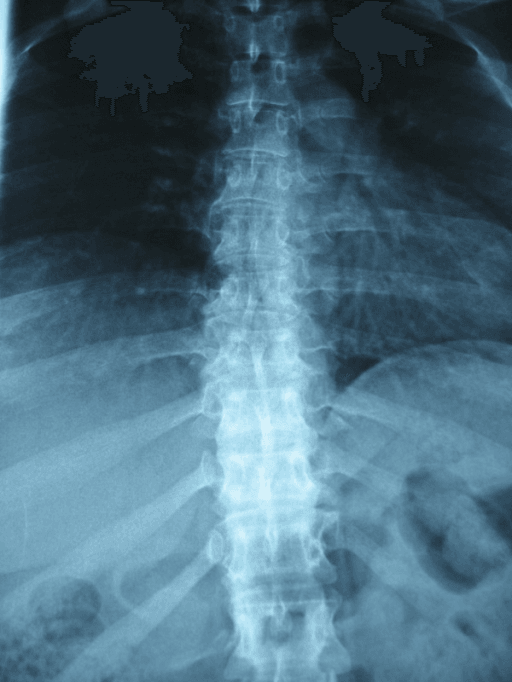
"Anterior vertebral beaking" is one of the dysostosis-multiplex hallmarks, but the location of the beak on the vertebral body at the thoracolumbar junction (the apex of the gibbus) discriminates between the two most-tested MPS phenotypes, because the beak reflects where the body is deficient:
- Antero-inferior (inferior) beak. The beak projects from the lower-anterior corner of the body, with hypoplasia or wedging of the antero-superior portion. This is the pattern of MPS I (Hurler) and the more severe MPS types: an inferior beak goes with anterosuperior hypoplasia and the focal kyphos that underlies their anterior gibbus.
- Central (mid-body) beak. The beak projects from the mid-anterior vertebral body and the bodies are flattened, platyspondyly with a tongue-like central beak. This is the pattern of MPS IV (Morquio), and it tracks with Morquio's universal platyspondyly and odontoid hypoplasia.
Having read the beak, confirm with urine GAG (keratan sulfaturia in Morquio) and the enzyme assay.
Cervical spine radiographs. Lateral views in neutral, flexion and extension, with AP and open-mouth odontoid views, and measure the atlantodental interval. The thresholds are in the pearl below.
MRI of the cervical spine. The gold standard for assessing cord compression, and it shows the soft-tissue GAG deposition that causes stenosis. It is indicated when the ADI exceeds 5 mm or there are neurological symptoms, but because compression can be present with a modest ADI, the cord and soft tissue on MRI, not the ADI alone, decide the question; in MPS VI the surveillance data argue for routine MRI from diagnosis.
CT of the cervical spine. Best for bony anatomy, odontoid hypoplasia and os odontoideum; 3D reconstructions help surgical planning.
Key measurements in MPS cervical spine assessment:
- Atlantodental interval (ADI): normal less than 3 mm in the adult, less than 5 mm in the child. Greater than 5 mm indicates instability.
- Space available for the cord (SAC): measured from the posterior C1 ring to the anterior C2 body. Less than 14 mm indicates significant stenosis.
- Powers ratio: BC/OA. Greater than 1.0 indicates anterior atlantoaxial subluxation.
Systemic work-up. The multisystem disease needs its own tests:
- Indication
- All MPS patients
- Key Findings
- Valve thickening, regurgitation
- Indication
- Snoring, apnoea
- Key Findings
- Obstructive sleep apnoea
- Indication
- Preoperative
- Key Findings
- Restrictive pattern
- Indication
- Numbness, weakness
- Key Findings
- Carpal tunnel syndrome
- Indication
- All patients
- Key Findings
- Conductive/sensorineural loss
- Indication
- Visual symptoms
- Key Findings
- Corneal clouding, retinopathy
Differential diagnosis. The combination of coarse facies, short stature, joint disease and dysostosis multiplex overlaps with several other storage and skeletal dysplasias. The discriminators are corneal clouding, intelligence, the urine GAG or oligosaccharide pattern and the specific enzyme assay.
- Distinguishing features
- Coarse facies and dysostosis but NORMAL urine GAG; very high plasma lysosomal enzymes
- Skeletal pattern
- Dysostosis multiplex (resembles Hurler)
- Confirmatory test
- Plasma lysosomal enzyme activity markedly elevated; normal urine GAG
- Distinguishing features
- Coarse facies, cherry-red spot, severe neurodegeneration
- Skeletal pattern
- Dysostosis multiplex
- Confirmatory test
- Beta-galactosidase deficiency (overlaps MPS IVB)
- Distinguishing features
- Short stature and epiphyseal change WITHOUT visceromegaly, corneal clouding or raised urine GAG
- Skeletal pattern
- Epiphyseal dysplasia, no dysostosis multiplex
- Confirmatory test
- Normal urine GAG; COMP / COL2A1 / other gene testing
- Distinguishing features
- Coarse features, developmental delay, delayed bone age — reversible
- Skeletal pattern
- Epiphyseal dysgenesis, delayed ossification
- Confirmatory test
- Thyroid function tests
- Distinguishing features
- Morquio (MPS IVA/B): NORMAL intelligence, keratan sulfaturia, odontoid hypoplasia, ligamentous laxity (not stiffness)
- Skeletal pattern
- Platyspondyly, universal odontoid hypoplasia, genu valgum
- Confirmatory test
- Urine keratan sulfate; GALNS or beta-galactosidase assay
- Distinguishing features
- Inflammatory joint stiffness can mimic MPS contractures
- Skeletal pattern
- Erosive arthropathy, no dysostosis multiplex
- Confirmatory test
- Inflammatory markers, autoantibodies; normal urine GAG
Management
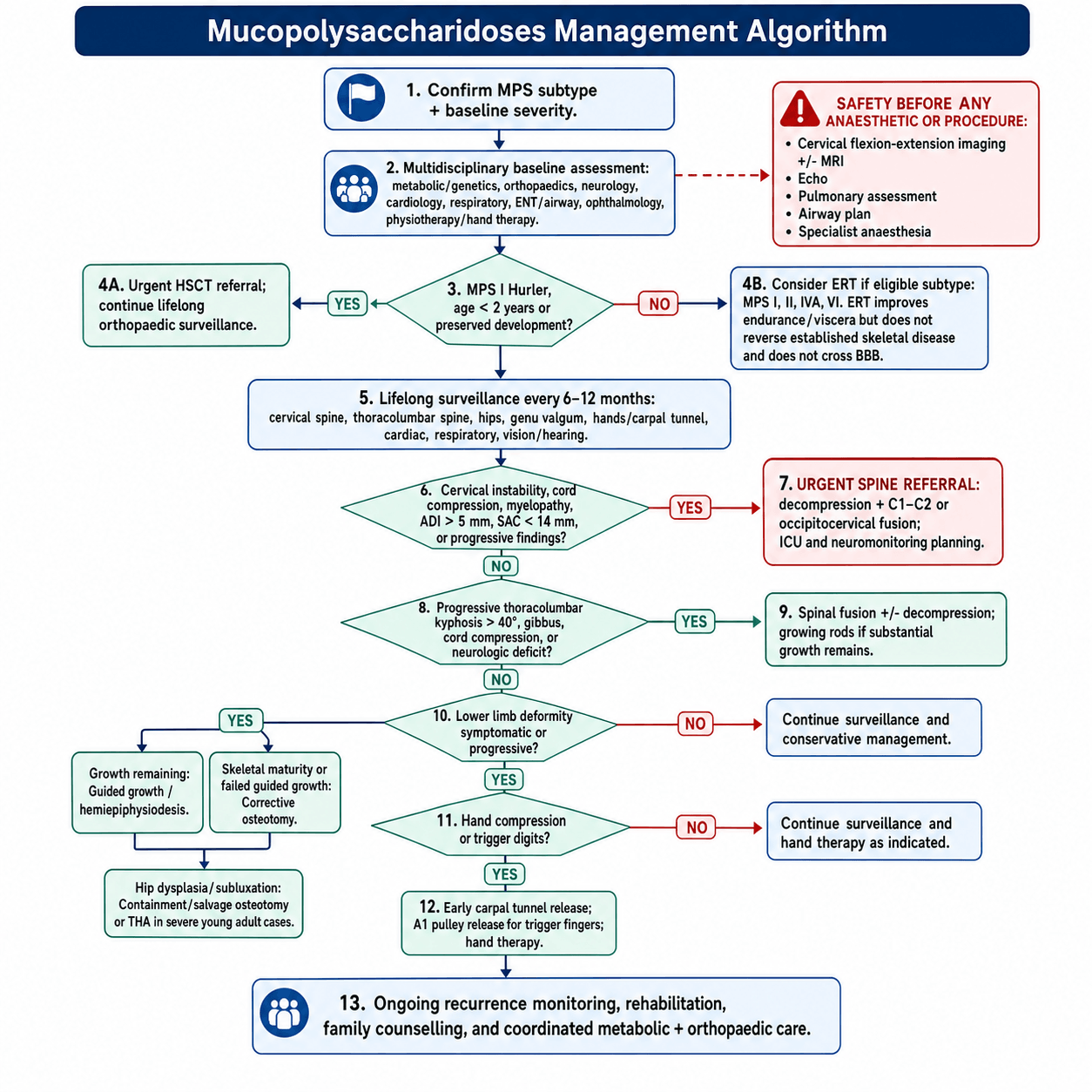
Anaesthetic mortality in MPS is high without precautions, and the work-up applies before any procedure, whatever it is.
Before ANY procedure in MPS patients:
- Cervical spine - flexion-extension X-rays, MRI if symptoms
- Cardiac - echocardiogram (valve disease, cardiomyopathy)
- Respiratory - pulmonary function tests, sleep study if snoring
- Airway - ENT assessment, fibreoptic equipment available
- Anaesthesia - experienced paediatric/specialist anaesthetist
Enzyme replacement therapy. ERT is available for MPS I, II, IVA and VI, given as a weekly intravenous infusion:
- Enzyme
- Laronidase
- Brand Name
- Aldurazyme
- Dosing
- 0.58 mg/kg weekly IV
- Limitations
- Does not cross BBB
- Enzyme
- Idursulfase
- Brand Name
- Elaprase
- Dosing
- 0.5 mg/kg weekly IV
- Limitations
- Does not cross BBB
- Enzyme
- Elosulfase alfa
- Brand Name
- Vimizim
- Dosing
- 2 mg/kg weekly IV
- Limitations
- Primarily skeletal benefit
- Enzyme
- Galsulfase
- Brand Name
- Naglazyme
- Dosing
- 1 mg/kg weekly IV
- Limitations
- Significant antibody formation
What ERT does and does not do. It improves respiratory function and endurance, reduces hepatosplenomegaly and gives some improvement in cardiac function. It does not reverse established skeletal disease, and it does not cross the blood-brain barrier, so it offers no cognitive benefit.
Haematopoietic stem cell transplant. HSCT is the standard of care for severe MPS I (Hurler) and the only treatment that halts cognitive decline, because donor-derived enzyme crosses the blood-brain barrier. It is most effective before age 2 years, and ideally before the DQ falls below 70; after age 2, irreversible neurological damage limits the benefit. International guidelines recommend early HSCT with busulfan-based conditioning, and the price is a transplant-related mortality of 10-15%.
Substrate reduction therapy. Genistein, an isoflavone, reduces GAG synthesis. It is investigational and may have a role as adjunct therapy.
Gene therapy. In clinical trials for several MPS types, with the potential for single-treatment disease modification; AAV-mediated liver-directed therapy is the most advanced.
Supportive care. Each system has its own intervention:
- ENT: adenotonsillectomy for airway obstruction
- Respiratory: CPAP/BiPAP for sleep apnoea
- Cardiac: valve surgery if severe regurgitation
- Ophthalmology: corneal transplant if severe clouding
Complications
Cervical myelopathy. The most serious orthopaedic complication, resulting from atlantoaxial instability, stenosis or both. It presents with weakness, hyperreflexia and gait disturbance, may be sudden (after trauma) or insidious, and requires urgent surgical decompression and fusion.
Anaesthetic complications. Each has a mechanism in the disease and a specific precaution:
- Mechanism
- Macroglossia, short neck, mandibular hypoplasia, tonsillar hypertrophy, tracheal narrowing from GAG deposition
- Prevention
- Fibreoptic intubation, awake technique, experienced paediatric anaesthetist
- Mechanism
- Atlantoaxial instability during positioning
- Prevention
- Preoperative imaging, in-line stabilisation, halo
- Mechanism
- Restrictive lung disease, tracheal narrowing
- Prevention
- Preoperative PFTs, postoperative ICU
- Mechanism
- Valve disease, cardiomyopathy
- Prevention
- Preoperative echo, cardiac optimisation
Surgical complications. Each region has its own pattern:
- Spinal surgery - nonunion or pseudarthrosis (higher with poor bone quality), hardware failure, neurological deterioration (positioning, decompression), adjacent segment degeneration
- Lower limb surgery - recurrence of deformity (especially genu valgum), hardware prominence, wound healing problems, and the need for repeat procedures
- Upper limb surgery - carpal tunnel recurrence, incomplete release, trigger finger recurrence
Progression despite treatment. The skeletal manifestations continue to progress on disease-modifying therapy: multiple surgical procedures are often required throughout life, and mobility declines despite intervention.
Outcomes and Prognosis
Natural history without treatment. The leading causes of death across the MPS are respiratory failure (restrictive lung disease, sleep apnoea, recurrent infections), cardiac failure (valve disease, cardiomyopathy) and cervical myelopathy, which can cause sudden death from cord compression. Early ERT or HSCT and proactive orthopaedic management have improved survival but do not fully normalise life expectancy.
- Untreated Life Expectancy
- Death by age 10
- Major Causes of Death
- Cardiac, respiratory
- Untreated Life Expectancy
- Normal
- Major Causes of Death
- Cardiac complications
- Untreated Life Expectancy
- 15-25 years
- Major Causes of Death
- Respiratory, cardiac
- Untreated Life Expectancy
- 15-30 years
- Major Causes of Death
- Neurological decline
- Untreated Life Expectancy
- 20-40 years
- Major Causes of Death
- Cervical myelopathy, respiratory
- Untreated Life Expectancy
- 20-40 years
- Major Causes of Death
- Cardiac, respiratory
HSCT for MPS I. Cognitive stabilisation is best when transplant is early. Aldenhoven's 217-patient international cohort found younger age at transplant, preserved cognition before HCT and a normal post-transplant alpha-L-iduronidase level to be the predictors of superior outcome; the widely used "before age 2" cut-off comes from the Muenzer consensus guideline rather than from a measured threshold, and Aldenhoven's relationship with age is continuous. Donor choice matters, because a noncarrier donor with complete chimerism is what yields a normal enzyme level, and it gave the best multisystem result.
Somatic disease continues after transplant. This is the finding to carry from Aldenhoven: considerable residual disease burden persisted in the majority of successfully engrafted patients, with skeletal and cardiac manifestations prominent. Transplant is disease-modifying, not curative, and orthopaedic surveillance continues for life.
ERT outcomes. In the pivotal Morquio A trial, weekly elosulfase alfa gained an estimated 22.5 m over placebo at 24 weeks on the 6-minute walk test (95% CI 4.0-40.9, P=0.017). Keep that figure beside the natural-history spread, MorCAP's baseline 6MWT of 212.6 m with an SD of 152.2 m, and the treatment effect is small relative to the variation between patients. The every-other-week regimen showed nothing (0.5 m, P=0.954), and the 3-minute stair-climb test did not improve on either regimen. Urinary keratan sulfate falls on treatment, and reduced hepatosplenomegaly and some pulmonary benefit are reported in the MPS I and II literature; the limited skeletal benefit and the blood-brain barrier are why HSCT rather than ERT is the option that can preserve CNS function in severe MPS I.
Surgical outcomes: what is measured. Where a real number exists it is given with its source; where it does not, the statement is qualitative, because no MPS-specific series supports a round percentage for cervical fusion rate, hardware revision or carpal tunnel recurrence. MPS anatomy and airway plausibly make these outcomes worse than the general paediatric figures, not better, so borrowing a general rate would understate the risk.
Cervical fusion. Fusion is generally achieved, but the construct is technically demanding in hypoplastic, GAG-laden bone with a small posterior arch. Neurological stabilisation, rather than recovery of lost function, is the realistic goal, which is the argument for operating before fixed myelopathy. Hardware problems and revision are recognised; no MPS-specific revision rate is established.
Genu valgum correction. Guided growth is effective, with measured gains: intermalleolar distance fell 6.12 cm and 6-minute walk distance rose 69.5 m in Cooper's series, the rare instance where a deformity correction in MPS demonstrably improved function. Repeat intervention should be anticipated: 3 of 23 patients needed repeat plating and 1 a femoral osteotomy, and consensus guidance expects further surgery during growth. Osteotomy provides definitive correction at maturity but carries a far greater surgical insult, which in this population can itself reduce mobility.
Carpal tunnel release. Symptom relief is generally good, and because children with MPS are frequently asymptomatic despite severe nerve conduction abnormalities, the indication rests on surveillance testing rather than on complaint. Recurrence is recognised but not quantified in an MPS-specific series; extended release with complete division of the transverse carpal ligament is recommended because of the GAG-laden tissue.
Multidisciplinary care. Specialised MPS clinics coordinate metabolic, surgical, cardiac, respiratory and anaesthetic care, and the Muenzer consensus requires a comprehensive baseline multisystem evaluation with review every 6 to 12 months. Surveillance detects complications earlier; it does not prevent them.
Guidelines, Registries & Global Practice
Global Epidemiology:
Combined birth incidence of all MPS types varies markedly by country and ascertainment method. The US National MPS Society database (789 patients over 20 years) found an overall MPS birth incidence of 0.98 per 100,000 live births and prevalence of 2.67 per million, with MPS I, II and III having the highest birth incidence (0.26 per 100,000 each) — figures lower than several European series, reflecting under-ascertainment in large, fragmented populations (Puckett et al. Orphanet J Rare Dis 2021, PMID 34051828, DOI). European newborn-screening and registry studies typically report combined incidences of roughly 1 in 25,000 to 1 in 30,000, so the "1 in 25,000" figure quoted in textbooks reflects higher-ascertainment cohorts rather than a single global truth.
International Guidance — Side by Side:
There is no single orthopaedic college guideline for MPS; care is driven by international expert-consensus statements and disease registries. The table contrasts the major sources relevant to orthopaedic practice.
- Scope
- MPS I diagnosis, surveillance, HSCT vs ERT
- Key orthopaedic guidance
- Baseline multisystem assessment + review every 6-12 months; HSCT before age 2 for severe phenotype; lifelong musculoskeletal monitoring
- Evidence basis
- International expert consensus (Level V)
- Scope
- Cervical cord compression natural history
- Key orthopaedic guidance
- Routine cervical MRI from diagnosis; decompress before fixed myelopathy; anticipate high anaesthetic risk
- Evidence basis
- Prospective/retrospective registry (Level III)
- Scope
- MPS IVA natural history
- Key orthopaedic guidance
- Serial 6MWT, respiratory and cervical surveillance; document progressive functional decline
- Evidence basis
- Multinational cohort (Level II)
- Scope
- Limb and spine deformity
- Key orthopaedic guidance
- Guided growth before osteotomy for genu valgum; staged correction; multidisciplinary anaesthetic planning
- Evidence basis
- Expert/observational, no high-level RCT
The defining therapeutic evidence is consistent worldwide: weekly elosulfase alfa improves endurance in MPS IVA (Hendriksz, phase 3 RCT) and early HSCT preserves cognition in MPS I-Hurler (Aldenhoven international cohort), but neither reverses established skeletal disease — so orthopaedic surveillance and surgery remain central everywhere regardless of access to disease-modifying therapy.
Registry Evidence:
International disease registries (the MPS VI Clinical Surveillance Programme, the International Morquio Registry / MorCAP, and national MPS Society databases) provide the bulk of natural-history and surgical-outcome data, because randomised surgical trials are impossible in such rare disease. They consistently show near-universal cervical cord compression risk in MPS IVA and VI and progressive multisystem decline.
Practice Variation:
- Newborn screening: MPS I is screened in a growing number of regional newborn-screening programmes, enabling pre-symptomatic HSCT; most countries still rely on clinical diagnosis, delaying the critical pre-age-2 transplant window.
- Access to ERT: Reimbursement differs by jurisdiction. In many high-income settings, enzyme replacement therapy for MPS I (laronidase), II (idursulfase), IVA (elosulfase alfa) and VI (galsulfase) is publicly funded or reimbursed through national high-cost drug programmes; many low- and middle-income countries have no funded access, shifting management entirely onto surveillance and surgery.
- Surgical thresholds: Centres vary in whether borderline atlantoaxial instability is fused prophylactically before major surgery or monitored, reflecting the absence of randomised data.
- Model of care: Specialist multidisciplinary MPS care is delivered through paediatric tertiary centres with metabolic, anaesthetic and genetics input, paediatric bone-marrow-transplant services, and access to international haematopoietic-cell donor registries; orthopaedic procedures (cervical and thoracolumbar fusion, carpal tunnel release, guided growth and corrective osteotomy) are performed at these centres, with patient advocacy and care coordination supported by national MPS societies in many countries.
MCQ Practice Points
A: MPS IV (Morquio syndrome). This is because keratan sulfate (the stored GAG in Morquio) is predominantly found in cartilage, not brain tissue. These patients have universal odontoid hypoplasia and severe genu valgum but can participate fully in surgical decision-making.
A: MPS II (Hunter syndrome). All other MPS types are autosomal recessive. Hunter syndrome also uniquely does NOT have corneal clouding, distinguishing it from other MPS types.
A: JARS PB mnemonic: J-shaped sella turcica, Anterior vertebral beaking, Ribs paddle-shaped, Short metacarpals with proximal pointing, Pelvis with flared iliac wings, Bones with widened diaphyses.
A: Before age 2 years. Transplantation after this age will not halt or reverse cognitive decline because irreversible neurological damage has already occurred. The critical window is ideally before DQ falls below 70.
A: ERT does not cross the blood-brain barrier and cannot reach already-formed skeletal tissue with established GAG deposits. It can prevent further accumulation but cannot reverse existing damage. HSCT produces donor-derived enzyme that does cross the BBB.
Clinical Decision Scenarios
Practise clinical reasoning and management decisions out loud
“A 12-year-old boy with Morquio syndrome (MPS IV) presents with progressive leg weakness over 6 months. He has a shuffling gait and increased tone in both legs with upgoing plantars. How would you assess and manage this patient?”
“A 3-year-old child is referred by a paediatrician with a new diagnosis of MPS I (Hurler syndrome). They want orthopaedic input on the skeletal manifestations. What are the key orthopaedic concerns and how would you structure management?”
“An 8-year-old girl with MPS IV (Morquio syndrome) is referred with progressive knock-knees. Mechanical axis shows 20 degrees of valgus bilaterally with the deformity predominantly at the distal femur. She is ambulatory but fatigues quickly. How would you manage this?”
“A 25-year-old man with MPS II (Hunter syndrome, attenuated type) presents with bilateral hand weakness. He works in IT and has noticed difficulty typing. He has normal intelligence and was diagnosed at age 15. Nerve conduction studies show severe bilateral carpal tunnel syndrome. How would you manage this?”
MPS Types - Key Features
- MPS I (Hurler) - most severe, cognitive decline, HSCT needed early
- MPS II (Hunter) - X-linked, no corneal clouding, variable severity
- MPS III (Sanfilippo) - severe CNS disease, minimal skeletal
- MPS IV (Morquio) - NORMAL intelligence, WORST skeletal disease
- MPS VI (Maroteaux-Lamy) - normal intelligence, cardiac valve disease
Dysostosis Multiplex (JARS PB)
- J-shaped sella turcica
- Anterior (inferior) vertebral beaking
- Ribs - paddle or oar shaped
- Short metacarpals with proximal pointing (bullet-shaped)
- Pelvis - flared iliac wings, shallow acetabulum
- Bones - widened diaphyses
Cervical Spine Assessment
- ADI greater than 5mm = instability (child)
- SAC less than 14mm = significant stenosis
- Odontoid hypoplasia UNIVERSAL in MPS IV
- Flexion-extension views in ALL MPS patients
- MRI if ADI elevated or neurological symptoms
Surgical Priorities
- Cervical fusion if ADI greater than 5mm or myelopathy
- Genu valgum - guided growth in growing child
- Carpal tunnel release - extended, open technique
- Always assess cervical spine before ANY surgery
- Specialist anaesthesia mandatory
Treatment Essentials
- HSCT for MPS I before age 2 for cognitive benefit
- ERT does NOT cross BBB or reverse skeletal disease
- ERT available for MPS I, II, IVA, VI
- Multidisciplinary care improves outcomes
- Regular surveillance prevents complications
Evidence Base
Enzyme Replacement Therapy for MPS IVA (landmark phase 3 RCT)
- Weekly elosulfase alfa improved 6MWT by an estimated 22.5m vs placebo at 24 weeks (P=0.017)
- Every-other-week regimen gave no significant 6MWT benefit (0.5m, P=0.954)
- Urinary keratan sulfate reduced with both active regimens
- No significant improvement in 3-minute stair-climb test
Long-Term Outcome of HSCT for MPS I (Hurler) — landmark international cohort
- 217 engrafted MPS I-H patients; median follow-up age 9.2 years
- Younger age at HSCT and preserved pre-transplant cognition predict better neurodevelopment
- Noncarrier donor with complete chimerism (normal enzyme level) gives best multisystem outcome
- Residual skeletal and cardiac disease persists in most patients despite successful HSCT
Cervical Cord Compression in MPS VI — international surveillance registry
- Cervical cord compression in 75.4% of MPS VI subjects with cervical MRI
- Most compression already present at first MRI; near-universal by age 20
- Surgical decompression in 42% (mean age 13.1y); reoperation in 13.8%
- Both perioperative deaths were anaesthesia-related — high airway risk
Hemiepiphysiodesis for Genu Valgum in MPS IVA (Morquio)
- Mean intermalleolar distance reduced by 6.12cm (P=0.0001)
- Mean 6-minute walk distance improved by +69.5m (P=0.034)
- No implant failure, loosening or infection; low complication rate
- Repeat plating needed in 3 of 23 patients — recurrence/staged correction expected
Morquio A Clinical Assessment Program (MorCAP) — landmark natural-history cohort
- 325 MPS IVA subjects, mean age 14.5 years; mean height z-score -5.6 (extreme short stature)
- Mean 6-minute walk distance only 212.6m, demonstrating severe endurance limitation
- Restrictive respiratory impairment (mean FVC 1.2L), worse with age
- Higher urinary keratan sulfate correlated with greater clinical impairment
International Management & Treatment Guidelines for MPS I
- Comprehensive baseline multisystem assessment mandatory for every MPS I patient
- Serial review every 6 to 12 months by a multidisciplinary team
- HSCT preferred for severe (Hurler) phenotype diagnosed early; ERT for attenuated disease
- Age, phenotype and developmental quotient drive the HSCT-versus-ERT decision
International Consensus on Extremity Management in Morquio A
- Guided growth with a tension band plate is the preferred correction for genu valgum in a child with adequate remaining growth; both distal femoral and proximal tibial physes are usually addressed.
- Treatment should begin as soon as the deformity is observed, which may mean surgery from as young as 4 years, and REPEATED INTERVENTIONS SHOULD BE ANTICIPATED as the child grows.
- No cases of permanent growth arrest have been reported with the technique, and hypoplastic bone has not proved a barrier to screw fixation.
- It is explicitly UNKNOWN whether guided growth can correct the most severe deformities; with severe deformity or limited remaining growth, osteotomy is the only option.
References
-
Neufeld EF, Muenzer J. The mucopolysaccharidoses. In: Scriver CR, et al. (eds). The Metabolic and Molecular Bases of Inherited Disease. 8th ed. McGraw-Hill; 2001:3421-3452.
-
Clarke LA. Pathogenesis of skeletal and connective tissue involvement in the mucopolysaccharidoses: glycosaminoglycan storage is merely the instigator. Rheumatology. 2011;50 Suppl 5:v13-18.
-
Puckett Y, Mallorga-Hernández A, Montaño AM. Epidemiology of mucopolysaccharidoses (MPS) in United States: challenges and opportunities. Orphanet J Rare Dis. 2021;16(1):241.
-
Lachman RS, Burton BK, Clarke LA, et al. Mucopolysaccharidosis IVA (Morquio A syndrome) and VI (Maroteaux-Lamy syndrome): under-recognized and challenging to diagnose. Skeletal Radiol. 2014;43(3):359-369. PMID 24389823. doi:10.1007/s00256-013-1797-y
-
White KK, Harmatz P. Orthopedic management of mucopolysaccharide disease. J Pediatr Rehabil Med. 2010;3(1):47-56.
-
Solanki GA, et al. Cervical cord compression in mucopolysaccharidosis VI (MPS VI): findings from the MPS VI Clinical Surveillance Program (CSP). Mol Genet Metab. 2016;118(4):310-318.
-
Hendriksz CJ, et al. Efficacy and safety of enzyme replacement therapy with BMN 110 (elosulfase alfa) for Morquio A syndrome (mucopolysaccharidosis IVA): a phase 3 randomised placebo-controlled study. J Inherit Metab Dis. 2014;37(6):979-990.
-
Aldenhoven M, et al. Long-term outcome of Hurler syndrome patients after hematopoietic cell transplantation: an international multicenter study. Blood. 2015;125(13):2164-2172.
-
White KK, Jester A, Bache CE, Harmatz PR, Shediac R, Thacker MM, Mackenzie WG. Orthopedic management of the extremities in patients with Morquio A syndrome. J Child Orthop. 2014;8(4):295-304. PMID 25001525. doi:10.1007/s11832-014-0601-4
-
Harmatz P, et al. The Morquio A Clinical Assessment Program: baseline results illustrating progressive, multisystemic clinical impairments in Morquio A subjects. Mol Genet Metab. 2013;109(1):54-61.
-
Cooper GA, Southorn T, Eastwood DM, Bache CE. Lower extremity deformity management in MPS IVA, Morquio-Brailsford syndrome: preliminary report of hemiepiphysiodesis correction of genu valgum. J Pediatr Orthop. 2016;36(4):376-381. PMID 25887816. doi:10.1097/BPO.0000000000000464
-
Muenzer J, Wraith JE, Clarke LA; International Consensus Panel on Management and Treatment of Mucopolysaccharidosis I. Mucopolysaccharidosis I: management and treatment guidelines. Pediatrics. 2009;123(1):19-29. PMID 19117856. doi:10.1542/peds.2008-0416
Citation note. An earlier version of this reference list carried, as reference 9, "White KK, et al. Analysis of a national MPS IVA registry: clinical characteristics, surgical interventions, and outcomes. J Bone Joint Surg Am. 2019;101(14):1256-1265." No such paper exists. A title search, an author search across this author's complete Morquio bibliography, and a deterministic lookup of the stated journal, year, volume and first page all returned nothing. It has been replaced by the real consensus article on extremity management in Morquio A (reference 9 above). Reference 4 previously gave Lachman's journal as Insights into Imaging 2014;5(5):577-592; the paper is in Skeletal Radiology 2014;43(3):359-369, and the citation has been corrected.