ADI greater than 5mm | Down Syndrome Association | Transverse Ligament Key | Fusion if Symptomatic
- ADI greater than 5mm in children indicates transverse ligament incompetence
- SAC less than 14mm indicates cord compression risk
- Down syndrome: no routine radiographic clearance when asymptomatic; use clinical surveillance and neutral-position procedural precautions
- Neurological symptoms mandate surgical stabilisation
- C1-C2 posterior fusion is gold standard treatment
- “Transverse ligament is PRIMARY restraint to anterior translation of C1
- “Alar and apical ligaments are SECONDARY restraints
- “Down syndrome has ligamentous laxity + os odontoideum association
- “Neurological deterioration can be sudden and catastrophic
Overview and Epidemiology
Atlantoaxial instability (AAI) is excessive movement at the C1-C2 articulation, most commonly anterior subluxation of C1 on C2. It can lead to spinal cord compression and potentially catastrophic neurological injury.
Who gets it. The causes are a short list, and the population tells you which to expect:
- Down syndrome: radiographic AAI in roughly 6.8-27% (varies with age); fewer than 1-2% become symptomatic [FSEM 2020; Pueschel & Scola 1987]
- Rheumatoid arthritis: a leading adult cause; atlantoaxial subluxation prevalence relates to disease activity, and modern disease-modifying therapy has reduced its incidence [Veldman 2022]
- Os odontoideum: frequently associated with atlantoaxial instability
- Trauma: transverse ligament rupture, often with Jefferson (C1 burst) fractures
- Other conditions: Morquio syndrome, Grisel syndrome, Klippel-Feil
- Common Causes
- Down syndrome, os odontoideum, Morquio syndrome
- Common Causes
- Rheumatoid arthritis, trauma, ankylosing spondylitis
- Common Causes
- Infection (Grisel syndrome), tumour, congenital anomalies
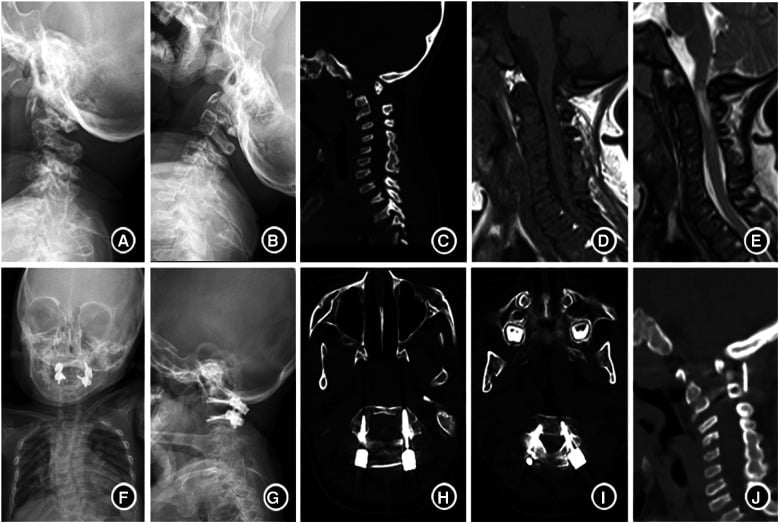
Guidance differs. The AAP and recent systematic-review evidence do not support routine cervical radiographs in asymptomatic children with Down syndrome; they favour clinical surveillance and neutral-position procedural precautions. A 2025 WFNS spine consensus recommends controlled flexion-extension screening in syndromic populations. For examination answers, name the guideline being applied rather than presenting either approach as universal.
Rheumatoid cervical disease is a high-yield set. RA produces three instability patterns, usually in this order of frequency:
- Atlantoaxial subluxation (commonest) - pannus and ligament erosion increase the anterior ADI.
- Cranial settling (vertical / basilar migration) - lateral-mass erosion lets the dens migrate upward; the most dangerous pattern.
- Subaxial subluxation - multilevel "staircase" subluxation below C2.
The PADI prognostic rule. In the rheumatoid neck the anterior ADI correlates poorly with neurology because pannus and settling distort it. The posterior atlanto-dental interval (PADI, the space available for the cord, equivalent to the SAC) is the better predictor. Boden showed a PADI less than 14 mm predicts paralysis and poor recovery, whereas a PADI of 14 mm or more predicts good recovery potential after surgery. This is why, in RA, you weight the PADI/SAC over the anterior ADI, and why MRI (pannus, cord signal, cervicomedullary angle) guides the timing of fusion before irreversible myelopathy develops.
Anatomy and Pathophysiology
The joint. The atlantoaxial complex is unique in the cervical spine. There is no intervertebral disc between C1 and C2, stability comes from specialised ligaments rather than bony congruence, and the articulation allows 50% of cervical rotation (approximately 45 degrees each side).
- Function
- PRIMARY restraint to C1 anterior translation
- Clinical Significance
- ADI greater than 5mm = failure
- Function
- Limit rotation and lateral bending
- Clinical Significance
- Secondary restraint
- Function
- Connects dens tip to foramen magnum
- Clinical Significance
- Secondary restraint
- Function
- Continuation of PLL
- Clinical Significance
- Provides additional stability
- Function
- Transverse + vertical bands
- Clinical Significance
- Holds dens against C1
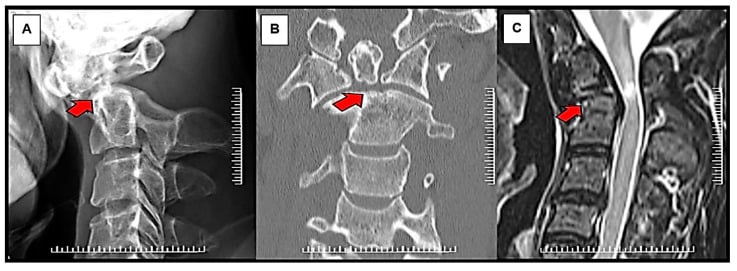
Why the transverse ligament is the one that matters. Rupture or laxity of the transverse ligament, from trauma, RA or a congenital condition, is the main cause of atlantoaxial instability and is what increases the ADI. The alar and apical ligaments are secondary restraints.
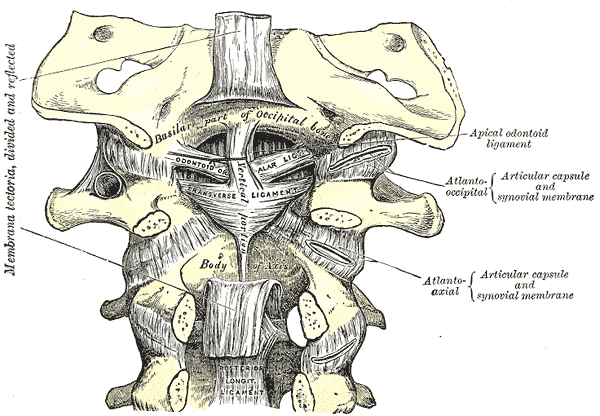
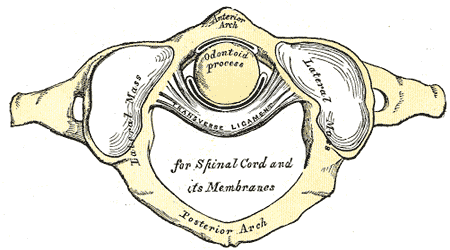
What happens in flexion. Normally the transverse ligament stops C1 translating forward. When it fails, C1 slides forward on C2 in flexion and the space available for the cord narrows; in the severe case the cord is compressed between the posterior arch of C1 and the dens. Extension may allow some reduction of the subluxation and is the less dangerous position for the cord.
Steel's rule of thirds. At the level of the atlas the canal divides into thirds: the odontoid occupies the anterior third, the spinal cord the middle third, and the posterior third is safety space. That reserve is why some subluxation is tolerated before the cord is compressed.
Sudden neurological deterioration, including quadriplegia or sudden death, can occur with AAI during intubation, trauma or sport. Every patient with known AAI needs careful cervical spine precautions during any procedure that requires neck manipulation.
Classification Systems
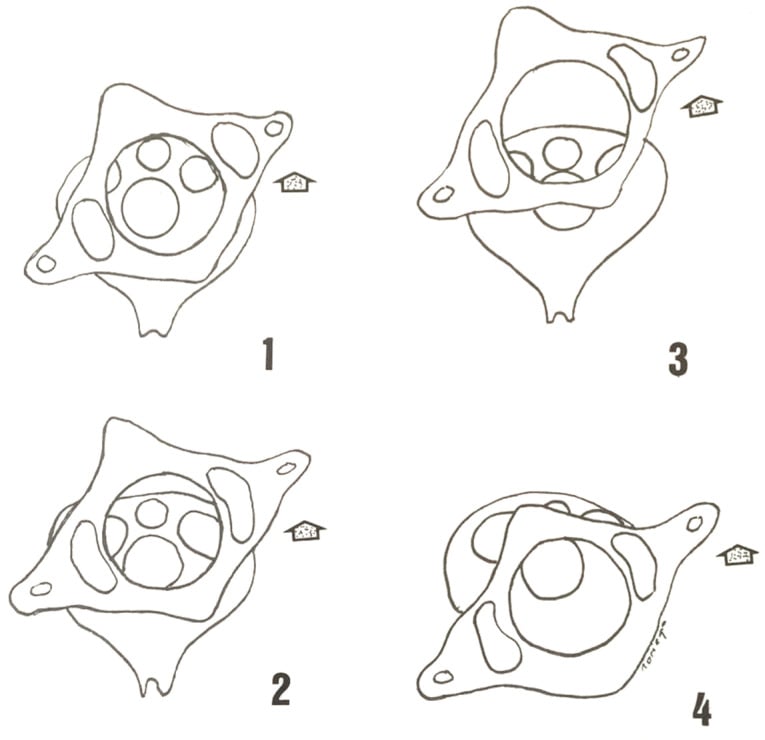
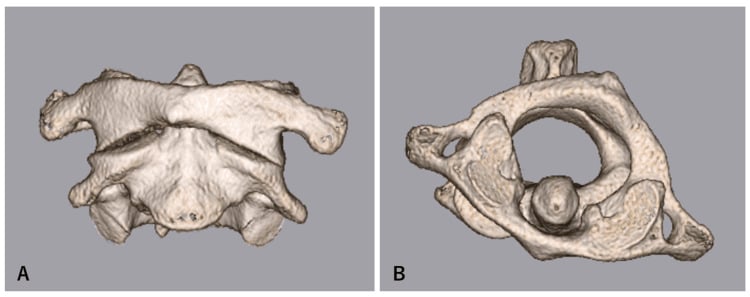
Fielding-Hawkins Classification - Rotatory Atlantoaxial Subluxation
- Description
- Rotatory fixation, no anterior displacement
- ADI
- Normal
- Treatment
- Collar, reduction
- Description
- Rotatory fixation with anterior displacement 3-5mm
- ADI
- 3-5mm
- Treatment
- Halter traction, surgery if fails
- Description
- Rotatory fixation with anterior displacement greater than 5mm
- ADI
- Greater than 5mm
- Treatment
- Traction, likely fusion
- Description
- Rotatory fixation with posterior displacement
- ADI
- Variable
- Treatment
- Rare, usually traumatic
The anterior displacement is the point of the classification: types II and III indicate transverse ligament incompetence. Type I may be treated conservatively with a collar, but types II-IV often require surgical fusion if reduction cannot be maintained.
Clinical Presentation and Assessment
History. Ask about the symptoms, then about the reason the patient has them:
- Neck pain (may be occipital headache)
- Torticollis (especially rotatory subluxation)
- Weakness, clumsiness, gait disturbance
- Bowel/bladder dysfunction (late sign)
- History of Down syndrome, RA, or other predisposing condition
- Precipitating trauma or infection
Examination. The examination is a search for myelopathy: hyperreflexia, clonus, a positive Babinski, a Hoffmann sign, gait disturbance and hand clumsiness. These indicate cord compression and mandate urgent imaging and surgical consideration; a normal neurological examination with radiographic AAI is a different problem, managed by activity modification and monitoring.
- Significance
- Rotatory subluxation
- Next Step
- CT to confirm, attempt reduction
- Significance
- Myelopathy
- Next Step
- Urgent MRI, surgical consultation
- Significance
- Cord compression
- Next Step
- Emergency stabilisation
- Significance
- Possible AAI
- Next Step
- Flexion-extension X-rays
- Significance
- Myelopathy
- Next Step
- MRI, consider surgery
- Significance
- Asymptomatic AAI
- Next Step
- Activity modification, monitor
Red flags that need urgent workup:
- Progressive weakness or numbness
- Gait deterioration
- Bowel or bladder dysfunction
- Respiratory compromise (high cord compression)
- Worsening headache with neck movement
Investigations
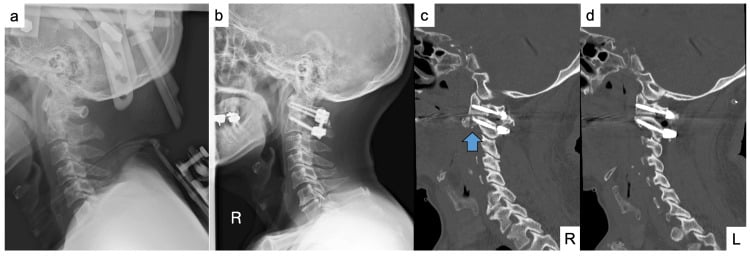
Plain radiographs. Lateral flexion-extension views are the key study for instability, alongside an open-mouth (odontoid) view for the dens and lateral masses and standard AP and lateral views. The ADI is measured from the anterior arch of C1 to the front of the dens, in flexion; the SAC (the posterior ADI) from the posterior dens to the anterior surface of the C1 posterior arch, and it should be greater than 14mm. The Powers ratio (BC/OA: basion to C1, opisthion to A arch) is normally less than 1.0; greater than 1.0 suggests anterior subluxation.
The CT caveat. The ADI thresholds graded in the classification section are plain-film numbers. On multidetector CT 95% of uninjured adults measure under 2mm, so a CT atlantodental interval of 2 to 3mm passes the radiographic rule while lying outside the normal range (PMID 17893223; 200 consecutive adult CT studies, level 4). The error runs towards calling an abnormal interval normal.
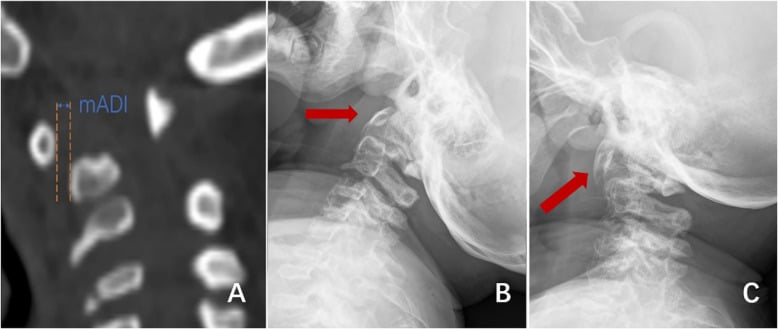
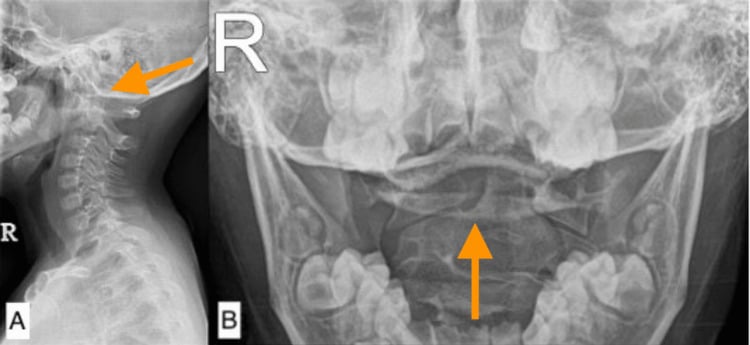
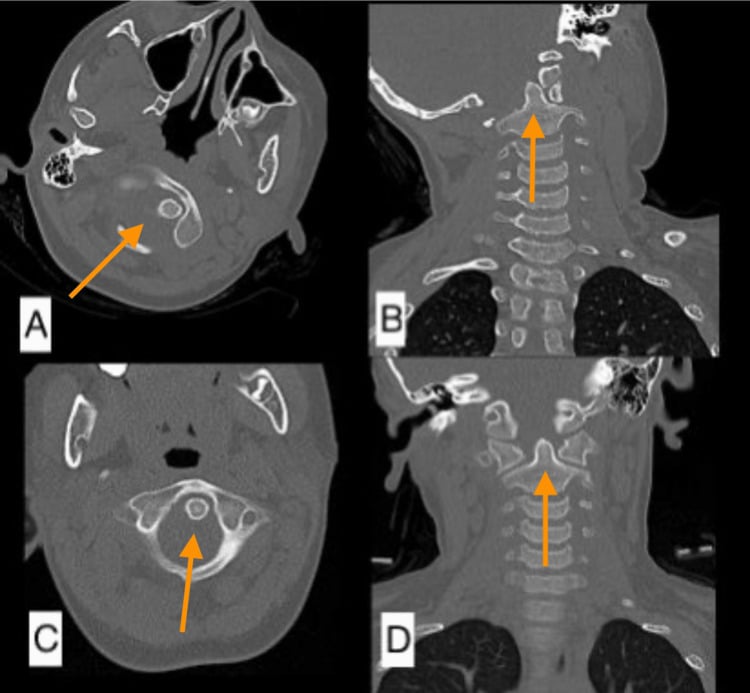
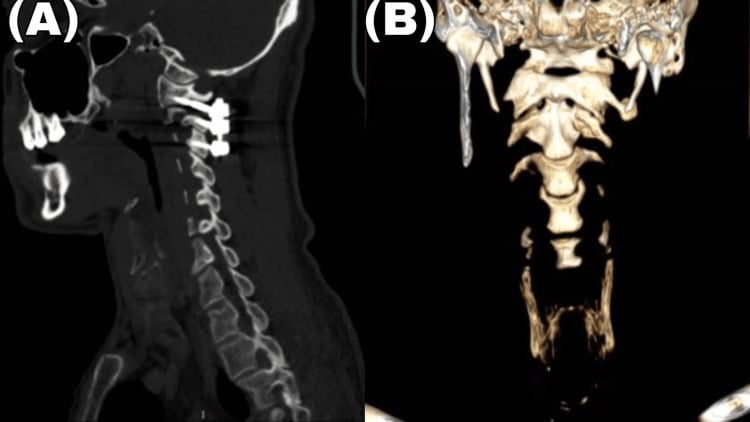
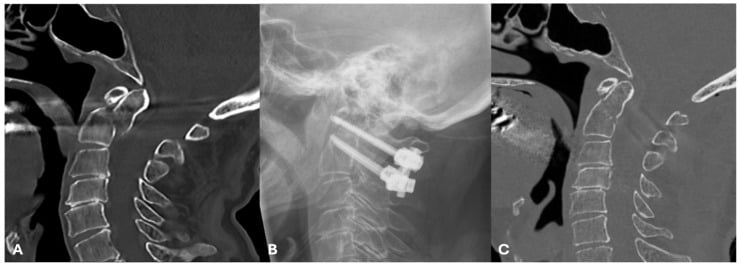
CT is the study for bony anatomy. It identifies an os odontoideum, fractures and bony anomalies, 3D reconstruction is used for surgical planning, and dynamic (flexion-extension) CT is used in select cases.
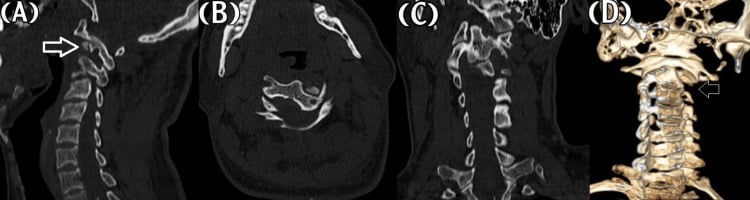
MRI is essential whenever there are neurological symptoms and mandatory before surgery. It shows cord compression and signal change, identifies transverse ligament integrity, shows pannus in RA, and rules out other cord pathology. T2 hyperintensity in the cord is myelomalacia, which means established injury.
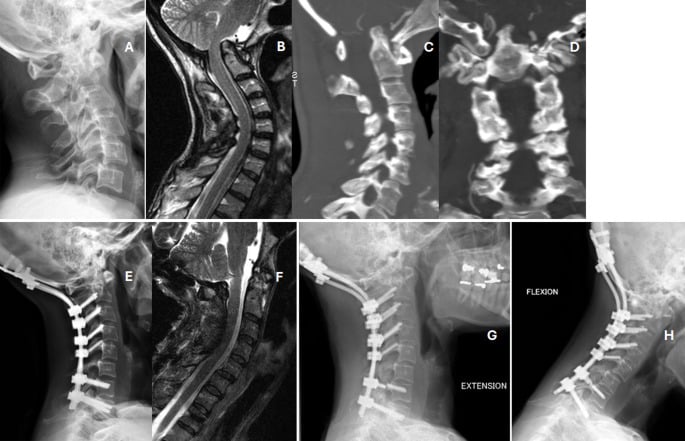
As the C1-C2 articulation and lateral masses erode (chronic instability, rheumatoid disease, os odontoideum), the dens migrates cephalad through the foramen magnum: basilar invagination when congenital, cranial settling / vertical migration when acquired. It is dangerous because the odontoid compresses the brainstem and cervicomedullary junction, and the anterior ADI may paradoxically normalise as the dens settles upward, masking the instability.
Measure it with craniometric lines on the lateral film:
- Chamberlain line (hard palate to opisthion) - a dens tip projecting above it is abnormal; the published threshold varies (roughly 3-6.6 mm depending on the source), so quote a value over about 5 mm as clearly positive.
- McGregor line (hard palate to lowest occiput) - dens more than about 4.5 mm above it is abnormal (easier to see than Chamberlain).
- McRae line (the foramen magnum: basion to opisthion) - the dens tip should lie below it; crossing it is significant.
- Ranawat and Redlund-Johnell criteria quantify vertical settling specifically in rheumatoid disease.
What it changes. Once there is true cranial settling or basilar invagination, an isolated C1-C2 fusion is usually inadequate. The construct must extend to an occipitocervical fusion (occiput to C2 and below), often after reduction in traction, with an anterior (transoral or endoscopic endonasal) odontoidectomy reserved for irreducible ventral compression.
Management
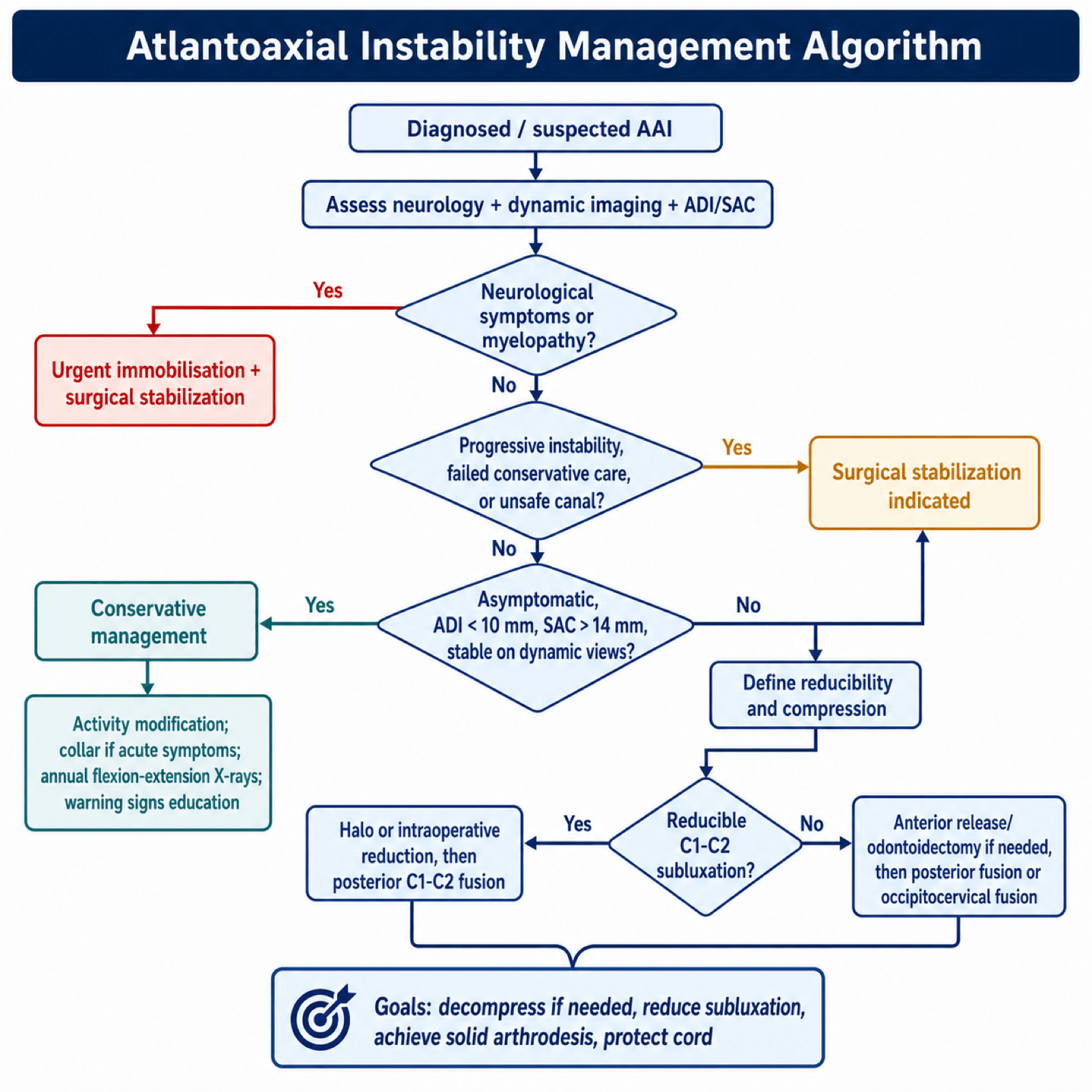
The decision. The algorithm branches on neurological status, then on the ADI and the SAC. Neurological symptoms mandate surgical stabilisation. In the asymptomatic patient the ADI, the SAC and whether the instability is progressing on dynamic imaging decide between surveillance and fusion, and no single ADI mandates fusion.
- Neurological Status
- Asymptomatic
- Management
- Clinical surveillance; no routine serial screening films
- Neurological Status
- Asymptomatic
- Management
- Specialist review; assess PADI, progression and planned activities
- Neurological Status
- Asymptomatic
- Management
- Individualised MRI and stabilisation discussion; no single ADI mandates fusion
- Neurological Status
- Any symptoms
- Management
- Urgent MRI, surgical stabilisation
- Neurological Status
- Myelopathy/weakness
- Management
- Emergency C1-C2 posterior fusion
Who. Non-operative management is indicated for:
- Asymptomatic radiographic AAI with ADI less than 10mm
- SAC greater than 14mm
- No neurological symptoms
- Stable on dynamic imaging
What it involves. Activity modification, a cervical collar (soft or rigid) for acute symptoms, and regular clinical and radiographic surveillance with annual flexion-extension radiographs. The patient and family are taught the neurological warning signs, because any new symptom mandates immediate evaluation and imaging.
The restrictions are a fixed list:
- No contact sports (football, rugby, wrestling)
- No diving
- No activities with high cervical hyperflexion risk
- Trampolines contraindicated
Surgical Technique
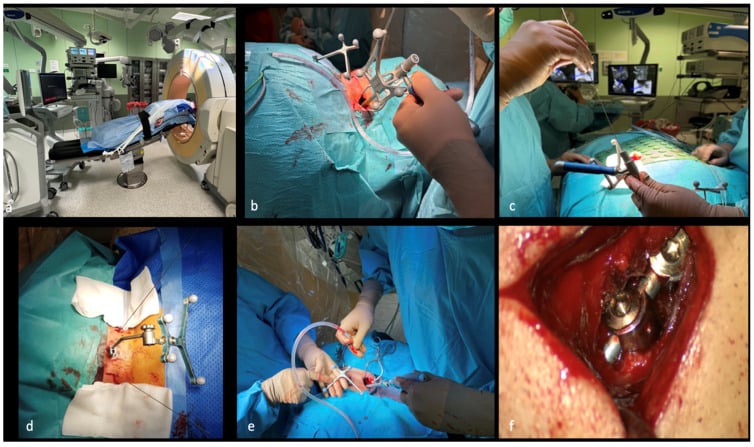
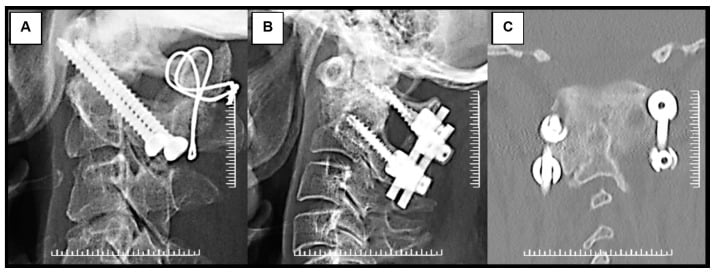
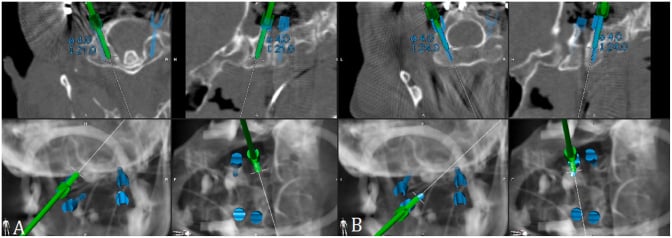
The operation itself, graft choice, the anterior and transoral alternatives, and the rehabilitation that follows, is set out in atlantoaxial (C1-C2) fusion. What an instability viva turns on is narrower: the anatomy that constrains each construct, and which patient it rules out.
Positioning. Prone on a Jackson table, the head secured in Mayfield pins (or the halo, if preoperative traction was used), the neck in slight flexion for access and returned to neutral for the fusion. SSEP and MEP neuromonitoring throughout.
Exposure, in order:
- Midline incision from occiput to C3
- Subperiosteal dissection exposing C1 posterior arch and C2 lamina/spinous process
- Identify C1 lateral masses (limit lateral dissection to avoid vertebral artery)
- Identify C2 pars interarticularis and pedicles
- Expose surfaces for fusion (C1-C2 facet joints)
The vertebral artery runs in the foramen transversarium and is at risk during lateral C1 exposure. Stay within 15mm lateral to the midline at C1, and confirm every screw trajectory on fluoroscopy.
Complications
- Incidence
- 3.1% (95% CI 2.3-4.3) with transarticular screws in pooled series; lower with modern segmental constructs and planning
- Prevention/Management
- Careful screw trajectory, preoperative CT angiography if anomaly suspected
- Incidence
- Under 5% with segmental screw constructs; 15-30% with wiring alone
- Prevention/Management
- Adequate decortication, bone graft, rigid fixation, postoperative immobilisation
- Incidence
- 2-5%
- Prevention/Management
- Prophylactic antibiotics, meticulous sterile technique
- Incidence
- Variable
- Prevention/Management
- Intraoperative imaging, navigation if available
- Incidence
- Rare if done properly
- Prevention/Management
- Careful reduction, neuromonitoring, avoid overdistraction
- Incidence
- 1-3%
- Prevention/Management
- Adequate screw purchase, proper rod contouring
- Incidence
- Long-term
- Prevention/Management
- May accelerate adjacent segment degeneration - rare issue in children
- Incidence
- 5-10%
- Prevention/Management
- Avoid C2 nerve root injury, consider nerve sectioning if severe
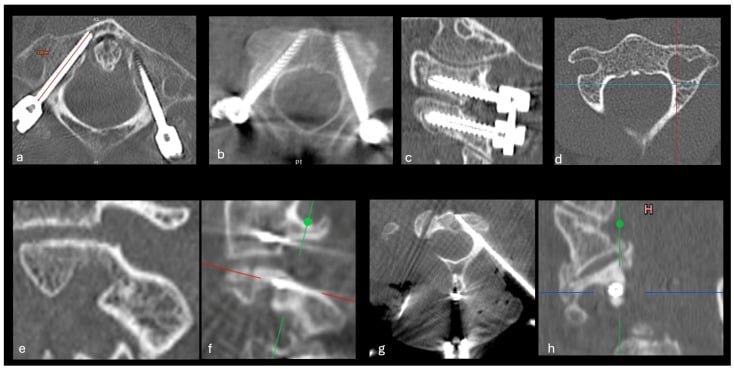
Vertebral artery injury is the most serious complication and can cause stroke or death. Prevention is a preoperative CT or CTA when the anatomy is abnormal and careful screw placement. If it happens, control the bleeding with bone wax and haemostatic agents, and consider endovascular management if the bleeding is ongoing.
Nonunion is more common with wire techniques than with screw fixation. Check for it with CT at 3-6 months; it may require revision with more rigid fixation.
The C2 nerve root exits beneath the C1-C2 facet and may be sacrificed for better visualisation or screw placement. The cost is occipital numbness in the territory of the greater occipital nerve, which is usually well tolerated.
Postoperative Care and Rehabilitation
- ICU or close monitoring initially
- Wound check, drain management
- Neurological checks hourly then 4-hourly
- Hard collar or halo (depending on fixation stability)
- DVT prophylaxis
- Remove drain (typically day 1-2)
- Upright X-rays in collar
- Begin mobilisation
- Soft diet initially (pharyngeal swelling possible)
- Discharge planning
- Wear collar full-time (rigid collar)
- Wound review at 2 weeks
- No lifting, bending, or neck rotation
- Light activities of daily living
- School/work return (sedentary) at 4-6 weeks
- Flexion-extension X-rays at 6-8 weeks
- CT for fusion assessment at 3 months
- Begin weaning collar if fusion progressing
- Gradual activity increase
- CT confirmation of solid fusion
- Discontinue collar when fused
- Return to most activities
- Contact sports typically not recommended long-term
The collar. A rigid collar (Miami J or Philadelphia) for 6-12 weeks, a halo vest instead if the construct is very unstable or the bone quality poor, and a soft collar for comfort during the transition out of it.
Activity. No high-risk activities for 6-12 months, and full non-contact activities once the fusion is confirmed. Contact sports are out permanently, because the motion segment is fused.
Outcomes and Prognosis
Fusion. Screw-rod constructs (Harms/Goel) fuse in 97-98% of pooled series and Magerl transarticular screws in about 95%. Wire techniques alone (Gallie, Brooks) fuse in 70-85%, with halo dependence.
Neurology. Of patients with myelopathy, 60-80% improve, 10-20% are stable and 5-10% deteriorate. Prophylactic surgery in the asymptomatic prevents deterioration in the vast majority. Patients with mild myelopathy have a high likelihood of improvement, whereas established myelomalacia on MRI is less likely to recover fully, which is why earlier surgery gives better neurological outcomes and is the argument for timely intervention.
- Expected Outcome
- Excellent, maintain function
- Expected Outcome
- Good, most improve
- Expected Outcome
- Fair to good, majority improve
- Expected Outcome
- Guarded, stabilise but limited recovery
Motion. C1-C2 provides 50% of cervical rotation, so fusing it costs the patient 50% of rotation. It is well compensated in most patients and may cause some adjacent segment stress in the long term.
Guidelines, Registries & Global Practice
OrthoVellum is a worldwide resource. The principles below are framed for any board worldwide, with regional guidance cited as evidence rather than as the frame.
Global epidemiology:
- Burden of AAI
- Radiographic AAI ~6.8-27% (age-dependent); symptomatic in under 1-2%
- Source
- FSEM 2020; Pueschel & Scola 1987
- Burden of AAI
- Atlantoaxial subluxation prevalence tracks disease activity; falling with modern DMARD/biologic therapy
- Source
- Veldman 2022
- Burden of AAI
- Commonly associated with instability; may be congenital or post-traumatic
- Source
- Grob 1992 (biomechanics of fixation)
- Burden of AAI
- Pooled 137 operated patients across 51 studies
- Source
- Hofler 2019
Major guidance, side by side:
- Recommendation
- No routine asymptomatic radiographic screening in Down syndrome; use symptom-based myelopathy surveillance, neutral-position procedural precautions, and targeted imaging for clinical concern
- Evidence level
- Practice guideline (Level V)
- Recommendation
- Individualised clinical assessment for sport rather than blanket radiographic exclusion; catastrophic sports injury extremely rare
- Evidence level
- Position statement (Level V)
- Recommendation
- Rigid screw-rod (Goel-Harms) or transarticular (Magerl) fixation preferred over wiring for unstable C1-C2
- Evidence level
- Level III-IV technique evidence
- Recommendation
- Operate for myelopathy, progressive instability, ADI greater than 10mm or SAC less than 14mm with concern; reduce before fusing
- Evidence level
- Level III-IV
No dedicated joint registry exists for upper-cervical fusion (unlike hip/knee arthroplasty), so the best comparative evidence is pooled observational data. The Hofler 2019 meta-analysis [PMID 30790735] shows screw-rod constructs outperform wiring for union and complications in Down syndrome, and Badhiwala 2017 [PMID 28098742] reports 96.7-100% fusion with C1-C2 screw constructs.
- High-resource settings: navigation/robotics, CT angiography for vertebral artery mapping, and intra-operative neuromonitoring (SSEP/MEP) are routine for screw-rod constructs.
- Limited-resource settings: wiring techniques (Gallie/Brooks) supplemented by halo or prolonged rigid immobilisation remain in use where image guidance and polyaxial implants are unavailable, accepting higher non-union rates.
- Paediatric pathways: managed in tertiary paediatric spine units with transition to adult services at skeletal maturity and lifelong post-fusion activity counselling, regardless of health system.
MCQ Practice Points
High-yield MCQ facts:
-
Normal ADI: Less than 3mm adults, less than 5mm children
-
SAC less than 14mm indicates cord at risk - surgical consideration
-
Transverse ligament is the PRIMARY restraint to anterior C1 translation
-
Down syndrome has radiographic AAI in roughly 6.8-27% (age-dependent; FSEM 2020) but only 1-2% symptomatic
-
Steel's Rule of Thirds: 1/3 dens, 1/3 cord, 1/3 safety space
-
Harms technique (C1 lateral mass + C2 pedicle screws) is current gold standard for C1-C2 fusion
-
Os odontoideum - 60% have associated AAI, treat if unstable
-
Myelomalacia on MRI (T2 hyperintensity) indicates established cord injury - limited recovery potential
-
Vertebral artery at risk during C1 lateral mass screw placement - stay within 15mm of midline
-
Fusion rate: 97-98% with screw-rod constructs (about 95% for transarticular screws) vs 70-85% with wiring alone
Q: What is the normal ADI in children? A: Less than 5mm (vs less than 3mm in adults). The difference is due to greater ligamentous laxity in children.
Q: What SAC measurement indicates cord at risk? A: SAC less than 14mm indicates the spinal cord is at risk of compression. SAC less than 10mm is critical.
Q: What percentage of Down syndrome patients have symptomatic AAI? A: Only about 1-2% become symptomatic (1.5% needed surgery in Pueschel's 404), despite radiographic instability in roughly 6.8-27% depending on age. This is why routine screening is no longer recommended.
Q: What is the primary ligamentous restraint to anterior C1 translation? A: The transverse ligament is the PRIMARY restraint. The alar and apical ligaments are secondary restraints.
Q: What percentage of cervical rotation is lost after C1-C2 fusion? A: Approximately 50% of cervical rotation occurs at C1-C2. This loss is generally well tolerated functionally.
Q: Is routine screening X-ray recommended in Down syndrome? A: NO. The AAP 2022 guidelines no longer recommend routine screening X-rays - it is now symptom-based. However, many institutions still require pre-surgical screening. Know both guidelines and common practice.
Exam Viva Scenarios
Practise clinical reasoning and management decisions out loud
“A 6-year-old boy with Down syndrome requires general anaesthesia for dental extractions. The anaesthetist requests cervical spine clearance. How would you assess this patient?”
“A 12-year-old with Down syndrome presents with progressive gait deterioration and hyperreflexia. X-rays show ADI of 12mm and SAC of 10mm. MRI shows cord compression with T2 hyperintensity. How would you manage this patient?”
“A 14-year-old presents with neck pain after a minor fall. CT shows an os odontoideum with ADI of 7mm in flexion. She is neurologically intact. What is your management plan?”
Key Numbers
- ADI greater than 3mm adult, greater than 5mm child = abnormal
- SAC less than 14mm = cord at risk, less than 10mm = critical
- Down syndrome: radiographic AAI roughly 6.8-27% (age-dependent), 1-2% symptomatic
- C1-C2 provides 50% cervical rotation
- Fusion 97-98% with screw-rod constructs vs 70-85% with wiring alone
- Vertebral artery safety zone: within 15mm of midline
Critical Anatomy
- Transverse ligament = PRIMARY restraint to anterior C1 translation
- Alar and apical ligaments = secondary restraints
- Steel's Rule of Thirds: 1/3 dens, 1/3 cord, 1/3 safety space
- Vertebral artery - stay within 15mm of midline at C1
- C2 pedicle trajectory: medial 20-25 degrees, cephalad 25-30 degrees
Surgical Indications
- Neurological symptoms (myelopathy)
- ADI greater than 10mm (even if asymptomatic)
- SAC less than 14mm with concern
- Os odontoideum with instability
- Progressive instability on serial imaging
Surgical Technique
- Harms technique = gold standard (C1 lateral mass + C2 pedicle screws)
- Achieve reduction BEFORE fusion
- Neuromonitoring essential (SSEPs, MEPs)
- Autograft bone for pediatric patients
Complications
- Vertebral artery injury (3.1%, CI 2.3-4.3 with transarticular screws; lower with segmental constructs) - most serious, CT angiography for planning
- Nonunion (under 5% with segmental screw constructs; 15-30% with wiring alone)
- C2 nerve root sacrifice - causes occipital numbness, usually tolerable
- Hardware failure - more common with poor bone quality
- Adjacent segment degeneration - long-term consideration
Viva Essentials
- Down syndrome screening: now symptom-based (AAP 2022)
- MRI mandatory before surgery and if symptoms present
- Early surgery = better neurological outcomes in symptomatic patients
- T2 hyperintensity = established myelomalacia = guarded prognosis
- Os odontoideum: 60% have AAI, treat if unstable (ADI greater than 5mm)
- Preoperative halo traction for significant subluxation
Evidence Base
Harms and Melcher - Posterior C1-C2 Fusion with Polyaxial Screw and Rod Fixation
- Described individual polyaxial screw fixation of the C1 lateral mass and C2 pedicle connected by rods in 37 patients. The construct permits fluoroscopically controlled reduction after screw insertion and avoids the fixed-alignment and structural-graft requirements of transarticular screws. Solid fusion was reported in all patients with no neural or vascular injury.
Pueschel and Scola - Atlantoaxial Instability in Individuals with Down Syndrome
- Examined 404 individuals with Down syndrome. Atlantoaxial instability was present in 59 (14.6%): 53 (13.1%) asymptomatic and 6 (1.5%) symptomatic requiring surgery. Atlanto-dens interval measurements were significantly greater in flexion than in neutral or extension, confirming the need for dynamic views.
Grob, Crisco, Panjabi et al - Biomechanical Evaluation of Four Posterior Atlantoaxial Fixation Techniques
- In ten cadaveric specimens with sectioned alar, transverse and capsular ligaments, transarticular (Magerl) screw fixation, Brooks and Halifax constructs all controlled motion significantly better than the Gallie wire construct in flexion-extension, axial rotation and lateral bending. The Magerl transarticular screw tended to allow the least rotation.
Hofler, Pecoraro, Jones - Surgical Correction of AAI in Down Syndrome (Systematic Review and Meta-analysis)
- Pooled 137 Down syndrome patients across 51 studies. Screw-and-rod constructs achieved significantly greater bony union and lower rates of revision, loss of reduction or pseudarthrosis, halo use and early neurological decline than wiring alone (all p less than 0.05). Wire-and-rod constructs also fused better than wiring alone.
Badhiwala et al - C2 Nerve Root Transection during C1 Lateral Mass Screw Placement (Systematic Review and Meta-analysis)
- Across 8 studies (393 patients), bony fusion after C1-C2 screw fixation ranged 96.7-100%. Sacrificing the C2 nerve root reduced blood loss (mean -195 mL) and operative time (mean -57 min) and increased occipital numbness, but did not change the rate of occipital neuralgia.
Bull, Trotter, Santoro et al - Health Supervision for Children and Adolescents With Down Syndrome
- The AAP does not recommend routine cervical-spine radiographs in asymptomatic children with Down syndrome because films do not reliably predict later cervical disease. Symptomatic children should receive neutral radiography first and prompt specialist assessment; flexion-extension views may be considered with the specialist when the neutral film is not significantly abnormal.
Tomlinson et al / FSEM (UK) - Sport Preparticipation Screening for Asymptomatic AAI in Down Syndrome
- The UK Faculty of Sport and Exercise Medicine position statement reports AAI in 6.8-27% of the Down syndrome population (varying with age), with less than 1-2% later developing symptomatic AAI. It notes catastrophic sports-related cord injury is extremely rare and promotes safe physical activity rather than blanket exclusion.