OrthoVellum
Knowledge Hub

Study

  • Topics
  • MCQs
  • ISAWE
  • Operative Surgery
  • Flashcards

Company

  • About Us
  • Editorial Policy
  • Contact
  • FAQ
  • Blog

Legal

  • Terms of Service
  • Privacy Policy
  • Cookie Policy
  • Medical Disclaimer
  • Copyright & DMCA
  • Refund Policy

Support

  • Help Center
  • Accessibility
  • Report an Issue
OrthoVellum

© 2026 OrthoVellum. For educational purposes only.

Not affiliated with the Royal Australasian College of Surgeons.

Nonossifying Fibroma

Back to Topics
Contents
0%

Nonossifying Fibroma

Benign fibrous bone lesion representing the most common incidental bone finding in children, typically self-limiting and asymptomatic

complete
Updated: 2025-12-25
High Yield Overview

NONOSSIFYING FIBROMA

Benign Fibrous Lesion | Most Common Incidental Bone Finding | Self-Limiting

30-40%prevalence in children
2-20ypeak age range
3cmsize threshold NOF vs FCD
95%spontaneous resolution rate

Size-Based Classification

Fibrous Cortical Defect (FCD)
PatternSmaller than 3cm, cortical-based
TreatmentObservation only
Nonossifying Fibroma (NOF)
PatternLarger than 3cm, may be multilocular
TreatmentObservation or curettage if symptomatic
Multiple NOFs
PatternJaffe-Campanacci syndrome
TreatmentEvaluate for associated abnormalities

Critical Must-Knows

  • Nonossifying fibroma is the most common incidental bone lesion found in children and adolescents
  • Distinguished from fibrous cortical defect by size: NOF larger than 3cm, FCD smaller than 3cm
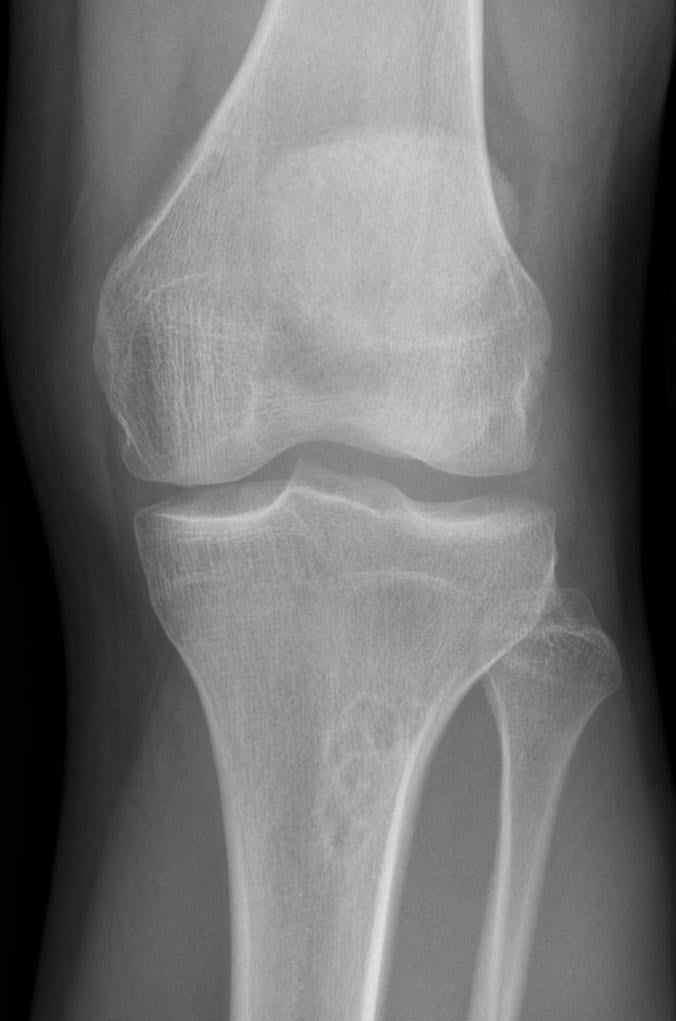
  • Classic location: eccentric metaphyseal lesion in distal femur or proximal/distal tibia
  • Radiographic appearance: bubbly, lobulated lytic lesion with sclerotic rim, cortically-based
  • Natural history: spontaneous healing with skeletal maturity in over 95% of cases requiring no treatment

Examiner's Pearls

  • "
    Distinguish NOF from FCD based on size (3cm threshold) - both are same pathological entity
  • "
    Pathologic fracture risk if lesion occupies over 50% cortical diameter or longer than 33mm
  • "
    Multiple NOFs suggest Jaffe-Campanacci syndrome: NOFs plus café-au-lait spots, mental retardation, hypogonadism
  • "
    Treatment indicated only for: pathologic fracture, impending fracture, persistent pain, or failure to resolve

Clinical Imaging

Imaging Gallery

2-panel: FCD vs NOF comparison - proximal tibia (7yo) and distal tibia (18yo)
Click to expand
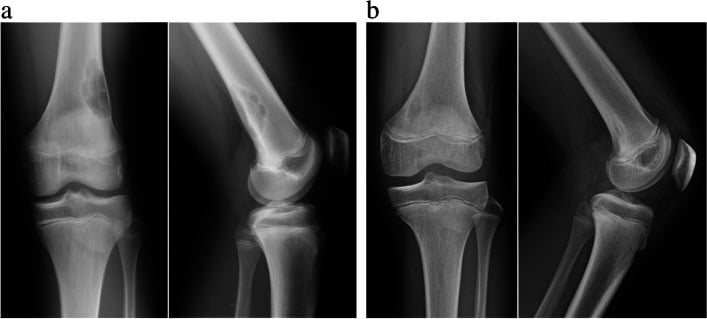
2-panel: FCD vs NOF comparison - proximal tibia (7yo) and distal tibia (18yo)Credit: Błaż M et al., Pol J Radiol via Open-i (NIH) - PMC3389949 (CC-BY)
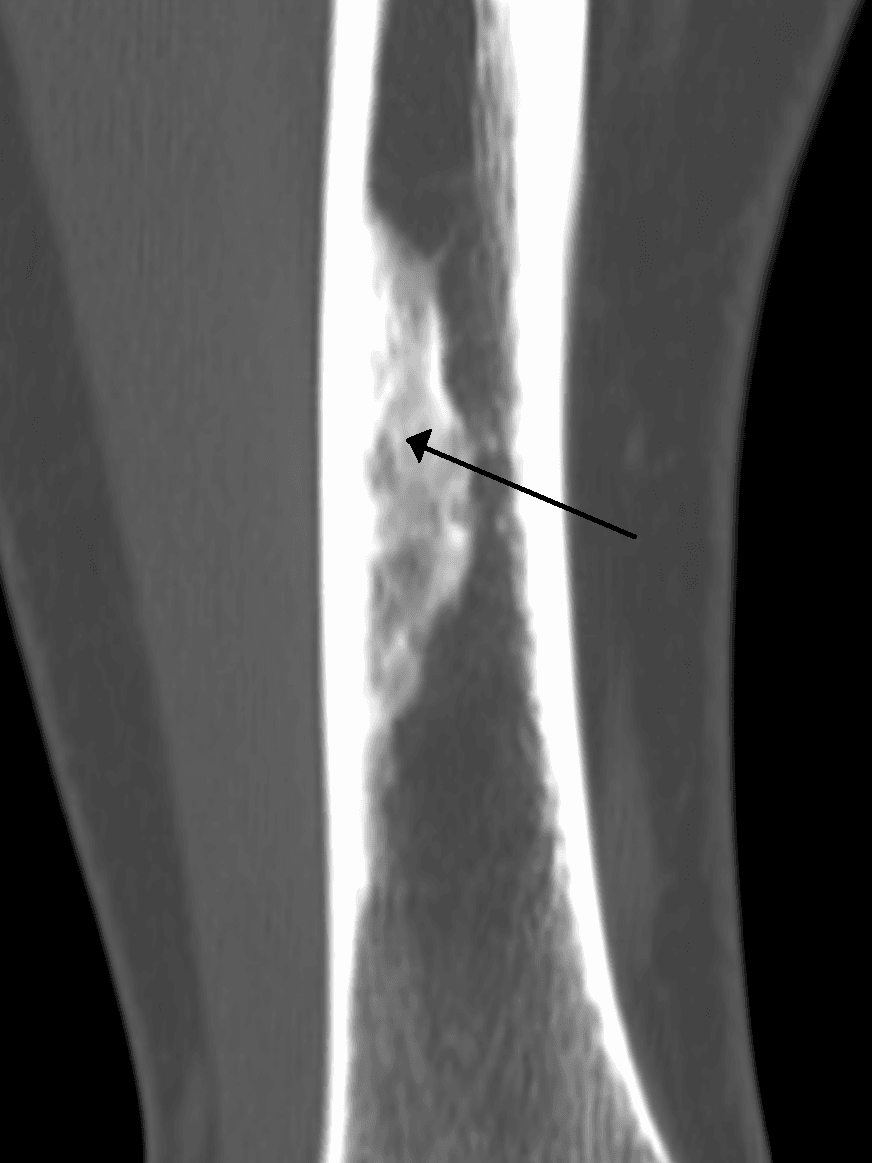
2-panel CT: Large polycyclic NOF in tibia, 11.4cm long (19yo male)
Click to expand
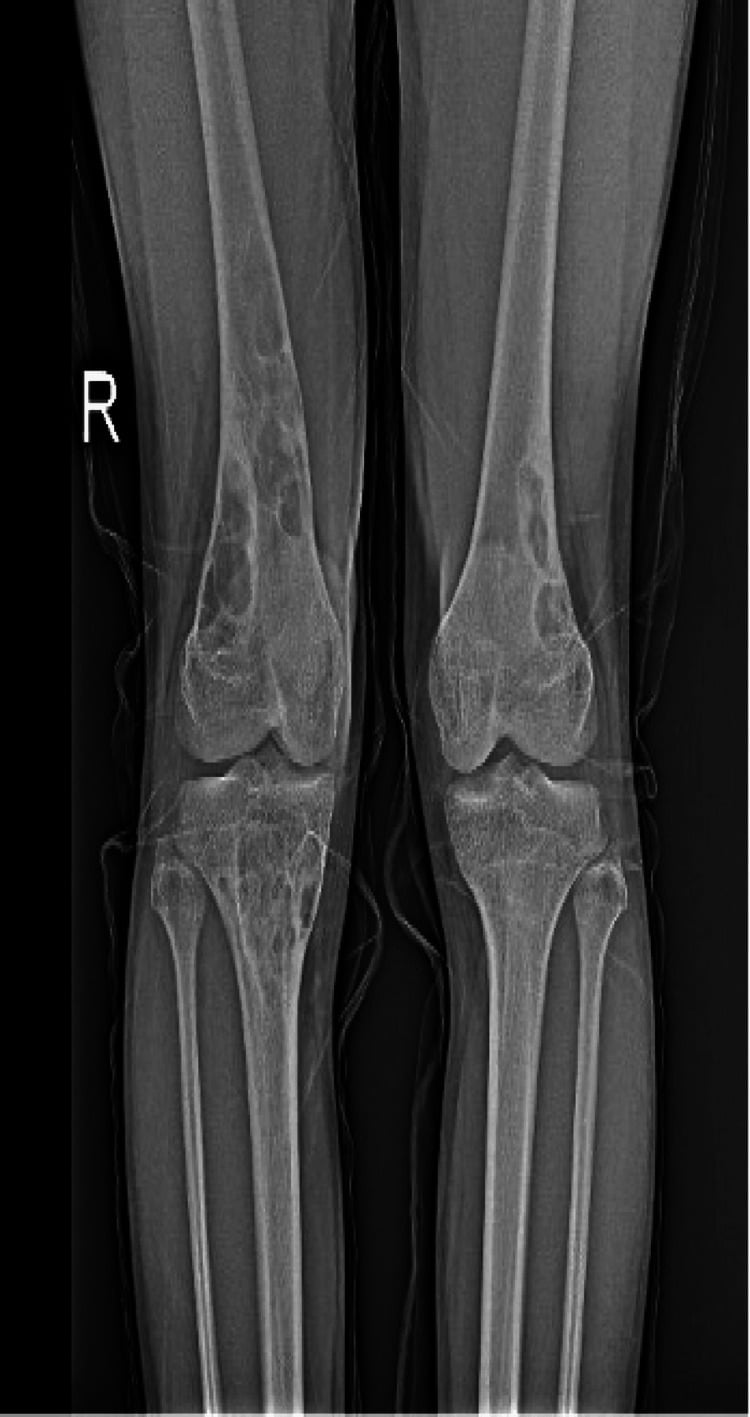
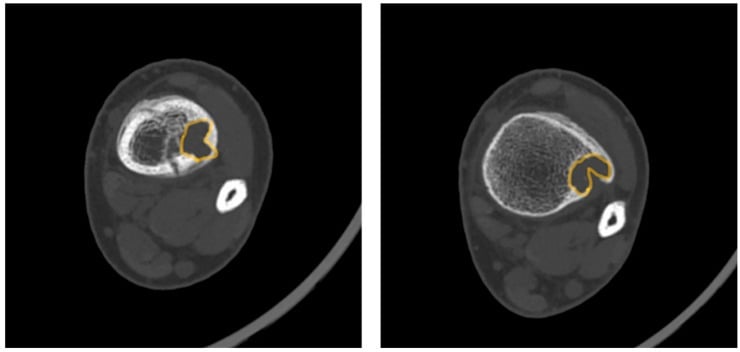
2-panel CT: Large polycyclic NOF in tibia, 11.4cm long (19yo male)Credit: Błaż M et al., Pol J Radiol via Open-i (NIH) - PMC3389949 (CC-BY)
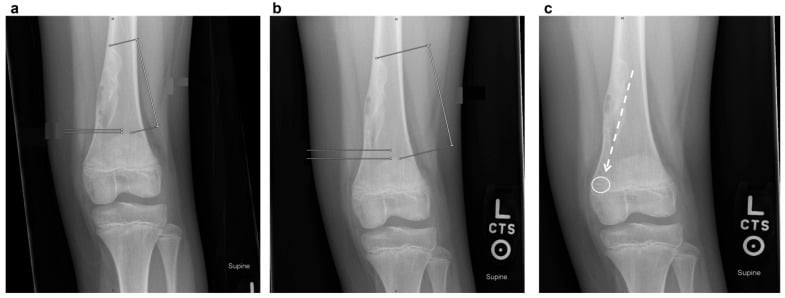
Multi-panel: Jaffe-Campanacci syndrome with humerus X-ray and MRI showing multiple NOFs
Click to expand
Multi-panel: Jaffe-Campanacci syndrome with humerus X-ray and MRI showing multiple NOFsCredit: PMC5290181 case report via Open-i (NIH) - PMC5290181 (CC-BY)
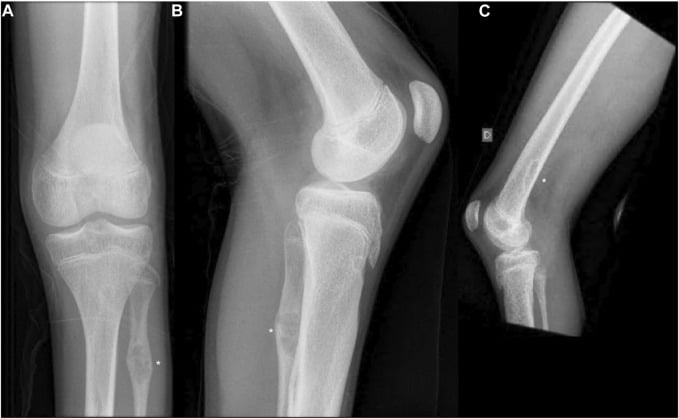
4-panel: Fibular NOF with AP and lateral views showing well-circumscribed lytic lesion
Click to expand
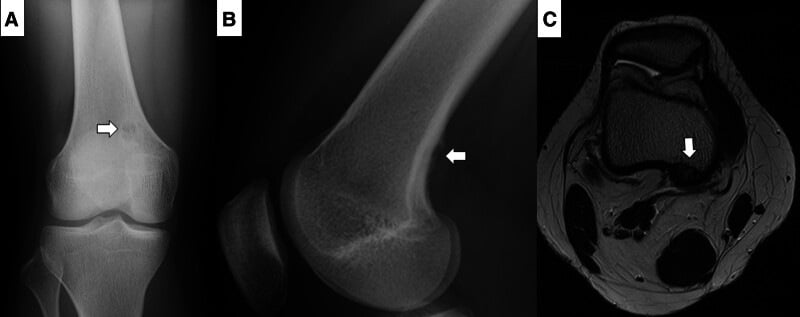
4-panel: Fibular NOF with AP and lateral views showing well-circumscribed lytic lesionCredit: Andrade Neto F et al., Radiol Bras via Open-i (NIH) - PMC4938449 (CC-BY)

Critical Nonossifying Fibroma Exam Points

Most Common Bone Lesion

NOF is the most common incidental bone finding in children. Seen in 30-40% of children on knee radiographs. Over 95% resolve spontaneously with skeletal maturity. Majority are asymptomatic and require observation only.

Pathologic Fracture Risk

High fracture risk if over 50% cortical diameter or length greater than 33mm. Mirels score not validated for benign lesions. Prophylactic curettage and bone grafting indicated for impending fracture.

Jaffe-Campanacci Syndrome

Multiple NOFs plus extraskeletal features: café-au-lait macules (smaller and more numerous than NF1), mental retardation, hypogonadism, cryptorchidism, cardiovascular anomalies. Distinct from neurofibromatosis type 1.

No Biopsy Needed

Classic radiographic appearance is diagnostic. Biopsy unnecessary if typical features present: metaphyseal, eccentric, bubbly, sclerotic rim, cortically-based. Biopsy only if atypical features or diagnostic uncertainty.

Mnemonic

BENIGNNonossifying Fibroma Key Features

B
Bubbly appearance
Multilocular, lobulated lytic lesion with soap-bubble pattern
E
Eccentric location
Metaphyseal, cortically-based, not centered in medullary canal
N
NO malignant potential
Entirely benign, spontaneous resolution expected
I
Incidental finding
Usually asymptomatic, discovered on radiographs for other reasons
G
Growth plate proximity
Metaphyseal location near physis in skeletally immature patients
N
Narrow sclerotic rim
Thin sclerotic border distinguishing from aggressive lesions

Memory Hook:NOF is BENIGN: Bubbly, Eccentric, NO malignancy, Incidental, Growth plate, Narrow rim!

Mnemonic

KNEESCommon Locations

K
Knee region most common
Over 80% occur around knee joint
N
Near metaphysis
Metaphyseal location, migrates to diaphysis with growth
E
Eccentric cortical position
Always cortically-based, not central medullary
E
Either femur or tibia
Distal femur greater than proximal tibia greater than distal tibia
S
Symmetry uncommon
Usually solitary unless Jaffe-Campanacci syndrome

Memory Hook:NOF loves KNEES: Knee region, Near metaphysis, Eccentric, Either femur/tibia!

Mnemonic

FIPPIndications for Treatment

F
Fracture (pathologic)
Curettage and grafting after fracture healing
I
Impending fracture
Over 50% cortical diameter or longer than 33mm length
P
Persistent pain
Ongoing symptoms despite observation (rare)
P
Persistence beyond maturity
Failure to resolve with skeletal maturity (very rare)

Memory Hook:Treat NOF with FIPP: Fracture, Impending fracture, Persistent pain, Persistence!

Overview and Epidemiology

Nonossifying fibroma (NOF) is a benign fibrous bone lesion representing the most common incidental radiographic finding in children and adolescents. It is a developmental abnormality rather than a true neoplasm, arising from failure of ossification at the metaphyseal cortex. The lesion consists of fibrous tissue with characteristic storiform (whorled) pattern on histology.

NOF and fibrous cortical defect (FCD) represent the same pathological entity, distinguished only by size. Lesions smaller than 3cm are termed fibrous cortical defects, while those 3cm or larger are called nonossifying fibromas. Both follow identical natural history with spontaneous regression during skeletal maturation.

Clinical Significance

Understanding NOF is critical for exams because: (1) it is the most common bone lesion encountered in pediatric radiographs; (2) recognition prevents unnecessary biopsy and treatment; (3) knowledge of natural history guides appropriate observation; (4) identification of high-risk features prevents pathologic fractures; and (5) multiple NOFs indicate Jaffe-Campanacci syndrome requiring systemic evaluation.

Demographics

  • Age: Peak 2-20 years, rare after skeletal maturity
  • Sex: Male greater than female ratio 2:1
  • Prevalence: 30-40% of children on knee radiographs
  • Ethnic: No racial predilection identified

Anatomical Distribution

  • Distal femur: 40% of cases (most common site)
  • Proximal tibia: 25% of cases
  • Distal tibia: 15% of cases
  • Fibula: 10% of cases (proximal greater than distal)
  • Other: Rare in upper limb, pelvis (under 5%)

Nomenclature Clarity

The terms "nonossifying fibroma" and "fibrous cortical defect" describe the SAME pathological entity. The distinction is purely based on size (3cm threshold) and does not reflect different biological behavior. Some authors use "metaphyseal fibrous defect" as an umbrella term encompassing both FCD and NOF. For exam purposes, know that FCD smaller than 3cm, NOF 3cm or larger, but both are identical histologically and clinically.

Pathophysiology and Histology

Pathogenesis

Nonossifying fibroma is not a true neoplasm but rather a developmental anomaly arising from aberrant ossification at the metaphyseal cortex. The prevailing theory suggests failure of normal remodeling during enchondral ossification, resulting in persistence of fibrous tissue within the cortex.

The lesion arises in the metaphysis during skeletal growth and may appear to migrate toward the diaphysis as the bone elongates. This migration is actually illusory - the lesion remains stationary while the growth plate moves away during longitudinal growth. With skeletal maturity, the fibrous tissue undergoes spontaneous replacement by normal bone in over 95% of cases.

Developmental Theory

  • Origin: Failure of normal metaphyseal remodeling
  • Timing: Occurs during periods of rapid skeletal growth
  • Location: Always metaphyseal at inception
  • Evolution: Appears to migrate diaphyseally with growth
  • Resolution: Spontaneous ossification with skeletal maturity

Natural History Stages

  • Active phase: Expansion during skeletal growth (2-15 years)
  • Static phase: Stable size approaching maturity (15-20 years)
  • Healing phase: Gradual ossification and resolution (18-30 years)
  • Residual phase: Complete incorporation or small scar (over 95%)

Histological Features

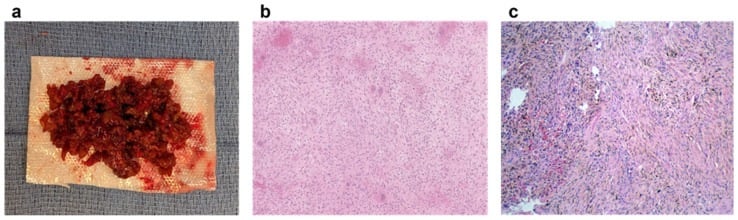
The microscopic appearance of NOF is characterized by whorled (storiform) pattern of spindle cells with scattered multinucleated giant cells and hemosiderin-laden macrophages (foam cells). This appearance is identical to fibrous cortical defect regardless of lesion size.

Histological Characteristics

FeatureNonossifying FibromaFibrous DysplasiaDesmoplastic Fibroma
Cell patternStoriform (whorled) spindle cellsIrregular Chinese charactersDense collagen bundles
Giant cellsScattered throughoutAbsentAbsent
Foam cellsAbundant hemosiderin-ladenAbsentAbsent
Bone formationNone (purely fibrous)Woven bone productionNone (purely fibrous)
Mitotic activityLow to absentLowVariable
BorderWell-demarcatedPoorly definedInfiltrative

Microscopic Features

  • Spindle cells: Arranged in storiform (whorled) pattern
  • Giant cells: Multinucleated osteoclast-like cells scattered
  • Foam cells: Lipid and hemosiderin-laden macrophages
  • Collagen: Abundant fibrous tissue, no bone formation
  • Vascularity: Minimal, sparse blood vessels

Key Distinguishing Features

  • vs Fibrous dysplasia: No bone formation in NOF, storiform pattern
  • vs Desmoplastic fibroma: NOF has giant cells and foam cells
  • vs Eosinophilic granuloma: NOF lacks eosinophils
  • vs Aneurysmal bone cyst: NOF solid, no blood-filled spaces

Classification

Size-Based Classification:

  • Fibrous Cortical Defect (FCD): Less than 3cm in greatest dimension - lower fracture risk
  • Nonossifying Fibroma (NOF): 3cm or larger - higher fracture risk if large

Jaffe-Campanacci Syndrome:

  • Multiple NOFs with extraskeletal manifestations (cafe-au-lait spots, mental retardation, cardiovascular abnormalities)
  • Distinct from neurofibromatosis

Fracture Risk Classification:

  • Low risk: Lesion less than 33% of bone diameter, less than 3cm
  • Moderate risk: 33-50% of bone diameter
  • High risk: Greater than 50% of bone diameter

See detailed "Classification Systems" section below.

Clinical Presentation

Symptoms

The vast majority of nonossifying fibromas are completely asymptomatic and discovered incidentally on radiographs obtained for unrelated reasons (trauma, growth assessment, sports screening). When symptomatic, presentation is typically due to pathologic fracture or, rarely, dull aching pain over the lesion.

Typical Presentation (95%)

  • Discovery: Incidental finding on radiographs
  • Symptoms: None, completely asymptomatic
  • Function: No limitation in activities
  • Examination: Normal physical findings
  • Mechanism: Imaging for trauma, knee pain, growth concerns

Pathologic Fracture (5%)

  • Onset: Sudden pain after minor trauma
  • Mechanism: Fall during sports or play
  • Location: Through weakened cortex at lesion
  • Type: Usually transverse or short oblique pattern
  • Risk factors: Lesion over 50% cortical diameter, active child

Pain Without Fracture

Persistent pain at site of NOF WITHOUT fracture is RARE and should prompt consideration of alternative diagnosis. If confirmed NOF on imaging, pain may indicate stress reaction in thinned cortex (impending fracture). Consider activity modification and close radiographic surveillance. If pain persists despite rest, consider prophylactic curettage and grafting.

Physical Examination

Physical examination is typically unremarkable in asymptomatic NOF. When pathologic fracture has occurred, findings are those of acute fracture: swelling, tenderness, deformity, and unwillingness to bear weight.

Systematic Examination Approach

LookInspection
  • Swelling: None unless pathologic fracture
  • Deformity: None unless displaced fracture
  • Gait: Normal unless fracture or impending fracture
  • Skin: Normal overlying skin, no discoloration
  • Muscle: No atrophy (chronic NOF causes no weakness)
FeelPalpation
  • Tenderness: None unless fracture or large lesion
  • Mass: Usually not palpable (intraosseous)
  • Warmth: No increased temperature
  • Crepitus: Only if acute fracture present
MoveMovement
  • Active ROM: Full and painless unless fracture
  • Passive ROM: Full and painless unless fracture
  • Strength: Normal unless pain inhibition from fracture
SpecialSpecial Tests
  • Stress test: Gentle axial loading may elicit pain if impending fracture
  • Neurovascular: Always intact unless displaced fracture
  • Compartments: Soft unless acute fracture with swelling

Examination Finding

The key examination finding in NOF is the ABSENCE of findings. Normal examination in child with incidental metaphyseal lytic lesion on radiograph supports diagnosis of NOF. Any abnormal findings (swelling, warmth, restricted motion) without trauma history should prompt reconsideration of diagnosis or investigation for complications.

Classification Systems

Size-Based Classification

The primary classification distinguishes fibrous cortical defect from nonossifying fibroma based solely on size. This is an arbitrary distinction as both represent identical pathological entities.

Fibrous Cortical Defect (FCD)

  • Size: Smaller than 3cm in greatest dimension
  • Synonym: Metaphyseal fibrous defect
  • Location: Metaphyseal cortex, eccentric
  • Clinical significance: Lower fracture risk
  • Management: Observation only, no treatment needed

Nonossifying Fibroma (NOF)

  • Size: 3cm or larger in greatest dimension
  • Synonym: Fibroxanthoma (older term, avoid)
  • Location: Metaphyseal cortex, may be multilocular
  • Clinical significance: Higher fracture risk if very large
  • Management: Observation or treatment if high fracture risk

This completes the size-based classification.

Jaffe-Campanacci Syndrome

The presence of multiple nonossifying fibromas in association with extraskeletal abnormalities defines Jaffe-Campanacci syndrome, a rare condition distinct from neurofibromatosis.

Jaffe-Campanacci Syndrome vs Neurofibromatosis Type 1

FeatureJaffe-CampanacciNeurofibromatosis 1Distinguishing Point
Bone lesionsMultiple NOFs (10-100)Tibial dysplasia, sphenoid dysplasiaNOFs pathognomonic for JC
Café-au-lait spotsPresent (smaller, more numerous)Present (larger, 6 or more over 5mm)Spot size differs
Mental developmentMental retardation commonLearning disabilities possibleMore severe in JC
HypogonadismCommon (cryptorchidism)AbsentUnique to JC
CardiovascularCardiac anomalies reportedAbsentUnique to JC
GeneticsNon-hereditaryAutosomal dominant (NF1 gene)JC sporadic, NF1 inherited

Evaluation for Jaffe-Campanacci Syndrome

When multiple NOFs identified (3 or more), perform systematic evaluation: (1) Skeletal survey to identify all lesions; (2) Full skin examination for café-au-lait macules; (3) Developmental assessment for cognitive delay; (4) Genetic counseling (non-hereditary but important for family); (5) Cardiac evaluation if indicated; (6) Endocrine assessment for hypogonadism/cryptorchidism. Management of bone lesions identical to solitary NOF.

This completes the Jaffe-Campanacci syndrome classification.

Investigations

Radiographic Features

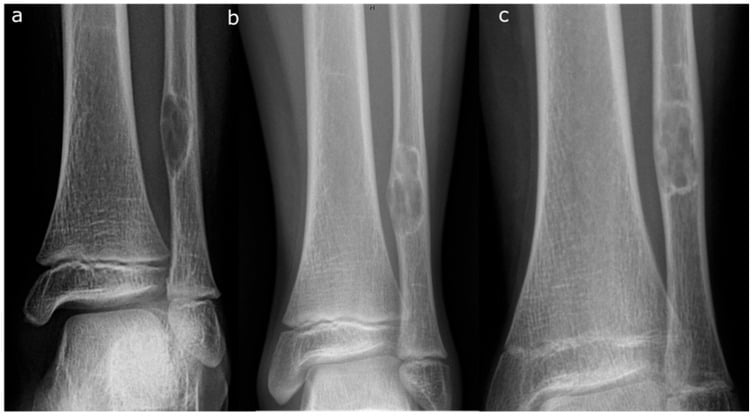
Plain radiographs provide definitive diagnosis in classic cases, eliminating need for further imaging or biopsy. The characteristic appearance is a well-defined, eccentric, lobulated lytic lesion with narrow sclerotic rim in the metaphyseal cortex.

Classic Radiographic Features

  • Location: Metaphyseal, eccentric, cortically-based
  • Appearance: Bubbly, lobulated, soap-bubble pattern
  • Border: Sharp sclerotic rim (1-2mm thick)
  • Matrix: Purely lytic, NO mineralization
  • Cortex: Thinned but intact unless fractured
  • Periosteum: No periosteal reaction unless fractured

Evolution With Growth

  • Active phase: Well-defined lytic, expanding slowly
  • Static phase: Stable size, sclerotic rim persists
  • Healing phase: Progressive sclerosis from periphery
  • Healed phase: Completely replaced by normal bone
  • Migration: Apparent diaphyseal shift (growth plate moves)

Radiographic Diagnosis

If lesion demonstrates ALL classic features (metaphyseal, eccentric, cortical, bubbly, sclerotic rim, NO periosteal reaction), diagnosis is NOF and no further imaging or biopsy needed. Observation with serial radiographs is appropriate. Deviation from ANY classic feature warrants additional investigation to exclude other diagnoses.

Advanced Imaging

Additional imaging is RARELY needed when radiographs show classic NOF features. However, certain clinical scenarios may warrant cross-sectional imaging or bone scan.

Role of Advanced Imaging

ModalityIndicationFindings in NOFLimitations
MRIAtypical features or soft tissue concernT1 low, T2 variable signal; no soft tissue massNot needed for classic cases; expensive
CTPathologic fracture evaluationBetter cortical detail; rule out other fractureRadiation exposure; rarely changes management
Bone scanMultiple lesions suspectedMildly increased uptake in active phaseNot specific; unnecessary if radiographs classic
PET scanNot indicatedVariable FDG uptake possibleNever indicated for NOF diagnosis

Imaging Gallery

Comparison of fibrous cortical defect versus nonossifying fibroma
Click to expand
Fibrous cortical defect (FCD) versus nonossifying fibroma (NOF) - same pathological entity, distinguished only by size. Left panel: 7-year-old female with FCD showing small oval radiolucent lesion in lateral cortex of proximal tibial metaphysis with thin sclerotic border. Right panel: 18-year-old male with larger NOF in distal tibial/ankle region showing characteristic bubbly eccentric appearance with well-defined sclerotic rim. FCD is defined as less than 3cm, NOF as 3cm or larger.Credit: Błaż M et al., Pol J Radiol - CC-BY
Classic NOF in distal tibia with AP and lateral views
Click to expand
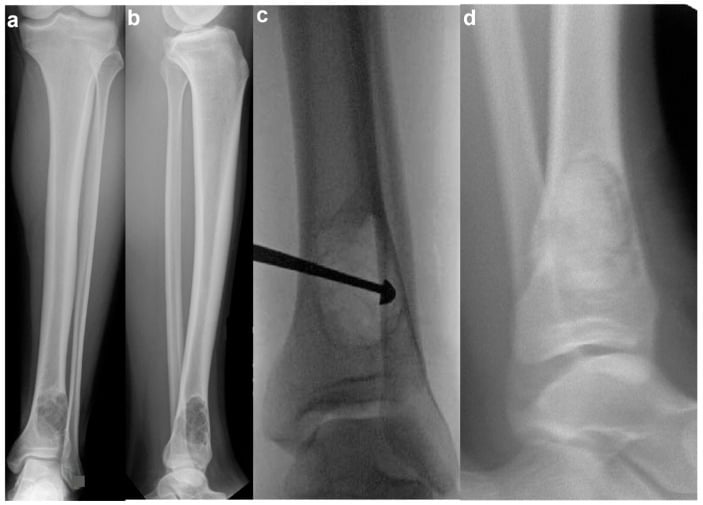
Classic nonossifying fibroma in the distal tibia metaphysis. (A) AP view and (B) Lateral view showing an osteolytic, eccentric lesion at the metaphysis of the distal left tibia with a well-defined sclerotic margin. The lesion demonstrates the characteristic bubbly appearance with cortical thinning but no periosteal reaction - the hallmark features that allow confident radiographic diagnosis without need for biopsy.Credit: Alyami A et al., Adv Med Educ Pract - CC-BY
AP radiograph of distal tibia showing classic nonossifying fibroma
Click to expand
AP ankle radiograph demonstrating classic nonossifying fibroma features in the medial distal tibia metaphysis: eccentric cortically-based location, bubbly/lobulated appearance with multiple septations, sharply defined sclerotic rim, purely lytic without matrix mineralization, and absence of periosteal reaction.
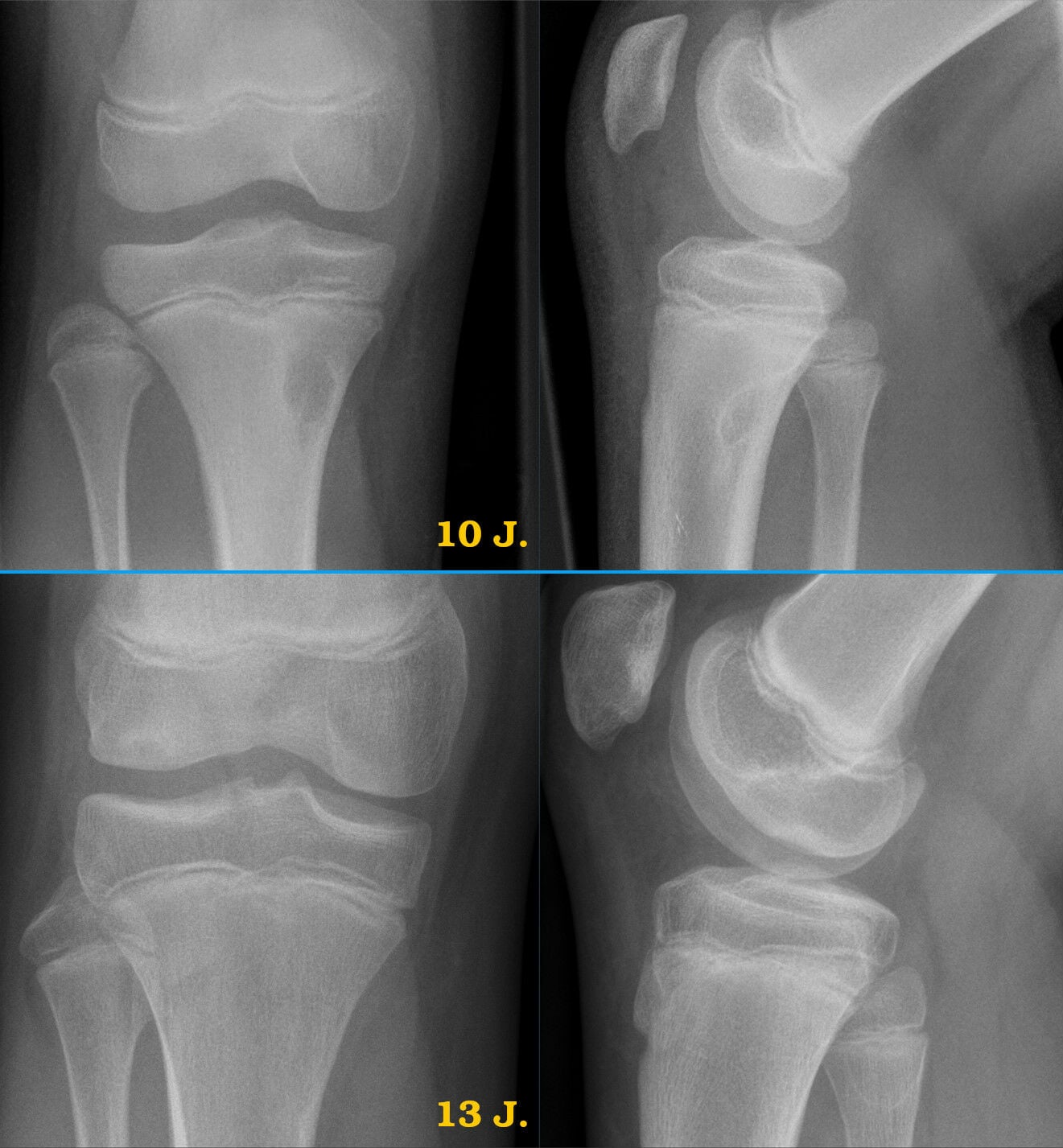
Four-panel X-ray series showing spontaneous regression of NOF over 3 years
Click to expand
Spontaneous regression of proximal tibia nonossifying fibroma over 3 years. Top panels (age 10): AP and lateral views showing large active bubbly metaphyseal lesion. Bottom panels (age 13): Same location demonstrating significant natural regression with progressive sclerosis and reduced lesion size, illustrating the typical self-healing nature of NOF that occurs in 95% of cases.

Biopsy Considerations

Biopsy is unnecessary in over 95% of cases when radiographic appearance is classic. Indications for biopsy are limited to atypical features raising concern for alternative diagnosis.

Biopsy NOT Needed

  • Classic metaphyseal location
  • Eccentric cortically-based position
  • Bubbly lytic appearance with sclerotic rim
  • Age 2-20 years, asymptomatic
  • Size consistent with NOF (larger than 3cm) or FCD (smaller than 3cm)

Consider Biopsy If

  • Central medullary (not eccentric cortical)
  • Periosteal reaction without trauma
  • Soft tissue mass component
  • Age over 30 years or under 2 years
  • Rapidly enlarging despite skeletal maturity
  • Pain without fracture in classic-appearing lesion

Biopsy Technique

If biopsy required for atypical NOF, use CT-guided core needle biopsy rather than open biopsy when possible. Excisional biopsy risks pathologic fracture through weakened cortex. Send for histopathology with clinical history and imaging to facilitate accurate interpretation. Frozen section not useful as diagnosis requires assessment of architectural pattern.

Differential Diagnosis

The differential diagnosis of eccentric metaphyseal lytic lesion in children includes several entities, distinguished by age, location, imaging features, and clinical presentation.

Differential Diagnosis of Metaphyseal Lytic Lesions

LesionAgeLocationRadiographic FeaturesKey Distinguishing Feature
Nonossifying fibroma2-20yEccentric cortical metaphysisBubbly, sclerotic rim, no periosteal reactionClassic location and appearance; asymptomatic
Aneurysmal bone cystUnder 20yEccentric metaphysis/diaphysisExpansile, blown-out cortex, fluid levels MRIMore expansile; fluid-fluid levels on MRI
Simple bone cyst5-15yCentral metaphysis (proximal humerus/femur)Central, fallen fragment sign if fracturedCentral location (not eccentric); fallen fragment
Fibrous dysplasiaUnder 30yDiaphyseal or metaphysealGround glass, expansile, shepherd crook (femur)Ground glass matrix; bone expansion; monostotic/polyostotic
Eosinophilic granuloma5-15yDiaphyseal greater than metaphysealPunched-out lytic, periosteal reaction commonPeriosteal reaction; systemic symptoms possible
Chondromyxoid fibroma10-30yEccentric metaphysis (tibia, femur)Lytic, lobulated, eccentric, sclerotic rimRare; more aggressive appearance; biopsy needed
Giant cell tumor20-40yEpiphyseal extending to metaphysisLytic, expansile, subarticular, no sclerotic rimEpiphyseal location; older age; more aggressive

Key Differentiating Points

When faced with metaphyseal lytic lesion in child, use this approach: (1) Location - eccentric cortical favors NOF, central favors simple cyst; (2) Age - 2-20y fits NOF, over 20y consider GCT; (3) Appearance - bubbly with sclerotic rim is NOF, ground glass is fibrous dysplasia; (4) Periosteal reaction - absent in NOF except if fractured, present in eosinophilic granuloma; (5) Symptoms - asymptomatic favors NOF, painful suggests ABC or EG.

Management

📊 Management Algorithm
nonossifying fibroma management algorithm
Click to expand
Management algorithm for nonossifying fibromaCredit: OrthoVellum

Decision-Making Framework

Management of nonossifying fibroma follows algorithmic approach based on fracture risk assessment, symptoms, and skeletal maturity. Over 95% require observation only.

Observation (95%)

  • Asymptomatic NOF/FCD
  • Cortical involvement under 50%
  • Lesion length under 33mm
  • Patient/family reassured
  • Serial radiographs 6-12mo

Prophylactic Treatment (4%)

  • Cortical involvement over 50%
  • Lesion length over 33mm
  • Active high-impact sports
  • Family anxiety despite counseling

Treatment After Fracture (1%)

  • Pathologic fracture healed
  • Recurrent fractures
  • Persistent symptoms
  • Failure to heal fracture

Fracture Risk Assessment

The primary indication for intervention in NOF is prevention of pathologic fracture. Risk stratification guides treatment decisions.

Fracture Risk Stratification

Risk FactorLow RiskModerate RiskHigh RiskManagement
Cortical involvementUnder 33%33-50%Over 50%High risk: prophylactic treatment
Lesion lengthUnder 20mm20-33mmOver 33mmHigh risk: prophylactic treatment
LocationUpper limb, fibulaDistal tibiaDistal femur, proximal tibiaHigh risk in weight-bearing bones
Activity levelSedentaryRecreational sportsCompetitive high-impactHigh risk: counsel activity modification
AgeApproaching maturityMid-adolescenceYoung child (active growth)High risk: lesion may enlarge with growth

Mirels Score Not Validated

Mirels scoring system for pathologic fracture risk is NOT validated for benign lesions like NOF. It was developed for metastatic bone disease. For NOF, use cortical involvement over 50% and length over 33mm as thresholds for prophylactic treatment. These are evidence-based criteria specific to NOF fracture risk.

Conservative Management

Observation with serial radiographic follow-up is appropriate for vast majority of NOFs. Counseling regarding fracture risk and activity modification is essential component.

Observation Protocol

DiagnosisInitial Visit
  • Confirm diagnosis with radiographs (AP and lateral)
  • Assess fracture risk (cortical involvement, length)
  • Educate family: benign, self-limiting, high cure rate
  • Reassure: no cancer risk, no biopsy needed
  • Activity: no restrictions unless high fracture risk
6 monthsFollow-Up Radiographs
  • Repeat AP and lateral radiographs
  • Assess: size change, cortical involvement, healing
  • Stable or smaller: continue observation
  • Enlarging: reassess fracture risk, consider treatment
12-24 monthsAnnual Follow-Up
  • Serial radiographs until skeletal maturity
  • Document progressive healing (sclerosis)
  • Majority show complete resolution by maturity
  • Discontinue imaging once healed or skeletal maturity
MaturityDischarge
  • Complete ossification of lesion OR
  • Skeletal maturity reached with stable lesion
  • No further radiographs needed
  • Reassure: no long-term sequelae expected

Activity Recommendations

For low-risk NOF (under 50% cortical involvement, under 33mm length): NO activity restrictions needed. Child may participate in all sports without limitation. For moderate-risk NOF (33-50% cortical, 20-33mm): consider activity modification avoiding high-impact contact sports until lesion heals or prophylactic treatment performed. For high-risk NOF: recommend activity restriction or prophylactic surgery prior to sports participation.

This completes the management algorithm section.

Conservative Management

Observation with serial radiographic follow-up is appropriate for vast majority of NOFs. Counseling regarding fracture risk and activity modification is essential component.

Observation Protocol

DiagnosisInitial Visit
  • Confirm diagnosis with radiographs (AP and lateral)
  • Assess fracture risk (cortical involvement, length)
  • Educate family: benign, self-limiting, high cure rate
  • Reassure: no cancer risk, no biopsy needed
  • Activity: no restrictions unless high fracture risk
6 monthsFollow-Up Radiographs
  • Repeat AP and lateral radiographs
  • Assess: size change, cortical involvement, healing
  • Stable or smaller: continue observation
  • Enlarging: reassess fracture risk, consider treatment
12-24 monthsAnnual Follow-Up
  • Serial radiographs until skeletal maturity
  • Document progressive healing (sclerosis)
  • Majority show complete resolution by maturity
  • Discontinue imaging once healed or skeletal maturity
MaturityDischarge
  • Complete ossification of lesion OR
  • Skeletal maturity reached with stable lesion
  • No further radiographs needed
  • Reassure: no long-term sequelae expected

This completes the conservative management section.

Surgical Management

Surgical intervention is required in minority of cases, primarily for pathologic fracture, impending fracture, or rarely persistent pain. The surgical principle is intralesional curettage with bone grafting.

Surgical Indications

Absolute and relative indications for surgical treatment of nonossifying fibroma.

Absolute Indications

  • Pathologic fracture: After fracture healing (4-6 weeks immobilization)
  • Impending fracture: Over 50% cortical involvement OR over 33mm length
  • Recurrent fractures: Multiple fractures through same lesion
  • Failure to heal: Fracture non-union through NOF (rare)

Relative Indications

  • Persistent pain: Ongoing symptoms despite conservative management (rare)
  • Diagnostic uncertainty: Atypical features requiring tissue diagnosis
  • Family anxiety: Severe anxiety despite counseling (consider carefully)
  • Failure to resolve: Persistent lesion beyond skeletal maturity (very rare)

Timing of Surgery After Fracture

If pathologic fracture occurs through NOF, allow fracture to HEAL FIRST before definitive surgical treatment. Immobilize in cast for 4-6 weeks until fracture unites, then perform curettage and grafting as staged procedure. Attempting curettage through acute fracture risks poor bone graft incorporation and complications. Exception: displaced fracture requiring open reduction - perform curettage and grafting at same setting.

This completes the surgical indications section.

Curettage and Bone Grafting Technique

The standard surgical treatment is intralesional curettage with bone grafting, performed through cortical window.

Patient Positioning

  • Supine for lower extremity lesions
  • Tourniquet on proximal thigh (femur/tibia) or arm (upper limb)
  • Image intensifier available for intraoperative confirmation

Surgical Approach

  • Longitudinal incision over lesion (use radiographs for localization)
  • Protect neurovascular structures (know anatomy at lesion site)
  • Subperiosteal dissection to expose cortex overlying lesion
  • Create cortical window with osteotome or high-speed burr

Curettage

  • Thorough curettage of all fibrous tissue using sharp curettes
  • Extend to all lobulations visualized on preoperative imaging
  • Curettage until only normal bone remains
  • Send tissue for histopathology (confirm diagnosis)

Adjuvants (Optional)

  • Phenol application to cavity wall (chemical adjuvant)
  • High-speed burr to cavity walls (mechanical adjuvant)
  • Adjuvants typically NOT needed for NOF (benign lesion)

Bone Grafting

  • Autograft: Iliac crest bone graft (gold standard, superior healing)
  • Allograft: Cancellous chips or structural allograft (alternative if autograft unavailable)
  • Bone substitute: Calcium phosphate/sulfate (avoid in high-stress areas)
  • Pack graft tightly into defect until flush with cortex

Closure

  • Anatomic periosteal repair over graft
  • Layered closure: deep fascia, subcutaneous, skin
  • Drain typically not required

This completes the technique section.

Postoperative Management

Immobilization

  • Lower limb: Long leg or short leg cast depending on location and stability
  • Upper limb: Splint or sling for comfort
  • Duration: 4-6 weeks until graft incorporates (radiographic confirmation)

Weight-Bearing

  • Lower limb: Non-weight-bearing 4-6 weeks, then progressive weight-bearing as tolerated
  • Upper limb: Sling for comfort, gentle ROM after 2 weeks, no lifting 6 weeks

Radiographic Follow-Up

  • 2 weeks: Wound check, initial radiographs (baseline graft appearance)
  • 6 weeks: Assess graft incorporation, consider weight-bearing advancement
  • 3 months: Confirm healing, unrestricted activity if healed
  • 6-12 months: Final radiographs to document complete healing

Activity Restrictions

  • Contact sports: Avoid 3-6 months until complete graft incorporation
  • Swimming: After wound healed (2 weeks)
  • Running: After weight-bearing allowed (6-8 weeks)
  • Return to full sports: 3-6 months based on radiographic healing

Complications Monitoring

  • Wound infection (rare, under 2%)
  • Graft fracture (rare if protected appropriately)
  • Recurrence (very rare in NOF, under 5%)
  • Donor site morbidity if autograft (pain, hematoma, infection)

This completes the postoperative care section.

Surgical Outcomes

Results of surgical treatment for nonossifying fibroma are excellent with very high success rates.

Expected Outcomes

  • Healing: Over 95% complete incorporation of graft
  • Recurrence: Under 5% (lower than other benign tumors)
  • Function: Return to full unrestricted activity
  • Pain: Complete resolution after healing
  • Cosmesis: Minimal scarring with proper technique

Factors Affecting Outcome

  • Graft type: Autograft superior to allograft/substitute
  • Curettage quality: Thorough removal reduces recurrence
  • Patient compliance: Protected weight-bearing critical
  • Lesion size: Larger defects may require longer healing
  • Location: Metaphyseal heals faster than diaphyseal

Comparison to Natural History

Important exam point: Surgical treatment for NOF does NOT improve on natural history in majority of cases. Over 95% of NOFs resolve spontaneously without intervention. Surgery indicated ONLY when fracture risk high or fracture has occurred. Emphasize to examiners that conservative management is PRIMARY treatment, surgery is EXCEPTION not rule.

This section completes the surgical outcomes discussion.

Complications

Disease-Related Complications

Complications of the lesion itself are rare, with pathologic fracture being the primary concern.

Pathologic Fracture

  • Incidence: 5-10% of all NOFs, higher if large (over 50% cortex)
  • Mechanism: Minor trauma in child with thinned cortex
  • Fracture pattern: Transverse or short oblique through lesion
  • Treatment: Cast immobilization until healed (4-6 weeks), then curettage and graft
  • Healing: Fracture heals normally; perform surgery after union

Rare Complications

  • Persistent pain: Very rare without fracture, may indicate impending fracture
  • Progressive enlargement: Expected during growth, rarely continues beyond maturity
  • Failure to resolve: Under 5% persist beyond skeletal maturity
  • Malignant transformation: NEVER reported (zero risk)

Treatment-Related Complications

Complications from surgical intervention are uncommon but include typical surgical risks.

Surgical Complications

ComplicationIncidencePreventionManagement
Wound infectionUnder 2%Prophylactic antibiotics, sterile techniqueAntibiotics; I&D if abscess
RecurrenceUnder 5%Thorough curettage, extend to all lobulationsRevision curettage and grafting
Graft fractureUnder 3%Protected weight-bearing 6 weeksUsually heals with immobilization
Donor site morbidity5-10% if iliac crest autograftMeticulous technique, adequate closureAnalgesia, usually resolves spontaneously
Neurovascular injuryUnder 1%Know anatomy, careful dissectionNerve/vascular repair if identified intraoperatively

Recurrence Management

Recurrence after curettage and grafting is rare (under 5%) in NOF, much lower than other benign bone tumors like giant cell tumor. If recurrence occurs, confirm diagnosis with histopathology (ensure not misdiagnosed initially), then perform revision curettage and grafting. Consider adjuvants (phenol, burr) if not used initially. Second recurrence extremely rare - if occurs, consider alternative diagnosis.

Evidence Base

Natural History and Prevalence

Level IV
Caffey J • Advances in Pediatrics (1955)
Finding: Landmark series documenting nonossifying fibroma as most common bone lesion in children, present in 30-40% of normal children on knee radiographs, with spontaneous resolution expected.
Clinical Implication: This evidence guides current practice.

Pathologic Fracture Risk Factors

Level III
Arata MA, Peterson HA, Dahlin DC • Journal of Bone and Joint Surgery (1981)
Finding: Study of 110 NOFs identified fracture risk increased when lesion occupied over 50% of cortical diameter or measured over 33mm in length, establishing criteria for prophylactic treatment.
Clinical Implication: This evidence guides current practice.

Surgical Treatment Outcomes

Level IV
Ritschl P, Karnel F, Hajek P • Skeletal Radiology (1988)
Finding: Case series of 69 surgically treated NOFs demonstrated 95% healing rate with curettage and bone grafting, recurrence rate under 5%, supporting surgery for high-risk or fractured lesions only.
Clinical Implication: This evidence guides current practice.

Jaffe-Campanacci Syndrome

Level IV
Campanacci M, Laus M, Boriani S • Journal of Bone and Joint Surgery (British) (1983)
Finding: Description of syndrome of multiple nonossifying fibromas associated with café-au-lait spots, mental retardation, hypogonadism, and cardiovascular anomalies, distinct from neurofibromatosis.
Clinical Implication: This evidence guides current practice.

Exam Viva Scenarios

Practice these scenarios to excel in your viva examination

VIVA SCENARIOStandard

Scenario 1: Incidental Finding in Skeletally Immature Child

EXAMINER

"A 12-year-old boy presents with knee pain after football. Radiographs show a 2.5cm eccentric, bubbly, lytic lesion with sclerotic rim in the distal femoral metaphysis. The lesion occupies approximately 40% of the cortical diameter. Examine the radiograph and discuss your management."

EXCEPTIONAL ANSWER
These radiographs show an eccentric, metaphyseal, cortically-based lytic lesion with lobulated appearance and sclerotic rim in the distal femur of a skeletally immature patient. This is characteristic of a fibrous cortical defect or nonossifying fibroma. The lesion measures 2.5cm, which is at the threshold between fibrous cortical defect (smaller than 3cm) and nonossifying fibroma (3cm or larger). The cortical involvement is approximately 40%, which is below the 50% threshold for high fracture risk. The sclerotic rim and metaphyseal location are classic features. My management would be observation with serial radiographs. I would counsel the patient and family that this is a benign developmental abnormality, not a tumor, with no cancer risk. Over 95% resolve spontaneously with skeletal maturity. No biopsy is needed given the classic radiographic appearance. I would obtain follow-up radiographs in 6 months to confirm stability or progression of healing. The patient may continue all activities without restriction as the fracture risk is low. I would advise them to return if pain develops without trauma, as this could indicate impending fracture. If the lesion were to enlarge beyond 50% cortical involvement or 33mm in length, I would discuss prophylactic curettage and bone grafting to prevent pathologic fracture, particularly in an active adolescent.
KEY POINTS TO SCORE
Recognize classic radiographic features: eccentric, metaphyseal, cortical, bubbly, sclerotic rim
Distinguish FCD (smaller than 3cm) from NOF (3cm or larger) - same entity, size-based
No biopsy needed when radiographic appearance classic and patient demographics fit
Fracture risk assessment: 40% cortical involvement is LOW risk (under 50% threshold)
Management: observation with serial radiographs, full activity allowed, spontaneous resolution expected
COMMON TRAPS
✗Recommending biopsy for classic radiographic appearance - unnecessary and risks fracture
✗Restricting activities without high fracture risk - causes anxiety and lifestyle impact
✗Confusing with malignant lesion - NOF has zero malignant potential, entirely benign
✗Using Mirels score - not validated for benign lesions, only for metastatic disease
LIKELY FOLLOW-UPS
"What would make you consider biopsy in this case? (Atypical features: central location, periosteal reaction without fracture, soft tissue mass, age over 30 years)"
"What radiographic features would prompt prophylactic surgery? (Over 50% cortical involvement, over 33mm length, active child in high-impact sports)"
"How would you manage if pathologic fracture occurred? (Immobilize in cast 4-6 weeks until fracture heals, then curettage and bone grafting)"
"What is Jaffe-Campanacci syndrome? (Multiple NOFs with café-au-lait spots, mental retardation, hypogonadism, cardiac anomalies)"
VIVA SCENARIOModerate

Scenario 2: Large NOF with High Fracture Risk

EXAMINER

"A 14-year-old competitive basketball player presents with a 4.5cm eccentric metaphyseal lytic lesion in the proximal tibia occupying 60% of the cortical diameter. He is asymptomatic but his radiologist report mentions nonossifying fibroma. Discuss your management approach."

EXCEPTIONAL ANSWER
This is a nonossifying fibroma in a high-risk situation. While the radiographic features are characteristic of NOF (eccentric, metaphyseal, cortically-based, likely sclerotic rim), the lesion size of 4.5cm and cortical involvement of 60% place this patient at high risk for pathologic fracture. The risk factors present are: (1) cortical involvement over 50% - the threshold for high fracture risk; (2) lesion length over 33mm (4.5cm); (3) weight-bearing bone (proximal tibia); and (4) active adolescent in competitive high-impact sport (basketball). Evidence from Arata et al. demonstrated increased fracture risk when cortical involvement exceeds 50% or length exceeds 33mm. Given these high-risk features, I would recommend prophylactic surgical treatment with curettage and bone grafting to prevent pathologic fracture. I would counsel the patient and family about the natural history of NOF, emphasizing that while most heal spontaneously, this particular lesion has high fracture risk given the size and his activity level. My surgical approach would be: (1) longitudinal incision over the lesion; (2) cortical window to access the lesion; (3) thorough intralesional curettage of all fibrous tissue; (4) bone grafting, preferably with autograft from iliac crest for superior healing; (5) postoperative protected weight-bearing for 6 weeks until graft incorporation. I would send tissue for histopathology to confirm the diagnosis. The alternative would be activity restriction and observation, but this would significantly impact his basketball season and still carries fracture risk. Prophylactic treatment allows return to sport in 3-6 months with very low complication rate.
KEY POINTS TO SCORE
Recognize high fracture risk: over 50% cortical involvement AND over 33mm length
Weight-bearing bone plus high-impact sport increases fracture risk further
Prophylactic treatment indicated to prevent fracture - better than treating after fracture
Surgical technique: curettage and bone grafting, preferably autograft
Postoperative: protected weight-bearing 6 weeks, return to sports 3-6 months
COMMON TRAPS
✗Recommending observation despite high fracture risk - will likely fracture during basketball
✗Suggesting only activity restriction - major lifestyle impact for teenager, compliance issue
✗Not counseling about natural history - family may perceive as tumor requiring urgent surgery
✗Forgetting to send tissue for histopathology - should confirm diagnosis despite classic appearance
LIKELY FOLLOW-UPS
"What if the patient refuses surgery? (Counsel activity modification, no contact sports, serial radiographs every 3 months, educate about fracture risk)"
"What would you do differently if he presented with acute fracture through the lesion? (Immobilize until fracture heals 4-6 weeks, then curettage and graft)"
"What is the expected healing rate after curettage and grafting? (Over 95%, recurrence under 5%)"
"Would you use adjuvants like phenol or high-speed burr? (Typically not needed for NOF as benign lesion, lower recurrence than GCT or ABC)"
VIVA SCENARIOStandard

Scenario 3: Multiple NOFs - Jaffe-Campanacci Syndrome

EXAMINER

"You review radiographs of an 8-year-old boy with developmental delay showing multiple eccentric metaphyseal lytic lesions in both femora and tibiae bilaterally (total 6 lesions). Physical examination reveals 15 café-au-lait macules and undescended testes. What is your diagnosis and management?"

EXCEPTIONAL ANSWER
This clinical picture is highly suggestive of Jaffe-Campanacci syndrome, a rare condition characterized by multiple nonossifying fibromas associated with extraskeletal abnormalities. The diagnostic features present are: (1) multiple NOFs - 6 lesions involving bilateral lower extremities; (2) café-au-lait macules - present but need to distinguish from neurofibromatosis type 1; (3) developmental delay/mental retardation; (4) hypogonadism manifesting as cryptorchidism (undescended testes). The radiographic appearance of the bone lesions shows classic NOF features: eccentric, metaphyseal, cortically-based, lytic with sclerotic rim. This differs from neurofibromatosis type 1 in several ways: NF1 has tibial dysplasia and sphenoid wing dysplasia rather than NOFs; NF1 café-au-lait spots are typically larger and six or more greater than 5mm, while Jaffe-Campanacci has smaller more numerous spots; NF1 is autosomal dominant with NF1 gene mutation, while Jaffe-Campanacci is non-hereditary sporadic. My management approach would be: (1) Confirm diagnosis with skeletal survey to identify all bone lesions; (2) Genetics referral for counseling - reassure non-hereditary; (3) Developmental pediatrics for cognitive assessment and support; (4) Pediatric endocrinology for hypogonadism management - may need orchiopexy; (5) Cardiac evaluation as cardiovascular anomalies reported; (6) Dermatology to document café-au-lait distribution and rule out NF1. For the bone lesions, management is identical to solitary NOF - assess each lesion individually for fracture risk. Most will heal spontaneously. Surgery indicated only for high fracture risk (over 50% cortical involvement, over 33mm length) or if pathologic fracture occurs. Close radiographic surveillance every 6-12 months during growth.
KEY POINTS TO SCORE
Recognize Jaffe-Campanacci syndrome: multiple NOFs plus extraskeletal features
Key features: café-au-lait spots, mental retardation, hypogonadism/cryptorchidism, cardiac anomalies
Distinguish from NF1: different bone lesions (NOF vs tibial dysplasia), non-hereditary vs autosomal dominant
Multidisciplinary management: genetics, developmental pediatrics, endocrinology, cardiology
Bone lesion management identical to solitary NOF - individual fracture risk assessment
COMMON TRAPS
✗Diagnosing as neurofibromatosis type 1 - different genetic condition with different bone lesions
✗Recommending prophylactic surgery for all lesions - unnecessary, assess each individually
✗Missing systemic evaluation - need cardiac, endocrine, developmental assessment
✗Counseling as hereditary condition - Jaffe-Campanacci is sporadic, not inherited
LIKELY FOLLOW-UPS
"How do café-au-lait spots differ between Jaffe-Campanacci and NF1? (JC: smaller, more numerous; NF1: 6 or more over 5mm, larger)"
"What bone lesions characterize NF1 versus Jaffe-Campanacci? (NF1: tibial dysplasia, sphenoid dysplasia; JC: multiple NOFs)"
"What is the inheritance pattern? (Jaffe-Campanacci: non-hereditary, sporadic; NF1: autosomal dominant)"
"Would you biopsy these lesions? (No, if classic radiographic NOF appearance; yes if atypical to confirm diagnosis)"

NONOSSIFYING FIBROMA

High-Yield Exam Summary

Definition & Epidemiology

  • •Benign fibrous bone lesion, most common incidental finding in children (30-40%)
  • •Developmental abnormality, NOT true neoplasm
  • •FCD smaller than 3cm vs NOF 3cm or larger (same entity, size-based distinction)
  • •Age 2-20 years, male greater than female 2:1
  • •Over 95% spontaneous resolution with skeletal maturity

Classic Location & Appearance

  • •Distal femur 40%, proximal tibia 25%, distal tibia 15%, fibula 10%
  • •Metaphyseal, eccentric, cortically-based (NOT central medullary)
  • •Bubbly, lobulated, soap-bubble lytic appearance
  • •Narrow sclerotic rim (1-2mm), NO periosteal reaction unless fractured
  • •Migrates diaphyseally with growth (growth plate moves, lesion stationary)

Histology

  • •Storiform (whorled) pattern of spindle cells
  • •Scattered multinucleated giant cells
  • •Hemosiderin-laden macrophages (foam cells)
  • •NO bone formation (purely fibrous)
  • •Well-demarcated border, low mitotic activity

Clinical Presentation

  • •95% asymptomatic, incidental finding on radiographs
  • •5% pathologic fracture (minor trauma through weakened cortex)
  • •Pain without fracture RARE - consider impending fracture or alternative diagnosis
  • •Physical exam normal unless fracture present
  • •NO systemic symptoms (fever, weight loss) - purely local lesion

Fracture Risk Assessment

  • •High risk if over 50% cortical diameter involvement
  • •High risk if lesion length over 33mm (Arata criteria)
  • •Location: weight-bearing bones (femur, tibia) higher risk than fibula/upper limb
  • •Activity: high-impact sports increase fracture risk
  • •Mirels score NOT validated for benign lesions (only for metastases)

Management Algorithm

  • •Observation (95%): asymptomatic, low fracture risk, serial radiographs 6-12 months
  • •Prophylactic surgery (4%): over 50% cortex, over 33mm length, active sports
  • •After fracture (1%): immobilize until healed, then curettage and graft
  • •NO biopsy if classic radiographic appearance in appropriate age
  • •NO activity restrictions unless high fracture risk

Surgical Technique

  • •Intralesional curettage through cortical window
  • •Bone grafting: autograft (iliac crest) preferred over allograft/substitute
  • •Send tissue for histopathology (confirm diagnosis)
  • •Protected weight-bearing 6 weeks until graft incorporation
  • •Return to sports 3-6 months after radiographic healing

Jaffe-Campanacci Syndrome

  • •Multiple NOFs (10-100 lesions) plus extraskeletal features
  • •Café-au-lait macules (smaller, more numerous than NF1)
  • •Mental retardation/developmental delay
  • •Hypogonadism, cryptorchidism, cardiovascular anomalies
  • •Non-hereditary (sporadic), distinct from NF1 (autosomal dominant)

Differential Diagnosis

  • •Simple bone cyst: central (not eccentric), fallen fragment sign if fractured
  • •Aneurysmal bone cyst: more expansile, fluid-fluid levels on MRI
  • •Fibrous dysplasia: ground glass matrix, bone expansion, different age
  • •Eosinophilic granuloma: periosteal reaction, diaphyseal, systemic symptoms
  • •Giant cell tumor: epiphyseal, older age (20-40y), more aggressive

Exam Pearls

  • •Most common bone lesion in children - know this cold
  • •No biopsy needed if classic features - avoid unnecessary procedures
  • •95% heal spontaneously - observation is primary treatment
  • •Surgery ONLY for high fracture risk or after fracture
  • •Zero malignant potential - entirely benign, reassure families

References

  1. Caffey J. On fibrous defects in cortical walls of growing tubular bones. Adv Pediatr. 1955;7:13-51.

  2. Ritschl P, Karnel F, Hajek P. Fibrous metaphyseal defects - determination of their origin and natural history using a radiomorphological study. Skeletal Radiol. 1988;17(1):8-15.

  3. Arata MA, Peterson HA, Dahlin DC. Pathological fractures through non-ossifying fibromas. J Bone Joint Surg Am. 1981;63(6):980-988.

  4. Campanacci M, Laus M, Boriani S. Multiple non-ossifying fibromata with extraskeletal anomalies: a new syndrome? J Bone Joint Surg Br. 1983;65(5):627-632.

  5. Betsy M, Kupersmith LM, Springfield DS. Metaphyseal fibrous defects. J Am Acad Orthop Surg. 2004;12(2):89-95.

  6. Kumar R, Madewell JE, Lindell MM, Swischuk LE. Fibrous lesions of bones. Radiographics. 1990;10(2):237-256.

  7. Easley ME, Kneisl JS. Pathologic fractures through nonossifying fibromas: is prophylactic treatment warranted? J Pediatr Orthop. 1997;17(6):808-813.

  8. Hau MA, Kim I, Kattapuram S, et al. Accuracy of CT-guided biopsies in 359 patients with musculoskeletal lesions. Skeletal Radiol. 2002;31(6):349-353.

  9. Jee WH, Choe BY, Kang HS, et al. Nonossifying fibroma: characteristics at MR imaging with pathologic correlation. Radiology. 1998;209(1):197-202.

  10. Mankin HJ, Trahan CA, Fondren G, Mankin CJ. Non-ossifying fibroma, fibrous cortical defect and Jaffe-Campanacci syndrome: a biologic and clinical review. Chir Organi Mov. 2009;93(1):1-7.

  11. Moser RP Jr, Sweet DE, Haseman DB, Madewell JE. Multiple skeletal fibroxanthomas: radiologic-pathologic correlation of 72 cases. Skeletal Radiol. 1987;16(5):353-359.

  12. Stacy GS, Dixon LB. Pitfalls in MR image interpretation prompting referrals to an orthopedic oncology clinic. Radiographics. 2007;27(3):805-826.

  13. Mirra JM, Gold RH, Rand F. Disseminated nonossifying fibromas in association with café-au-lait spots (Jaffe-Campanacci syndrome). Clin Orthop Relat Res. 1982;(168):192-205.

  14. Gleeson TG, O'Connell JX, Munk PL. Imaging features of nonossifying fibroma. J Comput Assist Tomogr. 2008;32(4):615-621.

  15. Drennan DB, Maylahn DJ, Fahey JJ. Fractures through large nonossifying fibromas. Clin Orthop Relat Res. 1974;(103):82-88.

Quick Stats
Reading Time132 min
Related Topics

Bone Island (Enostosis)

Chordoma

Expandable Prostheses in Pediatric Oncology

Fibrosarcoma of Bone