
Article summary
How patient-specific instrumentation and custom implants are personalising orthopaedic surgery.
Educational content is reviewed for source visibility, editorial coherence, and correction readiness.
No individual clinician credential is claimed unless a named person is shown.
Verify before clinical use; this is not medical advice or a substitute for local guidance.
For decades, the hallmark of orthopaedic surgery has been the meticulous, chisel-and-saw craft of adapting generic implants to fit the unique anatomy of the individual patient. Today, that paradigm is undergoing a profound transformation. Patient-specific instrumentation (PSI) and custom implants are shifting our specialty toward a model of personalised surgery, where the hardware is engineered precisely to the patient's anatomy, rather than the other way around.
The Evolution from Mechanical Jigs to Digital Precision
To appreciate the custom revolution, it helps to reflect on how far we have come. The reliance on standardised instruments and off-the-shelf implants has served orthopaedics exceptionally well for generations. Standard hip and knee replacements consistently deliver excellent functional outcomes, high patient satisfaction, and long-term implant survivorship. However, the widespread adoption of mechanical alignment philosophies has historically forced surgeons to make intraoperative compromises. When you rely on standard cutting jigs and sized implants, you frequently have to alter the patient’s native joint line, resect bone asymmetrically, or settle for a less-than-perfect rotational match to accommodate the constraints of the implant.
Patient-specific instrumentation (PSI) and custom implants directly address this compromise. By utilising high-resolution cross-sectional imaging—typically computed tomography (CT) or magnetic resonance imaging (MRI)—engineers and surgeons can now recreate the patient's joint in a highly detailed three-dimensional virtual space. From this digital twin, cutting guides are designed to map perfectly onto the patient's unique bony contours, and implants can be drafted to mirror their exact joint geometry. This approach replaces the intraoperative estimation that comes with sizing blocks and alignment rods with preoperative, millimetre-level precision. You are no longer just choosing the best available size; you are designing the optimal fit.
Engineering the Fit: How Patient-Specific Guides Are Created
Understanding the manufacturing pipeline is essential, particularly when communicating with patients about their upcoming procedure. The creation of patient-specific instrumentation is a seamless blend of surgical expertise and advanced biomedical engineering. It begins in the radiology suite, where the patient undergoes a specific imaging protocol. CT scans are generally preferred for their superior bony detail, allowing for highly accurate segmentation, whereas MRI is often utilised in knee arthroplasty to simultaneously assess cartilage loss and ligament integrity.
Once the DICOM files are acquired, they are processed through specialised software that strips away the soft tissue, isolating the skeleton to create a precise 3D reconstruction. This virtual model is then uploaded to a secure portal where the surgeon collaborates with an engineering team to plan the procedure.
Together, you determine the bone cuts, the implant alignment, and the final sizing based on the patient's native anatomy. Once the surgical plan is approved, the cutting guides are manufactured—typically using robust 3D printing or selective laser sintering—and sterilised. When you open the package in the operating theatre, the guide should only fit on the bone in one exact, stable position. This snap-to-fit mechanism acts as a mechanical safeguard, ensuring that the preoperative plan is executed without deviation.
Clinical Applications in Major Arthroplasty
While PSI has its roots in complex primary and revision arthroplasty, its applications have rapidly expanded into routine hip and knee replacements. In total knee arthroplasty (TKA), patient-specific guides have become a highly effective tool for executing both kinematic and anatomical alignment philosophies. Traditional TKA relies heavily on intramedullary rods, which carry a small but serious risk of fat embolism and rely heavily on the assumption that the canal geometry perfectly matches the implant stem. By replacing these rods with patient-specific cutting blocks, you eliminate the need to violate the canal. Furthermore, because the cutting guides feature integrated pin placement, the number of instruments passing through the sterile field is vastly reduced.
In total hip arthroplasty (THA), custom guides are increasingly used to optimise acetabular cup positioning. A common challenge in hip surgery is accurately reproducing the planned inclination and anteversion once the patient is draped and the joint is exposed, particularly if the patient is positioned unpredictably on the operating table. Patient-specific acetabular guides contour directly to the native acetabular rim, providing a physical restraint that dictates the exact depth and angle of cup implantation.
Practical Advice for Adopting PSI in Your Practice
Transitioning from conventional jigs to patient-specific guides requires a brief but necessary adjustment to your workflow. If you are preparing for exams or looking to adopt this technology in your early consultant practice, keep these practical considerations in mind:
- Audit your imaging protocols: The accuracy of the guide is entirely dependent on the quality of the scan. Work closely with your radiology department to ensure slice thickness and image acquisition strictly match the engineering requirements.
- Respect the soft tissue envelope: A guide may fit the bone flawlessly, but if the surrounding soft tissues are not adequately released, the guide will sit proud or shift. You still need to clear periosteum and fat pads meticulously to achieve that crucial snap-to-fit.
- Always have a backup plan: Technology can fail. A guide might be dropped, or an unexpected intraoperative finding might alter your plan. You must always have standard cutting blocks and alignment rods available on your tray to bail you out.
Pushing Boundaries in Complex Trauma and Oncology
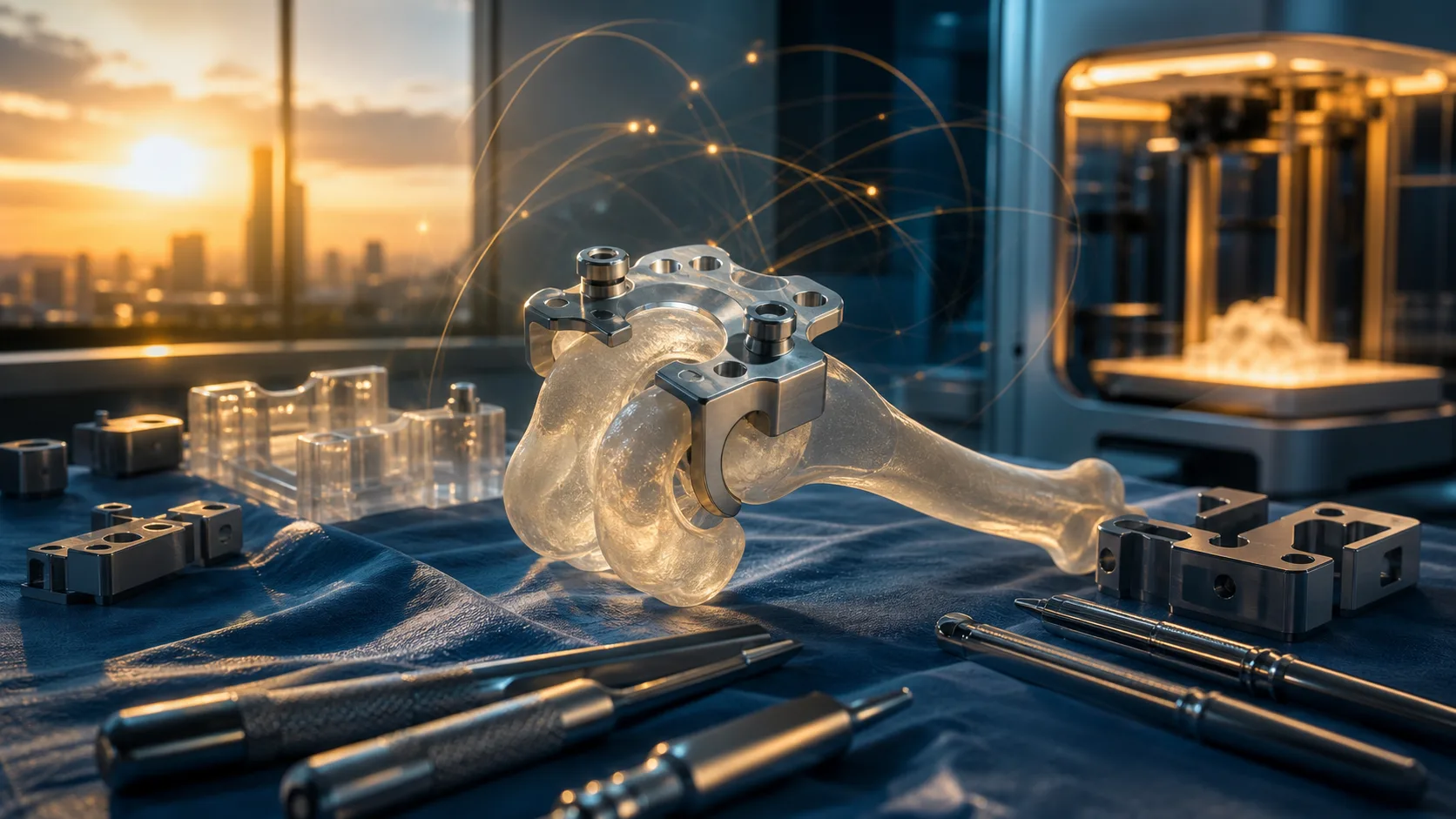
While standardising routine arthroplasty is a major triumph, the true power of custom implants becomes glaringly obvious in the realm of complex trauma and orthopaedic oncology. When faced with massive bone loss following a high-energy trauma, or when resecting a large sarcoma, standard stems and plates are often woefully inadequate. In these highly challenging scenarios, off-the-shelf options force the surgeon to sacrifice healthy bone to make the implant fit.
Custom 3D-printed implants allow you to do exactly the opposite. If a patient requires a wide resection of the distal femur due to an aggressive tumour, a bespoke implant can be engineered to replace the resected bone, articulating perfectly with the native patella and tibia. Crucially, these custom implants feature highly porous surface topographies that mimic trabecular bone. This targeted porosity encourages robust osseointegration, effectively encouraging the patient's remaining bone to grow directly into the bespoke metal structure.
For complex peri-articular fractures—such as highly comminuted tibial plateau or pilon fractures—surgeons are increasingly turning to patient-specific reduction plates. By printing a replica of the patient’s contralateral, uninjured bone, engineers can pre-contour a plate that perfectly restores the joint surface. You can even use the 3D-printed plastic model of the fractured bone in the theatre to pre-bend standard plates, significantly reducing intraoperative fluoroscopy time and the cognitive load of trying to mentally reconstruct a shattered joint.
Tailoring Solutions for Complex Paediatric Deformities
Paediatric orthopaedics presents a unique set of challenges that make patient-specific instrumentation incredibly valuable. Children’s bones are not just smaller; they are actively growing, highly vascular, and subject to constant remodelling. Furthermore, severe congenital deformities, skeletal dysplasias, or post-traumatic growth arrests rarely conform to standard sizes or geometries.
In cases of limb length discrepancy or multiplanar angular deformities—such as those managed with guided growth or osteotomies—custom implants and guides allow for meticulous preoperative planning. A bespoke guide can be designed to dictate the exact hinge point and wedge size for an opening-wedge osteotomy, ensuring that the mechanical axis of the lower limb is corrected with pinpoint accuracy. Because the implants can be scaled down and contoured to avoid damaging delicate growth plates, surgeons can achieve stable fixation without compromising the child’s future development.
When dealing with rare syndromes that affect bone morphology, standard implants simply will not sit flush against the cortical bone, risking prominence, soft tissue irritation, and subsequent failure. Custom implants elegantly bypass this issue, providing a highly personalised solution that respects the child's distinct anatomy and accommodates their future growth.
Theatre Logistics and Practical Workflow Integration
Integrating patient-specific instrumentation into your regular operating list requires a shift in both scheduling and theatre setup. From an administrative standpoint, PSI demands a longer lead time. You cannot simply order a custom guide the night before surgery. Typically, the imaging, digital planning, and manufacturing process requires a lead time of several weeks. This means your clinic workflow must adapt; once the decision for surgery is made, the imaging must be acquired immediately to keep the waiting list on track.
However, once the day of surgery arrives, PSI can dramatically streamline your theatre time. Because the preoperative plan has already finalised the implant sizes and bone cuts, the number of instrument trays required in the sterile field is significantly reduced.
Avoiding Common Theatrical Mistakes
Even with perfect preoperative planning, the execution in the theatre requires vigilance. Here are common pitfalls you must actively avoid:
- Assuming the guide corrects bad exposure: A patient-specific cutting block will only fit perfectly if the surgical exposure is adequate. If you rush the exposure and leave soft tissue tethered to the bone, the guide will fail to seat properly, leading to inaccurate cuts.
- Failing to verify the plan: Always cross-check the measurements printed on the custom guide with your standard anatomical landmarks. Trust the guide, but verify its positioning with your standard surgical intuition before committing to a saw blade.
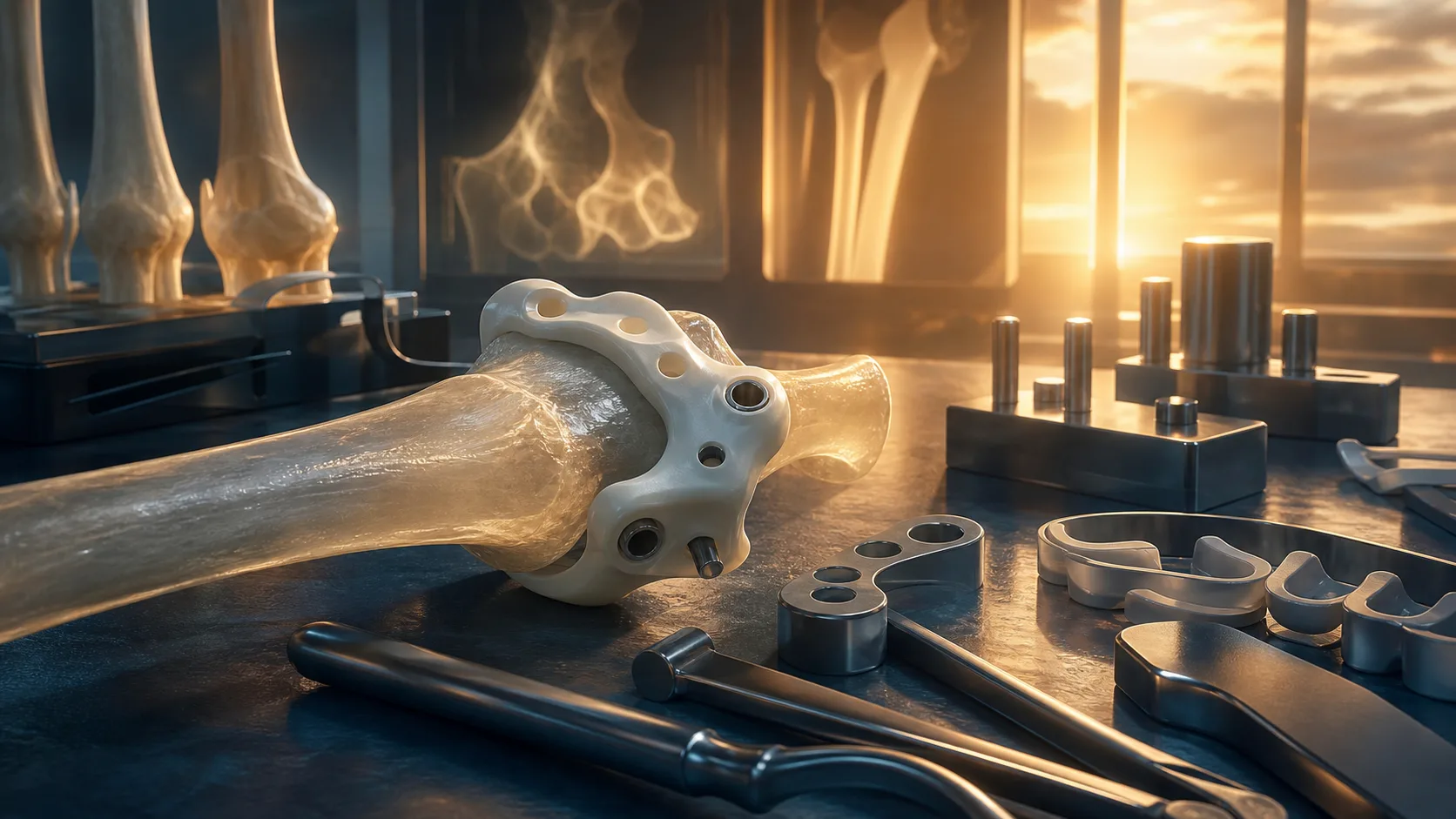
- Dropping the guide: Because these instruments are bespoke and made from specific polymers, dropping them on the floor is not a simple matter of grabbing a replacement off a spare trolley. Handle them with heavy forceps immediately upon opening, and ensure the scrub team is briefed on their fragility and importance.
Weighing the Realities: Costs and Validating Outcomes
As with any technological revolution in medicine, the adoption of patient-specific instrumentation requires a critical, objective evaluation of its economic and clinical realities. From a health economics perspective, the upfront cost of a custom guide or bespoke implant is undeniably higher than standard off-the-shelf hardware.
However, assessing the cost solely based on the manufacturing invoice misses the broader picture of value-based healthcare. Proponents of PSI argue that the overall cost of care can be offset by secondary efficiencies. By reducing the number of instrument trays that need to be processed, sterilised, and transported, hospitals can save substantial resources. Furthermore, if patient-specific guides lead to more reproducible alignment, reduced surgical time, and shorter hospital stays, the long-term economic benefits may balance the initial expenditure.
From a clinical validation standpoint, the orthopaedic community remains appropriately rigorous. While early adopters frequently praise the "feel" of the surgery and the intuitive nature of the snap-to-fit guides, the transition toward widespread use of custom implants—particularly in routine primary arthroplasty—must be continually backed by robust clinical evidence. Surgeons must remain critical consumers of this technology, focusing on long-term implant survivorship and functional patient-reported outcomes, rather than simply adopting the technology for its novelty.
What This Means for Your Exams and Future Practice
For medical students and surgical trainees navigating the demands of the FRCS (Tr & Orth) or international board equivalents, understanding the biomechanical principles behind patient-specific instrumentation is becoming essential. Examiners will expect you to articulate not just the benefits of custom implants, but their limitations, manufacturing processes, and indications. You must be able to confidently discuss how kinematic alignment differs from mechanical alignment, and how PSI facilitates the execution of these distinct surgical philosophies.
Furthermore, a thorough understanding of this technology demonstrates a broader appreciation for modern orthopaedics. You should be prepared to discuss the role of 3D printing in pre-contouring plates for complex trauma, and how augmented reality and digital surgical planning platforms are becoming integrated into routine surgical workflows. Knowing when to utilise a custom implant versus a standard cemented stem is exactly the kind of high-level, nuanced decision-making that distinguishes a competent surgeon from an exceptional one.
The New Frontier of Orthopaedic Precision
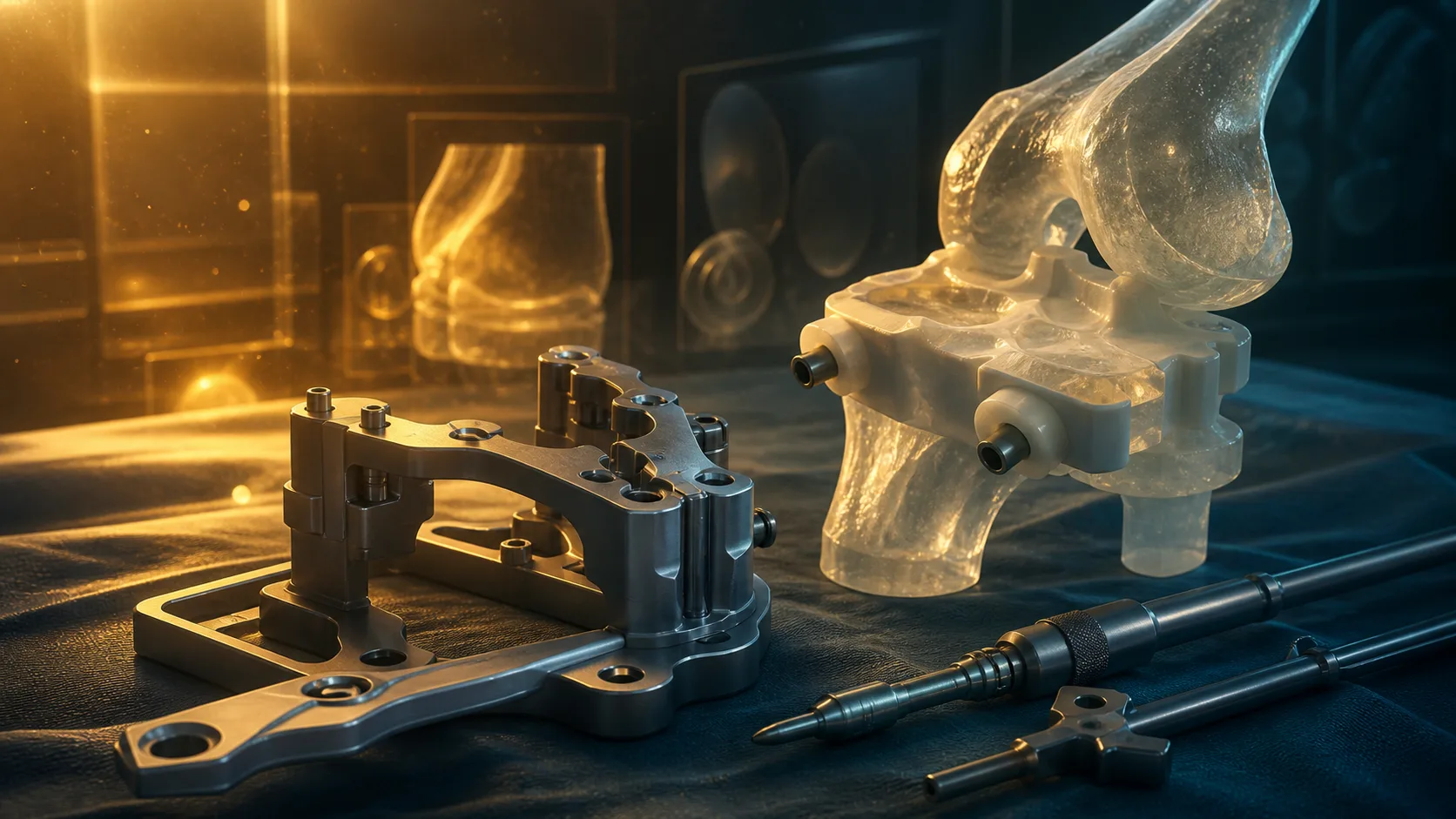
Ultimately, patient-specific instrumentation and custom implants are much more than a fleeting technological trend; they represent a fundamental philosophical shift toward personalised, precision surgery. By replacing estimation with engineering, this custom revolution empowers you to achieve unparalleled anatomical harmony, transforming complex challenges into predictable, meticulously planned triumphs.
Related topics
Share this article
Useful for a journal club, study list, or teaching session.