
Article summary
An honest look at where robotic surgery actually stands in orthopaedics — the promise, the evidence and the hype.
Educational content is reviewed for source visibility, editorial coherence, and correction readiness.
No individual clinician credential is claimed unless a named person is shown.
Verify before clinical use; this is not medical advice or a substitute for local guidance.
Robotic-assisted surgery has undeniably swept through the modern orthopaedic landscape, dominating exhibition halls at international conferences and heavily influencing where patients choose to have their joints replaced. Yet, amidst the dazzling marketing and technological enthusiasm, it can be remarkably difficult for medical students, trainees, and practising surgeons to separate the tangible clinical benefits from the commercial hype. Let us take an honest, practical look at where robotic surgery in orthopaedics actually stands today, examining the promise, the evidence, and what it means for your future practice.
The Current Landscape: Haptics, Optics, and Bone Preparation
When we talk about robotics in orthopaedics, it is vital to clarify what these machines actually are. Unlike the robotic systems used in general surgery or urology—which typically feature articulated robotic arms performing the soft-tissue dissection while the surgeon operates from a console—orthopaedic robots are primarily semi-active or active-constrained systems.
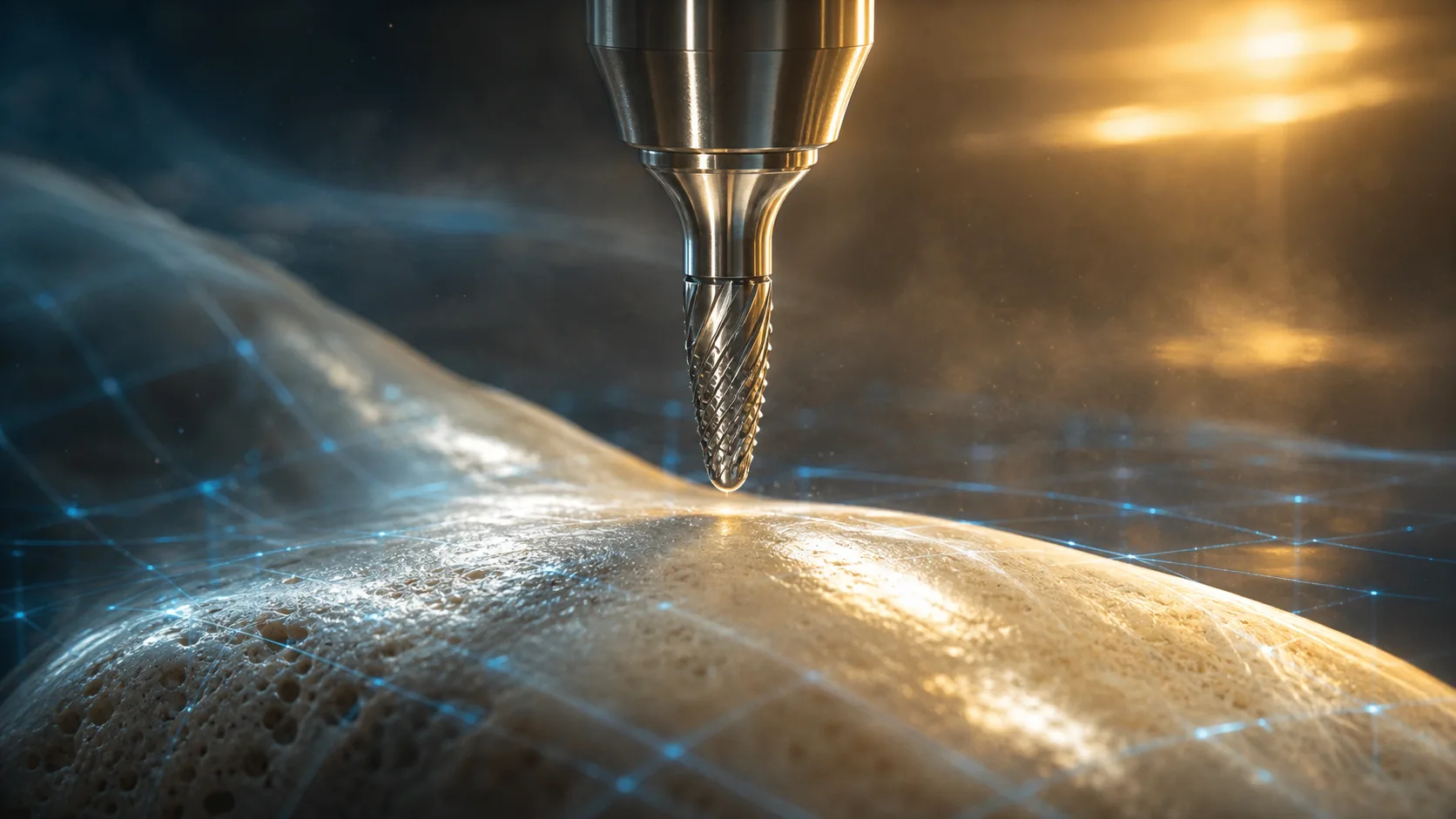
Currently, the most widely adopted platforms function as highly sophisticated, haptic-guided tools. In a semi-active system, the robot does not move on its own. Instead, it creates a rigid, virtual boundary—a "haptic fence"—based on a pre-operative CT scan. You, the surgeon, still physically drive the saw or burr. However, if your hand strays outside the planned resection zone, the robot physically resists your movement, stopping the burr entirely. This is primarily utilised in total knee arthroplasty, partial knee replacement, and increasingly in total hip arthroplasty. The promise is undeniable: mechanical axis restoration, accurate ligament balancing, and the precise removal of bone exactly where you planned to remove it, sparing soft tissues and preventing iatrogenic injury to neurovascular structures.
The Evidence vs. The Hype: Do the Outcomes Justify the Cost?
As an evidence-based speciality, orthopaedics demands rigorous scrutiny of any new technology. The honest truth is that while robotic systems consistently demonstrate superior accuracy in achieving the planned mechanical axis and component placement compared to conventional jigs, the functional clinical benefit is currently a topic of fierce debate.
Several high-quality studies and meta-analyses have shown that robotic-assisted total knee arthroplasty can lead to marginally better short-term patient-reported outcome measures (PROMs) and potentially lower early revision rates. However, translating a perfectly placed component on an X-ray into a meaningfully better functional outcome for the patient—such as an improved ability to walk long distances or return to sport—is not as clear-cut as the manufacturers would have you believe. The long-term data simply is not mature enough yet to definitively prove that robotic surgery will significantly outlast conventional techniques at the fifteen- or twenty-year mark. The hype suggests robots will solve all our problems; the evidence suggests they give us exceptional precision, but precision alone does not guarantee a perfect clinical outcome.
Navigating the Learning Curve and Theatre Dynamics
One of the most common pitfalls surgeons face when adopting robotic technology is assuming that their extensive experience in conventional joint replacement will seamlessly translate to the robotic console. It does not. You must respect the learning curve.
Operating with a robot requires a completely new cognitive and physical workflow. You are suddenly reliant on tracking arrays, optical cameras, and bony registration. Common mistakes include failing to optimise theatre layout; if the optical camera loses line of sight with the tracking arrays on the patient's leg, the system will halt. Furthermore, the team dynamic shifts profoundly. Your scrub nurse and operating department practitioner must understand the specific setup, draping of the robotic arm, and the calibration process.
Practical Tips for Early Adoption
- Embrace the CT scan: Do not try to bypass the pre-operative imaging to save time. The accuracy of your plan relies entirely on the quality of your scan and your meticulous segmentation of the bone.
- Perfect your registration: The robot is only as smart as the data it is fed. Taking the extra minute to accurately map the patient’s anatomy intra-operatively prevents catastrophic mechanical axis errors.
- Communicate with your team: Brief your theatre staff before the list begins. Establish clear roles for who manages the robot's tracking pins, who handles the pointer, and who monitors the screen.
The Financial and Logistical Realities for Healthcare Systems
It is impossible to discuss robotic surgery without addressing the elephant in the room: cost. These systems require immense capital expenditure to acquire, alongside steep ongoing maintenance contracts and the per-case cost of disposable tracking arrays and specialised instruments.
For hospitals, the return on investment is slow. Proponents argue that the enhanced precision and soft-tissue sparing nature of the surgery lead to faster patient mobilisation, earlier discharge, and reduced length of stay, thereby offsetting the initial capital outlay. While some short-stay data supports this, it requires a highly optimised enhanced recovery pathway to realise these efficiencies. If you are working within a tightly budgeted public healthcare system, you will know that securing funding for robotic technology requires rigorous business cases that prove long-term cost-effectiveness through reduced revision rates, rather than just citing surgical accuracy.
Robotic Technology in Spinal Surgery
While arthroplasty dominates the robotic conversation, spinal surgery has quietly undergone its own technological revolution. Robotic-assisted pedicle screw placement has become a mainstay in many complex spinal centres globally.
Here, the robot acts as a highly precise guide, aligning a rigid sleeve through which the surgeon drills, taps, and places screws into the vertebrae. By integrating pre-operative CT scans with intra-operative fluoroscopy, these systems map the complex anatomy in three dimensions. The primary benefit here is safety and accuracy; misplacement of pedicle screws can lead to devastating neurological or vascular injury. The robot significantly reduces the breach rate. However, spinal surgeons must still contend with the practicalities of intra-operative registration, soft-tissue interference, and the fact that a severely degenerative, deformed spine can be incredibly difficult for the software to map accurately. The robot provides a perfect trajectory, but the surgeon must still perform the physical work of clearing the surgical field and managing the patient's anatomy.
Training, Exams, and Your Future Career
If you are a medical student or surgical trainee reading this, you might be wondering how robotic surgery impacts your career trajectory and your professional examinations. The reality is that understanding the principles of robotic surgery is rapidly becoming an expectation.
When you sit for your membership or fellowship exams in trauma and orthopaedics, understanding the principles of computer navigation, haptic feedback, and the biomechanics of mechanical axis restoration will serve you well. Examiners are increasingly asking candidates to discuss the merits of these technologies, not just in terms of how they work, but regarding their evidence base, limitations, and health economics.
For those applying for higher surgical training or post-CCT fellowships, seeking out centres that utilise robotic technology is highly advantageous. While your fundamental orthopaedic skills—knowing how to expose a joint, manage soft tissues, and fix fractures—remain paramount, familiarising yourself with robotic workflows makes you a more attractive candidate for consultant posts in modern, well-equipped institutions. Look for opportunities to engage with the technology during your simulation lab sessions or by scrubbing with robotic-focused consultants who can walk you through the nuances of the software.

What to Tell Your Patients: Managing Expectations
The commercial marketing surrounding robotic surgery is overwhelmingly patient-facing. Consequently, many patients arrive in your clinic having researched the technology online, explicitly requesting a "robotic joint replacement" under the illusion that the machine is performing the surgery autonomously.
Managing these expectations is a critical clinical skill. You must be absolutely clear with your patients: the robot does not operate. It is a tool entirely under your control. You must explain that while the technology allows for exceptional precision in bone cuts and component sizing, the ultimate success of the operation still relies on your surgical skill, the patient's biological healing, and their commitment to post-operative rehabilitation. Failing to correct the "autonomous robot" myth pre-operatively can lead to misplaced expectations and dissatisfaction if their recovery does not perfectly match the flawless, instantaneous cure they imagined from the marketing brochures.
The Horizon: What Comes Next?
The current iteration of robotic surgery in orthopaedics is just the beginning. The integration of robotics with artificial intelligence, augmented reality, and machine learning is poised to transform the speciality over the coming decades. In the future, we will likely see systems that do not just execute a static pre-operative plan, but dynamically adapt in real-time.
Imagine a robot that continuously monitors ligament tension throughout the range of motion, dynamically suggesting component adjustments to the surgeon before a single cut is made. Predictive analytics could eventually use vast global databases to tell you exactly which implant design and alignment will yield the best functional outcome for a specific patient’s unique biomechanics, based on millions of previous cases. Furthermore, augmented reality headsets will likely replace the bulky theatre monitors, overlaying the patient’s CT scan and surgical plan directly onto their draped anatomy in your field of vision. The synergy of these technologies promises to push the boundaries of personalised orthopaedic surgery far beyond what human eyes and hands can achieve alone.

Ultimately, robotic surgery in orthopaedics is a powerful and sophisticated tool that enhances our surgical precision, but it is not a magic bullet that replaces sound judgement, meticulous technique, and robust post-operative care. Your responsibility as a modern surgeon is to critically evaluate the evidence, respect the technology's limitations, and seamlessly integrate it into your practice in a way that genuinely prioritises the long-term wellbeing of your patients over the fleeting allure of innovation for innovation’s sake.
Share this article
Useful for a journal club, study list, or teaching session.