
Article summary
How virtual reality is being used to train surgeons safely, and what its strengths and limits are.
Educational content is reviewed for source visibility, editorial coherence, and correction readiness.
No individual clinician credential is claimed unless a named person is shown.
Verify before clinical use; this is not medical advice or a substitute for local guidance.
Stepping into an operating theatre for the first time as a surgical trainee can feel overwhelming, knowing that every movement carries real consequences for the patient. Historically, the pathway to surgical mastery required an apprenticeship model, learning through observation and supervised practice on living tissue. Today, virtual reality has fundamentally shifted this paradigm, offering a highly realistic, zero-risk environment where you can hone your craft before ever picking up a scalpel in a live setting.
The Paradigm Shift from "See One, Do One" to "Simulate One"
For generations, surgical training has operated on the time-honoured adage of "see one, do one, teach one." While this traditional apprenticeship model produced countless excellent surgeons, it carried inherent risks. Patients effectively served as the testing ground for a trainee’s early, inevitable mistakes.
Virtual reality (VR) introduces a crucial step between observing a procedure and performing it on a live patient. By donning a headset or interacting with a haptic-enabled computer screen, you can step into a fully rendered, three-dimensional operating theatre. This technology allows you to rehearse the same surgical approach dozens of times. You can practice navigating complex three-dimensional anatomical spaces, repeating the procedure until your muscle memory takes over. For the modern medical student or surgical trainee navigating highly competitive training pathways—where protected teaching time is increasingly squeezed by working time directives—VR provides an on-demand surgical playground. You no longer have to wait weeks in a busy clinic or theatre list to see a specific pathology; you can simply load it up and practice managing it.
Cognitive Rehearsal and Visual-Spatial Mastery
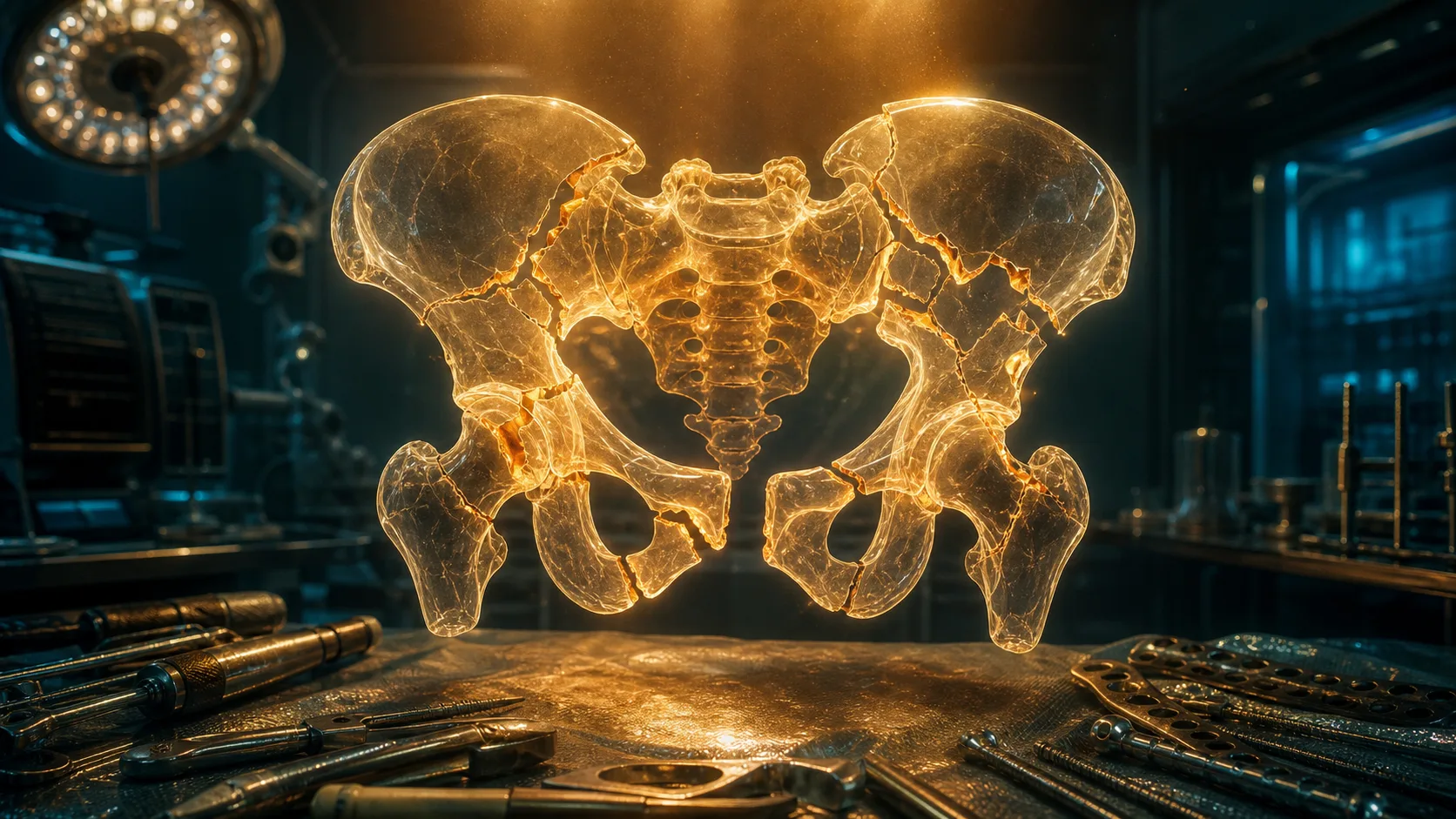
Orthopaedic surgery is fundamentally a discipline of three-dimensional problem-solving. Whether you are planning a complex acetabular fracture fixation or navigating the narrow canal of a femur for an intramedullary nail, understanding the spatial relationships of bones, vessels, and nerves is paramount.
One of the greatest strengths of VR is its ability to accelerate cognitive load management and visual-spatial awareness. High-fidelity VR simulators generate environments based on actual patient imaging data. As a trainee, this means you can virtually "fly through" the pelvis, examining the trajectory of your screws from anterior to posterior, assessing the bone stock, and identifying safe zones before making a physical incision.
A common mistake trainees make on these platforms is treating the simulation like a video game, rushing through steps to achieve a fast time. To get the most out of cognitive rehearsal, you must pause, rotate the virtual anatomy, and deliberately visualise the cross-sectional anatomy just as you would when reviewing CT scans in a trauma meeting.
Building Muscle Memory and Technical Proficiency
Beyond cognitive planning, VR offers profound mechanical benefits. The integration of haptic feedback—where the handheld controllers physically resist your movements to mimic the density of cortical bone or the give of soft tissue—bridges the gap between the digital and physical worlds.
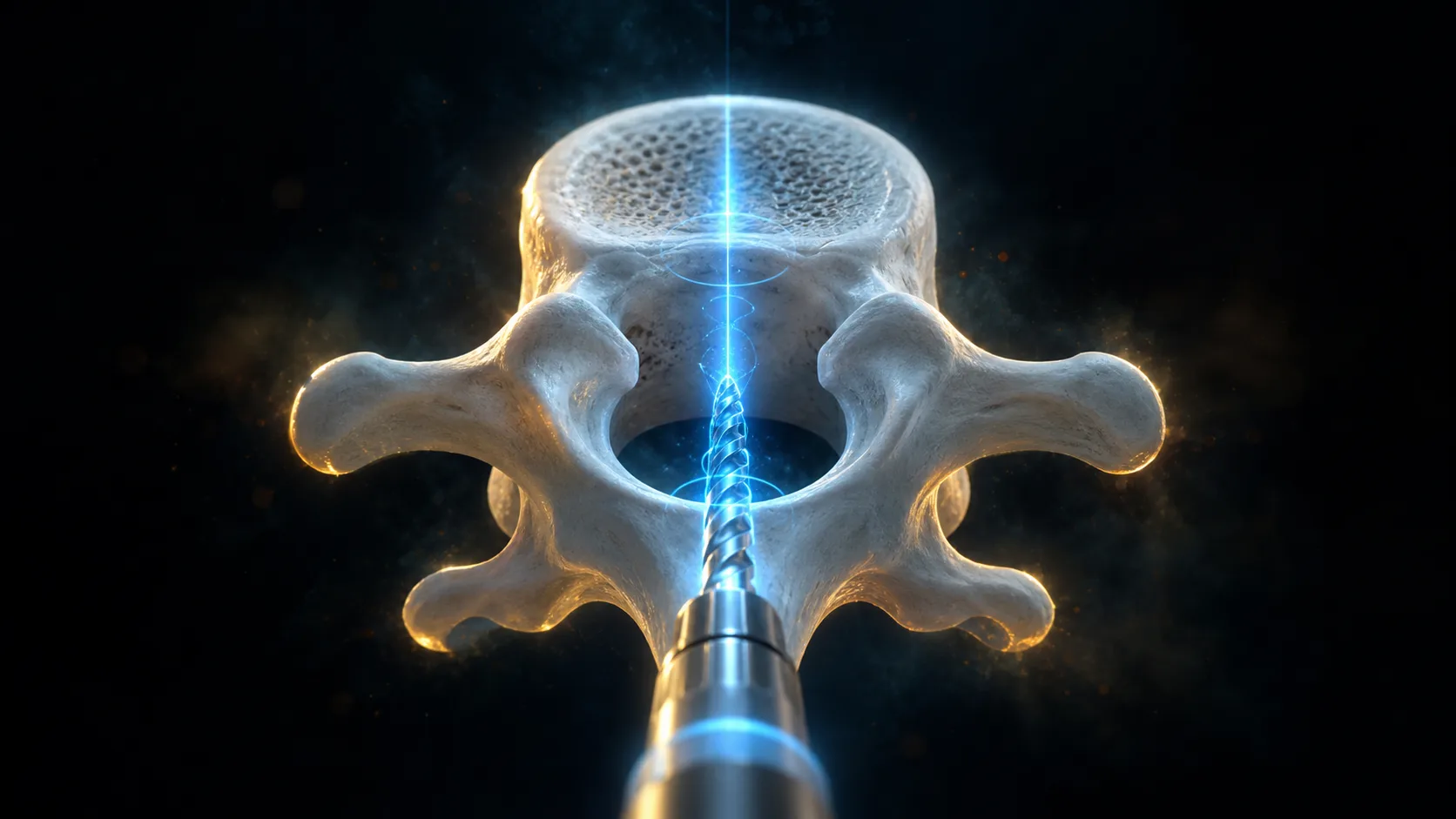
When learning to ream a femoral canal or place pedicle screws in the spine, judging the resistance of bone is a notoriously difficult skill to acquire. VR allows you to experience the subtle differences between the hard outer cortex and the spongy cancellous bone safely. You learn to modulate the pressure you apply, developing an instinct for when a drill is about to break through the far cortex.
Integrating VR into your daily practice
To genuinely build muscle memory, consistency is key. Rather than spending an entire afternoon on the simulator once a month, you should aim for short, highly focused sessions. Spend fifteen minutes drilling a specific trajectory before a theatre list. Focus on a single metric, such as optimising your exerted force or improving your bony purchase, rather than simply trying to finish the procedure as quickly as possible.
Scenario-Based Training for High-Stakes Rare Events
In your career as a surgeon, there are catastrophic complications and rare anatomical anomalies that you might only encounter a handful of times. Relying on real-life exposure to learn how to manage these scenarios is dangerous for both you and your patients.
VR platforms allow educators to programme highly specific, high-acuity, low-occurrence scenarios. You can practice managing an iatrogenic injury to the profunda femoris artery during a hip approach, or simulate the sudden, dramatic drop in blood pressure during a polytrauma case. In these simulated theatres, the environment is designed to induce stress. Monitors beep, the anaesthetist calls out deteriorating vitals, and you are forced to make critical decisions under pressure.
By repeatedly navigating these virtual crises, you develop psychological resilience. You learn to keep your hands steady and your mind clear. When the real event eventually occurs in the emergency theatre, your brain has already mapped out the response; the scenario feels familiar rather than entirely alien.
Standardisation, Assessment, and Exam Preparation
One of the traditional vulnerabilities of surgical training across the globe is its variability. A trainee’s exposure to specific cases entirely depends on the demographic of their hospital, the time of year, and the caseload of their supervising consultants. This variability makes it difficult to ensure that every graduating surgeon possesses the exact same baseline competencies.
VR solves this problem by offering standardised, objective assessment. Exams governing entry into surgical training, such as the Membership of the Royal Colleges of Surgeons (MRCS) examinations, and assessments for consultant or board certification, increasingly rely on objective, structured evaluations of technical skill. VR platforms automatically track a wealth of objective metrics: hand tremor, instrument path length, economy of movement, and respect for surrounding tissues.
If you are preparing for high-stakes surgical exams, using a VR simulator is an exceptional way to benchmark your progress. Instead of guessing if your technique is fluid, you receive immediate, quantified feedback comparing your performance to a standardised expert benchmark. This data-driven approach allows you to identify hidden flaws in your technique—such as an unconscious hitch in your wrist movement during arthroscopic knot tying—and systematically correct them before your examiners spot them.

The Current Limitations of Virtual Reality Training
Despite its remarkable capabilities, VR is not a silver bullet, and understanding its limitations is crucial for using it safely. The most significant drawback is the absence of tissue pliability and the unpredictable nature of biological tissues. No matter how advanced the haptic feedback becomes, interacting with pixels is fundamentally different from interacting with living, bleeding, elastic tissue.
In a real operation, a retractor pulls on tissue that gives way; a fracture fragment might be more comminuted than the preoperative imaging suggested, or an unexpected anatomical variation might alter your entire surgical plan. Real tissue can tear, retract, and bleed profusely. VR simulations are largely deterministic, meaning the anatomy generally behaves exactly as the programmer intended.
Furthermore, VR cannot currently replicate the physical ergonomics of the operating room. The weight of the image intensifier (C-arm), the resistance of a heavy theatre table, the heat generated by the surgical lights, and the intricate verbal and non-verbal communication with the scrub nurse are all elements that virtual reality strips away. A common mistake for trainees is becoming entirely proficient on a simulator, only to find themselves disoriented in a real theatre because they haven't learned how to physically drape the patient or coordinate their body position around the theatre staff.
Integration into Modern Curricula and Programme Approval
Recognising both the power and the limitations of this technology, major surgical governing bodies have begun integrating simulation formally into their training frameworks. Surgical colleges and orthopaedic associations worldwide now acknowledge that simulation must play a role in early years training, though it is universally understood that it supplements, rather than replaces, operative experience.
Training committees utilise frameworks that explicitly map out which skills can be safely acquired in a simulated environment. For instance, many residency and registrar programmes now require trainees to log hours on a VR arthroscopic simulator before they are permitted to operate the camera during a real anterior cruciate ligament reconstruction.
If you are mapping out your surgical training timeline, it is highly practical to seek out these formal simulation courses early. Look for programmes endorsed by recognised orthopaedic associations. These courses provide structured, safe environments where you can safely make the transition from a digital interface to synthetic bone models, and finally to cadaveric tissue under the watchful eye of a specialist.
Maximising the Tech: Practical Advice for the Modern Trainee
To truly leverage virtual reality in your surgical training, you must approach the technology with a deliberate, structured mindset. It is entirely possible to spend hours on a simulator and learn nothing but bad habits.
Firstly, always warm up. Just as an athlete stretches, spending five to ten minutes on a VR simulator performing basic tasks—such as passing a camera through a ring to improve triangulation—before scrubbing into a real case can drastically improve your operative performance.
Secondly, use the "X-ray vision" settings to your advantage. Many orthopaedic simulators allow you to toggle your view, letting you see both the surface anatomy and the hidden instruments simultaneously. Use this to learn the geometry of a procedure, but be sure to switch back to the standard view to ensure you aren't developing a reliance on visual aids you won't have in theatre.
Finally, remember the human element. Bring your supervising consultant into the virtual space. Have them watch you perform a simulated procedure and critique it just as harshly as they would in the operating theatre. The technology is only as good as the mentorship guiding you through it.
The Horizon: Augmented Reality and the Future Operating Theatre
While VR immerses you in an entirely digital world, the immediate future of orthopaedic training and practice lies in augmented reality (AR) and mixed reality. This technology overlays digital information onto your real-world view. Imagine operating on a complex fracture while wearing smart glasses that superimpose the patient’s exact CT scan directly onto their physical leg, showing you precisely where the fracture lines lie beneath the skin.
As these technologies converge, the line between surgical training and surgical execution will blur. Trainees will soon be able to rehearse a specific patient’s procedure on a 3D-printed replica, step into an AR environment to practise the exact screw trajectories guided by the overlay, and finally execute the surgery with the same augmented visual cues. By embracing VR today, you are not just passing your current exams; you are future-proofing your career for the operating theatres of tomorrow.
Virtual reality will never replace the profound responsibility of operating on a living patient, but it fundamentally changes the starting line. By embracing these digital tools, you ensure that when you finally stand at the operating table, your hands are already guided by hours of deliberate, risk-free practice.
Related topics
Share this article
Useful for a journal club, study list, or teaching session.