Sanders CT Classification | Extensile Lateral Approach | Wound Complication Management
- Sanders classification based on coronal CT through widest posterior facet
- Bohler angle under 20 degrees predicts poor outcome with conservative treatment
- Extensile lateral approach provides best exposure but 20-30% wound complications
- ORIF timing: Wait 10-21 days for swelling to resolve (wrinkle test positive)
- Primary subtalar fusion for Sanders IV in heavy labourers over 50 years
- “Always assess for lumbar spine injury (10% of patients, 25% when both heels are fractured)
- “Compartment syndrome in 10% - clinical diagnosis, fasciotomy if suspected
- “ORIF benefit is selective, not universal - pragmatic UK Heel Fracture Trial (Griffin 2014) showed no overall advantage; Canadian RCT (Buckley 2002) showed benefit in younger, non-compensation patients
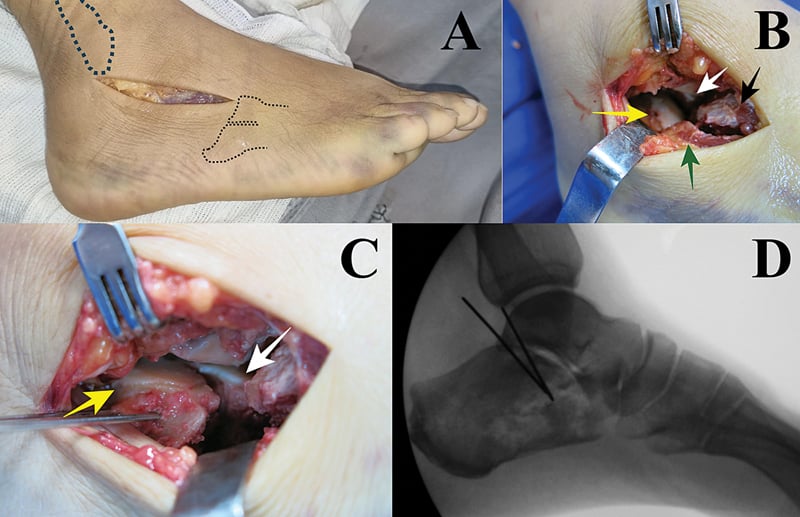
- “Sinus tarsi approach alternative for Sanders II - lower wound complication rate
Overview and Epidemiology
Which calcaneal fracture you are looking at changes everything on this page. The whole account here - Sanders, the extensile approach, the wound-complication problem, the arthrodesis question - is about the intra-articular fracture through the posterior facet. Two others spare that facet and are managed completely differently: the anterior process fracture, usually an avulsion treated non-operatively, and the calcaneal tuberosity fracture, where the threat is skin necrosis from a displaced fragment tenting the posterior heel and the urgency is soft-tissue, not articular. The measurements that screen for a posterior-facet injury on plain film are on Bohler and Gissane angles - and a normal Bohler angle excludes facet depression, not a calcaneal fracture. The complication to look for in the first hours is foot compartment syndrome; the one that arrives years later is subtalar arthritis. The other hindfoot fracture with the same soft-tissue-timing logic is the talus.
Mechanism. Axial loading drives the talus down into the calcaneus - a fall from height, or a dashboard injury in a road collision. The energy is high, the bone is cancellous, and the fragments displace in a predictable pattern around the one part of the calcaneus that does not move.
- Fall from height - 60-70%, over 2 metres
- Motor vehicle accident - 20-25%
- Industrial or crush injury - 10-15%
Who. Working-age men: 75-80% of patients are male, the mean age is 35-45 and the peak 30-50, and most are manual labourers and construction workers.
What the injury costs. These are devastating injuries. 30-40% never return to their previous employment, 40-60% still have pain at two years despite treatment, and in Sanders III-IV fractures 50-70% have subtalar arthritis by two years. Per-patient healthcare cost is substantial in high-income settings, and lost productivity and long-term disability sit on top of it. Outcome turns on the articular injury, the patient's age and occupation, and whether the posterior facet can be reduced anatomically.
Anatomy and Injury Mechanics
The constant fragment. The sustentaculum tali is the medial shelf that supports the talar head, held to the talus by the strong interosseous talocalcaneal ligament and the deltoid ligament complex. It therefore does not displace, and in injury it acts as a hinge: the primary fracture line of Sanders runs lateral to it, and every other fragment displaces relative to it. The operation reverses that - all fragments are reduced to the sustentaculum.
Vessels and nerves in the field. The lateral calcaneal artery, from the peroneal artery, supplies the lateral wall and the skin over it - the skin the extensile lateral approach raises as a flap. It is preserved by dissecting subperiosteally, and gentle handling of the flap reduces the risk of necrosis. Branches of the medial calcaneal artery supply the inferior and medial bone. The sural nerve runs posterolaterally, 1-2cm posterior to the lateral malleolus and straight through the line of that approach, so it is identified and retracted rather than stretched; the medial calcaneal nerves, from the tibial nerve, are at risk from medial pin placement.
- Anatomical Detail
- Largest articular surface, bears 80% weight
- Fracture Relevance
- Fracture disruption causes subtalar arthritis
- Surgical Pearl
- Must restore to within 2mm step-off for good outcome
- Anatomical Detail
- Medial shelf, supports talar head
- Fracture Relevance
- Remains attached to talus - stable reference
- Surgical Pearl
- Reduce all fragments to sustentaculum position
- Anatomical Detail
- Forms lateral border, thin cortex
- Fracture Relevance
- Blowout fragment causes widening
- Surgical Pearl
- Restore height and width to prevent impingement
- Anatomical Detail
- Articulates with cuboid
- Fracture Relevance
- Separate injury (avulsion), not Sanders classification
- Surgical Pearl
- If isolated, treat conservatively
- Anatomical Detail
- Neurovascular bundle passage
- Fracture Relevance
- Risk of tarsal tunnel syndrome (5-10%)
- Surgical Pearl
- Decompress if acute compartment syndrome
Classification Systems
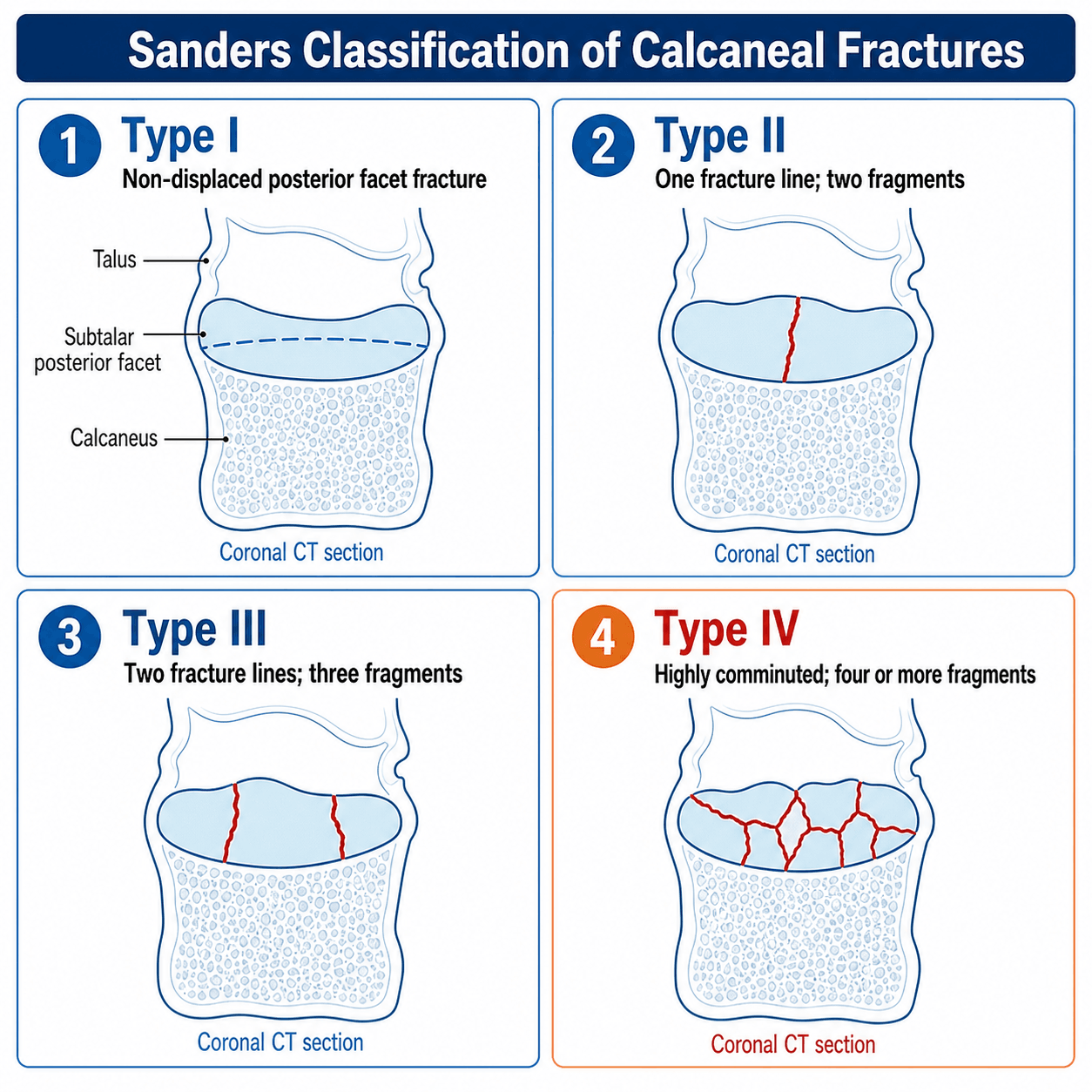
Sanders (1993) is the classification that decides treatment and predicts outcome in intra-articular fractures, and it is read from a single slice: the coronal CT cut through the widest part of the posterior facet.
How to apply it. Find the sustentaculum first, the medial and constant fragment. Then count the fracture lines crossing the facet from lateral to medial - A in the lateral third, B in the central third, C in the medial third between the central line and the sustentaculum. The type is the number of articular fragments; the subtype names the lines present, so IIA is the A line alone, IIB the B line, IIC the C line, and IIIABC has all three.
- Fracture Pattern
- Non-displaced (under 2mm step-off), any number of lines
- Treatment
- Conservative: NWB 6 weeks, boot, progressive WB
- Outcome (Good/Excellent %)
- 85-90% good outcomes
- Fracture Pattern
- Single fracture line A (lateral), 2 fragments
- Treatment
- ORIF extensile lateral, restore lateral wall height
- Outcome (Good/Excellent %)
- 75-80% good outcomes
- Fracture Pattern
- Single fracture line B (central), 2 fragments
- Treatment
- ORIF extensile lateral, easier reduction than IIA
- Outcome (Good/Excellent %)
- 80-85% good outcomes (best surgical type)
- Fracture Pattern
- Single fracture line C (medial), 2 fragments
- Treatment
- ORIF extensile lateral, sustentaculum involvement
- Outcome (Good/Excellent %)
- 70-75% good outcomes
- Fracture Pattern
- 2 fracture lines, 3 articular fragments
- Treatment
- ORIF extensile lateral, technically demanding
- Outcome (Good/Excellent %)
- 60-70% good outcomes
- Fracture Pattern
- All 3 fracture lines, 4 articular fragments
- Treatment
- ORIF extensile lateral (young) or conservative
- Outcome (Good/Excellent %)
- 50-60% good outcomes (ORIF), 40% (conservative)
- Fracture Pattern
- Comminuted, four or more fragments, significant crush
- Treatment
- Conservative (elderly) or primary subtalar fusion (labourer)
- Outcome (Good/Excellent %)
- 30-40% good outcomes, 50% progress to fusion by 2 years
Agreement on the Sanders type is moderate at best (kappa 0.5-0.7, reported as 0.57 for Sanders), and it fails exactly where the decision is made: Type II against Type III, and which subtype. Review the CT yourself rather than working from the report, and discuss it with a senior colleague. Treat Type IIIABC and Type IV as carrying the same poor prognosis, whatever the treatment.
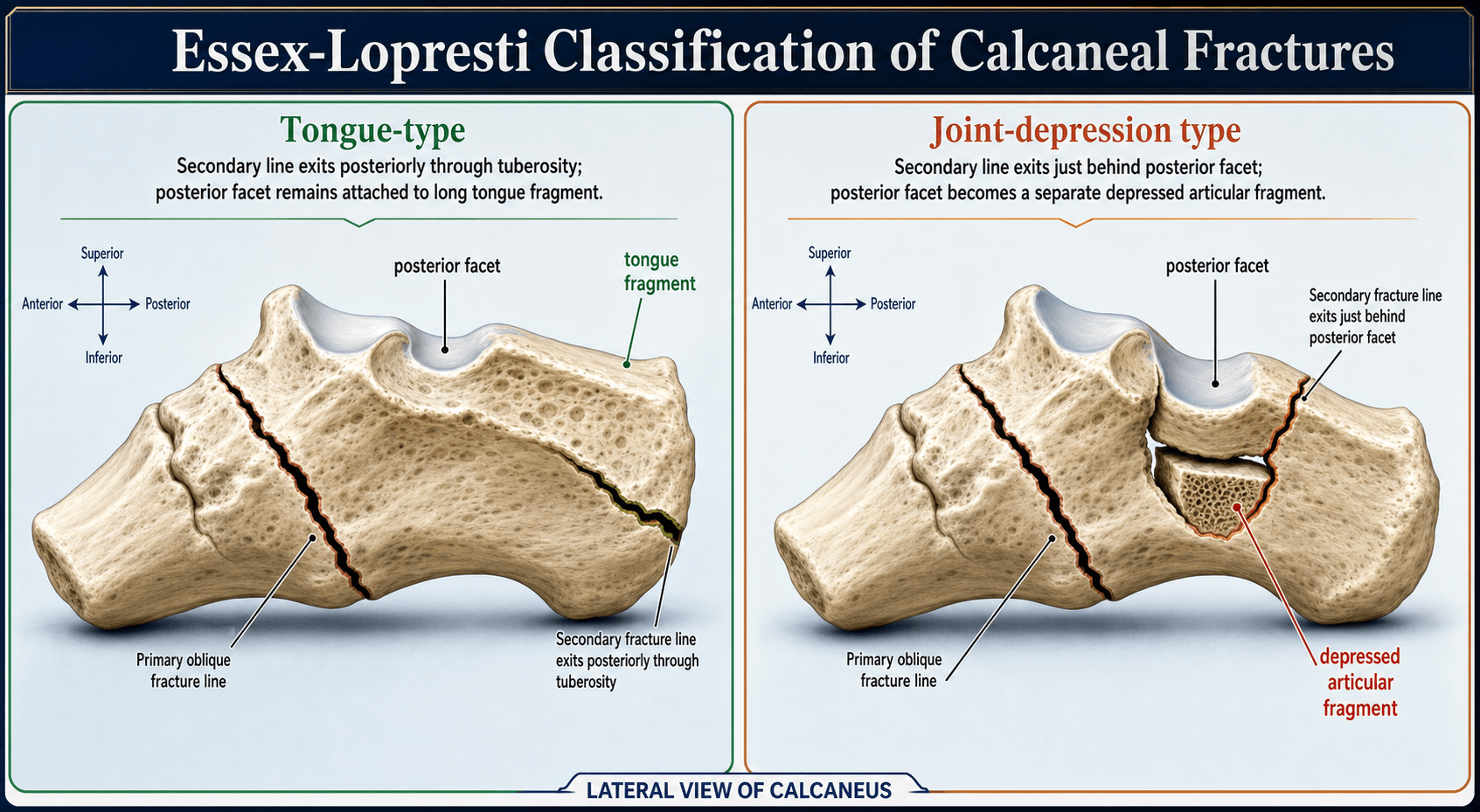
The older systems. Essex-Lopresti divides fractures by mechanism on the lateral radiograph into tongue-type and joint-depression. It still names what you are looking at, and the displaced tongue-type still changes the urgency of the operation, but it does not otherwise guide treatment.
- Basis
- Fracture mechanism: tongue vs joint depression
- Clinical Use
- Historical, describes fracture pattern on lateral X-ray
- Limitation
- Does not guide treatment, superseded by Sanders
- Basis
- Anatomical location and displacement
- Clinical Use
- Extra-articular fracture classification
- Limitation
- Not useful for intra-articular fractures
- Basis
- 3D CT reconstruction, central fragment
- Clinical Use
- European alternative, detailed subtyping
- Limitation
- Complex, not widely adopted outside Europe
Examiners expect the Sanders classification for intra-articular fractures. Essex-Lopresti may be mentioned historically but does not guide modern treatment. For an extra-articular fracture, describe the anatomical location - anterior process, sustentaculum, posterior tuberosity - rather than reaching for a formal classification.
Clinical Assessment
History. The mechanism gives you the energy: the height of the fall, or the dashboard strike. The answers that change management are the time since injury and how the swelling has progressed, whether both feet were involved, whether the back hurts, the comorbidities that decide wound healing - diabetes, smoking, peripheral vascular disease - and the occupation, which will shape the treatment choice.
Examination. Look for swelling and ecchymosis laterally and on the sole, a heel that is wider than the other side and has lost its normal contour, and the state of the skin: 5-10% of these fractures are open, and fracture blisters delay surgery. Palpate for tenderness, a step-off in the lateral wall, and compartments that feel firm and tense. Record the dorsalis pedis and posterior tibial pulses, sensation in the tibial, sural and superficial peroneal territories, and whether passive toe dorsiflexion hurts.
10% of calcaneal fractures develop acute compartment syndrome, the highest rate of any foot injury: a high-energy crush swells a closed fascial space, and an associated vascular injury makes it likelier still. It is a clinical diagnosis - do not wait for pressure measurements. Pain out of proportion to the injury, pain on passive toe dorsiflexion (which stretches the deep flexors), a tense swollen foot, and a sensory deficit as a late sign. Pulses are usually present, because this is a pressure phenomenon and not arterial occlusion.
If it is suspected, perform urgent fasciotomy of all 9 foot compartments - medial, lateral, superficial central, deep central, the four interosseous and the calcaneal. Delay beyond 6 hours causes permanent muscle necrosis, with clawing, contractures and chronic pain.
Associated injuries. Axial loading from a height drives multiple injuries, so the assessment is systematic:
- Lumbar spine fracture - 10% of patients, 25% when both heels are fractured, most commonly an L1-L2 compression fracture. Image the spine if the fractures are bilateral or the back hurts
- The other calcaneus - bilateral in 10%; examine and image both feet
- Other lower limb fractures - tibial plateau, femoral neck, acetabulum, so examine the whole limb
- Compartment syndrome, which declares itself in the first 48 hours
- Distinguishing features
- Heel widening, plantar/lateral bruising, reduced Bohler angle, posterior facet involvement
- Key investigation
- Lateral/axial X-ray then fine-cut CT (Sanders classification)
- Why it matters
- Index diagnosis - drives operative vs non-operative decision
- Distinguishing features
- Localised tenderness, posterior facet spared, often lower-energy or avulsion
- Key investigation
- X-ray and CT; oblique views for anterior process
- Why it matters
- Usually managed non-operatively; not Sanders-classified
- Distinguishing features
- Pain anterior to calcaneus, deformity, talar dome tenderness
- Key investigation
- CT - high rate of associated injury and AVN risk
- Why it matters
- Different fixation and AVN counselling; commonly coexists
- Distinguishing features
- Insidious onset, low energy or repetitive load, positive squeeze test
- Key investigation
- MRI (marrow oedema) when X-ray normal
- Why it matters
- Non-operative; missing it delays diagnosis in athletes/elderly
- Distinguishing features
- Tenderness over ATFL, no bony point tenderness, intact Bohler angle
- Key investigation
- X-ray to exclude fracture (Ottawa rules)
- Why it matters
- Avoid mislabelling an occult fracture as a sprain
- Distinguishing features
- Palpable gap or bony fragment, weak plantarflexion, skin at risk posteriorly
- Key investigation
- Lateral X-ray; assess overlying skin urgently
- Why it matters
- Tuberosity avulsion threatens skin - may need urgent fixation
Investigations
Radiographs. Each view answers a different question:
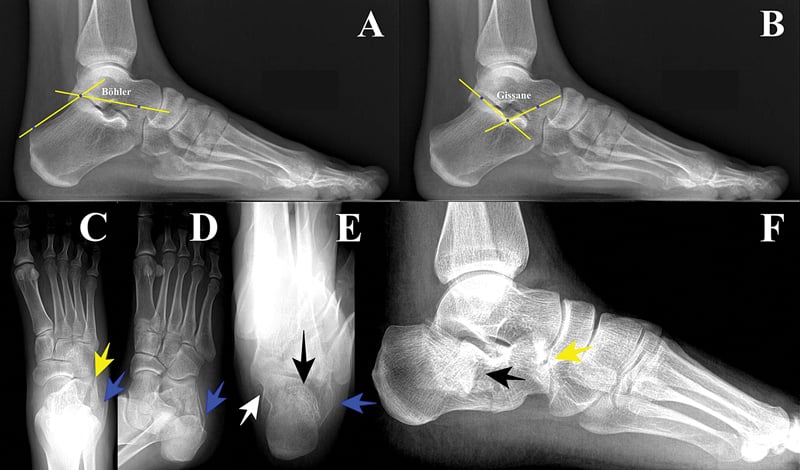
- Lateral foot - the Bohler and Gissane angles
- Axial (Harris) view - varus or valgus of the tuberosity, and the width of the heel
- AP and oblique foot - the anterior process and the calcaneocuboid joint
The two angles. Bohler's angle is normally 20-40 degrees, typically 30-35. Flattening to under 20 degrees means the height has collapsed and predicts a poor outcome with non-operative treatment, especially under 10 degrees; an angle under 0 degrees predicts a poor outcome whatever is done. Gissane's critical angle is normally 120-145 degrees and opens up as the posterior facet is depressed. Compare the height and width with the uninjured side: widening means the lateral wall has blown out.
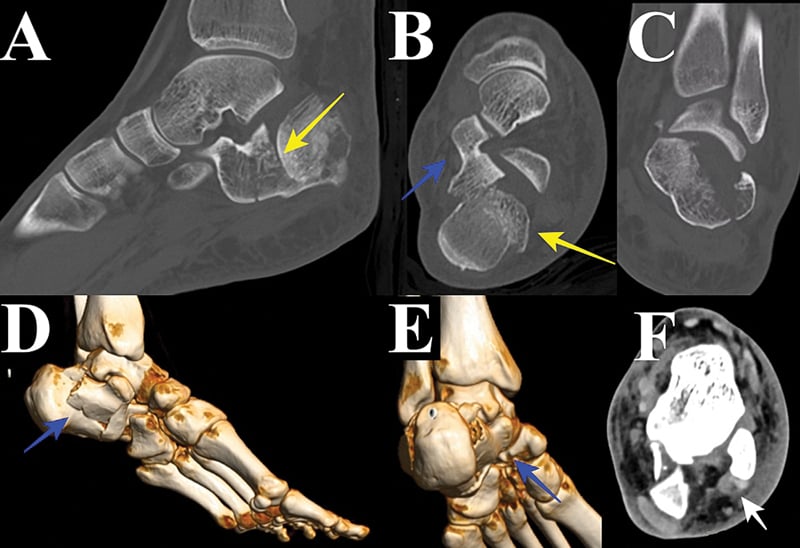
CT is the study that classifies and plans. Fine-cut (1-2mm) axial, coronal and sagittal reconstructions within 24-48 hours of presentation for every intra-articular fracture, with the coronal slice through the widest posterior facet as the slice that classifies; 3D reconstruction is for surgical planning, not for classification. Read it for the Sanders type and subtype, the number and displacement of the fragments, the posterior facet step-off, lateral wall comminution and widening, the calcaneocuboid joint, and associated anterior process or sustentacular fractures. Use it to judge whether the planned approach is feasible, to template the plate, and to choose the order in which the fragments will be reduced.
MRI is rarely indicated and adds nothing to a displaced fracture with a positive CT. Its uses are the occult fracture - normal radiograph but a convincing clinical picture - a suspected bifurcate ligament injury, and the stress fracture of overuse in military recruits.
- Timing
- Emergency Department (initial)
- Purpose
- Confirm fracture, assess displacement, measure angles
- Key Information
- Bohler angle, Gissane angle, calcaneal height/width, open fracture
- Timing
- Within 24-48 hours of presentation
- Purpose
- Sanders classification, surgical planning, assess comminution
- Key Information
- Sanders type, posterior facet fragments, lateral wall integrity, calcaneocuboid joint
- Timing
- If bilateral calcaneal fractures or back pain
- Purpose
- Rule out associated lumbar fracture
- Key Information
- L1-L2 compression fracture most common (axial loading mechanism)
- Timing
- Rarely indicated
- Purpose
- Occult fracture, stress fracture, ligament injury assessment
- Key Information
- Useful if high clinical suspicion with negative X-ray, or for suspected bifurcate ligament injury
Management
The decision is selective, not routine. The pragmatic UK Heel Fracture Trial found no symptomatic or functional advantage from ORIF at two years in an ordinary population, with markedly more complications and reoperations after surgery. The earlier Canadian trial found the same overall equivalence, but once Workers' Compensation patients were removed it located real benefit in defined subgroups - younger patients, women, light workloads, a moderately reduced Bohler angle, and fractures that could be reduced anatomically. Read together they do not say never operate; they say operate on the patient who stands to gain.
Who gains. A working-age patient (under 60 years) with a Sanders II or III fracture who can comply with non-weight bearing, where the height, width and facet can be restored: the return-to-work rate and physical function are better. Sanders I is already reduced, and Sanders IV is too comminuted for fixation to change the outcome. Add a heavy-labour occupation and an age over 50 to a Sanders IV and the operation to consider is a primary subtalar fusion, not a plate.
- Fracture Pattern
- Sanders I (all subtypes)
- Treatment
- NWB boot 6 weeks, progressive WB
- Key Pearl
- Excellent outcomes with conservative care
- Fracture Pattern
- Sanders II (single fracture line)
- Treatment
- ORIF extensile lateral at 10-21 days
- Key Pearl
- Best outcomes - restoration of height and width
- Fracture Pattern
- Sanders III (2 fracture lines)
- Treatment
- ORIF extensile lateral at 10-21 days
- Key Pearl
- Good outcomes but more challenging reduction
- Fracture Pattern
- Sanders IV (comminuted)
- Treatment
- Consider primary subtalar fusion
- Key Pearl
- Better than delayed fusion after failed ORIF
- Fracture Pattern
- Sanders II-IV displaced
- Treatment
- Conservative - NWB 6-8 weeks
- Key Pearl
- Functional outcomes acceptable despite deformity
Who is treated without an operation.
- Sanders Type I (non-displaced)
- Extra-articular fractures - anterior process, sustentaculum, body
- Sanders IV in the elderly or low-demand patient
- Severe medical comorbidity precluding surgery
- The patient who chooses it after informed consent
What to expect. A Sanders I does well without surgery: 85-90% good outcomes. A displaced Sanders II-III treated non-operatively gives 50-60% good outcomes, inferior to ORIF in a patient who would have tolerated it. A Sanders IV gives 40-50%, no better or worse than after fixation, which is what makes non-operative care a reasonable choice for the low-demand elderly. The fracture heals in its displaced position, so the heel stays wide and short and the shoe has to accommodate it.
Tongue-Type Fractures: A Soft-Tissue Emergency
Most displaced intra-articular calcaneal fractures are operated in a delayed fashion (10-21 days, once the wrinkle test is positive). The important exception is the displaced tongue-type fracture (Essex-Lopresti), which can be a true soft-tissue emergency.
- Why it is urgent: in a tongue-type pattern the secondary fracture line exits posteriorly through the tuberosity, so the superior "tongue" fragment is pulled proximally by the Achilles. The sharp superior edge of this rotating fragment presses against and tents the posterior heel skin from the inside. Unrelieved, this causes pressure ischaemia and full-thickness posterior skin necrosis within hours to a couple of days, converting a closed injury into an open one over the worst possible soft-tissue envelope.
- Recognise it: a displaced tongue-type fracture on the lateral radiograph plus blanching, tenting, or a dusky/indented patch of skin over the posterosuperior heel. This patient is reduced urgently, not at 10-21 days.
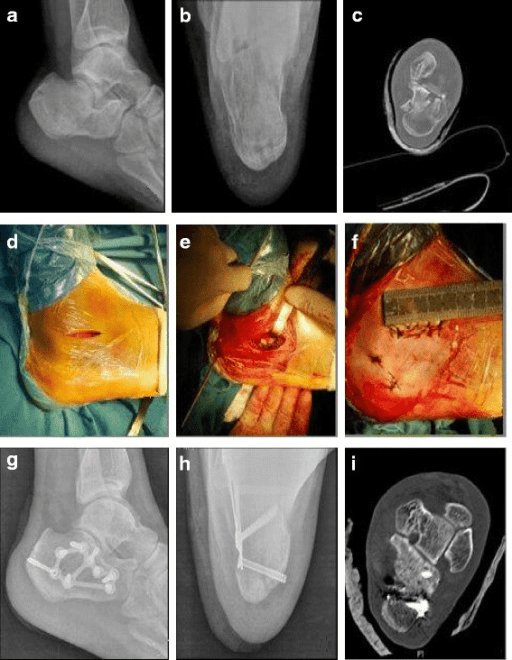
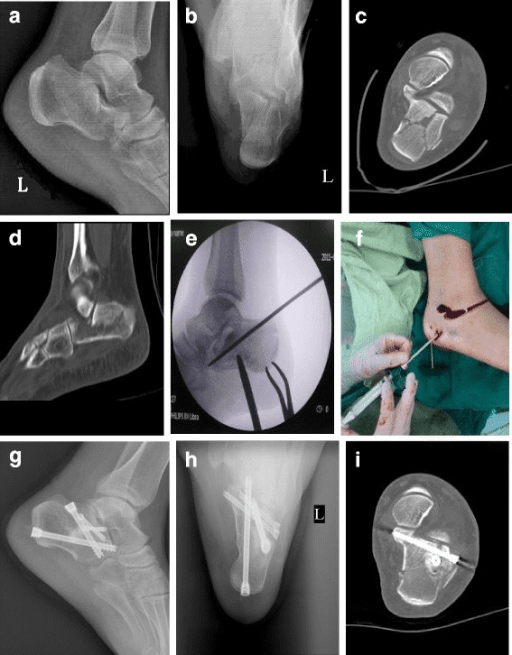
- Essex-Lopresti / Westhues percutaneous reduction: with the knee flexed to relax the gastrocsoleus, a large Steinmann pin or Schanz screw is driven into the displaced tongue fragment along its long axis and used as a lever (joystick) to reduce the fragment - and the posterior facet attached to it - back down into position. The reduction is then secured percutaneously (the pin advanced across the fracture and/or supplementary lag screws). This immediately decompresses the threatened skin and can definitively fix simple tongue-type patterns without the extensile dissection.
- If the skin is already compromised, manage as an open injury (debridement, soft-tissue-led plan) rather than proceeding to formal ORIF through devitalised tissue.
Examiner question: "Which calcaneal fracture is a surgical emergency rather than a delayed operation?"
Answer: "A displaced tongue-type fracture threatening the posterior heel skin. The proximally pulled superior tuberosity fragment tents the skin and will cause full-thickness necrosis within hours to days. It needs urgent reduction - classically the Essex-Lopresti (Westhues) manoeuvre, levering the tongue fragment down with an axial Steinmann pin or Schanz screw and fixing percutaneously - to decompress the skin, rather than the usual 10-21 day soft-tissue wait."
Surgical Technique - ORIF via Extensile Lateral Approach
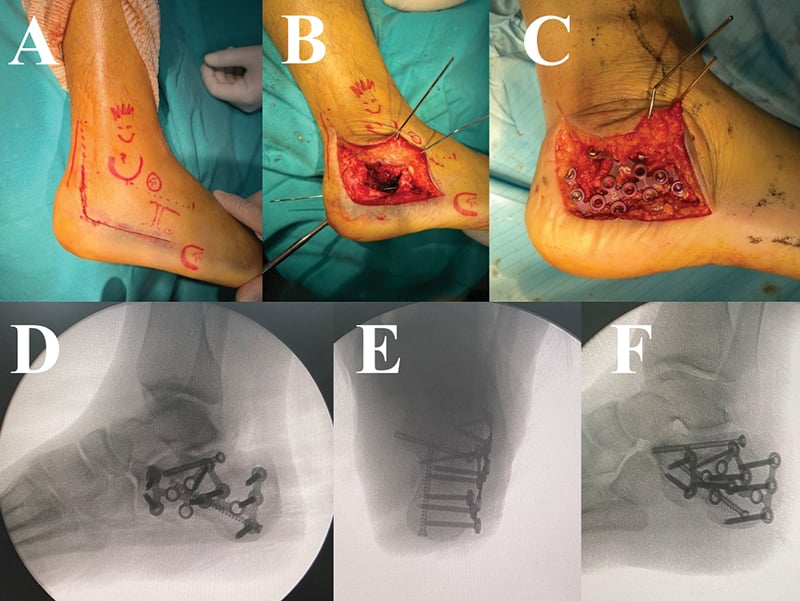
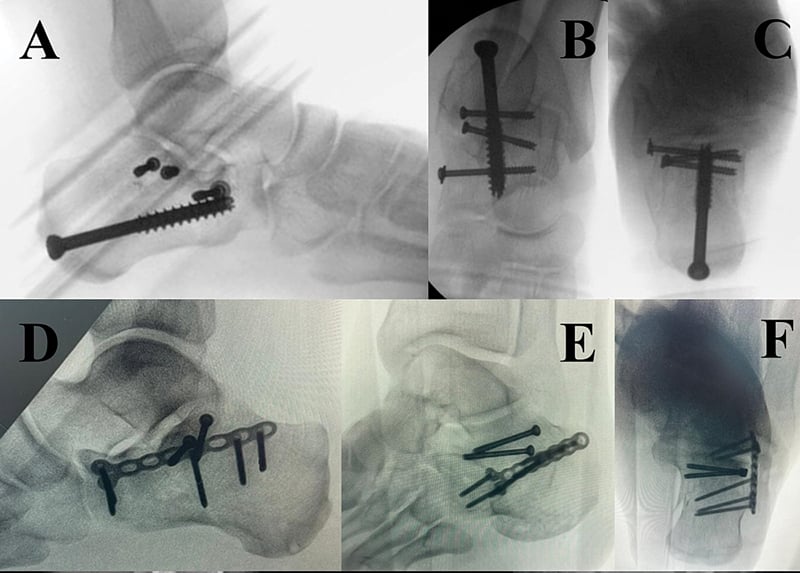
The operation. Restore the height, reduce the posterior facet onto the sustentaculum, narrow the heel back to its normal width, and hold all of it with a lateral plate whose key screws reach the sustentaculum. Everything else is soft-tissue discipline.
Timing is soft-tissue led. Operate at 10-21 days: long enough for the swelling to resolve and the fracture blisters to epithelialise, and time to stop the smoking and control the glucose. Surgery within 7 days carries a 40-50% wound-complication rate. Past 3 weeks the fragments are uniting in their malunited position and the reduction becomes difficult.
Gently pinch the lateral skin over the fracture site. If it wrinkles, the swelling has resolved enough to operate; if the skin stays tense and shiny, wait. There is no number of days that substitutes for the test - operating on a swollen heel takes the wound-complication rate from 20% to over 40%.
Who breaks down. Smoking is the single greatest risk factor, with a relative risk of 3.7. Diabetes, obesity and unresolved swelling add to it, and together they can turn a 20% wound-complication rate into over 50%. An open fracture is a different problem again, carrying a 40-50% infection rate.
Consent. The wound dominates the conversation: dehiscence and skin necrosis are what this operation risks. Beyond the wound, discuss infection, numbness in the sural territory, metal that becomes prominent and may need removing, the subtalar arthritis that follows the injury rather than the operation - with the 15-25% who come to a fusion within five years - thromboembolism in 2-5%, and pain that persists despite an anatomical reduction.
Pre-operative Checklist
- Smoking cessation (minimum 4 weeks ideal, 2 weeks acceptable)
- Diabetic control (HbA1c under 8%)
- Nutrition optimisation (albumin over 3.5)
- Weight loss if obese (BMI over 35 high risk)
- Review CT to template plate size and screw lengths
- Standard: lateral calcaneal locking plate (7-9 holes)
- Screws: 3.5mm cortical and locking, 35-50mm lengths
- K-wires: 1.6mm and 2.0mm for provisional fixation
- Consider calcium phosphate bone void filler for voids
- C-arm fluoroscopy (confirm positioning before draping)
- Lamina spreaders or Schanz pins for distraction
- Dental picks or curettes for fracture debris removal
- Self-retaining retractors (avoid excessive tension)
- Headlight or surgical loupe magnification
Complications
- Incidence
- 20-30% (ORIF), 0% (conservative)
- Risk Factors
- Smoking, diabetes, obesity, early surgery (under 10 days), extensile approach
- Management
- Local wound care, negative pressure therapy, delayed closure, skin graft if needed, flap rarely
- Incidence
- 5-10%
- Risk Factors
- Wound dehiscence, diabetes, immunosuppression, obesity
- Management
- Oral antibiotics, wound care, remove superficial sutures, allow drainage
- Incidence
- 2-5%
- Risk Factors
- Open fracture, wound dehiscence, diabetes, smoking
- Management
- IV antibiotics, surgical debridement, retain hardware if stable, remove if loose, bone culture
- Incidence
- 5-10%
- Risk Factors
- Extensile lateral approach, excessive retraction, direct laceration
- Management
- Numbness lateral foot - usually well-tolerated, no treatment, neuropathic pain rare
- Incidence
- 10% (acute injury)
- Risk Factors
- High-energy injury, crush mechanism, swelling, vascular injury
- Management
- Urgent fasciotomy of all 9 foot compartments
- Incidence
- 30-50% by 5 years (all treatments)
- Risk Factors
- Sanders III-IV, step-off over 2mm, high-energy injury, age over 50
- Management
- Conservative initially (NSAIDs, injections), subtalar fusion if persistent pain limiting function
- Incidence
- 10-15%
- Risk Factors
- Lateral wall widening, hardware prominence, fibular impingement
- Management
- Conservative (NSAIDs, physio), hardware removal if prominent, lateral wall decompression osteotomy
- Incidence
- 10-15%
- Risk Factors
- Thin soft tissue, prominent plate, weight gain post-op
- Management
- Observation if asymptomatic, hardware removal after 12 months if symptomatic (fracture healed)
- Incidence
- 15-25% (conservative), 5-10% (ORIF)
- Risk Factors
- Inadequate reduction, loss of fixation, non-compliance NWB
- Management
- Salvage options: corrective osteotomy, subtalar fusion, triple arthrodesis
- Incidence
- 30-40% (all treatments)
- Risk Factors
- High-energy injury, Sanders IV, depression/anxiety, litigation
- Management
- Multidisciplinary pain management, psychological support, avoid repeat surgery unless clear indication
Calcaneal Malunion: Classification and Salvage
Malunion is the characteristic late consequence of a displaced fracture healed in a deformed position (more common after non-operative care, and after failed/lost ORIF). The deformity is multiplanar and its components drive distinct symptoms:
- Loss of calcaneal height → the talus settles into a more horizontal ("flat-top"/declined) position, causing anterior ankle impingement and loss of ankle dorsiflexion.
- Heel widening with a lateral wall exostosis → subfibular and peroneal impingement (lateral hindfoot pain, peroneal tendon irritation or subluxation).
- Hindfoot malalignment (usually varus, occasionally valgus).
- Post-traumatic subtalar arthritis.
Stephens-Sanders CT classification of calcaneal malunion matches the salvage to the deformity:
- Type I - lateral wall exostosis with subfibular/peroneal impingement, without significant subtalar arthritis → lateral wall exostectomy (± peroneal tenolysis).
- Type II - lateral exostosis plus subtalar arthritis, with acceptable overall alignment → exostectomy plus in-situ subtalar arthrodesis.
- Type III - the above plus hindfoot malalignment and loss of height → exostectomy plus corrective subtalar arthrodesis, using a distraction bone-block (interposition) subtalar arthrodesis to restore lost height, with a calcaneal osteotomy (e.g. Dwyer for fixed varus) to correct alignment.
The distraction bone-block subtalar arthrodesis interposes a tricortical graft in the distracted subtalar joint to restore talar declination - this is what relieves the anterior ankle impingement and recovers dorsiflexion that a simple in-situ fusion leaves behind. The high-risk group for needing this late fusion (presenting Bohler angle under 0 degrees, Sanders IV, heavy-labour Workers'-Compensation males, initial non-operative treatment) is exactly that defined in the Csizy and Buckley data. (See the dedicated subtalar arthrodesis and malunion topics for fusion technique and general malunion principles.)
Key principle: calcaneal malunion is multiplanar (height, width, alignment, arthritis), so salvage is matched to the Stephens type - lateral wall exostectomy alone for impingement without arthritis (Type I), add in-situ subtalar fusion when arthritis supervenes (Type II), and add a distraction bone-block subtalar arthrodesis (± Dwyer osteotomy) to restore height/alignment in Type III. The trap is performing an in-situ fusion when height is lost: it fixes the arthritis but leaves the anterior ankle impingement and horizontal talus uncorrected.
Postoperative Care and Rehabilitation
The bone is cancellous and slow. Non-weight bearing for a minimum of 6 weeks is not negotiable after fixation: weight before then risks losing the reduction and the fixation with it. Partial weight bearing starts at 6 weeks only if the radiograph shows early healing, with the fracture lines beginning to blur, and progression is deliberately slow - aggressive loading brings swelling, pain and secondary displacement. Many patients take 12-16 weeks to reach comfortable full weight bearing, which is worth saying out loud at the first consultation.
Post-ORIF Rehabilitation Timeline
- Elevation: leg above heart level continuously (pillows or a CPM device)
- Ice: 20 minutes on, 40 minutes off around the dressing
- Non-weight bearing: strict, crutches or knee walker
- Pain control: multimodal (paracetamol, NSAID, opioid prn)
- DVT prophylaxis: LMWH (enoxaparin 40mg daily) or DOAC
- Wound check at 48 hours: remove the drain if present, mark the edge of the ecchymosis and note any expansion
- Discharge: when pain is controlled, the patient is mobile non-weight bearing and safe at home
- Splint: backslab for the first 2 weeks, then a CAM boot that can come off for hygiene
- Wound checks: week 2 for healing and dehiscence, weeks 3-4 for suture removal - delayed healing is expected
- Elevation: continue when seated, above heart level 6-8 hours a day
- Ankle ROM: gentle active plantarflexion and dorsiflexion in the boot, avoiding inversion and eversion
- X-rays at 6 weeks: hardware position, no loss of reduction
- DVT prophylaxis: continue until mobile, or 6 weeks
- Start partial weight bearing: 20-30kg (toe-touch) in the boot at 6 weeks if the X-ray shows healing
- Progress: 10-20kg every 1-2 weeks as pain allows, aiming for full weight bearing at 10-12 weeks
- Boot weaning: into a supportive shoe with a heel cup at 12 weeks
- Physiotherapy: gait re-education, subtalar and ankle range, strengthening of the intrinsics and gastrocnemius
- Swelling: expect it to increase as weight bearing starts - compression sock, elevation when seated
- Footwear: supportive shoes with a cushioned heel, avoiding flat shoes and high heels
- Orthotic: custom orthotic or heel cup for persistent heel pain
- Activity: walking, then inclines, then stairs, then jogging if wanted and pain-free
- Work: light duties at 3-4 months, heavy labour at 6-9 months
- Sport: low-impact (cycling, swimming) at 4-6 months, running at 9-12 months
- Hardware removal: consider if prominent and symptomatic after 12 months, once the fracture has healed
- Follow-up: 6 months, 1 year, then annually or as needed
- X-rays: annually for the first 2 years to look for subtalar arthritis
- Subtalar fusion: for progressive arthritis with pain limiting function
- Chronic pain: multidisciplinary care if it persists - pain clinic, psychology, physiotherapy
Outcomes and Prognosis
What predicts the result. The Sanders type predicts the outcome whatever the treatment. Age, occupation and compensation status then decide what the same hindfoot means to the patient in front of you, and the two measurements the surgeon controls are the step-off and the Bohler angle.
- Good Prognosis
- Type I or II
- Poor Prognosis
- Type IV
- Impact
- Type predicts outcome regardless of treatment
- Good Prognosis
- Under 40 years
- Poor Prognosis
- Over 60 years
- Impact
- Younger patients tolerate residual stiffness better
- Good Prognosis
- Sedentary, light manual
- Poor Prognosis
- Heavy labourer, prolonged standing
- Impact
- Heavy labour: only 40-60% return to the same job
- Good Prognosis
- Step-off under 2mm
- Poor Prognosis
- Step-off over 2mm
- Impact
- Over 2mm step-off: 2x increased arthritis rate
- Good Prognosis
- Restored to over 20 degrees
- Poor Prognosis
- Remains under 15 degrees
- Impact
- Under 15 degrees: 3x worse functional score
- Good Prognosis
- Unilateral
- Poor Prognosis
- Bilateral
- Impact
- Bilateral: 50% worse function, disability higher
- Good Prognosis
- No claim
- Poor Prognosis
- Active claim
- Impact
- Compensation claim: 2x worse outcome scores
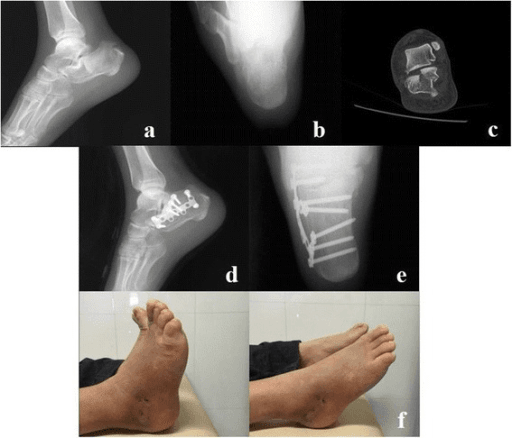
Counsel the patient before the operation, not after the result. Even a technically perfect ORIF of a Sanders II leaves 20-25% with a suboptimal outcome, and a Sanders IV does poorly whichever route is taken. The subtalar arthritis that appears in 30-50% by five years reflects the severity of the injury rather than a failure of treatment. Expectations set early are the best protection against dissatisfaction and a chronic pain syndrome.
Guidelines, Registries & Global Practice
Global Epidemiology
- Figure
- Calcaneus is the most commonly fractured tarsal bone; ~60-75% are intra-articular
- Source
- Sanders R 1993 (PMID 8472475) and standard texts
- Figure
- Predominantly working-age men injured by axial loading (fall from height / road trauma)
- Source
- Tennent TD 2001 two-centre series (PMID 11476816): 76% male, 88% falls from height
- Figure
- Significantly lower health-related quality of life than population norms; chronic disability common, though ~85% return to some work
- Source
- Alexandridis G, Injury 2016 (PMID 27156040)
- Figure
- Male Workers' Compensation heavy labourers with Bohler angle under 0 degrees and Sanders IV are at greatly increased risk of secondary fusion
- Source
- Csizy M / Buckley R, J Orthop Trauma 2003 (PMID 12571499)
Guideline & Practice Comparison Across Systems
- Stance on routine ORIF
- Routine ORIF not recommended for typical displaced fractures; selective surgery for specific patterns
- Evidence basis
- Griffin BMJ 2014 pragmatic RCT (PMID 25059747)
- Level
- Level 1
- Stance on routine ORIF
- Selective ORIF favoured - benefit concentrated in younger, non-compensation, anatomically reducible fractures
- Evidence basis
- Buckley JBJS Am 2002 RCT (PMID 12377902)
- Level
- Level 1
- Stance on routine ORIF
- Anatomic restoration of posterior facet, Bohler/Gissane angles, height and width when operating; increasing use of minimally invasive sinus tarsi exposure
- Evidence basis
- Bai OTSR 2018 meta-analysis (PMID 29410159)
- Level
- Level 2
- Stance on routine ORIF
- Active operative tradition (Zwipp/Rammelt); CT-based planning, with primary subtalar fusion considered for non-reconstructable Sanders IV
- Evidence basis
- Buckley/COTS RCT, J Orthop Trauma 2014 (PMID 24983433)
- Level
- Level 2
There is no dedicated international calcaneal-fracture implant registry comparable to arthroplasty registries (AOANJRR/NJR/AJRR), because fixation uses generic trauma plates and screws rather than tracked implants. Evidence therefore rests on RCTs and meta-analyses rather than registry data. Practice varies widely: the pragmatic UK trial pushed many UK units toward non-operative management, whereas North American and continental European centres maintain a more operative, anatomic-reduction philosophy with growing adoption of minimally invasive approaches. In the exam, defend your plan from the trial evidence and the individual patient (age, occupation, compensation status, soft tissues, fracture pattern) rather than from a single national guideline.
Perioperative Standards
-
VTE prophylaxis for immobilised lower-limb fracture: pharmacological prophylaxis (LMWH such as enoxaparin 40 mg daily, or a DOAC) is standard, continued until the patient is mobile, with extended duration for higher-risk patients
-
Antibiotic prophylaxis for ORIF: cefazolin 2 g IV at induction; for severe penicillin allergy, substitute a glycopeptide (e.g. vancomycin) per local protocol; re-dose for prolonged surgery or major blood loss
-
Smoking cessation is a modifiable wound-risk factor and should be actively supported before elective ORIF
(These are widely accepted perioperative standards; verify against the local formulary and protocol at the time of use.)
Critical documentation for calcaneal fracture management:
Consent discussion (must document):
- Wound complication risk 20-30% (higher with smoking, diabetes)
- Infection risk 5-10%
- Nerve injury (sural nerve) 5-10%
- Subtalar arthritis 30-50% by 5 years (disease progression, not surgical failure)
- Need for future subtalar fusion 15-25%
- Alternative treatments discussed (conservative, primary fusion)
- Realistic return to work expectations (40-60% return to heavy labor)
Operative documentation (critical details):
- Pre-operative soft tissue assessment (wrinkle test positive, no fracture blisters)
- Fluoroscopy-confirmed reduction (Bohler angle, step-off measurement)
- Hardware used (plate type, screw sizes and positions)
- Intra-operative complications and management
- Estimated blood loss, tourniquet time
- Post-operative instructions (NWB duration, elevation, wound check timing)
Common litigation issues:
- Wound complications not consented - patients surprised by dehiscence
- Compartment syndrome missed - delayed fasciotomy with permanent damage
- Operating too early - swelling present, wound breakdown blamed on timing
- Poor functional outcome - patient expected return to normal (unrealistic expectations)
Protection: Document detailed consent, realistic outcome discussion, appropriate timing (wrinkle test), and compartment syndrome surveillance in first 48 hours.
MCQ Practice Points
Q: On which imaging view is the Sanders classification of calcaneal fractures determined?
A: Coronal CT through the widest portion of the posterior facet of the calcaneus. The classification is based on the number of articular fragments created by fracture lines on this single critical coronal slice. Type I = non-displaced (any number of lines), Type II = 1 fracture line (2 fragments), Type III = 2 fracture lines (3 fragments), Type IV = comminuted (over 3 fragments). Subtypes (IIA, IIB, IIC, etc.) based on which fracture lines (A=lateral, B=central, C=medial) are present.
Q: What is the normal range for Bohler angle, and what value predicts poor outcome with conservative management?
A: Normal Bohler angle is 20-40 degrees (typically 30-35 degrees). Measured on lateral foot radiograph as the angle formed by: (1) line from posterior superior calcaneus to highest point of posterior facet, intersecting (2) line from highest point of posterior facet to anterior process. Bohler angle under 20 degrees (especially under 10 degrees) predicts poor functional outcome with conservative management, indicating significant loss of calcaneal height. ORIF goal is restoration to over 20 degrees minimum.
Q: What is the optimal timing for ORIF of calcaneal fractures and why?
A: Optimal timing is 10-21 days post-injury. Rationale: Allow soft tissue swelling to resolve to minimize wound complications (20-30% rate, increases to 40-50% if surgery under 7 days). The wrinkle test determines readiness - gently pinch lateral skin; if wrinkles form, swelling resolved and safe to operate. Early surgery (under 7 days) has double the wound complication rate. Delayed surgery (over 3 weeks) makes reduction more difficult due to early fracture healing and fibrous tissue formation. The window of 10-21 days balances wound healing risk against ease of reduction.
Q: What is the incidence of compartment syndrome with calcaneal fractures and how is it diagnosed?
A: 10% of calcaneal fractures develop acute compartment syndrome - highest rate of any foot injury. This is a clinical diagnosis based on: (1) Pain out of proportion to injury, (2) Pain with passive toe dorsiflexion (stretches deep flexor muscles in deep compartments), (3) Tense, swollen foot. Key point: pulses are usually present (compartment syndrome is increased pressure in fascial compartments, not arterial occlusion). Do not delay for pressure measurements if clinically suspected. Treatment: urgent fasciotomy of all 9 foot compartments (medial, lateral, superficial central, deep central, 4 interosseous, calcaneal). Delay over 6 hours causes irreversible muscle necrosis leading to clawing, contractures, chronic pain.
Q: What did the two major RCTs (Griffin/UK Heel Fracture Trial and Buckley/Canadian trial) show for ORIF vs non-operative treatment of displaced calcaneal fractures?
A: The UK Heel Fracture Trial (Griffin et al, BMJ 2014, PMID 25059747) was a pragmatic multicentre RCT of 151 patients. The primary outcome was the Kerr-Atkins score at 2 years (69.8 operative vs 65.7 non-operative, 95% CI of difference -7.1 to 7.0) - no significant difference, with higher complications/reoperations after surgery (OR 7.5), leading the authors to conclude ORIF is not recommended for typical displaced fractures. The earlier Canadian RCT (Buckley et al, JBJS Am 2002, PMID 12377902) of 424 patients found overall equivalence (SF-36 64.7 vs 68.7, p=0.13) but, after excluding Workers' Compensation patients, identified subgroups that benefited from surgery - younger patients, women, light-workload patients, moderately reduced Bohler angle (0-14 degrees), and anatomically reducible fractures (step-off 2 mm or less). Clinical implication: surgery should be selective, targeting younger, non-compensation patients with reducible fractures, rather than offered routinely. (Note: "ORCA" is an informal label sometimes applied to these trials; cite the named trials and authors in the exam.)
Q: In which patients should primary subtalar fusion be considered instead of ORIF for calcaneal fractures?
A: Primary subtalar fusion indications: (1) Sanders Type IV fractures in heavy laborers over 50 years, (2) Severe comminution precluding stable fixation, (3) Pre-existing subtalar arthritis. Rationale: Sanders IV fractures have poor outcomes with any treatment and a high rate of progression to subtalar arthritis requiring late fusion. Primary fusion (ORIF + primary subtalar arthrodesis) aims to achieve the definitive endpoint in one operation and pre-empt a secondary procedure. Evidence: the only RCT in this area (Buckley/Canadian Orthopaedic Trauma Society, J Orthop Trauma 2014, PMID 24983433) randomised 31 Sanders IV fractures and found no statistically significant difference between ORIF alone and ORIF + primary subtalar arthrodesis (SF-36 PCS 30.2 vs 37.8, p=0.10), but noted primary fusion may speed recovery and avoid late secondary fusion. Consider especially in heavy labourers in whom subtalar arthritis is near-inevitable.
Exam Viva Scenarios
Practise clinical reasoning and management decisions out loud
“A 42-year-old builder presents after falling 3 meters from scaffolding, landing on both feet. He has bilateral heel pain and swelling. X-rays show bilateral calcaneal fractures with loss of Bohler angles. You order CT scans. The right calcaneus shows a single fracture line through the posterior facet on the coronal view (Sanders IIB), and the left shows two fracture lines with three articular fragments (Sanders IIIAB). How do you manage this patient?”
“You are performing ORIF for a Sanders Type IIA calcaneal fracture in a 38-year-old patient. Walk me through your surgical approach and reduction technique. The examiner hands you a model calcaneus and asks you to describe the key steps.”
“You performed ORIF via extensile lateral approach for a Sanders IIB calcaneal fracture 2 weeks ago. The patient returns with 3cm wound dehiscence over the lateral incision, exposing the plate but no purulence. The patient is a smoker and diabetic (HbA1c 8.5%). How do you manage this complication?”
Key Anatomy
- Posterior facet = 80% weight bearing surface, articular with talus
- Sustentaculum tali = medial shelf, attached to talus (stable reference for reduction)
- Bohler angle = 20-40 degrees normal, under 20 degrees poor outcome
- Gissane angle (critical angle) = 120-145 degrees normal
- Sural nerve = 1-2cm posterior to fibula, at risk in extensile lateral approach
- Lateral calcaneal artery = from peroneal, supplies lateral wall and skin
Sanders Classification (CT Coronal View)
- Type I = Non-displaced (any lines), conservative, 85-90% good outcomes
- Type II = 1 fracture line, 2 fragments (IIA lateral, IIB central, IIC medial), ORIF, 75-85% good outcomes
- Type III = 2 fracture lines, 3 fragments (AB, AC, BC, ABC), ORIF, 60-70% good outcomes
- Type IV = Comminuted over 3 fragments, conservative or primary fusion, 40-50% good outcomes
- Coronal slice through WIDEST posterior facet used for classification
Treatment Algorithm
- Sanders I → Conservative (NWB 6 weeks, boot)
- Sanders II-III active under 60 years → ORIF extensile lateral at 10-21 days
- Sanders II simple pattern → Consider sinus tarsi approach (lower wound complications)
- Sanders IV heavy laborer over 50 years → Primary subtalar fusion
- Sanders IV elderly low-demand → Conservative
- ORIF timing = 10-21 days (wrinkle test positive), early surgery doubles wound complications
ORIF Surgical Pearls
- Extensile lateral approach: L-shaped incision, full-thickness flap (no undermining)
- Protect sural nerve (1cm below fibula tip with horizontal limb)
- Reduction sequence: (1) Height (distraction), (2) Posterior facet to sustentaculum, (3) Width
- Goal: Bohler angle over 20 degrees, step-off under 2mm
- Key fixation: Screws from lateral plate to sustentaculum medially (40-50mm locking)
- Closure: Meticulous, no tension, drain 24-48h, strict elevation post-op
Complications
- Wound dehiscence = 20-30% (ORIF), higher with smoking/diabetes/obesity/early surgery
- Compartment syndrome = 10%, clinical diagnosis, pain with passive toe dorsiflexion, urgent fasciotomy 9 compartments
- Sural nerve injury = 5-10%, lateral foot numbness
- Subtalar arthritis = 30-50% by 5 years (disease, not treatment failure), 15-25% need fusion
- Infection = 5-10% superficial, 2-5% deep
- Chronic pain = 30-40% despite anatomical reduction
Evidence Base and Key Trials
UK Heel Fracture Trial - Operative vs Non-Operative for Displaced Intra-Articular Calcaneal Fractures
- Pragmatic, assessor-blinded multicentre RCT (22 UK hospitals): 151 patients with closed displaced intra-articular fractures randomised to ORIF (n=73) or non-operative care (n=78)
- Primary outcome was the Kerr-Atkins pain/function score at 2 years (not SF-36): 69.8 (operative) vs 65.7 (non-operative), adjusted 95% CI of difference -7.1 to 7.0 - no significant difference
- No significant difference in any secondary outcome (AOFAS hindfoot, SF-36, EQ-5D, walking speed, gait symmetry)
- Complications and reoperations were markedly MORE common after surgery (odds ratio 7.5, 95% CI 2.0 to 41.8)
- Authors concluded ORIF is NOT recommended for typical displaced intra-articular calcaneal fractures