Neuropathy + Vasculopathy + Immunopathy | Wagner and Texas Classifications | Offloading is Key
- Pathophysiology triad: sensory neuropathy (loss of protective sensation), peripheral vascular disease, and impaired immunity lead to ulcer formation
- Wagner classification: depth-based (0-5); Texas classification: adds ischemia and infection to depth grading (4x4 grid)
- Offloading is THE critical treatment - total contact casting reduces plantar pressure by 80-90% and is gold standard
- Probe-to-bone test: in infected high-risk wounds sensitivity 66%, specificity 85%, PPV 89% (Grayson) - a positive probe in a moderate/severe ulcer means treat for osteomyelitis until proven otherwise
- IDSA guidelines: treat infection (purulence OR 2+ inflammatory signs), NOT colonization - tissue cultures after debridement only
- “Monofilament testing: 10g (5.07 Semmes-Weinstein) = loss of protective sensation threshold
- “ABI less than 0.9 indicates PAD; less than 0.5 critical ischemia; greater than 1.3 falsely elevated (calcified vessels)
- “TCC (total contact cast) is gold standard offloading but instant total contact walker is alternative
- “5-year mortality after major amputation exceeds 70% (JAMA 2023) - worse than most cancers
Overview and Epidemiology
A diabetic foot ulcer is a chronic wound in a person with diabetes mellitus, produced when neuropathy, peripheral arterial disease and repetitive trauma act on the same foot. It is the most common and the most costly complication of diabetes, with devastating consequences for patients and for healthcare systems.
The burden (Zhang, Ann Med 2017, PMID 27585063; Armstrong, JAMA 2023, PMID 37395769; Armstrong, NEJM 2017, PMID 28614678). Pooled global prevalence among people with diabetes is 6.3% (95% CI 5.4-7.3%), with wide regional variation (North America about 13%, Oceania about 3%), and approximately 18.6 million people develop a diabetic foot ulcer worldwide each year. The lifetime risk of foot ulceration in diabetes is estimated at 19-34%, and approximately 80% of diabetes-related lower-limb amputations are preceded by a foot ulcer.
The outcomes (Armstrong, JAMA 2023; NEJM 2017). Healing is slow and relapse is the rule:
- Only about 30-40% of ulcers are healed at 12 weeks under usual care
- Recurrence after healing is about 42% at 1 year, about 60% at 3 years and about 65% at 5 years
- About 20% of moderate-to-severe infections lead to lower-extremity amputation
- Five-year mortality is about 30% after a diabetic foot ulcer and greater than 70% after a major amputation, worse than most cancers
Related pages carry the neighbouring detail: diabetic neuropathy for the mechanism and the screening examination, diabetic foot infections for antibiotic selection and osteomyelitis, Charcot neuroarthropathy for Eichenholtz and Brodsky staging and reconstruction, and diabetic foot management for the overall pathway including amputation levels.
Risk factors. Previous foot ulceration is the strongest predictor of the next one (relative risk 12-36). The other major factors:
- Peripheral neuropathy with loss of protective sensation to the 10 g monofilament
- Peripheral arterial disease (ABI less than 0.9)
- Foot deformity: claw toes, Charcot foot, hallux valgus
- High forefoot plantar pressure
- Poor glycaemic control (HbA1c greater than 8%)
- Diabetes of more than 10 years' duration
- Visual impairment, which removes self-inspection
Lesser contributors are chronic kidney disease (dialysis patients carry a 2-3x higher risk), smoking, limited joint mobility (especially at the ankle), inappropriate footwear, male sex (1.6x higher risk) and low socioeconomic status. The IWGDF risk categories that turn these into a surveillance interval are in Prevention Strategies.
Pathophysiology
The triad. Ulcers result from the interaction of three primary processes: neuropathy, vascular disease and trauma. When immunopathy is added, the conditions for a chronic non-healing wound are complete.
Sensory neuropathy. Neuropathy is behind 85% of diabetic foot ulcers. The patient loses protective sensation in a distal, symmetric, stocking-glove distribution and can no longer perceive minor trauma from a foreign body, friction or heat, and reduced pain perception then delays recognition of the injury once it has happened. The mechanism is sorbitol accumulation, advanced glycation end-products (AGEs) and oxidative stress.
Motor neuropathy. The intrinsic muscles (lumbricals and interossei) waste, the toes claw from the resulting imbalance and the metatarsal heads become more prominent. Peak pressures concentrate under the second and third metatarsal heads, and the foot loses its dynamic shock absorption.
Autonomic neuropathy. Anhidrosis leaves the skin dry and cracked. Arteriovenous shunting in the foot gives a warm, dry foot with dilated veins and bounding pulses despite poor perfusion, and thermoregulation is impaired.
Peripheral arterial disease. Diabetic arterial disease sits below the knee, in the tibial and peroneal arteries, and spares the foot vessels, so the pedal arch is often patent. Medial arterial calcification (Mönckeberg sclerosis) gives a falsely elevated ABI, and capillary basement membrane thickening adds a microvascular component. The haemodynamic consequences are reduced tissue perfusion that delays healing, tissue hypoxia that impairs fibroblast function and collagen synthesis, impaired angiogenesis, and at the extreme critical ischaemia (the thresholds are in Investigations).
Immunopathy. Hyperglycaemia interferes with white cell function at multiple steps: neutrophil chemotaxis, phagocytosis and bacterial killing are reduced, macrophage dysfunction delays wound debridement, and cellular immunity is impaired. The patient is therefore more susceptible to infection, soft-tissue infection progresses rapidly, and the inflammatory response is blunted, so systemic signs may be minimal despite severe infection. Osteomyelitis develops in 10-15% of infected ulcers.
Repetitive trauma. Normal walking loads the sole at 300-500 kPa; patients with ulcers often exceed 600 kPa, with shear added through the gait cycle, and they take 5,000-10,000 steps a day on a foot that cannot feel them. Callus over the pressure point raises the peak by a further 30-50%. The sequence from pressure point to ulcer:
- A high-pressure point, typically a prominent metatarsal head
- Repetitive loading without pain feedback
- Subcutaneous haemorrhage and tissue breakdown
- Callus forms over the area
- Pressure rises further beneath the callus
- Autolysis creates a fluid-filled space
- The skin ruptures and the ulcer declares itself
Patients often present late because neuropathic ulcers are painless: the same neuropathy that allows the ulcer to form also removes the pain that would announce it. Ischaemic ulcers, by contrast, are painful (rest pain), and that distinction separates neuropathic from neuroischaemic ulcers at the bedside.
Why the wound stays open. The inflammatory phase is prolonged by persistent neutrophil infiltration, fibroblast migration and proliferation are reduced, and growth factors (PDGF, VEGF, EGF) are depleted while matrix metalloproteinases are in excess. Cells at the wound edge become senescent and stop dividing, and 60-80% of chronic wounds carry a bacterial biofilm.
Classification Systems
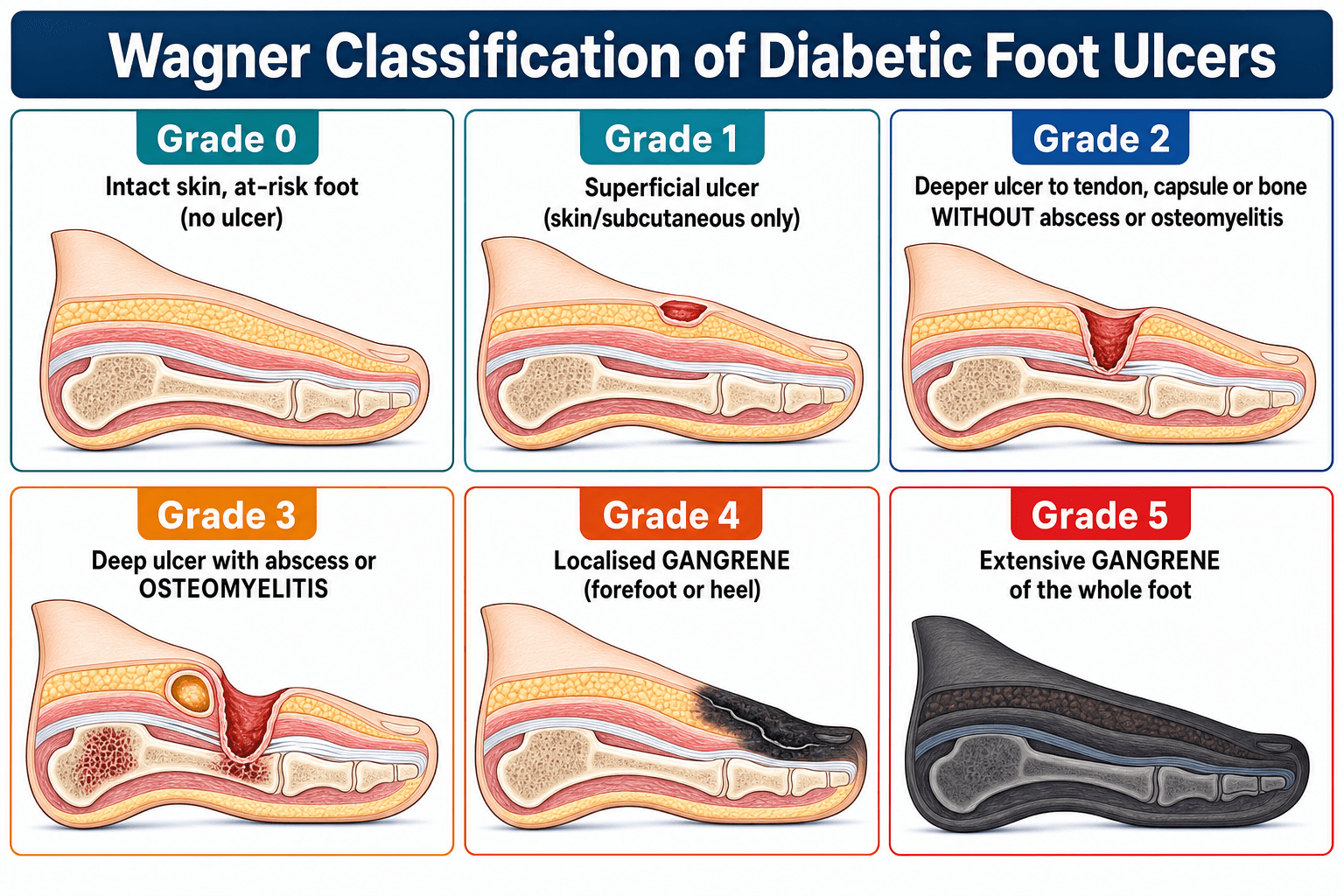
The Wagner-Meggitt classification is the most commonly used system. It grades the ulcer from 0 to 5 by depth and by the presence of infection or gangrene.
- Description
- Intact skin, pre-ulcerative (callus, bony deformity, erythema)
- Treatment
- Prevention: orthotics, education, callus debridement
- Healing Rate
- Not applicable
- Description
- Superficial ulcer, partial/full-thickness, no deeper structures
- Treatment
- Offloading (TCC), sharp debridement, moist wound care
- Healing Rate
- 89.5% at 12 weeks in trial with a total contact cast (clean, perfused ulcers); 30-40% across all ulcers in routine care
- Description
- Deep ulcer to tendon, bone, or joint capsule (no abscess/OM)
- Treatment
- Surgical debridement, antibiotics if infected, offloading
- Healing Rate
- 70-80% at 12-16 weeks
- Description
- Deep ulcer with abscess, osteomyelitis, or septic arthritis
- Treatment
- Surgical debridement, IV antibiotics, possible amputation
- Healing Rate
- 50-60% limb salvage with aggressive treatment
- Description
- Localised gangrene (forefoot or heel)
- Treatment
- Partial amputation (toe, ray, transmetatarsal)
- Healing Rate
- 80-90% healing of amputation site
- Description
- Extensive gangrene of entire foot
- Treatment
- Major amputation (below-knee or above-knee)
- Healing Rate
- 80-90% BKA healing; 50-60% AKA healing
Strengths and weaknesses. Wagner is simple and easy to remember, widely used in practice and research, has good inter-observer reliability and guides the escalation of treatment. Against that, it does not grade ischaemia and infection separately, has limited prognostic value for healing, and takes no account of location.
The practical consequence of those limitations: two ulcers can both be Wagner 2 while one is clean and perfused and will heal with offloading, and the other is infected in an ischaemic foot and will end in a midfoot amputation. Wagner cannot distinguish them, which is why it is quoted for depth and the Texas system is used for prognosis.
Clinical Assessment
History. The questions that change management:
- Duration of diabetes and glycaemic control (HbA1c)
- Previous ulcers or amputations, the strongest risk factor
- Claudication or rest pain
- Numbness, tingling or burning
- Any trauma or precipitating event, often forgotten by the patient because of the neuropathy
- Footwear, including what is worn at home (many patients wear inappropriate slippers)
- Self-care: can they see their feet, and can they reach to inspect them?
Vascular examination. Feel the dorsalis pedis and posterior tibial pulses and compare the two sides. Look for pallor on elevation (Buerger's test), time the capillary refill (normal under 3 seconds), and ask about paraesthesia and about rest pain, which suggests critical ischaemia.
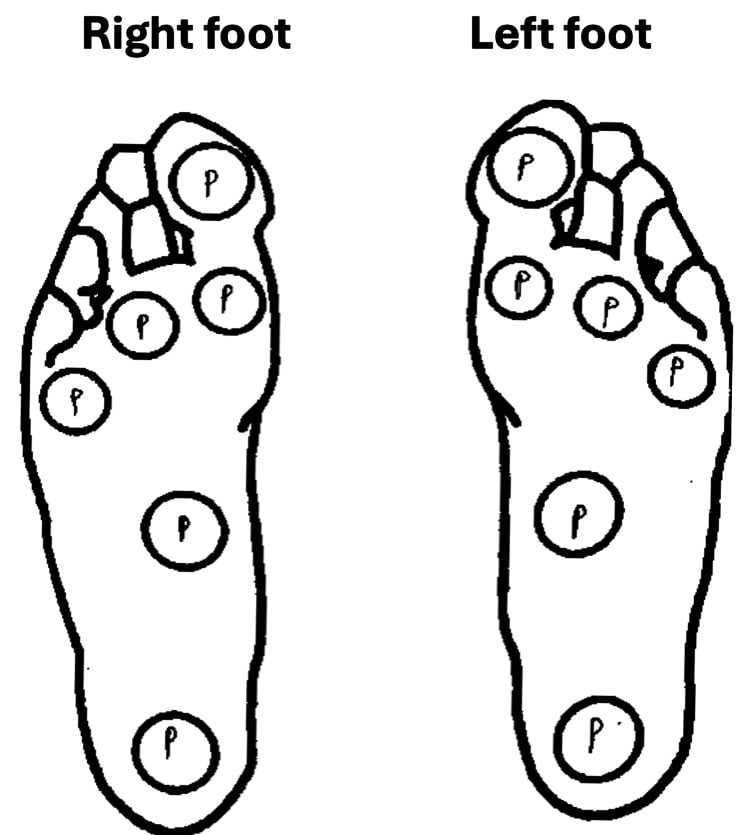
Neurological examination. The 10 g (5.07 Semmes-Weinstein) monofilament tests protective sensation at nine plantar sites, over the hallux, the metatarsal heads, the mid-arch and the heel. Loss of sensation at any single site is loss of protective sensation, and the test is 90% sensitive and 80% specific for ulcer risk. Vibration at the hallux IPJ with a 128 Hz tuning fork, the ankle reflexes (absent in peripheral neuropathy) and pinprick for small-fibre function complete the examination.
Musculoskeletal examination. Look for claw toes, hallux valgus and the Charcot foot. Measure ankle dorsiflexion, because an equinus of less than 10° increases forefoot pressure; test intrinsic strength, which shows as an inability to spread the toes; and watch the gait for the pressure pattern.
The ulcer. Record:
- Location: plantar ulcers are neuropathic, ulcers at the margins and dorsum ischaemic, interdigital ulcers mixed
- Size in cm² (length × width)
- Depth, by probing to bone
- Base: red granulation tissue is healthy, yellow is slough, black is eschar
- Edges: callused, undermined or macerated
- Surrounding skin: erythema (measure how far it extends), warmth, oedema
- Exudate: amount, colour, odour
Probe-to-bone. A sterile metal probe is passed into the debrided ulcer; a hard, gritty stop is bone. In the original hospitalised, infected cohort (Grayson, JAMA 1995) the test had sensitivity 66%, specificity 85%, positive predictive value 89% and negative predictive value 56%. Those figures are prevalence-dependent: in a high-risk infected wound a positive probe is highly predictive of osteomyelitis, while in lower-risk outpatients a negative result is the more reassuring finding. A positive probe in a moderate-to-severe ulcer warrants treatment for osteomyelitis pending MRI or bone biopsy; a negative result does not exclude it when clinical suspicion is high.
PPPThe 3 P's of Diabetic Foot Assessment
Hook:The 3 P's are the essential bedside tests every diabetic foot needs
Differential diagnosis. Not every wound on a diabetic foot is a simple neuropathic ulcer, and the dominant mechanism changes the management entirely.
- Typical location / look
- Plantar, over met head or heel; punched-out with callused rim
- Pain
- Painless
- Pulses / perfusion
- Normal (warm, bounding)
- Key discriminator
- Loss of protective sensation, high plantar pressure point
- Typical location / look
- Margins, tips of toes, dorsum; little callus, dry/necrotic
- Pain
- Often painful (rest pain)
- Pulses / perfusion
- Reduced/absent; cool, hairless
- Key discriminator
- ABI less than 0.9 or TBI less than 0.7, low TcPO2; needs vascular workup
- Typical location / look
- Hot, swollen, deformed midfoot - usually NO ulcer early
- Pain
- Painless or mild
- Pulses / perfusion
- Normal (warm, often bounding)
- Key discriminator
- Temperature difference greater than 2°C vs other foot, fragmentation on X-ray; no portal of entry
- Typical location / look
- Spreading erythema, warmth, sometimes purulence
- Pain
- Variable (tender)
- Pulses / perfusion
- Usually intact
- Key discriminator
- Systemic signs, raised inflammatory markers, responds to antibiotics
- Typical location / look
- Gaiter area, irregular, exudative; haemosiderin, oedema
- Pain
- Aching, relieved by elevation
- Pulses / perfusion
- Pulses usually present
- Key discriminator
- Chronic venous insufficiency signs; not a pressure point
- Typical location / look
- Non-healing, rolled/everted edges, atypical granulation
- Pain
- Variable
- Pulses / perfusion
- Variable
- Key discriminator
- Failure to heal despite optimal care - biopsy the edge
Both present as a hot, red, swollen foot. Elevation test: in acute Charcot the erythema and warmth substantially settle after a few minutes of limb elevation, whereas infective erythema does not. No ulcer or portal of entry and fragmentation on X-ray favour Charcot, whose CRP and ESR are elevated but whose white cell count is normal; infection brings an ulcer, purulence, systemic signs and a raised white cell count. When uncertain, immobilise and offload while excluding infection - treating a non-existent infection is less harmful than missing acute Charcot.
Red flags requiring urgent action. Any of these indicates limb- or life-threatening infection and needs same-day surgical consultation:
- Systemic signs: fever, tachycardia, hypotension (sepsis)
- Gas in the tissues: crepitus on examination or air on X-ray (gas gangrene)
- Rapidly spreading erythema (necrotising fasciitis)
- Bullae or skin necrosis
- Foul odour (anaerobic infection)
- Critical ischaemia: rest pain, ABI less than 0.5, tissue loss
Investigations
Blood tests. The baseline set:
- HbA1c, for glycaemic control over the preceding 3 months
- CRP and ESR, elevated in osteomyelitis but possibly normal in acute infection
- White cell count, which may be normal despite infection (the blunted response)
- Renal function, since many diabetics have chronic kidney disease
- Blood cultures if there are systemic signs
Perfusion. The ankle-brachial index comes first, and its failure mode in diabetes is the exam point: calcified vessels do not compress, the index reads falsely high, and toe pressures are used instead.
- ABI: normal 0.9-1.3; PAD below 0.9; critical ischaemia below 0.5; falsely elevated above 1.3 (calcified vessels)
- Toe-brachial index, less affected by calcification: normal above 0.7; critical ischaemia below 0.5
- TcPO2: above 40 mmHg good healing potential; 30-40 mmHg borderline; below 30 mmHg poor healing, revascularisation needed
Duplex ultrasound maps the disease for revascularisation when the ABI is abnormal, and CT or MR angiography follows once revascularisation is planned.
Imaging for osteomyelitis. The plain film is cheap and detects gas but lags the disease; MRI is the sensitive test; biopsy is the arbiter.
- Sensitivity
- 54-68%
- Specificity
- 68-75%
- Advantages
- Cheap, widely available, detects gas
- Disadvantages
- Insensitive early (2-3 weeks delay), cannot assess soft tissue
- Sensitivity
- 90-95%
- Specificity
- 70-85%
- Advantages
- Best for bone marrow oedema, soft tissue abscess
- Disadvantages
- Expensive, cannot if metal implants, lower specificity
- Sensitivity
- 74-100%
- Specificity
- 68-90%
- Advantages
- Functional imaging, specific for infection
- Disadvantages
- Time-consuming, radiation, may miss chronic OM
- Sensitivity
- Gold standard
- Specificity
- Gold standard
- Advantages
- Histology + culture, definitive diagnosis
- Disadvantages
- Invasive, may seed infection, patient refusal
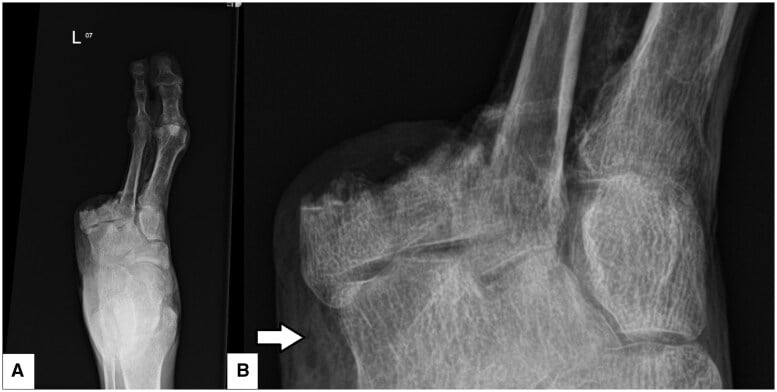
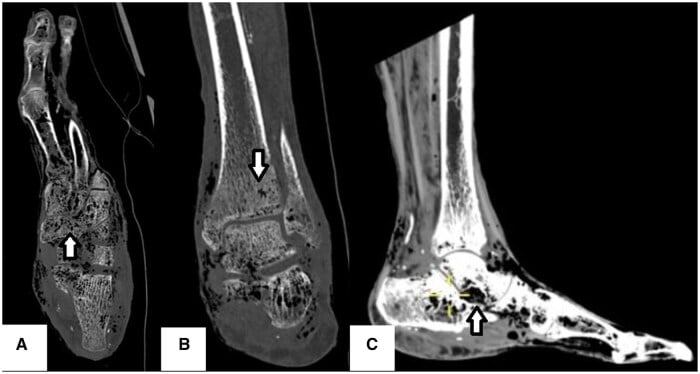
On the plain film look for periosteal reaction, cortical erosion, bone destruction and soft-tissue gas, which indicates gas-forming organisms. On MRI osteomyelitis shows as marrow oedema (low T1, high T2/STIR signal), cortical destruction, a soft-tissue abscess or sinus tract, and contrast enhancement.
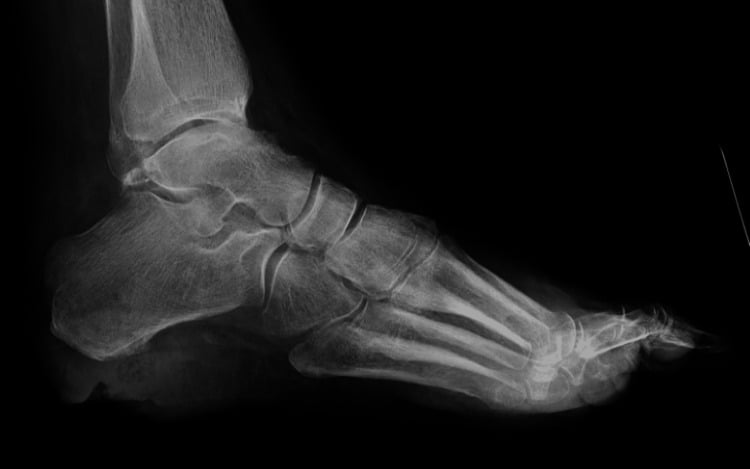
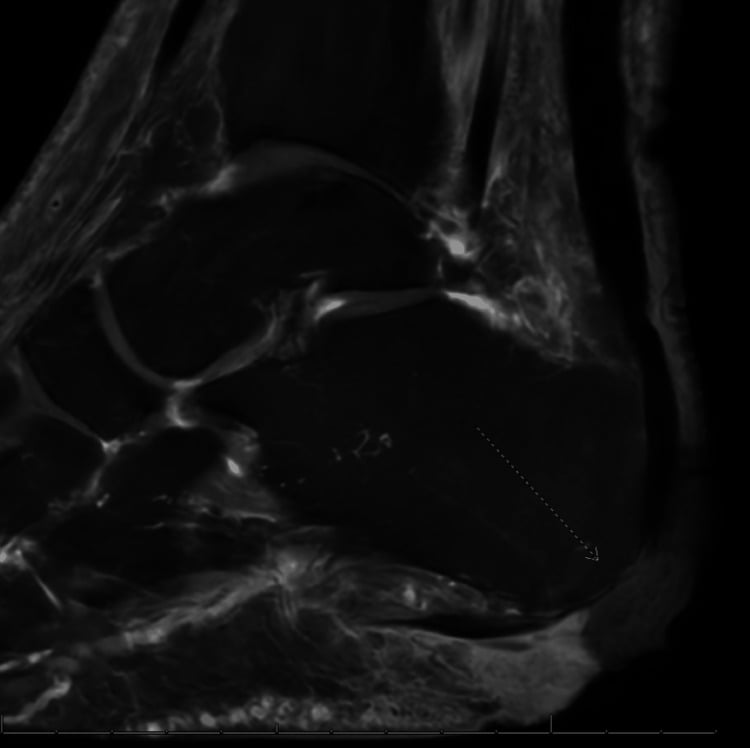
Microbiology. Do not swab the surface of the wound; that cultures colonisers only. Take deep tissue after debridement, by curette or bone biopsy for the best yield, send it for aerobic, anaerobic and fungal culture, and specify "diabetic foot infection" on the request so the laboratory expects polymicrobial growth. The organisms follow the severity:
- Uninfected or mild: Staphylococcus aureus and streptococci, usually monomicrobial
- Moderate or severe: polymicrobial, with Gram-positives (S. aureus including MRSA, streptococci, enterococci), Gram-negatives (E. coli, Proteus, Klebsiella, Pseudomonas) and anaerobes (Bacteroides, Peptostreptococcus, the source of foul odour and necrosis)
Management Algorithm
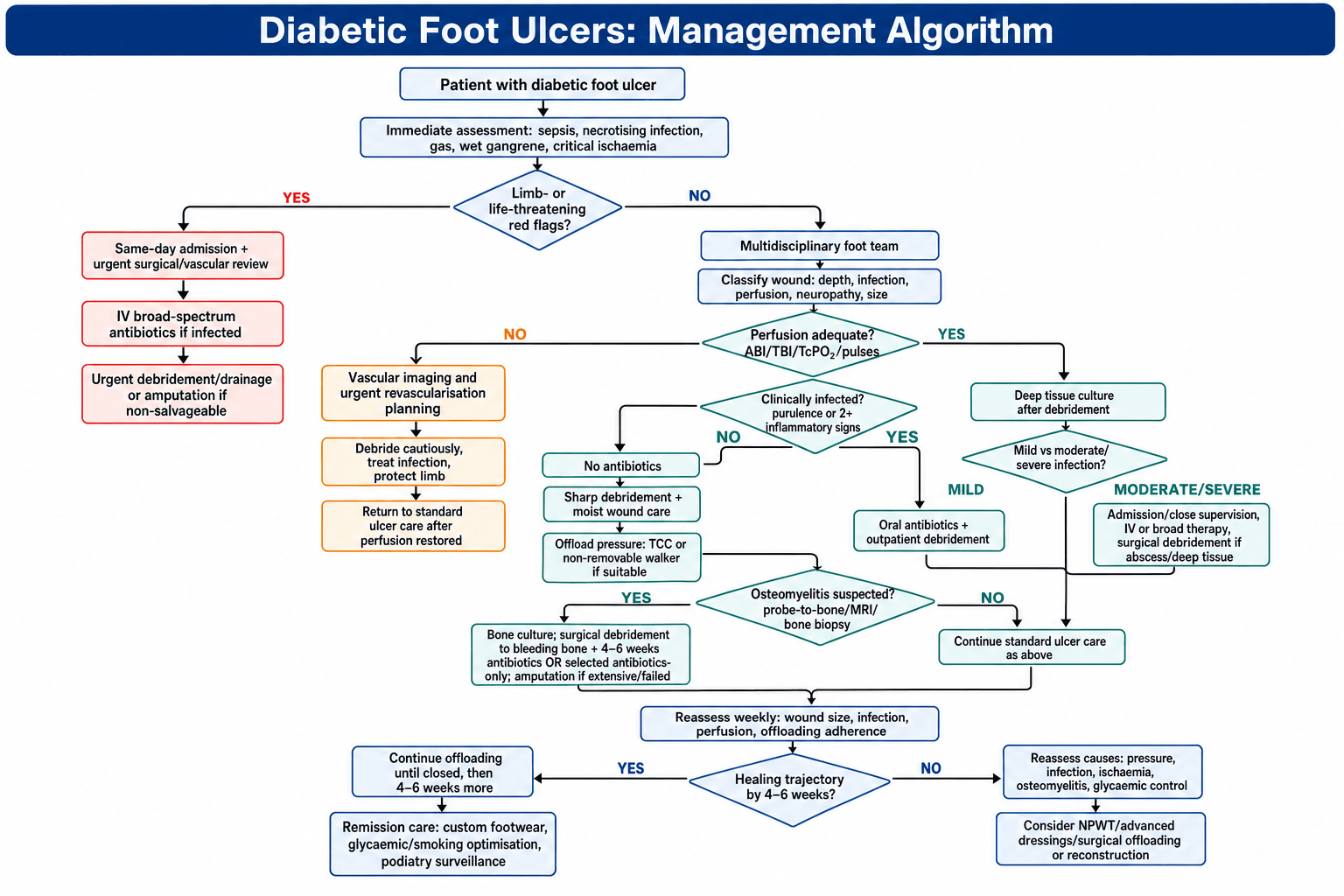
The team. Multidisciplinary foot care teams reduce amputation rates by 49-85% compared with standard care; in the pooled contemporary estimate multidisciplinary care is associated with lower major amputation rates, 3.2% versus 4.4%, odds ratio 0.40 (JAMA 2023). The essential members:
- Diabetologist or endocrinologist (glycaemic control)
- Podiatrist (wound care, debridement, orthotics)
- Vascular surgeon (revascularisation)
- Orthopaedic or plastic surgeon (reconstruction, amputation)
- Infectious disease specialist (complex infections, osteomyelitis)
- Orthotist (custom footwear, AFOs)
- Diabetes nurse educator (self-care, prevention)
The five pillars. Everything that follows is organised around them:
- Offloading, the critical one
- Debridement
- Infection control
- Vascular assessment and revascularisation
- Metabolic and wound-environment optimisation
Offloading (Pillar 1)
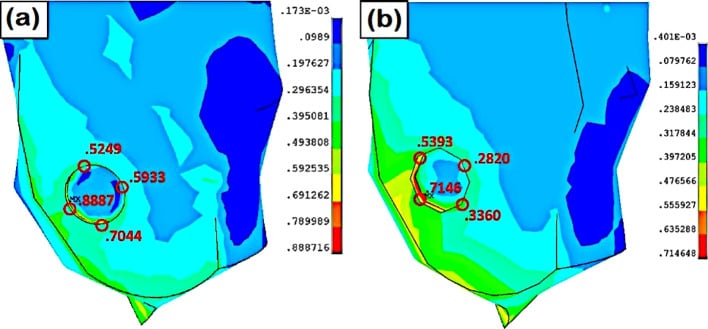
Offloading is THE critical treatment for plantar neuropathic DFUs. No amount of antibiotics, dressings or growth factors will heal an ulcer while repetitive pressure continues. In the randomised trial a total contact cast healed 89.5% of superficial, non-infected, non-ischaemic plantar ulcers by 12 weeks, against 65.0% for a removable cast walker and 58.3% for a half-shoe (OR 5.4 for the cast versus the other two combined). Read those figures with their entry criteria in mind: they describe clean, perfused, superficial (UT 1A) wounds in trial conditions. Set them against the routine-care healing rate in the Overview and the gap is mostly selection, and partly the fact that a cast the patient can remove is a cast the patient does remove.
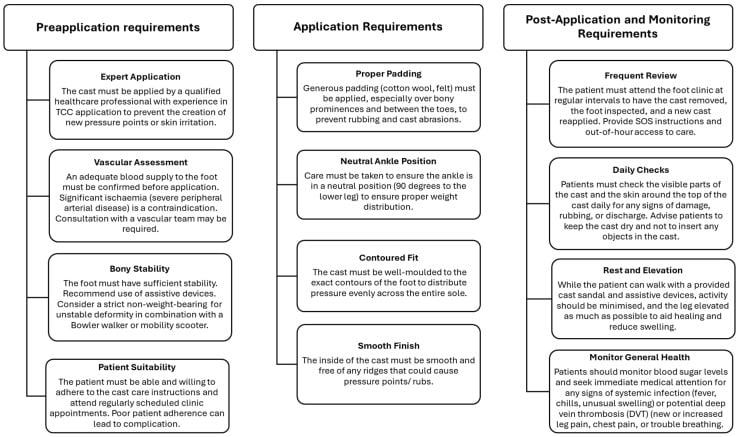
How the total contact cast works. It redistributes pressure from the ulcer to the entire plantar surface and the lower leg, cutting peak plantar pressure at the ulcer by 80-90%, and it immobilises the ankle, which reduces shear. Because it cannot be taken off, adherence is built in. Healing takes 6-8 weeks on average, against 12-16 weeks in removable devices, and recurrence after healing runs at 30-50% by 2 years, which is why long-term footwear follows it.
Applying it. The technique:
- Minimal padding over the ulcer and the bony prominences
- Mould the cast intimately to the foot and leg (total contact)
- Extend it to just below the fibular head
- A heel rocker on the sole for gait
- Change weekly at first while the oedema settles, then every 2 weeks
When not to cast. The contraindications:
- Active infection (moderate or severe)
- Critical ischaemia (ABI less than 0.5)
- Excessive oedema, since the limb volume is unstable
- A non-compliant patient (fall risk)
- Suspected acute Charcot neuroarthropathy
The instant total contact cast. A removable cam walker rendered non-removable with cohesive bandage or fibreglass: a prefabricated device with custom foam padding that can be opened by the clinician for wound inspection but not by the patient. Rendered irremovable it has similar efficacy to the cast (75-90% healing); in the randomised comparison the wrapped walker healed 82.6% of ulcers at 12 weeks against 51.9% for the identical walker left removable. Removable devices fail on adherence rather than on activity: if the patient can take it off, efficacy drops to 30-50%.
The other devices. How the alternatives compare:
- Healing Rate
- 89.5% at 12 weeks (trial)
- Compliance
- 100% (non-removable)
- Indications
- Gold standard for plantar neuropathic ulcers
- Cost
- $$
- Healing Rate
- 75-90%
- Compliance
- 95% (cohesive wrap)
- Indications
- Alternative if TCC unavailable or infection present
- Cost
- $$$
- Healing Rate
- 30-50%
- Compliance
- 20-30% (poor)
- Indications
- Non-compliant patients, acute Charcot
- Cost
- $$
- Healing Rate
- 30-40%
- Compliance
- 40-60%
- Indications
- Post-op amputation, forefoot offloading
- Cost
- $
- Healing Rate
- 40-60%
- Compliance
- 70-80%
- Indications
- Temporary measure, outpatient debridement
- Cost
- $
- Healing Rate
- Prevention
- Compliance
- 80%
- Indications
- Healed ulcers, prevention, redistribution
- Cost
- $$$
Non-removable beats removable. Studies show patients wear removable devices only 20-30% of the time when alone at home, despite reporting full compliance. Activity modification, reducing the steps taken per day, is part of offloading, and new pressure areas are watched for as load is redistributed. Offloading continues until the ulcer has closed and for 4-6 weeks after closure.
The same neuropathy that caused the ulcer also removes the pain signal that would remind the patient to protect the foot. They genuinely forget, because it does not hurt. A non-removable device is an external memory.
Achilles tendon lengthening. For an equinus contracture (ankle dorsiflexion less than 10°), a percutaneous triple hemisection reduces forefoot pressure by 25-30% and cuts recurrence by 60-80% compared with standard care. The risk is overlengthening, which transfers the ulcer to the heel.
Metatarsal head resection. For a recurrent plantar ulcer under a prominent metatarsal head, resect the single offending head (usually the second or third), and avoid resecting several adjacent heads, which produces transfer lesions. Joint arthroplasty, a metatarsal head resection with K-wire fixation, shortens the metatarsal and elevates the head, with healing in 80-90%.
Flexor tenotomy for the apical toe ulcer. A clawed or hammered toe drives its tip into the insole and its dorsal interphalangeal joint into the toe box, and no insole can offload a toe that is pointing downwards. A percutaneous needle or blade tenotomy of flexor digitorum longus (and brevis) at the base or plantar aspect of the toe, under local anaesthetic in clinic, takes a minute or two per toe and needs no immobilisation; the toe straightens immediately and weight transfers off the tip back to the pulp. This is the offloading answer nobody gives: candidates offer a total contact cast for a tip ulcer, and a cast does not correct a flexible claw toe. It works for a flexible deformity only, a rigid toe needs an arthroplasty or joint resection, and watch for transfer ulceration at the adjacent toe and for a floating toe if the deformity was already extended at the MTP joint.
Debridement and Wound Care (Pillar 2)
Sharp debridement. It removes necrotic tissue, callus and biofilm, reduces the bacterial burden by 90-99%, exposes healthy bleeding tissue and converts a chronic wound into an acute one, restarting the healing cascade. Debride weekly until healed, at minimum; weekly sharp debridement is associated with 2-3x higher healing rates than episodic debridement. The technique:
- Scalpel off all hyperkeratosis around the wound edges
- Debride to healthy, bleeding tissue (a spongy, bleeding base is dermis)
- Saucerise the edges, bevelling them so they cannot undermine
- Send tissue, not a swab, for culture
Dressings. The goal is a moist wound environment, which improves epithelialisation by 50% over a dry wound. Choose by the wound bed and its exudate:
- Exudate
- Minimal
- Dressing
- Hydrogel
- Mechanism
- Autolytic debridement
- Exudate
- Moderate
- Dressing
- Hydrocolloid or foam
- Mechanism
- Absorb exudate, protect
- Exudate
- Light
- Dressing
- Hydrocolloid, alginate
- Mechanism
- Maintain moisture
- Exudate
- Minimal
- Dressing
- Film or hydrocolloid
- Mechanism
- Non-adherent, protect
- Exudate
- Heavy
- Dressing
- Antimicrobial (silver, iodine) + foam
- Mechanism
- Infection control + absorption
Infected wounds are dressed daily and clean granulating wounds every 3-7 days; the aim is to disturb the wound as little as possible.
The one dressing with a positive randomised trial. Almost every recommendation in the table above rests on wound-bed logic rather than outcome data - guidelines repeatedly conclude that no dressing type has been shown to heal ulcers faster than any other, so choose on exudate, comfort and cost. The exception is the sucrose octasulfate (potassium sucrose octasulfate) impregnated dressing in neuroischaemic ulcers. In the double-blind Explorer trial, 240 patients with non-infected neuroischaemic ulcers were randomised to a sucrose octasulfate dressing or the identical dressing without it: wound closure at 20 weeks was 48% versus 30% - an 18 percentage point difference (95% CI 5-30), adjusted odds ratio 2.60 (1.43-4.73), p = 0.002. Two caveats to state if you quote it: the trial was funded by the manufacturer, and it enrolled only non-infected neuroischaemic wounds (UT grade 1C or 2C), so it says nothing about the purely neuropathic plantar ulcer, where offloading remains the whole answer.
Negative pressure wound therapy. For post-surgical wounds and deep wounds after debridement, it removes exudate, reduces oedema and promotes granulation, with 30-50% faster healing than standard dressings in diabetic wounds. It is contraindicated over untreated osteomyelitis, exposed vessels and malignancy.
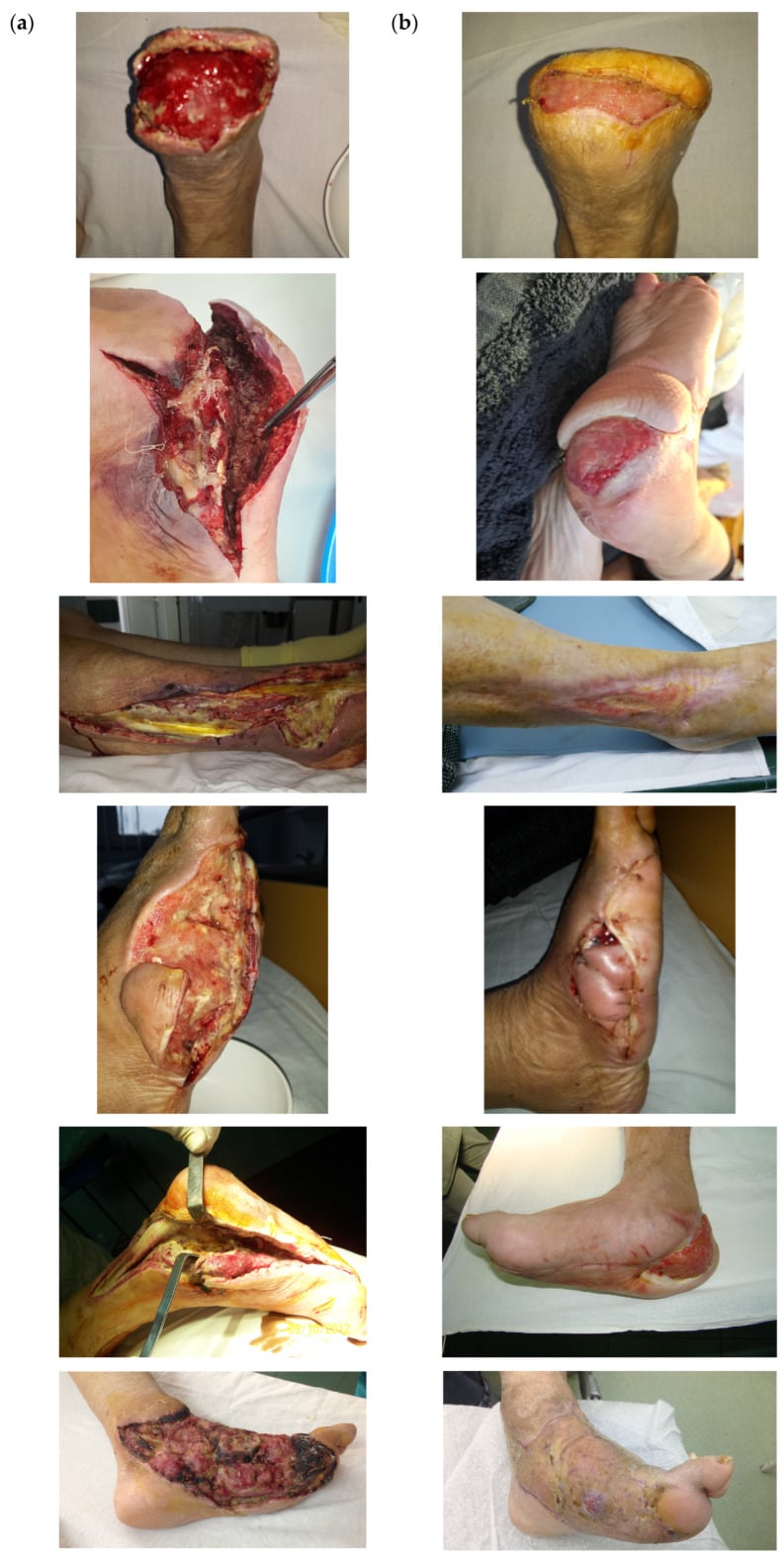
Becaplermin. Platelet-derived growth factor, applied daily after debridement, has a modest benefit over placebo and is approved for neuropathic ulcers with adequate perfusion. It carries a boxed warning for increased mortality from malignancy, added in 2008 after a matched cohort study found cancer mortality raised in patients receiving 3 or more tubes (rate ratio 5.2, 95% CI 1.7-17.6). Know the second half of that story too, because it is what the warning's wording conceals: when the same cohort was followed further the signal did not hold - overall cancer mortality rate ratio 1.0 (0.5-2.3), and 2.4 (0.8-7.4) in the 3-or-more group, with no increase in cancer incidence at any exposure (HR 1.2, 0.7-1.9) - and the authors concluded becaplermin does not appear to raise cancer risk. The practical position: the evidence of harm is weak and unreplicated, but so is the evidence of benefit, and the warning stands. Use it as a late adjunct in a wound that has failed proper offloading, not as a substitute for it, and consent the patient about the warning.
Living cell therapy. Human fibroblast and keratinocyte sheets (Apligraf, Dermagraft) healed 56% of ulcers at 12 weeks against 38% with standard care, at USD 1,000-2,500 per application.
Hyperbaric oxygen. It raises tissue oxygenation, enhances white cell function and angiogenesis, and is given as 90-120 minutes at 2.0-2.5 ATA for 30-40 sessions, where available, for Wagner 3-4 ulcers that have failed standard care. The evidence is controversial, some randomised trials showing benefit and others not, and the Cochrane review found insufficient evidence to recommend it routinely.
Infection Control (Pillar 3)
Diagnosing infection. All chronic wounds are colonised, so the diagnosis is clinical, by the IDSA/IWGDF criteria: purulence, or two or more of the inflammatory signs:
- Local warmth
- Erythema (more than 2 cm from the wound edge makes it moderate infection)
- Lymphangitis
- Oedema
- Pain or tenderness, unusual in a neuropathic foot and ominous when present
Grading severity. The severe grade is defined by SIRS: two or more of temperature greater than 38°C or less than 36°C, heart rate greater than 90, respiratory rate greater than 20, and white cell count greater than 12 or less than 4.
- Clinical Features
- No signs of infection
- Treatment
- No antibiotics - wound care and offloading only
- Setting
- Outpatient
- Clinical Features
- Erythema less than 2cm, superficial, no systemic signs
- Treatment
- Oral antibiotics, outpatient debridement
- Setting
- Outpatient
- Clinical Features
- Erythema greater than 2cm OR deep tissue involved, no systemic signs
- Treatment
- IV or oral antibiotics, surgical debridement often needed
- Setting
- Inpatient or close outpatient
- Clinical Features
- SIRS present OR limb-threatening (necrotising infection, gangrene)
- Treatment
- IV broad-spectrum antibiotics, urgent surgery, ICU if septic
- Setting
- Inpatient (ICU if unstable)
Antibiotic principles. Treat infection, not colonisation. Empirical therapy is chosen by severity and previous cultures, narrowed to the culture result after 48-72 hours, and continued for 1-2 weeks for soft tissue and 4-6 weeks for osteomyelitis. The IDSA empirical regimens:
Mild infection (outpatient, oral), for 1-2 weeks:
- Cephalexin 500 mg QID, or
- Amoxicillin-clavulanate 875 mg BID, or
- Clindamycin 300 mg TID if penicillin-allergic
Moderate infection (inpatient or close outpatient):
- Ampicillin-sulbactam 3 g IV Q6H, or
- Ceftriaxone 2 g IV daily plus metronidazole 500 mg IV Q8H, or
- Ertapenem 1 g IV daily (add vancomycin if MRSA risk)
Severe infection (inpatient, broad-spectrum):
- Vancomycin 15 mg/kg IV Q12H (trough 15-20) plus either piperacillin-tazobactam 4.5 g IV Q6H or meropenem 1 g IV Q8H
- Consider an antifungal if antibiotics are prolonged or the patient is immunosuppressed
MRSA cover, added for previous MRSA, healthcare exposure or failure of a cephalosporin:
- Vancomycin, or
- Linezolid 600 mg PO/IV BID, or
- Daptomycin 6 mg/kg IV daily
Osteomyelitis. Once the diagnosis is made (probe-to-bone, MRI and bone biopsy are covered under Clinical Assessment and Investigations), there are three ways to treat it:
- Surgical debridement plus antibiotics, the preferred route: remove all infected, necrotic bone until bleeding viable bone, send bone for culture and histology, then IV antibiotics for 4-6 weeks guided by the bone culture. Cure rate 60-80% for non-heel osteomyelitis, 40-60% for the heel.
- Antibiotics alone, for the poor surgical candidate, the patient who refuses, or minor bone involvement: 6-12 weeks IV or highly bioavailable oral therapy (fluoroquinolone, linezolid), with close follow-up. Cure rate 60-70%, similar to surgery in some studies.
- Amputation, for extensive bone destruction, failed conservative treatment or an unsalvageable limb; curative if it removes all infected tissue.
Duration after debridement. After adequate surgical debridement that removes all infected bone, 2-4 weeks of antibiotics may suffice; if infected bone remains, or antibiotics are the only treatment, 6 weeks minimum. Recent evidence suggests shorter courses are equally effective after adequate debridement.
Revascularisation and the Neuroischaemic Foot (Pillar 4)
Why it is a pillar. Perfusion is frequently the rate-limiting step: roughly half of patients with a diabetic foot ulcer have peripheral arterial disease, and an ischaemic or neuroischaemic ulcer will not heal with offloading, debridement and antibiotics alone until inline blood flow to the foot is restored. Inadequate perfusion is the dominant driver of non-healing and of major amputation.
When to suspect it. Absent pedal pulses, a cool hairless foot, monophasic Doppler waveforms, and the ABI and TcPO2 thresholds in Investigations (an ABI over 1.3 from medial calcification is non-compressible, and the toe-brachial index, toe pressure or TcPO2 is used instead). Any ulcer that fails to progress despite optimal wound care, and any clinically ischaemic or neuroischaemic ulcer, warrants prompt vascular imaging (arterial duplex, then CT or MR angiography, or catheter angiography) and referral to vascular surgery. After intervention the healing targets are TcPO2 greater than 40 mmHg and at least one patent tibial or pedal vessel to the foot.
Staging limb threat. Beyond Wagner, Texas and PEDIS, the SVS WIfI classification (Wound, Ischaemia, foot Infection) grades each of those three axes from 0 to 3 to estimate the threat to the limb, the likely benefit of revascularisation and the risk of major amputation. It is the vascular-surgery counterpart to the ulcer-depth systems and is increasingly used to decide who needs urgent restoration of perfusion.
Choosing the strategy. Both approaches restore perfusion; the choice is individualised to patient fitness, lesion anatomy and conduit availability.
- Best suited to
- High-comorbidity patient, focal/short infrapopliteal lesions, no suitable vein conduit
- Advantages
- Minimally invasive, low periprocedural risk, repeatable, short recovery
- Limitations
- Higher restenosis and reintervention rate; durability of inline flow more limited
- Best suited to
- Fit patient with good-quality saphenous vein, long occlusions, durable distal target needed
- Advantages
- Most durable inline flow; superior limb salvage when adequate vein is available
- Limitations
- Larger operation, conduit/wound complications, higher upfront physiological cost
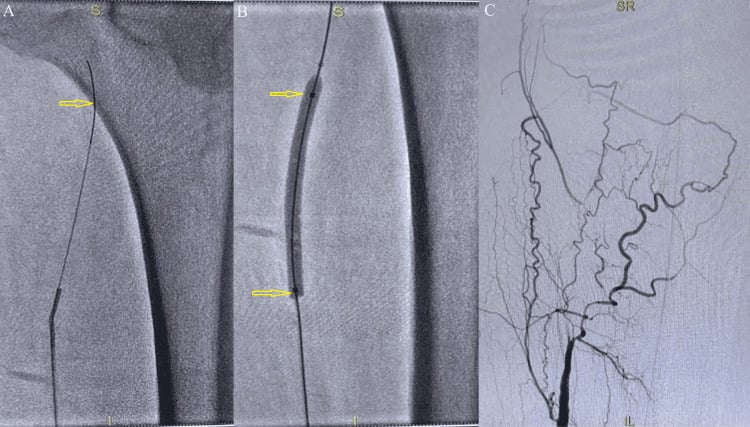
The landmark randomised trials informing this debate are BASIL and BEST-CLI: the overall message is that a durable surgical bypass with a good-quality autologous (great saphenous) vein tends to give the best limb salvage and the fewest reinterventions in patients fit for surgery, whereas an endovascular-first strategy is favoured for higher-risk patients, suitable focal lesions, or when no adequate vein is available. In the foot itself, the angiosome concept (Attinger) holds that directing flow to the specific source artery supplying the angiosome containing the ulcer (direct or angiosome-targeted revascularisation) may improve healing and limb salvage; where the target vessel cannot be reached, indirect revascularisation through collaterals can still heal many wounds.
Sequencing with infection. In the infected ischaemic foot, urgent source control comes first - drain pus and debride necrotic and infected tissue without delay - then revascularise promptly; do not let angiography planning hold up control of spreading sepsis. If perfusion cannot be restored, or the foot is not functionally salvageable (extensive tissue loss, a non-ambulatory patient, unreconstructable disease), a primary amputation at a healing level may give a better, faster functional outcome than repeated failed salvage attempts (see Surgical Management).
For a neuropathic plantar ulcer, offloading is the priority. For a neuroischaemic or ischaemic ulcer, perfusion is the priority - wound care and a total contact cast will fail, and compressive casting can worsen ischaemia, until blood flow is restored. State that you would obtain source control of any infection first, then revascularise.
Surgical Management
Urgent or emergent surgery, within 24 hours, for:
- Necrotising soft-tissue infection
- Gas gangrene (crepitus, gas on X-ray)
- Sepsis or severe infection with systemic toxicity
- Compartment syndrome of the foot
- Wet gangrene with systemic signs
Elective or scheduled surgery, for:
- Osteomyelitis (surgical debridement)
- A deep abscess requiring drainage
- An ulcer that has not healed despite 6-12 weeks of optimal conservative care
- Recurrent ulceration requiring prophylactic surgery (Achilles lengthening, exostectomy)
- Dry gangrene, amputated once demarcated
Charcot Neuroarthropathy
What it is. Charcot neuroarthropathy is a progressive destructive arthropathy of the foot and ankle in a patient with peripheral neuropathy, producing bone and joint destruction, fractures and deformity. It affects 0.1-0.4% of diabetics, and up to 30% in high-risk diabetic populations. Two theories explain it: the neurovascular theory, in which autonomic neuropathy increases blood flow and bone is resorbed, and the neurotraumatic theory, in which loss of protective sensation allows repetitive microtrauma and fractures.
Eichenholtz stages. The stage is read from the radiograph and the clinical state of the foot:
- Stage 0 (prodromal): a warm, swollen foot with no X-ray change yet; it mimics cellulitis or DVT, and it is the critical stage to diagnose, because treatment now prevents the deformity
- Stage 1 (development, fragmentation): fractures, fragmentation and joint dislocation on X-ray; a warm, swollen, erythematous foot; the most important stage to immobilise
- Stage 2 (coalescence): absorption of debris and early healing on X-ray; oedema and warmth decreasing; immobilisation continues
- Stage 3 (reconstruction, consolidation): bony remodelling and sclerosis, the deformity now fixed; a cool, stable foot; transition to protective footwear or an AFO
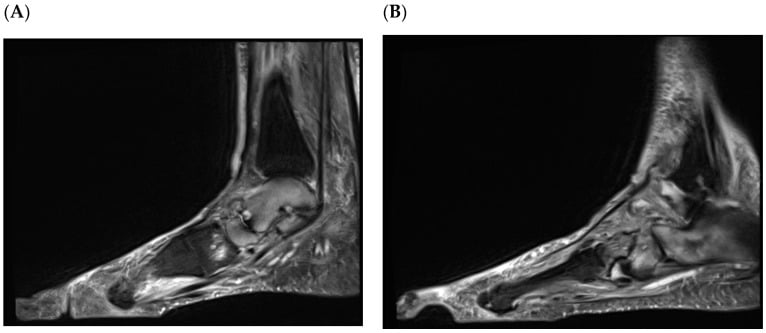
Anatomical patterns. Where the foot breaks down predicts the deformity:
- Type 1, midfoot (60%): the tarsometatarsal (Lisfranc) joints; rocker-bottom deformity with a high risk of plantar ulceration at its apex
- Type 2, hindfoot (30%): subtalar, talonavicular and calcaneocuboid joints; valgus or varus deformity
- Type 3a, ankle (10%): the tibiotalar joint; unstable, with a high amputation risk
- Type 3b, calcaneus: calcaneal fracture with loss of heel height
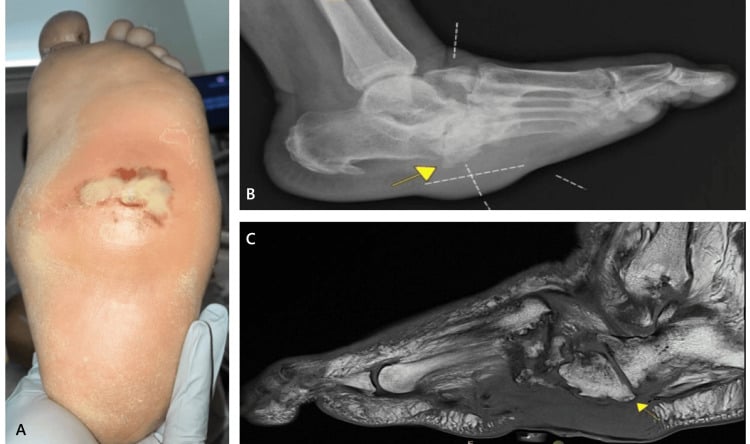
The acute phase (Stages 0-1). Non-weight-bearing in a total contact cast, changed every 1-2 weeks to monitor progression, with serial X-rays, until the oedema has resolved and the temperature difference from the other foot is less than 2°C, typically 3-6 months at minimum. In the subacute and chronic phases (Stages 2-3) the patient moves gradually to weight-bearing in a CROW walker (Charcot Restraint Orthotic Walker), then to a custom AFO or CROW boot for the long term, and to extra-depth shoes with custom orthotics.
Surgery. For recurrent ulceration despite bracing, or instability so severe that bracing is impossible, the options are exostectomy, osteotomy and arthrodesis. The complication rate is high: nonunion, infection and recurrence of the Charcot process.
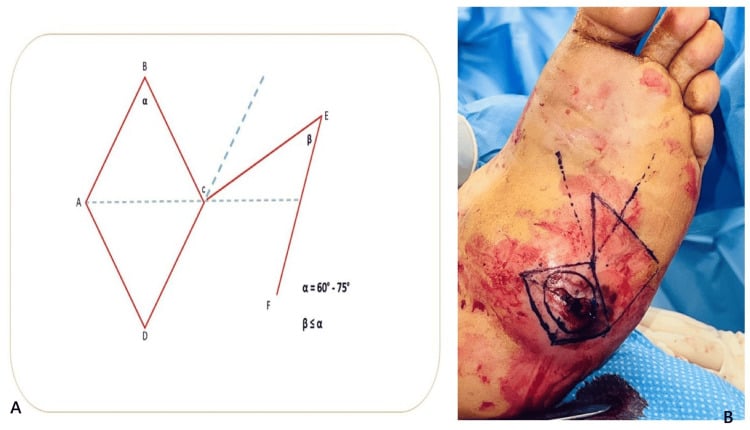
Complications
Infection complicates 40-80% of ulcers, and takes these forms:
- Cellulitis: spreading erythema, warmth, oedema
- Abscess: a fluctuant collection requiring drainage
- Osteomyelitis: 10-15% of moderate-to-severe infections
- Septic arthritis: joint involvement with rapid destruction
- Necrotising fasciitis: rare but life-threatening (mortality 20-30%)
- Gas gangrene: crepitus and systemic toxicity, requiring urgent debridement
Chronicity. The cellular reasons a diabetic wound stays open are in Pathophysiology; the correctable causes at the bedside are tissue hypoxia from arterial disease and continued mechanical stress from an offloading device that is not being worn.
Amputation follows 5-24% of ulcers. Major amputation (below- or above-knee) is required for limb-threatening infection or critical ischaemia, and after a first amputation the risk of losing the other leg is 50% at 5 years. Charcot arthropathy can develop during or after ulcer treatment, and its rocker-bottom deformity re-ulcerates unless braced.
Sepsis. Diabetic foot infections are the leading cause of sepsis in diabetics, and severe DFU-related sepsis carries a mortality of 10-40%; delayed presentation, extensive necrosis and gas-forming organisms raise the risk. Infection also causes insulin resistance, the resulting hyperglycaemia worsens white cell function in a vicious cycle, and in type 1 diabetics it may precipitate ketoacidosis.
Cardiovascular and renal. The inflammatory stress of acute infection raises the risk of myocardial infarction, and immobilisation with hypercoagulability raises the risk of DVT and PE. Diabetic nephropathy worsens with sepsis, and the kidney takes further insults from nephrotoxic antibiotics (vancomycin, aminoglycosides) and from contrast.
Psychological, social and economic. Depression affects 40-50% of patients with diabetic foot complications, alongside fear of amputation, loss of independence and reduced quality of life. An ulcer episode costs USD 20,000-50,000 to treat and a major amputation with rehabilitation USD 50,000-100,000; 30-50% cannot return to work, and the burden falls on carers.
Mortality. Five-year mortality after an ulcer is approximately 30%, overwhelmingly cardiovascular. Put as a rate, that is 231 deaths per 1,000 person-years in people with an ulcer against 182 per 1,000 in people with diabetes and no ulcer (JAMA 2023). One-year mortality after major amputation is 30%. The ulcer is a marker of severe systemic disease rather than a local problem: these patients have advanced diabetes (often 15-20 years' duration), multivessel peripheral arterial disease, cardiac disease with a 3-4x higher risk of myocardial infarction, renal failure (dialysis patients have 2-3x the amputation risk) and multiple comorbidities. The ulcer is the tip of the iceberg, the visible manifestation of systemic atherosclerosis and metabolic disease.
Complications of treatment. Offloading brings pressure ulcers from a poorly applied cast (5-10%), falls with walker devices, transfer lesions on the contralateral limb and equinus contracture after prolonged immobilisation. Surgery brings wound breakdown (10-30% depending on level), infection (5-15% after amputation), haematoma (5-10%), phantom limb pain (60-80% after major amputation) and stump pain (20-40%). Antibiotics bring C. difficile infection (5-10% with prolonged courses), resistance (MRSA, VRE, ESBL organisms), nephrotoxicity, hepatotoxicity and allergy.
Recurrence. The rates are in the Overview; the risk factors are poor offloading adherence, previous amputation, Charcot foot and peripheral arterial disease.
Prevention Strategies
Risk stratification. The IWGDF category sets the surveillance interval:
- Category 0, no neuropathy: annual screening
- Category 1, neuropathy alone: every 6-12 months
- Category 2, neuropathy with PAD or deformity: every 3-6 months
- Category 3, previous ulcer or amputation: every 1-3 months
Self-care. The patient inspects both feet daily, including between the toes, using a mirror for the sole or a carer if vision is poor, looking for blisters, cuts, cracks and redness. Daily care and its prohibitions:
- Wash in lukewarm water, tested with the elbow rather than the foot, and dry thoroughly between the toes
- Moisturise, but not between the toes
- Check inside the shoes for foreign objects before putting them on
- Cut toenails straight across and file the edges smooth; if they cannot reach or see, a podiatrist cuts them
- Never walk barefoot, indoors or out
- No heating pads or hot water bottles on the feet
- No self-treatment of calluses or corns
- No smoking, which impairs healing
Footwear. Therapeutic footwear means extra-depth shoes (half an inch of extra toe-box depth), custom orthotics with accommodative padding and a rocker sole to reduce forefoot pressure; most national diabetes programmes subsidise it for patients with neuropathy, deformity or previous ulceration. After an ulcer it is worn for life, the shoes replaced every 6-12 months as they break down and the orthotics annually.
Home foot-temperature monitoring. After protective sensation is lost the patient can no longer feel the inflammation that precedes ulceration, but it can be measured: localised inflammation from a high-pressure hotspot, early infection or acute Charcot raises the local skin temperature days before the skin breaks down. The patient measures the temperature at several matched plantar sites on each foot daily with a handheld infrared dermal thermometer (or a temperature-sensing smart mat or insole); a sustained difference greater than about 2°C (roughly 4°F) between the same site on the two feet on consecutive days signals impending tissue damage. The response is thermometry-guided offloading: the patient reduces walking and contacts the foot-care team until the temperatures equalise.
In the contemporary synthesis, off-loading triggered by skin-temperature hotspots roughly halved new ulceration (18.7% vs 30.8%; relative risk 0.51, 95% CI 0.31-0.84), comparable to the benefit of pressure-relieving therapeutic footwear (13.3% vs 25.4%; relative risk 0.49, 95% CI 0.28-0.84) (Armstrong, JAMA 2023, PMID 37395769; concept also emphasised in Armstrong, NEJM 2017, PMID 28614678). It is most valuable in high-risk feet (IWGDF Category 2-3, previous ulcer, Charcot) and a particular help for patients who cannot see or reach their feet, complementing rather than replacing daily visual inspection. The healed diabetic foot is a foot in remission, not a cure, and it needs lifelong, structured surveillance.
Glycaemic control. Each 1% reduction in HbA1c is associated with a 25% reduction in microvascular complications, including neuropathy. The target is HbA1c less than 7%, individualised to the patient.
Prevention programmes. The components that work together:
- Regular screening at the interval set by the risk category
- Structured patient education
- Provision of therapeutic footwear
- Podiatry for nail and callus care
- Prompt treatment of pre-ulcerative lesions
Comprehensive programmes reduce ulcer incidence by 50-60% and recurrent ulceration by 35-50%; their effect on amputation is the multidisciplinary figure in Management Algorithm.
Guidelines, Registries & Global Practice
Global Epidemiology
A systematic review and meta-analysis (Zhang, Ann Med 2017; PMID 27585063) pooled a global diabetic foot ulcer prevalence of 6.3% among people with diabetes, with striking regional variation. The contemporary JAMA review (Armstrong, 2023; PMID 37395769) estimates ~18.6 million new ulcers worldwide each year.
- Figure
- 6.3% (95% CI 5.4-7.3%)
- Source
- Zhang 2017
- Figure
- 13.0% / 7.2% / 5.5% / 5.1% / 3.0%
- Source
- Zhang 2017
- Figure
- ~18.6 million
- Source
- Armstrong 2023
- Figure
- ~80%
- Source
- Armstrong 2023
- Figure
- ~30-40%
- Source
- Armstrong 2023
- Figure
- ~42% / ~65%
- Source
- Armstrong 2017, 2023
- Figure
- ~30% / greater than 70%
- Source
- Armstrong 2023
Sex (higher in men), diabetes duration, smoking, hypertension and retinopathy are consistent risk associations (Zhang 2017).
Major Guidelines, Side by Side
The dominant international standard is the IWGDF (International Working Group on the Diabetic Foot), updated as a guideline suite; IDSA governs infection; NICE NG19 (UK) and AAOS/ADA statements broadly align. Where the headline recommendations differ, the differences are modest and mostly emphasis.
- IWGDF / IDSA
- Non-removable knee-high device (TCC or irremovable walker) first-line
- NICE (UK, NG19)
- Non-removable casting unless contraindicated by infection/ischaemia
- Evidence / note
- Strong / high-quality (Armstrong RCTs, PMID 11375363, 15735186)
- IWGDF / IDSA
- Clinical IDSA/IWGDF criteria (purulence OR 2+ inflammatory signs); do not treat colonisation
- NICE (UK, NG19)
- Diagnose clinically; send deep tissue, not superficial swab
- Evidence / note
- Strong consensus; aligned
- IWGDF / IDSA
- Antibiotics alone reasonable in selected non-ischaemic forefoot OM; otherwise surgical debridement
- NICE (UK, NG19)
- Refer to multidisciplinary foot service; individualise
- Evidence / note
- Level I RCT (Lázaro-Martínez, PMID 24130347) - equivalent in selected cases
- IWGDF / IDSA
- ~1-2 wks soft tissue; ~3 wks (or shorter post-resection) to 6 wks bone
- NICE (UK, NG19)
- Shortest effective course; review with cultures
- Evidence / note
- Moderate - shorter courses after adequate debridement
- IWGDF / IDSA
- IWGDF risk category 0-3 dictates 12-monthly to 1-3 monthly review
- NICE (UK, NG19)
- Annual screen; escalate by risk to 1-2 monthly if high-risk
- Evidence / note
- Strong consensus; aligned
- IWGDF / IDSA
- Consider only after standard care optimised; evidence limited
- NICE (UK, NG19)
- Not routinely recommended
- Evidence / note
- Weak / inconsistent RCT evidence
Registry & System-Level Evidence
Diabetic foot disease is tracked through diabetes and amputation registries rather than implant registries. National audit data (e.g. the UK National Diabetes Foot Care Audit) consistently show that earlier specialist multidisciplinary assessment is associated with better healing and fewer major amputations, and that organised high-risk foot services reduce major amputation rates — concordant with the pooled estimate that multidisciplinary care lowers major amputation versus usual care (OR 0.40, 95% CI 0.32-0.51; Armstrong 2023, PMID 37395769).
Global Practice Variation
- High-resource settings: ready access to TCC, vascular imaging, endovascular revascularisation, NPWT, advanced dressings and dedicated multidisciplinary foot clinics; emphasis on limb salvage and remission care.
- Limited-resource settings: later presentation, higher proportion of severe infection and major amputation, limited revascularisation; offloading may rely on improvised felted-foam/half-shoe techniques and sandals rather than TCC. Prevention and education yield the greatest marginal benefit where surgical and vascular services are scarce.
- Across all settings the principles are invariant: offload, debride, control infection, restore perfusion, optimise metabolism, and place the healed foot in lifelong remission care.
Exam Viva Scenarios
Practise clinical reasoning and management decisions out loud
“A 58-year-old man with 15-year history of type 2 diabetes presents with a 3-week history of a painless wound on the plantar aspect of his right foot under the 2nd metatarsal head. He walks daily for exercise. On examination, there is a 2cm diameter ulcer with callused edges, no purulence, minimal erythema (less than 1cm), and you can probe to the dermis but not deeper structures. His foot is warm with palpable pulses. He cannot feel a 10g monofilament at 6 of 9 sites.”
“A 62-year-old woman with poorly controlled diabetes (HbA1c 10.2%) presents with a 6-week history of a malodorous wound on her right great toe. She has been treating it herself with over-the-counter creams. On examination, there is a 3cm ulcer on the plantar aspect of the hallux with purulent drainage, surrounding erythema extending 4cm proximally, and exposed bone at the base when probed. Her foot is warm but you can palpate pedal pulses. Temperature is 38.1°C, WBC 14.2, ESR 78, CRP 92.”
“A 67-year-old man with longstanding diabetes and smoking history presents with a 4-month non-healing lateral foot ulcer. The ulcer is painful (unusual for him). On examination, his foot is cool, hairless, with absent pulses. ABI on right is 0.42, left is 0.68. Monofilament testing shows loss of protective sensation bilaterally. The ulcer is 2cm, clean with poor granulation tissue. TcPO2 at the forefoot is 28 mmHg.”
Pathophysiology Triad
- Sensory neuropathy: loss of protective sensation (10g monofilament)
- Motor neuropathy: intrinsic atrophy, claw toes, high pressure
- Peripheral arterial disease: tibial/peroneal, foot vessels spared
- Add immunopathy: WBC dysfunction from hyperglycemia
- Result: repetitive unrecognized trauma on insensate, ischemic, infection-prone foot
Classifications (Know All Three)
- Wagner 0-5: depth-based (0=intact skin → 5=whole foot gangrene)
- Texas: 4x4 grid, written grade-then-stage - GRADE 0-3 is depth (0 pre-ulcerative, 1 superficial, 2 tendon/capsule, 3 bone/joint), STAGE A-D is comorbidity (A clean, B infected, C ischaemic, D both). 1A is clean and superficial; 3D is the worst cell
- PEDIS: Perfusion, Extent, Depth, Infection, Sensation
- Wagner Grade 1 = superficial; Grade 2 = to tendon; Grade 3 = osteomyelitis/abscess
Assessment (The 3 P's)
- Pulses: dorsalis pedis, posterior tibial (absent = PAD)
- Protective sensation: 10g monofilament at 9 sites (1 abnormal = loss)
- Probe to bone: sensitivity 66%, specificity 85%, PPV 89% in infected wounds (Grayson) - positive = treat for osteomyelitis
- ABI: less than 0.9 = PAD; less than 0.5 = critical; greater than 1.3 = calcified (use toe pressure)
- TcPO2: less than 30 mmHg = poor healing; need revascularization
Offloading (THE Critical Treatment)
- Total contact cast: gold standard, 89.5% healing at 12 weeks in trial (30-40% across all ulcers in routine care)
- Reduces plantar pressure 80-90%, non-removable = compliance
- iTCC walker: acceptable alternative if rendered non-removable
- Removable devices fail (patients wear only 20-30% of time)
- Continue offloading 4-6 weeks AFTER healing to prevent recurrence
Infection Diagnosis (IDSA Criteria)
- Purulence OR 2+ signs: warmth, erythema greater than 2cm, lymphangitis, edema, pain
- Mild: erythema less than 2cm, superficial → oral antibiotics outpatient
- Moderate: erythema greater than 2cm OR deep → IV antibiotics, surgery often needed
- Severe: SIRS or limb-threatening → IV broad-spectrum, urgent surgery
- Do NOT treat colonization - all chronic wounds colonized
Osteomyelitis Management
- Diagnosis: probe-to-bone (PPV ~89% in infected wounds), MRI (bone marrow edema), bone biopsy (gold standard)
- Treatment: surgical debridement to bleeding bone + 4-6 week IV antibiotics
- OR antibiotics alone for 6-12 weeks if poor surgical candidate
- Send bone for culture AND histology
- Cure rate 60-80% for non-heel OM with adequate surgery
Amputation Healing Rates
- Toe: 90-95% healing, minimal functional loss
- Ray: 80-90% healing, narrow shoe needed
- Transmetatarsal: 50-70% healing, high equinus risk (need AFO)
- Syme: 70-80% healing, end-bearing stump
- Below-knee: 80-90% healing, good prosthetic function
- Above-knee: 85-95% healing, poor prosthetic function
Prevention (Evidence-Based)
- Risk stratification: Category 0-3 determines screening frequency
- Therapeutic footwear: extra-depth shoes + custom orthotics
- Patient education: daily inspection, appropriate footwear, no barefoot
- Glycemic control: each 1% HbA1c reduction = 25% microvascular complication reduction
- Multidisciplinary teams reduce amputation by 49-85%
Exam Pearls
- Global DFU prevalence ~6.3%; recurrence ~42% at 1y and ~65% at 5y
- Major amputation 5-year mortality greater than 70% (worse than most cancers)
- Neuropathic ulcers painless; ischemic ulcers painful (key difference)
- Weekly sharp debridement essential - converts chronic to acute wound
- TCC is treatment, not adjunct - no offloading = no healing
Evidence Base
Total Contact Casting for Offloading (Landmark RCT)
- 63 patients with superficial, non-infected, non-ischaemic plantar ulcers randomised to total contact cast (TCC), removable cast walker (RCW) or half-shoe
- 12-week healing: TCC 89.5% vs RCW 65.0% vs half-shoe 58.3% (TCC vs others P=0.026, OR 5.4, 95% CI 1.1-26.1)
- Activity did NOT explain the result: TCC patients took fewer steps than the half-shoe group (600 vs 1462, P=0.04) but no fewer than the removable walker group (600 vs 768, P=0.67), yet still healed far more ulcers than that group - so the benefit lies in continuous protection, not in walking less
- Established the TCC as the gold-standard offloading device for plantar neuropathic ulceration
Diabetic Foot Ulcers: Contemporary Synthesis (JAMA Review)
- Approximately 18.6 million people are affected by a diabetic foot ulcer worldwide each year; ulcers precede 80% of diabetes-related lower-extremity amputations
- Multidisciplinary care lowers major amputation rates versus usual care (3.2% vs 4.4%; OR 0.40, 95% CI 0.32-0.51)
- Only about 30-40% of ulcers heal at 12 weeks; recurrence is approximately 42% at 1 year and 65% at 5 years
- 5-year mortality is approximately 30% overall and exceeds 70% after major amputation
Antibiotics vs Conservative Surgery for Diabetic Foot Osteomyelitis (RCT)
- 52 patients with neuropathic forefoot ulcers complicated by osteomyelitis (no ischaemia, no necrotising infection) randomised to antibiotics alone (90 days) vs conservative surgery + 10 days antibiotics
- Primary healing: 75% (antibiotics) vs 86.3% (surgery), not significantly different (P=0.33)
- Median time to healing 7 vs 6 weeks (P=0.72); no difference in minor amputation rates
- 4 antibiotic-group patients (16.6%) deteriorated and required surgery; 3 surgical patients needed reoperation
Probe-to-Bone Test for Osteomyelitis (Original Description)
- 76 infected pedal ulcers in 75 hospitalised diabetic patients; osteomyelitis in 66%
- Probing to bone: sensitivity 66%, specificity 85%, positive predictive value 89%, negative predictive value 56%
- In a high-prevalence (hospitalised, infected) population a positive probe strongly predicts contiguous osteomyelitis
- Later validation in lower-prevalence outpatient cohorts found higher sensitivity but lower PPV — interpret the test in context of pre-test probability
Diabetic Foot Ulcers and Their Recurrence (NEJM Review)
- Approximately 40% of patients have a recurrent ulcer within 1 year of healing, 60% within 3 years and 65% within 5 years
- Reframes the healed ulcer as 'foot in remission' requiring lifelong surveillance rather than cure
- Pressure-relieving therapeutic footwear and structured self-monitoring (including foot-temperature monitoring) reduce recurrence
- Adherence to offloading and footwear is the dominant modifiable determinant of recurrence
Global Epidemiology of Diabetic Foot Ulceration (Meta-analysis)
- Pooled global DFU prevalence 6.3% (95% CI 5.4-7.3%) among people with diabetes
- Marked regional variation: North America 13.0%, Africa 7.2%, Asia 5.5%, Europe 5.1%, Oceania 3.0%
- Higher prevalence in men (4.5%) than women (3.5%) and in type 2 (6.4%) than type 1 (5.5%) diabetes
- Affected patients were older, had longer diabetes duration, and more hypertension, retinopathy and smoking
Irremovable Offloading Improves Adherence and Healing (RCT)
- 50 patients with University of Texas grade 1A ulcers randomised to a removable cast walker vs the same walker wrapped to render it irremovable (instant TCC)
- 12-week healing 82.6% (irremovable) vs 51.9% (removable) (P=0.02, OR 1.8, 95% CI 1.1-2.9)
- Healed ulcers closed faster with the irremovable device (41.6 vs 58.0 days, P=0.02)
- Demonstrates that adherence — not the device itself — drives offloading efficacy
Validation of the University of Texas Wound Classification
- 360 patients graded for depth (0-3) and staged for infection and ischaemia (A-D), followed 6 months for amputation
- Amputation rose with both increasing grade and increasing stage - the two axes carry independent prognostic information
- Probing to bone raised midfoot-or-higher amputation from 2.0% to 18.3% (OR 11.1, 95% CI 4.0-30.3)
- Infection plus ischaemia (stage D) raised it from 3.5% to 76.5% (OR 89.6, 95% CI 25-316)
- No amputation occurred in any clean, non-ischaemic (stage A) wound
Sucrose Octasulfate Dressing in Neuroischaemic Ulcers (Explorer)
- 240 patients across 43 European diabetic foot clinics with non-infected neuroischaemic ulcers (UT grade 1C or 2C), double-blind against the identical dressing without the active agent
- Wound closure at 20 weeks 48% vs 30% - an 18 percentage point difference (95% CI 5-30), adjusted OR 2.60 (1.43-4.73), p=0.002
- No safety signal: wound infection was the commonest adverse event and was numerically less frequent in the treatment arm (20% vs 28% of patients)
Cancer Risk in Users of Becaplermin - a Matched Cohort Study
- 1,622 becaplermin initiators matched to 2,809 non-users, followed up to 6 years for cancer incidence and 9 years for cancer mortality
- No increase in cancer incidence at any exposure (HR 1.2, 95% CI 0.7-1.9)
- Cancer mortality through 2003 was raised in those with 3 or more dispensings (RR 5.2, 95% CI 1.7-17.6) - the finding behind the boxed warning
- With follow-up extended to 2006 the signal did not persist: overall RR 1.0 (0.5-2.3), and 2.4 (0.8-7.4) in the 3-or-more group
- The authors concluded becaplermin does not appear to increase cancer risk or cancer mortality