Bunion Deformity | Osteotomy Selection | First MTP Joint Arthritis
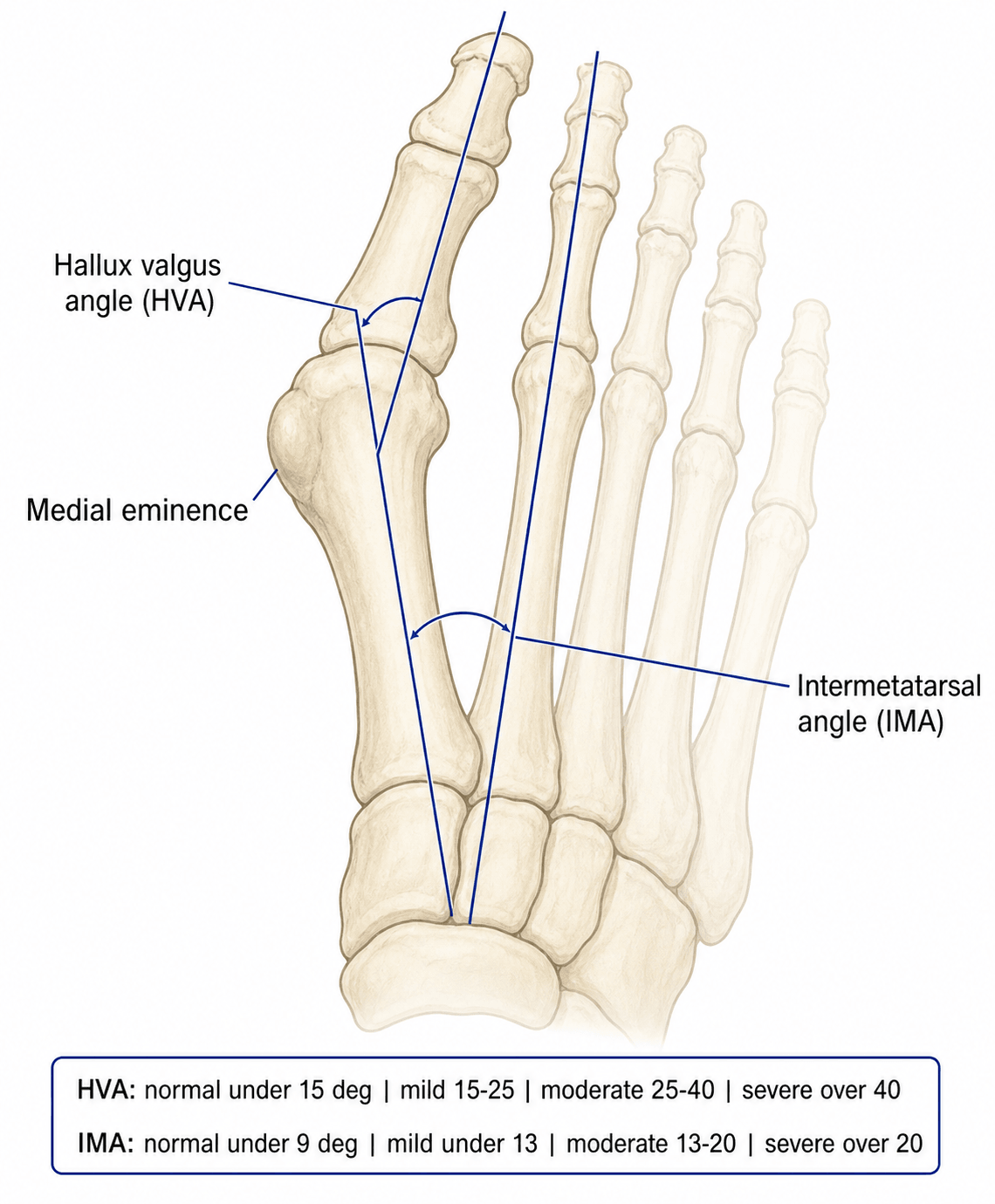
- Hallux valgus angle (HVA): Normal under 15 degrees; mild 15-25, moderate 25-40, severe over 40 degrees
- Intermetatarsal angle (IMA): Normal under 9 degrees; key determinant of osteotomy type
- Chevron osteotomy: Distal, for mild-moderate deformity with IMA under 13 degrees
- Scarf osteotomy: Mid-shaft, for moderate-severe with IMA 13-20 degrees, most versatile
- Lapidus procedure: TMT arthrodesis for severe deformity, hypermobility, or IMA over 20 degrees
- “IMA over 13 degrees typically requires proximal or scarf osteotomy, not distal chevron
- “First TMT hypermobility is an indication for Lapidus fusion over osteotomy
- “Congruent vs incongruent MTP joint determines if distal soft tissue release needed
- “Hallux valgus interphalangeus (distal phalanx deviation) may require Akin osteotomy
Overview and Epidemiology
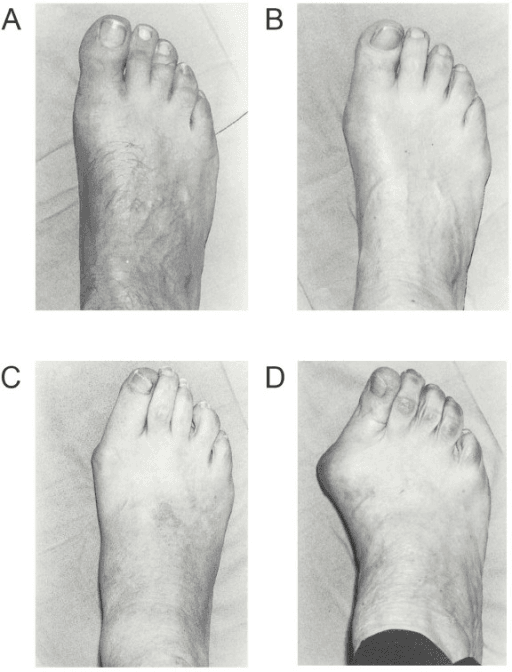
The deformity. Hallux valgus is lateral deviation of the hallux at the first metatarsophalangeal (MTP) joint together with medial deviation of the first metatarsal, which is metatarsus primus varus. The metatarsal head becomes prominent medially, and that prominence is the bunion; the joint subluxes progressively as the deformity advances. It is a bony malalignment, a contracture of the lateral soft tissues and an attenuation of the medial capsule and ligaments, all at once.
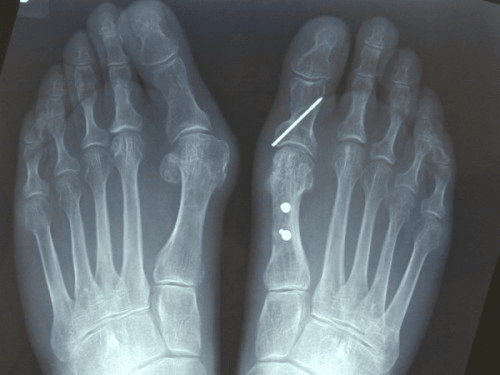
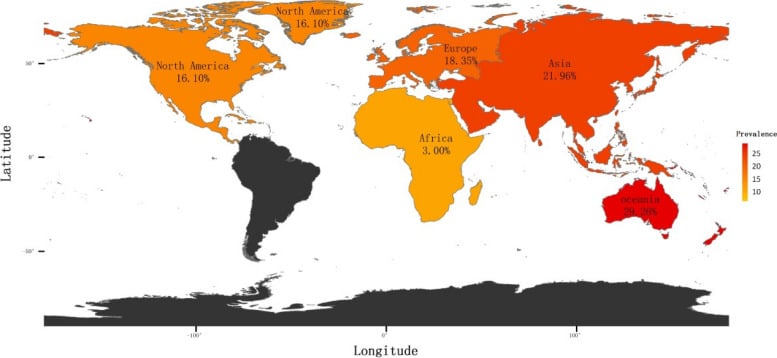
Who. Pooled prevalence is 23% in adults aged 18-65 and 35.7% in those over 65, and it rises progressively with age. There is a 90% female predominance, and the pooled prevalence in the Nix meta-analysis was 30% in women against 13% in men. The worldwide picture is in the Evidence Base; the regional figures are on the map below.
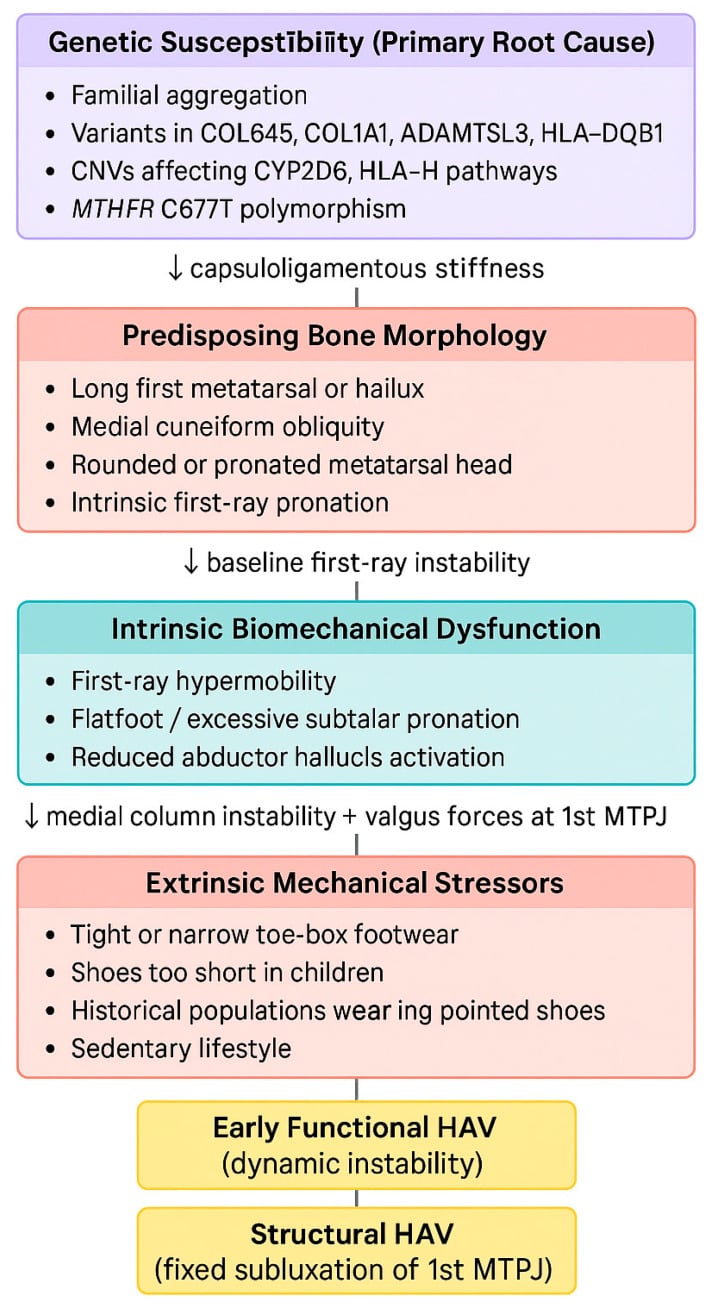
Intrinsic risk factors. The deformity is familial in 60-70%, inherited as an autosomal dominant trait with incomplete penetrance. Female sex predisposes through a hormonal influence on ligament laxity, and foot shape contributes: pes planus, pronation, first ray hypermobility and a long first metatarsal. Neuromuscular disease (cerebral palsy, Charcot-Marie-Tooth disease, stroke) produces it through muscle imbalance.
Extrinsic risk factors. Inflammatory arthritis (rheumatoid, psoriatic), the hypermobility syndromes (Ehlers-Danlos, Marfan) and obesity, which increases forefoot loading. Footwear belongs on this list with a caveat that examiners like to test: high heels and a narrow toe box exacerbate symptoms in a predisposed foot but do not cause the deformity. Genetic and biomechanical factors are primary, and societies with barefoot populations have a similar prevalence.
Pathophysiology and Mechanisms
The first ray. The first metatarsal is thicker and shorter than the lesser metatarsals. It articulates proximally with the medial cuneiform at the tarsometatarsal (TMT) joint and distally with the proximal phalanx at the MTP joint, and beneath its head lie the medial (tibial) and lateral (fibular) sesamoids within the flexor hallucis brevis tendon. The first metatarsal and hallux carry 50% of forefoot load during gait.
The soft tissues. The medial capsule attenuates as the deformity progresses. Adductor hallucis pulls the proximal phalanx laterally; abductor hallucis is the medial stabiliser. The plantar plate forms the sesamoid sling and acts as a windlass.
Blood supply. The first metatarsal head is fed by the dorsal metatarsal artery, entering dorsomedially, the plantar metatarsal artery, entering plantarly, and a nutrient artery at mid-shaft. Extensive soft tissue stripping, especially combined dorsal and plantar dissection, can devascularise the head. Limit the dissection and preserve the periosteum.
The vicious cycle. Hypermobility of the first TMT joint allows progressive varus drift of the metatarsal, and each step then worsens the deformity:
- First TMT hypermobility or pes planus produces metatarsus primus varus
- Adductor hallucis pulls the hallux laterally and the medial capsule stretches
- The sesamoids stay tethered to the lesser metatarsals while the first metatarsal drifts medially, so they sublux relative to the head
- Each step increases the valgus force, and abductor hallucis becomes a plantarflexor
Classification Systems
The deformity is described in three ways, and each answers a different question. The weight-bearing angles grade it and choose the osteotomy; the Manchester scale grades what the patient sees; joint congruity decides whether the soft tissues need releasing.
Radiographic Classification (Gold Standard)
Everything is measured on a weight-bearing AP foot radiograph.
- HVA
- Under 15°
- IMA
- Under 9°
- DMAA
- Under 10°
- Sesamoid Subluxation
- Grade 0-1
- HVA
- 15-25°
- IMA
- 9-13°
- DMAA
- 10-15°
- Sesamoid Subluxation
- Grade 1-2
- HVA
- 25-40°
- IMA
- 13-20°
- DMAA
- 15-25°
- Sesamoid Subluxation
- Grade 2-3
- HVA
- Over 40°
- IMA
- Over 20°
- DMAA
- Over 25°
- Sesamoid Subluxation
- Grade 3-4
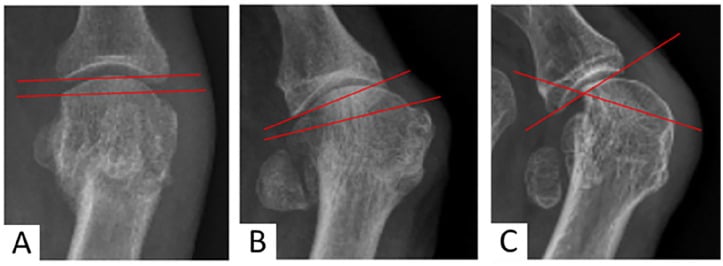
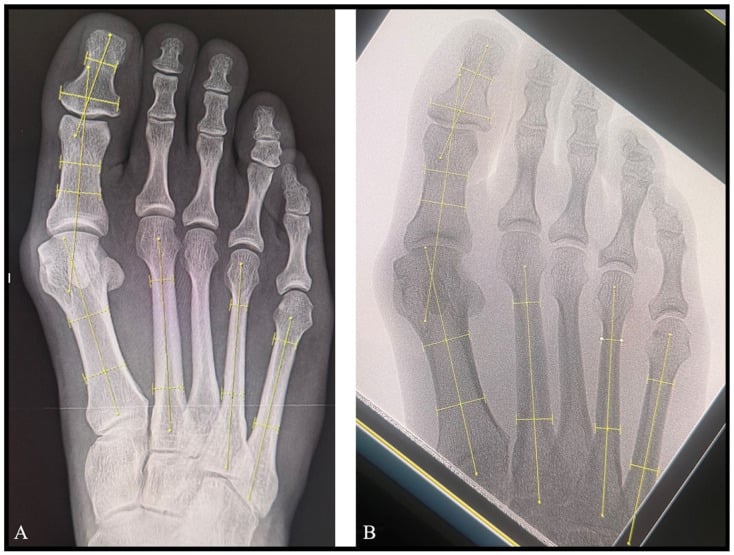
The measurements. The hallux valgus angle (HVA) lies between the axes of the first metatarsal and the proximal phalanx, and the intermetatarsal angle (IMA) between the axes of the first and second metatarsals. The distal metatarsal articular angle (DMAA) is the angle of the first metatarsal articular surface to the metatarsal axis. Sesamoid position is graded from 1, normal, to 4, complete lateral subluxation.
Why the IMA matters most. It is the angles, not the size of the bunion or the medial eminence, that drive the choice between a distal, a diaphyseal and a basal or fusion procedure, and the IMA is the primary determinant. An IMA under 13 degrees can be corrected distally with a chevron; 13-20 degrees typically needs a mid-shaft scarf rather than a distal cut; over 20 degrees needs a proximal osteotomy or a Lapidus.
Clinical Assessment
History. Ask where it hurts, because the answer separates the medial bunion from MTP joint pain, from the interphalangeal joint and from the lesser toes, where pain means transfer. Then establish what the deformity costs the patient: shoe wear, walking distance and sport, how fast it is progressing and what has already been tried, the heel height and toe box of their usual shoes, and the standing and walking demands of their work. Inflammatory arthritis and neuromuscular disease are the past history that matters.
Examination. Look for the bunion prominence, callus and lesser toe deformity. Feel for medial tenderness, first TMT mobility and MTP crepitus. Move the MTP joint (normal dorsiflexion is 70-80°) and check the alignment of the interphalangeal joint. Watch the gait for pronation and hallux push-off, use the Coleman block test if there is a pes planus, and record sensation and pulses, which matter most in the diabetic foot.
First ray mobility test. Hypermobility changes the operation, so test for it:
- Grasp the second to fifth metatarsal heads with one hand, dorsal and plantar, to stabilise them
- With the other hand, dorsiflex and plantarflex the first metatarsal head, and compare with the other foot
- Grade it: 5-8mm of motion is normal; over 10mm is hypermobile; under 5mm is stiff, from arthritis or compensation
Why hypermobility matters. If the first TMT joint is hypermobile, an osteotomy alone will fail, because the instability at the TMT joint will pull the deformity back. The Lapidus procedure fuses the joint and addresses the pathology at its source, which is why hypermobility is an indication for Lapidus over osteotomy.
Sesamoids. Tenderness on palpation suggests sesamoiditis or arthritis. Their position is graded on the radiograph. They should reduce under a manual varus stress on the hallux; if they stay fixed, the lateral soft tissue contracture is severe.
Differential diagnosis. Not every painful medial forefoot is a simple bunion, and several of the alternatives change management:
- Key Distinguishing Features
- Lateral hallux deviation, medial eminence, increased HVA/IMA on weight-bearing AP
- Discriminator
- Deformity is correctable/reducible early; HVA over 15 degrees
- Key Distinguishing Features
- Dorsal osteophyte, painful/limited MTP dorsiflexion, no significant valgus
- Discriminator
- Loss of dorsiflexion and dorsal pain; HVA near normal
- Key Distinguishing Features
- Global joint-line pain, crepitus, joint-space narrowing on radiograph
- Discriminator
- Pain through arc of motion, not just at the eminence
- Key Distinguishing Features
- Acute red, hot, exquisitely tender first MTP; raised urate; rheumatoid pattern in RA
- Discriminator
- Acute inflammatory onset, systemic features, joint aspirate crystals
- Key Distinguishing Features
- Plantar first MTP pain, tender sesamoids, pain on hallux dorsiflexion
- Discriminator
- Plantar (not medial) tenderness; sesamoid views/MRI
- Key Distinguishing Features
- Deviation at the IP joint with relatively normal MTP alignment
- Discriminator
- Increased IP angle; correction needs Akin osteotomy
Investigations
Radiographs. Weight-bearing AP, lateral and oblique views. The AP is where the deformity is measured, and the list of what to read from it is the pre-operative plan:
- HVA
- IMA
- DMAA
- Sesamoid position, grade 1-4
- Joint congruity
- Arthritis at the MTP and TMT joints
The lateral. Compare the length of the first metatarsal with the second: normal is equal or 1-2mm longer. Look for metatarsus elevatus, which signals a risk of transfer metatarsalgia, and for pes planus and midfoot arthritis.
Why weight-bearing. Angles measured on non-weight-bearing films underestimate the deformity: the IMA and HVA both fall by 20-30% when the foot is unloaded. Always plan surgery on weight-bearing films.
MRI is selective, not routine: suspected AVN, sesamoid pathology (bipartite versus fracture), a plantar plate tear, or assessment of MTP arthritis.
CT is rare: complex revision cases, assessment of TMT arthritis before a Lapidus, and evaluation of a postoperative nonunion.
Non-Operative Management
Footwear. A wide toe box to accommodate the bunion, a low heel (under 2cm) to reduce forefoot pressure, soft uppers to minimise friction, and no pointed toes or constrictive shoes.
Orthoses and padding. Bunion pads over the medial eminence, toe spacers to separate the hallux from the second toe, metatarsal pads if there is transfer metatarsalgia, and custom orthotics for pes planus and pronation control. These measures provide symptomatic relief and may delay surgery. They do not correct the deformity or prevent its progression, and surgery is the only corrective treatment; set realistic expectations.
Adjuncts. NSAIDs for acute flares, paracetamol for background pain, and topical NSAIDs for localised bunion tenderness. Physiotherapy stretches adductor hallucis, and gastrocnemius if the heel cord is tight, and strengthens the intrinsic foot muscles and abductor hallucis; the evidence that it corrects the deformity is limited, but it may reduce symptoms. A corticosteroid injection into the MTP joint for synovitis gives temporary relief over 3-6 months; repeated injections risk cartilage damage, and it is not curative.
These are adjuncts, chosen for the symptom in front of you, not a course to work through: analgesia for pain, therapy for a tight heel cord or weak intrinsics, injection for genuine synovitis. None of them changes the deformity, because hallux valgus is a structural malalignment and no conservative measure realigns the first ray. Say that plainly when consenting, because a patient who believes the splint or the exercises will straighten the toe will judge the whole treatment a failure.
Indications for surgery.
- Pain refractory to conservative measures, after a minimum of 3-6 months
- Functional limitation affecting daily activities or employment
- Progressive deformity with difficulty wearing any shoes
- Secondary pathology: transfer metatarsalgia, lesser toe deformity, intractable plantar keratosis
Not an indication. Cosmetic concern alone, which carries a high complication risk and patient dissatisfaction; an asymptomatic deformity, however severe it looks on the radiograph; and unrealistic expectations for shoe wear.
Management Algorithm
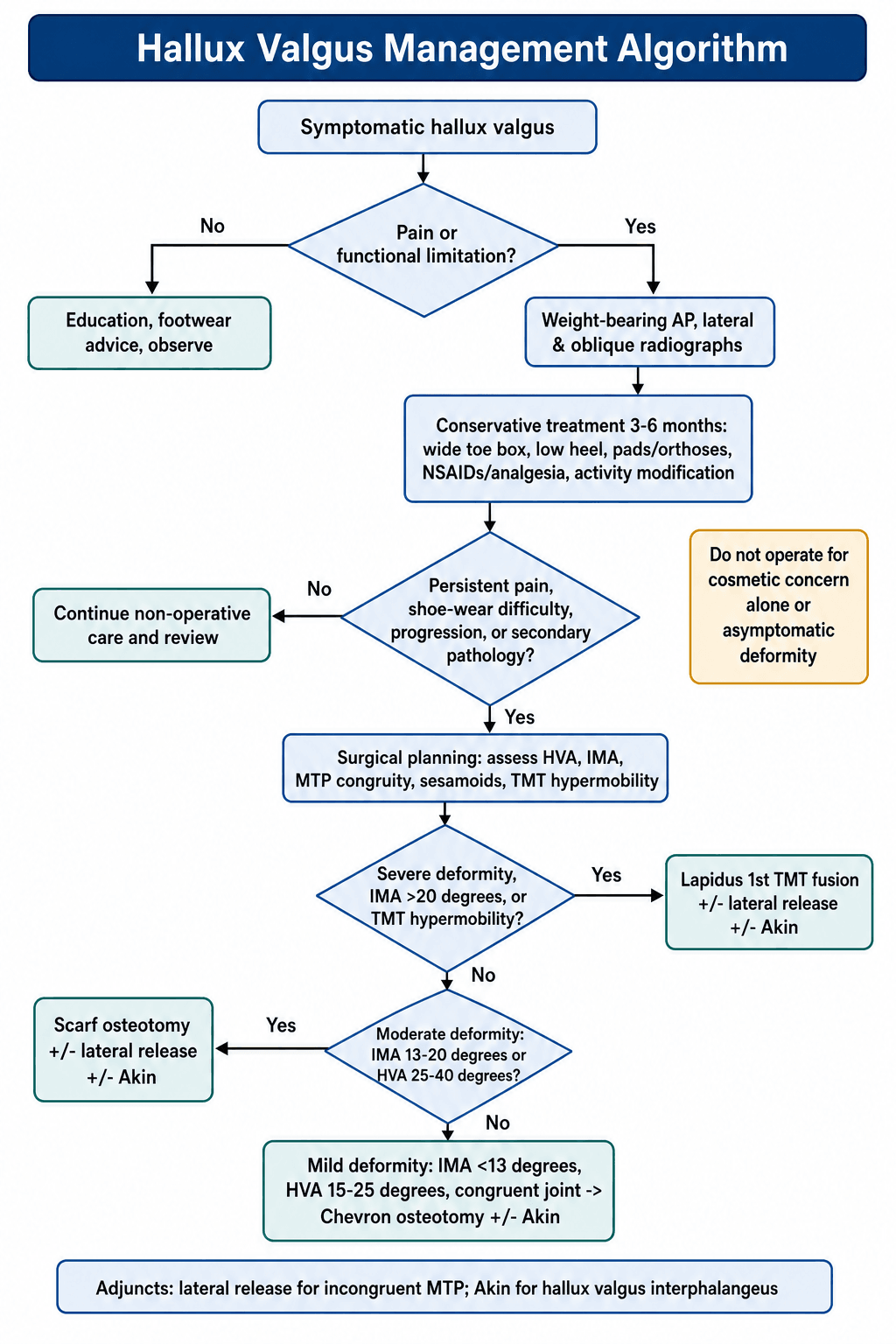
Symptoms first, severity second. A painless deformity, however ugly, is managed with footwear advice and observation. A symptomatic foot gets its conservative trial of a wide toe box, orthoses, activity modification and analgesia, and only the foot that stays painful, limits shoe wear or progresses moves to surgery. The operation is then chosen on the weight-bearing angles and joint congruity, and the IMA is the deciding number:
- HVA / IMA
- HVA 15-25° / IMA under 13°
- Procedure
- Chevron (distal metatarsal)
- Key Pearl
- Inherently stable, minimal shortening
- HVA / IMA
- HVA 25-40° / IMA 13-20°
- Procedure
- Scarf (mid-shaft) + lateral release
- Key Pearl
- Most versatile, corrects IMA and HVA
- HVA / IMA
- HVA over 40° / IMA over 20°
- Procedure
- Lapidus (TMT fusion)
- Key Pearl
- Addresses instability at source
- HVA / IMA
- Variable, often IMA still high
- Procedure
- Lapidus or MTP fusion
- Key Pearl
- Salvage when soft tissue depleted
Mild deformity: chevron. HVA 15-25 degrees, IMA under 13 degrees and a congruent joint. Weight-bearing films confirm the IMA, and congruity decides whether a lateral release is added. A distal V-shaped cut is translated laterally to correct the IMA. After heel weight-bearing in a postoperative shoe for 6 weeks the patient progresses to regular shoes at 6 weeks and full activity at 3 months. Its virtues are a fast recovery, inherent stability and minimal shortening, and it suits the mild to moderate deformity with good bone quality.
Moderate deformity: scarf. HVA 25-40 degrees, IMA 13-20 degrees, often an incongruent joint that needs a lateral release. Most patients with a moderate deformity fail conservative care. A mid-shaft Z-cut is translated laterally. After heel weight-bearing in a postoperative shoe for 6 weeks, full weight-bearing begins at 6 weeks, regular shoes at 6-8 weeks and sport at 3-4 months. It is the workhorse: the most versatile procedure, correcting both HVA and IMA with stable fixation.
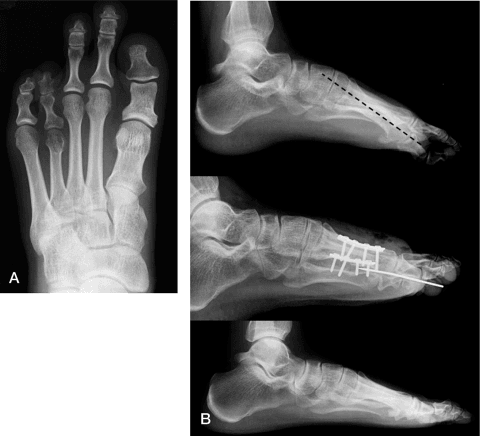
Severe deformity or hypermobility: Lapidus. HVA over 40 degrees, IMA over 20 degrees, or first TMT hypermobility of over 10mm. Consider it too for recurrence after a previous osteotomy, and get a CT if TMT arthritis is suspected. The TMT joint is fused. It addresses hypermobility, corrects the IMA powerfully and has the lowest recurrence; the price is the risk of nonunion, a longer recovery and the stiffness of a fusion.
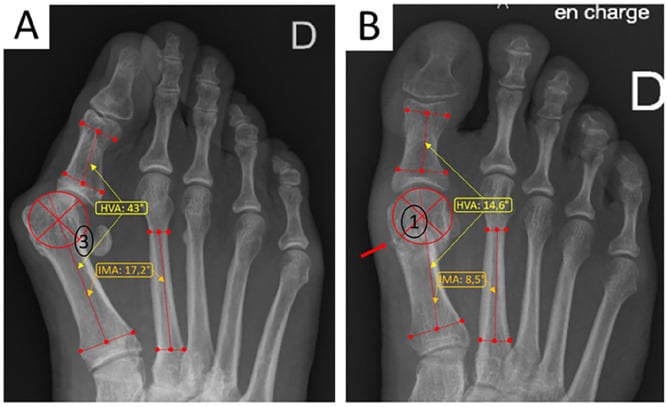
Lateral soft tissue release. Added when the MTP joint is incongruent, with subluxation on the radiograph: adductor hallucis tenotomy and lateral capsular release through a separate incision in the first web space, so that the hallux can reduce to neutral and the correction holds. The steps are in the chevron technique.
Akin osteotomy. Added for hallux valgus interphalangeus, where the distal phalanx itself deviates. A medial closing wedge is taken from the proximal phalanx and fixed with a staple or screw to straighten the hallux. Both adjuncts optimise the correction, and neither is a substitute for the osteotomy that realigns the metatarsal.
The McBride procedure (medial eminence resection, adductor tenotomy, lateral sesamoidectomy) is historical. It does not correct the IMA, and its recurrence rate is 30-50%. Modern practice requires an osteotomy to realign the metatarsal.
Juvenile and adolescent hallux valgus. Hallux valgus in the skeletally immature is a distinct problem and a classic exam trap. It is more often familial, frequently bilateral and congruent, and characteristically has a high DMAA: the deformity lies in the orientation of the distal metatarsal articular surface rather than at a subluxed joint. The cardinal rule is to delay surgery until skeletal maturity wherever possible. Operating across an open physis risks growth disturbance and, more importantly, recurrence rates are far higher in juveniles than in adults, so conservative measures and reassurance are first-line and surgery is reserved for genuinely painful, functionally limiting deformity.
When surgery is required, the plan must correct the DMAA, with a distal medial closing-wedge or biplanar osteotomy such as a Reverdin-type cut or a biplanar chevron, rather than simply reducing the IMA: correcting the IMA on a congruent joint with a high DMAA creates an incongruent joint and drives recurrence. Address true first-ray hypermobility on its merits, but be cautious about TMT fusion before the physis has closed.
Surgical Technique
Chevron (Distal Metatarsal) Osteotomy
For the mild to moderate deformity with an IMA under 13 degrees and a congruent joint. The V-shape is inherently stable, it shortens little, and recovery is fast.
Surgical Steps
Supine with a thigh tourniquet and the lower leg draped free, under ankle block or general anaesthesia.
A 4-5cm longitudinal incision over the medial MTP joint, centred on the metatarsal head, deepened to the capsule. The medial dorsal cutaneous nerve runs just dorsal to the incision: identify it and protect it.
A longitudinal capsulotomy preserving dorsal and plantar flaps exposes the metatarsal head and medial eminence. Measure the depth of the osteotomy, aiming for a 60-70° V.
Resect the medial prominence with a sagittal saw flush with the medial metatarsal shaft, avoiding over-resection, and smooth the edges with a rongeur.
Place the apex at the centre of the metatarsal head on the plantar view, with equal dorsal and plantar arms at 60-70°. Complete the cut with the sagittal saw and irrigate to prevent thermal necrosis.
Translate the distal fragment laterally by 3-5mm, aiming for an IMA under 9 degrees, and check sesamoid reduction under fluoroscopy. The V interlocks and gives the osteotomy its stability, but translation should be limited to 50% of the metatarsal width, which is that 3-5mm: over-translation risks fracture of the metatarsal head and AVN.
A temporary 1.6mm K-wire from the medial eminence into the metatarsal shaft, then a 2.0-2.7mm cannulated or solid screw perpendicular to the osteotomy. Check stability and that the fragment has not rotated.
If the joint is incongruent, a separate 1cm incision in the first web space. Divide the adductor hallucis tendon (identified by pulling the hallux medially), release the lateral capsule with a beaver blade, and confirm that the hallux reduces to neutral.
Close the medial capsule with 2-0 absorbable suture, plicating it slightly to tighten. Skin with 3-0 nylon, interrupted or subcuticular, and a soft bandage holding the toe in neutral alignment.
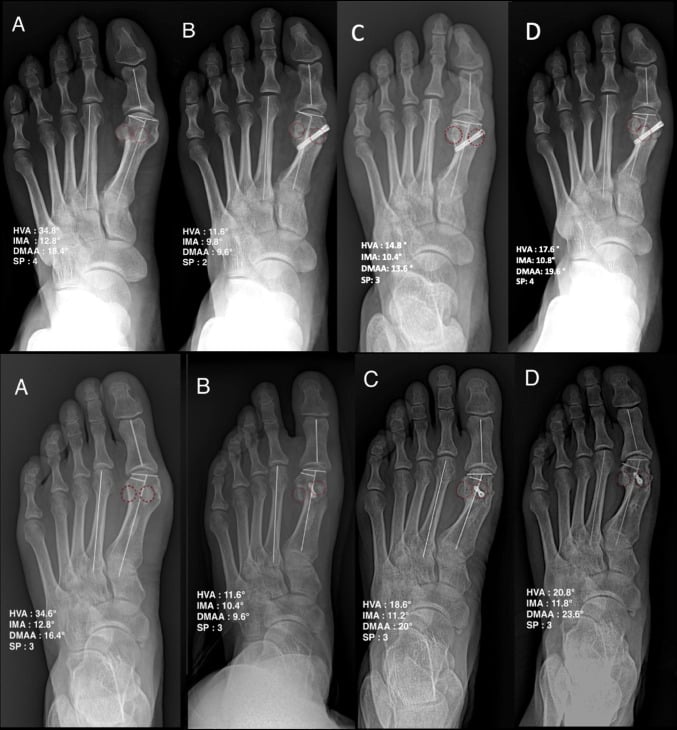
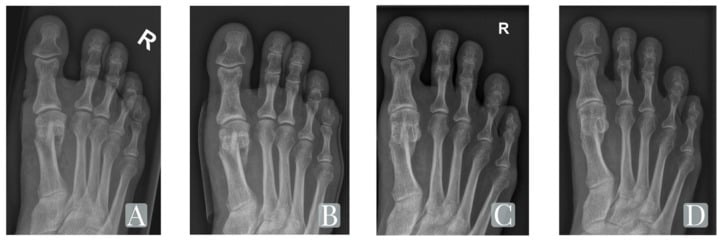
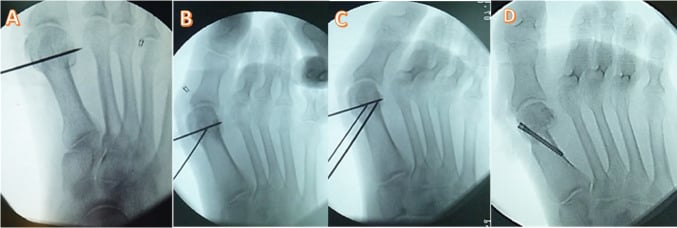
Minimally invasive (percutaneous) surgery. Percutaneous surgery has become a mainstream alternative to open osteotomy, and examiners increasingly ask about it. The dominant modern technique is the MICA (minimally invasive chevron-Akin): through tiny stab incisions a high-torque, low-speed burr makes an extra-articular distal metatarsal osteotomy, the capital fragment is translated laterally and held with percutaneous screws, and a percutaneous Akin addresses the phalangeal component. The technique has evolved through generations: early first- and second-generation techniques were unfixed or held with a buried K-wire and had higher recurrence, whereas the current third- and fourth-generation, screw-fixed techniques are stable and reproducible.
The advantages are small scars, less soft-tissue stripping, less stiffness and good early pain scores, with RCT and meta-analysis data showing radiographic correction and patient outcomes broadly comparable to open chevron or scarf. The caveats are a genuine learning curve, thermal necrosis if the burr is not irrigated and cooled, hardware-related symptoms, and the same recurrence drivers as open surgery: under-correction of the IMA and unaddressed hypermobility. Minimally invasive surgery does not abolish the algorithm; gross first-ray hypermobility or a very high IMA still points toward a Lapidus.
Complications
- Incidence
- 5-15% at 5 years
- Risk Factors
- Undercorrection of IMA, hypermobility, obesity
- Management
- Revision with proximal osteotomy or Lapidus
- Incidence
- 5-30%
- Risk Factors
- First ray shortening over 3mm, excessive dorsiflexion
- Management
- Offloading orthoses, lesser metatarsal osteotomy if severe
- Incidence
- 2-10%
- Risk Factors
- Excessive lateral release, over-translation of osteotomy
- Management
- Observation if mild, tendon transfer or fusion if severe
- Incidence
- 1-3% (chevron)
- Risk Factors
- Excessive soft tissue stripping, thermal necrosis
- Management
- Observation (may revascularize), arthroplasty or fusion if collapse
- Incidence
- 5-10% (Lapidus)
- Risk Factors
- Smoking, poor fixation, non-compliance
- Management
- Bone graft, revision fixation if symptomatic
- Incidence
- 10-20% (numbness)
- Risk Factors
- Iatrogenic during incision or retraction
- Management
- Usually resolves (neuropraxia), neuroma excision if persistent
- Incidence
- 5-15%
- Risk Factors
- Aggressive rehabilitation, MTP arthritis
- Management
- Physiotherapy, intra-articular injection, fusion if disabling
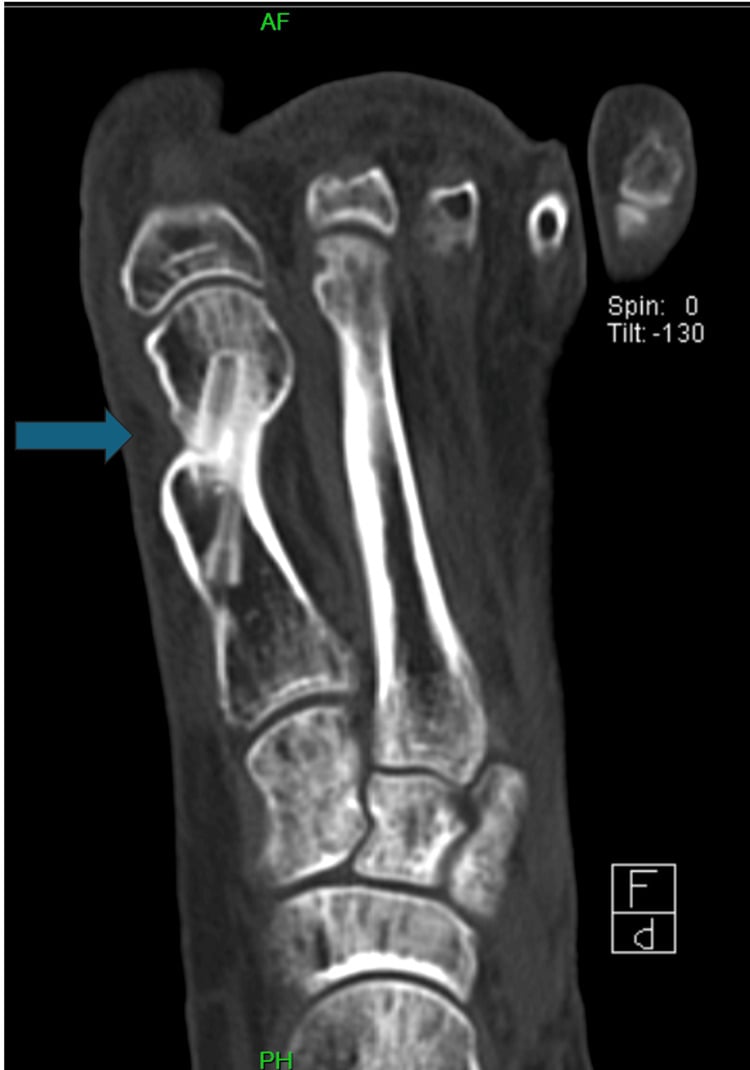
Transfer metatarsalgia. Shortening the first ray by more than 3mm, or leaving it elevated, transfers load to the lesser metatarsal heads. It is the hallmark complication of bunion surgery, and the guard against it is at the osteotomy: keep the length and do not elevate the ray.
Stiffness, pain and hardware. Stiffness can follow overcorrection or adhesions as well as arthritis and an aggressive rehabilitation. Persistent pain despite a good correction occurs in 5-10%. Fixation can fail by nonunion or malunion, and hardware can irritate.
Nonunion after Lapidus. The rate of 5-10% is higher than for the osteotomies because this is a fusion; smoking, poor bone quality, inadequate fixation and non-compliance with weight-bearing restrictions raise it. Suspect it when there is pain, persistent motion at the TMT joint or no bridging bone at 12 weeks, and confirm it with a CT. An asymptomatic nonunion is observed; a symptomatic one is managed with prolonged immobilisation, bone graft (autograft from the calcaneus or iliac crest) and revision fixation. The 5-10% figure is a broad one: the Waehner meta-analysis in the Evidence Base found the rate fixation-dependent, 0.7% with plantar plating, 1.4% with dorsomedial plating and 5.3% with screws alone, and plantar plating on the tension side supported earlier weight-bearing with the lowest nonunion.
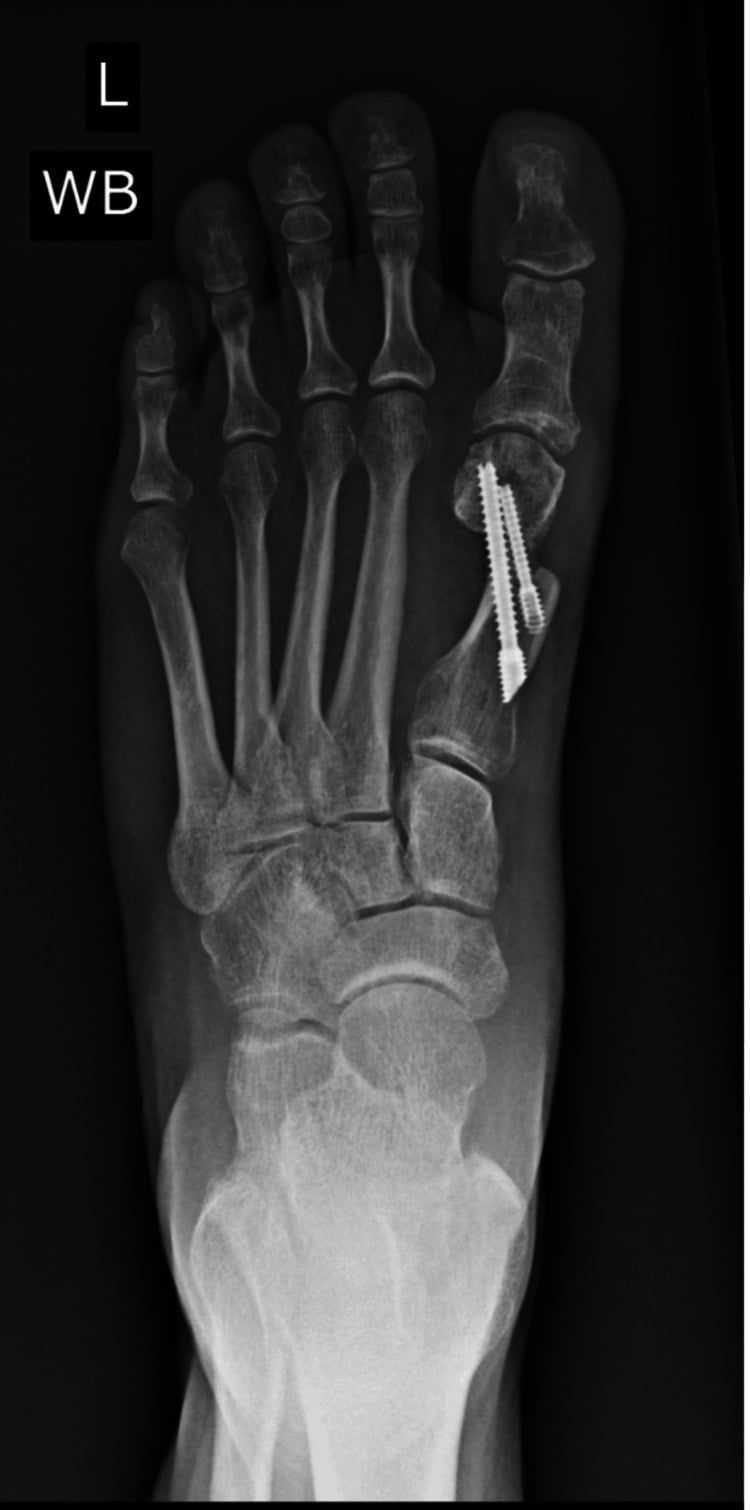
Undercorrection of the IMA is the leading cause of recurrence; hypermobility, insufficient fixation and obesity are the others. Define the endpoint anatomically, hit it, and stop there: an IMA under 9 degrees, an HVA under 15 degrees, and the sesamoids reduced. The metatarsal head slid medially off a sesamoid sling that stayed put, so correction is complete only when the head sits back over the sesamoids, and that is confirmed on the intra-operative image rather than assumed from the look of the toe. Residual lateral sesamoid position is a recognised predictor of recurrence.
- Assess and address TMT hypermobility, with a Lapidus if the joint is hypermobile
- Lateral soft tissue release if the joint is incongruent
- Patient compliance with postoperative immobilisation and weight-bearing restrictions
Under-correction drives recurrence, but the remedy is accuracy, not overshoot: do not deliberately overcorrect. Recurrent valgus is unpleasant and revisable, whereas iatrogenic hallux varus is stiff, poorly tolerated in shoes, and salvaged only by tendon transfer, reverse Akin or fusing a joint that began mobile. Trading the commonest complication for the least salvageable one is a bad exchange.
Postoperative Care and Rehabilitation
The same protocol serves the distal and the mid-shaft osteotomy.
Rehabilitation Timeline
A soft bandage, changed at 2 weeks, and heel weight-bearing in a stiff-soled postoperative shoe. Keep the foot elevated above the heart to reduce swelling and ice it for 20 minutes every 2 hours. DVT prophylaxis is aspirin 100mg daily, or LMWH if the patient is high risk.
Sutures out at 2 weeks. Progress to full weight-bearing in the postoperative shoe, with gentle passive MTP dorsiflexion exercises and nothing forceful. Radiographs at 6 weeks to assess healing, and a transition to wide, soft shoes at 6 weeks.
A gradual increase in walking distance, with physiotherapy for active range of motion and strengthening of the intrinsic muscles, in regular shoes with a wide toe box. Return to sedentary work at 6 weeks and to standing or walking work at 8-12 weeks.
Impact sports (running, jumping) from 3-4 months. Swelling may persist for 6-12 months and is normal. Most patients (80-90%) are satisfied at 6 months.
Outcomes and Prognosis
The procedure-specific tables on this page report 85 to 95 per cent satisfaction, and those numbers come from surgical case series. The Cochrane review in the Evidence Base found something less comfortable across randomised trials: 25 to 33 per cent of participants remained dissatisfied at follow-up, and they did so even when the hallux valgus angle and the pain had improved. Both figures are real, and the gap between them is the single most useful thing on this page for a pre-operative conversation.
Why they differ. Case series are reported by surgeons with a particular interest in the operation, often in selected patients, and satisfaction is usually asked in a way that invites a favourable answer. Randomised trials recruit more broadly and ask more neutrally. Neither is wrong; they are measuring different populations and asking different questions.
What follows for consent. A correction that succeeds radiographically and relieves pain can still leave a patient unhappy - about shoe fit, about the shape of the foot, about stiffness, or because the expectation was a normal-looking foot rather than a less painful one. So quote the improvement in pain and function with confidence, and separately say that a meaningful minority remain dissatisfied despite a technically good result. Cochrane also notes that most trials followed patients for one year, a few to three - which is a short horizon for someone who will stand on the foot for another two or three decades.
And do not let dissatisfaction be read as under-correction. The reflex is to correct harder next time; the evidence here does not support that, and over-correction has its own and less salvageable failure mode.
Predictors of a poor outcome. Dissatisfaction is associated with:
- Unrealistic expectations, the cosmetic-surgery mentality
- Undercorrection of the IMA, which leads to recurrence
- Overcorrection, which leads to hallux varus and transfer metatarsalgia
- A pre-existing lesser toe deformity that was not addressed at surgery
- Poor bone quality, from osteoporosis or metabolic bone disease
- Smoking, through nonunion and wound complications
Procedure-specific outcomes. The Clemente meta-analysis in the Evidence Base is worth reading beside this table: on pooled data the distal chevron corrected the IMA marginally better than the scarf, so the scarf's versatility is a reason to choose it, and a claim of greater correction is not.
- Satisfaction
- 85-90%
- Recurrence
- 5-10% at 5 years
- Key Outcome Measure
- AOFAS score improvement 30-40 points
- Satisfaction
- 85-95%
- Recurrence
- 5-15% at 5 years
- Key Outcome Measure
- IMA correction not shown superior to chevron (Clemente meta-analysis)
- Satisfaction
- 80-90%
- Recurrence
- Under 5% (lowest recurrence)
- Key Outcome Measure
- Fusion rate 90-95%, longer recovery
- Satisfaction
- 85-90%
- Recurrence
- No recurrence
- Key Outcome Measure
- Loss of MTP motion but pain-free
Guidelines, Registries & Global Practice
Global Epidemiology
- Pooled Prevalence
- 19% (95% CI 13-25%)
- Source
- Cai 2023, PMID 37726760
- Pooled Prevalence
- 23%
- Source
- Nix 2010, PMID 20868524
- Pooled Prevalence
- 35.7%
- Source
- Nix 2010, PMID 20868524
- Pooled Prevalence
- 30% vs 13% (Nix); 23.7% vs 11.4% (Cai)
- Source
- Nix 2010 / Cai 2023
- Pooled Prevalence
- 29.3%
- Source
- Cai 2023, PMID 37726760
Hallux valgus is among the most common forefoot deformities worldwide, with a consistent female predominance and a strong rise in prevalence with age. Regional differences (highest in Oceania and Asia, lowest reported in Africa) reflect both true variation and heterogeneity in diagnostic criteria.
Guidelines & Consensus, Side by Side
There is no single high-level international clinical guideline that mandates a specific osteotomy; major bodies converge on principles rather than a named procedure, reflecting the Cochrane finding that no technique is uniformly superior.
- Core Position
- Surgery (osteotomy) superior to orthoses/no treatment; no osteotomy superior to another
- Evidence Level
- Level 1 (systematic review)
- Core Position
- Match procedure to deformity (HVA/IMA), joint congruity and first-ray stability; surgery for symptoms not cosmesis
- Evidence Level
- Expert consensus
- Core Position
- Exhaust conservative care first; surgery for pain/function, not appearance; offer minimally invasive options where expertise exists
- Evidence Level
- Consensus / Level 1-2 RCTs
- Core Position
- Algorithm by IMA: distal osteotomy for low IMA, scarf/proximal for higher, Lapidus for hypermobility/severe
- Evidence Level
- Consensus / Level 1-2
Registry & Procedure-Volume Evidence
Unlike hip and knee arthroplasty, hallux valgus correction is osteotomy- or fusion-based and is not tracked by the national joint registries (NJR, AJRR, AOANJRR, SHAR). Evidence therefore comes from RCTs, meta-analyses and national administrative/HES-type datasets rather than implant survival data. Quoted recurrence and revision rates derive from cohort and trial follow-up, not registry implant-survival curves.
Global Practice Variation
- Scarf and distal chevron remain the workhorse osteotomies across most high-income systems
- Minimally invasive (percutaneous) chevron/Akin has expanded rapidly in Europe and Australasia with RCT-level support
- Lapidus favoured where first-TMT hypermobility or severe IMA predominates
- First MTP fusion reserved for arthritis, salvage and neuromuscular cases
- High-resource: weight-bearing radiographs, intra-operative fluoroscopy, locking-plate fixation standard
- Limited-resource: greater reliance on clinical grading and simpler fixation (K-wire, single screw)
- Access: long elective waiting lists in many publicly funded systems, as hallux valgus is classed as low-priority/elective
- Day-case surgery with regional/ankle block is the global norm for primary osteotomy
Peri-operative Standards (Globally Accepted)
- Antibiotic prophylaxis: single pre-operative dose of a first-generation cephalosporin (e.g. cefazolin) at induction for clean forefoot surgery
- VTE prophylaxis: routine pharmacological prophylaxis not indicated for isolated forefoot osteotomy in low-risk patients; risk-stratify and consider it for prolonged immobilisation/non-weight-bearing regimens (e.g. Lapidus)
- Surgical-site infection target under 2% for clean elective foot surgery
Document, in any jurisdiction:
- Conservative treatment trial (typically 3-6 months) before surgery
- Realistic expectations - correction of pain/function, not a cosmetic guarantee; shoe-wear may still be restricted
- Specific complications disclosed: recurrence (5-15%), transfer metatarsalgia, medial dorsal cutaneous nerve injury, stiffness, AVN, and nonunion (Lapidus 5-10%)
- Smoking status - increases nonunion and wound complications
Common litigation themes: undisclosed recurrence/transfer metatarsalgia, unrealistic cosmetic expectation, and procedure-deformity mismatch (e.g. distal chevron for a high IMA).
MCQ Practice Points
Q: What is the primary blood supply to the first metatarsal head? A: The dorsal metatarsal artery (branch of dorsalis pedis) and plantar metatarsal artery. Risk of AVN with extensive soft tissue stripping, especially combined dorsal and plantar dissection.
Q: What is the normal intermetatarsal angle (IMA) and what threshold typically requires proximal osteotomy? A: Normal IMA is under 9 degrees. IMA over 13 degrees typically requires proximal or scarf osteotomy rather than distal chevron. IMA over 20 degrees often requires Lapidus procedure.
Q: What is the primary indication for Lapidus procedure over standard osteotomy? A: First TMT hypermobility (over 10mm of dorsoplantar motion). Lapidus arthrodesis addresses the instability at source and prevents recurrence. Also indicated for severe deformity (IMA over 20 degrees) or TMT arthritis.
Q: What is the most common cause of hallux valgus recurrence after osteotomy? A: Undercorrection of the intermetatarsal angle (IMA). Must correct IMA to under 9 degrees. Other causes: first TMT hypermobility not addressed, inadequate lateral release, poor fixation, patient non-compliance.
Q: What is the nonunion rate for Lapidus procedure and how can it be reduced? A: Nonunion rate is 5-10% with modern fixation. Risk reduced by: smoking cessation, plantar plate fixation (lower nonunion than crossed screws alone), adequate compression at fusion site, bone grafting if poor quality bone.
Q: What is troughing in scarf osteotomy and how is it prevented? A: Troughing is fracture of the plantar cortex during the horizontal saw cut, causing instability. Prevention: Use oscillating saw carefully, ensure plantar cortex remains intact, check before completing cuts. If occurs, add plantar screw or convert to different procedure.
Exam Viva Scenarios
Practise clinical reasoning and management decisions out loud
“A 45-year-old woman presents with painful bunion for 5 years, worsening over the past year. She has tried wide shoes and orthotics without relief. On examination, there is a prominent medial bunion, hallux deviates laterally, and the second toe overlaps slightly. Weight-bearing AP radiograph shows HVA 30 degrees, IMA 16 degrees, DMAA 12 degrees. The MTP joint is incongruent with subluxation. What is your assessment and management?”
“Walk me through the scarf osteotomy technique. A 50-year-old patient with moderate hallux valgus (HVA 28 degrees, IMA 15 degrees, incongruent joint). Describe your surgical approach, key steps, fixation, and how you avoid complications.”
“A 52-year-old woman had scarf osteotomy 3 months ago. She now complains of worsening pain under the second and third metatarsal heads that she did not have preoperatively. She can barely walk. On examination, there are tender calluses under the second and third metatarsal heads. Radiographs show well-healed scarf osteotomy, but the first metatarsal appears shorter than the second by 5mm. How do you manage this?”
Key Measurements
- Normal HVA under 15°, IMA under 9°, DMAA under 10°
- Mild: HVA 15-25°, Moderate: 25-40°, Severe: over 40°
- IMA under 13° = chevron; 13-20° = scarf; over 20° = Lapidus
- Sesamoid grade 1-4 (4 = complete lateral subluxation)
Osteotomy Selection
- Chevron: IMA under 13°, congruent joint, inherently stable
- Scarf: IMA 13-20°, most versatile, corrects HVA and IMA
- Lapidus: IMA over 20°, TMT hypermobility, recurrence, arthritis
- MTP fusion: Severe MTP arthritis, salvage, neuromuscular
Surgical Pearls
- Protect medial dorsal cutaneous nerve (dorsal to incision)
- Lateral release for incongruent joint (adductor tenotomy, capsule)
- Scarf: avoid troughing (plantar cortex fracture), use two screws
- Lapidus: 6 weeks non-weight-bearing, fusion rate 90-95%
- First ray length critical: avoid shortening over 3mm (transfer metatarsalgia)
Complications
- Recurrence 5-15%: undercorrection of IMA, hypermobility
- Transfer metatarsalgia 10-30%: first ray shortening, elevation
- AVN 1-3% (chevron): excessive soft tissue stripping
- Nonunion 5-10% (Lapidus): smoking, poor fixation
- Nerve injury 10-20%: medial dorsal cutaneous (numbness)
Postoperative Care
- Chevron/Scarf: heel weight-bearing postop shoe, 6 weeks
- Lapidus: non-weight-bearing 6 weeks, boot for 12 weeks
- Return to regular shoes at 6-12 weeks
- Sports at 3-4 months (osteotomy), 4-6 months (Lapidus)
Evidence Base and Key Trials
Prevalence of Hallux Valgus in the General Population (Nix Meta-analysis)
- Systematic review and meta-analysis of 76 surveys (496,957 participants)
- Pooled prevalence 23% in adults aged 18-65 and 35.7% in those over 65
- Prevalence higher in females (30%) than males (13%)
- Prevalence increases progressively with age
Global Prevalence and Incidence of Hallux Valgus (Cai Meta-analysis)
- Meta-analysis of 45 studies (over 186 million individuals)
- Overall global pooled prevalence 19% (95% CI 13-25%)
- Regional variation: Asia 22.0%, Europe 18.4%, Oceania 29.3%, North America 16.1%, Africa 3%
- Female prevalence 23.7% versus male 11.4%; highest in those over 60 (22.7%)
Cochrane Review: Interventions for Treating Hallux Valgus and Bunions
- Review of 21 randomised or quasi-randomised trials of conservative and surgical treatment
- Chevron osteotomy improved all outcomes versus orthoses or no treatment
- No single osteotomy shown superior to any other osteotomy
- Orthoses and night splints no better than no treatment for the deformity
- Dissatisfaction remained high (25-33%) even when angles and pain improved
Distal Chevron versus Other Procedures for Hallux Valgus: Meta-analysis
- Meta-analysis of 10 RCTs (985 patients)
- DISTAL CHEVRON corrected the IMA a mean 2.18 degrees MORE than scarf (95% CI -3.67 to -0.69, p=0.004) - the direction is the opposite of the usual assumption that the longer diaphyseal osteotomy is the more powerful one
- Proximal chevron corrected the IMA a mean 1.08 degrees more than distal chevron (p=0.007)
- Note the paper's own inconsistency: its results section reports the chevron-versus-scarf advantage as IMA correction, while its conclusion describes the same comparison as HVA correction
- Lindgren osteotomy gave an AOFAS score 3.2 points higher than distal chevron (95% CI 0.37 to 6.04, p=0.03)
Lapidus Arthrodesis: Fixation and Nonunion Meta-analysis
- Systematic review and meta-analysis of 16 studies (1,176 participants)
- Nonunion: 0.7% plantar plating, 1.4% dorsomedial plating, 5.3% screw-only
- Overall complication rate lowest with plantar plating (13%)
- Longer time to full weightbearing correlated with nonunion (r=0.376, p=0.009)
- No difference in HVA/IMA correction or AOFAS between fixation constructs
Chevron Osteotomy in Hallux Valgus: Ten-Year Results
- Prospective cohort of 112 feet (73 patients), mean follow-up 12.7 years
- Mean AOFAS improved from 46.5 to 88.8 points
- IMA improved from 13.8 to 8.7 degrees; HVA/MTP angle from 27.6 to 14.0 degrees
- Only one foot required revision for recurrence; radiographic correction maintained
- First MTP joint arthritis progressed significantly without affecting clinical result