Tenosynovial Giant Cell Tumour | Localized and Diffuse Forms | Joint-Preserving Strategy
- PVNS is now classified as tenosynovial giant cell tumor (TGCT) - same pathological entity
- Benign but locally aggressive - causes cartilage and bone erosion through mechanical and enzymatic destruction
- Diffuse disease has a greater and time-dependent recurrence burden; quote the relevant series, site and follow-up rather than one universal percentage
- Hemosiderin often causes low signal and susceptibility blooming, but this finding is not specific to TGCT
- MRI maps extent; pathology is required when imaging/behaviour is atypical or systemic therapy/oncologic surgery is contemplated
- Treatment balances resectability, expected morbidity, joint damage, symptoms and recurrence rather than pursuing completeness at any cost
- “Use TGCT terminology and specify localized versus diffuse
- “Blooming supports a hemosiderin-rich process but also occurs in haemophilic and other bleeding synovitides
- “Radiotherapy and CSF1R inhibitors are selected MDT options, not automatic recurrence prophylaxis
- “Open, arthroscopic and combined approaches follow compartmental mapping and morbidity
Overview and Epidemiology
What it is. Pigmented villonodular synovitis is the older name for tenosynovial giant cell tumour (TGCT), a usually benign but potentially locally aggressive synovial neoplasm. It comes in localised and diffuse forms, which differ in extent, morbidity and recurrence burden, but behaviour also varies by joint, treatment and follow-up. Management should preserve function rather than apply one recurrence percentage to every patient.
Who. Young adults, with a peak incidence at 20-40 years and a slight female predominance of 1.5-2:1. There is no racial predilection and no hereditary pattern, and no clear environmental or genetic risk factors have been identified. The hallmark is chronic monoarticular synovitis with recurrent haemarthrosis, and the disease is usually monoarticular (95%).
Where. The knee dominates:
- Knee - 80% of cases, the most common site
- Hip - 10-15%, and a more challenging diagnosis and treatment
- Ankle, shoulder and elbow - rare, each under 5%
- Temporomandibular joint - case reports
Why it matters. Untreated or progressive diffuse disease can erode cartilage and bone, and the disease brings disability through chronic pain, swelling and mechanical symptoms. Recurrence and progression are time-dependent and greater with diffuse or residual disease, and joint replacement may be required in young patients.
Pathophysiology and Molecular Biology
A neoplasm, not an inflammatory arthritis. Despite the name "synovitis", PVNS is a clonal neoplastic proliferation. The driver is a translocation involving the CSF1 gene, in some cases a t(1;2) fusion with COL6A3, and the result is overexpression of colony stimulating factor 1 (CSF1).
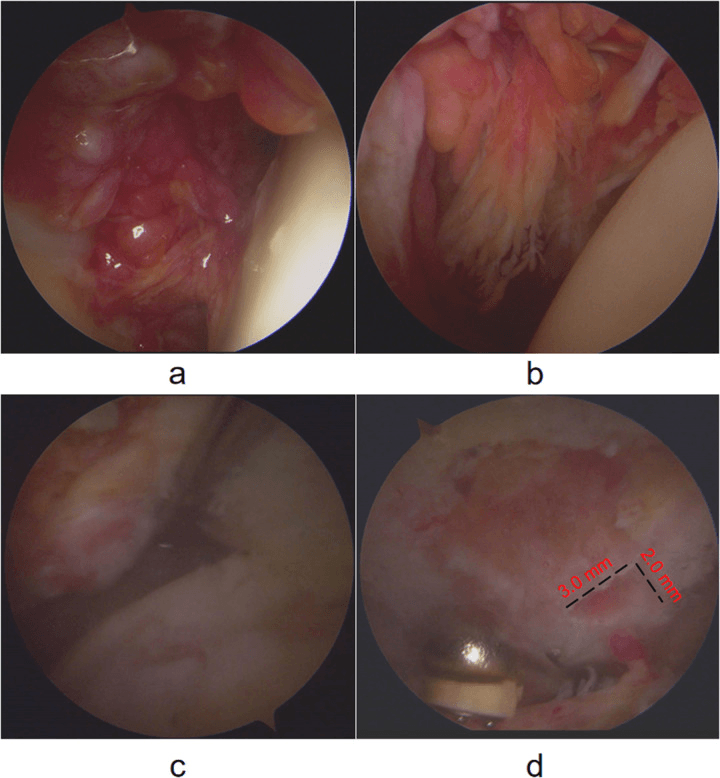
The landscape effect. The neoplastic cells are the CSF1-expressing mononuclear stromal cells, and they are a minority of the tumour. The CSF1 they secrete binds CSF1R on macrophages and recruits an inflammatory infiltrate of macrophages, foam cells and giant cells, and it is this recruited, non-neoplastic population that creates the mass. It explains the tissue seen at arthroscopy and why blocking CSF1R works.
Bleeding and destruction. The friable, vascular tissue bleeds into the joint repeatedly, and the iron it leaves behind as haemosiderin gives the rust-brown pigment in the specimen and the blooming artefact on MRI. Macrophages release metalloproteases (MMPs), and cartilage degradation and bone erosion follow from that enzymatic damage together with the mechanical effect of the mass.
Histology. The components to name:
- Mononuclear stromal cells - the neoplastic component, expressing CSF1
- Multinucleated giant cells - the histological hallmark, but reactive rather than neoplastic
- Haemosiderin-laden macrophages - from recurrent haemorrhage
- Foam cells - lipid-laden macrophages
- A villous or nodular synovial architecture
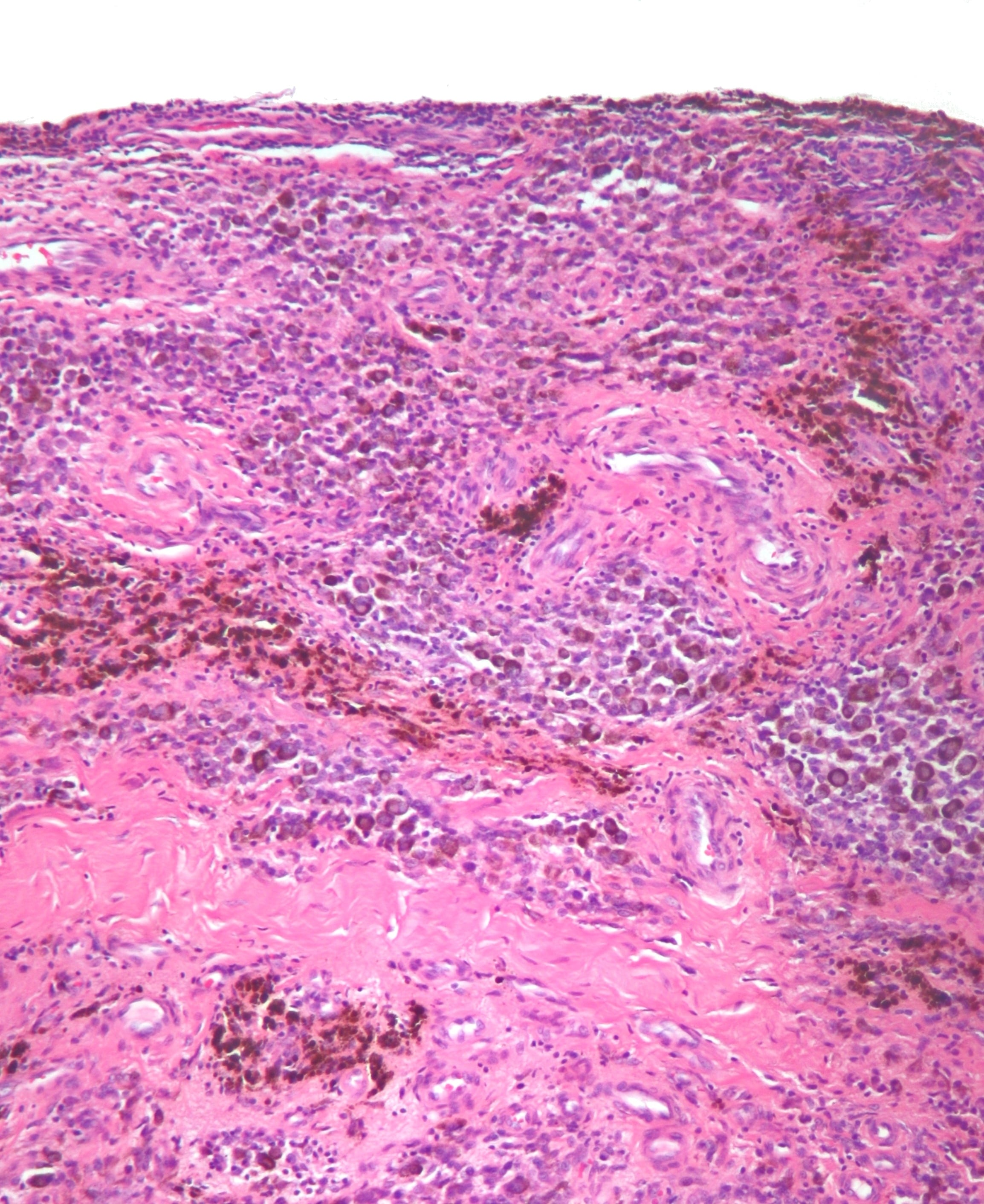
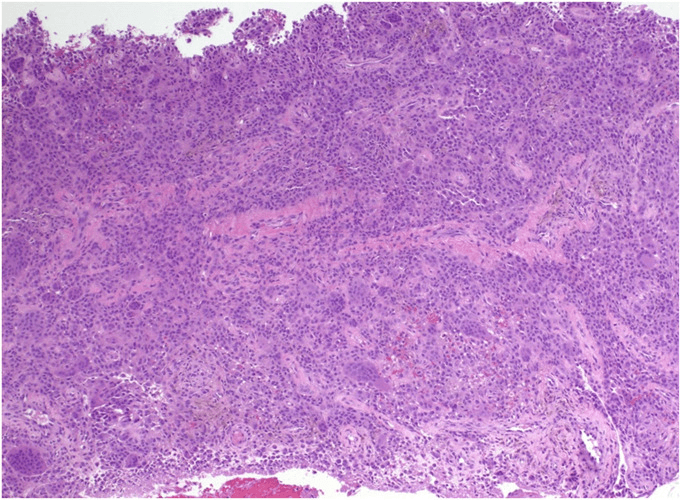
Gross appearance. Orange-brown villous synovium with nodular projections.
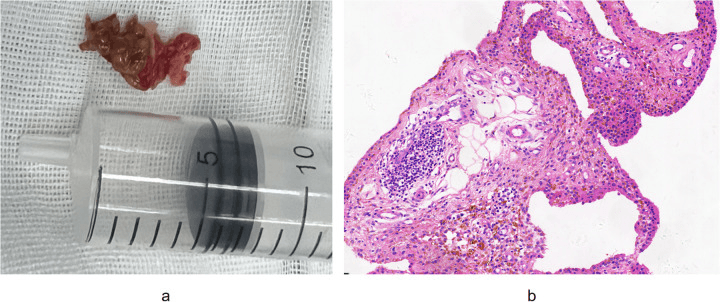
Classification and Clinical Forms
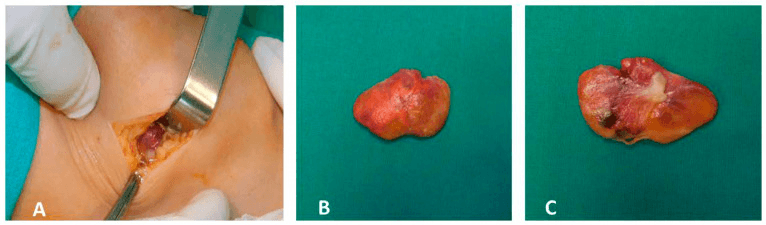
The key pathological distinction is localised (nodular) versus diffuse (villonodular) disease, because the two forms have different prognosis and recurrence risk, and that difference guides treatment intensity and counselling. Localised PVNS behaves like a benign tumour: it is amenable to complete excision, after which recurrence is low. Diffuse PVNS behaves as a locally aggressive tumour, with high recurrence despite aggressive synovectomy.
- Localised (nodular)
- Discrete nodular mass, often pedunculated
- Diffuse (villonodular)
- Diffuse synovial involvement of the entire joint
- Localised (nodular)
- Focal mechanical symptoms (locking, catching); less haemarthrosis than the diffuse form
- Diffuse (villonodular)
- Chronic swelling, recurrent haemarthrosis, progressive joint destruction
- Localised (nodular)
- Well-defined lobulated mass with blooming on GRE MRI; less extensive bone and cartilage erosion
- Diffuse (villonodular)
- Diffuse synovial thickening with villous projections, extensive haemosiderin blooming, bone erosions on both sides of the joint, cartilage loss
- Localised (nodular)
- Better prognosis with local excision; recurrence generally lower than diffuse disease but varies with site, completeness and follow-up
- Diffuse (villonodular)
- More aggressive clinical course; recurrence and progression risk remains time-dependent
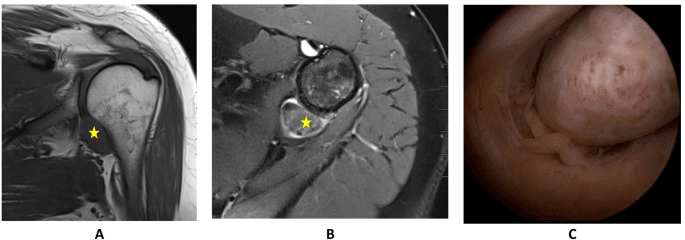
Clinical Presentation and Assessment
History. Chronic joint swelling over months to years, with recurrent bloody effusions that are not traumatic. The pain is a dull ache, worse with activity, and range of motion is progressively lost. Locking and catching are features of the localised form.
Examination. The effusion is chronic and often tense, and motion is reduced, especially terminal flexion. A discrete nodule may be palpable in localised disease, whereas diffuse disease gives a boggy, thickened synovium. Instability is usually absent, in contrast to inflammatory arthritis.
A young adult with chronic monoarticular swelling and recurrent haemarthrosis has a differential of rheumatoid arthritis, haemophilic arthropathy, tuberculous arthritis and PVNS. Features that favour PVNS are haemosiderin blooming on MRI (characteristic, though not specific), the absence of systemic inflammatory markers, and the characteristic rust-brown synovium on gross pathology.
Imaging and Diagnosis
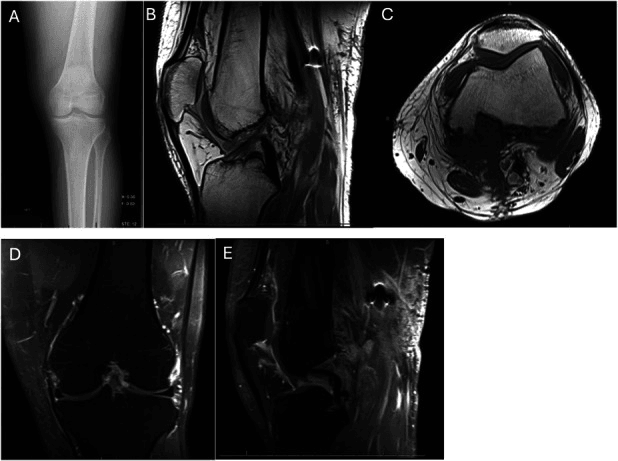
Radiographs are the first line and are often normal in early disease. When abnormal they may show:
- Soft-tissue swelling, a joint effusion, or a soft-tissue mass if large
- Bone erosions on both sides of the joint (subchondral cysts), a late finding
- Preserved joint space until late
- No calcification, unlike synovial chondromatosis
MRI with susceptibility-sensitive sequences maps the disease: nodular versus diffuse synovial proliferation, intra- and extra-articular extent, relations to tendons and neurovascular structures, effusion, cartilage and bone erosion. Haemosiderin commonly produces low signal and susceptibility blooming, which supports TGCT in the right morphology and is useful for mapping.
Blooming is characteristic, not pathognomonic. The classic radiologic-pathologic review described it as nearly pathognomonic, but it also appears in haemophilic and other recurrent bleeding synovitides; its absence does not exclude TGCT and its presence is not specific. Correlate with morphology, distribution, clinical history and, when needed, pathology.
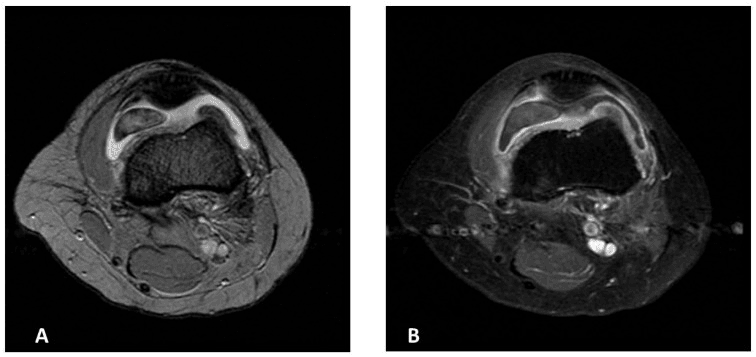
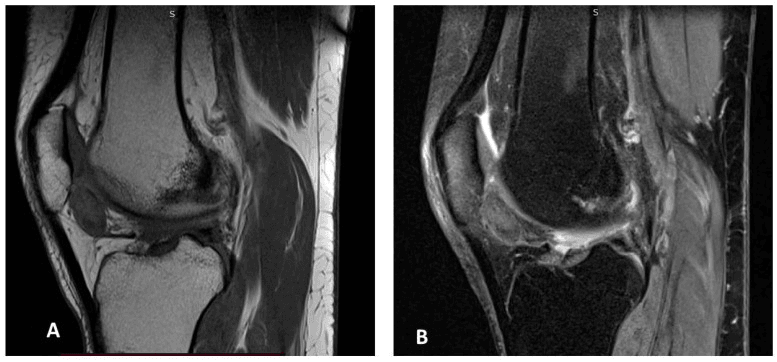
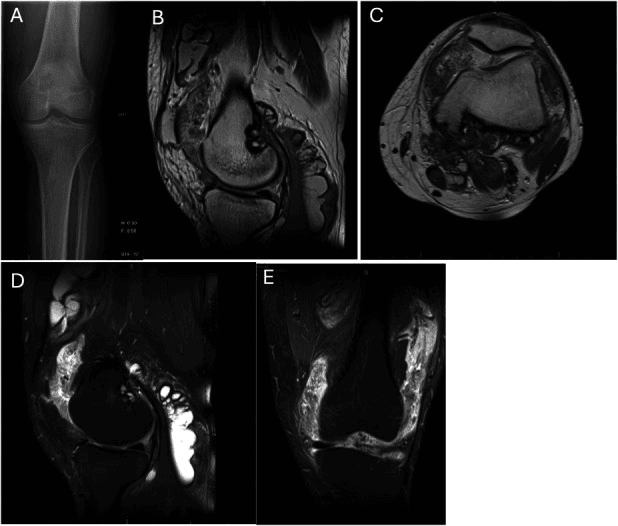
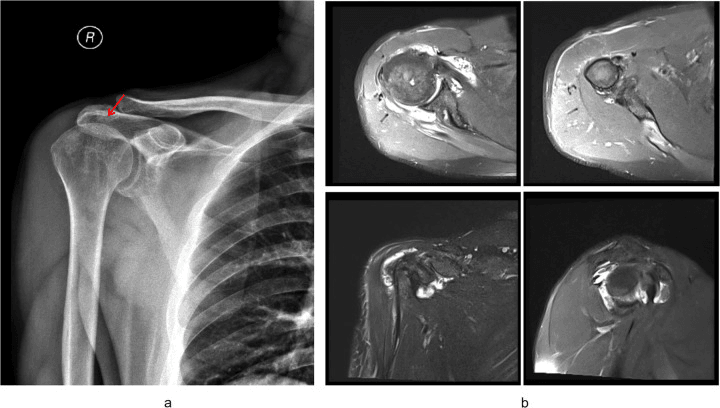
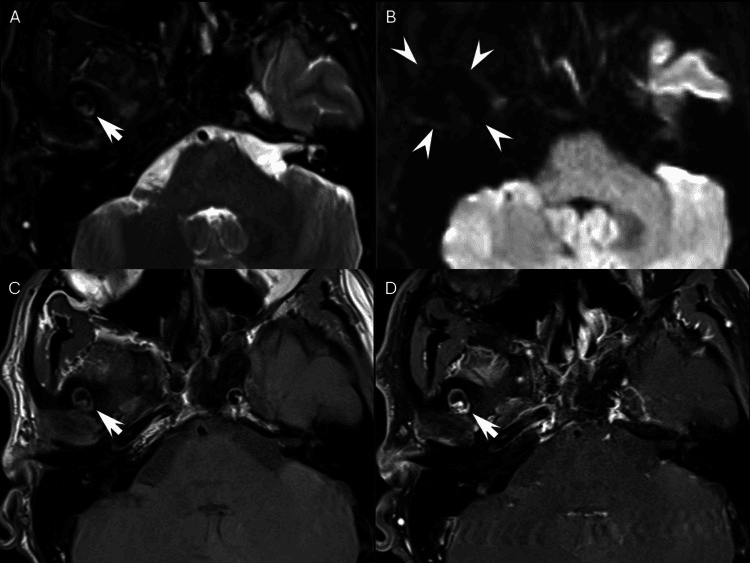
Aspiration is for when infection, crystal disease or haemarthrosis requires exclusion. Bloody fluid and haemosiderin-laden macrophages are supportive, not diagnostic.
Biopsy is selective. Plan it with the treating tumour team when imaging is atypical, malignancy is possible, the diagnosis will change systemic therapy, or a major oncological procedure is contemplated. The route and sampling must not compromise definitive surgery, and arthroscopy is not automatically the safest approach.
Differential Diagnosis
- Key Distinguishing Features
- Extra-articular location (tendon sheath), same histology as PVNS
- Imaging Differences
- No intra-articular involvement, no blooming (usually)
- Key Distinguishing Features
- Calcified loose bodies, no haemosiderin, younger age
- Imaging Differences
- Calcifications on XR, high signal on T2, no blooming
- Key Distinguishing Features
- Known haemophilia, recurrent haemarthrosis, factor deficiency
- Imaging Differences
- Similar MRI findings, but systemic disease and clotting history
- Key Distinguishing Features
- Polyarticular, positive RF/anti-CCP, systemic inflammation
- Imaging Differences
- Synovial enhancement, erosions, no blooming artefact
- Key Distinguishing Features
- MALIGNANT, aggressive bone destruction, rapid growth
- Imaging Differences
- Heterogeneous enhancement, invasion, calcification (30%)
- Key Distinguishing Features
- Chronic monoarthritis with destruction, systemic TB symptoms, positive cultures
- Imaging Differences
- Synovial enhancement, erosions, rice bodies, no blooming
Amyloid arthropathy can also cause a similar MRI appearance. The critical distinction is benign (PVNS, chondromatosis) versus malignant (synovial sarcoma), and biopsy if there is any doubt.
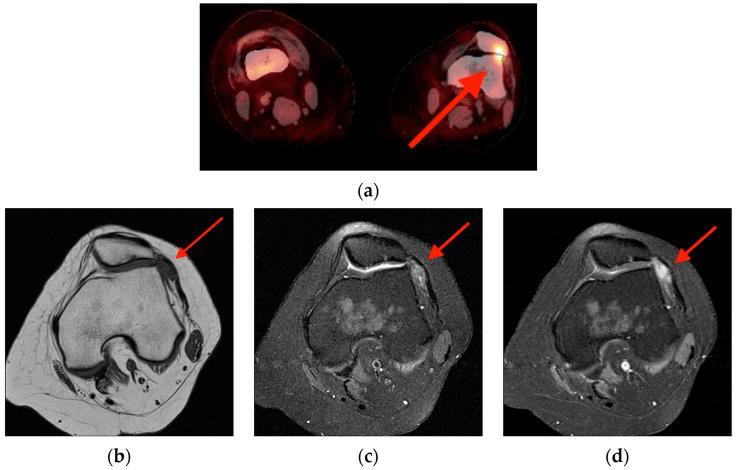
Management Algorithm
The principle. Treatment balances resectability, expected morbidity, joint damage, symptoms and recurrence. For diffuse disease a specialist MDT weighs arthroscopic, open and combined surgery against observation, systemic CSF1R inhibition and selected radiotherapy.
- Key Question
- Is it symptomatic and completely accessible?
- Potential Pathway
- Observation or local arthroscopic/open excision
- Decision Modifier
- Joint, stalk/compartment and morbidity
- Key Question
- Can useful debulking/resection preserve function?
- Potential Pathway
- Arthroscopic, open or combined synovectomy; systemic option when surgery is morbid
- Decision Modifier
- Posterior/extra-articular extent, erosions and joint status
- Key Question
- What is causing current disability or progression?
- Potential Pathway
- Observation, resection, CSF1R inhibitor, selected radiotherapy or arthroplasty
- Decision Modifier
- Prior morbidity, residual anatomy and patient priorities
Localised disease. Excision is reasonable for symptomatic, growing or mechanically relevant lesions when morbidity is acceptable. Arthroscopic or open access is chosen from the compartment, size, stalk and adjacent structures, and from the ability to remove the lesion without unnecessary sacrifice of normal synovium; no validated 2-3 mm synovial margin is required. Observation can be appropriate for small, minimally symptomatic disease, and adjuvant therapy is not routine after uncomplicated localised excision.
Diffuse disease. Map anterior, posterior, extra-articular, tendon-sheath, bone and neurovascular disease on MRI, then choose arthroscopic, open or combined synovectomy or debulking from access and morbidity. Attempting microscopic completeness can create more disability than residual indolent disease, and systemic CSF1R therapy or selected radiotherapy are considered when surgery is incomplete, recurrent or unacceptably morbid. The rest of the plan:
- Erosions and cartilage - curette and graft erosions, or address cartilage and arthrosis, only when mechanically relevant
- CSF1R inhibition - discuss when symptomatic disease is not amenable to surgery or surgery would cause unacceptable morbidity; agent availability, label and monitoring differ by jurisdiction
- External-beam radiotherapy - only in selected residual or recurrent cases after sarcoma and radiation-oncology review; dose and indication are individual, especially in young joints
- Arthroplasty - a solution for joint destruction, not a recurrence step, and active disease complicates its timing
For diffuse TGCT, the best plan maximises durable joint function. Residual stable disease may be preferable to a morbid attempt at total synovectomy; systemic therapy or selected radiotherapy can be integrated when surgery is unsuitable.
Systemic therapy. CSF1R inhibitors (pexidartinib, vimseltinib, imatinib) block macrophage recruitment. Pexidartinib and vimseltinib have phase 3 evidence for symptomatic TGCT not amenable to surgery: pexidartinib was FDA-approved for TGCT in 2019, and vimseltinib followed on the phase 3 MOTION trial reported in 2024. They can reduce tumour volume and, importantly, improve range of motion, stiffness, pain and function.
Their limits. Response is incomplete, duration of treatment and cessation remain open questions, and toxicities require agent-specific monitoring. Imatinib is an off-label, lower-evidence option in some settings.
Pexidartinib carries an FDA black box warning for clinically important mixed/cholestatic hepatotoxicity. Liver function tests must be monitored before, during and after treatment, and severe or progressive liver enzyme elevation requires dose reduction or discontinuation. This limits its use to recurrent or unresectable PVNS where benefit outweighs risk.
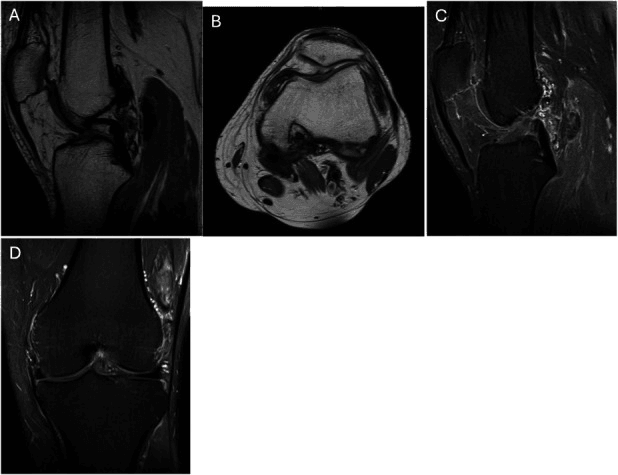
Malignant Tenosynovial Giant Cell Tumour (Malignant PVNS)
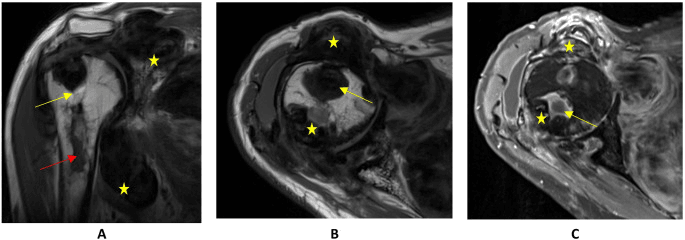
What it is. Malignant TGCT is a sarcomatous transformation of, or a malignant tumour arising alongside, a diffuse-type giant cell tumour. It is very rare, well under 5% of TGCT, but carries a metastatic potential and mortality quite unlike benign PVNS. It is a genuine exam curveball for a disease otherwise taught as benign, and it is why excluding malignancy appears in every management algorithm.
When to suspect it. Most malignant cases arise in recurrent, previously benign diffuse disease rather than at first presentation. The red flags:
- Older age at onset
- A large or rapidly enlarging mass
- Recurrent disease that becomes more aggressive
- Destructive or atypical imaging, with aggressive bone destruction and soft-tissue extension beyond the usual PVNS pattern
Diagnosis is histological. Alongside the typical mononuclear, haemosiderin and giant-cell background there are overtly malignant features: marked cytological atypia, high mitotic activity, atypical mitoses, spindling into a sarcomatous pattern, necrosis and enlarged mononuclear cells. An atypical, aggressive or unexpectedly recurrent lesion therefore warrants generous biopsy and expert sarcoma pathology, not a diagnosis of "recurrent PVNS", and a benign label must never be applied without adequate sampling.
Management is that of a sarcoma. Wide surgical resection rather than simple synovectomy, with adjuvant radiotherapy/chemotherapy and staging for metastases (lungs, nodes), through a sarcoma MDT. Prognosis is markedly worse than benign disease, with a real risk of metastasis and death.
Radiosynovectomy (Radioactive Synoviorthesis)
What it is. Radiosynovectomy (radiosynoviorthesis) is the intra-articular injection of a beta-emitting radionuclide that is taken up by the synovium and ablates residual diseased synovial lining from within, a "medical synovectomy". It targets the microscopic residual disease that surgery leaves behind, which is the very reason diffuse PVNS recurs.
Isotope by joint size. The agent is matched to the joint by the radionuclide's tissue penetration, and colloid or particulate carriers keep the isotope in the joint:
- Yttrium-90 (⁹⁰Y) - the knee: a large joint, deeper penetration
- Rhenium-186 (¹⁸⁶Re) - medium joints: hip, shoulder, ankle, wrist, elbow
- Erbium-169 (¹⁶⁹Er) - small finger and toe joints
Where it fits. It is used mainly as an adjunct after surgical synovectomy in diffuse disease, to treat residual synovium and reduce recurrence, or for inaccessible or multiply recurrent disease where repeat open surgery is unattractive. Conceptually it resembles adjuvant external-beam radiotherapy, delivered from inside the joint with less exposure to surrounding tissues. It is also long established for haemophilic and inflammatory synovitis.
Cautions. The joint must be sealed, with no leak or fistula, to avoid radionuclide escape and lymphatic or systemic spread, and post-injection rest or immobilisation limits leakage. It is generally avoided in the very young because of theoretical radiation risk, and availability is limited to centres with nuclear-medicine support.
Surgical Technique - Open Total Synovectomy (Knee)
Setup. Standard positioning for knee arthrotomy: supine on a standard operating table, a tourniquet on the proximal thigh, the leg free-draped from the tourniquet distally, and a lateral post at the foot of the table for valgus stress. Secure and pad the contralateral leg, keep the heel free of the bed to prevent pressure injury, and pad the tourniquet adequately. No fluoroscopy is needed, but the preoperative MRI is reviewed in theatre for the extent of disease.
Approach. A 15-20 cm midline anterior incision runs from the proximal pole of the patella to the tibial tubercle and can be extended proximally if needed. A medial parapatellar arthrotomy incises the retinaculum from the quadriceps tendon to the medial border of the tibial tubercle, and the patella is everted laterally to expose the entire joint.
Inspection. The key is complete visualisation of all synovial surfaces, inspected systematically:
- Suprapatellar pouch - a common site of disease
- Medial and lateral gutters
- Intercondylar notch and the cruciate ligaments
- Posterior capsule - often requires a posterior approach
Posterior approach. When MRI shows extensive posterior disease, a posteromedial or posterolateral approach gives access to the posterior capsule and the posterior synovium.
Synovectomy. Work through the joint in order:
- Suprapatellar pouch - remove all synovium; this is a common site of recurrence if excision is incomplete
- Gutters - excise the synovium, extending posteriorly as far as possible
- Intercondylar notch - carefully strip synovium from the ACL and PCL, preserving the ligaments; synovectomy of the cruciates is delicate, so avoid damaging them
- Meniscal surfaces - remove synovium from the peripheral meniscal surfaces
- Posterior capsule - if a posterior approach has been used, remove all posterior synovium, which is critical in diffuse disease; the popliteal neurovascular structures lie posterior
- Bone erosions - curette mechanically relevant erosions and burr to healthy bleeding bone
Remove disease that can be accessed without unacceptable damage. Microscopic completeness is not worth sacrificing cruciates, capsule, vessels or function.
Closure. Meticulous haemostasis matters because the friable, vascular tissue risks postoperative haemarthrosis. A drain is used selectively according to dead space, bleeding and closure, and is not mandatory; if one is used, it is removed at 24-48 hours when output decreases. The arthrotomy is repaired with absorbable suture (number 1 Vicryl) and the skin with staples or sutures, under a bulky dressing and a knee immobiliser.
Complications of PVNS and Treatment
The major complication of PVNS is recurrence, which drives the need for surveillance and adjuvant therapy strategies. The hepatotoxicity of pexidartinib is set out with systemic therapy above.
- Incidence/Risk Factors
- Higher with diffuse, residual and complex-compartment disease
- Prevention/Management
- Risk-adapted surgery/systemic/radiotherapy strategy and surveillance
- Incidence/Risk Factors
- Untreated or recurrent disease causes cartilage and bone erosion
- Prevention/Management
- Early diagnosis and resection of the disease that can be safely accessed
- Incidence/Risk Factors
- PVNS tissue is vascular, risk of bleeding after synovectomy
- Prevention/Management
- Meticulous haemostasis, selective drain placement, monitor drain output
- Incidence/Risk Factors
- After extensive synovectomy or radiation
- Prevention/Management
- Early range of motion, physiotherapy
- Incidence/Risk Factors
- Recurrent disease or delayed diagnosis
- Prevention/Management
- Total joint arthroplasty as salvage (young age is challenging)
Postoperative Care and Rehabilitation
Days 0-1. Multimodal analgesia (opioids, NSAIDs, ice), DVT prophylaxis with aspirin or LMWH per protocol, and mobilisation from bed to chair, weight-bearing as tolerated. Monitor the output of any drain.
Days 2-7. Watch the wound for bleeding and infection, and mobilise fully weight-bearing with crutches for comfort. Gentle passive range of motion starts now, because early motion is critical to prevent stiffness after extensive synovectomy. Discharge is home with a physiotherapy referral.
Weeks 2-12. The rehabilitation timeline is similar to total knee arthroplasty, given the extent of the synovectomy:
- Weeks 2-4, restore motion and reduce swelling - active and active-assisted ROM exercises, quadriceps and hamstring isometrics, patellar mobilisation to prevent adhesions, gait training without aids
- Weeks 4-8, strength and function - progressive resistance, closed kinetic chain exercises (leg press, squats), cycling and swimming for low-impact cardio, proprioception exercises
- Weeks 8-12, return to activities - sport-specific exercises if applicable; full ROM expected by 12 weeks and unrestricted activities at 3 months
Outcomes and Prognosis
Outcomes depend on localised versus diffuse morphology, joint and compartment, cartilage and bone damage, residual disease, treatment morbidity and duration of follow-up. Recurrence percentages from series are not interchangeable, because definitions and surveillance differ.
- Potential benefit
- Mechanical symptom relief with limited morbidity
- Material limitations
- Recurrence or missed multifocal disease
- Outcome to track
- Pain, motion and local MRI when indicated
- Potential benefit
- Reduce burden and preserve joint
- Material limitations
- Residual/recurrent disease, stiffness and surgical morbidity
- Outcome to track
- Function, residual burden and joint damage
- Potential benefit
- Tumour and symptom response without morbid surgery
- Material limitations
- Incomplete response, toxicity, duration/access uncertainty
- Outcome to track
- Volume, pain, stiffness, motion and safety
- Potential benefit
- Selected local control or treatment of destroyed joint
- Material limitations
- Late tissue/joint risks or active-disease complexity
- Outcome to track
- Function, control and treatment complications
Reading the surgical evidence. Surgical approach is confounded by disease severity. The observational data below associate open or combined synovectomy with lower recurrence in diffuse knee disease, but open surgery should not be called intrinsically prognostic without accounting for selection.
Recurrence and Surveillance
Why it recurs. Incomplete synovectomy leaves microscopic disease, and CSF1 overexpression allows regrowth from the residual cells. Diffuse, posterior and extra-articular disease is harder to control, hip disease is harder to access and recurs more, and each recurrence increases the risk of the next.
- Lower-risk pattern
- Localised, completely accessible lesion
- Higher-risk pattern
- Diffuse, posterior/extra-articular or infiltrative disease
- Lower-risk pattern
- Limited disease without erosion
- Higher-risk pattern
- Hip/complex compartment, bone erosion or established arthrosis
- Lower-risk pattern
- No residual disease and low morbidity
- Higher-risk pattern
- Known residual, repeated recurrence or treatment-limited access
- Lower-risk pattern
- Clinical review with symptom-triggered imaging
- Higher-risk pattern
- Individual MRI plan based on residual disease and treatment
Recurrence estimates rise with longer follow-up and differ by subtype, joint, surgical selection and definition of recurrence. Schedule clinical and MRI review from individual risk rather than quoting a fixed interval.
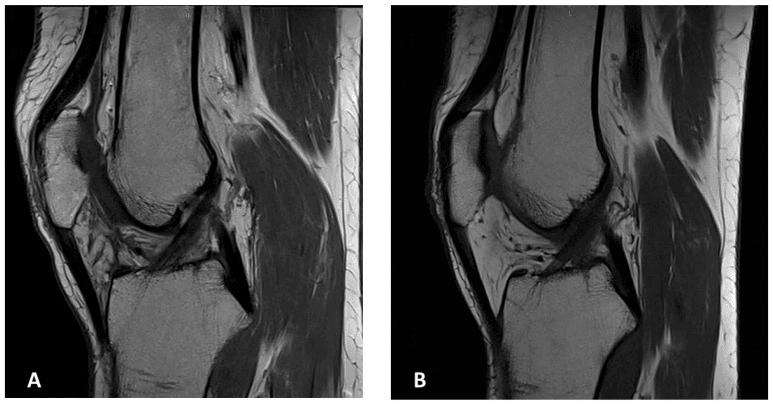
Surveillance. Establish a postoperative or post-treatment baseline when it will clarify residual disease or improve later interpretation. Review symptoms, swelling, motion and function at intervals matched to subtype, site and prior treatment, and repeat MRI for known residual or diffuse disease, new symptoms or a planned decision. After localised excision, image when symptoms, difficult anatomy or recurrence risk justify it.
No fixed calendar. There is no universal six-month MRI schedule, and no fixed three- or five-year schedule fits every patient. Long-term surveillance is nonetheless essential given the high recurrence risk in diffuse PVNS.
Red flags for recurrence. Four features:
- Recurrent swelling - a new or worsening effusion
- Mechanical symptoms - locking or catching from a new nodule
- Pain - progressive, and not explained by arthritis
- MRI - synovial thickening, with the blooming artefact reappearing
At suspected recurrence. First confirm whether the MRI change represents residual or progressive TGCT, postoperative scar, bleeding synovitis or another diagnosis. Then reassess symptoms, joint damage, compartments, previous morbidity and patient goals, and choose observation, resection, systemic CSF1R therapy, selected radiotherapy or arthroplasty from the current disease, not from whether this is the first or second recurrence. The goal is durable function and symptom control, not automatic escalation.
Guidelines, Registries & Global Practice
WHO classifies PVNS within TGCT. No universal surgical guideline or registry compares complete pathways; management is rare-tumour, sarcoma-network and multidisciplinary practice.
- Evidence-aware position
- MRI maps extent; pathology for atypical/high-stakes decisions
- Resource adaptation
- Radiographs, ultrasound and planned biopsy when MRI/pathology access is limited
- Evidence-aware position
- Choose arthroscopic/open/combined access by compartments
- Resource adaptation
- Function-preserving open surgery may be appropriate where arthroscopy is unavailable
- Evidence-aware position
- Consider systemic CSF1R therapy or selected radiotherapy
- Resource adaptation
- Access/funding and monitoring capacity alter feasibility
- Evidence-aware position
- Risk-adapted clinical/MRI follow-up
- Resource adaptation
- Symptom-triggered imaging when serial MRI is unavailable
Counselling should distinguish usually benign histology from locally destructive behaviour, malignant red flags, recurrence uncertainty, treatment morbidity and future joint health.
MCQ Practice Points
Q: What does susceptibility blooming mean in TGCT? A: It reflects hemosiderin and helps map disease, but it is not specific; haemophilic and other recurrent bleeding synovitides can bloom.
Q: Why separate localized from diffuse TGCT? A: They differ in distribution, resectability, morbidity and time-dependent recurrence burden. The distinction informs—but does not automatically prescribe—treatment.
Q: When are CSF1R inhibitors considered? A: For symptomatic TGCT not amenable to surgery or when surgery would cause unacceptable morbidity, through specialist MDT review with agent-specific toxicity and access assessment.
Exam Viva Scenarios
Practise clinical reasoning and management decisions out loud
“A young adult has chronic knee swelling, recurrent bloody effusions and diffuse low-signal blooming synovial disease on MRI. How do you proceed?”
“Diffuse knee TGCT is selected for surgery. Describe safe planning and technique.”
“A patient has symptomatic MRI progression after previous diffuse-TGCT synovectomy. How do you choose the next step?”
Biology
- CSF1 overexpression recruits CSF1R-positive macrophages
- Localized and diffuse forms share TGCT biology
- Hemosiderin, mononuclear cells and giant cells on pathology
- Malignant TGCT is rare and requires sarcoma pathology
Imaging
- MRI maps intra/extra-articular compartments
- Low signal and blooming reflect hemosiderin
- Blooming is characteristic, not pathognomonic
- Assess cartilage, erosions and neurovascular relations
Treatment
- Localized: observe or excise when appropriate
- Diffuse: joint-preserving arthroscopic/open/combined plan
- Systemic CSF1R therapy when surgery is unsuitable or too morbid
- Radiotherapy is selected MDT care, not routine prophylaxis
Recurrence
- Risk rises with diffuse, residual and complex-compartment disease
- Percentages depend on treatment and follow-up
- Confirm progression against baseline
- Choose the next step from current disease and function
Safety
- Preserve cruciates, capsule, cartilage and vessels
- Biopsy route must respect definitive surgery
- Pexidartinib requires liver-risk monitoring
- Rapid destructive growth requires malignant-TGCT exclusion
Evidence Base and Key Studies
Surgery and Radiotherapy for PVNS Recurrence: Individual-Patient Meta-Analysis
- Individual-patient meta-analysis, 630 patients across 35 observational studies (knee PVNS)
- Overall recurrence after synovectomy: 137 of 630 (21.8%)
- Diffuse PVNS: open synovectomy reduced recurrence vs arthroscopic (OR 0.47)
- Diffuse PVNS: combined open + arthroscopic reduced recurrence further (OR 0.19)
- Peri-operative radiotherapy reduced diffuse recurrence (OR 0.31); approach did not affect localized recurrence
Long-Term Outcome of Primary and Recurrent PVNS
- Single-institution consecutive series of 107 PVNS patients (29 localized, 75 diffuse); knee in 88%
- Diffuse PVNS recurrence-free survival: 69% at 1 year, falling to 32% at 5 years
- Recurrence rates increase over time - diffuse PVNS is a continually recurring problem
- Quality of life (SF-36 general health) lower than population norms in both subtypes