Post-Traumatic Lateral Hindfoot Pain | Sinus Tarsi Tenderness | Conservative First
- Sinus Tarsi Anatomy: Conical tunnel between talus and calcaneus, contains interosseous talocalcaneal ligament, cervical ligament, fat, and mechanoreceptors
- Post-Traumatic Aetiology: 70-80% follow ankle inversion injury - disrupts ligaments and fat pad; the remaining 20-30% are non-traumatic
- Clinical Triad: Lateral hindfoot pain, sinus tarsi tenderness, sensation of hindfoot instability
- MRI Findings: High signal in sinus tarsi on T2, ligament disruption, fat pad oedema
- Conservative First: 70-80% respond to physiotherapy, injections and proprioceptive training - but judge response at 12 months, not 3: after corticosteroid injection ~65% of symptoms recur within a year
- “Sinus tarsi is anterior and lateral to lateral malleolus
- “Pain worse on uneven ground and lateral movements
- “Single-leg stance reveals hindfoot instability
- “Diagnostic injection provides immediate but temporary relief
Overview and Epidemiology
Sinus tarsi syndrome is an underdiagnosed cause of chronic lateral ankle pain following inversion injury. O'Connor first described it in 1958 as a clinical entity distinct from lateral ankle ligament injury. It represents chronic inflammation, synovitis and scarring of the soft-tissue contents of the sinus tarsi after they have been disrupted, and because the symptoms are vague and no test is specific, diagnosis is delayed by an average of 6-12 months from injury.
A label, not a lesion. "Sinus tarsi syndrome" is increasingly regarded as a descriptive umbrella term rather than a single discrete pathology (Frey 1999, Willegger 2023).
Who. Typically active adults, with reported series averaging around 30-41 years; the young active patient with an inadequately rehabilitated ankle sprain is the typical case. It is usually unilateral.
The precursor injury. Lateral ankle sprain is the commonest precursor. Ankle sprain incidence in the US general population is approximately 2.15 per 1000 person-years, peaking at 7.2 per 1000 at age 15-19 years, and half of sprains occur during sport, most often basketball, football and soccer (Waterman 2010). In one cohort, 22.5% of patients developed sinus tarsi syndrome after a lateral ankle sprain (Xu 2024).
Aetiology. The conventionally quoted figure is that 70-80% of cases follow an ankle inversion injury. The remaining 20-30% are non-traumatic: pes planus or hindfoot valgus impingement, or inflammatory arthropathy.
Risk factors. The predisposing factors are:
- Previous ankle inversion injury
- Chronic lateral ankle instability
- Repetitive microtrauma (running, jumping)
- Hindfoot valgus alignment
- Generalised ligamentous laxity
- Inflammatory arthropathy (RA, seronegative)
Proper ankle rehabilitation after a sprain, proprioceptive training and ankle bracing during sport are protective.
Anatomy and Pathophysiology
Sinus Tarsi Anatomy
The space. The sinus tarsi is a cone-shaped tunnel between the talus and calcaneus. Its wide opening faces laterally, anterior and inferior to the lateral malleolus; its narrow apex points medially and becomes the tarsal canal, which contains the posterior tibial neurovascular bundle.
- Superior: neck and body of the talus
- Inferior: superior surface of the calcaneus
- Medial: tarsal canal
- Lateral: opens between the anterior process of the calcaneus and the talar neck
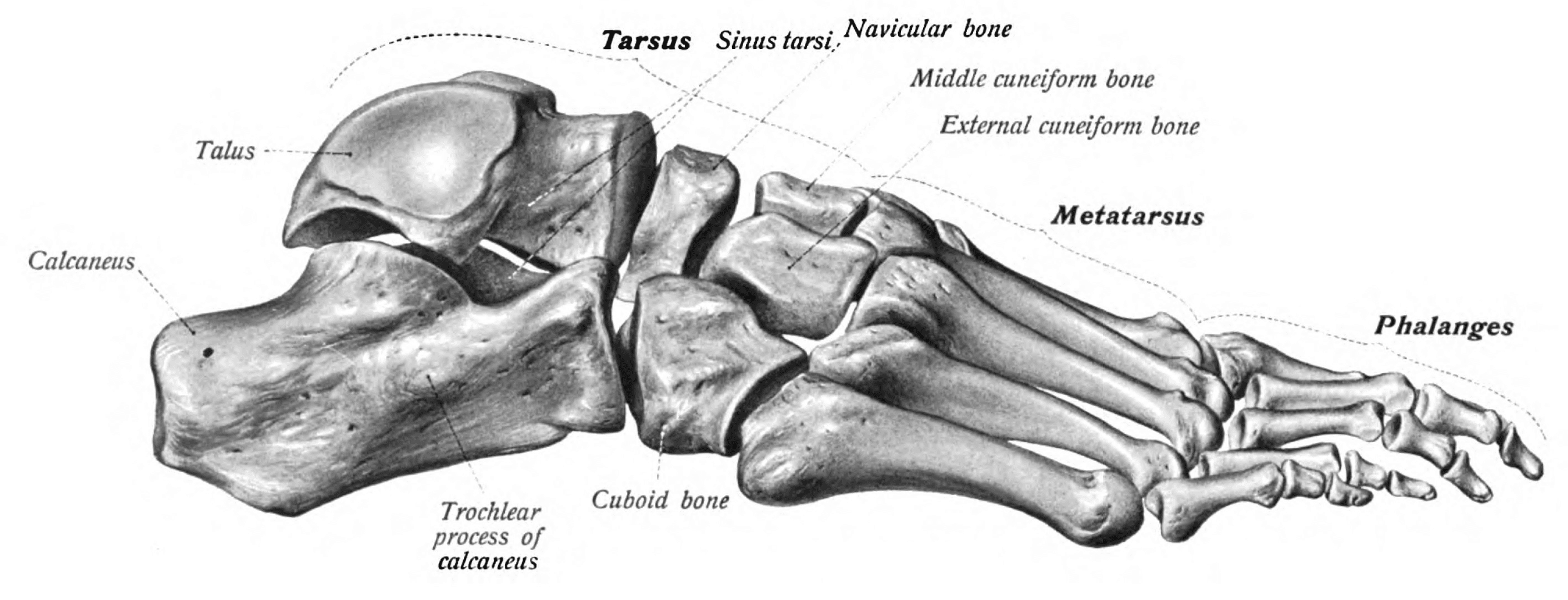
At the bedside. The sinus tarsi is palpable anterior to the lateral malleolus, approximately 1-2 cm from the skin surface, and its lateral opening is 1-2 cm in diameter. Its rich vascular and nerve supply explains the severity of the pain.
The contents. Two ligaments bridge the space, and they are the structures debridement must preserve. The interosseous talocalcaneal ligament (ITCL) lies medially in the tarsal canal; the cervical ligament lies more laterally. Around them the space is filled with fat, synovium and a dense population of mechanoreceptors, and the inferior extensor retinaculum crosses its lateral opening.
- Anatomy
- Strong ligament in tarsal canal, two bands
- Function
- Primary stabiliser of subtalar joint
- Injury Effect
- Disruption causes subtalar instability
- Anatomy
- Oblique ligament from talar neck to calcaneus
- Function
- Restricts inversion, secondary stabiliser
- Injury Effect
- Injury common in inversion sprains
- Anatomy
- Crosses lateral opening of sinus tarsi
- Function
- Restrains extensor tendons
- Injury Effect
- Thickening contributes to stenosis
- Anatomy
- Adipose tissue filling the sinus
- Function
- Shock absorption, gliding surface
- Injury Effect
- Inflammation, fibrosis after trauma
- Anatomy
- Dense proprioceptive nerve endings
- Function
- Proprioception for hindfoot position
- Injury Effect
- Loss causes instability sensation
- Anatomy
- Extension of subtalar joint synovium
- Function
- Joint lubrication
- Injury Effect
- Chronic synovitis, adhesions
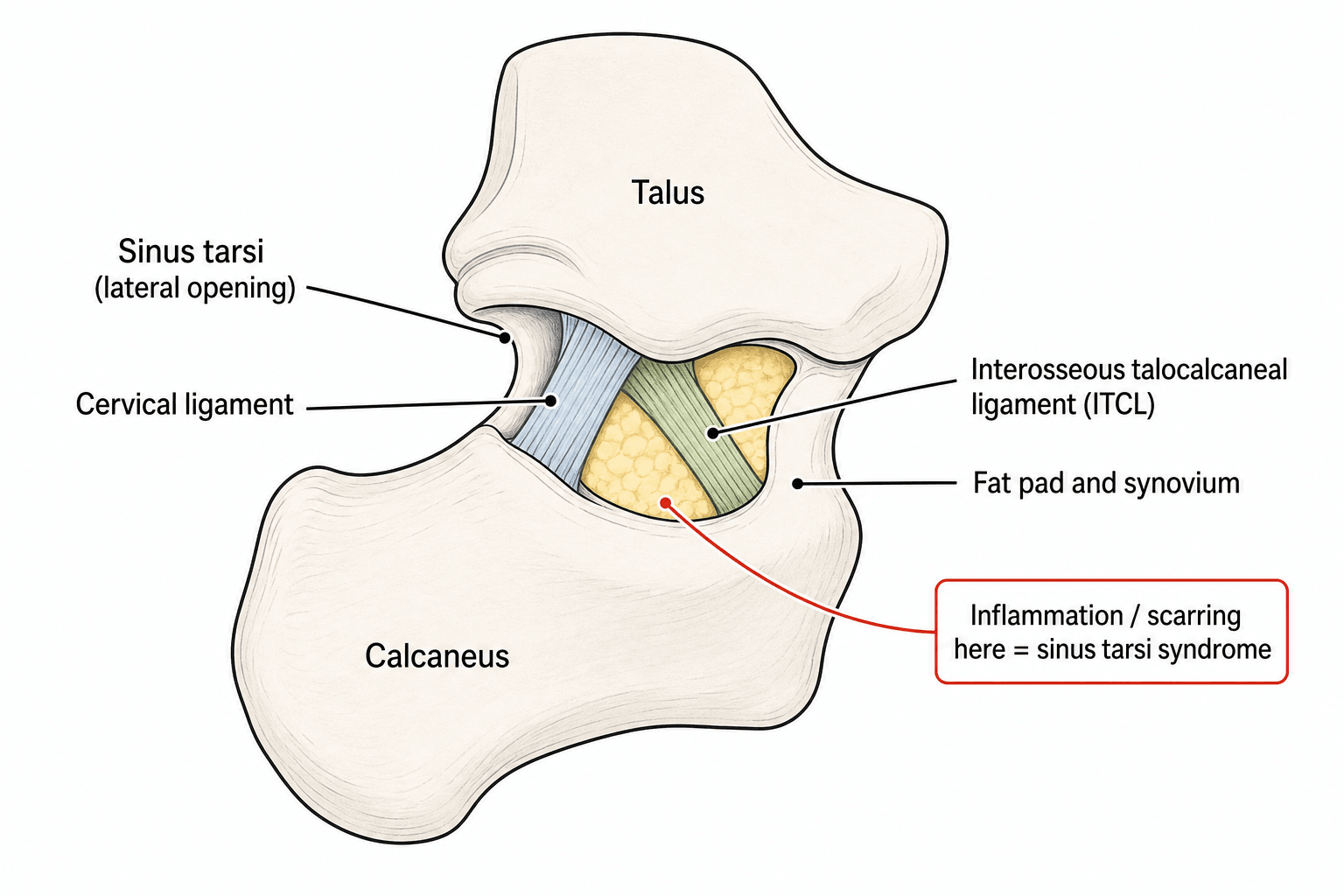
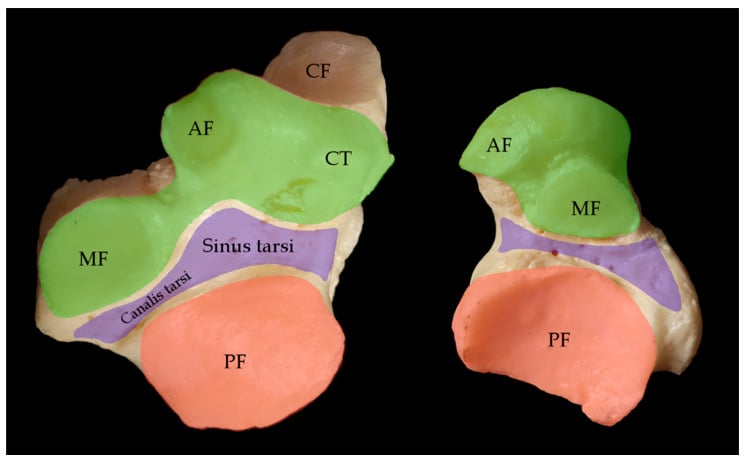
Pathophysiology
The acute injury. The inversion injury disrupts the cervical and interosseous ligaments, contuses the fat pad with haemorrhage, inflames the synovial membrane and traumatises the nerve endings. This acute phase lasts 2-6 weeks.
The chronic phase. Chronic inflammation then develops: persistent synovitis, fibrosis and adhesions with scar formation, fat pad degeneration, loss of proprioceptive function and secondary subtalar instability. These changes perpetuate symptoms beyond 3-6 months.
Why it keeps hurting. The proposed mechanisms:
- Mechanical compression: inversion crushes the lateral sinus tarsi contents between talus and calcaneus
- Ligamentous disruption: partial tears of the cervical ligament and ITCL lead to microinstability
- Proprioceptive loss: mechanoreceptor damage causes subjective instability and poor proprioception
- Inflammatory cascade: chronic synovitis perpetuates pain
- Scar tissue stenosis: adhesions narrow the sinus tarsi, causing impingement
Classification Systems
Stage determines the management approach and prognosis.
- Duration
- Under 3 months
- Clinical Picture
- Recent inversion injury, lateral pain
- Pathology
- Acute inflammation, oedema
- Treatment Approach
- Conservative - rest, NSAIDs, physiotherapy, ankle brace
- Duration
- 3-6 months
- Clinical Picture
- Persistent pain, sinus tarsi tenderness
- Pathology
- Persistent synovitis, early fibrosis
- Treatment Approach
- Injection therapy, proprioceptive training, orthotics
- Duration
- Over 6 months
- Clinical Picture
- Failed conservative treatment, MRI shows synovitis
- Pathology
- Fibrosis, adhesions, stenosis
- Treatment Approach
- Consider arthroscopic debridement; exclude subtalar arthritis first
Clinical Assessment
History. The pain is deep, aching and poorly localised, a vague lateral hindfoot pain anterior to the lateral malleolus. It comes on gradually, weeks to months after an ankle inversion injury, and 70-80% report a sprain 3-12 months before. It is worse on uneven ground, stairs, slopes and lateral movements, with a sensation of instability or giving way.
The triad and its limits. Lateral pain, sinus tarsi tenderness and a sensation of instability make up the classic presentation, but the triad defines a region and a problem, not a specific lesion. Frey's arthroscopic series changed the diagnosis in all 14 feet labelled sinus tarsi syndrome, so treat the triad as the trigger for working out which structure is at fault rather than as the end of the diagnostic process.
Examination. Inspection is usually normal, perhaps with mild lateral swelling. Exquisite point tenderness over the sinus tarsi is the most reliable sign, though it localises the lesion rather than naming it. Subtalar motion is painful at the extremes of inversion and eversion, and the anterior drawer is usually negative unless there is a coexisting ATFL injury.
- Technique
- Press 1 cm anterior and inferior to lateral malleolus
- Positive Finding
- Exquisite point tenderness
- Sensitivity/Specificity
- High sensitivity (over 90%), moderate specificity
- Technique
- Passively invert hindfoot, apply axial pressure
- Positive Finding
- Pain reproduced in sinus tarsi
- Sensitivity/Specificity
- Moderate sensitivity and specificity
- Technique
- Passively evert hindfoot
- Positive Finding
- Pain in sinus tarsi (compression of lateral contents)
- Sensitivity/Specificity
- Lower sensitivity than inversion
- Technique
- Stand on affected leg 30 seconds
- Positive Finding
- Difficulty maintaining balance, subjective instability
- Sensitivity/Specificity
- Reflects proprioceptive deficit
Differential diagnosis. Exclude these before settling on sinus tarsi syndrome:
- Lateral ankle instability: positive anterior drawer and talar tilt. It may coexist, is found in 30-40%, and should be addressed surgically if present
- Subtalar arthritis: older age, crepitus, reduced subtalar motion; radiographs show joint space narrowing
- Peroneal tendinopathy: tenderness posterior to the lateral malleolus, pain with resisted eversion
- Extensor tendinitis (EDB)
- Stress fracture of the calcaneus or talus: keep a high index of suspicion in athletes; MRI shows bone marrow oedema
- Tarsal coalition: congenital, rigid flat foot, usually a younger patient; CT is diagnostic
- Inflammatory arthropathy: rheumatoid, seronegative
- L5-S1 radiculopathy: back pain, dermatomal sensory loss, weakness
- Bone tumour: red flags of night pain and systemic symptoms
The differential examiners most want distinguished from sinus tarsi syndrome after an inversion sprain is anterolateral ankle soft-tissue impingement, and the key is pain location.
After an inversion injury, hypertrophic synovium and scar form a "meniscoid" soft-tissue lesion in the anterolateral gutter, between the lateral talus, the fibula and the anteroinferior tibiofibular ligament. A thickened distal fascicle of the AITFL, Bassett's ligament, can also impinge on the anterolateral talar dome.
The pain is chronic and anterolateral, over the joint line and gutter, more anterior and superior than the sinus tarsi. It is worse on dorsiflexion/eversion and push-off, with a positive anterolateral impingement test (pain or tenderness on dorsiflexion). Sinus tarsi pain, by contrast, sits over the lateral hindfoot opening of the sinus tarsi and is worse on uneven ground.
The diagnosis is largely clinical; MRI or MR arthrography shows the anterolateral soft-tissue mass, and diagnostic arthroscopy is confirmatory. Physiotherapy comes first, then arthroscopic debridement of the meniscoid lesion or Bassett's ligament for refractory cases, with good results.
Persistent post-sprain giving way with sinus tarsi pain should raise subtalar instability. Some cases labelled sinus tarsi syndrome are genuinely this, which is debridement-resistant and needs ligament reconstruction.
The ITCL and cervical ligament, both sinus tarsi contents, stabilise the subtalar joint, the ITCL as the primary stabiliser and the cervical ligament as a secondary one. Their disruption in an inversion injury produces subtalar instability, not merely inflammation, which is why debridement must preserve them.
Subtalar instability is clinically very hard to separate from talocrural (ankle/ATFL) instability. Both give a feeling of giving way on uneven ground with lateral hindfoot pain, and the anterior drawer and talar tilt test the ankle, not the subtalar joint. Broden stress views and subtalar stress radiography have been used but are poorly standardised and unreliable; MRI or MR arthrography and diagnostic arthroscopy help, and a bilateral comparison is essential.
Where genuine subtalar (ITCL/cervical ligament) instability is present, debridement alone is inadequate. It requires anatomic ligament reconstruction, with any coexisting ATFL/CFL instability addressed (e.g. a Brostrom-type repair extended to the subtalar stabilisers).
Investigations
Clinical first. The diagnosis is primarily clinical, made on post-inversion lateral hindfoot pain and sinus tarsi point tenderness. With a typical presentation and a good response to initial conservative treatment, no investigation is required.
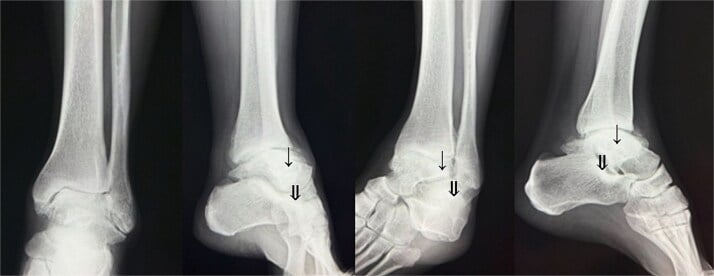
Radiographs. Weight-bearing AP, lateral and mortise ankle views are normal in isolated sinus tarsi syndrome, though they may show signs of chronic lateral instability. Their purpose is to:
- Exclude fractures, arthritis and tarsal coalition
- Assess hindfoot alignment (valgus, varus)
- Check for talar tilt (lateral instability)
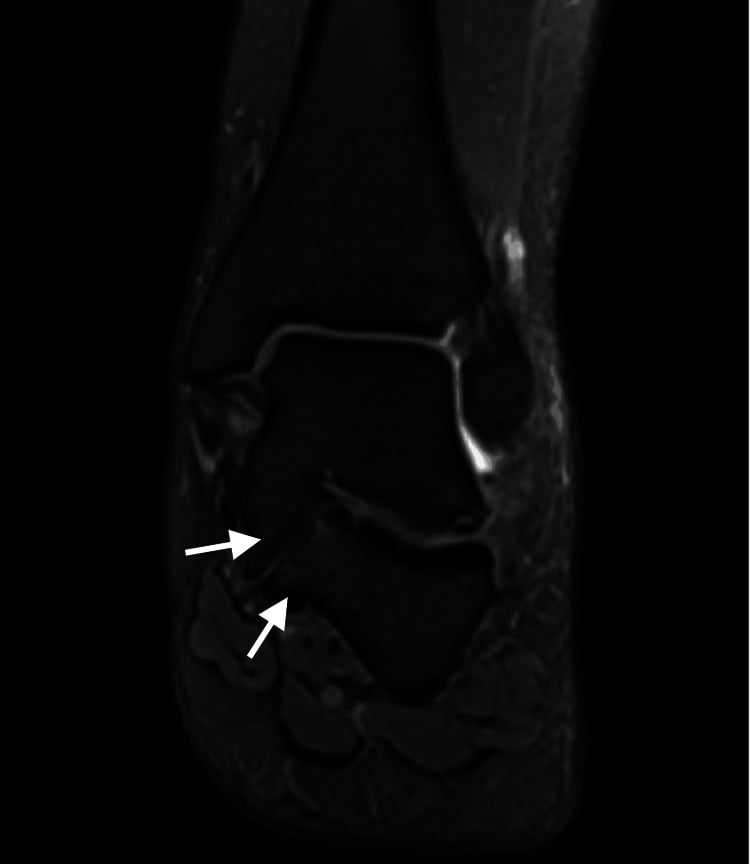
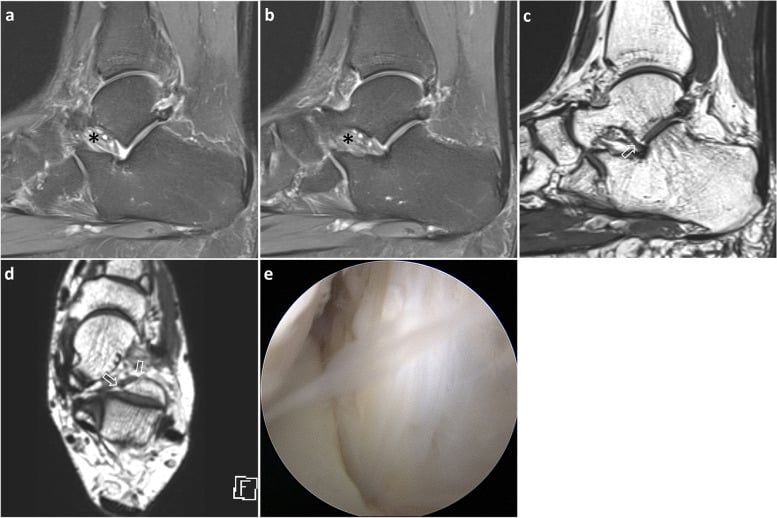
MRI. MRI is the gold standard for diagnosis, with a sensitivity of 80-90% for sinus tarsi pathology, and it is how subtalar arthritis is excluded. The normal high T1 fat signal of the sinus tarsi is lost, replaced by low T1, high T2 inflammatory fluid and fibrotic tissue. On T2-weighted sequences look for:
- High signal intensity in the sinus tarsi (oedema, inflammation) and fat pad signal change
- Disruption or thickening of the cervical ligament
- ITCL signal abnormality
- Synovitis, synovial thickening and fluid in the subtalar joint
Read the report alongside the clinical picture. In Lektrakul's series MR over-called ligament tears against cadaveric specimens, and it confirmed the diagnosis in only 18 of 37 patients who carried it clinically.
Ultrasound. A dynamic, real-time and cost-effective assessment, though operator-dependent. It evaluates the sinus tarsi soft tissues, assesses the integrity of the cervical ligament, identifies fluid collections and guides injection.
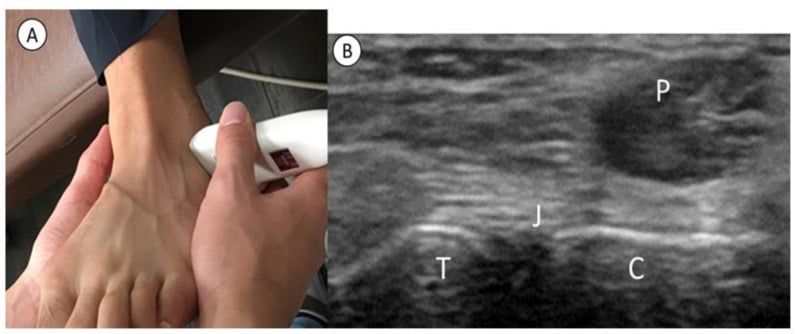
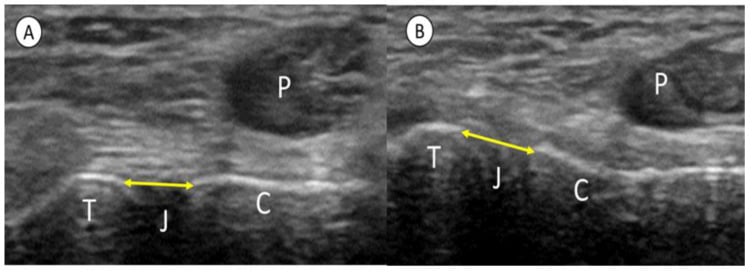
Diagnostic injection. Under ultrasound or fluoroscopic guidance, 2 mL of 1% lidocaine is injected into the sinus tarsi. Immediate pain relief confirms the sinus tarsi as the pain source, with a specificity over 90%, and corticosteroid can be added for a therapeutic effect.
Management Algorithm
The pathway. Red flags and alternative diagnoses (fracture, infection, tumour, inflammatory arthropathy, peroneal pathology, subtalar arthritis) are investigated or referred first. Almost everyone is then treated non-operatively. If pain persists past 3 months, weight-bearing radiographs and an MRI confirm sinus tarsi inflammation and rule out subtalar arthritis, and a targeted local anaesthetic and corticosteroid injection is then both diagnostic and therapeutic. Only a minority, with six months of failed conservative care, an injection response that fades, MRI-confirmed pathology and activity-limiting pain, proceed to arthroscopic debridement.
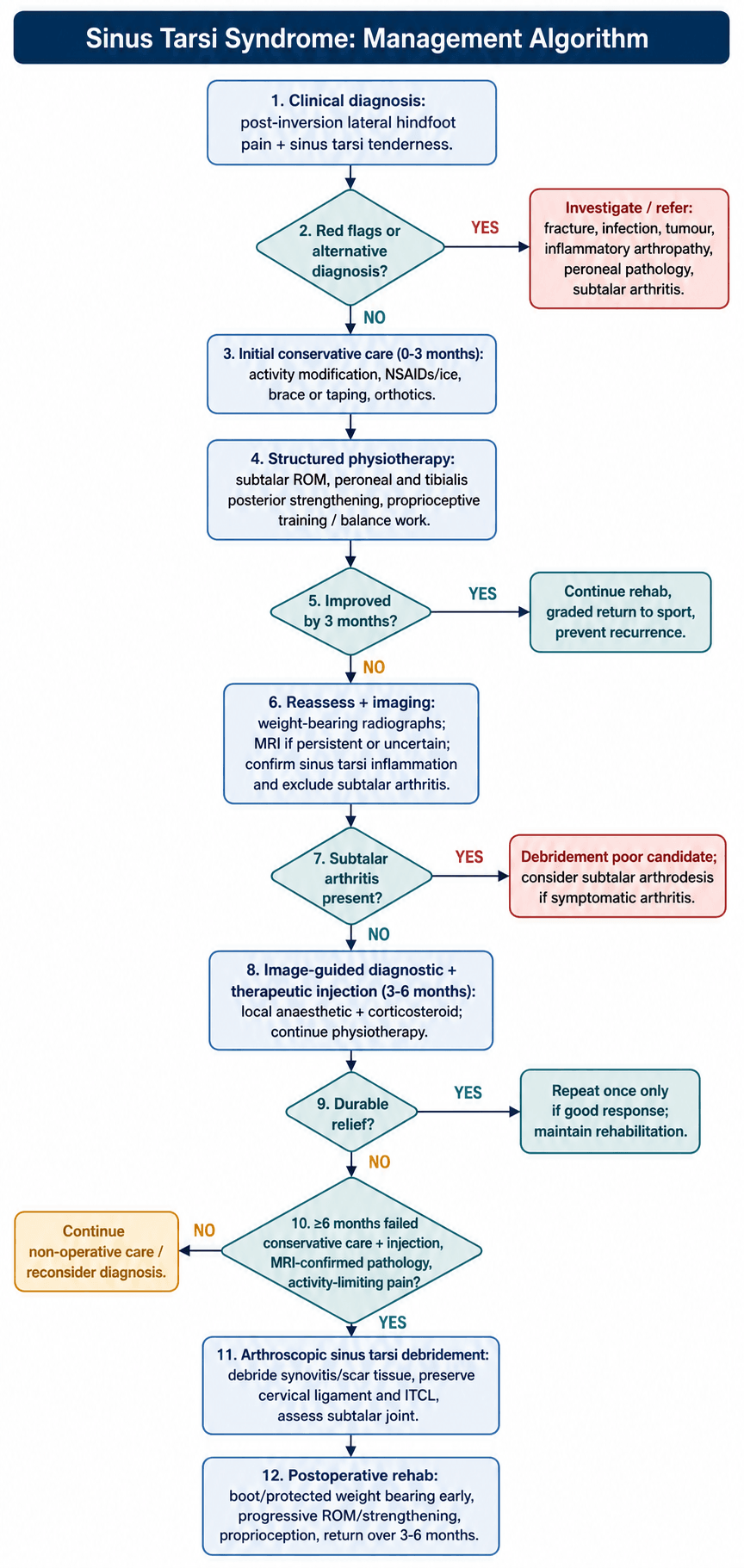
How well it works. With activity modification, anti-inflammatory measures, physiotherapy and orthotics, 50-60% improve within 3 months. The 70-80% response rate refers to the full conservative package of physiotherapy, injections and proprioceptive training. Durability is the weak point: in the one cohort with 12-month follow-up, corticosteroid injection gave good relief at 1-3 months but around 65% of symptoms had recurred by a year (AOFAS falling 88.7 to 79.1). Physiotherapy with proprioceptive training is the part that lasts, so read the injection primarily as a diagnostic test that also buys time, and judge the response at 12 months, not 3.
Conservative Management (First-Line)
Under 3 months. The goals are to reduce inflammation, restore proprioception and prevent chronicity. Proprioceptive retraining is the most important component, because mechanoreceptor damage is what produces the sensation of instability.
Conservative Protocol
- Reduce impact activities
- Avoid uneven surfaces
- Lateral ankle brace or taping
- Continue non-impact exercise (swimming, cycling)
Relative rest allows acute inflammation to settle.
- NSAIDs: regular dosing for 3-4 weeks
- Ice: 15 minutes 3-4 times daily
- Compression: ankle sleeve or wrap
- Range of motion: subtalar joint mobility exercises
- Strengthening: peroneals and tibialis posterior
- Proprioceptive training: balance board, single-leg stance
- Manual therapy: soft-tissue mobilisation
- Lateral wedge: reduces inversion stress
- Cushioned heel: shock absorption
- Arch support: controls excessive pronation
Biomechanical support reduces sinus tarsi loading.
Surgical Technique - Arthroscopic Sinus Tarsi Debridement
Indications for Surgery
All of the following must be met:
- Minimum 6 months of failed conservative treatment
- Documented compliance with physiotherapy and proprioceptive training
- Failed injection therapy (at least one corticosteroid injection)
- MRI confirms sinus tarsi pathology (synovitis, adhesions)
- Pain significantly limiting activities
- Exclusion of subtalar arthritis (poor surgical outcomes)
Surgery is contraindicated by active infection, subtalar arthritis (consider arthrodesis instead), an inadequate conservative trial, inflammatory arthropathy (higher failure rate) and unrealistic expectations.
Arthroscopic debridement. Compared with open surgery it offers smaller incisions, less soft-tissue disruption, faster recovery, better visualisation and a lower complication rate. The aim is to debride pathological tissue while preserving ligamentous stability.
Surgical Steps
- Lateral decubitus, affected side up
- Beanbag or lateral positioning device
- Thigh tourniquet
- Ankle and foot prepped free
- C-arm available for portal placement
- Anterolateral portal (visualisation): just anterior to the tip of the lateral malleolus, at the level of the ankle joint
- Sinus tarsi portal (instrumentation): 1-2 cm anterior and inferior to the lateral malleolus, directly into the sinus tarsi opening
Mark portals before inflation to identify landmarks.
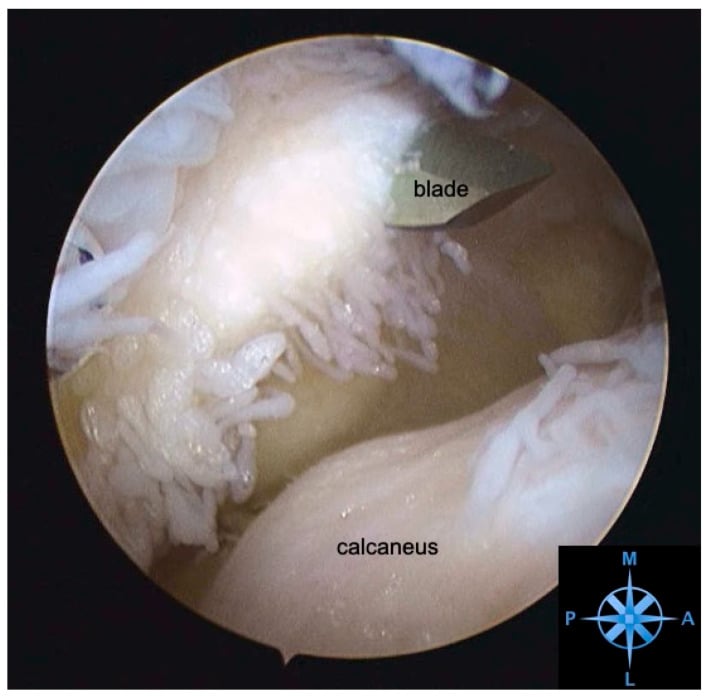
- Insert a 2.7 mm 30-degree arthroscope via the anterolateral portal and navigate to the sinus tarsi
- Inspect the contents: synovitis, adhesions, scar tissue
- Switch to the sinus tarsi portal for direct access
- Debride inflamed synovium with a shaver, thoroughly and gently to avoid iatrogenic damage
- Remove scar tissue and adhesions
- Preserve the cervical ligament and ITCL (do not excise)
- Irrigate thoroughly
- View the subtalar joint through the sinus tarsi and assess the articular cartilage
- If there is significant arthritis, reconsider the surgical plan; arthrodesis may be required instead
- Irrigate portals
- Close skin only, with nylon suture
- Soft compressive dressing
- Non-weight bearing for the first week in a boot
Complications
- Incidence
- 20-30%
- Risk Factors
- Subtalar arthritis, inflammatory arthropathy, inadequate debridement
- Management
- Reassess for missed pathology, consider subtalar arthrodesis
- Incidence
- 5-10%
- Risk Factors
- Open technique, inadequate visualisation
- Management
- Numbness dorsum of foot. Usually recovers 3-6 months. Desensitisation if persistent
- Incidence
- 5%
- Risk Factors
- Open surgery, smoking, diabetes
- Management
- Wound care, antibiotics if infection. Delayed healing common with open technique
- Incidence
- 10-15%
- Risk Factors
- Aggressive debridement, prolonged immobilisation
- Management
- Physiotherapy, mobilisation. Rarely clinically significant
- Incidence
- 10-20%
- Risk Factors
- Incomplete debridement, untreated instability
- Management
- Revision debridement or consider arthrodesis
- Incidence
- Rare (under 5%)
- Risk Factors
- Excessive ligament excision
- Management
- Prevention: Preserve cervical and ITCL. Treatment: Lateral ligament reconstruction
The most common cause of surgical failure is unrecognised subtalar arthritis. Preoperative MRI must assess the subtalar cartilage, and if arthritis is present the patient is counselled on the failure rate of debridement alone and that subtalar arthrodesis may be necessary.
The other causes of persistent pain:
- Incomplete debridement of pathological tissue
- Coexisting lateral ankle instability not addressed
- Inflammatory arthropathy (RA, seronegative)
- Wrong diagnosis (L5-S1 radiculopathy, peroneal pathology)
Postoperative Care and Rehabilitation
Return to activity. After arthroscopic debridement, walking returns at 6-8 weeks, running at 3-4 months and full sport at 4-6 months, with proprioceptive retraining critical to preventing recurrence. Open debridement is slower because of the soft-tissue disruption, typically adding 4-6 weeks, with full return at 5-6 months.
Rehabilitation After Arthroscopic Debridement
- Below-knee boot or CAM walker
- Non-weight bearing the first week; partial weight-bearing in week 2 if pain is minimal
- Elevate, ice, analgesia
- Ankle pumps and toe exercises
- Sutures removed at 2 weeks
- Weight-bearing as tolerated in the boot
- Gentle range of motion exercises
- Subtalar mobilisation (plantarflexion-inversion, dorsiflexion-eversion)
- Proprioceptive training: balance board, single-leg stance
- Continue ice and elevation
- Wean from the boot to supportive shoes
- Progressive strengthening: peroneals, tibialis posterior
- Advance proprioception: unstable surfaces, eyes closed
- Start low-impact activities (swimming, cycling)
- Gradual return to walking, then light jogging
- Sport-specific training from month 3
- Continue proprioceptive maintenance
- An ankle brace may be needed initially for high-risk sports
Red flags after surgery. Early identification prevents complications. The patient should contact the surgeon with:
- Increasing pain after initial improvement
- Signs of infection (fever, drainage, erythema)
- No improvement by 3 months
- New instability or giving way
- Numbness or tingling (nerve injury)
- Inability to bear weight by 6 weeks
Outcomes and Prognosis
Results. Arthroscopic debridement gives 70-80% good to excellent results and open debridement 65-75%. The best outcomes are in post-traumatic sinus tarsi syndrome without arthritis, treated early, in a patient who complies with proprioceptive training and responded to the diagnostic injection. Failed multiple injection attempts, like subtalar arthritis and inflammatory arthropathy, mark the patients who do worst.
- Poor Prognosis
- Inflammatory arthropathy (RA, seronegative)
- Poor Prognosis
- Chronic symptoms (over 12 months)
- Poor Prognosis
- Subtalar arthritis on MRI
- Poor Prognosis
- No response to injection
- Poor Prognosis
- Poor compliance, inadequate rehab
- Poor Prognosis
- Older age (over 50)
The presence of subtalar arthritis on MRI is the single strongest predictor of poor outcome with debridement alone; consider arthrodesis instead.
Guidelines, Registries & Global Practice
Sinus tarsi syndrome (STS) is not covered by a dedicated society guideline (no AAOS, NICE, BOA, AO Foundation or EFORT clinical practice guideline addresses it specifically), and there is no joint/implant registry for it because no implant is used. Practice is therefore guided by lateral-ankle-sprain and chronic-ankle-instability evidence plus expert consensus. The evidence base is dominated by retrospective level IV series, and a recurring theme in the modern literature (Frey 1999; Willegger 2023) is that "STS" is a descriptive label for several distinct pathologies that should be named precisely whenever possible.
Global Epidemiology
- Figure
- 2.15 per 1000 person-years (peak 7.2 at 15-19 yrs)
- Source
- Waterman 2010 (PMID 20926721)
- Figure
- 49.3% (basketball, football, soccer)
- Source
- Waterman 2010
- Figure
- 22.5% in one cohort
- Source
- Xu 2024 (PMID 38664210)
- Figure
- Frequent; drives combined surgery
- Source
- Li 2018 (PMID 29189883)
Guidance & Evidence Synthesis Across Bodies
- Position relevant to STS
- No STS-specific guideline; lateral ankle sprain managed with functional rehabilitation and bracing, surgery for refractory instability
- Evidence level
- Consensus / level II for rehab
- Position relevant to STS
- No STS-specific guidance; chronic lateral ankle pain investigated with MRI and managed conservatively first, specialist foot & ankle referral if refractory
- Evidence level
- Consensus
- Position relevant to STS
- Address subtalar instability and arthroscopy within foot & ankle education; STS treated as part of the subtalar instability/impingement spectrum
- Evidence level
- Expert / level IV
- Position relevant to STS
- Recommend abandoning the umbrella term and using subtalar arthroscopy to reach a specific diagnosis
- Evidence level
- Narrative review
Practice Variation
- Conservative first: structured rehabilitation with proprioceptive training before any procedure
- Diagnostic injection: local anaesthetic into the sinus tarsi to confirm the pain source
- MRI before surgery: to characterise ligaments and exclude subtalar arthritis
- Preserve stabilising ligaments (cervical, ITCL) during debridement
- Terminology: "sinus tarsi syndrome" vs specific diagnoses (subtalar instability, impingement, ITCL tear)
- Image guidance for injection: ultrasound vs fluoroscopy vs landmark technique
- Adjuncts (PRP, prolotherapy): used in some centres, limited high-level evidence, variable funding
- Surgery: arthroscopic vs open debridement, and whether to combine with lateral ligament reconstruction
Differential Diagnosis
- Distinguishing Feature
- Recurrent giving way, lateral laxity
- Key Test
- Positive anterior drawer / talar tilt; stress views
- Discriminator vs STS
- Drawer positive (negative in isolated STS); may coexist
- Distinguishing Feature
- Older patient, stiffness, crepitus
- Key Test
- Weight-bearing X-ray / CT shows joint narrowing
- Discriminator vs STS
- Joint space loss; predicts poor debridement outcome
- Distinguishing Feature
- Pain posterior to lateral malleolus
- Key Test
- Resisted eversion pain; dynamic ultrasound
- Discriminator vs STS
- Tenderness behind, not anterior to, malleolus
- Distinguishing Feature
- Younger patient, rigid flatfoot
- Key Test
- CT / MRI (talocalcaneal or calcaneonavicular bar)
- Discriminator vs STS
- Bony/fibrous bar; restricted subtalar motion
- Distinguishing Feature
- Athlete, load-related pain
- Key Test
- MRI bone marrow oedema
- Discriminator vs STS
- Marrow oedema in bone, not just sinus fat pad
- Distinguishing Feature
- Anterolateral pain with dorsiflexion
- Key Test
- MRI / arthroscopy soft-tissue impingement
- Discriminator vs STS
- Pain at ankle joint line, not sinus tarsi opening
- Distinguishing Feature
- Back pain, dermatomal sensory change
- Key Test
- Neuro exam; lumbar MRI
- Discriminator vs STS
- Neurological signs; no focal sinus tarsi tenderness
High-risk areas for litigation:
-
Inadequate conservative trial: Document minimum 6 months comprehensive conservative treatment including physiotherapy with proprioceptive training, bracing, and injection therapy before recommending surgery.
-
Missed subtalar arthritis: Preoperative MRI must assess subtalar joint. Performing debridement in presence of arthritis leads to high failure rate. Document discussion of findings and potential need for arthrodesis.
-
Nerve injury: Superficial peroneal nerve at risk. Informed consent must include numbness risk (5-10%). Document protection of nerve during surgery.
-
Persistent pain: 20-30% have incomplete relief. Set realistic expectations preoperatively. Document that surgery is not guaranteed cure.
-
Wrong diagnosis: Exclude lateral ankle instability, peroneal pathology, subtalar arthritis, stress fracture before diagnosing sinus tarsi syndrome. Consider diagnostic injection to confirm.
Documentation requirements:
- Timeline of conservative treatment and compliance
- Injection response (diagnostic confirmation)
- MRI findings especially subtalar joint assessment
- Informed consent discussion including complications and incomplete relief risk
- Surgical findings (presence of arthritis, extent of debridement)
MCQ Practice Points
Q: What is the most important ligament within the sinus tarsi for subtalar joint stability?
A: The interosseous talocalcaneal ligament (ITCL) is the primary stabilizer of the subtalar joint. It is located in the medial aspect of the sinus tarsi (tarsal canal) and has two bands. The cervical ligament is located more laterally in the sinus tarsi and is a secondary stabilizer. During surgical debridement, both ligaments must be preserved to maintain subtalar stability. Excessive excision of these ligaments can lead to iatrogenic subtalar instability.
Q: What is the most reliable physical examination finding in sinus tarsi syndrome, and how far does it take you?
A: Exquisite point tenderness over the sinus tarsi (located anterior and inferior to the lateral malleolus) is the most reliable clinical sign, present in over 90% of cases. The sinus tarsi is palpable approximately 1-2 cm anterior to the lateral malleolus. Other findings include pain with forced inversion and eversion, and subjective instability. Be careful how you claim this in a viva: the tenderness is sensitive but not specific. It tells you the problem is in the sinus tarsi; it does not tell you which of the several pathologies that occupy it - interosseous ligament tear, arthrofibrosis, subtalar instability, ganglion, early subtalar arthritis - is responsible. Relief after a diagnostic local anaesthetic injection confirms the region; identifying the actual lesion still needs imaging and, in unclear cases, subtalar arthroscopy.
Q: A patient with suspected sinus tarsi syndrome undergoes MRI. What is the characteristic finding?
A: High T2 signal intensity within the sinus tarsi (fat pad edema and inflammation) is seen in 80-90% of cases. Additional findings may include disruption or signal changes in the cervical ligament, interosseous talocalcaneal ligament abnormalities, synovitis, and subtalar joint effusion. Plain radiographs are usually normal. The most important MRI assessment is to exclude subtalar arthritis, which is a poor prognostic indicator for surgical debridement and may require arthrodesis instead.
Q: What is the most important component of conservative treatment for sinus tarsi syndrome?
A: Proprioceptive training with balance exercises and single-leg stance work is the most critical component. The sinus tarsi contains dense mechanoreceptors that provide proprioceptive feedback for hindfoot position. Injury disrupts this proprioceptive function, leading to the sensation of instability. Rehabilitation must include balance board exercises, single-leg stance on unstable surfaces, and sport-specific proprioceptive drills. This is combined with activity modification, NSAIDs, ankle bracing, and orthotics. Approximately 70-80% of patients respond to conservative treatment over 3-6 months.
Q: During arthroscopic sinus tarsi debridement, what is the most important technical point?
A: Preserve the cervical ligament and interosseous talocalcaneal ligament while debriding synovium and scar tissue. The goal of surgery is to remove inflamed synovium, scar tissue, and adhesions that are causing pain and impingement. However, the ligaments provide essential subtalar joint stability and must be preserved. Complete excision of these ligaments can lead to iatrogenic subtalar instability. The surgical principle is debridement of pathologic soft tissue while maintaining ligamentous integrity.
Q: Which MRI finding predicts the poorest outcome with arthroscopic sinus tarsi debridement?
A: Subtalar arthritis (joint space narrowing, cartilage loss, subchondral changes) is the strongest predictor of poor outcome. Debridement alone in the presence of subtalar arthritis has only a 40-60% success rate compared to 70-80% without arthritis. If significant arthritis is present, the patient should be counseled that subtalar arthrodesis may be necessary for definitive pain relief. Preoperative MRI assessment of the subtalar joint is essential to identify arthritis and set realistic expectations.
Exam Viva Scenarios
Practise clinical reasoning and management decisions out loud
“A 28-year-old recreational soccer player presents with 4 months of lateral ankle pain following an inversion injury. He describes vague pain anterior to the lateral malleolus, worse on uneven ground. He feels his ankle gives way occasionally. On examination, you find exquisite point tenderness over the sinus tarsi. Anterior drawer is negative. How do you diagnose and initially manage this patient?”
“The same patient returns after 5 months of comprehensive conservative treatment including physiotherapy with proprioceptive training, bracing, and orthotics. He remains significantly symptomatic with persistent sinus tarsi pain limiting his soccer. MRI shows high T2 signal in sinus tarsi with cervical ligament disruption but no subtalar arthritis. What are your next steps?”
“You are planning arthroscopic sinus tarsi debridement for a patient who has failed 8 months of conservative treatment and two corticosteroid injections. Walk me through your surgical technique. What would you do if you encounter significant subtalar arthritis during the arthroscopy? What are the potential complications?”
Key Anatomy
- Sinus tarsi: Cone-shaped tunnel between talus (superior) and calcaneus (inferior)
- Location: Opens laterally anterior to lateral malleolus, palpable 1-2 cm anterior to tip
- Contents: Interosseous talocalcaneal ligament (ITCL - main stabilizer), cervical ligament, fat pad, mechanoreceptors
- Function: Subtalar stability, proprioception for hindfoot position
Clinical Features
- Triad: Lateral hindfoot pain, sinus tarsi point tenderness, instability sensation
- History: 70-80% follow ankle inversion injury, pain worse on uneven ground
- Examination: Exquisite sinus tarsi tenderness (sensitive, not specific), pain with forced inversion/eversion
- Negative anterior drawer unless coexisting lateral ankle instability (30-40%)
Investigations
- Clinical diagnosis: Based on history and examination
- X-rays: Usually normal, exclude fracture and arthritis
- MRI: High T2 signal in sinus tarsi (80-90% sensitivity), assess subtalar joint for arthritis
- Diagnostic injection: 2 mL lidocaine, immediate relief confirms diagnosis (over 90% specificity)
Conservative Management
- First-line: 70-80% respond over 3-6 months; ~65% recur by 12 months after injection
- Proprioceptive training: Most important component - balance exercises, single-leg stance
- Activity modification: Avoid uneven surfaces, lateral ankle brace
- Injection: Corticosteroid if failed 3 months conservative, 60-70% temporary relief
- Limit 2 corticosteroid injections maximum
Surgical Technique
- Indication: Over 6 months failed conservative including injection therapy
- Arthroscopic debridement: Lateral decubitus, anterolateral and sinus tarsi portals
- Key technical point: Debride synovium and scar, PRESERVE cervical and ITCL ligaments
- Assess subtalar joint: If arthritis present, may require arthrodesis instead
- Success: 70-80% good to excellent results without arthritis, 40-60% if arthritis present
Complications and Outcomes
- Persistent pain: 20-30% most common, often due to unrecognized arthritis
- Nerve injury: 5-10% superficial peroneal nerve, numbness dorsum of foot
- Recurrence: 10-20%, incomplete debridement or untreated instability
- Best prognosis: Post-traumatic, no arthritis, good injection response
- Worst prognosis: Subtalar arthritis (consider arthrodesis), inflammatory arthropathy
Evidence Base and Key Studies
Tarsal Sinus: MR Imaging and Pathologic Findings
- Combined cadaveric (10 specimens) and retrospective clinical study (37 patients with a clinical diagnosis of sinus tarsi syndrome)
- MR imaging and MR arthrography assessed the cervical ligament (CL) and interosseous talocalcaneal ligament (ITCL)
- In 18 patients the diagnosis was confirmed on MR: combined ITCL and CL tears in 11, isolated CL tears in 3, ganglia in 3, and pigmented villonodular synovitis in 1
- Reconstructed MR arthrograms aligned to the ligament axes improved evaluation of individual tarsal sinus structures
- The cadaveric arm is the sobering part and is usually not quoted: MR imaging called two complete and three partial cervical ligament tears plus one complete interosseous talocalcaneal tear, but pathological correlation confirmed only ONE complete and ONE partial cervical tear - MR over-called ligament injury against the specimen
Arthroscopic Evaluation of the Subtalar Joint: Does Sinus Tarsi Syndrome Exist?
- Retrospective review of 49 subtalar arthroscopies (1989-1996); 94% good/excellent results overall for subtalar pathology
- Of 14 feet with a preoperative diagnosis of 'sinus tarsi syndrome', ALL diagnoses were changed at arthroscopy
- Revised diagnoses: 10 interosseous ligament tears, 2 arthrofibrosis, 2 degenerative joints
- Authors concluded 'sinus tarsi syndrome' is an inaccurate, non-specific term that should be replaced with a precise arthroscopic diagnosis
- Commonest complication was transient superficial peroneal nerve neuropraxia (low overall complication rate)
Arthroscopic Debridement with Ankle Stabilisation for STS in Chronic Ankle Instability
- Retrospective series of 57 patients with STS and chronic ankle instability; 40 followed (mean 30.7 months)
- All underwent thorough tarsal sinus debridement; 54 had lateral ligament repair and 3 reconstruction
- Modified AOFAS improved from median 62.5 to 93, Karlsson from 57 to 90, Tegner from 1 to 5
- Addressing coexisting lateral instability at the same setting gave satisfactory functional outcomes
- The mechanistic observation the paper is actually built on: 53 of 57 (93.0%) had an arch structure between the posterior and middle subtalar joints, formed by the medial calcaneal component of the medial root of the inferior extensor retinaculum, which the authors propose contributes to the pathological mechanism
Sinus Tarsi Corticosteroid Injection after Lateral Ankle Sprain
- Retrospective cohort: 391 lateral ankle sprains screened, 88 with STS treated by sinus tarsi corticosteroid injection (betamethasone + lidocaine)
- Incidence of STS after lateral ankle sprain was 22.5%
- VAS and AOFAS improved significantly at 1 month (VAS 1.2, AOFAS 88.7) versus baseline
- Benefit waned over time with a ~65% symptom recurrence rate within 12 months (AOFAS 79.1 at 1 year)
- Authors suggest ankle arthroscopy when conservative measures fail to give durable benefit
The Evolution of Sinus Tarsi Syndrome - What Is the Underlying Pathology? A Critical Review
- Critical narrative review of the pathoanatomy, biomechanics and aetiology of sinus tarsi pain
- Concludes STS is largely a 'catch-all' descriptor for several distinct pathologies (impingement, subtalar instability, ligament/ganglion lesions and others)
- Proposes a structured algorithm for clinical, radiological and arthroscopic evaluation
- Recommends replacing the umbrella term with the specific underlying diagnosis whenever possible
The Epidemiology of Ankle Sprains in the United States
- Prospective national surveillance (NEISS) of an estimated 3.14 million ED-presenting ankle sprains, 2002-2006
- Overall incidence 2.15 per 1000 person-years; peak 7.2 per 1000 at age 15-19 years
- Nearly half (49.3%) of sprains occurred during sport, most often basketball (41%), football (9%) and soccer (8%)
- Sex differences are age-dependent: higher in young males, higher in women over 30