Ulnar Nerve | Pisiform Origin | MCP Abduction | Guyon Canal Landmark
- Deep branch of ulnar nerve (C8, T1) supplies the ADM
- Pisiform bone is the primary origin - key landmark
- Dual insertion to proximal phalanx AND extensor expansion
- Forms ulnar border of Guyon canal
- Wasting indicates ulnar nerve pathology at or proximal to wrist
- “Compare hypothenar eminences bilaterally for asymmetric wasting
- “Zone 2 compression = pure motor loss, no sensory deficit
- “Wartenberg sign paradox: ADM also ulnar-innervated but EDM abducts
- “ADM testing is key for localizing ulnar nerve lesions
Overview and Anatomical Location
Abductor digiti minimi exists in both the hand and the foot, and the two are unrelated in every way that matters clinically. Everything here concerns the hypothenar muscle: pisiform origin, ulnar nerve, Guyon's canal.
The foot muscle lies in the first layer of the sole, running from the calcaneal tuberosity to the fifth toe, and is supplied by the first branch of the lateral plantar nerve (the inferior calcaneal, or Baxter's, nerve). That branch is the one entrapped in Baxter's neuropathy, where selective fatty atrophy of abductor digiti minimi on MRI, with the other plantar muscles spared, is the diagnostic sign. It is a genuinely useful cause of chronic heel pain that is mistaken for plantar fasciitis, and it is covered on our Baxter's Neuropathy page.
The parallel is worth holding because it is the same lesson twice. In both limbs this small muscle earns its place mainly as a marker of what its nerve is doing: hypothenar wasting localising an ulnar lesion at the wrist, and isolated plantar atrophy localising an entrapment under the heel.
Position. The abductor digiti minimi (ADM) is the most superficial and most ulnar of the three hypothenar muscles. It lies on the ulnar side of the palm, parallel to the axis of the fifth metacarpal, and forms the visible ulnar border of the hypothenar eminence when the hand is at rest. Its belly is readily palpable along the ulnar border of the palm, and it is an important clinical landmark for assessing ulnar nerve function.
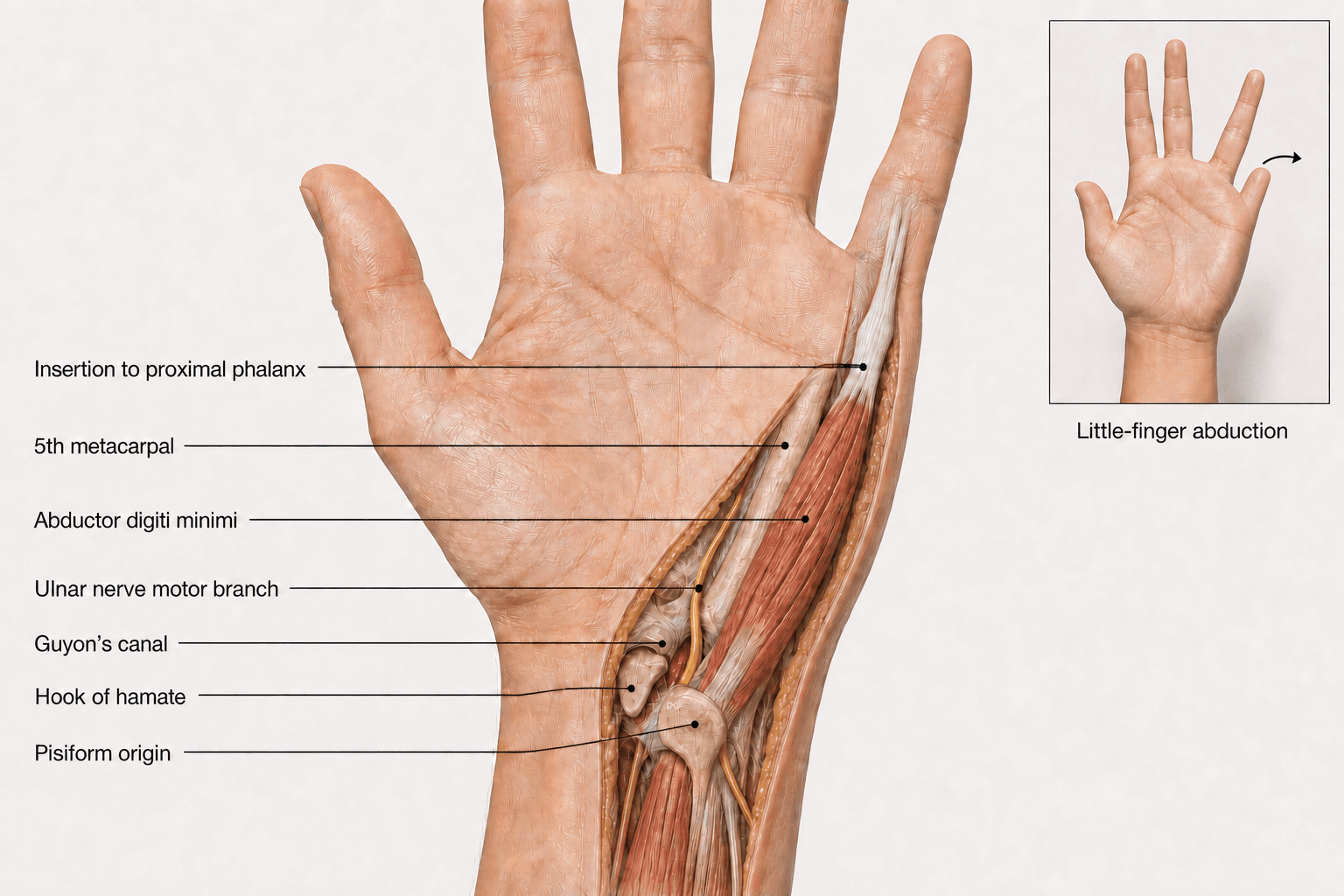
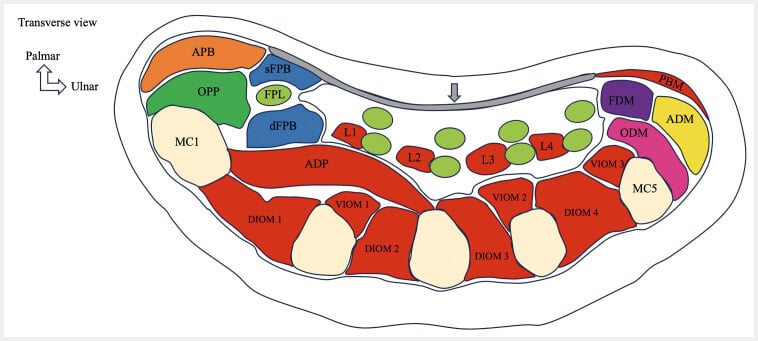
The compartment. The hypothenar compartment is bounded superficially by the palmar aponeurosis and deeply by the fifth metacarpal. ADM, flexor digiti minimi brevis and opponens digiti minimi fill it and make the fleshy prominence on the ulnar side of the palm, layered from superficial to deep:
- Abductor digiti minimi - most superficial and most ulnar
- Flexor digiti minimi brevis - intermediate, and the most radial of the three
- Opponens digiti minimi - deepest, on the fifth metacarpal
This layered arrangement predicts both the examination contour and the operative exposure.
Origin and Insertion
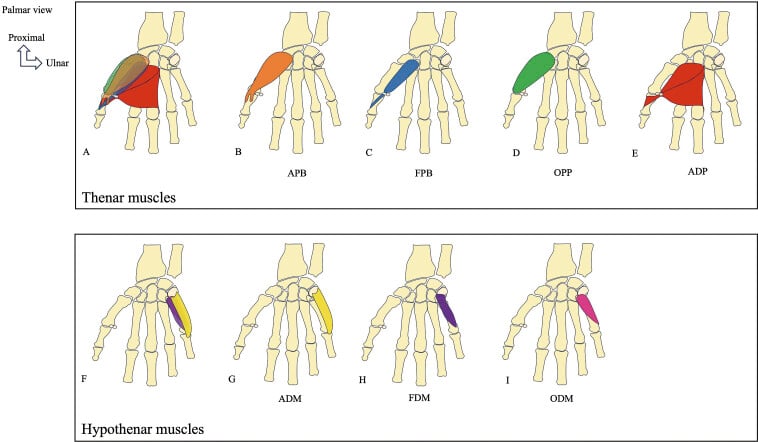
Origin. The main origin is the medial and palmar surface of the pisiform, a sesamoid bone within the tendon of flexor carpi ulnaris. That makes the pisiform clinically important: pisiform fractures or excision may affect ADM function. Secondary origins are the pisohamate ligament, which connects the pisiform to the hook of hamate, the ulnar aspect of the flexor retinaculum (transverse carpal ligament), and the hypothenar fascia, the deep fascia overlying the hypothenar compartment.
- Primary Origin
- Pisiform bone
- Secondary Origin
- Pisohamate ligament, flexor retinaculum
- Primary Origin
- Hook of hamate
- Secondary Origin
- Flexor retinaculum
- Primary Origin
- Hook of hamate
- Secondary Origin
- Flexor retinaculum
Insertion. The insertion is dual. The main attachment, to the ulnar side of the base of the proximal phalanx of the little finger, provides the primary abduction at the MCP joint. A second attachment, to the ulnar edge of the extensor expansion (dorsal digital expansion), lets the muscle contribute to finger extension, particularly at the IP joints.
Because ADM also reaches the extensor expansion, isolated ADM testing should be done with the MCP joint in slight flexion to eliminate the extensor contribution.
Nerve Supply
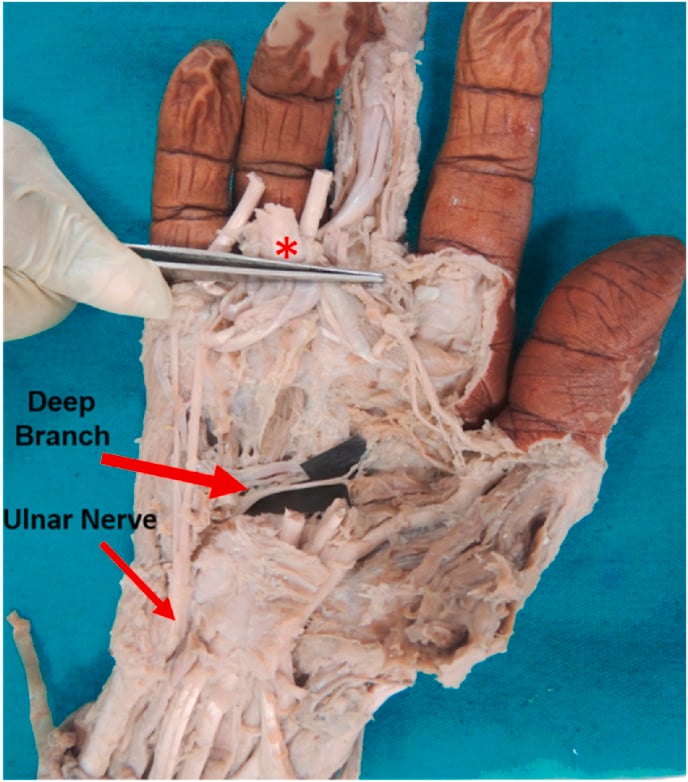
The nerve. ADM is supplied by the deep branch of the ulnar nerve, root values C8 and T1. The course to the muscle, in order:
- The ulnar nerve enters the hand through Guyon canal (the ulnar tunnel)
- It divides into superficial and deep branches at the level of the pisiform
- The deep branch curves around the hook of hamate
- It immediately supplies the hypothenar muscles, ADM first
- It continues deep into the palm to supply the interossei and lumbricals 3-4
- Motor Supply
- Palmaris brevis only
- Sensory Supply
- Ulnar 1.5 digits (palmar)
- Motor Supply
- Hypothenars, interossei, lumbricals 3-4, adductor pollicis
- Sensory Supply
- None
Blood Supply
Arteries. The supply comes mainly from the ulnar artery. The deep palmar branch of the ulnar artery is the main supply to the muscle belly, and the ulnar artery gives direct branches as it courses through Guyon canal. The deep palmar arch (anastomosis) contributes to the deep supply, along with muscular branches from surrounding vessels.
Veins and lymphatics. Venae comitantes accompany the arterial branches and drain into the deep palmar venous arch and ultimately the ulnar veins. Lymphatics follow the venous drainage to the epitrochlear nodes and then the axillary nodes, which matters when infection spreads from the hypothenar region.
Function and Actions
Abduction. The primary action moves the little finger away from the ring finger in the plane of the palm, at the MCP joint. It is most effective with the MCP joint in neutral or slight flexion, and works against gravity when the forearm is supinated.
Flexion and extension. The muscle's palmar position relative to the MCP joint axis gives it a secondary action of MCP flexion. Through its insertion into the extensor expansion it helps extend the PIP and DIP joints when the MCP joint is stabilised, working synergistically with extensor digitorum.
Grip. ADM contributes to power grip by helping wrap the little finger around objects, to hook grip by maintaining finger position during sustained grip, and to precision handling through fine adjustments of little-finger position. In ulnar nerve palsy, loss of ADM function contributes to difficulty with tasks requiring little-finger positioning.
- Technique
- Spread fingers apart against resistance
- Interpretation
- Tests ADM and interossei
- Technique
- Observe resting posture of little finger
- Interpretation
- Abducted little finger = weak interossei, EDM abducting unopposed
- Technique
- Hold paper between extended fingers
- Interpretation
- Tests adduction (interossei), not ADM
The Wartenberg sign (abducted little finger at rest) indicates ulnar nerve palsy, yet ADM is ALSO ulnar-innervated and weak in that palsy. The abduction comes from the EDM (radial nerve), which has an ulnar slip that abducts the little finger when the interossei are weak.
Guyon Canal and Anatomical Relationships
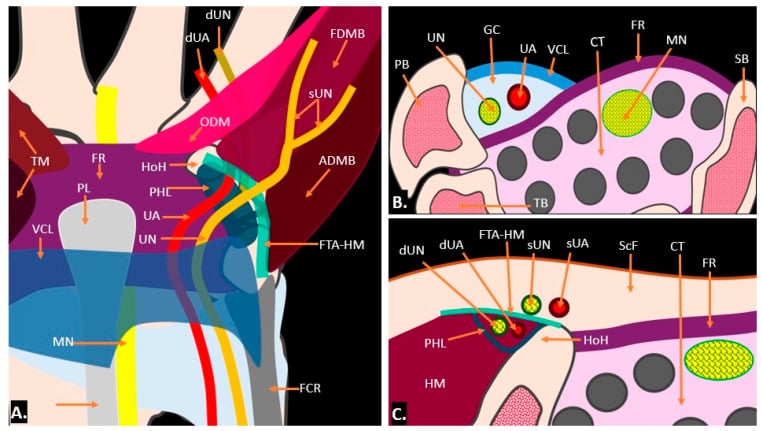
Guyon canal. ADM forms the ulnar border of Guyon canal (the ulnar tunnel), through which the ulnar nerve and artery pass. The canal contains the ulnar nerve, ulnar artery, ulnar veins and fat, and its walls are:
- Roof - palmar carpal ligament (volar carpal ligament) and palmaris brevis
- Floor - flexor retinaculum and hypothenar muscles
- Ulnar wall - pisiform bone and ADM origin
- Radial wall - hook of hamate
Guyon canal is ULNAR to the carpal tunnel and is NOT covered by the flexor retinaculum (transverse carpal ligament). The pisiform and hook of hamate are the key bony landmarks. Carpal tunnel release does NOT decompress Guyon canal.
The fifth metacarpal. ADM lies ulnar to the fifth metacarpal shaft. In fifth metacarpal (boxer's) fractures the muscle may be involved in soft-tissue swelling and displacement forces, and rarely in compartment syndrome.
Classification
Guyon canal zones. Gross and Gelberman divided Guyon canal into three anatomical zones by their relationship to the ulnar nerve bifurcation. The site of compression determines the clinical presentation, and the classification guides surgical decompression planning.
- Location
- Proximal to the bifurcation
- Contents
- Main trunk of the ulnar nerve (motor and sensory)
- Clinical pattern
- Mixed motor and sensory deficit
- ADM
- Weak
- Location
- Around the hook of hamate, deep branch territory
- Contents
- Deep motor branch only
- Clinical pattern
- Pure motor deficit, sensation preserved
- ADM
- Weak - the key finding
- Location
- Distal, superficial branch territory
- Contents
- Superficial sensory branch only
- Clinical pattern
- Pure sensory deficit, motor preserved
- ADM
- Normal
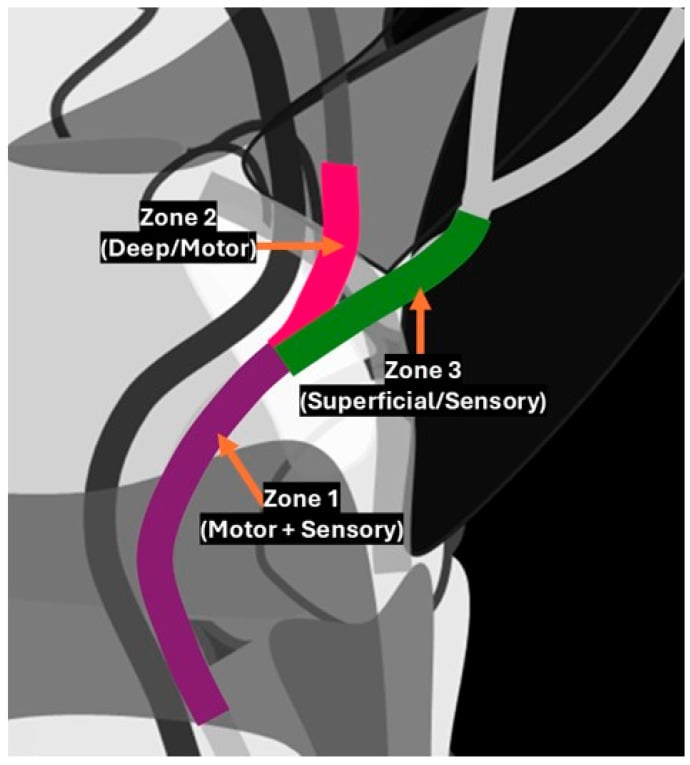
Zone 2 compression (deep branch only) causes weakness of all ulnar-innervated intrinsics including ADM BUT spares sensation. Classic causes include ganglion cysts, hook of hamate fractures, or cyclist's palsy. ADM testing is essential.
Reading Zone 2. The table gives the usual pattern, and the evidence below qualifies it. Gross and Gelberman found that whether the hypothenar muscles, ADM included, are affected in a Zone 2 lesion depends on the exact site of the lesion within that zone, and a deep-branch lesion distal to the ADM take-off can spare the ADM while the interossei are denervated.
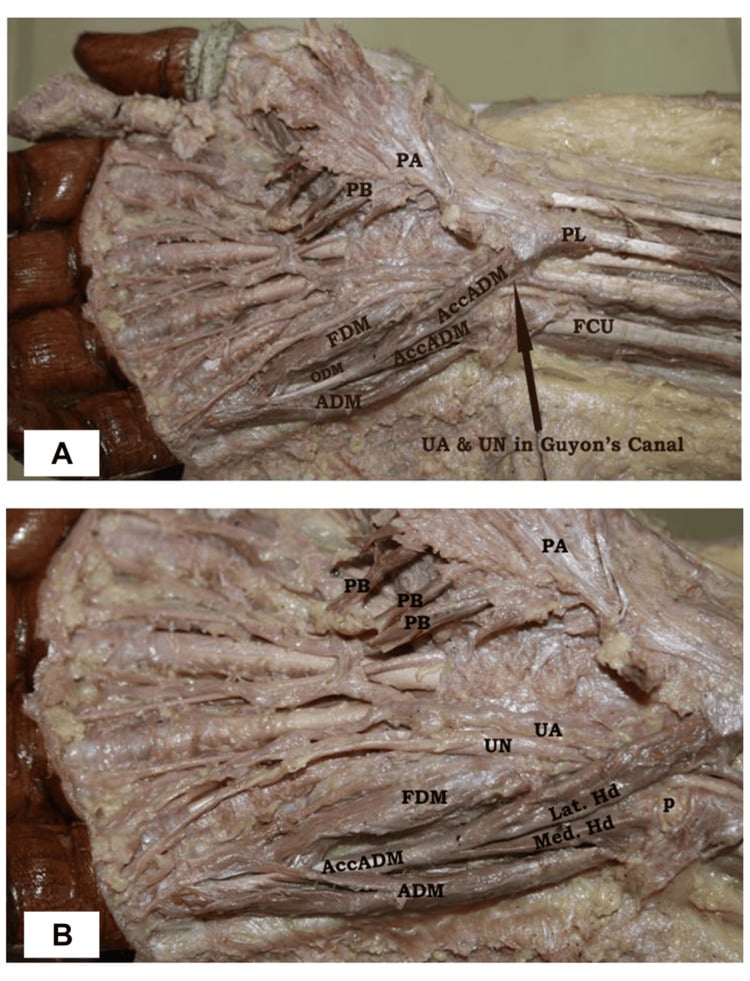
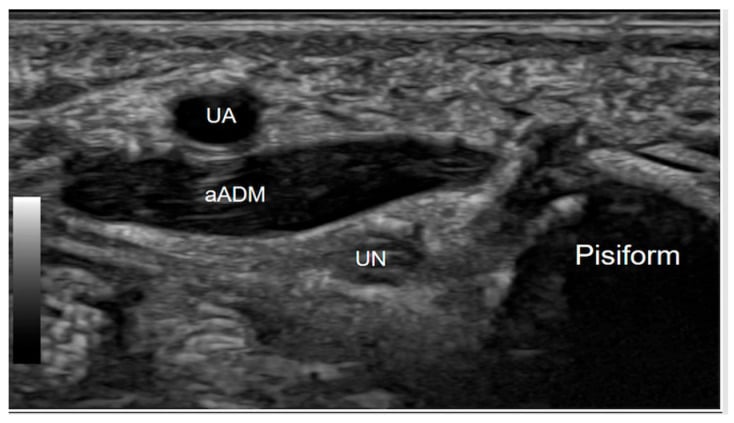
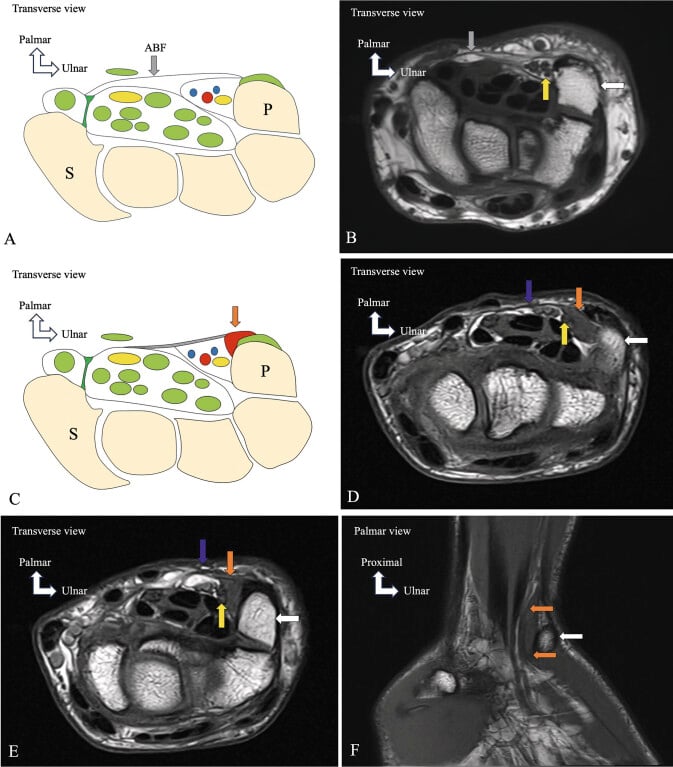
Accessory abductor digiti minimi. The standard muscle is a single belly from pisiform to proximal phalanx with the dual insertion. An accessory ADM (aADM) is present in around 25% of wrists on MRI, but a true contiguous muscular type in only about 8%. Most (around 69%) are a small fascial slip proximal to Guyon canal arising from the distal antebrachial fascia, and the aADM passes superficial to the ulnar nerve and artery within or proximal to the canal.
When the variant matters. The vast majority are asymptomatic incidental findings with normal EMG. Accessory hypothenar muscles may cause dynamic compression of the ulnar nerve, particularly with repetitive gripping, but a symptomatic, truly muscular variant is rare, and the variant is clinically important only when the anatomy and symptoms support dynamic compression. It should be considered as a cause of ulnar nerve compression in a younger patient with no other identifiable lesion, and released if confirmed at decompression.
Clinical Significance
Examining the muscle. ADM is a key muscle for assessing ulnar nerve function, and testing abduction of the little finger is a key clinical test. Complete ulnar nerve palsy causes visible hypothenar wasting.
- Inspect both hypothenar eminences with the hands supinated and at rest. Look for wasting, a flattening of the ulnar palm border, and note any asymmetry in bulk: asymmetric wasting strongly suggests ulnar nerve pathology, and ADM is the most obvious muscle to assess visually.
- Palpate the muscle bulk with the hand at rest, then during active abduction to confirm contraction.
- Test by asking the patient to spread the fingers apart against resistance, observe abduction strength of the little finger specifically, and grade power on the MRC scale (0-5).
What wasting localises. ADM wasting is an early sign of ulnar nerve pathology and indicates a lesion at or proximal to the wrist. Compression at Guyon canal produces different patterns from cubital tunnel syndrome: combining ADM with FCU, FDP 4-5 and sensory testing localises the level, wrist or elbow, and preserved sensation with motor loss localises to the deep branch (Zone 2).
- FCU
- Weak
- FDP 4-5
- Weak
- Sensory
- Lost
- ADM
- Weak
- Interossei
- Weak
- FCU
- Variable
- FDP 4-5
- Variable
- Sensory
- Lost
- ADM
- Weak
- Interossei
- Weak
- FCU
- Normal
- FDP 4-5
- Normal
- Sensory
- Lost
- ADM
- Weak
- Interossei
- Weak
- FCU
- Normal
- FDP 4-5
- Normal
- Sensory
- Normal
- ADM
- Weak
- Interossei
- Weak
Ulnar nerve palsy and Guyon canal syndrome. Loss of abduction power affects grip function, and ADM weakness may be isolated in Zone 2 Guyon canal compression. The causes of compression in the canal vary, ganglion, anomalous muscles and hook of hamate fracture among them, and ADM weakness depends on the zone of compression.
Hypothenar hammer syndrome. Repetitive trauma to the hypothenar eminence can cause ulnar artery thrombosis. The ulnar artery lies close to the ADM within Guyon canal, so the syndrome can present with both vascular symptoms AND ADM weakness or wasting, from ischaemia or nerve compression.
Dupuytren disease. The hypothenar area can be affected. ADM may become contracted or tethered and can contribute to MCP flexion contracture of the little finger.
- Distinguishing Features
- ADM + interossei weak, ulnar 1.5-digit sensory loss; FCU and FDP 4-5 normal
- Key Discriminator
- Sensory loss present but FCU/FDP spared = wrist-level
- Distinguishing Features
- ADM + all ulnar intrinsics weak, sensation fully preserved
- Key Discriminator
- Pure motor, no sensory loss - localises to deep branch
- Distinguishing Features
- ADM, interossei weak; FDP 4-5 and FCU often involved; dorsal ulnar sensory loss
- Key Discriminator
- Dorsal hand sensory loss + FDP/FCU weakness = elbow-level
- Distinguishing Features
- Weakness crosses median + ulnar territory (e.g. APB also weak); neck/arm pain, dermatomal sensory loss
- Key Discriminator
- Median-innervated thenar weakness too = root/plexus, not ulnar
- Distinguishing Features
- T1-predominant intrinsic wasting, Horner syndrome, medial arm pain
- Key Discriminator
- Horner / apical chest signs
- Distinguishing Features
- Painless wasting, fasciculations, no sensory loss, spreads beyond ulnar territory
- Key Discriminator
- Fasciculations + UMN signs + non-territorial spread
- Distinguishing Features
- Symmetrical, no sensory loss, normal nerve conduction
- Key Discriminator
- Bilateral, normal NCS, no denervation pattern
The ADM as a Transfer and Flap (Huber Opponensplasty)
Why the anatomy allows it. The ADM has a proximally-entering neurovascular pedicle: the deep ulnar nerve branch and an ulnar-artery branch enter near the pisiform. The muscle can therefore be islanded on that pedicle, released from its pisiform origin and rotated across the palm without devascularising or denervating it, and its superficial, ulnar-border position makes it easy to raise.
The Huber opponensplasty. The ADM is turned over roughly 180 degrees on its pedicle, tunnelled subcutaneously across the palm and inserted onto the thumb (abductor pollicis brevis insertion or thumb MCP) to restore opposition. Its classic indication is congenital thumb hypoplasia, where it also adds a muscle belly to a deficient thenar eminence, and it is also used for low median nerve palsy.
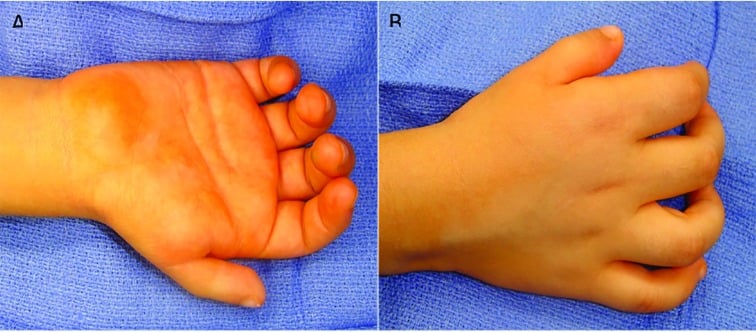
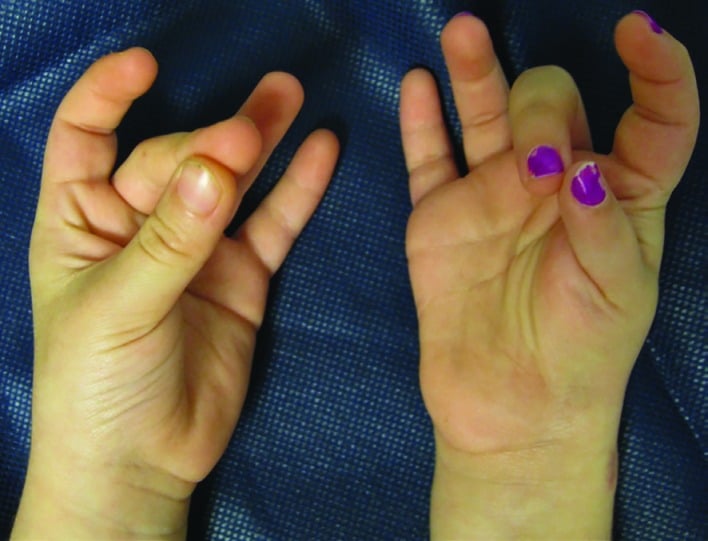
As a local flap. The same reliable proximal pedicle lets the ADM serve as a small rotational muscle flap for soft-tissue coverage of the ulnar palm, wrist and Guyon canal region, for example over an exposed ulnar neurovascular repair.
The trade-off. Harvesting the ADM sacrifices little-finger abduction, which is well tolerated; the origin is released while the pedicle is protected. The indications and step-by-step technique of the transfer are developed in the thumb-hypoplasia and tendon-transfers topics. The point here is that the muscle's own anatomy is what permits it.
Palmaris Brevis and the Palmaris Brevis Sign
What it is. Palmaris brevis is a small, quadrilateral skin muscle of the hypothenar eminence, running transversely from the palmar aponeurosis and flexor retinaculum to the dermis of the ulnar palmar skin. It is the only motor muscle of the superficial (mainly sensory) branch of the ulnar nerve.
What it does. Contraction wrinkles and dimples the ulnar palmar skin, deepens the hollow of the palm and elevates the hypothenar eminence, improving cupping and grip. It also protects the underlying ulnar nerve and artery in Guyon canal. Isolated overactivity gives the rare palmaris brevis spasm syndrome.
The palmaris brevis sign. Because palmaris brevis is supplied by the superficial branch, it is spared in a deep-branch lesion. Preserved hypothenar skin dimpling on resisted little-finger abduction, alongside weak ADM and interossei, points to a pure deep-branch (Zone 2) lesion; loss of palmaris brevis contraction instead implicates the superficial branch or the main trunk (Zone 1). Paired with ADM testing, it tightens the zone diagnosis at the wrist.
Investigations
Nerve conduction studies. Motor studies recording from ADM are standard for ulnar nerve assessment. Stimulate at the wrist and below the elbow and compare latency and amplitude with the contralateral side; slowing across Guyon canal suggests canal compression.
- Normal Value
- Less than 3.5 ms
- Abnormal Finding
- Prolonged in distal compression
- Normal Value
- Greater than 6 mV
- Abnormal Finding
- Reduced with axonal loss
- Normal Value
- Greater than 50 m/s
- Abnormal Finding
- Slowed across lesion site
Electromyography. Needle EMG of ADM can detect denervation. Fibrillations and positive sharp waves indicate acute denervation, and reinnervation potentials (polyphasic units) appear in recovery.
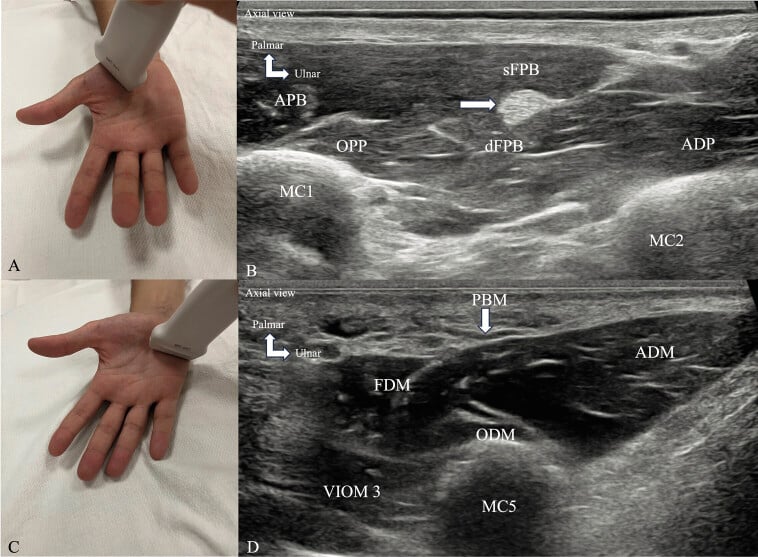
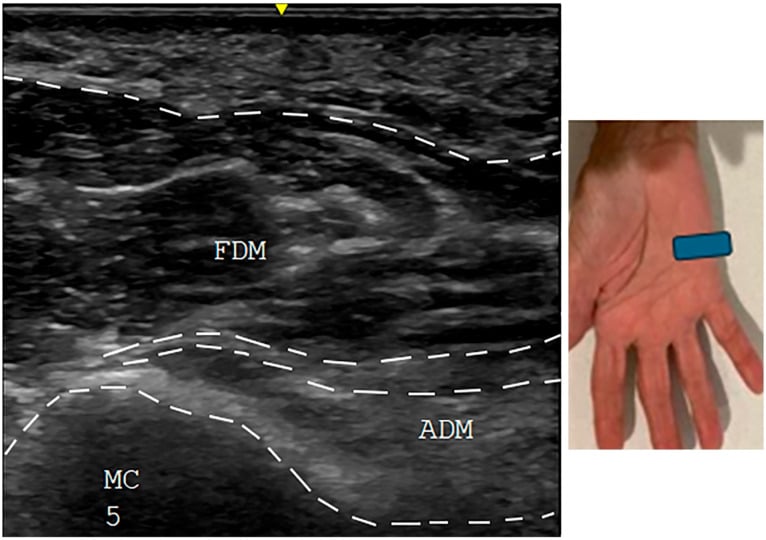
Ultrasound. Ultrasound can assess ADM bulk and echogenicity, with fatty infiltration suggesting chronic denervation, and allows dynamic assessment of the nerve at Guyon canal. Establish the normal layered pattern before calling atrophy, fatty change or an accessory muscle. Increased ADM echogenicity with loss of the normal fibrillar pattern indicates muscle injury or chronic denervation: compare ADM with the adjacent flexor digiti minimi and the contralateral side, then use electrodiagnostic testing to localise the lesion.
MRI. MRI is the gold standard for assessing muscle denervation: T2 hyperintensity (oedema) in acute denervation, fatty replacement on T1 in chronic denervation.
Management
Conservative treatment is for mild symptoms with no motor weakness, early or intermittent compression, and reversible causes (for example, a ganglion cyst under observation). It consists of:
- Activity modification, avoiding prolonged gripping and cycling pressure
- Wrist splinting in a neutral position
- Ergonomic assessment for occupational causes
- NSAIDs for symptomatic relief
- Physiotherapy for nerve gliding exercises
Surgery is indicated for:
- Progressive motor weakness (ADM wasting)
- Failure of 3-6 months of conservative treatment
- A fixed structural cause (hook of hamate fracture, space-occupying lesion)
- Severe or sudden-onset palsy
The operations. Guyon canal decompression is the primary procedure. Alongside it come excision of a space-occupying lesion (ganglion, lipoma), hook of hamate excision for nonunion or compression, and neurolysis if intraneural fibrosis is present. Motor recovery depends on the duration and severity of compression, and the timing is set out under Outcomes.
Surgical Approaches
Indication. Compression of the ulnar nerve within Guyon canal confirmed by clinical examination and nerve conduction studies.
Set-up and incision. Supine with the arm on a hand table, forearm supinated and a tourniquet on the upper arm. Make a longitudinal incision along the radial border of the pisiform, extending distally toward the hook of hamate; a curvilinear incision following the skin crease is the alternative.
Steps. From superficial to deep:
- Incise skin and subcutaneous tissue, identifying and protecting the palmar cutaneous branch of the ulnar nerve
- Incise the palmar carpal ligament, the roof of the canal
- Identify the ulnar nerve and artery within the canal and follow the nerve distally as it bifurcates
- Identify the hook of hamate as the key landmark
- Release the fibrous arch of the hypothenar muscles if it is compressing the deep branch
- Close subcutaneous tissue and skin, and apply a bulky dressing with the wrist in neutral
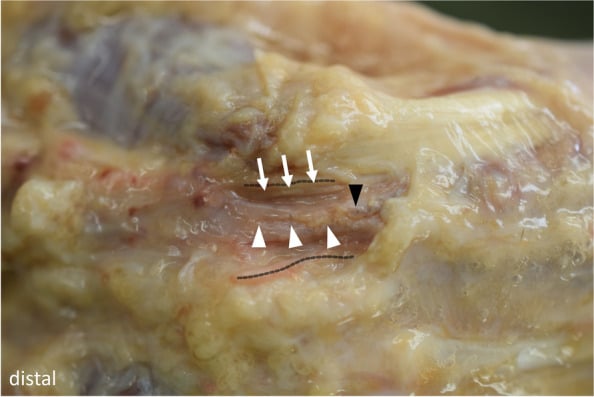
The ADM origin. The deep branch of the ulnar nerve curves around the hook of hamate beneath the ADM origin, the relationship that governs Guyon canal decompression. The origin may need to be partially released if the deep branch is compressed at this level, preserving as much muscle origin as possible.
What every release shares. Whatever decompression method is used, direct protection of the ulnar nerve and artery and complete release toward the deep motor branch are the operative invariants.
Complications
Surgical complications. Nerve, vessel and wound are each at risk:
- Nerve injury - the deep branch of the ulnar nerve during Guyon canal decompression; the palmar cutaneous branch, causing a sensory deficit; the dorsal sensory branch with proximal extension of the incision; neurapraxia from excessive retraction, which usually recovers
- Vascular injury - ulnar artery laceration or thrombosis, haematoma formation compromising nerve recovery, and exacerbation of hypothenar hammer syndrome
- Wound complications - superficial or deep infection, dehiscence, hypertrophic or painful scarring, and pillar pain (tenderness at the incision margins)
Untreated compression. Motor loss progresses: ADM atrophy and weakness worsen, all the ulnar-innervated intrinsics become involved, and muscle fibrosis becomes irreversible if denervation is prolonged beyond 12-18 months. The dominant functional deficit is loss of fine intrinsic control (precision pinch, finger abduction and adduction), with difficulty in power grip and precision handling and, in advanced cases, clawing of the ring and little fingers (the intrinsic-minus posture).
Motor recovery is time-dependent. Decompression within 3-6 months of symptom onset has significantly better outcomes than delayed surgery. Chronic denervation beyond 18 months may result in permanent motor deficit despite technically successful decompression.
Postoperative Care
Weeks 0-2. A bulky dressing with the wrist in neutral, elevation to reduce swelling, and a wound check with suture removal at 10-14 days, keeping the wound clean and dry. Gentle finger range of motion is encouraged from day 1 and light activities of daily living are permitted, but no heavy gripping or lifting and no direct pressure on the hypothenar region.
Weeks 2-6. Hand therapy brings active and gentle passive range of motion exercises, scar massage once the wound has healed, nerve gliding exercises to prevent adhesions and oedema management. Return gradually to light duties while avoiding repetitive gripping; splinting is rarely needed unless there are specific concerns.
Weeks 6-12. Progressive grip strengthening, ADM-specific abduction exercises, functional task training, and occupational therapy for work-specific requirements.
Return to activity. Expected times after surgery:
- Desk work - typically 2-3 weeks
- Manual work - 6-8 weeks, depending on demands
- Cycling - 8-12 weeks, with ergonomic modifications
Outcomes
Prognostic factors. Duration of symptoms is the most important factor. The others are the severity of preoperative weakness, axonal loss on EMG, patient age and general health, and the aetiology of compression.
Timing. Early decompression within 3 months of symptom onset has the better prognosis, and expected ADM recovery falls with each interval of delay.
- Expected ADM Recovery
- Complete recovery expected
- Overall Prognosis
- Excellent
- Expected ADM Recovery
- Good recovery, may be incomplete
- Overall Prognosis
- Good
- Expected ADM Recovery
- Partial recovery likely
- Overall Prognosis
- Fair
- Expected ADM Recovery
- Limited recovery expected
- Overall Prognosis
- Guarded
Grip overstates recovery. Grip strength often recovers reasonably, to around 83% of the uninjured side in long-term data, because it is dominated by the extrinsic forearm flexors. Isolated intrinsic (ulnar-innervated) muscle strength recovers far less completely, to 26-37%, so apparent grip recovery overstates true ADM and interosseous recovery. Dedicated little-finger abduction testing is required to detect residual ADM weakness.
Time course and satisfaction. Meaningful motor recovery typically continues over 6-12 months after decompression, and full motor recovery may take that long. Sensory recovery, when applicable, often precedes motor recovery, and pain relief is typically rapid. Satisfaction rates are high (greater than 85%) for early surgical intervention, and return-to-work rates depend on occupational demands.
Motor recovery follows the principle of reinnervation distance. ADM, being the first muscle innervated by the deep branch after bifurcation, typically shows the earliest and best recovery. More distal muscles (interossei, lumbricals) recover later and less completely.
Guidelines, Registries & Global Practice
Global epidemiology:
- Ulnar neuropathy is the second most common compressive upper-limb neuropathy worldwide after carpal tunnel syndrome; the great majority of ulnar lesions are at the elbow (cubital tunnel), with wrist-level (Guyon canal) compression being comparatively uncommon.
- In operative ulnar tunnel syndrome series the commonest causes are idiopathic and traumatic, followed by ganglion and other space-occupying lesions; coexistent carpal tunnel syndrome is frequent (up to ~70% in some series).
- Cyclist's palsy is a well-described occupational/recreational form of Guyon canal neuropathy: more than 90% of long-distance cyclists develop transient motor and/or sensory symptoms after a single multi-hundred-kilometre ride.
Side-by-side society guidance (no dedicated ADM/Guyon guideline exists - principles drawn from ulnar/peripheral nerve guidance):
- Position relevant to Guyon canal / ADM
- No standalone Guyon canal guideline; clinical diagnosis plus electrodiagnostic confirmation, imaging for suspected mass; surgery for confirmed compression failing conservative care
- Position relevant to Guyon canal / ADM
- Hand-surgery consensus: examine intrinsics (including little-finger abduction/ADM), confirm and localise with NCS/EMG, image to exclude space-occupying lesion before decompression
- Position relevant to Guyon canal / ADM
- Emphasises hook-of-hamate fracture and perilunate/CMC trauma as structural causes of deep-branch (Zone 2) palsy requiring fixation/excision plus decompression
- Position relevant to Guyon canal / ADM
- Supports nerve-conduction localisation and ultrasound/MRI for atypical or young patients to detect anomalous muscles or vascular causes
Compressive neuropathy decompressions are not separately captured by joint-replacement registries (NJR, AJRR, AOANJRR); evidence is therefore drawn from cohort and case series rather than registry data.
- High-resource settings: routine nerve conduction studies/EMG and high-resolution ultrasound or 3T MRI to localise the zone and identify ganglia, hook-of-hamate fractures, hypothenar hammer syndrome or an accessory ADM before surgery.
- Limited-resource settings: diagnosis rests largely on careful clinical examination (bilateral hypothenar comparison, ADM and first dorsal interosseous testing, Froment and Wartenberg signs); decompression may proceed on clinical grounds where electrodiagnostics are unavailable, with greater reliance on activity modification first.
Controversies and Areas of Uncertainty
Clinically Debated Points
1. Routine vs selective electrodiagnostics before decompression In well-resourced settings nerve conduction studies and EMG are standard to localise the zone, but they can be normal in early or purely deep-branch (Zone 2) compression - Akuthota et al. showed deep-branch latency prolongation with a normal ADM-recorded response. Some surgeons therefore proceed on strong clinical grounds when imaging shows a structural cause.
2. Significance of an accessory ADM Historically the accessory ADM was reported as a common cause of ulnar tunnel syndrome. Rixey et al. (3T MRI, n=396) found it in 25% of wrists but a true muscular type in only ~8%, all asymptomatic - so its causative role has been overstated and it should be implicated only when it is genuinely muscular and other causes are excluded.
3. ADM as a recording site in ulnar nerve conduction Recording the compound motor action potential from ADM is conventional, but because ADM is innervated immediately after the bifurcation, a deep-branch lesion distal to its take-off can spare the ADM response while the interossei are denervated. Recording additionally from the first dorsal interosseous improves sensitivity for distal deep-branch lesions.
4. Extent of ADM origin release at surgery There is no consensus on how much of the ADM origin (and the fibrous hypothenar arch) must be divided to decompress the deep branch; the aim is adequate release of the arch while preserving as much muscle origin and function as possible.
5. Grip strength as an outcome measure Grip strength recovers far better than isolated intrinsic strength after ulnar nerve injury (Schreuders et al.: ~83% grip vs 26-37% intrinsic), so grip is an unreliable surrogate and dedicated little-finger abduction (ADM) measurement is preferred for honest outcome assessment.
MCQ Practice Points
A: The pisiform bone. Secondary origins include the pisohamate ligament and flexor retinaculum. This is the most commonly tested anatomy fact about ADM.
A: The deep branch of the ulnar nerve (C8, T1). NOT the superficial branch - this is a common distractor. The ADM is the first muscle supplied after the nerve bifurcates at the level of the pisiform.
A: Zone 2 of Guyon canal (deep motor branch only). Zone 2 causes pure motor deficit with preserved sensation. Zone 1 would cause mixed motor and sensory loss. Zone 3 causes pure sensory loss with preserved motor function.
A: The ADM inserts onto both the ulnar base of the proximal phalanx AND the ulnar edge of the extensor expansion. This allows it to abduct the little finger at the MCP joint AND contribute to IP extension.
A: ADM wasting indicates ulnar nerve pathology AT or PROXIMAL to the wrist. It helps distinguish wrist-level compression (Guyon canal) from elbow-level compression (cubital tunnel) when combined with FCU and FDP testing. Both levels cause ADM wasting, but only elbow lesions affect FCU and FDP 4-5.
Key Numbers for MCQs
- C8, T1 - nerve root supply
- 3 - hypothenar muscles (ADM most superficial)
- 3 - Guyon canal zones (Gross & Gelberman)
- 26-37% - long-term intrinsic strength recovery after ulnar nerve injury (vs ~83% grip)
- 25% - prevalence of an accessory ADM on wrist MRI (true muscular type only ~8%)
Exam Viva Scenarios
Practise clinical reasoning and management decisions out loud
“A 45-year-old cyclist presents with weakness of finger abduction and numbness of the little finger. How would you examine the hypothenar muscles and what anatomy is relevant?”
“A 52-year-old manual worker has clawing of the ring and little fingers, hypothenar and first dorsal interosseous wasting, but you are unsure whether the lesion is at the elbow or the wrist. How does the abductor digiti minimi help you, and how do you localise the lesion clinically?”
“You are decompressing Guyon canal for a confirmed ulnar tunnel syndrome. Describe the boundaries and contents of the canal, the relationship of the ADM, and the structures most at risk.”
Origin and Insertion
- Origin: Pisiform bone (primary), pisohamate ligament, flexor retinaculum
- Insertion: Ulnar base of proximal phalanx AND ulnar edge of extensor expansion
- Dual insertion allows MCP abduction AND IP extension contribution
- Most superficial and ulnar of the hypothenar muscles
Nerve Supply
- Deep branch of ulnar nerve (C8, T1)
- Nerve divides at level of pisiform into superficial and deep branches
- Deep branch curves around hook of hamate to reach ADM
- First muscle supplied by deep branch after bifurcation
Blood Supply
- Deep palmar branch of ulnar artery (primary)
- Direct branches from ulnar artery in Guyon canal
- Contributions from deep palmar arch
- Venous drainage via deep palmar venous arch to ulnar veins
Actions
- Primary: Abduction of little finger at MCP joint
- Secondary: MCP flexion due to palmar position
- Contribution to IP extension via extensor expansion insertion
- Functional: Power grip, hook grip, precision handling
Clinical Relevance
- Wasting indicates ulnar nerve pathology at or proximal to wrist
- Forms ulnar border of Guyon canal - key surgical landmark
- Zone 2 compression: pure motor loss, ADM weak, sensory spared
- Wartenberg sign paradox: ADM also weak but EDM abducts unopposed
Guyon Canal Zones
- Zone 1: Proximal to bifurcation - mixed motor and sensory loss
- Zone 2: Deep branch - pure motor (includes ADM), sensory spared
- Zone 3: Superficial branch - pure sensory, ADM function preserved
- Hook of hamate fracture classically causes Zone 2 compression
Evidence Base
Gross & Gelberman - The Anatomy of the Distal Ulnar Tunnel
- Defined the distal ulnar tunnel as a 4 to 4.5 cm region with three zones based on the ulnar nerve bifurcation
- All 39 cases of combined motor and sensory deficit localised to Zone 1; all 36 Zone 2 lesions caused intrinsic paralysis; Zone 3 lesions caused sensory deficit only
- Whether hypothenar muscles (including ADM) are affected in Zone 2 depends on the exact site of the lesion within that zone
- Combined deficits arose from compression deep to the nerve, pure sensory deficits from compression superficial to it
Murata, Shih & Tsai - Causes of Ulnar Tunnel Syndrome
- 31 operatively treated ulnar tunnel syndrome cases: idiopathic in 14, trauma in 8, thrombosis in 2, synovial proliferation in 2, with single cases of hook of hamate prominence, schwannoma, POSTOPERATIVE SWELLING, aberrant fibrous band and ganglion
- Zone 1 was involved in 28 cases, Zone 3 in 19, Zone 2 in 6; 55% had compression spanning more than one zone
- 22 of 31 (71%) were associated with concurrent carpal tunnel syndrome - and among the IDIOPATHIC cases the association was closer still, 12 of 14 (86%)
- Six cases were associated with diabetes mellitus
- Symptoms improved after Guyon canal and/or pisohamate tunnel release in all cases
Patterson, Jaggars & Boyer - Ulnar and Median Nerve Palsy in Long-Distance Cyclists
- 23 of 25 cyclists developed motor and/or sensory symptoms after a single 600 km ride
- Isolated motor symptoms occurred in 36% of hands, isolated sensory in 10%, combined motor-and-sensory in 24%
- Symptom rate was independent of cyclist experience level
- Gloves, correct bike fit and frequent hand-position changes were recommended as preventive measures
Akuthota et al. - Electrophysiologic Evaluation of Cyclist Palsy
- Distal motor latency of the deep ulnar branch to the first dorsal interosseous was significantly prolonged after a 6-day, 420-mile ride
- Ulnar motor latency recorded from abductor digiti minimi and ulnar/median sensory studies did NOT change significantly
- Selective deep-branch (Zone 2 type) slowing was demonstrated, sparing the ADM-recorded response
- Carpal tunnel symptoms were also exacerbated in some cyclists
Schreuders et al. - Long-Term Outcome of Muscle Strength in Ulnar and Median Nerve Injury
- More than 2 years after injury, grip strength recovered to 83% of the uninjured hand whereas intrinsic ulnar-innervated muscle strength (measured by the Rotterdam Intrinsic Hand Myometer) recovered to only 26-37%
- No significant correlation between intrinsic muscle strength and grip strength recovery
- Manual muscle testing and grip dynamometry overestimated recovery of the small hand muscles
- Selective intrinsic dynamometry (including little-finger abduction) detected residual ADM and interosseous weakness missed by routine tests
Rixey et al. - Accessory Abductor Digiti Minimi: Prevalence and Morphology on 3T MRI
- An accessory abductor digiti minimi was present in 25% of 396 wrist MRIs, but a true contiguous muscular type in only 8%
- The majority (69%) were a small fascial-type slip proximal to Guyon canal arising from the distal antebrachial fascia
- All patients were asymptomatic with normal EMG and no significant nerve compression
- Only 1 of 98 accessory muscles had been identified prospectively on the original report
Green's Operative Hand Surgery (Wolfe et al., eds.)
- Standard reference framework for ulnar tunnel anatomy, Gross-Gelberman zone classification and surgical decompression technique
- Recommends nerve conduction studies and cross-sectional imaging to identify a space-occupying lesion before surgery
- Decompression involves release of the volar carpal ligament, the fibrous arch of the hypothenar muscles and the deep motor branch around the hook of hamate
- Emphasises protecting the deep motor branch as it passes deep to the ADM origin
References
-
Gross MS, Gelberman RH. The anatomy of the distal ulnar tunnel. Clin Orthop Relat Res. 1985;(196):238-247. PMID: 3995823.
-
Murata K, Shih JT, Tsai TM. Causes of ulnar tunnel syndrome: a retrospective study of 31 subjects. J Hand Surg Am. 2003;28(4):647-651. doi:10.1016/s0363-5023(03)00147-3. PMID: 12877855.
-
Patterson JM, Jaggars MM, Boyer MI. Ulnar and median nerve palsy in long-distance cyclists. A prospective study. Am J Sports Med. 2003;31(4):585-589. doi:10.1177/03635465030310041801. PMID: 12860549.
-
Akuthota V, Plastaras C, Lindberg K, Tobey J, Press J, Garvan C. The effect of long-distance bicycling on ulnar and median nerves: an electrophysiologic evaluation of cyclist palsy. Am J Sports Med. 2005;33(8):1224-1230. doi:10.1177/0363546505275131. PMID: 16000656.
-
Schreuders TA, Roebroeck ME, Jaquet JB, Hovius SE, Stam HJ. Long-term outcome of muscle strength in ulnar and median nerve injury: comparing manual muscle strength testing, grip and pinch strength dynamometers and a new intrinsic muscle strength dynamometer. J Rehabil Med. 2004;36(6):273-278. doi:10.1080/16501970410033677. PMID: 15841605.
-
Schreuders TA, Selles RW, Roebroeck ME, Stam HJ. Strength measurements of the intrinsic hand muscles: a review of the development and evaluation of the Rotterdam intrinsic hand myometer. J Hand Ther. 2006;19(4):393-401. doi:10.1197/j.jht.2006.07.024. PMID: 17056399.
-
Rixey A, Wenger D, Baffour F, Kakar S, McKenzie G. Accessory abductor digiti minimi muscle, less muscular than thought: an update on prevalence, morphology, and review of the literature. Skeletal Radiol. 2021;50(8):1687-1695. doi:10.1007/s00256-021-03728-5. PMID: 33533963.
-
Singh JP, Pun B, Chhabra A, Saraswat V. A novel case of ulnar nerve compression neuropathy with co-existing accessory flexor carpi ulnaris and accessory abductor digiti minimi. Skeletal Radiol. 2025;54(2):373-377. doi:10.1007/s00256-024-04739-8. PMID: 38949678.
-
Standring S, ed. Gray's Anatomy: The Anatomical Basis of Clinical Practice. 42nd ed. Edinburgh: Elsevier; 2021.
-
Wolfe SW, Pederson WC, Kozin SH, Cohen MS, eds. Green's Operative Hand Surgery. 8th ed. Philadelphia: Elsevier; 2022.