Tibial Diaphysis | Biphasic Histology | Soap-Bubble Appearance | Wide Excision
- Tibial diaphysis is the classic location (85% of cases)
- Biphasic histology - epithelial cells in osteofibrous stroma
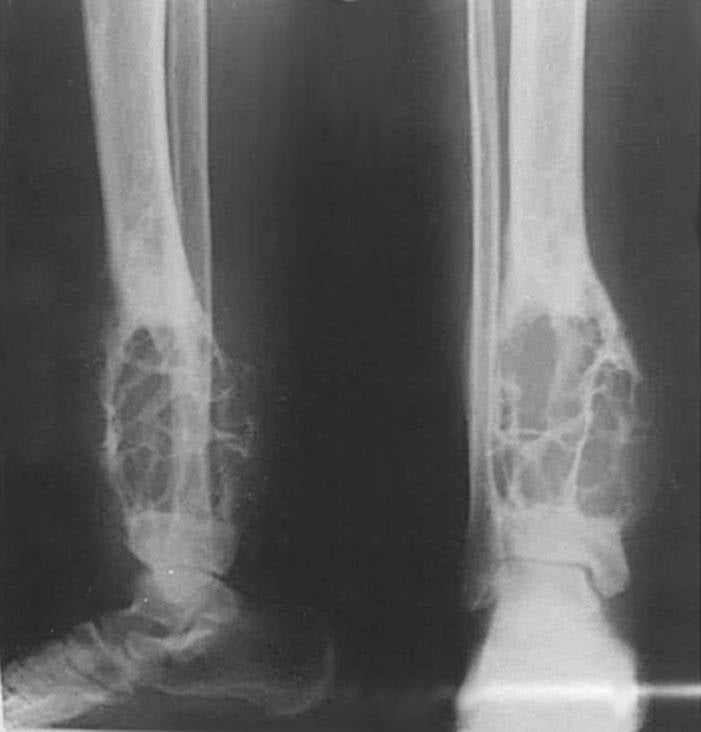
- Soap-bubble appearance on X-ray - multilocular lytic lesion
- Wide en bloc excision required - curettage has high recurrence
- Cytokeratin positive - distinguishes from other bone tumours
- “Anterior tibial cortex involvement is characteristic
- “May arise from or coexist with osteofibrous dysplasia
- “Lymph node and lung metastases occur in 15-30%
- “Late recurrence possible - follow up for decades
Overview and Epidemiology
What it is. Adamantinoma is a rare low-grade malignant bone tumour, under 0.5% of all primary bone tumours and under 1% of primary malignant bone tumours, with a distinctive biphasic histology of epithelial cells set within an osteofibrous stroma. Its predilection for the tibial diaphysis is remarkable: 80-85% arise there, characteristically involving the anterior cortex.
Who. Peak age is 20-50 years, with a range of 2-86 years, and there is a slight male predominance (5:4).
Risk factors. None has been established. There is no identified genetic predisposition and no association with radiation or chemical exposure. A history of prior trauma is reported in 60% of patients, of uncertain significance, and there is a possible association with osteofibrous dysplasia (OFD), which is taken up under Pathophysiology.
"Adamantinoma" derives from the Greek "adamantinos", meaning "very hard", and was coined by Fischer in 1913. The term was originally used for odontogenic tumours with similar histology; despite the name, skeletal adamantinoma is a distinct entity.
Pathophysiology
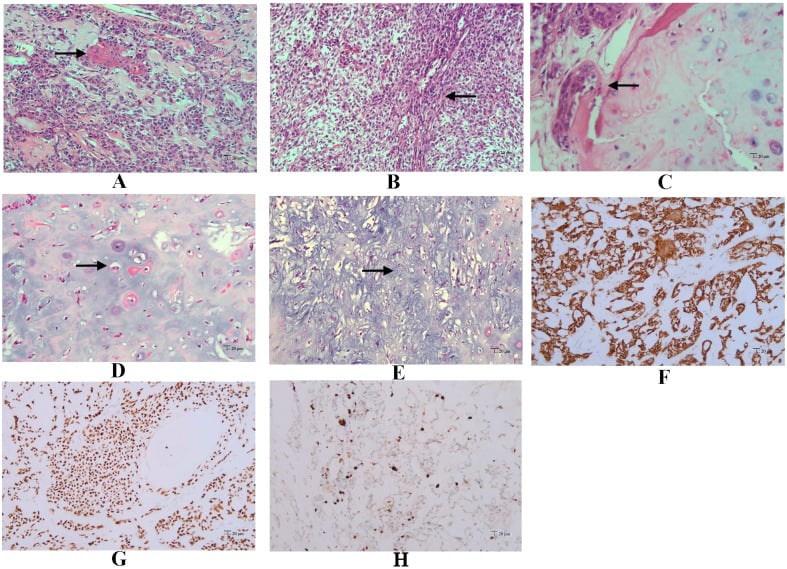
Biphasic histology. Adamantinoma is defined by two components, epithelial and osteofibrous, intermingled in various proportions. The epithelial cells form nests, cords or tubules, sometimes with peripheral palisading, and take one of four patterns (basaloid, tubular, spindle-cell or squamous) set out under Classification. They are positive for cytokeratins 14 and 19 and negative for CK8 and CK18.
The osteofibrous component. A fibrous stroma containing woven bone trabeculae and scattered osteoclast-like giant cells, positive for vimentin. On routine histology it resembles osteofibrous dysplasia, so it is the epithelial component, highlighted on cytokeratin immunostaining, that separates the two.
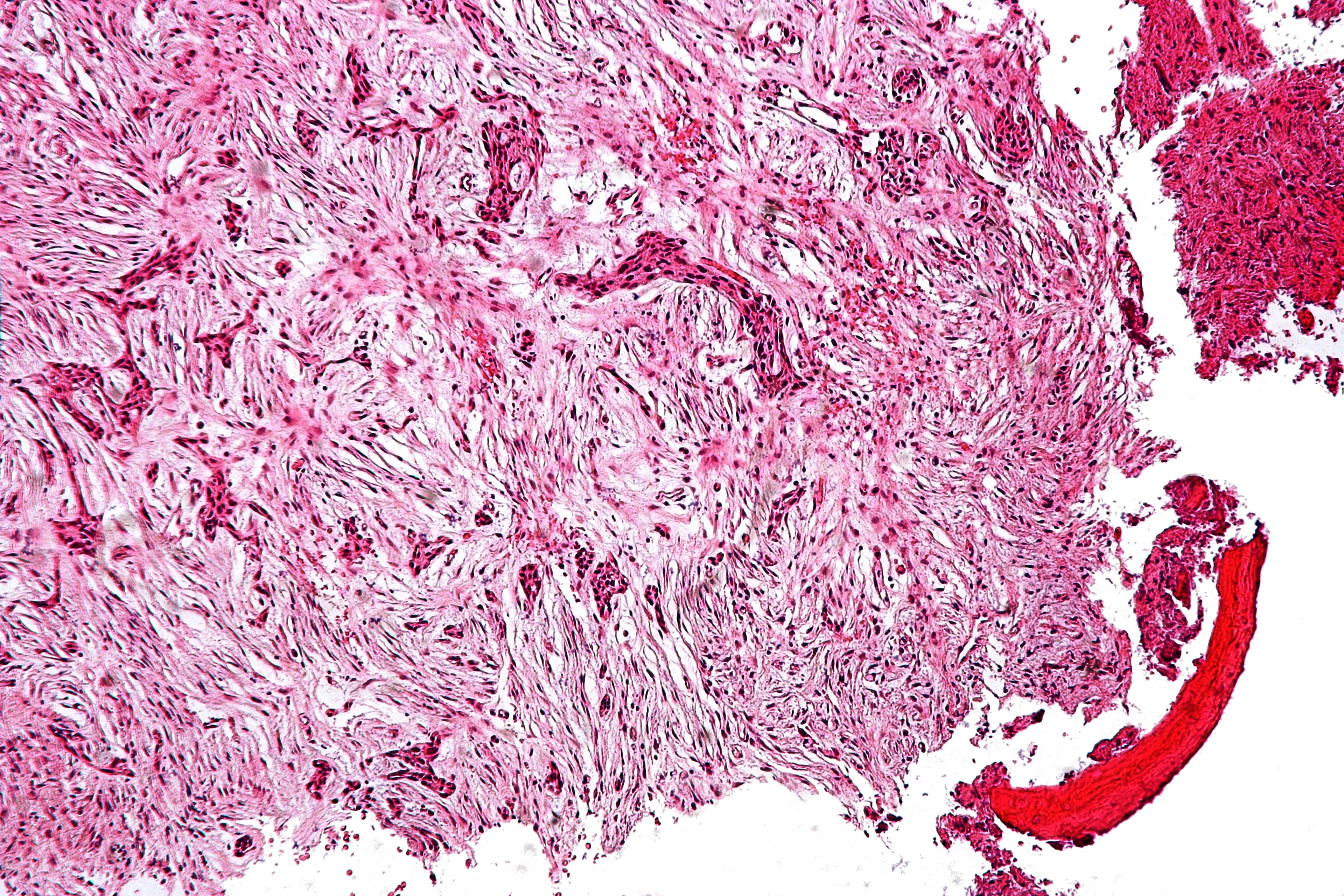
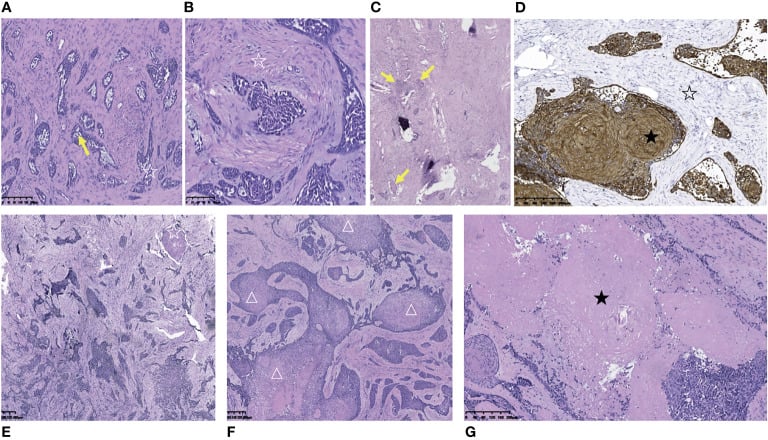
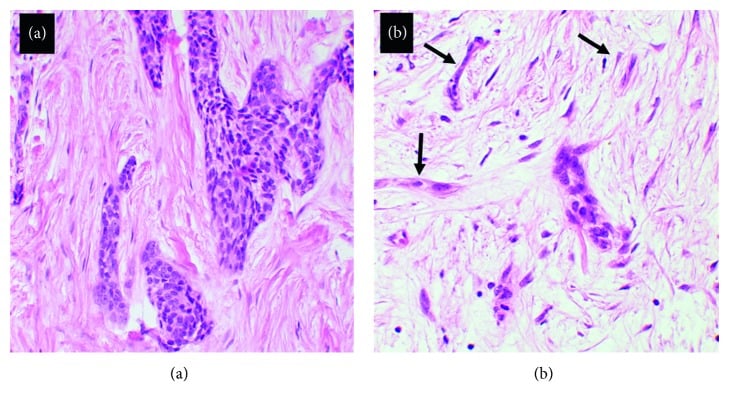
Relationship to osteofibrous dysplasia. The relationship is controversial but clinically important, and the three lesions are separated by age, by how much epithelium is present and by how it stains:
- Osteofibrous Dysplasia
- Children (under 10)
- OFD-like Adamantinoma
- Adolescents
- Classic Adamantinoma
- Adults (20-50)
- Osteofibrous Dysplasia
- Rare or absent
- OFD-like Adamantinoma
- Scattered, small
- Classic Adamantinoma
- Prominent nests
- Osteofibrous Dysplasia
- Negative or focal
- OFD-like Adamantinoma
- Focal positive
- Classic Adamantinoma
- Strongly positive
- Osteofibrous Dysplasia
- Benign, self-limiting
- OFD-like Adamantinoma
- Low malignant potential
- Classic Adamantinoma
- Malignant
- Osteofibrous Dysplasia
- Observation (most)
- OFD-like Adamantinoma
- Wide excision once an epithelial component is confirmed; observation through growth in the asymptomatic child (see Management)
- Classic Adamantinoma
- Wide excision
The controversy. The Leiden group demonstrated keratin-positive epithelial cells emerging individually from the osteofibrous stroma, with progressively organised basement membrane around cohesive epithelial islands, and read this as evidence that OFD-like adamantinoma may be a precursor to classic adamantinoma via fibrous-to-epithelial transformation (Hazelbag, Hum Pathol 1997). The Mayo Clinic counterargument is follow-up: in 80 OFD cases followed for up to 31 years, no lesion progressed to adamantinoma and two matured into fibrous dysplasia, suggesting OFD is a variant of fibrous dysplasia rather than an obligate precursor (Park & Unni, Hum Pathol 1993).
The reconciled view. OFD, differentiated (OFD-like) adamantinoma and classic adamantinoma form a histological continuum, but pure OFD does not inevitably become malignant. Hence cytokeratin immunohistochemistry is essential: it detects the epithelial component on which the distinction rests.
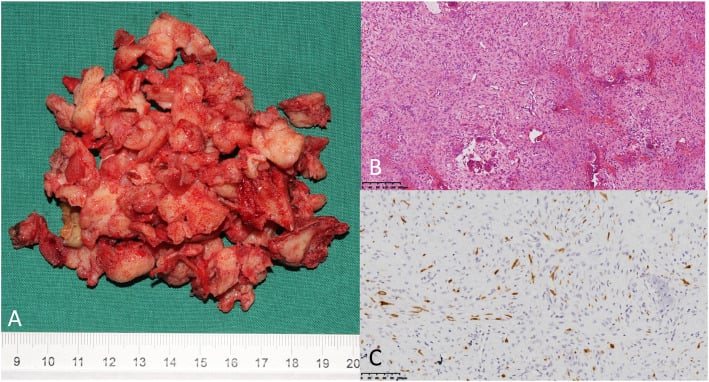
Molecular features. The malignant clone is epithelial and the osteofibrous tissue is reactive, and three findings show it:
- Aneuploidy is confined to the epithelial cells. DNA cytometry shows aneuploid nuclei only in cells of epithelial phenotype, while the fibrous cells remain diploid (Hazelbag, Am J Pathol 1995).
- p53 abnormalities (immunoreactivity and loss of heterozygosity at the p53 locus) are detectable in roughly half of tumours and again localise to the epithelial component (Hazelbag, Am J Pathol 1995).
- Lung metastases contain only keratin-positive epithelial cells, with no osteofibrous element, confirming the epithelial cells as the metastasising population (Hazelbag, Am J Pathol 1995).
Shared chromosomal gains. Both OFD and adamantinoma carry the same extra copies of chromosomes 7, 8, 12, 19 and 21. This shared pattern of numerical gains is the strongest genetic argument that the two sit on one biological spectrum rather than being unrelated lesions that happen to occupy the same piece of tibia, and it is the finding to quote when asked why the continuum hypothesis is taken seriously despite the Mayo follow-up data.
What is absent. No specific recurrent fusion gene has been identified, unlike the EWSR1 rearrangement of Ewing sarcoma, which is a useful diagnostic discriminator. The GNAS mutations characteristic of fibrous dysplasia are not a feature either, which helps separate adamantinoma and OFD from fibrous dysplasia.
Classification Systems
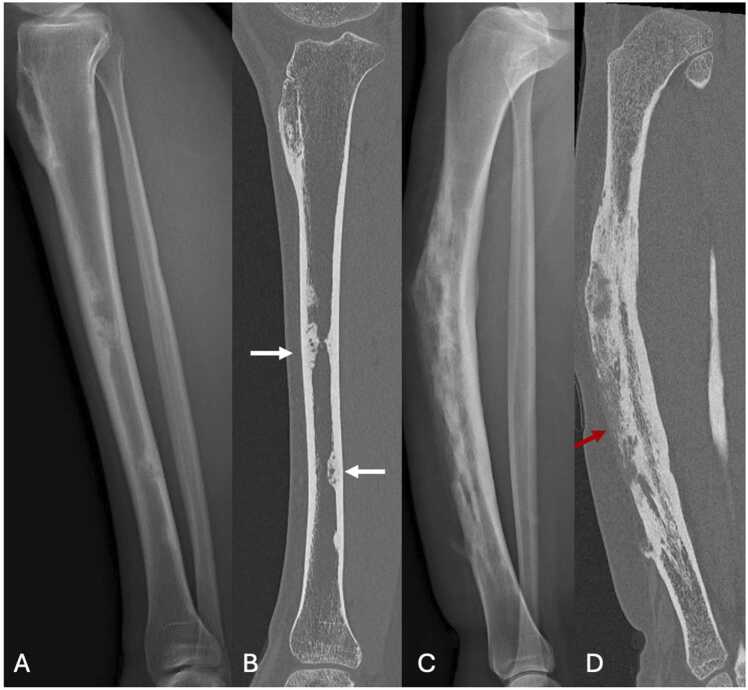
Five patterns. Four epithelial patterns and the osteofibrous-like subtype make up the histological classification, and most tumours show mixed patterns. The osteofibrous-like (differentiated) subtype occurs in younger patients and has a notably better prognosis.
- Features
- Nests of basaloid cells with peripheral palisading
- Frequency
- Common
- Prognosis
- Standard
- Features
- Epithelial cells forming tubular/glandular structures
- Frequency
- Common
- Prognosis
- Standard
- Features
- Elongated spindle-shaped epithelial cells
- Frequency
- Less common
- Prognosis
- May be confused with sarcoma
- Features
- Squamous differentiation with keratinisation
- Frequency
- Less common
- Prognosis
- May have better prognosis
- Features
- Predominantly fibrous with scattered epithelial cells
- Frequency
- 10-20%
- Prognosis
- Better prognosis
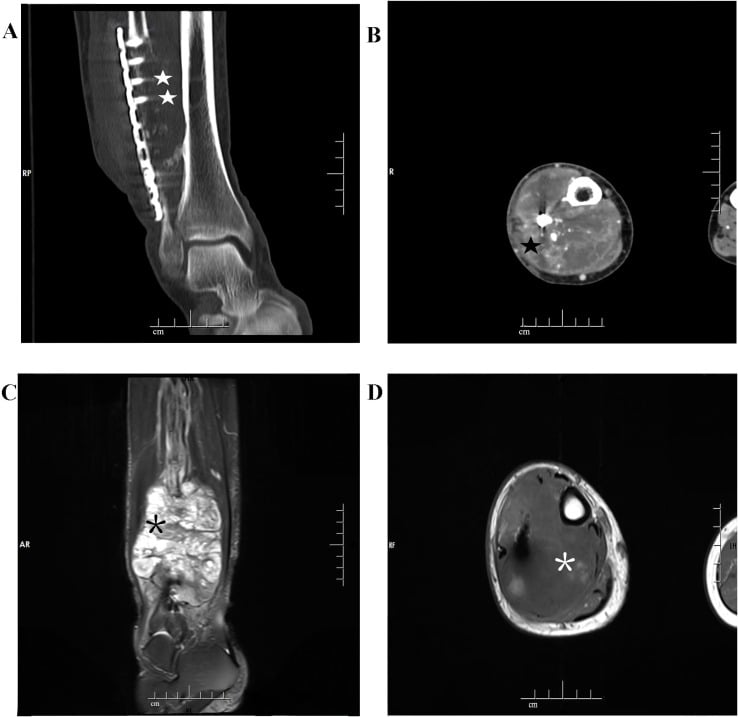
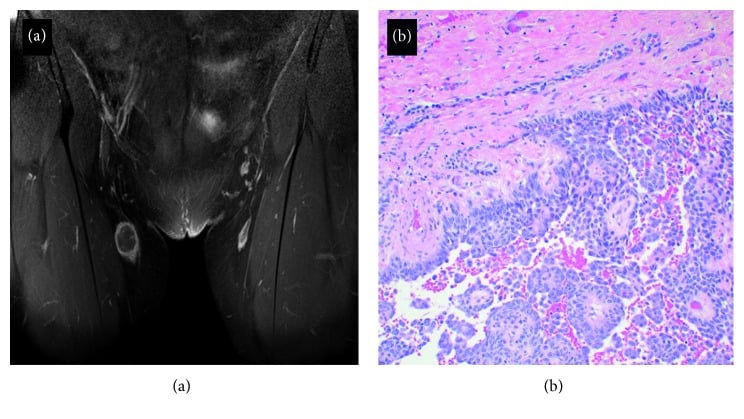
Dedifferentiation. Dedifferentiation is recognised when conventional epithelial adamantinoma transitions to a high-grade spindle-cell sarcoma. The loss of orderly epithelial architecture, with rising atypia and mitotic activity, signals more aggressive biology, and on imaging the lesion may present as a destructive, enhancing mass with a substantial extraosseous component, including around previous fixation.
Clinical Assessment
History. The classic story is slowly progressive swelling over the anterior shin with a dull, aching pain that has often been present for months to years; approximately 30% have had symptoms for more than 5 years before diagnosis. Duration matters prognostically: a shorter symptom duration (less than 5 years) is associated with a higher recurrence risk.
Red flags. Features that should raise concern:
- Rapid increase in swelling
- New or worsening pain
- Constitutional symptoms (weight loss, fever), rare but concerning
- Pathological fracture
Examination. Expect a palpable, firm mass arising from and fixed to the anterior tibial shaft, tender on palpation, with overlying skin that is normal or tense and possibly anterior tibial bowing. Warmth and erythema are usually absent unless there has been a fracture. Knee and ankle movement is usually preserved and the neurovascular examination is usually normal; check the dorsalis pedis, and palpate the popliteal and inguinal nodes.
Differential diagnosis. The lesions that share the tibial diaphysis or the lytic appearance, and what separates each from adamantinoma:
- Key Differentiating Features
- Age 20-50, tibial diaphysis (anterior cortex), soap-bubble appearance, cytokeratin positive
- Key Differentiating Features
- Age under 10, tibial diaphysis (anterior cortex), anterior bowing, self-limiting, cytokeratin negative
- Key Differentiating Features
- Any age, any bone and often polyostotic, ground-glass matrix, shepherd's crook, GNAS mutation
- Key Differentiating Features
- Age 5-25, diaphysis of any bone, permeative, onion-skin periosteal reaction, systemic symptoms, EWSR1 translocation
- Key Differentiating Features
- Age 10-25, metaphysis of long bones, aggressive, Codman triangle, sunburst
- Key Differentiating Features
- Fever, elevated WCC/CRP, sequestrum on CT
- Key Differentiating Features
- Known primary, older age, multiple lesions common
Investigations
Plain radiographs. The first-line investigation for tibial swelling. The characteristic appearance is a "soap-bubble", multilocular lytic lesion, eccentric in the anterior cortex and well defined, with sclerotic margins and cortical expansion. Look along the rest of the bone, because multifocality (skip lesions) may be shown.
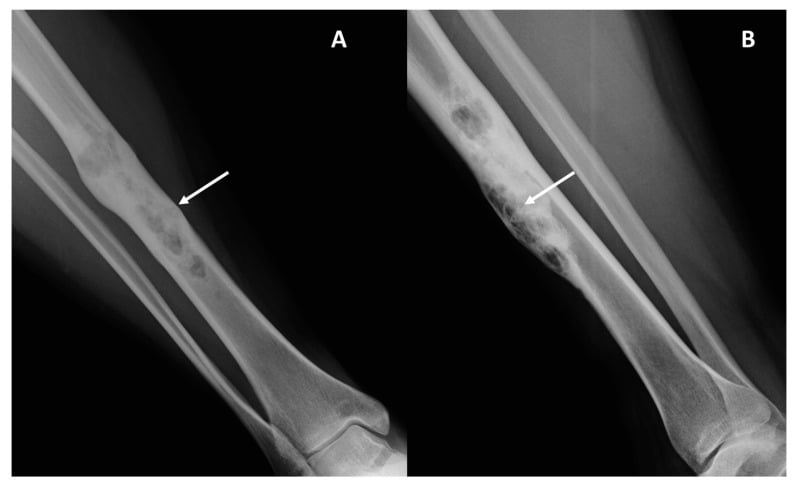
CT. Better cortical definition than the radiograph: CT defines the extent of bone destruction and identifies a pathological fracture, which makes it the planning study. CT of the chest stages for pulmonary metastases.
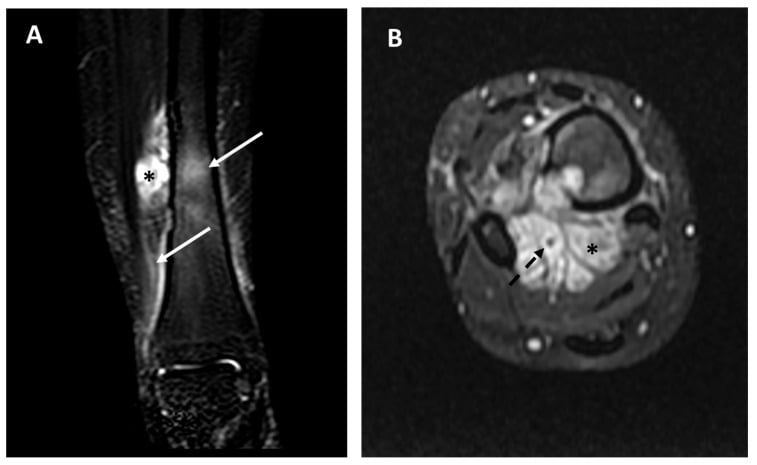
MRI. The gold standard for local staging. It defines intramedullary extent and soft-tissue extension and detects skip lesions; the tumour is low signal on T1, high signal on T2 and enhances with contrast.
Bone scan and PET-CT. Bone scan shows increased uptake and identifies multifocal disease, and is used to screen for metastases. The tumour is FDG avid, so PET-CT is useful for staging and for recurrence, and has a place in surveillance.
Biopsy. Core needle biopsy, CT- or ultrasound-guided, is preferred, with open biopsy if the core is inconclusive. Place the tract in line with the planned surgical incision, because it must be excised with the definitive resection.
Always discuss the biopsy approach with the operating surgeon before performing it. The tract becomes contaminated and must be excised en bloc with the tumour; a poorly placed biopsy can compromise limb salvage.
Laboratory studies. FBC, ESR and CRP are usually normal, and LDH and ALP are usually normal or mildly elevated. Hypercalcaemia is rare and paraneoplastic when it occurs.
Management
Wide en bloc resection is the treatment of choice: complete removal of the tumour with a cuff of normal tissue. The goals are complete tumour removal with wide margins, preservation of limb function when possible and a durable reconstruction.
Margins. The margin types and their local recurrence rates in general sarcoma practice:
- Description
- Through the tumour
- Local Recurrence
- Essentially all recur
- Description
- Through reactive zone
- Local Recurrence
- 30-50%
- Description
- Through normal tissue
- Local Recurrence
- Under 10% in general sarcoma series - but see below
- Description
- Entire compartment
- Local Recurrence
- Under 5%
Why the generic figures do not transfer. The "under 10% after a wide margin" line comes from soft-tissue and bone sarcoma practice generally; the adamantinoma-specific series are worse. In a tertiary series with a mean 16 years of follow-up, every single patient treated by curettage recurred, for adamantinoma and for osteofibrous dysplasia alike, and local recurrence still ran at 29% (2 of 7) even in the en bloc resection subgroup, with 40% overall. The largest historical cohort found local recurrence in 26 of 85 (31%).
The practical conclusions differ in the two directions. Curettage is not merely inferior here, it is close to futile, which is why it is contraindicated rather than discouraged. But a wide resection is not a guarantee either, and a patient should be consented and followed on the understanding that this tumour recurs more readily than the generic margin table suggests. Evidence level 4 (retrospective series; the 29% figure rests on only 7 patients, so read it as "recurrence remains frequent" rather than as a precise rate).
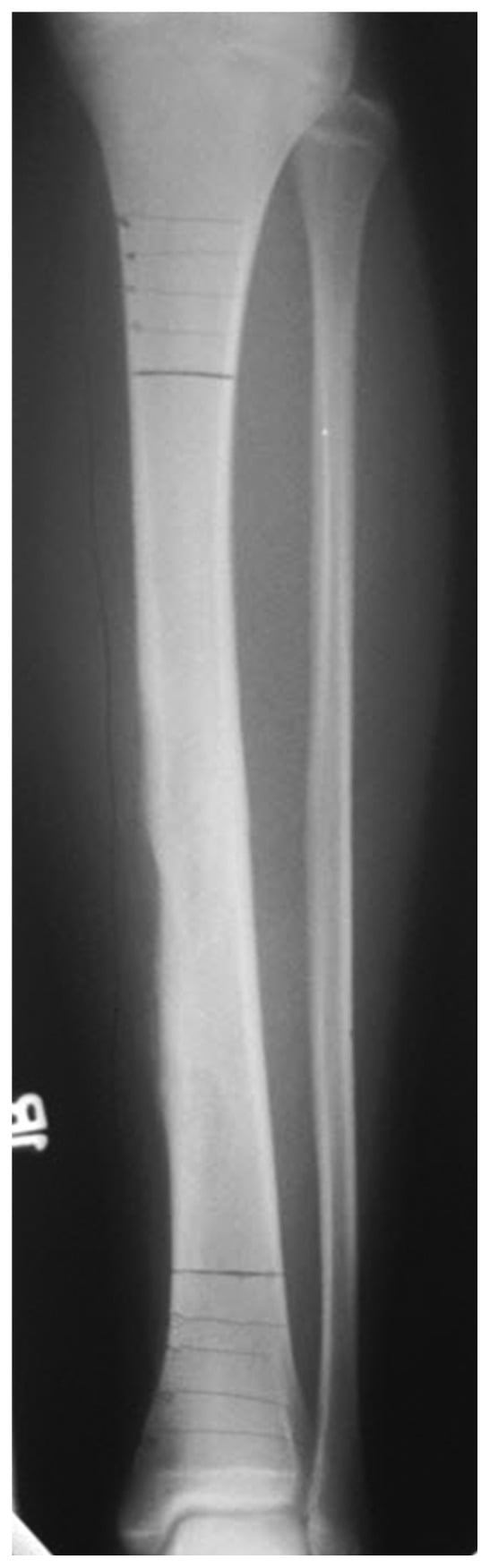
Curettage or intralesional excision is contraindicated. It is the strongest predictor of local recurrence and subsequent metastasis. All adamantinomas require wide surgical margins.
Reconstruction. The choice depends on resection length, patient age, expected activity level and institutional expertise:
- Advantages
- Anatomical reconstruction, joint preservation
- Disadvantages
- Nonunion, fracture, infection risk
- Advantages
- Living bone, good incorporation
- Disadvantages
- Donor morbidity, hypertrophy takes time
- Advantages
- Immediate stability, joint replacement
- Disadvantages
- Loosening, wear, infection
- Advantages
- Autologous bone, no donor site
- Disadvantages
- Prolonged treatment, pin site issues
- Advantages
- Immediate function
- Disadvantages
- Loosening, wear, revision
The named technique for a large intercalary tibial defect is the Capanna technique: a massive structural allograft combined with a vascularised free fibular autograft passed down its medullary canal. The allograft gives immediate mechanical strength and the correct anatomical dimensions; the living fibula provides biological healing, hypertrophies under load over time, and rescues the construct if the allograft fractures or fails to unite.
The hybrid suits the tibia in particular because a long tibial-diaphyseal allograft alone tolerates the thin anterior soft-tissue envelope poorly and has high nonunion and fracture rates. The costs are technical demand (a microvascular anastomosis), donor-fibula morbidity, and a long period of protected weight bearing while the fibula hypertrophies.
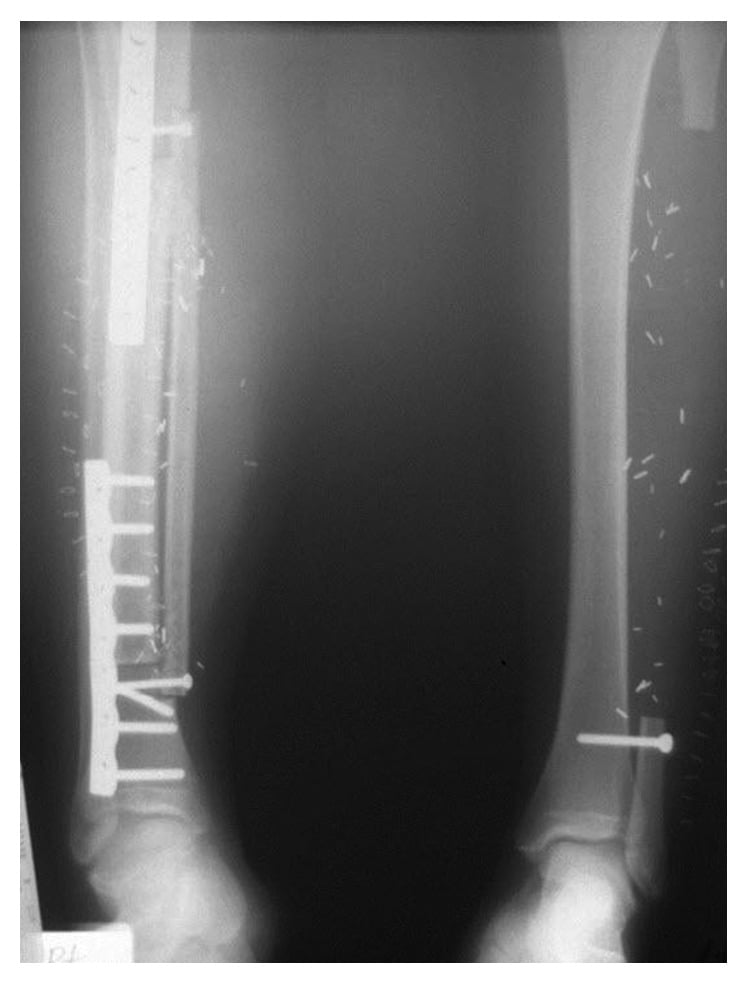
Wide resection is the answer for classic adamantinoma. The WHO-recognised differentiated (OFD-like) adamantinoma is a distinct entity with a deliberately less aggressive pathway, and confusing the two leads to over- or under-treatment.
It occurs in younger patients (older children and adolescents), has only scattered keratin-positive epithelial cells in a predominantly osteofibrous background, and behaves far less aggressively, with low metastatic risk. Because it sits on the OFD to OFD-like to classic continuum, many units favour observation with serial imaging through skeletal growth for the asymptomatic young child, since aggressive early surgery carries high recurrence and the lesion may stabilise after maturity. Wide excision is reserved for a confirmed or progressive epithelial component, marked deformity, pathological fracture, or transformation toward classic disease.
The classic adult adamantinoma, by contrast, is treated by wide en bloc resection up front because of its genuine metastatic potential.
The pivotal investigation that separates the pathways is cytokeratin immunohistochemistry on an adequate biopsy: pure OFD (keratin negative) is observed; classic adamantinoma (abundant epithelial nests) is widely resected; the differentiated type is individualised, weighted toward maturity-timed surgery.
Complications
Pathological fracture occurs in 16-23% of cases. Stabilise the fracture, then proceed to definitive resection.
Local recurrence is the most significant complication, at the rates set out under Management. Assessment before any decision:
- Imaging: MRI of the local site, CT chest, bone scan or PET
- Biopsy to confirm the recurrence histologically
- Surgical planning: review the margins from the primary surgery
Treatment is wide re-excision if margins are achievable, amputation if limb salvage is not possible, and palliative care for unresectable or metastatic disease.
Local recurrence significantly increases the risk of subsequent metastatic disease. Achieving adequate margins at the initial surgery is critical to prevent this cascade.
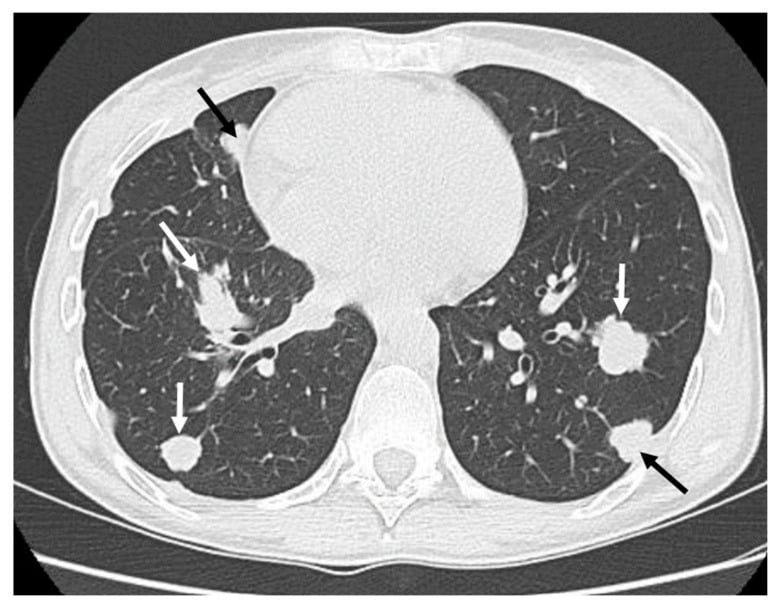
Metastases. Pulmonary metastases occur in 15-30% and lymph node metastases in 5-10%. Pulmonary metastases are treated by surgical metastasectomy if feasible, lymph node metastases by regional lymphadenectomy, and multiple metastases by systemic therapy, for which the options are limited.
Surgical complications.
- Incidence
- 5-15%
- Risk Factors
- Large resection, diabetes
- Incidence
- 10-30% (allograft)
- Risk Factors
- Long segment, chemotherapy
- Incidence
- 15-25%
- Risk Factors
- Stress risers, activity
- Incidence
- 5-10%
- Risk Factors
- Prolonged surgery, immobility
- Incidence
- Under 5%
- Risk Factors
- Tumour proximity
Postoperative Care
Days 0-3. DVT prophylaxis, mechanical and pharmacological. Drains come out when output falls under 50 ml per 24 hours; analgesia is PCA then oral; the affected limb is non-weight bearing.
Weeks 1-6. Watch the wound for infection and monitor for DVT and PE. Weight bearing is protected, to a degree that depends on the reconstruction, and physiotherapy works on range of motion and muscle strengthening.
- Timeframe
- Weeks 0-6
- Goals
- Protected weight bearing, ROM, wound healing
- Timeframe
- Weeks 6-12
- Goals
- Progressive weight bearing, strength
- Timeframe
- Months 3-6
- Goals
- Full weight bearing, functional activities
- Timeframe
- After 6 months
- Goals
- Return to recreational activities
Reconstruction-specific loading. An allograft is kept non-weight bearing for 6-12 weeks, and the construct is protected until the allograft-host junction unites, which may take 12-18 months. A vascularised fibula is loaded progressively as it hypertrophies. An endoprosthesis allows earlier weight bearing, at 2-4 weeks.
Return to activity.
- Desk work at 4-6 weeks, depending on pain control
- Manual work at 3-6 months
- Sports: low-impact activities are generally recommended
- Driving once off opioids and able to weight bear for an emergency stop
Outcomes and Prognosis
Survival. Five-year survival is 95-98% and 10-year survival 85-92% across series; single-institution cohorts differ, and the companion imaging page quotes 85-87%. Metastatic disease significantly worsens the prognosis. Recurrence-free survival at 10 years is approximately 72%, and late recurrence is a significant concern.
Prognostic factors. The factors associated with a worse outcome, and their better-prognosis counterparts:
- Better Prognosis
- Osteofibrous-like (differentiated)
- Worse Prognosis
- Classic with high epithelial component
- Better Prognosis
- Wide or radical
- Worse Prognosis
- Intralesional or marginal
- Better Prognosis
- Greater than 5 years
- Worse Prognosis
- Less than 1 year
- Better Prognosis
- Older (over 20)
- Worse Prognosis
- Younger (under 20) - but note the SUBTYPE dominates: the OFD-like adamantinoma of the young behaves BETTER; it is the young patient with CLASSIC histology who does worse
- Better Prognosis
- Minimal or absent
- Worse Prognosis
- Significant pain
- Better Prognosis
- Present
- Worse Prognosis
- Absent
Function and quality of life. Limb salvage is achievable in 80-90% of cases at specialised centres, with an MSTS functional score typically 70-85% of normal. Quality of life is generally good after successful limb salvage; patients may need walking aids initially, and long-term surveillance can cause anxiety.
Guidelines, Registries & Global Practice
Global Epidemiology
Adamantinoma accounts for well under 1% of all primary bone tumours, making it one of the rarest malignant bone neoplasms encountered worldwide. The disease is remarkably consistent across populations: the tibia is the dominant site (around 70-85% of cases), the peak incidence is in the second to fifth decades, and there is no described geographic, ethnic or environmental predisposition. The tumour has not been linked to radiation or to a hereditary cancer syndrome. Because the absolute numbers are so small, no national cancer registry generates adamantinoma-specific incidence figures of high precision, and the evidence base is built almost entirely from single-institution and tertiary-referral case series rather than trials.
Side-by-Side Guideline and Society Guidance
There is no disease-specific randomised evidence; all major bodies converge on the same principles, derived from retrospective series (evidence level IV) and expert consensus. Differences are largely organisational rather than oncological.
- Core Recommendation
- Defines classic vs differentiated (OFD-like) adamantinoma; diagnosis requires keratin-positive epithelial cells in osteofibrous background
- Evidence Basis
- Consensus / expert panel
- Core Recommendation
- All suspected primary bone tumours referred to a reference sarcoma centre BEFORE biopsy; biopsy by the treating surgical team; wide en bloc resection for adamantinoma
- Evidence Basis
- Expert consensus, level IV-V
- Core Recommendation
- Suspected bone sarcoma referred to a recognised bone sarcoma centre or diagnostic clinic; MDT-directed surgery; chemotherapy/radiotherapy not standard for adamantinoma
- Evidence Basis
- Service guidance, level IV-V
- Core Recommendation
- Bone cancer pathway: biopsy and definitive surgery at a centre with sarcoma expertise; wide resection for adamantinoma; systemic therapy reserved for unresectable/metastatic disease
- Evidence Basis
- Category 2A consensus
- Core Recommendation
- Centralisation of bone tumour surgery; do not biopsy or operate on suspicious bone lesions outside a tumour unit
- Evidence Basis
- Standards of practice
Registry and Centralisation Evidence
Because adamantinoma is so uncommon, the strongest registry-level lesson is centralisation: outcomes for primary bone tumours improve when biopsy and surgery are performed at high-volume sarcoma units, and a poorly planned biopsy outside such a unit can compromise limb salvage. National and supranational sarcoma networks (for example the European EURACAN reference network and equivalent national bone tumour services) exist precisely to pool these rare cases. There is no arthroplasty-style implant registry relevant to adamantinoma, but limb-salvage reconstruction outcomes (allograft, vascularised fibula, endoprosthesis) are tracked within institutional and bone tumour databases.
Practice Variation
The principal real-world variation is in reconstruction technique and resource availability rather than oncological strategy. Wide resection is universal, but the choice between intercalary allograft, vascularised fibular autograft, allograft-prosthesis composite and endoprosthesis depends on resection length, patient age and - importantly in lower-resource settings - access to bone banks and custom implants. Where advanced prostheses and allografts are unavailable, free vascularised fibular grafting is a well-described and effective alternative (Farooque, J Orthop Case Rep 2024). Across all systems, lifelong surveillance for late local recurrence and pulmonary metastasis is the shared standard, reflecting documented recurrences decades after index surgery.
MCQ Practice Points
Q: What is the most common location for adamantinoma?
A: Tibial diaphysis - 85% of adamantinomas occur in the mid-tibial shaft, characteristically involving the anterior cortex. This location is virtually pathognomonic. Other sites (fibula, humerus, femur) are rare.
Q: What is the characteristic histological feature of adamantinoma?
A: Biphasic pattern with epithelial nests or cords within an osteofibrous stroma. The epithelial cells are positive for cytokeratins 14 and 19 (but negative for CK8, CK18). This cytokeratin profile distinguishes it from metastatic carcinoma.
Q: What is the surgical treatment of choice for adamantinoma?
A: Wide en bloc resection with adequate margins. Curettage is contraindicated - every patient curetted in a 16-year tertiary series recurred. Even marginal excision has 30-50% recurrence. The minimum acceptable margin is wide (through normal tissue), though be aware that recurrence still ran at 29% after en bloc resection in that series, so a wide margin lowers rather than removes the risk.
Q: What is the prognosis and metastasis rate for adamantinoma?
A: 10-year survival is approximately 85-92% across series with adequate surgical margins. Metastases occur in 15-30% of cases, primarily to lungs and lymph nodes. Late recurrence (up to 36 years post-surgery) mandates lifelong follow-up.
Q: What is the characteristic radiographic appearance of adamantinoma?
A: "Soap-bubble" appearance - multilocular lytic lesion with sclerotic margins, eccentric in the anterior tibial cortex. The lesion may show cortical expansion without periosteal reaction. Skip lesions (multifocality) can occur in the same bone.
Clinical Decision Scenarios
Practise clinical reasoning and management decisions out loud
“A 28-year-old man presents with a 2-year history of anterior shin swelling. Radiographs show a multilocular lytic lesion in the mid-tibial diaphysis with a soap-bubble appearance and sclerotic margins. There is cortical expansion but no periosteal reaction.”
“A 45-year-old woman had curettage of a tibial lesion 5 years ago at an outside institution. She was told it was 'benign'. She now presents with increasing pain and swelling. MRI shows a large tibial lesion with soft tissue extension. Review of original pathology confirms adamantinoma.”
“A 7-year-old child is referred with anterior tibial bowing and an incidental finding of a lytic lesion in the tibial diaphysis on X-ray. The lesion appears intracortical with slight expansion. The child is asymptomatic.”
Key Diagnosis
- Tibial diaphysis location (85%) - anterior cortex
- Soap-bubble appearance on X-ray
- Biphasic histology - epithelial + osteofibrous
- Cytokeratin 14, 19 positive
Treatment Principles
- Wide en bloc resection mandatory
- NEVER curettage - every curetted patient recurred in a 16-year series; 29% recur even after en bloc resection
- Excise biopsy tract with specimen
- Reconstruction: allograft, vascularised fibula, prosthesis
Prognosis
- 10-year survival 85-92% (series-dependent)
- Metastases in 15-30% (lung, lymph nodes)
- Late recurrence up to 36 years
- Lifelong follow-up required
Exam Triggers
- Young adult with tibial diaphyseal lytic lesion
- Anterior cortex soap-bubble lesion
- Multilocular lytic with sclerotic margins
- Positive cytokeratin staining on biopsy
Common Mistakes
- Performing curettage or marginal excision
- Not staging with CT chest before surgery
- Forgetting to excise biopsy tract
- Stopping follow-up after 5 or 10 years
Evidence Base
Defining Series: 85 Adamantinomas of Long Bones
- 70 of 85 tumours arose in the tibia (11 also involving the fibula); peak age 10-30 years
- 26 of 85 (31%) developed local recurrence; 13 (15%) lung metastasis; 6 (7%) lymph-node metastasis
- 9 of the patients with lung metastasis had preceding local recurrence
- Risk factors for recurrence/metastasis: male sex, pain, symptoms under 5 years, and inadequate index surgery (biopsy, curettage, simple excision); lack of squamous differentiation was the only adverse histological feature
- 11 patients died of disease; 41 remained alive disease-free 1 month-47 years after treatment
Long-term Outcomes of Adamantinoma and OFD
- 10 adamantinomas and 5 OFD lesions reviewed; mean follow-up 16 years (range 2-47)
- Local recurrence in 40% of adamantinomas and 40% of OFD, all following surgical removal
- Every patient treated by curettage (both entities) developed local recurrence
- In the en bloc resection subgroup, local recurrence fell to 29% (2 of 7)
- Overall prognosis good, but recurrence is frequent irrespective of strategy - authors advocate a more radical approach for adamantinoma
Osteofibrous Dysplasia Does Not Progress to Adamantinoma
- 80 cases of long-bone OFD reviewed; cytokeratin positivity seen in 2 of 6 OFD lesions stained, but all fibrous dysplasia controls were negative
- No OFD lesion progressed to adamantinoma over follow-up (mean 5.4 years, range 1 month-31 years)
- Two OFD lesions in young boys matured histologically into fibrous dysplasia
- Authors conclude OFD is probably a variant of fibrous dysplasia, not an obligate adamantinoma precursor
- Surgery reserved for extensive lesions, pseudoarthrosis or marked tibial bowing; overall prognosis good
Fibrous-to-Epithelial Transformation Hypothesis
- Extracellular-matrix mapping in 21 adamantinomas: basement-membrane proteins (collagen IV, laminin) surrounded cohesive epithelial islands but were interrupted around isolated keratin-positive cells
- OFD-like tumours showed scattered keratin-positive cells emerging from osteofibrous tissue
- Pattern mirrors the glandular component of biphasic synovial sarcoma
- Supports OFD being a potential precursor with individual epithelial cells transforming from the osteofibrous stroma
Malignant Clone Resides in the Epithelial Cells
- DNA flow/image cytometry: aneuploidy detected in 6 of 15 tumours (40%), confined to cells with an epithelial phenotype; all fibrous cells were diploid
- p53 immunoreactivity in 12 of 25 tumours (48%), restricted to epithelial cells, with confirmed loss of heterozygosity at the p53 locus
- Lung metastases contained only keratin-positive epithelial cells - the osteofibrous component was absent
- Indicates a malignant epithelial component with a reactive (benign) osteofibrous stroma
Dedifferentiated Adamantinoma
- Three patients with sarcomatoid transformation of the epithelial component (one primary, two recurrences)
- Dedifferentiated areas showed high mitotic count, pleomorphism and osteoid/chondroid matrix while retaining pankeratin positivity
- One patient died of metastatic disease
- A keratin-positive sarcomatoid cortical tibial tumour should still raise adamantinoma in the differential
WHO Classification of Bone Tumours
- Classic adamantinoma is classified as MALIGNANT (ICD-O 9261/3); the differentiated (OFD-like) type is a separate INTERMEDIATE - locally aggressive - entity (9261/1)
- Two recognised entities: classic adamantinoma and differentiated (OFD-like) adamantinoma
- Diagnosis rests on demonstrating keratin-positive epithelial cells within an osteofibrous background
- Differentiated/OFD-like adamantinoma occurs in younger patients and behaves less aggressively than classic disease