Progressive ischaemic bone death leading to structural collapse and secondary arthritis
- MRI double-line sign is pathognomonic (T2: inner low + outer high signal)
- Crescent sign = point of no return (mechanical failure, joint preservation unlikely)
- ALWAYS screen opposite shoulder - 30-60% bilateral (78% if steroid-induced)
- Core decompression ONLY effective pre-collapse (Stage I-II): 50-70% success
- TSA superior to hemiarthroplasty when glenoid involved (Stage V)
- Young patients (under 50): 24% revision rate at 10 years - counsel lifetime burden
- “AVN ≠ primary OA: younger age, bilateral, intact cuff, systemic aetiology
- “Arcuate artery (AHCA branch) provides 80% humeral head blood supply
- “Steroid risk: over 2000mg cumulative, over 20mg/day, over 3 months duration
- “Resurfacing requires intact cuff (ABSOLUTE) - cuff deficiency = failure
- “Bilateral simultaneous surgery CONTRAINDICATED - need one functional arm
Avascular Necrosis of the Humeral Head
Overview and Epidemiology
What it is. Avascular necrosis (AVN, also termed osteonecrosis) of the humeral head is a spectrum of disease running from reversible bone marrow ischaemia to irreversible structural collapse and secondary glenohumeral arthritis. The cascade progresses from the initial vascular insult, through attempted bone repair, to mechanical failure and ultimately degenerative arthritis.
How it differs from osteoarthritis. Unlike primary osteoarthritis, AVN typically affects younger patients, often bilaterally, with intact rotator cuffs but compromised subchondral bone vascularity. The underlying ischaemic bone death is the feature that distinguishes it from other shoulder pathology, and it creates the particular challenges of its surgical management.
Sibling page. The femoral head is the commonest site of osteonecrosis and the one where the disease is best studied. For the hip staging, the joint-preserving window, and the core-decompression-versus-arthroplasty decision in that joint, see avascular necrosis of the hip. Because the two joints share aetiology (steroids, alcohol, sickle cell), a humeral head AVN should prompt a hip history and targeted imaging.
How common. The humeral head is the second most common site of osteonecrosis after the femoral head; the shoulder and the knee each account for roughly 10% of all osteonecrosis cases. AVN accounts for approximately 3-5% of shoulder arthroplasties across major joint registries. Among osteonecrosis patients overall, humeral head involvement is uncommon (~7% in early cohort data), but it is frequently bilateral and often coexists with hip osteonecrosis (~80%).
Recognition is increasing with improved MRI access and awareness, and the true incidence is likely underestimated because asymptomatic cases are not diagnosed.
Who gets it. The peak age is 30-50 years, two decades younger than primary osteoarthritis. Many series show a male predominance of 2-3:1, which reflects higher alcohol consumption and steroid exposure, though steroid-driven cohorts may show a female predominance.
Both shoulders. Disease is bilateral at presentation, or becomes so during follow-up, in 30-60% of patients, rising to ~74-78% in steroid-induced disease, with a mean of 1-2 years from unilateral diagnosis to bilateral disease. The second shoulder may present at a different stage from the first.
The registry view. Across national arthroplasty registries, patients undergoing shoulder replacement for AVN are typically younger than those with primary osteoarthritis, which complicates prosthesis selection, activity counselling and the lifetime revision burden. A consistent signal worldwide is a higher revision rate in AVN patients under 50 years than in older cohorts.
Population variation.
- Higher rates in populations with more systemic steroid use: inflammatory and autoimmune disease prevalence, transplant programmes
- Alcohol-related AVN correlates with regional drinking patterns
- Sickle cell disease is a leading cause in populations of African, Mediterranean, Middle Eastern and South Asian ancestry
- Socioeconomic factors and MRI availability influence access to early diagnosis; early disease is frequently missed in limited-resource settings reliant on plain radiographs
Aetiology and Risk Factors
Non-traumatic causes account for 80% of cases and trauma for 20%. The cause has important implications for management: medical optimisation, bilateral screening, and counselling about the ongoing risk of continued exposure.
Corticosteroids (35-40%). The most common non-traumatic cause. Risk rises beyond three thresholds:
- A cumulative dose over 2000 mg prednisone equivalent
- A daily dose over 20 mg/day
- More than 3 months of continuous use
The mechanisms are direct osteocyte toxicity, fat embolism and intravascular coagulation. Common indications for the steroids are organ transplant immunosuppression, SLE, inflammatory bowel disease, severe asthma and haematological malignancy.
Pulse or oral. IV pulse therapy carries a higher risk than the oral equivalent. This is contested: the classic across-study analysis (Felson, Lancet 1987) found bolus dose not independently associated with AVN once daily and cumulative dose were accounted for, and cumulative and daily dose are the proven drivers.
Alcohol (20-25%). The threshold is chronic consumption of more than 400 mL/week. Alcohol acts through direct cellular toxicity, disrupted fat metabolism and intravascular fat emboli. Chronic heavy use carries a greater risk than intermittent binges, though both contribute, and risk increases with quantity and duration.
Idiopathic (20-25%). No risk factor is identified despite thorough investigation; these cases may represent unrecognised genetic susceptibility or environmental factors. The bilateral rate, prognosis and treatment response are similar to AVN of known cause.
Haemoglobinopathies (5-10%). Sickle cell disease is the most common: intravascular sickling mechanically occludes vessels, and vaso-occlusive crises cause bone infarction. Thalassaemia is less common. Perioperative management in sickle cell disease is set out after the evidence section.
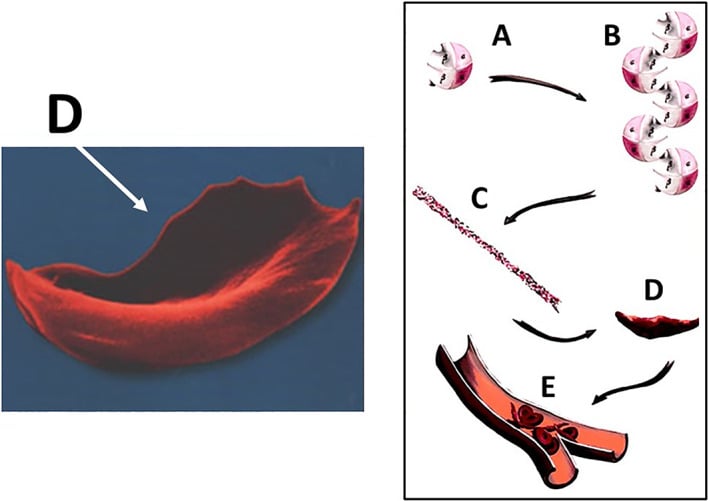
Connective tissue disease (5%). SLE is multifactorial, combining the disease itself, steroids and vasculitis. AVN in rheumatoid arthritis is usually steroid-related, and mixed connective tissue disease is also a cause.
Other causes (under 5% each).
- Gaucher disease: a lysosomal storage disorder that infiltrates marrow
- Caisson disease (decompression sickness): nitrogen bubble emboli in divers and tunnel workers
- Pancreatitis: fat emboli from necrotic pancreatic tissue
- Pregnancy: mechanism unclear, may relate to hypercoagulability
- HIV: multifactorial (the disease, its medications, coagulopathy)
- Radiation therapy: direct vascular injury
- Chemotherapy: endothelial toxicity
Inherited clotting disorders (thrombophilia) are also a cause; the screen for them is under Investigations.

Proximal humerus fractures. Overall, AVN follows 3-5% of fractures at 2 years, but the risk depends on the pattern:
- 4-part fractures: 75%, from disruption of the arcuate artery
- Valgus-impacted 4-part fractures: 25-30%, because some vascular supply is preserved
- Head-splitting fractures: 40-50%, from direct vascular injury
AVN develops 6 months to 3 years after the fracture, at a mean of 18 months. The Hertel criteria, which predict head ischaemia at the time of fracture, follow the evidence section.
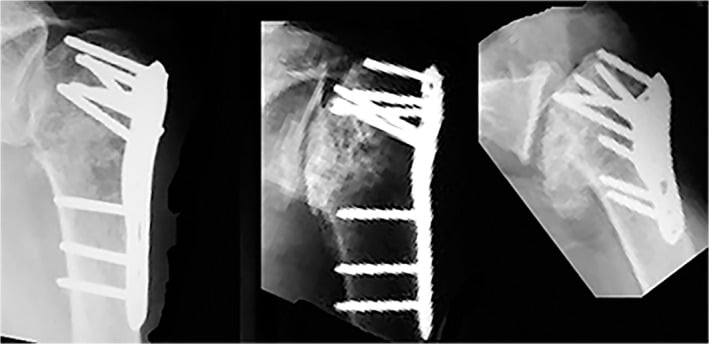
Dislocation. AVN follows 1-2% of shoulder dislocations overall, more with recurrent dislocation, through injury to the circumflex vessels during the dislocation or its reduction. Large Hill-Sachs lesions may have an associated AVN component.
Iatrogenic. Overly aggressive dissection during fracture fixation can disrupt the arcuate artery, multiple operations add a cumulative vascular insult, and screws and plates can injure vessels directly.
Anatomy and Pathophysiology
The blood supply. Two circumflex arteries from the axillary artery supply the head.
- Anterior humeral circumflex artery (AHCA), the primary supply (80%). It arises from the axillary artery lateral to pectoralis minor, runs along the inferior border of subscapularis, and supplies the greater tuberosity, the anterolateral humeral head and the long head of biceps.
- The arcuate artery, the AHCA branch that matters. It enters the head just posterolateral to the bicipital groove and ascends within the bone to supply the anterolateral two-thirds of the head. It is the vessel most vulnerable to displaced fractures and surgical dissection.
- Posterior humeral circumflex artery (PHCA), the secondary supply (20%). It travels with the axillary nerve through the quadrangular space, runs posterior to the surgical neck, and supplies the posterior third of the head through multiple capsular vessels. Its smaller contribution makes it less clinically significant.
Why the head is vulnerable. Inside the bone the vessels arborise into a terminal subchondral network with limited intraosseous anastomoses, an end-artery pattern with poor collateral circulation that leaves the head exposed to a single-vessel injury. Because it relies on one dominant vessel, disrupting the arcuate artery causes extensive necrosis affecting 80% of the head.
The capsular reflection separates the metaphysis from the epiphysis and limits collateral flow between them, and the intracapsular position of the head limits the development of external soft-tissue collaterals. The watershed zone, at the junction of the AHCA and PHCA territories, lies in the superomedial head; the epiphyseal-metaphyseal junction is the watershed zone most susceptible to ischaemia.
Protecting the supply at surgery.
- In fracture fixation, overzealous dissection anterolateral to the bicipital groove risks the arcuate artery
- In the deltopectoral approach, staying medial to the biceps groove protects the AHCA
- In inferior capsular release, avoid extending the dissection too far posteriorly, where the PHCA lies in the quadrangular space
- Avoid long screws in the anterolateral quadrant, which may disrupt the arcuate artery
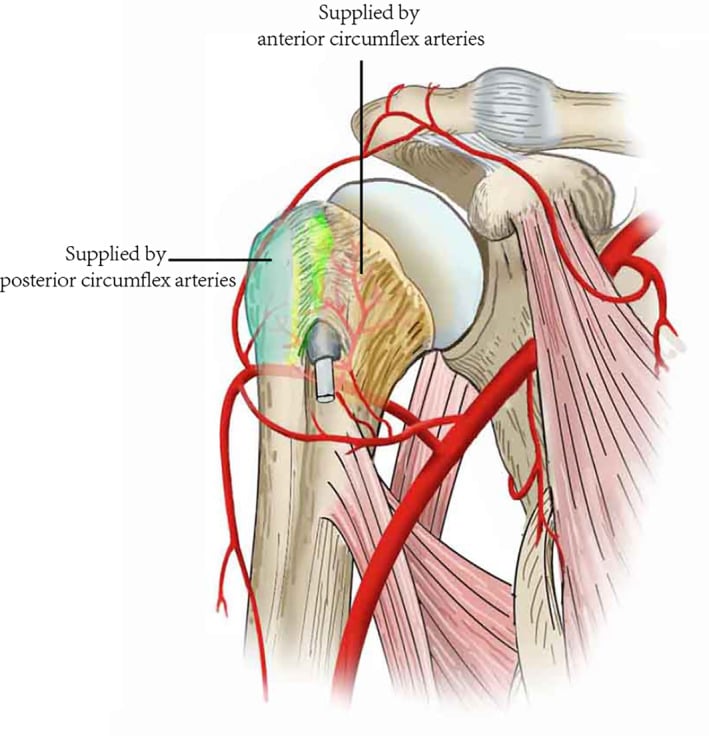
The arcuate artery is the vessel examiners want you to identify. Its disruption explains why displaced proximal humerus fractures, especially 4-part fractures, carry a 75% AVN risk, and why careful surgical technique is essential to avoid iatrogenic AVN.
The pathological cascade. AVN progresses through a predictable sequence from ischaemic insult to mechanical failure, and each step has its imaging signature.
1. Ischaemic event (reversible; hours to days). Blood supply to the subchondral bone is interrupted by vascular injury, thrombosis or extravascular compression. Osteocyte death begins within 2-4 hours of complete ischaemia, alongside bone marrow necrosis, oedema and haematopoietic cell death. The marrow oedema is detectable on MRI while the radiograph is normal, and if blood flow is restored quickly the bone may recover.
2. Repair (potentially reversible; weeks to months). Revascularisation is attempted from the periphery (creeping substitution), with inflammation at the necrotic-viable interface, osteoclastic resorption of the dead trabeculae and attempted new bone formation by osteoblasts. Dead bone is removed faster than new bone is formed, so the head paradoxically weakens during remodelling, its strength reduced by 70-80% from baseline. The MRI double-line sign appears at this reactive zone, and radiographs may show early sclerosis.
3. Mechanical failure (irreversible; months to years). The subchondral bone fractures under physiological loads, the trabecular architecture collapses, and the head progressively deforms and flattens. The articular cartilage initially remains viable because synovial fluid nourishes it. The fracture is visible on radiographs as the crescent sign, a subchondral lucency, and MRI shows the fracture line. This is the point of no return: joint preservation strategies are ineffective once collapse occurs.
In steroid-associated disease, fat accumulation and osteonecrosis weaken the subchondral plate, and its fracture precedes articular collapse.
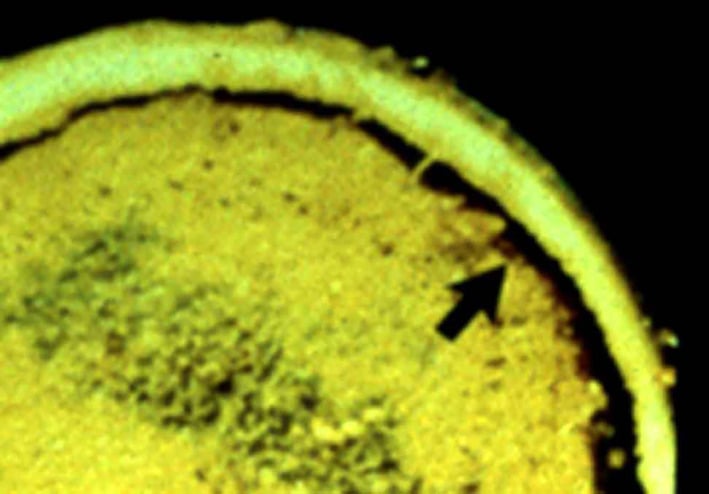
4. Secondary arthritis (months to years). The articular cartilage fragments once it loses congruent support, and the incongruent head damages the glenoid cartilage. Osteophytes, joint-space narrowing, synovitis and capsular contracture follow, imaging shows classic osteoarthritic change on both sides of the joint, and end-stage disease requires arthroplasty for symptom control.
The mechanics of collapse.
- Normal humeral head stress during activities of daily living is 50-200 MPa
- Woven repair bone has 50% of the strength of mature lamellar bone
- Lesions involving over 40% of head volume exceed mechanical tolerance
- Central lesions fail faster than peripheral ones because stress concentrates there
Natural History
Untreated, the course depends on the stage.
Stage I (MRI positive, radiograph negative). 10-15% resolve spontaneously, these being small lesions under 15% of volume in a peripheral location. Another 15-20% remain stable and asymptomatic for years, the lesion present but not progressing, and the majority, 65-75%, progress to Stage II within 2 years.
Stage II (sclerosis, no collapse). 20-30% stabilise, the lesion persisting without collapse, and 70-80% collapse (Stage III-IV) within 3-5 years. Central location, a volume over 40%, continued steroid or alcohol exposure and younger age increase progression.
Stage III (crescent sign). Mechanical failure has occurred, and over 90% collapse (Stage IV) within 2 years. Fewer than 10% stabilise, and only small peripheral lesions, so joint preservation is unlikely to succeed.
Stage IV-V (collapse and arthritis). All progress eventually to end-stage arthritis, with severe symptoms typically 5-10 years from collapse, though the timing varies, and functional disability increases progressively as the arthritis worsens.
What drives progression.
- Lesion volume and location, graded in the classification section
- Bilateral disease, which suggests systemic factors and carries a higher progression risk
- Ongoing steroid or alcohol exposure, which accelerates every stage
- Younger age at onset: higher bone turnover gives faster remodelling and, paradoxically, faster progression, and a longer disease duration brings more cycles of loading
Classification Systems
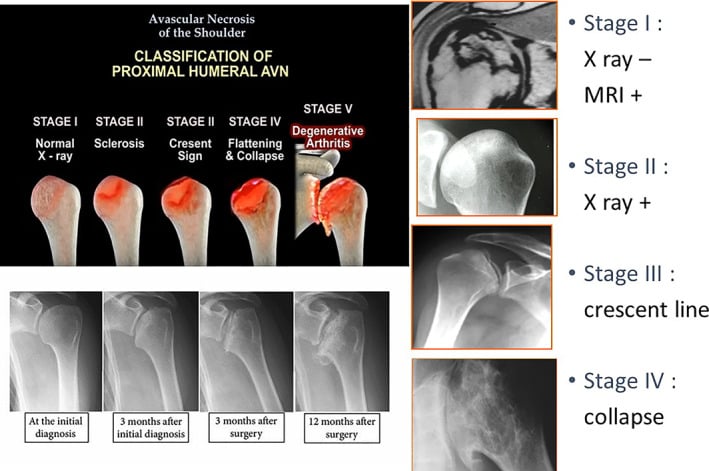
Cruess is the most commonly used and the most clinically practical system. It rests primarily on plain radiographs, correlates well with treatment algorithms, and is the gold standard for communication among surgeons and for clinical decision-making.
- Radiographic Findings
- Normal radiographs, increased bone density may be subtle
- MRI Findings
- Diffuse marrow oedema, band sign, no clear demarcation
- Symptoms
- Minimal to moderate pain, often activity-related
- Treatment Options
- Observation + risk factor modification, Core decompression ± biologics
- Radiographic Findings
- Patchy sclerosis and cyst formation, no collapse, preserved contour
- MRI Findings
- Band sign or double-line sign, demarcated lesion, volume assessment
- Symptoms
- Moderate pain with activity, some night pain
- Treatment Options
- Core decompression + bone grafting, Biological augmentation, Close surveillance
- Radiographic Findings
- Subchondral fracture visible as crescent-shaped lucency (point of no return)
- MRI Findings
- Subchondral fracture line clearly evident, beginning structural disruption
- Symptoms
- Significant pain with activity and at rest, limited ROM
- Treatment Options
- Controversial: Observation vs Core decompression (low success) vs Arthroplasty
- Radiographic Findings
- Humeral head flattening and contour loss, joint space maintained
- MRI Findings
- Structural collapse visible, glenoid cartilage still normal
- Symptoms
- Severe pain, stiffness, grinding sensation
- Treatment Options
- Hemiarthroplasty, Humeral head resurfacing (young + intact cuff), TSA (older)
- Radiographic Findings
- Joint space narrowing, glenoid sclerosis and osteophytes, advancing to severe degenerative change on both sides of the joint
- MRI Findings
- Glenoid involvement (oedema, subchondral sclerosis, cartilage loss, possible bone loss); cuff may be compromised in advanced disease
- Symptoms
- Severe pain, marked stiffness, functional limitation
- Treatment Options
- TSA if glenoid bone stock adequate and cuff intact; reverse TSA if cuff deficient or elderly
The crescent sign. Stage III is the traditional point of no return: the crescent represents a distinct subchondral fracture, the mechanical failure after which joint preservation by core decompression is no longer effective and arthroplasty is usually required. The management section explains why this stage is now contested.

Clinical Assessment
The pain. Onset is insidious in non-traumatic disease and acute after trauma or fracture. The pain is deep, aching and boring, a bone pain worse with loading, felt most commonly over the anterior and lateral shoulder, and it may radiate to the deltoid insertion. Night pain is common in progressive stages and distinguishes AVN from simple impingement.
Steroid exposure is the most important part of the risk history. Establish:
- Why the patient is on steroids (transplant, SLE, IBD, severe asthma, malignancy, other)
- The route: IV pulse therapy or oral maintenance (pulse carries the higher risk)
- The current daily dose, an estimate of the cumulative dose, and the duration, against the thresholds above
- The timing: symptoms typically begin 6-18 months after starting steroids or escalating the dose
- Whether exposure is ongoing, which affects progression risk and surgical planning
Alcohol. Quantify drinks per week against the threshold of more than 400 mL of spirits a week, the pattern (chronic daily or weekend binge, both of which increase risk) and the years of heavy consumption. Whether the patient is still drinking or abstinent is critical for surgical planning.
Other conditions to ask about.
- Sickle cell disease: crises, and other sites of AVN (the hip is the most common)
- SLE and connective tissue disorders: disease activity, other organ involvement
- HIV: treatment status, CD4 count, medication history
- Gaucher disease: enzyme replacement therapy status
- Pancreatitis: acute necrotising episodes
- Diving or decompression illness: professional or recreational diving, depths, decompression protocols
Trauma. Ask when a proximal humerus fracture occurred, what type it was and how it was treated (ORIF or conservatively); how many dislocations, in which directions and with what associated injuries; and what shoulder surgery has been done, with its complications.
Function. Record activities of daily living (dressing and reaching behind the back, grooming the hair, feeding hand to mouth), occupation (manual or sedentary, overhead work, lifting, disability implications), sleep (positions possible, frequency of night waking) and recreation. Note previous physiotherapy, injections and medications and how well they worked.
The other shoulder. Ask "Do you have any pain or symptoms in your other shoulder?" and "Have you had imaging of your other shoulder?", and document the need for bilateral screening imaging in the management plan.
Always ask about contralateral shoulder symptoms and document a plan for bilateral imaging: the other shoulder may be affected while radiographically silent. Examiners expect this in your assessment and will view its omission as a significant oversight.
Examination should be systematic and bilateral, and focused on rotator cuff integrity, which is critical for arthroplasty planning.
Look. Muscle wasting of the deltoid and the supraspinatus and infraspinatus fossae indicates chronic disease. Compare shoulder heights and contours with the other side, note scars from surgery or trauma, and a shoulder held protectively in internal rotation and adduction. Steroid-related disease may show Cushing's stigmata: striae, bruising, thin skin.
Feel. Palpate the acromion, clavicle, coracoid and humeral head; tenderness is typically over the anterior and lateral head on deep palpation. Examine the AC joint (cross-body adduction) to exclude concurrent pathology and the biceps groove, since the long head of biceps is often attritional in AVN. Rule out referred pain from the cervical spine by palpating the spinous processes and testing its range.
Move. Compare active range with the other side:
- Forward elevation: normal 160-180°, typically 90-120° in advanced AVN
- Abduction: normal 160-180°, with a similar pattern
- External rotation at the side: normal 60-80°; early loss suggests capsular involvement
- Internal rotation by posterior reach: T7-T12 normally, buttock or lumbar spine when restricted
Passive range greater than active suggests a rotator cuff or pain problem. The end-feel is firm with a capsular block, hard with a bony block from osteophytes, and empty with pain; global restriction suggests capsular contracture rather than selective loss.
Strength. Grade each muscle on the 0-5 MRC scale and document the actual grade, not just "weak".
- Supraspinatus: empty can (Jobe) test, resisting abduction at 90° in the scapular plane with the thumb down
- Infraspinatus: resisted external rotation at the side with the elbow flexed 90°
- Subscapularis, using all three tests: lift-off (hand behind the back, lifted off the lumbar spine; the most specific), belly-press (the hand pressed into the abdomen; positive if the elbow drops behind the trunk) and bear-hug (hand on the opposite shoulder, resisting an attempt to pull it away)
- Teres minor: hornblower's sign, external rotation at 90° abduction; inability suggests teres minor weakness, and a positive sign means severe cuff deficiency
- Deltoid: resisted abduction at 90° for the anterior, middle and posterior heads, which matters for reverse TSA outcomes
Special tests. Neer and Hawkins-Kennedy impingement signs are usually negative in isolated AVN, and load-and-shift, apprehension and relocation tests are typically stable unless there has been a dislocation. Check axillary nerve sensation over the lateral shoulder patch, the radial pulse and motor function.
The other shoulder. Always examine it completely, document the range and strength comparison, and look for early signs of bilateral disease, such as pain on deep palpation or subtle loss of range. It also informs surgical planning if bilateral procedures are anticipated.
Rotator cuff assessment is CRITICAL before arthroplasty planning - a deficient cuff in a young AVN patient (who may not be suitable for reverse TSA due to age) creates a major management dilemma. Consider ultrasound or MRI if any weakness is detected on examination.
Investigations
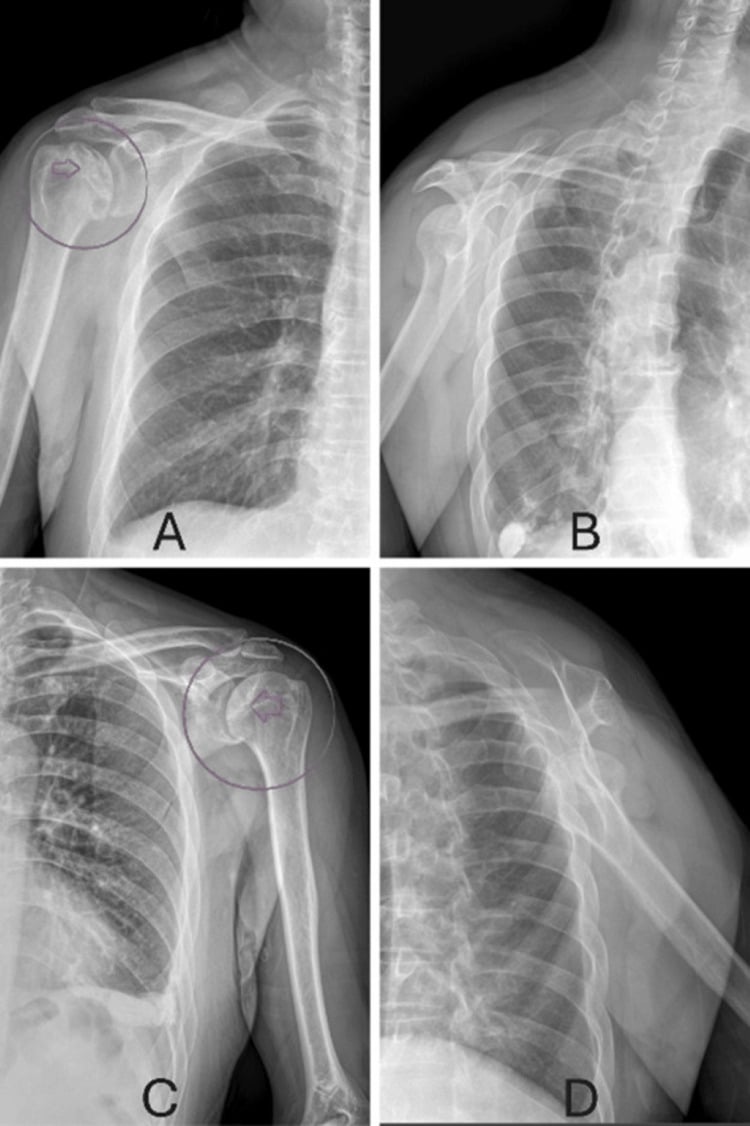
Plain radiographs remain the first-line imaging despite their limited sensitivity in early disease. They are a cost-effective first step and sufficient for monitoring late-stage disease.
- True AP (Grashey view): patient rotated 40° posterior oblique, beam perpendicular to the scapula. Best shows the glenohumeral joint space and identifies glenoid changes in late disease.
- Scapular Y (lateral): shows the anterior-posterior position of the head and assesses its sphericity and collapse. The crescent sign is best seen on this view, where the subchondral fracture is in profile.
- Axillary lateral: essential for complete assessment and never omitted. With the arm abducted 45° and the beam through the axilla, it shows posterior glenoid wear and subluxation.
What each stage looks like.
- Stage I: normal
- Stage II: patchy sclerosis, increased bone density, a mottled appearance and cysts (1-5 mm lucencies)
- Stage III: the crescent sign, a 1-3 mm curvilinear subchondral lucency beneath the articular surface
- Stage IV: flattening of the head, loss of sphericity, step-off deformity
- Stage V: joint-space narrowing, glenoid sclerosis, osteophytes and subchondral cysts on both sides
What they miss. Sensitivity is 40-60% in early disease (Stages I-II), with many false negatives, and 60% of early AVN is missed on radiographs alone; in late disease (Stages III-V) it is 90-100%. Radiographs cannot assess lesion volume or location, the prognostic factors, or the rotator cuff, so Stage I disease needs MRI.
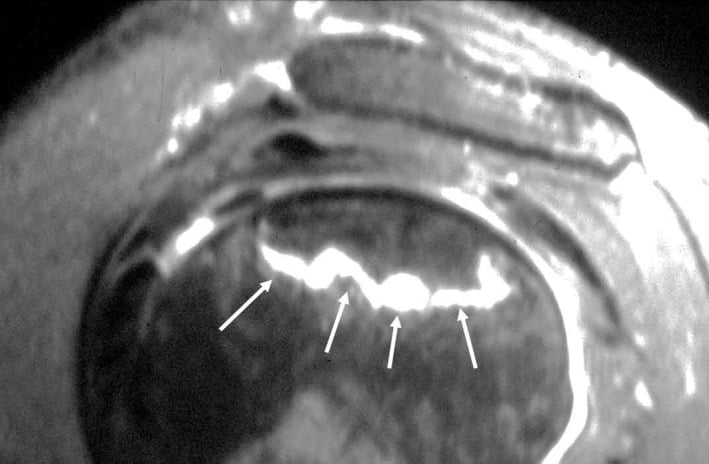
MRI is the gold standard and the definitive diagnostic test, detecting AVN 6 months before radiographic change. Sensitivity is 95-100% and specificity 95-98%, and with a negative predictive value above 99%, a negative MRI essentially rules AVN out.
When to order it.
- Suspected AVN with normal radiographs
- Screening the other shoulder in confirmed unilateral AVN (mandatory in steroid and alcohol cases)
- Pre-operative planning: lesion volume and location, rotator cuff, glenoid status
- Distinguishing AVN from impingement, labral tears and cuff pathology
- Serial monitoring for progression in non-operative management
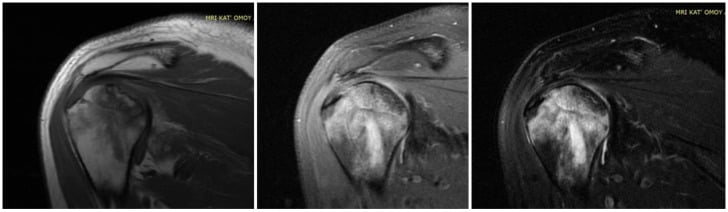
The protocol. T1-weighted images show necrotic bone as low signal, because dead marrow fat appears dark. T2-weighted images show the double-line sign and the high-signal reactive zone, and STIR (fat-suppressed) images show marrow oedema, inflammation and reactive bone. Coronal, sagittal and axial sequences are needed, coronal being best for AVN. Contrast is not routinely needed, since unenhanced sequences are sufficient; gadolinium shows peripheral enhancement, where viable tissue surrounds the necrotic core.
The band sign is a single line of low signal on T1 and T2 marking the necrotic-viable interface in early AVN (Stages I-II). Its specificity is moderate, since other marrow processes can produce it.
The double-line sign is the finding examiners want you to identify. An inner line of low signal on T1 and T2 is necrotic bone; an outer line of high signal on T2 is granulation tissue in the revascularisation zone. It represents the repair interface, typically in Stage II, and is seen in 80% of cases; it is not seen in other conditions, which makes it pathognomonic when present.
The geographic pattern is a well-demarcated wedge with its apex towards the centre of the head and its base at the articular surface, following the distribution of a vascular territory.
Volume is measured on coronal sequences; its risk tiers are in the classification section, and it informs counselling and treatment selection.
What else MRI shows.
- Rotator cuff integrity, essential for arthroplasty planning: full-thickness tears, retraction, atrophy
- Glenoid status: cartilage thickness, subchondral bone quality, version
- Soft tissues: the long head of biceps (often attritional), labrum, joint effusion
- The opposite shoulder, whose stage can be compared if bilateral MRI is obtained

CT is standard practice for pre-operative templating of an arthroplasty. It is used to:
- Assess glenoid bone stock, version and inclination
- Quantify the extent of humeral head collapse
- Plan bone grafting procedures by sizing the defect
- Image the shoulder when MRI is contraindicated (pacemaker, severe claustrophobia)
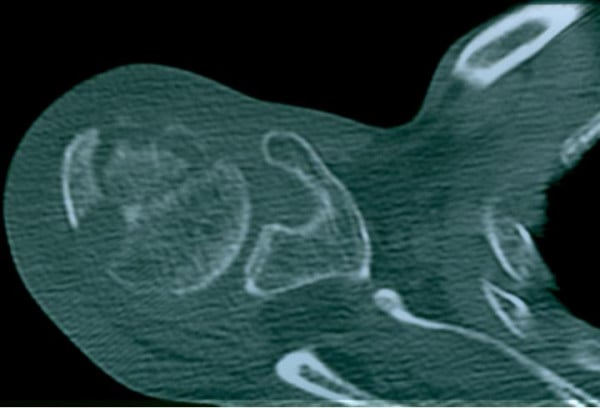
CT defines the subchondral fracture better than radiographs, with the crescent sign clearly visible, and shows the pattern of trabecular disruption and sclerosis. It quantifies collapse and flattening precisely, measures glenoid version (normally 5-10° of retroversion, increased in OA and measured for correction) and inclination (superior or inferior tilt), and quantifies posterior subluxation of the head. 3D reconstruction helps plan resurfacing arthroplasty, assess patterns of bone loss, template custom implants virtually and demonstrate the problem visually for patient education. The cost is radiation, lower sensitivity than MRI for early AVN, and no view of the cuff, labrum or cartilage quality.
Bone scintigraphy has been replaced by MRI in nearly all centres. It may show increased uptake before radiographic change, though 2-4 weeks after MRI detection, and it is less specific, with false positives from infection, tumour, fracture and arthritis. It remains useful for whole-body screening when several joints may be involved (sickle cell, Gaucher). On a three-phase scan AVN shows increased uptake in all phases, a pattern different from infection.
Ultrasound has no role in diagnosing AVN because it cannot see intraosseous pathology. It can assess rotator cuff integrity as an alternative to MRI for a focused question, may show a non-specific joint effusion, and guides aspiration and injection.
Blood tests identify the underlying cause and optimise the patient for surgery; they do not diagnose AVN, which is an imaging diagnosis. ESR and CRP are typically normal, which helps exclude septic and inflammatory arthritis. Abnormal results guide management of the underlying condition but do not alter AVN treatment directly.
- Haematology: full blood count (anaemia of chronic disease or sickle cell; thrombocytopenia and macrocytosis from alcohol); a sickle cell screen if the ethnicity is relevant (African, Mediterranean, Middle Eastern) or there is a family history, with haemoglobin electrophoresis to confirm the subtype if positive
- Biochemistry: lipid profile (hyperlipidaemia is associated with AVN, causation unclear); liver function (alcohol-related liver disease, baseline before surgery); renal function (transplant patients, contrast studies, medication dosing); glucose and HbA1c (diabetes is common in steroid users and affects surgical outcomes); bone profile (calcium, phosphate, ALP, vitamin D)
- Immunology, if the cause is unclear: ANA to screen for SLE and connective tissue disease; ENA to subtype if ANA is positive; anti-dsDNA, which is specific for SLE; rheumatoid factor and anti-CCP (AVN with RA is usually steroid-related); HIV serology if there are risk factors or unexplained immunosuppression
- Thrombophilia screen, in selected patients (bilateral AVN in a young patient, a family history of thrombosis, recurrent thrombosis): protein C, protein S, antithrombin III, factor V Leiden, prothrombin G20210A mutation, anticardiolipin antibodies and lupus anticoagulant. The yield is low in the general AVN population and higher with bilateral disease and no steroid or alcohol exposure.
- Other: vitamin D and PTH for baseline bone health, and cortisol if endogenous Cushing's is suspected
Before surgery, correct vitamin D deficiency, manage diabetes and screen for infection.
Differential Diagnosis
AVN must be distinguished from other causes of a painful, stiff or collapsing shoulder, particularly in younger patients with an intact cuff. The combination of a younger patient, systemic risk factors, an intact cuff and an MRI double-line sign is the key discriminator.
- Key distinguishing features
- Younger patient, systemic risk factors (steroid/alcohol/sickle cell), intact cuff, often bilateral
- Imaging clue
- MRI double-line sign / band sign; crescent sign then collapse with preserved glenoid early
- Inflammatory markers
- Normal ESR/CRP
- Key distinguishing features
- Older patient (60s-70s), no AVN risk factors, gradual stiffness
- Imaging clue
- Inferior humeral osteophyte (goat's beard), posterior glenoid wear (Walch B), joint space loss
- Inflammatory markers
- Normal
- Key distinguishing features
- Cuff-deficient, pseudoparalysis, anterosuperior escape
- Imaging clue
- Superior migration, acetabularisation of acromion, femoralisation of head
- Inflammatory markers
- Normal
- Key distinguishing features
- Polyarticular, morning stiffness, systemic symptoms; may coexist with steroid-induced AVN
- Imaging clue
- Symmetric joint space loss, periarticular erosions, osteopenia, central glenoid wear
- Inflammatory markers
- Raised ESR/CRP, RF/anti-CCP positive
- Key distinguishing features
- Acute, hot, very painful shoulder, systemic upset, often immunocompromised
- Imaging clue
- Effusion, rapid joint destruction; aspiration is diagnostic
- Inflammatory markers
- Markedly raised; aspirate WCC over 50,000 with neutrophilia
- Key distinguishing features
- Self-limiting pain, no risk factors, resolves over months
- Imaging clue
- MRI diffuse marrow oedema WITHOUT a demarcating band or double-line sign
- Inflammatory markers
- Normal
- Key distinguishing features
- Older osteoporotic patient, acute onset, no AVN risk factors
- Imaging clue
- Subchondral low-signal line with surrounding oedema, no serpentine reactive interface
- Inflammatory markers
- Normal
- Key distinguishing features
- Clear fracture history; vascular insult overlaps with post-traumatic AVN
- Imaging clue
- Deformity following prior fracture/fixation, hardware
- Inflammatory markers
- Normal
The single most useful discriminator on MRI is the double-line / serpentine band sign of AVN versus the non-demarcated diffuse oedema of transient bone marrow oedema syndrome - the latter is self-limiting and does NOT require surgery, so do not mistake it for early AVN.
Rapidly progressive destructive arthropathy can begin with focal marrow oedema and then a subchondral fracture before accelerated joint destruction. That sequence helps distinguish it from a stable early osteonecrotic lesion.
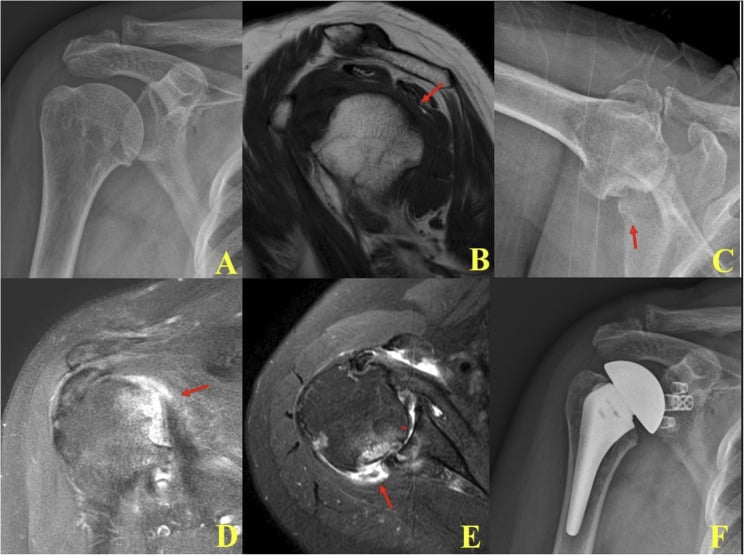
Management Algorithm
The dilemma. In a young patient TSA carries a high revision risk, and with an intact cuff a reverse TSA is often contraindicated or suboptimal because it wastes a good cuff. The result is complex decision-making between resurfacing, stemless TSA and hemiarthroplasty.
C-O-R-ECORE: Decompression Candidate Selection
Hook:Use the CORE criteria to decide who gets joint preservation (Core Decompression). If they don't meet CORE (e.g., they have Collapse), they need Arthroplasty.
Stage III is contested. The algorithm quotes 20-30% success for decompression after the crescent sign, and traditional teaching treats the crescent as the "point of no return". The 2023 systematic review in the evidence section found that 63% of Stage III shoulders avoided arthroplasty after decompression, so whether to decompress or proceed to arthroplasty at this stage is unresolved.
- 1
Diagnosis confirmed (MRI double-line sign, or Cruess staging on imaging)
Determine Stage & Aetiology
- 2**Stage I-II (Pre-Collapse)**: Normal X-ray or sclerosis only, NO crescent sign
Lesion volume on MRI and patient factors
- 3**Stage III (Crescent Sign)**: Subchondral fracture visible, mechanical failure
Age, symptoms, patient preferences
- 4**Stage IV (Collapse, Glenoid Intact)**: Head flattened, joint space preserved
Age + rotator cuff status + activity level
- 5**Stage V (Glenoid Arthritis)**: Joint space narrowed, glenoid sclerosis/changes
Rotator cuff status + age + activity level
- 6**Concurrent Management All Stages**
Surgical Technique
Core Decompression
Indications.
- Cruess or Ficat Stage I-II (pre-collapse)
- An MRI lesion under 40% of head volume; lesions over 40% have poor outcomes
- A motivated patient willing to comply with a 3-month activity restriction
- Age under 40, a relative indication: younger patients comply better and have longer to go before arthroplasty
Contraindications.
- Crescent sign (Stage III): mechanical failure has already occurred, and success is low
- Collapse (Stage IV and beyond): irreversible structural damage
- Over 50% head involvement: exceeds mechanical tolerance, with a very low success rate
- Infected shoulder: absolute
- Inability to comply with the post-operative restrictions, since premature loading causes fracture
- Non-modifiable risk factors (continued heavy steroid or alcohol use): relative
Planning. Review the MRI for lesion location and volume to identify the target, and the CT if available for bone quality and metaphyseal involvement. Discuss augmentation with bone graft, BMAC or PRP (if available in a research protocol). Optimise the patient by stopping smoking, repleting vitamin D and controlling diabetes, and coordinate with the treating physician to minimise steroids.
Consent. The procedure buys time rather than providing a definitive cure: it halts progression in 50-70% and does not reverse damage, and it is important to set appropriate expectations. The stage-specific success rates are in the outcomes tab, and 30-50% progress to arthroplasty within 5 years. Complications include fracture (2-5%), infection (under 1%), neurovascular injury (rare) and persistent pain (30-40%). The patient faces a sling for 4-6 weeks and no lifting for 3 months (strictly), and it takes 6-12 months of serial imaging to know whether it has worked.
Total Shoulder Arthroplasty for AVN
Imaging. CT assesses glenoid version, bone stock and the humeral deformity from collapse, and templating sizes the humeral and glenoid components and plans any version correction. MRI confirms rotator cuff integrity, critical for the success of an anatomic TSA. AVN bone often mixes sclerotic and cystic areas, so cement may be needed even in young patients.
Risk.
- Bleeding: anticoagulation is common in AVN patients, and immunosuppression can affect platelets
- Infection: current immunosuppression (steroids, transplant medications), diabetes, malnutrition
- Bone quality: osteoporosis from steroids or alcohol raises fracture risk and threatens component fixation
- Optimisation: vitamin D repletion, diabetes control (HbA1c under 7.5%), nutrition (albumin over 35)
Implants. A stemless humeral component is preferred in AVN if the metaphyseal bone is adequate, preserving bone and easing revision. Consider cement in osteoporotic bone (alcohol, steroids), even in younger patients. A cemented all-polyethylene glenoid is standard, since metal-backed glenoids fail more often in the AVN population, and components should not be oversized, which increases stiffness and the risk of nerve injury.
Positioning. The beach chair is most common: head secured in a horseshoe headrest or specialised device, torso 30-45° upright, operative arm free to extend and rotate, the other arm tucked or on an arm board, and the C-arm brought in from the opposite side. It offers familiar anatomy, easier positioning of the assistant and a lower neurological risk. The lateral decubitus position is the alternative: a beanbag or lateral positioning device, an axillary roll under the dependent axilla, and the arm suspended in traction or supported. It gives easier humeral preparation, better visualisation with gravity and a more stable glenoid exposure, though some surgeons find the orientation of the anatomy unfamiliar.
Deltopectoral approach.
- Incision: start 2 cm lateral and inferior to the coracoid tip and extend 10-12 cm distally along the palpable deltopectoral groove, proximally towards the clavicle or distally towards the deltoid insertion if needed.
- Superficial dissection: identify the cephalic vein, coagulate its crossing tributaries, and retract it laterally with the deltoid (most common) or medially with pectoralis; develop the plane between deltoid laterally and pectoralis major medially.
- Deep exposure: incise the clavipectoral fascia lateral to the conjoined tendon and protect and retract the tendon medially, with the coracoid as the medial landmark. Tag the muscle edges with stay sutures for closure.
- Rotator interval: identify the interval between subscapularis (inferior) and supraspinatus (superior), where the long head of biceps lies. Tenotomy or tenodesis of the long head is routine in AVN, because the tendon is often attritional and removing it simplifies exposure. Open the interval capsule.
Complications
Core decompression. Intraoperative fracture during drilling occurs in 1-2% and is avoided by not reaming aggressively and using fluoroscopy. Neurovascular injury occurs in under 1%: the axillary nerve if the deltoid split is too distal, the circumflex vessels if the dissection is aggressive. The lesion is missed in 5%, a technical error that shows the importance of fluoroscopy.
- Infection: under 1%, since the procedure is minimally invasive
- Persistent pain: 30-40%, often a sign of progression despite decompression
- Progression to collapse: 30-50% in Stage II, the definition of failure
- Fracture through the decompression site: 2-5%, from premature loading and non-compliance with the restrictions
- Stiffness: 5-10%, from inadequate physiotherapy or capsular contracture
Arthroplasty in AVN carries particular risks. Bone quality raises the risk of fracture during and after surgery, immunosuppression (steroids, transplant medications) raises the infection risk, the opposite shoulder needs surveillance because disease continues to progress there, and young patients face a high lifetime revision burden, with multiple operations expected. The major complications below may need reoperation.
Infection (1-2%), higher in AVN because of immunosuppression. The risk factors are steroids, transplant immunosuppression, diabetes, malnutrition and obesity, and it presents with wound drainage, fever, pain out of proportion and a raised CRP and ESR. Aspirate the joint: a cell count over 3000 with over 80% PMNs suggests infection, and send it for culture.
- Acute (under 3 weeks): debridement, liner exchange and component retention, with 6 weeks of IV antibiotics
- Chronic (over 3 weeks): two-stage revision, with explantation, an antibiotic spacer for 6-8 weeks and delayed reimplantation
- Cure rates: 85-90% for two-stage revision against 60-70% for DAIR (debridement and implant retention)
Instability (2-4%). Anterior instability is the most common, from subscapularis failure (subscapularis repair fails in 10-15%), over-resection of the head or component malposition (excessive retroversion). Posterior instability follows malposition with insufficient retroversion or posterior capsular laxity, and inferior instability follows oversized components or deltoid dysfunction. Meticulous subscapularis repair, accurate component positioning and appropriate soft-tissue balancing prevent it. Early instability (under 6 weeks) is treated by closed reduction and immobilisation in internal rotation (anterior) or external rotation (posterior), with revision if it recurs; late instability needs revision arthroplasty addressing the soft-tissue deficiency, the malposition or both.
Neurovascular injury (1-2%). The axillary nerve is most at risk, from inferior capsular release (it lies 5-7 mm from the inferior glenoid rim), retractor placement or stretch from over-stuffing. It presents with deltoid paralysis and lateral shoulder numbness; observe, since 90% of neurapraxias recover in 6-12 months, and consider exploration if a sharp injury is suspected. The musculocutaneous nerve is injured by retraction of the conjoined tendon, and the brachial plexus by positioning stretch or over-stuffing. Gentle tissue handling, careful retractor placement and avoiding oversized implants prevent them.
Periprosthetic fracture (2-5%), higher in AVN because of bone quality. Intraoperatively the humeral shaft breaks with aggressive reaming of osteoporotic bone and the glenoid with over-reaming; post-operatively fractures follow falls, trauma or stress around the stem. The Vancouver system is adapted for the humerus: AG, periprosthetic greater tuberosity; AH, the shaft around the stem; B, a loose stem; C, distal to the stem. A non-displaced fracture with a stable stem is treated conservatively (sling, protected range), and a displaced fracture or unstable stem by ORIF with a plate and cerclage wires or revision to a longer stem.
Stiffness, residual pain and heterotopic ossification are the minor complications.
Stiffness (10-15%). Pre-operative stiffness, poor compliance with physiotherapy, capsular contracture and over-stuffing predispose to it, and appropriate sizing, early passive range and patient education prevent it. Treat with intensive physiotherapy, manipulation under anaesthesia (in the 6-12 week window) and capsular release if refractory.
Residual pain (5-10%). The causes are glenoid loosening, malposition, rotator cuff problems, infection (which must be ruled out) and nerve injury. Work it up with radiographs for loosening and malposition, CRP and ESR, and aspiration if needed, then address the cause, which may mean revision.
Heterotopic ossification (2-3%). Post-traumatic AVN, male sex and a history of HO are the risk factors, and indomethacin 25 mg TDS for 6 weeks post-operatively prevents it in high-risk patients. It is rarely clinically significant, most being asymptomatic, but it may limit range if severe; most are observed, and excision is rarely needed.
Aseptic loosening, a late complication (after 1 year). The glenoid is the most common late complication, at 5-10% at 10 years, with radiolucent lines over 2 mm, component migration and screw breakage; revise to a new glenoid component if bone stock is adequate, or to a reverse TSA. Humeral loosening is less common (2-3% at 10 years), with pain, subsidence and radiolucent lines, and is revised with a longer stem, considering cement if the original was uncemented.
Glenoid wear after hemiarthroplasty (30-50% at 10 years). The metal humeral head erodes the glenoid cartilage. It presents with recurrent pain after an initially good result, grating and crepitus, and is treated by conversion to TSA, which needs adequate glenoid bone stock.
Rotator cuff failure. 5% develop a new cuff tear, a risk that increases over time and most often involves supraspinatus. It presents with pseudoparalysis, anterosuperior escape and pain, and a TSA that fails through a cuff tear is revised to a reverse TSA.
Postoperative Care
Immediate care after arthroplasty (0-24 hours).
- Neurovascular examination: axillary nerve sensation over the lateral shoulder, deltoid contraction, distal pulses
- Radiographs: AP, scapular Y and axillary lateral, confirming component position with no fracture or dislocation
- Analgesia: multimodal, with an interscalene block plus oral or IV analgesics
- DVT prophylaxis: mechanical (TED stockings, foot pumps) with pharmacological prophylaxis if appropriate
Rehabilitation after TSA runs in four phases. Compliance is critical: subscapularis repair failure (10-15%) is often due to non-compliance with the restrictions in the first 6 weeks.
- What is done
- Sling continuously, removed only for exercises; pendulums from day 1 for gentle passive motion and pain control; therapist-assisted passive ROM only (elevation to 90°, ER to 20°); NO active subscapularis use, lifting or reaching
- Goals
- Prevent stiffness while protecting the osteotomy or tendon repair: 90° elevation and 20° ER by week 6, then wean the sling
- What is done
- Wean the sling progressively over weeks 6-8, depending on repair quality; active-assisted ROM (pulley, cane); gentle active ROM in all planes, since subscapularis healing is sufficient by 6 weeks; isometric deltoid and cuff strengthening without resistance
- Goals
- Active ROM of 120° elevation and 40° ER by week 12; return to activities of daily living
- What is done
- Progressive resistance (Theraband, light weights of 1-2 kg); activities of daily living unrestricted; return to sedentary or light-duty work
- Goals
- 140° or more elevation, 60° or more ER, strength 70% of the opposite side by month 6
- What is done
- Normal activities within restrictions; radiographs annually for the first 2 years, then every 2-3 years or if symptomatic
- Goals
- Near-normal or normal ROM; by month 12, strength 80-90% and full function within restrictions
Permanent restrictions. No heavy overhead lifting (a 20 kg limit) and no contact sports or high-impact activities; swimming, golf and recreational activities are generally permitted.
Outcomes and Prognosis
Without surgery. 40-60% achieve acceptable pain levels with analgesia and activity modification, and in Stage II, 50-70% progress to surgery within 5 years. Quality of life is moderately impaired, worse with bilateral disease, and the best outcomes come with small peripheral lesions (under 30%) and successful risk-factor modification.
After core decompression. Success (no progression) is 50-70% at 5 years in Stage I-II, and 30-50% convert to arthroplasty by 5 years. 60-70% report improved pain even if the lesion progresses radiographically, a debulking effect.
- Pain and function
- Good to excellent pain relief in 75-80% (VAS improvement 5-6 points); Oxford Shoulder Score improvement 15-20 points (moderate)
- Range of motion
- Forward elevation 120-140°, ER 40-50° (good but not full)
- Survival and revision
- Survival (no revision) 80-85% at 5 years, 70-75% at 10 years; revised for loosening (10%), glenoid erosion (8%), persistent pain (5%)
- Notes
- Success predicted by age under 50, intact cuff, good bone quality and appropriate selection
- Pain and function
- Good pain relief in 70-80% (inferior to TSA if the glenoid is involved); moderate functional improvement, limited by glenoid-sided pain if arthritis is present
- Range of motion
- Variable, typically 90-130° elevation
- Survival and revision
- Revision to TSA for glenoid erosion pain in 15-20% by 10 years; registry cumulative revision approximately 20% at 10 years (all causes)
- Notes
- Glenoid erosion is progressive and predictable
- Pain and function
- Excellent pain relief in 85-95% (VAS improvement 6-7 points, superior to hemiarthroplasty); good to excellent function in 80-90% (ASES typically 70-80); 85-90% satisfied or very satisfied
- Range of motion
- Forward elevation 120-140°, ER 40-50°, IR to L1-L3
- Survival and revision
- Survival approximately 88% at 10 years (pooled registry data); revision ~12% at 10 years (loosening 6%, instability 3%, infection 2%, other 1%); 20% at 10 years under 50, mainly glenoid loosening
- Notes
- Superior to hemiarthroplasty when the glenoid is involved
- Pain and function
- Excellent pain relief in 90-95%, even better than anatomic TSA; good function, limited by reduced rotation
- Range of motion
- Forward elevation 100-130°, ER 10-20° (limited), IR to buttock or lumbar spine
- Survival and revision
- Survival approximately 92% at 10 years (pooled registry data)
- Notes
- Instability 4%, infection 2%, radiographic scapular notching 50-70% (mostly asymptomatic), acromial fracture 2%; typically used in older AVN patients with cuff deficiency, not young patients with intact cuffs
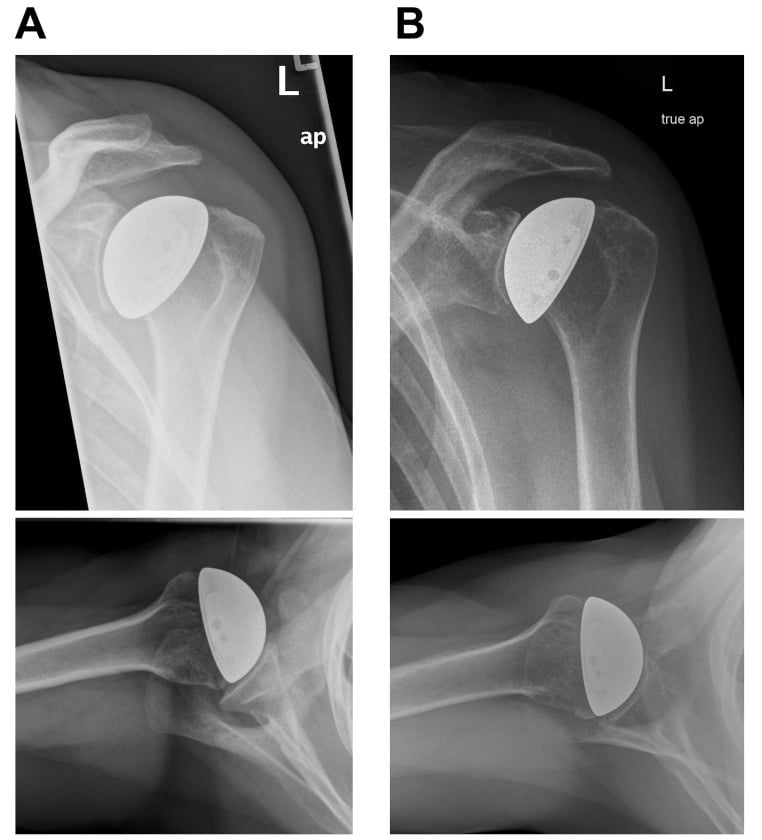
Long-term resurfacing. In one patient treated by humeral-head resurfacing for Cruess stage III disease, radiographs at 17 years showed durable fixation with mild glenoid erosion.
Back to work and sport.
- Sedentary work (typing, desk work): 3-6 months after arthroplasty
- Light manual labour: 6-9 months, with a 10 kg lifting limit
- Heavy manual labour: often needs job modification or leads to disability, since the 20 kg limit is incompatible with it
- Overhead work: generally restricted long term (10 kg limit overhead)
- Overhead sports: generally discouraged, for implant longevity and instability risk
- Golf, swimming and cycling: generally permitted after 6 months
- Activities of daily living: 90% are independent by 6 months
What shapes the result.
- Age: younger patients have a higher revision risk (24% under 50 against 12% over 65 at 10 years) but better function
- Expectations: higher expectations are associated with lower satisfaction, so counsel realistic goals
- Compliance with physiotherapy and activity restrictions improves outcomes
- Comorbidities: diabetes, immunosuppression and smoking worsen outcomes
- Aetiology: steroid-induced disease does slightly worse than idiopathic, because of bone quality
- Stage: earlier intervention, before collapse, gives better long-term outcomes
- Surgeon volume: high-volume surgeons have better outcomes, especially in glenoid component positioning
- Subscapularis repair: its integrity is critical, since failure (10-15%) leads to instability and poor function
Bilateral disease. The second shoulder is typically operated on 6-12 months after the first, staged because the patient needs one functional arm during recovery. Outcomes on the second side are similar to the first, but satisfaction is lower than with unilateral disease (two recovery periods, bilateral restrictions), and the economic impact of two operations and prolonged disability in young, working-age patients is significant.
Predicting Humeral Head Ischaemia After Fracture (Hertel Criteria)
The etiology section quantifies post-traumatic AVN risk by fracture pattern (4-part 75%, valgus-impacted 25-30%, head-split 40-50%), but never gives the validated bedside predictors of head perfusion that drive the fix-versus-replace decision after a proximal humerus fracture.
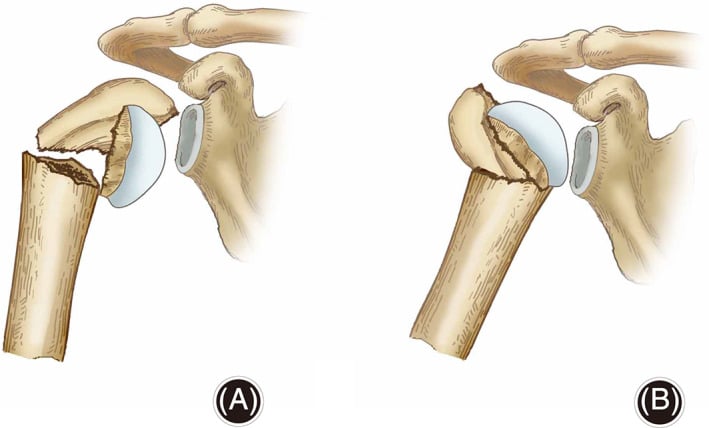
The Hertel criteria predict humeral head ischaemia at the time of fracture from three features:
- Length of the calcar (postero-medial metaphyseal head extension). A short metaphyseal extension - a calcar of less than 8 mm attached to the head fragment - predicts ischaemia, because the medial periosteal and arcuate-artery supply enters through that metaphyseal segment.
- Integrity of the medial hinge. A disrupted or displaced medial periosteal hinge (more than 2 mm displacement) predicts ischaemia; an intact hinge preserves perfusion even in a displaced fracture.
- The basic fracture pattern. Anatomic-neck fractures and the more complex Codman/LEGO patterns (those separating the head from both tuberosities) predict ischaemia.
Use. The combination of a short calcar (under 8 mm), a disrupted medial hinge and an anatomic-neck pattern is highly predictive of an ischaemic head (positive predictive value around 97% in Hertel's original series), whereas a long calcar (8 mm or more) with an intact medial hinge predicts a perfused, reconstructable head. Intra-operative drill-hole back-bleeding from the head confirms perfusion. This is exactly why the high-risk patterns above (4-part, head-split, anatomic-neck) carry the greatest AVN risk.
Q: Which fracture features best predict humeral head ischaemia (and therefore later AVN) after a proximal humerus fracture?
A: The Hertel criteria: (1) a short calcar / metaphyseal head extension (under 8 mm), (2) a disrupted medial hinge (more than 2 mm displacement), and (3) an anatomic-neck fracture pattern. The combination is highly predictive of an ischaemic head (PPV around 97%). A long calcar (8 mm or more) with an intact medial hinge predicts a perfused, reconstructable head, and intra-operative drill-hole back-bleeding confirms perfusion - together these drive the fix-versus-replace decision.
Sickle Cell Disease: Perioperative Considerations
Sickle cell disease is named throughout as a major - and in some populations a leading - cause of humeral head AVN, but the sickle-cell-specific perioperative management is never developed, and it is a favourite examiner probe.
- Why it matters. The sickled red cell causes recurrent vaso-occlusive bone infarction; these patients frequently have multi-joint AVN (hip and shoulder), chronic anaemia, functional asplenia, and a high perioperative risk of sickle crisis, acute chest syndrome, infection and impaired wound healing.
- Preoperative. Liaise with haematology. A preoperative simple or exchange transfusion to reduce the HbS fraction (commonly toward under about 30-40%) and raise the haemoglobin toward roughly 100 g/L reduces perioperative sickling and acute chest syndrome for major surgery. Optimise hydration and screen for end-organ disease.
- Intra- and post-operative. Avoid the triggers of sickling - hypoxia, acidosis, hypothermia, dehydration and venous stasis. Keep the patient warm, well-oxygenated and euvolaemic; a limb tourniquet is generally avoided or used with caution. Give meticulous antibiotic prophylaxis (functional asplenia and higher infection risk), careful DVT prophylaxis balanced against bleeding, and good analgesia to avoid a pain-driven crisis.
- Outcomes. Sickle-cell AVN patients have higher rates of infection, delayed healing and implant complications, and often present with bilateral or multi-joint disease - counsel accordingly and plan staged surgery.
Q: What are the key perioperative precautions when operating on a sickle-cell patient with humeral head AVN?
A: Involve haematology and give a preoperative transfusion (simple or exchange) to lower the HbS fraction (commonly toward under ~30-40%) and raise the haemoglobin before major surgery. Intra- and post-operatively avoid the sickling triggers - hypoxia, acidosis, hypothermia, dehydration and stasis - keeping the patient warm, oxygenated and euvolaemic. Add meticulous antibiotic prophylaxis (functional asplenia), and expect higher infection, wound-healing and multi-joint-disease rates.
Guidelines, Registries & Global Practice
Side-by-Side Society Guidance
There is no high-level (RCT) evidence and no shoulder-specific society guideline dedicated to humeral head AVN; recommendations are extrapolated from hip osteonecrosis guidance and shoulder arthroplasty appropriate-use criteria. Where bodies do comment, the principles converge.
- Region
- USA
- Position relevant to AVN
- Anatomic TSA favoured over hemiarthroplasty once glenoid is involved with an intact cuff; reverse TSA for cuff-deficient or elderly
- Evidence level
- Consensus / limited
- Region
- UK
- Position relevant to AVN
- Joint preservation for pre-collapse disease; arthroplasty for collapse; emphasise young-patient counselling and bone preservation
- Evidence level
- Consensus
- Region
- International
- Position relevant to AVN
- Staging frameworks (ARCO/Ficat) and emphasis on early detection and risk-factor control extrapolated from femoral head osteonecrosis
- Evidence level
- Consensus
- Region
- Europe
- Position relevant to AVN
- Stage-based algorithm; core decompression for early disease, stemless/resurfacing to preserve bone in the young
- Evidence level
- Consensus
- Region
- International
- Position relevant to AVN
- Recognise dysbaric (Caisson) osteonecrosis in divers; advocate decompression-protocol adherence and early imaging
- Evidence level
- Consensus
Where recommendations genuinely differ: practice variation is greatest at the young patient with collapse and intact cuff decision. North American practice leans toward anatomic TSA/stemless once the glenoid is involved; many European centres favour bone-preserving surface replacement or hemiarthroplasty to protect future revision options. All bodies agree that reverse TSA is appropriate for cuff-deficient or elderly patients and is best avoided in the young patient with an intact cuff.
Controversies and Areas of Uncertainty
The evidence base in humeral head AVN is weak (no randomised trials; mostly Level III-IV case series), so several decisions remain genuinely contested. Demonstrating awareness of these debates marks out the consultant-level candidate.
Traditional teaching treats the crescent sign as the "point of no return." Yet a 2023 systematic review found 63% of Stage III shoulders avoided arthroplasty after decompression. Whether to offer decompression after early subchondral fracture - rather than proceeding to arthroplasty - is unresolved.
Bone marrow aspirate concentrate, PRP and cell-based augmentation are biologically attractive but supported only by small uncontrolled series. There are no RCTs in the shoulder, and routine use cannot yet be recommended.
Bone-preserving implants protect future revision options but a retained native glenoid predictably erodes. The trade-off between preserving bone now and accepting later glenoid-sided pain drives marked international practice variation.
Clinical teaching emphasises IV pulse therapy as especially dangerous, but the classic across-study analysis (Felson, Lancet 1987) found bolus dose NOT independently associated with AVN once daily/cumulative dose was accounted for. Cumulative and daily dose are the proven drivers.
Given 30-78% bilateral disease, MRI screening of the asymptomatic shoulder seems logical, but evidence that early detection of an asymptomatic lesion changes outcome is limited, and cost-effectiveness is unproven outside high-risk (steroid) groups.
There is no good option for a young patient with collapse, glenoid arthritis and a deficient cuff. Reverse TSA works but carries a high lifetime revision burden; cuff repair plus hemiarthroplasty, or delaying surgery, are all defensible. This is a true area of equipoise.
Viva Scenarios
Clinical Decision Scenarios
Practise clinical reasoning and management decisions out loud
“A 38-year-old male renal transplant recipient presents with bilateral shoulder pain for 6 months. He is on maintenance prednisone 15mg daily and tacrolimus. Radiographs show bilateral humeral head sclerosis without collapse (Cruess Stage II). MRI confirms AVN with lesions involving approximately 40% of each humeral head (central location). He works as a builder and is very concerned about his ability to continue working. How would you manage this patient?”
“A 55-year-old female with chronic alcohol use disorder presents with severe left shoulder pain. She reports drinking approximately 500mL spirits daily for 20 years. Radiographs show Cruess Stage V AVN with humeral head collapse and early glenoid involvement. MRI confirms intact rotator cuff. She continues to drink heavily and is not currently engaged with addiction services. How would you approach this patient?”
“A 32-year-old woman with SLE on long-term steroids (prednisone 20mg daily for 5 years) has bilateral shoulder AVN. Right shoulder is Cruess Stage I (MRI positive, X-ray normal, minimal symptoms), left is Cruess Stage IV (collapsed head, glenoid intact, severe pain). MRI confirms intact rotator cuffs bilaterally. She has difficulty with ADLs and requests bilateral surgery 'to get it all over with at once.' What is your management approach?”
MCQ Practice Points
Q: Which of the following radiographic findings represents the transition from reversible disease to mechanical failure in humeral head avascular necrosis?
- A) Patchy sclerosis
- B) Cystic changes
- C) Crescent sign
- D) Joint space narrowing
- E) Osteophyte formation
A: C) Crescent sign
Explanation: The crescent sign (Cruess Stage III) represents a subchondral fracture, indicating that the structural integrity of the subchondral bone plate has failed. This is the "point of no return" where joint preservation procedures like core decompression have significantly lower success rates (20-30% vs 50-70%). Sclerosis/Cysts (Stage II) are pre-collapse. Joint space narrowing (Stage V) is secondary arthritis.
Q: A 45-year-old male with a history of alcohol use presents with shoulder pain. Radiographs are normal. Which MRI finding is consistently pathognomonic for avascular necrosis?
- A) Diffuse marrow edema
- B) Double-line sign on T2
- C) Joint effusion
- D) Subchondral cyst
- E) Labral tear
A: B) Double-line sign on T2
Explanation: The double-line sign is pathognomonic for AVN. It consists of an inner low-signal line (dead bone) and an outer high-signal line (vascular granulation tissue/repair interface) seen on T2-weighted images. Diffuse edema (A) is seen in transient osteoporosis or infection. Cysts (D) and effusion (C) are non-specific.
Q: Which of the following steroid regimens carries the HIGHEST risk for developing avascular necrosis?
- A) Prednisone 5mg daily for 10 years (RA)
- B) Inhaled corticosteroids for asthma
- C) Recent high-dose pulse IV methylprednisolone
- D) Prednisone 10mg daily tapered over 2 weeks
- E) Intra-articular steroid injection
A: C) Recent high-dose pulse IV methylprednisolone
Explanation: High-dose pulse therapy and high daily doses (over 20mg/day) are stronger risk factors than cumulative low-dose duration. The risk threshold is generally considered over 2000mg cumulative dose or over 20mg/day for over 3 months, but pulse therapy carries a particularly high risk of osteocyte death.
Q: A 32-year-old female with SLE has Cruess Stage II AVN of the humeral head (pre-collapse) involving 40% of the head volume. She has moderate pain. What is the most appropriate management?
- A) Hemiarthroplasty
- B) Total Shoulder Arthroplasty
- C) Core Decompression
- D) Reverse Total Shoulder Arthroplasty
- E) Observation only
A: C) Core Decompression
Explanation: In a young patient (32) with pre-collapse disease (Stage II), joint preservation is the goal. Core decompression is indicated to relieve intraosseous pressure and potentially halt progression. Arthroplasty (A/B/D) is reserved for post-collapse disease (Stage III-IV) or failure of preservation. Observation (E) is appropriate for asymptomatic or very small lesions, but she is symptomatic and at risk of progression.
Q: A 28-year-old patient presents with symptomatic right shoulder AVN (Stage III). What is the approximate likelihood of finding AVN in the asymptomatic left shoulder on MRI screening?
- A) Less than 10%
- B) 20%
- C) 60%
- D) 90%
- E) 100%
A: C) 60%
Explanation: Bilateral involvement is very common in atraumatic AVN, typically quoted as 30-60%. In steroid-induced cases, it can be as high as 78%. Routine MRI screening of the asymptomatic contralateral shoulder is recommended because 45% of these asymptomatic lesions will progress to symptoms within 2 years, and early detection (Stage I) allows for more effective joint preservation treatment.
Q: For a patient under 50 years undergoing shoulder arthroplasty for AVN, what is the approximate cumulative revision rate at 10 years reported by national joint registries?
- A) 5%
- B) 12%
- C) 24%
- D) 35%
- E) 50%
A: C) 24%
Explanation: National joint replacement registries consistently report a high cumulative revision rate of roughly 24% at 10 years for patients under 50 years with AVN, compared to about 12% for those over 65. This highlights the "lifetime revision burden" young patients face and emphasizes exhausting joint preservation options and careful implant selection (e.g. bone-preserving stems) to facilitate future revision.
Exam Day Cheat Sheet
Classifications (Must-Know)
- Cruess (5 stages): I (normal) → II (sclerosis) → III (crescent/fracture) → IV (collapse) → V (glenoid arthritis)
- Ficat: radiographic progression from 0 to IV, similar to the hip
- Modified Ficat: adds MRI volumetric assessment to the Ficat stages
- Key point: the crescent sign (Stage III) is the point of no return for joint preservation
Etiology
- Alcohol (over 400 mL per week)
- Steroids (over 20 mg per day, or over 2000 mg cumulative)
- Pancreatitis and Pregnancy
- Trauma (4-part fracture, dislocation)
- Idiopathic (20-25%)
- Connective tissue disease (SLE)
Management Algorithm
- Pre-collapse (Stages I-II): core decompression, with 50-70% success
- Crescent sign (Stage III): arthroplasty is usually needed, as decompression fails
- Collapse (Stage IV): hemiarthroplasty or total shoulder arthroplasty, depending on the glenoid
- Arthritis (Stage V): total shoulder arthroplasty if the cuff is intact, or reverse if the cuff is deficient or the patient elderly
Key Exam Phrases
- The crescent sign indicates subchondral fracture and mechanical failure.
- Double-line sign on T2 MRI is pathognomonic.
- In young patients, revision rate is 24% at 10 years - counseling is critical.
- Bilateral screening is mandatory (30-60% prevalence).
Key Takeaways
- MRI gold standard: Double-line sign pathognomonic (T2: inner low + outer high signal)
- Cruess classification: Guides treatment (I-II preservation, III controversial, IV-V replacement)
- Crescent sign: Point of no return (subchondral fracture = mechanical failure)
- ALWAYS screen opposite shoulder: 30-60% bilateral (78% steroid-induced)
- Steroids: Greater than 2000mg cumulative, greater than 20mg/day, greater than 3 months (35-40% cases)
- Alcohol: Greater than 400mL/week threshold (20-25% cases)
- Risk factor modification NON-NEGOTIABLE: Cease alcohol, minimize steroids with treating physician
- Core decompression: 50-70% success PRE-collapse (Stage I-II only)
- ONLY effective before crescent sign: Post-crescent low success (20-30%)
- 3-month activity restriction CRITICAL: Premature loading causes fracture
- Biologics investigational: BMAC, PRP promising but not standard care (research protocols)
- TSA superior to hemiarthroplasty: When glenoid involved (Stage V) - Level 2 evidence
- Young age (under 50): ~24% revision at 10 years (joint registries) - lifetime burden
- Reverse TSA: Cuff deficiency OR age over 70 (NOT young intact cuff patients)
- Resurfacing: Requires intact cuff (ABSOLUTE) - preserves bone stock for young patients
Evidence Base
Core Decompression Superior to Nonoperative Management (Systematic Review)
- Core decompression success 76.6% vs nonoperative 13% (p less than 0.001)
- Stage III shoulders avoided arthroplasty in 63% after decompression
- Radiographic progression 24.2% (CD) vs 52.3% (nonop), p less than 0.001
- Clinical scores improved in 7 of 9 CD studies vs 1 of 6 nonop studies
- 291 shoulders (CD) and 359 shoulders (nonop) at mean 8.1 years
Foundational Cohort: Atraumatic Osteonecrosis of the Humeral Head
- 127 shoulders / 73 patients, mean age 41 years
- Corticosteroid association 82%; bilateral disease 74%
- Hip co-involvement 81% (advocates hip screening in shoulder AVN)
- Core decompression good-to-excellent in 78% at mean 6 years
- Severity did not correlate with steroid dose or duration
Natural History: Stage and Cause Predict Need for Arthroplasty
- 200 shoulders / 151 patients; corticosteroid cause in 112
- 3-year replacement rate: Stage 2 42%, Stage 4 55%, Stage 5 79%
- Traumatic cause progressed fastest (77.8% replaced by 3 years)
- Higher stage and greater head involvement predicted surgery
- Non-operative cohort: mean ASES 64.8 at 8.6 years
Surface Replacement Arthroplasty for Humeral Head Osteonecrosis
- 17 shoulders, mean head necrosis 18.6% (up to 30.9%)
- Constant score 31 to 62 points (p less than 0.0001)
- Flexion 87 to 139 degrees; abduction 64 to 120 degrees
- No implant loosening or revision at mean 3 years
- Non-traumatic osteonecrosis outperformed post-traumatic
Surgical Management of Humeral Head Osteonecrosis (PRISMA Systematic Review)
- 12 studies, 309 patients, 382 shoulders
- Core decompression effective for low-grade (pre-collapse) disease
- Arthroplasty (hemi/TSA) reserved for high-grade disease
- No randomised trials; overall evidence level IV
- Stage-stratified treatment supported across the literature
Steroid Dose and Osteonecrosis Risk (Across-Study Analysis)
- 22 studies pooled across-study; AVN of bone as outcome
- Daily total dose correlated with AVN rate (r 0.61-0.80)
- Oral dose strongly correlated (r 0.70-0.86)
- Bolus/pulse dose NOT associated with AVN risk in this analysis
- Cumulative/daily dose is the key driver of risk