Magnesium (and Zinc / Iron) Implants
- BIODEGRADABLE METAL implants - principally MAGNESIUM (Mg)-based, with zinc and iron alloys also studied - provide initial fixation and then RESORB in vivo, so the implant gradually disappears as native tissue replaces it and a second REMOVAL operation is avoided; they are distinct from the bioabsorbable POLYMER implants (PLLA, PGA) and are intended to address the drawbacks of permanent metals.
- Magnesium is attractive because its ELASTIC (Young's) MODULUS is CLOSE to that of BONE, which reduces STRESS SHIELDING compared with much stiffer titanium or steel; it is BIOCOMPATIBLE and OSTEOCONDUCTIVE, and has favourable biological (PRO-OSTEOGENIC, anti-osteoclastic, anti-inflammatory) effects that can ENHANCE bone regeneration, and it produces LESS imaging ARTEFACT than permanent metals.
- The CENTRAL LIMITATION is controlling the rate of CORROSION/DEGRADATION: magnesium can degrade too FAST (losing mechanical strength before the fracture has united), its degradation is VARIABLE and SITE-DEPENDENT, and Mg corrosion in vivo liberates HYDROGEN GAS, which can form gas pockets - these factors, together with the added regulatory complexity of a device that is also a biological agent, have delayed widespread clinical use.
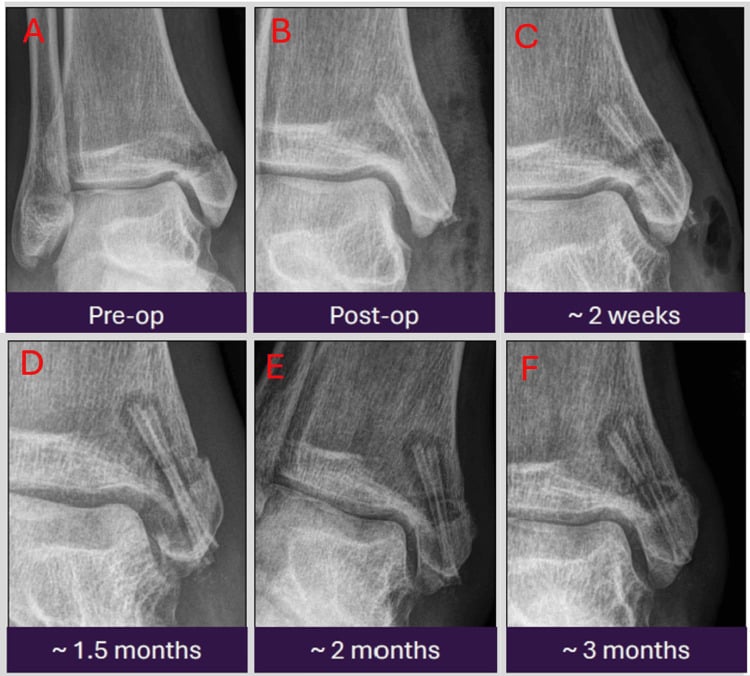
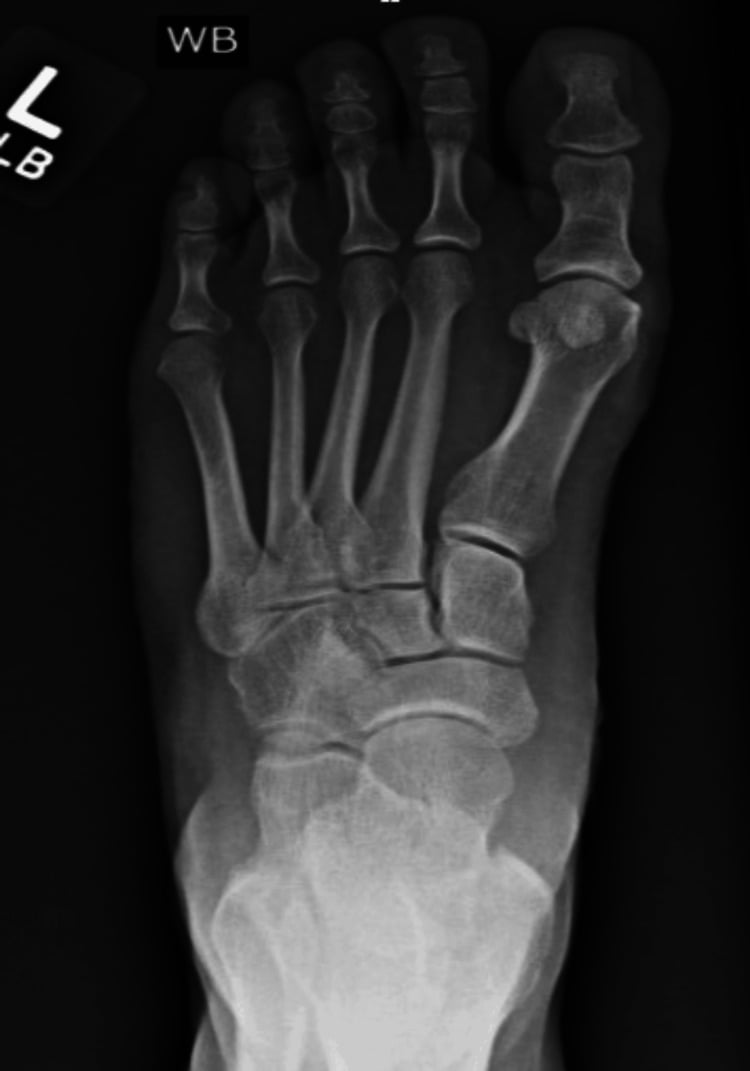
- An important practical point is that the EXPECTED degradation of a magnesium implant produces RADIOLOGICAL FINDINGS - progressive lucency/resorption around and within the implant, and gas - that can be MISINTERPRETED as a COMPLICATION (infection, loosening); recognising the NORMAL evolution and degradation pattern of magnesium implants, and correlating with clinical findings, is essential to avoid unnecessary advanced imaging and misdiagnosis.
- CLINICAL USE is established but selective: the MAGNEZIX magnesium compression SCREW was the first magnesium implant approved for use in humans and has been used mainly in FOOT and ANKLE conditions (and small-fragment/osteochondral fixation) with generally good outcomes; there are more regulatory approvals in EUROPE and ASIA than in the USA, where (at the time of writing) approvals are limited.
- The CONCEPTUAL exam point is the trade-off: biodegradable metals combine METAL-like initial strength (better than absorbable polymers) with biodegradation and bone-like stiffness and bioactivity - so they suit applications where temporary fixation is wanted without later removal (paediatric, small fragments, osteochondral, foot/ankle) - but their adoption hinges on engineering the degradation rate (alloying, coatings) to match bone healing while managing hydrogen evolution.
- “Biodegradable METALS = magnesium (also zinc/iron) - resorb after fixation, no removal surgery. vs bioabsorbable POLYMERS (PLLA/PGA, separate topic).
- “Magnesium advantages: elastic modulus CLOSE TO BONE (less stress shielding), biocompatible + OSTEOCONDUCTIVE/pro-osteogenic, LESS imaging artefact than Ti/steel.
- “Main limitation: controlling CORROSION/degradation rate (too fast = early strength loss; site-dependent) + HYDROGEN GAS evolution. Expected degradation/gas on imaging can MIMIC infection/loosening - know the normal evolution. MAGNEZIX screw (foot/ankle) = first approved Mg implant.
Elastic modulus close to bone (less stress shielding), biocompatible/osteoconductive, pro-osteogenic, less imaging artefact, and it resorbs (no removal surgery).
Controlling corrosion/degradation rate (too fast = early strength loss; site-dependent) and hydrogen-gas evolution. Expected degradation/gas on imaging can mimic infection/loosening.
Why Biodegradable Metals - and the Magnesium Trade-off
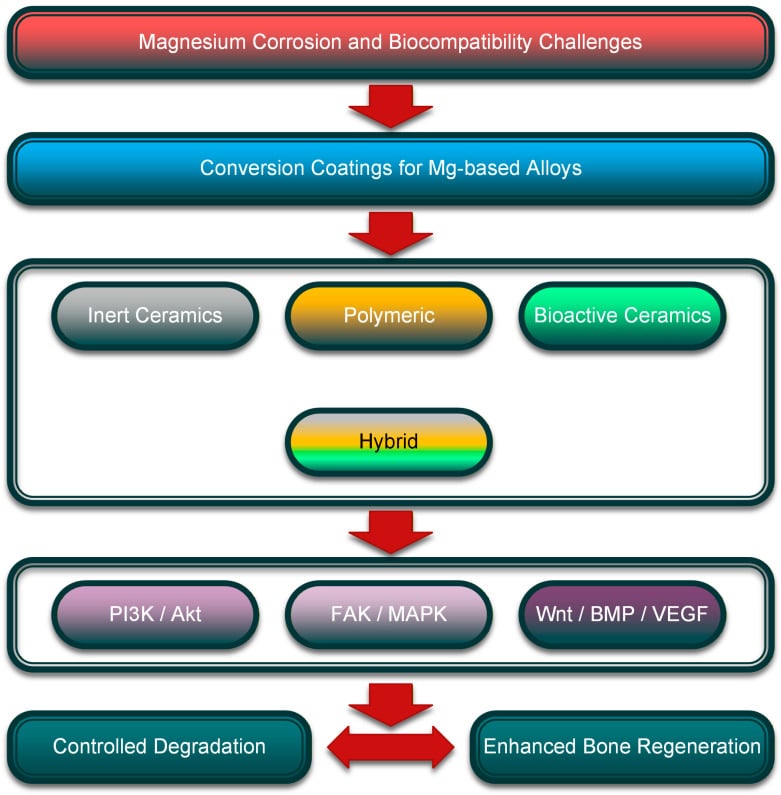
Biodegradable metals - chiefly magnesium (also zinc/iron) - provide initial fixation and then resorb, avoiding a removal operation, and differ from the bioabsorbable polymers (PLLA/PGA). Magnesium's appeal is an elastic modulus close to bone (reducing stress shielding), biocompatibility and osteoconductivity, pro-osteogenic/anti-osteoclastic/anti-inflammatory biological effects, and less imaging artefact than titanium/steel. The trade-off is corrosion control: magnesium can degrade too fast (losing strength before union), degradation is variable/site-dependent, and corrosion liberates hydrogen gas. These engineering challenges (managed by alloying/coatings) and the regulatory complexity of a device that is also a biological agent have slowed adoption.
- Magnesium (biodegradable metal)
- Resorbs (no removal surgery)
- Titanium/steel (permanent)
- Permanent (may need removal)
- PLLA/PGA (bioabsorbable polymer)
- Resorbs
- Magnesium (biodegradable metal)
- Close to bone (less stress shielding)
- Titanium/steel (permanent)
- Much stiffer (stress shielding)
- PLLA/PGA (bioabsorbable polymer)
- Lower than metal
- Magnesium (biodegradable metal)
- Better than polymer, but the DEVICES are weak: small-fragment magnesium screws lack the strength for high-load fixation (Leigheb)
- Titanium/steel (permanent)
- High - the only option for load-bearing fixation
- PLLA/PGA (bioabsorbable polymer)
- Lower (weaker than metal)
- Magnesium (biodegradable metal)
- Osteoconductive/pro-osteogenic
- Titanium/steel (permanent)
- Inert (osseointegrates)
- PLLA/PGA (bioabsorbable polymer)
- Inert; can cause sterile inflammation/osteolysis
- Magnesium (biodegradable metal)
- Less than permanent metal
- Titanium/steel (permanent)
- Significant artefact
- PLLA/PGA (bioabsorbable polymer)
- Minimal
- Magnesium (biodegradable metal)
- Corrosion rate + hydrogen gas
- Titanium/steel (permanent)
- Removal, artefact, stress shielding
- PLLA/PGA (bioabsorbable polymer)
- Inflammatory reaction/osteolysis; weaker
Imaging & Clinical Use
- Imaging: the expected degradation of a magnesium implant (progressive peri-implant lucency/resorption, and gas) can be mistaken for infection or loosening - recognise the normal evolution and correlate with the clinical picture to avoid unnecessary advanced imaging and misdiagnosis; multidisciplinary communication helps.
- Clinical use: the MAGNEZIX magnesium compression screw (first Mg implant approved for humans) is used mainly in foot/ankle conditions and small-fragment/osteochondral fixation, with generally good outcomes; more approvals in Europe/Asia than the USA.
- Best applications: where temporary fixation is wanted without later removal (paediatric, small fragments, osteochondral, foot/ankle).
- What the outcome data actually say: in the only randomised comparison, magnesium and titanium screws performed identically in chevron osteotomy at six months and again at three years, with less MRI artefact and no implant-related cysts in the magnesium arm. Pooled across eight studies (230 magnesium against 213 titanium screws), there was no difference in complications (p = 0.868), with a magnesium complication rate of 13.3% (95% CI 8.3-20.6%) - roughly one patient in eight. Quote that figure rather than "good outcomes".
- How long does it take to go? Longer than most people assume. In the randomised cohort the screw was still degrading at three years, so the peri-implant changes that mimic infection persist for years, not months.
- Where it does NOT belong: high-load fixation. The systematic-review conclusion is that the small devices actually manufactured lack the strength to withstand high forces, which is why every clinical series is in low-load metaphyseal and small-fragment work. In the carpus specifically, expect gas.
- Future: tuning degradation rate (alloying/coatings) to match bone healing while managing hydrogen evolution.
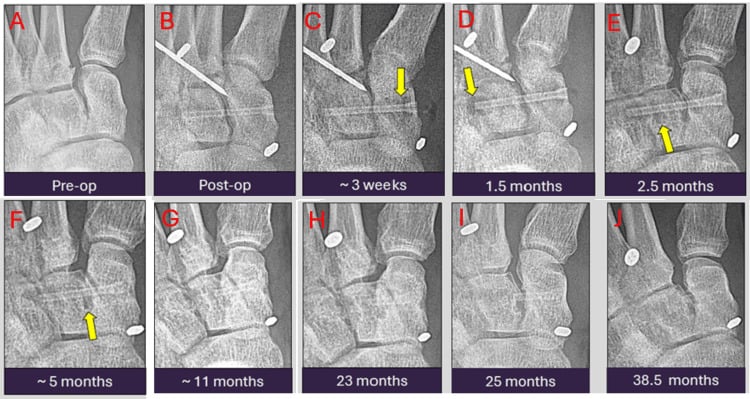
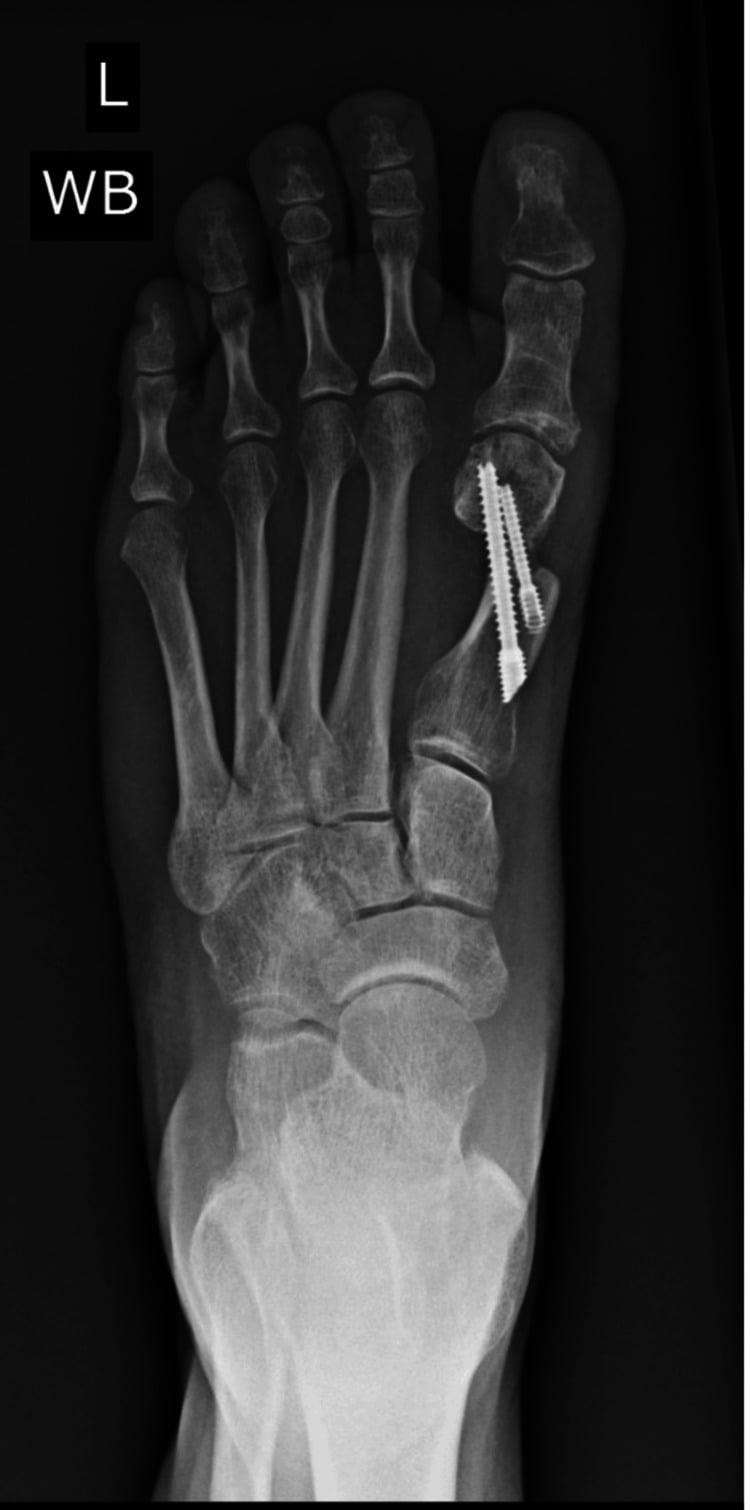
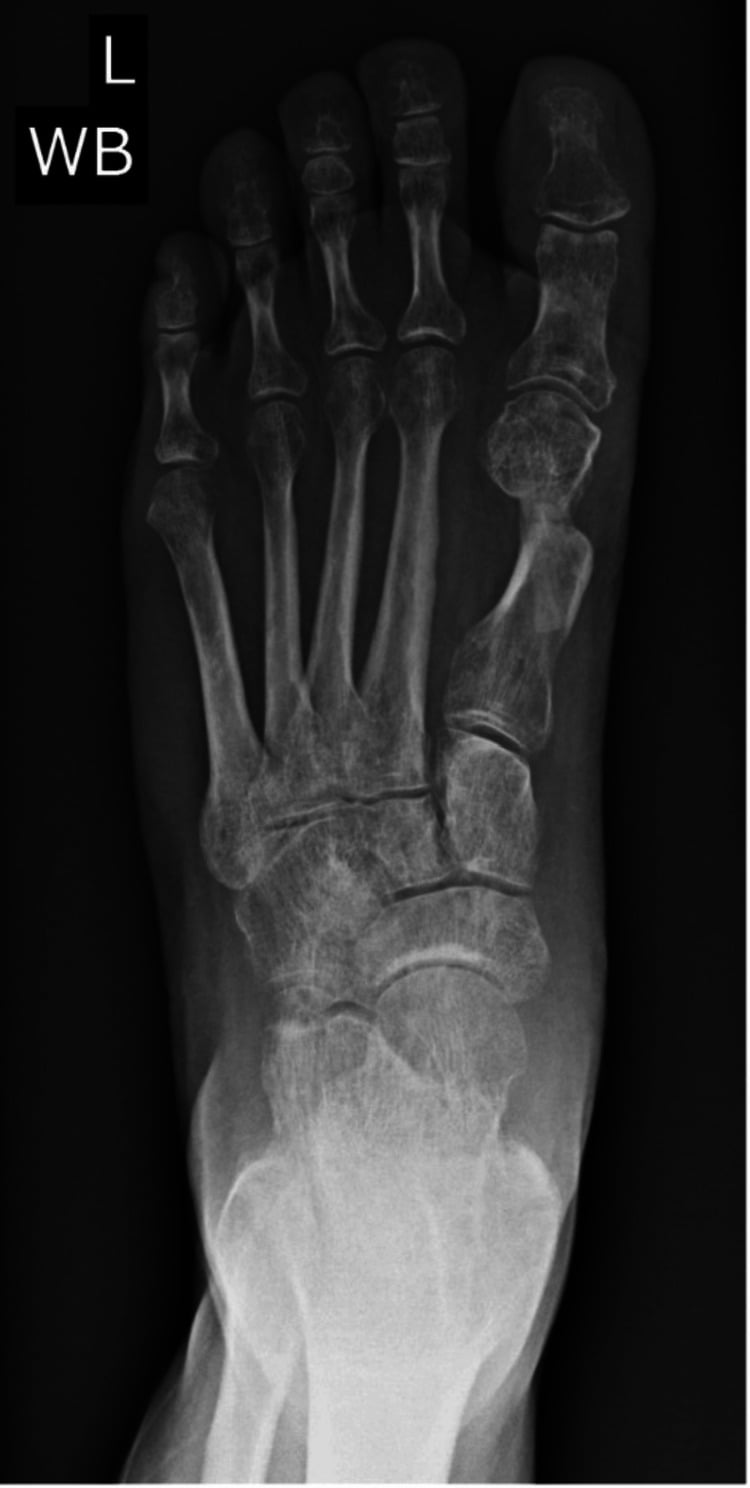
A clinically important pitfall with magnesium implants is to misread their expected behaviour as a complication. As a magnesium device corrodes and resorbs, radiographs and cross-sectional imaging show progressive lucency and resorption around and within the implant, and gas can appear from the hydrogen liberated by corrosion - findings that, in a titanium or steel implant, would suggest infection or loosening. Recognising the normal evolution and degradation pattern of magnesium-based implants, and correlating the imaging with the clinical assessment (and communicating between surgeon and radiologist), prevents unnecessary advanced imaging and misdiagnosis. The flip-side limitation - degradation that is too rapid or too site-dependent - is a genuine concern, because losing mechanical strength before union would risk fixation failure; this is why matching the degradation rate to bone healing (through alloying and coatings) is the central engineering goal, and why magnesium implants are currently chosen for applications and sites where their behaviour is well characterised.
The Corrosion Chemistry, Alloys and Coatings
- The corrosion reaction. In vivo magnesium reacts with water: Mg + 2H2O gives Mg(OH)2 + H2 - magnesium hydroxide plus hydrogen gas (the source of the gas pockets), with local alkalinisation (a rise in pH). The Mg(OH)2 forms a partly protective film, but physiological chloride converts it to soluble magnesium chloride, driving pitting and accelerating breakdown.
- Alloying to slow it. Alloying refines the microstructure and adds corrosion-resistant phases: WE43 (magnesium-yttrium-rare-earth, the MAGNEZIX alloy), Mg-calcium and Mg-zinc are the common orthopaedic alloys (aluminium-containing alloys are avoided for neurotoxicity).
- Coatings to slow it. Surface treatments - magnesium fluoride, plasma electrolytic oxidation (a ceramic oxide layer), polymer (PLGA) or calcium-phosphate/hydroxyapatite coatings - slow the initial corrosion and add bioactivity.
Q: What is the magnesium corrosion reaction, and how is degradation slowed?
A: Mg + 2H2O gives Mg(OH)2 + H2 - magnesium hydroxide + hydrogen gas (the gas pockets) + local alkalinisation. The Mg(OH)2 film is dissolved by physiological chloride to soluble magnesium chloride, causing pitting/accelerated breakdown. Slowed by alloying (WE43 = Mg-yttrium-rare-earth, the MAGNEZIX alloy; Mg-calcium; Mg-zinc; avoid aluminium alloys - neurotoxic) and coatings (magnesium fluoride, plasma electrolytic oxidation, PLGA, calcium-phosphate/hydroxyapatite).
Zinc and Iron: the Other Biodegradable Metals
- Iron. Iron alloys are strong but degrade too slowly (months to years, often incomplete, with accumulating corrosion products), and iron is ferromagnetic (an MRI artefact/safety concern) - so it has been explored more for stents than orthopaedic fixation.
- Zinc. Zinc sits in the middle - a degradation rate between the too-fast magnesium and the too-slow iron, with no hydrogen-gas evolution and good biocompatibility (zinc is a physiological trace element) - but its lower mechanical strength and tendency to creep limit load-bearing use.
- The trade-off. So across the biodegradable metals: magnesium = bone-like stiffness and osteopromotion but fast and gas-forming; zinc = ideal degradation rate but weak; iron = strong but too slow and ferromagnetic.
Q: How do zinc and iron compare with magnesium as biodegradable metals?
A: Iron = strong but degrades too slowly (months-years, often incomplete) and is ferromagnetic (MRI concern) - more for stents. Zinc = the intermediate 'Goldilocks' degradation rate (between fast Mg and slow Fe), no hydrogen gas, biocompatible (a trace element), but lower strength + creep-prone (limits load-bearing). Magnesium = bone-like modulus + osteopromotion but fast and hydrogen-gas-forming.
Mnemonics & Memory Aids
MAG
Hook:MAG: Modulus near bone (resorbs, less artefact), Anabolic/osteoconductive, Gas/corrosion limitation.
SLOW
Hook:SLOW - both the indication and the degradation. Small fragment, Low load, Otherwise needs removal, Watch (don't investigate) the expected imaging change.
Related pages: Bioabsorbable Materials covers the PLLA/PGA polymers this class was developed to replace - weaker, and prone to the sterile inflammatory osteolysis that magnesium has so far avoided. Titanium Alloys is the comparator in every trial on this page, and Screw Biomechanics with Implant Fracture Biomechanics explain why a bone-like elastic modulus matters and why a small magnesium screw cannot be asked to carry load. Corrosion Mechanisms is the same electrochemistry read as a failure mode rather than a design feature - here corrosion is the intended behaviour, which is the conceptual inversion worth holding onto; Wear Mechanisms and Tribology and Wear cover the debris problem that does not arise when the implant is meant to disappear. MRI Metal Artefact Reduction is the technique magnesium partly makes unnecessary, and the reason the three-year MRI comparison favoured it. Bone Healing sets the timeline the degradation rate must be matched to - the whole engineering problem is keeping strength until union. Clinically the material lives in Hallux Valgus surgery, where every randomised comparison has been done, Scaphoid Fractures and the carpus, where gas formation is the reported side effect, and Osteochondral Lesions of the Talus with Osteochondral Defects of the Knee, where a fixation device that vanishes is most attractive.
Clinical Decision Scenarios
Practise clinical reasoning and management decisions out loud
“What are the advantages and limitations of magnesium-based biodegradable implants compared with titanium?”
What they are
- Biodegradable metals: magnesium (also zinc/iron) - resorb after fixation
- No removal surgery; distinct from bioabsorbable polymers (PLLA/PGA)
- Provide initial support, then native tissue replaces them
Advantages (vs Ti/steel)
- Elastic modulus close to bone, so less stress shielding
- Biocompatible, osteoconductive, pro-osteogenic/anti-osteoclastic/anti-inflammatory
- Less imaging artefact
Limitations
- Controlling corrosion/degradation rate (too fast = early strength loss; site-dependent)
- Hydrogen-gas evolution from corrosion
- Regulatory complexity (device + biological agent)
What the outcome data show
- RCT (n=26, chevron osteotomy): no difference vs titanium at 6 months or 3 years
- Meta-analysis (230 Mg vs 213 Ti screws): no difference in complications, p = 0.868
- Mg complication rate 13.3% (95% CI 8.3-20.6%) - about one in eight
- Still degrading at 3 years; devices too weak for high-load fixation; gas in the carpus
Imaging & clinical use
- Expected degradation/gas can mimic infection/loosening - know the normal evolution
- MAGNEZIX Mg compression screw - first approved human Mg implant (foot/ankle)
- More approvals in Europe/Asia than the USA; best where removal-free temporary fixation is wanted
Evidence & Key Studies
Windhagen et al - the first-in-human randomised trial of a magnesium screw
- 26 patients with mild hallux valgus randomised to MgYREZr or titanium screws of IDENTICAL design for chevron osteotomy
- No significant difference in AOFAS hallux score, visual analogue pain score or first MTPJ range of motion at 6 months
- No foreign body reactions, no osteolysis and no systemic inflammatory reaction detected
- Radiographic and laboratory results did not differ between groups
Plaass et al - the same randomised cohort at three years, with MRI
- Three-year clinical and MRI follow-up of the randomised magnesium-versus-titanium metatarsal osteotomy cohort
- All clinical scores (AOFAS, SF-36, FAAM, pain) improved significantly from pre-operative values, with NO difference between groups
- Magnesium implants produced significantly fewer MRI artefacts and no implant-related cysts were found
- The magnesium implant was STILL UNDERGOING DEGRADATION three years after surgery - resorption is not complete at three years
The imaging behaviour of a degrading magnesium screw - peri-implant lucency, gas, progressive loss of implant density - and the MAGNEZIX screw as the first approved human magnesium implant come from the cited Cheong report. The pro-osteogenic/anti-osteoclastic/anti-inflammatory biology and the regulatory picture come from Lacin and Sfeir. The comparative clinical claims are separately sourced: equivalence to titanium at six months from the Windhagen randomised trial and at three years with MRI from Plaass, the pooled complication rate of 13.3% from the Sukotjo meta-analysis, and the two limitations that constrain practice - gas formation in the carpal bones, and small magnesium devices being too weak for high-load fixation - from the Leigheb systematic review. The hydrogen-gas chemistry and the comparison with permanent metals and bioabsorbable polymers are standard, well-established teaching.