Structured Bacterial Communities | Extracellular Matrix Protection | 1000x Antibiotic Resistance | Implant-Associated Infections
- Biofilm = structured bacterial community embedded in self-produced extracellular polymeric substance (EPS)
- 1000-fold increase in MIC compared to planktonic bacteria - explains antibiotic failure
- Persister cells (dormant, metabolically inactive) resist antibiotics that target dividing cells
- Implant removal essential for cure of mature biofilm infections - antibiotics alone fail
- DAIR (debridement, antibiotics, implant retention) only works for ACUTE infections (less than 3 weeks)
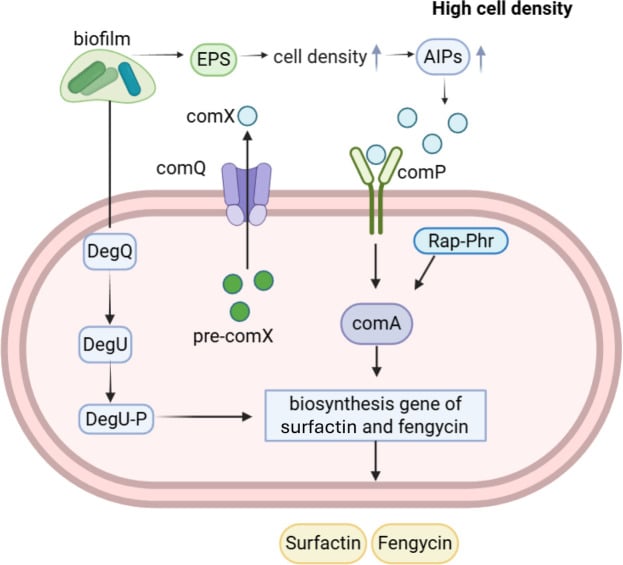
- “Biofilm bacteria communicate via quorum sensing (autoinducer molecules)
- “EPS matrix is 80-90% water by volume; its dry weight is 40-50% polysaccharide, 20-30% protein and 10-20% eDNA
- “Rifampicin penetrates biofilm better than other antibiotics (used in PJI treatment)
- “Sonication of explanted implants releases biofilm bacteria - improves culture yield by 20-30%
Overview
A biofilm is a structured community of bacterial cells enclosed in a self-produced extracellular polymeric substance (EPS) matrix and adherent to an inert or living surface. Around 80% of chronic infections involve biofilm; in orthopaedics the surfaces are the implant and the sequestrum, and the diseases are prosthetic joint infection and chronic osteomyelitis.
History. Van Leeuwenhoek first described biofilms in 1684, observing "animalcules" on teeth. The modern concept was established by Costerton in the 1970s-1980s, and it revolutionised the understanding of bacterial persistence and chronic infection.
Planktonic versus biofilm bacteria. Planktonic (free-floating) bacteria are what the microbiology laboratory tests, so in vitro susceptibility describes them. Bacteria in a biofilm are fundamentally different in physiology and antibiotic susceptibility: a far higher MIC, metabolic dormancy, physical protection. In vitro susceptibility therefore does not predict in vivo efficacy for a biofilm infection, which is the explanation for "antibiotic failure" despite a sensitive organism.
Where this page sits. Biofilm is the mechanism; the diseases it produces are covered where the decisions are actually taken. The clinical pathway for implant infection - diagnostic criteria, marker thresholds and the choice between DAIR, single-stage and two-stage revision - belongs to periprosthetic joint infection and, for the hip specifically, infection after THA. The bone equivalents are osteomyelitis pathophysiology and Brodie's abscess. The organisms that build these biofilms are catalogued in common orthopaedic pathogens, with Cutibacterium acnes shoulder infection as the low-virulence archetype; the drugs that do and do not reach a biofilm are in antibiotic pharmacology and resistance; the carrier that delivers them locally is PMMA bone cement; and everything aimed at stopping attachment in the first place is in perioperative surgical site infection prevention.
Stages of Biofilm Formation
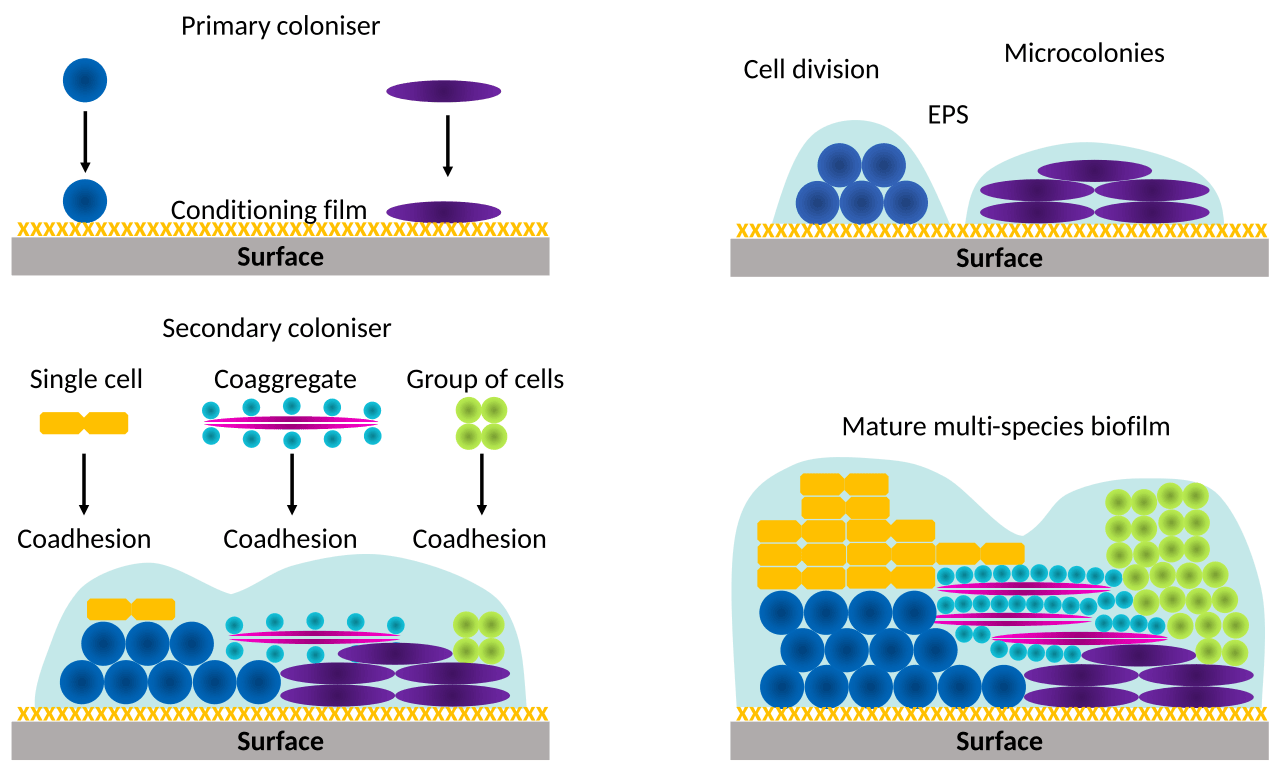
Biofilm forms on an implant or on bone in a sequence of stages, and the stage reached decides what can still be done about it. Early on the bacteria are still vulnerable to antibiotics and to irrigation; once the biofilm has matured, cure means removing the surface it sits on.
Biofilm Development Timeline
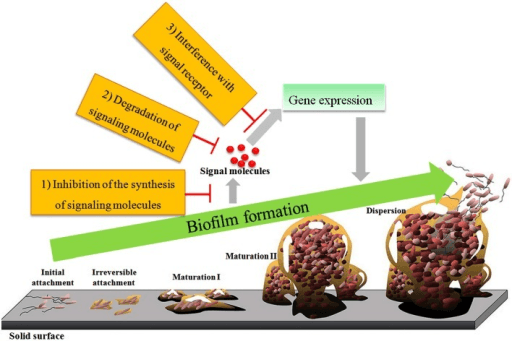
Planktonic bacteria make initial contact with the surface (implant or bone), held by weak van der Waals forces, electrostatic interactions and hydrophobic effects. They are still susceptible to antibiotics and to mechanical forces such as irrigation, which makes this the window in which antibiotic prophylaxis works.
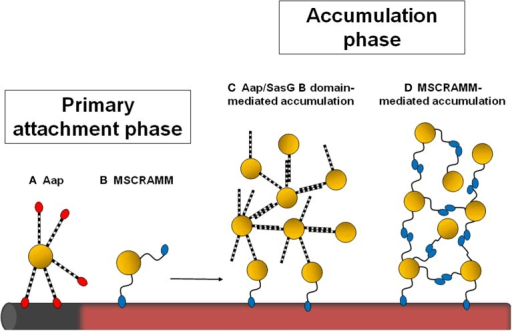
Bacterial adhesins (surface proteins) bind tightly to the host proteins (fibronectin, collagen, fibrinogen) adsorbed on the implant, and the bacteria begin producing EPS. Attachment is now permanent. Early debridement and antibiotics may still be effective.
The bacteria proliferate and organise into microcolonies. EPS production increases into a protective matrix, a three-dimensional architecture with water channels for nutrient flow begins to develop, and antibiotic penetration starts to diminish.
A mature biofilm with a complex three-dimensional structure and a fully developed EPS matrix. Persister cells are present and quorum sensing coordinates bacterial behaviour. Antibiotics are largely ineffective and implant removal is necessary.
Bacteria detach from the biofilm edges as planktonic cells and colonise new sites, triggering acute symptoms (bacteraemia, sepsis). Dispersal can be triggered by nutrient depletion, quorum sensing signals or external stress, and it explains the acute exacerbations of a chronic infection.
The critical window. The first 24-48 hours after implantation are critical: if bacteria attach and begin biofilm formation, chronic infection is likely. Antibiotic prophylaxis is most effective given before incision, so that it prevents initial attachment; after 48 hours, maturation makes eradication difficult without implant removal.
Biofilm Structure and Composition
Extracellular Polymeric Substance (EPS) Matrix
The matrix is mostly water, and the bacteria are a small minority of what is there. By volume, water is 80-90% and bacterial cells only 10-15%. The dry weight divides as:
- Polysaccharides: 40-50% (the structural backbone)
- Proteins: 20-30% (enzymes, adhesins; in staphylococci the cell wall also carries teichoic acids)
- eDNA (extracellular DNA): 10-20%
- Lipids: 5-10%
Polysaccharides. The polysaccharide differs by organism:
- PIA (polysaccharide intercellular adhesin) in S. epidermidis, encoded by the ica genes
- PNAG (poly-N-acetylglucosamine) in Staphylococcus species
- Alginate, Pel and Psl in Pseudomonas aeruginosa
Whichever the species, the polysaccharide is the structural scaffold, mediates adhesion, and protects against desiccation and immune cells.
The ica operon. The icaADBC operon in S. epidermidis encodes the enzymes for PIA synthesis, and icaA and icaD are essential. Bacteria lacking the ica genes cannot form biofilm and are less virulent in prosthetic infection. Biofilm-negative strains exist but are uncommon among clinical isolates.
Extracellular DNA. eDNA is released from lysed bacteria or actively secreted. It scaffolds the matrix, it binds cationic antibiotics (aminoglycosides, polymyxins) and so reduces their penetration, and it carries antibiotic resistance genes for horizontal transfer within the biofilm. DNase treatment can disrupt a young biofilm, so far a research application.
Proteins. Adhesins bind host proteins and the implant surface; the enzymes include beta-lactamases, proteases and nucleases; amyloid fibrils give structural support in Staphylococcus and E. coli.
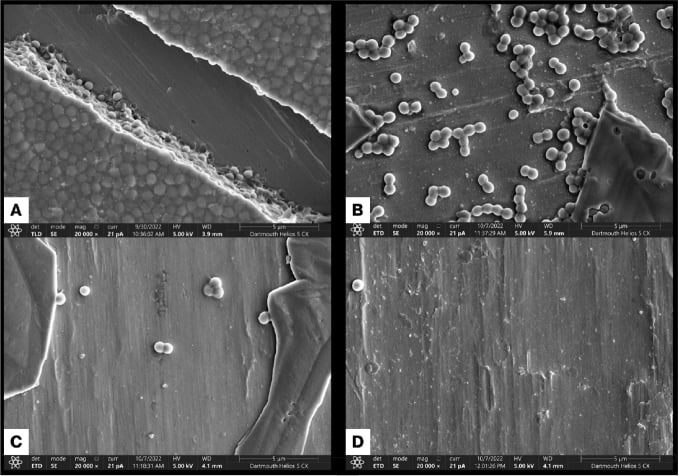
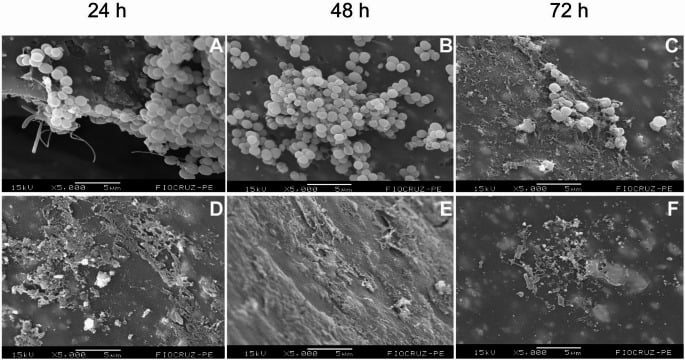
Mechanisms of Antibiotic Resistance in Biofilm
Bacteria in biofilm are 1000-fold more resistant to antibiotics than planktonic bacteria, and no single mechanism accounts for it. The matrix, the eDNA and the altered pH are physical and chemical barriers, so that even high-dose intravenous antibiotics do not reach the biofilm depths at MIC concentrations, and the dormant bacteria in those depths are untouched by drugs that act on active processes.
- Description
- Matrix blocks antibiotic diffusion
- Effect
- Reduced penetration to depths
- Clinical Implication
- Outer bacteria killed, inner survive
- Description
- eDNA binds cationic antibiotics
- Effect
- Aminoglycosides, polymyxins sequestered
- Clinical Implication
- Higher doses cannot overcome
- Description
- Acidic microenvironments (pH 5-6)
- Effect
- Many antibiotics less active at low pH
- Clinical Implication
- Fluoroquinolones, aminoglycosides impaired
- Description
- Beta-lactamases and aminoglycoside-modifying enzymes concentrated in biofilm
- Effect
- Penicillins, cephalosporins destroyed
- Clinical Implication
- Even susceptible strains protected
- Description
- Nutrient limitation slows division
- Effect
- Antibiotics target dividing cells
- Clinical Implication
- Dormant bacteria not killed
- Description
- 0.1-1% dormant, non-growing
- Effect
- Tolerant to ALL antibiotics
- Clinical Implication
- Cause relapse, require removal
- Description
- Biofilm-specific genes upregulated
- Effect
- Efflux pumps, stress responses
- Clinical Implication
- Phenotypic resistance
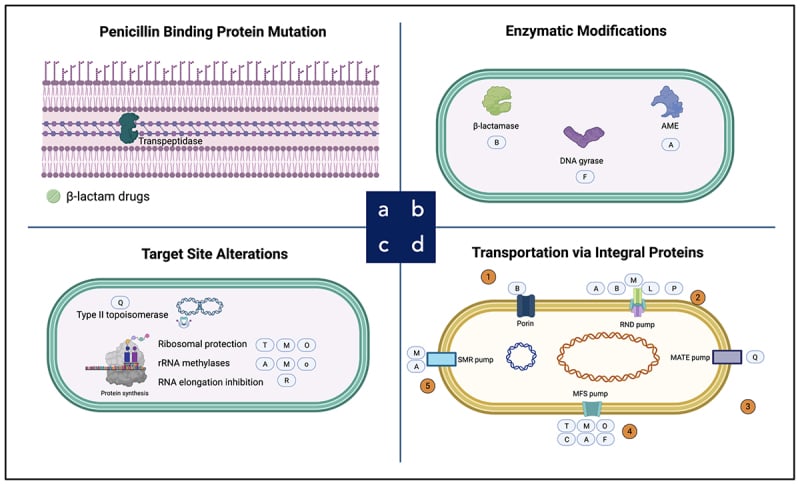
Antibiotic tolerance in a biofilm is phenotypic and reversible: the bacteria are genetically susceptible but protected by the biofilm environment. Antibiotic resistance is genetic, carried by genes such as mecA and vanA, and permanent. Biofilm bacteria are tolerant, not resistant, which is why implant removal is necessary for cure.
Clinical Implications in Orthopaedics
Biofilm in Prosthetic Joint Infections
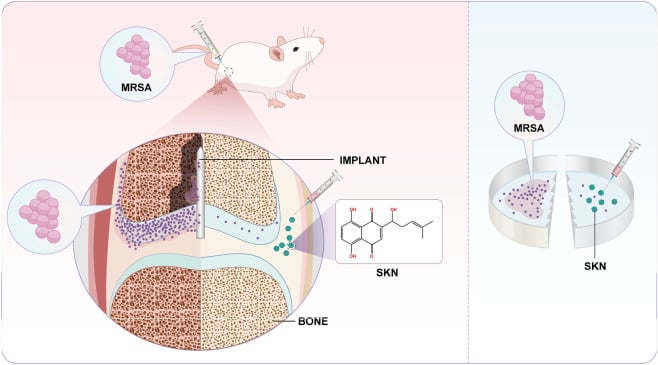
On the implant. Bacteria attach within hours of contamination, whether intraoperative or haematogenous, and a mature biofilm is established by 48-72 hours. Coagulase-negative staphylococci, S. epidermidis above all, are the master biofilm formers. Once formed, the biofilm is a sanctuary from antibiotics and immune cells.
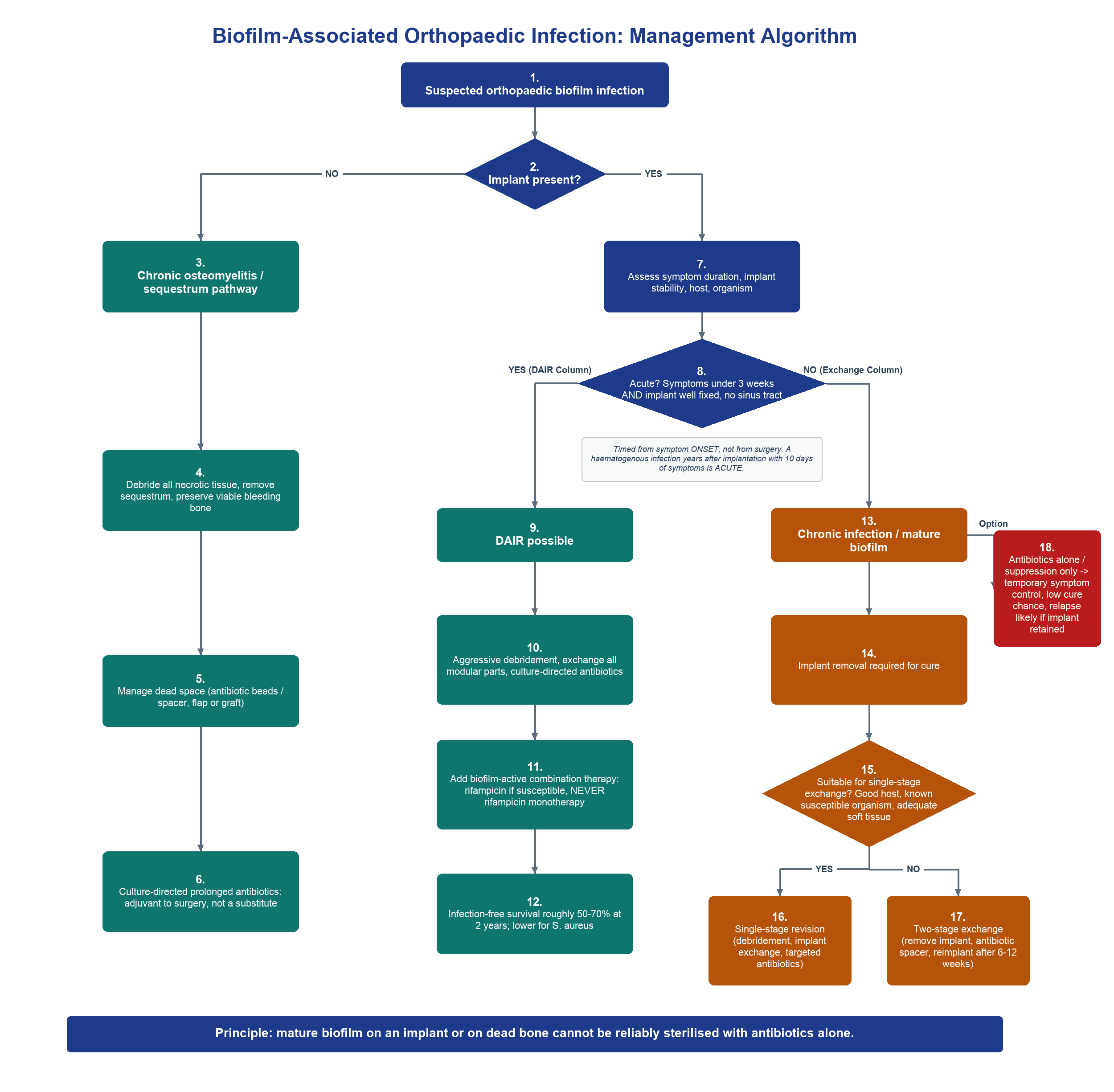
The clock. Acute infection is defined by symptom duration, not by time since surgery. The clock that matters is how long the joint has been symptomatic, conventionally under about 3 weeks, because that is what approximates biofilm maturity. Time since implantation is a separate and weaker limb: IDSA additionally allows retention within about 30 days of implantation even where symptoms are harder to date. These are alternatives, not a conjunction.
The examiner's trap is the wrong clock. Candidates reach for "how long since the operation", but an implant is colonised the moment bacteria seed it, whenever that happens. A haematogenous infection 5 years after a well-functioning arthroplasty, symptomatic for 10 days, is acute and is a DAIR candidate. An indolent infection 6 weeks after surgery that has been grumbling for 2 months is chronic and needs the implant out, however "early post-operative" it sounds. Time since implantation modifies the likely organism and route; symptom duration estimates the biofilm.
Acute infection. The biofilm is not yet mature or well established, so DAIR (debridement, antibiotics, implant retention) is possible in a well-fixed implant with no sinus tract. It requires aggressive debridement, exchange of the modular parts and biofilm-active antibiotics (rifampicin). Infection-free survival at about 2 years on the retained implant is roughly 50-70% in reported series, but this is not one number: it falls with S. aureus, a retained sinus tract, a loose implant, delay to debridement, and where rifampicin cannot be used, and rises with streptococci and early, well-selected cases.
Chronic infection. After 3 weeks of symptoms the biofilm is mature and implant removal is mandatory for cure. Two-stage exchange removes the implant and places an antibiotic spacer, with reimplantation after 6-12 weeks. Suppressive antibiotics without removal give temporary symptom control and eventual failure.
- Biofilm Status
- Immature biofilm
- Treatment
- DAIR + modular exchange + rifampicin combination
- Infection-free survival at ~2 years
- 50-70% (lower with S. aureus or delay)
- Biofilm Status
- Mature biofilm
- Treatment
- Two-stage exchange
- Infection-free survival at ~2 years
- 80-90%
- Biofilm Status
- Mature biofilm
- Treatment
- Suppressive antibiotics alone (no surgery)
- Infection-free survival at ~2 years
- less than 20% cure; palliative control only
Biofilm-active antibiotics. Penetration differs by drug:
- Rifampicin: best biofilm penetration
- Fluoroquinolones: moderate penetration, bactericidal
- Linezolid: good penetration, oral bioavailability
- Daptomycin: biofilm activity against Staphylococcus
- Avoid vancomycin: poor biofilm penetration despite intravenous use
The most biofilm-penetrating antibiotic for Staphylococcus, used in PJI at 300-450 mg orally twice daily and always in combination: given alone, resistance develops in 48 hours. It is added after 2-5 days of the primary antibiotic, if the organism is susceptible, and it is effective in both DAIR and suppression protocols.
Management Algorithm
Guidelines, Registries & Global Practice
Biofilm science underpins implant-infection management worldwide, but recommendations and resources differ by setting. Below is a global, society-neutral synthesis - not the practice of any single country.
Global Epidemiology
- PJI incidence: approximately 1-2% after primary hip and knee arthroplasty, rising to 3-5% or more after revision surgery (population-dependent).
- Dominant organisms: staphylococci (S. aureus and coagulase-negative staphylococci, especially S. epidermidis) cause the majority of biofilm-related PJI; Cutibacterium acnes predominates in shoulder arthroplasty; gram-negatives and polymicrobial infection are more common in early post-operative and immunocompromised cases.
- Burden: as global arthroplasty volume grows, the absolute number of biofilm-associated revisions is projected to rise substantially, making prevention and early diagnosis a worldwide priority.
Side-by-Side Guidance
- Implant retention (DAIR)
- Acute, stable, susceptible organism, short symptoms
- Biofilm-active therapy
- Rifampin combination for staphylococci
- Diagnosis emphasis
- Multiple cultures; defined PJI criteria
- Implant retention (DAIR)
- Similar acute window; structured definition
- Biofilm-active therapy
- Rifampin combination; agent by organism
- Diagnosis emphasis
- Sonication, synovial markers, definition tiers
- Implant retention (DAIR)
- Time-dependent; favours exchange once chronic
- Biofilm-active therapy
- Biofilm-active agents endorsed
- Diagnosis emphasis
- Synovial WBC, alpha-defensin, culture protocol
- Implant retention (DAIR)
- Early referral, source control, MDT pathway
- Biofilm-active therapy
- Specialist-directed prolonged therapy
- Diagnosis emphasis
- Aspiration before antibiotics; MDT diagnosis
Registry & Surveillance Signals
- Arthroplasty registries (e.g. NJR, AOANJRR, SHAR, NZJR, AJRR) consistently identify infection as a leading cause of early revision, and track antibiotic-loaded cement use and bearing/fixation choices that influence infection-related revision.
- Registries inform - but do not replace - the biofilm-based decision rule: maturity of biofilm (largely time-driven) determines whether retention or exchange is appropriate.
High- vs Limited-Resource Practice Variation
Routine sonication, synovial biomarkers (alpha-defensin, leucocyte esterase), extended and molecular cultures, two-stage exchange with antibiotic spacers, and infectious-disease/MDT input are widely available.
Diagnosis often relies on clinical assessment, plain radiographs, aspiration and tissue culture. Emphasis falls on prevention (prophylaxis timing, theatre discipline), early debridement, and single-stage or excision arthroplasty where staged revision or spacers are not feasible.
Controversies & Areas of Uncertainty
The 3-4 week "acute" window is pragmatic, not absolute. Biofilm maturity is a continuum, and outcomes also depend on organism, host, and implant stability rather than time alone.
Single-stage revision shows comparable success to two-stage in selected patients in several series, challenging two-stage as a universal gold standard - but evidence remains heterogeneous.
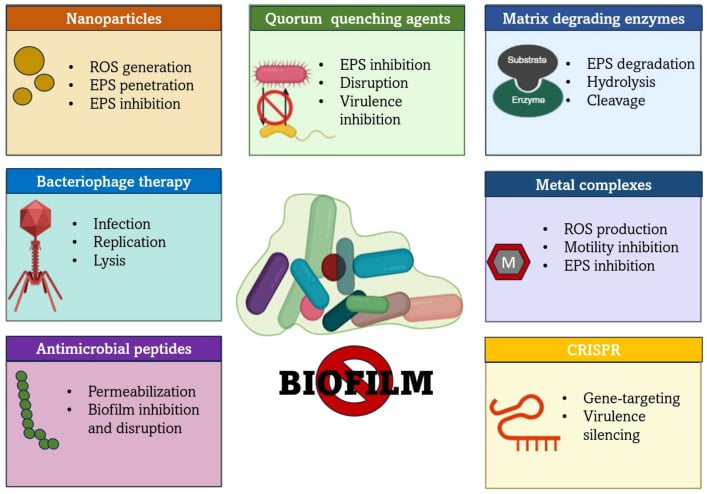
Quorum-sensing inhibitors, dispersal agents, bacteriophage therapy, and antibiotic/silver-coated surfaces are promising but largely lack high-level clinical trial evidence.
The durability and antimicrobial-stewardship implications of long-term suppressive therapy without implant removal remain debated, especially with persister-driven relapse.
Biofilm Viva Scenarios
Practise clinical reasoning and management decisions out loud
“What is a biofilm and why are bacteria in biofilm resistant to antibiotics?”
“How does biofilm formation influence your treatment strategy for prosthetic joint infection, particularly the decision between DAIR and two-stage exchange?”
“A patient with a Staphylococcus aureus prosthetic joint infection has had repeated courses of culture-directed intravenous antibiotics. Each time, symptoms settle and inflammatory markers normalise, but the infection recurs weeks after antibiotics stop. The organism remains fully susceptible on every culture. How do you explain this to the patient and what is your definitive plan?”
Core Definition
- Biofilm = structured bacterial community in EPS matrix adherent to surface
- Costerton 1970s-1980s established modern biofilm concept
- 80% of chronic infections involve biofilm (implants, osteomyelitis)
- Fundamentally different from planktonic (free-floating) bacteria
Biofilm Formation Stages
- Stage 1 (0-4h): Reversible attachment, antibiotics still effective
- Stage 2 (4-24h): Irreversible attachment via adhesins, EPS begins
- Stage 3 (24-48h): Microcolony formation, 3D structure develops
- Stage 4 (48h+): Mature biofilm, persister cells, antibiotic resistance
- Critical window: First 24-48h, before mature biofilm is established
EPS Matrix Composition
- 80-90% water, 10-15% bacterial cells (by volume)
- Dry weight: 40-50% polysaccharides, 10-20% eDNA, 20-30% proteins
- Polysaccharides: PIA in S. epidermidis (ica genes), alginate in Pseudomonas
- eDNA: Structural support, binds cationic antibiotics, gene transfer
Antibiotic Resistance Mechanisms
- 1000-fold increased MIC compared to planktonic bacteria
- EPS barrier: Blocks antibiotic penetration to depths
- eDNA binding: Sequesters aminoglycosides, polymyxins
- pH gradients: Acidic zones (pH 5-6) reduce antibiotic activity
- Slow growth: Dormant bacteria not killed (antibiotics target division)
- Persister cells: 0.1-1% of biofilm, tolerant to ALL antibiotics
- Phenotypic tolerance (reversible) NOT genetic resistance
Persister Cells (Critical Concept)
- Dormant, non-growing bacteria (0.1-1% of biofilm)
- Tolerant to ALL antibiotics (not genetic resistance)
- Survive treatment, cause relapse when antibiotics stopped
- Located in nutrient-limited deep zones of biofilm
- Explain chronic relapsing infections despite susceptible organism
- Cannot be killed by antibiotics - require physical removal (implant exchange)
Clinical Implications - PJI
- Acute = SYMPTOMS less than 3 weeks (NOT time since surgery): DAIR possible
- Haematogenous infection years after implantation with days of symptoms is ACUTE
- DAIR: 50-70% infection-free at ~2 years; lower with S. aureus, sinus tract, delay
- Chronic (symptoms greater than 3 weeks, loose implant, sinus tract): removal required
- Two-stage exchange: 80-90% infection-free at ~2 years (gold standard for chronic)
- Suppression without removal: Less than 20% cure - palliative control only
- Biofilm-active antibiotics: Rifampicin (best), fluoroquinolones, linezolid
- Rifampicin: NEVER monotherapy (resistance in 48h), always combine
Diagnostic Techniques
- 5-7 tissue samples (MSIS criteria), ≥2 positive same organism = infected
- Sonication of explanted implant: Increases yield 20-30% (greater than 50 CFU/mL = infected)
- Extended incubation: 7-14 days for slow-growing biofilm bacteria
- 16S rRNA PCR: Culture-independent, detects bacteria in culture-negative
- Culture-negative rate: 10-30% (prior antibiotics, dormant bacteria, biofilm)
Prevention Strategies
- Antibiotic prophylaxis: Within 60 minutes before incision (optimal 30 min)
- Prevents initial attachment (Stage 1), given BEFORE contamination
- Cefazolin 2g IV standard, redose if surgery greater than 4 hours
- Patient optimization: HbA1c less than 7.5%, smoking cessation, BMI less than 40
- Surgical technique: Minimize time, gentle handling, copious irrigation
- Antibiotic cement, silver coatings (research/emerging)
Key Numbers and Thresholds
- 1000x: Increased MIC in biofilm vs planktonic
- 24-48h: Critical window before mature biofilm is established
- 3 weeks of SYMPTOMS: threshold for acute vs chronic PJI (DAIR vs exchange)
- 0.1-1%: Persister cell frequency in biofilm
- 50 CFU/mL: Sonication fluid threshold for infection (Trampuz)
- 50-70%: DAIR success if acute (less than 3 weeks)
- 80-90%: Two-stage exchange success for chronic PJI
Evidence Base
Bacterial Biofilms: A Common Cause of Persistent Infections
- Landmark review defining biofilms as sessile bacterial communities in a self-synthesised hydrated polymeric matrix on surfaces
- Inherent antimicrobial resistance of biofilm communities is the root of many persistent and chronic bacterial infections
- Biofilm bacteria show differentiated, structured community behaviour distinct from planktonic cells
- Identified genetic and molecular community behaviour (including quorum sensing) as potential therapeutic targets
Sonication of Removed Hip and Knee Prostheses for Diagnosis of Infection
- Prospective study of 331 patients (79 with PJI); sonicate-fluid culture sensitivity 78.5% vs 60.8% for periprosthetic tissue (P less than 0.001)
- Specificity comparable: 98.8% (sonicate) vs 99.2% (tissue) - dislodging biofilm bacteria did not increase false positives
- Greatest gain in patients on antimicrobials within 14 days before surgery: 75.0% vs 45.0% sensitivity
- 14 PJI cases detected by sonicate culture that were missed by tissue culture alone
Role of Rifampin for Treatment of Orthopaedic Implant-Related Staphylococcal Infections (FBI Study)
- Randomised, double-blind, placebo-controlled trial; 33 patients with staphylococcal infection of stable orthopaedic implants and short symptom duration (0-21 days)
- After debridement and implant retention, cure in 12/12 (100%) with ciprofloxacin-rifampin vs 7/12 (58%) with ciprofloxacin-placebo among completers (P = 0.02)
- Rifampin combinations cured infection without device removal in tolerant, compliant patients
- Rifampin penetrates biofilm and is active against adherent/slow-growing staphylococci, but must never be given as monotherapy (rapid resistance)
Diagnosis and Management of Prosthetic Joint Infection: IDSA Clinical Practice Guidelines
- Debridement and implant retention (DAIR) is an option only for well-fixed prostheses with short symptom duration (within ~3 weeks) and a susceptible organism
- Biofilm-active rifampin-based combinations recommended for staphylococcal PJI managed with retention
- Two-stage (or one-stage) exchange recommended where mature biofilm or implant loosening is present
- Sinus tract, prolonged symptoms, or unstable implant are contraindications to retention
Persister Cells, Dormancy and Infectious Disease
- Seminal review linking latent infection, biofilm multidrug tolerance and unculturable organisms to a shared dormant (non-dividing) bacterial state
- Persisters are a small, phenotypically tolerant subpopulation - not genetic mutants - that survive bactericidal antibiotics
- Toxin-antitoxin modules and a shift to dormancy underpin persister formation and antibiotic tolerance
- Biofilm protects persisters from immune clearance, allowing relapse once antibiotics stop
Antibiotic Resistance of Bacteria in Biofilms
- Review establishing that biofilm antimicrobial tolerance arises from multicellular strategies, not classic plasmid/transposon/mutation resistance
- Mechanisms include restricted matrix penetration, altered microenvironment/slow growth, and a persister subpopulation
- Biofilm tolerance contributes directly to the chronicity of device-associated infection
- Frames biofilm dispersal and matrix disruption as potential adjunctive therapeutic targets