Infantile Cortical Hyperostosis | Self-Limiting | Classic Triad: Swelling, Bone Lesions, Irritability | Mandible Most Commonly Affected
- Self-limiting condition affecting infants under 6 months - resolves spontaneously by age 2 years
- Classic triad: soft tissue swelling, cortical bone lesions (hyperostosis), and irritability
- Mandible most commonly affected (70-90%), followed by clavicle and ulna - tibia rare
- Prostaglandin theory is the most widely accepted explanation - elevated PGE2 levels found in affected infants
- Familial form associated with a recurrent COL1A1 mutation c.3040C-to-T (R836C / p.Arg1014Cys) on chromosome 17q21
- “Critical differential from non-accidental injury (NAI) - Caffey spares metaphyses, NAI involves metaphyses
- “Periosteal reaction is DIAPHYSEAL in Caffey disease, not metaphyseal as in NAI
- “No fractures in Caffey disease - fractures suggest alternative diagnosis
- “NSAIDs (indomethacin) are first-line treatment - supports prostaglandin theory
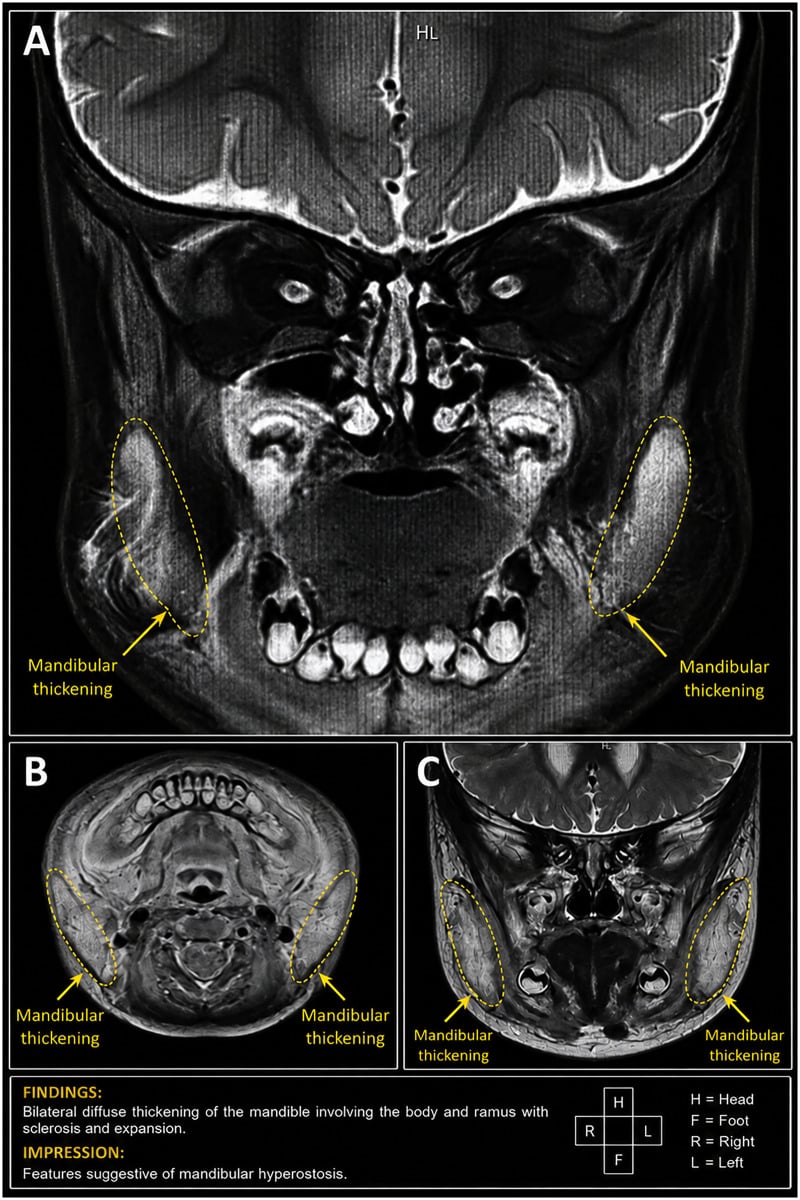
- “Mandible involvement is nearly pathognomonic - rare in other paediatric bone conditions
Overview and Epidemiology
Caffey disease, or infantile cortical hyperostosis, is a self-limiting periosteal new bone formation in young infants. Caffey and Silverman first described it in 1945 under that name; the familial autosomal dominant form was recognised later, and its COL1A1 mutation was identified in 2005. It is rare, and it matters in the exam because it must be told apart from child abuse and osteomyelitis.
Who. The peak age is birth to 5 months, and 95% present before 6 months. There is a slight male predominance (1.5:1) and no racial predilection. The quoted incidence of approximately 3 per 1000 live births derives from older series, and whether the disease is becoming rarer is discussed under Controversies. Ten to 20% of infants have a positive family history.
Where. The mandible leads, and its involvement is nearly pathognomonic.
- Mandible - 70-90%
- Clavicle - 30-50%
- Ulna - 30-40%
- Ribs and scapula - less common, but recognised
- Tibia and femur - rare
- Spine, hands and feet - not affected
Pathophysiology and Mechanisms
The prostaglandin theory. Elevated prostaglandin E2 (PGE2) levels have been found in affected infants and may explain the bone changes. The proposed sequence runs from raised PGE2 to periosteal inflammation, then subperiosteal new bone formation and cortical thickening, with the swelling and irritability following. It remains the most widely accepted explanation for sporadic disease, and it rests on four observations:
- Serum PGE2 is elevated in affected infants
- NSAIDs (indomethacin) are effective in controlling symptoms
- PGE2 is known to stimulate osteoclast activity and periosteal bone formation
- Resolution of symptoms correlates with normalisation of PGE2 levels
The familial form. Inheritance is autosomal dominant with variable penetrance. It is associated with a recurrent COL1A1 missense variant, c.3040C-to-T, on chromosome 17q21. It was historically reported as R836C in triple-helical residue numbering and is now standardly designated p.(Arg1014Cys) in full-length numbering. A second variant, p.(Arg918Cys), has since been described, confirming allelic heterogeneity.
What the mutation does. The substitution puts an unpaired cysteine into the triple-helical domain of the alpha-1 chain of type I collagen, producing abnormal disulphide-bonded collagen and altered fibril architecture. This arginine-to-cysteine change differs from the glycine substitutions that typically cause osteogenesis imperfecta, and the clinical picture differs from osteogenesis imperfecta too. Compared with sporadic disease, the familial form carries:
- Earlier onset, which may be prenatal
- A more severe clinical course
- A higher recurrence rate
Genetic counselling is recommended for affected families.
The type I collagenopathy spectrum. Affected individuals and obligate carriers can show joint hyperlaxity, hyperextensible skin and inguinal hernias, overlapping mild Ehlers-Danlos and osteogenesis imperfecta features. That places Caffey disease on the type I collagenopathy spectrum alongside osteogenesis imperfecta and the COL1A1/COL1A2 forms of Ehlers-Danlos syndrome. The same gene produces very different diseases depending on the mutation, so a COL1A1-Caffey family may have relatives with mild connective-tissue laxity rather than classic Caffey disease, which is relevant to recognition and counselling.
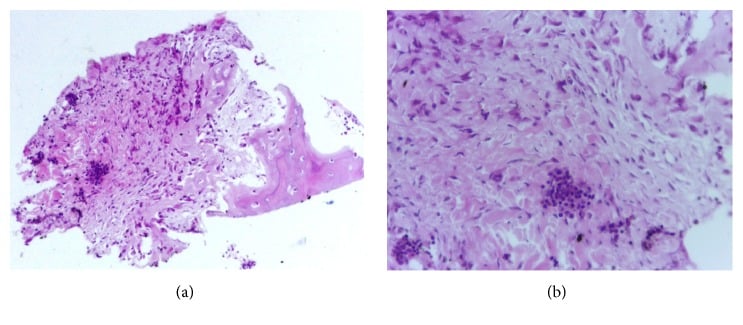
Histopathology. The periosteum is markedly thickened with hypervascular granulation tissue, and woven bone is laid down subperiosteally on the lamellar cortex. The overlying soft tissues show oedema and an inflammatory infiltrate, while the marrow is generally normal, with no evidence of infection or malignancy. In the resolution phase the woven bone gradually remodels to lamellar bone and the cortex returns to normal thickness. These findings separate it from osteomyelitis, which shows necrosis and sequestrum, and from malignancy, which shows abnormal cells.
Clinical Presentation
The triad. Soft tissue swelling over the affected bone, cortical hyperostosis on the radiograph, and irritability or pseudoparalysis. In an infant under 6 months with no history of trauma, the triad is highly suggestive.
History. The infant is typically 2-4 months old, with an acute onset of swelling and irritability. The crying is inconsolable and worse with handling, and a baby with mandibular involvement may refuse feeds. Low-grade fever occurs in 50% of cases. Ask about affected siblings and parents.
Examination. The swelling over the affected bone is firm and tender, and the overlying skin may be warm but is not erythematous. Mandibular disease produces facial asymmetry and difficulty feeding; limb disease produces pseudoparalysis. The infant is irritable but systemically well, and the absence of bruising is worth recording because it matters for excluding non-accidental injury.
Pseudoparalysis refers to apparent inability to move a limb due to pain, not true paralysis. The infant will not spontaneously move the affected limb but has intact neurological function. This is seen in Caffey disease, osteomyelitis, septic arthritis, and fractures. Always examine for underlying bone pathology.
SBIClassic Triad of Caffey Disease
Hook:SBI - Swelling, Bone changes, Irritability - think of the fussy baby with a swollen jaw!
The course. The acute phase lasts 2-3 months, and residual changes resolve over 6-12 months.
Clinical Course of Caffey Disease
Acute onset of swelling, irritability, and low-grade fever. Parents often notice the infant is inconsolable.
Progressive bone changes visible on X-ray. Multiple bones may become involved sequentially. NSAIDs provide symptomatic relief.
Symptoms gradually improve. Swelling reduces. Irritability resolves. Radiographic changes begin to normalise.
Complete clinical and radiographic resolution. No long-term orthopaedic sequelae expected.
Imaging and Investigations
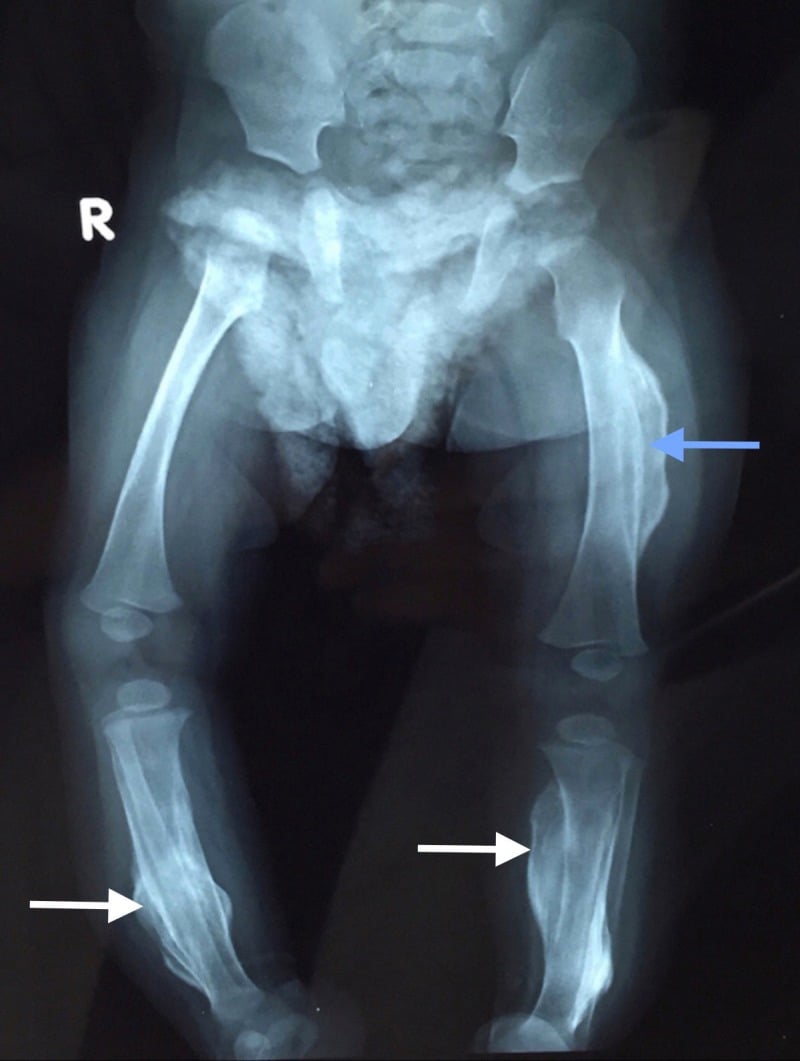
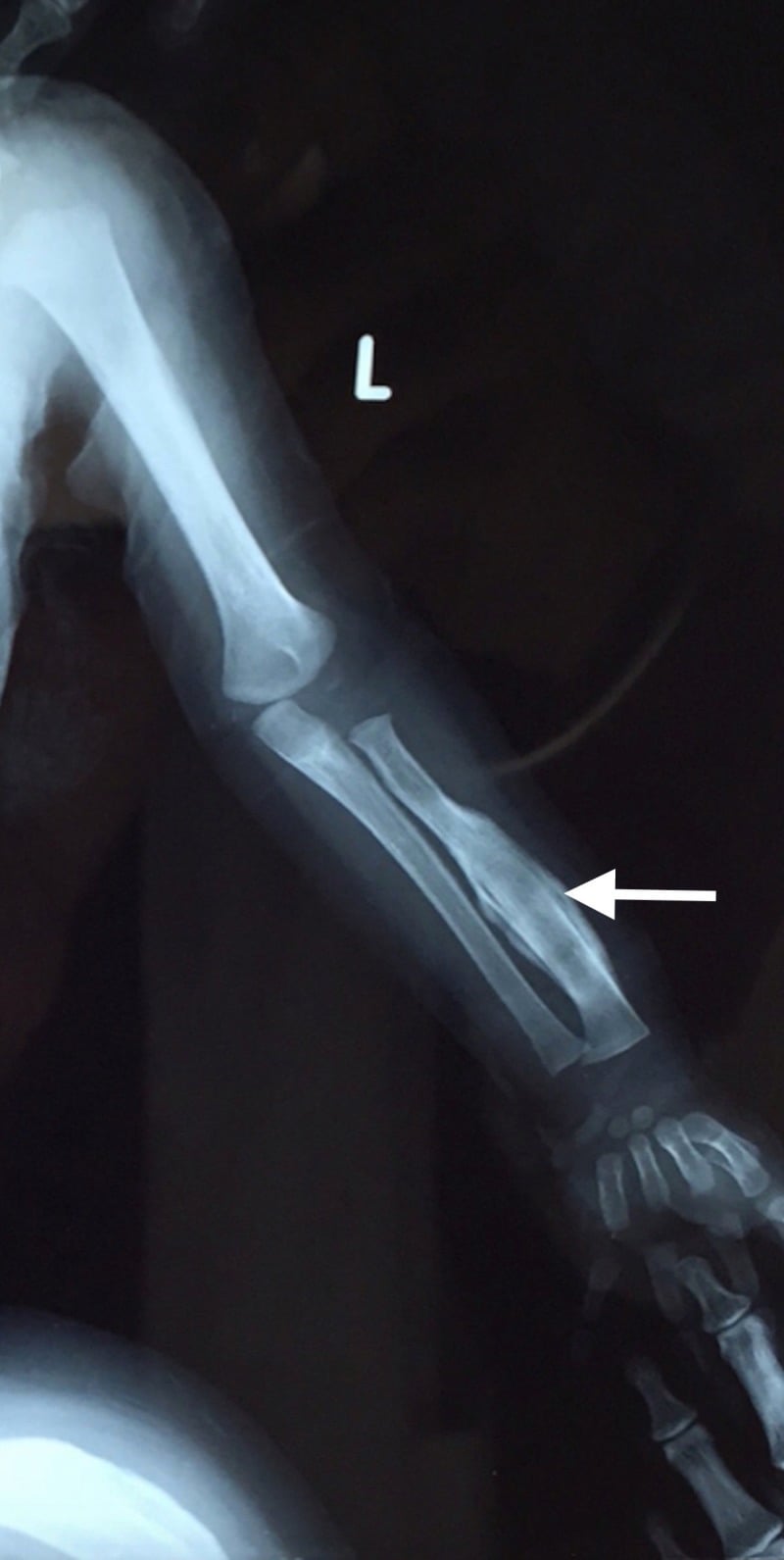
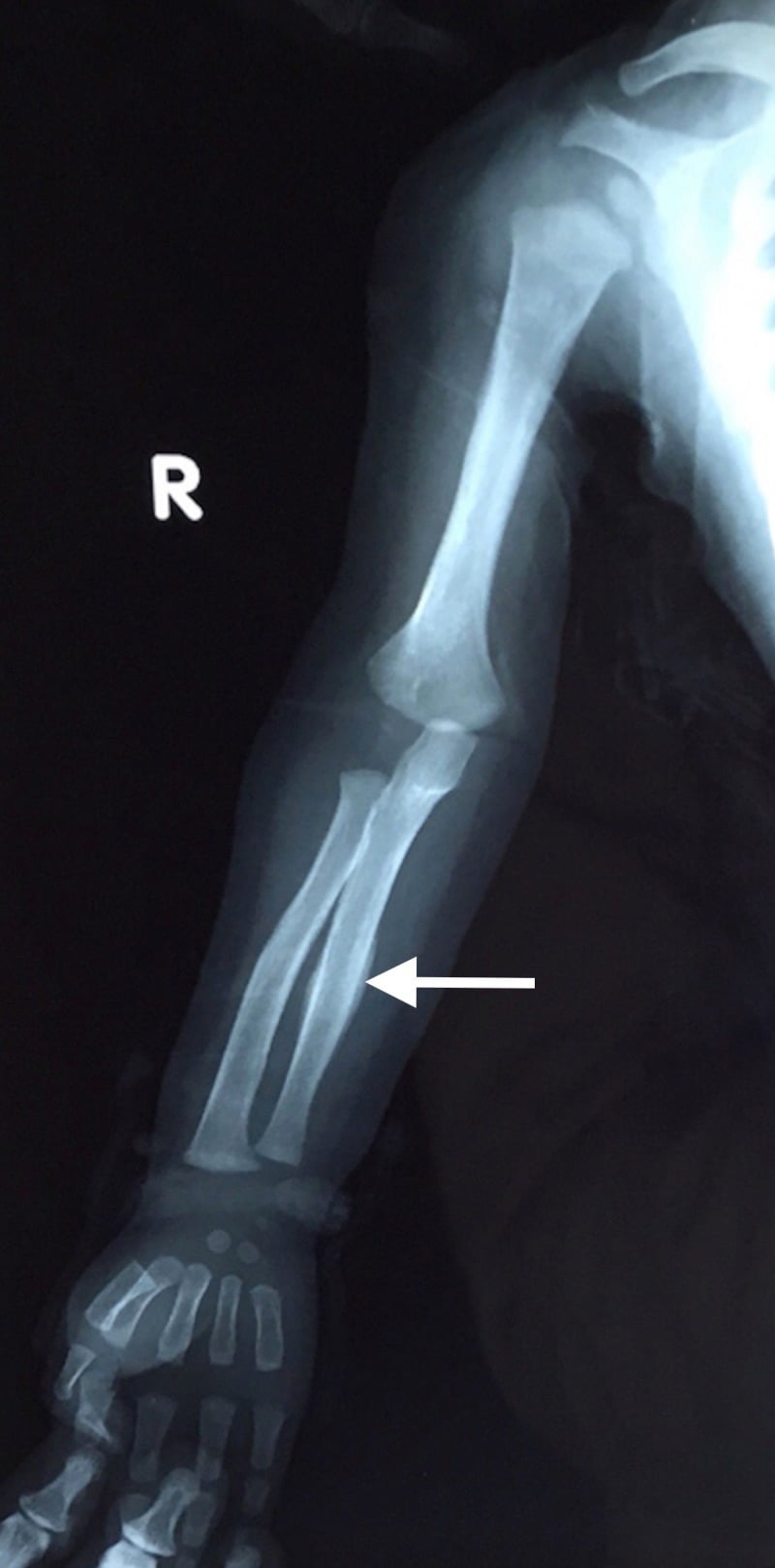
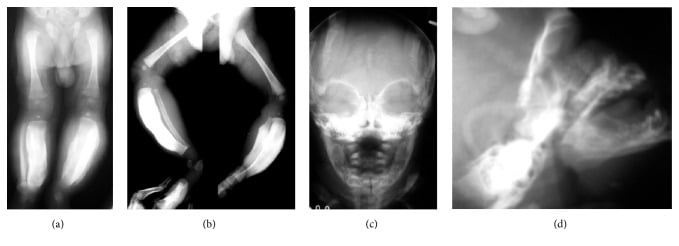
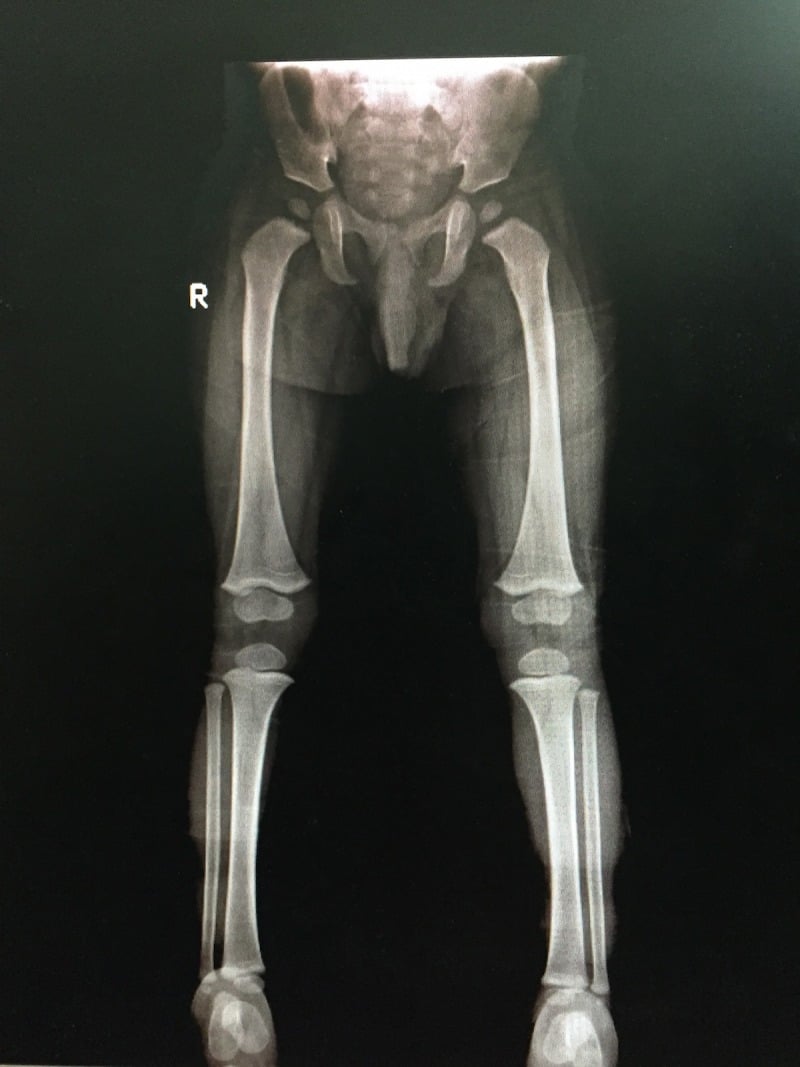
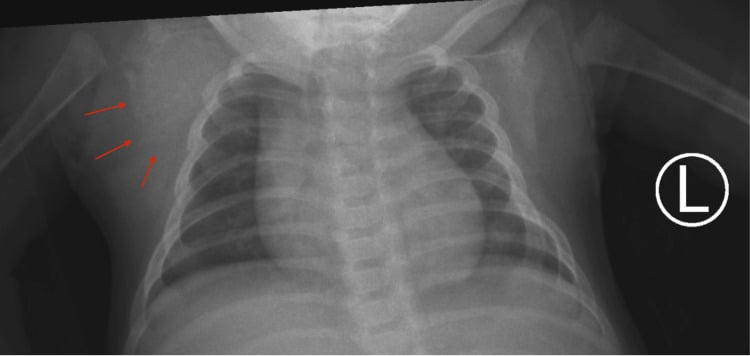
Radiographs. Always obtain radiographs of the clinically affected areas, plus a skeletal survey if non-accidental injury is in the differential. The appearance evolves with time:
- Week 1-2 - soft tissue swelling over the bone; periosteal elevation may be subtle
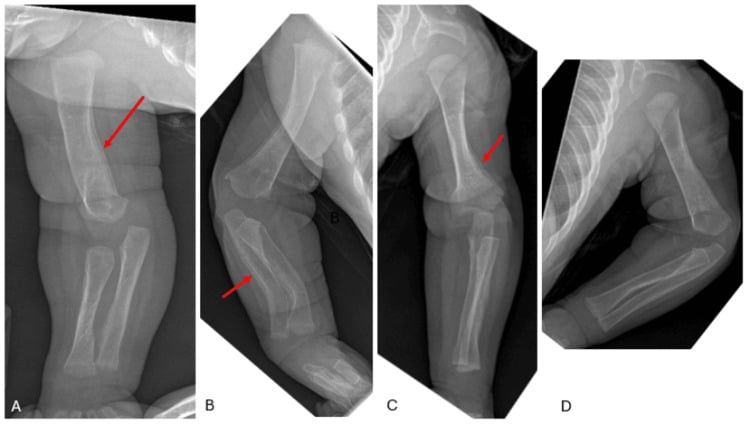
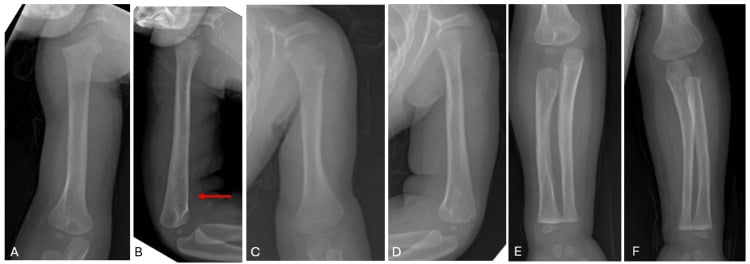
- Week 2-6 - laminated or solid periosteal reaction along the diaphysis, with cortical thickening (hyperostosis); the new bone is smooth and uniform, and a "double cortex" may be seen
- Month 3-12 - gradual remodelling of the thickened cortex and return to a normal bone contour
Reading the film. The periosteal reaction is diaphyseal, not metaphyseal, and smooth rather than aggressive. No fracture is visible. Those features, with mandibular involvement, are what separate Caffey disease from its mimics.
Blood tests. These are non-specific and help exclude other diagnoses rather than confirm Caffey disease.
- ESR - mildly to moderately elevated (20-60 mm/hr)
- CRP - mildly elevated
- White cell count - normal or mildly elevated
- Alkaline phosphatase - may be elevated, reflecting bone turnover
- Vitamin C - normal (excludes scurvy)
- Blood cultures - negative (excludes osteomyelitis)
Genetic testing. Consider COL1A1 testing if the familial form is suspected; it is useful for counselling affected families. A negative result does not exclude the diagnosis.
Advanced imaging. In most cases the clinical presentation and plain radiographs are sufficient. Advanced imaging is reserved for atypical presentations or for excluding other pathology.
- Bone scan (technetium-99m) - increased uptake in affected bones; can identify subclinical involvement and may show the extent, but is not required for diagnosis
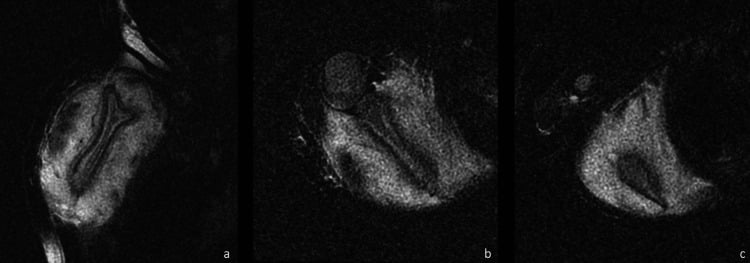
- MRI - rarely needed; shows periosteal oedema and new bone formation, and is useful to exclude osteomyelitis when the diagnosis is uncertain, since Caffey disease produces no abscess or sequestrum
- Ultrasound - may show soft tissue swelling and periosteal thickening; a limited role in diagnosis
Differential Diagnosis
- Caffey Disease
- Under 6 months
- NAI
- Any age, peak 2-4 years
- Osteomyelitis
- Any age
- Scurvy
- 6-24 months
- Caffey Disease
- Low-grade or absent
- NAI
- Variable
- Osteomyelitis
- High fever
- Scurvy
- Absent
- Caffey Disease
- Mandible, clavicle, ulna
- NAI
- Metaphyses, ribs
- Osteomyelitis
- Metaphysis/diaphysis
- Scurvy
- Long bones, ribs
- Caffey Disease
- Diaphyseal periosteal reaction
- NAI
- Metaphyseal fractures
- Osteomyelitis
- Lytic lesion, sequestrum
- Scurvy
- Subperiosteal haemorrhage
- Caffey Disease
- None
- NAI
- Multiple, different ages
- Osteomyelitis
- Pathologic possible
- Scurvy
- Pathologic possible
- Caffey Disease
- Mildly elevated
- NAI
- Variable
- Osteomyelitis
- Markedly elevated
- Scurvy
- Normal
- Caffey Disease
- NSAIDs, observation
- NAI
- Safeguarding, MDT
- Osteomyelitis
- IV antibiotics, surgery
- Scurvy
- Vitamin C
- Caffey Disease
- Complete resolution
- NAI
- Variable
- Osteomyelitis
- Good with treatment
- Scurvy
- Excellent with treatment
Non-accidental injury. This is the critical differential, and missing it is a patient safety failure. Caffey disease gives a diaphyseal periosteal reaction with no fractures; non-accidental injury gives metaphyseal corner fractures and fractures at different stages of healing. Beyond the film, the history and the rest of the child discriminate:
- Caffey Disease
- Commonly involved (70-90%)
- NAI
- Rarely involved
- Caffey Disease
- Consistent with findings
- NAI
- Inconsistent or changing story
- Caffey Disease
- None
- NAI
- Bruises, burns, retinal haemorrhages
- Caffey Disease
- Normal family dynamics
- NAI
- Risk factors present
The red flags for non-accidental injury:
- Delay in seeking care
- A history inconsistent with the injury pattern
- Multiple injuries at different stages
- Retinal haemorrhages
- Subdural haematoma
When in doubt, involve child protection services and perform a full skeletal survey.
Acute haematogenous osteomyelitis. Osteomyelitis brings a high fever and markedly elevated CRP and ESR, against the low-grade fever of Caffey disease. In children it favours the metaphysis and usually affects one bone, whereas Caffey disease is often multifocal. Its radiographic changes take 10-14 days to appear and then show a lytic lesion, periosteal reaction and sequestrum; blood cultures are positive in 50%. If uncertain, treat as osteomyelitis until proven otherwise, because osteomyelitis requires urgent intravenous antibiotics.
Other mimics. A thorough history, including dietary intake and medications, is how these are excluded.
- Scurvy (vitamin C deficiency) - after weaning, with poor dietary vitamin C; Wimberger ring and Frankel line on the radiograph
- Congenital syphilis - periosteal reaction with other stigmata (saddle nose, Hutchinson teeth); serological testing confirms
- Hypervitaminosis A - excessive vitamin A intake and diffuse cortical hyperostosis, resolving when the vitamin A is stopped
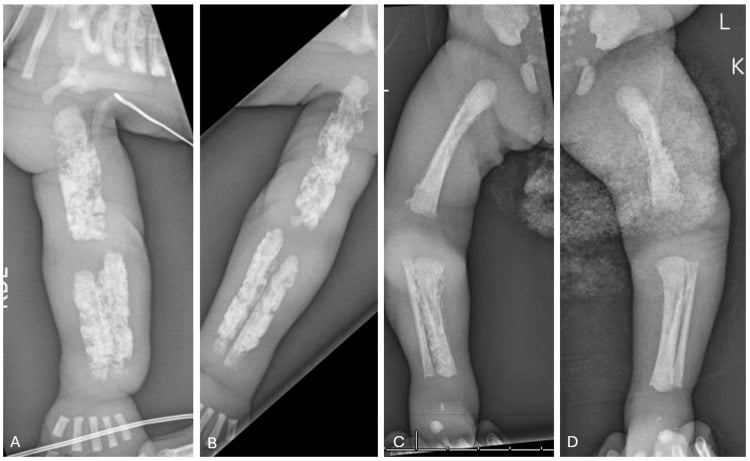
- Prostaglandin therapy - infants receiving PGE1 for ductus-dependent cardiac lesions; the radiographic changes are identical to Caffey disease and resolve when the prostaglandin therapy is stopped
Management
Supportive care. No treatment is curative; care is supportive, with NSAIDs for comfort.
- NSAIDs - indomethacin or ibuprofen, for pain relief and anti-inflammatory effect
- Paracetamol - for additional analgesia and fever control
- Gentle handling - minimise manipulation of affected limbs
Indomethacin. The dose is 0.5-1 mg/kg/day divided into 2-3 doses, continued for 2-4 weeks and then weaned.
Why NSAIDs. The prostaglandin theory suggests that elevated PGE2 drives the disease, and NSAIDs inhibit prostaglandin synthesis. They reliably relieve symptoms and may shorten the disease, but there is no randomised evidence that they shorten it or change the bony outcome; in a self-limiting condition an apparent response may be natural resolution.
What not to give. Antibiotics have no role unless osteomyelitis cannot be excluded. Corticosteroids have no role either: they are not proven beneficial and carry potential side effects.
Follow-up. Review weekly during the acute phase, checking swelling, irritability and feeding to make sure symptoms are improving. Repeat the radiograph at 4-6 weeks to confirm the expected changes; further imaging is needed only for clinical concern, and serial films are unnecessary if the child is progressing well. Discharge when clinically resolved, usually by 6-12 months, with no long-term orthopaedic follow-up. Re-evaluate for:
- Worsening symptoms despite treatment
- New bone involvement after the initial presentation
- A high fever
- Failure to improve by 3 months
Counselling the parents. The reassurance is the prognosis below: a self-limiting condition with no long-term bone problems expected. Symptoms improve over weeks to months, the bone thickening on the radiograph may persist longer than the symptoms, and recurrence is rare but possible. Offer genetic counselling if the familial form is suspected, particularly if the parents are planning further pregnancies. They should return with:
- High fever
- Worsening pain or swelling
- New areas of swelling
- Poor feeding or weight loss
Complications
Prognosis. Caffey disease is remarkably benign. Postnatal sporadic disease has no significant long-term orthopaedic complications, and complete resolution by 2 years is expected. Recurrence is rare in the sporadic form and more common in the familial form.
During the acute phase. Feeding difficulty follows severe mandibular involvement, and respiratory distress, which is rare, follows extensive rib involvement.
Later. Bony asymmetry is a temporary cosmetic deformity during the resolution phase. Limb length discrepancy is extremely rare, although transient overgrowth has been reported.
NSAID risks. Gastrointestinal effects include gastritis and peptic ulceration, with gastrointestinal bleeding rare in infants; give the drug with feeds and watch for blood in the stool. Prostaglandin inhibition can affect renal blood flow, so monitor premature or unwell infants and ensure adequate hydration. Keeping use short-term, and weaning as symptoms improve, minimises the risks. NSAIDs are safe for short-term use in otherwise healthy infants, and when used appropriately the benefit of symptom control outweighs the small risks.
- Frequency
- Common if mandible affected
- Management
- Supportive feeding, soft nipple
- Frequency
- Common
- Management
- Resolves with disease
- Frequency
- Temporary
- Management
- Reassurance - resolves
- Frequency
- Rare
- Management
- Supportive care
- Frequency
- Rare
- Management
- Give with feeds, monitor
- Frequency
- Very rare (prenatal form only)
- Management
- Intensive prenatal management
The Prenatal (Lethal) Form: Same Mutation, Different Fate
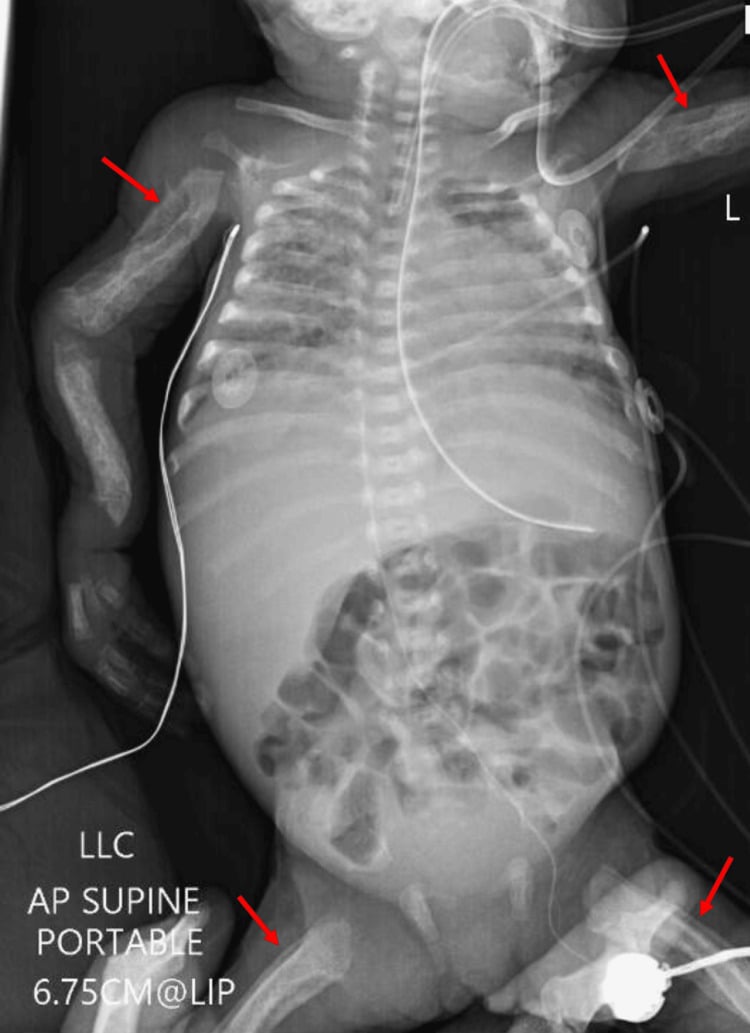
Presentation. The rare prenatal (antenatal) form presents in utero and is detected on antenatal ultrasound: short, bowed long bones, cortical hyperostosis, polyhydramnios and sometimes hydrops fetalis.
Prognosis. Unlike the benign postnatal disease, the prenatal form is often severe and can be lethal, through stillbirth or early neonatal death. It overlaps the osteogenesis imperfecta phenotype, so much so that it may first be diagnosed as severe osteogenesis imperfecta.
Same gene, and sometimes the same mutation. Lethal antenatal hyperostosis was long assumed to be a separate disease, because the original linkage study did not find the c.3040C-to-T variant in the two prenatal cases it tested. A later case found exactly that variant in fetal tissue. The prenatal form is therefore not reliably a different disease: it can be the same mutation with a catastrophically different phenotype, while other prenatal cases involve other genes.
Why it matters. The consequence is for counselling, not taxonomy. A family carrying c.3040C-to-T cannot be told that a future pregnancy carries only the benign risk.
Guidelines, Registries & Global Practice
Global epidemiology. Caffey disease is rare and likely under-reported. Historical estimates of roughly 3 per 1000 infants reflect an era of more frequent classic disease; the incidence has fallen markedly in recent decades and the condition is now an uncommon diagnosis worldwide. It occurs across all populations with no strong ethnic predilection and a slight male predominance. Sporadic disease far outnumbers the autosomal dominant COL1A1 form, which accounts for a minority of cases.
There is no dedicated registry or disease-specific society guideline for Caffey disease; management is consensus- and case-series-based. The decisive guideline framework in practice is child-protection / suspected-physical-abuse imaging, where named-society guidance differs in emphasis:
- Core recommendation
- Standardised full skeletal survey (with follow-up survey at 11-14 days) when abuse is suspected in under-2s
- Practical implication
- Repeat imaging detects evolving fractures and helps separate healing trauma from physiological/Caffey periostitis
- Core recommendation
- Appropriateness criteria recommend skeletal survey as first-line in suspected abuse under 2 years
- Practical implication
- Defines minimum mandatory views; reduces missed occult fractures
- Core recommendation
- Skeletal survey plus multidisciplinary child-protection assessment
- Practical implication
- Mandatory reporting where abuse cannot be excluded
- Core recommendation
- Caffey disease is a recognised differential of multifocal periosteal new bone
- Practical implication
- Diaphyseal smooth periosteal reaction, mandible involvement and absence of fractures favour Caffey over abuse
Registry note. Unlike arthroplasty or fracture care, Caffey disease has no implant or procedure registry; the evidence base is genetic cohorts (e.g. multi-family COL1A1 series) and case reports rather than registry survivorship data.
High- vs limited-resource practice variation.
- Well-resourced settings: ready access to high-quality skeletal survey, MRI to exclude osteomyelitis when uncertain, COL1A1 genetic testing and formal genetic counselling for familial cases, and rapid multidisciplinary child-protection input.
- Limited-resource settings: diagnosis rests on clinical pattern and plain radiographs; genetic confirmation may be unavailable, so reliance on the classic clinico-radiological triad and exclusion of mimics (osteomyelitis, scurvy, congenital syphilis, prostaglandin exposure) is greater. The reassuring, self-limited natural history makes conservative management with simple analgesia/NSAIDs broadly applicable.
Treatment is internationally consistent: supportive care with NSAIDs (commonly off-label) as first-line; antibiotics only if osteomyelitis cannot be excluded.
Related pages: Non-Accidental Injury is the diagnosis that must be actively excluded and the reason this topic matters far beyond its rarity - the discriminators are that Caffey is DIAPHYSEAL periosteal new bone with no fracture and frequent mandibular involvement, while inflicted injury gives metaphyseal corner fractures, posterior rib fractures and injuries of differing ages; getting this wrong is harmful in both directions. Periosteal Reaction Patterns is the general framework for reading the film, and Paediatric Acute Osteomyelitis with Chronic Recurrent Multifocal Osteomyelitis are the infective and inflammatory mimics - CRMO in particular shares the multifocal, self-limiting, painfully inflammatory character in an older child. Osteogenesis Imperfecta is the other COL1A1 disease and the one the lethal prenatal form is first mistaken for on antenatal ultrasound, while Ehlers-Danlos Syndrome is the phenotype that carriers of the Caffey variant partly express - joint hyperlaxity, hyperextensible skin and inguinal hernias - even when they never have a bone episode. Osteopetrosis and Melorheostosis are the other paediatric sclerosing bone conditions on the differential, and Diffuse Idiopathic Skeletal Hyperostosis is the adult entity whose name causes confusion and which is unrelated. Bone Healing explains the subperiosteal new bone this condition lays down and then remodels away, and Diaphyseal Bone Lesions covers the tumours that must not be forgotten when a single bone is involved.
Controversies and Areas of Uncertainty
The prostaglandin hypothesis and the COL1A1 collagen-I hypothesis coexist but are not unified. Sporadic disease commonly lacks any detectable COL1A1 variant, and prenatal cases may be caused by other genes (e.g. IFITM5). It is unresolved how a structural collagen defect produces a self-limited, episodic inflammatory periostitis.
NSAIDs (indomethacin/ibuprofen) reliably help symptoms, but there is no randomised evidence that they shorten the disease or change bony outcome. Because the condition is self-limiting, apparent treatment "responses" may reflect natural resolution.
Frequently quoted figures (around 3 per 1000) derive from older series; the apparent fall in incidence may be real or may reflect reclassification and better recognition of mimics. Robust contemporary epidemiology is lacking.
Variable penetrance of the COL1A1 variant makes individual prognostication difficult, and a negative gene test does not exclude the diagnosis. How aggressively to pursue genetics in apparently sporadic cases is not standardised.
Exam Cheat Sheet
Definition
- Infantile cortical hyperostosis
- Self-limiting periosteal new bone formation
- Under 6 months age
- First described Caffey and Silverman 1945
Classic Triad
- Soft tissue Swelling
- Bone lesions (hyperostosis)
- Irritability
- SBI mnemonic
Common Bones
- Mandible 70-90% (pathognomonic)
- Clavicle 30-50%
- Ulna 30-40%
- Ribs, scapula less common
- Tibia rare, spine/hands NEVER
Pathophysiology
- Prostaglandin theory (elevated PGE2)
- COL1A1 mutation (familial form)
- Chromosome 17q21
- Autosomal dominant with variable penetrance
Viva Scenarios
Practise clinical reasoning and management decisions out loud
“A 3-month-old infant presents with a 1-week history of irritability and swelling over the left jaw. The parents are concerned the baby is crying excessively. What is your approach?”
“A 4-month-old infant presents with swelling of the left arm and irritability. X-ray shows periosteal reaction along the ulna. The emergency physician is concerned about non-accidental injury. How do you proceed?”
“A 2-month-old infant is diagnosed with Caffey disease. The mother mentions her brother had 'something similar as a baby.' How does this affect your management?”
Evidence Base
Original Description by Caffey and Silverman
- First comprehensive description of infantile cortical hyperostosis
- Identified classic triad of swelling, bone changes, irritability
- Noted predilection for mandible and clavicle
- Described self-limiting natural history
COL1A1 Gene Mutation Discovery (Autosomal Dominant Caffey)
- Genome-wide linkage in a large family mapped autosomal dominant Caffey to chromosome 17q21 (LOD 6.78)
- Identified a recurrent COL1A1 missense variant c.3040C-to-T (historically R836C in triple-helical numbering, now reported as p.Arg1014Cys)
- Same variant in 3 unrelated families but absent in over 300 control chromosomes; not found in 2 prenatal cases
- Carriers showed joint hyperlaxity, hyperextensible skin and hernias, extending the COL1A1 disease spectrum
Allelic Heterogeneity of COL1A1 in Caffey Disease
- COL1A1 sequenced in 28 families with suspected Caffey disease
- Recurrent p.(Arg1014Cys) variant found in 23 families; a novel p.(Arg918Cys) variant in 5 families
- Both arginine-to-cysteine substitutions lie in the triple-helical domain of the proalpha1(I) chain
- Confirms allelic heterogeneity and that a subset of clinically typical cases lack any detectable COL1A1 variant
Prostaglandin-Induced Cortical Hyperostosis (Pharmacological Mimic)
- 10 neonates with cyanotic heart disease developed cortical hyperostosis after prolonged PGE1 infusion (9-195 days)
- Long bones, ribs, scapulae and clavicles involved, radiographically indistinguishable from Caffey disease
- Serum alkaline phosphatase rose and tracked with hyperostosis; changes were dose- and duration-dependent
- Hyperostosis regressed after prostaglandin therapy was stopped
Prenatal (Lethal) Cortical Hyperostosis with COL1A1 Mutation
- Early-onset prenatal cortical hyperostosis is typically severe and often lethal, unlike the benign postnatal form
- Prenatal ultrasound showed short, bowed long bones; postmortem radiographs showed hyperostosis of long bones, ribs and mandible
- A heterozygous COL1A1 missense variant (c.3040C-to-T) was found in fetal tissue
- Shows the COL1A1 variant can also underlie lethal prenatal disease, overlapping the osteogenesis imperfecta phenotype
Clinico-Radiological Review (Self-Limited Collagen-I Disorder)
- Comprehensive review framing Caffey disease as the first known self-regressive collagen I-related disorder
- Soft-tissue swelling with periosteal hyperostosis, mandible being a characteristic site of facial swelling in infants
- Differential diagnosis of infantile facial/bone swelling and the radiological pattern that distinguishes it
- Surgical correction may rarely be needed for residual facial or mandibular asymmetry
These studies form the evidence base for diagnosis, pathophysiology and the critical differential from non-accidental injury in Caffey disease.