Navicular Osteochondrosis | Self-Limiting | Boys 3-7 Years | Excellent Prognosis
- Self-limiting condition with excellent prognosis - no surgery required
- Boys aged 3-7 years predominantly affected (5:1 male predominance)
- Navicular is last tarsal bone to ossify making it vulnerable to AVN
- Coin on edge appearance on lateral radiograph is classic finding
- Complete radiographic reconstitution occurs within 6-18 months
- “Always bilateral X-rays as 25% are bilateral
- “Conservative treatment only - cast or firm-soled shoe
- “Do not confuse with accessory navicular (older children, different location)
- “Natural history is spontaneous resolution regardless of treatment
Overview and Epidemiology
Kohler disease, also called navicular osteochondrosis or Kohler I disease, is a self-limiting avascular necrosis of the tarsal navicular in young children. Alban Kohler described it in 1908. It represents a temporary disruption of the blood supply to the developing navicular during a critical period of ossification, and the prognosis is excellent.
Who. Boys aged 3-7 years, with a peak incidence at 4-5 years and a male-to-female ratio of about 5:1. There is no clear racial or ethnic predisposition, and the condition is relatively uncommon compared with the other paediatric osteochondroses.
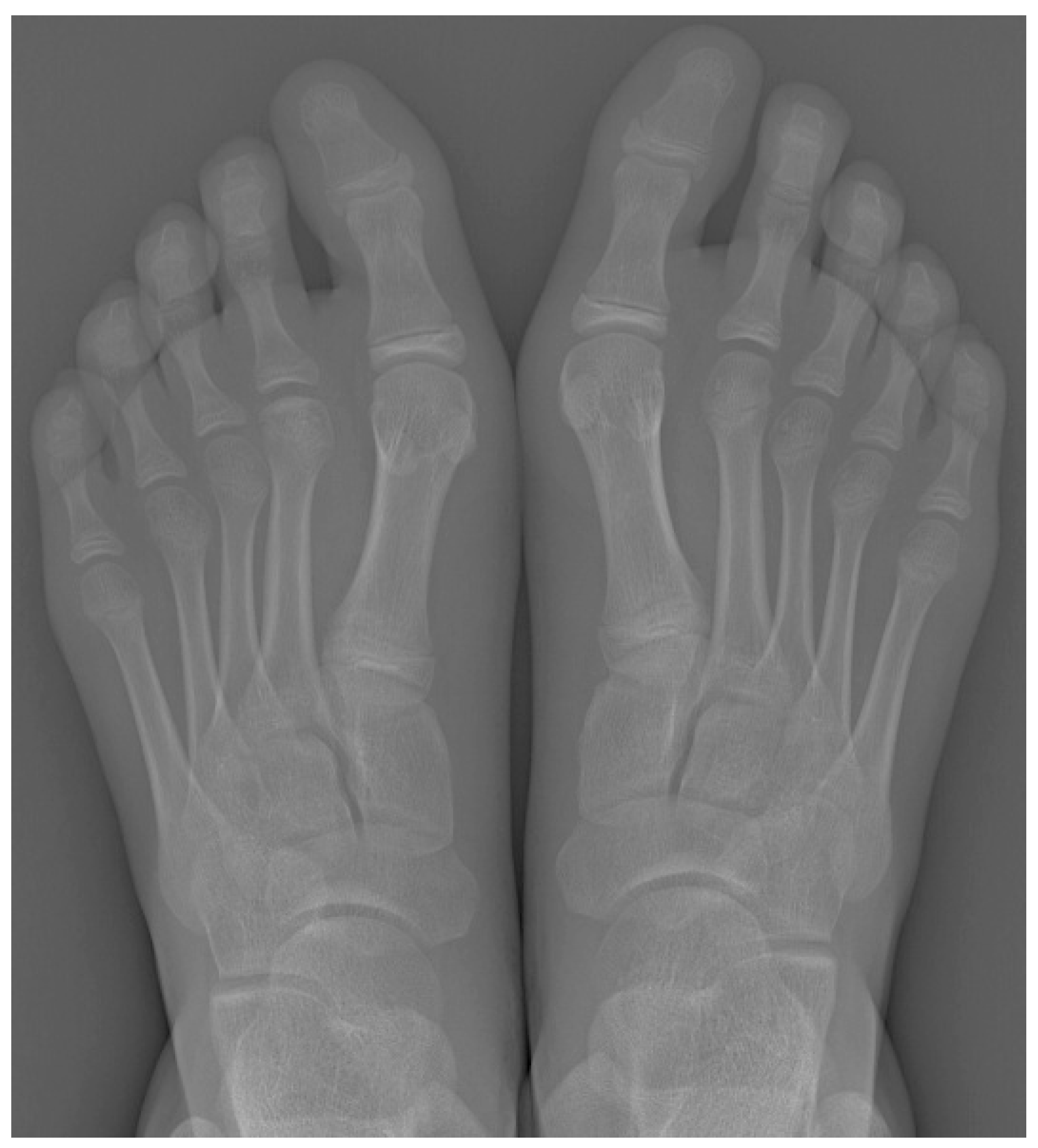
Both feet. Involvement is bilateral in about 25% of cases, though often asymmetrically. That is the reason both feet are always imaged.
Pathophysiology
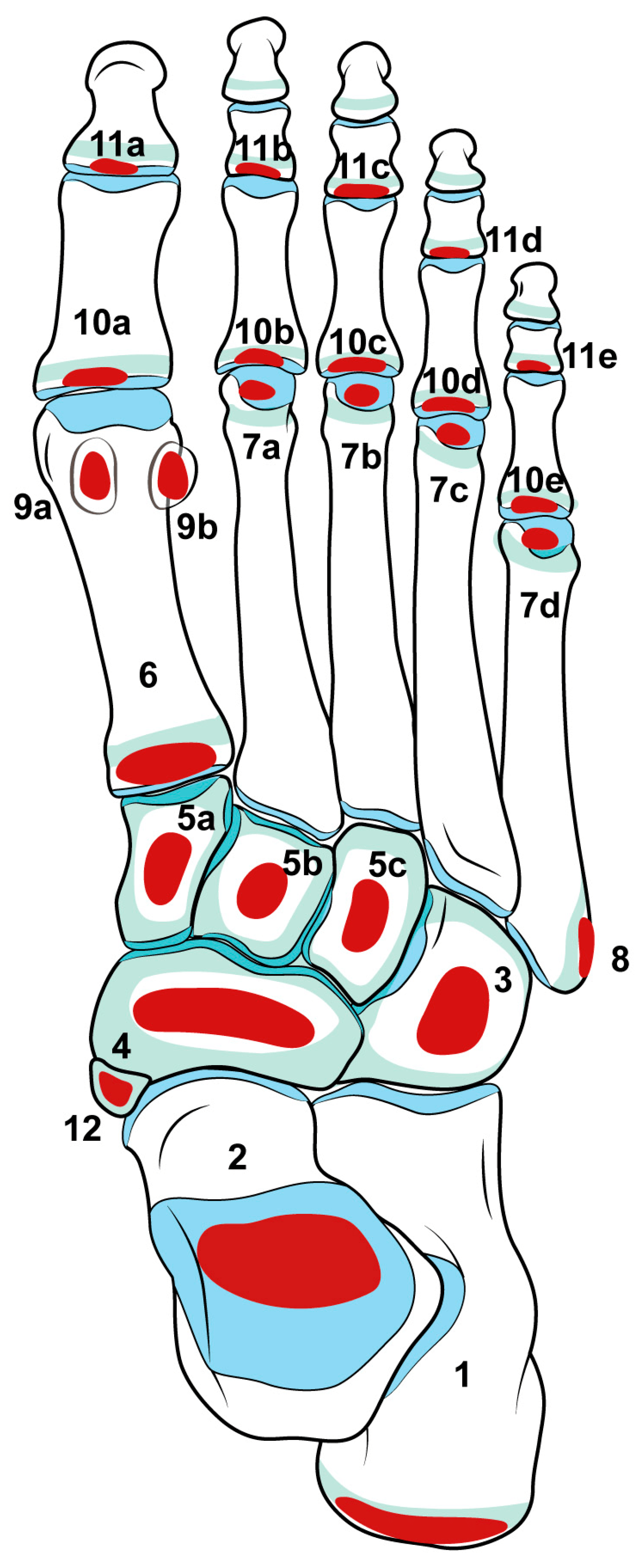
The last tarsal to ossify. The navicular is the last tarsal bone to ossify, typically between the ages of 2 and 4, from a single central centre that appears around 1.5-2 years in girls and later, around 2.5-3 years, in boys. That late ossification is believed to be a key factor in its susceptibility.
Load against supply. The navicular sits at the centre of the medial longitudinal arch and takes significant compressive force during weight-bearing. It has a dual blood supply, dorsal vessels from the dorsalis pedis and plantar vessels from the plantar arteries, and during ossification that supply is tenuous. The developing bone has to carry the mechanical loads of walking while its vascular supply is still establishing.
From mismatch to necrosis. Delayed ossification, mechanical compression and vascular insufficiency act together. The mismatch between mechanical demand and vascular capacity leads to ischaemia, osteonecrosis and the characteristic radiographic changes. Whether the ischaemia or the mechanical stress is the primary event remains unsettled.
Why it heals. Once ossification is complete and the vascular supply has matured, normal bone architecture is restored. That is what makes the condition self-limiting.
Clinical Presentation
History. The onset is insidious: parents typically notice a limp developing over days to weeks, with pain in the medial midfoot. The child may refuse to walk long distances or complain of foot pain with activity, and the pain worsens with weight-bearing.
What is absent. There is no history of trauma and the child remains systemically well. Both set it apart from septic arthritis and from an acute fracture.
Examination. Point tenderness is over the navicular on the medial aspect of the midfoot, about 2-3 cm distal to the medial malleolus. There may be mild swelling over the dorsomedial midfoot, though it is often subtle or absent. Midfoot motion is typically preserved but may be painful at the extremes, and subtalar and ankle motion should be normal.
Gait. Antalgic, with a shortened stance phase on the affected side, and often favouring the lateral border of the foot. Some children adopt a supinated foot posture to take pressure off the navicular.
Neurovascular. Normal. Any neurovascular compromise should prompt consideration of an alternative diagnosis.
Imaging and Diagnosis
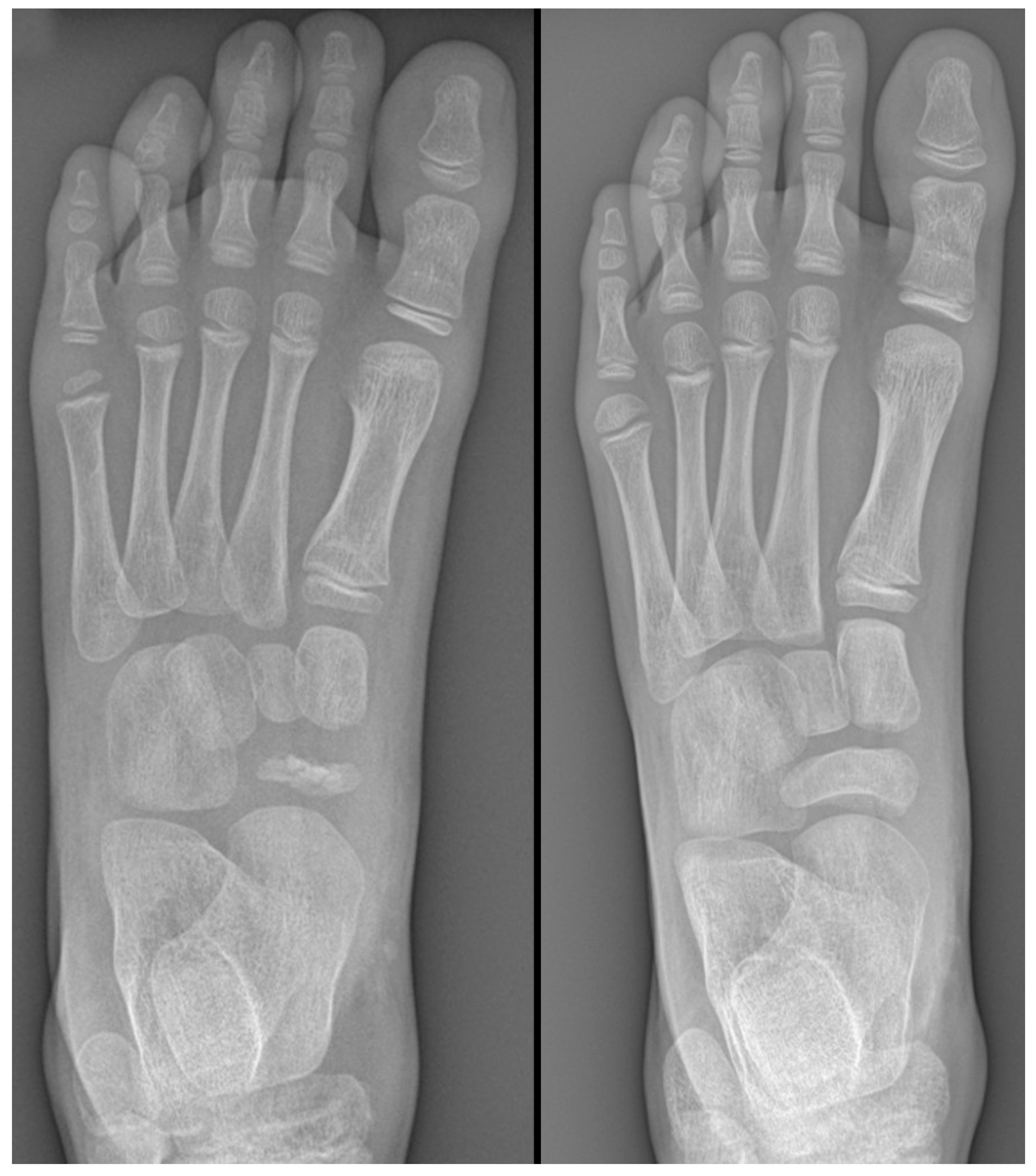
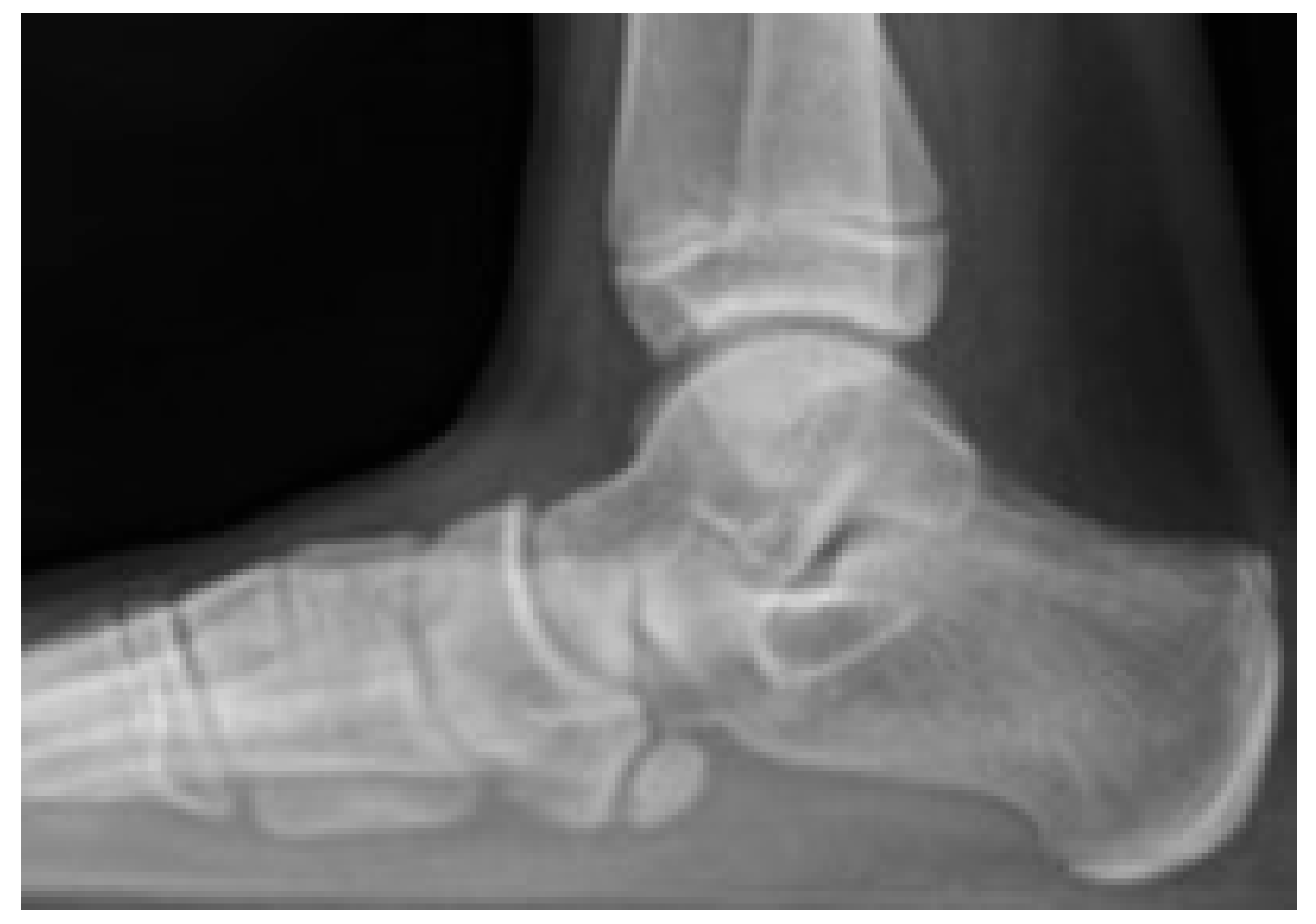
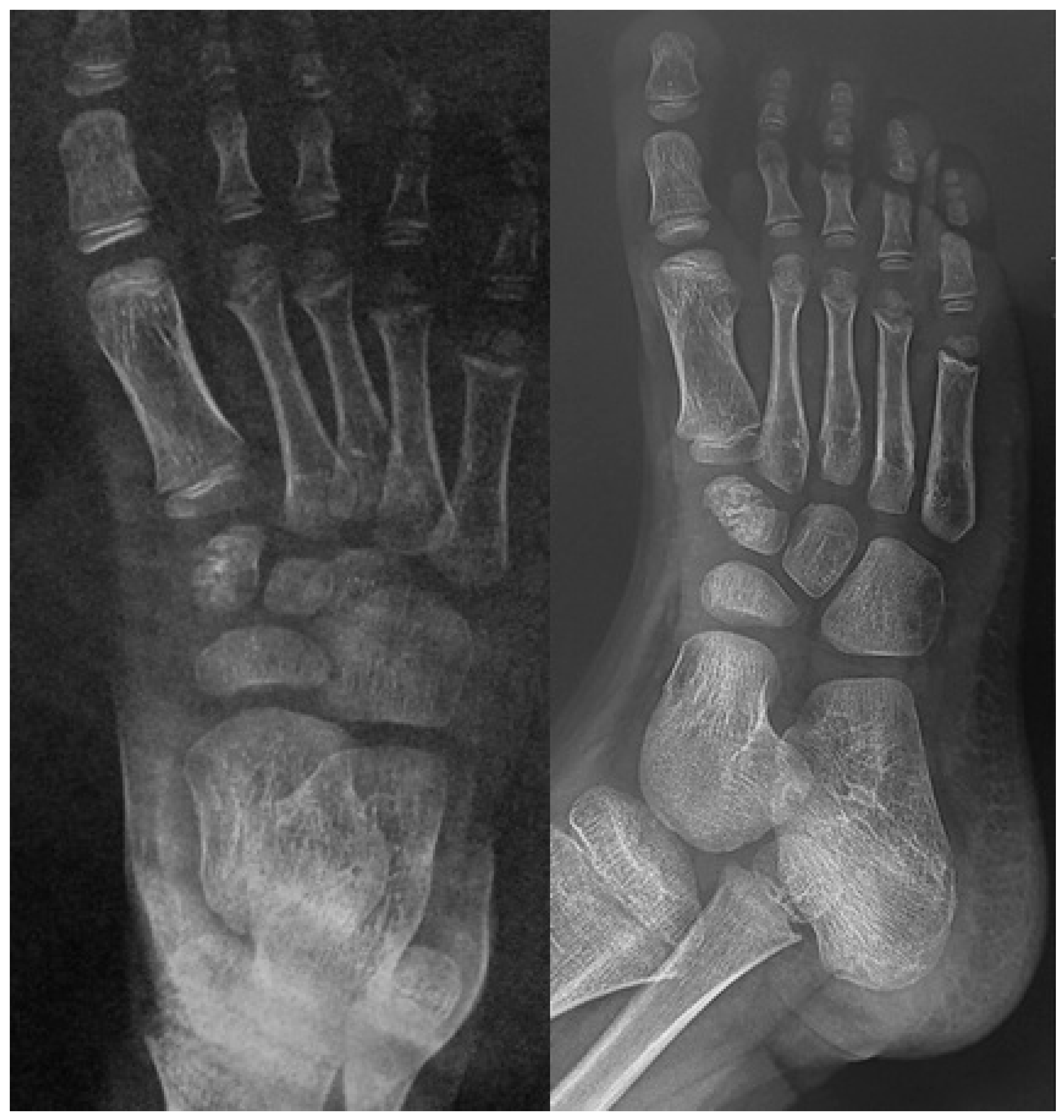
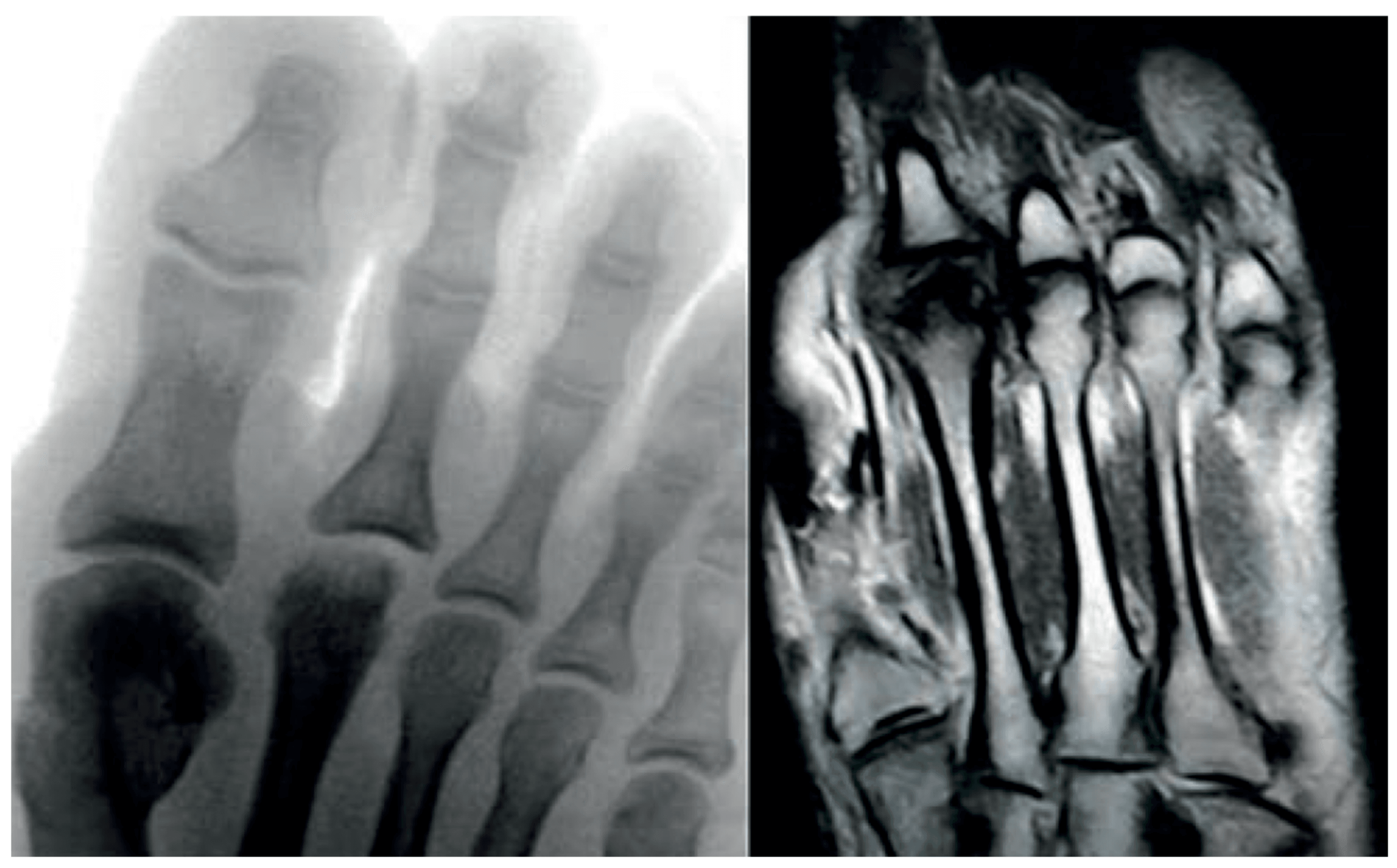
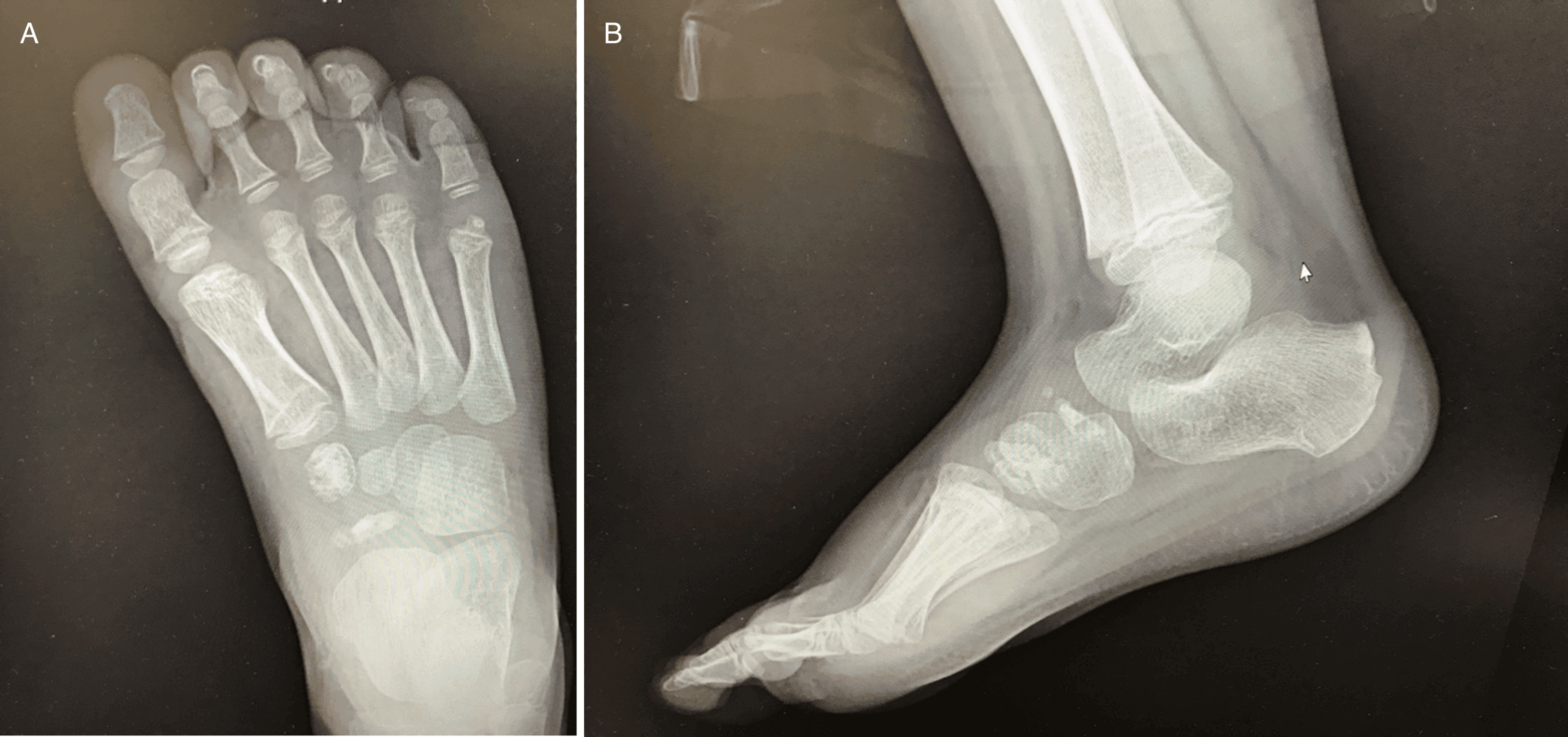
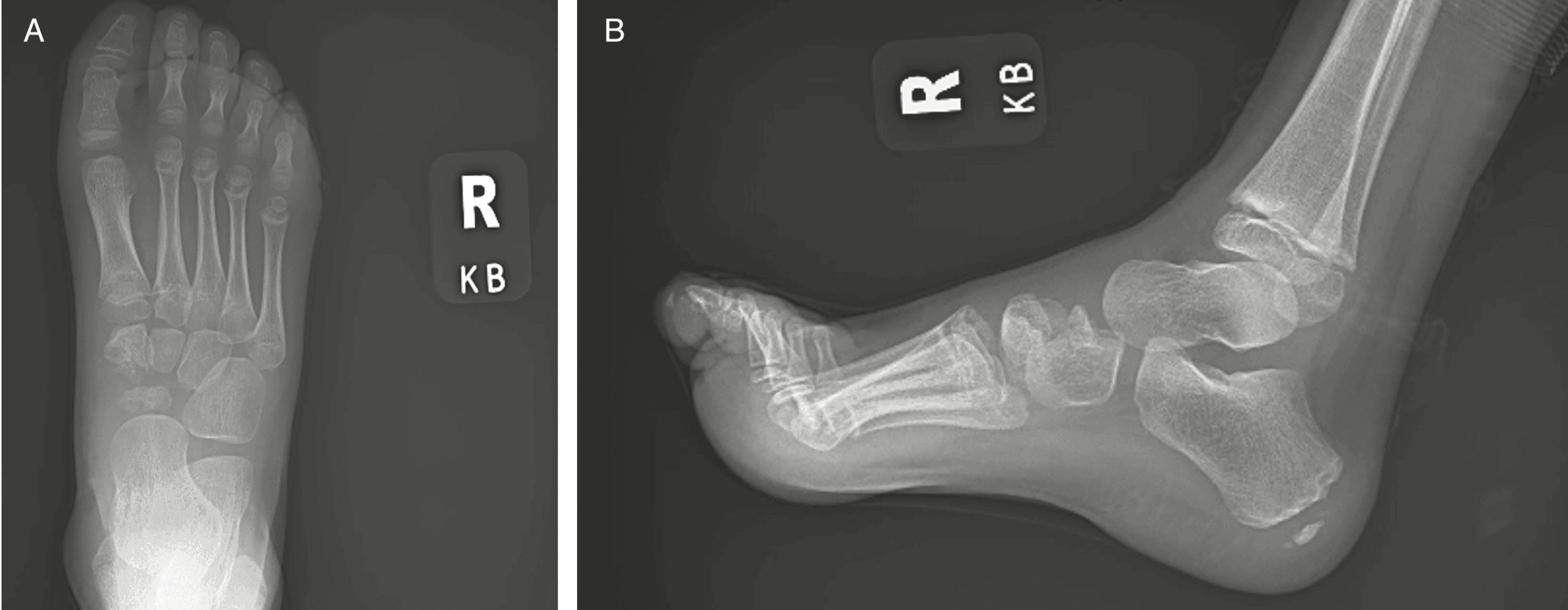
Radiographs. Standing AP and lateral views of both feet are the primary imaging modality. The classic findings:
- Sclerosis - increased density of the navicular
- Fragmentation - the navicular appears to be in multiple fragments
- Flattening - loss of normal navicular height, seen on the AP view as decreased height with irregular margins
- Irregular margins - loss of the smooth cortical outline
- Coin on edge - on the lateral view the navicular appears thin and dense, like a coin viewed edge-on
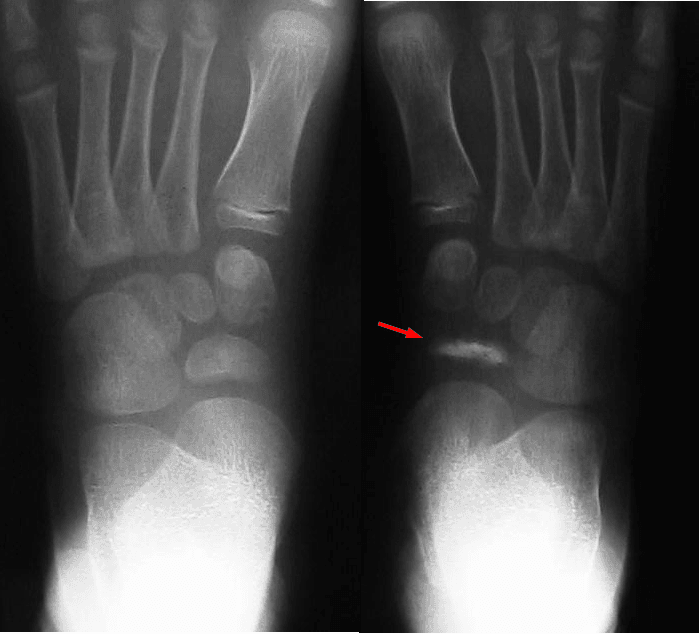
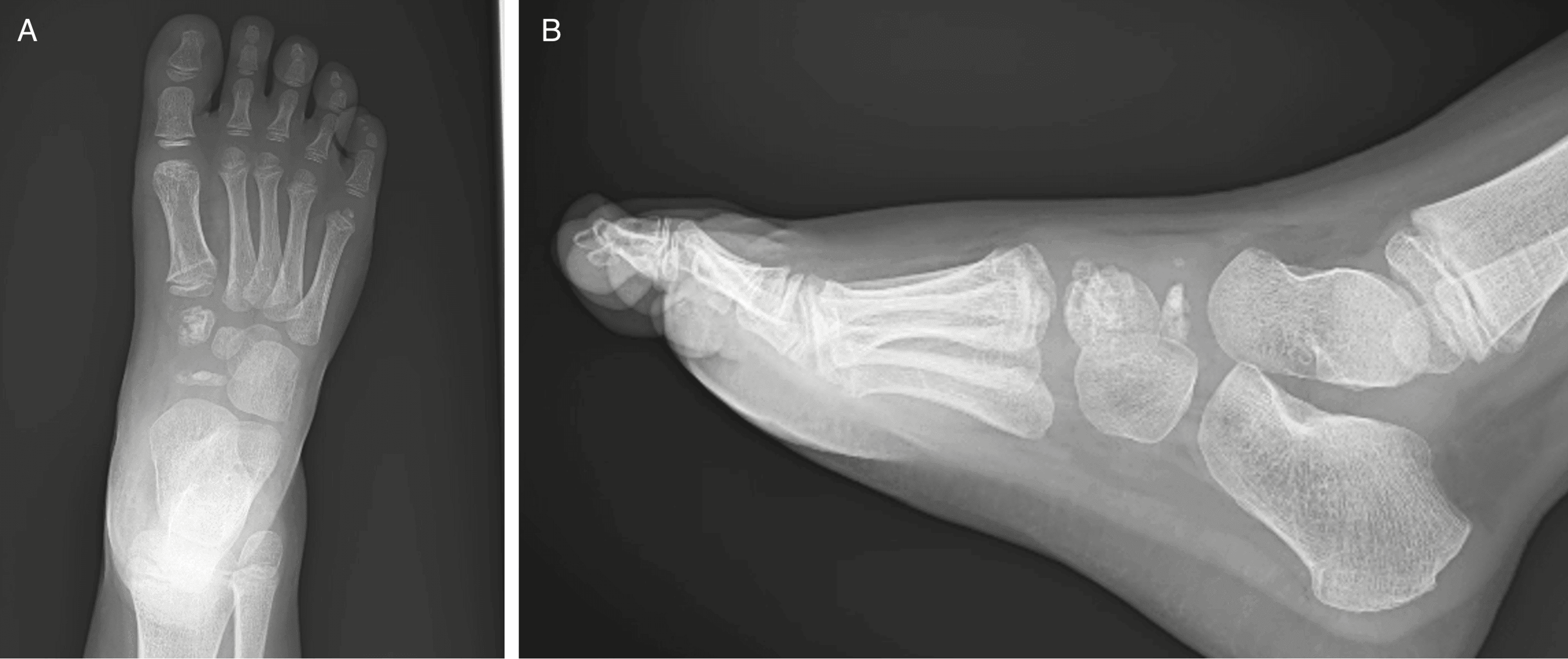
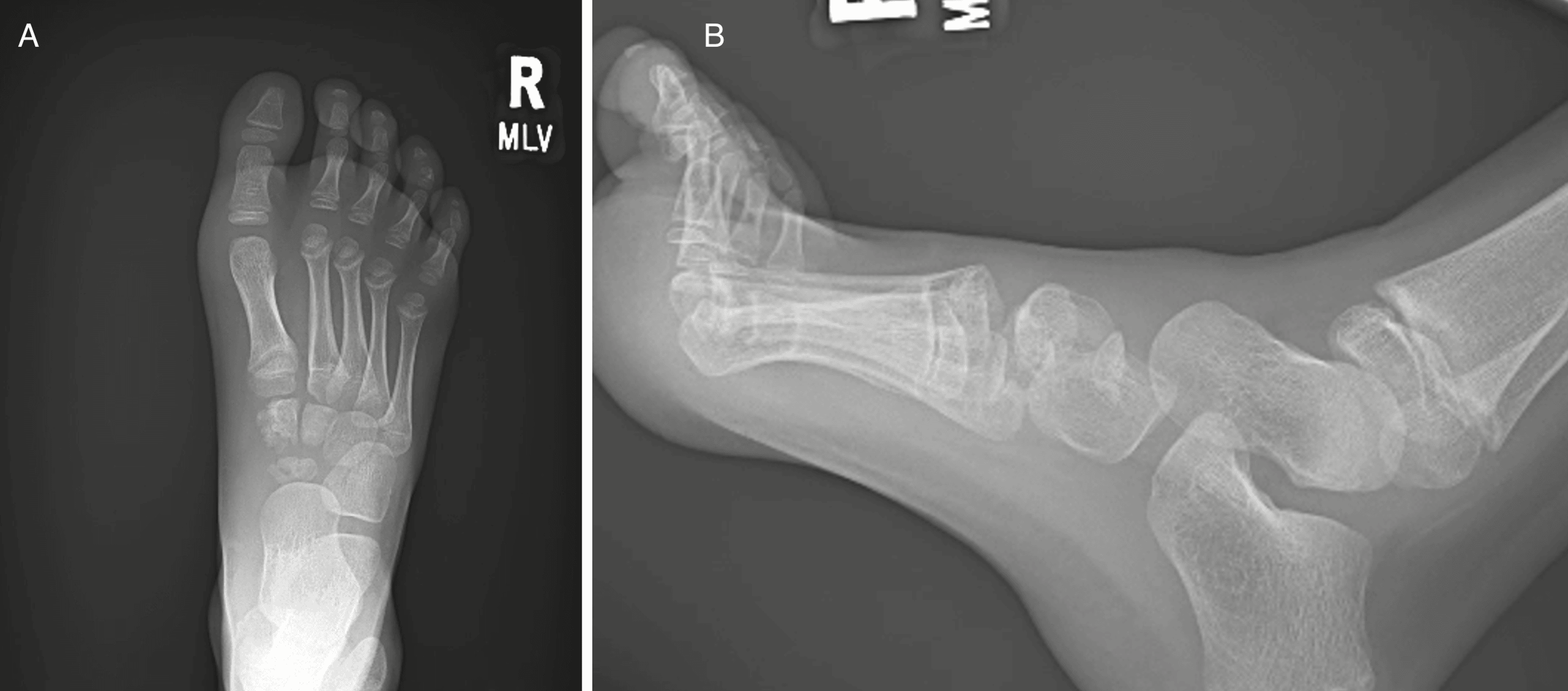
The diagnosis is clinical. In up to a third of normal children the navicular ossifies irregularly or from multiple (multicentric) foci. The result is a sclerotic, fragmented, flattened navicular that is radiographically indistinguishable from Kohler disease but asymptomatic. Kohler disease is these radiographic changes plus localised navicular pain, tenderness and limp, so an incidental irregular navicular, for example on the asymptomatic contralateral foot, must not be labelled Kohler disease. This is the point Williams and Cowell made with their asymptomatic patients.
The course on film. Over 6-18 months the radiographs show progressive reconstitution, with a return to normal navicular morphology. The films may lag behind the clinical picture: children often become asymptomatic while the radiographic changes persist.
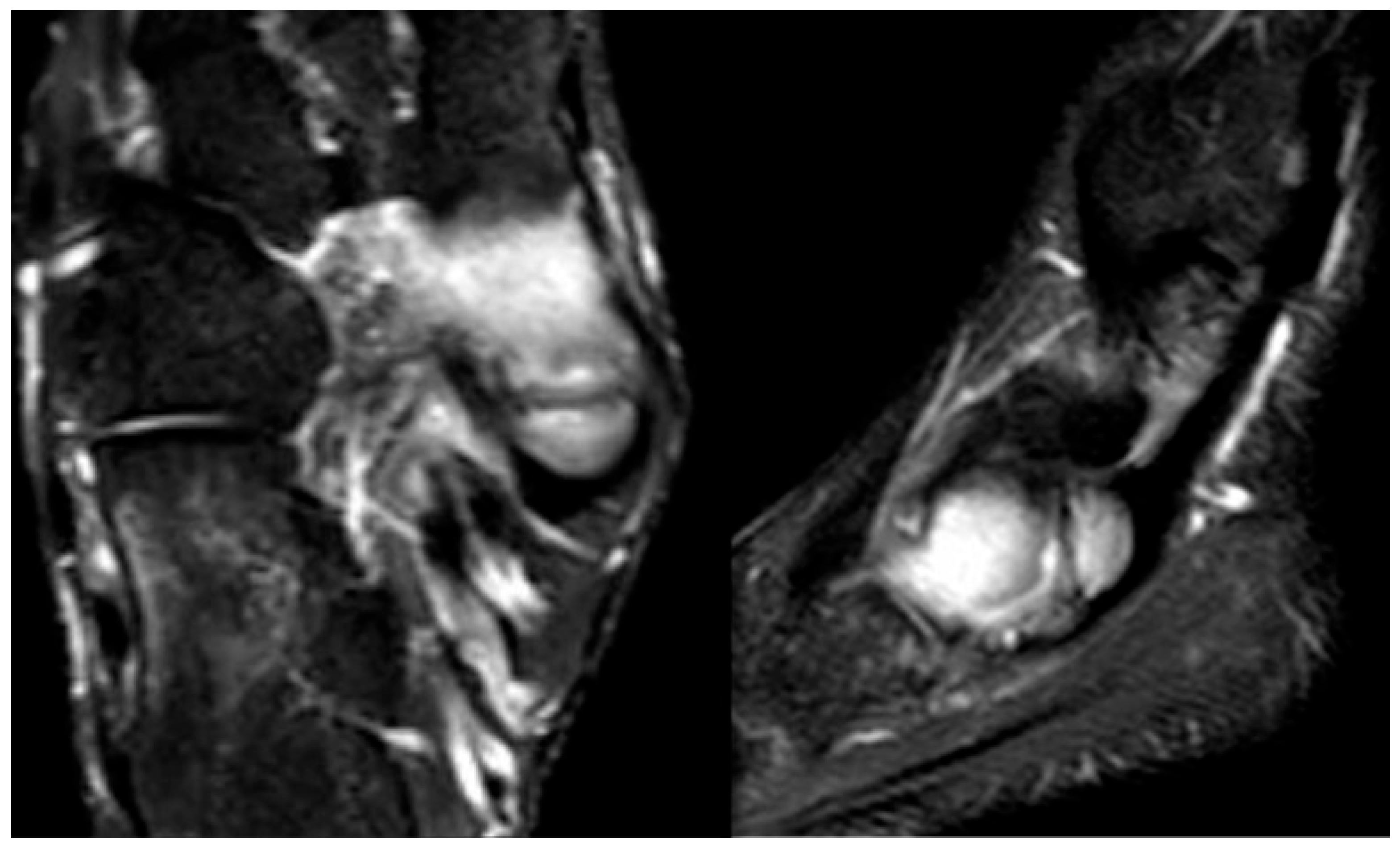
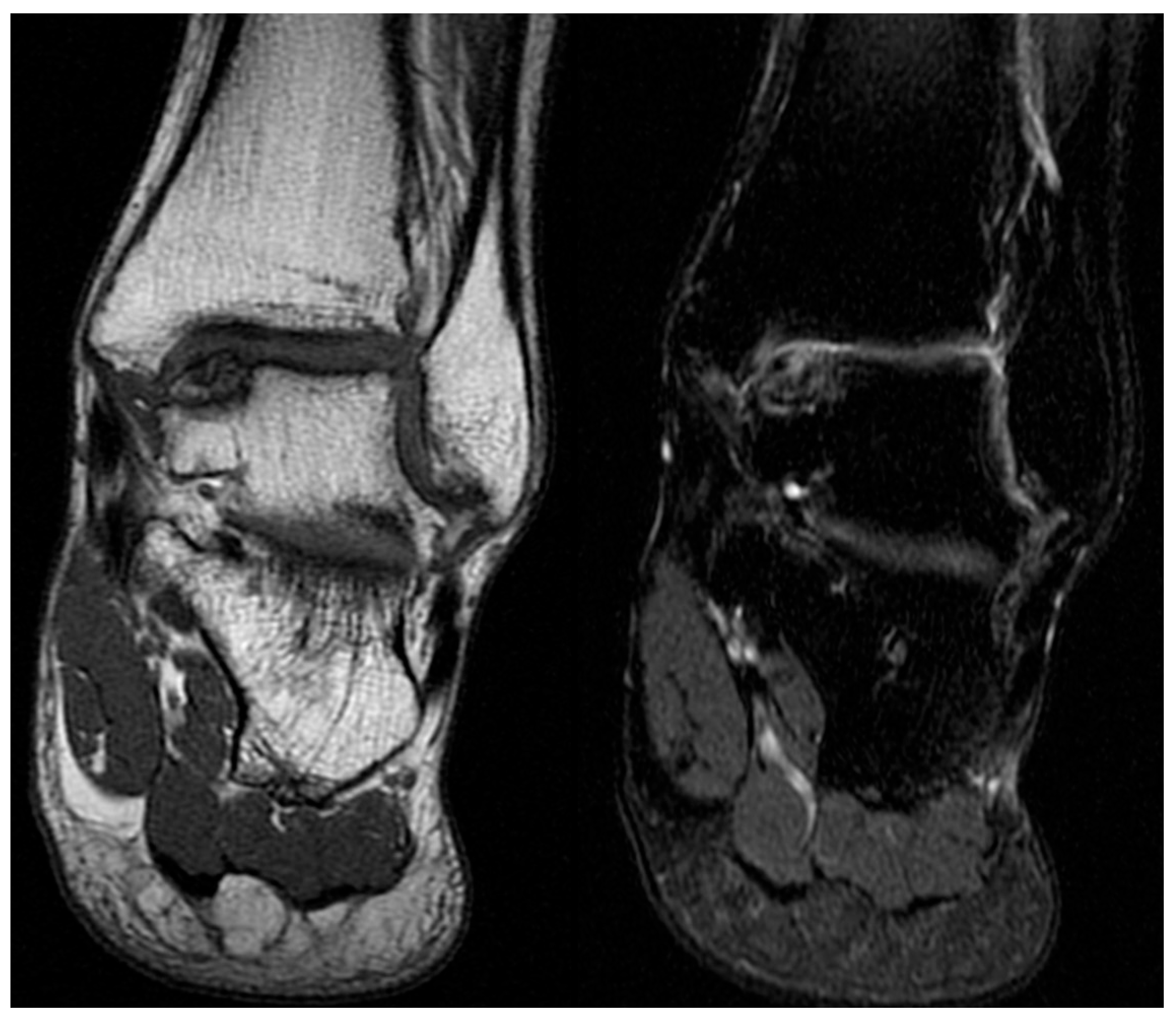
MRI is rarely needed. It may be obtained if the diagnosis is uncertain, the symptoms are atypical, or alternative pathology is suspected. In Kohler disease it shows low signal on T1, due to ischaemia and oedema, and variable, often heterogeneous, T2 signal. There is no soft-tissue mass or abscess, and the adjacent bones appear normal.
CT and bone scan. CT is generally not indicated but would show fragmentation and sclerosis if obtained. A bone scan shows increased uptake in the navicular during the revascularisation phase but is not routinely performed.
Differential Diagnosis
The features that set Kohler disease apart are the age group, the typical radiographic appearance and the self-limiting course.
- Distinguishing features
- Older children and adolescents (typically age 10 and above), medial prominence, pain at the posterior tibial tendon insertion rather than the navicular body
- Imaging
- Separate ossicle, not a fragmented navicular; no sclerosis or flattening of the main navicular body
- Distinguishing features
- Rigid flatfoot, limited subtalar motion, pain often in the sinus tarsi region
- Imaging
- Oblique radiographs or CT confirm the diagnosis
- Distinguishing features
- Older children and adolescent athletes, acute onset with a specific injury mechanism, more focal tenderness
- Imaging
- MRI shows a linear fracture line
- Distinguishing features
- History of injury
- Imaging
- -
- Distinguishing features
- Fever and malaise, elevated inflammatory markers, more prominent soft-tissue swelling
- Imaging
- MRI shows bone marrow oedema with soft-tissue involvement
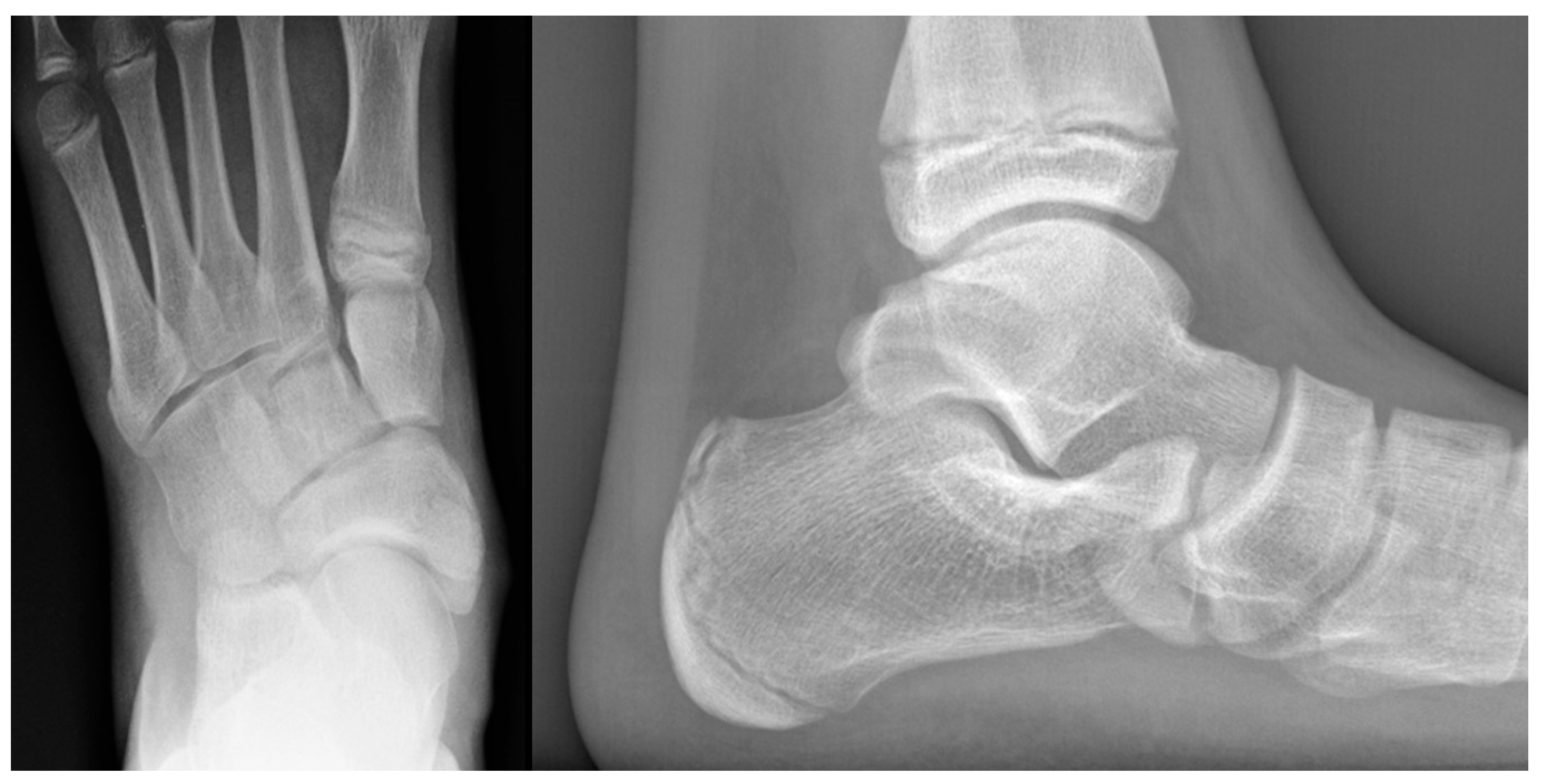
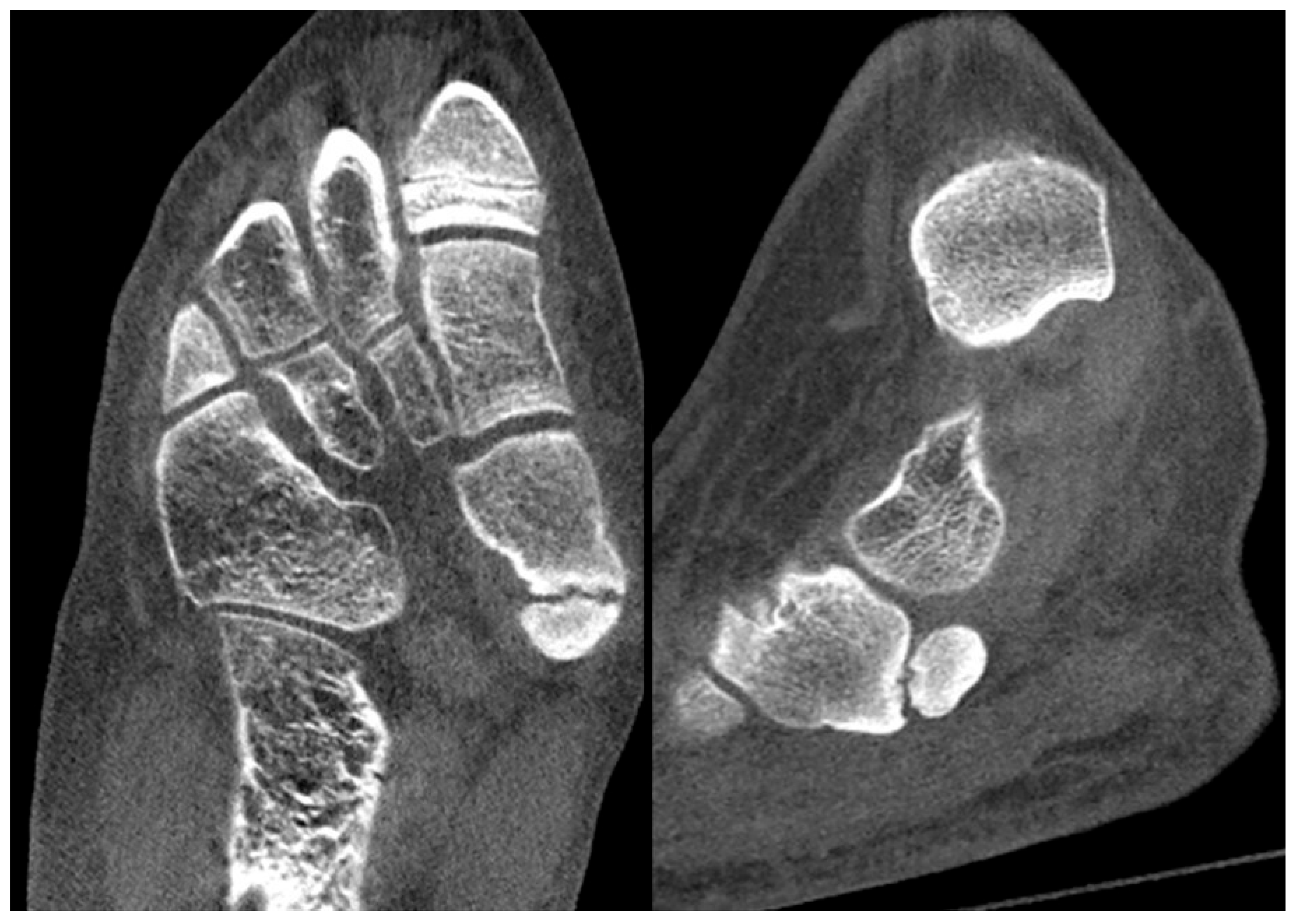
Accessory navicular. It is also seen in adults, and its treatment differs: a symptomatic accessory navicular may require excision. Knowing the types helps separate it from Kohler disease:
- Type I - a small round sesamoid within the posterior tibial tendon; rarely symptomatic
- Type II (os tibiale externum) - a triangular ossicle connected to the navicular by a synchondrosis; the type most commonly symptomatic
- Type III (cornuate navicular) - a fused accessory creating an enlarged medial navicular prominence; may cause symptoms
Kohler Among the Osteochondroses
Kohler I and Kohler II. Kohler I is this condition, osteochondrosis of the tarsal navicular. "Kohler's second disease" (Kohler II) is an older name for osteochondrosis of the second (or third) metatarsal head, the entity now usually called Freiberg infraction. Freiberg (1914) is the preferred eponym, and the condition has its own topic.
Almost opposite. Kohler I affects young boys and is benign and self-limiting. Freiberg disease affects adolescent girls and, unlike Kohler I, can flatten the metatarsal head and require surgery. Keeping the eponyms straight is a classic exam trap.
- Location
- Tarsal navicular
- Age
- 3-7 years
- Gender
- Male 5:1
- Prognosis
- Excellent - self-limiting
- Location
- 2nd MT head
- Age
- 13-18 years
- Gender
- Female 4:1
- Prognosis
- Variable - may need surgery
- Location
- Femoral head
- Age
- 4-8 years
- Gender
- Male 4:1
- Prognosis
- Variable - depends on age/pillar
- Location
- Tibial tubercle
- Age
- 10-15 years
- Gender
- Male 2:1
- Prognosis
- Excellent - self-limiting
- Location
- Calcaneal apophysis
- Age
- 8-12 years
- Gender
- Male 2:1
- Prognosis
- Excellent - self-limiting
- Location
- Lunate
- Age
- 20-40 years
- Gender
- Male 2:1
- Prognosis
- Variable - may need surgery
Management
The principle. All cases of Kohler disease are managed conservatively; there is no role for surgery. The goal is symptom relief while awaiting natural resolution, and symptoms resolve within weeks to months.
Matching treatment to symptoms.
- Mild - activity modification, avoiding high-impact activity, with supportive footwear and NSAIDs for comfort
- Moderate - a firm-soled shoe or walking boot, which reduces stress on the midfoot and allows some activity modification
- Severe - a short leg walking cast for 4-8 weeks, which gives excellent pain relief and allows continued ambulation
- A medial arch support may provide symptomatic relief and is useful during the recovery phase
What the cast buys. In Williams and Cowell's landmark series an 8-week cast cut the mean symptomatic phase to under 3 months, against 15 months without one. At a mean of 31 years, Borges and colleagues found that the type and length of treatment made no difference to the final outcome. The two findings measure different things and are both true.
The sentence to say to a parent. Nothing you do changes where this ends; what you are choosing is how long the child hurts on the way there. That is a real reason to offer a cast, and an equally real reason not to insist on one if the family prefers a boot.
The pathway.
- Confirm the diagnosis - typical age, male predominance, medial midfoot pain and limp, characteristic radiographic findings, with both feet imaged
- Assess symptom severity and treat as above
- Educate the parents - a self-limiting condition with an excellent prognosis, no surgery, and radiographic changes that may persist after the symptoms resolve. The foot will end up normal either way; the cast decides how long it hurts
- Follow up - clinical review at 4-6 weeks, radiographs only if symptoms persist or worsen, and discharge once asymptomatic
Complications and Prognosis
Prognosis. Kohler disease is fundamentally benign and self-limiting, and true complications are rare. Long-term series report a normal foot in adulthood in essentially all patients, and radiographic reconstitution is complete irrespective of treatment. There is no recognised association with later degenerative arthritis, deformity or arch collapse attributable to Kohler disease itself.
The principal risks are iatrogenic and diagnostic rather than from the disease itself.
Persistent or recurrent symptoms. Genuine ongoing pain after reconstitution should prompt a search for a coexisting diagnosis: a talocalcaneal coalition or a large or symptomatic accessory navicular, both documented in long-term follow-up, or a stress injury.
Overtreatment. Unnecessary surgery, prolonged non-weight-bearing immobilisation and repeated imaging, including MRI requiring sedation in young children, are avoidable harms driven by misdiagnosis or failure to reassure.
Misdiagnosis. Mislabelling an incidental irregular ossification variant, an accessory navicular or adult-type Mueller-Weiss osteonecrosis as Kohler disease leads to inappropriate management.
Guidelines, Registries & Global Practice
Global Epidemiology
Kohler disease is an uncommon paediatric osteochondrosis reported worldwide with a consistent demographic profile: boys aged roughly 2-10 years (peak 4-5), male predominance of about 5:1, and bilateral involvement in around a quarter of cases. There is no recognised racial or geographic predilection, and incidence figures mirror each other across published series from North America, Europe and Asia. Because the condition is benign and self-limiting, it is not tracked by any arthroplasty or trauma registry; the evidence base is built from single-centre case series rather than registry or trial data.
Guideline and Society Positions
- Position on Kohler disease
- Clinical and radiographic diagnosis; no operative role; short-leg cast or supportive footwear for symptom control
- Position on Kohler disease
- Conservative management within "limping child" pathways; image to exclude mimics, reassure regarding natural history
- Position on Kohler disease
- Same conservative consensus; MRI reserved for atypical or persistent cases
- Position on Kohler disease
- Self-limiting AVN of the navicular; cast shortens symptoms but does not alter outcome
No named society publishes a dedicated Kohler disease guideline because management is uncontroversial and uniformly non-operative; recommendations are extrapolated from the limping-child and paediatric foot pain literature.
High- vs Limited-Resource Practice
In well-resourced settings, weight-bearing radiographs of both feet confirm the diagnosis and a short-leg walking cast is readily applied; MRI is available for the rare atypical case. In limited-resource settings the diagnosis remains clinical and radiographic, and a firm-soled shoe, activity modification and simple analgesia achieve the same excellent outcome. The key global teaching point is identical everywhere: recognise the entity, avoid unnecessary investigation or surgery, and reassure the family.
Related pages: Freiberg Disease is the other bone that carries Kohler's name - "Kohler's second disease" of the second metatarsal head - and the eponym collision is the commonest examination trap on this topic; note also that Freiberg is not self-limiting in the way this condition is. The Limping Child is the presentation, and the discipline of that page matters more than this one: a limping child needs septic arthritis, osteomyelitis, Perthes and malignancy excluded before a midfoot osteochondrosis is accepted. Legg-Calve-Perthes Disease, Osgood-Schlatter Disease, Sever Disease, Panner Disease and Scheuermann Kyphosis are the rest of the childhood osteochondroses, and reading them together makes the useful generalisation obvious - almost all resolve, and treatment buys comfort rather than a different endpoint. Perthes is the exception that proves it, and is the reason the generalisation must never be applied to the hip. Accessory Navicular and Tarsal Coalition are the two diagnoses that accounted for BOTH imperfect results in the 31-year follow-up series, so they are the conditions to look for when an adult with childhood Kohler disease has a painful foot; Navicular Stress Fracture and Navicular Fractures complete the differential in the older child and adolescent. Talonavicular Arthritis covers the adult joint, and Systematic Approach to Ankle and Foot Imaging the views on which irregular ossification is distinguished - or, more often, cannot be - from disease. Flexible Flatfoot matters because the hindfoot valgus and arch loading implicated in adult Mueller-Weiss disease are the same mechanics.
Controversies and Areas of Uncertainty
- Aetiology — vascular versus mechanical. Whether Kohler disease is primarily an ischaemic event or a mechanical "stress" phenomenon in a normally late-ossifying navicular remains unsettled; the two likely interact during the ossification window. The monozygotic-twin report (Tsirikos et al, 2003) raises an unconfirmed genetic contribution.
- Disease versus normal variant. Irregular, multicentric navicular ossification is a common asymptomatic radiographic finding. Williams and Cowell (1981) stressed that true (symptomatic) Kohler disease must be distinguished from incidental ossification variants — radiographs alone cannot make the diagnosis without correlating clinical pain and tenderness.
- Does casting change anything? Multiple series agree casting shortens symptom duration but does not alter the radiographic outcome or final function. Cast versus supportive footwear is therefore a comfort decision, not an outcome decision, and there are no randomised trials.
- Role of MRI. MRI is not required for typical cases and risks overdiagnosis or unnecessary anaesthesia in young children; it is reserved for atypical presentations or to exclude fracture, infection or tumour.
- Naming trap. Adult spontaneous navicular osteonecrosis (Mueller-Weiss disease) is radiographically similar but is a distinct, often progressive condition (Haller et al, 1988) and should never be labelled Kohler disease.
Exam Viva Scenarios
Practise clinical reasoning and management decisions out loud
“A 5-year-old boy presents with a 3-week history of limping and medial foot pain. His mother reports he refuses to walk long distances and complains of pain in his right foot. He is otherwise well with no fever or recent illness. On examination, he has an antalgic gait and tenderness over the medial midfoot. What is your approach?”
“A 4-year-old boy presents with bilateral midfoot pain, worse on the right side. Radiographs show sclerosis and fragmentation of both navicular bones with flattening on the right. How do you manage this case and what do you tell the parents?”
“You are asked to see a 12-year-old girl with medial foot pain over the navicular area. She is a dancer and has had symptoms for 6 months. Her GP has told her she has Kohler disease. On examination, there is a bony prominence on the medial aspect of her foot. What are your thoughts?”
Demographics
- Age 3-7 years (peak 4-5)
- Male predominance 5:1
- Bilateral in 25%
- No racial predisposition
Pathophysiology
- Navicular = last tarsal to ossify
- Vulnerable during ossification (ages 2-4)
- Mechanical compression + vascular insufficiency
- Self-limiting once ossification complete
Clinical Features
- Antalgic gait and limp
- Medial midfoot pain
- Tenderness over navicular
- No systemic symptoms
Imaging
- AP and lateral BOTH feet
- Coin on edge appearance
- Sclerosis and fragmentation
- Flattening of navicular
Treatment
- CONSERVATIVE ONLY
- Short leg cast 4-8 weeks
- OR firm-soled shoe
- NO surgery ever indicated
Prognosis
- Symptoms resolve in weeks-months
- Radiographic healing 6-18 months
- 100% complete recovery
- No long-term sequelae
Differential Diagnosis
- Accessory navicular (older, separate ossicle)
- Tarsal coalition (rigid flatfoot)
- Stress fracture (athletes)
- Osteomyelitis (systemic symptoms)
Evidence Base
Effect of Casting on Symptom Duration (Landmark Series)
- 20 patients treated for Kohler disease at a single institution (1948-1974), plus 3 with asymptomatic irregular ossification
- Short-leg cast for 8 weeks reduced mean symptom duration to under 3 months versus 15 months without casting
- All patients eventually showed spontaneous reconstitution of the navicular
- Excellent long-term recovery of function in every case
Very-Long-Term Outcome (Mean 31-Year Follow-Up)
- 14 patients (16 feet) reviewed at a mean of 31.5 years after diagnosis
- Type and length of treatment did not affect the final outcome
- Short-leg cast immobilisation decreased the duration of symptoms
- 12 of 16 feet rated good; the 2 fair feet had coexisting talocalcaneal coalition or a large accessory navicular
Contemporary Review of Kohler Disease
- Presentation typically between ages 2 and 10 years, with boys affected more often than girls
- Radiographs show sclerosis, sometimes flattening and fragmentation of the navicular
- Long-term outcomes favourable regardless of treatment type
- A short period of short-leg walking cast immobilisation may reduce symptom duration