Craniocervical and Subaxial Instability
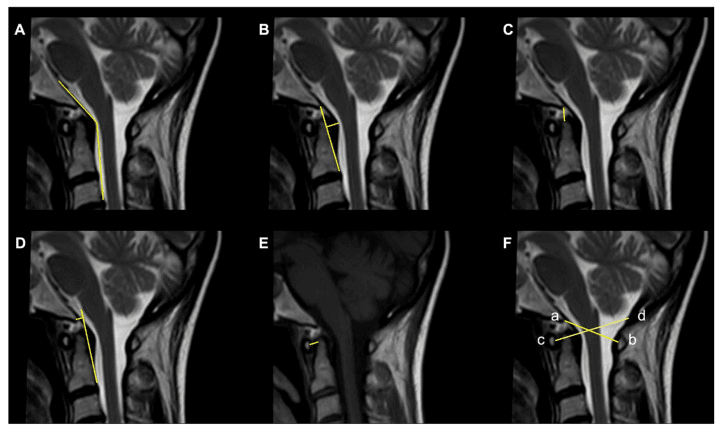
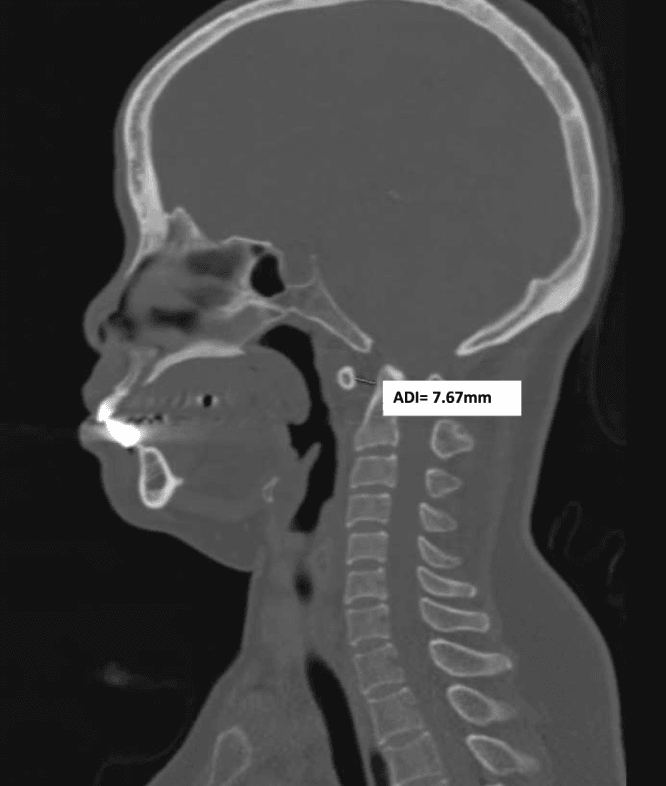
- ADI (Atlantodental Interval): Normal is less than 3mm adults, less than 5mm children.
- PADI (Posterior ADI): Less than 14mm indicates cord compromise risk.
- Powers Ratio: Ratio greater than 1 indicates anterior OC-C1 dislocation.
- White-Panjabi Criteria: a score of 5 or more supports subaxial instability - but quote it as a checklist rather than a validated cut-off; it structures the judgement, it does not replace it.
- RA patients: Must screen for AAI before anaesthesia/intubation.
- “ADI greater than 3mm in adults is abnormal
- “PADI less than 14mm predicts poor neurological outcome
- “Powers ratio: BC/OA (greater than 1 = anterior dislocation)
- “Always screen RA and Down syndrome patients
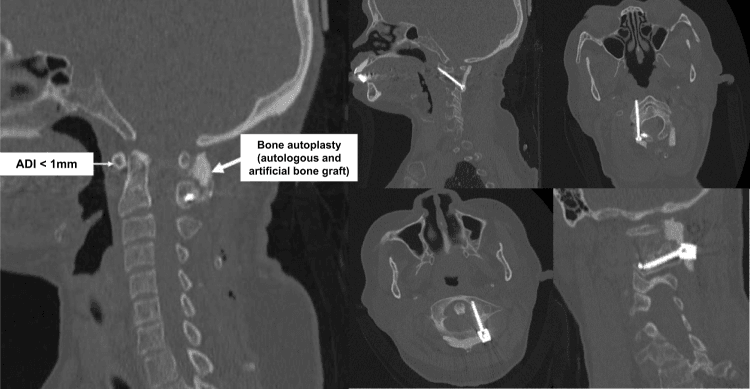
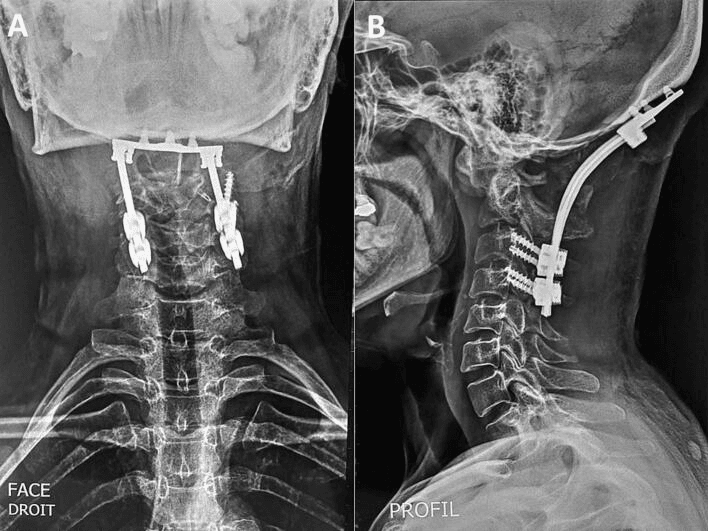
- “Harms technique: C1 lateral mass + C2 pedicle screws
Overview/Epidemiology
Definition. Cervical instability is abnormal motion of the cervical spine that results in neurological compromise, incapacitating pain or structural deformity under physiological loads. It arises at the craniocervical junction (OC-C1-C2) or in the subaxial spine (C3-C7).
Causes. Trauma is the most common cause overall.
- Trauma - motor vehicle accidents, falls, sport
- Rheumatoid arthritis - 25-80% develop atlantoaxial instability (AAI) over the course of the disease
- Down syndrome - 15-20% have AAI on screening radiographs
- Congenital - os odontoideum, basilar invagination, occipitalisation of C1
- Tumours and infection
Why it matters. Occipitoatlantal (OC-C1) dislocation carries a 70% pre-hospital mortality. Untreated AAI can progress to myelopathy and quadriplegia, and early recognition and stabilisation prevent that neurological decline.
Anatomy
The upper cervical spine. The occipital condyles articulate with the lateral masses of the atlas. C1 is a ring with no vertebral body, articulating through its lateral masses, and the odontoid process (dens) of C2 is the pivot for its rotation: the C1-C2 articulation allows 50% of cervical rotation.
The ligaments of the craniocervical junction. Five ligamentous stabilisers:
- Transverse ligament - the primary restraint to anterior translation of C1. The atlantodental interval (ADI) reflects its integrity
- Alar ligaments - limit rotation and lateral bending
- Apical ligament - joins the tip of the dens to the basion
- Tectorial membrane - the extension of the PLL, covering the dens posteriorly
- Cruciate ligament - the transverse ligament together with its vertical bands
The subaxial spine. From C3 to C7 the stabilising structures fall into three columns. The Denis three-column model applies, but the White-Panjabi criteria are more specific for the cervical spine.
- Anterior - ALL, disc, vertebral body
- Middle - PLL, posterior disc, posterior body
- Posterior - facet capsules, ligamentum flavum, interspinous ligaments
Pathophysiology
Mechanism. High-energy trauma causes ligamentous disruption or fracture. Flexion-distraction injuries disrupt the posterior ligaments, extension injuries disrupt the anterior structures, and rotation and lateral bending injure the facets.
Patterns. The injuries to recognise:
- Occipitoatlantal dislocation - survivors have disruption of the tectorial membrane
- Odontoid fractures - Type II is the most common and has the highest nonunion rate
- Hangman's fracture - bilateral fracture of the C2 pars
- Facet dislocation - unilateral gives 25% subluxation, bilateral 50%
Destructive lesions. Tumours and infection destabilise the spine through bone destruction, so instability at the junction is not always a matter of simple ligament laxity.
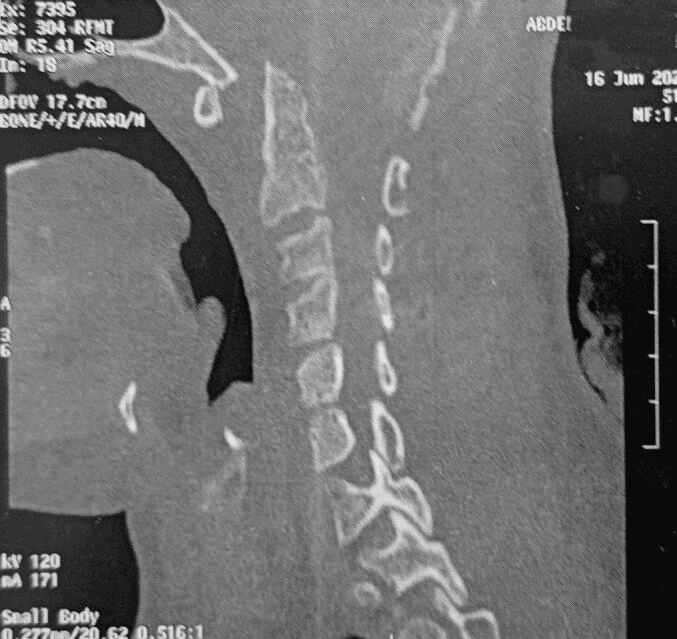
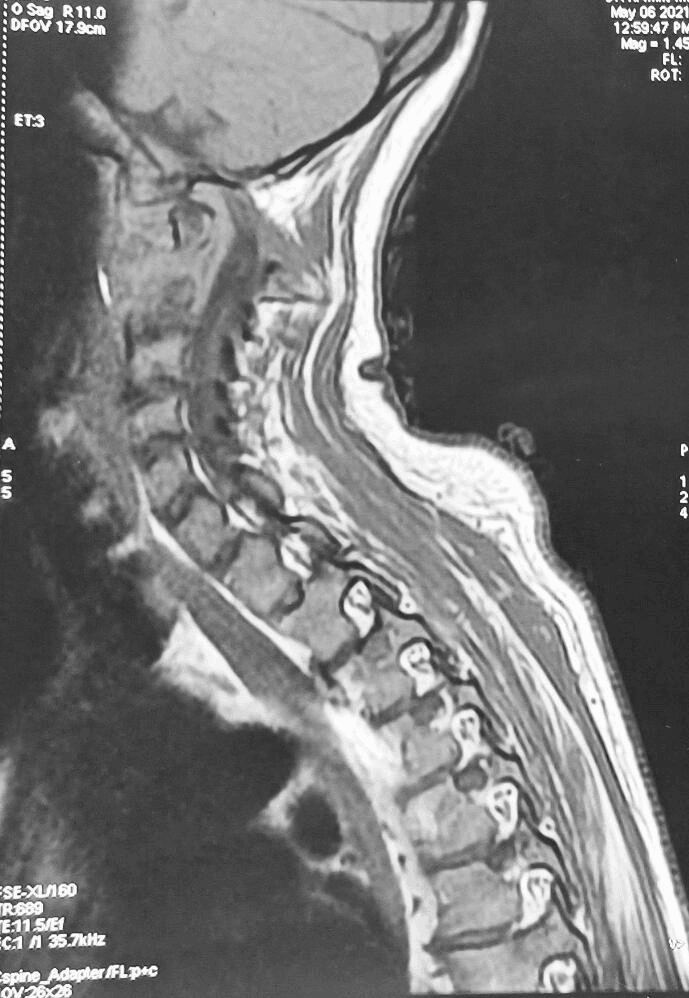
The cord at C1. At C1-C2 the cord is about 10mm in diameter and the canal normally provides about 20mm of space. Steel's rule of thirds divides the canal at C1 into a third dens, a third cord and a third free space, the buffer.
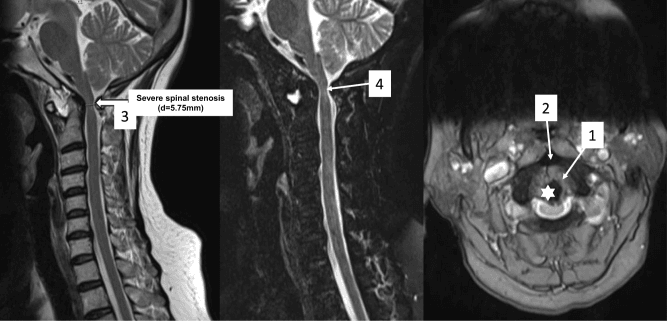
When the space runs out. Once the posterior atlantodental interval (PADI), the space available for the cord, falls below 14mm, cord compression becomes likely. Myelopathy then results from:
- direct mechanical compression
- vascular compromise through the anterior spinal artery
- dynamic cord impingement with flexion and extension
Classification
Occipitoatlantal dislocation is classified by the direction of displacement:
- Type I - anterior, the most common in survivors
- Type II - longitudinal distraction
- Type III - posterior
Atlantoaxial instability takes four forms:
- Anterior subluxation - ADI greater than 3mm, the most common
- Posterior subluxation - rare, associated with dens fracture
- Rotatory subluxation - graded by Fielding and Hawkins
- Lateral translation - associated with a Jefferson fracture
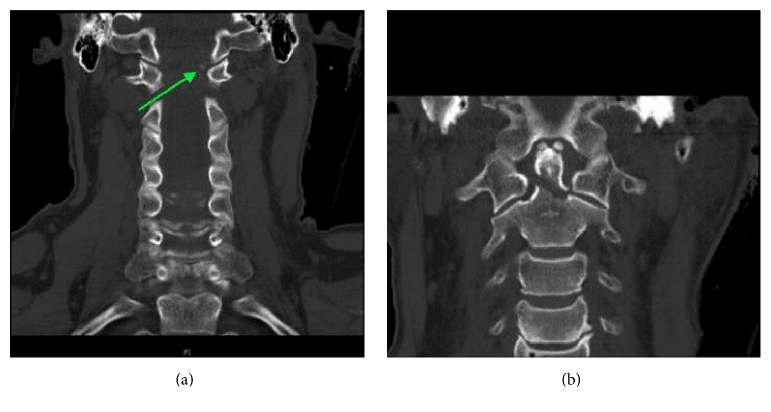
Fielding-Hawkins rotatory subluxation. Every type is a rotatory fixation; what separates them is the shift that accompanies it.
- Type I - no anterior shift
- Type II - 3-5mm anterior shift
- Type III - greater than 5mm shift
- Type IV - posterior shift
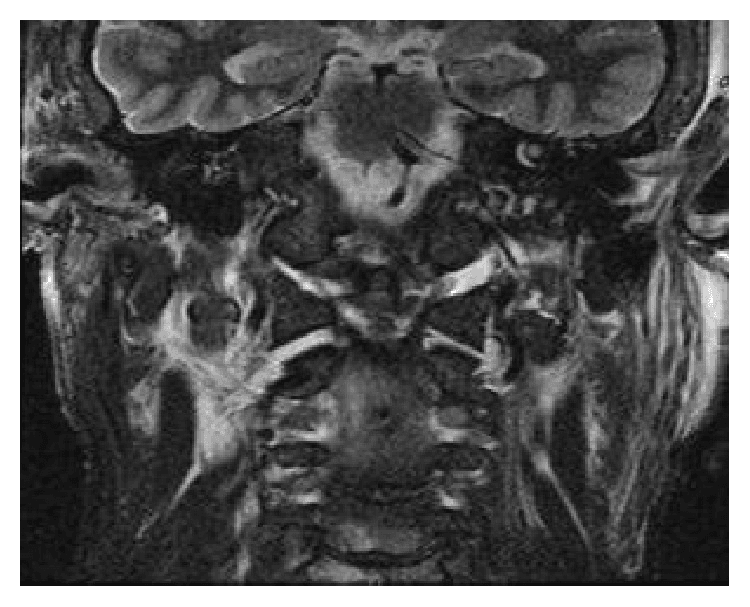
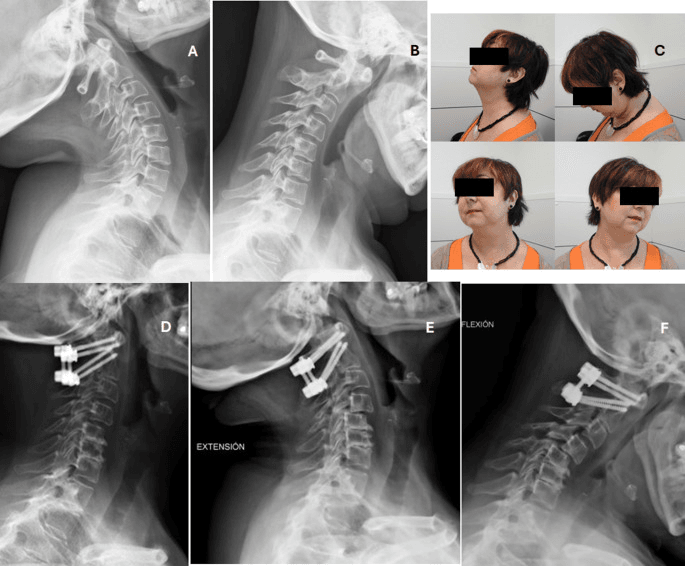
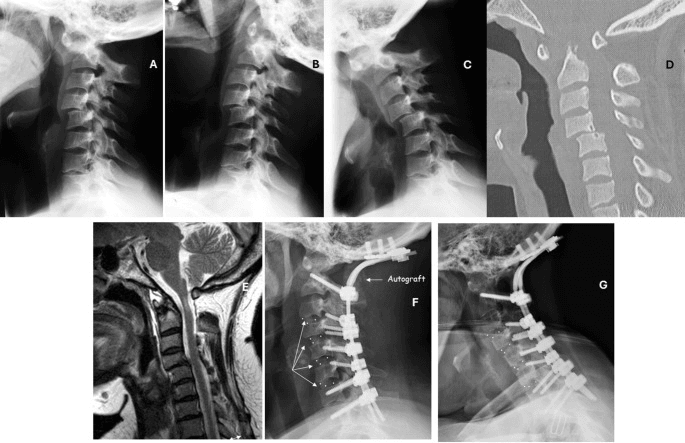
Clinical Presentation
History. Ask about the mechanism of injury, neck pain (especially with motion) and myelopathic symptoms: weakness, numbness, gait disturbance and an electric-shock sensation down the spine on neck flexion (Lhermitte's sign). Record any history of rheumatoid arthritis, Down syndrome or a connective tissue disorder.
Myelopathy. Look for the upper motor neuron signs:
- hyperreflexia and an inverted radial reflex
- positive Hoffmann sign
- ankle clonus
- positive Babinski sign
- spastic gait
Motor and sensory. Test every myotome from C5 to T1 and grip strength, and look for wasting of the intrinsic hand muscles. The sensory examination covers the dermatomes, proprioception (the posterior columns) and the cape-like loss of a central cord lesion.
Gait. Spastic and wide-based, with difficulty tandem walking.
Investigations
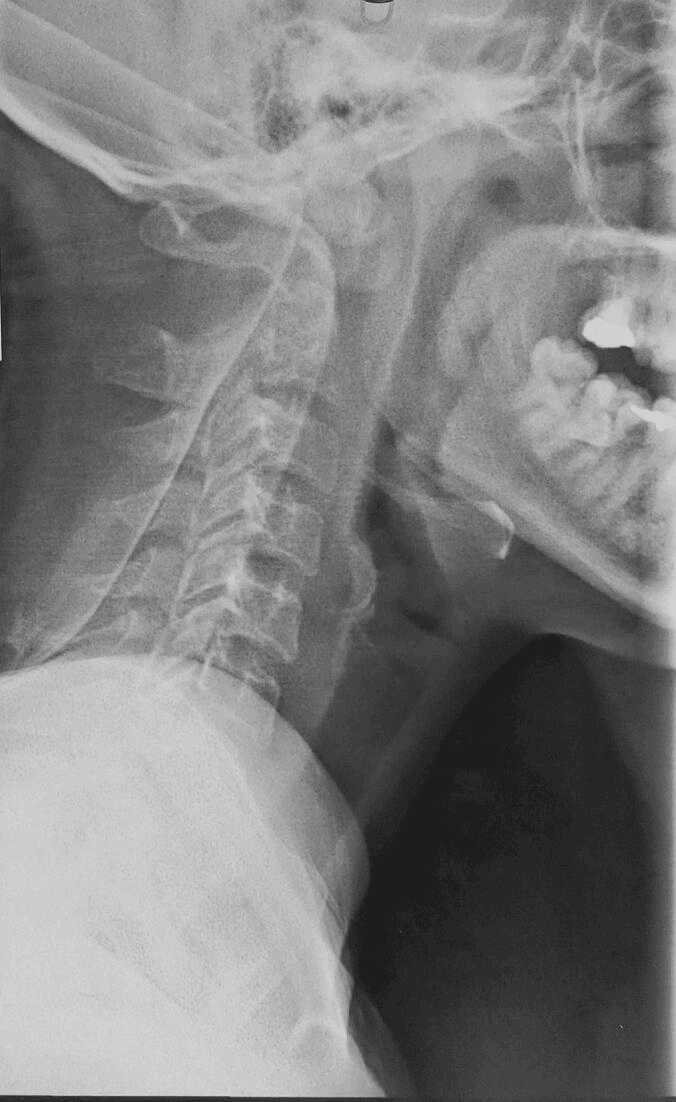
Views. AP, lateral and open-mouth odontoid. Flexion-extension laterals are essential, but should be done only under supervision and only if the patient is neurologically intact.
- Normal
- Less than 3mm
- Abnormal
- Greater than 3mm
- Normal
- Less than 5mm
- Abnormal
- Greater than 5mm
- Normal
- Greater than 14mm
- Abnormal
- Less than 14mm
- Normal
- Less than 1
- Abnormal
- Greater than 1
- Normal
- Less than 12mm
- Abnormal
- Greater than 12mm
- Normal
- Less than 12mm
- Abnormal
- Greater than 12mm
Which number to trust. The PADI is more prognostic than the ADI. At the craniocervical junction a basion-dens interval (BDI) greater than 12mm is abnormal, and so is a condyle-C1 interval greater than 2mm.
Powers ratio. BC/OA, where BC runs from the basion to the posterior arch of C1 and OA from the opisthion to the anterior arch of C1. A ratio greater than 1 indicates anterior OC-C1 dislocation and one less than 0.7 posterior dislocation; the ratio's limits are under Controversies.
The Cervical Spine Stretch Test
The White-Panjabi checklist assigns 2 points for a positive stretch test, yet the test itself is rarely explained. It is a provocative traction test for occult ligamentous instability in a subaxial injury that looks equivocal on static films.
Technique (White and Panjabi). The patient lies supine, awake and cooperative, with a lateral radiograph and a full neurological check at every step. A control lateral film is taken before loading. Axial traction through skull tongs (Gardner-Wells) or a head halter is then increased in small increments, roughly 5 kg (10 lb) at a time, with a lateral film at each increment, up to a ceiling of one-third of body weight or about 65 lb (roughly 30 kg), whichever is less.
Interpretation. The test is positive, and the segment unstable, with either of:
- interspace separation greater than 1.7mm at any level between the pre-stretch and stretched films
- a change in interspace angulation greater than 7.5 degrees at any level
Safety. Stop immediately for any neurological change, pain or excessive separation: pushed too far, the test can convert an occult injury into a cord injury. It is contraindicated in the obtunded or uncooperative patient and where gross instability or a fracture is already obvious.
Its place now. In current practice the stretch test is largely historical. Dynamic flexion-extension views (when safe) and, above all, MRI of the discoligamentous complex have superseded it, but it remains an examinable component of the White-Panjabi score and a useful anchor for what "positive stretch test = 2 points" actually means.
Examiners cite it because it forces you to say the two White-Panjabi thresholds out loud and to state its hard rules, including aborting on any neurological change. Volunteering that MRI has largely replaced it shows current, safe judgement.
Differential Diagnosis
The key task is to separate true mechanical instability from mimics that cause neck pain or myelopathic signs without abnormal segmental motion.
- Distinguishing Feature
- Abnormal segmental motion under physiological load
- Key Test
- Dynamic flexion-extension imaging, ADI/PADI, White-Panjabi
- Distinguishing Feature
- Static canal stenosis, no abnormal motion
- Key Test
- MRI cord signal, static canal diameter
- Distinguishing Feature
- Radiculopathy or myelopathy without translation
- Key Test
- MRI disc, neutral alignment
- Distinguishing Feature
- Physiological C2-C3 / C3-C4 step-off that reduces on extension
- Key Test
- Swischuk spinolaminar line
- Distinguishing Feature
- Fixed ossicle, may mimic acute fracture
- Key Test
- CT (corticated margins) vs fracture
- Distinguishing Feature
- Rigid fused spine, highly unstable transverse fracture
- Key Test
- CT/MRI whole spine, low threshold
- Distinguishing Feature
- Congenital fusion shifting motion to open segments
- Key Test
- Dynamic radiographs of mobile levels
Management
Pre-operative planning. Before any stabilisation:
- in RA, rheumatology optimisation, stopping biologics and DMARDs as directed
- an airway plan with anaesthesia (see the airway section below)
- preparation for prone or lateral positioning
- a halo available in case intra-operative traction is needed
Who. Non-operative management suits:
- stable injuries (White-Panjabi less than 5)
- asymptomatic RA with a minimal increase in ADI
- asymptomatic Down syndrome with AAI found on screening
- the patient unfit for surgery
In the rheumatoid, remember that the PADI, not the ADI, is the more prognostic measure (Boden, in the Evidence Base).
Treatment. A rigid cervical collar (Miami J, Aspen), activity modification, serial imaging to monitor progression, and neurological monitoring. Stable injuries need 6-12 weeks; RA and Down syndrome need monitoring indefinitely.
Its limits. True instability rarely heals without surgery, and the type II odontoid fracture in the elderly has a high failure rate.
Airway & Anaesthetic Management of the Unstable Cervical Spine
Rheumatoid patients must be screened for atlantoaxial instability before anaesthesia, and laryngoscopy is often the moment of greatest iatrogenic cord risk.
The problem. Conventional direct laryngoscopy forces occipito-atlantal extension, which can drive an unstable segment into the cord, especially C1-C2 in RA or a subaxial dislocation. The goal is a secured airway with minimal cervical motion and a preserved ability to check neurology.
The options. In order of the motion they impose:
- Awake fibreoptic intubation - the reference technique for known or severe instability. The neck stays neutral, the patient self-maintains tone, and neurology can be checked after intubation and after positioning while the patient is still awake.
- Videolaryngoscopy - less upper cervical extension than direct laryngoscopy; a reasonable asleep alternative when an awake technique is impractical.
- Direct laryngoscopy with manual in-line stabilisation (MILS) - the front of a hard collar is opened and an assistant holds the head neutral, a hold and not traction, which could distract an unstable segment; the collar is reapplied afterwards.
Intubation and positioning. Keep rigid immobilisation until the airway is secured, and avoid brisk flexion, extension, rotation or traction throughout. Log-roll for transfers, position prone onto Mayfield tongs or a horseshoe with the head and neck held neutral, and re-check alignment after turning. Intra-operative neuromonitoring (SSEP/MEP), and the option of a wake-up test, guard the cord during reduction and instrumentation.
Rheumatoid arthritis compounds the risk. Cricoarytenoid arthritis (a narrowed, immobile glottis), temporomandibular joint disease (limited mouth opening), friable mucosa and skin, and the very atlantoaxial subluxation being treated all push firmly toward an awake fibreoptic plan.
Down syndrome adds macroglossia, midface hypoplasia, and possible atlanto-occipital as well as atlantoaxial laxity.
Say the principle first, then name the tools in order of the motion they impose, and finish with the rheumatoid red flags: cricoarytenoid and TMJ involvement plus the subluxation itself.
Complications
Neurological. Cord injury is rare, under 1%. C2 root injury leaves occipital numbness, and myelopathy can worsen.
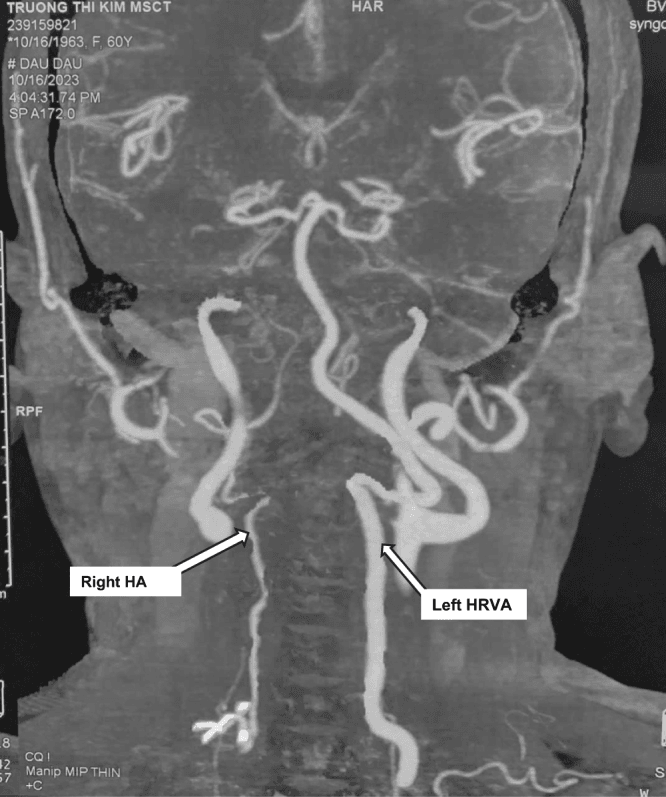
Vascular. Vertebral artery injury complicates 2-4% of C1-C2 screw fixations. It may be asymptomatic if the contralateral artery is dominant; bilateral injury brings cerebellar stroke.
Airway. Post-operative swelling can compromise the airway. Extubation is often delayed, and ICU monitoring should be considered.
Positioning. Pressure sores from prone positioning, brachial plexus injury and peripheral nerve injury.
Prevention. Pre-operative CT angiography for vertebral artery dominance, meticulous technique by anatomical landmarks, appropriate collar immobilisation after surgery, and the neuromonitoring described under the airway section.
Guidelines, Registries & Global Practice
Global epidemiology:
- Trauma is the leading cause worldwide, with motor-vehicle and fall mechanisms predominating in high-income settings and a higher proportion of high-energy/road-traffic trauma in low- and middle-income countries.
- Rheumatoid arthritis historically caused cervical instability in 25-80% over the disease course; the incidence of severe craniocervical disease has fallen markedly in regions with early access to modern DMARDs and biologics.
- Down syndrome screening series report atlantoaxial instability in roughly 10-20%, the large majority asymptomatic (Pueschel and Scola: 14.6%).
Side-by-side guidance:
- Position
- Subaxial trauma stratified by morphology, discoligamentous complex, neurology; score over 4 favours surgery
- Position
- Major-trauma cervical clearance pathways; MRI before reduction where ligamentous or disc injury is suspected
- Position
- Emphasis on PADI and dynamic imaging for rheumatoid AAI; surgery before neurological decline
- Position
- Down syndrome: clinical screening emphasised; routine flexion-extension radiographs for sport no longer universally mandated
- Craniocervical and upper-cervical fusion volumes are low, so high-quality evidence is dominated by single-centre series and biomechanical studies rather than large registries.
- Spine registries (e.g. national spine surgery and trauma databases in the UK, US, Scandinavia) increasingly track subaxial fusion outcomes, adjacent-segment disease, and revision rates.
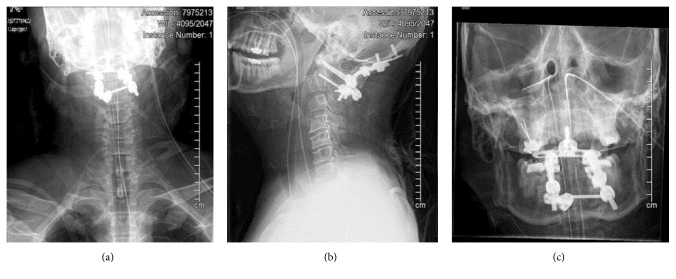
- Where CT angiography, intra-operative neuromonitoring, and navigation are available, screw-based constructs (Goel-Harms, lateral mass, pedicle) are standard.
- In limited-resource settings, wiring techniques, halo immobilisation, and traction-based reduction retain a larger role; awake intubation and meticulous landmark-based technique remain universally applicable.
Controversies & Areas of Uncertainty
Down syndrome sport clearance. Routine flexion-extension radiographs were historically mandated and are now widely questioned, because asymptomatic radiographic AAI poorly predicts catastrophic injury. Many bodies emphasise clinical screening and symptom-directed imaging instead.
The Powers ratio against modern measurements. The Powers ratio is insensitive for non-anterior and distraction injuries. CT-based BDI/BAI (Harris lines) and the condyle-C1 interval are more reliable for craniocervical dissociation.
Type II odontoid fracture in the elderly. Operative versus non-operative management remains debated, balancing high non-union rates against the morbidity of surgery and halo immobilisation. A fibrous stable non-union may be an acceptable endpoint.
C2 fixation. Pedicle, pars or translaminar screws are selected by the vertebral artery anatomy on pre-operative CT angiography; no single technique is universally superior.
Closed reduction before MRI in facet dislocation. Awake serial traction reduction is advocated by some in alert, cooperative patients, but many centres mandate pre-reduction MRI to exclude a herniated disc that could be driven into the cord.
Defining instability. White-Panjabi and SLIC are checklists, not validated thresholds for every scenario; clinical judgement integrating dynamic imaging, neurology and patient factors remains essential.
MCQ Practice Points
Q: What is the normal atlantodental interval (ADI) in adults? A: Less than 3mm. ADI 3-5mm indicates transverse ligament incompetence; greater than 5mm indicates both transverse and alar ligament failure. In children, normal ADI can be up to 5mm due to ligamentous laxity.
Q: What PADI measurement indicates the spinal cord is at risk? A: Posterior Atlantodental Interval (PADI) less than 14mm predicts neurological deficit. PADI represents the space available for the cord (SAC) at C1-2 and is more predictive of myelopathy than ADI.
Q: How is the Powers Ratio calculated and what does a ratio greater than 1 indicate? A: Powers Ratio = BC/OA where B = basion, C = posterior arch C1, O = opisthion, A = anterior arch C1. Ratio greater than 1 indicates anterior occipito-atlantal dislocation. Normal ratio is 0.77 (range 0.55-1.0).
Q: Which patient populations require routine screening for atlantoaxial instability? A: Down syndrome (trisomy 21) and rheumatoid arthritis patients require screening. Down syndrome patients have 15-20% incidence of atlantoaxial instability due to ligamentous laxity. RA patients develop pannus erosion of the transverse ligament.
Viva Scenarios
Practise clinical reasoning and management decisions out loud
“55-year-old female with 20-year history of rheumatoid arthritis presents with progressive neck pain, electric shock sensation down her spine when flexing her neck, and difficulty with fine motor tasks in her hands. She is on methotrexate and a TNF-inhibitor. How would you assess and manage this patient?”
“Parents of a 12-year-old boy with Down syndrome bring him for clearance to participate in school gymnastics. They have heard about neck problems in Down syndrome. How do you approach this?”
“24-year-old restrained driver involved in high-speed head-on MVA. GCS 15, complaining of severe neck pain. Initial trauma CT shows 'possible craniocervical dissociation'. How do you assess and manage?”
“32-year-old male dove into shallow water and now has severe neck pain and bilateral arm weakness. X-ray shows C6 anterolisthesis on C7. How do you manage this patient?”
KEY MEASUREMENTS
- ADI: less than 3mm (adult), less than 5mm (child) = normal
- PADI: less than 14mm = cord at risk
- Powers Ratio: greater than 1 = anterior OC-C1 dislocation
- BDI/BAI: greater than 12mm = craniocervical dissociation
- Translation greater than 3.5mm = subaxial instability
- Angulation greater than 11 degrees = subaxial instability
WHITE-PANJABI CRITERIA
- Score 5 or greater = clinically unstable
- Anterior elements destroyed = 2 points
- Posterior elements destroyed = 2 points
- Translation greater than 3.5mm = 2 points
- Angulation greater than 11 degrees = 2 points
- Cord damage = 2 points
SURGICAL TECHNIQUES
- Harms: C1 lateral mass + C2 pedicle screws (standard for AAI)
- Magerl: Transarticular C1-C2 screws (higher VA risk)
- Gallie: Wire + graft (supplements screws)
- OC-C2 fusion: For OC-C1 instability
- ACDF: Subaxial anterior approach
- Lateral mass screws: C3-C6 posterior
RA CERVICAL DISEASE
- AAS (atlantoaxial subluxation) = 65%
- SAS (subaxial subluxation) = 20%
- Basilar invagination = 15% (most dangerous)
- PADI less than 14mm = operate before neuro decline
- Stop biologics 2-4 weeks pre-op
- Awake fiberoptic intubation if severe
Evidence Base
Boden et al - RA cervical spine, predictors of paralysis
- 73 RA patients; PADI correlated with paralysis whereas anterior ADI did not
- All Class III patients had PADI/subaxial canal under 14mm; PADI best predicted recovery
Harms and Melcher - polyaxial C1-C2 screw-rod fixation
- C1 lateral mass + C2 pars/pedicle polyaxial screws with rods; 37 patients, solid fusion in all
- No neural or vascular injury; allows intra-operative reduction unlike transarticular screws
Melcher et al - biomechanics of posterior C1-C2 fixation
- 10 cadaveric spines; both screw constructs reduced motion more than Gallie wiring alone
- No significant stability difference between screw-rod and transarticular constructs
Goel and Laheri - plate/screw fixation of the lateral masses
- 30 atlantoaxial dislocations fixed via lateral mass plate-and-screw; 100% union
- No morbidity, mortality, or implant failure; rigid direct C1-C2 segmental fixation
Pueschel and Scola - AAI in Down syndrome
- 404 screened; 14.6% had AAI (13.1% asymptomatic, only 1.5% symptomatic needing surgery)
- ADI greatest in flexion; follow-up showed no significant progression
Powers et al - radiographic diagnosis of OC-C1 dislocation
- Defined the Powers ratio (BC/OA); ratio greater than 1 indicates anterior OC-C1 dislocation
- Created for immediate radiographic recognition of an often-fatal injury
Whang, Patel and Vaccaro - SLIC scoring system
- SLIC scores morphology, discoligamentous complex, and neurology (ICC 0.49-0.90)
- Total score greater than 4 favours surgery; under 4 favours non-operative care
White and Panjabi - Clinical Biomechanics of the Spine
- Point-based subaxial checklist; translation over 3.5mm and angulation over 11 degrees each score 2
- Total score of 5 or greater defines clinical instability