Red Zone | Vertical Tear | Preserve Meniscus
- Peripheral 3mm (red-red zone) has best vascularity and healing
- Vertical longitudinal tears are ideal for repair
- ACL reconstruction improved meniscal healing rates in older series (hemarthrosis); Nepple's long-term meta-analysis did not confirm it
- Preserve meniscus whenever possible to prevent arthritis
- Inside-out is gold standard for posterior horn tears
- “Medial meniscus: More restrained, tears more common
- “Lateral meniscus: More mobile, less restrained
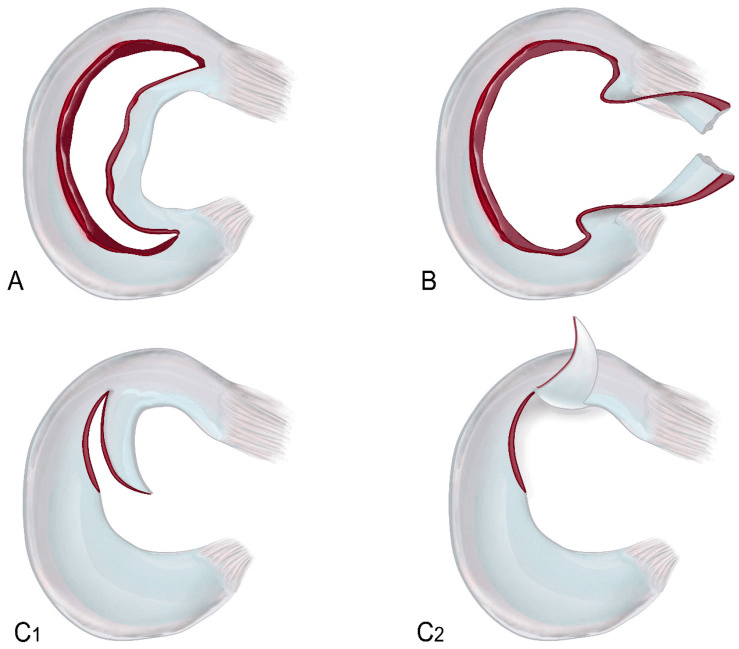
- “Bucket handle = displaced vertical longitudinal tear
- “Root tears: Equivalent to total meniscectomy biomechanically
Overview and Epidemiology
What the meniscus does. It transmits load, absorbs shock and contributes to joint stability, proprioception and lubrication. Axial compressive load is converted into circumferential hoop stress, which is resisted by the strong peripheral collagen fibres.
What losing it costs. Loss of meniscal tissue removes the hoop mechanism. Peak tibiofemoral contact stress rises, roughly 4-7 fold after total meniscectomy, and osteoarthritis accelerates. The modern philosophy is preservation wherever the tear is biologically repairable.
Who tears it. Meniscal tears are among the most common knee injuries, and they fall into a bimodal pattern. Young patients have traumatic vertical or longitudinal tears, often with an ACL injury; older patients have degenerative complex tears.
Indications and Contraindications
Repair a tear with these features:
- Vertical longitudinal pattern, including the bucket-handle tear
- Peripheral location, in the red-red or red-white zone
- Length over 10mm
- Unstable, with displacement greater than 3mm
- Good meniscal tissue that is not degenerative
- A younger, active patient
- Concurrent ACL reconstruction
The ACL question. Concurrent ACL reconstruction improved healing rates in older series, but Nepple's long-term meta-analysis did not confirm it. Count it as a favourable setting, not a guarantee.
The contraindications to repair are:
- White-white (avascular) zone
- Complex or degenerative tears
- Significant tissue loss
- Poor tissue quality
- Chronic tears: repair may still be attempted, with lower success
- Older, low-demand patients (relative)
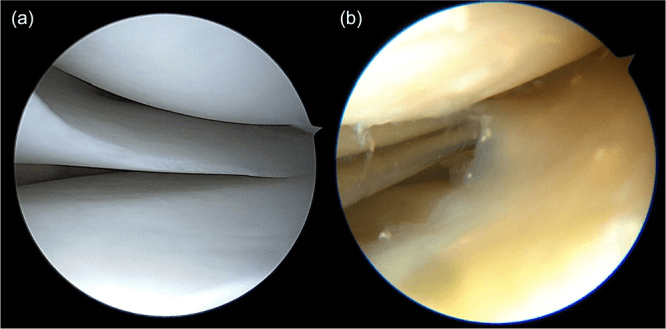
VOLARRepair Indications
Hook:VOLAR = Vertical Outer Long ACL Repairable - ideal for repair!
Pathophysiology and Vascular Anatomy
Blood supply sets the limit. Healing potential is dictated by blood supply. The perimeniscal capillary plexus, from branches of the medial and lateral geniculate arteries, penetrates only the outer 10-30% of the meniscal width, approximately 3mm. The inner portion is essentially avascular and nourished by synovial diffusion.
The vascular zones run from the capsular rim to the free edge:
- Red-red — the outer 3mm; vascular, with the best healing potential
- Red-white — the middle zone; partially vascular, with intermediate healing
- White-white — central and avascular; poor intrinsic healing
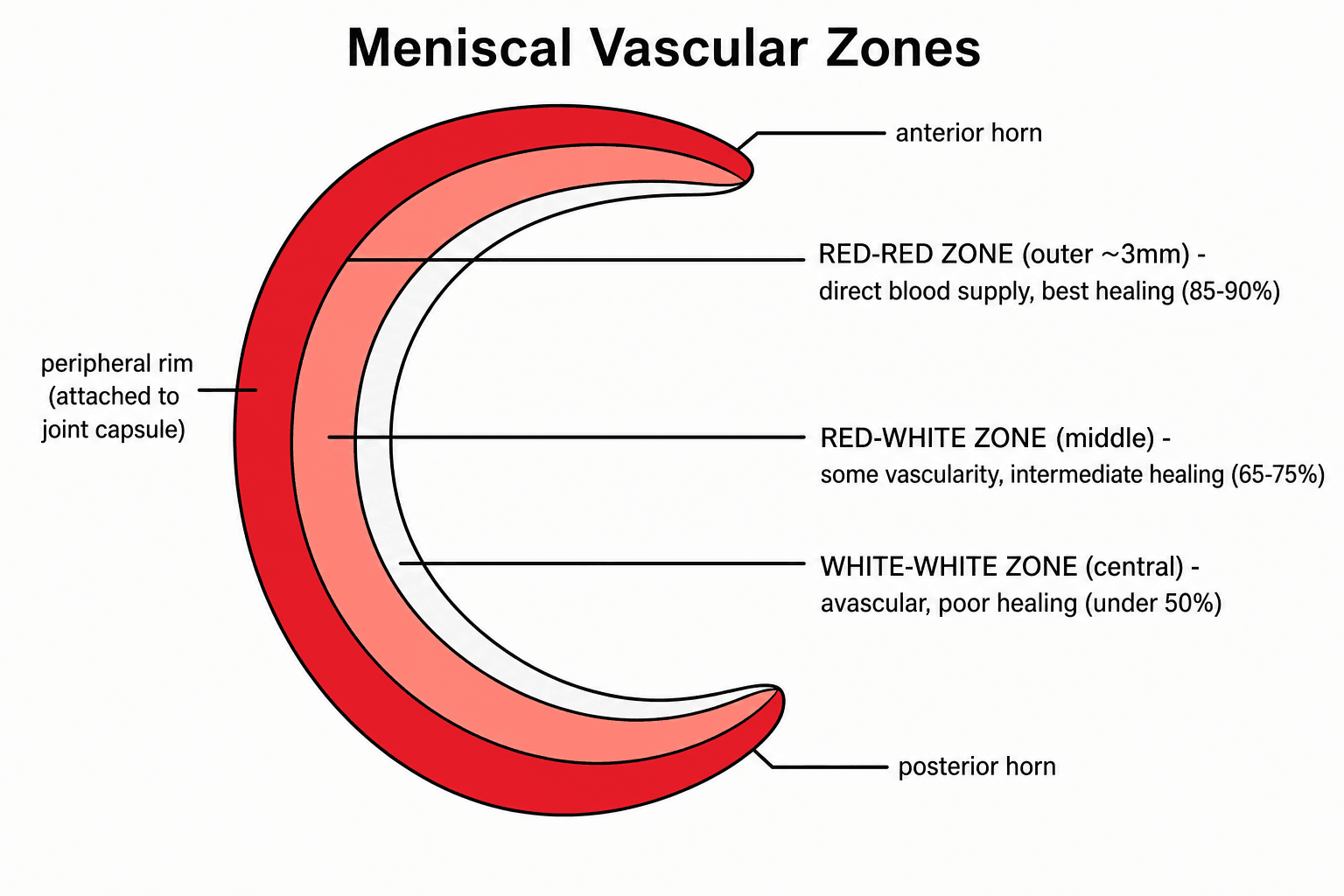
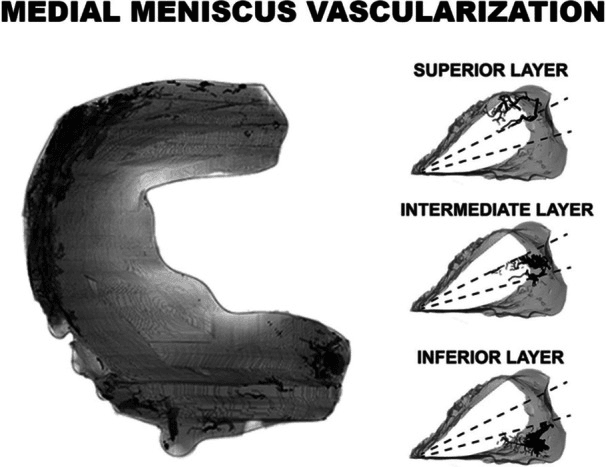
Why pattern and tissue matter too. A repairable tear approximates two vascularised edges so that a fibrovascular healing response can bridge the defect. That is why tear location (zone), pattern and tissue quality are the dominant determinants of success: vertical and longitudinal tears appose well, complex and horizontal tears do not.
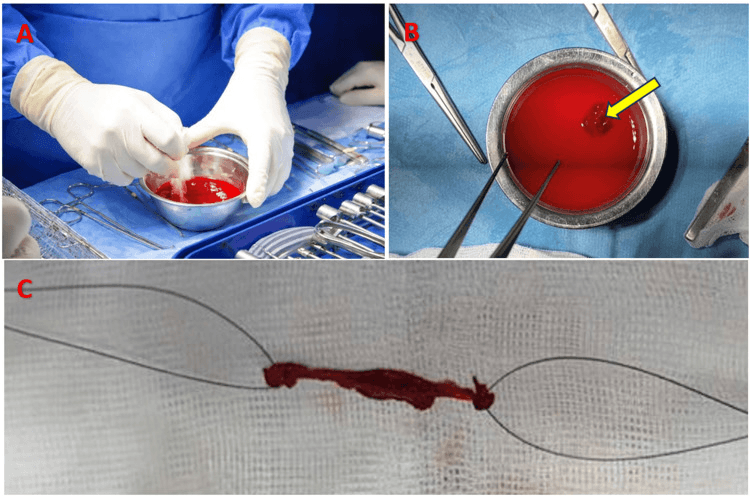
Augmentation. In less vascular zones, biological augmentation (marrow venting, fibrin clot, PRP, trephination) is used to stimulate healing.
Clinical Presentation
History. Traumatic tears follow a twisting or pivoting injury; degenerate tears come on insidiously. Patients describe joint-line pain and recurrent effusions. True mechanical locking or catching suggests a displaced, bucket-handle fragment.
Examination. Look for joint-line tenderness, an effusion and positive McMurray and Thessaly tests; a locked bucket-handle tear may block terminal extension. Test ligamentous stability with the Lachman and pivot-shift tests, because concurrent ACL injury is common and influences healing.
Root tears. These may present with a sudden pop and posterior knee pain, rapid functional decline and meniscal extrusion. Left untreated, a root tear is biomechanically equivalent to a total meniscectomy.
Investigations
MRI is the investigation of choice. It defines the tear pattern, length, zone and rim width, and helps predict repairability before surgery.
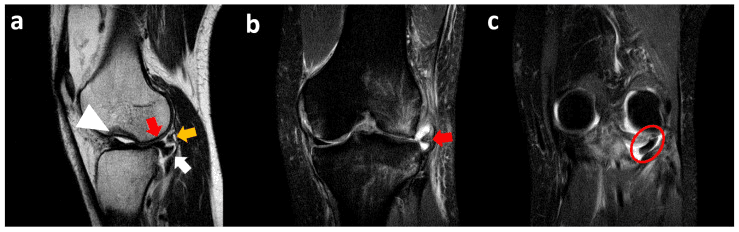
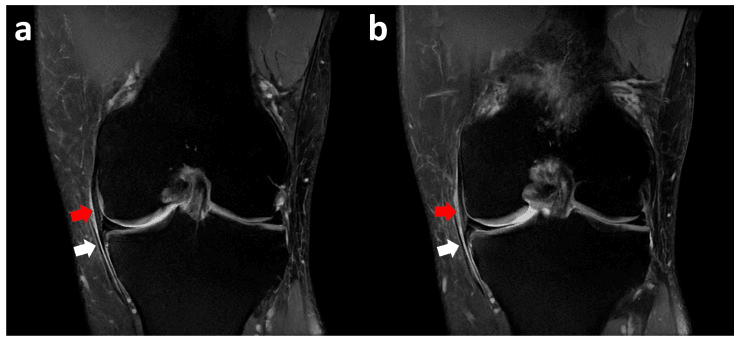
Root tears on MRI. MRI also detects root tears, by:
- a radial gap at the root
- the "ghost sign"
- meniscal extrusion over 3mm
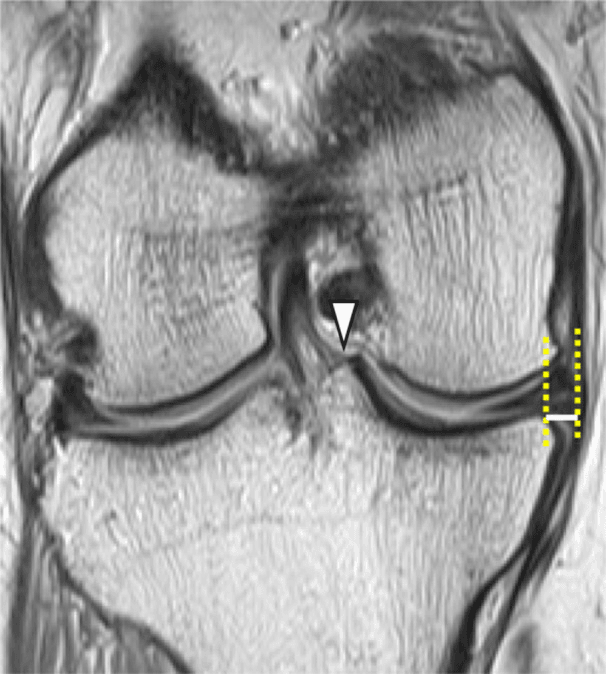
Weight-bearing radiographs. These show limb alignment and degenerative change, which strongly influence whether a tear is repairable or better resected. Long-leg views are added if a realignment osteotomy is being considered.
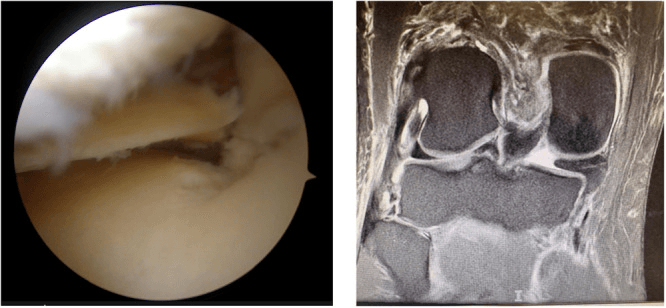
Diagnostic arthroscopy. The definitive assessment of tissue quality and stability, probing for displacement over 3mm. The final repair-versus-resect decision is frequently made intra-operatively.
Differential Diagnosis
A locked or painful knee with a suspected meniscal tear has a broad differential. The table below contrasts the key mimics an examiner expects you to exclude before committing to meniscal repair.
- Key features
- Joint-line pain, true mechanical locking, twisting injury, effusion
- Investigation
- MRI: vertical/longitudinal tear in peripheral zone
- Distinguishing point
- Tear in red-red/red-white zone, vertical pattern, stable rim
- Key features
- Older patient, insidious onset, horizontal/complex pattern, early OA
- Investigation
- MRI plus weight-bearing radiographs
- Distinguishing point
- Avascular/degenerate tissue, OA changes - favours non-operative or debridement, not repair
- Key features
- Sudden pop, posterior pain, meniscal extrusion, rapid OA
- Investigation
- MRI: 'ghost sign', radial gap at root, extrusion over 3mm
- Distinguishing point
- Biomechanically equals total meniscectomy; needs root repair not standard repair
- Key features
- Pivot injury, haemarthrosis, instability/giving way
- Investigation
- Lachman/pivot-shift, MRI
- Distinguishing point
- Instability rather than locking; often coexists and aids meniscal healing
- Key features
- Catching, locking, effusion, may follow trauma
- Investigation
- Radiographs, MRI, CT
- Distinguishing point
- Cartilage/bone fragment seen; locking from loose body not meniscus
- Key features
- Younger patient, snapping/clunking lateral knee
- Investigation
- MRI: greater than 3 contiguous sagittal slices ('bow-tie sign')
- Distinguishing point
- Congenital morphology; saucerisation with repair of unstable rim, not simple repair
- Key features
- Anterior pain, worse on stairs/sitting, no true locking
- Investigation
- Clinical, skyline view
- Distinguishing point
- No joint-line tenderness or mechanical block
Management: Repair Techniques
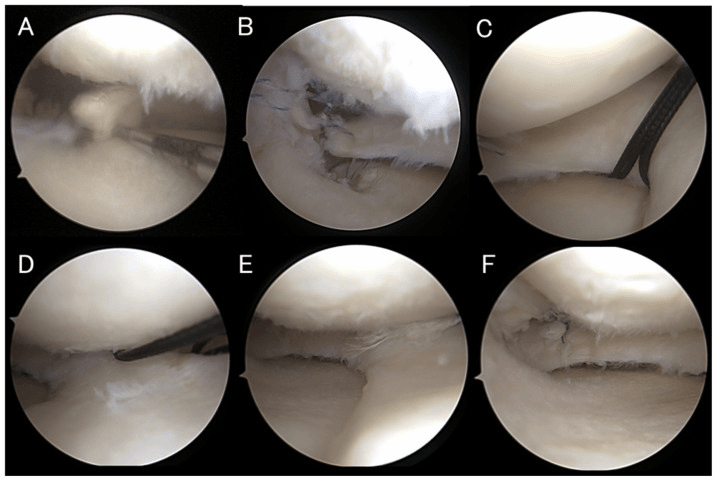
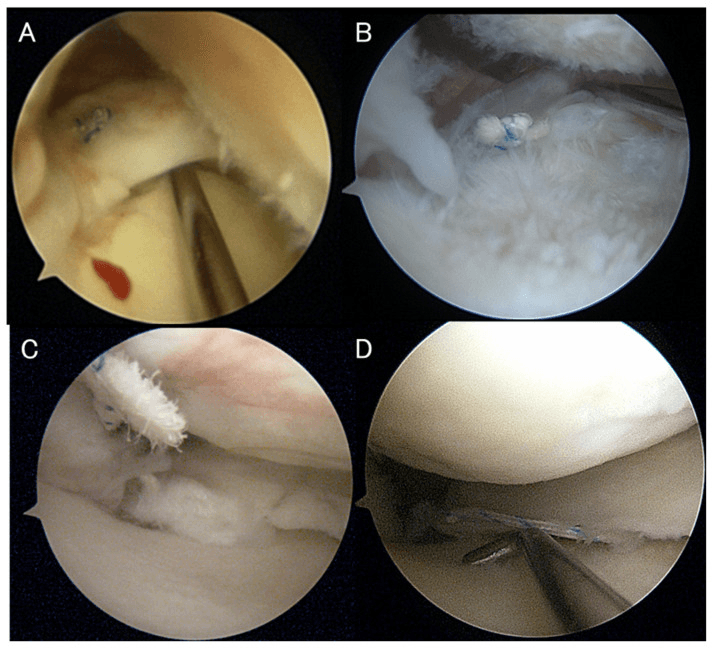
Inside-out repair is the gold standard for posterior horn tears. Sutures are passed from inside the joint through the meniscus and capsule, with the needles exiting posteriorly. A posterior incision protects the neurovascular structures and is used to retrieve the sutures and tie them over the capsule.
Which incision protects which nerve. A posteromedial incision protects the saphenous nerve in a medial repair; a posterolateral incision protects the peroneal nerve in a lateral one. The repair is strong and takes multiple sutures; the price is the second incision and the nerve risk.
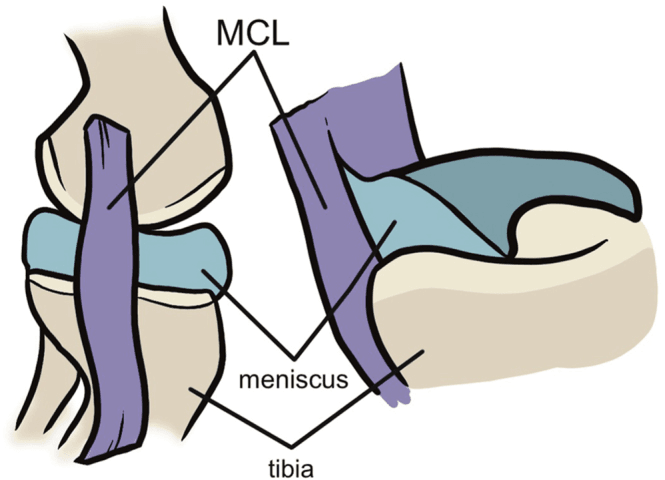
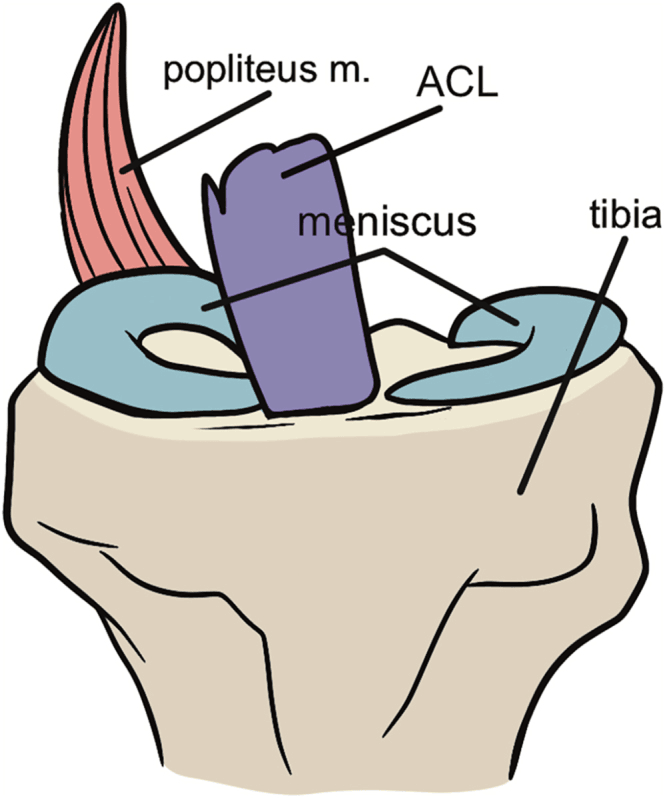
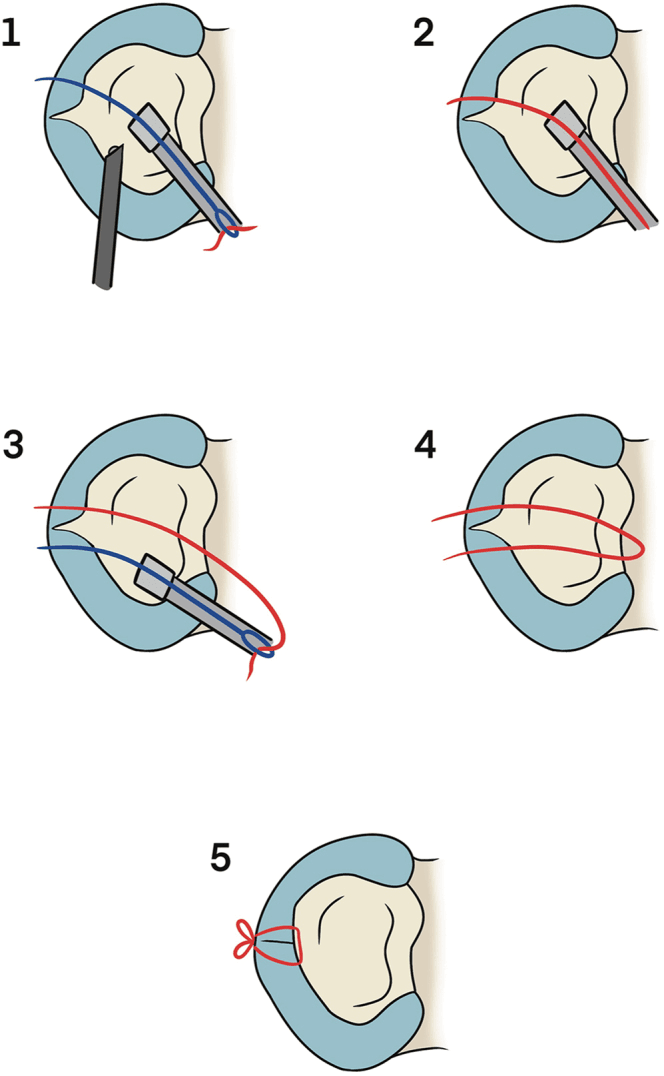
All-inside repair is popular for its convenience. A device inserted arthroscopically passes the suture across the tear with no accessory incision, and various implants are available, in horizontal mattress and vertical configurations. It is fast and cosmetic, and is used for the body of the meniscus and many posterior horn tears. Against it are the implant cost, a construct that may not be as strong, and a risk of chondral damage.
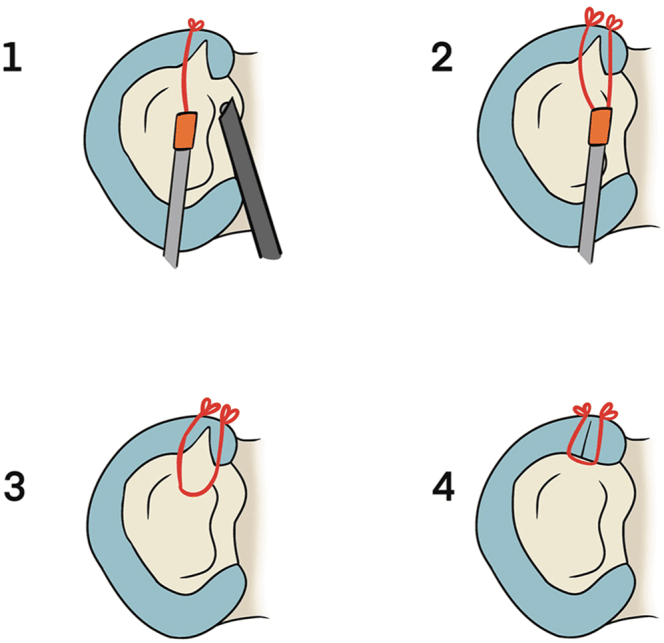
Outside-in repair is best for anterior horn tears. A spinal needle is passed from outside, anteriorly, into the joint across the tear; a suture is shuttled through and tied externally. There is no implant cost, but the method is limited to anterior tears and is technically demanding.
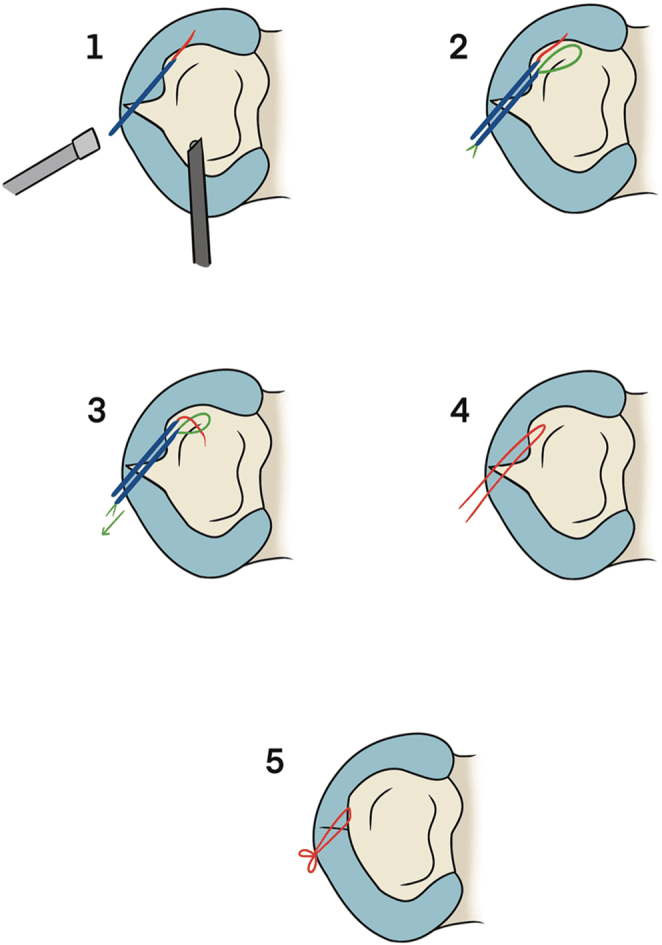
Suture Configuration and Construct Biomechanics
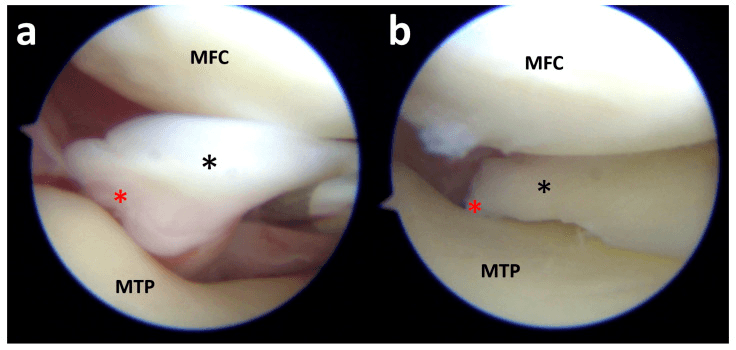
Access versus strength. The route of the repair determines access; the suture configuration determines strength, and examiners like the distinction. The meniscus resists load through circumferentially oriented collagen bundles, so the strongest construct captures those fibres perpendicularly and resists pull-through.
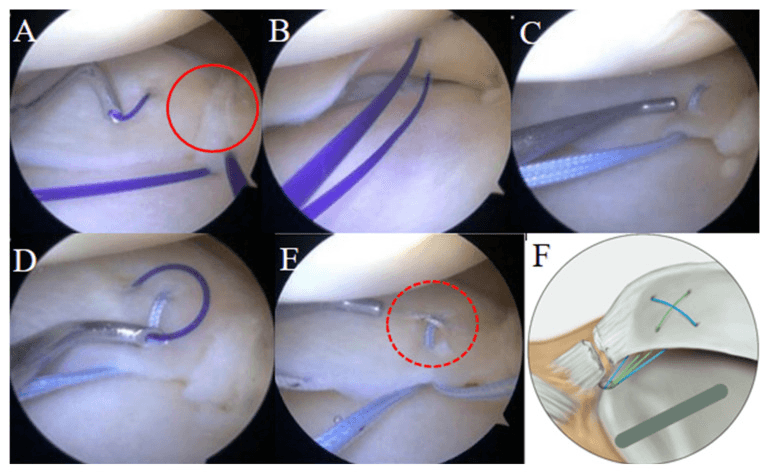
Vertical mattress. The vertical (vertical divergent) mattress is the biomechanically strongest configuration and the reference construct. Its two limbs pass vertically across the tear and snare the circumferential bundles at right angles, giving the highest load-to-failure and the best resistance to suture pull-out. It is the workhorse for peripheral vertical longitudinal and bucket-handle tears.
Horizontal mattress. Technically easier, and useful where a vertical pass is awkward, such as a tight posterior horn. It lies parallel to the collagen bundles, captures fewer fibres and is weaker, so it is generally reserved as a supplement rather than the primary fixation.
Controlling gapping. Sutures "stacked" on both the femoral and tibial surfaces balance the reduction and resist the tear opening under load; alternating surfaces avoids over-tightening one face. Sutures are typically spaced a few millimetres apart along the tear.
Material and devices. Non-absorbable braided suture is standard. Modern all-inside implants achieve their strength through a suture-based construct with a low-profile capsular backstop and a sliding, self-locking knot. The historical weakness and chondral abrasion charged against all-inside repair belonged to the rigid first- and second-generation arrows and darts, not to current suture-based devices, so construct strength now depends more on suture number and orientation than on the delivery route.
Root repair is a different operation. Transtibial pull-out repair of a posterior root avulsion is not a peripheral longitudinal repair, and its constructs differ.
Complications and Outcomes
Repair failure is the principal concern. Pooled long-term failure in the Nepple meta-analysis is roughly 23%, about one in four by five years, and failure is more likely with white-zone, complex and chronic tears and in older patients. Revision repair has substantially lower success, about 40-50%.
Nerve injury. Inside-out repair puts the saphenous nerve at risk medially and the common peroneal nerve laterally, and nerve symptoms are reported in around 9%. A protective posterior incision and direct suture retrieval prevent it.
Implant problems belong to all-inside repair: chondral abrasion from rigid or older devices, implant migration, breakage and local soft-tissue irritation.
Other complications are stiffness or arthrofibrosis, infection, persistent effusion, and progression to osteoarthritis if the repair fails and meniscectomy becomes necessary.
Post-meniscectomy syndrome is pain and early arthritis after tissue loss. In young patients it may ultimately be salvaged with meniscal allograft transplantation.
Assessing Healing and Defining Repair Failure
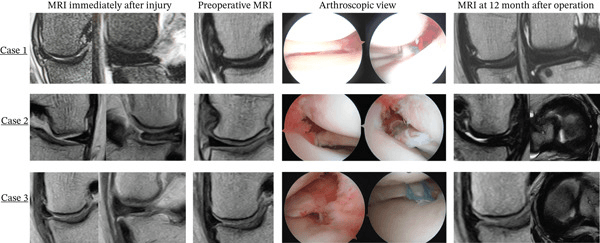
Failure depends on its definition. That pooled failure figure depends entirely on how "failure" is defined. Healing is not all-or-nothing, and the way it is assessed changes the reported success rate.
Clinical versus anatomic failure. Most large series, Nepple's included, define failure pragmatically as reoperation or symptomatic clinical failure. A repair can be anatomically incomplete yet asymptomatic, or symptomatic from another cause, so the two definitions do not always coincide and a quoted "healing rate" must be read against the definition used.
Grades of healing. Second-look assessment classically grades a repair as:
- Complete healing — the tear line bridged across the full thickness
- Partial or incomplete healing — a stable but not fully united tear
- Failed or no healing
A partially healed, stable, asymptomatic meniscus is usually regarded as a clinical success.
Why standard MRI over-reads failure. A healed meniscus frequently retains persistent increased intrameniscal signal reaching the articular surface, because fibrovascular scar and granulation tissue behave like a residual tear on conventional sequences. Standard MRI therefore overestimates failure and is unreliable for confirming healing.
Arthrography is more accurate. On MR or CT arthrography, intra-articular contrast tracking into the repair site indicates a persistently unhealed cleft, whereas failure of contrast to enter suggests healing.
Second-look arthroscopy remains the reference standard for structural healing and tissue quality, but it is invasive and reserved for research or for patients returning to theatre for another reason. Real-world "success" is therefore usually a composite of symptom resolution, stability and functional recovery rather than proven anatomic union.
Guidelines, Registries & Global Practice
Global Epidemiology
- Meniscal tears are among the most common knee injuries, with reported surgical incidence of roughly 60-70 per 100,000 person-years in high-income settings; a clear bimodal pattern (young athletes with traumatic vertical tears, older adults with degenerative tears).
- Root tears account for an estimated 10-21% of all meniscal tears.
- The proportion of meniscal operations that are repairs (rather than meniscectomy) has risen steadily over two decades as meniscus preservation became the prevailing philosophy, but meniscectomy still predominates worldwide, especially in degenerate tears.
Guideline Comparison
- Position
- Strong recommendation against arthroscopic surgery for degenerative meniscal tears with concurrent knee OA; supports repair of repairable traumatic tears
- Emphasis
- Preserve meniscus in traumatic tears; avoid debridement in OA knees
- Position
- Consensus that degenerative meniscal lesions should first be managed non-operatively; arthroscopy reserved for true mechanical symptoms after failed rehabilitation
- Emphasis
- Stepwise care; clear distinction degenerative vs traumatic
- Position
- Arthroscopic lavage and debridement not recommended for knee OA; physiotherapy first line for degenerate tears
- Emphasis
- Avoid low-value arthroscopy; rehabilitation first
- Position
- Repair preferred over resection whenever the tear is repairable to protect against post-meniscectomy arthritis
- Emphasis
- Technique selection by tear pattern and zone
Registry & Trial Evidence
- Landmark RCTs (e.g. degenerative tear trials from Finland and Scandinavia) showed arthroscopic partial meniscectomy offers no durable benefit over sham surgery or structured exercise for degenerative tears with mild OA - reinforcing repair/preservation only where biologically sensible and non-operative care for degenerate disease.
- Long-term cohort and registry data consistently link meniscectomy with accelerated radiographic osteoarthritis, underpinning the global shift toward preservation.
High- vs Limited-Resource Practice
- Well-resourced settings: ready access to MRI, arthroscopic all-inside implants and inside-out instrumentation; root repair, biological augmentation and meniscal allograft transplantation available in specialist centres.
- Limited-resource settings: MRI and proprietary all-inside devices may be scarce; outside-in and inside-out repair using standard sutures are cost-effective, durable alternatives. Meniscectomy may be chosen for pragmatic reasons, making careful patient selection and counselling on long-term arthritis risk especially important.
Controversies and Areas of Uncertainty
- Repair in the white-white (avascular) zone — Traditional teaching forbids it, but biological augmentation (marrow venting, fibrin clot, PRP, trephination) has expanded the boundary. Evidence remains low-level; the central-third tear in a young patient is the genuine grey area.
- All-inside vs inside-out durability — Equivalence reviews (Grant, Samuelsen) coexist with a 2024 meta-analysis (Villarreal-Espinosa) showing about 1.77x higher failure odds for all-inside. The signal is modest and confounded by athlete cohorts; most surgeons choose by tear location and access.
- ACL status and healing — Older literature taught markedly better healing with concurrent ACL reconstruction, yet Nepple's long-term meta-analysis found similar failure regardless of ACL status. The biological benefit is real but probably smaller and tear-pattern dependent than classically stated.
- Biological augmentation — Marrow stimulation, fibrin clot, PRP and bone-marrow aspirate are increasingly used, but high-quality RCT evidence of a healing benefit is still limited.
- Rehabilitation aggressiveness — Restricted protocols (limited flexion, protected weight-bearing) versus accelerated free rehabilitation show comparable healing in several series; the optimal protocol, especially for root and radial repairs, is unsettled.
- Lateral meniscus stability tears at ACL reconstruction — Whether to repair or leave stable, short, peripheral lateral tears (the "leave-alone" lesion) remains debated; many heal without intervention in the ACL-reconstructed knee.
- The zone-specific healing rates on this page are conventional, not cited. "85-90% in the red-red zone, 65-75% red-white, under 50% white-white" are widely taught and repeated here because they capture the right gradient, but none of the six studies cited on this page reports healing stratified by vascular zone. What those papers actually measure is failure by technique and by follow-up length: 23.1% pooled at five years (Nepple), 17% versus 19% for isolated tears (Grant), 15.9% versus 11.1% pooled (Villarreal-Espinosa). Quote the zone gradient as the biological principle it is, and quote a real study when you need a number.
Related pages: Meniscal Ramp Lesions for the peripheral posterior-horn tear that is missed unless you look posteromedially, Meniscal Root Tears for the attachment avulsion that behaves like a total meniscectomy, Meniscus Tears for the general classification, Meniscus Structure and Function for the hoop-stress mechanics, and Meniscal Transplant for the salvage option once the meniscus is gone.
Exam Viva Scenarios
Practise clinical reasoning and management decisions out loud
“A 25-year-old has an ACL tear with a bucket handle medial meniscal tear. How do you manage the meniscus?”
“You are performing an ACL reconstruction in a 28-year-old semi-professional footballer who sustained his injury 6 weeks ago. During arthroscopy, you identify a vertical longitudinal tear of the medial meniscus posterior horn measuring approximately 15mm in length. The tear is located at the red-white junction (approximately 4mm from the peripheral rim). The tear is unstable with greater than 5mm displacement on probing. The meniscal tissue appears healthy with no degenerative changes. Your assistant questions whether this tear should be repaired or resected, given that it is not fully in the red-red zone. The patient is high-demand and wants to return to professional football. How do you counsel the patient and what is your management plan?”
“You are seeing a 26-year-old woman in your clinic 18 months after you performed an ACL reconstruction and medial meniscal repair for a bucket handle tear. She initially did well for the first 9 months post-operatively, achieving full range of motion and returning to recreational netball at 10 months. However, over the past 3 months she has developed progressive medial knee pain, mechanical symptoms (clicking and occasional locking), and swelling after activity. On examination, she has a positive McMurray test medially, a small effusion, and tenderness along the medial joint line. Her ACL reconstruction is stable (negative Lachman and pivot shift). You order an MRI which shows that the previously repaired medial meniscus has re-torn - there is a recurrent vertical longitudinal tear at the same location (posterior horn, red-white zone), measuring approximately 12mm. The ACL graft appears intact and well-incorporated. There is no chondral damage visible on MRI. She is devastated that the repair has failed and asks what can be done. What is your assessment and what are the management options?”
Vascular Zones
- Red-red: Outer 3mm, 85-90% healing
- Red-white: Middle, 65-75% healing
- White-white: Central, less than 50% healing
Repair Indications (VOLAR)
- Vertical tear pattern
- Outer (peripheral) zone
- Length greater than 10mm
- ACL reconstruction setting
- Repairable tissue quality
Techniques
- Inside-out: Gold standard posterior horn
- All-inside: Popular, no second incision
- Outside-in: Anterior horn
Key Points
- Preserve meniscus to prevent arthritis
- ACL recon improves healing
- Protect repair (limit flexion 6 weeks)
Evidence Base
Nepple, Dunn & Wright
- Systematic review/meta-analysis of 13 studies (566 repairs) with minimum 5-year follow-up
- Pooled meniscal repair failure (reoperation or clinical failure) was 23.1% (131/566)
- Failure rates were similar for medial vs lateral and for intact vs reconstructed ACL knees
- Pooled failure varied only narrowly (about 22-24%) across techniques studied
Grant, Wilde, Miller & Bedi
- Systematic review of 19 studies of isolated longitudinal (bucket-handle) tears in ACL-stable knees
- Clinical failure 17% inside-out vs 19% all-inside (no significant difference)
- Nerve injury/irritation more common with inside-out (9% vs 2%)
- Implant migration, breakage and chondral injury more common with all-inside (older rigid devices)