The Tailor's Muscle
- Originates from the ASIS (Anterior Superior Iliac Spine).
- Inserts onto the Proximal Medial Tibia (Pes Anserinus).
- Longest muscle in the human body.
- Forms the ROOF of the Adductor (Hunter's) Canal.
- Innervated by the Femoral Nerve (L2, L3).
- “The Sartorius is the lateral border of the Femoral Triangle and the medial border of the proximal thigh compartments.
- “It crosses TWO joints (Hip and Knee), acting on both.
- “Pes Anserinus ('Goose's Foot') receives innervation from three different nerves (Femoral, Obturator, Sciatic).
- “The Saphenous Nerve leaves the canal by piercing the vastoadductor membrane, then emerges between the Sartorius and Gracilis.
Overview
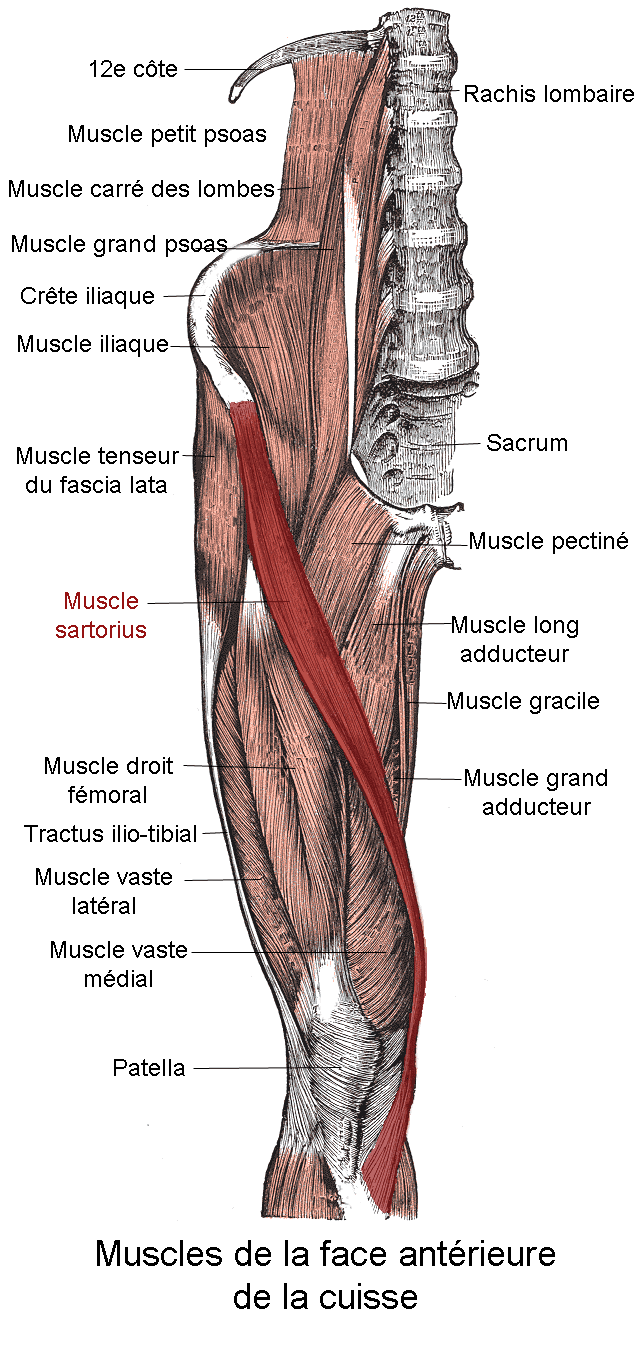
The sartorius is a strap-like muscle that spirals obliquely across the anterior thigh, and it is the longest muscle in the human body. Its long parallel fascicles give it a large excursion but relatively modest force. The name comes from the Latin sartor, a tailor, after the cross-legged position of flexion, abduction and external rotation that tailors traditionally adopted while working.
Why it is examined. The candidate needs its topographical relationships far more than its motor function, which is largely redundant. Three zones carry the danger and the landmarks, and they are the high-yield core of every sartorius viva:
- The origin at the ASIS, the apophysis avulsed by sprinting adolescents
- The roof of the adductor canal, with the muscle forming the lateral border of the femoral triangle above it, which makes the sartorius the surface landmark for the femoral artery and the saphenous nerve
- The insertion into the pes anserinus, of which it is the most superficial and anterior limb: the site of pes anserine bursitis and the working layer during gracilis and semitendinosus graft harvest
Attachments, Innervation and Blood Supply
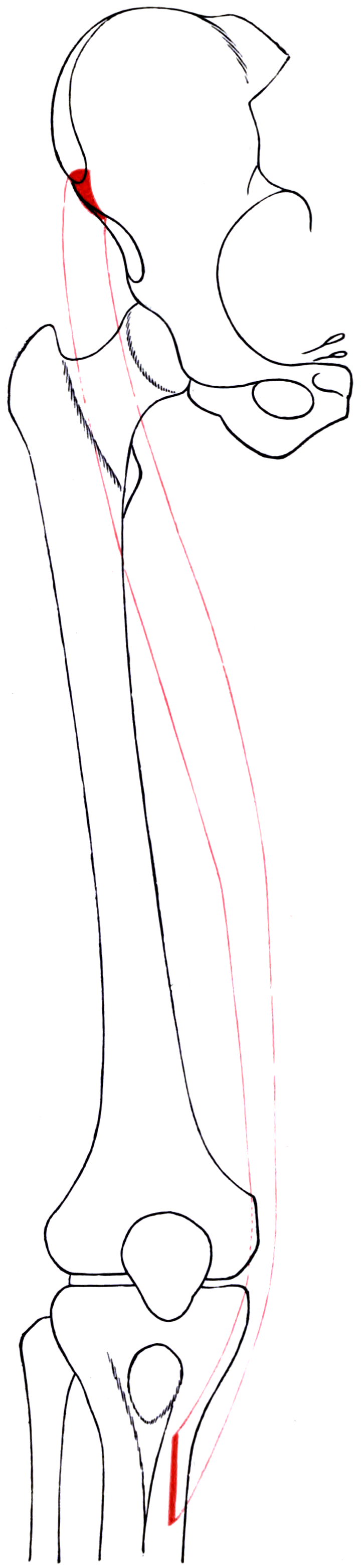
Origin. The sartorius arises from the anterior superior iliac spine and from the upper half of the notch immediately below it. The lateral cutaneous nerve of the thigh passes medial to this origin, or sometimes through it, so it is at risk in the Smith-Petersen approach and in ASIS graft harvest. The consequence is meralgia paraesthetica, numbness over the lateral thigh.
Course. The muscle runs obliquely across the upper and middle thirds of the thigh, moving from lateral to medial. It spirals around the medial aspect of the thigh to reach the posterior aspect of the medial condyle, then curves forward. It crosses two joints, the hip and the knee, and acts on both.
Insertion. It inserts into the upper part of the medial surface of the tibia as part of the pes anserinus, anterior and superior to gracilis and semitendinosus. It also sends an expansion to the capsule of the knee joint and to the crural fascia.
The pes anserinus. The goose's foot is the conjoined insertion of three muscles, each supplied by a different nerve. The table sets out what each tendon brings to it.
- Sartorius
- ASIS
- Gracilis
- Pubis
- Semitendinosus
- Ischial Tuberosity
- Sartorius
- Femoral (L2/3)
- Gracilis
- Obturator (L2/3)
- Semitendinosus
- Sciatic (Tibial L5/S1/2)
- Sartorius
- Pes (Anterior)
- Gracilis
- Pes (Middle)
- Semitendinosus
- Pes (Posterior)
- Sartorius
- Flex/Abd/ER Hip + Flex Knee
- Gracilis
- Adduct Hip + Flex Knee
- Semitendinosus
- Extend Hip + Flex Knee
SGTPes Anserinus Order
Hook:Say Grace before Tea. (Anterior to Posterior).
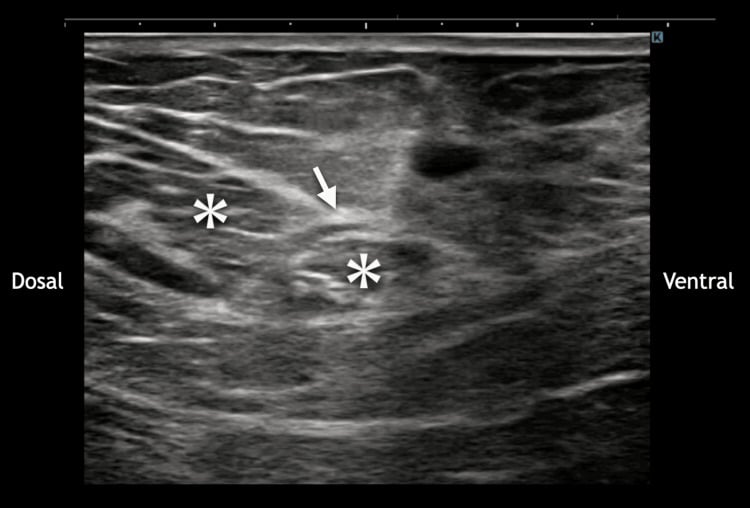
Innervation. The femoral nerve (L2, L3) supplies the sartorius, usually through two distinct branches from the intermediate cutaneous nerve of the thigh, which often pierces the muscle. The sartorius has a high density of muscle spindles, suggesting a role in proprioceptive feedback for limb position.
Blood supply. The supply is segmental: branches of the circumflex iliac arteries proximally, muscular branches of the femoral artery in the middle, and the descending genicular and inferior medial genicular arteries distally. The segmental pattern allows various muscular flaps, such as rotation flaps for groin defects.
Relations: Femoral Triangle and Adductor Canal
Layers. Skin and fascia lata lie anterior to the sartorius. Deep to it lie iliacus, psoas major, rectus femoris, vastus medialis, and adductor longus and magnus.
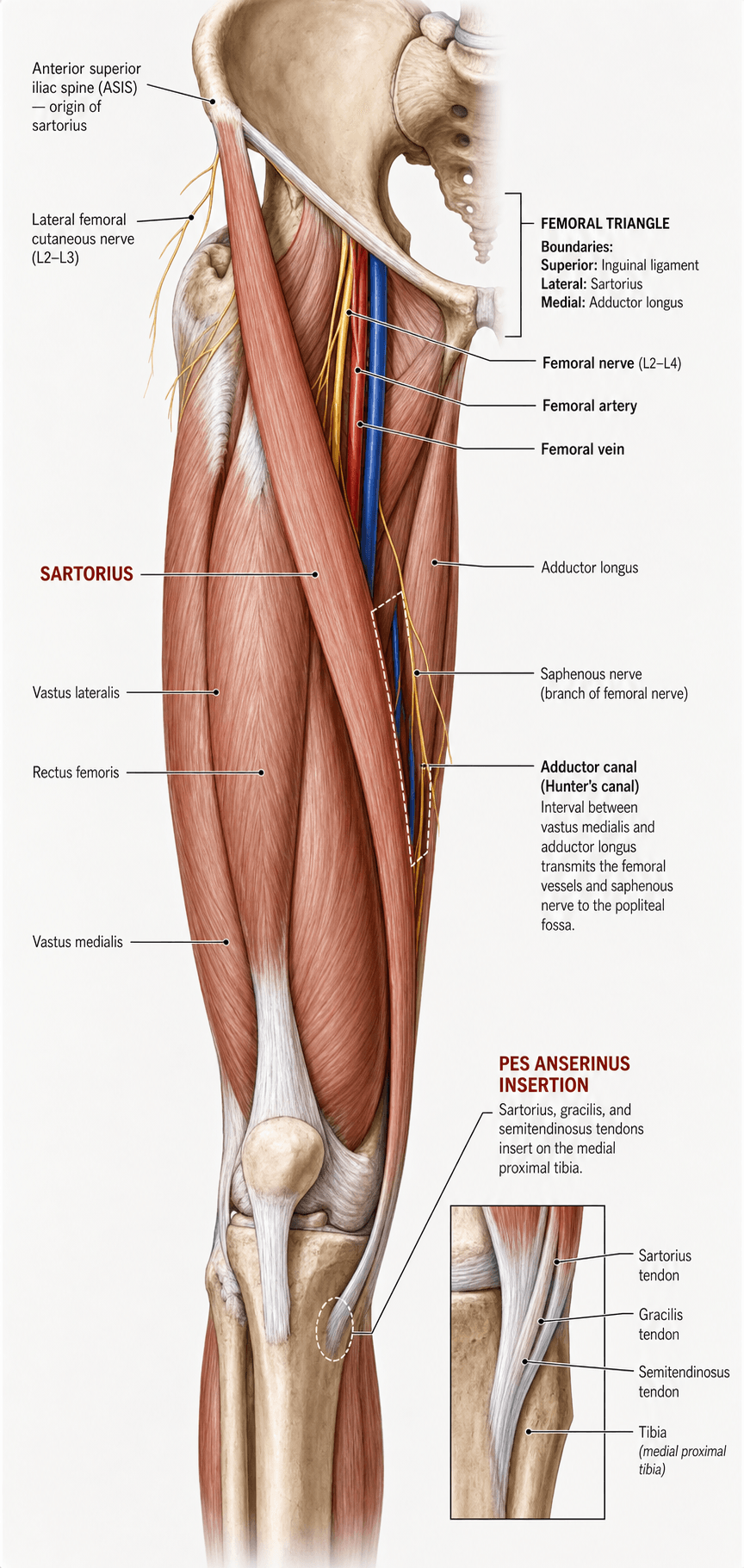
The femoral triangle. The medial border of the sartorius forms the lateral border of the femoral triangle, with adductor longus medially and the inguinal ligament superiorly (SAIL). The floor is iliopsoas and pectineus, lateral to medial, and the roof is fascia lata. The apex lies where the medial border of the sartorius crosses adductor longus, and it continues distally as the adductor canal.
Its contents. From lateral to medial they run as NAVEL: femoral nerve, femoral artery, femoral vein, an empty space (the femoral canal, with the deep inguinal nodes) and lymphatics. The femoral nerve lies outside the femoral sheath; the artery, vein and canal lie within it.
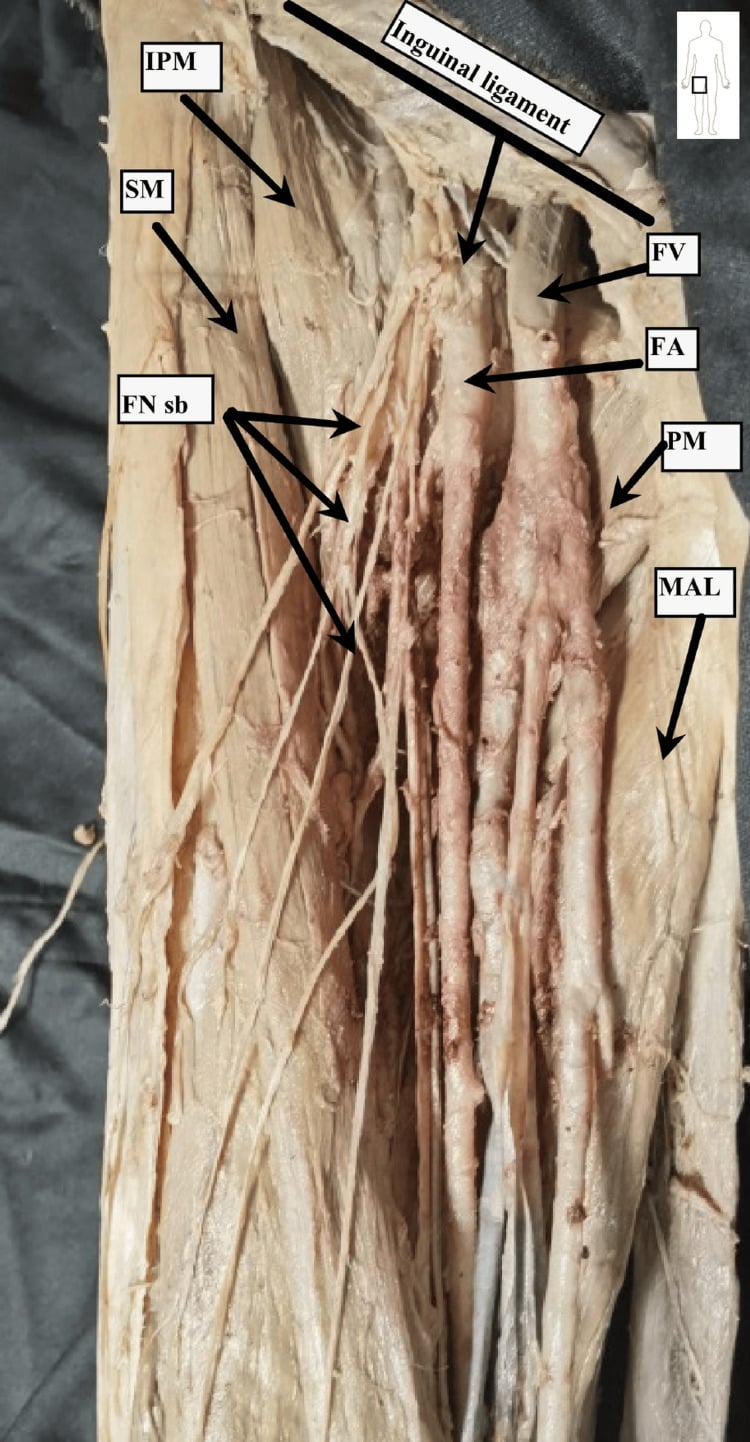
The adductor canal. Distal to the apex, the sartorius forms the roof of the adductor (subsartorial, Hunter's) canal. The canal is a triangular space bounded by vastus medialis anterolaterally and by adductor longus, then adductor magnus, posteriorly. It transmits the femoral artery and vein, the saphenous nerve and the nerve to vastus medialis. Deep to the sartorius, the vastoadductor membrane, the fibrous sheet running from vastus medialis to adductor magnus, forms the true roof.
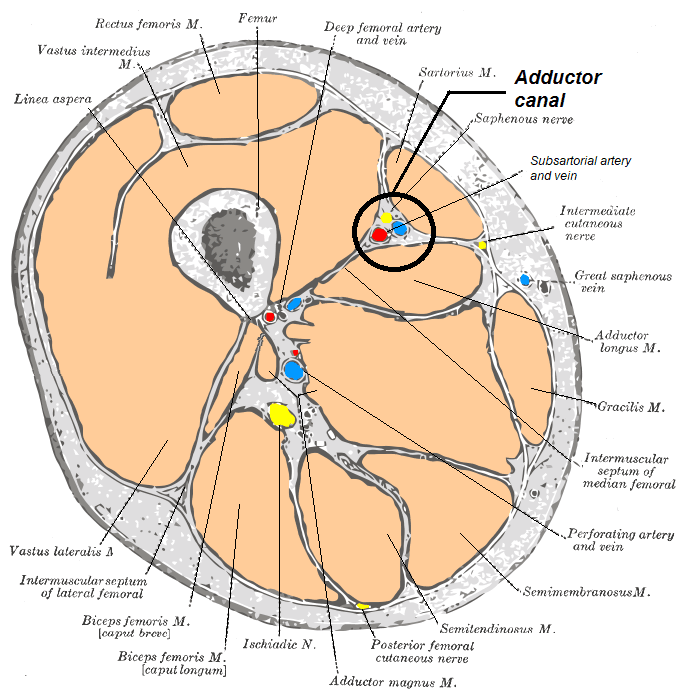
Where the canal ends. The canal runs from the apex of the femoral triangle to the adductor hiatus, a gap in the tendinous femoral insertion of adductor magnus. The femoral artery and vein pass through the hiatus into the popliteal fossa and are renamed the popliteal artery and vein, so the canal is the conduit carrying the main vessels from the anterior thigh to the back of the knee. The nerve to vastus medialis leaves more proximally to enter its muscle, and the descending genicular artery branches off near the hiatus to supply the knee.
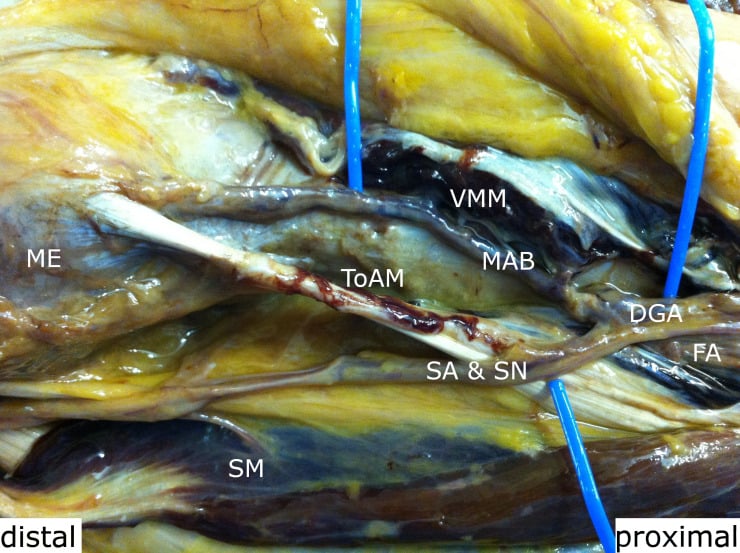
The saphenous nerve's exit. The saphenous nerve runs deep to the sartorius in the canal but does not pass through the hiatus. It leaves by piercing the vastoadductor membrane, then emerges between sartorius and gracilis, piercing the fascia lata, to become subcutaneous and supply the medial leg down to the medial malleolus. That fibrous exit is also where the nerve can be entrapped, giving medial knee and leg pain with no intra-articular pathology to find.
Why it matters. The hiatus is an arteriovenous exit only, because the nerves have already left the canal. This is why an adductor canal block is essentially a sensory (saphenous) block, and why vascular surgeons reach the femoro-popliteal segment through this sartorius-roofed interval. The nerve is also the hazard: identifying the sartorius-gracilis interval incorrectly during hamstring harvest or a medial knee approach can transect the nerve, leaving numbness or a neuroma on the medial leg.
Surface Anatomy
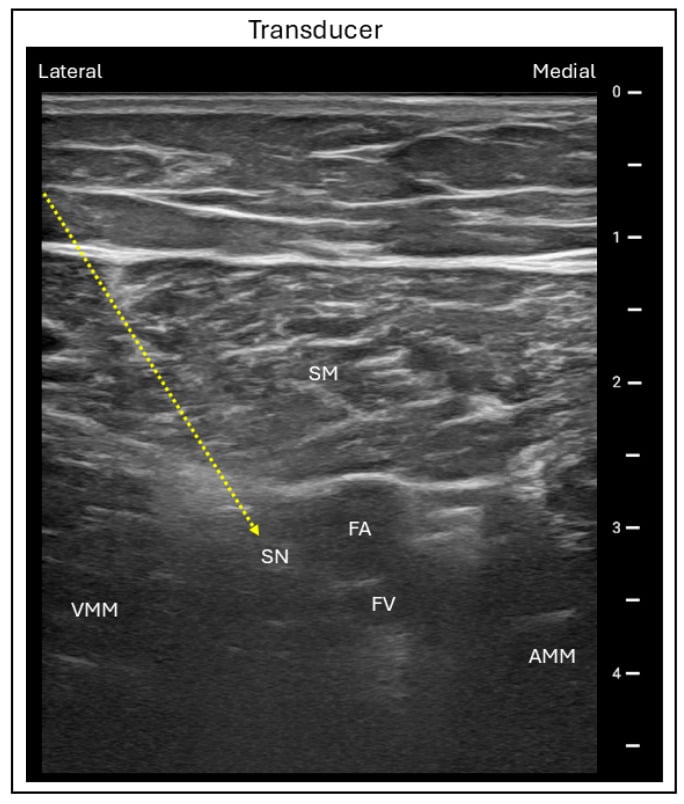
Palpation. The origin is easily palpable at the ASIS. The belly can be made prominent by asking the patient to lift the heel and cross the legs into the FABER position. In the mid-thigh the belly is the guide to the adductor canal, and the femoral artery pulse can be felt deep to it.
Surface marking. A line from the ASIS to the medial femoral condyle approximates the course. The upper third forms the lateral border of the femoral triangle and the middle third covers Hunter's canal.
Pathology: Pes Anserine Bursitis
The lesion. Pes anserine bursitis is inflammation of the bursa lying between the pes anserinus insertion and the MCL and tibia.
What drives it. Overuse (runners, breaststroke), tight hamstrings and, above all, valgus alignment are the mechanical drivers. In case-control data valgus is the dominant association, with an OR of 5.2, rising to 6.0 when combined with collateral instability. Obesity, diabetes and medial-compartment OA are the classic associations, yet the same case-control study (Alvarez-Nemegyei) found no association with any of them. The defensible model is mechanical rather than metabolic, so assess the alignment before assuming a metabolic cause.
A note on names. "Cyclist's knee" generally refers to the iliotibial band, but "breaststroker's knee" can involve the pes anserinus (or the MCL).
Presentation. Pain sits over the medial aspect of the proximal tibia and is worse on stairs or rising from a chair, with mild localised oedema. A negative valgus stress test excludes the MCL and a negative McMurray test excludes the meniscus. Bursitis often co-exists with medial compartment OA, although the case-control data found no association with OA.
Localising the tenderness. Distinguishing pes anserine pathology from the other causes of medial knee pain by anatomical localisation of tenderness is the single most examined skill here. Tenderness at the joint line suggests the meniscus, tibial tenderness a stress fracture, and tenderness over the pes bursitis; the table sets out where each lies and what confirms it.
- Tenderness Location
- 2-3 cm distal to medial joint line, over proximal tibia
- Key Discriminator
- Below the joint line; negative valgus stress and McMurray
- First-Line Test
- Ultrasound (fluid deep to SGT)
- Tenderness Location
- Medial joint LINE
- Key Discriminator
- Positive McMurray; mechanical locking/catching
- First-Line Test
- MRI
- Tenderness Location
- Along the MCL (femoral/tibial attachment)
- Key Discriminator
- History of valgus trauma; pain on valgus stress
- First-Line Test
- Clinical + stress radiograph
- Tenderness Location
- Diffuse medial joint line
- Key Discriminator
- Crepitus, age, radiographic joint-space loss
- First-Line Test
- Weight-bearing radiograph
- Tenderness Location
- Diffuse medial, often nocturnal
- Key Discriminator
- Sudden severe pain in older patient; normal early radiograph
- First-Line Test
- MRI (subchondral oedema)
- Tenderness Location
- Proximal medial tibia
- Key Discriminator
- Insidious load-related pain in runner; positive bone scan/MRI
- First-Line Test
- MRI
- Tenderness Location
- Medial leg distal to canal
- Key Discriminator
- Burning/numbness, Tinel sign; prior medial surgery
- First-Line Test
- Diagnostic nerve block
Classification Systems
Snapping hip. Coxa saltans is grouped by where the snap arises. Sartorius pathology fits the external, extra-articular types, and is listed among the rare variants:
- External: the iliotibial band snapping over the greater trochanter, the most common, or the anterior fibres of gluteus maximus over the greater trochanter
- Internal: iliopsoas snapping over the iliopectineal eminence or the femoral head
- Rare variants: the sartorius snapping over the ASIS or AIIS, and the long head of biceps femoris over the ischial tuberosity
Rare though it is, sartorius snapping must be considered in an athlete with anterior hip snapping that mimics intra-articular pathology.
Clinical Assessment
FABER (Patrick's) test. The hip is placed in flexion, abduction and external rotation, the figure-4 position, which engages the sartorius. Anterior groin pain may indicate hip pathology or an iliopsoas or sartorius strain. Posterior pain indicates the sacroiliac joint.
Muscle testing. Test resisted flexion and external rotation of the hip and grade it on the MRC scale (0-5). Weakness is often subtle, because other muscles compensate: iliopsoas for flexion and the glutei for abduction.
Investigations
Radiographs. AP and lateral knee films are usually normal in bursitis. They are taken to assess for OA (osteophytes) or a proximal tibial stress fracture. A proximal tibial exostosis can irritate the overlying SGT tendons.
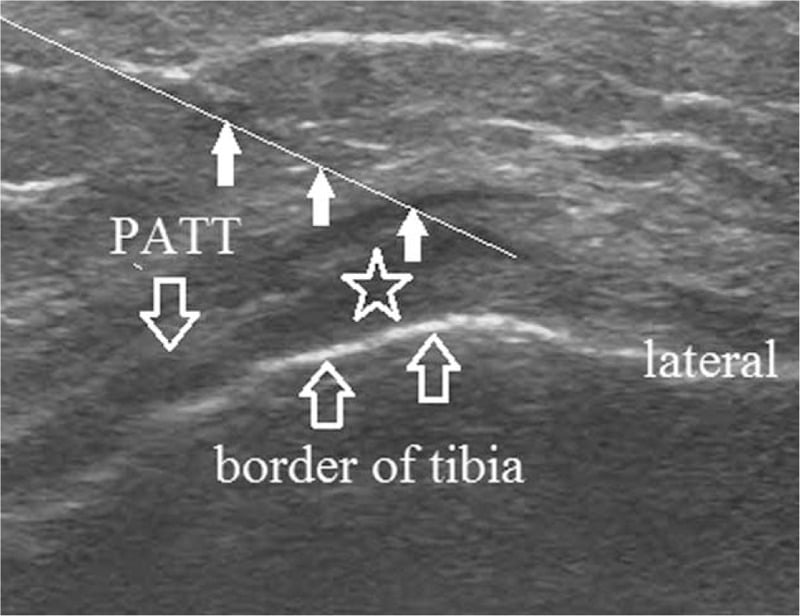
Ultrasound. Ultrasound is diagnostic, showing a fluid-filled bursa deep to the SGT tendons, and it guides the corticosteroid injection.
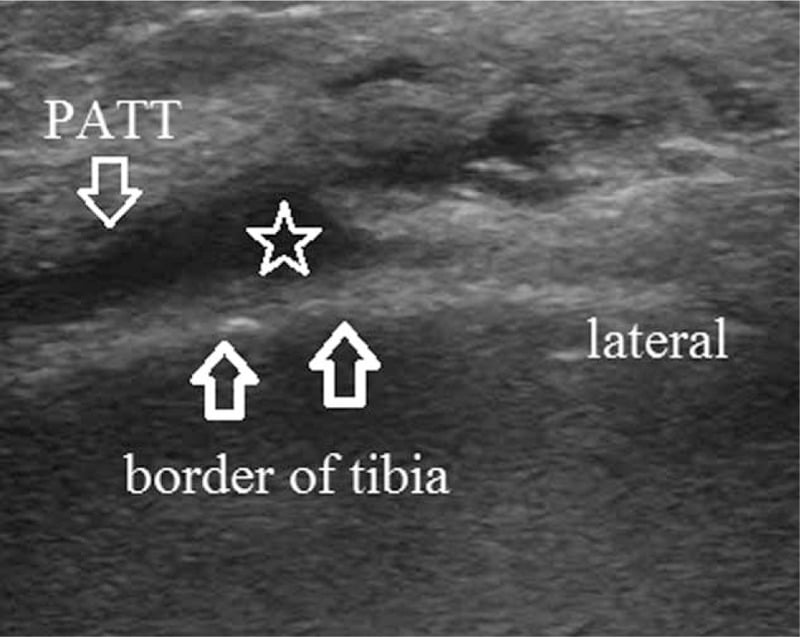
MRI. MRI is the gold standard. It shows local inflammation, tendonitis or bursitis and excludes meniscal tears or subchondral insufficiency fractures. It is particularly useful to rule out a subtle tibial stress fracture in a runner.
Management Strategy
Treatment escalates by phase, with bursectomy a rare last resort.
- Action
- RICE, NSAIDs
- Goal
- Reduce inflammation
- Action
- Physiotherapy (Hamstring stretching)
- Goal
- Reduce tension
- Action
- Corticosteroid Injection
- Goal
- Therapeutic
- Action
- Bursectomy (Rare)
- Goal
- Last resort
Physiotherapy. The focus is on correcting valgus mechanics and stretching tight adductors and hamstrings.
Injection. Injection is highly effective, provided it is placed into the bursa and avoids the tendon substance. Ultrasound guidance significantly improves the accuracy of bursal injections compared with landmark-based techniques. Corticosteroid relieves symptoms in the short term, but high-quality comparative data are scarce and concerns about tendon weakening persist; the roles of PRP, hyaluronic acid and ultrasound versus landmark guidance remain unresolved.
Surgical Technique
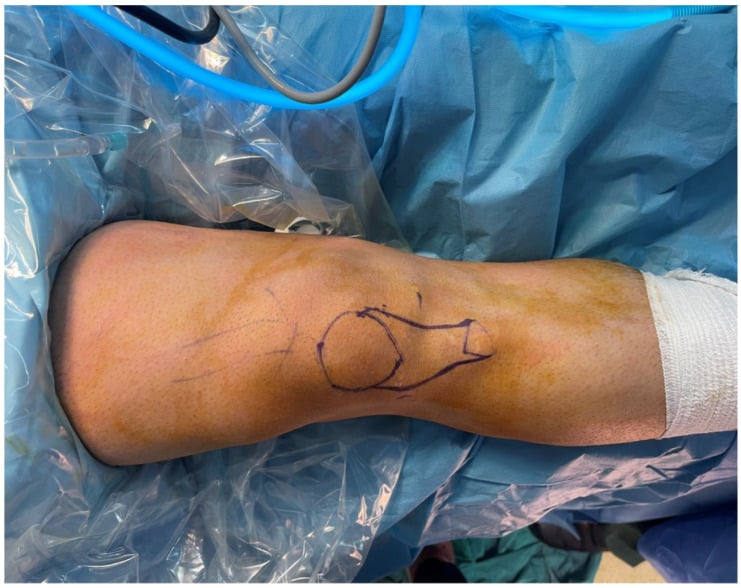
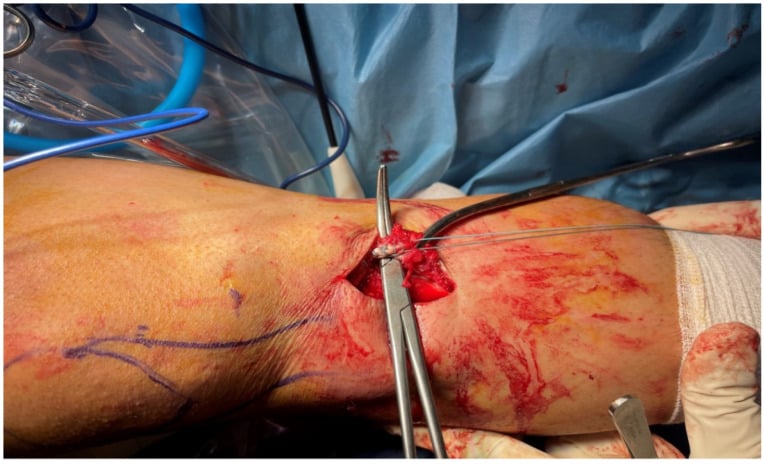
Hamstring harvest for ACL reconstruction. The sartorius acts as the "check rein", or covering layer, over the graft tendons:
- Make a vertical incision medial to the tibial tubercle.
- Incise the sartorius fascia in line with its fibres, or as an L-shaped incision.
- Reflect the fascia to reveal gracilis and semitendinosus deep to it.
The sartorius itself is usually preserved and repaired over the tunnels. Meticulous repair of its fascia prevents haematoma formation and assists healing.
Adductor canal exploration. The indications are vascular bypass and saphenous nerve release. The landmark is the medial border of the sartorius, and identifying it is the key step in the anterior approach to the femoral artery. The sartorius is usually retracted laterally, or medially depending on the exposure needed, and the subsartorial fascia of the roof is incised to reach the vessels.
The nerves in the canal. Identify the saphenous nerve crossing from lateral to medial over the artery. Careless retraction can injure the nerve to vastus medialis, which runs with the saphenous nerve.
Complications
Around the sartorius. The complications of injury and surgery here:
- Saphenous nerve neuralgia, with numbness or pain on the medial leg and foot
- Haematoma, from the rich blood supply of the segmental arteries
- Muscle rupture, which is rare and usually at the origin, as an ASIS avulsion in sprinters
- Knee instability: the sartorius plays a negligible role in stability compared with the MCL and ACL
Pelvic and hip apophyseal avulsions. The ASIS avulsion is one node in a classic adolescent-athlete map. Examiners expect you to match each apophysis to its muscle, because the unfused apophysis is the weak link before physeal closure:
- ASIS: sartorius (and tensor fasciae latae), sprinting
- AIIS: rectus femoris (straight/direct head), kicking
- Ischial tuberosity: the hamstrings, the most troublesome; sprinting, hurdling, the splits
- Lesser trochanter: iliopsoas, resisted hip flexion
- Iliac crest: the abdominal wall and oblique muscles, a sudden trunk twist
- Pubic symphysis or ramus: the adductors, kicking and change of direction
In a child a lesser-trochanter avulsion is essentially an apophyseal injury. In an adult, an apparently "spontaneous" lesser-trochanter avulsion should raise suspicion of underlying metastatic bone disease. Most avulsions heal non-operatively; fixation is reserved for large displacement (commonly cited threshold around 2 to 3 cm) or a symptomatic ischial-tuberosity non-union.
Rehabilitation Protocol
Bursitis. Relative rest for 2-4 weeks. Eccentric loading is not typically emphasised as much as it is for the Achilles or patellar tendon.
After hamstring harvest. Rehabilitation follows the ACL protocol. Hamstring strength may be reduced; the sartorius contribution is minimal.
ASIS avulsion. Conservative management on crutches for 4 weeks, with surgery only for the large displacement described above.
Prognosis
Bursitis has an excellent prognosis with conservative care, but check for underlying OA. After an ASIS avulsion, return to sport (sprinting) is good after 3-4 months. Sartorius transfer for quadriceps paralysis has poor power generation but provides some active flexion.
Guidelines, Registries & Global Practice
Global Epidemiology
- Pes anserine pain syndrome is a common cause of medial knee pain in middle-aged and older adults, with a clear female predominance; community surveys (Mexican COPCORD data) place anserine bursitis among the more frequent regional rheumatic pain syndromes (~0.34% prevalence).
- ASIS apophyseal avulsions cluster in adolescent athletes (mean age ~14-15 years), the ASIS accounting for roughly a third of pelvic apophyseal avulsions, the anterior inferior iliac spine being the commonest.
Side-by-Side Guidance (where recommendations differ)
- Position
- Hamstring (gracilis/semitendinosus) and BPTB both endorsed; surgeon/patient-specific selection
- Source / Society
- AAOS ACL Clinical Practice Guideline (US)
- Position
- Registry data inform graft and fixation choice and revision risk
- Source / Society
- NLR (Norwegian) & Swedish/Danish ACL registries
- Position
- Multimodal, opioid-sparing regional analgesia; motor-sparing blocks favoured to enable rapid recovery
- Source / Society
- PROSPECT / ERAS arthroplasty consensus
- Position
- Preferred over femoral nerve block for quadriceps-sparing analgesia after TKA
- Source / Society
- Level 1 RCT evidence (Jaeger 2013)
- Position
- Non-operative for minimally displaced; ORIF for large/displaced fragments or failed conservative care
- Source / Society
- International case-series consensus
Registry Notes
- Although the Sartorius itself is not implanted, national ACL registries (Scandinavian, UK, and others) track the hamstring grafts harvested through the sartorius layer, informing graft survival, re-rupture and revision rates that guide graft selection globally.
High- vs Limited-Resource Practice Variation
- Adductor canal block depends on ultrasound availability; in high-resource settings it is routine for TKA, whereas landmark-based femoral nerve blocks or systemic analgesia may dominate where ultrasound is scarce.
- Pes anserine bursitis is largely a clinical diagnosis worldwide; MRI/ultrasound confirmation is reserved for atypical cases or where stress fracture/SIFK must be excluded - imaging access varies markedly by setting.
- ASIS avulsion is managed conservatively in the great majority of cases everywhere, which keeps treatment robust to resource constraints; operative fixation is selective.
Controversies & Areas of Uncertainty
Bursitis or tendinopathy? The term "pes anserine bursitis" is increasingly questioned. Imaging frequently shows tendinopathy of the SGT insertion without a distended bursa, the bursa is often anatomically inconstant, and some authors prefer "pes anserinus pain syndrome."
How far the adductor canal block reaches. Debate continues over the true proximal and distal boundary of the canal, and over whether the block is an "adductor canal" or a "subsartorial femoral triangle" block. How much spread to the obturator nerve or the nerve to vastus medialis contributes to analgesia, and to any residual quadriceps weakness, is also unsettled.
MCQ Practice Points
Q: The Sartorius muscle is innervated by which nerve? A: Femoral Nerve.
Q: Which muscle forms the most anterior part of the Pes Anserinus? A: Sartorius. (SGT order).
Q: Which structure forms the roof of the Adductor Canal? A: Sartorius.
Q: Which muscle acts to flex, abduct, and externally rotate the hip? A: Sartorius.
Q: An avulsion fracture of the ASIS involves the origin of which muscle? A: Sartorius. (Rectus Femoris is AIIS).
Viva Scenarios
Practise clinical reasoning and management decisions out loud
“Describe the anatomy of the Pes Anserinus.”
“What forms the roof of the Adductor Canal and what structures are at risk during investigation?”
“A 60F with medial knee pain. X-ray shows mild medial OA. She has exquisite tenderness 3cm distal to the joint line. Diagnosis?”
“You are harvesting gracilis and semitendinosus for an ACL reconstruction. How do you find the tendons, and what nerve is at risk?”
“A patient develops burning numbness over the lateral thigh after an anterior approach to the hip. Which nerve, and how does it relate to the Sartorius?”
Anatomy
- Origin: ASIS
- Insert: Pes Anserinus
- Nerve: Femoral (L2/3)
- Longest muscle
Relationships
- Roof of Hunter's Canal
- Lat border Femoral Triangle
- Saphenous N runs deep
- SGT: Sartorius, Gracilis, SemiT
Clinical
- Action: FABER
- Pathology: Pes Bursitis
- Hazard: ASIS Avulsion
- Block: Adductor Canal
Evidence Base
Pes Anserinus & Anserine Bursa: Cadaveric Anatomy
- 86 legs from 45 cadavers: Sartorius inserts into the superficial layer; Gracilis and Semitendinosus into the deep layer of the medial tibia
- Semitendinosus had a single tendon in 66%, two in 31%, three in 3% - confirming variable banding
- Anserine bursa is irregularly circular and follows the line of the Sartorius
- Recommended landmark injection: ~20 mm medial and 12 mm superior to the inferomedial point of the tibial tuberosity, 15-20 mm deep
Pes Anserinus Tendon Arrangement: Surgical Variations
- 60 limbs from 30 cadavers: in every specimen only THREE muscles (sartorius, gracilis, semitendinosus) formed the pes anserinus
- Despite the constant three-muscle composition, the disposition and interconnection of the tendons varied considerably
- Reinforces the S-G-T anterior-to-posterior order relevant to hamstring graft harvest
Adductor Canal Block Preserves Quadriceps Strength (Volunteers)
- Randomised, double-blind, placebo-controlled crossover in healthy volunteers (11 analysed)
- Quadriceps strength fell only 8% from baseline with adductor canal block versus 49% with femoral nerve block
- Adductor canal block preserved ambulation ability better than femoral nerve block
- Confirms the canal block is predominantly a SENSORY blockade (saphenous nerve), with the Sartorius as the roof/sonic landmark
Adductor Canal Block vs Femoral Nerve Block after TKA
- Randomised, double-blind trial in TKA patients (48 analysed)
- Quadriceps strength was 52% of baseline with adductor canal block versus only 18% with femoral nerve block (p=0.004)
- No significant difference in morphine consumption or pain scores between groups
- Translates the volunteer findings into a clinical arthroplasty population
Risk Factors for Pes Anserinus Tendinitis/Bursitis
- Case-control study (22 cases, 38 controls), all mature women
- Valgus knee deformity was the dominant risk factor (OR 5.2; 95% CI 1.1-25.5), rising to OR 6.0 with collateral instability
- Contrary to common teaching, NO association was found with diabetes, knee osteoarthritis or obesity in this cohort
- Suggests altered medial mechanics, not metabolic factors, drive the syndrome
Operative Outcomes of Pelvic Apophyseal (incl. ASIS) Avulsions
- 32 young athletes (mean 16.8 years) treated operatively for pelvic apophyseal avulsions, including ASIS (Sartorius origin)
- Over 80% returned to pre-injury sport after surgery
- Large displacement (over 20 mm) or delayed (over 3 months) surgery was NOT associated with inferior outcomes
- Most avulsions are still managed non-operatively; surgery is reserved for large/displaced fragments or failed conservative care
Sartorius Transposition Flap for Femoral Vessel Coverage
- States the sartorius muscle transposition flap is the TRADITIONAL method of covering the femoral vessels after inguinal lymphadenectomy
- Limitations of the sartorius flap: thin at its insertion, intimately related to several nerves, and contained within the field in an irradiated groin
- Describes the gracilis flap as a viable alternative when the sartorius lies within prior radiation