Benign ganglion-like pseudocysts arising from dorsal DIP joint capsule
- Pseudocyst (no epithelial lining) containing gelatinous mucinous material
- Almost always associated with underlying DIP joint osteoarthritis
- Osteophyte removal is CRITICAL to prevent recurrence
- Nail deformity from germinal matrix compression resolves after excision in 80-90%
- Aspiration alone has 50-80% recurrence rate
- “Know the pathogenesis: DIP OA leads to dorsal osteophytes leads to capsular stress leads to cyst formation
- “Transillumination positive distinguishes from solid lesions
- “Explain why osteophyte removal reduces recurrence from 20-40% to 5-15%
- “Describe skin closure options including FTSG for large defects
Overview and Epidemiology
Digital mucous cysts, also called mucoid or myxoid cysts, are benign ganglion-like lesions over the dorsal aspect of the distal interphalangeal (DIP) joint of the fingers. They arise from the DIP joint capsule or the extensor tendon sheath, contain viscous, gelatinous mucinous material, and are almost always associated with underlying DIP joint osteoarthritis and dorsal osteophytes.
Not a true cyst. The name is a misnomer. There is no epithelial lining: the lesion is a pseudocyst, the result of focal myxoid degeneration and herniation of joint synovium through areas of capsular weakness.
Who. The peak incidence is at 50-70 years, with a 3:1 female predominance. The middle and index fingers are the most common sites, several digits can be affected, and the thumb IP joint is rarely involved.
How common. It is one of the most common soft-tissue lesions of the hand seen in primary care and hand surgery clinics worldwide, but the exact incidence is unclear. Most cases are mild and never referred, so the condition is under-reported.
Anatomy and Pathogenesis
Where it emerges. The usual joint-connected cyst emerges dorsolaterally, between the terminal extensor mechanism and the collateral ligament, and is intimately related to the extensor tendon. A stalk connects it to the DIP joint in approximately 60-70% of cases.
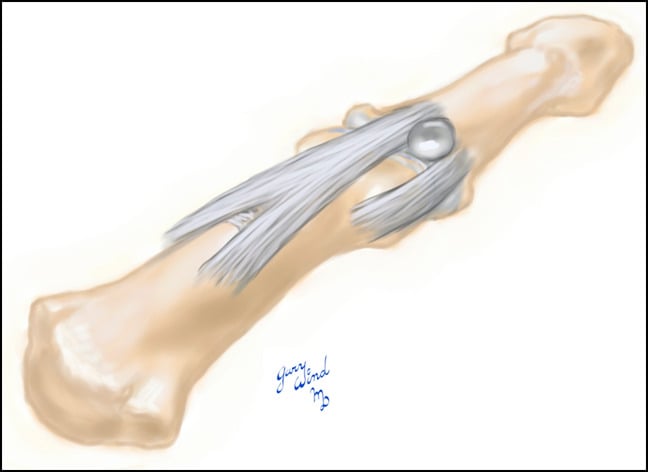
The dumbbell. A less common configuration extends through both collateral intervals, on either side of the terminal extensor tendon. Recognising both lobes prevents incomplete excision while preserving the central tendon insertion.
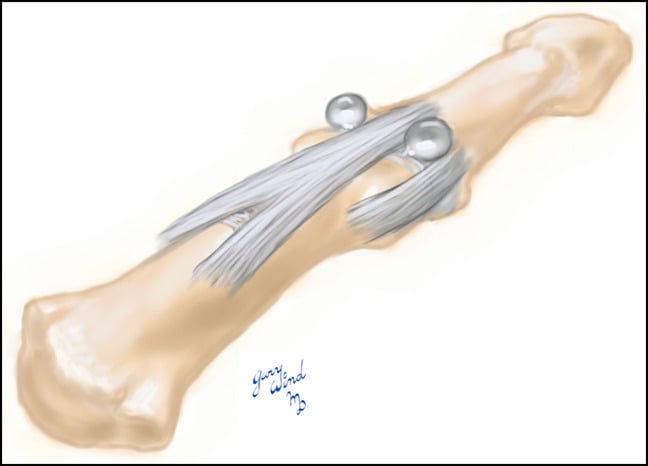
How it forms. The degenerative theory is the most accepted, and it runs as a sequence:
- DIP joint osteoarthritis develops with age and repetitive use
- Dorsal osteophytes form at the joint margins
- The osteophytes create focal capsular stress and synovial inflammation
- Collagen in the stressed capsule or tendon sheath undergoes myxoid degeneration
- Mucinous material accumulates, forming the pseudocyst
- A one-way valve lets synovial fluid enter but not exit
- The cyst expands, thinning the overlying skin
Some authors suggest instead a primary degenerative change in the skin and subcutaneous tissue, with the connection to the joint secondary.
Histology. A fibrous wall with myxoid degeneration, collagen disorganisation and mucopolysaccharide deposition surrounds the mucinous material, and there is no true epithelial lining. Synovial lining, or fragments of it, may be present in some. The contents stain positive for mucin with Alcian blue.
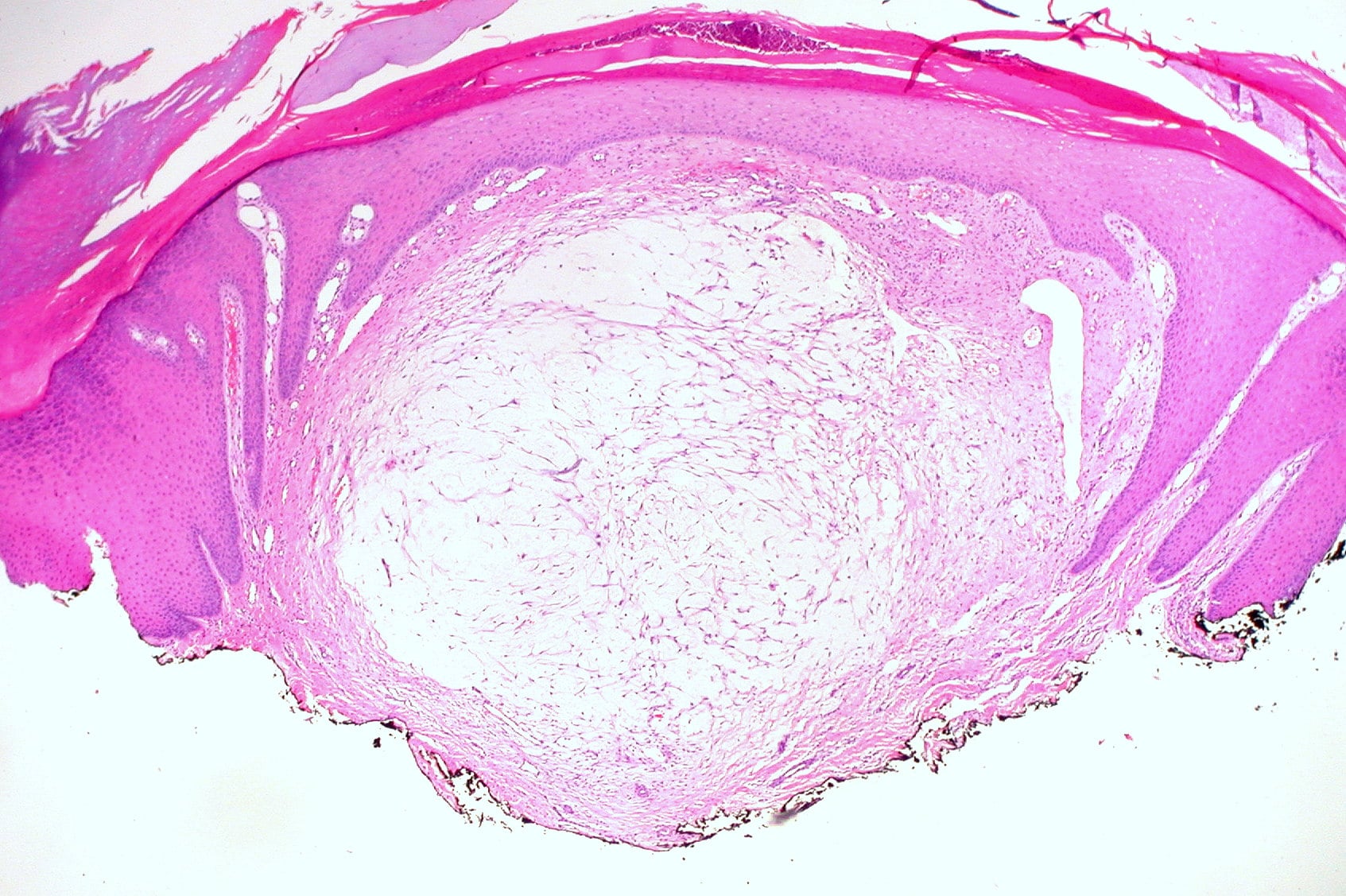
What goes with it. DIP joint osteoarthritis is present in more than 95% of cases and dorsal osteophytes are a nearly universal finding, alongside Heberden's nodes, the bony enlargement of the DIP joint. The cyst itself then produces secondary changes:
- A longitudinal nail groove when the germinal matrix is compressed, in 30-40%
- Atrophic, thinned overlying epidermis
- Secondary infection after rupture or trauma
- Flexor tendon irritation, rarely, when the cyst extends volarly
Where the Cyst Sits: Dorsal Joint Cyst versus Proximal Nail-Fold and Subungual Variants
The germinal matrix, the longitudinal nail groove and the nail fold all track with where the cyst sits relative to the nail apparatus. Grouping cysts by location, rather than by a formal grading system, is therefore the practically useful classification, and it directly changes the operative plan and the counselling about nail deformity. Two patterns dominate, the dorsal DIP joint cyst and the proximal nail-fold cyst; the subungual variant is less common.
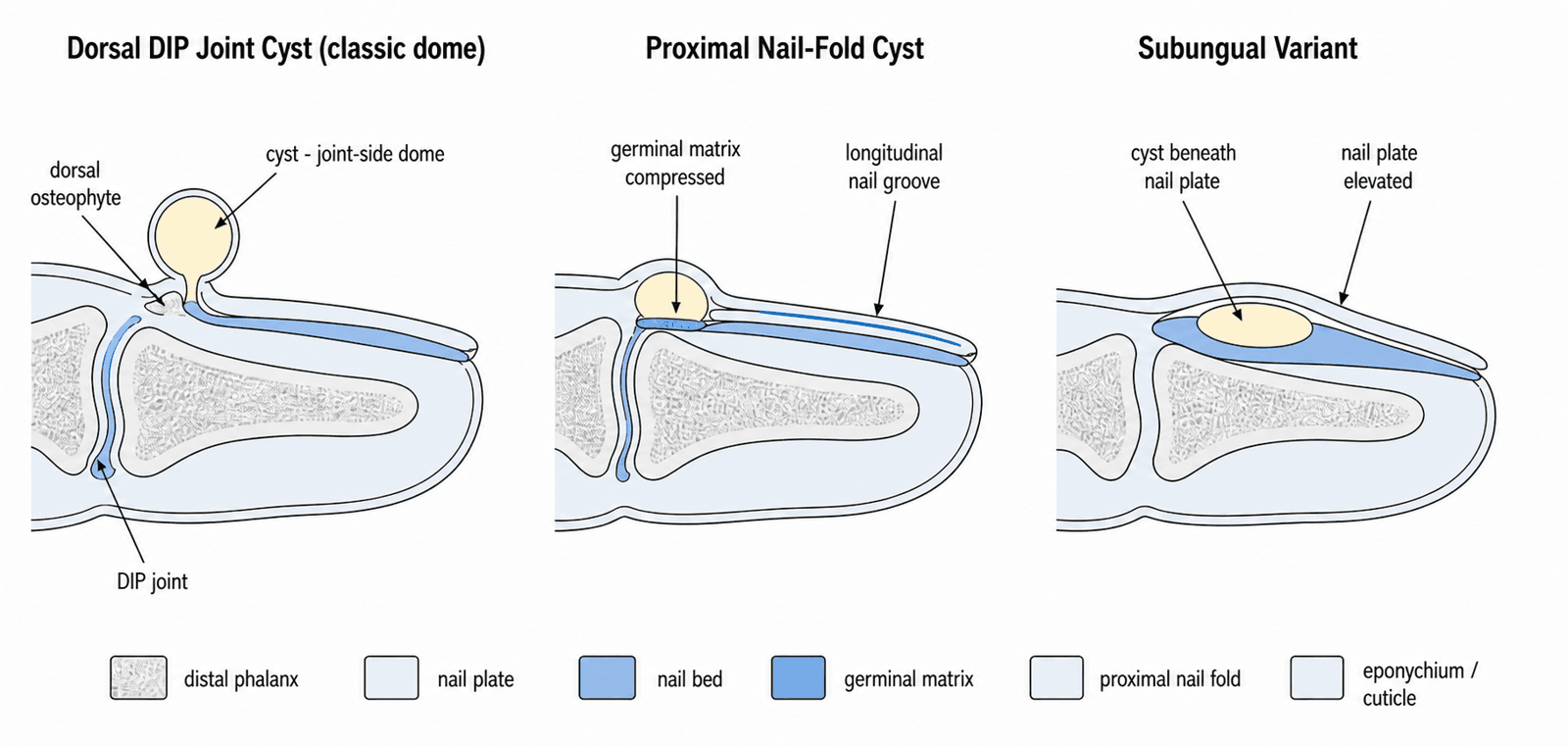
The dorsal DIP joint cyst. The classic dome sits over the extensor side of the joint, proximal or lateral to the eponychium, and is the lesion most of this page describes: a translucent, transilluminating dome over dorsal osteophytes. Nail change is variable, and when present it comes from proximal extension pressing on the matrix.
The proximal nail-fold cyst. This one arises within or beneath the proximal nail fold rather than as an obvious dome over the joint, and it may present simply as fullness or a bluish swelling of the eponychium. Because it lies directly over the germinal matrix (the nail root), it is the pattern most reliably associated with the longitudinal nail-plate groove or gutter; the groove overlies the cyst and grows out only once the matrix is decompressed.
Esson's series (PMID 26673435) explicitly locates digital mucous cysts at "the distal interphalangeal joint or the proximal nail fold," confirming that this is a recognised split.
The subungual variant. A subungual mucoid extension lies beneath the nail plate, elevating or deforming it, and can masquerade as a subungual tumour. Keep glomus tumour and the other transillumination-negative lesions of the differential diagnosis in mind.
What location changes at operation.
- A joint-side dome is approached over the dorsum of the DIP, and the priority is complete excision with osteophytectomy
- A nail-fold or subungual cyst needs an incision based on the proximal nail fold, with meticulous protection of the underlying germinal matrix. The same osteophytectomy principle applies (the stalk still communicates with the joint in roughly 60-70% of cases), but the dominant technical risk is iatrogenic matrix injury converting a temporary groove into a permanent nail dystrophy
If asked why one mucous cyst grooves the nail and another does not, answer by location: a cyst sitting over the proximal nail fold / germinal matrix compresses the nail root and produces the longitudinal groove, whereas a purely joint-side dome may spare the nail. This also tells the examiner your incision plan — a nail-fold cyst is approached through a proximal-nail-fold-based flap with the matrix protected, not a simple dome excision — and explains why the groove takes 6-12 months to grow out after decompression.
Clinical Presentation
Why patients come. Most present for the appearance rather than for pain or dysfunction: they are self-conscious about a visible swelling and concerned that it is enlarging. Pain from the cyst itself is often minimal or absent; what pain there is relates more to the underlying DIP arthritis, with discomfort on pressure or repetitive gripping that is worse with activities requiring DIP flexion.
Function. Limitation is usually minimal. The cyst may interfere with certain grips, catch on clothing or gloves, and be sensitive to pressure.
The swelling over time. Size fluctuates: the cyst enlarges with increased joint activity, may decompress spontaneously, and refills after drainage. Spontaneous rupture discharges clear, viscous, gelatinous material and may give temporary relief, but the cyst invariably recurs, and rupture carries a risk of secondary infection.
The nail. The longitudinal groove is the most common nail deformity. The cyst compresses the germinal matrix and disturbs its growth focally, so the groove corresponds to the cyst's position, sometimes with splitting or ridging. It resolves after excision as the nail grows out over 6-12 months, but prolonged compression can damage the matrix permanently, and then the groove, splitting or dystrophy may persist after the cyst has gone.
The joint. Stiffness and reduced range of motion, crepitus and Heberden's nodes come from the underlying arthritis, and loss of DIP extension is common. These secondary features often prompt patients to seek treatment.
Look. The swelling sits over the dorsal DIP joint, typically radial or central, and is usually 3-10 mm across, rarely larger. It is a smooth, tense, semi-translucent dome under thin skin through which the gelatinous material may be visible, normal in colour or with a bluish tinge. Look at the nail for a longitudinal groove, splitting or dystrophy, and at the DIP joint for Heberden's nodes and enlargement.
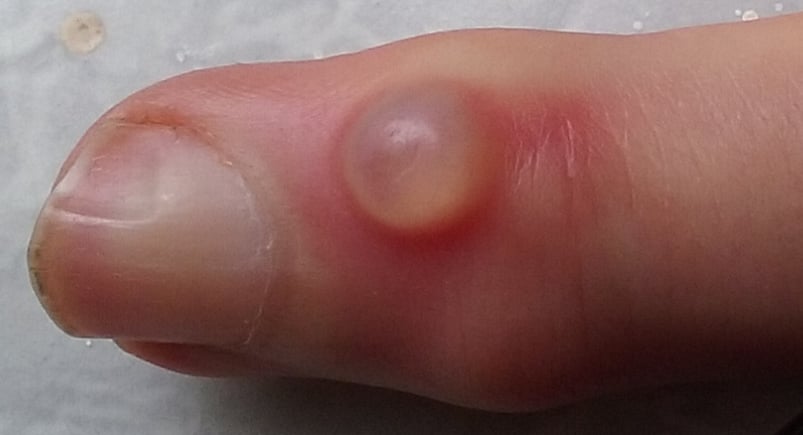
Feel. The cyst is firm and fluctuant when tense, and may be soft; it is usually non-tender or minimally tender. It moves with the extensor tendon during DIP flexion and extension, and it transilluminates. Compression may reduce its size temporarily. Palpate the joint beneath for osteophytes, crepitus and tenderness.
Move. DIP extension is usually reduced by the osteoarthritis, while flexion is often preserved or mildly limited; crepitus with motion is common, with pain at end range. Love's test is not routinely performed, and aspiration serves the diagnostic purpose.
- Location
- Dorsal DIP joint, near nail fold
- Appearance
- Smooth, dome-shaped, translucent
- Consistency
- Firm-fluctuant
- Transillumination
- Positive
- Associated features
- DIP OA, nail groove
- Management
- Observation or surgical excision
- Location
- Anywhere on finger
- Appearance
- Skin-coloured, central punctum often visible
- Consistency
- Firm, cheesy material
- Transillumination
- Negative
- Associated features
- Prior trauma or surgery
- Management
- Excision with complete cyst wall removal
- Location
- Dorsal/dorsolateral DIP joint
- Appearance
- Bony hard enlargement, not cystic
- Consistency
- Bony hard
- Transillumination
- Negative
- Associated features
- DIP OA, may have overlying cyst
- Management
- Observation, DIP arthrodesis if painful
- Location
- Subungual, rarely dorsal
- Appearance
- Small, bluish-red if visible
- Consistency
- Firm
- Transillumination
- Negative
- Associated features
- Severe pain, cold sensitivity
- Management
- Surgical excision
- Location
- Usually volar, can be dorsal
- Appearance
- Firm, lobulated, not translucent
- Consistency
- Firm-rubbery
- Transillumination
- Negative
- Associated features
- None, young adults more common
- Management
- Surgical excision
- Location
- Nail bed or periungual
- Appearance
- Irregular, ulcerated, verrucous
- Consistency
- Firm, infiltrative
- Transillumination
- Negative
- Associated features
- Chronic inflammation, prior radiation
- Management
- Biopsy, oncologic excision
- Location
- Periungual or dorsal finger
- Appearance
- Hyperkeratotic, cauliflower-like
- Consistency
- Hard
- Transillumination
- Negative
- Associated features
- HPV infection, multiple lesions
- Management
- Topical treatment, cryotherapy, excision
The combination of dorsal DIP location, transillumination and an associated nail groove makes the diagnosis of mucous cyst straightforward in most cases.
Investigations
Radiographs. AP and lateral views of the DIP joint document the underlying osteoarthritis, identify the dorsal osteophytes that must be removed at surgery to reduce recurrence, rule out other bony pathology, and complete the pre-operative assessment. They show:
- Joint space narrowing, almost universal
- Dorsal osteophytes, in more than 90%
- Subchondral sclerosis, consistent with osteoarthritis
- Subchondral cysts, which may be present
- Joint malalignment, as subluxation or deviation
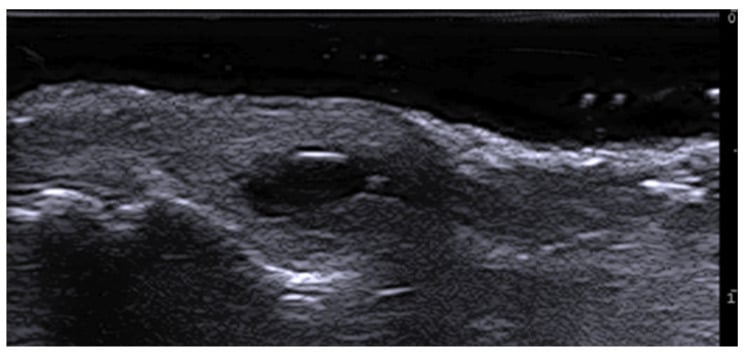
Ultrasound. It can confirm the cystic nature of the lesion, demonstrate its connection to the joint, and assess the cyst dynamically during finger motion. It is operator-dependent and not routinely necessary. It is most useful when the lesion is occult, subungual or diagnostically uncertain, where absence of internal vascularity helps separate a simple cyst from a solid vascular tumour.
MRI. Rarely indicated for diagnosis, it may be performed if the diagnosis is unclear or there is concern for other pathology such as tumour or infection. It shows a cystic lesion communicating with the DIP joint and can assess the integrity of the extensor tendon.
Diagnostic aspiration. A 25-27 gauge needle after sterile preparation yields thick, clear, gelatinous, viscous fluid (mucin). Microscopy shows acellular mucin with no epithelial lining, and culture is sterile unless there is secondary infection.
Biopsy. Rarely required, because the clinical diagnosis is usually sufficient. Consider it for an atypical presentation or a concern for malignancy (squamous cell carcinoma, melanoma), and send the excised cyst for histopathology routinely.
Non-Operative Management
Observation. A reasonable course for:
- The asymptomatic or minimally symptomatic cyst
- A small cyst with no skin thinning
- No nail deformity
- The patient who prefers to avoid surgery
- Significant comorbidities that make surgery risky
Natural history. The cyst may remain stable in size, or rupture spontaneously and resolve temporarily; spontaneous permanent resolution is rare. Nail deformity may progress with prolonged compression.
Counselling. This is a benign condition with no malignant potential, and surgery is elective, for symptomatic relief or cosmesis. Observation is reasonable while symptoms are minimal, and the patient can proceed to surgery if they worsen.
Aspiration, with or without steroid. The technique:
- Sterile preparation
- Insert a 25-27 gauge needle
- Aspirate the viscous gelatinous material
- Optionally, inject triamcinolone 10-20 mg
- Apply a pressure dressing
What it achieves. Initial success, meaning decompression of the cyst, is 70-90%, and temporary relief follows in 50-70%, but recurrence is 50-80% within 6 months and multiple aspirations may be needed. The benefit of the added steroid is unclear. Aspiration addresses the cyst but not the osteophyte, and the pseudocyst, with no epithelial barrier, reforms.
Its risks. Infection (under 1%), bleeding or haematoma, skin thinning with repeated aspirations, and persistent recurrence.
Its place. A temporising measure for patients who decline surgery or are poor surgical candidates.
Activity modification. Avoid repetitive gripping or pinching and activities that stress the DIP in flexion, and protect the cyst with padding and gloves. It has limited impact on cyst size or symptoms but may prevent skin breakdown.
Surgical Management
Indications. The absolute indications are:
- Impending skin ulceration or breakdown
- Recurrent secondary infection
- Severe nail deformity with matrix compression
The relative indications are:
- Failed non-operative management, with recurrence after aspiration
- The patient's wish for definitive treatment
- Cosmetic concern
- Pain, usually from the underlying DIP arthritis
- Functional limitation from the cyst
Contraindications. Active infection is a relative contraindication to elective excision: treat the infection first (the infected cyst is covered below). Poor wound-healing capacity (severe peripheral vascular disease, uncontrolled diabetes), unrealistic expectations and inability to comply with post-operative care also weigh against surgery.
Counselling and consent. Explain the procedure and the technique options, the 2-3 weeks of protective splinting afterwards, and that the underlying DIP arthritis remains. Consent covers the complications tabulated below, and two points belong in the conversation beforehand: the dorsal DIP scar is usually acceptable, and 10-20% need a skin graft.
Surgical Technique
Anaesthesia. A digital block with 1% lidocaine with adrenaline, a finger tourniquet for haemostasis, and sedation as an option.
Incision. Choose it for the cyst size and the quality of the skin:
- Curvilinear over the cyst, curved to avoid the nail fold
- Elliptical, excising the thinned skin with the cyst
- H-plasty or V-Y advancement for larger defects
Planning a dorsal flap. Plan the incision so the cyst remains at the base of a broad, viable flap rather than at a narrow tip. The flap gives access to both collateral intervals and the dorsal capsule while protecting the terminal extensor tendon and avoiding a scar directly across the nail fold.
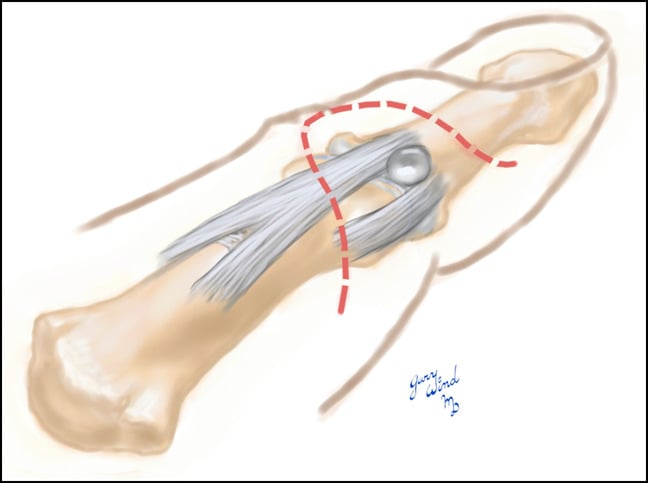
The steps.
- Incise the skin
- Identify the cyst, usually adherent to the extensor tendon
- Dissect it carefully off the tendon under tourniquet, identifying any stalk to the joint; preserve the tendon, working around it or splitting it if necessary
- Excise the cyst completely, including the stalk and any connection to the joint
- Identify the DIP joint capsule
- Identify the dorsal osteophytes with a Freer elevator, remove them with a rongeur or osteotome, and smooth the joint surface
- Protect the germinal matrix with careful dissection near the nail fold
- Release the tourniquet and achieve haemostasis
- Close primarily if possible; otherwise skin graft or healing by secondary intention
Post-operative Management
0-2 weeks. A protective dorsal splint in extension or slight flexion, elevation of the hand to reduce swelling, a clean dry dressing, paracetamol and NSAIDs if not contraindicated, and a watch for signs of infection.
2-4 weeks. Sutures come out at 10-14 days, or after graft take if a full-thickness graft was used. Begin gentle active DIP motion, start scar massage once the wound has healed, and avoid forceful gripping or pinching.
4-8 weeks. Progressive strengthening and full return to activities as tolerated, with occupational therapy for persistent stiffness, while watching for recurrence.
Beyond 8 weeks. Follow the nail as the groove grows out, keep surveillance for recurrence, whose risk is greatest in the first year, and manage the underlying DIP arthritis if it is symptomatic.
Outcomes
Recurrence by operation.
- Excision without osteophyte removal: 20-40%
- Excision with osteophyte removal: 5-15%
- DIP arthrodesis, for severe DIP osteoarthritis: under 5%
How firm those figures are. The 20-40% and 5-15% figures are conventionally quoted for fingers, and neither is measured by any study cited on this page. The one comparative series here, Choi's in lesser toes, found 31.8% recurrence even after osteophytectomy. The cyst on a joint with no radiographic osteophyte is a separate question, taken up under Controversies.
Function. DIP motion is usually unchanged from baseline (the underlying osteoarthritis limits motion). Patient satisfaction with the cosmetic improvement is high (80-90%), the nail groove resolves in 80-90% over 6-12 months, and return to full activities typically takes 4-6 weeks.
What predicts recurrence.
- Failure to remove the dorsal osteophytes, the most important factor
- Incomplete cyst excision
- DIP joint instability
- Continued heavy hand use in the early post-operative period
Choi JY, Lee SS, Jung YH, Suh JS. Operative outcome of mucous cyst of lesser toes: a comparison between cyst excision with osteophytectomy and distal interphalangeal fusion. Foot Ankle Surg. 2023;29(3):256-260.
Complications
- Incidence
- 5-15% (with osteophyte removal)
- Timing
- Typically within first year
- Prevention
- Complete cyst excision, osteophyte removal, joint smoothing
- Management
- Observation if asymptomatic, revision excision if symptomatic
- Outcome
- Revision surgery successful in 85-90%
- Incidence
- 2-5% (permanent), 10-20% (transient)
- Timing
- Evident in weeks post-op, persistent if matrix injury
- Prevention
- Meticulous dissection near nail fold, avoid germinal matrix injury
- Management
- Observation for transient cases, nail reconstruction for permanent deformity
- Outcome
- Most transient deformities resolve in 6-12 months
- Incidence
- 1-2%
- Timing
- First 1-2 weeks post-operative
- Prevention
- Sterile technique, prophylactic antibiotics (controversial), wound care
- Management
- Oral antibiotics, possible surgical drainage if abscess
- Outcome
- Good with early treatment, may delay healing
- Incidence
- 5-10% (higher with thin skin)
- Timing
- First 2-3 weeks post-operative
- Prevention
- Tension-free closure, consider FTSG for large defects
- Management
- Local wound care, secondary intention healing, possible revision
- Outcome
- Heals with treatment, scar may be suboptimal
- Incidence
- 10-20%
- Timing
- Develops in first 6-12 weeks
- Prevention
- Early mobilisation (after initial protection), hand therapy
- Management
- Hand therapy, dynamic splinting, rarely arthrolysis
- Outcome
- Improves with therapy, often limited by underlying OA
- Incidence
- 5-10%
- Timing
- Months post-operative
- Prevention
- Minimise tension, proper wound care, scar massage
- Management
- Scar massage, silicone sheets, steroid injection, revision
- Outcome
- Usually acceptable, revision for bothersome cases
- Incidence
- Less than 1%
- Timing
- Intra-operative recognition
- Prevention
- Careful dissection, identify tendon anatomy
- Management
- Primary repair if identified, splinting
- Outcome
- Good if repaired primarily
Management of Recurrence
Is it a recurrence? Confirm on examination that this is a true recurrence rather than a prominent arthritic DIP joint, obtain radiographs for residual or new osteophytes, and consider MRI if the diagnosis is uncertain.
The options. Observe the asymptomatic or minimally symptomatic recurrence; aspiration is a temporising measure. Revision excision is the definitive treatment: review the prior operative note for the technique used, ensure complete removal of cyst and osteophyte, and consider a full-thickness graft for better skin coverage.
DIP arthrodesis. Indicated for a recurrent cyst with severe DIP arthritis, or for pain from the arthritis, using a standard technique with K-wire, screw or plate. It all but eliminates recurrence (under 5%, as above) and relieves the arthritic pain, at the price of DIP motion.
The Infected or Discharging Cyst: from Elective Cosmetic Lesion to DIP Joint Emergency
Why a ruptured cyst is dangerous. The overlying skin is atrophic and translucent and can become extremely thin, so minor trauma breaks it down, leaking clear gelatinous fluid. The cyst communicates with the DIP joint through a stalk in roughly 60-70% of cases, so a spontaneously ruptured or ulcerated cyst is effectively an open sinus tracking directly into the joint. Bacteria inoculated through that sinus can produce septic arthritis of the DIP joint or osteomyelitis of the distal phalanx.
Who is at risk. Infection is rare but serious, and it is the most concerning complication, particularly in diabetic patients; the risk is higher with diabetes or immunosuppression.
Bland or infected. A bland spontaneous rupture discharges clear, viscous, gelatinous mucin with temporary decompression and relief; the joint is not hot and the finger is not disproportionately painful. That is not an emergency, but the cyst will recur and can re-ulcerate, so it remains a firm indication for elective definitive excision. The red flags of an infected or threatened cyst are:
- Disproportionate or increasing pain (a bland cyst is typically painless)
- Spreading erythema
- Warmth
- Purulent rather than gelatinous discharge
- Any systemic upset
What changes in management. Once inflammation or discharge is present, management shifts from elective to urgent, and the office reflexes are actively wrong:
- Do not aspirate or inject an inflamed or discharging cyst: needling an infected pseudocyst risks seeding organisms straight into the DIP joint
- Assess for established septic arthritis and treat it on its own merits, with urgent antibiotics with or without surgical drainage. The general work-up and antibiotic principles belong to adult septic arthritis, and the broader hand-sepsis picture to Deep Space Infections - Hand
- If infection is confirmed or the sinus is established, proceed to surgical debridement: excise the cyst and its sinus tract, wash out the DIP joint, send tissue for culture, and obtain radiographs to exclude osteomyelitis of the distal phalanx before planning definitive skin cover
A chronically discharging but non-infected cyst is still a relative surgical indication, precisely because the standing sinus is a continuous infection risk.
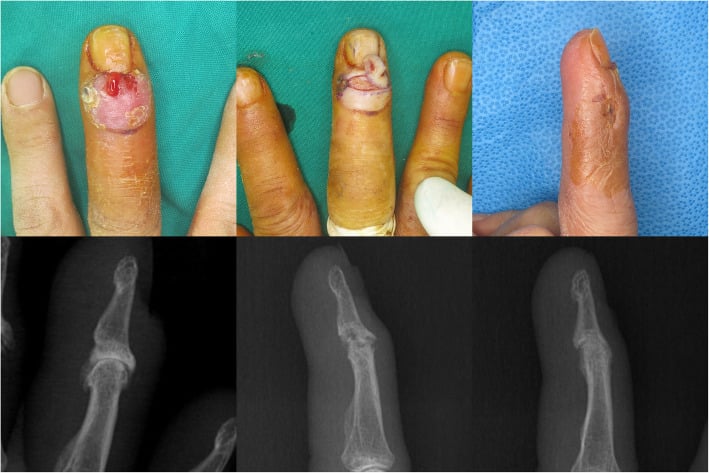
The examiner's trap is to offer aspiration for a red, painful, discharging DIP swelling. State plainly that a mucous cyst communicates with the joint in most cases, so an inflamed or discharging cyst is a sinus into the DIP joint — aspiration or steroid injection risks converting it into frank septic arthritis or osteomyelitis of the distal phalanx. The correct pathway is urgent assessment for joint sepsis, then debridement with excision of the sinus tract, joint washout, culture and radiographs, not office needling.
Guidelines, Registries & Global Practice
There is no formal society guideline or registry for digital mucous cysts; this is a benign condition managed largely on the basis of case series and expert consensus. Practice is therefore convergent across hand-surgery and dermatology communities worldwide rather than divided by national guidance.
Global Epidemiology
- The most common cutaneous cyst/tumour of the digit, peaking at 50-70 years with a female predominance (roughly 2-3:1).
- Strongly age-linked through its association with DIP osteoarthritis; over 90% of finger cases occur on an arthritic joint, while a minority (often younger patients) have no radiographic osteoarthritis.
- Toe (lesser-toe DIP) cysts are recognised but far less common than finger cysts.
Convergent Practice and Where Communities Differ
- Typical first approach
- Open excision with osteophytectomy as definitive treatment
- Surgical philosophy
- Address the bony driver; reserve DIP arthrodesis for recurrent or painfully arthritic joints
- Typical first approach
- Office-based minimally invasive options first (sclerotherapy, repeated aspiration, cryotherapy, CO2 laser)
- Surgical philosophy
- Joint-sparing; surgery referred onward if these fail
- Typical first approach
- Aspiration and reassurance; expectant management of asymptomatic cysts
- Surgical philosophy
- Surgery reserved for impending ulceration, infection or marked deformity
Evidence-Based Points of Agreement
- Osteophyte / capsule is the target, not the cyst alone: excision without osteophytectomy recurs in 20-40% versus 5-15% with it.
- Aspiration alone is temporising (50-80% recurrence) but is a legitimate choice for patients declining surgery or who are poor operative candidates.
- DIP arthrodesis essentially eliminates recurrence and is well tolerated functionally because the DIP joint contributes little to overall hand function; it is appropriate when the joint is already painful and arthritic.
- Match treatment to the radiograph: cysts without osteoarthritis can be managed with non-surgical aspiration/injection techniques, whereas osteophyte-bearing cysts need bony surgery for durable cure.
Controversies & Areas of Uncertainty
Minimally invasive or open surgery. Sclerotherapy and percutaneous capsulotomy report resolution rates of 70-80% with low morbidity in dermatology and hand series. Follow-up is short, though, and there is no head-to-head randomised comparison with open excision plus osteophytectomy, which remains the lowest-recurrence joint-preserving option on long-term data.
Is osteophytectomy always required? Under 10% of cysts arise on a joint with no radiographic osteophyte, and in that minority bony surgery may be unnecessary: Vanmierlo's series of 15 such cysts resolved in 80% with aspiration and injection alone at 6 months. Obtain radiographs before deciding, and note that the evidence for the non-arthritic subset is 15 patients followed for half a year.
Steroid added to aspiration. The evidence is conflicting, and most series show no clear durable benefit over aspiration alone.
Skin coverage. There is no consensus on the threshold for primary closure versus local flap versus full-thickness graft for thin dorsal defects. The choice remains surgeon-dependent, based on defect size and skin quality.
Early arthrodesis or joint-preserving excision. Arthrodesis all but abolishes recurrence but sacrifices motion. Whether to offer it primarily for an already-arthritic, painful joint, or only after recurrence, is a judgement call without trial-level guidance.
Related pages: DIP Joint Arthritis and Interphalangeal Arthritis for the osteoarthritis that drives over 90% of these cysts and determines whether osteophytectomy or arthrodesis is the right operation; Ganglion Cysts for the wrist lesion that shares the mucinous content and one-way-valve mechanism but not the bony driver, and Intraosseous Ganglion for the intra-bony variant; Seymour Fracture and Nail Bed Injuries for germinal matrix anatomy behind the longitudinal nail groove; and Osteoarthritis Pathophysiology for why the marginal osteophyte forms in the first place.
Summary
Digital mucous cysts are benign pseudocysts arising from the dorsal DIP joint, containing viscous gelatinous mucinous material. They occur predominantly in women aged 50-70 years and are almost universally associated with underlying DIP joint osteoarthritis and dorsal osteophytes.
Patients present with a dome-shaped, translucent, fluctuant mass over the dorsal DIP joint. Nail deformity (longitudinal groove) occurs in 30-40% of cases when the cyst compresses the germinal matrix. Diagnosis is clinical, confirmed by transillumination and aspiration of gelatinous mucin. Plain radiographs demonstrate DIP osteoarthritis and dorsal osteophytes in greater than 90% of cases.
Non-operative management includes observation and aspiration, with recurrence rates of 50-80% after aspiration alone. Surgical excision with osteophyte removal is the definitive treatment, reducing recurrence to 5-15%. The most critical surgical step is complete removal of dorsal osteophytes, as failure to do so results in high recurrence rates (20-40%).
Skin closure options include primary closure, full-thickness skin graft (for large defects), or healing by secondary intention. Complications include recurrence (5-15%), nail deformity (2-5% permanent), infection (1-2%), and wound dehiscence (5-10%).
Long-term outcomes are excellent with high patient satisfaction (80-90%), resolution of nail groove in 80-90% over 6-12 months, and return to full activities by 4-6 weeks. For recurrent cysts with severe DIP arthritis, DIP arthrodesis provides definitive treatment with less than 5% recurrence and excellent pain relief.
Exam Viva Scenarios
Practise clinical reasoning and management decisions out loud
“A 62-year-old woman presents with a painless dorsal swelling over her left middle finger DIP joint that has been present for 18 months. She is mainly concerned about the cosmetic appearance. Examination shows a 6mm fluctuant, semi-translucent swelling on the dorsal DIP joint with a longitudinal nail groove. There is no tenderness but mild DIP joint enlargement. How would you assess and manage this?”
“You are performing excision of a mucous cyst on the index finger DIP joint. After removing the cyst and performing osteophytectomy, you have a 12mm x 8mm skin defect and the edges cannot be brought together without excessive tension. The patient is in her 70s with thin skin. What are your options and what would you recommend?”
“A 58-year-old man had excision of a mucous cyst 9 months ago. The cyst has recurred in the same location. He brings his operative note which describes 'excision of cyst and primary closure' but makes no mention of osteophyte removal. He is frustrated and asks about further management. What would you do?”
One-Liner Definition
- Digital mucous cysts are benign ganglion-like pseudocysts arising from the dorsal DIP joint capsule
- Contains gelatinous mucinous material
- Almost always associated with underlying DIP osteoarthritis and dorsal osteophytes
Clinical Triad
- Dorsal DIP joint fluctuant translucent swelling
- Underlying DIP joint osteoarthritis with dorsal osteophytes
- Nail deformity (longitudinal groove) in 30-40% if germinal matrix compressed
Key Examination Findings
- Dome-shaped, smooth, firm-fluctuant mass over dorsal DIP joint
- Transillumination positive
- Thin overlying skin
- Nail groove corresponds to cyst location
- Heberden's nodes at DIP joint
- Reduced DIP extension from arthritis
Pathogenesis
- DIP joint osteoarthritis leads to dorsal osteophyte formation
- Osteophytes cause focal capsular stress and myxoid degeneration
- Mucinous material accumulates forming pseudocyst (no epithelial lining)
- One-way valve allows synovial fluid entry but not exit
Investigations
- Clinical diagnosis usually sufficient
- Plain radiographs (AP and lateral DIP) show DIP OA, joint space narrowing, dorsal osteophytes in greater than 90%
- Aspiration yields thick, clear, gelatinous mucin
- MRI rarely needed
Non-Operative Management
- Observation for asymptomatic/minimally symptomatic
- Aspiration with optional steroid injection (50-80% recurrence)
- Activity modification
- Protective padding
- No role for splinting or cryotherapy as primary treatment
Surgical Indications
- Failed non-operative management
- Impending skin ulceration
- Cosmetic concerns
- Severe nail deformity
- Recurrent infection
- Patient preference for definitive treatment
Surgical Technique Principles
- Complete cyst excision including stalk
- Dorsal osteophyte removal MANDATORY (critical to prevent recurrence)
- Protect germinal matrix
- Preserve extensor tendon
- Closure: primary if possible, FTSG for large defects, or secondary intention
Recurrence Rates
- Aspiration alone: 50-80%
- Excision without osteophyte removal: 20-40%
- Excision WITH osteophyte removal: 5-15%
- DIP arthrodesis: less than 5%
Complications
- Recurrence (5-15% with osteophyte removal)
- Nail deformity (2-5% permanent, avoid germinal matrix injury)
- Infection (1-2%)
- Wound dehiscence (5-10%)
- Stiffness (10-20%, often from underlying OA)
Common Viva Questions
- Why is it called a pseudocyst? (No epithelial lining, fibrous capsule only)
- What is the most important surgical step? (Osteophyte removal to prevent recurrence)
- How does nail groove form? (Cyst compresses germinal matrix causing focal growth disturbance)
- Why does aspiration fail? (Doesn't address osteophyte, one-way valve reforms)
Pearls and Pitfalls
- PEARLS: Osteophyte removal is KEY
- Transillumination confirms diagnosis
- Nail groove resolves after excision (6-12 months)
- DIP arthrodesis option for recurrent cyst with severe OA
- PITFALLS: Forgetting osteophyte removal (high recurrence)
- Injuring germinal matrix (permanent nail deformity)
- Excessive skin tension (wound dehiscence)