Osteoarthritis | Post-Traumatic | Silicone Arthroplasty | Arthrodesis
- PIP Anatomy: Collateral ligaments (proper and accessory), volar plate, central slip insertion.
- Bouchard Nodes: Dorsal osteophytes at PIP joint in primary OA.
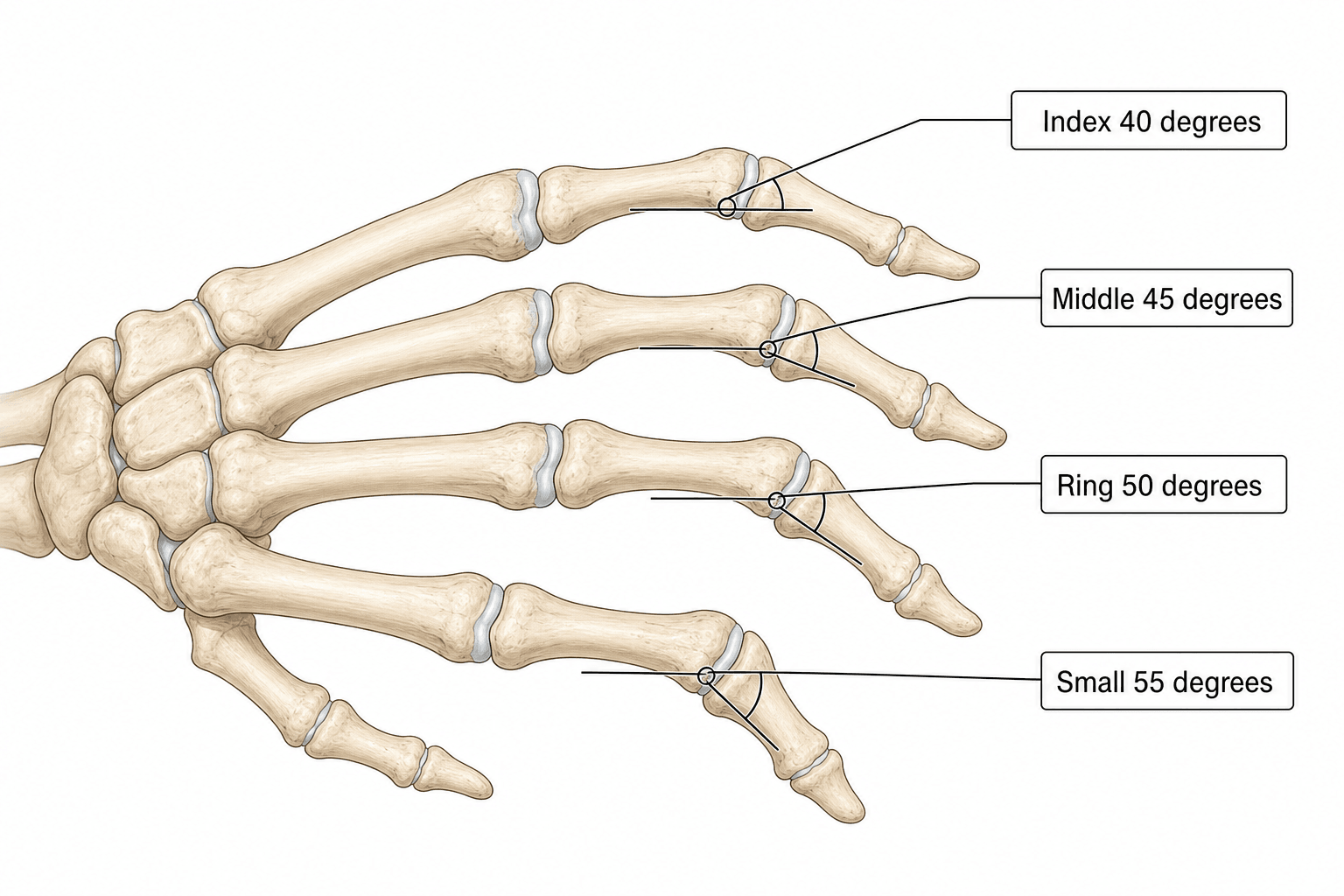
- Arthrodesis Angle: 40° index, 45° middle, 50° ring, 55° small finger.
- Silicone Arthroplasty: Best for low-demand patients, preserves a 40-60° arc of motion.
- Surface Replacement: For younger active patients, requires intact collaterals.
- “Index finger arthrodesis at 40° (pointing/pinch)
- “Middle finger can tolerate arthroplasty (motion needed)
- “Unstable joints: arthrodesis over arthroplasty
- “Check collateral ligaments before surface replacement
Overview and Epidemiology
PIP joint arthritis covers the degenerative, post-traumatic and inflammatory conditions of the proximal interphalangeal joint, and all of them end in pain, stiffness and functional impairment. It is a common viva topic, and the questions are about surgical decision-making: when to fuse and when to replace, which angle to fuse at, and whether the collateral ligaments are competent. Know the functional demands of each finger.
Who. PIP arthritis affects 10-15% of adults over 60, with a peak at 50-70 years, and is commoner in manual labourers. Primary OA is three times commoner in women (3:1). The middle and index fingers are most commonly affected. Post-traumatic arthritis affects younger patients, aged 30-50, after fracture-dislocation.
Causes. Post-traumatic arthritis is the most common aetiology among patients who come to surgery.
- Primary osteoarthritis, idiopathic, with Bouchard nodes
- Post-traumatic, after fracture-dislocation or chronic instability
- Inflammatory, in rheumatoid and psoriatic arthritis
- Crystalline, in gout and pseudogout
- Septic sequelae, cartilage loss after previous infection
Pathophysiology
The joint. The PIP is a hinge joint: the bicondylar head of the proximal phalanx articulates with the base of the middle phalanx. Its stability depends on soft tissue, and understanding these structures is essential for surgical planning.
- Proper collateral ligaments: origin dorsal to the axis of rotation; tight in flexion
- Accessory collateral ligaments: insert on the volar plate; tight in extension
- Volar plate: fibrocartilaginous; prevents hyperextension and contributes lateral stability
- Checkrein ligaments: prevent hyperextension
- Central slip: inserts on the dorsal base of the middle phalanx and maintains extension
The four stabilisers, the proper and accessory collaterals, the checkrein ligaments and the volar plate, must all be assessed before surface replacement arthroplasty is considered.
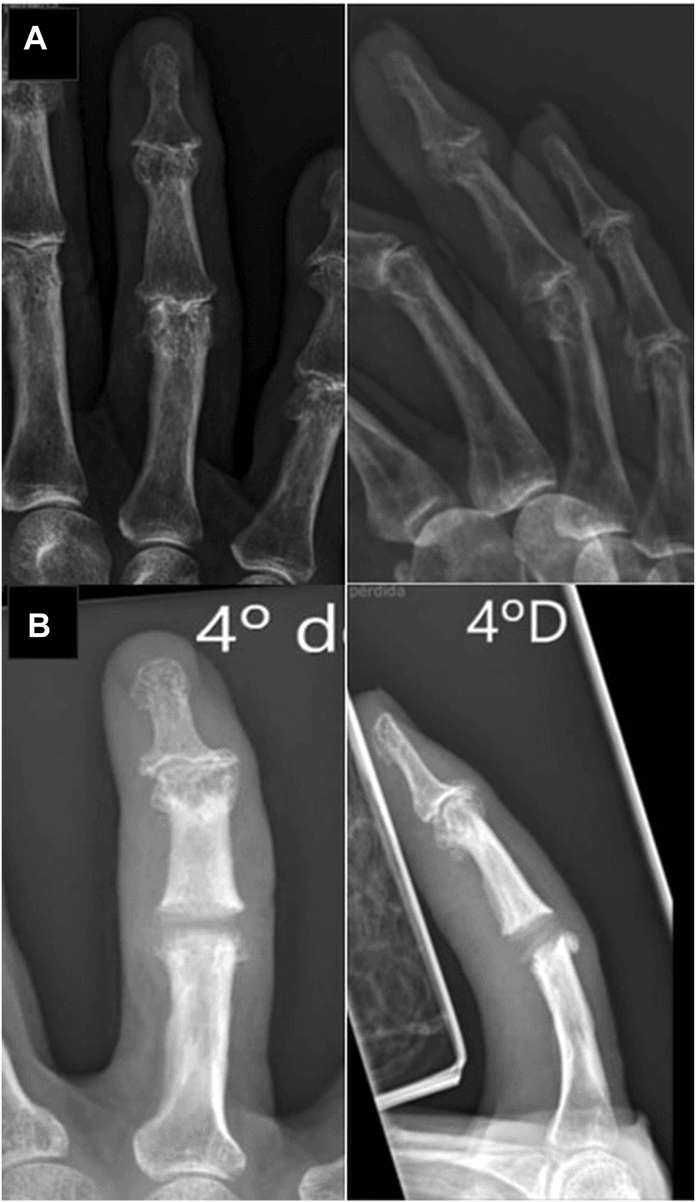
Primary osteoarthritis. Repetitive microtrauma causes progressive cartilage loss, followed by subchondral sclerosis and cyst formation. Marginal osteophytes form on the dorsal and lateral aspects of the joint, the Bouchard nodes, and synovial inflammation and capsular contracture follow. The end result is progressive pain, stiffness and loss of motion.
Post-traumatic arthritis. It is common after fracture-dislocation. The joint is damaged by intra-articular malunion that leaves it incongruent, by chronic instability after ligament injury, or by avascular necrosis of the middle phalangeal base. Soft-tissue injury adds deformity: central slip injury leads to a boutonniere, volar plate injury to a swan-neck. Address the deformity first.
The PIP as the Functional Keystone of the Digit
The argument between motion and pain-free stability is fiercer at the PIP than at any other finger joint, and the reason is biomechanical.
The largest share of flexion. Of the roughly 260° of composite flexion available across the MCP, PIP and DIP joints, the PIP provides about 100°, more than either neighbour. It does most of the work of bringing the fingertip to the palm, so grasp depends on it disproportionately.
Why fusing a PIP costs more than fusing a DIP. A fused DIP loses only a small terminal arc and is well tolerated. A fused PIP removes the dominant flexion contribution, so the fingertip can no longer reach the palm and both fine and power grasp suffer. That is why arthroplasty is weighed so heavily against arthrodesis at the PIP, whereas DIP arthritis is comfortably fused.
The functional arc. For most grasp the mid-range of PIP motion matters most, so the realistic surgical goal is a useful arc positioned in the functional range rather than a large absolute number. A silicone spacer giving a stable, painless 40-60° arc is often more useful than a wider arc that is unstable or painful. This is also why the evidence that no implant reliably increases range of motion still supports arthroplasty: it preserves a functional arc and relieves pain.
Why the border digits differ. The index trades motion for stability willingly, because pinch and pointing need a stable post, so fusion is well tolerated. The ring and small fingers need flexion for power grip and the cascade, so motion preservation is valued most there, and the arthrodesis angle is set in progressively more flexion from radial to ulnar.
Classification Systems
The Eaton-Littler grade ties the radiograph to the first treatment decision.
- Radiographic Findings
- Synovitis, minimal changes
- Clinical Features
- Pain, mild stiffness, preserved motion
- Treatment
- NSAIDs, splinting, activity modification
- Radiographic Findings
- Joint space narrowing, early osteophytes
- Clinical Features
- Moderate pain, 20-30° motion loss
- Treatment
- Conservative, intra-articular injection
- Radiographic Findings
- Significant joint space loss, bone-on-bone
- Clinical Features
- Severe pain, stiffness, functional limitation
- Treatment
- Arthroplasty or arthrodesis
- Radiographic Findings
- Severe destruction with subluxation or instability
- Clinical Features
- Severe pain, deformity, ligament incompetence
- Treatment
- Arthrodesis preferred
Grades I and II get a trial of conservative management. In grade III the decision is surgical and rests on the patient's demands and the stability of the joint. In grade IV arthrodesis is preferred, because the ligaments are incompetent.
Clinical Assessment
History. The patient reports pain at the PIP joint, worse with gripping, and stiffness, especially in the morning or after rest. Fine motor tasks such as buttoning and writing become difficult, and the joint swells and becomes visibly deformed by Bouchard nodes. Ask about grip weakness, catching or locking from loose bodies, cold intolerance in post-traumatic cases, and involvement of other joints, as in inflammatory arthritis.
Inspection. Look for Bouchard nodes and for deformity: a flexion or extension contracture, a swan-neck or a boutonniere. Erythema suggests inflammatory or crystalline arthritis, and intrinsic muscle atrophy is seen in chronic cases.
Palpation. Tenderness is localised to the PIP joint line, passive motion produces crepitus, and osteophytes are palpable as dorsal or lateral bony prominences. Assess the collateral ligaments with radial and ulnar stress.
Range of motion. Compare active motion with the other hand, and use passive motion to tell a fixed from a dynamic contracture. An extensor lag reflects central slip insufficiency (boutonniere); hyperextension reflects volar plate incompetence (swan-neck).
- Technique
- Radial/ulnar deviation at 30° flexion
- Positive Finding
- Greater than 20° laxity or no endpoint
- Interpretation
- Ligament incompetence, arthrodesis indicated
- Technique
- Hyperextension stress test
- Positive Finding
- Greater than 30° hyperextension
- Interpretation
- Volar plate injury, swan-neck risk
- Technique
- Elson test (90° flexion, resist extension)
- Positive Finding
- Weak or absent middle phalanx extension
- Interpretation
- Central slip disruption, boutonniere
- Technique
- Passive wrist flexion/extension
- Positive Finding
- PIP motion less than 30° arc
- Interpretation
- Severe joint contracture or adhesions
- Acute inflammation with fever: septic arthritis until proven otherwise
- Rapid progression: consider inflammatory or crystalline arthropathy
- Severe instability: risk of dislocation, urgent surgical planning
- Vascular compromise: check for arterial injury in trauma cases
Investigations
Radiographs. PA, lateral and oblique views show:
- Joint space narrowing, from loss of articular cartilage
- Subchondral sclerosis, seen as increased bone density
- Osteophytes (Bouchard nodes)
- Subchondral cysts, geodes from synovial fluid intrusion
- Subluxation, with joint incongruity or malalignment
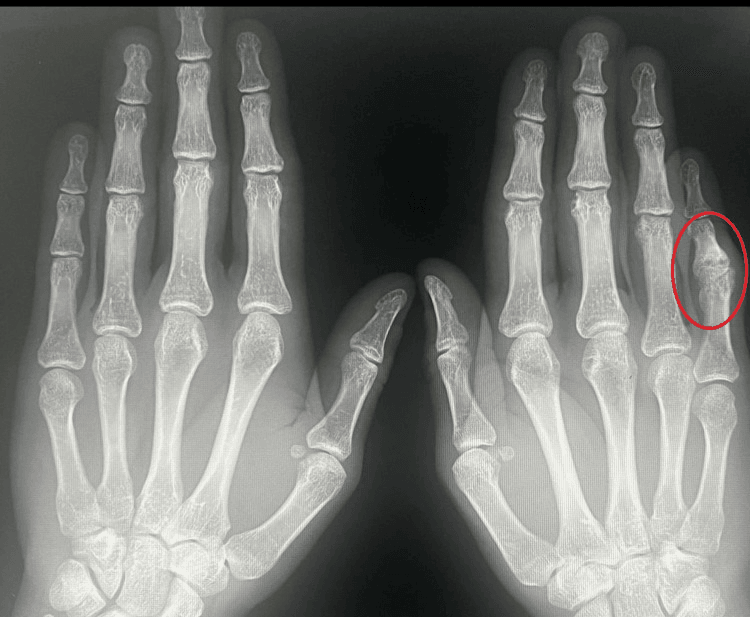
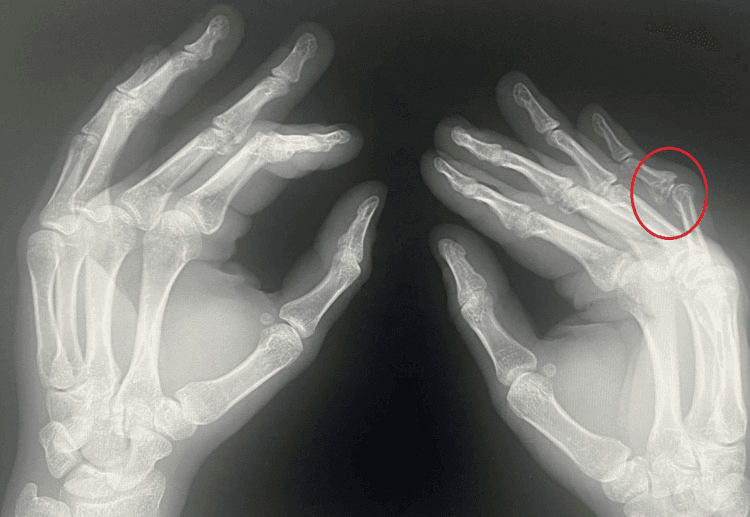
Advanced imaging. CT assesses intra-articular fracture malunion and bone loss and helps surgical planning. MRI evaluates cartilage loss, ligament integrity, synovitis and loose bodies. Ultrasound gives a dynamic assessment of the collateral ligaments and of synovitis.
Blood tests are for suspected inflammatory arthritis:
- Rheumatoid factor, positive in 70-80% of RA
- Anti-CCP antibodies, specific for RA
- ESR and CRP, elevated in active inflammation
- Uric acid, elevated in gout
- ANA, positive in systemic lupus erythematosus
Joint aspiration looks for crystals in the synovial fluid. Monosodium urate crystals (gout) are needle-shaped with negative birefringence; calcium pyrophosphate crystals (pseudogout) are rhomboid with positive birefringence.
Differential Diagnosis
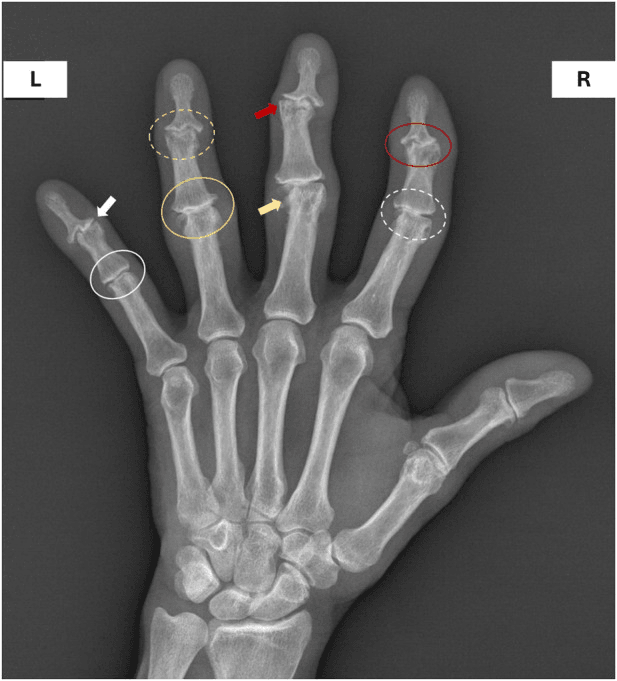
Not all painful, swollen PIP joints are osteoarthritis. The pattern of involvement, the presence of systemic features, and the radiographic appearance distinguish the main causes.
- Distinguishing Features
- Older, female predominance, Bouchard nodes, DIP often involved
- Radiographic / Lab Clues
- Joint space loss, osteophytes, subchondral sclerosis; normal inflammatory markers
- Key Discriminator
- Bouchard nodes plus normal CRP
- Distinguishing Features
- Symmetrical, MCP and wrist involvement, morning stiffness over 1 hour, systemic features
- Radiographic / Lab Clues
- Periarticular erosions, osteopenia; RF and anti-CCP positive, raised ESR/CRP
- Key Discriminator
- Erosive change with positive anti-CCP
- Distinguishing Features
- DIP predominance, dactylitis, nail and skin psoriasis
- Radiographic / Lab Clues
- Pencil-in-cup deformity, new bone formation; RF usually negative
- Key Discriminator
- Skin/nail psoriasis with DIP disease
- Distinguishing Features
- Acute attacks, erythema, can be monoarticular
- Radiographic / Lab Clues
- Tophi or chondrocalcinosis; urate or CPP crystals on aspiration
- Key Discriminator
- Crystals on polarised microscopy
- Distinguishing Features
- Acute hot swollen joint, fever, rapid progression
- Radiographic / Lab Clues
- Effusion, later erosion; raised WCC/CRP, organisms on aspirate
- Key Discriminator
- Pus on aspiration - surgical emergency
- Distinguishing Features
- Prior fracture-dislocation or instability, younger patient
- Radiographic / Lab Clues
- Joint incongruity, malunion, focal cartilage loss; normal inflammatory markers
- Key Discriminator
- Clear injury history with focal damage
Management Algorithm
Conservative management first. It is the first-line approach for most patients: those with mild to moderate symptoms (Eaton-Littler grade I-II), those who refuse surgery or are unfit for it, and anyone in whom a trial should come before the surgical decision. It gives satisfactory symptom control in 40-60% of patients with mild to moderate arthritis, and failure after 3-6 months warrants surgical consideration.
Splinting. Four kinds are used:
- Buddy taping to the adjacent finger for stability
- Static splint holding the joint in the functional position, 40-45° flexion
- Serial splinting for progressive correction of a contracture over 6-12 weeks
- Night splint to prevent flexion contracture during sleep
Occupational therapy. Activity modification reduces joint stress, adaptive devices (buttonhooks, jar openers) help with daily living, and joint protection education and range-of-motion exercises maintain flexibility.
NSAIDs. Topical diclofenac gel is applied 3-4 times daily; the oral options are ibuprofen 400 mg TDS or naproxen 500 mg BD. Give a 4-6 week trial at the lowest effective dose, with caution about GI bleeding and renal impairment in the elderly.
Intra-articular injection. Triamcinolone 10 mg or methylprednisolone 20 mg is given through a dorsal approach that avoids the extensor mechanism, to a maximum of 3 injections per year. 50-70% of patients experience pain relief for 3-6 months.
Choosing an operation. Four questions, asked in order, match the procedure to the patient:
- Is the joint stable? A stable joint, with competent collaterals and no deformity, is a candidate for arthroplasty. An unstable joint, with ligament injury, subluxation or bone loss, is fused.
- What are the patient's demands? Low-demand patients (elderly, sedentary, daily living) prioritise motion preservation and pain relief, and suit silicone arthroplasty. Moderate-demand patients (office work, recreation) suit surface replacement. High-demand patients (manual labour, athletes, gripping) benefit from arthrodesis, which is stable, pain-free and durable.
- Which finger? The index has a strong preference for arthrodesis, for pinch stability. The middle finger takes a balanced approach, with arthroplasty if stable. In the ring and small fingers arthroplasty is acceptable if the joint is stable and the demands low.
- What does the patient want? Motion preservation points to arthroplasty, silicone or surface replacement; pain-free stability points to arthrodesis; and return to work depends on the demands of the occupation.
- Functional Role
- Pinch, pointing, precision
- Motion vs Stability
- Stability critical
- Preferred Procedure
- Arthrodesis 40° flexion
- Functional Role
- Power grip, balanced function
- Motion vs Stability
- Motion beneficial
- Preferred Procedure
- Arthroplasty or arthrodesis 45°
- Functional Role
- Power grip, ulnar cascade
- Motion vs Stability
- Motion beneficial
- Preferred Procedure
- Arthroplasty or arthrodesis 50°
- Functional Role
- Power grip, ulnar support
- Motion vs Stability
- Motion beneficial
- Preferred Procedure
- Arthroplasty or arthrodesis 55°
The index preference for fusion is the traditional teaching; the comparative data on it are set out under Controversies.
The collaterals decide resurfacing. Surface replacement needs intact proper and accessory collateral ligaments; incompetent ligaments mean arthrodesis.
- Best Indication
- Low-demand, elderly, multiple digits
- Motion Preserved
- 40-60° arc
- Durability
- 10-15 years
- Key Limitation
- Fracture, subsidence, synovitis
- Best Indication
- Young, active, isolated joint
- Motion Preserved
- Median around 40°; not reliably increased
- Durability
- 5-10 years
- Key Limitation
- Requires intact collaterals, expensive
- Best Indication
- High-demand, unstable, index finger
- Motion Preserved
- 0° (fused)
- Durability
- Permanent
- Key Limitation
- Loss of motion, non-union risk
HILUIndications for Arthrodesis over Arthroplasty
Hook:HILU = when to fuse the PIP joint. High-demand, Index, Ligament injury, Unstable joint = choose arthrodesis.
Contraindications to silicone arthroplasty. High-demand activities (manual labour, gripping, sports), active infection (septic arthritis, osteomyelitis), severe bone loss leaving inadequate stock to support the implant, and collateral or volar plate incompetence. Active inflammatory synovitis in RA is a relative contraindication.
Contraindications to surface replacement. It requires intact collaterals, so ligament incompetence excludes it, as does severe bone loss that leaves inadequate bone for fixation. Active infection is an absolute contraindication. Osteoporosis brings poor bone quality and a risk of subsidence, and non-compliance matters because a strict post-operative protocol is required.
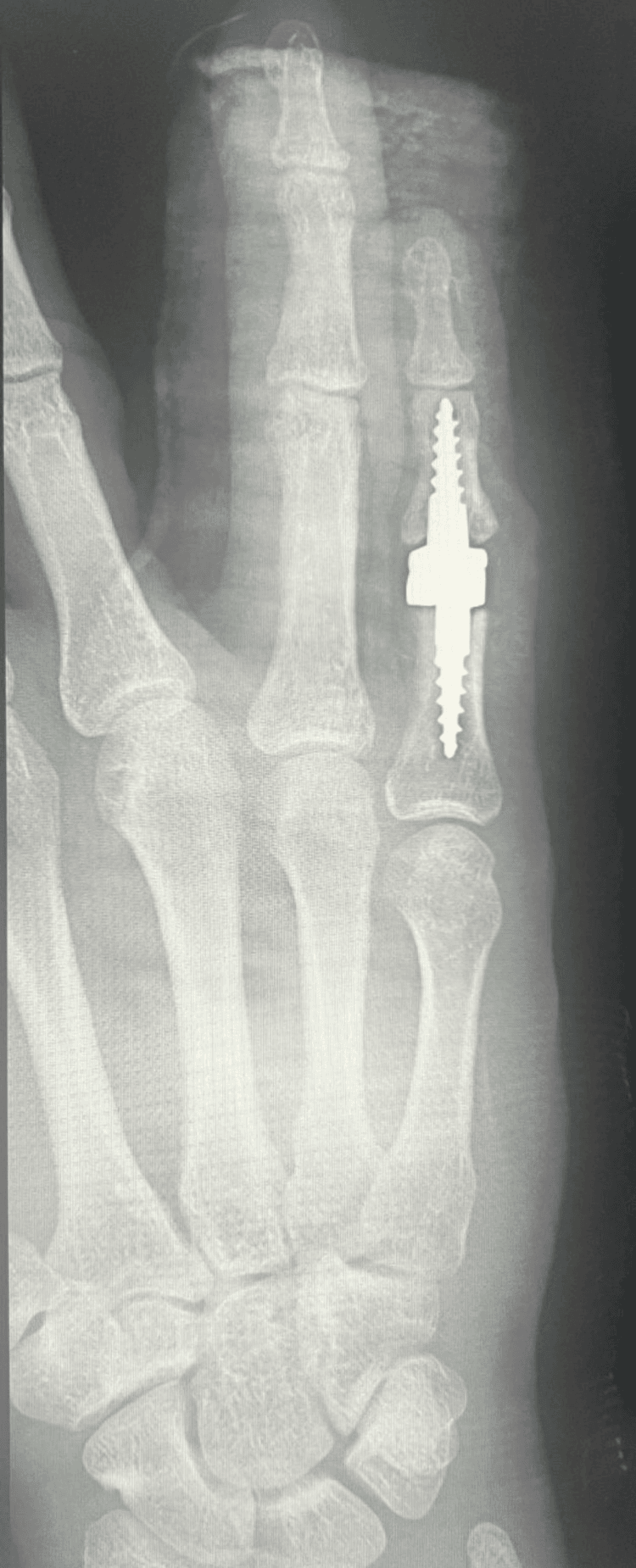
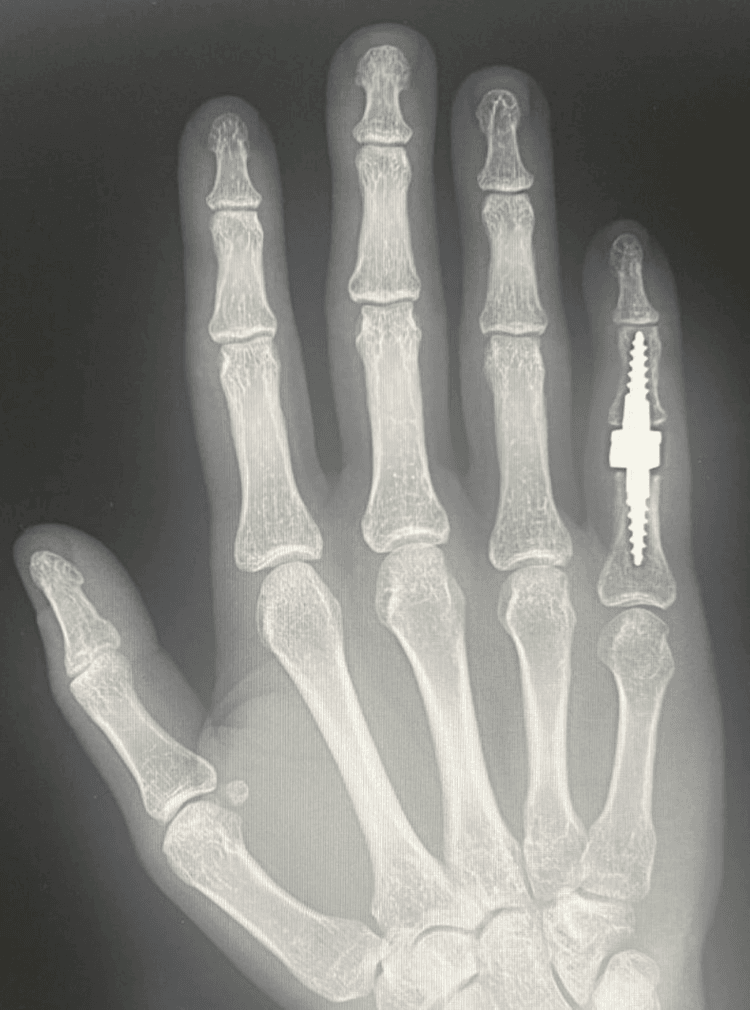
Contraindications to arthrodesis. Multiple adjacent joints risk cumulative stiffness, and patient refusal, from a strong desire for motion preservation, rules it out. Poor bone quality raises the non-union risk in severe osteoporosis, and active infection means staging the fusion until the infection has cleared.
Surgical Approaches to the PIP Joint
The approach governs both rehabilitation and implant survival: in the Murray series the volar approach failed 6.6 times more often than the dorsal.
Dorsal approaches violate and then repair the extensor mechanism.
- Central-slip-splitting: the extensor is split longitudinally between the central slip and a lateral band. It is simple, but the central-slip repair must then be protected, which delays active extension.
- Chamay approach: a distally based triangular (V-shaped) flap of the extensor apparatus is raised off the proximal phalanx and reflected distally, giving wide exposure while the central-slip insertion stays intact; the flap is repaired at the end. It is excellent for accurate implant positioning.
Because every dorsal approach disturbs the extensor mechanism, the joint is protected and active motion is advanced cautiously, and there is a real risk of extensor lag or a secondary boutonniere if the repair stretches.
The volar (Schwartz-Weiland, "shotgun") approach leaves the extensor mechanism completely intact. Through a volar (Bruner) incision the flexor sheath is opened between the A2 and A4 pulleys, dividing A3; the flexor tendons are retracted and the joint is hyperextended, "shotgun-opened", to deliver both articular surfaces. Its advantage is immediate active motion with no extensor to protect; its drawbacks are limited proximal exposure and the higher implant failure rate documented in the Murray series.
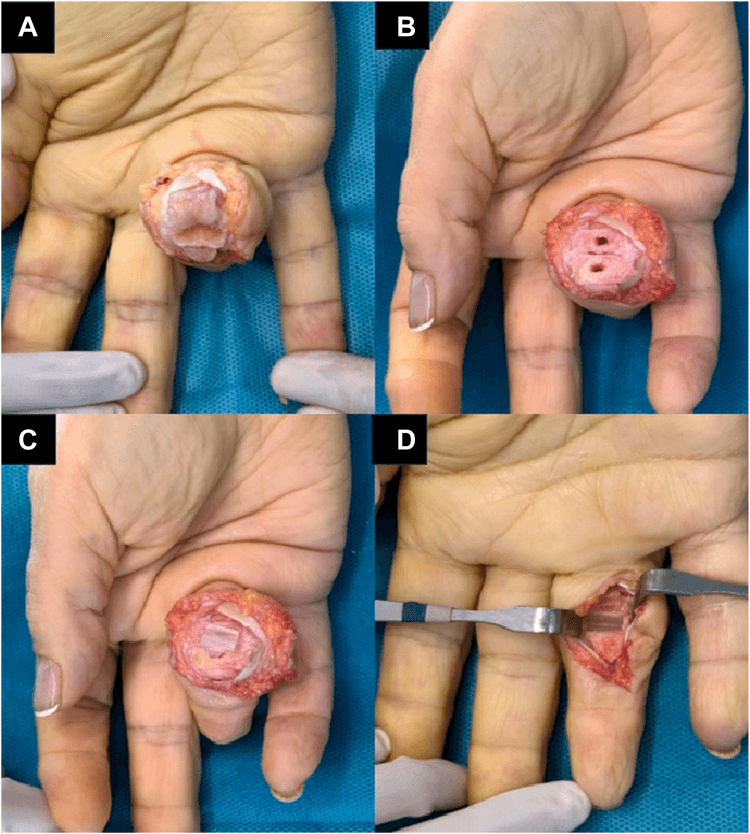
Choosing. Dorsal is the workhorse for arthrodesis and for most arthroplasties, with the best exposure and the lowest failure rate. Volar is chosen when early active motion is the priority and the surgeon is experienced with it. A lateral approach, between the collateral ligament and the volar plate, is a third option that spares the extensor but gives narrower access.
Surgical Technique
Set-up. The patient is supine on a hand table with a tourniquet at 250 mmHg. Silicone arthroplasty and arthrodesis are done under regional anaesthesia (axillary block) or WALANT, surface replacement under regional or general anaesthesia. Fluoroscopy is available for silicone arthroplasty, mandatory for component positioning in surface replacement, and used in arthrodesis to confirm alignment and fixation.
Indications. The Swanson silicone spacer is for low-demand patients, elderly or sedentary, who want motion preserved and have a stable joint with competent collaterals. Multiple involved digits, as in RA, are an indication.
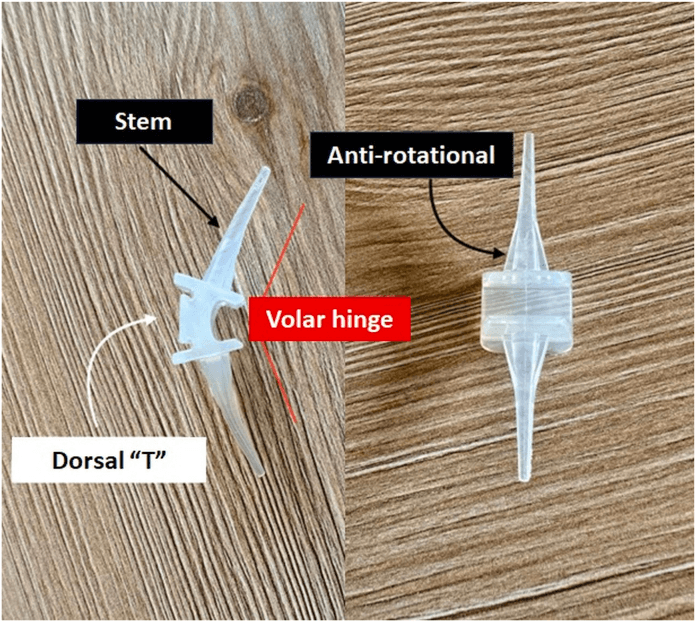
Exposure. A dorsal curved incision is made over the joint, the skin flaps are elevated, and the digital neurovascular bundles are identified and protected. The central slip is split longitudinally or the radial lateral band elevated. The collateral ligaments are divided at the middle phalanx to expose the joint, though they should be preserved if possible, for stability.
Bone preparation and insertion follow five steps:
- Excise the arthritic joint surfaces: resect 2-3 mm of the proximal phalanx distal to the condyle, and the articular surface of the middle phalangeal base. Avoid excessive resection, which risks subsidence.
- Create a medullary canal in both phalanges with awls or reamers.
- Trial the implant to confirm sizing.
- Insert the spacer into the proximal phalanx canal and reduce the joint with the stem in the middle phalanx canal, making sure both stems are fully seated.
- Confirm full passive flexion and extension, with no stem impingement or fracture, and test the full range before closure.
Closure. Repair the central slip or lateral band with 4-0 non-absorbable suture to restore the extensor mechanism, close the skin with interrupted 4-0 nylon, and apply a dorsal blocking splint in 30-40° flexion.
Outcomes. Reliable pain relief is the main benefit, and reported patient satisfaction is high. The arc of motion is typically 40-60°, and the gain over the pre-operative arc is often modest. Revision and explantation rates are lower than with resurfacing implants: in the Daecke RCT silicone was explanted in 11%, titanium in 27% and pyrocarbon in 39%. Complications are implant fracture, subsidence, recurrent deformity and late silicone synovitis.
Complications
- Incidence
- 1-2%
- Presentation
- Wound erythema, drainage, fever
- Management
- Antibiotics, possible I&D
- Incidence
- 2-3%
- Presentation
- Swelling, ecchymosis, pain
- Management
- Compressive dressing, elevation
- Incidence
- 5-10%
- Presentation
- Wire prominence, skin irritation
- Management
- Wire removal and replacement
- Incidence
- Less than 1%
- Presentation
- Numbness, vascular compromise
- Management
- Immediate exploration if acute
- Incidence
- 5-10%
- Presentation
- Persistent pain, motion at fusion site
- Management
- Revision with bone graft and rigid fixation
- Incidence
- 5-10%
- Presentation
- Sudden pain, deformity, crepitus
- Management
- Revision with new implant or arthrodesis
- Incidence
- 10-15%
- Presentation
- Progressive deformity, loss of motion
- Management
- Observation vs revision
- Incidence
- 5%
- Presentation
- Pain, swelling, bone erosion (years later)
- Management
- Implant removal, synovectomy, arthrodesis
- Incidence
- 20-30%
- Presentation
- Limited ROM despite therapy
- Management
- Intensive therapy, possible manipulation
- Incidence
- 10%
- Presentation
- Joint subluxation, pain with use
- Management
- Revision to arthrodesis
Preventing infection. Pre-operative antibiotics (cefazolin 2 g IV), strict sterile technique, meticulous haemostasis and early post-operative wound monitoring.
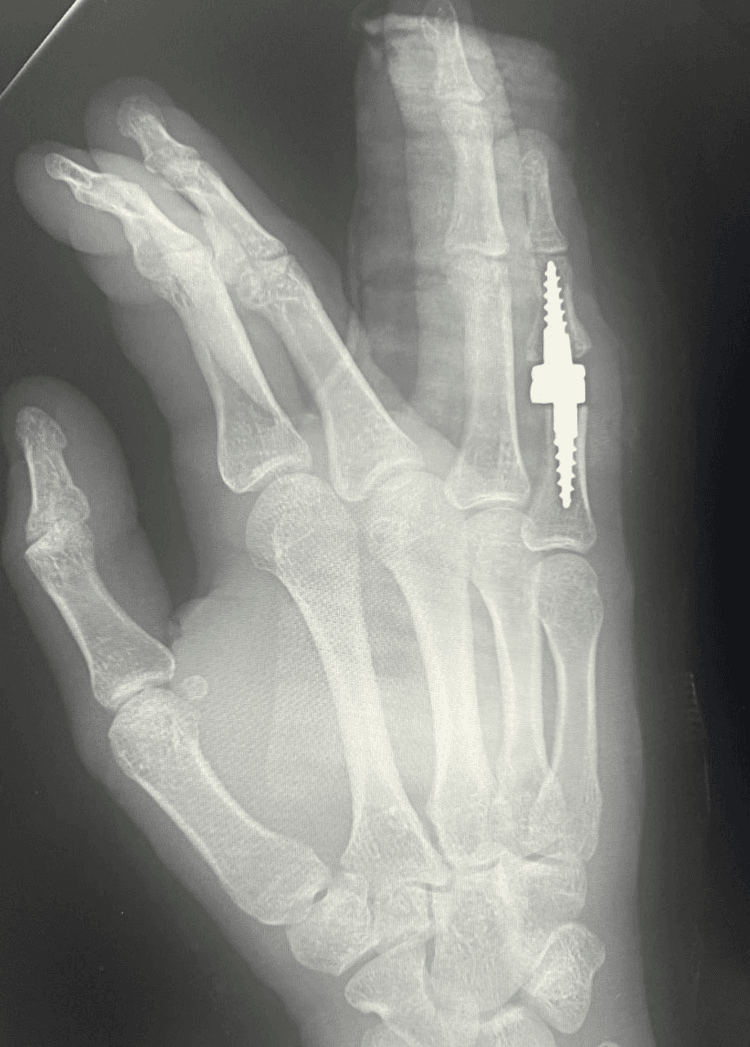
Preventing non-union. Beyond maximal bone contact and rigid fixation with screws or a plate, smoking cessation is mandatory, and bone graft should be considered in osteoporotic bone.
Preventing stiffness. Start early protected motion as soon as each procedure's protocol allows, arrange occupational therapy for hand therapy, avoid prolonged immobilisation, and use dynamic splinting if a contracture develops.
Postoperative Care
Sutures are removed at 10-14 days after all three procedures, and the wound is kept dry until then.
Early mobilisation is critical to prevent stiffness while protecting the implant during healing.
Weeks 0-2, protection. The dorsal blocking splint stays on. Oedema is controlled with elevation above heart level and ice packs, and pain with oral analgesics (paracetamol, NSAIDs).
Weeks 2-6, early motion. The splint is removed for exercises and worn between sessions: gentle active range-of-motion exercises for 5-10 minutes every 2 hours. The goal is a 0-60° arc by week 6, avoiding forceful gripping and resistance exercises.
Weeks 6-12, strengthening. The daytime splint is discontinued, with a night splint if there is a flexion contracture, and progressive resistance exercises with therapy putty build functional grip strength. Light daily activities resume at week 8 and unrestricted light activities at week 12.
Months 3-6, function. Return gradually to pre-injury activities, aiming for a pain-free functional range for daily living. Heavy gripping and impact activities are avoided permanently. Follow up clinically and radiographically at 3, 6 and 12 months.
Guidelines, Registries & Global Practice
PIP joint arthritis is managed similarly worldwide, guided by the same evidence base. Practice differs mainly in implant availability and resource setting rather than in core principles.
Global Epidemiology: Symptomatic interphalangeal hand OA affects roughly 10-15% of adults over 60, with a marked female predominance for primary nodal disease. Post-traumatic PIP arthritis affects younger adults and clusters in manual occupations (construction, agriculture, mining). Inflammatory arthropathy (RA, psoriatic) remains an important cause where access to disease-modifying therapy is limited.
Side-by-Side Guidance:
- Stance on PIP Arthritis Management
- Conservative-first: topical/oral NSAIDs, hand therapy, splinting; surgery for refractory disease
- Practical Emphasis
- Strong recommendation for topical NSAIDs and exercise before surgery
- Stance on PIP Arthritis Management
- Core treatments are exercise and education; pharmacotherapy with topical NSAIDs preferred over oral; surgery reserved for severe refractory cases
- Practical Emphasis
- Limit intra-articular steroid to short-term symptom control
- Stance on PIP Arthritis Management
- Match procedure to stability and demand: arthroplasty for stable low/moderate-demand joints, arthrodesis for unstable joints and the index finger
- Practical Emphasis
- Confirm collateral competence before any resurfacing
- Stance on PIP Arthritis Management
- Acknowledges no implant reliably improves motion; silicone remains benchmark, resurfacing for selected stable joints
- Practical Emphasis
- Counsel that pain relief, not large ROM gain, is the realistic goal
National arthroplasty registries (NJR UK, AJRR US, AOANJRR Australia, Swedish/Norwegian/NZ registries) focus on hip, knee and shoulder and do not systematically capture small-joint hand arthroplasty. Consequently, implant-survival counselling relies on institutional cohorts and the randomized data above rather than registry datasets — a recognised gap in the evidence.
In well-resourced settings, silicone and resurfacing implants, hand therapy and image guidance are readily available, and implant choice is driven by demand and stability. In limited-resource settings, arthrodesis (K-wire, tension band or screw) and silicone spacers predominate because they are durable, low-cost and need less specialised follow-up; resurfacing implants are often unavailable. Across all settings, arthrodesis remains the default for the unstable joint, the high-demand manual worker, and the index finger.
Manual workers typically return after PIP arthrodesis around 8-12 weeks once union is confirmed, and somewhat later after arthroplasty owing to protected rehabilitation; exact timelines vary with occupation and local rehabilitation pathways.
Related pages: DIP Joint Arthritis for the joint one level distal, where arthrodesis is almost always the answer and arthroplasty almost never is - the contrast is the clearest way to understand why the PIP is argued over; MCP Joint Arthritis for the joint where silicone arthroplasty genuinely earns its place, and where the inflammatory indication dominates; Thumb CMC Arthritis for the other hand joint whose surgery is decided by pinch demand; Rheumatoid Arthritis of the Hand and Psoriatic Arthritis of the Hand for the inflammatory diagnoses that raise nonunion risk after fusion - Leibovic found nonunion highest in psoriatic disease and absent in osteoarthritis; Boutonniere Deformity and Swan Neck Deformity for the two extensor-mechanism failures that both cause PIP disease and follow its surgery; and Extensor Tendon Injuries for the central slip that every dorsal approach to this joint must violate and repair.
Controversies and Areas of Uncertainty
PIP arthroplasty is an area with limited high-level data. Stating where the evidence is weak or conflicting demonstrates consultant-level judgement, and confident nuance scores well.
Does any implant actually improve motion? The best randomised evidence (Daecke 2012) found no significant ROM gain for silicone or resurfacing implants, with resurfacing showing only a transient, non-significant advantage. The realistic goal of arthroplasty is pain relief and maintenance of a functional arc, not increased motion.
Silicone or resurfacing. Resurfacing implants (titanium-polyethylene, pyrocarbon) were introduced to improve durability and motion, yet randomised and long-term cohort data show higher explantation and complication rates without a durable motion benefit over the silicone spacer. Their role remains contested and limited to carefully selected, stable joints.
Pyrocarbon-specific issues. Squeaking, subsidence (often subclinical and stabilising per Wolff's law) and a relatively high reoperation rate cloud interpretation. Many "complications" do not require revision, so reported rates vary widely with the definition used.
Index finger: fuse or replace? Arthrodesis is traditionally preferred for pinch stability, but comparative data (Vitale 2015) show similar pain and satisfaction with arthroplasty at the cost of more complications. The decision is increasingly shared and goal-driven rather than dogmatic.
Optimal arthrodesis angle. The classic radial-to-ulnar progression (around 40-55°) is widely taught but not validated by high-level evidence; surgeons individualise the angle to occupation and patient preference.
Registry blind spot. Small-joint hand arthroplasty is not tracked by the major national joint registries, so long-term implant survival counselling rests on single-centre series with selection bias.
Exam Viva Scenarios
Practise clinical reasoning and management decisions out loud
“A 45-year-old carpenter presents with chronic pain in the index finger PIP joint following a fracture-dislocation 2 years ago. He has failed 6 months of conservative management. Examination shows 30° fixed flexion contracture, bone-on-bone crepitus, and palpable osteophytes. Radiographs demonstrate severe joint space loss with subchondral sclerosis. He requests treatment to return to carpentry work.”
“A 72-year-old retired woman presents with bilateral PIP joint arthritis affecting middle, ring, and small fingers. She has prominent Bouchard nodes, moderate pain, and 40° arc of motion. She struggles with buttoning clothes and opening jars. Radiographs show Grade III arthritis (Eaton-Littler) with significant joint space loss. She has tried NSAIDs and splinting for 4 months with minimal relief. She desires motion preservation and pain relief.”
“A 52-year-old active male presents with isolated middle finger PIP arthritis. He plays recreational tennis and golfs regularly. Examination shows stable joint with intact collateral ligaments, 45° arc of motion, and significant pain. Radiographs show Grade III arthritis with preserved bone stock. He strongly desires motion preservation and asks about 'the most advanced implant options.' What would you recommend and why?”
Anatomy (Must Know)
- Proper collaterals: tight in flexion, origin dorsal to axis
- Accessory collaterals: volar plate attachment, tight in extension
- Volar plate: prevents hyperextension, critical for swan-neck
- Central slip: dorsal base of middle phalanx, extension power
- A2 and A4 pulleys: critical, never release with PIP surgery
Surgical Decision Algorithm
- STABLE joint + LOW-demand = Silicone arthroplasty
- STABLE joint + MODERATE-demand = Surface replacement arthroplasty
- UNSTABLE joint or HIGH-demand = Arthrodesis
- INDEX finger = Strong preference for arthrodesis
- MULTIPLE digits = Avoid arthrodesis (cumulative stiffness)
Arthrodesis Angles (Critical)
- Index: 40° flexion (pointing, pinch precision)
- Middle: 45° flexion (balanced grip)
- Ring: 50° flexion (power grip cascade)
- Small: 55° flexion (maximum grip strength)
- Rationale: increasing flexion radial to ulnar for optimal cascade
Silicone Arthroplasty
- Best for: Low-demand, elderly, multiple digits
- Motion: typically 40-60° arc; modest gain over pre-op
- Lowest explantation rate of the implants (11% vs TI 27% vs PY 39%, Daecke RCT)
- Complications: Fracture, subsidence, late silicone synovitis
- Activity restrictions: Permanent avoidance heavy gripping
Surface Replacement
- Best for: Young, active, isolated joint, intact ligaments
- Motion: usually maintained (~40° median), not reliably increased
- Metal-PE failure ~11% at 5y, ~16% at 15-25y; dorsal approach safer
- Requires: Competent collaterals (mandatory stress test)
- Complications: Loosening, instability, squeaking, higher than silicone
Arthrodesis Pearls
- Compression screw gives lowest nonunion; K-wire highest (Leibovic)
- Reliable pain relief and grip; satisfaction high despite motion loss
- Fixation: Compression screw preferred, tension band or plate alternatives
- Nonunion higher in psoriatic/RA and smokers; absent in OA in some series
- Return to work generally 8-12 weeks for manual labor
Viva Red Flags (Don't Miss)
- Assess collateral stability before any arthroplasty (stress test)
- Never recommend surface replacement with incompetent ligaments
- Index finger arthritis: default to arthrodesis unless strong reason
- Arthrodesis angle MUST match digit: 40-45-50-55°
- Silicone synovitis is LATE complication (years), requires removal
Evidence Base
Three Implant Types Compared: Silicone vs Titanium vs Pyrocarbon
- Prospective randomized multicentre trial: 43 patients (62 PIP joints) allocated to silicone (SI), titanium-polyethylene (TI) or pyrocarbon (PY); mean follow-up 35 months
- All 3 implants gave significant pain reduction at rest and load; tip-pinch slightly improved across groups
- No significant ROM gain for any device; resurfacing implants showed only a transient, non-significant ROM advantage over silicone
- Explantation rates: silicone 2 of 18 (11%), titanium 7 of 26 (27%), pyrocarbon 7 of 18 (39%)
Posttraumatic Finger Joint Reconstruction: Arc of Motion and Complications
- Systematic review of world literature (520 articles screened) comparing vascularized toe joint transfer, silicone, and pyrocarbon arthroplasty
- Mean PIP active arc of motion: vascularized toe joint 37°, silicone 44°, pyrocarbon 43°
- Major complication (revision) rates: vascularized toe joint 29%, silicone 18%, pyrocarbon 33%
- No meaningful improvement in posttraumatic finger joint outcomes over 40 years
Pyrocarbon PIP Arthroplasty: Minimum 2-Year Outcomes
- Retrospective series of 50 pyrocarbon PIP replacements in 35 patients (minimum 27-month follow-up)
- Mean arc of motion improved only modestly from 40° to 47°; pain scores fell from 6 to 1 (0-10 scale)
- Overall patient satisfaction nearly 80%; index finger results comparable to other digits
- 28% of patients required a second procedure; revision arthroplasty rate 8%; radiographic subsidence in 40% of joints
Arthroplasty vs Arthrodesis for Index Finger PIP Arthritis
- Comparative cohort of 79 index-finger PIP joints (65 arthroplasty, 14 arthrodesis) for OA or posttraumatic arthritis
- No significant difference in pain relief, satisfaction, or Michigan Hand Questionnaire scores between groups
- Arthroplasty preserved motion and improved opposition pinch; arthrodesis improved both opposition and apposition pinch
- Arthroplasty carried a 4.3-fold higher complication risk and a shorter time to first complication
PIP Arthrodesis: Fixation Method and Nonunion
- Retrospective review of 224 PIP arthrodeses fixed with Herbert screw (37), K-wire (100), tension band (69), plate (11) or other (7)
- Mean clinical union at 7 weeks, radiographic union at 10 weeks; nonunion in 31 cases
- Primary nonunion rate highest with K-wires, intermediate with tension band, lowest with Herbert screw
- Nonunion highest in psoriatic arthritis, intermediate in RA, lowest in trauma, and absent in osteoarthritis
Surface Replacement Arthroplasty: 30-Year Single-Centre Experience
- 67 CoCr/UHMWPE surface replacements in 47 patients over 30 years; mean follow-up 8.8 years
- Median total active PIP motion 40° at follow-up; median VAS pain 3 of 100
- Cumulative implant failure 8% at 3 years, 11% at 5 years, 16% at 15-25 years
- Volar approach failed 6.6 times more often than dorsal; failure rate similar for OA and RA
References
-
Squitieri L, Chung KC. A systematic review of outcomes and complications of vascularized joint transfer, silicone arthroplasty, and PyroCarbon arthroplasty for posttraumatic joint reconstruction of the finger. Plast Reconstr Surg. 2008;121(5):1697-1707. doi:10.1097/PRS.0b013e31816aa0b3
-
Bravo CJ, Rizzo M, Hormel KB, Beckenbaugh RD. Pyrolytic carbon proximal interphalangeal joint arthroplasty: results with minimum two-year follow-up evaluation. J Hand Surg Am. 2007;32(1):1-11. doi:10.1016/j.jhsa.2006.10.017
-
Vitale MA, Fruth KM, Rizzo M, Moran SL, Kakar S. Prosthetic arthroplasty versus arthrodesis for osteoarthritis and posttraumatic arthritis of the index finger proximal interphalangeal joint. J Hand Surg Am. 2015;40(10):1937-1948. doi:10.1016/j.jhsa.2015.05.021
-
Leibovic SJ, Strickland JW. Arthrodesis of the proximal interphalangeal joint of the finger: comparison of the use of the Herbert screw with other fixation methods. J Hand Surg Am. 1994;19(2):181-188. doi:10.1016/0363-5023(94)90002-7
-
Jennings CD, Livingstone DP. Surface replacement arthroplasty of the proximal interphalangeal joint using the PIP-SRA implant: results, complications, and revisions. J Hand Surg Am. 2015;40(3):469-473. doi:10.1016/j.jhsa.2014.11.023
-
Swanson AB. Flexible implant arthroplasty for arthritic finger joints: rationale, technique, and results of treatment. J Bone Joint Surg Am. 1972;54(3):435-455.
-
Bouchard C. Osteoarthritis of the hand: clinical manifestations and pathogenesis. In: Moskowitz RW, Howell DS, Altman RD, et al., eds. Osteoarthritis: Diagnosis and Medical/Surgical Management. 4th ed. Philadelphia: Lippincott Williams & Wilkins; 2007:191-210.
-
Eaton RG, Littler JW. Joint injuries and their sequelae. Clin Plast Surg. 1976;3(1):85-98.
-
Herren DB, Simmen BR. Palmar approach in flexible implant arthroplasty of the proximal interphalangeal joint. Clin Orthop Relat Res. 2000;371:131-135. doi:10.1097/00003086-200002000-00016
-
Chung KC, Ram AN, Shauver MJ. Outcomes of pyrolytic carbon arthroplasty for the proximal interphalangeal joint. Plast Reconstr Surg. 2009;123(5):1521-1532. doi:10.1097/PRS.0b013e3181a2059b
-
Daecke W, Kaszap B, Martini AK, Hagena FW, Rieck B, Jung M. A prospective, randomized comparison of 3 types of proximal interphalangeal joint arthroplasty. J Hand Surg Am. 2012;37(9):1770-1779. doi:10.1016/j.jhsa.2012.06.006
-
Watts AC, Hearnden AJ, Trail IA, Hayton MJ, Nuttall D, Stanley JK. Pyrocarbon proximal interphalangeal joint arthroplasty: minimum five-year follow-up. J Hand Surg Am. 2012;37(5):882-888. doi:10.1016/j.jhsa.2012.01.039
-
Bellemère P, Maes-Clavier C, Loubersac T, Gaisne E, Kerjean Y, Krimmer H. Proximal interphalangeal joint arthrodesis with an intramedullary screw: a review of 49 cases. J Hand Surg Eur Vol. 2011;36(5):381-387. doi:10.1177/1753193410397895
-
Teoh LC, Yeo SJ. Proximal interphalangeal joint fusion with Herbert screws. J Hand Surg Br. 1996;21(4):508-510. doi:10.1016/s0266-7681(96)80056-9
-
Stern PJ, Fulton DB. Distal interphalangeal joint arthrodesis: an analysis of complications. J Hand Surg Am. 1992;17(6):1139-1145. doi:10.1016/s0363-5023(09)91079-9
-
Murray PM, Linscheid RL, Cooney WP 3rd, Baker V, Heckman MG. Long-term outcomes of proximal interphalangeal joint surface replacement arthroplasty. J Bone Joint Surg Am. 2012;94(12):1120-1128. doi:10.2106/JBJS.J.01375
-
Zimmerman NB, Zimmerman SI, Clark GL, Wilgis EF. Silicone interpositional arthroplasty of the distal interphalangeal joint. J Hand Surg Am. 1989;14(5):882-887. doi:10.1016/s0363-5023(89)80096-8
-
Ashworth CR, Blatt G, Chuinard RG, Stark HH. Silicone-rubber interposition arthroplasty of the carpometacarpal joint of the thumb. J Hand Surg Am. 1977;2(5):345-357. doi:10.1016/s0363-5023(77)80046-8