Extensor Mechanism Injury
- Definition: Rupture of the quadriceps tendon at its insertion into the superior pole of the patella or more proximally
- Age: Usually occurs in older patients (over 40) compared to patellar tendon ruptures (under 40)
- Mechanism: Eccentric loading of a flexed knee (e.g., stumbling) or direct blow
- Management: preserve or restore extensor function with treatment matched to continuity, tissue, retinacula, patient goals and systemic risk
- “Patella baja can support the diagnosis but is neither required nor specific
- “Ultrasound and MRI define continuity and tissue; clinical active extension remains central
- “Earlier repair is usually technically easier, but no two- or six-week boundary defines repairability
- “Chronic rupture does not automatically require V-Y plasty or allograft
Quadriceps Tendon Rupture
Overview
What fails. The quadriceps tendon ruptures at its insertion into the superior pole of the patella or more proximally, and the knee loses some or all of its active extension. How much active extension survives defines the severity of the injury.
Who. It usually occurs in patients over 40, older than those who rupture the patellar tendon (under 40), and it often affects older or systemically predisposed tendon. It nonetheless occurs across ages and injury mechanisms.
Anatomy and Pathophysiology
Three layers, four muscles. The quadriceps tendon is the confluence of four muscles arranged in three layers:
- Superficial: rectus femoris, which continues over the patella as the prepatellar fascia into the patellar tendon
- Middle: vastus medialis (including VMO) and vastus lateralis
- Deep: vastus intermedius, which inserts directly onto the superior pole
Insertion and failure. The tendon inserts on the superior patella through layered fibres and retinacular expansions. Ruptures may be insertional or proximal, partial or complete, and often occur through degenerate tendon.
No single watershed. A universal 1-2 cm "watershed" is not a sufficient anatomical explanation for where the tendon fails. Vascularity, enthesis disease, systemic metabolism and prior surgery or injection all contribute.
Mechanism. Eccentric quadriceps loading against a flexed knee, as in a stumble, is common. A direct blow, laceration and low-energy failure in diseased tendon also occur.
Why Systemic Disease Weakens the Tendon
Systemic disease degrades the tendon before it fails. The mechanisms below explain the familiar pattern of a patient over 40, comorbid, injured with minimal trauma, often bilaterally.
Renal failure and dialysis is the strongest driver. Secondary hyperparathyroidism, from phosphate retention and low active vitamin D, drives osteoclastic resorption at the bone-tendon junction (the enthesis) and weakens the anchor. Dialysis-related beta-2-microglobulin amyloid deposits within the tendon, and uraemic toxins impair collagen synthesis and cross-linking.
Why renal disease comes first. It is the first thing to look for after a bilateral simultaneous rupture, but not the only one: a quarter of collected cases had no identified predisposing condition.
Diabetes. Non-enzymatic glycation forms advanced glycation end-products (AGEs) that stiffen and embrittle the collagen cross-links. Microvascular disease impairs the tendon's already marginal blood supply and its healing.
Gout and crystal disease. Tophaceous urate infiltrates the tendon substance, replacing and disrupting collagen.
Corticosteroids, local or systemic. They suppress collagen synthesis and tenocyte proliferation and promote tenocyte apoptosis. A local peritendinous injection weakens the tendon mechanically as well.
Fluoroquinolones. Agents such as ciprofloxacin chelate magnesium (a cofactor for integrin-collagen binding), generate oxidative stress in tenocytes and up-regulate matrix metalloproteinases that degrade collagen. The risk rises with cumulative dose and is dramatically amplified by concurrent corticosteroids, to an adjusted incidence-rate ratio of up to about 19 in patients taking both.
Reading the fluoroquinolone evidence. Those population figures (Morales) are for the Achilles tendon, and the same study found no association at other tendon sites. Fluoroquinolones belong in the drug history as a recognised tendinopathy agent, not as a demonstrated cause of quadriceps rupture.
Other systemic causes. Hypothyroidism among the endocrine disorders, and autoimmune disease such as rheumatoid arthritis and SLE, are also listed.
Clinical Presentation
History. Sudden anterior knee pain and a give-way after eccentric loading, followed by difficulty weight-bearing, climbing stairs or rising from a chair. Ask about each of the systemic risk factors above, especially when the rupture is bilateral.
Active extension first. Test active knee extension and look for an extensor lag; loss of active extension shows as inability to perform a straight-leg raise. An intact retinaculum can preserve weak extension, so some active extension does not exclude a tear. Examine the retinacula and the opposite knee.
The supporting signs. A palpable suprapatellar gap is the most specific sign but may be masked by haematoma, so palpate carefully. Patella baja, a low-riding patella on the lateral radiograph, supports the diagnosis. Either may be absent or obscured, and no triad of gap, lag and baja should be relied on alone.
Bilateral loss of active extension can mimic neurologic weakness. It should prompt examination of both extensor mechanisms plus a systemic and metabolic assessment.
Investigations
Radiographs. AP and lateral views assess patellar height, avulsion fragments, fracture, calcification and arthrosis; compare the contralateral side when useful. Any ratio must be measured on an appropriate lateral view and interpreted in context.
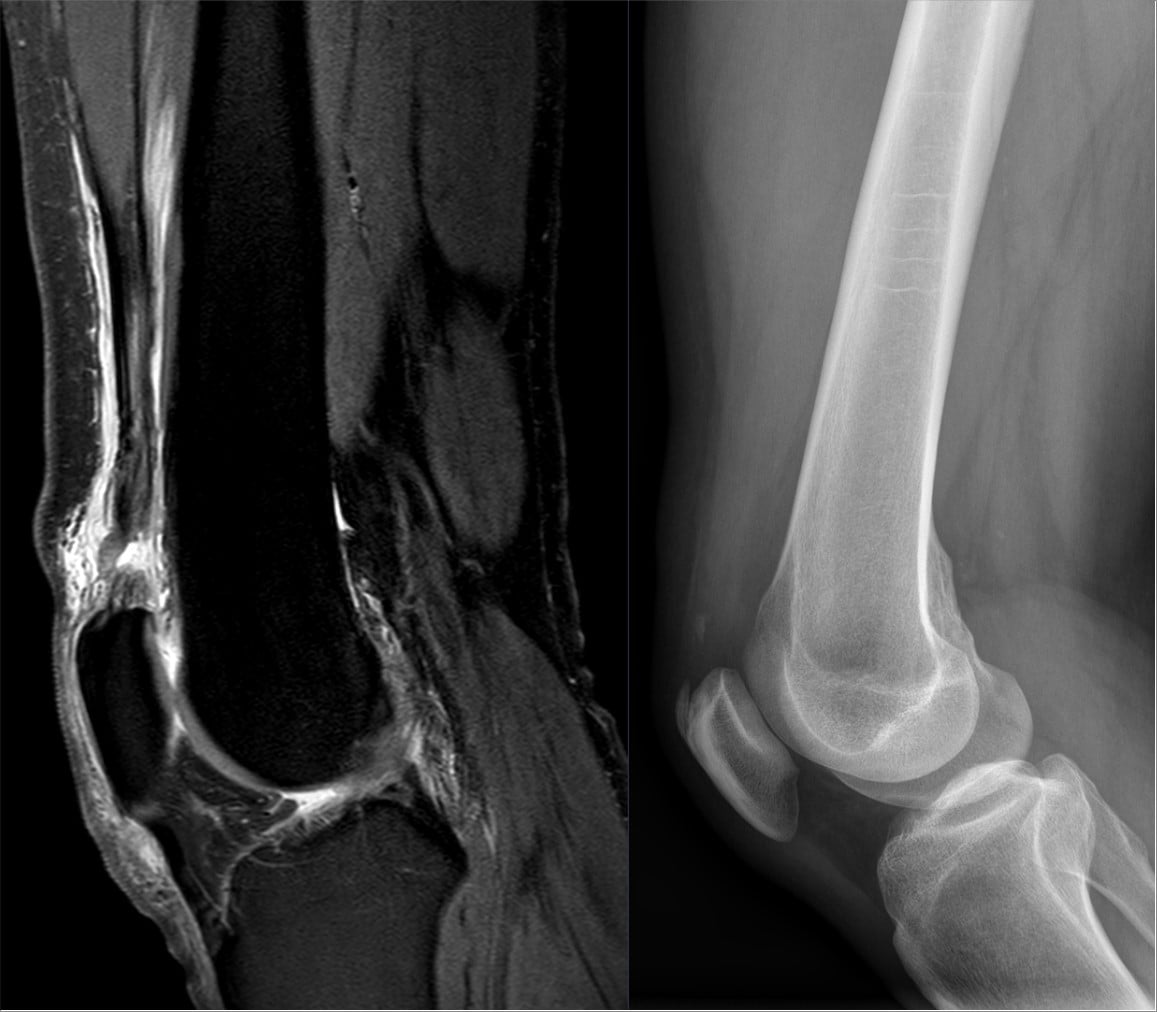
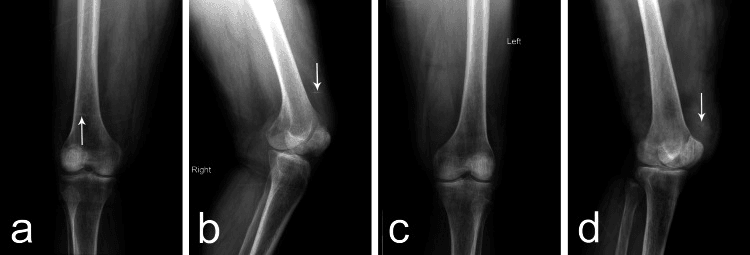
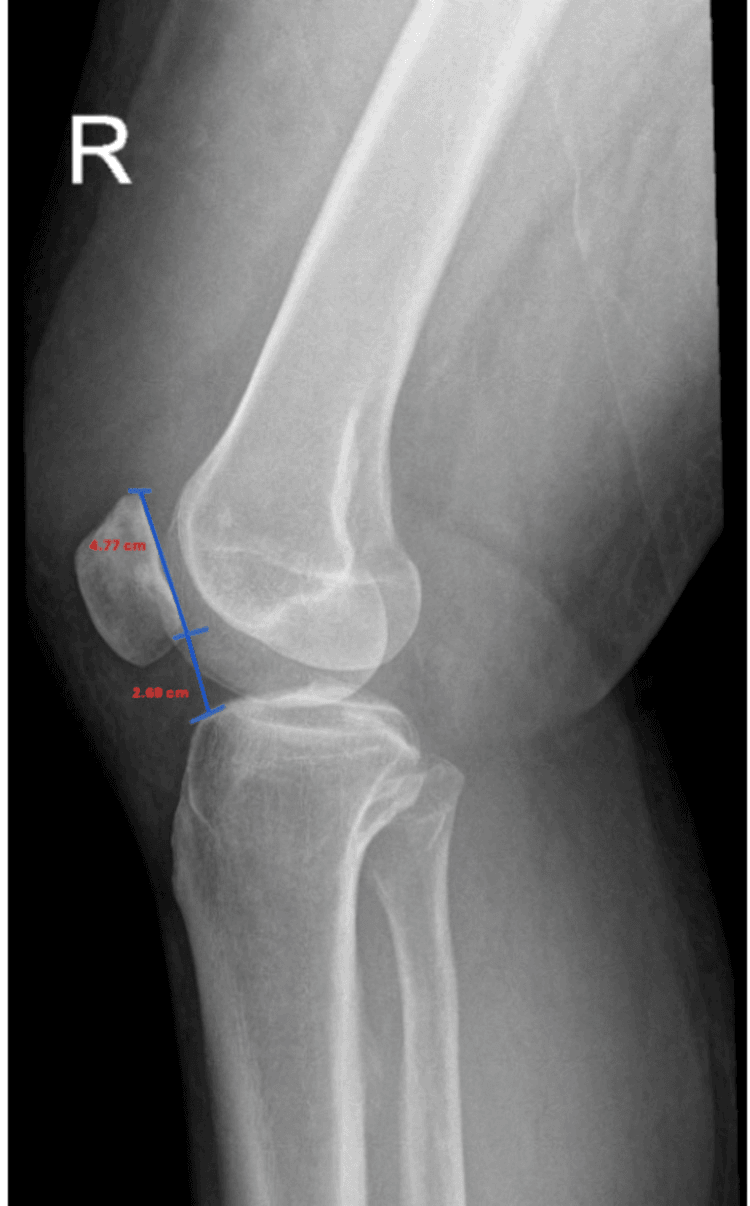
Ultrasound. A rapid, dynamic assessment of continuity, haematoma, retraction and the retinacula. It is operator-dependent.
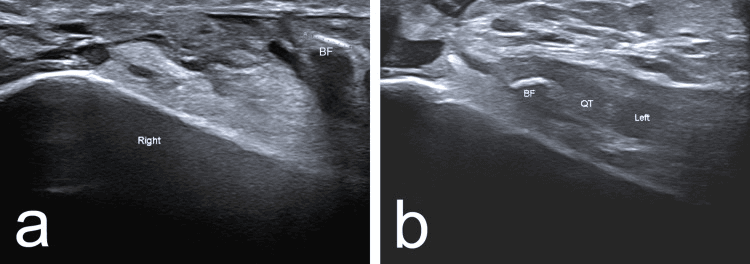
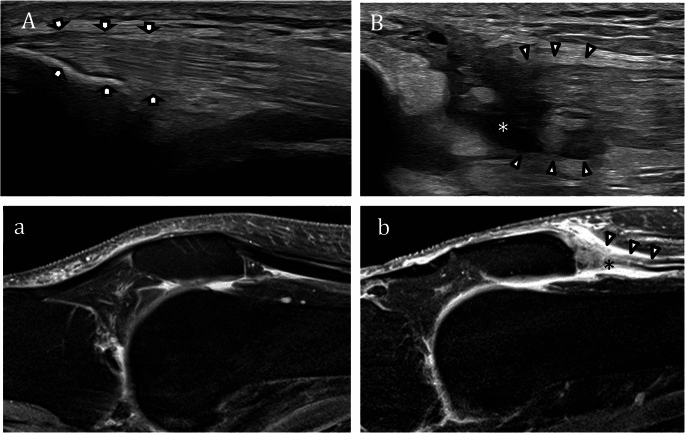
MRI. Maps the partial and complete components, retraction, tissue quality, atrophy and associated injury when diagnosis or operative planning requires it. It is not mandatory for every clinically obvious complete rupture, and clinical active extension remains central.
Laboratory tests. For bilateral, low-energy, recurrent or otherwise atypical rupture, select renal, calcium, phosphate and PTH, glucose, inflammatory or medication investigations.
Differential Diagnosis
The weakest link moves proximally with age. Across the extensor mechanism, failure shifts from distal to proximal as age increases: tibial tubercle avulsion in children and adolescents, the patellar tendon under 40, patella fracture in mid-life and the quadriceps tendon over 40. Age trends help the differential but do not assign the weakest link for an individual patient.
- Key Features
- Age over 40; suprapatellar gap; patella BAJA; insertional or more proximal failure
- Key Features
- Age under 40; infrapatellar gap; patella ALTA; jumping athletes
- Key Features
- Mid-life; bony tenderness; transverse lucency on radiograph (not a gap)
- Key Features
- Adolescents (open apophysis); jumping injury; Ogden classification
- Key Features
- Strongly suggests systemic disease (about three-quarters of reported cases); mimics neurological 'cannot walk' presentation
Management
What decides it. Treatment follows active extensor function, tendon and retinacular continuity, tissue and bone quality, chronicity and repair tension, systemic risk and patient goals, not an age, a percentage or a calendar alone.
Preserved extensor function or partial continuity. Trial protected motion and progressive rehabilitation while the mechanism remains stable. Repair can be considered for a persistent functional deficit or an unstable high-grade lesion.
Functionally complete disruption. Operative repair is usually recommended in a medically suitable patient. Non-operative goals may be appropriate for frailty or low demand after informed discussion.
Timing. Earlier presentation often permits easier mobilisation and direct repair, but tissue and tension, not a two- or three-week label, determine the construct. No calendar point alone converts repair into reconstruction.
Chronic presentation. Direct repair may still be possible after mobilisation. Reconstruction is reserved for an unbridgeable deficit or poor tissue, described below.
Surgical Repair
Planning. Define the tear level and its components, retinacular continuity, patellar height, tissue quality, retraction, systemic risk and the function the patient wants.
The direct repair then proceeds in order:
- Use an exposure that permits safe tendon, retinacular and superior-patellar assessment.
- Debride only nonviable tissue and mobilise components without devascularising them.
- Restore length, tension and patellar height with transosseous tunnels or suture anchors, selected from bone, tendon and surgeon expertise.
- Use locking sutures with purchase scaled to tendon quality; anchor or tunnel number and drill diameter are construct-specific.
- Repair the retinacula when disrupted, and add augmentation only for a defined mechanical or tissue deficit.
- Test the protected motion arc and document residual lag and tension.
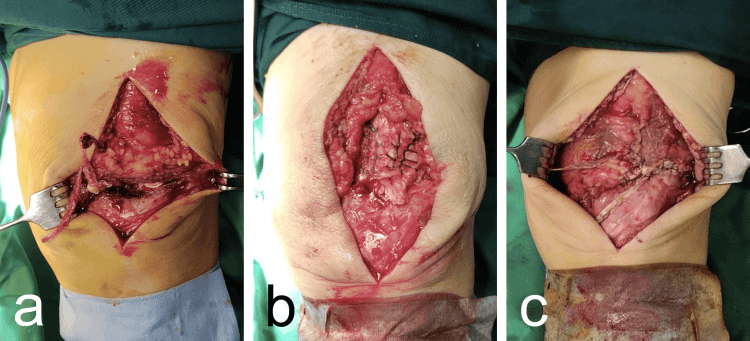
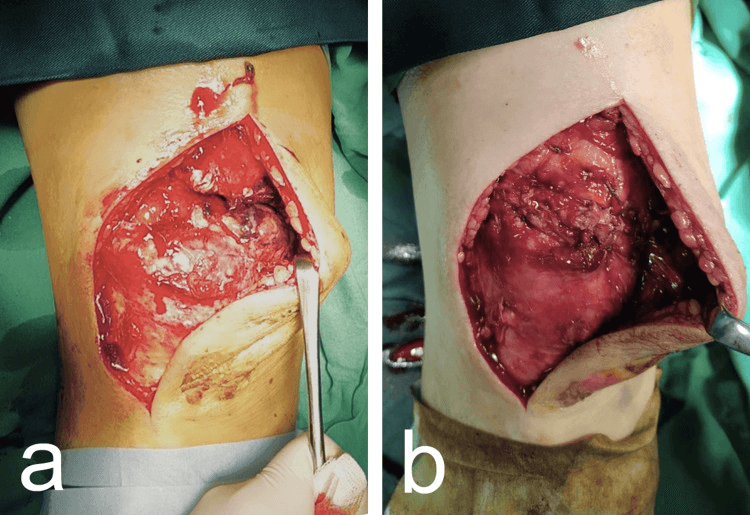
The Krackow stitch. One locking grasping suture pattern. Its interlocking loops capture longitudinal collagen bundles and provide multiple points of load transfer, distributing grasping force through the tendon.
Passes and bites. Select the number, spacing, depth and length of passes from tendon width and quality; "4-6 passes over 4 cm" is not a universal prescription. Superficial loops cheese-wire degenerate tissue, so bites must be deep enough for the actual tissue.
Tension. Tension the repair to restore, not shorten, the extensor mechanism: over-tensioning creates patella baja or limits flexion. The locking stitch is only one part of the construct, and bone fixation, retinacula, augmentation and postoperative protection determine its overall behaviour.
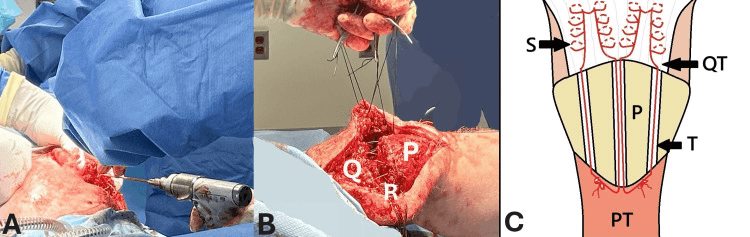
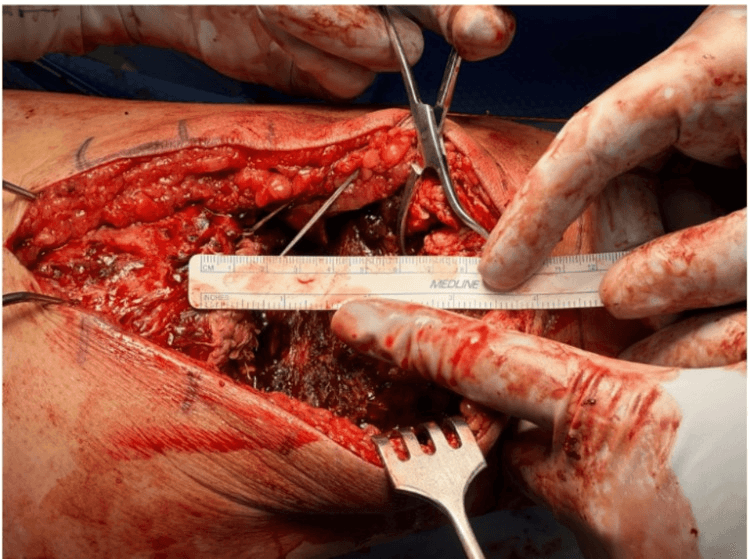
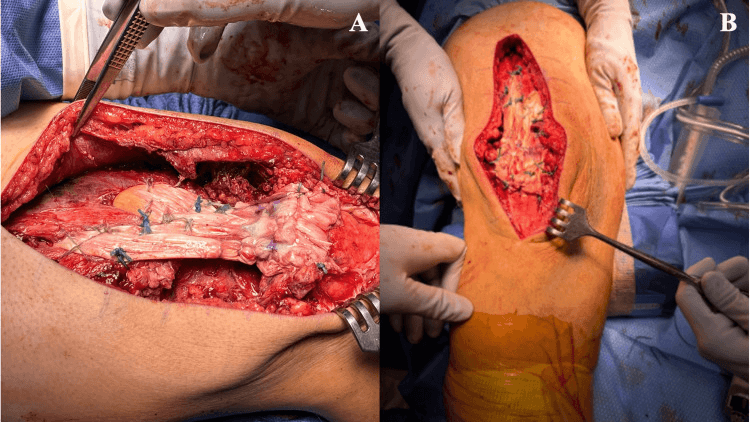
Revision. In the revision case shown, the exposure raises thick flaps, prepares the superior patella and clears scar and callus from the quadriceps tendon edges. Tendon and retinacula are then restored before a bioinductive scaffold is placed and fixed.
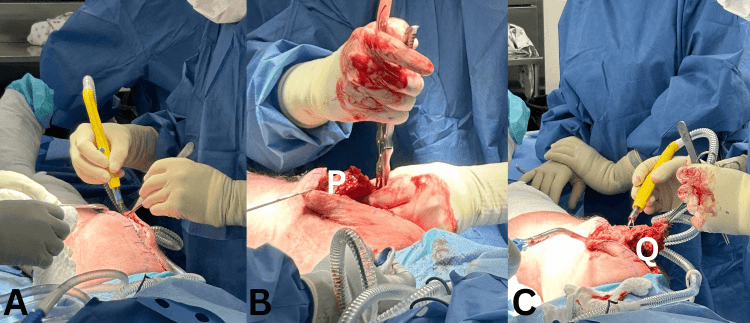
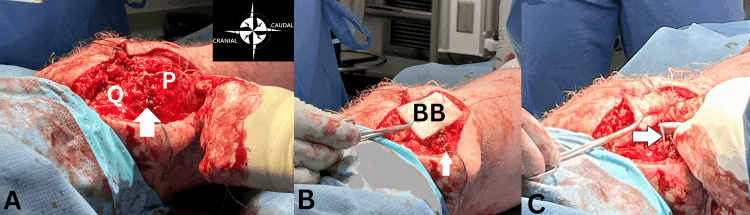
Aftercare. Weight-bearing, brace position and flexion progression follow fixation, tissue, augmentation and patient reliability rather than a universal 0-30-60-90 schedule.
Chronic Reconstruction
Reconstruction is for the tendon that cannot reach the patella at safe tension once it has been mobilised, and some reconstructions require staged contracture management.
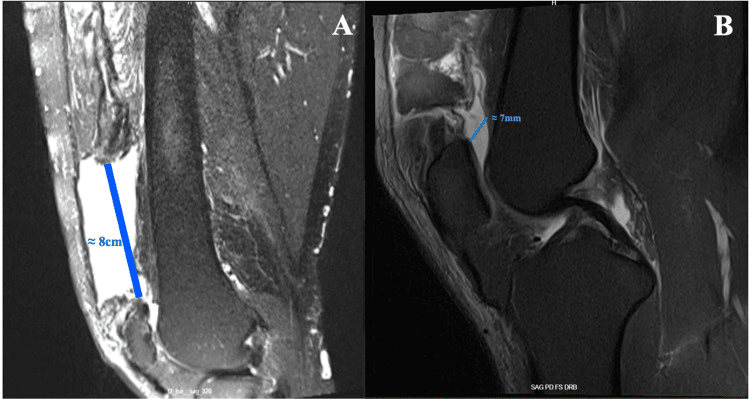
- Mobilise scar and quadriceps while protecting neurovascular structures and preserving tissue.
- Consider V-Y lengthening or turndown only when local tissue can provide useful length and strength.
- Use autograft, Achilles or whole-extensor allograft, synthetic scaffold or combined reconstruction, chosen according to gap, bone, infection, prior surgery and goals.
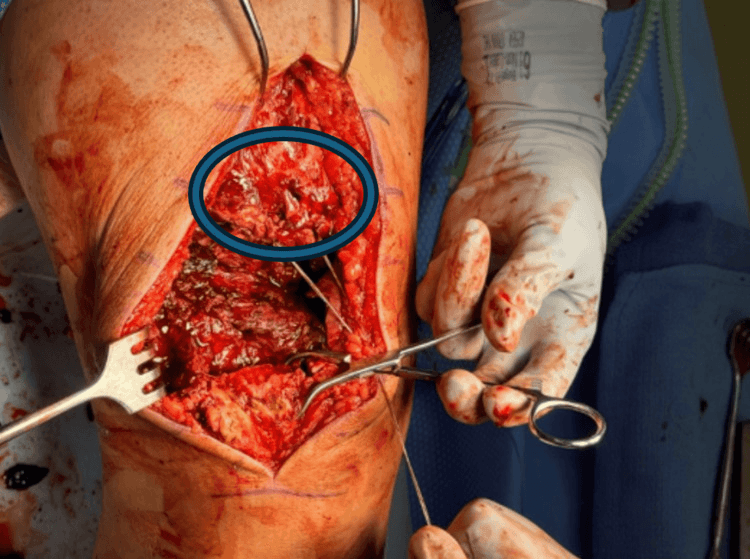
Complications
Stiffness. Common after quadriceps tendon rupture, from adhesions, and very common after patellar tendon rupture.
Re-rupture. The key determinant of a poor long-term result: patients who re-ruptured scored significantly worse (Negrin), which is the argument for protecting the repair.
Who to counsel. Female sex and comorbidity were the strongest predictors of complications after extensor mechanism repair, with older age, tobacco use and obesity also independent predictors (Oeding). Optimise the modifiable factors before surgery.
Transosseous tunnels vs suture anchors — biomechanics
- Cadaveric study (10 matched knees): transosseous tunnel repair had significantly higher ultimate tensile load than transosseous-equivalent double-row suture anchors (591 N vs 447 N, p=0.04)
- No significant difference in construct stiffness or gap formation between techniques
- All suture-anchor failures occurred at the suture eyelets; both constructs were judged sufficiently strong for repair
Clinical outcomes — transosseous vs suture anchor (systematic review)
- 8 studies, 210 knees (156 transosseous, 54 suture anchor)
- No significant difference in Lysholm score (92.6 vs 91.0); transosseous achieved slightly greater final ROM (132.5° vs 127.0°, p=0.02)
- Significantly more complications with suture anchors (9.3% vs 1.3%, p=0.013); re-rupture difference not significant (0% vs 3.7%)
Long-term outcomes after extensor mechanism repair
- 130 patients (93 quadriceps, 43 patellar tendon ruptures), mean follow-up ~10 years
- Good-to-excellent outcomes overall (mean KSS-Knee 93.1 for quadriceps ruptures); re-rupture rate 8% in the quadriceps group
- Re-rupture was associated with significantly worse functional scores
Epidemiology & risk of complications after repair
- Database cohort: 601 quadriceps and 1543 patellar tendon repairs (2010-2020); quadriceps repair patients were older on average
- 90-day complications in 39.2% of quadriceps repairs; reoperation rate 4.8%
- Female sex and Charlson comorbidity index were the strongest predictors of complications; older age, tobacco use and obesity were also independent predictors
Bilateral & simultaneous quadriceps rupture — systemic disease
- Review of 55 cases of simultaneous bilateral quadriceps tendon rupture; mean age 52, 82% male
- 76% had a predisposing systemic condition and 32% had multiple risk factors; 96% were treated surgically
- Age, multiple risk factors and renal/endocrine disease or diabetes correlated with poorer outcome
Fluoroquinolones & tendon rupture risk
- Population-based nested case-control study: current fluoroquinolone exposure raised the risk of any tendon rupture (adjusted IRR 1.61) and Achilles rupture (adjusted IRR 3.14), persisting ~60 days
- Risk rose with cumulative dose and was greatest when co-prescribed with oral corticosteroids (adjusted IRR 19.36 for Achilles rupture)
- Absolute risk was highest in patients aged 60 and over on concomitant corticosteroids
Guidelines, Registries & Global Practice
No dedicated global guideline or registry defines repair thresholds or rehabilitation. Evidence is mostly observational and biomechanical.
- Evidence-aware position
- Clinical extensor assessment plus targeted imaging
- Resource adaptation
- Radiographs and ultrasound often suffice when MRI is limited
- Evidence-aware position
- Restore components, retinacula and patellar height with a suitable construct
- Resource adaptation
- Transosseous heavy suture avoids implant cost
- Evidence-aware position
- Test mobilisation/direct repair before selecting reconstruction
- Resource adaptation
- Autograft/turndown may substitute when allograft is unavailable
- Evidence-aware position
- Protect construct while restoring motion and function
- Resource adaptation
- Cast/immobiliser can substitute for hinged brace with careful monitoring
Related pages: Extensor Mechanism Ruptures, Patellar Tendon Rupture, Patella Fractures, and Quadriceps Tendinitis.
Controversies & Areas of Uncertainty
- Transosseous tunnels vs suture anchors: biomechanical studies disagree on which is stronger (Hart 2012 favoured tunnels; the pooled biomechanical meta-analysis found no significant difference, with a point estimate that ran the other way — Dankert 2022), and clinical outcomes are broadly equivalent (Mehta 2021). No high-level RCT exists; choice remains surgeon preference.
- Suture-tape / internal-brace augmentation: increasingly used in poor-quality tendon (diabetes, renal disease, revision) to permit earlier rehabilitation, but evidence is largely biomechanical and short-term; routine use is not established.
- Rehabilitation tempo: accelerated, early-motion protocols may reduce stiffness but risk gapping/elongation in degenerate tendon; the optimal balance and the safe threshold for early flexion are not defined by trial data.
- Partial tears: the imaging and clinical threshold for operative versus non-operative management of partial ruptures is not standardised.
- Chronic reconstruction: no consensus on the best technique (V-Y lengthening vs Scuderi turndown vs allograft); the systematic review evidence base is heterogeneous and low-level (Kim 2022 for the analogous patellar tendon literature).
MCQ Practice Points
Q: What is the most important clinical assessment? A: Active extensor function and lag, interpreted with retinacular continuity, pain/swelling and the opposite knee. A gap and patella baja support but do not define every rupture.
Q: Which risk factors warrant investigation? A: Bilateral, low-energy or recurrent rupture should prompt renal/secondary-hyperparathyroid, diabetes/endocrine, inflammatory, steroid/fluoroquinolone and prior local-treatment review.
Q: How are transosseous tunnels and anchors selected? A: From patellar bone, tendon quality, tear pattern, fixation requirements and surgeon expertise. Clinical evidence does not establish one universal superior construct.
Q: What is V-Y quadricepsplasty for? A: Selected chronic defects where local quadriceps tissue can provide useful length after mobilisation. It is one option—not the definition or mandatory treatment of chronic rupture.
Exam Viva Scenarios
Practise clinical reasoning and management decisions out loud
“A dialysis patient cannot actively extend either knee after a low-energy event. How do you assess and plan?”
“An active adult has a recent functionally complete quadriceps tendon rupture. Describe decision-making and repair.”
“A delayed quadriceps rupture has scar, atrophy and a large apparent gap. How do you reconstruct it?”
Assessment
- Test active extension and extensor lag
- Examine gap, retinacula and opposite knee
- Radiographs assess height/fragments; US/MRI maps tissue
- Bilateral or low-energy failure prompts systemic work-up
Repair
- Earlier is easier on average, not an absolute window
- Transosseous and anchor fixation are both acceptable
- Restore length and repair disrupted retinacula
- Augment only a defined tissue/mechanical deficit
Chronic Defect
- Correct contracture and mobilise first
- Direct repair may remain possible
- V-Y, turndown, autograft/allograft are selected options
- Rehabilitation follows the actual construct
References
- Hart ND, Wallace MK, Scovell JF, et al. Quadriceps tendon rupture: a biomechanical comparison of transosseous equivalent double-row suture anchor versus transosseous tunnel repair. J Knee Surg. 2012;25(4):335-9. PMID 23150161. doi:10.1055/s-0031-1299656
- Mehta AV, Wilson C, King TS, Gallo RA. Outcomes following quadriceps tendon repair using transosseous tunnels versus suture anchors: a systematic review. Injury. 2020;52(3):339-344. PMID 33041016. doi:10.1016/j.injury.2020.10.020
- Negrin LL, Nemecek E, Hajdu S. Extensor mechanism ruptures of the knee: differences in demographic data and long-term outcome after surgical treatment. Injury. 2015;46(10):1957-63. PMID 26190628. doi:10.1016/j.injury.2015.06.042
- Oeding JF, Alrabaa R, Wong SE, et al. Complications and re-operations after extensor mechanism repair surgery in a large cross-sectional cohort. Knee Surg Sports Traumatol Arthrosc. 2022;31(2):455-463. PMID 35841396. doi:10.1007/s00167-022-07061-9
- Shah MK. Outcomes in bilateral and simultaneous quadriceps tendon rupture. Orthopedics. 2003;26(8):797-8. PMID 12938944. doi:10.3928/0147-7447-20030801-18
- Morales DR, Slattery J, Pacurariu A, et al. Relative and absolute risk of tendon rupture with fluoroquinolone and concomitant fluoroquinolone/corticosteroid therapy. Clin Drug Investig. 2019;39(2):205-213. PMID 30465300. doi:10.1007/s40261-018-0729-y
- Dankert JF, Mehta DD, Remark LH, Leucht P. Transosseous tunnels versus suture anchors for the repair of acute quadriceps and patellar tendon ruptures: a systematic review and meta-analysis of biomechanical studies. J Orthop Sci. 2022;28(4):821-828. PMID 35490080. doi:10.1016/j.jos.2022.04.001