CKD-Mineral Bone Disorder | Secondary Hyperparathyroidism | Mixed Bone Disease
- CKD-MBD = chronic kidney disease mineral and bone disorder (umbrella term for bone, vascular, biochemical abnormalities)
- Pathogenesis: Phosphate retention and reduced calcitriol production lead to hypocalcaemia and secondary hyperparathyroidism
- Rugger jersey spine = dense vertebral endplates (sandwich vertebrae) from subchondral endplate osteosclerosis driven by secondary hyperparathyroidism
- For CKD G5D, KDIGO suggests maintaining PTH at about 2-9 times the assay upper limit and acting on marked trends, not a fixed pg/mL target
- Do not use a calcium-phosphate product target; interpret serial calcium and phosphate separately and avoid hypercalcaemia/calcium loading
- “Secondary HPT in CKD is APPROPRIATE - do not perform parathyroidectomy unless medical management fails
- “Distinguish from primary HPT: CKD has low/normal calcium, primary HPT has high calcium
- “Adynamic bone disease from oversuppression - paradoxically increases fracture risk
- “Calciphylaxis is life-threatening; review calcium loading and warfarin exposure and coordinate urgent multidisciplinary care
Overview and Epidemiology
Renal osteodystrophy is the bone component of CKD-MBD, chronic kidney disease mineral and bone disorder. CKD-MBD is an umbrella term for three linked groups of abnormality:
- Bone - altered bone turnover, mineralisation, volume and strength; this is renal osteodystrophy itself
- Vascular and soft-tissue calcification - calcium deposition in vessels, heart valves and soft tissues
- Biochemistry - disorders of calcium, phosphate, PTH and vitamin D metabolism
The spectrum. Phosphate retention, falling calcitriol and secondary hyperparathyroidism can produce high-turnover osteitis fibrosa cystica, while excessive suppression and other factors can produce low-turnover adynamic bone. Renal osteodystrophy refers to the whole range of bone disease between those two states.
Who. In CKD stage 3-4, 30-50% have secondary hyperparathyroidism and early bone disease. In dialysis-stage disease (5D), histological turnover and mineralisation abnormalities are common, but the phenotype varies with treatment and population. Fracture incidence in advanced CKD is reported at roughly 2-4 times that of the age-matched general population, and vascular calcification is common in dialysis and strongly associated with cardiovascular risk.
Risk factors. The severity of the bone disease tracks these:
- Duration of CKD - the longer the duration, the greater the severity
- Dialysis vintage - longer time on dialysis is associated with more bone disease
- Poor phosphate control - hyperphosphataemia drives PTH elevation
- Inadequate vitamin D replacement
- Aluminium exposure - a historical cause of adynamic bone, now rare
Pathophysiology
The primary defects. As GFR falls, the kidneys cannot excrete phosphate, and phosphate retention follows. The kidney is also the site of 1-alpha hydroxylation, so less 25-OH vitamin D is converted to active calcitriol; low calcitriol reduces intestinal calcium absorption and causes hypocalcaemia. FGF23 rises in early CKD as a compensatory response, increasing phosphate excretion and further suppressing calcitriol.
The parathyroid response. Secondary hyperparathyroidism develops to maintain serum calcium. PTH releases calcium from the skeleton by bone resorption and drives phosphate wasting, although the reduced GFR limits the latter. Over time skeletal resistance to PTH develops, and the parathyroid glands enlarge and become autonomous.
By stage. The cascade progresses with the CKD stage:
- Early CKD (stage 1-2) - FGF23 rises, phosphate is normal, PTH begins to rise
- Stage 3 - hyperphosphataemia develops, PTH rises significantly and calcitriol falls
- Stage 4 - severe secondary hyperparathyroidism and high bone turnover (osteitis fibrosa)
- Stage 5 (dialysis) - mixed bone disease, vascular calcification and skeletal fragility
- After transplantation - tertiary hyperparathyroidism (autonomous PTH secretion) may develop
Vascular calcification. Persistent phosphate excess, hypercalcaemia, inflammation, uraemic toxins, oxidative stress and the loss of endogenous calcification inhibitors promote an osteogenic transformation of the vessel wall. Vascular smooth muscle cells transform into osteoblast-like cells, and calcium hydroxyapatite precipitates in vessel walls, heart valves and soft tissues. The consequences are:
- Vascular calcification of the coronary arteries and peripheral vessels, with increased cardiovascular mortality
- Valvular calcification - aortic stenosis, mitral regurgitation
- Calciphylaxis (calcific uraemic arteriolopathy) - painful ischaemic skin necrosis with high infection and mortality risk, covered under complications
Classification
Renal osteodystrophy is classified by bone turnover. Mixed uraemic osteodystrophy, with features of both high and low turnover, is the most common type. The types cannot be distinguished on imaging alone, and bone biopsy is the gold standard.
- Bone Turnover
- High turnover
- PTH Level
- Very high (greater than 800 pg/mL)
- Pathophysiology
- Severe secondary HPT, excessive bone resorption
- Treatment
- Vitamin D, calcimimetics, parathyroidectomy
- Bone Turnover
- Low turnover
- PTH Level
- Low or normal
- Pathophysiology
- Oversuppressed PTH, impaired bone formation
- Treatment
- Reduce vitamin D, reduce calcium intake
- Bone Turnover
- Mixed features
- PTH Level
- Moderately elevated
- Pathophysiology
- Combination of high and low turnover
- Treatment
- Balanced approach, individualised
- Bone Turnover
- Low turnover
- PTH Level
- Variable
- Pathophysiology
- Vitamin D deficiency, aluminium toxicity (historical)
- Treatment
- Vitamin D replacement, remove aluminium
TMV classification. Bone biopsy reports the bone on three axes:
- Turnover (T) - high, normal or low
- Mineralisation (M) - normal or abnormal
- Volume (V) - high, normal or low
Histology. Each type has its own biopsy picture:
- Osteitis fibrosa - increased osteoid, increased osteoblast and osteoclast activity, marrow fibrosis
- Adynamic bone - reduced osteoid, few osteoblasts and osteoclasts, no marrow fibrosis
- Mixed disease - features of both high and low turnover
- Osteomalacia - increased osteoid with a prolonged mineralisation lag time; rare in the modern era
Clinical severity. A clinical grading runs from mild to severe:
- Mild - biochemical abnormalities only, no symptoms
- Moderate - bone pain, fracture risk, radiographic changes
- Severe - brown tumours, pathological fractures, calciphylaxis
Clinical Presentation
Bone pain. Diffuse bone pain is worse with weight-bearing and activity. Joint pain may come from the osteodystrophy itself or from crystal arthropathy (gout, pseudogout). Pathological fractures follow minimal trauma, and children with CKD show rickets-like skeletal deformity.
High-turnover disease. Severe secondary hyperparathyroidism produces brown tumours, lytic lesions of the jaw, ribs, pelvis and long bones, with bone pain, tenderness and pathological fractures at the tumour sites. Rarely, pruritus follows calcium-phosphate deposition in the skin.
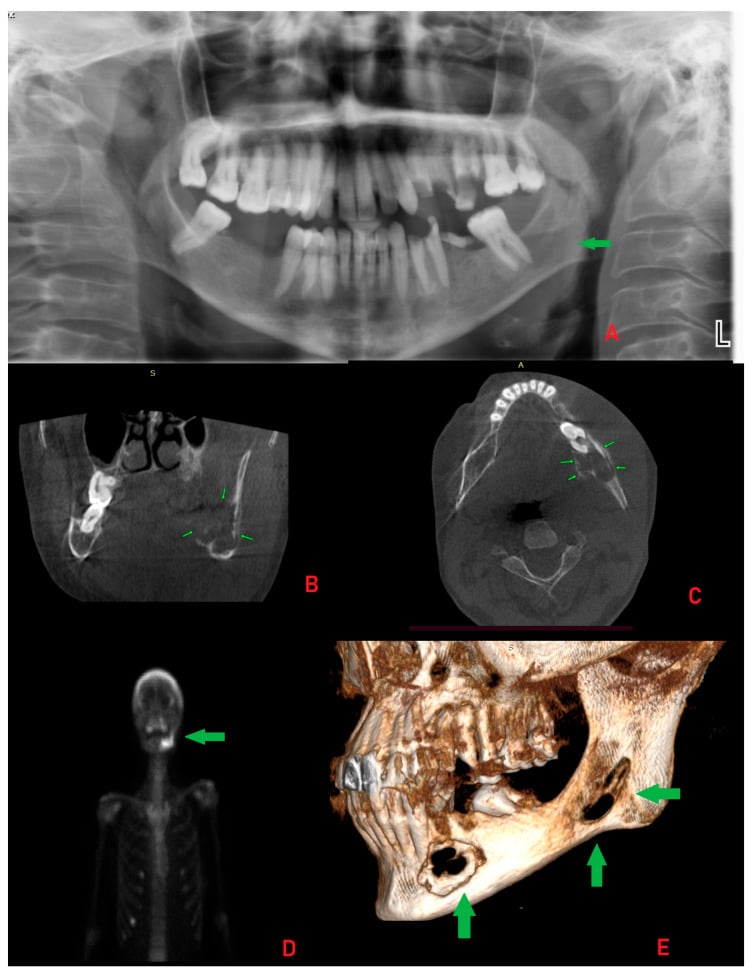
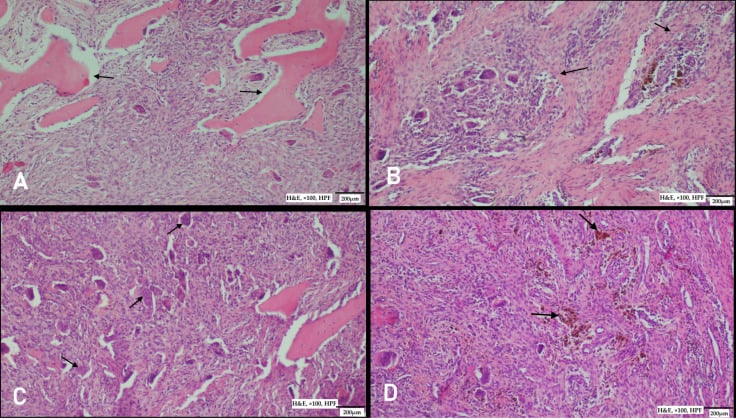
Low-turnover disease. Adynamic bone is often asymptomatic, yet fracture risk is increased despite the absence of pain. Bone heals poorly after fracture, and the risk of hypercalcaemia rises because the skeleton's buffering capacity is reduced.
Beyond the skeleton. Vascular calcification presents as coronary artery disease (angina, myocardial infarction), peripheral vascular disease (claudication, gangrene), aortic stenosis from valvular calcification and hypertension from vascular stiffness. Soft-tissue calcification takes several forms:
- Periarticular calcification around joints, pseudogout-like
- Tumoral calcinosis - large calcium deposits in the soft tissues
- Red-eye syndrome - conjunctival calcium deposition causing irritation and redness
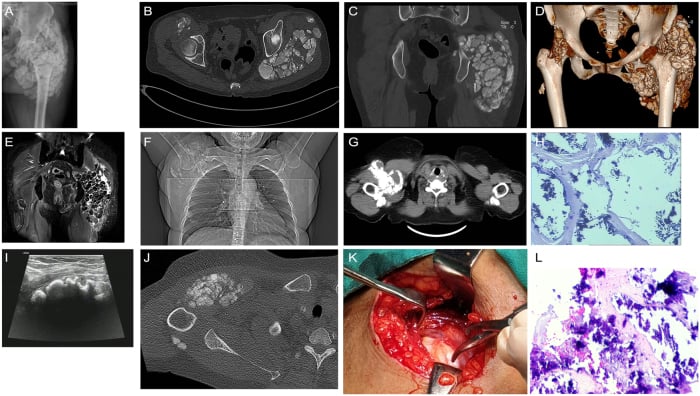
Examination. The findings to look for:
- Bone tenderness over the sternum, ribs and long bones
- Skeletal deformity in children - rickets-like bowing, short stature
- Pathological fractures - vertebral compression, proximal femur
- Proximal muscle weakness, from concurrent vitamin D deficiency or uraemic myopathy
- Calcified peripheral arteries, palpable and hardened, with bruits from stenotic calcified vessels
- Peripheral ischaemia - cool extremities, poor pulses and, in severe cases, gangrene
- Skin - scratch marks and excoriations from pruritus; calciphylaxis lesions, which are painful violaceous plaques with central necrosis
Investigations
Biochemistry. Calcium, phosphate, PTH and alkaline phosphatase are followed as serial trends and interpreted together, and the targets differ between non-dialysis and dialysis stages.
- CKD Stage 3-4
- 2.2-2.5 mmol/L (normal range)
- CKD Stage 5 (Dialysis)
- 2.2-2.5 mmol/L
- Rationale
- Avoid hypercalcaemia (vascular calcification risk)
- CKD Stage 3-4
- Base treatment on progressive or persistently elevated values
- CKD Stage 5 (Dialysis)
- Lower elevated phosphate toward the normal range
- Rationale
- Use serial trends; avoid malnutrition from indiscriminate restriction
- CKD Stage 3-4
- No single optimum level; evaluate a progressive rise
- CKD Stage 5 (Dialysis)
- Approximately 2-9x assay upper limit in CKD G5D
- Rationale
- Act on trends and avoid both severe excess and oversuppression
- CKD Stage 3-4
- Measure and correct deficiency using general-population strategies
- CKD Stage 5 (Dialysis)
- Measure and correct deficiency using general-population strategies
- Rationale
- No CKD-specific universal concentration target
- CKD Stage 3-4
- Monitor trend
- CKD Stage 5 (Dialysis)
- Monitor trend
- Rationale
- Supports turnover assessment alongside PTH
- CKD Stage 3-4
- Interpret separately
- CKD Stage 5 (Dialysis)
- Interpret separately
- Rationale
- Do not use a Ca×P product target
For CKD G5D on dialysis, KDIGO suggests maintaining intact PTH at approximately 2-9 times the assay upper limit and changing therapy when values move markedly in either direction. It is not a universal range for CKD G3a-G5 and cannot be translated into one fixed pg/mL interval, such as a universal 150-300 pg/mL band, because assays differ. Avoid suppressing PTH indiscriminately: very low turnover and adynamic bone increase fragility.
Other markers. Four further tests refine the picture:
- Bone-specific alkaline phosphatase - a marker of bone formation, high in high-turnover disease
- FGF23 - elevated early in CKD
- Sclerostin - elevated in CKD; inhibits bone formation
- Albumin-corrected calcium - adjusts for hypoalbuminaemia
How often. Monitoring intensifies with the stage:
- CKD stage 3 - calcium, phosphate and PTH every 6-12 months
- CKD stage 4 - every 3-6 months
- CKD stage 5 (dialysis) - calcium and phosphate monthly, PTH every 3 months
Plain radiographs. Some signs belong to high-turnover disease and some to CKD-MBD generally. The high-turnover signs:
- Subperiosteal resorption on the radial side of the middle phalanges (hand radiograph) - pathognomonic
- Rugger jersey spine (below)
- Salt-and-pepper skull - granular loss of skull trabeculation, also described as ground-glass
- Brown tumours - lytic expansile lesions of the jaw, ribs and pelvis
- Multiple lytic bone cysts
The general findings are soft-tissue calcification (arterial and periarticular), generalised osteopenia, chondrocalcinosis from calcium pyrophosphate deposition, widened bone shafts from impaired remodelling (under-modelling), and rickets-like growth-plate changes in children. These signs indicate the phenotype but do not replace turnover assessment.
Rugger jersey spine
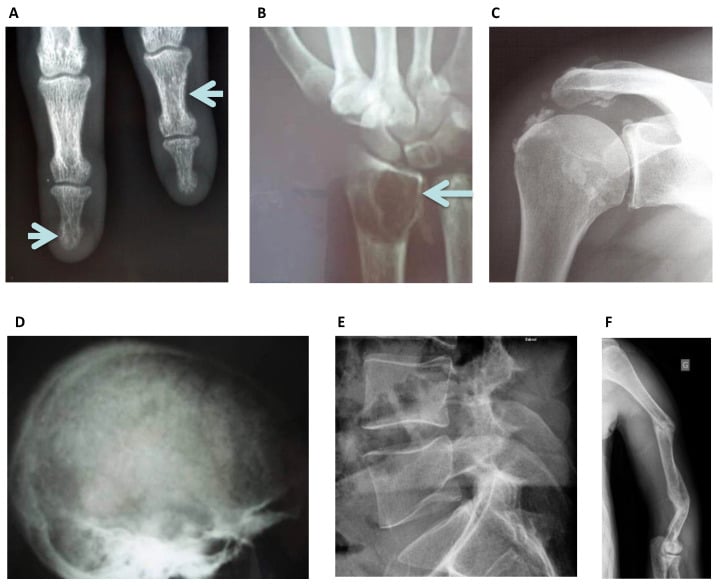
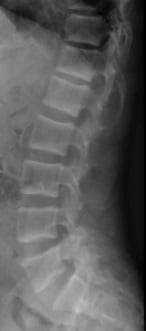
What it looks like. On the lateral spine radiograph each vertebral body shows dense sclerotic bands along its superior and inferior margins (the endplate regions) around a relatively lucent central band. The horizontally striped "sandwich vertebra" resembles the hoops of a rugby (rugger) jersey.
The mechanism. It is osteosclerosis driven by secondary hyperparathyroidism, not simple periosteal new bone. In high-turnover disease, high PTH stimulates osteoblastic deposition of new (often woven) bone preferentially in the metabolically most active subchondral trabecular bone next to the vertebral endplates, while the central body is comparatively spared. "Subperiosteal" is therefore a loose label: the process is subchondral endplate osteosclerosis.
What it signifies. Rugger jersey spine is essentially pathognomonic of the high-turnover renal osteodystrophy of CKD, and therefore of significant secondary hyperparathyroidism. It should prompt review of PTH, calcium, phosphate and the adequacy of CKD-MBD control. It is distinct from the "sandwich vertebra" of osteopetrosis (uniform, sharply marginated endplate sclerosis from failed osteoclastic resorption) and from Paget or haemangioma striping.
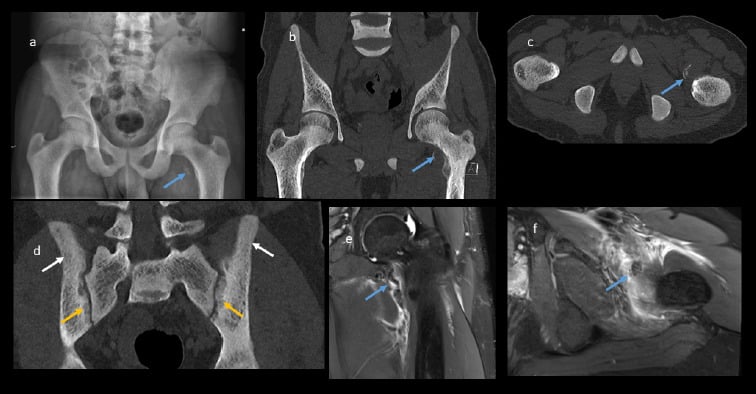
Occult insufficiency fractures
Persistent focal pain warrants MRI when radiographs or CT do not explain the symptoms. A normal plain film does not end the work-up of focal weight-bearing pain in advanced CKD.
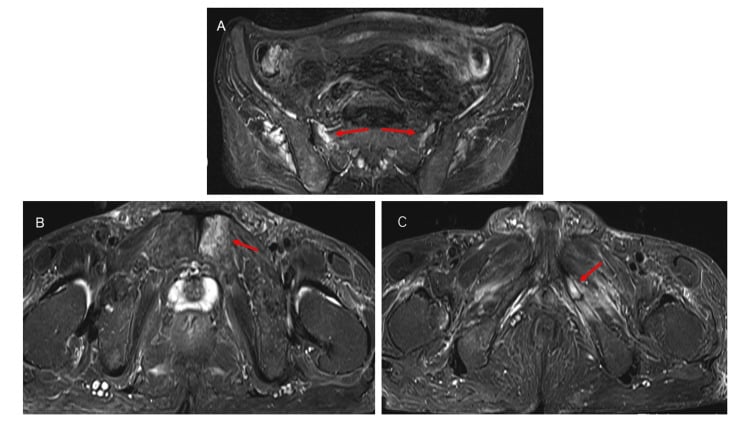
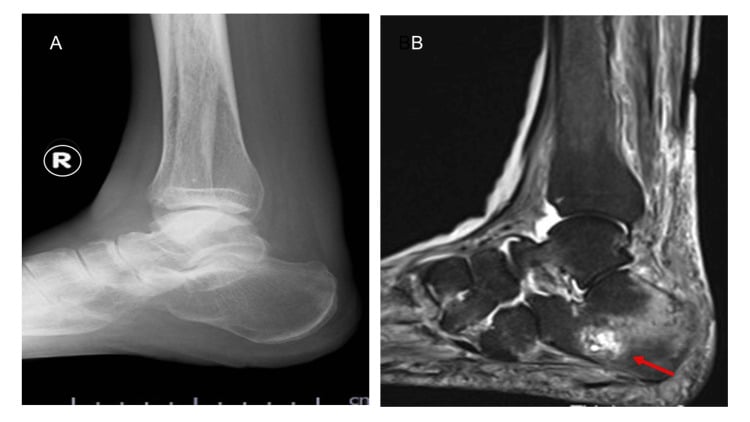
Other imaging. Each test answers a different question:
- DEXA - bone mineral density, often osteopenic or osteoporotic
- Lateral abdominal radiograph - screens for aortic calcification
- Echocardiogram - valvular calcification (aortic stenosis, mitral regurgitation)
- CT - coronary artery calcium score for cardiovascular risk
Bone biopsy
The gold standard, rarely needed. Bone biopsy is the reference test when the turnover type will change treatment, but in clinical practice treatment is guided by biochemistry (PTH, calcium, phosphate). It is an iliac crest biopsy with tetracycline double-labelling, processed as undecalcified sections for histomorphometry that quantifies bone volume, turnover and mineralisation.
Indications. Consider biopsy for:
- Diagnostic uncertainty about the type of bone disease (high versus low turnover)
- Unexplained bone pain or fractures
- Hypercalcaemia with low PTH, suggestive of adynamic bone
- Suspected aluminium toxicity (historical)
- Research purposes
Differential Diagnosis
Secondary hyperparathyroidism is compensatory, a response to hypocalcaemia, and the calcium is low or normal. Primary and tertiary disease are autonomous and raise the calcium.
- Secondary HPT (CKD)
- Low or normal
- Primary HPT
- Elevated
- Tertiary HPT
- Elevated
- Secondary HPT (CKD)
- Elevated (CKD)
- Primary HPT
- Low or normal
- Tertiary HPT
- Variable
- Secondary HPT (CKD)
- Elevated (appropriate response)
- Primary HPT
- Elevated or inappropriately normal
- Tertiary HPT
- Elevated (autonomous)
- Secondary HPT (CKD)
- Impaired (eGFR less than 60)
- Primary HPT
- Normal or mildly impaired
- Tertiary HPT
- Improved (post-transplant) or impaired
- Secondary HPT (CKD)
- Compensatory to hypocalcaemia
- Primary HPT
- Autonomous PTH secretion (adenoma)
- Tertiary HPT
- Autonomous after prolonged secondary
- Secondary HPT (CKD)
- Medical (vitamin D, binders, calcimimetics)
- Primary HPT
- Parathyroidectomy
- Tertiary HPT
- Parathyroidectomy
Medical Management
Phosphate first. Hyperphosphataemia drives secondary hyperparathyroidism, so phosphate is controlled first, with binders and diet, before escalating to vitamin D and calcimimetics.
Before escalating. Look for the modifiable drivers of a rising PTH: phosphate burden, including dietary phosphate exposure, hypocalcaemia, vitamin D deficiency and treatment adherence. In CKD G3a-G5, a persistently rising PTH should first trigger that review, and is followed as a trend rather than chased to a fixed number.
- Intervention
- Dietary phosphate review plus binder when indicated
- Goal
- Lower persistently elevated phosphate toward normal
- Intervention
- Correct nutritional vitamin D deficiency
- Goal
- Use general-population replacement strategy
- Intervention
- CKD G5D PTH-lowering therapy
- Goal
- Choose calcimimetic, vitamin-D analogue or combination by biochemical context
- Intervention
- Parathyroidectomy
- Goal
- Severe hyperparathyroidism unresponsive to medical therapy
Avoid oversuppression. Persistently low PTH and low turnover raise concern for adynamic bone. Interpret PTH with alkaline phosphatase, the clinical context and biopsy when the result will change treatment.
The goal. Base phosphate-lowering treatment on progressively or persistently elevated phosphate and lower it toward the normal range; do not impose one universal mmol/L threshold. Controlling phosphate reduces the PTH drive and the vascular calcification risk.
Diet. A low-phosphate diet limits dairy products, processed foods, cola drinks and nuts. Protein is restricted to 0.8-1.0 g/kg/day, since excessive restriction causes malnutrition, and dietitian consultation is essential for education and compliance.
- Example
- Calcium carbonate
- Dose
- 1-3 grams elemental calcium per day with meals
- Advantages
- Inexpensive, provides calcium
- Disadvantages
- Vascular calcification risk, hypercalcaemia
- Example
- Sevelamer carbonate
- Dose
- 800-1600 mg three times daily with meals
- Advantages
- No calcium load, reduces vascular calcification
- Disadvantages
- Expensive, GI side effects
- Example
- Lanthanum carbonate
- Dose
- 500-1000 mg three times daily with meals
- Advantages
- Potent, low pill burden
- Disadvantages
- Expensive, GI side effects, theoretical toxicity
Choosing a binder. Despite the mechanistic concern about calcium loading and vascular calcification, RCT data (DCOR) did not show a clear mortality advantage for non-calcium binders. The choice balances cost, calcium load and calcification risk rather than proven survival benefit.
Dialysis. Adequate dialysis removes phosphate, at 3-4 sessions a week of 4 hours each, and high-flux membranes improve phosphate clearance. Longer or more frequent dialysis is used for refractory hyperphosphataemia.
Surgical Management - Parathyroidectomy
Indications. Surgery is for severe hyperparathyroidism that fails medical therapy (vitamin D, calcimimetics, phosphate control). Refractory disease has been defined as a PTH persistently greater than 800-1000 pg/mL despite maximal medical therapy, but no single PTH threshold mandates surgery.
Absolute
- Refractory severe secondary hyperparathyroidism despite maximal medical therapy
- Hypercalcaemia with elevated PTH - calcium persistently greater than 2.65 mmol/L
- Calciphylaxis with severe secondary hyperparathyroidism
- Symptomatic bone disease - brown tumours, pathological fractures, intractable bone pain
Relative
- Progressive vascular or soft-tissue calcification
- Tertiary hyperparathyroidism after renal transplantation (autonomous PTH secretion with hypercalcaemia)
- Technique
- Remove 3.5 glands (leave half of one gland)
- Advantages
- Preserves parathyroid function, avoids hypoparathyroidism
- Disadvantages
- 10-15% recurrence rate
- Technique
- Remove all 4 glands, transplant 50-100 mg parathyroid tissue to forearm
- Advantages
- Easy access for reoperation (forearm), lower recurrence
- Disadvantages
- Risk of graft failure (5-10%), hypoparathyroidism
- Technique
- Remove all 4 glands, lifelong calcium and calcitriol
- Advantages
- Lowest recurrence rate
- Disadvantages
- Permanent hypoparathyroidism, lifelong supplementation
Before surgery. Optimise medical management, continuing phosphate binders and vitamin D, and localise the glands with sestamibi scan and ultrasound, which are less sensitive than in primary hyperparathyroidism. Dialysis patients carry a high perioperative risk and need a cardiovascular assessment, and consent includes the risk of hungry bone syndrome.
Hungry bone syndrome
What happens. Hungry bone syndrome occurs in 30-50% of patients after parathyroidectomy for severe secondary hyperparathyroidism. The demineralised skeleton avidly takes up minerals, producing profound hypocalcaemia and hypophosphataemia, so pre-emptive high-dose calcium and vitamin D supplementation is required.
Who is at risk. The risk is higher with:
- Preoperative PTH greater than 1000 pg/mL
- Large parathyroid glands on imaging
- Elevated alkaline phosphatase preoperatively
- Brown tumours
Monitoring. Watch for perioral tingling, Chvostek sign and tetany. Calcium is checked every 6 hours for the first 24-72 hours, and calcium, phosphate and magnesium daily for the first week; the checks then space out as supplementation is weaned.
- Calcium Check
- Every 6 hours
- Intervention
- IV calcium if symptomatic
- Calcium Check
- Daily
- Intervention
- Titrate oral calcium
- Calcium Check
- Weekly
- Intervention
- Gradual weaning as tolerated
- Calcium Check
- Monthly
- Intervention
- Stabilise supplementation
Treatment. Replacement is aggressive at first and weaned slowly:
- Aggressive calcium replacement - oral calcium 3-6 g daily in divided doses; IV calcium gluconate 1-2 g every 6 hours if symptomatic
- Calcitriol 0.5-2 micrograms daily
- Magnesium replacement - magnesium is often depleted, and depletion impairs PTH secretion
- Gradual weaning over weeks to months as the skeleton remineralises; high-dose calcium may be needed for weeks to months
Complications and Special Considerations
Calciphylaxis
What it is. Calciphylaxis (calcific uraemic arteriolopathy) is life-threatening arteriolar calcification causing painful skin necrosis, with an incidence of 1-4% of dialysis patients per year. It presents as painful violaceous, indurated plaques that progress to necrosis, with a livedo reticularis pattern and eschar formation with ulceration. The distribution is the lower legs, thighs and abdomen, the areas of high adiposity.
Risk factors. Female sex, obesity, diabetes mellitus, dialysis exposure, warfarin use, disturbances of calcium/phosphate balance with excessive calcium loading, and severe secondary hyperparathyroidism.
Diagnosis. Skin biopsy shows calcification of the dermal arterioles and adipose tissue, but it is taken with caution because it may worsen necrosis. Plain radiographs show soft-tissue calcification.
Treatment. Care is urgent and multidisciplinary:
- Review warfarin urgently with nephrology, haematology/cardiology and the anticoagulation indication; discontinue or substitute when clinically feasible rather than reflexively leaving the patient unprotected
- Coordinate wound care and infection control; debridement strategy is individualised because ischaemic tissue may worsen after indiscriminate surgery
- Consider sodium thiosulfate during dialysis; dosing is protocol- and tolerance-dependent and outcome evidence remains observational
- Reduce modifiable mineral-loading factors: avoid hypercalcaemia, treat persistently elevated phosphate and review calcium-based binders
- Parathyroidectomy if severe secondary hyperparathyroidism
- Pain management - often requires opioids
Why warfarin matters. Matrix Gla protein is a vitamin-K-dependent inhibitor of vascular calcification, the key inhibitor of calcification in the arterial media. Warfarin inhibits its vitamin-K-dependent carboxylation, and the undercarboxylated protein is inactive, so warfarin is an important modifiable association with calciphylaxis. Where a substitute is feasible, the options are heparin or a DOAC.
Why sodium thiosulfate is used. Sodium thiosulfate may increase calcium solubility, by chelating calcium as soluble calcium thiosulfate and dissolving vascular deposits, and has antioxidant and vasodilatory effects, but the mechanism is not settled. Dialysis protocols commonly use post-dialysis dosing, adjusted for tolerance and adverse effects.
Prognosis. Mortality is high, commonly driven by wound infection and sepsis, and especially when necrotic wounds become infected. Early multidisciplinary treatment is essential.
Fractures in CKD
The pattern. Hip fracture is the most common, with the highest morbidity and mortality, and vertebral compression fractures are often asymptomatic. CKD fragility may be multifocal and may combine mineralisation failure with osteoporosis, and enthesis avulsions can be the presenting fracture pattern when turnover is severely abnormal.
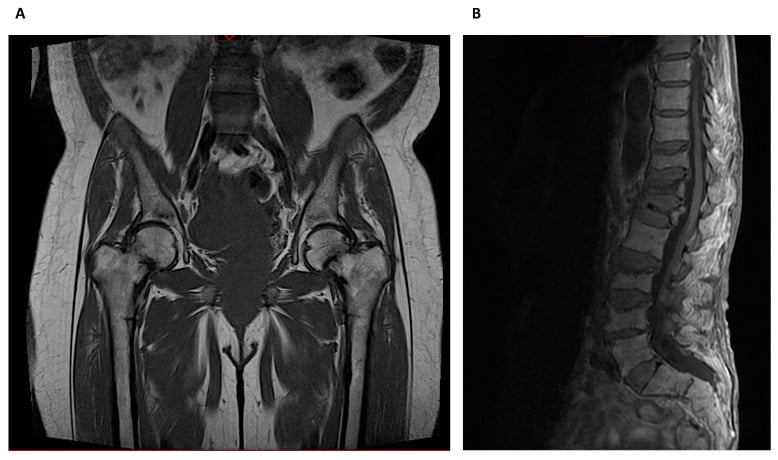
Bone quality. High-turnover bone is soft, with poor screw purchase, so consider cement augmentation. Low-turnover bone is brittle, with an increased periprosthetic fracture risk. Both types increase the risk of fixation failure.
Before surgery. Optimise PTH, calcium and phosphate preoperatively. Cardiovascular risk is high and needs careful anaesthetic assessment, and there is a risk of postoperative hypercalcaemia from mobilisation of immobilised calcium stores.
Healing. Delayed union is common because bone remodelling is impaired, and infection risk is higher because uraemia impairs immune function. Both oversuppression and severe elevation of PTH impair healing, so optimise PTH, and consider a bone stimulator if nonunion develops.
After surgery. The priorities:
- Continue dialysis, with the schedule optimised around surgery
- Mobilise early and aggressively once stable, to reduce immobilisation complications
- Thromboprophylaxis, balancing bleeding risk (uraemic platelet dysfunction) against thrombosis risk
- Nutrition - adequate protein for healing, avoiding malnutrition
Outcomes
Medical management. Phosphate control is achievable in 60-70% with compliance, and the PTH target is achieved in 40-50% with aggressive management. Fracture prevention improves with optimised bone turnover.
- Success Rate
- 50-70% achieve targets
- Main Complication
- Non-compliance, hypercalcaemia
- Success Rate
- 70% PTH reduction
- Main Complication
- Hypocalcaemia, nausea
- Success Rate
- 85-95% cure
- Main Complication
- Hungry bone syndrome 30-50%
- Success Rate
- Variable union rates
- Main Complication
- Delayed healing, fixation failure
After parathyroidectomy. Perioperative mortality is 2-3%, reflecting cardiovascular risk; the USRDS cohort in the evidence below recorded 3.1% at 30 days. Bone pain improves in 70-80%, within weeks to months, pruritus resolves in 70-80%, brown tumours regress over 6-12 months without specific treatment, and fracture risk decreases. Recurrence after total parathyroidectomy with autotransplantation is 5%.
The price of success. PTH normalises or becomes low after surgery, and adynamic bone disease may develop.
Fractures. Hip fracture in dialysis patients carries a 30% 1-year mortality, twice the general population rate, and fixation failure is higher because of poor bone quality. Comprehensive perioperative optimisation is essential.
Guidelines, Registries & Global Practice
Global Epidemiology and Guidelines
CKD-MBD is a worldwide problem tied to the rising global burden of diabetes and hypertension. Roughly 90% of long-term dialysis patients have histological renal osteodystrophy, fracture rates run 2-4 times the general population, and CKD-MBD is a major driver of the excess cardiovascular mortality seen across all dialysis registries (ANZDATA, USRDS, ERA Registry, UK Renal Registry).
Side-by-side guidance:
- PTH target (dialysis)
- 2-9x upper limit normal; act on trends
- Binder/calcium stance
- Restrict calcium-based binders; lower phosphate toward normal
- Bone biopsy
- Reasonable before antiresorptives if it changes management
- PTH target (dialysis)
- Aligns with KDIGO range
- Binder/calcium stance
- Favours non-calcium binders if calcification/adynamic bone
- Bone biopsy
- Selective, not routine
- PTH target (dialysis)
- Within KDIGO band; individualise
- Binder/calcium stance
- NICE supports sevelamer/lanthanum where calcium load a concern
- Bone biopsy
- Reserved for diagnostic uncertainty
- PTH target (dialysis)
- Consistent with KDIGO; emphasise phosphate control first
- Binder/calcium stance
- Stepwise; calcimimetics for refractory HPT
- Bone biopsy
- Selective
Related pages: Hyperparathyroidism for the primary disease and the distinction that governs everything here - primary hyperparathyroidism raises calcium, secondary is a response to a low one, and tertiary is autonomy after long stimulation; Brown Tumour for the lytic lesion that is the commonest reason these patients reach an orthopaedic surgeon, and the one that must not be biopsied as a suspected primary bone tumour; Osteomalacia and Rickets for the mineralisation defect that forms one arm of the mixed picture, and for the Looser zones that share the radiographic vocabulary; Osteoporosis for why DXA is interpreted differently in chronic kidney disease and why an antiresorptive cannot be given without knowing the bone turnover state; Bisphosphonates for the drug class that is relatively contraindicated in low-turnover disease and is the main reason a bone biopsy is still occasionally justified; Dialysis-Related Amyloid Arthropathy for the beta-2-microglobulin deposition that accompanies long dialysis vintage and explains the shoulder pain, carpal tunnel syndrome and tendon ruptures in the same patients; and Pathological Fractures of the Femur for fixation in bone that will not heal normally.
Controversies and Areas of Uncertainty
The PTH range. The 2-9-times range is wide and graded weak (2C). Inter-assay variability in PTH measurement is large, and the relationship between any single PTH value and bone histology is imperfect, so trends matter more than absolute numbers.
Antiresorptives and adynamic bone. Bisphosphonates and denosumab are used cautiously in advanced CKD: they may worsen adynamic (low-turnover) bone and provoke severe hypocalcaemia (denosumab). Bone biopsy to exclude adynamic disease before antiresorptives is debated but reasonable.
Other questions. The rest of the debate, in brief:
- Bone biopsy is rarely performed; non-invasive surrogates (TBS, HR-pQCT, bone turnover markers) are promising but not yet definitive substitutes
- Surgical versus medical parathyroidectomy - the threshold for surgery versus escalating calcimimetics is not standardised, and varies with drug availability
- Subtotal versus total parathyroidectomy with autotransplantation - the trade-off between recurrence and permanent hypoparathyroidism remains unsettled
- DXA in CKD - now endorsed by KDIGO 2017 for fracture risk in CKD G3a-G5D if results change management, reversing earlier scepticism
MCQ Practice Points
Q: What is the target PTH for a patient on hemodialysis (CKD Stage 5)?
A: In CKD G5D on dialysis, KDIGO suggests maintaining intact PTH at approximately 2-9 times the assay upper limit and changing therapy when it moves markedly in either direction. This is deliberately broad and cannot be converted into a universal 150-300 pg/mL target.
Q: What is rugger jersey spine and what does it indicate?
A: Rugger jersey spine is dense vertebral endplates (sandwich vertebrae) creating horizontal bands on lateral spine X-ray, resembling a rugby jersey. It results from subchondral osteosclerosis at the vertebral endplates in high-turnover renal osteodystrophy (secondary hyperparathyroidism). Pathognomonic for CKD-mineral bone disorder.
Q: A dialysis patient develops painful violaceous skin lesions with necrosis on the thighs. What is the diagnosis and immediate management?
A: Calciphylaxis (calcific uraemic arteriolopathy). Urgently coordinate nephrology, wound and infection care, analgesia and anticoagulation review; discontinue or replace warfarin when clinically feasible, reduce excessive calcium loading, treat persistently elevated phosphate, and consider protocol-based sodium thiosulfate. Do not calculate a Ca×P product target.
Q: How do you distinguish secondary from tertiary hyperparathyroidism?
A: Secondary HPT: Low or normal calcium with elevated PTH (appropriate compensatory response to hypocalcemia in CKD). Tertiary HPT: Elevated calcium with elevated PTH (autonomous PTH secretion after prolonged secondary HPT, typically post-renal transplant). Treatment differs - secondary HPT is medical (vitamin D, phosphate binders, calcimimetics), tertiary HPT requires parathyroidectomy.
Exam Viva Scenarios
Practise clinical reasoning and management decisions out loud
“A 55-year-old man on hemodialysis for 8 years presents with diffuse bone pain. Blood tests show calcium 2.1 mmol/L, phosphate 2.2 mmol/L, PTH 650 pg/mL, alkaline phosphatase 320 U/L. He is taking calcium carbonate 1500 mg three times daily with meals as a phosphate binder. What is your assessment and management?”
“A 48-year-old woman on peritoneal dialysis for 10 years presents with a painful swelling of the jaw. X-rays show a lytic expansile lesion of the mandible. Spine X-rays show dense vertebral endplates (rugger jersey spine). Blood tests show calcium 2.8 mmol/L, PTH 1200 pg/mL. How do you assess and manage this patient?”
“A 62-year-old obese diabetic woman on hemodialysis develops painful violaceous skin lesions on her thighs with central necrosis. She is on warfarin for atrial fibrillation. Blood tests show calcium 2.6 mmol/L, phosphate 2.0 mmol/L, PTH 420 pg/mL. She is taking calcium carbonate as a phosphate binder. What is your diagnosis and management?”
Key Pathophysiology
- CKD causes phosphate retention (reduced renal excretion) and reduced calcitriol production (impaired 1-alpha hydroxylation)
- Hypocalcemia and hyperphosphatemia drive secondary hyperparathyroidism (compensatory)
- PTH causes bone resorption (high-turnover disease - osteitis fibrosa cystica)
- Oversuppression of PTH causes low-turnover disease (adynamic bone) which increases fracture risk
Spectrum of Bone Disease
- Osteitis fibrosa cystica: High-turnover from severe secondary HPT (brown tumors, subperiosteal resorption)
- Adynamic bone disease: Low-turnover from oversuppressed PTH (increased fracture risk)
- Mixed disease: Most common, features of both high and low turnover
- Bone biopsy is gold standard but rarely needed (treat based on biochemistry)
Target Biochemistry
- PTH: use trends; the 2-9x assay-upper-limit suggestion applies to CKD G5D only
- Calcium: avoid hypercalcaemia and unnecessary calcium loading
- Phosphate: lower persistently elevated values toward normal
- Ca×P product: do not calculate or target
- 25-OH vitamin D: identify and correct deficiency using general-population strategies
Radiographic Features
- Rugger jersey spine: Dense vertebral endplates (sandwich vertebrae) - pathognomonic
- Subperiosteal resorption: Radial side of middle phalanges (hand X-ray)
- Salt and pepper skull: Loss of skull trabeculation
- Brown tumors: Lytic lesions from severe secondary HPT (jaw, ribs, pelvis)
- Vascular calcification: Arteries, heart valves, soft tissues
Medical Management
- Phosphate control: Binders (calcium carbonate or sevelamer) plus dietary restriction
- Vitamin D: Replete 25-OH vitamin D, then activated vitamin D (calcitriol, paricalcitol) to suppress PTH
- Calcimimetics: Cinacalcet for refractory secondary HPT (PTH greater than 300-800 despite vitamin D)
- Calcium management: Target 2.2-2.5 mmol/L, avoid excess (vascular calcification risk)
- Dialysis optimization: Adequate sessions remove phosphate, maintain mineral balance
Parathyroidectomy Indications
- Refractory secondary HPT: PTH persistently greater than 800-1000 despite maximal medical therapy
- Hypercalcemia with elevated PTH (tertiary HPT)
- Symptomatic bone disease (brown tumors, pathological fractures, intractable pain)
- Calciphylaxis with severe secondary HPT
- Options: Subtotal (3.5 glands) or total with autotransplantation to forearm
Complications
- Hungry bone syndrome: Rapid, prolonged hypocalcaemia after parathyroidectomy; anticipate risk and replace calcium/vitamin D with close monitoring
- Calciphylaxis: Painful ischaemic skin necrosis; urgent wound, infection, analgesia, anticoagulation and mineral-management review
- Fracture risk: 2-4x higher than general population, poor bone quality (soft or brittle)
- Vascular calcification: Coronary arteries, heart valves, peripheral vessels (increased cardiovascular mortality)
Evidence Base and Key Studies
KDIGO 2017 CKD-MBD Guideline Update
- In CKD G5D, suggest maintaining intact PTH approximately 2-9 times the upper limit of normal for the assay (NOT normal PTH)
- Marked changes in PTH in either direction should prompt initiation or change in therapy rather than reacting to a single value
- Lowering elevated phosphate toward the normal range is suggested; avoid hypercalcaemia; restrict dose of calcium-based binders
- Bone biopsy is reasonable where knowledge of turnover/mineralisation type will change treatment (e.g. before antiresorptives)
Bone Mass and Microarchitecture in CKD Fracture
- Case-control of predialysis CKD: 32 patients with fracture vs 59 without, imaged by DXA and HR-pQCT
- Fracture patients had lower areal BMD at spine, hip and ultradistal radius (radius most discriminating)
- HR-pQCT showed lower cortical area/thickness, lower trabecular volumetric density and trabecular loss in fracture cases
- Structural cortical and trabecular deficits, not density alone, underlie skeletal fragility in CKD