Benign Peripheral Nerve Sheath Tumour | Eccentric Growth | Enucleation Spares the Nerve Trunk
- Eccentric growth displaces but does not infiltrate nerve fascicles (unlike neurofibroma)
- Antoni A (cellular, Verocay bodies) and Antoni B (hypocellular, myxoid) histological areas
- Target sign on MRI (T2 hyperintense rim, hypointense centre) is a hallmark of NEUROFIBROMA rather than schwannoma; its real value is suggesting a benign lesion rather than MPNST
- Enucleation preserves the NERVE - but frequently not its FUNCTION in the short term: in the largest upper-limb series 73% woke with a new deficit and 30% still had one at 2 years. Consent for this, not for '95% nerve preservation'
- NF2 (chromosome 22q12) causes bilateral vestibular schwannomas (pathognomonic)
- “Tinel sign positive: percussion over tumour elicits paresthesias in nerve distribution
- “Mobile perpendicular to the nerve, restricted along it (Tinel positive) - characteristic, but NOT pathognomonic: any tumour tethered to a nerve behaves this way, including neurofibroma
- “S100 protein strongly and diffusely positive on immunohistochemistry (unlike patchy in neurofibroma)
- “Ancient schwannoma shows degenerative atypia but remains benign (do not confuse with sarcoma)
- “Malignant transformation extremely rare (less than 1%) - malignant peripheral nerve sheath tumour arises de novo or from neurofibroma in NF1
Overview and Epidemiology
A schwannoma (also called a neurilemmoma or neurinoma) is a benign peripheral nerve sheath tumour arising from Schwann cells. Schwannomas account for approximately 5% of all benign soft-tissue tumours and are the most common tumour of peripheral nerves after the neurofibroma.
Why the diagnosis matters. A schwannoma grows eccentrically and displaces the nerve fascicles, which leaves a natural cleavage plane and allows microsurgical enucleation without dividing the nerve trunk. A neurofibroma infiltrates the fascicles and usually requires nerve sacrifice for complete excision. Telling the two apart before surgery decides the operation and what the patient is told about neurological outcome.
Incidence. The overall incidence is 1-2 per 100,000 population per year, and peripheral nerve schwannomas are 90% solitary and sporadic. Vestibular schwannoma, at 1 per 100,000 per year, is the most common cerebellopontine angle tumour and accounts for 8-10% of intracranial tumours.
Distribution. The limbs carry most peripheral tumours:
- Upper extremity - 40% (median, ulnar and radial nerves common)
- Lower extremity - 30% (sciatic, tibial and peroneal nerves)
- Head and neck - 25% (vestibular, vagus, sympathetic chain)
- Trunk - 5% (intercostal and paraspinal nerves)
Special locations. The vestibular schwannoma, or acoustic neuroma, arises on the 8th cranial nerve. Spinal schwannomas are most commonly intradural extramedullary. Mediastinal and retroperitoneal tumours are rare and often large at presentation.
Pathophysiology and Anatomy
Origin. Schwannomas arise by neoplastic transformation of Schwann cells, the myelinating cells of peripheral nerves. The genetic lesion is loss of the NF2 gene on chromosome 22q12, which encodes merlin (schwannomin), a tumour suppressor that links the cell membrane to the cytoskeleton and regulates cell growth. Loss of heterozygosity follows the two-hit hypothesis: a germline plus a somatic mutation in NF2.
Growth pattern. The tumour grows eccentrically from the nerve inside a true capsule of compressed epineurium and perineurium. The normal fascicles are displaced to the periphery of the tumour rather than infiltrated, and the natural plane between capsule and fascicles is the one enucleation follows. Growth is slow: 1-2 mm/year is quoted for peripheral tumours and as the mean for vestibular schwannomas.
- Schwannoma
- Eccentric, displaces fascicles
- Neurofibroma
- Infiltrates within fascicles
- Schwannoma
- Well-encapsulated (compressed epineurium)
- Neurofibroma
- No true capsule
- Schwannoma
- Clear plane allows enucleation
- Neurofibroma
- No plane, fascicles run through tumour
- Schwannoma
- Nerve trunk spared in over 90% (a temporary deficit is still usual)
- Neurofibroma
- Usually requires nerve sacrifice for excision
- Schwannoma
- Antoni A and B areas, Verocay bodies
- Neurofibroma
- Lacks Antoni areas
- Schwannoma
- Diffuse, strong
- Neurofibroma
- Patchy
- Schwannoma
- NF2 (10%)
- Neurofibroma
- NF1 (50%)
- Schwannoma
- Less than 5% if complete excision
- Neurofibroma
- 40-60% due to infiltrative nature
NF2-related schwannomatosis (formerly neurofibromatosis type 2). Inheritance is autosomal dominant, with 50% penetrance by age 30 and nearly 100% by age 60. Half of cases are sporadic new mutations and half are familial. The disease produces:
- Bilateral vestibular schwannomas - pathognomonic, in nearly 100% of NF2 patients by age 60, with progressive bilateral sensorineural hearing loss
- Multiple schwannomas of peripheral, cranial and spinal nerves; the peripheral ones may be subcutaneous
- Multiple CNS tumours, characteristically meningiomas (45-58%) and spinal ependymomas (33%)
- Juvenile posterior subcapsular or cortical cataracts (60-81%)
- Fewer café-au-lait spots than NF1
NF1 produces neurofibromas rather than schwannomas, with café-au-lait spots, and its plexiform type transforms to MPNST.
Diagnostic criteria. The modified National Institutes of Health criteria make the diagnosis on any of:
- Bilateral vestibular schwannomas on MRI or histology - diagnostic alone
- A unilateral vestibular schwannoma plus a first-degree relative with NF2
- A unilateral vestibular schwannoma plus two of meningioma, schwannoma, glioma or juvenile cataract
- Two or more peripheral schwannomas plus a first-degree relative with NF2
Schwannomatosis, the third syndrome. The classic exam triad is NF1 versus NF2 versus schwannomatosis, and schwannomatosis is the one that must be separated from NF2. It is defined by multiple (usually non-vestibular) schwannomas in the absence of bilateral vestibular schwannomas, and that absence is what separates it from NF2. The cause is germline loss-of-function in SMARCB1 or LZTR1, both on chromosome 22 near the NF2 locus, and many cases are sporadic.
How it presents. The dominant clinical feature is chronic, often disproportionate pain, rather than a hearing loss or a single mass, with peripheral and spinal schwannomas. Intracranial meningiomas can occur, especially with SMARCB1; the cataracts and other NF2 stigmata are absent. Pain control is central to management, with excision of symptomatic schwannomas, surveillance imaging and genetic counselling.
Multiple schwannomas with chronic pain but no bilateral vestibular schwannomas points to schwannomatosis, not NF2, but a mosaic (segmental) NF2 can mimic it. Molecular testing of the germline and of two separate tumours, searching for a shared NF2 variant, distinguishes them, as formalised in the updated international criteria.
Histology and Pathology
Gross appearance. An ovoid or fusiform mass along the nerve, typically 2-5 cm at presentation though it can be larger, with a well-defined, smooth, glistening capsule. The nerve fascicles are visible at the poles of the tumour, displaced rather than infiltrated. The cut surface is tan-yellow to grey-white, and central cystic degeneration is common in large tumours.
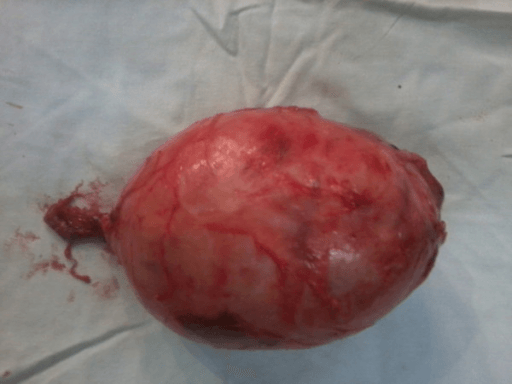
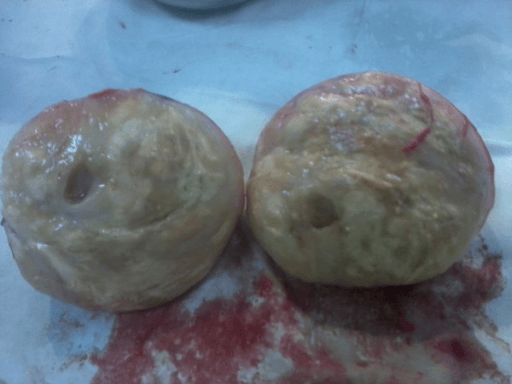
The biphasic pattern. Two kinds of tissue lie side by side. Their proportion varies, some tumours mostly Antoni A and others mostly Antoni B, and has no prognostic significance.
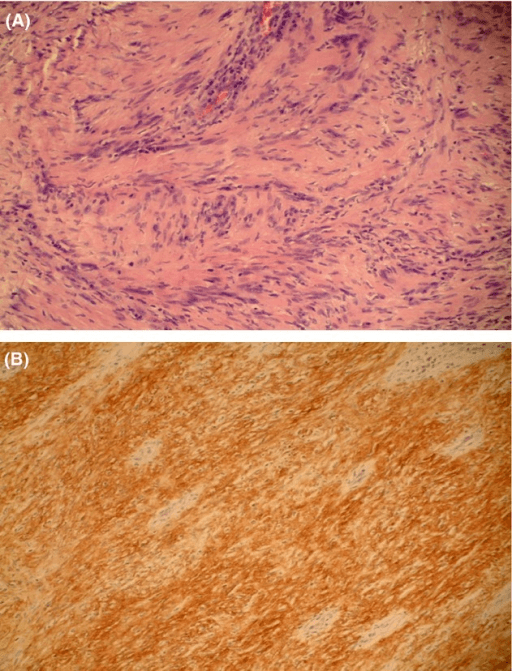
Antoni A (cellular). Highly cellular spindle cells in compact fascicles with little stroma. The nuclei are elongated, wavy and buckled with pointed, tapered ends, the cytoplasm is minimal, and there is no significant atypia unless the tumour is ancient. Antoni A areas dominate most schwannomas.
Verocay bodies. Rows of palisaded nuclei around an intervening anuclear eosinophilic zone, found in Antoni A tissue. They are pathognomonic: highly specific for schwannoma and not seen in neurofibroma, though they may be sparse or absent in some schwannomas.
Antoni B (hypocellular). Loosely arranged spindle cells in abundant myxoid to collagenous, oedematous stroma, with common microcystic change and thick-walled hyalinised vessels. Lipidised cells and haemosiderin-laden macrophages from old haemorrhage may be present. Antoni B areas reflect degenerative change and long-standing lesions.
Immunohistochemistry is essential for the diagnosis and for separating schwannoma from other spindle-cell tumours.
- Pattern
- Diffuse, strong nuclear and cytoplasmic
- Significance
- Most sensitive and specific marker (nearly 100%)
- Pattern
- Nuclear staining
- Significance
- Schwann cell lineage marker
- Pattern
- Focal to diffuse
- Significance
- Supports Schwann cell origin
- Pattern
- Highlights basement membrane
- Significance
- Encapsulation of individual cells
The negative markers exclude the mimics:
- EMA (epithelial membrane antigen) - negative; positive in perineurioma
- Neurofilament - negative within the tumour, highlighting entrapped axons at the periphery
- Desmin and SMA - negative, excluding smooth-muscle tumours
Ancient schwannomas are long-standing tumours with degenerative nuclear atypia (bizarre hyperchromatic nuclei), but they are benign. Do NOT diagnose a malignant peripheral nerve sheath tumour (MPNST) on atypia alone. The benign nature is confirmed by:
- Low mitotic activity (less than 4 mitoses per 10 high-power fields)
- Diffuse S100 positivity
- No necrosis
- No infiltrative growth
Variants that mimic malignancy. Beyond the ancient and plexiform forms, two histological variants are high-yield. The cellular schwannoma is benign but is repeatedly over-called as malignant; the melanotic schwannoma is the one variant with real malignant potential.
Cellular schwannoma. A highly cellular tumour composed almost entirely of Antoni A tissue with few or no Verocay bodies, sometimes with brisk mitoses, so it is frequently misdiagnosed as MPNST or a spindle-cell sarcoma. It favours deep, axial sites: retroperitoneum, pelvis, mediastinum and paravertebral region. Do not over-call malignancy on cellularity or mitoses alone; these features confirm it is benign:
- Diffuse strong S100 (MPNST loses S100)
- An intact pericellular basement membrane (collagen IV, laminin)
- A peripheral lymphocytic cuff and a capsule, with subcapsular foamy macrophages
- Absence of true geographic necrosis and of infiltrative growth
Melanotic schwannoma. A pigmented, melanin-containing variant. The psammomatous melanotic form is associated with the Carney complex and, unlike other schwannomas, has genuine malignant potential, roughly 10 percent behaving malignantly, so it warrants closer follow-up. A benign microcystic/reticular variant, often in the GI tract, also exists.
Clinical Assessment
History. The most common presentation is a painless mass (60-70%), usually present for years. Paraesthesiae or numbness in the nerve's distribution occur in 30-40%. Motor weakness is uncommon unless the tumour is large or on a critical nerve.
Presentations by site.
- Vestibular schwannoma - unilateral hearing loss, tinnitus, imbalance
- Spinal schwannoma - radicular pain, myelopathy
- Sympathetic chain - Horner syndrome
- Vagus nerve - hoarseness, dysphagia
Inspection. A fusiform swelling along the course of the nerve, with normal overlying skin, unlike the skin changes over a plexiform neurofibroma. Multiple masses suggest NF2 or schwannomatosis, so look for café-au-lait spots.
Palpation. The mass is firm and rubbery, firmer than a neurofibroma, with smooth, well-defined margins from its capsule, and is non-tender unless compressed or malignant. It moves perpendicular to the nerve axis but is fixed parallel to it, because it is attached to the nerve.
Mobile perpendicular to the nerve, fixed parallel to its axis reflects attachment to a nerve with longitudinal extension; other soft-tissue tumours are mobile in all directions. It is characteristic of a nerve sheath tumour but NOT pathognomonic: any tumour tethered to a nerve behaves this way, and it does not separate schwannoma from neurofibroma.
Tinel sign. Tap directly over the mass with a reflex hammer; a positive test is an electric-shock sensation radiating in the nerve's distribution. It is highly suggestive of a nerve sheath tumour, schwannoma or neurofibroma, with a sensitivity of 60-70% and a specificity of 85-90%.
Neurological assessment. Record light touch, pinprick and two-point discrimination in the nerve's distribution, the strength of the muscles it supplies, and the deep tendon reflexes. This baseline is essential before surgery.
Investigations
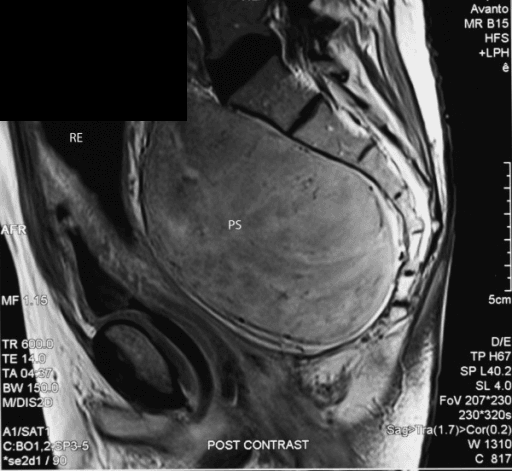
MRI is the gold standard for diagnosis and surgical planning. The schwannoma protocol:
- T1-weighted pre-contrast
- T2-weighted with fat saturation
- T1-weighted post-gadolinium contrast
- STIR (short tau inversion recovery)
Signal. On T1 the tumour is isointense to muscle, a fusiform mass along the nerve with fat around it (the split-fat sign). It is hyperintense on T2 and on fat-suppressed T2, where the entering and exiting nerve can be seen. After gadolinium, Antoni A tissue enhances more than Antoni B.
The target sign. Peripheral T2 hyperintensity with central T2 hypointensity. It is a classic feature of neurofibroma, not of schwannoma, though schwannomas can show it. Its established diagnostic value is benign versus malignant: in the series that defined it, the sign was present in all 12 neurofibromas and only 1 of 11 MPNSTs, so loss of a previously present target sign is a warning sign, not a reassuring one.
The fascicular sign, multiple small ring-like fascicles, is the feature that leans towards schwannoma.
- Schwannoma
- Present (fat rim around tumour)
- Neurofibroma
- Present (both have)
- Schwannoma
- Entering and exiting nerve visible
- Neurofibroma
- Fusiform nerve enlargement
- Schwannoma
- Strong heterogeneous enhancement
- Neurofibroma
- Homogeneous mild enhancement
- Schwannoma
- Eccentric to nerve
- Neurofibroma
- Concentric fusiform enlargement
Ultrasound. Useful for superficial palpable nerve tumours, to guide biopsy, to separate a nerve tumour from other soft-tissue masses, and as a lower-cost alternative to MRI, although MRI is superior for surgical planning. The findings:
- Hypoechoic fusiform mass with the entering and exiting nerve visible
- Posterior acoustic enhancement (characteristic)
- Internal vascularity on Doppler (target pattern)
- Split-fat sign - a hyperechoic fat rim around the tumour, indicating nerve origin
Electrodiagnostics. Nerve conduction studies and EMG document baseline nerve function and the extent of nerve involvement before surgery, and help separate a tumour from other causes of neuropathy; they are useful for baseline documentation but not diagnostic. Conduction studies may show focal slowing across the tumour, reduced amplitude when fascicles are significantly compressed, and conduction block in large tumours. EMG shows denervation if motor fascicles are compressed, helps localise the level of the lesion and gives a baseline for postoperative comparison.
- Distinguishing Features
- Eccentric, encapsulated, Antoni A/B with Verocay bodies, diffuse S100
- Key Discriminator
- Mobile perpendicular but fixed parallel to nerve; enucleable plane
- Distinguishing Features
- Fusiform, unencapsulated, infiltrates fascicles, patchy S100, axons within tumour
- Key Discriminator
- No cleavage plane; NF1 association; concentric on imaging
- Distinguishing Features
- Large, rapidly growing, painful, new neurological deficit; loss of target sign, necrosis, heterogeneous enhancement
- Key Discriminator
- Red-flag features; arises de novo or from plexiform neurofibroma in NF1
- Distinguishing Features
- Intraneural fusiform nerve enlargement, EMA positive, S100 negative
- Key Discriminator
- EMA positive / S100 negative immunophenotype
- Distinguishing Features
- Cystic, transilluminates, fluid signal on MRI, no solid enhancement
- Key Discriminator
- Cystic non-enhancing fluid; often near joint (e.g. common peroneal at fibular neck)
- Distinguishing Features
- Fat signal on all MRI sequences; mobile in all planes (simple lipoma)
- Key Discriminator
- Follows fat on every sequence; fibrolipomatous hamartoma shows coaxial-cable nerve appearance
- Distinguishing Features
- History of nerve injury/amputation, painful Tinel, small bulbous nerve end
- Key Discriminator
- Antecedent trauma or surgery at the site
A nerve sheath mass that is greater than 5 cm, deep, rapidly enlarging, newly painful, or causing a progressive motor deficit should be treated as a malignant peripheral nerve sheath tumour until proven otherwise. Loss of a previously present target sign, intratumoral necrosis, and ill-defined margins on MRI are warning signs mandating sarcoma-unit referral and image-guided biopsy rather than enucleation.
Management
The incidental peripheral schwannoma. An asymptomatic tumour can be observed with annual MRI, given its slow growth and low malignant potential.
The symptomatic peripheral schwannoma. Pain, paraesthesiae or mass effect are the indications for microsurgical enucleation. The nerve trunk is spared in over 90% and recurrence is under 5%, but warn that a new deficit is usual early and persists in about 30% (Complications, below).
Vestibular schwannoma. A tumour under 1.5 cm is observed with serial MRI or treated with radiosurgery: growth is slow, and observation preserves hearing. A tumour over 2.5 cm, or a symptomatic one, is excised microsurgically to prevent brainstem compression and decompress the facial nerve. Pollock's prospective comparison (below), in tumours under 3 cm, found equivalent tumour control with normal facial movement and serviceable hearing preserved more often after radiosurgery, and concluded that radiosurgery should be considered first-line for most small-to-medium vestibular schwannomas.
NF2 with bilateral vestibular schwannomas. Surgery is selective, using hearing-preservation techniques, because bilateral deafness is devastating; consider a cochlear implant.
Surgical Technique
Microsurgical enucleation is the gold standard for peripheral schwannomas.
Step-by-Step Surgical Technique
Position for the nerve involved (e.g. supine for the upper extremity, the limb extended on an arm board), pad the pressure points, and use a time-limited tourniquet for an extremity. Make a longitudinal incision centred over the palpable mass, 2-3 times the tumour diameter in length, identifying and protecting cutaneous nerves as the subcutaneous flaps are raised.
Identify normal nerve proximal to the tumour, where dissection is easier, then distal to it, and trace the nerve into the tumour, confirming continuity with the nerve stimulator. Identify the adjacent vessels and protect the nerve's vascular supply; ligate the tumour's blood supply if there are large feeding vessels.
Under the microscope, make a longitudinal epineurial incision over the tumour and spread the epineurium to expose the tumour-nerve interface: a glistening capsule, distinct from the nerve, with the fascicles displaced to its periphery. Test the displaced fascicles with the stimulator before any dissection and document which are functioning.
Dissect bluntly between capsule and fascicles with a microdissector, nerve hooks and small cottonoids; the tumour shells out with gentle traction. Preserve every functioning fascicle identified on stimulation, enucleate the entire tumour with the capsule intact, check the proximal and distal poles for residual tumour, and control small feeding vessels with bipolar cautery.
Confirm that all fascicles are intact, free of tension, kinking and compression, and still respond to the stimulator. The epineurium can be loosely reapproximated with 7-0 nylon (optional). Close the soft tissues in layers, typically without a drain, with a bulky dressing and a splint if appropriate.
Do not equate a small tumour with an easy enucleation - the relationship runs the other way. In a series of 131 extremity and trunk schwannomas, 93.3% of tumours under 4 cm3 were already symptomatic before surgery, and it was the small tumours accompanied by numbness that correlated significantly with difficult enucleation and with a new postoperative deficit (Abe, PMID 26693109).
The anatomy explains it. A tumour that has grown large has usually displaced the fascicles to one side and sits peripherally within the nerve, giving a broad bare surface to open and a clean plane. A small tumour that is already producing numbness is more often central, with normal fascicles splayed thinly across its whole capsule - there is no bare surface, every approach crosses working fascicles, and neurolysis is needed before enucleation can even begin.
The practical consequence: the preoperative combination of a small tumour and numbness or a brisk Tinel sign should raise, not lower, the warning you give the patient, and should make you plan theatre time for interfascicular dissection under magnification with a stimulator.
Complications
- Incidence
- 5-10% intraoperative recognition
- Prevention
- Microsurgical technique, nerve stimulator use
- Management
- Primary repair if transected; observation if stretch injury
- Incidence
- 2-5% (higher in large vascular tumours)
- Prevention
- Bipolar cautery, tourniquet if extremity
- Management
- Haemostasis with bipolar, rarely requires transfusion
- Incidence
- 5% (residual capsule fragments)
- Prevention
- Complete visualisation of tumour poles
- Management
- Observation if minimal; re-excision if symptomatic recurrence
The deficit figures to consent with. A new neurological deficit after enucleation is the rule, not the exception, but series disagree on how often, most likely because they count it differently. Park examined specifically for deficit in 56 upper-limb schwannomas; Abe counted new symptoms reported in 131 tumours. Most of Park's new deficits were minor sensory disturbance that recovered, so the figure that matters to a patient is the major deficit, 10 of 56.
- Incidence
- 73% (41 of 56) immediately when sought on examination, 10 of them major - severe motor or sensory loss, or intolerable neuropathic pain (Park); 16.0% when new symptoms are counted (Abe)
- Risk Factors
- Large tumour, extensive dissection, manipulation
- Management
- Reassurance, physiotherapy
- Incidence
- 30% at a mean of 25 months, with only hypoaesthesia, paraesthesiae or mild weakness (Park)
- Risk Factors
- Critical nerve (facial, recurrent laryngeal), tumour adhesion to fascicles
- Management
- Occupational therapy, tendon transfers, nerve reconstruction
- Incidence
- 10-15%
- Risk Factors
- Nerve manipulation, deafferentation
- Management
- Gabapentin, pregabalin, nerve blocks; usually improves
- Incidence
- Less than 5% if complete
- Risk Factors
- Incomplete excision, plexiform variant
- Management
- Re-excision if symptomatic; observation if asymptomatic
- Incidence
- 2-3%
- Risk Factors
- Prolonged surgery, diabetes
- Management
- Antibiotics, drainage if abscess
- Incidence
- 2-3%
- Risk Factors
- Inadequate haemostasis, anticoagulation
- Management
- Observation if small; evacuation if compressive
Postoperative Care
Postoperative Timeline
- Neurovascular checks every 2-4 hours, documenting motor and sensory function against the preoperative baseline
- Watch for haematoma: rare, but it can compress the nerve
- Multimodal analgesia (paracetamol, NSAID, opioid PRN); gabapentin or pregabalin if neuropathic pain develops
- Ice to reduce swelling
- Limb elevation after extremity surgery
- Gentle range of motion exercises, avoiding stretch on the nerve
- Splint for 2 weeks if nerve tension is a concern
- No heavy lifting or strenuous activity
- Keep the wound dry for 48 hours, then shower; no baths for 2 weeks; inspect for infection
- Suture removal at 10-14 days, then scar massage
- Physiotherapy for motor deficits, desensitisation for sensory changes, gradual return to activities
- Review the histology to confirm schwannoma
- Assess nerve function for improvement or deficit
- MRI at 6 months to confirm complete excision
- Annual clinical examination for 5 years
- Patient education: recurrence less than 5%, watch for a new mass
- Nerve function usually improves over 3-6 months if there is a deficit
Prognosis and Outcomes
- Enucleation Success
- Over 90% shelled out without dividing the nerve
- Nerve Preservation
- New deficit usual immediately and persisting in about 30% (Park)
- Recurrence
- Less than 5%
- Enucleation Success
- 90-95%
- Nerve Preservation
- 90-95% preserved (sciatic nerve higher risk)
- Recurrence
- 5-10%
- Enucleation Success
- 95-100%
- Nerve Preservation
- 98-100% if dorsal root (sacrifice tolerated), 85-90% if ventral root
- Recurrence
- Less than 5%
- Enucleation Success
- Complete excision 90-95%
- Nerve Preservation
- Facial nerve 70-90% preserved; hearing 10-60% preserved
- Recurrence
- 5-10% (higher for subtotal excision)
- Enucleation Success
- Subtotal excision often
- Nerve Preservation
- Variable (preserve function over complete excision)
- Recurrence
- 20-30%
Guidelines, Registries & Global Practice
Global Epidemiology
Schwannomas are encountered worldwide and are among the most common benign peripheral nerve tumours. Vestibular schwannoma incidence has risen across high-income health systems over recent decades, largely because of widespread MRI use detecting small intrameatal tumours; reported incidence ranges from roughly 1 to 2 per 100,000 person-years, with most contemporary tumours being small at diagnosis. The Copenhagen national cohort cited incidence approaching 20 per million per year and showed that the majority of observed vestibular schwannomas never grow (DOI). NF2 is rare and broadly consistent across populations at approximately 1 in 33,000 births (DOI).
Side-by-Side Guideline and Society Guidance
- Scope
- Vestibular schwannoma systematic guidelines
- Core Position
- Observation, microsurgery and radiosurgery are all acceptable; serial MRI for small tumours, intervention for growth/symptoms
- Evidence Basis
- Systematic review / Level 2-3 evidence
- Scope
- NF2 and schwannomatosis diagnosis
- Core Position
- Integrate clinical features with NF2/SMARCB1/LZTR1 genetic testing; bilateral vestibular schwannomas remain diagnostic of NF2
- Evidence Basis
- Consensus guideline (Delphi)
- Scope
- Suspicious soft-tissue / nerve masses
- Core Position
- Refer indeterminate or deep/large or growing masses to a specialist sarcoma unit before biopsy or excision
- Evidence Basis
- Guideline / expert consensus
- Scope
- Soft-tissue lump red flags
- Core Position
- Urgent imaging and sarcoma-unit referral for masses greater than 5 cm, deep to fascia, rapidly growing or painful
- Evidence Basis
- Guideline
The principal global-practice safeguard is to avoid unplanned excision ("whoops" surgery) of a mass that turns out to be a malignant peripheral nerve sheath tumour. A nerve-associated mass that is large, deep, rapidly growing, painful, or shows loss of the target sign / new enhancement should be imaged with MRI and discussed at a sarcoma multidisciplinary meeting before definitive surgery, in line with NICE/BOA and EMSOS referral principles.
Practice Variation and Registry Evidence
- Peripheral schwannoma: managed by plastic, orthopaedic/hand, or neurosurgery depending on region and nerve involved
- Vestibular schwannoma: growing international shift from primary microsurgery toward observation and radiosurgery for small-to-medium tumours
- Resource-limited settings: later presentation with larger tumours; access to MRI and intraoperative neuromonitoring varies widely
- Genetic registers (e.g. UK NF2 register) underpin the epidemiological estimates and enable lifelong surveillance of affected families
- Specialist skull-base / vestibular schwannoma databases track facial-nerve, hearing and tumour-control outcomes across surgery vs radiosurgery
- NF2 / schwannomatosis multidisciplinary clinics coordinate genetic testing, hearing preservation and emerging medical therapy (e.g. bevacizumab for NF2-related vestibular schwannomas)
Referral and Medicolegal Considerations
- Primary care: GP to plastic surgery, orthopaedic/hand surgery, or neurosurgery
- Peripheral nerve schwannomas: plastic or hand surgery (upper limb), orthopaedics (lower limb)
- Vestibular schwannomas: skull-base neurosurgery or ENT (specialist centres)
- Red-flag mass: sarcoma-unit referral before biopsy if large, deep, growing or painful
- Informed consent: a new neurological deficit after enucleation is the RULE, not the exception - 73% in the largest upper-limb series, with 30% still symptomatic at 2 years. Consent for a high chance of temporary numbness or paraesthesiae, a real chance it persists, a small chance of major motor loss or intolerable neuropathic pain, and under 5% recurrence
- Documentation: preoperative nerve-function baseline essential
- Differential diagnosis: document schwannoma vs neurofibroma distinction
- NF2/schwannomatosis screening: family history, bilateral vestibular schwannomas, multiple schwannomas
- Failure to obtain baseline nerve function documentation before surgery
- Permanent nerve deficit without consent discussion of this risk
- Incomplete excision with recurrence (counsel about less than 5% recurrence vs neurofibroma 40-60%)
- Missed NF2 diagnosis (failure to ask family history, no contralateral MRI for vestibular schwannoma)
- Detailed preoperative neurological exam documented
- Informed consent including risks: new deficit immediately in roughly two-thirds to three-quarters, residual deficit at 2 years in about 30% (mostly hypoaesthesia or paraesthesiae), major deficit in roughly 1 in 6, recurrence less than 5%
- Intraoperative nerve stimulator use documented
- Postoperative nerve function compared to baseline
MCQ Practice Points
Q: What is the pathognomonic histological feature of schwannoma?
A: Verocay bodies - Rows of palisaded nuclei (Antoni A areas) with intervening anuclear eosinophilic zones. This feature is highly specific for schwannoma and not seen in neurofibroma. Schwannomas also show diffuse strong S100 positivity (nearly 100% of cells) compared to patchy S100 in neurofibroma (30-50%).
Q: What is the genetic basis of NF2 and what is the hallmark tumor?
A: NF2 gene on chromosome 22q12 (encodes merlin/schwannomin tumor suppressor). Bilateral vestibular schwannomas are pathognomonic for NF2 (nearly 100% of NF2 patients by age 60). Autosomal dominant inheritance, 50% penetrance by age 30. Distinguish from NF1 (neurofibromas, cafe-au-lait spots, chromosome 17).
Q: What is the target sign on MRI and what is its significance?
A: Peripheral T2 hyperintensity with central T2 hypointensity. It is a classic feature of neurofibroma and is seen less often in schwannoma, so it does not separate the two benign tumours. Its established value is favouring a benign nerve sheath tumour over an MPNST - in the series that defined the sign it was present in all 12 neurofibromas and only 1 of 11 MPNSTs. Loss of a previously present target sign is a warning sign. The feature that leans towards schwannoma is the fascicular sign.
Q: What is the success rate of nerve-sparing enucleation for schwannomas, and what should the patient actually be told?
A: Separate the two, because the exam and the clinic both punish conflating them. Anatomically the operation succeeds in over 90%: schwannomas are eccentric and encapsulated, displacing fascicles peripherally, which creates a cleavage plane, and the nerve trunk is not divided. Functionally it is far less clean - in the largest dedicated upper-limb series 73% (41 of 56) had a NEW neurological deficit immediately, 10 of them major, and 30% still had a residual deficit at a mean of 25 months (Park, PMID 19880894). Most are sensory and most recover over 3 to 6 months. Recurrence is less than 5% with complete excision. Compare to neurofibroma, which infiltrates fascicles and usually requires nerve sacrifice.
Q: What clinical examination finding is most characteristic of a peripheral nerve sheath tumour?
A: Mobile perpendicular to the nerve axis, restricted along it. The sign reflects tethering to a nerve that runs longitudinally, and other soft-tissue masses (lipoma, ganglion) are mobile in all directions. Say "characteristic", not "pathognomonic": it identifies a mass bound to a nerve, which an intraneural ganglion or a tumour merely adherent to the nerve will also do, and it does nothing to separate schwannoma from neurofibroma - both are nerve sheath tumours and both give it. Tinel sign (paraesthesiae on percussion) is also suggestive but less specific. The schwannoma-versus-neurofibroma call is made on eccentricity and imaging, not on mobility.
Exam Viva Scenarios
Practise clinical reasoning and management decisions out loud
“A 45-year-old woman presents with a 3 cm painless mass in her upper arm along the radial nerve that has been slowly growing over 3 years. On examination, you find a firm mass that is mobile perpendicular to the nerve axis but fixed parallel to it. Tinel sign is positive. MRI shows a fusiform T2 hyperintense lesion with target sign and eccentric location relative to the nerve. What is your assessment and management?”
“A 32-year-old man presents with progressive right-sided hearing loss and tinnitus over 2 years. Audiometry shows right sensorineural hearing loss. MRI shows a 2.5 cm right cerebellopontine angle mass consistent with vestibular schwannoma with brainstem compression. His family history is notable for his mother having bilateral hearing loss diagnosed as vestibular schwannomas. What are your concerns and how would you manage this patient?”
“You have made a longitudinal incision and identified a 4 cm mass along the median nerve at the forearm. You suspect schwannoma based on MRI target sign. However, after epineurial incision, you find that nerve fascicles appear to run through the tumor rather than being displaced to the periphery. How would you proceed?”
Key Definition
- Benign peripheral nerve sheath tumor from Schwann cells
- Eccentric growth displaces (not infiltrates) nerve fascicles
- Well-encapsulated allows microsurgical enucleation - nerve trunk spared in over 90%, though a new deficit is usual early
- 90% solitary sporadic, 10% associated NF2 (bilateral vestibular pathognomonic)
Pathognomonic Features
- Mobile perpendicular to nerve, fixed parallel (clinical exam)
- Tinel sign positive (percussion elicits paresthesias)
- Target sign: peripheral T2 bright, central dark - neurofibroma hallmark, favours benign over MPNST
- Verocay bodies histology: palisaded nuclei with anuclear zones (Antoni A)
- S100 diffuse strong positive (nearly 100% cells)
Schwannoma vs Neurofibroma
- Schwannoma: eccentric, capsule, enucleate, S100 diffuse, NF2 association
- Neurofibroma: infiltrates, no capsule, nerve sacrifice, S100 patchy, NF1 association
- Schwannoma recurrence less than 5%; neurofibroma 40-60%
- Schwannoma spares the nerve trunk in over 90%; neurofibroma usually requires sacrifice - but sparing the nerve is not the same as sparing its function
Histology (High Yield)
- Antoni A: cellular, palisaded nuclei, Verocay bodies
- Antoni B: hypocellular, myxoid stroma, degenerative
- Ancient schwannoma: degenerative atypia but BENIGN (do not confuse with MPNST)
- S100 diffuse positive (vs patchy 30-50% in neurofibroma)
NF2 (Chromosome 22q12)
- Bilateral vestibular schwannomas pathognomonic (100% by age 60)
- Autosomal dominant, merlin/schwannomin gene loss
- Multiple peripheral schwannomas, meningiomas (45-58%), ependymomas (33%)
- Juvenile cataracts 60-81%, fewer cafe-au-lait than NF1
- Hearing preservation paramount (bilateral deafness devastating)
Surgical Technique
- Microsurgical enucleation: epineurial incision, identify capsule
- Nerve stimulator map functioning fascicles (0.5-1.0 mA)
- Blunt dissection between capsule and displaced fascicles
- Nerve trunk spared over 90%, recurrence less than 5%
- New deficit immediately in 73%, still present at 2 years in 30% (Park, upper limb, n=56) - mostly sensory, mostly recovering
Vestibular Schwannomas
- 8% of intracranial tumors, unilateral hearing loss/tinnitus
- Observation safe for less than 1.5 cm (growth 1-2 mm/year 50%, stable 30%)
- Surgery or radiosurgery for growth/symptoms/brainstem compression
- Facial nerve preservation 70-90%, hearing 40-60% (retrosigmoid, small tumors)
Evidence Base and Key Studies
397 Peripheral Nerve Sheath Tumours: 30-Year Surgical Experience (LSUHSC Series)
- Retrospective review of 397 peripheral neural sheath tumours surgically treated 1969-1999
- 361 tumours (91%) were benign; schwannomas and neurofibromas were the dominant subtypes
- Schwannomas distributed similarly across upper and lower extremities; neurofibromas more prevalent in upper limb
- Brachial plexus was the most common single benign tumour location
- 36 malignant peripheral nerve sheath tumours (28 neurogenic sarcomas) carried high morbidity and mortality despite aggressive surgery
Pathology of Peripheral Nerve Sheath Tumours: Diagnostic Overview
- Authoritative diagnostic review defining criteria for neurofibroma, schwannoma and perineurioma
- Schwannoma: encapsulated, biphasic Antoni A (cellular, Verocay bodies) and Antoni B (myxoid) architecture, diffuse strong S100
- Neurofibroma: unencapsulated, infiltrative, entrapped axons; S100 staining only a subset of cells
- Cellular, plexiform and melanotic schwannoma variants highlighted as diagnostic pitfalls that may be over-called as malignant
- Guidance provided for separating atypical neurofibroma from MPNST and recognising borderline hybrid nerve sheath tumours
The Target Sign on MRI Differentiates Benign from Malignant Nerve Sheath Tumours
- Blinded retrospective review of 23 nerve sheath tumours (neurofibromas vs MPNST)
- Target sign (central T2 hypointensity with hyperintense rim) seen in all 12 benign neurofibromas
- Target sign present in only 1 of 11 malignant peripheral nerve sheath tumours
- Good statistical separation of benign from malignant lesions using the target sign
- Loss of a target sign in a previously typical lesion should raise concern for malignant transformation
The Natural History of Vestibular Schwannoma (Copenhagen Cohort)
- Prospective growth data on 552 observed vestibular schwannomas from a national cohort of 1818 patients
- Only 17% of purely intrameatal tumours grew during observation
- 28.9% of tumours with extrameatal extension demonstrated growth (largest-diameter change greater than 2 mm)
- Tumour growth occurred almost exclusively within the first 5 years after diagnosis
- No correlation between growth and patient sex or age, supporting primary observation of small tumours
Microsurgery vs Stereotactic Radiosurgery for Vestibular Schwannoma (Prospective Comparison)
- Prospective cohort of 82 patients with unilateral vestibular schwannoma less than 3 cm (36 resection, 46 radiosurgery)
- Normal facial movement and serviceable hearing preserved significantly more often after radiosurgery at 3 months, 1 year and last follow-up
- Tumour control was equivalent between groups (100% surgery vs 96% radiosurgery, not significant)
- Surgical resection produced significant early declines in physical-function and bodily-pain quality-of-life subscales
- Authors concluded radiosurgery should be considered first-line for most small-to-medium vestibular schwannomas
Birth Incidence and Prevalence of NF2 (UK Genetic Register)
- Population-based genetic-register study from North West England
- NF2 birth incidence estimated at approximately 1 in 33,000
- NF2 disease prevalence approximately 1 in 56,161
- 56% of NF2 cases attributable to de novo mutation (highest among the tumour-prone syndromes studied)
- Provides comparative frequencies for NF1, FAP, Gorlin and von Hippel-Lindau syndromes from a single register
Updated International Diagnostic Criteria for NF2 and Schwannomatosis
- International consensus (Delphi) recommendation revising NF2 and schwannomatosis criteria
- Bilateral vestibular schwannomas, or an identical pathogenic NF2 variant in two anatomically distinct tumours, remain diagnostic of NF2
- Molecular testing (NF2, SMARCB1, LZTR1) now central to differentiating NF2 from schwannomatosis
- Criteria explicitly incorporate mosaic forms of both conditions
- Nomenclature revised; the standalone term 'neurofibromatosis 2' was retired to improve diagnostic specificity and reduce confusion with NF1
Neurological Deficit After Enucleation - What Actually Happens to the Nerve
- 56 histologically confirmed upper-limb schwannomas assessed specifically for post-enucleation neurological deficit
- 41 patients (73.2%) had a NEW neurological deficit immediately after operation
- 10 of the 56 had a MAJOR deficit - severe motor or sensory loss, or intolerable neuropathic pain
- Mean tumour size was significantly larger in those with a major deficit
- At mean 25.4 months, 39 (70%) had fully recovered and 17 (30%) retained hypoaesthesia, paraesthesiae or mild weakness
- Authors advise against biopsy and stress meticulous dissection and explicit pre-operative warning
Small Symptomatic Schwannomas Are the Hard Ones - Not the Easy Ones
- 131 extremity and trunk schwannomas in 107 patients analysed for predictors of postoperative neurological complication
- Preoperative neurological symptoms were present in 78.6% overall, and in 93.3% of SMALL tumours under 4 cm3
- 21 tumours (16.0%) produced new postoperative symptoms - numbness 12, dysaesthesia 3, pain 3, slight motor palsy 2
- Small tumours (under 4 cm3) correlated strongly with a positive Tinel sign and marginally with postoperative deficit
- Small tumours accompanied by preoperative NUMBNESS correlated significantly with difficult enucleation and with postoperative deficit
- Distinguishes a 'central type', where normal fascicles are splayed widely over the capsule, from an easily shelled 'peripheral type'