Complex Deformity Correction | Pedicle Subtraction | Vertebral Column Resection
- PSO (Grade 3) achieves 30-40° correction at single level through posterior closing wedge
- VCR (Grade 4-5) allows multiplanar correction for severe rigid deformities
- Neuromonitoring mandatory - wake-up test if signal changes occur
- Blood loss can exceed 2000mL - cell saver essential, preoperative autologous donation if time permits
- Biomechanical hinge is anterior column - protect at all costs during PSO
- “PSO apex is at the anterior cortex, the hinge - cutting too anterior risks anterior column failure
- “VCR requires anterior AND posterior support with mesh cage and rod construct
- “Schwab Grade 3 (PSO) is most common three-column osteotomy for sagittal imbalance
- “Complication rate higher with VCR (30%) versus PSO (20%) but greater correction achieved
Overview and Epidemiology
Three-column osteotomies are the most powerful tools for correcting complex spinal deformity. They resect all three spinal columns, anterior, middle and posterior, to realign the spine in the sagittal and coronal planes. The two main types are the pedicle subtraction osteotomy (PSO, Schwab Grade 3) and vertebral column resection (VCR, Schwab Grades 4-6).
Why they matter. Adult spinal deformity with sagittal imbalance causes progressive disability and pain, and a sagittal vertical axis (SVA) greater than 5cm and a pelvic incidence minus lumbar lordosis (PI-LL) mismatch greater than 10° predicts a poor quality of life. A three-column osteotomy restores sagittal balance when less invasive procedures cannot achieve adequate correction. The PSO is the workhorse for fixed sagittal deformity; the VCR is reserved for the most severe rigid curves or tumour resection.
Biomechanics and Anatomy at Risk
The three columns. Each osteotomy is defined by which columns it takes. A PSO removes the posterior and middle columns within its wedge and keeps the anterior column; a VCR removes all three and rebuilds the front with a cage.
- Anatomical Structures
- Anterior longitudinal ligament, anterior vertebral body, anterior annulus
- Resection in PSO
- PRESERVED as hinge (greenstick fracture)
- Resection in VCR
- Complete resection, replaced with mesh cage
- Anatomical Structures
- Posterior vertebral body, posterior annulus, posterior longitudinal ligament
- Resection in PSO
- Complete resection within wedge
- Resection in VCR
- Complete resection
- Anatomical Structures
- Pedicles, facets, lamina, ligamentum flavum, interspinous ligaments
- Resection in PSO
- Complete bilateral resection
- Resection in VCR
- Complete resection
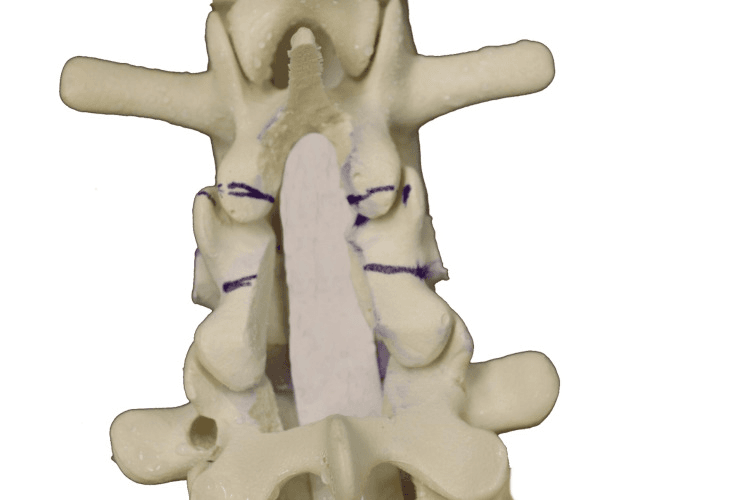
The anterior hinge. A PSO closes posteriorly and hinges anteriorly. The anterior longitudinal ligament and anterior vertebral cortex form the biomechanical hinge, and the anterior column acts as a tension band that must remain intact. A greenstick fracture of the anterior cortex lets the posterior wedge close in a controlled way. A complete fracture through the anterior column risks catastrophic failure: it creates instability that needs anterior column reconstruction with cage support, converting the PSO to a modified VCR.
Fluoroscopic monitoring during closure is mandatory to detect anterior column failure.
Opening wedge: the Smith-Petersen osteotomy. It resects the posterior elements and hinges open on the anterior column, lengthening that column and opening an anterior gap at the disc or osteotomy. Through a mobile disc space this is well tolerated. In a rigidly fused (ankylosed) spine it forcibly stretches the anterior longitudinal ligament, aorta and viscera across a fixed anterior column, risking aortic rupture, mesenteric or visceral vascular injury and cord stretch. Each level yields only modest correction, roughly 10°, and leaves a non-apposed anterior gap that must fill with bone.
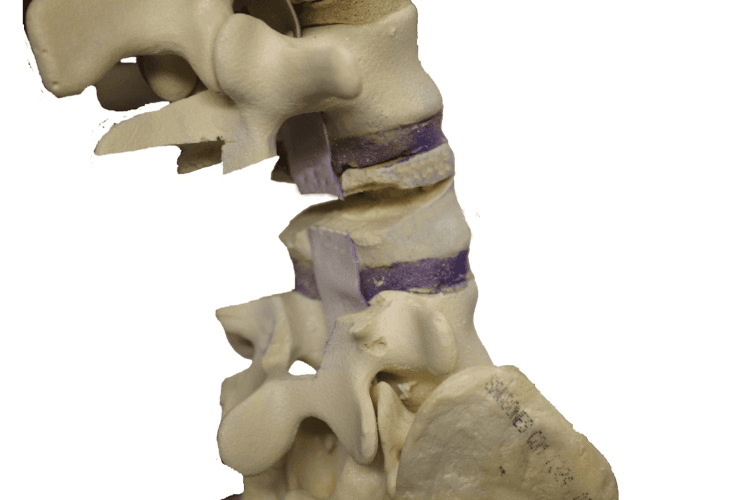
Closing wedge: the PSO. A posterior V-shaped wedge is resected and closed around the intact anterior cortex and ALL hinge, shortening the posterior column while the anterior column pivots rather than lengthens. Because the column is shortened rather than stretched, the cord and great vessels are not put under tension. Bone apposes to bone with no anterior gap, so fusion is better, and a single level delivers 30-40°.
Why the PSO replaced the Smith-Petersen. Column shortening is the safe way to generate a large correction, which is why the closing-wedge PSO became the operation of choice for fixed sagittal deformity, especially the ankylosed spine of ankylosing spondylitis. An over-aggressive closure that snaps the anterior hinge converts the shortening osteotomy into an unstable anterior gap; hence the emphasis on a controlled greenstick rather than a complete anterior fracture.
Vessels at risk. The lumbar segmental arteries (L1-L4) arise from the aorta at the posterior vertebral body and are at risk during anterior cortex perforation or VCR, where injury causes massive haemorrhage. Preoperative CT angiography identifies aberrant vasculature, and vascular surgery is on standby for VCR cases. The epidural venous plexus, a valveless network within the spinal canal, is the major source of bleeding during decompression.
Classification
The Schwab/SRS comprehensive anatomical classification grades osteotomies 1-6 by the extent of bony resection and destabilising potential, with an approach modifier (posterior, or combined anterior-posterior). Schwab and colleagues validated it in Neurosurgery in 2014 (Fleiss kappa 0.96). Grades 3-6 are the three-column osteotomies.
- Osteotomy Type
- Partial facet resection (SPO)
- Columns Involved
- Posterior only
- Expected Correction
- 5-10°
- Osteotomy Type
- Complete facet resection (Ponte)
- Columns Involved
- Posterior only
- Expected Correction
- 10-15°
- Osteotomy Type
- Pedicle subtraction osteotomy (PSO)
- Columns Involved
- All three
- Expected Correction
- 30-40°
- Osteotomy Type
- Posterior VCR with cage
- Columns Involved
- All three
- Expected Correction
- 40-60°
- Osteotomy Type
- Complete VCR (anterior + posterior)
- Columns Involved
- All three
- Expected Correction
- 60-90°
- Osteotomy Type
- Multiple VCR
- Columns Involved
- All three at multiple levels
- Expected Correction
- Greater than 90°
PSO is the workhorse. Grade 3 is the most commonly performed three-column osteotomy, providing reliable correction at a single level with acceptable complication rates. The VCR grades are reserved for cases where a PSO cannot achieve adequate correction.
Grades 1-2 (Smith-Petersen and Ponte) suit mobile deformities, including ankylosing spondylitis with flexible segments. Several levels can be combined for cumulative correction.
Grade 3 (PSO) is indicated for:
- Fixed sagittal imbalance with SVA greater than 5cm
- PI-LL mismatch greater than 10°
- Ankylosing spondylitis with severe, rigid kyphosis
- Post-traumatic kyphosis
- Flatback syndrome after prior fusion
Grades 4-6 (VCR) are indicated for:
- Severe rigid deformity greater than 70° that a PSO cannot correct
- Congenital hemivertebra causing coronal or sagittal imbalance
- Sharp angular kyphosis requiring multiplanar correction
- Spinal tumour requiring en bloc resection
- Revision of a failed prior fusion with junctional kyphosis
SHARPVCR Indications
Hook:SHARP deformities need SHARP corrections: VCR cuts through all three columns.
Clinical Assessment
What is driving the imbalance. Before committing to a three-column osteotomy, identify the underlying driver of the positive sagittal balance. Some causes are correctable with lower-grade osteotomies, and some sit in a different anatomical segment.
- Distinguishing Features
- Prior lumbar fusion in kyphosis, loss of lumbar lordosis, no remaining mobile segments
- Typical Apex / Segment
- Lower lumbar
- Preferred Osteotomy Strategy
- PSO (Grade 3) at L3 within or below old fusion
- Distinguishing Features
- Bamboo spine, raised inflammatory markers, fused rigid segments, poor horizontal gaze
- Typical Apex / Segment
- Thoracolumbar
- Preferred Osteotomy Strategy
- PSO at L2-L3; caution re osteoporosis and fragility
- Distinguishing Features
- Older patient, disc collapse, often partly flexible on supine/extension films
- Typical Apex / Segment
- Multilevel lumbar
- Preferred Osteotomy Strategy
- Posterior column (Ponte/SPO) if flexible; PSO only if rigid
- Distinguishing Features
- Prior vertebral fracture, focal angular deformity
- Typical Apex / Segment
- Single segment (often TL junction)
- Preferred Osteotomy Strategy
- PSO or VCR if vertebral body destroyed
- Distinguishing Features
- Sharp angular curve, anomalous segmentation on CT
- Typical Apex / Segment
- Focal, often thoracic
- Preferred Osteotomy Strategy
- VCR (Grade 4-6) / hemivertebra resection
- Distinguishing Features
- Long sweeping collapsing curve, pelvic obliquity, underlying disorder
- Typical Apex / Segment
- Thoracolumbar, pelvis
- Preferred Osteotomy Strategy
- Long fusion to pelvis; osteotomy only for fixed segments
Supine, fulcrum-bending or traction radiographs distinguish a flexible deformity (correctable with posterior column osteotomies or positioning) from a truly fixed one that mandates a three-column osteotomy. Performing a PSO or VCR on a deformity that would correct with lower-grade techniques exposes the patient to unnecessary neurological and haemorrhagic risk.
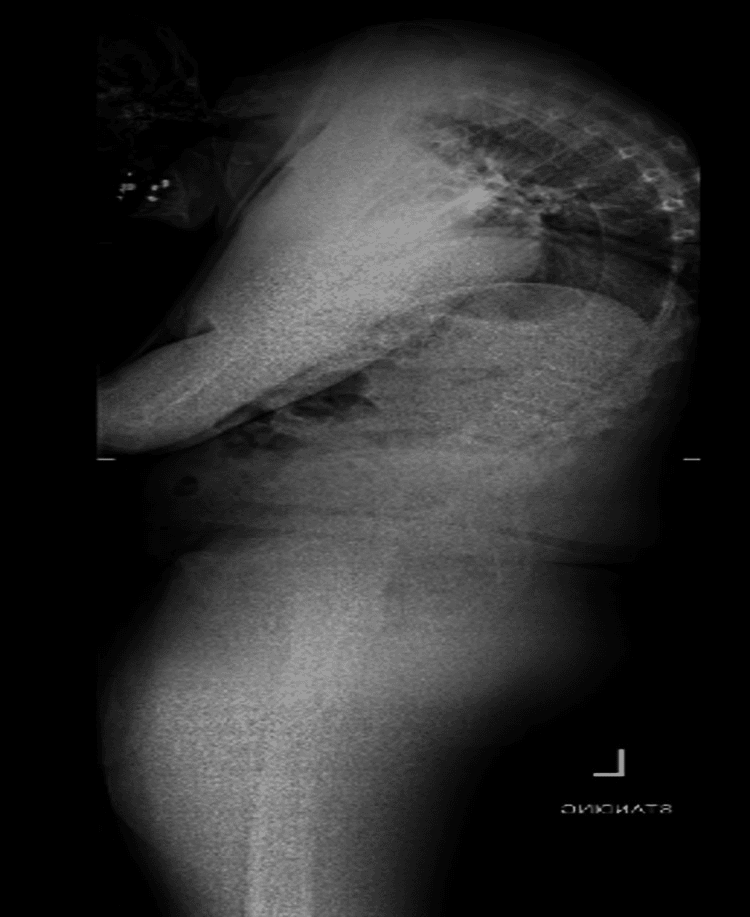
Horizontal gaze: the chin-brow vertical angle. The chin-brow vertical angle (CBVA) is the angle between a line from the brow to the chin and the vertical, measured with the patient standing, the neck in its fixed or fused position, and the hips and knees extended. It quantifies the direction of gaze and is the specific tool for planning correction of chin-on-chest kyphosis in ankylosing spondylitis.
Reading the CBVA. A large positive angle means the gaze is directed downward toward the floor: the chin-on-chest deformity of ankylosing spondylitis, which prevents forward vision, eating and safe walking. Correction is planned to bring the CBVA into a functional range of roughly -10° to +10°, near-horizontal gaze, often aiming slightly positive so the patient can still see the ground for walking and reading.
Planning with it. The CBVA is planned alongside the global spinopelvic targets, SVA and PI-LL. A lumbar PSO restores truncal balance, but in a chin-on-chest deformity the wedge angle needed is set to normalise the CBVA. Over-correction leaves the patient staring at the ceiling, so the target is a slightly downward, functional gaze rather than a strict zero.
Investigations and Surgical Planning
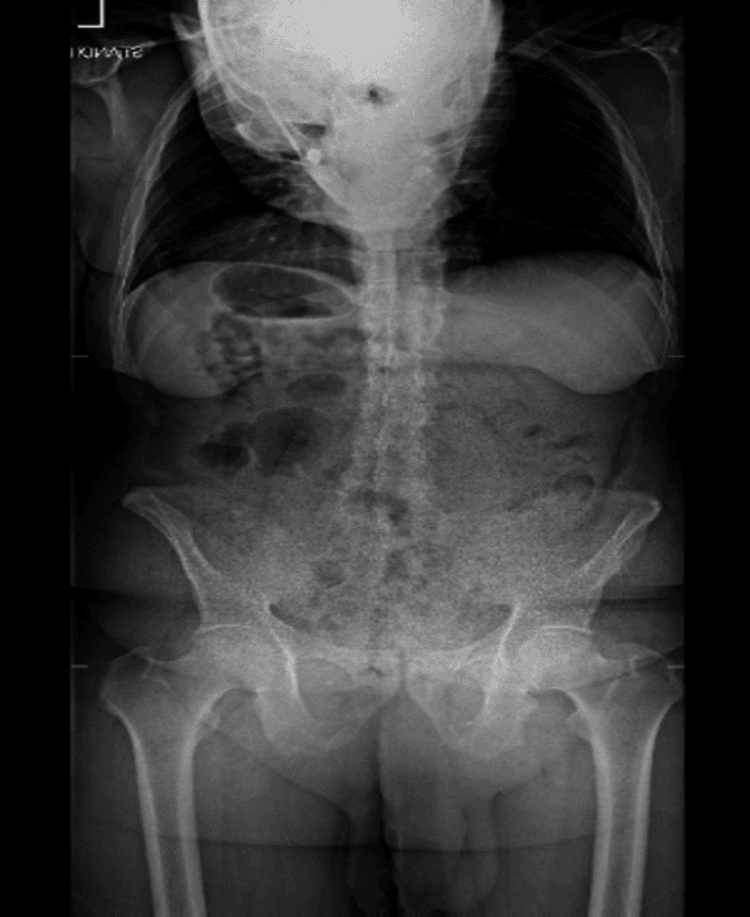
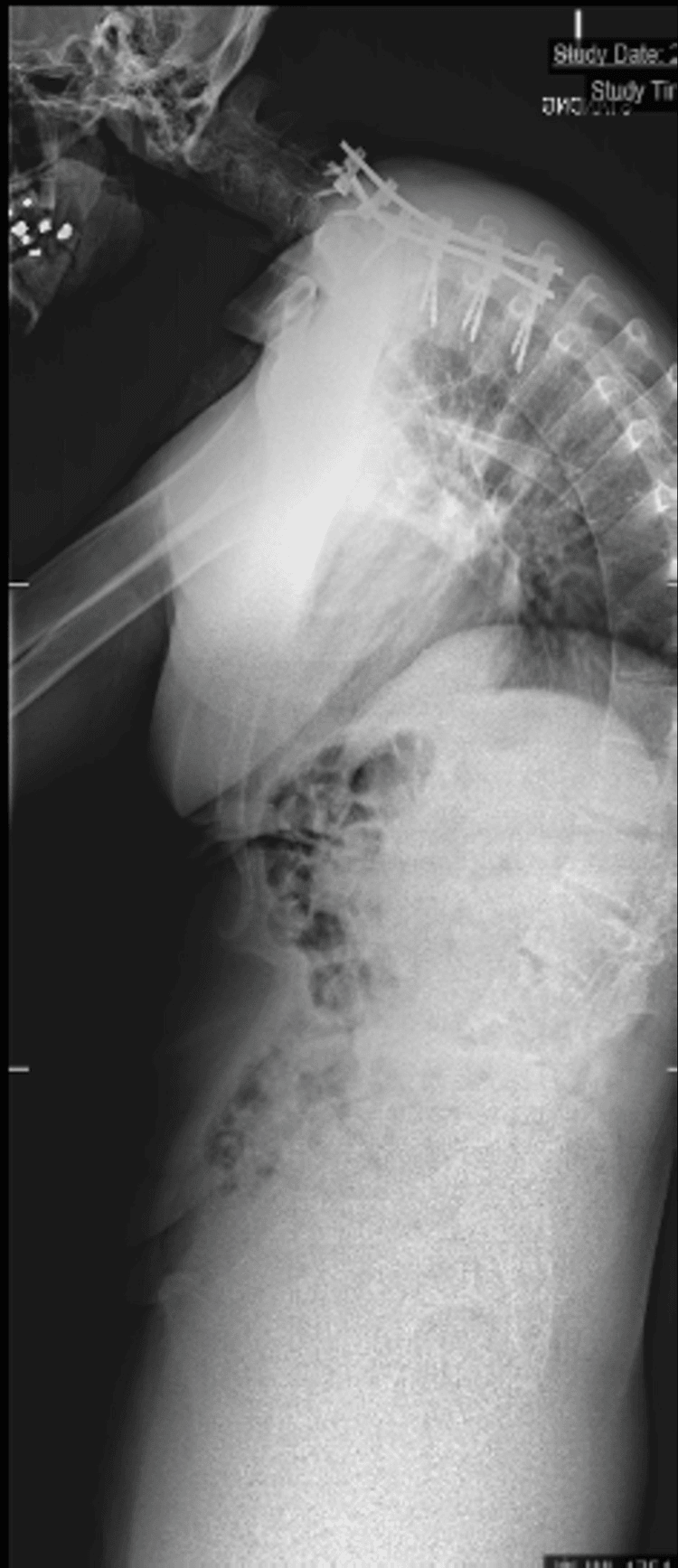
Imaging, four to six weeks before surgery. Standing scoliosis radiographs on a 36-inch cassette measure global sagittal and coronal alignment: the SVA, pelvic incidence, lumbar lordosis and PI-LL mismatch. The SVA drives the indication. CT assesses bone quality and pedicle anatomy; MRI is added for neurological symptoms or to rule out stenosis.
Medical optimisation, two to four weeks before surgery.
- Cardiopulmonary clearance for patients over 60 years or with comorbidities
- Nutrition optimised to an albumin greater than 3.5g/dL
- Smoking cessation, mandatory for fusion
- Osteoporosis treatment if the DEXA T-score is less than -2.5
Surgical planning, one to two weeks before surgery. L2 or L3 is the most effective level for correcting global sagittal balance. Calculate the correction needed, plan instrumentation to extend 3-4 levels above and below the osteotomy, and arrange neuromonitoring and a wake-up test protocol.
Blood management. Blood loss can exceed 2000mL, and 1500-3000mL is to be expected. Prepare for it:
- Type and cross-match 4-6 units preoperatively
- Autologous donation of 2-4 units in the weeks before surgery, if time permits
- Cell saver, which is mandatory and recovers 30-50% of shed blood
- Tranexamic acid, which is routine
What to claim for tranexamic acid. No placebo-controlled trial has ever been run in a three-column osteotomy population, so any percentage reduction you quote is borrowed from degenerative or paediatric spine surgery. The population-matched evidence is Clohisy 2022, which randomised ≥10-level fusions and planned three-column osteotomies to high- versus low-dose TXA: the two regimens produced the same blood loss and the same transfusion requirement, with roughly 1600-2000mL lost despite TXA. Quote that absolute figure when consenting.
PSO or VCR. The choice trades correction against time, blood and neurological risk.
- PSO (Schwab Grade 3)
- 30-40° sagittal
- VCR (Schwab Grade 4-5)
- 60-90° multiplanar
- PSO (Schwab Grade 3)
- 4-6 hours
- VCR (Schwab Grade 4-5)
- 6-10 hours
- PSO (Schwab Grade 3)
- 1500-2500mL
- VCR (Schwab Grade 4-5)
- 2000-4000mL
- PSO (Schwab Grade 3)
- 1-2%
- VCR (Schwab Grade 4-5)
- 5-10%
- PSO (Schwab Grade 3)
- Posterior only
- VCR (Schwab Grade 4-5)
- Anterior and posterior or posterior only
- PSO (Schwab Grade 3)
- Fixed sagittal imbalance
- VCR (Schwab Grade 4-5)
- Severe rigid deformity, tumour, hemivertebra
Management: Pedicle Subtraction Osteotomy (PSO)
Positioning. Prone on a radiolucent Jackson table or OSI frame, every bony prominence padded, with chest rolls or the frame letting the abdomen hang free. Avoiding abdominal compression improves venous drainage and minimises epidural venous engorgement and bleeding. Hip flexion reduces lumbar lordosis, which makes the posterior decompression easier.
- Arms tucked at the sides, or on arm boards at less than 90° abduction
- SSEP and MEP electrodes placed before positioning, and baseline signals confirmed before prepping
- C-arm positioned for AP and lateral lumbar imaging
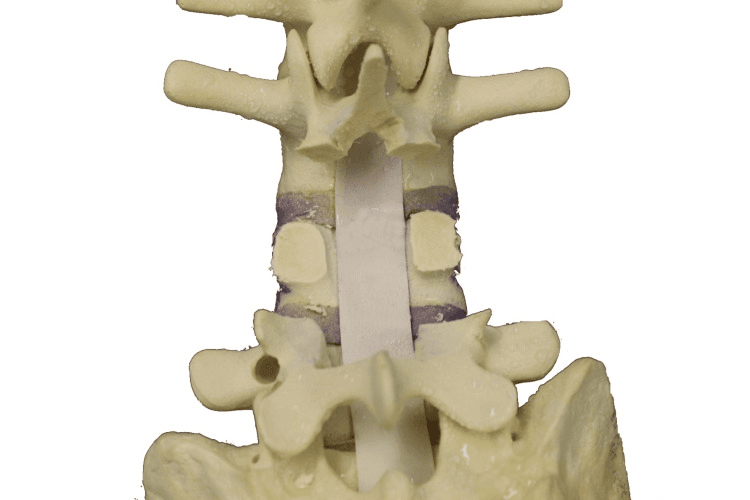
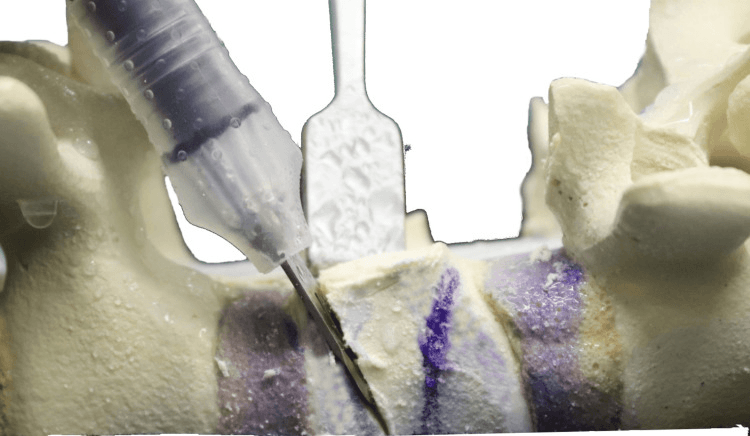
Exposure. A midline incision runs from the upper to the lower instrumented vertebra, and intraoperative fluoroscopy identifies the osteotomy level. Subperiosteal dissection of the posterior elements, from the lamina to the tips of the transverse processes, protects the paraspinal muscles and minimises bleeding; use bipolar cautery liberally. Pedicle screws go in at every level except the osteotomy level, whose screws are placed during closure.
Management: Vertebral Column Resection (VCR)
What it is. Vertebral column resection removes the vertebral body, pedicles and posterior elements, all three columns, at one or more levels, and allows multiplanar correction. It provides the maximum correction but carries higher risk than a PSO, so it is reserved for the most severe deformities. Grade 4 is a posterior VCR with posterior cage support, Grade 5 a complete VCR with anterior and posterior support, and Grade 6 multiple VCR.
- Indication
- Sagittal and coronal deformity
- Advantages
- Single approach, shorter operative time
- Disadvantages
- More difficult anterior reconstruction
- Indication
- Severe rigid deformity, tumour
- Advantages
- Optimal anterior column reconstruction
- Disadvantages
- Two approaches, longer operative time, higher morbidity
- Indication
- Lumbar deformity
- Advantages
- Access to anterior column laterally
- Disadvantages
- Learning curve, lumbar plexus risk
Posterior-only VCR. It requires advanced skill and should only be performed by experienced deformity surgeons. The steps:
- Temporary stabilisation. Pedicle screws go in at all levels except the VCR level, and temporary rods placed 3-4 levels above and below it prevent collapse during the resection.
- Posterior column resection. Complete laminectomy and bilateral pedicle resection at the VCR level, removing one level above and below as well to provide working space. Decompress the dural sac and mobilise the nerve roots.
- Vertebral body resection. Through a transpedicular approach, a high-speed burr or rongeur removes the vertebral body from within the pedicle tracts, and curettage clears all disc and vertebral body. Preserve the anterior longitudinal ligament initially, for stability.
- Anterior column reconstruction. A mesh cage filled with bone graft is placed anteriorly through the posterior approach, sized to fit between the vertebral bodies above and below, and positioned anterior to the dura, resting on their anterior cortices.
- Final correction and fixation. Remove the temporary rods and place permanent contoured rods with lordotic or kyphotic correction as needed. Compression or distraction closes the osteotomy and seats the cage; lock all screws and confirm the correction with fluoroscopy.
Anterior perforation during vertebral body resection can injure the aorta (left side) or vena cava (right side). Work from lateral to medial, use blunt instruments near the anterior cortex, and have vascular surgery immediately available. If a major vessel injury is suspected, pack the wound, stabilise the patient and obtain vascular control.
Complications
Neurological injury. The highest risk is VCR at thoracic levels (1-10% deficit), the mechanism cord ischaemia from canal compromise or vascular injury. A PSO is safer but still requires SSEP and MEP monitoring.
Mechanical failure. Equipment failure takes the form of rod fracture, screw pullout or junctional failure. Spinal instability follows anterior column fracture or pseudarthrosis.
- Incidence
- 1-5%
- Risk Factors
- Thoracic level, cord ischaemia, canal compromise during closure
- Management
- Immediate wake-up test, open osteotomy if deficit confirmed, MRI to rule out haematoma
- Incidence
- 10-20%
- Risk Factors
- VCR, epidural plexus injury, segmental vessel injury
- Management
- Cell saver, transfusion protocol, vascular surgery consultation if uncontrolled
- Incidence
- 5-10% of PSO
- Risk Factors
- Osteoporosis, excessive closure force, thin anterior cortex
- Management
- Anterior column reconstruction with cage, convert to VCR construct
- Incidence
- 10-15%
- Risk Factors
- Extensive decompression, adhesions, revision surgery
- Management
- Primary repair, fibrin glue, lumbar drain if large tear, bed rest 48 hours
- Incidence
- 2-8%
- Risk Factors
- Prolonged operative time, blood loss, diabetes, obesity
- Management
- Antibiotics, irrigation and debridement, hardware retention if stable
- Incidence
- 10-20%
- Risk Factors
- Smoking, osteoporosis, anterior column fracture, infection
- Management
- Revision fusion, bone graft, anterior column support if deficient
- Incidence
- 20-30%
- Risk Factors
- Osteoporosis, abrupt transition, inadequate proximal fixation
- Management
- Extend fusion proximally, prophylactic vertebroplasty at UIV, tethering
A postoperative neurological deficit requires emergent assessment. Obtain a wake-up test in theatre before emergence. If a deficit is present, obtain a stat MRI to rule out epidural haematoma, which needs emergent decompression. If there is no haematoma, consider cord ischaemia or intraoperative injury: supportive care, documentation of the deficit and serial neurological examinations.
High-dose steroids are controversial. Routine high-dose methylprednisolone for an intraoperative or postoperative deformity-related cord injury is not evidence-supported, carries real harms and is no longer recommended as a reflex; the priority is to rule out and treat a compressive cause (haematoma, malpositioned hardware, residual canal compromise) and to optimise mean arterial pressure for cord perfusion.
Postoperative Care and Rehabilitation
Postoperative Protocol
ICU monitoring for the first 24-48 hours, with hourly neurological checks of lower limb motor and sensory function. Haemodynamic monitoring, and transfusion as needed for anaemia or haemodynamic instability. Drain output is monitored, expecting 200-500mL in the first 24 hours. Pain control with PCA opioids and muscle relaxants.
Out of bed to chair on postoperative day 1 or 2, in a brace, and physical therapy for walking with a walker. A TLSO brace for 3 months when out of bed. The drain comes out once its output criterion is met. DVT prophylaxis with sequential compression devices and pharmacological prophylaxis.
Brace whenever out of bed, and no bending, lifting or twisting (BLT precautions). Walking distance increases gradually. Wound check at 2 weeks, with staples removed if healing well, and pain relief moved from opioid to non-opioid analgesia.
Standing radiographs at 6 weeks to assess alignment and hardware position. Brace weaning if early signs of fusion are present, and physical therapy for core strengthening and flexibility. Return to sedentary work is possible at 8-12 weeks.
Radiographs at 3, 6 and 12 months to assess fusion. Full activity once solid fusion is confirmed, typically at 9-12 months. Monitor for proximal junctional kyphosis, pseudarthrosis and hardware failure.
Outcomes and Prognosis
Pain and function. After PSO for sagittal imbalance the Oswestry Disability Index (ODI) improves by 15-20 points on average, and pain scores (VAS) fall from 7-8/10 to 3-4/10 on average. Patients with severe preoperative disability benefit most.
Quality of life. SF-36 and SRS-22 scores improve significantly in the physical function domains; mental health scores improve less reliably. Patient satisfaction is 70-80% at 2 years.
Radiographic correction. A PSO improves the SVA from 10-15cm to less than 5cm. Correction is maintained in 80-90% of patients without junctional failure.
- PSO
- 85-90%
- VCR
- 75-85%
- PSO
- 15-20%
- VCR
- 25-35%
- PSO
- 10-15%
- VCR
- 15-25%
- Smoking, which doubles the pseudarthrosis risk
- Osteoporosis (T-score less than -2.5)
- Obesity (BMI greater than 35)
- Diabetes
- Age over 70 years
- Proximal junctional kyphosis at the upper instrumented vertebra
- Inadequate sagittal correction (residual SVA greater than 5cm)
- Anterior column fracture during PSO closure requiring conversion to VCR
Guidelines, Registries & Global Practice
Global Epidemiology
Adult spinal deformity prevalence rises sharply with age, reported in 30-68% of adults over 60 years on screening radiographs, with sagittal malalignment the strongest driver of disability and the main indication for three-column osteotomy. Three-column osteotomy itself remains a low-volume, high-acuity procedure concentrated in tertiary deformity centres worldwide.
Side-by-Side Society Guidance
- Patient Selection
- Reserve for fixed/rigid sagittal or coronal deformity not correctable by Ponte/SPO
- Neuromonitoring
- SSEP plus transcranial MEP standard; M and M database reporting encouraged
- Service Model
- High-volume deformity surgeons; multidisciplinary M and M review
- Patient Selection
- Stratify by SRS-Schwab and age-adjusted alignment targets (PI-LL, SVA, PT)
- Neuromonitoring
- Multimodality monitoring with checklist response to alerts
- Service Model
- Knowledge Forum Deformity education and credentialing pathways
- Patient Selection
- Specialist spinal deformity MDT decision; concentrate in commissioned centres
- Neuromonitoring
- Intra-operative monitoring expected for corrective osteotomy
- Service Model
- NHS specialised commissioning to designated units
- Patient Selection
- Evidence-based selection emphasising sagittal targets and frailty assessment
- Neuromonitoring
- Monitoring with documented alert protocol
- Service Model
- High-volume centres; outcome benchmarking
Registry and Database Evidence
No joint-replacement-style implant registry captures osteotomies. Outcome and complication tracking relies on prospective deformity databases (SRS Morbidity and Mortality database, International Spine Study Group, European Spine Study Group), which underpin most multicentre complication estimates.
High-resource centres: routine cell salvage, high-dose TXA, multimodality monitoring, ICU and vascular surgery backup, staged or single-stage VCR. Limited-resource settings: monitoring and blood-bank capacity may constrain case selection, favouring lower-grade osteotomies or staged correction and careful patient triage to referral centres.
Informed consent must include:
- Neurological deficit risk (1-5% depending on procedure) with possibility of permanent paralysis
- Massive blood loss and transfusion requirements (multiple units likely)
- Infection risk (2-8%) with potential need for hardware removal
- Pseudarthrosis (10-20%) requiring revision surgery
- Proximal junctional kyphosis (20-30%) may require extension of fusion
- Medical complications: DVT/PE, cardiac events, prolonged recovery (3-6 months)
- Alternative treatments discussed including continued conservative management
Documentation requirements:
- Preoperative radiographic measurements (SVA, PI-LL mismatch) justifying surgery
- Medical optimization completed (smoking cessation, osteoporosis treatment, cardiac clearance)
- Neuromonitoring records with any signal changes documented and managed
- Operative report detailing osteotomy level, extent of resection, closure technique, any complications
- Postoperative neurological exam documented immediately in PACU and daily thereafter
Common litigation issues:
- Unrecognized neurological deficit in immediate postoperative period - ensure hourly neuro checks
- Inadequate informed consent regarding paralysis risk - document discussion of worst-case scenarios
- Anterior column fracture not recognized or inadequately managed - fluoroscopy before final closure mandatory
- Pseudarthrosis from inadequate fusion technique - ensure adequate bone graft and biologics used
Related pages: Adult Spinal Deformity is the parent condition and carries indications, non-operative management and the decision to operate at all - a three-column osteotomy is one answer to a problem defined there; Sagittal Balance Parameters and Spinopelvic Parameters supply the PI-LL mismatch, SVA and pelvic tilt targets that set how much correction is needed, and therefore whether a posterior-column osteotomy will do or a three-column resection is unavoidable - get the planning wrong there and no technique on this page will rescue it; Proximal Junctional Kyphosis is the commonest structural failure after these constructs and the reason the Kim series found every pseudarthrosis AWAY from the osteotomy; Pseudarthrosis of the Spine for the same failure at the other junctions and for how it is diagnosed and revised; Spinal Cord Monitoring (IONM) is not optional reading beside this page - the Lenke VCR series lost signals in 18 percent of cases and the outcome depended entirely on the monitoring team and a rehearsed response, so the safety of the operation lives there; Blood Management Strategies for cell salvage, TXA dosing and transfusion thresholds in an operation that loses 1,500 to 3,000 mL; Ankylosing Spondylitis is the classic indication for lumbar PSO to restore horizontal gaze, and the one where the chin-brow vertical angle drives the plan; Scheuermann Kyphosis, Congenital Kyphosis and Congenital Scoliosis for the rigid paediatric and young-adult deformities that make up much of the VCR caseload; and Adolescent Idiopathic Scoliosis and Neuromuscular Scoliosis for the flexible curves where these osteotomies are NOT indicated - the discriminator being rigidity on bending or traction films, not curve magnitude.
Controversies and Areas of Uncertainty
Posterior-only or combined VCR. Posterior-only VCR avoids a second approach and its pulmonary and vascular morbidity, but anterior column reconstruction is technically harder and the rate of intraoperative monitoring alerts is high. The optimal approach for the most rigid angular curves remains debated and depends on the surgeon and their experience.
Which level. L3 maximises restoration of lumbar lordosis and global SVA correction, while L4 risks the L5 root and lumbosacral fixation strain. Whether to favour a more proximal or distal level for a given pelvic incidence is not standardised and is individualised to the deformity's geometry.
Alignment targets. The classic fixed thresholds for SVA and PI-LL are being replaced by age-adjusted targets, since older patients tolerate, and may do better with, modest residual positive balance. Over-correction in younger patients raises the risk of proximal junctional kyphosis.
Preventing junctional failure. Proximal junctional kyphosis and failure remain common. Prophylactic strategies, including UIV and UIV+1 cement augmentation, tethers, hook fixation at the top and transitional rods, show promise, but none has been definitively proven superior in high-level trials.
MCQ Practice Points
Q: What is the expected sagittal plane correction achieved with a single-level pedicle subtraction osteotomy (PSO)? A: 30-40° - A single-level PSO typically provides 30-40° of sagittal plane correction. This is achieved through posterior column closing wedge with anterior column acting as hinge. Multiple PSOs (e.g., two-level) can achieve 60-80° correction but with increased morbidity.
Q: In the Schwab classification of spinal osteotomies, what defines a Grade 3 osteotomy? A: Pedicle subtraction osteotomy (PSO) - Schwab Grade 3 is defined as pedicle and partial vertebral body resection (pedicle subtraction osteotomy). Grade 1-2 are posterior column only. Grades 4-6 involve vertebral column resection with increasing complexity.
Q: What structure serves as the biomechanical hinge during PSO closure? A: Anterior longitudinal ligament and anterior vertebral cortex - The anterior column must remain intact during PSO to serve as hinge. Greenstick fracture allows controlled closure. Complete anterior column fracture requires cage placement and converts procedure to modified VCR.
Q: What is the approximate major complication rate for PSO versus VCR? A: PSO 15-20%, VCR 25-35% - Major complications include neurological deficit, massive hemorrhage, infection, and pseudarthrosis. VCR has higher complication rate due to more extensive resection and greater destabilization during procedure.
Q: What is the optimal level for PSO to correct global sagittal imbalance in adult spinal deformity? A: L2 or L3 - PSO at L2 or L3 provides maximum correction of sagittal vertical axis (SVA). More proximal osteotomies correct regional kyphosis but less effective for global SVA. L4 or L5 PSO increases risk of L5 nerve root injury.
Q: What is the expected blood loss for PSO and what strategies reduce bleeding? A: 1500-2500mL for PSO - Strategies to reduce blood loss include: tranexamic acid (a 1g bolus plus infusion is standard practice, though no placebo-controlled trial exists in a three-column population and the randomised dose comparison found no difference between high and low dose), cell saver autotransfusion, preoperative autologous donation, meticulous hemostasis with bipolar cautery, avoiding abdominal compression to reduce epidural venous engorgement, and hypotensive anesthesia (controversial).
Exam Viva Scenarios
Practise clinical reasoning and management decisions out loud
“A 45-year-old man with ankylosing spondylitis presents with severe thoracolumbar kyphosis. He cannot look horizontally and has chronic back pain. Standing radiographs show 60° thoracolumbar kyphosis, chin-brow vertical angle of 30°, and SVA of 18cm. How would you assess and manage this patient?”
“You are performing a PSO at L3 for sagittal imbalance. You have completed the posterior column resection and are beginning to close the osteotomy. During closure, you hear a loud crack and feel sudden loss of resistance. Fluoroscopy shows discontinuity of the anterior vertebral cortex. What has happened and how do you manage it?”
“Postoperative day 0 after L2 PSO for sagittal imbalance. Patient underwent 6-hour procedure with 2500mL estimated blood loss, transfused 4 units PRBCs. In PACU, patient is somnolent but arousable. When you perform neurological exam, patient has 0/5 bilateral lower extremity motor function and sensory level at L1. Intraoperative neuromonitoring was stable throughout case. How do you assess and manage?”
Key Anatomy and Biomechanics
- Three columns: Anterior (ALL + anterior VB), Middle (posterior VB + PLL), Posterior (pedicles + facets + lamina)
- PSO hinge = anterior column (ALL + anterior cortex) - MUST preserve for stability
- Greenstick anterior cortex fracture allows controlled closure - complete fracture requires cage
- Epidural venous plexus is major bleeding source - valveless system drains to IVC
Classification and Correction
- Schwab Grade 3 = PSO = 30-40° correction per level (posterior only)
- Schwab Grade 4-5 = VCR = 60-90° correction (all three columns resected)
- L2 or L3 optimal level for PSO to correct global sagittal imbalance
- SVA greater than 5cm and PI-LL mismatch greater than 10° indicate need for three-column osteotomy
Surgical Technique Pearls
- PSO apex at anterior cortex - cutting too far anterior risks anterior column fracture
- Gradual closure over several minutes prevents sudden anterior column failure
- SSEP/MEP monitoring mandatory - wake-up test if signals lost during closure
- VCR requires temporary rod stabilization before vertebral body resection to prevent collapse
- Mesh cage with bone graft provides anterior column support in VCR
Major Complications
- Neurological deficit 1-5% (higher with VCR and thoracic levels) - cord ischemia or compression
- Massive hemorrhage 1500-3000mL - epidural plexus and segmental vessels at risk
- Anterior column fracture 5-10% of PSO - requires cage placement or conversion to VCR
- Pseudarthrosis 10-20% - smoking, osteoporosis, anterior fracture are risk factors
- Proximal junctional kyphosis 20-30% - extend fusion if UIV osteoporotic
Management Algorithms
- Ankylosing spondylitis with kyphosis greater than 60° → PSO at L2/L3 for correction
- Severe rigid deformity greater than 70° unresponsive to PSO → VCR for maximum correction
- Anterior column fracture during closure → STOP, check neuromonitoring, place cage, convert to VCR construct
- Postoperative neurological deficit → STAT MRI, evacuate hematoma if present emergently (within 6 hours)
Key Evidence and Outcomes
- Bridwell 2003 (n=27): PSO gives mean 34° lordosis gain, SVA improves ~13.5cm; thoracic pseudarthrosis the main failure
- Lenke 2009 (n=43): posterior-only VCR feasible but 18% intraoperative MEP alerts - monitoring mandatory
- Schwab 2014: anatomical osteotomy grades 1-6, almost-perfect reliability (kappa 0.96)
- Elwatidy 2008 RCT (n=64): high-dose TXA cuts blood loss 49% and transfusion 80%
- Cho 2012 (n=166 revisions): 34% major complication rate; three-column osteotomy an identified risk factor
Evidence Base and Key Trials
PSO for Fixed Sagittal Imbalance (Foundational Series)
- Consecutive series of 27 patients with fixed sagittal imbalance treated by lumbar PSO
- Average increase in lordosis 34.1°; C7 sagittal plumb line improved by a mean of 13.5cm
- One lumbar pseudarthrosis at the osteotomy site; six thoracic pseudarthroses elsewhere
- Significant improvement in Oswestry (p less than 0.0001) and pain scores (p = 0.0002) at minimum 2 years
Lumbar PSO: Minimum 5-Year Follow-up
- 35 patients (mean age 53; osteotomies 1 at L1, 13 at L2, 20 at L3, 1 at L4), mean follow-up 5.8 years
- Ten pseudarthroses (29%) in 8 patients, all away from the osteotomy site (thoracolumbar/lumbosacral junctions)
- No significant degradation in regional alignment or SRS/ODI scores between 2 years and final follow-up
- Maintaining sagittal vertical axis under 8cm predicted better SRS outcome scores (p = 0.038)