Kocher Criteria: Septic Arthritis vs Transient Synovitis in the Limping Child
The Kocher criteria for the irritable hip: the four predictors, what each score means, why the numbers fell on validation, and where CRP and Kingella fit in.
By OrthoVellum Editorial TeamPublished 11 min read
Educational content for clinicians, not medical advice. Editorial policy

Key points
- Kocher's four predictors are a history of fever, non-weight-bearing, an ESR of at least 40 mm/h and a serum white cell count over 12,000 cells/mm³.
- The famous probabilities (under 0.2% with none, 40% with two, 99.6% with four) are model estimates from one retrospective Boston cohort, not transportable constants.
- Performance fell on validation: AUC 0.86 against 0.96 at the same hospital, and only 59% probability with all four predictors in St Louis.
- Caird added CRP over 20 mg/L; in a cohort already selected for aspiration it was the only factor strongly and independently associated with infection.
- The count ranks suspicion. It does not exclude infection in toddlers with Kingella, neonates or children who have had antibiotics, and it does not replace aspiration.
On this page8 sections
Transient synovitis is the commonest cause of hip pain in children and settles on its own. Septic arthritis can look similar at presentation and can destroy the hip. The Kocher criteria were built to tell them apart, and the short answer is that they rank risk well but cannot be read as a probability calculator: the four predictors (history of fever, non-weight-bearing, ESR of at least 40 mm/h, white count over 12,000) came from one Boston cohort, and performance fell when the rule was tested again. This post covers the rule, the validation studies, Caird's CRP modification and the children the rule misses. The clinical background is on the paediatric septic hip topic page.
What are the Kocher criteria?
Kocher, Zurakowski and Kasser published the rule in 1999. They retrospectively reviewed children evaluated for an acutely irritable hip at a tertiary children's hospital between 1979 and 1996, and defined true septic arthritis, presumed septic arthritis and transient synovitis from the joint-fluid white cell count, cultures of joint fluid and blood, and the clinical course. Many variables differed between the groups, but the intermediate ranges overlapped so much that no single test separated them.
Multiple logistic regression left four independent predictors:
| Predictor | Threshold | Point to watch |
|---|---|---|
| History of fever | Oral temperature over 38.5°C in the week before evaluation | It is a history: a documented fever in the preceding week counts in a child who is afebrile on arrival. |
| Non-weight-bearing | Refuses to bear weight | Observe it yourself, with the child offered a hand, rather than taking it from the referral. |
| ESR | At least 40 mm/h | The threshold is inclusive: exactly 40 counts. |
| Serum white cell count | Over 12,000 cells/mm³ (12.0 × 10⁹/L) | One cut-off for all ages, although the upper limit of normal is higher in infants and toddlers. |
The fever definition is the one most often garbled. Kocher operationally defined a history of fever as a documented oral temperature above 38.5°C during the week before the initial evaluation, so a child who is afebrile on arrival can still score it. Caird's prospective study used an oral temperature above 38.5°C, and Sultan and Hughes a temperature of 38.5°C or more. The irritable hip examination guide covers how to record both.
What does each Kocher score mean?
Kocher calculated the predicted probability of septic arthritis for all sixteen combinations of the four predictors and summarised them by count. The limping child and septic hip topic pages pair each count with an action:
| Predictors present | Predicted probability (Kocher 1999 derivation cohort) | What it should prompt |
|---|---|---|
| 0 | Under 0.2% | Septic arthritis less likely but not excluded; reconsider the differential and reassess if symptoms persist |
| 1 | 3.0% | As above, with explicit safety-netting |
| 2 | 40.0% | The decision zone: ultrasound and aspiration according to the whole clinical picture |
| 3 | 93.1% | Urgent orthopaedic review and joint sampling |
| 4 | 99.6% | Urgent orthopaedic review, joint sampling and source control |
The curve is not linear. In the derivation cohort one extra predictor took a child from 40% to 93.1%, which is why a count of two is the hardest place to stand. These are model estimates fitted to the data that produced them; discrimination fell at the same hospital, and the high-count probabilities fell sharply at other hospitals.
Did the Kocher criteria hold up on validation?
At the same hospital, mostly. Kocher's group studied a new, prospective cohort at the same children's hospital between 1997 and 2002: 51 children with septic arthritis and 103 with transient synovitis, diagnosed by the same operational definitions. The same four predictors emerged as independent, and the predicted probabilities were similar to the observed distribution. The area under the ROC curve fell from 0.96 to 0.86. The authors' own summary was "diminished, but nevertheless very good" performance, and they noted that prediction rules typically do worse in a new population because they are fitted to the original data.
At another hospital, much less. Luhmann and colleagues applied the rule retrospectively to 165 hips in 163 children who had hip aspiration for an irritable hip at St Louis Children's Hospital between 1992 and 2000: 47 septic (20 true, 27 presumed) and 118 transient synovitis. With all four predictors present, the probability of septic arthritis was 59%, not 99.6%. Their best local model used three different variables (history of fever, white count over 12,000 and a previous health-care visit) and reached only 71% with all three present. Their conclusion was that neither Kocher's algorithm nor their own model appeared valid at other institutions.
The 2004 Boston study was a temporal validation in the same building, with the same referral pattern. Luhmann's was an external test at a different institution, and it is the one that matches most readers' practice.
What did Caird add with CRP?
Caird and colleagues at the Children's Hospital of Philadelphia prospectively collected data over four years on every child who had hip aspiration for suspected septic arthritis: 53 children, of whom 48 met the inclusion criteria for analysis. They recorded C-reactive protein, which the earlier studies had not.
On univariate analysis, fever, CRP and ESR were strongly associated with septic arthritis. On multivariate analysis CRP and ESR were both significant, but ESR was not independent of CRP on backward elimination, and CRP was the only factor strongly associated with the outcome at the 5% level. Ranked individually, fever was the best predictor, followed by CRP, ESR, refusal to bear weight and the white count. With a CRP threshold of over 20 mg/L (2.0 mg/dL) as a fifth factor, the chance of septic arthritis was 83% with three factors, 93% with four and 98% with five.
Read Caird's numbers with the cohort in mind. Every child was already suspicious enough to aspirate, so these are high pre-test probability figures from a small, single-centre sample. They are not interchangeable with Kocher's four-predictor table, and a count of three means something different on each scale.
Singhal's two-variable model. At Alder Hey, Singhal and colleagues reviewed 311 children with an ultrasound-confirmed hip effusion: 29 septic and 282 transient synovitis. CRP over 20 mg/L was the strongest independent risk factor (odds ratio 81.9), and only two determinants survived multivariable modelling: weight-bearing status and CRP over 20 mg/L. With neither predictor the probability of septic arthritis was under 1%; with both it was 74%. Its strength is at the low end, and it applies only to a child already shown to have an effusion.
Why do the probabilities fall outside the derivation cohort?
The rule's discrimination travels better than its calibration. A count still ranks children from lower to higher risk, but the percentage attached to each count depends on how common septic arthritis is in the population being tested and how sick the children are before anyone counts.
| Study | Setting and design | Children | Headline finding |
|---|---|---|---|
| Kocher 1999 | Boston tertiary hospital; retrospective derivation | Irritable hips, 1979–1996 | Four predictors; 99.6% predicted with all four |
| Kocher 2004 | Same hospital; prospective | 51 septic, 103 transient | Same predictors; AUC 0.86 vs 0.96 |
| Luhmann 2004 | St Louis; retrospective, all aspirated | 47 septic, 118 transient hips | All four predictors: 59% |
| Caird 2006 | Philadelphia; prospective, all aspirated | 48 analysed | CRP over 20 mg/L the only strong independent factor; 98% with five |
| Sultan & Hughes 2010 | UK primary referral general hospital; retrospective | Four years of irritable hips | All five factors: 59.9% |
| Singhal 2011 | UK children's hospital; retrospective | 29 septic, 282 transient effusions | Neither CRP nor non-weight-bearing: under 1%; both: 74% |
Sultan and Hughes put the mechanism plainly: when the disease is uncommon, even highly specific tests produce a high number of false positives and the predictive value falls. In their general hospital, all five Caird factors positive gave a probability of only 59.9%, with fever again the best single predictor.
Which children does the Kocher score miss?
The toddler with Kingella kingae. De Marco and colleagues collected 140 children with bacteriologically confirmed K. kingae septic arthritis of the hip in a multicentre retrospective cohort; 116 (82.9%) were under two years old. Only 43 of 137 (31.4%) had a temperature above 38.5°C on admission, and temperature and ESR exceeded their cut-offs in fewer than half. CRP had the highest sensitivity (76.2%), followed by inability to bear weight (73.8%) and white count (69.6%). Of the 77 children with all four Kocher variables recorded, 49 (63.5%) had two predictors or fewer, a derivation-table probability of 40% or less. The authors concluded that neither rule is accurate enough to exclude Kingella hip infection confidently in preschool children, and pointed out that the upper limit of a normal white count under four years of age is well above 12,000. Every child in the series was infected, so it measures the rule's sensitivity in this group, not its specificity.
Neonates and immunocompromised children. They may not mount a fever or a raised white count, and in a neonate irritability, poor feeding and pseudoparalysis may be the only signs. The rule was not validated for neonates; age-specific management is on the septic hip topic page, and concomitant bone infection on the acute osteomyelitis page.
The child who has had antibiotics. Recent antibiotics can lower culture yield and blunt the presentation, so a low count is less reassuring, and a culture-negative aspirate is not automatically transient synovitis.
The synovitis that does not settle. Persistence is a red flag. Failure to improve, recurrence, fever, night pain or inability to bear weight calls for reassessment, with infection, Perthes disease, juvenile idiopathic arthritis and malignancy reconsidered. The transient synovitis topic page covers that differential, and our limping child differential post covers the older child, including the slipped epiphysis.
How should the score be used at the bedside?
Collect the inputs properly. Measure the temperature now and ask about fever before arrival. Watch the child try to stand. Send a full blood count, ESR and CRP, because CRP is the strongest laboratory predictor in the later series and rises and falls faster than ESR for monitoring.
Use ultrasound to find fluid, not to call it sterile. Ultrasound detects and measures an effusion and guides the needle. In Zamzam's series (154 children, 127 with ultrasound correlated) it was 86.4% sensitive and 89.7% specific for a septic hip, but the author concluded it could not be used safely to distinguish septic arthritis from transient synovitis; unsatisfactory outcomes were more frequent after a false-negative scan and when treatment started more than four days after onset.
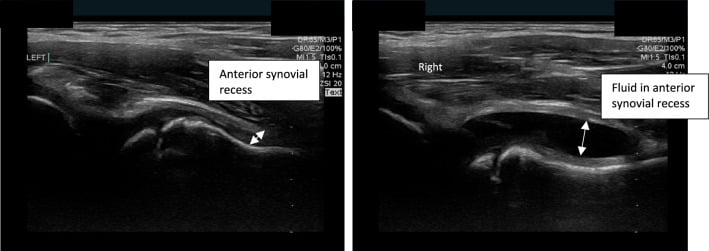
Aspirate on the whole picture, not the count alone. Hip aspiration is the definitive sampling test: cell count, Gram stain, culture and, in younger children, Kingella PCR where available. It is indicated by an effusion with persistent clinical concern, an equivocal diagnosis that will change management, or a need for microbiology. Never withhold antibiotics from a septic child while aspiration or theatre is pending; take blood cultures and treat.
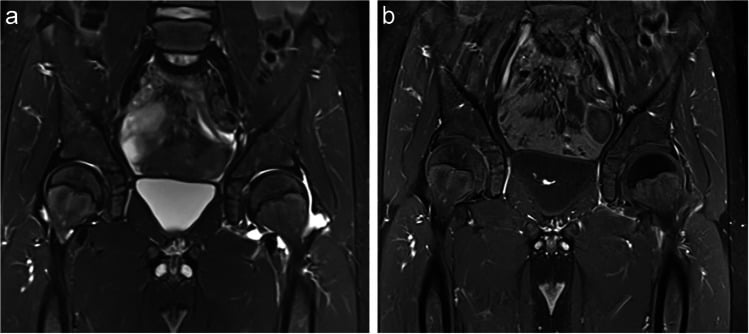
Do not let MRI decide or delay. Karmazyn and colleagues studied 34 children under 10 with a hip effusion on contrast MRI. Reduced femoral head enhancement was seen in 71.4% of septic hips and 50.0% of transient synovitis (p = 0.296), so it did not separate them, while Kocher and modified Kocher scores were significantly higher in the septic group. Their conclusion was that clinical evaluation and inflammatory markers remain critical in deciding on aspiration.
In the exam
Examiners want the four predictors with their exact thresholds, the derivation probabilities with their limits, and a plan that does not hinge on the number. Say the temperature and weight-bearing status out loud; they are half the rule.
Frequently asked questions
What are the four Kocher criteria?
A history of fever, non-weight-bearing, an erythrocyte sedimentation rate of at least 40 mm/h, and a serum white blood cell count above 12,000 cells/mm³ (12.0 × 10⁹/L). Kocher and colleagues identified them in 1999 as the four independent predictors separating septic arthritis from transient synovitis in children with an acutely irritable hip. Caird later added a C-reactive protein above 20 mg/L as a fifth factor.
What is the chance of septic arthritis with two Kocher criteria?
In Kocher's 1999 derivation cohort the predicted probability with two predictors was 40%, against 3% with one and 93.1% with three. That figure came from a single tertiary hospital and is not a universal constant. Two predictors is the zone where the decision depends on the whole child: ultrasound for an effusion, senior review and a low threshold for hip aspiration.
What are the modified Kocher criteria?
Usually Caird's five-factor version: the four Kocher predictors plus a CRP above 20 mg/L, with fever defined as an oral temperature over 38.5°C. In 48 children who had all been aspirated for suspected sepsis, the chance of septic arthritis was 83% with three factors, 93% with four and 98% with five. Those children were already high-risk, so the percentages should not be applied to every limping child.
Can a child with no Kocher criteria still have septic arthritis?
Yes. A low count makes septic arthritis less likely but does not exclude it. Toddlers with Kingella kingae infection often have mild symptoms and near-normal blood tests, neonates and immunocompromised children may not mount a fever or a raised white count, and recent antibiotics can blunt the picture. If the child looks unwell or fails to improve, reassess and consider aspiration.
References
- Kocher MS, Zurakowski D, Kasser JR. Differentiating between septic arthritis and transient synovitis of the hip in children: an evidence-based clinical prediction algorithm. J Bone Joint Surg Am 1999;81(12):1662-1670. DOI (opens in a new tab)
- Kocher MS, Mandiga R, Zurakowski D, Barnewolt C, Kasser JR. Validation of a clinical prediction rule for the differentiation between septic arthritis and transient synovitis of the hip in children. J Bone Joint Surg Am 2004;86(8):1629-1635. DOI (opens in a new tab)
- Luhmann SJ, Jones A, Schootman M, Gordon JE, Schoenecker PL, Luhmann JD. Differentiation between septic arthritis and transient synovitis of the hip in children with clinical prediction algorithms. J Bone Joint Surg Am 2004;86(5):956-962. DOI (opens in a new tab)
- Caird MS, Flynn JM, Leung YL, Millman JE, D'Italia JG, Dormans JP. Factors distinguishing septic arthritis from transient synovitis of the hip in children: a prospective study. J Bone Joint Surg Am 2006;88(6):1251-1257. DOI (opens in a new tab)
- Sultan J, Hughes PJ. Septic arthritis or transient synovitis of the hip in children: the value of clinical prediction algorithms. J Bone Joint Surg Br 2010;92(9):1289-1293. DOI (opens in a new tab)
- Singhal R, Perry DC, Khan FN, et al. The use of CRP within a clinical prediction algorithm for the differentiation of septic arthritis and transient synovitis in children. J Bone Joint Surg Br 2011;93(11):1556-1561. DOI (opens in a new tab)
- De Marco G, Vazquez O, Cochard B, et al. Inefficiency of Kocher and Caird's criteria in septic arthritis of the hip due to Kingella kingae: a multicenter retrospective cohort study. Microorganisms 2025;13(10):2323. DOI (opens in a new tab)
- Zamzam MM. The role of ultrasound in differentiating septic arthritis from transient synovitis of the hip in children. J Pediatr Orthop B 2006;15(6):418-422. DOI (opens in a new tab)
- Karmazyn B, Newman CL, Forbes-Amrhein MM, et al. Can decreased femoral head enhancement differentiate between septic hip arthritis and transient synovitis? Skeletal Radiol 2026;55(1):181-190. DOI (opens in a new tab)
Study the full topic
Included in Pro
Go deeper with Pro
- Clinical exam: the acutely irritable hip, with the Kocher, Caird and Singhal rules
- Clinical exam: examining the limping child
Share this article
Cite this article
OrthoVellum Editorial Team. Kocher Criteria: Septic Arthritis vs Transient Synovitis in the Limping Child [Internet]. OrthoVellum; 2026 Nov 23 [cited 2026 Nov 23]. Available from: https://www.orthovellum.com/blog/kocher-criteria-septic-arthritis-transient-synovitis
About this content
Prepared by the OrthoVellum Editorial Team from cited sources, under our editorial policy.
For education and exam preparation; not medical advice or a substitute for clinical judgement and local guidance.
Spotted an error? Tell us; every report is read.
Get new articles by email
New clinical explainers, landmark-trial summaries and exam guidance from the OrthoVellum blog. No account needed; unsubscribe from any email.