
Cases, discussion & exam tips.
Read an image case and commit to your call, debate management, swap exam-day experiences, and share what worked when you studied — a friendly place to pressure-test your reasoning before the exam.
- Threads
- 63
- Comments
- 0
threads posted
replies shared
Discussions
Practise clinical examinations with a timer from week one, not week ten
I left timed practice until the last month and was genuinely caught off guard by how short 6 minutes feels when you're examining a real patient. My advice: from 6 months out, do at least one timed clinical examination per week on a colleague or consenting patient. Use your phone stopwatch. The goal isn't speed — it's learning what you can realistically accomplish in the allotted time so you can prioritise. You'll naturally develop a tight, focused examination style that examiners prefer over an unfocused comprehensive one.
Anki for ortho: how to avoid the trap of memorising without understanding
I used Anki extensively but initially fell into the trap of creating cards that tested recall of a fact in isolation — 'What are the Schatzker classification types?' — which helped in MCQs but left me unable to discuss the topic in a viva. The fix was to pair every classification card with a scenario card: 'A 45-year-old falls on a flexed knee and has a medial plateau split-depression fracture with lateral cortex involvement — what Schatzker type and what surgical approach?' Contextual cards transfer to clinical reasoning; bare fact cards don't.
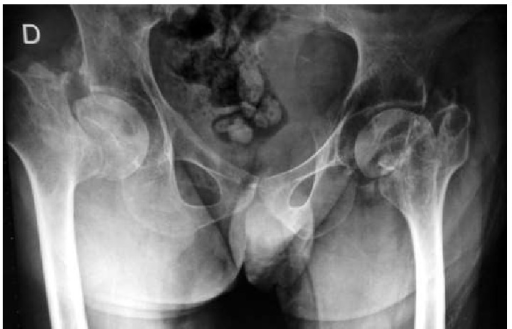
Cemented vs uncemented hemiarthroplasty for the displaced neck of femur — your default?
For the displaced intracapsular neck of femur fracture in the typical 80-year-old, what is your default — cemented or uncemented hemiarthroplasty? Registry and trial data (and NICE/BOAST) lean cemented for lower revision and periprosthetic fracture, but bone-cement implantation syndrome keeps the debate alive. What do you do, and how do you mitigate BCIS in the frail patient?
Simple olecranon fracture: still tension-band, or plate everything?
For the simple transverse olecranon fracture (Mayo IIA), do you still use a tension-band wire, or have you moved to plate fixation routinely? TBW is cheap and biomechanically sound for simple patterns but has a high rate of symptomatic metalwork removal. Where do you draw the line?

How early do you let them weight-bear after ankle fracture fixation?
Post-ORIF of an unstable ankle fracture — how early do you allow weight-bearing, and does syndesmotic fixation change your protocol? The WAX trial and others support earlier mobilisation in selected patients. Curious how people balance early function against fixation quality and patient factors.
FRCS (Tr & Orth) clinicals — what the day actually felt like
Sharing my experience of the FRCS clinical day to help those coming up. The intermediate cases reward a slick, rehearsed examination routine more than encyclopaedic knowledge; the short cases move fast, so commit to a finding and move. Time pressure is real — practise examining to a metronome with a colleague watching. What surprised others on the day?
FRACS operative surgery viva — how the station ran for me
A reflection on the operative surgery viva. Examiners pushed hardest on the steps I glossed over — positioning, the interval, neurovascular structures at risk, and what I would do when it goes wrong. Having a structured "approach script" for the common exposures saved me. Happy to answer questions; what did others find the examiners drilled into?
What I would do differently in the 6 months before the exam
Hindsight notes for anyone with ~6 months to go: start timed question practice far earlier than feels comfortable, rehearse vivas out loud with a partner weekly, and stop hoarding new resources — depth in a few beats breadth in many. I left viva practice too late. What would you change?
Spaced repetition for classifications — the system that finally made them stick
Classifications used to fall straight out of my head. What worked: one card per classification with the *decision it drives* on the back (not just the grades), reviewed on a spaced schedule, and always tied to a management consequence. Garden, Schatzker, Lauge-Hansen, Gartland — learn them as decisions, not lists. What systems work for others?
How to structure a viva answer so you never dry up
A simple scaffold that stops the dreaded blank: lead with a one-line summary/safe statement, then classify or stratify, then give your management in a logical order (resus → definitive → rehab/complications), then offer the controversy. It buys thinking time and signals structure. What scaffolds do you use?