OrthoVellum
Knowledge Hub

Study

  • Topics
  • MCQs
  • ISAWE
  • Operative Surgery
  • Flashcards

Company

  • About Us
  • Editorial Policy
  • Contact
  • FAQ
  • Blog

Legal

  • Terms of Service
  • Privacy Policy
  • Cookie Policy
  • Medical Disclaimer
  • Copyright & DMCA
  • Refund Policy

Support

  • Help Center
  • Accessibility
  • Report an Issue
OrthoVellum

© 2026 OrthoVellum. For educational purposes only.

Not affiliated with the Royal Australasian College of Surgeons.

Back to ISAWE Scenarios
Contents
0%
foot ankle

Achilles Tendon Rupture
intermediate
6 min
28 marks
6 questions
Clinical Scenario
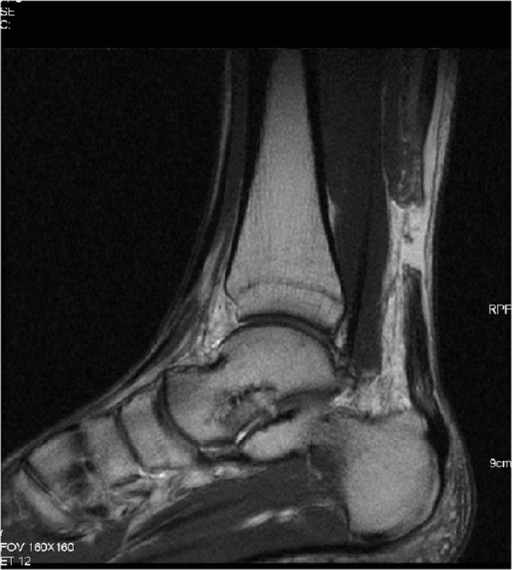
A 42-year-old recreational tennis player presents to the emergency department after feeling a sudden "pop" in his left heel while lunging for a shot. He felt as if someone had kicked him in the back of the leg. He was unable to continue playing and has difficulty walking. On examination, there is a palpable gap 5cm proximal to the heel. The Thompson test is positive bilaterally compared (no plantar flexion on squeezing the calf). He can weakly plantar flex using his toe flexors.
Clinical photograph demonstrating the Thompson (Simmonds) test being performed on a patient with acute Achilles tendon rupture. With the patient prone and feet over the edge of the bed, squeezing the calf fails to produce plantar flexion of the foot (positive test). A palpable gap is visible 4-6cm proximal to the calcaneal insertion, with bruising over the posterior ankle.
Open Full Size

Clinical photograph demonstrating the Thompson (Simmonds) test being performed on a patient with acute Achilles tendon rupture. With the patient prone and feet over the edge of the bed, squeezing the calf fails to produce plantar flexion of the foot (positive test). A palpable gap is visible 4-6cm proximal to the calcaneal insertion, with bruising over the posterior ankle.

Image source: Open Access medical literature (NIH/PubMed Central) • CC-BY License

Questions

Question 1 (4 marks)

Describe the clinical features and diagnosis of Achilles tendon rupture.

Question 2 (5 marks)

What are the treatment options and current evidence?

Question 3 (6 marks)

Describe the surgical technique for Achilles repair.

Question 4 (5 marks)

What is the rehabilitation protocol?

Question 5 (4 marks)

How do you manage chronic or neglected Achilles ruptures?

Question 6 (4 marks)

What are the complications and outcomes?

Exam Day Cheat Sheet

Must Mention

  • •Peak age 30-50, "weekend warrior"
  • •Rupture 2-6cm proximal (watershed area)
  • •Thompson test = squeeze calf, no plantar flexion
  • •Can still plantar flex via toe flexors (trap!)
  • •Evidence: functional rehab ≈ surgery
  • •Sural nerve risk 6-15% with percutaneous

Common Pitfalls

  • •Assuming surgery is always needed
  • •Missing diagnosis (toe flexors work)
  • •Sural nerve injury
  • •Over/under-tensioning repair
  • •Wrong location of rupture
  • •Not knowing current evidence
Scenario Info
Answers Revealed0/6
Difficulty
intermediate
Time Allowed6 min
Total Marks28
Questions6
Related Scenarios

Adult Acquired Flatfoot Deformity (PTTD)

foot ankle•28 marks

Ankle Fractures (Weber/AO Classification)

foot ankle•28 marks

Calcaneal Fractures (Sanders Classification)

foot ankle•28 marks

Charcot Neuroarthropathy

foot ankle•28 marks

Chronic Ankle Instability

foot ankle•28 marks