OrthoVellum
Knowledge Hub

Study

  • Topics
  • MCQs
  • ISAWE
  • Operative Surgery
  • Flashcards

Company

  • About Us
  • Editorial Policy
  • Contact
  • FAQ
  • Blog

Legal

  • Terms of Service
  • Privacy Policy
  • Cookie Policy
  • Medical Disclaimer
  • Copyright & DMCA
  • Refund Policy

Support

  • Help Center
  • Accessibility
  • Report an Issue
OrthoVellum

© 2026 OrthoVellum. For educational purposes only.

Not affiliated with the Royal Australasian College of Surgeons.

Back to ISAWE Scenarios
Contents
0%
foot ankle

Adult Acquired Flatfoot Deformity (PTTD)

intermediate
6 min
28 marks
6 questions
Clinical Scenario
A 55-year-old obese female nurse presents with progressive right medial ankle pain and flattening of her arch over 2 years. She reports fatigue with prolonged standing and lateral foot pain after walking. She cannot rise onto tiptoes on the right side. Clinical examination reveals pes planus with hindfoot valgus, forefoot abduction ("too many toes" sign), and tenderness along the posterior tibial tendon. Single-leg heel rise is weak and painful with no inversion of the hindfoot. The hindfoot corrects to neutral passively.

Weight-bearing radiographs and clinical photographs are provided.
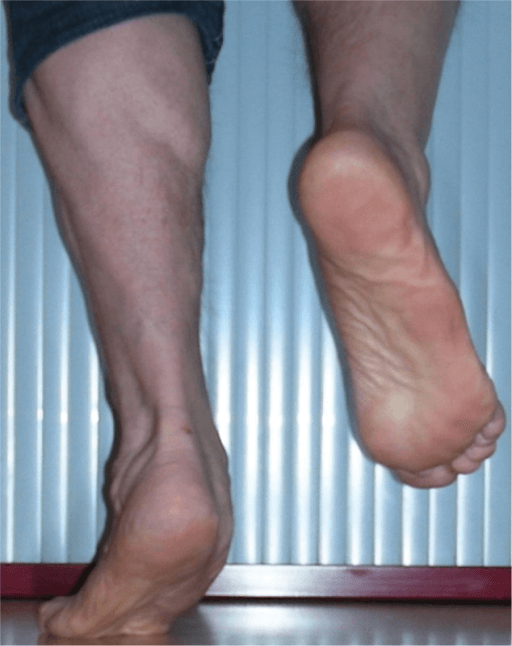
Clinical image for Adult Acquired Flatfoot Deformity (PTTD)
Open Full Size

Clinical image for Adult Acquired Flatfoot Deformity (PTTD)

Image source: Open Access medical literature (NIH/PubMed Central) • CC-BY License

Questions

Question 1 (4 marks)

What is the anatomy and function of the posterior tibial tendon? Why is it susceptible to degeneration?

Question 2 (5 marks)

Describe the clinical staging of posterior tibial tendon dysfunction (PTTD). What clinical and radiographic features differentiate each stage?

Question 3 (6 marks)

What is your assessment approach for this patient? What radiographic parameters should be measured?

Question 4 (5 marks)

Outline the non-operative management options for PTTD. When is surgery indicated?

Question 5 (4 marks)

For a Stage II PTTD with flexible deformity, describe the surgical options and your preferred approach.

Question 6 (4 marks)

When and how would you perform a subtalar/triple arthrodesis? What are the goals and outcomes?

0

Exam Tips

  • →3-6 months conservative trial
  • →NWB 6-8 weeks after reconstruction
  • →Union rate 90-95% for fusion
  • →Adjacent joint OA 10-20% at 10 years
Scenario Info
Answers Revealed0/6
Difficulty
intermediate
Time Allowed6 min
Total Marks28
Questions6
Related Scenarios

Achilles Tendon Rupture

foot ankle•28 marks

Ankle Fractures (Weber/AO Classification)

foot ankle•28 marks

Calcaneal Fractures (Sanders Classification)

foot ankle•28 marks

Charcot Neuroarthropathy

foot ankle•28 marks

Chronic Ankle Instability

foot ankle•28 marks